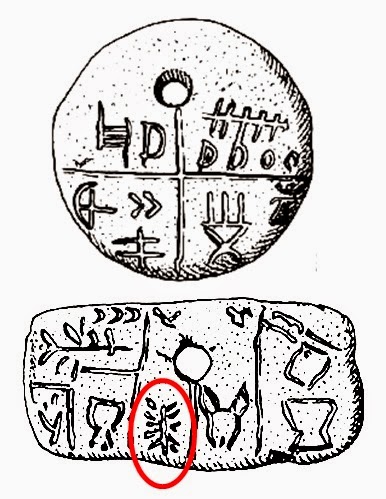
Careful/ Attention ! This post is not a decipherment or reading of any actual written content of Tartaria tablets. Especially since we are dealing with proto-cuneiform signs, and therefore consequently with proto-writing. Given that the signs do not belong to a single writing system but to several, the page has a purely didactic character. It has the role of trying and testing different writings, in the idea that the tablets would have used one of them. The signs on the tablets belong to several writing systems over a long period of time and which have been used in different geographical areas. In none of the trials did the signs fall into a single type of writing, there always remained signs that came from other writings (or as coming from the unknown). Most of the signs come from the Sumerian proto-cuneiform ones. The signs in the upper half of the round tablet seem to come from archaic Greek writing. This “collection” of signs seems to be the fruit of one’s rich imagination. As A. Falkenstein and A. A. Vaiman concluded, (this being also my firm opinion) that the author was not a scribe, he had only scarce knowledge/vague notions about writing in general, and it is not known what he intended or he was after. There are many elements of inconsistency as well as others that take the tablets out of the usual patterns and norms of logics, writing and honest intentions. ======
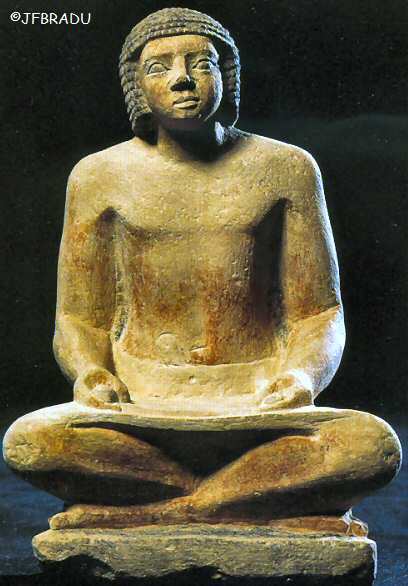
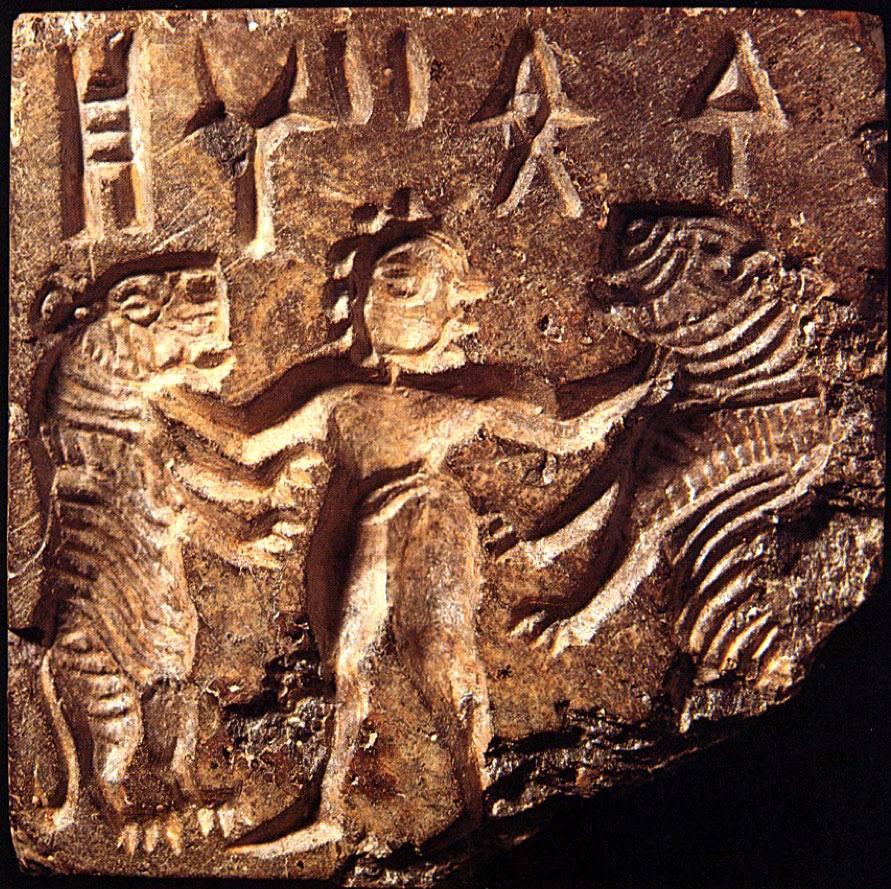
Image, from http://www.egyptsearch.com/forums/ultimatebb.cgi?ubb=next_topic;f=8;t=009931;go=older
Up to date, no consistent unanimous opinions regarding: – the real age of the tablets – the kind of “writing” –origin, location for the tablet and the scribe
The real age cannot be determined anymore. Taking acount of finding circumstances, not only the age (strata in wich were found the tablets) but also the exact location of cultic pit, of the pit house, and also location of every item/artefact in the ritualic-funerary complex is not sure. Taking account of the fact that begining of writing in the World is not older than 3.500 B.C. in all three places, Mesopotamia, Indus-Valley/Elam, and Egypt, (note that then was not yet proper writing), – From the start, the tablet’s age could not depass 3.500 B.C. As you see later, I show evidences that the tablets could be much, much newer. So the supposed deceased shaman/priestes with the age of the bones determined 5.500-6.000 B.C. is not at all related with the tablets. P.S. A make-up story around the poor unknokn before-deceased person, wich in the course of time unfortunately become the supposed “Lady Tartaria”, as would be good for a novel or mooving-picture, is of no help in the scientific endeavour. On contrary, in an allready misty subject, the result is to completely envolope the matter in an undesirable deep fogg. No way to even think to connect the bones/person (carbon c14-determined at 5.000-6.000 B.C.) with a “writing” wich with indulgence was at 3.000 B.C. ! —————————————————————————————- The main researchers on the field are sustaining a proto-writing in Vinca-Culture area. It is an undisputed issue. Even so, this must be proofed/!not yet !. From the begining there are only twoo main directions:
A- Sustaining an Danubian/Vinca early “writing” wich precedes that sumerian-one. B -An sumerian-inspired writing. not early than that sumerian one.
A. Is out of discussion.Scientists agree. See talking of “before-sumerians” and of sumerians traders:
From Trade and Culture Process in European Prehistory Author(s): Colin Renfrew https://archive.org/stream/BauerA.A.A.S.AgbeDavies2010SocialArchaeologyOfTradeAndExchange/Renfrew,%20Colin_1969_Trade%20and%20Culture%20Process%20in%20European%20Prehistory_djvu.txt
The Tartaria tablets. If one accepted these three objects at their face
value, one might indeed, like Brentjes, see them as "the earliest evidence
of Oriental trade in Europe (and of real trade at all)" and accept the
vision of Sumerian traders proselytising Neolithic Europe. First published
by Vlassa (1963), these three small baked clay plaques, bearing incised
signs, were found in levels reportedly of the earlier Vinca culture, dated
by C 14 (on other sites) to the earlier 4th millennium B.C. — earlier than
the Sumerians or their protoliterate predecessors who are supposed to
have written them. Milojcic (1965) eagerly seized on them in his campaign
against the C 14 method itself and enlisted the distinguished Sumerologist
Falkenstein to testify to the similarity of the signs with those of
protoliterate Sumer. Various scholars, notably Popovic (1965), have used
them to revive the old theory of Near Eastern influence on the Vinca culture.
From V. M. Masson. Interaction of cultures and cultural integration http://www.archeo.ru/izdaniya-1/archaeological-news/annotations-of-issues/arheologicheskie-vesti.-spb-1994.-vyp.-3.-annotacii
“An appreciable shift occurred in the early agricultural period, when societies which had attained similar levels of cultural and intellectual development displayed considerable receptivity to integrational processes. Yet here as well the “rejection” is evident. If the decoding of the famous tablets from the early agricultural site of Tartaria, Romania, proposed by A. A. Weiman, one of the world’s most authoritative experts in Proto-Sumerian texts (see this issue), is correct, a highly peculiar picture emerges. In the depth of the early agricultural Balkan area with its remarkable achievements in the artistic and intellectual domains a stable complex is found which is related to the temple structures of the Sumerian civilization. No matter whether the kulturtrager from Uruk had actually built their temple somewhere in the vicinity or whether we have before us a unique case of import having no pragmatic value, it is absolutely clear that these hallmarks of urban civilizationhad in no way been integrated into the system of early agricultural communities, which, in my opinion, had achieved the initial stage of the early complex society. Numerous and diverse signs found on the artefacts from the early agricultural Balkan sites are doubtless related to some symbolic and magic system, but do not represent a system of writing, which is a phenomenon different, in quality. So the Proto-Sumerian prototype did not in any way affect the local society, which was probably content with the available systems of storage and transmission of information (probably the oral and the artistic ones).”
An original independent developed Danubian/Vinca “writing” is in thin air , without support, as long as not was proofed that Danubians invented writing, more than this, they even not attained the proto-writing phase.
Now, as a ultimate option, having no sufficient confidence in the archeologic data, nor in the support of some utmost skilled in writings researchers, I had a last option to throughly analise the signs, to compare them with the main writing systems, counting the common number of signs, test those tablet signs with the known writings, as to see in wich measure they match every wryting sistem, an as result how “friendly” they behave. It seems that even later Cotofeni Culture not developed yet writing. ————————————————————————————————-
B. Sumerian-inspired, ( I say, at the limit) could be, as opinated prestige assyorologists Adam Falkenstein, M.S.Hood, H.Haarman, A.A.Vaiman and Rumen Kolev. Only some opinions here:
From 3 EXISTENCE OF AN ARCHAIC SCRIPT IN SOUTHEASTERN EUROPE: A LONG LASTING QUERELLE by Marco Merlini
3.A Early indications of script-like signs from Turdaş and Vinča, Troy and Knossosfile:///C:/Users/User/Downloads/Chapter_3_Existence_of_an_archaic_script.pdf
The leading position was established by A. Falkenstein, responsible for the publication of the tablets from Uruk, who pointed out a strict correlation with Uruk III B that belonged to the same cultural horizon as those of Jemdet Nasr and argued that the signs were definitely Sumerian. Falkenstein’s line of reasoning was based on four pilasters:
a) The Tărtăria signs, especially those on the rounded tablet, are highly comparable with those on the early tablets from Uruk III and Jemdet Nasr as the scholar synthesized in a chart (Falkenstein 1965:
271). According to his point of view, the connections with the early Sumerian pictograms (= protocuneiform signs) are particularly clear in the case of the symbolic hunting scene on the rectangular undrilled tablet, which was a more naturalistic representation and resembled the well-documented Mesopotamian seals impressions
b) Some signs appear to have been derived from Mesopotamian marks as numerals
c) Both the Transylvanian and the early Mesopotamian tablets show no occurrences of the wedge-shaped instrument employed for cuneiform writing
d) The shape of the rectangular tablets (relatively flat) occurred also in Mesopotamia
e) The system of dividing groups of signs within sections, which are separated by incised lines, is present also in Mesopotamia.
Establishing these connections, Falkenstein dated the Transylvanian signs around 2900-2700 BC and tried to establish parallels between them and the signs from the most ancient pre-cuneiform Sumerian documents found at Jemdet Nasr, Tell el-Far’ah, and Uruk. Unfortunately, he did not consider or did not care to consider as important some counterarguments about the same issues:
i. the Tărtăria designs show striking resemblances not only to the Pre-dynastic Mesopotamian writing but also to other scripts; ii. on the Uruk tablets the whole shape of the sign in the case of numerals is sunk in the clay with a round-ended stylus, while at Tărtăria the equivalent signs are incised in outline;
iii. in Mesopotamia only some larger rectangular tablets are relatively flat and there are also very few small circular tablets to compare with the Transylvanian one;
iv. in addition, the string-holes on two of the Tărtăria tablets have no parallels among the early tablets of Mesopotamia (Falkenstein 1965: 269-273).
It is significant to note that the tablets from Uruk III and Jemdet Nasr do not bear a merely primitive stage of writing because they display signs that are not only ideographic but also contain a phonetic element. In this occurrence signs stand for words and not for objects, animals or structures which they literally represent, and
signs with recognized sound values are combined together to make words (Diringer 1962: 21). Then the main question regarding the marks on the Tărtăria tablets became: could they represent a similarly advanced stage of writing or had they just a superficial resemblance without any writing implications to the early Mesopotamian tablets? (Hood 1967: 104). The group of scholars which drew attention to a strict correlation between the Tărtăria signs and the Mesopotamian signs considered the graphic influence in the framework of a more general cultural strong drift from the Near East which occurred at the point of transition from the fourth to the third millennium BC or during the 3rd millennium BC (it depends on the author). Within Southeastern Europe, the culture most markedly affected was considered “that one of the Vinča-Turdaş” (Makkay 1973: 1). Müller-Karpe pointed out that human representation in relief was a common practice in Mesopotamia and that it occurred in Southeastern Europe only at Turdaş possibly because of Near Eastern influences (Müller-Karpe 1968: 307).
Makkay investigated the advent of cylinder seals in Europe as result of a strong influence from the cylinder seals of the Jemdet Nasr and Predynastic periods. According to him, in the Final Neolithic the knowledge of making cylinders or cylinder seals was possibly bridged on the European continent by early settlements on the Cycladic Islands and via the export of obsidian from Melos to as far as Thessaly and Thrace.
NO MR.MERLINI, NOT :”A.FALKENSTEIN …argued that the signs were definitely Sumerian.” He said that the tablets show to be sumerian-influenced
From Siebenbürgen: Das Geheimnis der Tartarijské Tontafeln Sueee …https://de.suenee.cz/zahada-tartarijskych-hlinenych-tabulek In 1965 brachte der deutsche Sumerologe Adam Falkenstein die … dass die Texte in Tartaria unter dem Einfluss von Sumer entstanden sind.
From A. A. Vaiman. On the Quasi-Sumerian tablets from Tartaria http://www.archeo.ru/izdaniya-1/archaeological-news/annotations-of-issues/arheologicheskie-vesti.-spb-1994.-vyp.-3.-annotacii
“It has already been mentioned that not just the signs (possibly all of them) were borrowed, but other things as well, including the material for writing, the rectangular or round shape of the tablets (the latter occurs, although rarely, in layer IV of Uruk), the manner in which the text is divided into parts by means of vertical and horizontal incisions, and the technique of writing. However, the borrowed elements are transformed in such a way that one should speak of an independent Tartarian script rather than of a Tartarian version of the proto-Sumerian script. First and foremost, people who created this script, in contrast to the Sumerians, used only knife-shaped styluses. The Tartarian script differs from the proto-Sumerian one also in the construction of the texts. ” ………………. Because the Tartaria signs derive from early proto-Sumerian ones present on tabiets from Uruk layer IV, the Tartaria script apparently emerged in the last quarter of the 4th Millennium ВС. Nothing definite can be said as to where it was invented, but this hardly happened in Transylvania. More likely, its homeland was an area closer to Iraq. Functionally, the tablets were obviously economical documents. ” ‘
From Thoughts about a “reconsideration” of the Tărtăria tablets Attila László http://www.daciajournal.ro/pdf/dacia2016/18.pdf
“….the study of A. Falkenstein, the first Assyriologist who thoroughly checked Vlassa’s conclusions and who comparatively examined, one by one, the signs from the Tărtăria tablets and their early Mesopotamian parallels. He established the existence of certain similarities in terms of the form of the tablets, the division of the surface in columns and partitions (Fächer), in which the signs were then inscribed. He noticed that, from the 20 (or 24, with variants) signs on the second and third Tărtăria tablets, precise analogies were drawn for five, and similar forms were found for six among the archaic texts from Uruk (in German, Archaische Texte aus Uruk, abbreviated: ATU)25. All the 11 correspondences belong to the Uruk IIIb period (Djemdet Nasr), which can be dated to the time frame between 2800 and 2750 BC, also representing the chronological reference for dating the Tărtăria tablets. In Falkenstein’s opinion, the correlations established between the Tărtăria clay tablets and the Sumerian ones indicate an impulse (Anregung) from Mesopotamia. At the same time, he stressed the fact that, unlike the Mesopotamian written clay tablets, the Tărtăria tablets were made
from coarse material, were perforated (in order to be suspended?) and fired, the signs were incised (not impressed), the signs for numbers (characteristic to the Mesopotamian tablets, having an economic character) were (partially?) missing, etc. ………………………. Among the differences between the signs on the Tărtăria tablets and the ones on the
Mesopotamian tablets E. Qasim notices the fact (already remarked by Falkenstein in 1965) that the signs for numbers, which are constantly present on the compartmentalized Mesopotamian tablets (which contain economic texts), cannot be identified on the Tărtăria tablets. However, Qasim finds that the sign in the form
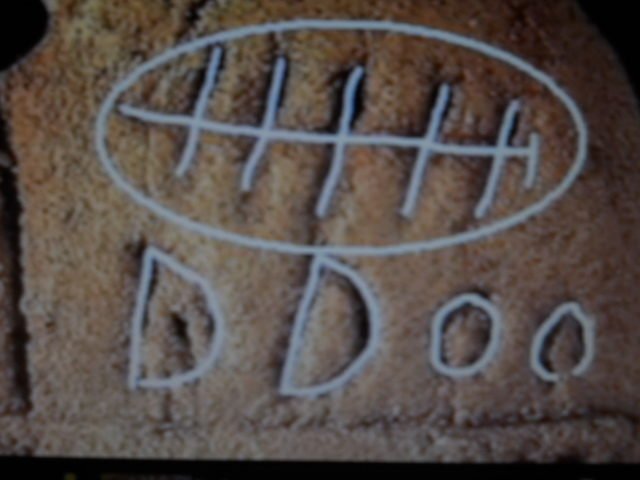
of the letter D, followed by two small circles (marked with no. 7 on the Tiumenev 1 tablet and on the second Tărtăria tablet) can be identified with the conventional sign used in the Assyriology literature for the graphic transcription of the signs impressed on the clay tablets, corresponding to the numbers 1 and 10. In order to perfect her “indictment”, E. Qasim appreciates that those two signs (in fact: two simple motifs, a semicircle or half‑moon and circle), which do not have correspondences in the real Mesopotamian signs, were imitations of the conventional transcriptions of certain signs copied from the secondary Assyriology literature, “
From http://cakravartin.com/wordpress/wp-content/uploads/2007/10/mystery-of-tatarlaka-klara-friedrich.pdf “M.S. Hood, an English archeologist, who states that the disk and tablets were carried by Sumerian merchants to Tatárlaka, where the native inhabitants did not understand the written signs but copied them and used them for religious purposes.”
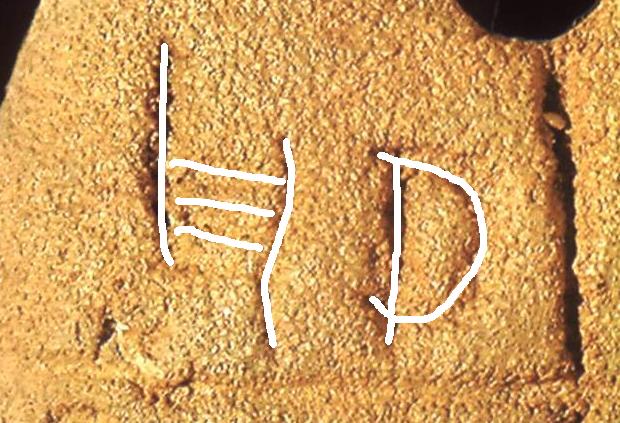
A.A.Vaiman, corectly named “quasi-sumerian Tartaria tablets”. But in my opinion, as that of others, not a sumerian hand scraped the signs, nor an native sumerian scribe. My opinion is that the signs are not proper (exactly) proto-cuneiform signs. The smoking gun for other origin for the signs than directly from sumerian, by short, is the presence of the D-signs, (unused in sumerian proto-writing), the Chet/het shape of the H-sign wich in a similar shape appeared in Europe first on Aegean area (Crete).
Certainly, there is a link with the sumerian signs. And not “some signs”, but all the signs could be found in an exact shape or close in the proto-cuneiform sign list. It is not “by chance”, the signs not appeared there by random. And retain, the first instance when such signs appeared in the World was in Sumer in the proto-writing fase. One have the exact shape of some signs as AB(house), ARARMA(bull calf) and many others: PA, SE, LAGAB, etc. and with close shape: GAR, SA,RU, sun-God temple…
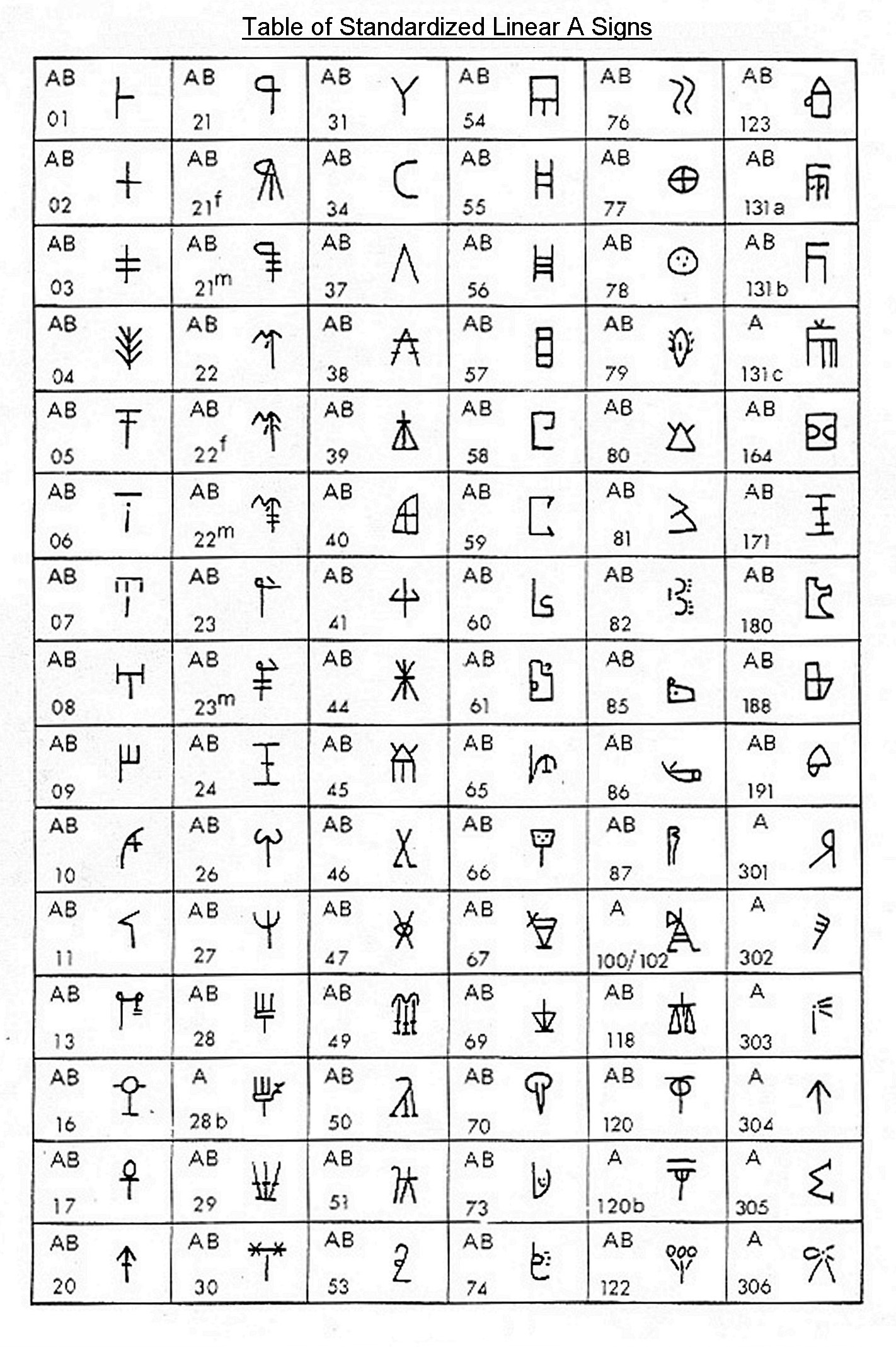
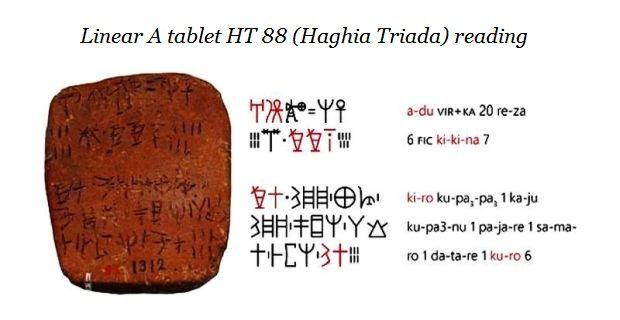
B. Other writings wich are suspected are those Cretan-ones (with 3 main variants:Cretan hieroglyphic, Linear A and Linear B…+Cypro-Minoan). Here also we have not all the signs from those writings. Here, we are encountering the same problem, D-shape sign was not used by them. But I found on Tartaria tablets a good bunch of signs (ideograms/logogram/syllabograms) common /(paired!) ,and present in both writings: Sumerian and Aegean ! : sumerian ARARMA/ Aegean MA ; sumerian SE/Aegean TE; sumerian PA/Aegean PA; sumerian KU/Aegean PA3
C. Phoenician/Old hebrew writings not sufficient matching.We have the exact chet/het-shape, also HD could be phoenician/old hebrew “het-qopf”. <so ? qoch:”ossuary/loculus”-KoK(aion?> Have also signs/letters “zain”, and probably “samech”.But in those writings there was no D-shaped signs.They had P sign for qof and dalet/delta sign for D.
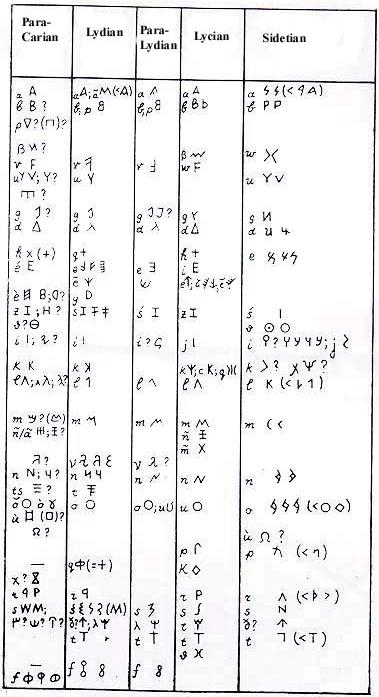
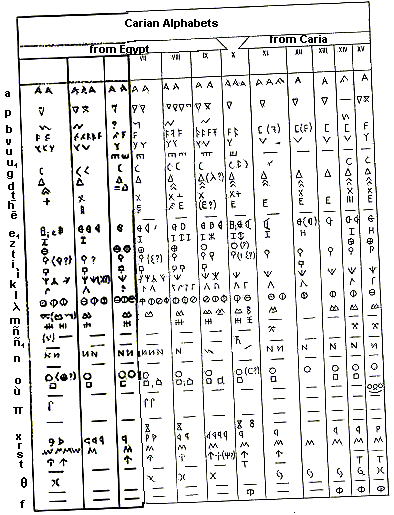
D. Anatolian writing could be also a goot candidate (especially carian alphabets). The only writings in wich I found 90% of the signs was sumerian and carian !
From the begining I tried to find the writing wich matching close; *only after this, in the case of “D-letter” signs, runing out of options I gave the “Moon” significance.
In my opinion, by 3.000 B.C., not moon-phases killing them but everyday necessities for making a living and apropiate the nature-gods in order to have good crops. As Mrs. Denisse Schmand Besserat demonstrated writing appeared first as a counting goods necesity.
*! Not the case of sumerian approach where we had sumerian GAR(ninda) signs as egyptian “T”:”loaf of bread”!
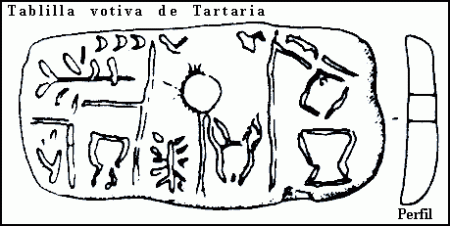
In a way, one could “depass” the phonetics/interpretation and translation of the signs, whatever sumerian or Aegean, having an “up from high” vision, and take directly the meaning of ideograms ! eg: The signs on squared Tartaria tablet with hole, Image, from http://su-varna.org/izdanij/Magazin%201%20conf/Pages%20from%2046%20to%2053.pdf https://encrypted-tbn0.gstatic.com/images?q=tbn:ANd9GcRPrYdeD189MSKLzKIXmzILQSZ1K0n_h1eFtByuYrEClb90EJbnoQ
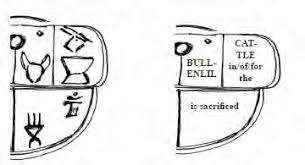
In sumerian, signs:Ararma (bull-calf) + nigin5 +ABhttp://etcsl.orinst.ox.ac.uk/edition2/signlist.php
LAL×LAL.LAGAB
Borger: LAL2.LAGAB |
  |
niĝin5 |
nigin5: sum,whole,to enclose, confine; to encircle; to search; to turn; to return; to go around; …
bull-calf+nigin5+ AB =(sun) Bull/calf+ turning, whole +house =house,abode (of) turning(sun) , or only last 2 signs : (sun) bull +house interpreted as:” house,abode (of) bull(sun) ; in sumerian this sign pair could be read NERGAL wich is the pair or underground instance of the Sun-God,
From https://cdli.ucla.edu/tools/signlists/protocuneiform/archsigns.html NERGAL~x  ————————————————————————————————– From http://enenuru.proboards.com/thread/329/nergal me: What is for in this above pair on the left sign DARA;”ibex”!? (we have on pict. tablet Ibex
DAG dwelling | E2 house | EN ….. DARA3 ~ IBEX |durah (dara3) [89x] = wild goat, mountain goat | )
“-I am convinced that Nergal is the netherworld aspect of the sun-god, on the basis of late mystical texts which I had looked at in the Erra thread . One text states dšamaš u nergal(U.GUR) istēn(1)en (“Šamaš and Nergal are one “) —————————————————————————————–
as in Aegean: bull sign+ labrys =MU + labyrinth = house of (AMu,Ama?) = house of the Bull(Sun), house of MINOTAUR, labyrinth, house of the Sun-God/Sun-Bull/MINOTAURUS. ————————————————————————————–
Now, I will present you a particularity of the signs, wich I noticed (beeing the single one who noticed /Why ?) :
The signs are a bunch or unusual mixture of mainly three type of signs, so having an eterogen nature :
–pure pictographic signs/pictograms (sqarred without hole)
–ideogram/syllabograms (squarred with hole)
–syllabogram/letters (round-one with hole) ; pure letters (upper half of round-one)
Due of this above, the age of the tablets could be the age of the newest type of writing.The D-shaped signs first appeared in epichoric variants of archaic greek alphabets (for letter D in a plece and for letter R in another).
So we could have in that upper half archaic greek letters.This archaic shape of eta was pronounced at the begining “He”; in this shape was used in Crete, and later in all Mediteranean as for H-letter. https://encrypted-tbn0.gstatic.com/imagesq=tbn:ANd9GcTqDynC22_KwCL0oLlpAu3HnTvwBisR1bQcP-kqdlTV-Puybhep
 From Unicode Character: PHOENICIAN LETTER HET (U+10907) https://www.fontspace.com/unicode/char/10907-phoenician-letter-het


HERE WE HAVE HERE AN IMPORTANT CLUE: BESIDES OLDEST “D/P?” shape found as old hebrew shape P=”KOF/KOPF/kuph”,  THIS H-SHAPE OF HETA/ETA WITH VERTICAL REAL OFF-SET VERTICAL BARS (or the appearance of off-set bars cause of slanted horiz.bars), IT IS A STRONG INDICATION OF AN PHOENICIAN-AEGEAN ROUTE/PATH !
THE AGE OF THE WRITING, IT IS IN MY OPINION THE AGE OF THE NEWEST group of SIGNS (in our cas P=qopf , H=het/chet/heta/eta/h, D:delta,d/r,rho)
THAT HP/HD and DDoc signs, sory for Romanian scientist wich are expecting an very old age for the tablets,
ALL ARE POINTING TOWARD A POSSIBLE SHORT AGE OF THE TABLETS ! Note: 1.This sign with off-set bars was used as letters by many peoples: by cretans,etruscans, in some italic alphabets as venetic but not only,old latins, in Old Iberian writing and some writings left by migratory peoples in Europe (tungusic,gepids,etc.) 2. This particularity offset-slanted it is not showing (at least not evidentiating) in Aegean writings (CH,Linear A,B), only in that listed above.
As I said, is possible to have an local-derived from archaic greek writing in upper half.
Archaic greek letter shapes, from http://www.codex99.com/typography/13.html

Archaic greek, but even old latin, venetic could be. The rest of the signs (out of upper half) could have only an magic-religious-ritual role. Not necessary carring an concrete message.
Unlike the case of Linear A/B where we have at disposal hundreds of tablets, Tartaria tablets are unique of their kind (and in the area), some strange if not weird singletons.
———————————————————————————————————————- For the place of origin. In my opinion, not originated, nor “written” at Tartaria, Romania.Place of origin south and again south. Image, https://encrypted-tbn0.gstatic.com/images?q=tbn:ANd9GcQ4HZP0phF6ULSoKMAAZoyrqIbV2Bv3OYkQtCnoZ-1Y8OdzlTvIUQ
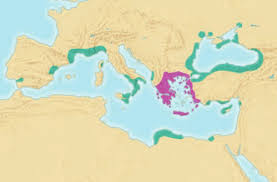
Taken or written by an Aegean migrant, but rather originated somewhere in actual Greece teritory, rather in Aegean area, say Cyclades(Syros) or Crete.
This hypothesis is in total acordance with studies of Mr. Evangelos Papakitsos and Iannis Kenanidis wich found evidences that at least of early minoans were in fact sumerian migrants. As a consequence, an direct sumerian contact and cultural infusion with Balkan/Danubian civilisation is not necessary, as the influence could be transmited via Aegean. Some (not few !) common elements (read “signs”) in Tartaria tablets (regarding the writing) to both civilisations, were evidenced independently by me in my papers.
Besides, especially due of the “cursed, damned” ,unexplained, “accidental”, but also “new” characteres/charagmata “D-letter” shaped signs, present on upper half, in/from the time perspective, the supposed tablets’s age would be expanded in an untolerable span: – between 3.000 B.C. (close-shaped signs, but imprinted used for bread-portions/?Moon phases?) and 800 B.C. (archaic greek letters) ,D-shaped signs were not used in any world writing systems ,or – any age from “xyz” B.C. to “uvw” A.D., even as new “as could be made yersterday”. Don’t know exact intention of the writer, so who what wanted to show to whom.
By short, we are forced to choose only one out of two (large distanced in time) possiblities: – and old age close to 3.000 B.C. with the ununswered question regarding the meaning of the D-signs, or – a quite new age close to 800-300 B.C.
Any world writing sistem was not invented in a couple of years, nor in the 100 years course, it is quite a long and complex matter, not depend as one expect on some local human abilities, but as a responce in complex(social and economical) societies to their necessities and needs.
=================================================================== From DRAVIDIAN TOKENS, UBAID, AND ITS TRACES IN BALKANS by Iurii Mosenkis https://www.academia.edu/10909671/Dravidian_tokens_Ubaid_and_its_traces_in_Balkans
“Ubaid Dravidian cult language of the Vinča
The Vinča, possibly Hurrian and similar to Indo-European Linear Pottery, might
be dravidianized by the Anatolian Ubaid. The phonetic structure of the Dravidian
languages is similar to the ‘banana’ substrate in Sumerian and Hurrian. Sumerian
writing system is good for the Dravidian word structure but not so good for
Sumerian one. The strong Dravidian element in Sumerian basic and cultural lexicon
might be interpreted as a ‘banana’ = Ubaid component. The Dravidian Ubaid roots might be suggested for 1) the Sumerian script of suggested pre-Sumerian origin, 2) the Vinča script, including the Tărtăria tablets, related to the Sumerian script but not immediately, 3) the Cretan Linear A, B script derived from the Vinča script via the Dispilio tablet and the Trojan scriptinvestigated by N. N. Kazanskii, 4) the Kura-Araxes script similar to Vinča. The beginning of the Ubaid culture in Southern Mesopotamia is currently dated from 6500 BCE, i. e. earlier than the Vinča and the Vinča script. The first tokens asthe prototypes of the Sumerian hieroglyphs are dated from the 9th millennium BCE. The Anatolian Ubaid influence on the Balkans is confirmed by the Dravidian etymologies of the Cretan Linear A, B signs and several Paleo-Balkan words.The line of descendance Vinča (with the Dispilio Tablet closest to Linear A) >Tisza>Tiszapolgár > Bodrogkeresztúr (with Aegean relations) contacted with Baden might reflect the connection between the Vinča script and the Trojan script (Troy II–V) which N. N. Kazanskii interpreted as an intermediate element between the Vinča and Linear A. As L. S. Klejn suggested, the Vinkovci / Somogyvar of the Baden origin was related to the culture of the Cretan Linear script A. So Dravidian might be a cult language of the Anatolian Neolithic and Vinča because of the Dravidian relations of the Linear A, B signs, substrate words in Greek and Dacian, and the Tărtăria tablets. The Karanovo IV bearded figurines very similar to the Harappan ones and contemporary of Vinča may be interpreted as anadditional argument.”
============================================= The bablets could be so new as to have:
From https://en.wiktionary.org/wiki/serbare#Conjugation Italian servare Etymology From Latin servāre, present active infinitive of servō.
Serbare to keep or maintain/to preserve or reserve “Io serbo”
From..https://en.wiktionary.org/wiki/servos Latin servos m accusative plural of servus
https://en.wiktionary.org/wiki/servus#Latin servus Etymology From Proto-Indo-European *ser-wo (“guardian”), possibly from *ser- (“watch over, protect”). 1.a servant 2.a serf 3.a slave
From https://en.wiktionary.org/wiki/hora#Latin hōra f (genitive hōrae); first declension
- hour
- time
- o’clock
- season; time of year
- vocativesingular of hōra
From https://en.wiktionary.org/wiki/heros heros 1.(literally) demigod, hero 2.(transferred sense, Ciceronian) an illustrious man
From The New Monthly Magazine and Literary Journal https://books.google.ro/books?id=JiM8AQAAMAAJ
the Latin Herus, the Low German Heer, the High German Herr, (Master, Lord.) The whole meaning of the Homeric Heros is preserved in the German Herr :
So from +++++ HP D b o c
HR Se R b o s
? Lord slaves / Lord servants /HERO** servants/ time keep,maintain /serbian *HRistos / HAR*** keeper ? ? HAR/haro/Ede DiDou “give charis; give death; give eat” ?
(* I not found anywhere the Christ monogram, only and only as XP ! ; **thracian heros ; *** har,slavonic haru “gift,CHARM”) ….proto-Indo-European root Xar(Char) :”fitted in a pleasant,beautiful manner”
 The large oxhide ingots were signified by ḍhālako a large metal ingot
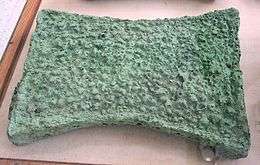 Copper ingot from Zakros, Crete, displayed at the Heraklion Archaeological Museum.



 K?A The Sumerian sign (Jaritz #458) depicts a ‘tubular basket’; a variant, #458a, tapers toward the top; both have top-covers; both presumably and read ga2 (among others). Another recorded reading for it is pisan, which means ‘basket’ but perhaps also ‘*shallow tray’.
 Jaritz #458a, looks very much as if it could be the ‘head’ without the hair and neck we see in Jaritz #15 under K?XA; and therefore might be a sign for ‘jaw’; but it also may be just another shape of ‘basket’. As mentioned below under K?XA, the most promising prospect for ‘jaw’ in Sumerian is ga14, a reading of Jaritz #15 that is currently without an assigned meaning. I believe the the idea of ‘jaw’ provided the prototype and nomenclature for a ‘shallow basket tray’ but there is no trace of this meaning (‘jaw’) for this Sumerian sign
 See in the lowest row, from L>to> R: 2-nd and last signs
 and sign ZAG~c
  sign GA’AR:

 see Cretan hieroglyphic signs 042 and *175




 No.6/left sign “bow&arrow” No.6/up, sign “>>”

 has the




 Proto-Indo-European Religion
 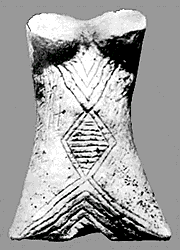 Horse bone decorated with rhomboid designs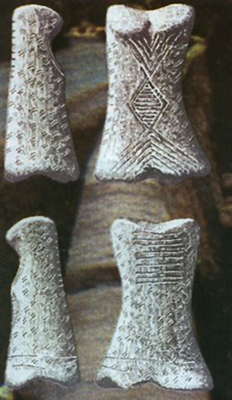

 ===========================================================================From:

 Tartaria-Turdas people contemporary with supposed tablets’ scribe:


