Archive for the ‘History’ Category

Easy to undersand: What were in fact Göbeklitepe pillars ?

March 27, 2021

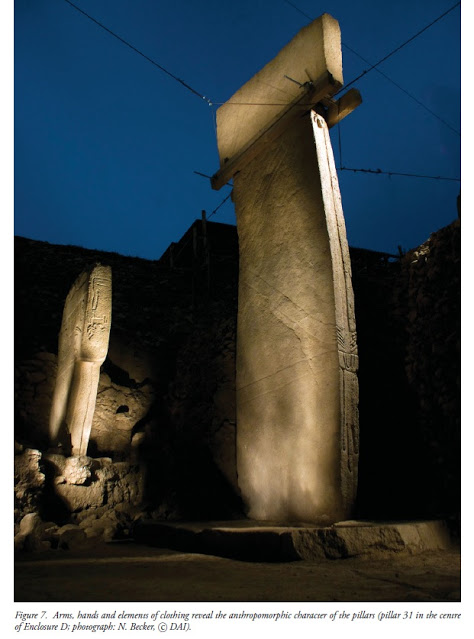
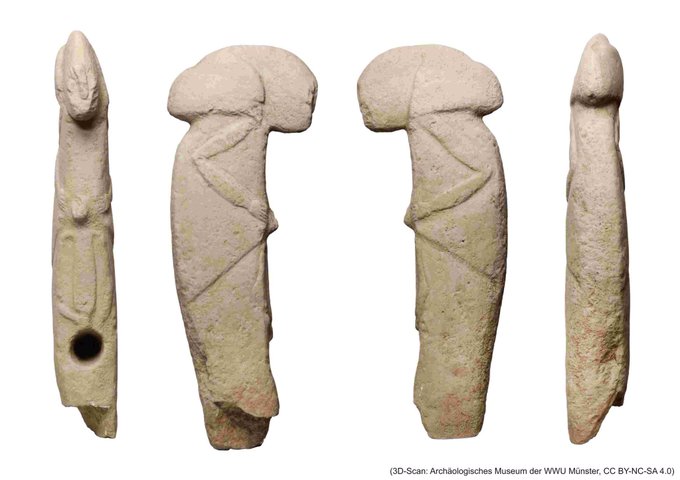
Scientists hypothesized that at 9.600 B.C. were not worshiped antropomorphic deities, as “Urfa man”, but probably demons or spirits. sciencepress.mnhn.fr › pdfPDF Animals in the symbolic world of Pre-Pottery Neolithic Göbekli … de J PETERS · Neolithic Göbekli Tepe, south -eastern Turkey: a preliminary … <<Given the anthropomorphic nature of the T-shaped pillars at Göbekli Tepe and the fact thatthese abstract monoliths bear representations of particular (sets of) animal species, it is temptingto interpret these megaliths as three-dimensionalrepresentations of shamans. ….. Some of these mono-liths exhibit arms and hands in bas-relief, sugges-ting that they represent anthropomorphic beings.It is not clear, however, what kind of beings thesestanding stones impersonate : do they representanthropomorphic gods, shamans, ancestors, stone spirits or perhaps even demons ? >> Ancestor spirits or otherwise. As a term of comparison, despite the enormous temporal distance, IF WE SUPPOSE THAT : – Göblekitepe PEOPLES WERE DISTANT ANCESTORS OF SUMERIANS, AND SOME IMPORTANT ICONS AND THEIR MEANINGS LASTED THOUSEND OF YEARS, we could have had something like that:

PDF) The Transformations of a Goddess: Lillake, Lamashtu, and Lilith.

ResearchGate
PDF) The Transformations of a Goddess: Lillake, Lamasht https://www.researchgate.net/profile/Wendilyn-Emrys/publication/337155280/figure/fig2/AS:823766137442312@1573412560586/figure-fig2_Q320.jpg

Merriam-Webster’s Encyclopedia of World Religionsbooks.google.ro › booksWendy Doniger, ‎MERRIAM-WEBSTER STAFF, ‎Merriam-Webster, Inc · 1999 · ‎Religion\la-‘mash-,tu\ (Akkadian), Sumerian Dimme, in MESOPOTAMIAN RELIGION, most terrible of all female DEMONSdaughter of the sky god ANU (Sumerian: An), . Usually scientists like John Halloran try to propose the etimologyes of sumerian words. for Dimmme I found nothing, even oposite: www.academia.edu › Kamadme_the… Rezultate de pe web (PDF) Kamadme, the Sumerian Counterpart of the Demon … Wiggermann noted that the name “Dimme” had resisted interpretation, but that the element written ME must be a phonetic indicator Now see out of Dim-me what is Dim: https://en.m.wiktionary.org/wiki/%F0%92%81%B4?fbclid=IwAR0pgOjTAADZgkfrIP9K4OQ1cD53FngdGjEcrRQq24AfxLwkrutBNw8Kdbs Sumerian Noun (DIM)

  1. postpillarpole
  2. bindingknotbond

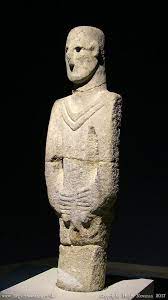
And from posts before, Me:”divine power/essence” and “to be/beeing” So, Dim-Me = “PILLARDivine power/BEEING” GIDIM: ” GHOST” : Ghosts in Mesopotamian religions – Wikipediaen.wikipedia.org › wiki › Ghosts_in_Mesopotamian_rel… The shades or spirits of the deceased were known as gidim (gidim 𒄇) in Sumerian, which was borrowed as eṭemmu in Akkadian. The Sumerian word is analyzed as a compound of either gig “to be sick” and dim3 “a demon”, or gi6 “black” + dim4 “to approach” From is.muni.cz › PAPVB_13 › Ha…PDF Sumerian Lexicon – IS MUNI de JA Halloran · Citat de 102 ori — and through bilingual cuneiform dictionaries of Sumerian and … v., to stand upright; to be straight; to be in order; to become … dìm: n., sickness demon; pole of a water lift. So, Dimme could be also DemonBeing Despite pillars exhibit arms and hands in bas-relief, sugges-ting that they represent anthropomorphic beings, and we are on the verge of appearing gods. Gods apperead later, after 2.000 years, 7.500 B.C. as you see at Kilisik: Jens Notroff@jens2go Is it a human? Is it a #Neolithic T-pillar? Is it a composite figure? – No, it’s the Kilisik sculpture (… and thus maybe all of these). “A rather odd figure: The so-called #Kilisik Sculpture from #Adıyaman, #Turkeyhttps://dainst.blog/the-tepe-telegrams/2019/03/20/a-rather-odd-figure-the-so-called-kilisik-sculpture-from-adiyaman-turkey :
Image
https://twitter.com/jens2go/status/1104066286231973889 https://pbs.twimg.com/media/D1JtyS0XcAAlh5U?format=jpg&name=small

WE HAVE NO TRUE GODS BUT SPIRITS AND DEMONS. THEY INTERTWINE WITH HUMAN’S LIFE, THATS WHY EXHIBIT SLIGHT ANTROPOMORPHIC CHARACTERISTICS. ============== as a term of refference ======== God is Dim-Me-ir: archive.org › stream › 527757_djvu Full text of “Sumerian as a Language” – Internet Archive This dimir is a real ES. form = the more usual dimmer (dimme-ir) ‘god.’ See s. v. digir and dir = AN. Cf. the Semitic loanword dimmerU ‘god,’ . Note. I limited myself not to extend the No.2 meaning of Dim: 2.”binding, knot,bond” Rom. “legare, nod, legătură”but.. Dimme= binding+ divine powers. This seem to be the meaning of a curse, greek katadesmos, when somebody’s fate is bond to an evil state. From cdli.ucla.edu › pubs › cdlpPDF Elementary Sumerian Glossary – Cuneiform Digital Library Initiative de DA Foxvog · Citat de 15 ori — Pennsylvania Sumerian Dictionary on the. Web. … dím to fashion, form, create, build; to make like, make into (-šč); to act dimme: to make likebeing / Divine powers (Pillar made like divine power being) The proto-cuneiform signs for dim are, from https://cdli.ucla.edu/tools/SignLists/protocuneiform/archsigns.html dim~a

The proto-cuneiform sign for me is

OF COURSE WE HAVE NO AT GOBEKLITEPE BOTH DIM AND ME ICONS, ONLY ME:”T-shape” AND PILLARS OTHERWISE BOTH PARTS OF DIMME MOST TERRIBLE SUMERIAN FEMALE DEMON ~~~~~~~~~~~~~~~~ even more documentation ~~~~~~~~~~~~~~~~~~~~~ studyres.com › … › Theology Anastas Shuke … the Sumerian terms for God, including AN, diĝir/dingir, dim3-me-er, šar/šaru, il/ilu, where most of them are expressed by the AN sign only. www.macrothink.org › pdf_31PDF Yet Another Suggestion about the Origins of the Sumerian Language 23 oct. 2013 — Sumerian, the corresponding forms are. {diĝir; dim3-me-er; dim3-me8-er; dim3-mi-ir; di-me2-er} (deity, god, goddess) https://baixardoc.com/documents/on-the-origins-and-continuity-of-sumerian-term-an-dingir-god–5cd0997012062 https://www.haaretz.com/archaeology/.premium.MAGAZINE-stalking-us-for-9-000-years-the-levantine-origins-of-the-undead-1.7184675 Reversing dim and me to medim , the rezult is a word with other meanings: oracc.museum.upenn.edu › cbd › sux TOC – Oracc emegir [SUMERIAN] N (24x) Old Babylonian wr. eme-gi; eme-gir₁₅ “the Sumerian language” … medim [LIMBS] vasconica.dreamwidth.org › … ENGLISH – SUMERIAN DICTIONARY – vasconica ENGLISH – SUMERIAN DICTIONARY · Oct. 29th, 2019 02:20 pm … medim, [BOAT] peszesz, [BOAT] te, [BOAT] tugul, [BOAT] umbin, [BOAT] ++++ From https://damienmarieathope.com/2019/06/ritualistic-bird-symbolism-at-gobekli-tepe-and-its-ancestor-cult/?v=32aec8db952d ++++ Ritualistic Bird Symbolism at Gobekli Tepe and its “Ancestor Cult” a Sacred Sky Burial Relationship between Birds and Spirits of the Dead

Myths from several regions’ associate birds with the creation of the world. Sacred ideas of birds range from a creator role, to a symbol of life as well as relating to both death and rebirth. Birds are a common totem or believed spirit and relate to renewal, transformation, and ancestors as well. In this deity, spirit or ancestor role they may be seen as Bird People (people with the characteristics of birds) a common motif in myths. Also, birds are commonly associated with or relate to fertility, longevity, and life itself. “Carved skulls indicate that Gobekli Tepe, known for enigmatic monumental pillars carved with animals and shapes, was ancestor worship site.”  “Ancestor Cult: a ritualistic system of veneration, honor, and propitiation of the spirits of dead ancestors for the purpose of avoiding evil consequences and securing good fortune.”   “Ancestor worship: the custom of venerating deceased ancestors who are considered still a part of the family and whose spirits are believed to have the power to intervene in the affairs of the living.”   “Veneration of the dead, including one’s ancestors, is based on love and respect for the deceased. In some cultures, it is related to beliefs that the dead have a continued existence, and may possess the ability to influence the fortune of the living. Some groups venerate their direct, familial ancestors. In EuropeAsiaOceaniaAfrican and Afro-diasporic cultures, the goal of ancestor veneration is to ensure the ancestors’ continued well-being and positive disposition towards the living, and sometimes to ask for special favors or assistance. The social or non-religious function of ancestor veneration is to cultivate kinship values, such as filial piety, family loyalty, and continuity of the family lineage. Ancestor veneration occurs in societies with every degree of social, political, and technological complexity, and it remains an important component of various religious practices in modern times.” Ancient Headless Corpses Were Defleshed By Griffon Vultures Sky burial ( Animal Worship mixed with Ancestor Worship) is a funeral practice where a human corpse is placed on a mountaintop, elevated ground, tree, or constructed perch to decompose while be eaten by scavenging animals, especially birds. On The Relationship between Birds and Spirits of the Dead ( See On The Relationship between Birds and Spirits of the Dead Christopher Moreman https://www.academia.edu/5112298/On_The_Relationship_between_Birds_and_Spirits_of_the_Dead <<In a wide range of cultures, birds are symbolically connected with death in a number of ways. They are often considered harbingers or omens of imminent death. Some birds are thought to steal souls from people who are dying or to act as psychopomps, carrying the souls of the dead to the “next world.” As the story above illustrates, there is also the belief that birds might somehow embody spirits of the dead. Ingersoll (1923) noted that the belief in birds as “visible spirits of the dead” is “almost universal” ….. The symbolism of birds does not always focus on death, for instance, but just as often relates to fertility, longevity, and life itself. Birds as Bearers of Divine Wisdom Birds as Psychopomps Birds of Life and Death The dual connection of birds with both death and life is common. Vultures, for instance, play a central role in funerary customs involving exposure of the corpse, such as in the Zoroastrian “tower of silence” and “sky burials” of Tibetan Buddhism. This great carrion-eater is also mixed with the symbolism of life. Pre-Islamic Arabs recognized the vulture for its longevity, a quality it obtained devouring the life-blood of corpses; perhaps embodying deceased ancestors, they devoured the sacrificial meals made in their names. In Tibetan folklore, through consuming the corpse, vultures are believed to bear the dead away to a transitory place in the sky before rebirth, and they are thought to be the earthly embodiments of the feminine divine principle, dakini. The Egyptian Mother goddess, Mut, is also associated with the vulture. Walker (1983) suggests that the association between motherhood and the vulture stems from a time before humans understood the role of men in the procreative process, believing that consumption of flesh led to the gestation of new life (p. 751). It was once thought that all vultures were female and were impregnated by the wind.In both China and Japan, cranes are said to carry the souls of those who have achieved immortality to heaven. Storks (deliverers of babies in not only European folklore but also that of the Sioux) and cranes are also among those birds most often symbolizing fertility and longevity. Some researchers have suggested that the stork’s migratory pattern indicating the return of spring may account for its association with fertility, but such a suggestion must surely apply to a wide range of birds. Cranes add to the avian migratory pattern a peculiar circular, hopping mating dance that is readily associated with various cycles of nature, including those of the seasons and of life and death. The dance has also been imitated by humans, being “common to rituals enacted in funerary labyrinth and tumuli in many parts of the world. As late as the eighteenth century the Ostiks of Siberia dressed their dancers in the skin of cranes. Birds Embodying Spirits of the Dead. That birds are often believed to actually embody spirits of the dead themselves “is a widespread and extremely ancient belief”. Friend (1883) describes Buddhist rice offerings made to ancestral “house spirits” that are eaten by birds, while similar rites are performed for crows in parts of India. Crooke (1896) describes how, in Northern India, owls and bats might embody “the malevolent dead” (p. 279). The Mongol Buryats of Siberia believe that their loved ones might return in the form of diving birds, and Aztec soldiers returned as hummingbirds. Some Pima Indians believe that at death the soul inhabits the body of an owl; an owl’s hooting portends death as it calls out for a soul to embody (Russell, 1908, p. 252). Similar beliefs can also be found in cultures not normally associated with reincarnation. Henderson says that in flight “the bird is the most fitting symbol of transcendence”, relating it to the spiritual journeys of shaman-types the world over. Experiences interpreted as “spiritual journeys,” “shamanic flight,” or “astral travel” are relatively common among across cultures. Even if not all cultures locate the world of the dead in a heaven, case studies on reports of out-of-body experiences (OBEs) describe, almost universally, the autoscopic witnessing of one’s body from above. It is likely that this phenomenon accounts for what Eliade (1968) termed “shamanic flight”. The noetic quality inherent in such experience can be strong enough to convince the experient of its objectivity despite empirical evidence to the contrary. Certainly, a relatively common human experience of seeming to fly in a non-physical body draws a personal connection to birds.The question of “transcendence” remains, however, as birds ascend while not necessarily transcending. The OBE offers the sense of transcending the confines of one’s body, and if one equates the sense of transcendent spiritual flight in the OBE to the natural flight of birds, then it is but one more turn to suggest that the latter’s flight might also be “transcendent.” To fully appreciate the connection to birds specifically, we must examine all aspects of their symbolism and not rely simply on an incomplete connection between ascension and transcendence. Henderson offers more details regarding the bird’s transcendent significance, explaining: “It represents the peculiar nature of intuition working through a ‘medium,’ that is, an individual who is capable of obtaining knowledge of distant events—or facts of which he consciously knows nothing” (p. 151). As illustrated above, birds are firmly entrenched as divine messengers. Likewise, shamanic flight largely aims to collect information from obscure sources. Flight, more than making a necessary connection to the afterlife, provides easy access to otherwise unattainable locations, and an elevated vantage point provides a definite informational advantage. Birds emblematize access to locations and knowledge that is difficult if not impossible for humans to access—the mystery of death fits this description. I contend that this last uncertainty is, in fact, the most profound one for all humankind. That birds can know the unknowable might account for the first of the three associations to death described above. If their flight allows them access to information from the unknown worlds, their access to these worlds might lead to the thought that they could bear souls away to these places. Neither the OBE nor the shaman’s flight involves being carried by a bird, however, so the connection remains symbolic. To make the leap of assuming that the soul becomes a bird, one must accept it only as a metaphor for the soul’s own ability to fly, or perhaps the sense that one has a soul that can. On the Symbolic Connection between Birds and Life
A final area of central importance is birds’ connection to birth, fertility, and life more generally. It is exactly this connection that best illuminates the birddeath archetype. Migratory birds are associated with the cycle of seasons. Sometimes they are lamented for causing the winter, as with the Swiss wax-wing above, but more often they are celebrated as bringers of the spring, as with storks, herons, or cuckoos (who so regulated the seasons that they’ve become ubiquitous timekeepers). Migratory patterns, like other naturalistic explanations, cannot explain everything, however, as not all birds have seasonal migrations. The vibrancy of some birds’ colors, the forcefulness of their songs, and the swiftness of their flights are all strongly suggestive of life’s vim and vigor.The greatest sign of birds’ generative character, however, is their eggs. Eggs are often central to creation myths the world over (Leeming, 2010, pp. 313-314). The Egyptian god, Seb, laid an egg that produced the sun; the Indian and Chinese creator-gods (Brahma and P’an lu, respectively) were born from cosmic eggs; and the African Dogon describe how Amma, the creator god, fertilized himself in the form of a great egg. Eggs are also widely considered aphrodisiacs. By extension, birds also influence the language of sex and fertility with various bird-related words sharing a sexual double-meaning across cultures. Birds clearly exemplify the vibrancy of life in many ways, but it remains to be explained why they also share an association with death.The practically universal associations between birds and both life and death stem from a deep-rooted human tendency to deny personal mortality. I do not mean to imply here that the woman with whom I began this paper was engaged in some form of willful self-deception about the death of her father; she was quite aware that her father had died and that the bird was not physically him. Despite this knowledge, however, she (in line with the long global tradition of associating birds with the dead) also felt that the bird was the person. >> Ritualistic Bird Symbolism at Gobekli Tepe and its “Ancestor Cult”  Bird People?
Ce semnificau perechile de stalpi centrali din incintele de la Gobeklitepe ?

March 21, 2021

Dupa cate am putut vedea, se pare ca nici-un cercetator din zecile care au atacat problema, nu s-a putut pronunta de o maniera clara si hotarata. Adica sa spuna clar ce reprezentau pentru locuitorii de la Gobeklitepe.Pentru ca la vechimea si perioada in care au fost construite parerea generala este ca nu aparusera inca zeitati antropomorfe. Cu totul alta ar putea fi situatia doar 600 de ani mai tarziu, (datata circa 9000 BC) cu “Omul din Urfa”. Acela chiar putea fi intr-adevar o zeitate. In plus este si antropomorfa.

Urfa Man: The 11,000 year old... - Origins Conference | فيسبوك
فيسبوك – Facebook Urfa Man: The 11,000 year old… – Origins Conference | ف https://www.facebook.com/OriginsConferenceLondon/posts/1044849728981197

Apoi daca erau spirite parerea generala este ca puteau fi spirite ale stramosilor. Chiar cu o seara inainte nu am putut adormi si vre-o doua ore in sir tin minte ca am avut o serie de idei valoroase din care sper ca incet-incet sa-mi reamintesc o parte.In orice caz, parerea mea este ca e vorba de spirit. La pilonul/monumentul tot de data mai tarzie, neolitic B, PPNB dupa neolitic A, PPNA tot in forma de T descoperit in Turcia la Adiyaman-Kilisik, se vede mai bine silueta umanoida (Din The First Adam, Androgyny, and the ‘Ain Ghazal Two-headed Busts “Neolithic B stone statue from Kilisik at the foot of the Taurus Mountains “) :

A rather odd figure: The so-called Kilisik Sculpture from Adıyaman, Turkey  – DAI Blogs

DAI Blogs
https://www.dainst.blog/a-rather-odd-figure-the-so-called-kilisik-sculpture-from-adiyaman-turkey/

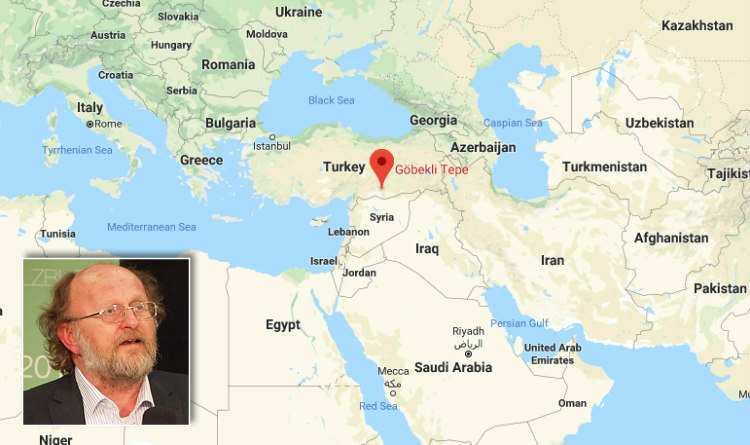
https://www.dainst.blog/a-rather-odd-figure-the-so-called-kilisik-sculpture-from-adiyaman-turkey/ <<În acest caz, exemplul Kilisik ar reprezenta prima descriere feminină asociată cu sculpturile în formă de T. Deoarece descrierea nu are caracteristici sexuale clare, aceasta rămâne o posibilitate destul de vagă și ambivalentă, care cere cercetări suplimentare.>> IN SCHIMB PILONII CENTRALI DIN STRATUL III/PPNA DE LA GOBEKLITEPE dupa parerea mea REPREZINTA SPIRITE ! Imaginea, din https://voyageturkey.net/wp-content/uploads/sanliurfa_1-678×381.jpg

Gobekli Tepe: Zero Point of the Time and World's First Temple |  VoyageTurkey.Net

Dupa ipoteza mea, este vorba de un spirit care preceda cu mii de ani conceptul complex sumerian reprezentat de ME. Semnul/icoana in forma de “T” s-a pastrat si perpetuat mii de ani, reaparand mai apoi ca semn proto-cuneiform pe la 4.000-3.500B.C.. https://cdli.ucla.edu/tools/SignLists/protocuneiform/archsigns.html Sign https://cdli.ucla.edu/tools/SignLists/protocuneiform/archsigns/ME~a.jpg

Nota toate semnele proto-cuneiforme sumeriene au suferit in decursul timpului o rotatie de 90 de grade, asa incat sa nu ne necajim ca nu avem direct forma T.

Este adevarat, ca https://www.smithsonianmag.com/history/gobekli-tepe-the-worlds-first-temple-83613665/ <<Prapastia care ne separă de constructorii lui Gobekli Tepe este aproape de neimaginat. Într-adevăr, deși stăteam printre megalitii care se apropiau dornici să-și înțeleagă sensul, ei nu mi-au vorbit. Erau cu totul străini, așezați acolo de oameni care vedeau lumea într-un mod pe care nu-l voi înțelege niciodată. Nu există surse care să explice ce ar putea însemna simbolurile. Schmidt este de acord. „Suntem cu 6.000 de ani înainte de invenția scrisului aici”, spune el. „Există mai mult timp între Gobekli Tepe și tăblițele de lut sumeriene [gravate în 3300 î.Hr.] decât de la Sumer până astăzi”, spune Gary Rollefson, un arheolog de la Whitman College din Walla Walla, Washington, care este familiarizat cu opera lui Schmidt. „Încercarea de a scoate simbolismul din contextul preistoric este un exercițiu de inutilitate”.>>

Este conceptul oarecum mai rudimentar sau mai degraba incipient al acestui Me, pentru ca se va vedea ca inca din 9.600 B.C. avea o semnificatie complexa.La sumerieni, Me este esenta oricarui lucru,fapt sau fenomen care tine de viata practica,sociala si religioasa care guverneaza alcatuirea si desfasurarea lor si este de origine divina.

Din https://en.wikipedia.org/wiki/Me_(mythology) << În mitologia sumeriană, un Me (𒈨; sumerian: me; akkadian: paršu) este unul dintre decretele/hotararile divinitatii care este fundamental pentru acele instituții sociale, practici religioase, tehnologii, comportamente, moravuri și condiții umane care fac posibila civilizația, asa cum Sumerienii au înțeles-o posibila. Ele sunt fundamentale pentru înțelegerea sumerienilor a relației dintre umanitate și zei.>>

Pilonii nu reprezinta o zeitate anume si ca atare nu aveau un nume, cu atat mai putin unul concret. Nefiind o zeitate antropomorfa nici nu are aspect omenesc, ci reprezinta o entitate ceva mai abstracta fara o forma anume, cel putin fara o forma cunoscuta. Inchipuitiva ca putea sa reprezinte idea si spiritul vietii.Atunci au facut ca sa fie vizibil ca spiritul are legatura, tangenta cu fiintele si oamenii si de aceea au figurat asa foarte pe departe niste brate.La alti piloni si ideea de feminitate,procreere, totusi pilonii nereprezentand o zeitate ci “spiritul Vietii”.dupa unii cercetatori, Me inseamna dupa unii “legile divine”;”puterile divine”,iar dupa altii se traduce “Vointa de a trai” sau “Fiinta”. Este cumva firesc ca in mod periodic sa se adune sute de oameni la monumente, ei referintuse la pilon “a fi”, “fiinta”. Se pune problema daca chiar a existat semnul, inainte reprezenta tot sunetul me, apoi in ce limba, ce insemna me !? Dupa unii civilizatia imediat precedenta celei de la Gobekli Tepe a fost cea natufiana. A se vedea:NATUFIAN ORIGIN FOR AFROASIATIC?http://languagehat.com/natufian-origin-for-afroasiatic/?fbclid=IwAR10OppBacQvPe65bWDvy2iZQKQCwgKBiUxgvhtylqdzNjJSRQIVs8qtXjY <<The possibility of Natufians speaking proto-Afro-Asiatic, and that the language was introduced into Africa from the Levant, is approved by Colin Renfrew with caution, as a possible hypothesis for proto-Afro-Asiatic dispersal. Posibilitatea natatuenilor de a vorbi proto-afro-asiatică și de a introduce limba în Africa din Levant este aprobată de Colin Renfrew cu prudență, ca o posibilă ipoteză pentru dispersia proto-afro-asiatică. >> Altii zic si presupun Anatolia ca fiind locul de origine al familiei Indo-Europene. Oricum la baza tuturor sta presupusa limba nostratica. Toate cautarile si cercetarile mele in mare parte de natura lingvistica conduc la: ME = “esenta”; “puteri divine”; “a fi”;”fiinta” ;”eu, mie,meu,pe mine” ;”ai nostri”

is.muni.cz › PAPVB_13 › Mi…PDF Sumerian – IS MUNI have tried to include Sumerian within the hypothetical Nostratic … The Sumerian verb me “to be” can be used independently, but is most ..

www.jolr.ru › files › (5)jlr20…PDF Once Again on the Comparison of Personal Pronouns in Proto … de K Babaev · 2009 · Citat de 6 ori — person singular nominative *egHo(m) vs. oblique *me-. … coincidences, like Indo- European *me ‘me’ = Sumerian (Eme-sal) me ‘ id.’.

Talk:Sumerian language/Archive 1 – Wikiwand http://www.wikiwand.com › Talk:Sumerian_language › Arch.. <<Me – I, me; nostratic “ME, MI, -M” – I, me, 1st person; turkic “Men” – I.>>

books.google.ro › books The Nostratic Macrofamily: A Study in Distant Linguistic Relationship Allan R. Bomhard, John C. Kerns — 2011 · Language Arts & Disciplines *mé—/*mo— ‘more, abundant, considerable’: Old Irish mar ‘great’; Oscan mais ‘more’; Gothic mais … Sumerian me ‘abundance, plenty’.

Du-Ku = Hur-sarkmadaki E-Kur kompleksi arasında kutsal yer. E-kur kompleksi arasında kutsal yer (sütun bölgesi). Göbeklitepe tapınak kompleksi arasındaki sütun bölgesi.

March 16, 2021

Sümer tanrılarının çıkış yeri Göbeklitepe gibi görünüyor. Https://en.wikipedia.org/wiki/Du-Ku Du-Ku veya dul-kug [du6-ku3] ‘den kutsal bir yer için Sümerce bir kelimedir İlahi Yer, aksi takdirde kutsal metinlerde özel olarak tanımlanmış bir Tepe, Sümer tanrılarına ritüel tekliflerin yeriydi. Nungal ve Anunna, Gılgamış’tan yazılan bir metinde kutsal tepede ikamet ediyor.

Schmidt, https://en.wikipedia.org/wiki/G%C3%B6bekli_Tepe’den << Göbekli Tepe’yi oluşturan grupların inanç sistemleri hakkında diğer türbeler ve yerleşim yerleri ile karşılaştırmalara dayalı spekülasyonlar da yaptı. Şamani uygulamaları varsaydı ve T şeklindeki sütunların insan formlarını, belki de ataları temsil ettiğini öne sürdü, oysa Mezopotamya’da geniş tapınaklar ve saraylarla ilişkilendirilen tanrılara daha sonraya kadar gelişmeyen tamamen ifade edilmiş bir inancı gördü. Bu, tarım, hayvancılık ve dokumanın insanlara, Annuna tanrılarının, bireysel isimleri olmayan çok eski tanrıların yaşadığı kutsal dağ Du-ku / Ekur’dan getirildiğine dair eski bir Sümer inancına çok iyi karşılık gelir. Schmidt, bu hikayeyi, ortaya çıkan Neolitik dönemin kısmi bir belleğini koruyan ilkel bir doğu efsanesi olarak tanımladı. >>

Https://enenuru.proboards.com/thread/176/du-ku-cosmology << ‘den Sonra, Black ḫursag̃ ve Kutsal Höyük’e (dul) hitap ediyor ve bu mükemmel tartışmada yeni bir şey ortaya çıkıyor: “Şimdi ḫursag̃ terimleri” tepe “ve dul” höyük “, bu terimlerin günlük konuşma sözlüğünün bir parçası olarak kullanılmasını uygun bir şekilde gösteren ve tamamen edebi bir sözlükle sınırlı olmayan Üçüncü Ur Hanedanlığı’ndan kalma idari saha planlarından bilinmektedir. ḫursag̃ tarlaların ekilmesi zor olan “tepelik” kısımları için (bu nedenle ḫursag̃ “tepe (ler)” olarak çevrilebilir) ve verimsiz olan alanlar için dul (yani, tahrip edilemeyen zemin, çünkü burası harap yerleşim yeridir. Burada “höyük” olarak çevrilen kelime Sümerce dul, Akadca tillu’dur (tabii ki Arapça söylenir). Öyleyse Kutsal Höyük olarak bilinen bir tepe, gök ile yerin ayrılmasından önce Anuna ve diğer tanrıların doğum yeriydi. Onun üzerinde yaşadılar ve insanlık aşağıda yaşadı. Tek bir Kutsal Höyük fikrinin hayal gücü uyarıcısı – bir dul ya da anlat – Mezopotamya ovasının yüzeyinde eski yerleşim kanıtı bulunan sayısız harabe höyük olmalı. Onlarda kimse yaşamadı, ancak onları sadece imleçle araştırmanız gerekiyor – köyünüz bir tanesinin yanındaysa ve bir akşam orada dolaşıyorsanız – seramik kalıntılardan ve ara sıra bulunan kafatası ve kemiklerden, onların yaşadıklarını anlamak için geçmiş. Ama kim tarafından? Efsanevi hayal gücü bize, tanrıların en uzak geçmişte ayakları yerde ama gökyüzüne yakın bir yerde yaşadıklarını söyler. Öyleyse Kutsal Höyük gibi efsanevi bir görüntü veya metafor, çok sayıda ve her yerde bulunan ıssız harabe höyükleri gibi peyzajın genelleştirilmiş unsurlarından türetilebilen tek bir kozmik konumdur. “Özetleme: Farklı kozmolojik materyallerin incelenmesinden, du-ku’nun yaratılışla ilgili Sümer hayallerinde büyük ölçüde yokmuş gibi göründüğünü görebiliriz. …….. Cohen on Sheep and Grain / Yazar, kozmolojik du-ku örneğinin yukarıda olduğu gibi Sheep and Grain münazara şiirinde ortaya çıkışına dikkat çekiyor – diğer bilim adamlarının görüşlerini kısaca özetliyor, yani van Dijk’in du- ku (kutsal höyük), tanrıların geldiği bir tür dünya dağında yer alır (Black’in dediği gibi, hursag). Jacobsen’in n’den bahseder. 27. sayfadan 371. sayfadan “Harplar ….” adlı eserinden. Bu, Jacobsen’ın katkıda bulunduğu önemli bir ipucudur: “Duku,” kutsal höyük “kutsal bir yerdi. Başlangıçta ve temelde terim, üzerine sıvanmış hasat edilmiş tahıl yığınını belirtiyordu, ancak genel olarak yer altı depolamasına genişletildi. Enlil’in ataları-güçleri Dünyadaki doğurganlık için – Duku’da bulunuyordu. ” ….. En-me-šar2-ra “Tüm Özlerin Efendisi” OB’de ve daha sonraki listelerde [Enmešara], Enlil’in ataları bağlamında ele alınır, ancak onlardan biri olarak değerlendirilmez. Onun hakkında diğer üçüncü binyılın sonları ve ikinci binyılın başlarındaki kaynaklardan çok az şey bilinmektedir ve buradaki birkaç gerçek, Enūma Eliš’in mitolojisinden büyük ölçüde etkilenen geç kült yorumlarından ve teolojik metinlerden dağınık bilgilerle zenginleştirilmelidir. …..Kozmogoni için bu çatışmanın anlamı, özler, ben ve kutsal hükümet olan nam-tar, “kaderleri belirleyen” arasındaki gerilimde yatmaktadır. Özler doğası gereği varoluşun bir parçasıdır, yaratılanla birlikte var olurlar, ancak kendileri yaratılmazlar. Enlil, An ve Enkig aktif hükümdarlığı temsil ederler, özleri tanrılara dağıtırlar ve her birine kendi görevi olan nam-tar’ı atarlar. Özler, adil kuralın amaçlarına hizmet eder hale getirilmiştir. Beyinsiz, eski özler kozmosu gitmek zorundaydı, ama mücadele etmeden vazgeçmedi, isyan etti: Enmešara, “Tüm Özlerin Efendisi”, Enlil gibi isim-tar ve yönetmeye çalıştı, ama başarısız oldu ve mağlup oldu. Orada olan şey, sonsuza dek ilahi hükümete tabi oldu.……. Ayrıca, bir ilahiden İnanna’ya bir satır, du-ku’nun E-kur tapınak kompleksinin binaları arasındaki fiziksel varlığını da anlatır: “Leydi ……! Geri dönen kahraman gençlik, Inana … …. Nibru’daki E-du-kug’daki tapınakta …… ”1993 tarihli Antik Yakın Doğu’nun Kült Takvimleri adlı eseri aşağıda esas olarak değineceğim M. Cohen, du-ku’nun E-kur kompleksi 2 ağıtta ve ayrıca ona du6-kù ki-kù “Kutsal höyük, kutsal yer” olarak veren “Dilmun” adlı bir eršemma-ilahide. Du-ku’yu Tummal kompleksi olarak bilinen – E-kur’un kendisine yakın bir yapı olarak konumlandırılmış olarak daha da izole ediyor, >>

From https://cdli.ucla.edu/tools/SignLists/protocuneiform/archsigns.html Sign ME

This image has an empty alt attribute; its file name is ME~a.jpg

Sümer proto-çivi yazısı işareti KU: “kutsal” https://cdli.ucla.edu/tools/SignLists/protocuneiform/archsigns.html

This image has an empty alt attribute; its file name is KU~a.jpg

Sümer proto-çivi yazısı işareti Du: “höyük”

This image has an empty alt attribute; its file name is DU6~a.jpg

İlk Sümer Sözlüğü’nden – Çivi Yazılı Dijital Kütüphane … cdli.ucla.edu ›pubs› cdlp ›cdlp0003_20160104 · Pennsylvania Sümer Sözlüğü … agrun-ků tanrıça Ninlil’in Ur’daki kutsal alanı (LU 16) … ků (g ) (kug) kutsal, kutsal olmak; kutsallaştırmak Göbeklitepe burcu ?? kutsal mı?

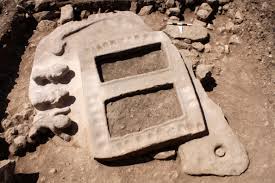
Portals at Gobekli Tepe | Göbekli tepe, Ancient civilizations, Ancient  mysteries
Guarded by beasts: a porthole stone from Göbekli Tepe | The Tepe Telegrams
https://tepetelegrams.wordpress.com/2017/03/20/guarded-by-beasts-a-porthole-stone-from-gobekli-tepe/

Nereden https://www.facebook.com/TempleofSumer/posts/blessed-du-ku-from-temple-of-sumer-the-month-of-the-sacred-moundholy-hills-and-s/833633270129967/ << Blessed adresinden Sümer Tapınağı’ndan Du-ku! “Kutsal Höyük Ayı” Kutsal Tepeler ve Kutsal Dağlar – Duku Festivalinin Temelleri Kutsal tepeler ve kutsal dağlar, en eski çivi yazılı tabletlerden İncil kutsal metinlerindeki merkezi yerlerine kadar, Eski Yakın Doğu Edebiyatının çoğuna nüfuz eder. Musa’nın Sina Dağı’nın tepesinde duran, Tanrı’dan kutsal çivi yazılı tabletler alan, insanlığa tanrılaştırılmış Hammurbian yasaları veren Musa’nın görüntüsünden; İlyas Peygamber’in Karmel Dağı’nda duran ve Tanrısından kendisini Baal’den daha güçlü olduğunu kanıtlamasını isteyen imajına; ve dağda vaaz veren İsa’nın imajına kadar. Dağlar, Göklerin gökyüzüyle buluştuğu yerde yaşayan “Tanrı’ya daha yakın” olarak görüldüklerinden, hem Yahudi hem de Hıristiyan literatüründe her zaman büyük bir öneme sahip olmuştur. Bu fikrin bir sonucu olarak, Tanrı’nın ilahi bilgeliğini bir dağın tepesinden kutsal yazılarda bahşettiğini sık sık görüyoruz. Bunlar, en eski zamanlara, İncil’in parşömen haline getirilmesinden çok öncesine ve Patrik İbrahim’in Sümer Şehri Ur’dan yolculuğuna başlamasından çok önce, medeniyetin olduğu bir zamana kadar uzanan kavramlar ve ana motiflerdir. daha yeni başlıyordu.Çünkü bu Korkmuş Höyüğün üzerinde, Cennet ve Yeryüzünün “Ursag̃” (tepe) üzerinde, atalara ait Tanrıların yaratıldığı söylendi. En eski literatürde, MÖ 3. binyıla tarihlenen ‘Koyun ve Tahıl Arasındaki Tartışma’ adlı Sümer şiiri, Anunna’nın bulunduğu yer olan ‘bozkır’ anlamına gelen Sümer ‘Edin’i anlatan yaratılış efsanesine verilir. Tanrılar ilk yaratıldı. Bu tepe, Göklerin yeryüzüne oturduğu ve insanlığa ilk yaşam alanlarının verildiği noktada bulunuyordu. Bu altmış bir satır mit, İncil daha yazılmadan ve “Cennet Bahçesi” bir kavram bile olmadan iki bin yıldan fazla bir süre önce taşa tutulmuştu. Daha sonra, Ur döneminin Üçüncü hanedanından (MÖ 2200) itibaren, ‘Edin’ teriminin ‘tepe’ anlamına gelen ‘Hurşag’ veya bazı durumlarda Akadca’da ’tillu’ olarak yeniden ifade edildiğini gördük. Tarih öncesi höyükleri betimler. Ünlü Asurolog Jeremy Black, “Gizli Yerlerde Saklanan Zenginler” de, günümüz bilim adamlarının aksine, Sümerlerin insanlarının nereden geldiklerine ilgi duymadıklarını ve literatürlerinde nadiren yazdıklarını belirtti. Tanrıları, evrene düzen ve hizmet ettikleri topluma uygarlık getirmeye niyetlenen medeniyet tanrılarıydı. Bu nedenle, Sümerler inanılmaz derecede ileriye bakan, yaratıcılığa ve icatlara odaklanmış ve geçmişlerine bakmaktan ziyade daha iyi bir yarın için çalışan insanlardı. Öte yandan, Sümerler, zamanın başlangıcından beri yeryüzünde yaşamadıklarını ve ilk insanların, hayvanlar gibi medeniyetsiz bir durumda yaşadıkları, medeniyetten önce bir zaman olduğunu biliyorlardı. Gılgamış’ın Enkidu’su için ilham.Sümerler, medeniyetin çok daha sonraki bir gelişme olduğunu anladılar ve dünyanın nasıl ortaya çıktığı ve zamanın başlangıcında olayların nasıl olduğu hakkında spekülasyon yapmak onları büyüledi. “Koyun ve Tahıl Arasındaki Tartışma” da Kutsal Höyüğün, gökyüzü ve dünya ayrılmadan önce Anuna Tanrılarının doğum yeri olarak belirlendiğinden, merkez sahneyi aldığını görüyoruz. Anuna Tanrıları, kayıtlı tarih öncesinden kalma kadim Tanrılardı. Onlar, Sümer döneminde ve Akad döneminin sonlarında, Yeraltı Dünyasında Ereşkigal’in tahtının önünde oturan yedi yargıç olarak tasvir edilen Tanrılardı, birincil işlevleri insanlığın kaderini belirlemektir. Eski Babil döneminde, Anuna’nın Netherworld’ün chthonik tanrıları olduğuna inanılıyordu. ‘Akad’ın Laneti’nde Kutsal Höyük, Büyük Tanrı Enlil’in, Kutsal Höyüğün Efendisi En-duku-ga ve Kutsal Höyüğün Leydisi Nin-duku-ga’nın büyük atalarının bulunduğu dinlenme yeri olarak da tanımlanmaktadır. . Bu ilkel tanrılar, Enlil’in kendisinden bile önce gelmişti ve Enlil, An ve Ki’nin ilk doğan oğludur. Enlil’in ebeveynlerinden birinin ebeveynleri olabilirler veya daha da geriye gidebilirler. Jeremy Black, bu efsaneyi yazarken, Sümerlerin bu höyüklerle çevrili bir topraklarda yaşadıklarını ve onların en eski atalarının ve hatta efsanevi hayal güçlerini besleyen muhtemelen Tanrıların kendilerinin atalarının mahvolmuş yerleşimleri olduklarını bildiklerini teorileştirdi. . Sümer, MÖ 5500 ile MÖ 4500 arasında karmaşık bir medeniyet olarak ortaya çıkmış olsa da, nehirler arasındaki topraklarda, bundan çok daha önce Neolitik çağlara kadar uzanan bir yerde yaşayanların olduğu açıktır.Bu ilk sakinlere ilk Fıratlılar veya Ubeyyalılar diyoruz ve arkalarında birçok işaret bırakmışlardı. Bu ilk sakinlerin çoğu, muhtemelen Sümerlerin kendilerinin çok eski atalarıydı, ancak o zamandan önce “medeniyetler” olarak sınıflandırılmamışlardı. ‘Medeniyet’ terimi yalnızca ‘kaydedilmiş tarih’ ile devreye girer ve bunlardan kentsel gelişim, kültürel seçkinler tarafından empoze edilen sosyal tabakalaşma, doğal çevreden algılanan bir ayrılık ve tahakküm içeren bir dizi işaretleyici ile karakterize edildiğinde, ve karmaşık yazı sistemleri gibi sembolik iletişim sistemleri. Yani, Sümerler tüm bu kriterlere uyan ilk gerçek medeniyet olsa da, ataları muhtemelen bu noktadan önce bin yıl boyunca bu bölgede ve çevresinde yaşamışlardı. Jeremy Black şöyle devam etti: “Tek bir Kutsal Höyük fikrinin hayal gücü uyarıcısı – bir dul ya da anlatım – Mezopotamya ovasının yüzeyinde antik yerleşim kanıtı bulunan sayısız harabe höyük olmalıydı. Onlarda kimse yaşamadı, ancak onları sadece imleçle araştırmanız gerekiyor – köyünüz bir tanesinin yanındaysa ve bir akşam orada dolaşıyorsanız – seramik kalıntılardan ve ara sıra bulunan kafatası ve kemiklerden, onların yaşadıklarını anlamak için geçmiş. Ama kim tarafından?Efsanevi hayal gücü bize, tanrıların en uzak geçmişte ayakları yerde ama gökyüzüne yakın bir yerde yaşadıklarını söyler. Öyleyse Kutsal Höyük gibi efsanevi bir imge veya metafor, çok sayıda ve her yerde bulunan ıssız harabe höyükleri gibi manzaranın genelleştirilmiş unsurlarından türetilebilen tek bir kozmik konumdur. “Ünlü Alman arkeolog ve ön ve proto-tarihçi Klaus Schmidt, ‘Koyun ve Tahıl arasındaki Tartışma’da yazılan orijinal’ Duku’nun M.Ö. 9130’a kadar uzanan eski Neolitik dağ kutsal Göbekli Tepe’den başkası olmadığına inanıyordu. Şiirin kendisinin antik sitenin kültürel bir hafızası ve insanlığın ağırlıklı olarak avcı toplayıcılardan kalıcı bir yerleşim zamanına geçtiği zamandan kalma mito-tarihsel bir anlatı olduğuna inanıyordu. Göbekli Tepe’nin bir gün Kuzey Mezopotamya olarak sınıflandırılacak bir yerde yer aldığını ve bölgenin kendisinin bir gün Güney Mezopotamya’daki Sümer Şehri Ur olacak yerden sadece yedi günlük yürüme mesafesinde olduğunu ve hatta eşek ya da Fırat Nehri’nde tekne ile seyahat ederken bundan daha yakın. Muhtemelen bu gömülü ve terk edilmiş “antik kent” in tıpkı Sümer mitinde olduğu gibi engebeli ve dağlık bir çevrede yer alması tesadüf değildir ve arkeolojik kanıtlara göre birçok kişinin hayvancılığın doğum yeri olduğuna inanılan yer olması efsaneye uymaktadır. mükemmel de.Ancak daha da zorlayıcı olan şey, efsanede yer alan tahılın yaratılmasıdır, özellikle Göbekli Tepe’yi çevreleyen tepelerde bulunan antik einkorn buğdayını düşündüğünüzde, yetiştirilen her tür buğdayın tek genetik atasıdır. ve bugün dünyanın her yerinde yenildi. Üçüncü Ur Hanedanlığı döneminde ve yedi bin yıldan fazla bir süre sonra, Kutsal Höyük Duku Festivali sırasında sembolik bir temsiliyet üstlenmişti, çünkü dini bayram öncesinde hasat edilmiş tahılda inşa edilmişti. ‘Duku’ teriminin bu yeni anlamı, bilim adamları arasında kafa karışıklığına neden olmuş gibi görünüyor, çünkü çoğu akademisyen Kutsal Höyük’ü tarihi bir yer olarak kabul ederken, bu sembolik tasvirin yapısını detaylandıran metinleri okuyan Thorkild Jacobsen gibi diğerleri onun kökenini gördü. “harmanlanmış tahıl yığını” olarak ve Duku’nun bir tür yer altı deposu olması gerektiği sonucuna vardı. Bununla birlikte, Sümer dininin uygulayıcıları olarak, bazen akademisyenlerin metindeki edebi tasvirlere fazla odaklandıkları ve sempatik büyü kavramları konusunda bilgili olanların da onaylayacağı gibi, bazen gizli anlamlar görme lüksüne sahibiz. Görünüşlerinde benzerlik yasaları açıktır. Bu tahılın duvarlarının inşa edilme yönteminden, ‘Duku’nun’ içerdiği hasatla birlikte, verilen süt sunuları ve hazırlanan düzinelerce kuzunun sunuları ile birlikte, ataların anlattığına inanılmaz derecede benzediğini görebiliriz. hepsi ‘Koyun ve Tahıl Tartışması’ mitiyle yakından bağlantılıdır ve bu, Tanrılara hayat verilen efsanevi Kutsal Höyük ile bağlantılıdır.Bu nedenle, bu tahıl Duku’nun daha sonra geldiğini ve başlangıçta kült faaliyetlerinin bir parçası olarak yaratılan sembolik bir yapının gelişimi olduğunu ve daha sonra buradan tahıl siloları fikrine dönüştüğünü söyleyebilirim. Duku’nun 20 Eylül’de yeni ayın görülmesiyle doğru bir şekilde başlar, ayın ilk günü 21’inde doğru bir şekilde başlar. Bu sırada, aslında ayın sonlarına kadar gerçekleşmeyen Duku festivali için hazırlıklar yeni şekillenmeye başlayacaktı. Bu süre zarfında, Şuruppak ve Nippur arasındaki kanalın ortasında yer alan “kutsal bir şehir” olan Tummal’da sembolik bir Kutsal Höyük inşa edilir ve bu da Tell Dlihim bölgesiyle olası bir özdeşleşmeyi düşündürür. Tummal’ın kült merkezi bazen metinlerde, tıpkı Eridu gibi, sazlık ve bereketle bağlantılı ilkel bir şehir olarak tanımlanır. Duku Festivalinin kendisi aslında ayın 27. ve 28. gününde veya 17 ve 18 Ekim’de karanlık ay zamanında gerçekleşir. Kutsal Höyük Festivali başladığında, Kral’ın eşlik ettiği Enlil ve Ninlil kült heykelleri, diğer Nippurian tanrılarının kült heykelleri ile birlikte Nippur’daki Ekur Tapınağı’ndan alınıp tekneyle Tummal’a götürüldü. seçkinler töreni başlatmak için toplanmıştı. Festival süresince ritüel ve kurbanların ardından halka büyük miktarlarda yiyecek ve içecek dağıtıldı. Festival, 19 Ekim’de yeni ayın görünmesinden sadece birkaç gün önce gerçekleşir.Yeni ayın ortaya çıkışı hiç şüphesiz festivalin sonunu işaret ediyor ve Apin Du-a ayının başlamak üzere olduğunu gösteriyor. Bu gün okumak için iyi bir efsane, çoğu için ‘Koyun ve Tahıl arasındaki Tartışma’ olurdu. Bu parçada ele aldığımız nedenler, çünkü efsane Duku ile yakından bağlantılıdır. Bu bayram için uygun adaklar süt ve tahıllardır ve birçok Sümer Yeniden Yapılanma Uzmanı onları küçük kekler halinde pişirecektir. Ekmek yapımı, medeniyetin temel bir yapı taşıdır ve tahılın ekilmesini ve inceltildiğini gösterir. Bir kek haline getirmek ve dondurmak, sembolik olarak üzerine sıvanmış bir tahıl yığınını gösterir. Top kek tarifi süt içermelidir, çünkü bu höyüğün en yaygın sunumlarından biridir. Kutsal Höyük Bayramı genellikle harika bir kutlama ve ziyafet zamanı olarak görülse de, aynı zamanda kasvetli alt tonları olan dikkatli olmalıyız. aynı zamanda yeraltı dünyasının Tanrılarına saygı duyulduğu ve ataların hatırlandığı bir dönem olduğu için, geçmişte kaybettiklerimize saygılarımızı sunmayı ve bunu yaparken onların başarılarını takdir etmeyi de unutmamalıyız. O anılar, kaybettiklerimiz asla bizi terk etmeyecek. >>

Du-Ku = Hur-sarkmadaki E-Kur kompleksi arasında kutsal yer. E-kur kompleksi arasında kutsal yer (sütun bölgesi). Göbeklitepe tapınak kompleksi arasında sütun bölgesi (dairesel alan). Toros dağlarında Göbeklitepe tapınak kompleksi arasında sütun bölgesi (dairesel alan) https://aratta.wordpress.com/2015/09/04/nippur-e-kurduranki-the-omphalo-of-the-sumerians/ < Ekur (É.KUR), “dağ evi” anlamına gelen Sümerce bir terimdir. Yunan mitolojisinde Olimpos Dağı’na paralel olan tanrıların Bahçesi’ndeki tanrıların topluluğudur ve antik Sümer’in en saygın ve kutsal binasıydı. Zigguratların dağ evleriyle açık bir ilişkisi vardır. Duranki (Dur.An.Ki), Tanrıları tarafından yaratılan insanlar için Sümer terimiydi. Dur, Bond’a, An, Cennete veya gökyüzüne, Ki, Dünya’ya çevrilir. >

The mysterious H and I signs on Göbeklitepe pillars.

March 14, 2021

On independent ways and not much different reasoning I came to the close and same conclusions ..... as regarding these above mentioned signs.I am stressing that the signs are far from animal-related pictograms, I am shocked to have at that remote time so HIGH STILISED IDEOGRAMS.

From Cosmic Power of the Shaman and Symbols at Göbekli Tepe – Part II by OZGUR ETLI https://www.ancient-origins.net/opinion-guest-authors/cosmic-power-shaman-and-symbols-g-bekli-tepe-part-ii-005194?fbclid=IwAR3su5G7VhU0T8iOqxKp9Lmk5XTpsaiFG-nOMch3cE52vHClRWhahVkhge8 <<The H Symbol

The pillars at Göbeklitepe depict the “H” sign
Pillar-18, 

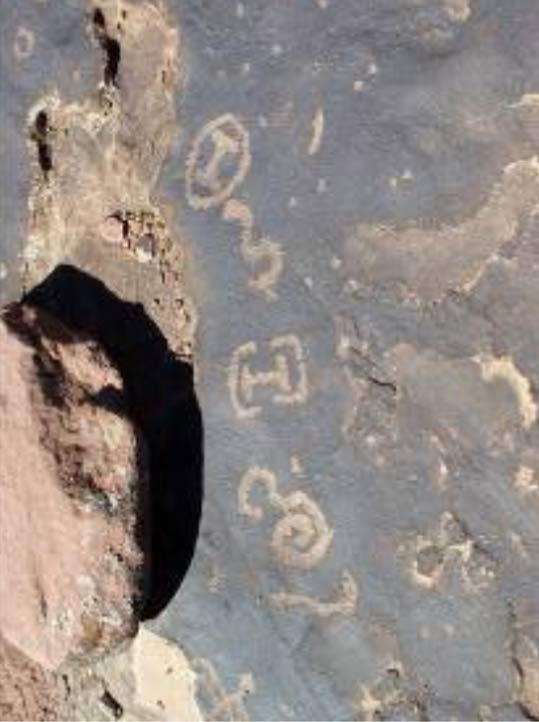
One of the highly disputed symbols is the H-like symbol (and also “( H )” symbol) which is seen carved on  Enclosure D pillars. Some say this symbol emblematizes the Orion constellation. I think this is not true. Because, besides the “H “symbol, there is an “I-like” symbol, which can define as slanted “H”. Both of them are not related to Orion. To provide some intriguing and factual meanings based on cultural and archaeological datas:“H” symbol is not only a monolith symbol itself. It consists of two parts, which we can define as Tau. We encounter the same “H” symbol in Utah petroglyphs which are made by Anasazis. Indeed, we see the complete “( H )” symbol. Here the “H” symbol is not alone. On both sides there are other symbols.

Utah petroglyphs
Utah petroglyphs

Ray Urbaniak interprets the “H” symbol to mean double T shapes. Two T shapes butted together form a double T. He also says that Tau represents half of which is in the spiritual world. So, we can imagine that the “H” symbol consists of two Tau symbols. In my opinion, both of the side symbols next to “H” symbol represent the rising and setting sun. This tripartite character matches a verbal expression of mythological ideas about the three states of sun throughout the day (or moon throughout the night). The Ancient Egyptian god says: I am Khepra in the morning, I am Ra at noon, I am Atum in the evening—the names of deities that represent the sun in its various states. The I Symbol The “I” symbol of ancient Mexican mythology not only exhibits a single Tau of two forms, but in different positions, as well as two double-headed figures joined in one, which illustrates the duality, above and below, or heaven and earth.Turkish rug motifs also contain “H” and “I” symbols. The meanings of these symbols are “marriage”, “unity of family” and “faithfulness of lovers”. Sometimes it represents “motherhood”, “fecundity” and “birth”. Among these rug motifs an important one, the so-called “Eli Belinde (Hand on belly)”, seems quite like Göbekli Tepe’s central pillars, upon which we see both hands on omphalos.In Proto-Turkish culture the “I” symbol was called as the “ON: Cosmos”. Interestingly, In Chinese culture “I” symbol represents the shaman or spirit intermediary, so-called Wu. The widespread usage amongst indigenous American peoples of the inverted and upright Tau shape as emblems of the above and below is abundantly proven and doubtlessly arose as naturally as the Chinese characters “Shang: Above”, employed as a symbol for heaven, and “Lea: Below or Beneath”, employed as a symbol for earth. The connection between Heaven and Earth represents the creation of innocence and this is reflected by the central line.

The Chinese characters “Shang: Above”, employed as a symbol for heaven, and “Lea: Below or Beneath”, employed as a symbol for earth

The Chinese characters “Shang: Above”, employed as a symbol for heaven, and “Lea: Below or Beneath”, employed as a symbol for earth. So, I can suggest that the mysterious “I” symbol is about a “Heaven (Sky) – Earth connection: so the life could exist”. In shamanic belief, Earth takes its life force from the sky via the navel cord. Göbekli Tepe should be seen as an important site for this reason. (Interestingly, In Turkish “Göbek” means “The Navel”). In this, creative powers unite for birth or rebirth. Therefore, some specific days are vital for taking life energy from the sky or heaven. Life force is believed to be always there, but not always visible. It is believed to be visible on specific days of year. These days are the equinox and solstice days. On the other hand, the “H” or slanted “I” symbol may be about East-West, Woman-Man or God-Goddess connections. The earth and sky motifs, and the rituals represented by these motifs, were probably linked together as a ritual duality. In a duality, neither earth nor sky can exist without the other, and both earth and sky-related rituals were necessary elements in the lives of people, such as seen in the Ho’e’ga; The Osage (Great Plains Native American) ritual name for earth: an enclosure in which all life takes on bodily form. Why can it not be the same in Göbekli Tepe? It is possible that the placement of the shaman is a reminder of the shaman’s roles as a ritual functionary and mediator between the natural and supernatural worlds. In this case, the shaman may have also served as a ritual bridge between earth and sky. >>

I found another opinion where T=below and upside T= above: From Gobekli Tepe: The Navel, The Center of the Earth Cliff Richey https://www.academia.edu/35934540/Gobekli_Tepe_The_Navel_The_Center_of_the_Earth

In order to understand, the Gobekli Tepe, Pillar 56 that is composed of, mostly, Birds and Serpents we need to understand what the (black) Pillar Form represents. The Large Size indicates, the great one,The Pillar is in the overall Form of a “T” shaped stone, that is based on the gesture sign for, below.6 In the gesture sign the two hands together indicate by a Straight Line, the surface, usually indicating, the land’s surface. Illustration 10: Composition of the “T” Form As a Form the “T” simply indicates, below. Additional meaning is obtained by dividing the Form into it
component, Gesture Sign, parts: The Top surface, The Horizontal Bar as the gesture sign for, a
horizontal-place, and the Stem, that means, a vertical-place. The Great Kiva in New Mexico is a below the surface structure like the one in Gobekli Tepe. The “T” shaped doorway has steps leading down into the circular excavation. The Kiva was probably, cosmological, and considered as within the underworld. The Kivs is a chamber, built wholly or partly underground, used by male Pueblo Indians for religious rites. …….. The Feet are in the Form of the upside-down the “T” Form (the opposite of the upright “T” Form) meaning,
above, on, the surface.
>>

My opinions: – H and I signs, beeing highly stilised signs, must represent rather complex abstract notions. – I was the first one wich associated Tau-shaped pillars with sumerian proto-cuneiform sign “Me”, where Me beeing a sign related to the divine/divinity, where that divine would be, on Earth or in the Sky. If somebody asking why such distant in time relation, I am remembering you that some signs as cross, swastica has a multiple thousend years long life. Some signs were used thousend years before the advent of writing ! – Double Tau=H/I=MeMe could be Ur-Meme

From Download PDF – Brillbrill.com › book › Bej.9789004173811.i-768_007.xmlNippur exemplars of the Sumerian King List32 begin with the first post- diluvian … Ur-Meme,” the aristocratic family which held some of the highest polit- ical and ..

From Dispute Resolution in the Provincial Courts of the … – Deep Bluedeepblue.lib.umich.edu › handle › leculber_1PDFby LE Culbertson · 2009 · Cited by 14 — Selected Neo-Sumerian Administrative Texts from the British Museum … and subordinates of a wealthy landholder, Ur-meme

From https://en.wikipedia.org/wiki/List_of_Mesopotamian_deities Gula, also known as Nintinugga, Ninkarrak, Meme, Bau, and Ninisina, is the Mesopotamian goddess of healing and the divine patroness of doctors and medicine-workers. – Or represented <ALL/WHOLE World, “Universe”>

  • The H sign-Orion relation is old, consistent and very strong, as Orion beeing most visible constellation on sky. Orion would be in afterlife a GATE TO THE SKY/UNIVERSE ! I found separately the same chinese signs: EVOLUTION OF CHINESE CHARACTERS漢字發展 https://www.ocf.berkeley.edu/~wwu/chinese/handout.html
Do I need to learn Mandarin in order to start a business in Taiwan? - How  to Start a Business in Taiwan
https://startabusinessintaiwan.tw/book/faqs/language/do-i-need-to-learn-mandarin-in-order-to-start-a-business-in-taiwan/

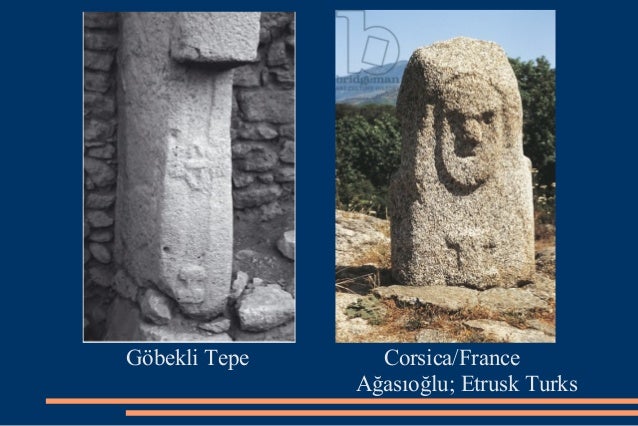
NOTE Upon chinese rendering, T-shaped pillars are related to “down” ,Earth. This is according to old stages of religion developement when lower (place, chtonic) gods preceded later high (Sky) gods. https://hraf.yale.edu/ehc/summaries/religion#gods-and-spirits << Animism was the first form, followed by belief in an afterlife, which, in turn, was followed by shamanism and ancestor worship. They found that ancestor spirits and/or high gods thought to be active in human affairs were probably absent among early humans perhaps reflecting a deep history of egalitarianism in hunter-gatherer groups.>> Out of Utah, such signs were used later in Corsica:

Gobekli tepe: A Proto-Turkish Temple?
Gobekli tepe: A Proto-Turkish Temple? https://pt.slideshare.net/zgrBarEtli/gobekli-tepe-a-prototurkish-temple/20?smtNoRedir=1

Göbekli Tepe’deki o kurnaz tilkiler …

March 6, 2021

Itibaren https://azariablog.com/2015/06/05/is-there-evidence-of-domesticated-dogs-at-gobekli-tepe/

site_1327_3941

Itibaren http://isida-project.org/turkey_2018/gt_en.htm << Temel olarak, sütun üzerindeki kabartmalar, nadiren insan figürlerinin bölümlerinin yanı sıra çeşitli semboller ve ikonlar gibi hayvanların resimlerini içerir. Klaus Schmidt ve Joris Peters makalelerinde Animals in the symbolic world of Pre-Pottery Neolithic Göbekli Tepe, south-eastern Turkey: a preliminary assessment” Tapınakların kısmalarındaki (A-D) resimler hakkında istatistiksel veriler sağlar:

-Göbekli Tepe. Animal depictions on the T-shaped pillars in enclosures A to D. Caveat : enclosures A to D not completely excavated.

Itibaren Gobekli Tepe’s Pillars – Prehistory Decoded – blogger Pilonul 10:

This image has an empty alt attribute; its file name is 20182-p10.jpg
This image has an empty alt attribute; its file name is a7f95-portal.jpg

<< Portalın kuzey tarafındaki B bölmesindeki girişinde bir çift tilki ile çevrili bir boğa başı (bucraniu) vardır. Yine, bu muhtemelen Oğlak ve Kova takımyıldızlarını ve dolayısıyla Taurid göktaşlarının akışını gösterir. Bu yüzden tilkiler ve boğalar açıkça dini ikonografilerinde yer alırken, tilki ve boğa hakkında daha fazla Mezopotamya atasözü bulmak şaşırtıcı değil..>>

Itibaren The fox in Sumerian Proverbs – Foxes from the Gods /Sümer Atasözlerinde Tilki – Tanrılardan Gelen Tilkiler <<İlgili atasözleri şunlardır: Koleksiyon 2:65 Tilki vahşi boğanın toynağına bastı. Acıtmadı, dedi. Koleksiyon 8:21 Bir tilki vahşi bir boğanın testislerini açlıktan ölüyormuş gibi izledi >>

Itibaren http://martinsweatman.blogspot.com/2020/10/gobekli-tepes-pillars.html << Elbette pek çok kişi ilgilendi ve tilkilerin anıtlar üzerindeki motivasyon ve açıklamalarının neler olabileceğini araştırdı.Alanın en eski uygarlığı olan Sümer’de kaydedilen öykülere ve referanslara daha önce yaptığım gibi atıfta bulunacağım. atasözleri, boğayla (ısırmak istediği!?) ve daha sonra ana tanrıça Ninhursag’ın kutsal hayvanı olarak ilişkili göründüğü yer. Fox Mitolojisi | Mitoloji ve Kültürler Amino << Erken Mezopotamya mitolojisinde tilki, tanrıça Ninhursag’ın kutsal hayvanlarından biridir. Tilki, onun habercisi gibi davranır. >> Bu son olayda, tanrı Enki’nin hastalığı vesilesiyle, onu iyileştirebilecek tek kişi Ninhursag’dı. Ama bu bulunamadı, bir ödül karşılığında tilki onu ölüler dünyasından (kız kardeşi Ereskigal’e gittiği yer) getirmeyi teklif etti. Ereshkigal’den – Wikipediaen.wikipedia.org ›wiki› Ereshkigal << Mezopotamya mitolojisinde Ereshkigal (Sümer: 𒀭𒊩𒌆𒆠𒃲 EREŠ. KI. GAL, lafzen “Büyük Dünya Kraliçesi”), ölüler diyarı Kur’un tanrıçasıydı. ya da mitolojide yeraltı dünyası. Sümer. . >> Görünüşe göre tilki ölülerin dünyasına nasıl girip geri döneceğini biliyordu, bu nedenle ölülerin ve büyücülerin dünyasıyla ilgili rollere ve yeteneklere (tam olarak açıklığa kavuşmadı) sahipti.

Itibaren Www.diva-portal.org sitesinden ›getPDF Sümer Ana Tanrıçası Dünyası – DiVA << Anahtar Kelimeler: Sümer ana tanrıçası, Mezopotamya, mit,… tilkiye” bilge, büyücü “denildiğinde SÜMERLERDE TILKI’UN KADIN BİR TANRI İLE İLİŞKİLİ OLDUĞUNU UNUTMAYIN. GÖBEKLİ TEPE’DEN D TEMSİLCİLERİNİN MERKEZİNDE 2 DİREK; BİRİNİ BİR ERKEK TANRIMLA (P31, TOKA KOLYE OLAN) BAĞLIYORUM

Itibaren http://martinsweatman.blogspot.com/2020/10/gobekli-tepes-pillars.html

<< Sütun 31: Muhafazanın ikinci merkezi ayağı D, ‘erkek kardeş’ olan Sütun 18’e çok benziyor, ancak daha az süslü. Kemerdeki veya tokanın yanındaki H ve hilal sembolleri geride kaldı. Ve ‘tutulma’ broşu, bir bucranyum sembolü gibi görünen bir şeyle değiştirilir. >>

DİĞER PİLON (P18 DAHA ZENGİN SÖZLEŞMİŞSE),

Itibaren http://a9414495.eu5.org/origin/gobekli adresinden BİR KADIN ÖLÜMÜ İLE BAĞLANTILIYORUM .html? fbclid = IwAR0yYfLgecEbBFmu-aSKrPETQA3cdiOCc7dBV7ToeQsOwlTHREBxSX7pjAk

This image has an empty alt attribute; its file name is pfeiler-18-mit-podest-2.jpg

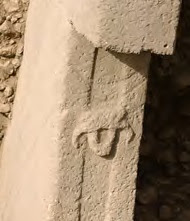
Bölge D’nin 18. Sütunu, tüm tapınak kompleksinin en önemlisi. Bu, cinsel ilişkiyi ve çocukların doğumunu simgeleyen bir kadındır. Gelecekteki aşk, seks, aile ve doğurganlık tanrıçalarının prototipi İnanna, İştar, İsis, Afrodit ve diğerleri. Ona tanrıça N diyelim. Sütunun altında yedi kanatsız kuş var. Bunlar onun çocukları. Kemerde, alternatif semboller C ve H, yeni ayın görüntüsüdür, H, cinsel ilişkinin sembolüdür (dikey çubuklar erkek ve dişidir, yatay stigma erkek organıdır ve H, erkeğin sembolüdür ve cinsel ilişkiye giren kadın). Kadının elleri karnının altına bastırılır ve dikkatinin yoğunlaştığı yeri gösterir. Hamilelik sırasında – rahimdeki bir çocuktur ve cinsel ilişki sırasında ona değer verir – duygusallık ve dikkatin merkezi. Kemerin önünde normal konumda 2 H sembolü ve döndürülmüş (yatık) konumda 3 H sembolü vardır. Sıradan H, ayakta pozisyonda cinsel ilişkiyi sembolize eder, yatar pozisyonda H – cinsel aktin yatar Tilki görüntüsü cinsel organları kapatır. Tilki, cinsel ilişkinin sembolüdür. Eski avcılar genellikle bir delikte saklanan bir tilki gözlemlediler. Bu eylem, cinsel ilişki görünümüne benzer bir forma sahiptir. Bu nedenle tilki, cinsel ilişkiyi sembolize ediyor (astronomların yazdığı gibi bir kuyruklu yıldız değil. Üzgünüz, bilim adamları, astronomlar da astronomiyi severler, ancak gerçek daha değerlidir)). Beş katlı bir tilkinin başı vajinayı, iki ayaklı kuyruk ise erkek cinsel organını tanımlar. Vajina ve erkek organın tek bir hayvanda tarif edilmiş olması, cinsel ilişkide birleşmelerini simgelemektedir. Bir kadının gövdesinde bir tilki resmi. Bu vücuttaki cinsel ilişkinin sembolüdür. Bu kadına ve bu mekana hâkim olan ana eylem olarak seks sembolüdür. Bu, verilen tanrıça H’nin gücü ve kabilelerinde cinsel olarak en yetenekli olan, ilk önce tanrıça H ve sütun 18 için bir imaj olarak hizmet eden ve daha sonra bu tanrıçanın rahibeleri ve hizmetkarları olan bazı Neolitik kadınların gücüdür. . Sütun 18, kadın cinsiyetini, doğumu temsil eder ve genel olarak onun sembolüdür. H sembolü, bir kadının boynundaki bir kolyede bulunan bir kolye gibidir. Bu kadının hayatının anlamı olarak seks sembolüdür. Kolyedeki bu H, bir yerine iki bağlantı çubuğuna sahip olması nedeniyle diğer H’den farklıdır. Üst çubuk bir öpücük, alt çubuk cinsel ilişki veya bağlı ellerdir. Bu zaten sadece cinsiyetin değil, aynı zamanda sosyal ve duygusal bir fenomen olarak sevginin de bir sembolü. Bir kadının boynundaki ikinci kolyede Ay üzerinde İnel. Adet döngüsünün sembolü ve bir kadının vücudunun aylık döngüye tabi olduğu gerçeği. Dolayısıyla, 18. sütunun sembolizmi açıkça ve açıkça kanıtlanmıştır. Tapınak kompleksindeki ana figür aşk tanrıçasıydı. Avcıların ve toplayıcıların göçebe kabilelerini çeken oydu, Taş Devri vahşilerine 20 ton megalitleri işlemek ve taşımak için ilham veren oydu. . O bir seks profesyoneliydi ve seks kültürü, iletişim kültürü, aile kültürünü vahşi avcılara ve toplayıcılara aktarıyordu. Medeniyetin başlangıcıydı. Bu bilgi ve beceriler tanrıça H’ye nereden geldi? Bu daha da karmaşık bir sorudur ve cevabı, Newton’un yerçekimi yasasını nasıl keşfettiği sorusuyla kabaca aynıdır. Yaradan Tanrı onu doğruya verdi,

EĞER TILKI ANA TANRIÇA NINHURSAG’IN KUTSAL HAYVANI OLDUĞUNDA, HANGİ PİLON TILKI, PİLON-TANRI VEYA PİLON-TANRI OLDUĞUNU merak ediyordum! Zirvedeki TILKI, SÜMERLERDE GİBİ “KADIN FATURASI” PİLONUNDA!

Göbekli Tepe. Possibly the greatest leap of mankind.

February 22, 2021

Gobekli Tepe, the World's Oldest Megalith and the World's First Temple
GOBEKLI TEPE, THE WORLD’S OLDEST MEGALITH AND POSSIBLY WORLD’S FIRST TEMPLE
https://unbelievable-facts.com/2018/03/gobekli-tepe.html

Yes, and we may not even know about this leap. We know some moments that we consider turning in the development of mankind, such as the discovery of fire, writing, the industrial revolution, the conquest of outer space. In each of these it is a question of having in fact made only a breach only in a certain field or sector. We are surprised and we have the impression that the Egyptians and the Sumerians had some civilizations apparently suddenly emerged from nothing. Is that so !? We forget that in the case of the Sumerians until the discovery of writing they used hundreds and thousands of years ago a rudimentary system of counting using tokens. In the Neolithic tools and constructions appeared, but we forget that thousands of years ago they used only stone tools. We have a reference moment in the development of the oldest known civilization, the Sumerian one. That would be when the divine knowledge from the gods was shared with the earthlings and thus known and used. This knowledge was called ME. The sign of ME (known only after the discovery of writing) is T / Tau and was known long before the discovery of writing.

https://cdli.ucla.edu/tools/SignLists/protocuneiform/archsigns.html Sign ME~a

Interestingly, mankind has noticed that there is a complicated connection and mechanism by which different components of nature are articulated, otherwise functioning as a kind of clock machine, so perfect. People have noticed cause and effect connections tens of thousands of years ago, but working in detail escapes their understanding. It was a mysterious and complex world whose signs could not be read. In the Neolithic, the Sumerians closely classified and ordered these legitimacies, in the form of MEs. Very interesting, that they realized that the material and the spiritual aspect, both good and bad, are the parts and facets of one and the same reality. Although this stage of human knowledge is known, I am surprised that its true importance is not realized, it is not analyzed and debated at length. Then how can I be surprised that another fact was not even realized. Now comes the shock element, the bomb bomb:

THE CIVILIZATIONS OF HUNTING CONNECTORS WHICH PRECEDED THE SUMERIAN CIVILIZATION (ATTENTION, THERE WERE MORE) THEY HAD A CLEAR VISION AND THEY WERE AWARE OF THE CLOSE CONNECTION BETWEEN ALL ASPECTS OF NATURE AND ACTION. LONG BEFORE AND OBVIOUSLY ON ANOTHER SCALE, THEY WERE AWARE OF THESE LEGITIES CALLED BY THE SUMERIANS “ME”.

In their religious system, different elements were connected to each other by invisible threads, all being interconnected. The mechanism in detail was not known to people or shamans or priests. The whole system was organized around a spiritual entity, the ME who was responsible and explained everything. A kind of essence of life. It doesn’t even matter what name or meaning that name had: being, power, will (to live), I / Me … In the Sumerian language, but also in Nostratica (the language from which theoretically everything is derived) It means “I, me, my “… so it shows that the man took his destiny with all his might in his own hands and decided to assert loudly, strongly even through these monuments, the place he hardly won.The fact that they gathered there for thousands of years, shows that that community was a success. And the success was measured by the effect and effectiveness of practical, but also social, group teachings and the ability to maintain community cohesion. difficulties found resources and strength to resume and continue life.That mythology as if the knowledge came from the gods by divine ordinances seems to have had a real precedent in Gobekli Tepe, long before, with the difference that that knowledge did not fall on their heads from heaven or from the god but were obtained and gathered with much effort through the practice of thousands of years. When we look in the dictionary or in the Sumerian writings what those ME were, we see that the swi pillars of the Gobekli Tepe monuments, if they were called Me, could gather and synthesize simultaneously: divine ordinances, priests, oracles, the essence of life, power, struggle and many more. I wonder, what religion in the world would not want to synthesize in a single word or notion and gather in a bundle everything that could be related to religion or divinity? Let us not forget that in our case what was deified was not a character but the wonderful nature itself in its immensity and complexity.

From https://www.sumerian.org/prot-sum.htm me, mì; gtildee: n., function, office, responsibility; ideal norm; the phenomenal area of a deity’s power; divine decree, oracle; cult. v., to be; the Sumerian copula; to say, tell.

Göbekli Tepe.Muhtemelen insanlığın en büyük sıçraması

February 22, 2021

Gobekli Tepe, the World's Oldest Megalith and the World's First Temple
GOBEKLI TEPE, THE WORLD’S OLDEST MEGALITH AND POSSIBLY WORLD’S FIRST TEMPLE
https://unbelievable-facts.com/2018/03/gobekli-tepe.html

Evet ve bu sıçramayı bile bilmeyebiliriz. Ateşin keşfi, yazı, sanayi devrimi, uzayın fethi gibi insanlığın gelişiminde dönmeyi düşündüğümüz bazı anları biliyoruz. Bunların her birinde aslında sadece belirli bir alanda ya da sektörde sadece bir gedik yapmış olma meselesi… Şaşırıyoruz ve Mısırlıların ve Sümerlerin bazı medeniyetlerin birdenbire yoktan ortaya çıktığı izlenimine kapılıyoruz. Böylece !? Sümerler söz konusu olduğunda, yüzlerce ve binlerce yıl önce yazının keşfine kadar, jeton kullanarak ilkel bir sayma sistemi olduğunu unutuyoruz.Neolitik alet ve yapılarda ortaya çıktı, ancak binlerce yıl önce sadece taş kullandıklarını unutuyoruz. araçlar. Bilinen en eski medeniyet olan Sümer medeniyetinin gelişiminde bir referans anımız var.Bu, tanrılardan gelen ilahi bilginin dünyalılarla paylaşıldığı ve böylece bilindiği ve kullanıldığı zamandı.Bu bilgiye ME deniyordu.

https://cdli.ucla.edu/tools/SignLists/protocuneiform/archsigns.html işaret ME

ME’nin işareti (yalnızca yazının keşfinden sonra bilinir) T / Tau’dur ve yazının keşfinden çok önce biliniyordu. İlginç bir şekilde, insanlık, doğanın farklı bileşenlerinin eklemlendiği karmaşık bir bağlantı ve mekanizma olduğunu, aksi takdirde bir tür saat makinesi olarak işlev gördüğünü, bu kadar mükemmel olduğunu gözlemlemiştir. İnsanlar neden sonuç ilişkilerini on binlerce yıl önce fark ettiler, ancak ayrıntılı çalışmak anlayışlarından kaçıyor. İşaretleri okunamayan gizemli ve karmaşık bir dünyaydı. Neolitik çağda Sümerler, bu meşruiyetleri ME’ler şeklinde yakından sınıflandırıp düzenlediler.İyi ve kötü maddi ve manevi yönün aynı gerçekliğin parçaları ve yönleri olduğunu anlamaları çok ilginçti. İnsan bilgisinin bu aşaması bilinmesine rağmen, gerçek öneminin anlaşılmamasına, uzun uzun analiz edilmemesine ve tartışılmamasına şaşırıyorum, o zaman başka bir gerçeğin bile gerçekleşmemesine nasıl şaşırabilirim. Şimdi şok unsuru, bomba bombası geliyor:

SÜMER MEDENİYETİNİ ÖNCELENEN AVCILIK KONEKTÖRLERİNİN UYGARLIKLARI (DİKKAT, DAHA FAZLASI) AÇIK BİR GÖRÜŞLERİ VARDI VE DOĞA VE AKSİYONUN TÜM YÖNLERİ ARASINDAKİ YAKIN BAĞLANTIDAN FARKINDALIKLARDIR.

Dini sistemlerinde, farklı unsurlar birbirine görünmez iplerle bağlıydı, hepsi birbirine bağlıydı, mekanizma detaylı olarak insanlar, şamanlar veya rahipler tarafından bilinmiyordu. Tüm sistem manevi bir varlık, sorumlu olan ve her şeyi açıklayan ME, bir tür yaşam özü etrafında örgütlenmişti. Bu ismin hangi isme veya anlama sahip olduğunun bile önemi yok: varlık, güç, irade (yaşamak), Ben / Benim … Sümer dilinde, ama aynı zamanda Nostratica’da (teorik olarak her şeyin türetildiği dil) “Ben, ben, benim” anlamına geliyor … bu yüzden adamın kaderini tüm gücüyle kendi eline aldığını ve bu anıtlar aracılığıyla bile kazanamadığı yeri yüksek sesle, güçlü bir şekilde ileri sürmeye karar verdiğini gösteriyor.Binlerce yıldır orada toplanmış olmaları, o topluluğun başarılı olduğunu gösteriyor. Ve başarı, pratik ve aynı zamanda sosyal grup öğretilerinin etkisi ve etkinliği ve topluluk uyumunu sürdürme becerisiyle ölçülüyordu. Tapınakların gömüldüğü zamanlar, bölgedeki topluluklar için aşırı zorluk dönemlerine denk geliyor gibi görünüyor. yaşamı sürdürmek ve sürdürmek için kaynaklar ve güç.Bu mitoloji, tanrılardan ilahi kurallarla gelmiş gibi mitolojinin, çok daha önce Göbekli Tepe’de gerçek bir emsali olmuş gibi görünüyor, bu fark, bu bilginin cennetten veya tanrıdan kafalarına düşmemesi, ancak elde edilmiş olması ve Binlerce yıllık uygulama ile büyük çaba sarf etti. Sözlüğe veya Sümer yazılarına baktığımızda, bu ME’nin ne olduğuna baktığımızda, Göbekli Tepe anıtlarının swi sütunlarının, eğer Me olarak adlandırılırlarsa, aynı anda toplanıp sentezlenebildiklerini görürüz: ilahi törenler, rahipler, kahinler, hayat, güç, mücadele ve çok daha fazlası. Merak ediyorum, dünyadaki hangi din tek bir kelime ya da kavramda sentezlemek ve din ya da tanrısallıkla ilgili olabilecek her şeyi bir araya toplamak istemez? Unutmayalım ki bizim durumumuzda tanrılaştırılan bir karakter değil, büyüklüğü ve karmaşıklığıyla harika doğanın kendisi idi.

From https://www.sumerian.org/prot-sum.htm me, mì; ge: n., function, office, responsibility; ideal norm; the phenomenal area of a deity’s power; divine decree, oracle; cult. v., to be; the Sumerian copula; to say, tell. <<işlev, ofis, sorumluluk; ideal norm; bir tanrının gücünün olağanüstü alanı; ilahi kararname, kehanet; kült. v. olmak>>

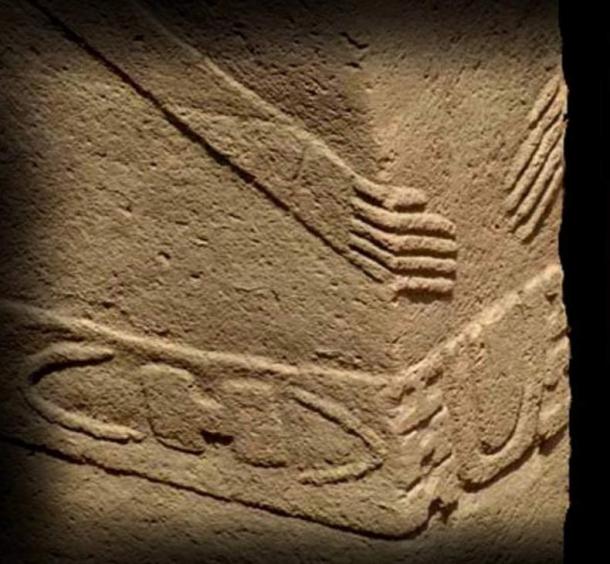
Göbekli Tepe’den çantalar

February 12, 2021

Image result for gobekli tepe handbags
resim QuoraWhat’s your best theory on the handbags of the ancients? Now they’ve appeared in Gobekli Tepe, which is 11k years o

Bu konuya daha önce de saldırdım ama bu sefer daha derine ineceğim. Çünkü dünyanın bazı eski yerlerinde bu çantaların tasvir edildiği onlarca ve düzinelerce eserin resmini buldum. Aslında kaç tane olduğunu bulmak beni şok etti.

Image result for gobekli tepe handbags
Resim The mystery handbag of the Gods: Depicted in Sumer, America, and Göbekli Tepe | Ancient Code https://ro.pinterest.com/pin/480829697706189892/

Kökenleri, rolleri ve önemi hakkındaki fikrim ve açıklamamın bana ait bir yenilik olamayacağını anladım. Hiçbir şey, bu beni üzmüyor. Başkaları tarafından sunulan açıklamalar nispeten yüzeyseldir, çok derinlemesine belgelenmemiş veya tutarlı değildir. Bu çantaların eserler üzerinde tasvir edildiği onlarca görseli görebileceğiniz yerler: What did Gods carry in their “handbags”?  Dato Gomarteli (Ukraine, Georgia) https://rgdn.info/en/chto_nesut_bogi_v_sumochkah Göbekli Tepe: what the Potbelly Hill keeps mum about. A history and astronomy research https://rgdn.info/en/gbekli-tepe._o_chm_molchit_puzatyy_holm._istoriko-astronomicheskoe_issledovanie

Bir şey açıktır ve çoğu insan bu konuda hemfikirdir, yani çantaların ne içerebileceği; İlk eserden: << Peki Tanrılar “çantalarında” ne taşıdı? Manevi bilgiyi taşıdılar >> içinde http://lost-origins.com/perspectives-on-ancient-handbag-images/ söyle: << Göbekli Tepe sitesini aynı zamanda bir eğitim mabedi olarak da yorumlayabiliriz, burada (daha sonraki kültürlerin ifadelerine inanırsak) medenileştirme becerilerinin kasıtlı olarak insanlığa tanıtılmış olabileceği. Aynı bakış açısının bazı kültürlerde hayatta kalan mitlerde ifade edildiğini görüyoruz. >> Alıntı yapılan ikinci makaleden: << Diğer şeylerin yanı sıra Akbaba Taşı’nı gösteriyor. Dünyanın çeşitli halklarının mitolojisinde bu tür “çantalar”, insanlığa İlim veren Tanrıların elinde tasvir edilmiştir. Dolayısıyla, “el çantaları” Bilgi giriş veya aktarım sürecini sembolize eder. >> Kesinlikle katılıyorum. Sonra şöyle diyor: << Bu, gün batımının veya güneşin doğuşunun grafik temsili olarak yorumlanan Akbaba Taşının üst kısmındaki kendine özgü “el çantaları” ile sembolize ediliyor. … Sütunun üst kısmındaki özel “el çantaları” ekinoks ve / veya gündönümü günlerini gösterir. >> Hiç katılmadığım bir konu; – neden bazı çantalar, birkaç yüz yıl önce bile tam olarak ustalaşmamış karmaşık astronomik olaylarla ilişkilendirilsin? – Çantalar Göbekli Tepe’nin yeri ve zamanı için geçerli olan belirli bağlaçlarla veya astronomik konfigürasyonlarla ilgiliyse, başka yer ve dönemlerde varlıkları nasıl açıklanıyor? =========== ŞU DEVLETE CESARET EDİYORUM: ========= SAĞLANAMAYACAK VE BU ANINDA, İŞARETİN EŞSİZ BİR KÖKENİ DESTEKLENEMEZ. UYGARLIKLAR ARASINDAKİ DOĞRUDAN BİR İLETİŞİM OLMAMAKTADIR, BUNLAR ARASINDA BİR KÜLTÜR AKTARIMI “OSMOSİS” OLABİLİR. Aşağıdaki ifadenin (Klaus Schmidt. Sie bauten die ersten Tempel. Das rätselhafte Heiligtum der Steinzeitjäger) olabildiğince doğru olduğu göz önüne alındığında, << MÖ 10. ve 9. binyıllarda tüm görünüşlere göre, Dicle ve Fırat. Bu sistemin içeriği kesinlikle bizim için bilinmiyor, ancak bu uzak zamandaki insanlar için işaret ve sembollerin bir kültürel hafıza deposu biriktirmek için araçlar olarak hizmet ettiği açıktır. >> Bu kültürel hafıza, işaretler ve semboller, 3,500-4,000 IEN proto-yazısının keşfedilmesinden önce Bereketli Hilal’de mevcuttu ve iddia ediyorum ki, bazıları Göbekli Tepe zamanından beri piktografik ikonlar olarak göründü ve önemi kaldı kısmen kolektif hafızada. . Bazıları daha sonra Sümer medeniyetinde bulunacak. Kesinlikle çantalardan bahsetmişken, Sümer proto-kama işaretleri arasında aşağıdakiler var: GA2 işareti: “sepet, kutu, konteyner…”

Image result for The Ornamental and Ritual Version of the Cretan Protolinear Script
Patrick C. Ryan “Proto-Language” sümer işareti GA2 dosyası: /// C: /Users/User/Downloads/Vessels_and_other_containers_for_the_sto.pdf “Bu çerçeve veya kap işareti, benzer bir sepete veya kutuya, yani GA2 işaretine yeniden yerleştirilir” https://www.sumerian.org/sumerian.pdf&nbsp; ”GA (telaffuz edilen nga, ñá): sepet; ev; kararlı (cf., ñar) [GA2 arkaik frekansı: 125; 5 işaret varyantının birleştirilmesi]. GA (nga, ñá): (cf., ñál, ñar, ñe26 ve ma (3)) ”

DUB işareti: “kil tablet”

This image has an empty alt attribute; its file name is DUB~c.jpg
https://cdli.ucla.edu/tools/SignLists/protocuneiform/archsigns.html DUB imzala ~ c 𒁾 – Vikisözlük
en.wiktionary.org ›wiki Sümer’den ödünç alındı ​​𒁾 (dub). NounEdit. 𒁾 (ṭuppu). (kil) tablet · belge · mektup.

URUDU işareti: “ışıklı nesne = bakır”

This image has an empty alt attribute; its file name is URUDU~c.jpg
https://cdli.ucla.edu/tools/SignLists/protocuneiform/archsigns.html URUDU imzala ~ c https://twitter.com/serbiaireland/status/1280939229103742978 urudu, uruda, urud (bakır, metal). Ùru’dan (ışıklı nesne), + dù (yapmak, uygulamak, kalıplamak, dökmek için)

TÜM ANLAMLAR BAZI BİLGİLERE İLİŞKİN DEĞER tablet (= yazılı?), Bakır + sepete koyun. Ancak yukarıdaki ikisinin birleşimi olan ve çantanın gerçek anlamını gösteren bir kelimemiz var: edit.elte.hu ›xmlui› bitstreamPDF’den Sümer dilbilgisine giriş – EDIT – ELTE << Proto- Akkad dilindeki semitik gutturals … sümer dub-šen ➙ tupšinnu “hazine kutusu” ndan alınan yaklaşık 100.000 idari çivi yazısı tabletinin ilişkisel veritabanı >>

======= GÖBEKLİ TEPE’NİN NE ANLAMI OLDU? ==== Evet, sepet / konteynerin (avcı) toplayıcıları vardı. “Aydınlık bir nesne” biraz düşer, çünkü metaller keşfedilmedi … muhtemelen alüvyonlu altın veya değerli taşlar … “Tablet” anlamı, yazı hala çok uzakta olduğu için, muhtemelen büyülü işaretler! Nereden Kader Tabletinden (efsanevi öğe) – Wikipediaen.wikipedia.org ›wiki› Tablet_of_Destinies_ (efsanevi … Mezopotamya mitolojisinde, Kaderler Tableti (Sümer: 𒁾𒉆𒋻𒊏 dub namtar Nereden 2015’ten – Yeni İndoloji – bloggernew-indology.blogspot.com) ›… << Ancak bu bağlamda, Elam formunun ortak bir kök dub / tup ile bağlantılı olduğunu önerebiliriz – ‘damgalamak, etkilemek’ için. PSD), ‘yığmak, yığın halinde dökmek’ (CG), PIE * stup / saplama / dub- ‘yığın, demet, tutam’ >> “Biriktirmek” gibi bu anlamlar bir toplayıcı toplulukta mantıklıdır. Bilgiye sahip olan ilk tanrıyı (Enlil) bulmaya çalıştım, onu nereden aldı, nereden geldi? Ve benden “onları topladığını” buldum (mitoloji) – Nereden Wikipediaen.wikipedia.org ›wiki› Me_ (mitoloji) << M’ler, ilk olarak Enlil tarafından toplanmış ve daha sonra, bunu yapacak olan Enki’nin korumasına teslim edilmiştir. onları çeşitli Sümer merkezlerine götürür. Pasaj bize, Enlil’in veya avcı-toplayıcıların cennet veya Enlil’den daha üstün herhangi bir tanrı bilgisini kaybetmediğini, ancak insanlığın faydalı bilgisinin muhtemelen binlerce yıldan fazla bir süredir “ölümlüler” tarafından toplandığını gösteriyor) >> === UZUN ARALIK, SÜMER “ME” İLE BENZERLİK ===== – EL ÇANTASI İŞARETİ İLK KEZ GÖBEKLİ TEPE NÜFUSU TARAFINDAN BULUŞTU. – BİLGİNİN İNSANLARLA PAYLAŞILDIĞINI HAYAL EDEN İLK OLDULAR Bu tanrı, kahraman veya uygarlaştırıcı karakter efsanesi, dünyanın farklı yerlerinde ve farklı zamanlarda bağımsız olarak ortaya çıkmış gibi görünüyor. O halde Göbekli Tepe’nin çantalarında tam olarak ne olduğunu sormak anlamsız. Yüksek bir güven ve doğruluk katsayısı ile çantaların ve içindekilerin sembolik olduğunu varsayabiliriz. Bilgi aktarımını sembolize ediyorlardı. Sümerlerde bu bilginin tam olarak ne olduğunu ve ME olarak adlandırıldığını bilirsek, Göbekli Tepe için bu bilginin ne dendiğini bilmiyoruz (ki bu daha sonraki Sümer Me’ye eşdeğerdi) çünkü konuşulan dil hakkında hiçbir şey bilmiyoruz. . Dikkatli! Dilbilimciler, herhangi bir dilin değişebileceğini ve 1000 yıl sonra tamamen yanlış anlaşıldığını, eski dilin kalan yüzdesinin çok küçük olduğunu keşfettiler. Veya bizim durumumuzda, 9.600 ile 3.600 arasında, diyelim ki, 6 x 1000 yıl! Neredem Sumerian Me’den memes, nörolinguistik ve bilgi savaşı 22 Nisan 2007, assuefazione https://assuefazione.wordpress.com/2007/04/22/sumerian-me-memes-and-neurolinguistics/ << Sümerler bir dizi Hayatın, inancın, teknolojinin, davranışların ve insan koşullarının her alanını kapsayan kurallar ve düzenlemeler beni aradı. Onlar erken kodlardı, insan algılaması ve kendilerini aktarmak için kodlanmış memlerdi. Nörolinguistik olarak bütün bir popülasyonu programlama girişimiydi. Son derece sosyal öneme sahiplerdi ve Sümer sosyal yaşamının her yönü onlar tarafından düzenleniyordu. Örneğin. fırıncının tapınağa gitmesi (senaryoların veya her neyse [Klein, 1997; Emelianov, 2003] medeniyetin mucidi olan tanrı Enki’nin gözetimine verildiği yer) ve bir me (bir meme, veya daha doğrusu fırın için bir dizi mem). O özellikle, zanaatını nasıl, ne zaman, nerede yapacağıma dair talimatlar içeriyordu. İbadet, devlet, cinsiyet, Sümer yaşamının her yönü benzer şekilde ele alındı. Mitolojilerinin tanrıları beni fethetmek ve en çok sahiplenmek için savaştılar, onları birbirlerinden çalarlardı. O zaman en çok benimle olan tanrı (kral?), Himayesi altında çok sayıda Sümeri bir araya getirebildi (politik olarak konuşuyoruz, ancak bu adamlar kilise ile devletin ayrılması için değildi). Gudea Cylinders’den Ningirsu’ya 50 ME’ye sahip olan Inanna hatırlatıyor: Babası Enlil’in 50 ME verdiği bir savaş tanrısı. Eski Sümer metinlerinden Inanna’nın komşu ülkeleri kazanmak ve birleştirmek için yeterli sayıda ME’ye sahip olması ilginçtir. Böyle bir durum, Inanna’nın ME’lerin eksikliğinden şikayet ettiği ve hatta onları babasından aldığı («Enki ve Dünya Düzeni», «İnanna ve Enki») sonraki yazılı ilahilerin verileriyle keskin bir şekilde çelişir. Ayrıca burada ME’ler ile yapılan seyahatlerden veya onlar için yapılan yolculuklardan bahsedilmiyor. (Emelianov, 2003) Sosyal hayatın menteşeleri kırılırsa, iletişimin pratik olarak yok olduğu ve ilkel bir yaşama geri dönmenin çok kolay olduğu, çağlarının kitle imha silahları olduğum sonucuna varılabilir. Şimdi, Sümerlerin günümüzdekilerden tamamen farklı bir kültür olduğunu söyleyebiliriz (MÖ 3/4000 yıllarından bahsediyoruz), sosyal etkileşimlerinin katı bir şekilde kodlanmış olmasına rağmen embriyonik olduğunu veya hiçbir şeyin gerçekten değişmediğini söyleyebiliriz. tümü… >> O eski zamanların insanları riske girmişlerse ve bilgilerinin kendilerine verilmesini ve bir tanrı tarafından cennetten özgürleştirilmesini beklemek gibi yaramaz bir düşünceye sahip olsalardı, … bu güne kadar bakma riski vardır. ısrarla cennetin güçlerinde.

The handbags from Göbekli Tepe

February 12, 2021

Image result for gobekli tepe handbags
Image, from QuoraWhat’s your best theory on the handbags of the ancients? Now they’ve appeared in Gobekli Tepe, which is 11k years o

I have attacked this subject before, but this time I will go deeper. Because I found in some ancient places in the World dozens and dozens of images of artifacts, in which these handbags were depicted. I was shocked to find how many were in fact.

Image result for gobekli tepe handbags
Image, from The mystery handbag of the Gods: Depicted in Sumer, America, and Göbekli Tepe | Ancient Code https://ro.pinterest.com/pin/480829697706189892/

I found that my idea and explanation of their origin, role and significance cannot be a novelty that belongs to me. Nothing, this does not sadden me. The explanations offered by others are relatively superficial, not too deeply documented or consistent. The places where you can see dozens of images where these bags are depicted on artifacts are: What did Gods carry in their “handbags”?  Dato Gomarteli (Ukraine, Georgia) https://rgdn.info/en/chto_nesut_bogi_v_sumochkah Göbekli Tepe: what the Potbelly Hill keeps mum about. A history and astronomy research https://rgdn.info/en/gbekli-tepe._o_chm_molchit_puzatyy_holm._istoriko-astronomicheskoe_issledovanie

One thing is clear, and most people agree on it, namely what the bags could contain; from the first work: << So, what did Gods carry in their “handbags”? They carried spiritual knowledge>> In http://lost-origins.com/perspectives-on-ancient-handbag-images/ say: <<We might interpret the Göbekli Tepe site as having also served as an instructional sanctuary, where (if we believe the statements of later cultures) civilizing skills might have been intentionally introduced to humanity. We find this same outlook expressed in myths that survive in some cultures.>> From the second cited paper:<<Among other things it shows the Vulture Stone. In mythology of various peoples of the world such “handbags” were depicted in the hands of Gods who gave Knowledge to humanity. Hence, the “handbags” symbolise the process of Knowledge introduction or transfer.>> Absolutely agree. Then he says: <<This is symbolised by peculiar “handbags” in the upper section of the Vulture Stone, which are interpreted as graphic representation of sunset or sunrise. …Peculiar “handbags” in the upper section of the pillar indicate equinox and/or solstice days. >> An issue with which I do not agree at all; – why associate some bags with complex astronomical phenomena not fully mastered even just a few hundred years ago? – If the bags are related to certain conjunctions or astronomical configurations valid for the place and time of Gobekli Tepe, how is their presence explained in other places and periods of time? ================= I DARE TO STATE THAT: ========= IT CANNOT BE PROVIDED, AND AS SUCH AT THE MOMENT, A UNIQUE ORIGIN OF THE SIGN CANNOT BE SUPPORTED. IT CANNOT BE ABOUT A DIRECT COMMUNICATION BETWEEN CIVILIZATIONS, IN EXCHANGE THERE CAN BE A KIND OF CULTURAL TRANSMISSION “OSMOSIS” BETWEEN THEM. Given that the following statement (Klaus Schmidt. Sie bauten die ersten Tempel. Das rätselhafte Heiligtum der Steinzeitjäger) is as true as possible, << To all appearances, in the 10th and 9th millennia BC a widespread system of symbols existed in upper reaches of Tigris and Euphrates. Contents of that system are certainly unknown to us, but it is clear that for people of that remote time signs and symbols served as tools to accumulate a store of cultural memory. >> This deposit of cultural memory, signs and symbols existed in the Fertile Crescent before the discovery of proto-writing 3,500-4,000 IEN and I claim some of them have appeared as pictographic icons since the time of Gobekli Tepe, and their significance has remained partially in the collective memory. . Some will be found later in Sumerian civilization. Strictly speaking of bags, we have among the Sumerian proto-wedge signs the following: GA2 sign: “basket, box, container …”

Image result for The Ornamental and Ritual Version of the Cretan Protolinear Script
Patrick C. Ryan “Proto-Language” sumerian sign GA2 file:///C:/Users/User/Downloads/Vessels_and_other_containers_for_the_sto.pdf  “This frame or container sign is reletad to a symilar basket or box, namely the sign GA2”                                                                                                                                                                From  https://www.sumerian.org/sumerian.pdf&nbsp;  ” GA (pronounced nga,ñá): basket; house; stable (cf., ñar) [GA2 archaic frequency: 125; concatenation of 5 sign variants].
GA (nga,ñá): (cf., ñál, ñar, ñe26 and ma(3)) ”

DUB sign: “clay tablet”

This image has an empty alt attribute; its file name is DUB~c.jpg
https://cdli.ucla.edu/tools/SignLists/protocuneiform/archsigns.html Sign DUB~c 𒁾 – Wiktionary
en.wiktionary.org › wiki
Borrowed from Sumerian 𒁾 (dub). NounEdit. 𒁾 (ṭuppu). (clay) tablet · document · letter.

URUDU sign: “luminous object = copper”

This image has an empty alt attribute; its file name is URUDU~c.jpg
https://cdli.ucla.edu/tools/SignLists/protocuneiform/archsigns.html Sign URUDU~c https://twitter.com/serbiaireland/status/1280939229103742978 urudu, uruda, urud (copper, metal). From ùru (luminous object), + dù (to make, apply, mould, cast)

ALL THE MEANINGS ARE RELATED TO SOME KNOWLEDGE OF VALUE tablet (= written?), Copper + put in the basket. But we have a word that is a combination of the two above and shows the true meaning of the bag: From edit.elte.hu › xmlui › bitstreamPDF An introduction to the grammar of Sumerian – EDIT – ELTE <<The reduction of Proto-Semitic gutturals in Akkadian at around this … relational database of around 100.000 administrative cuneiform tablets from the … sumerian dub-šen ➙ tupšinnu “ treasury box”>>

======= WHAT SIGNIFICANCE DID THE GOBEKLI TEPE HAVE ? ==== Yes, the basket / container had (hunter)-gatherers. A “luminous object” falls a bit, because the metals were not discovered … possibly alluvial gold or precious stones … The meaning “tablet” falls because the writing was still far away, possibly magical signs !? From Tablet of Destinies (mythic item) – Wikipediaen.wikipedia.org › wiki › Tablet_of_Destinies_(mythic… In Mesopotamian mythology, the Tablet of Destinies (Sumerian: 𒁾𒉆𒋻𒊏 dub namtar From 2015 – New Indology – bloggernew-indology.blogspot.com › … <<But in this context we can propose that the Elamite form is connected with a common root dub/tup- ‘to stamp, impress’. Sum. dub ‘to strew; to heap up, pile, pour’ (PSD), ‘to heap up, pour in piles’ (CG), PIE *stup/stub/dub- ‘heap, bunch, tuft’ >> These meanings like “to pile up” makes sense at a gatherer comunity. I tried to find out the first deity (Enlil) who came into possession of knowledge, where did she get it, where did it come from? And I just found that he “collected them” From Me (mythology) – Wikipediaen.wikipedia.org › wiki › Me_(mythology) <<The mes were originally collected by Enlil and then handed over to the guardianship of Enki, who was to broker them out to the various Sumerian centers. The passage shows us that Enlil or the hunter-gatherers did not lose knowledge of heaven or any other deity superior to Enlil, but the useful knowledge of humanity was collected, I add, probably by “mortals”, weighing on over thousands of years) === LONG RANGE, SIMILARITY WITH SUMERIAN “ME” ===== – THE HANDBAG SIGN WAS INVENTED FOR THE FIRST TIME BY THE POPULATION OF GOBEKLI TEPE. – THEY WERE THE FIRST TO IMAGINE THAT KNOWLEDGE IS SHARED TO PEOPLE This myth of a deity, hero, or civilizing character, seems to have appeared independently in different places in the world and at different times in time. Then it is pointless to ask what exactly was in the bags of Gobekli Tepe. We can assume with a high coefficient of confidence and truthfulness that the bags and the contents were symbolic. They symbolized the transmission of knowledge. If in Sumerians we know what exactly this knowledge was and that it was called ME, for Gobekli Tepe we do not know what this knowledge was called, (which was the equivalent of the later Sumerian Me), because we know nothing about the spoken language. Careful! Linguists have found that any language is subject to change and after 1000 years it becomes completely misunderstood, the remaining percentage of the old language being very small. Or in our case, between 9,600 and 3,600, let’s say, it’s 6 x 1000 years!

From Sumerian Me, memes, neurolinguistics and information warfare April 22, 2007 by assuefazione https://assuefazione.wordpress.com/2007/04/22/sumerian-me-memes-and-neurolinguistics/ << The Sumerians developed a set of rules and regulations called me that encompassed every aspect of life, belief, technology, behaviour and human conditions. They were early code, memes codified for human perusal and to pass themselves on. It was an attempt to neurolinguistically program a whole population. They were of utmost social importance and every aspect of Sumerian social life was regulated by them. E.g. the baker was required to go to the temple (where the scripts, or whatever they were [Klein, 1997; Emelianov, 2003], were placed in the custody of the god Enki, inventor of civilization) and obtain a me (a meme, or more properly a set of memes) for bakery. That particular me included instruction on how, when, where to perform his craft. Worship, state, sex, every aspect of Sumerian life were treated similarly. The gods of their mythology waged wars in order to conquer and possess the most me, stealing them from each other. The god (king?) with the most me was then able to aggregate (we’re talking politically, but those guys weren’t for the separation of church and state) a larger number of Sumers under his or her aegis. Inanna, owning 50 ME’s, reminds Ningirsu from Gudea Cylinders: she is a deity of war to whom her father Enlil gives 50 ME’s. It is curious that Inanna of the Old Sumerian texts has a sufficient number of ME’s to win and unite neighbouring countries. Such state of affairs contradicts sharply the data of later written hymns in which Inanna complains about the shortage of ME’s and even takes them from her father («Enki and the World Order», «Inanna and Enki»). Also we do not find here any mention of travels with ME’s or journeys for them. (Emelianov, 2003) One could infer that me were the weapons of mass destructions of their age, when communication was practically inexistent and regression to a primitive life very easy, if the hinges of social life cracked. Now, we can say that the Sumerians were a totally different culture from those of today (we’re talking about 3/4000 years BCE), that their social interactions were embryonic although rigidly codified, or we can say that nothing has really changed at all… >>

If the people of those ancient times had risked and had the naughty idea of ​​waiting for their knowledge to be given to them ready and freed from heaven by some deity,…. there is a risk that to this day they will stare insistently at the strengths of heaven.

Gentutele de la Göbekli Tepe

February 11, 2021

Din QuoraWhat’s your best theory on the handbags of the ancients? Now they’ve appeared in Gobekli Tepe, which is 11k years o

Image result for gobekli tepe handbags

Am mai atacat acest subiect, insa de aceasta data voi merge mai in profunzime. Am gasit in niste site-uri zeci si zeci de imagini a unor artefacte din lumea intreaga, in care erau figurate in antichitate aceste gentute de mana. Am fost socat/zguduit sa constat ca au fost enorm de multe.

Image result for gobekli tepe handbags
Imaginea, din The mystery handbag of the Gods: Depicted in Sumer, America, and Göbekli Tepe | Ancient Code https://ro.pinterest.com/pin/480829697706189892/

Am constatat ca ideea si explicatia mea privind originea, rolul si semnificatia lor nu poate constitui o noutate care sa-mi apartina. Nui nimic. acest fapt nu ma intristeaza. Explicatiile oferite de altii sunt relativ superficiale nu prea adanc documentate ori consistente. Locurile unde puteti vedea zeci de imagini unde sunt figurate pe artefacte aceste gentute sunt: What did Gods carry in their “handbags”?  Dato Gomarteli (Ukraine, Georgia) https://rgdn.info/en/chto_nesut_bogi_v_sumochkah Göbekli Tepe: what the Potbelly Hill keeps mum about. A history and astronomy research https://rgdn.info/en/gbekli-tepe._o_chm_molchit_puzatyy_holm._istoriko-astronomicheskoe_issledovanie

Un lucru este lamurit, si asupra acestuia majoritatea sunt de acord si anume ce contin gentutele; din prima lucrare: << So, what did Gods carry in their “handbags”? They carried spiritual knowledge>> Lb.Rom.: <<Asa deci, ce duc Zeii in gentile lor de mana? Ei duc cunostinte spirituale.>>

In http://lost-origins.com/perspectives-on-ancient-handbag-images/ spune: <<We might interpret the Göbekli Tepe site as having also served as an instructional sanctuary, where (if we believe the statements of later cultures) civilizing skills might have been intentionally introduced to humanity. We find this same outlook expressed in myths that survive in some cultures.>> Lb.Rom.: <<Am putea interpreta site-ul Göbekli Tepe servind ca un sanctuar instructiv, unde (dacă credem declarațiile culturilor ulterioare) abilitățile civilizatoare ar fi putut fi introduse intenționat umanității. Aceeași perspectivă o găsim exprimată în mituri care supraviețuiesc în unele culturi. >>

Din a doua lucrare citata: <<Among other things it shows the Vulture Stone. In mythology of various peoples of the world such “handbags” were depicted in the hands of Gods who gave Knowledge to humanity. Hence, the “handbags” symbolise the process of Knowledge introduction or transfer.>> , Lb.Rom.: <<Printre altele arată Piatra Vulturului. În mitologia diferitelor popoare ale lumii, astfel de „genți de mână” au fost descrise în mâinile zeilor care au dat cunoașterea umanității. Prin urmare, „gențile de mână” simbolizează procesul de introducere sau transfer al cunoștințelor >> Absolut de acord. Apoi zice : <<This is symbolised by peculiar “handbags” in the upper section of the Vulture Stone, which are interpreted as graphic representation of sunset or sunrise. …Peculiar “handbags” in the upper section of the pillar indicate equinox and/or solstice days. >> Lb.Rom.: << Acest lucru este simbolizat de „genți de mână” deosebite în secțiunea superioară a Pietrei Vulturului, care sunt interpretate ca reprezentare grafică a apusului sau a răsăritului. … „Gențile de mână” specifice în secțiunea superioară a stâlpului indică zilele de echinocțiu și / sau solstițiu. >> Chestiune cu care nu sunt deloc de acord; – de ce sa asociezi niste gentute cu fenomene astronomice complexe nu pe deplin stapanite chiar numai cateva sute de ani in urma ? – Daca gentutele sunt legate de anumite conjunctii ori configuratii astronomice valabile pentru locul si timpul lui Gobekli Tepe, cum se explica prezenta lor in alte locuri si perioade de timp ? ================= EU AFIRM CA : =========

NU SE POATE DEMONSTRA, SI CA ATARE PE MOMENT NU SE POATE SUSTINE O ORIGINE UNICA A SEMNULUI. NU POATE FI VORBA DE O COMUNICARE DIRECTA INTRE CIVILIZATII, IN SCHIMB POATE EXISTA UN GEN DE TRANSMISIE CULTURALA “OSMOZA” INTRE ELE.

Avand in vedere ca urmatoarea afirmatie este cat se poate de adevarata, << To all appearances, in the 10th and 9th millennia BC a widespread system of symbols existed in upper reaches of Tigris and Euphrates. Contents of that system are certainly unknown to us, but it is clear that for people of that remote time signs and symbols served as tools to accumulate a store of cultural memory. >> Lb.Rom.: << Dupa toate aparentele, in mileniile al 10-lea si al 9lea IEN a existat un sistem raspandit de simboluri in partea superioara a Tigrisului si a Eufratului. Conținutul acestui sistem este cu siguranță necunoscut pentru noi, dar este clar că pentru oamenii din acea perioadă îndepărtată semnele și simbolurile au servit ca instrumente pentru a acumula un depozit de memorie culturală.>> (Klaus Schmidt. Sie bauten die ersten Tempel. Das rätselhafte Heiligtum der Steinzeitjäger/ Au construit primele temple. Sanctuarul enigmatic al vânătorilor din epoca de piatră)

Acest depozit de memorie culturala, semnele si simbolurile au existat in Semiluna Fertila inainte de descoperirea proto-scrierii 3.500-4.000 IEN si sustin eu unele dintre ele au aparut ca icoane pictograme inca din timpurile Gobekli Tepe, iar semnificatia lor a ramas partial in memoria colectiva. O parte se vor regasi mai tarziu la civilizatia sumeriana. Strict vorbnd de gentute, avem printre semnele sumeriene proto-cuneiforme urmatoarele:

Semnul GA2: “cos, cutie, container…”    

Image result for The Ornamental and Ritual Version of the Cretan Protolinear Script
Patrick C. Ryan “Proto-Language” sumerian sign GA2 file:///C:/Users/User/Downloads/Vessels_and_other_containers_for_the_sto.pdf  “This frame or container sign is reletad to a symilar basket or box, namely the sign GA2”                                                                                                                                                                From  https://www.sumerian.org/sumerian.pdf&nbsp;  ” GA (pronounced nga,ñá): basket; house; stable (cf., ñar) [GA2 archaic frequency: 125; concatenation of 5 sign variants].
GA (nga,ñá): (cf., ñál, ñar, ñe26 and ma(3)) ”

 Semnul DUB:”tablita,de lut”

https://cdli.ucla.edu/tools/SignLists/protocuneiform/archsigns.html Sign DUB~c 𒁾 – Wiktionary
en.wiktionary.org › wiki
Borrowed from Sumerian 𒁾 (dub). NounEdit. 𒁾 (ṭuppu). (clay) tablet · document · letter.

Semnul URUDU:”obiect luminos=cupru”

https://cdli.ucla.edu/tools/SignLists/protocuneiform/archsigns.html Sign URUDU~c https://twitter.com/serbiaireland/status/1280939229103742978 urudu, uruda, urud (copper, metal). From ùru (luminous object), + dù (to make, apply, mould, cast)

TOATE SEMNIFICATIILE AU LEGATURA CU NISTE CUNOSTINTE DE VALOARE tablita(=scris?), cupru+ puse in cos. Dar avem un cuvant care este o combinatie a doua din cele de sus si arata adevarata semnificatie a gentutei: Din edit.elte.hu › xmlui › bitstreamPDF An introduction to the grammar of Sumerian – EDIT – ELTE <<The reduction of Proto-Semitic gutturals in Akkadian at around this … relational database of around 100.000 administrative cuneiform tablets from the … sumerian dub-šen ➙ tupšinnu “ treasury box”>>

======= CE SEMNIFICATIE O FI AVUT GENTUTA LA GOBEKLI TEPE !? ====

Da, cos/container aveau culegator-vanatorii. Obiect stralucitor cam cade, pentru ca metalele nu erau descoperite..eventual aur aluvionar sau pietre pretioase… Semnificatia de origine “tablita” cade intrucat scrisul era inca departe, eventual semne magice !?

Din Tablet of Destinies (mythic item) – Wikipediaen.wikipedia.org › wiki › Tablet_of_Destinies_(mythic… In Mesopotamian mythology, the Tablet of Destinies (Sumerian: 𒁾𒉆𒋻𒊏 dub namtar Din 2015 – New Indology – bloggernew-indology.blogspot.com › … But in this context we can propose that the Elamite form is connected with a common root dub/tup- ‘to stamp, impress’. Sum. dub ‘to strew; to heap up, pile, pour’ (PSD), ‘to heap up, pour in piles’ (CG), PIE *stup/stub/dub- ‘heap, bunch, tuft’ Lb.Rom. << Dar în acest context putem propune ca forma elamită să fie legată de o rădăcină comună dub / tup- „a ștampila, a impresiona”. Sum. dub ‘a arunca; a îngrămădi, a turna (PSD), a „a îngrămădi, a turna în grămezi” (CG), PIE * stup / stub / dub- „grămadă, smoc”>>

Aceasta semnificatie gen “a ingramadi”are sens. Am incercat sa aflu prima zeitate (Enlil) care a intrat in posesia cunostintelor, de unde le-a avut, de unde provin? Si am gasit doar ca “le-a colectat” Me (mythology) – Wikipediaen.wikipedia.org › wiki › Me_(mythology) <<The mes were originally collected by Enlil and then handed over to the guardianship of Enki, who was to broker them out to the various Sumerian centers >> Lb.Rom. : << ME-urile au fost inițial colectate de Enlil și apoi predate în tutela lui Enki, care urma să le distribuie diferitelor centre sumeriene >> Pasajul ne arata ca lui Enlil ori culegator-vanatorilor nu le-au picat cunostintele din cer ori de la vre-o alta zeitate superioara lui Enlil ci cunostintele utile ale umanitatii au fost colectate (adaug eu, probabil de “muritori”, cu greutate pe parcursul a mii de ani)

=== BATAIE LUNGA, SIMILARITATE CU “ME” SUMERIAN =====

SEMNUL GENTUTA A FOST INVENTAT PENTRU PRIMA DATA DE POPULATIA GOBEKLI TEPE. EI AU FOST PRIMII CARE AU IMAGINAT CA CUNOSTINTELE SUNT IMPARTITE OAMENILOR

Acest mit al unei zeitati, erou, sau personaj civilizator, pare ca a aparut independent in diferite locuri in lume si diferite momente in timp. Apoi este lipsit de sens sa ne intrebam ce era exact in gentutele de la Gobekli Tepe. Putem presupune cu un mare coeficient de incredere si veridicitate ca gentutele si continul erau simbolice. Simbolizau transmiterea cunostintelor. Daca la sumerieni stim ce erau exact aceste cunostinte si ca se numeau ME, pentru Gobekli Tepe nu stim cum se numeau aceste cunostinte, (care era echivalentul mai tarziului sumerian Me), pentru ca nu stim nimic despre limba vorbita. Atentie! Lingvistii au constatat ca orice limba este supusa schimbarii si dupa 1000 de ani devine complet neinteleasa, procentul ramas din vechea limba fiind foarte mic. Ori in cazul nostru, intre 9.600 si 3.600 sa zicem, sunt 6 x 1000 de ani !

Din Sumerian Me, memes, neurolinguistics and information warfare April 22, 2007 by assuefazione https://assuefazione.wordpress.com/2007/04/22/sumerian-me-memes-and-neurolinguistics/ << The Sumerians developed a set of rules and regulations called me that encompassed every aspect of life, belief, technology, behaviour and human conditions. They were early code, memes codified for human perusal and to pass themselves on. It was an attempt to neurolinguistically program a whole population. They were of utmost social importance and every aspect of Sumerian social life was regulated by them. E.g. the baker was required to go to the temple (where the scripts, or whatever they were [Klein, 1997; Emelianov, 2003], were placed in the custody of the god Enki, inventor of civilization) and obtain a me (a meme, or more properly a set of memes) for bakery. That particular me included instruction on how, when, where to perform his craft. Worship, state, sex, every aspect of Sumerian life were treated similarly. The gods of their mythology waged wars in order to conquer and possess the most me, stealing them from each other. The god (king?) with the most me was then able to aggregate (we’re talking politically, but those guys weren’t for the separation of church and state) a larger number of Sumers under his or her aegis.

Inanna, owning 50 ME’s, reminds Ningirsu from Gudea Cylinders: she is a deity of war to whom her father Enlil gives 50 ME’s. It is curious that Inanna of the Old Sumerian texts has a sufficient number of ME’s to win and unite neighbouring countries. Such state of affairs contradicts sharply the data of later written hymns in which Inanna complains about the shortage of ME’s and even takes them from her father («Enki and the World Order», «Inanna and Enki»). Also we do not find here any mention of travels with ME’s or journeys for them. (Emelianov, 2003)

One could infer that me were the weapons of mass destructions of their age, when communication was practically inexistent and regression to a primitive life very easy, if the hinges of social life cracked. Now, we can say that the Sumerians were a totally different culture from those of today (we’re talking about 3/4000 years BCE), that their social interactions were embryonic although rigidly codified, or we can say that nothing has really changed at all… >> Lb.Rom.: << Sumerienii au dezvoltat un set de reguli și reglementări numite ME care cuprindea fiecare aspect al vieții, credinței, tehnologiei, comportamentului și condiției umane. Au fost coduri timpurii, meme codificate pentru examinarea umană și pentru a se transmite mai departe. A fost o încercare de a programa neurolingvistic o întreagă populație. Aveau o importanță socială extremă și fiecare aspect al vieții sociale sumeriene era reglementat de ele. De exemplu. brutarului i s-a cerut să meargă la templu (unde scenariile sau orice altceva au fost acestea [Klein, 1997; Emelianov, 2003], au fost plasate în custodia zeului Enki, inventatorul civilizației) și a obținut un ME (un me sau mai corect un set de meme) pentru panificație. Acel ME avea incluse instrucțiuni speciale despre cum, când, unde să-și desfășoare meseria. Închinarea, starea, sexul, fiecare aspect al vieții sumeriene au fost tratate în mod similar. Zeii mitologiei lor au purtat războaie pentru a cuceri și a poseda cel mai mult, furându-i unul de celălalt. Zeul (regele?) cu cele mai multe ME a fost capabil să adune (vorbim politic, dar tipii aceia nu erau pentru separarea bisericii de stat) un număr mai mare de sumerieni sub egida sa. Inanna, care deține 50 de ME, îi amintește lui Ningirsu de la Gudea Cylinders: este o zeitate de război căreia tatăl ei Enlil îi dă 50 de ME. Este curios că textele lui Inanna din vechile sumeriene au un număr suficient de ME pentru a câștiga și uni țările vecine. O astfel de stare de fapt contrazice aspru datele imnurilor scrise ulterior, în care Inanna se plânge de lipsa ME și le ia chiar de la tatăl ei («Enki și Ordinea Mondială», «Inanna și Enki»). De asemenea, nu găsim aici nicio mențiune despre călătoriile cu ME sau călătoriile pentru aceștia. (Emelianov, 2003) S-ar putea deduce că ME erau armele distrugerilor în masă ale epocii lor, când comunicarea era practic inexistentă și regresia către o viață primitivă foarte ușoară, dacă balamalele vieții sociale se rupeau. Acum, putem spune că sumerienii au fost o cultură total diferită de cea de astăzi (vorbim despre 3/4000 de ani î.Hr.), că interacțiunile lor sociale au fost embrionare, deși rigid codificate, sau putem spune că nimic nu s-a schimbat cu adevărat la toate … >>

Daca oamenii din acele timpuri vechi ar fi riscat si ar fi avut ideea nastrusnica sa astepte ca cunostintele sa le fie date de-a gata si slobozite din cer de vre-o divinitate, ….. exista riscul ca pana in ziua de azi sa se holbeze insisteent la tariile cerului.