What is currently known about the Tărtăria tablets and the Vinča symbols?

April 5, 2019

quora.0-1                                                                                                                                         From https://www.quora.com/What-is-currently-known-about-the-T%C4%83rt%C4%83ria-tablets-and-the-Vin%C4%8Da-symbols

“TO BE OR NOT TO BE”(i.e.”Danubian writing”; NOT A NEVER-ENDING STORY !

April 3, 2019


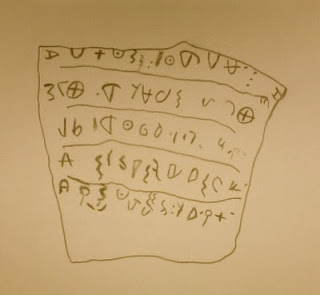
Careful/ Attention !                                                                                                                                                          This post is not a decipherment or reading of any actual written content of Tartaria tablets. Given that the signs do not belong to a single writing system but to several, the page has a purely didactic character. It has the role of trying and testing different writings, in the idea that the tablets would have used one of them. The signs on the tablets belong to several writing systems over a long period of time and which have been used in different geographical areas. In none of the trials did the signs fall into a single type of writing, there always remained signs that came from other writings (or as coming from the unknown). Most of the signs come from the Sumerian proto-cuneiform -shaped ones. The signs in the upper half of the round tablet seem to come from archaic Greek writing. This “collection” of signs seems to be the fruit of one’s rich imagination. As A. Falkenstein and A. A. Vaiman found, (this is also my firm opinion) the author was not a scribe, he had only vague notions about writing in general, and it is not known what he intended  or he was after. There are many elements of inconsistency as well as others that take the tablets out of the usual patterns and norms of honest logic, writing and intentions.                                                                                                                                                       ======                                                                                                                                      ATTENTION:Not be confused: Tartaria tablets not pertain to Vinca-Turdas Culture, they are later products !

In many of my posts, I allready expressed my opininion regarding the subject. Allmost all scientists agree that neolithic Vinca-Turdas not got to the final stage in matter of writing. Even more.                                   I stressed that not ataint even the proto-writing stage (no single evidence or proof).On other opinions side, remained few scientists, in fact only one ,italian Marco Merlini wich remained in the “conservative” part. Folowing, is an excerpts wrom a paper wich is expressing in full my view regarding the supposed “Danubian writing”:

From ALL SHADES OF GRAY:THE CASE OF “VINČA SCRIPT”* Aleksandar Palavestra Department of Archaeology, Faculty of Philosophy University of Belgrade https://www.academia.edu/36456625/ALL_SHADES_OF_GRAY_THE_CASE_OF_VIN%C4%8CA_SCRIPT_Archaica_5_2017_143-165

Marco Merlini, an Italian journalist, a member of the Archaeomythological Institute and the author of the project “The Prehistory Knowledge“, laid down in a lengthy
contribution the semiotic approach to the features of “the Danube Script“, and
explained why the signs of the script can hardly be discerned from ornaments:

„Writing and decoration can both be finalized to transmit messages, packages of
information. The whole world outlook of prehistoric farmers was ex pressed in the
ornamentation: the Land and Under ground World, the Sky, the Sun, the Moon,
the Stars, the Plants, Animals, and People… Observant people can see complete
‘texts’ composed from ornaments: it is raining, grain is falling to the ground, it is
sprou ting… (Videiko 2002). (…) Some signs (for example, A, V, M, X, +, and some
naturalistic motifs such as sun, rain, bird, tree) can be, depending on the context,
either a written sign or decoration (Gimbutas 1991). Script signs and decoration
can live together on the same object. (…) Both written signs and decoration could
have been conceived for aesthetic purposes” (Merlini 2005, 239, 241).
Following such criteria, it is indeed very easy to recognize a script anywhere,
even among the clouds. The Merlini hypothesis is a good example of a bad
hypothesis in terms of Karl Popper – the one that does not exclude anything
and is therefore scientifically completely useless and non valid (Popper 1972),
impossible to refute since, according to Merlini’s criteria, everything can be a
sign, an ornament and a script at the same time.
After the same fashion, following the principle encompassing virtually
everything, Merlini states:

The Danube Script is a very archaic system of writing, so
it consists probably of a mix of logograms, ideograms, pictograms and some limited
phonetic elements occasionally and marginally marked.                                                     Logograms, ideograms, pictograms were mainly derived from the language of abstract symbols” (Merlini 2005, 241).

At the same time, he neglects the fact that in the case of the most
ancient autonomous scripts (cuneiform, Egyptian, Chinese, Mayan) the cognitive
priority was to represent words rather than sounds, and that in all the known cases
the abstract form was a later stage in the development of literacy. In the words of……………………………………………..                                                                                                     According to Ranko Bugarski,

a script is „a system of communication among people via conventional visible signs, especially linguistic“, and „linguistic units on various levels of language structure can be considered as script“ (Bugarski 1997:10). A script mainly means WORDS that can be PRONOUNCED, not notions.                                                                                                                There is, of course, a notional script, but it is not abstract. Even if we accept more than dubious material and „recognition“ of signs among the abundance of ornaments, symbols, and accidental scratches, the Vinča signs are too abstract and geometrized even to be a notional script (where are notions and words?). On the other hand, these signs are too scarce, heterogeneous, isolated and unsystematic, without a single text, sentence, or even a word, to be a phonetic script. ………………………………                                                           Someone has to say out loud that this is, from the ingenious „discovery“ of
Pešić on, a case of the Emperor’s new clothes. On the grounds of the evidence
presented, it is conclusive that the Vinča script does not exist.                                                Not even a protoscript.
After the exhibition in Novi Sad and the published catalogue, I am
inclined to say that even signs are sporadic. It is more plausible that Pešić & co.
found their script on the pebbles from a beach.”

EXTRACTING THE UTMOST FROM THE SIGNS

March 31, 2019


Careful/ Attention !                                                                                                                                                      This post is not a decipherment or reading of any actual written content of Tartaria tablets. Given that the signs do not belong to a single writing system but to several, the page has a purely didactic character. It has the role of trying and testing different writings, in the idea that the tablets would have used one of them. The signs on the tablets belong to several writing systems over a long period of time and which have been used in different geographical areas. In none of the trials did the signs fall into a single type of writing, there always remained signs that came from other writings (or as coming from the unknown). Most of the signs come from the Sumerian proto-cuneiform -shaped ones. The signs in the upper half of the round tablet seem to come from archaic Greek writing. This “collection” of signs seems to be the fruit of one’s rich imagination. As A. Falkenstein and A. A. Vaiman found, (this is also my firm opinion) the author was not a scribe, he had only vague notions about writing in general, and it is not known what he intended  or he was after. There are many elements of inconsistency as well as others that take the tablets out of the usual patterns and norms of honest logic, writing and intentions. =====

In my latest post “The Tartaria tablet’s scribe dilettante?” I presented the question wich is bothering me most:     “How could be explained the presence on Tartaria tablets of such a great amount of signs wich has allmost exact sumerian proto-cuneiform shapes?  

From Археологические вести. Спб, 1994. Вып. 3. Аннотации. — ИИМК РАН
www.archeo.ru › annotations-of-issues
Because signs Nos.2, 4, 6, and 10 of the Tartaria tablets (fig.4) have only early proto- Sumerian parallels, it may be assumed that other …

                                  Because I must make known, from all known writing systems, the signs are closest to that sumerian proto-cuneiform ones, (folowed mabe by those Anatolian-ones, and not by that Aegeean-ones)                                                                                                                     After a research wich lasted some years, only when got aquitance of the existence of sumerian proto-writing phase, I found absolutely all necessary signs needed for an reading attempt in sumerian proto-cuneiform sign lists.                                                             After my preceding post I realised that analising the signs, I get more clues regarding the tablets itself and olso the supposed writing, the signs beeing the only/single physical absolute certain evidence at hand!                                                                                           With regrets you must know that I could not rely on allmost or any data furnished by archeologists. When discussion comes to scribe and tablets origin archaeologists give an extremely large (and as consequence, of no much practical use )area and time line.Even more, as time is passed, instead some issues to be much precised, (luckily only some) archaeologists come with hypothesis of the existence of Danubian writing (Vinca-Turdas writing) with no concrete exemple, and come with a pure fictional dramatis personae as the shaman-priestess, “Lady of Tartaria” rather apropiate for a mooving-picture story.                                                                                      Nota bene, woman wich was allready dead some hundred even thousend of years before the tablets were written, so she cannot handle them.(5.300 BC for bones, 2.500-max 3.000 B.C. for tablets, upon world scientists)

SUMERIAN TABLETS AND SCRIBE ?                                                        

The hypothesis of an Sumerian origin for the tablets  was advanced for the first time by the tablets discoverer, archaeologist  N.Vlassa. For 100 reasons (from wich I am presenting to you only some) this is not feasable, beeing practical impossible.

– Original sumerian tablets with proto-writing on them were not found in other places that those in wich this incipient fase of writing appeared: Sumer/Irak, respective URUK(actual Warka), JEMDAT NASR and ELAM… and list is allmost ending.                    The explanation can be that this kind of tablets were used only there at the places where this kind of writing was discovered, only for a period of time and for purposes wich could be applied/useful only to high hierarchical social-economical developed societies.They used there and remained buried there.                                                                   Was of no use in other places, because cannot be interpreted only by those wich knowed how this writing works and what the signs are signifying.                                                                 – There was not found not a single-one even in Levant and less in Anatolia or Europe/Aegean areas.                                                   

– as the material support for writing beeing clay, there is hard to believe to be taken such a long distance unbroken.

– an hypothetical sumerian migrant if not forgot to write, in the years-long endeavour to Europe, could use them only in a sumerian comunity and not in one of tottaly different language and organisation or structure.                                 

– only half of the signs have exactly sumerian counterpart signs shape.

– the tablets contain some rather modern sign shapes (PA/Het/archaic Eta and D), used :    first :                                                                                                                                                         – “PA” after 2.500-2.200 B.C.. and – 2nd (“D”)only after 1.000 B.C., mainly from 500 B.C.

From https://www.researchgate.net/figure/The-Cretan-Hieroglyphic-table-of-signs-by-Evans-1909-232-3_fig1_273096050   Sign No.45

     From http://www.ancient-hebrew.org/alphabet_letters_dalet.html

alphabet_chart_dalet_1

55933745_1749522625149298_2987605257124577280_n

Note                                                                                                                                                         Out of using D-shape for sound/letter “D“, it seems that little before, at least in Crete, D and P shapes were used for letter “R” See P/D shapes for R-letter:                                   An Archaic Greek Inscription from Crete
Author(s): Lilian H. Jeffery and Anna Morpurgo-Davies                                              https://www.ling-phil.ox.ac.uk/files/jeffery-amd_archaic_greek_inscription_from_crete_british_museum_quarterly_36_1971.pdf

 TABLET’S AEGEAN (or Anatolian?) ORIGIN HYPOTHESIS.                                                                                                                                                                                                                        This variant was embraced (probably out of options) by most of world scientists.Same by me, not finding a better one..

One of the possible explanations possible is that presented by greek scientists G.PAPAKITSOS and I.KENANIDIS, that first, early minoans were in fact sumerian migrants settled in Crete. Even so,

– there is only a single sumerian sign PA wich has the exact shape and sounding in Aegean writings, that beeing cretan hieroglyhic, linear A and B, “PA”.

– there was  found not a single tablet of this kind anywhere in Anatolia,Aegean area,Europe; none even in Levant.

– the artefacts wich contain kind of proto-writing (undeciphered Cretan hieroglyphic) have far, distant-related to sumerian signs.                                                                                      An sumerian influence certainly existed, but sign-pairs choosen by above mentioned scientists to show the sumerian proto-cuneiform influence, are not the best ones and not at all convincing. ( totally oposite when talking of Phoenician influence on early Mediterranean alphabetic writings)

– on any item found in Aegean, Balcans and Mediterranean  was not found so many identical and similar with sumerian proto-cuneiform signs, as on Tartaria tablets.(Identical sum.proto-cun. signs :AE,AS,PA,AMAR,BA,AB).

One possible explanation with very little chances, could be that tablets originated from Aegean (Crete!) from a period of time earlier than 2.200 B.C. when it is expected that sumerian proto-writing influence existed and was direct and strong, so Tartaria tablets beeing the single proof wich exists in the World.

But attention, other sign other signs are not so close in shape:

– sumerian SE not identical with Aegean TE                                    

-sumerian AS: have no Aegean counterpart in shape                            

– sumerian AMAR have only in some instances the same long-eared donkey-head in Aegean sign MA

– sumerian BA has no identical shape counterpart                

 – sumerian AB is only “like” Aegean sign LABRYS

 -the only pair wich is exact the same in shape and sound is the sign PA                                                           

TABLETS: SINGLETONS, SOARING IN UNCERTAINTY, TENDING TO BECOME IRELEVANT AND NOT FINDING OWN PLACE

Question:                                                                                                                                                if relevant for wich culture? Maybe for that sumerian wich is closest ? For Aegean?      Cause that Vinca-Turdas is excluded for many reasons allready displayed.

This in the situation that nothing is sure about them nor the age, excepting the reality of the signs. It is arising an stringent and acute question:                                                                – in what circumstances, where, when and how the scr ibe got aquitance of this group of signs used only around 3.000 B.C. !?                                                                            This could be possible in only two circumstances:

– in a period close to the above

– or sometime close to our time In any period of time this particular group of signs was not used and there were no means to transmit data from Sumer elsewhere, so to get aquitance of them as is easily possible nowdays.                                                                                   Note                                                                                                                                               To realise that even simple gathering of such signs is not an easy task, I can tell that even top-level assyrologists (even one specialised in sumerian proto-cuneiform, A.A.Vaiman) in their reading attempts passed over a couple of signs anaware that pertain to proto-sumerian sign list, wrong signs identification, and not giving an interpretation for others.I am reffering here to A.Falkenstein. A.A.Vaiman, Rumen Kolev.  From my recolection, bu I am not sure, only Rumen Kolev noticed that signs could be related to those Aegean-ones. 

So in the place of conclusions, regarding different problems wich arise coresponding to different situations,

– the obstacles we are facing when considering the sign or writing transmission from Aegean to Tartaria are not of technical nature i.e. the movement of the scribe or of the tablets, but are basical-ones:                                                                                                               – the time-span between begining of writing in Sumeria and same Aegean fphase is more than some hundred years, is 1.000 years! ((3.200 B.C. visa 2.200 B.C.)                                                   Even when appeared in Crete (Cretan hieroglyphic writing 2.200 B.C), were not taken from sumerians as such; the sign shapes are quite far if one compare with sumerian counterpart.                                                                                                                       So the signs are not like Aegean-ones so an Aegean origin is in darkness/ incertainty, arising a big question mark.. So to be fair, the chances to com from modern time are greater than coming from deep ages.

THERE IS AN ETEROGEN SUMERIAN-LIKE GROUP OF SIGNS.                                              THE WRITING IS NOT GENUINE SUMERIAN NOR AEGEAN,                                                     AN COHERENT MESSAGE IS NOT EMERGING OUT OF THE THREE TABLETS,              BUT THERE ARE SLIGHT CHANCES TO HAVE TRUE WRITING IN THE UPPER HALF OF THE ROUND TABLET,                                                                                                                       Interesting the single-one(out of me) wich noticed similarity with archaic greek! From https://www.academia.edu/8899844/Chapter_3_Existence_of_an_archaic_script_in_Southeastern_Europe_A_long_lasting_querelle_from_the_book_Neo-Eneolithic_Literacy_in_Southeastern_Europe

“Subsequently, between 1908 and 1926, Miloje M. Vasić excavated the tell of Vinča, on the south bank of the Danube 14 kilometers from Belgrade, and other settlement mounds nearby where he unearthed numbers of statuettes and vessels bearing geometric motifs which reminded him the inscriptions found on the archaic Greek vessels from Lesbos, Troy and Melos. Then he made the reasonable assumption that the “incised signs and marks” on the artifacts held at Vinča in a complete block of households with a fascinating stratigraphy of almost 10 meters, belonged to an early Greek colony of the 7th and 6th centuries BC, such as those of the Southern Italy (Vasić 1910). He also took for granted that some incised incisions were letter signs or potters’marks; a presumption historically justified by the parallels – both graphical and conceptual – he made with the archaic Greek signs.” 

                                                                                                                                                               SO WHO, WHEN AND WITH WHAT PURPOSE SCRATCHED THE SIGNS !?===========================================                                                                   “such as those of the Southern Italy (Vasić 1910).”                                                             From god in Sicilian https://glosbe.com/en/scn/god                                                                ddiu :A deity: An idol                                                                                                     

(DDou=DDIOU,ddiu?)

========================================

From https://www.academia.edu/9108229/Chapter_4_part_I_Debugging_the_process_of_building_a_repertory_of_the_Southeastern_European_signs_from_the_book_Neo-Eneolithic_Literacy_in_Southeastern_Europe

  • “Sixth, Makkay considered the signs from Vinča culture and neighboring cultures of Southeastern Europe as a whole. He did not deal with regional variants. Seventh, the author collected many signs from the Vinča culture and from its related and coeval cultures of Southeastern Europe, but contradicted himself maintaining that Turdaş signs have no contemporary European parallels at all because the occurrence of signs was restricted to the Vinča culture (Makkay 1969: 13, 14).Makkay did not care about this contradiction, because his statement that Turdaş and Vinča signs are isolated in Neolithic cultures of Southeastern Europe was instrumental in claiming their resemblance to Near Eastern-Anatolians signs and attempting consequently to prove that as early as the Vinča A period the appearance ofTurdaş signs belonged to the framework of Near Eastern influences, connected to a feature of the Vinča culture that was unique among Southeastern European cultures. The assumed close Anatolian connection was transliterated in his framework into actual Anatolian origin of some elements including the signs. In other words, “even during the period Vinča A, perhaps in its beginning, such influences of Anatolian backgroundand partly of Mesopotamian origin, directed towards the Danube region, have to be reckoned with, and thesewere accompanied by the appearance of pottery signs and ornamental motifs very similar to, even somehow connected with the Mesopotamian ones” (Makkay 1969: 14). For this reason, he did not create a historical framework for the
    not Vinča European signs and he did not investigate their interconnections with Vinča and neighboring cultures sign systems. The conflicting fact with is statement is that Turdaş and Vinča signs actually have many coeval or nearly coeval parallels in Southeastern Neolithic Europe.Eighth, another contradiction in Makkay’s framework negatively influenced the subsequent studies made byother scholars. On the one hand, he asserted he was attempting to compare Southeastern European
     signs with Mesopotamian pictographs, but on the other hand, he observed that usually the first ones were pottery signs whereas the second ones were pictographs. It is very important his stressing that very few of the European signs have a picture-like character which one may recognize as a living being or an object, etc. (Makkay1969: 11), but how to compare these abstract signs with Near Eastern pictorial writing symbols? Finally,Makkay’s collection and classification of signs compared them with the signs of the Near Eastern Chalcolithic rather than to develop an internal analysis of a Neolithic and Copper Age European system of signs.Makkay’s pioneering classification of Turdaş signs has some remarkable sights for the task of establishing an inventory of the Danube script. First, he attempted to identify, detect, and classify marks that were clearly not decorative motifs vs. the mood of the time dominated by scholars with the propensity to claim that any mark is a decoration. Second, it is the first systematic gathering and classification of signs from the Neolithic of Southeastern Europe. The survey enlarged the traditional geographic boundaries considering not only Turdaş and Vinča settlements, but also the whole Vinča culture as well as the related cultures of Southeastern Europe”

Totusi de unde semnele de factura sumeriana !?

March 30, 2019

Atentie!                                                                                                                                                           Aceasta postare nu este o o descifrare sau citire a unui presupus continut scris real. Avand in vedere ca semnele nu apartin unui unic sistem de scris ci mai multora, pagina are un caracter pur didactic. Are rolul de a incerca si testa diferite scrieri in idea ca pe tablite s-ar fi folosit unul din ele. Semnele de pe tablite apartin mai multor sisteme de scrisi dintr-larg interval de timp si care au folosite in diferite arii geografice. In niciuna din incercari semnele nu s-au incadrat intr-un singur tip de scriere, totdeauna au ramas semne care au provenit din alte scrieri (sau din necunoscut). Cele mai multe semne provin din cele sumeriene proto-cuneiforme.Apoi privind asemanarea, in ordine descrescatoare este aceea cu semnele Linear A/B si cele Anatoliene. Semnele din jumatatea superioara a tablitei rotunde par a proveni din scrierea arhaica greceasca.Cel mai degraba aceasta “adunatura” de semne pare a fi rodul imaginatiei bogate a cuiva.Dupa cum au constatat A.Falkenstein si A.A.Vaiman, (aceasta fiind si parerea mea ferma) autorul nu a fost un scrib, avea doar vagi notiuni privind scrisul in general si nu se stie ce a urmarit. Exista multe elemente de neconcordanta precum si altele care scot tablitele din tiparele si normele uzuale ale  logicii, scrisului si intentiilor oneste.

=====                                                                                                                                                            In ultima postare, “scribul tablitelor de la Tartaria diletant” am facut cunoscuta intrebarea al carei raspuns ma preocupa cel mai mult:                                                                                                                               – Cum se explica prezenta unor semne identice cu cele sumeriene proto-cuneiforme ?                             Pentru ca trebuie sa va spun, dintre toate scrierile cunoscute, apropierea tuturor semnelor de cele sumeriene este maxima. Dupa o cercetare de cativa ani, de-abea dupa ce am aflat de existenta proto-scrierii sumeriane am vazut ca am in aceasta, toate semnele necesare pentru o eventuala citire. Dupa postarea precedenta am realizat ca pot extrage si mai multe concluzii din analiza semnelor, cai in privinta tablitelor, semnele sant singurul aspect cu o certitudine absoluta pe care il avem.                                            Cu regret trebuie sa va spun ca nu am putut sa pun nici-o baza pe elementele furnizate de arheologi. Acestea, atunci cand este vorba de originea tablitelor si a scribului, cuprind un spectru foarte larg, respectiv un posibil areal si interval temporal foarte mare. Inca si mai mult, in loc ca trecerea timpului sa precizeze niste lucruri, cativa arheologi (putini la numar) au gasit cu cale sa vina cu scenarii de domeniul fictiunii. Cum ar fi existenta scrierii in Cultura Vinca-Turdas si existenta unui personaj pur fictiv, a unei preotese-saman “Doamna de la Tartaria“.Doamna care fie vorba intre noi se pare ca murise cu sute si poate chiar mii de ani inainte de a fi scrise tablitele, (oasele 5.300 BCE ,tablitele spun cercetatorii 2500 max 3000 BCE)

TABLITE SI/SAU SCRIB SUMERIAN                                                                                                Ipoteza originii sumeriene a tablitelor, a fost pentru prima oara lansata chiar de catre descoperitor, N.Vlassa. Din 100 de motive (din care voi enumera doar cateva) va arat ca este practic imposibila o asemenea ipoteza.                                                                                                          – Tablite sumeriene originale nu au fost gasite in nici-un alt loc decat in acelea unde a aparut acest scris incipient Sumer/Irak respectiv Uruk(actual Warka), Jemdat Nasr, Elam...si aproape cam atat. Este si explicabil de ce, pentru ca au fost folosite doar in acele locuri, doar o anumita perioada de timp si pentru scopuri care sant aplicabile numai unei societati ierarhizate cu un nivel de dezvoltare social-economic ridicat. Le-au folosit doar lor si apoi au ramas ingropate si gasite doar acolo. Nu ar fi folosit nimanui sa fie duse in alte parti; nu se pot interpreta decat de aceia care stiu semnificatia semnelor si cum functioneaza acest mod de scriere. De fapt nu s-a gasit niciuna in alte locuri, eventual doar in Levant (Siria) dar nu in Anatolia si nici in Europa.                                                                                                                                                     – materialul relativ casant sau friabil (lutul) friabil  face imposibila pastrarea integritatii lor la transportul pe distante atat de mari.                                                                                          – un posibil migrant sumerian chiar daca initial stia sa scrie si nu ar fi uitat pana la ajungerea in Europa (ani de zile), nu putea folosi tablitele in alta comunitate decat in cea sumeriana relativ elevata                                                                                                                    – numai jumatate din semne sant exact ca cele sumeriene; restul doar seamana;                – tablitele contin in mod absolut inexplicabil semne mai degraba moderne (PA/Het/arhaic Eta si P/D) folosite :                                                                                                      – primul (PA) dupa 2.500-2.200 B.C. si                                                                                                – al doilea (“P/D”) dupa 800-500 BC.                                                                                                A se vedea folosirea in Creta, semnului P/D pentru litera “R“:                                                An Archaic Greek Inscription from Crete Author(s): Lilian H. Jeffery and Anna Morpurgo-Davies                       https://www.ling-phil.ox.ac.uk/files/jeffery-amd_archaic_greek_inscription_from_crete_british_museum_quarterly_36_1971.pdf

Din https://www.researchgate.net/figure/The-Cretan-Hieroglyphic-table-of-signs-by-Evans-1909-232-3_fig1_273096050 SEMNUL 45

Nota                                                                                                                                                          Vedeti asemanarea semnelor 55 si 56 cu semnele sumeriene proto-cuneiforme:              Din https://cdli.ucla.edu/tools/signlists/protocuneiform/archsigns.html                                        Sign ZAG~a

Sign ZAG~c 

IPOTEZA ORIGINII EGEEANE (sau ANATOLIENE) A SCRIBULUI SI/SAU TABLITELOR

Aceasta varianta a fost imbratisata, (mai mult in lipsa de alte optiuni) de catre foarte multi cercetatori. Recunosc ca nici eu nu am gasit vre-o explicatie mai buna. O posibila explicatie gasita de cercetatorii G.Papakitsos si I.Kenanidis, imbratisata si de mine ar fi aceea ca primii minoani ar fi fost la origine colonisti sumerieni.                                                        Dar chiar si asa nu regasim in scrierile Egeene numai un singur semn identic cu cel proto-cuneiform (semnul sumerian Pa= semnul Egeean Pa)                                                   Insa chiar si o asemenea ipoteza are lipsurile ei:                                                                             – Nu s-a gasit nicaieri in Europa (deci nici in aria Egeeana), si daca retin bine nici in Levant ceva asemanator.                                                                                                                      – artefactele ce par a contine un gen de proto-scriere, cum ar fi scrierea nedescifrata inca Cretana hieroglifica, contin  semne doar extrem de distant-asemanatoare celor sumeriene. O influenta a scrierii sumeriene a existat categoric, insa perechile de exemple prezentate de D-nii Papakitsos si Kenanidis pentru a exemplifica originea sumeriana a semnelor Egeene, dupa mine nu sant cele mai fericite si sant deci neconvingatoare, din punctul meu de vedere. (Cu totul alta este situatia cand vine vorba de influenta scrierii feniciene in aria Mediteraneeana)                                                    – Pe nici-un artefact Ageean,Balcanic sau Mediteraneean inafara tablitelor de la Tartaria, nu s-au gasit atat de multe (si nici macar mai putine) semne identic-sumeriene (semnele sumeriene proto-cuneiforme Se, As, Pa, AMAR, BA, AB) ca pe tablitele de la Tartaria.                                                                                                                                                   O posibilitate cu probabilitate foarte, nesemnificativ de mica, ar fi aceea ca tablitele provin totusi din aria Egeeana (cu cele mai mari sanse Creta) dintr-o perioada foarte veche (inainte de 2.200 B.C.) in care influentele sumeriene au fost mai directe si mai mari si din care aceste tablite ar putea reprezenta unica dovada ramasa.                                           Insa, atentie:                                                                                                                                          – semnul sumerian Se nu este identic cu presupusul echivalent Egeean Te                              – nu avem in scrierea Egeeana vre-un semn apropiat de semnul sumerian As                       – doar in cateva instante semnul Egeean Ma seamana cu semnul sumerian AMAR https://cdli.ucla.edu/tools/signlists/protocuneiform/archsigns.html

care are urechi lungi.                                                                                                                                         – semnul sumerian BA nu are echivalent grafic identic/apropiat printre cele Egeene          -semnul Egeean PA3 doar seamana ca stilizare cu cel sumerian KU                                        – semnul sumerian AB                                                                                                                            – semnul sumerian AB https://cdli.ucla.edu/tools/signlists/protocuneiform/archsigns.html Sign AB~a

doar seamana pe departe cu semnul Egeean LABRYS                                                   – singurul semn care este oarecum identic in forma si pronuntie, atat la sumerieni si cu cel Egeean este semnul  PA https://cdli.ucla.edu/tools/signlists/protocuneiform/archsigns.html Sign PA

TABLITELE: UNICATE ASUPRA CARORA PLANEAZA O INCERTITUDINE MAXIMA, TINZAND A FI CATEGORISITE CA IRELEVANTE, NEINCADRABILE

Intrebare: daca ar fi relevante, pentru ce cultura? Eventual numai pentru cea sumeriana cu care se aseamana cel mai mult. Sau poate pentru cea Egeeana ? ca cea Vinca-Turdas se exclude din f. multe motive. Acestea in conditiile in care nu se cunoaste aproape nimic sigur despre ele si deloc varsta lor.                                                                        Se pune in mod cu totul stringent si acut o intrebare:                                                                   –  Cine era de fapt “scribul” si in ce circumstante, unde, cand, si cum a putut lua cunostinta de un grup de semne , grup folosit doar in 2.500-3.100 B.C.?                      Acest fapt ar fi fost posibil doar in doua perioade:                                                                       – una apropiata de intervalul de mai sus si alta                                                                          – extrem de apropiata de contemporaneitate.                                                                            In nici-o alta perioada acest grup particular de semne nu s-au folosit si nici nu existau mijloace de transmitere a informatiei din Sumer in alta parte si deci de a lua cunostinta de ele asa cum este extrem de facil in ziua de azi.                                                                          Nota                                                                                                                                                      Pentru ca dumneavoastra sa realizati ca nici macar adunarea unei asemenea grupari de semne nu este o treaba de ici-de colo, va pot spune ca inclusiv asirologi de top (unul chiar specializat in scrierea proto-cuneiforma A.A.VAIMAN), au trecut in analizele lor peste cate un semn-doua neputand da unora nici-o interpretare, iar la altele nerealizand ca sant de fapt sumeriene proto-cuneiforme si cu atat mai putin ce semne sant (A.Falkenstein, A.A.Vaiman.Rumen Kolev).                                                                 Daca retin. numai R.Kolev a facut o minima apropiere de semnele Egeene 

Asa incat ca un fel de concluzie, avand in vedere diferitele dificultati aferente diferitor situatii:                                                                                                                                                       – impedimentele legate de o transmisie din aria Egeeana la Tartaria nu ar fi unele de ordin sa zicem pur tehnic (deplasarea scribului a scrisului in sine sau tablitelor) ci apartin unei cauzalitati funciare :                                                                                                     – inceputul scrisului sumerian este despartit de inceputul scrisului Egeean de cca. 1000 de ani ! (3.200 visa 2.200).                                                                                                                    Chiar si cand au aparut in Creta (scrierea Cretan-hieroglifica 2.200 B.C., nu au fost preluate de la sumerieni ca atare, adica sa fie foarte asemanatoare cu cele sumeriene proto-cuneiforme si deci nici nu prea seamana !                                                                                   Incat si o posibila origine Egeeana a tablitelor sta in cea mai mare masura sub semnul unei mari incertitudini si intrebari !                                                                                                         Astfel sansele ca tablitele sa fie legate de o perioada recenta sant cu mult mai mari decat cele de a fi foarte vechi.

SCRIBUL TABLITELOR DE LA TARTARIA, UN DILETANT ?

March 28, 2019

SCRIBUL TABLITELOR DE LA TARTARIA,UN DILETANT ?

Scribul tablitelor In primul rand sant obligat sa va reamintesc ca tablitele contin mai degraba o adunatura, as putea spune chiar ghiveci de semne.

Mai rau se pare ca este vorba in mare de 3 categorii de semne:

– unele pur pictografice, pe tablita dreptunghiulara pictografica negaurita. Fiecare pictograma este reflectarea exacta, aproape fotografica a obiectului intentionat. Icoana caprei pentru capra. icoana vegetala pentru vegetale, cereale si silueta nereusita pentru o creatura se pare totusi umanoida.

– o categorie de semne cumva intre pictograme si silabograme. Chiar daca avem silueta cap de magar si forma aceea cu contur poligonal, ele nu sant nici magar respectiv caseta, ingradire.Ele sant mai degraba logograme sau ideograme, chiar silabograme.reprezinta respectiv “vitel” si “casa/templu”. Acestea sant pe tablita dreptunghiulara gaurita.

– pe tablita rotunda, co categorie de semne care pot fi ideograme si chiar la o adica silabograme. In ultima instanta chiar litere (in jumatatea de sus).

Semnele de pe cele trei tablite in ansamblu, nu apartin niciunui sistem de scriere cunoscut. Semnele par sa apartina unor sisteme de scriere din diferite arii si perioade de timp.Chiar pare ca sant mai multe semne decat ar fi necesar.Acest numar mare de semne este caracteristic fazei pre-cuneiforme.

——————————————————–

Cei care au incercat sa interpreteze tablitele folosind semnele pre-cuneiforme sumeriene, au constatat ca doar jumatate din ele sant exact ca cele sumeriene, iar cealalta jumatate doar seamana cumva.                                                                                        In nici-o ocazie sumerienii nu au folosit semnul D trasat, ci au obtinut o forma care seamana prin imprimare (cifra 1 sau 60)                                                                                         Semnul GAR care se citeste “ninda” =”portie de cereale, paine” seamana cumva. Insa este un “D” care are in interior o liniuta paralela cu bara D-ului (eventual ca primul d de pe tablita rounda).                                                https://cdli.ucla.edu/tools/signlists/protocuneiform/archsigns.html SIGN GAR

Astfel tablita nu este original sumeriana.Sumerienii si nici altii nu obisnuiau sa amestece diferite semne, pictograme cu ideograme si silabograme.fiecare tip de scriere reflecta stadiul atins in perioada in care a fost scris.Chiar daca cineva a vrut sa arate altuia cum se scrie, sumerienii nu procedau asa.Ei faceau tablite pentru scoala cu liste de meserii, semne determinative pentru categorii precum ‘lemn”, “animale”,”numere”.                                               ———————————————————                                                                                               Desi am gasit multe semne in scrierile Anatoliene, nu am putut folosi niciuna, chiar daca pentru a folosi scrierea cariana mi-ar fi lipsit doar cateva semne.                               ——————————————————

Aceasta as putea-o denumi “lipsa cronica de semne” s-a resimtit incercand sa folosesc oricare scriere cunoscuta, exemplu scrierile hieroglifica cretana, Linear A, Linear B s.a.m.d.                                                                                                 ==========================================

DE CE DILETANT ?    

Pentru ca nicaieri si in nici-o imprejurare oriunde in lume, vre-un scrib serios nu a lasat in urma o aglomerare asemanatoare, aparent haotica de semne.    Apoi nu gasesc explicatii rezonabile pentru o serie de aspecte constatate:                                                              – ar fi posibil ca personajul nostru de fapt sa nici nu fi avut intentia sa scrie ?

lipsa cunostintelelor elementare de baza necesare pentru a scrie

– scribul nu a fost constient sau nu l-a interesat deloc ca lasa in urma o ingramadeala de semne care nu pot fi regasite intr-un timp si loc concret.                                                         (si nici bineinteles ca urmeaza ca altii isi vor bate capul cu ele)                                                                                      Exemple:

– Forma absolut exacta D trasata, nu a fost folosita de sumerieni.D-ul in exact aceasta forma nu a fost folosit de nimeni (poate cu exceptie egiptenilor, dar rotit 90 gr.) de nimeni pana la scrierile arhaice grecesti.Primul loc in care a aparut D-ul cu curbura pentru litera D, a fost Chalcis/Euboia.                                                                                             Dar se pare ca inca putin inainte, putem vedea folosirea in Creta, semnului P/D pentru litera “R“:                                                                                                                                             An Archaic Greek Inscription from Crete Author(s): Lilian H. Jeffery and Anna Morpurgo-Davies                                                                                                                     https://www.ling-phil.ox.ac.uk/files/jeffery-amd_archaic_greek_inscription_from_crete_british_museum_quarterly_36_1971.pdf

Forma tip “scarita nu a fost folosita in aceasta forma concreta de sumerieni, ci doar sub forma inchisa, cutie, semnul “KU”.Intr-o forma asemanatoare a fost folosita in scrierea hieroglifica cretana  (incepand cu 2.500-2.200 B.C.), Linear A, Linear B.                                     Dar sub forma cu bare decalate ori inclinate, forma care o avem pe tablita a fost folosita numai in scrierile canaanita, feniciana, paleo-ebraica,arhaica cretana si in cele derivate din ele din Mediterana.

https://www.researchgate.net/figure/The-Cretan-Hieroglyphic-table-of-signs-by-Evans-1909-232-3_fig1_273096050 Semnul Nr.45

Dar sub forma cu bare decalate ori inclinate, forma care o avem pe tablita a fost folosita numai in scrierile canaanita, feniciana, paleo-ebraica,arhaica cretana si in cele derivate din ele din Mediterana.

==================================

Totusi cateva intrebari raman deocamdata fara raspuns:

in ce periada (care teoretic se poate apropia oricat de mult de zilele noastre) a trait scriitorul ?

– Apoi chiar daca inteleg ca incepand cu Epoca bronzului timpurie aria egeeana si in mod special Creta au fost un focar in care s-au amestecat influentat diferite culturi, avand se pare la origine comertul, (Creta fiind intr-un puct de intersectia a multor rute comerciale), o intrebare ma framanta in mod deosebit si nu-mi da pace deloc:

Cand si de unde a avut scribul cunostinta de semnele sumerian AB:”casa templu” https://cdli.ucla.edu/tools/signlists/protocuneiform/archsigns.html sau de acela “cap de magar”=”AMAR”=”vitel” = Egeean “MA” !?   https://crewsproject.wordpress.com/2017/08/08/cats-in-the-aegean-scripts/                                                                                                          Nota                                                                                                                                                            In aceasta conjunctura, nimeni nu se asteapta ca fiecare tableta sa poarte cate un mesaj inteligibil concret, si mai putin sa se arate o legatura intre mesajele de pe fiecare tableta, ca fiind ceva unitar.                                                                                                                                                                                  Chiar si in aceasta situatie incalcita, exista unele indicii ca jumatatea de sus a tablitei rotunde ( exact acea portiune a caror semne ar fi fost acoperite deci ascunse privirii de celalta tablita drept. cu gaura) ar putea contine scris adevarat. Anatolian, ex. Carian sau mai degraba arhaic grec.

Dintre toti oamenii de stiinta, numai Dl. Marco Merlini a sustinut ideea unui “scris Danubian”. dar fara ca sa sustina prin nici macar un singur exemplu ca civilizatia Vinca-Turdas ar fia atins faza scrierii adevarate. Acelasi lucru, cu regret trebuie sa spun, este valabil si pentru sustinerea existentei unei proto-scrieri a acestei culturi.dansul nu a oferit vre-o interpretare la nici-un semn, sustinad ca semnificatiile semnelor au conotatii mistico-religioase de mult uitate si ca atare imposibil de a fi reconstituite si cunoscute.

Alti oameni de stiinta au evidentiat asemanare scrierii cu faza celei sumeriene pre-cuneiforme (A.Falkenstein, A.A.Vaimen, R.Kolev) dar au facut clar faptul ca nu este scris original sumerian (Falkenstein, Vaiman)                                                                                   Foarte multi cercetatori (fiind derutati probabil de amestecul de semne si aspectul general ciudat al tablitelor) au opinat pentru o mimare a scrisului sumerian.                        Ca atare poate nici scribul nu a reusit sa inscrie un mesaj inteligibil concret. Pentru ca altfel foarte multi dintre dansii sustin ca este foarte posibil ca cel care a inscris semnele sa nu fi avut cunostintele nexesare sau suficiente pentru a scrie, deci din acest punct de vedere sa fi fost iliterat=analfabet.                                                                        Se sustine ideea ca tablitele ar fi putut avea mai mult un rol de ajutor si accesoriu (parafernalii, hiera) in desfasurarea unor ritualuri mistico-religioase.

=====================================================

From The Lost Civilizations of the Stone Age https://books.google.ro/books?isbn=0684862700 Richard Rudgley

“But the string-holes on two of the Tartaria tablets appear to be a feature without … that the tablets represented a garbled and ‘senseless’ mimicry of Near Eastern ..”

From an investigation into the origins of writing – Forums.gr http://www.forums.gr/filedata/fetch?id=1875482

It should be pointed out that the early date ascribed to the Tărtăria tablets has …. made as mimicryof the signs themselves, in imitation of an admired culture”

 From the tartaria tablets – jstor https://www.jstor.org/stable/24926226 by MSF Hood

“SUMERIAN WRITING of the period around 3000 B.C. covers a clay tablet found at Jemdet. Nasr’ in Mesopotamia. … on tablets found at Tartaria in Romania (see illustration on opposite page). ….. prehending imitation of more civilized peoples’ …”

From The Mystery of Tatárlaka • Klára Friedrich – Cakravartin cakravartin.com/wordpress/wp-content/…/mystery-of-tatarlaka-klara-friedrich.pdf

 Tatárlaka signs were just an imitation of the Sumerian writing and were brought to…”

From Chapter 3 “Existence of an archaic script in Southeastern Europe: A … https://www.academia.edu/…/Chapter_3_Existence_of_an_archaic_script_in_Southeas…

Tărtăria tablets, the icon on the possibility of a European Neolithic writing ….. It is well-known that the apotropaic power is specially felt among illiterate people” …

From THE ORIGIN OF WRITING: – Dacia.org www.dacia.org/no-one.html

These tablets revealed a much older version of the same flood legend. …. a way to extend memory but also a tool for the elite to justify their rule upon the common, illiterate people. .”.

From Protochronism – Wikiwand www.wikiwand.com/en/Protochronism

Also noted are the exploitation of the Tărtăria tablets as certain proof that writing originated on proto-Dacian … A Dacian script or the work of an illiterate potter?

 From  Aspects of the Balkans: Continuity and Change: Contributions to the … https://books.google.ro/books?isbn=311088593X

Henrik Birnbaum, ‎Speros Vryonis -Analogies to the Vinča script occur in the earliest Sumerian writing of the Late … A. Falkenstein, “Zu den Tontafelnaus Tartaria”,     “. Of 24 signs on the Tartaria tablets five correspond to signs from Mesopotamia.”

From The Tartaria Tablets | Antiquity | Cambridge Core https://www.cambridge.org/…/tartaria-tablets/C824E021256A41A254FF5A847EB57E0… by MSF Hood – ‎1967 –

It seems unlikely however that the tablets were drafted by a Sumerian hand or in the Sumerian …. [25] A. Falkenstein, Archaische Texte aus Uruk (Ausgrabungen in .”

From interdisciplinarity in archaeology and historical linguistics https://periodicos.ufpel.edu.br/ojs2/index.php/lepaarq/article/download/4888/4476 by M Mertzani –

“(GIMBUTAS, 1982) such as the Vinča–Turdaș tablets ca. …. scripts also demonstrate similarities; that is, half of the signs are similar to Linear A scripts. ….. MERLINI, M. A comparison between the signs from Tartaria, the Danube script and …”

From Acta Terrae Septemcastrensis https://books.google.ro/books?id=q-pjwVI1Vz0C

“The hypothesis that the Tartaria tablets represent only a writing-like design was … made with a magic purpose without any real understanding, possibly by a person who saw the usage of such tablets .”

 From The Civilization of Ancient Crete https://books.google.ro/books?isbn=0520034066 Ronald Frederick Willetts

copied for magical purposes, without understanding of their meaning, from the … Similarities between the Tartaria tablets and the earliest known clay tablets of ..”

From TĂRTĂRIA AND THE SACRED TABLETS http://www.cimec.ro/pdf/dl.asp?filename=Lazarovici-Merlini-Tartaria-and-the-Sacred-Tablets-2011.pdf

“We also note when single Transylvanian signs are in alignment with the set of signs established by subsequent ancient scripts such as the Indus script, the Akkadian cuneiform, Hieroglyphic Luwian, Cretan Linear A, Cretan Hieroglyphic, and Cypriot syllabary. The main aim is not to find hazardous hits from analogies with other systems of writing in order to implement the ‘decipherment’ of the messages encoded in the tablets. It is to verify whether or not the Transylvanian informational geometries are restricted to the Danube script, or if they are also rooted in other literacy systems of the ancient world…………………                                                               We will investigate the signs from Tărtăria starting from the observation we have already formulated in different articles and books concerning the coexistence on them of an exoteric message and an esoteric one1181. It is noteworthy to consider the possibility of overlapping the two tablets, both bearing a round puncture and divided into cells. The hole on the rectangular tablet fi ts precisely the hole on the circular tablet, and the former artifact perfectly covers the upper register of the latter with their cells in perfect alignment. The lower edge of the oblong tablet exactly superimposes the horizontal line running on the round tablet, and the vertical line incised on the fi rst artifact from the edge of the hole downwards meets exactly the vertical line incised on the lower register of the larger artifact thus forming a continuous line. This superimposability could mean that the rectangular and circular drilled tablets have been worn one over the other as pendants of a necklace, the small rectangular tablet placed over the larger disc-shaped one. Mo re signifi cantly, the possibility to overlap the two artifacts could also mean that overt (seen) signs and esoteric (hidden) signs both occur in the resulting assemblage between them (i.e., the signs on the upper register of the circular tablet would have been covered). The tablets aggregate the attributes of ritual artifacts, amulet-tablets, and amulet-archives possibly worn by Milady Tărtăria1182.The message to be conveyed by the tablets is likely based on a relationship between exot eric and esoteric signs. The fact that the two punctured tablets could have been utilized as superimposed exoteric and esoteric amulets is indicative of the magical associations of the script1183. The upper esoteric register of the disk-shaped tablet was hidden to uninitiated persons. It was necessary to lift up the oblong tablet in order to see the secret text incised on the upper register of the circular tablet. The question of the non-visibility of some texts is not only indicative of magical associations of the Danube script and its employment in liturgies, but it reveals even the sacral nature connected with initiation processes of this kind of literacy. Was the sacr ed inscribed compound particularly in use during initiation ceremonies?1184 If this was the case, it does not facilitate any attempts to decipher the incised signs since one is dealing with texts that challenge the un-expressible, not only reveal but also conceal and sidetrack, and finally indicate something to mean something else. …………………..                     They were worn or hung, one over the other, and the resulting combination may have created a relationship of overt (seen) and esoteric (hidden) signs (i.e., the signs on the upper register of the circular tablet would have been covered). ………………

Nonetheless, the original Near Eastern signs of literacy might have lost their authentic functions having been merely copied and used as symbols of a religious or magical character without an understanding of what they actually meant.Semiotically, the hypothesis that the Tărtăria tablets bear only a writing-like design is based on the argument that the signs of literacy do not appear together in the same groups as they do on the Mesopotamian tablets. Two signs that occur separated, but in adjacent groups, on the Tărtăria discoid tablet are joined together on some of the Jemdet Nasr tablets to compose the name of a god: EN-GI.

A Transylvanian “intellectual” copied two Sumerian signs, but was not capable to unite them to write properly the divine name. No scholar from that side expresses doubts that perhaps the ancient Transylvanians had no intention to write down the name of a Sumerian god. According to them, the illiterate presence of signs of literacy at Tărtăria might refl ect the awareness that they were marks of great power, combined with ignorance of the signifi cance of writing. The conviction that signs of literacy are carriers of magic powers is exactly the reason why their mere graphic imitations have been deposited in a ritual pit-grave with fragments of human bones. “The tablets, in all probability, are mere imitation of original Mesopotamian ones, made with a magic purpose without any real understanding,possibly by a person who saw the usage of such tablets somewhere, between Southern Mesopotamia and Southeastern Europe, without a real knowledge, however, of the art of writing…”                                                          ================================

In my long-term research, (10-12 years), in the sumerian approach reading attempts of the tablets, I extracted all possible meanings. I could say even more, if comparing with other scientists reading attempts.                                                                                              As one easily can notice on my papers with critics on A.Falkenstein, A.A.Vaiman and Rumen Kolev interpretations.As you will se I found in their papers some wrong sign identifications, missing interpretation of some signs etc.                                               Even they are top-level assyrologists and some high-specialised in sumerian proto-writing= sumerian proto-cuneiform, I have no explanation at hand, probably this was caused only by rush?/ not according sufficient time for analisis, in order to get as close as possible to every single sign.

Also without emphasys, from my recollection, I was the single one to close-compare the signs with Aegean writings (Cretan hieroglyphic, Linear A and Linear B) trying to interpret them and extract possible meanings


The Tartaria tablet’s scribe was a dilettante !?

March 27, 2019

First of all, I am reminding you that all three tablets are containing rather a medley/congeries/hotchpotch of signs.  Worse, there are 3 distinct types of signs:                                       – pure pictographic-ones , on the squarred tablet without hole. Every picture is representing exact the object pictured: goat-picture for goat, vegetal motif for vegetal (e.g. cereal); bad drawn silhuette for kind of personage.                                                                                                                                                   – a category of signs between pictograms and syllabograms. Even we have “head-with-ears” and “closed-contour” signs, that signgns there are rather logograms or ideograms, “calf” and “house/temple” .Those signs are on the squarred tablet with hole.                                                                                           – On the round tablet, signs could be as well ideograms but also syllabograms and even letters (letters on upper half).                                                                                                                                                    All signs on all 3 tablets not pertain to a single attested writing sistem. The signs seem have different origins in time and space.Such great number of signs are found only in the proto-cuneiform stage.                ——————————————————–                                                                                             If attempt to interpret tablets using sumerian proto-cuneiform signs, the first dificulty encountered is that only half of the signs have exact sumerian shape, the rest are more or less “alike”.In no instance sumerian used scratched D-shape signs. the signs for number 1/60 have some-howe close shape but they made them by imprinting. The gar sign wich is read ninda. “bread” wich represented food-cereal portion, is a D wich in fact has inside a paralel stroke. So writing it is not original sumerian.Sumerians not used mixing/combining different type of signs (pictograms combined with ideograms). Even in the learning tablets they proceed by making lists with ocuppations, and list with determinatives (wood products, numbers etc). Every period of time is reflecting its stage of writing developement).                                                                                                                      ———————————————————                                                                                                   No Anatolian writing could be applied for reading attempt, despite that there are many signs from different Anatolian writings (especially from Carian). Have no sufficient signs ; e.g. from carian alphabets (only few are missing).                                     ——————————————————                                                                                                 This “cronical lack of signs” is happening if one try to use every known writing: Cretan hieroglyphic, linear A, Linear B and so on. ==========================================                                                                                            Why diletante ?                                                                                                                    Because no scribe and in no known instance in the World displayed an hotchpotch of signs. And because,  (personally don’t know how comes or happened), it semms, there are evidences :                                                                                                                                            – not (serious) intention to write,                                                                                                         – lack of neccesary knowledge, but rather                                                                                      – unwanting, unaware the scribe put on that tablets a heap of signs wich normally could not be found in the same period of time. Exemple:                                                             – Exact shaped D signs and ladder-signs were not used by sumerians.                              This ladder-shape was used by sumerians in proto-cuneiform stage (sign Ku, closed contour shape), by Cretans (hierogliphic Cretan/first from 2.500-2.200B.C.) and Linear A,B

https://www.researchgate.net/figure/The-Cretan-Hieroglyphic-table-of-signs-by-Evans-1909-232-3_fig1_273096050 Semnul Nr.45

But with exact this speciphic shape with “slanted/offset bars “was used only by Canaanite, Phoenician, Paleo-hebrew, archaic Greek (Cretan) and Phoenician- inspired Mediterranean writings (e.g. Etruscan,Venetic, south-Iberian etc.)                                                                                                                  – D shape was not used in any writing as for D-letter before archaic-greek writing/alphabets (first rounded D used in Chalcis,800-500 B.C.!) Even little before, the P/D shapes were used in Crete for letter “R“. See:                                                                                                                                               An Archaic Greek Inscription from Crete Author(s): Lilian H. Jeffery and Anna Morpurgo-Davies                   https://www.ling-phil.ox.ac.uk/files/jeffery-amd_archaic_greek_inscription_from_crete_british_museum_quarterly_36_1971.pdf                                                              ==================================

Some few question remains :                                                                                                                  – from wich period of time (possible lasting to nowdays) was “the writer“?                                                   …. Even I understand that from early Bronze age aegean and Crete was an efervescent different cultures and commercial crossing, but what is bothering me and really make me angry is the fact that I don’t know for sure:                                                                                                                                                               – when and from where he/she/”writer” got  acquaintance of the sumerian proto-cuneiform sign AB and sumerian AMAR/Aegean Ma signs ?                                                                                                    Note                                                                                                                                                                   In this situation nobody expects that every tablet to carry an concrete, fully understandable logical message, and much less to have a relation/corelation betweeen that messages)                                        Even in the above described messy situation and context, there is a slight but real possibility, if writer come from a not so far period of time, with knowledge of the archaic greek writing (and greek or latin language), to have an real writing only in the upper half of the round tablet (the same part with signs wich happens to be covered and hidden by the other squarred tablet with hole).                                           ———————————————————————                                                                      Out of many scientists, only Marco Merlini is for a “Danubian writing“. But not sustaining with one exemple that Vinca-Turdas Culture got to the final stage of true writing. Not showed that got even to proto-writing stage, and not interpreting one sign. He preffered to give “unknown, forgotten, mystical meaning” for every sign.                                                                                                                                    Other scientists showed similarity with sumerian proto-writing (A.Falkenstein, A.A.Vaiman,R.Kolev) but stressed that there is no proper sumerian proto-writing (Falkenstein,Vaiman).                                               All others beeing puzzled by rather unusual weird  sign composition, are reffering to kind of sumerian or other writing mimicry. As a consequence, the scribe possible extracted no message from the tablets.           Also many of them are for an illiterate scribe wich used the tablets only as paraphernalia,”hiera”: religious-related object wich helped in performing some religious rituals.                                                  ========================================                                                                    From The Lost Civilizations of the Stone Age https://books.google.ro/books?isbn=0684862700 Richard Rudgley   “But the string-holes on two of the Tartaria tablets appear to be a feature without … that the tablets represented a garbled and ‘senseless’ mimicry of Near Eastern ..”

From an investigation into the origins of writing – Forums.gr http://www.forums.gr/filedata/fetch?id=1875482

It should be pointed out that the early date ascribed to the Tărtăria tablets has …. made as mimicryof the signs themselves, in imitation of an admired culture”

 From the tartaria tablets – jstor https://www.jstor.org/stable/24926226 by MSF Hood

“SUMERIAN WRITING of the period around 3000 B.C. covers a clay tablet found at Jemdet. Nasr’ in Mesopotamia. … on tablets found at Tartaria in Romania (see illustration on opposite page). ….. prehending imitation of more civilized peoples’ …”

From The Mystery of Tatárlaka • Klára Friedrich – Cakravartin cakravartin.com/wordpress/wp-content/…/mystery-of-tatarlaka-klara-friedrich.pdf

 Tatárlaka signs were just an imitation of the Sumerian writing and were brought to…”

From Chapter 3 “Existence of an archaic script in Southeastern Europe: A … https://www.academia.edu/…/Chapter_3_Existence_of_an_archaic_script_in_Southeas…

Tărtăria tablets, the icon on the possibility of a European Neolithic writing ….. It is well-known that the apotropaic power is specially felt among illiterate people” …

From THE ORIGIN OF WRITING: – Dacia.org www.dacia.org/no-one.html

These tablets revealed a much older version of the same flood legend. …. a way to extend memory but also a tool for the elite to justify their rule upon the common, illiterate people. .”.

From Protochronism – Wikiwand www.wikiwand.com/en/Protochronism

Also noted are the exploitation of the Tărtăria tablets as certain proof that writing originated on proto-Dacian … A Dacian script or the work of an illiterate potter?

 From Aspects of the Balkans: Continuity and Change: Contributions to the … https://books.google.ro/books?isbn=311088593X

Henrik Birnbaum, ‎Speros Vryonis -Analogies to the Vinča script occur in the earliest Sumerian writing of the Late … A. Falkenstein, “Zu den Tontafelnaus Tartaria”,      “. Of 24 signs on the Tartaria tablets five correspond to signs from Mesopotamia.”

From The Tartaria Tablets | Antiquity | Cambridge Core https://www.cambridge.org/…/tartaria-tablets/C824E021256A41A254FF5A847EB57E0… by MSF Hood – ‎1967 –

It seems unlikely however that the tablets were drafted by a Sumerian hand or in the Sumerian …. [25] A. Falkenstein, Archaische Texte aus Uruk (Ausgrabungen in .”

From interdisciplinarity in archaeology and historical linguistics https://periodicos.ufpel.edu.br/ojs2/index.php/lepaarq/article/download/4888/4476 by M Mertzani –

“(GIMBUTAS, 1982) such as the Vinča–Turdaș tablets ca. …. scripts also demonstrate similarities; that is, half of the signs are similar to Linear A scripts. ….. MERLINI, M. A comparison between the signs from Tartaria, the Danube script and …”

From Acta Terrae Septemcastrensis https://books.google.ro/books?id=q-pjwVI1Vz0C                                 “The hypothesis that the Tartaria tablets represent only a writing-like design was … made with a magic purpose without any real understanding, possibly by a person who saw the usage of such tablets .”

 From The Civilization of Ancient Crete https://books.google.ro/books?isbn=0520034066 Ronald Frederick Willetts  copied for magical purposes, without understanding of their meaning, from the … Similarities between the Tartaria tablets and the earliest known clay tablets of ..”

From TĂRTĂRIA AND THE SACRED TABLETS http://www.cimec.ro/pdf/dl.asp?filename=Lazarovici-Merlini-Tartaria-and-the-Sacred-Tablets-2011.pdf

“We also note when single Transylvanian signs are in alignment with the set of signs established by subsequent ancient scripts such as the Indus script, the Akkadian cuneiform, Hieroglyphic Luwian, Cretan Linear A, Cretan Hieroglyphic, and Cypriot syllabary. The main aim is not to find hazardous hits from analogies with other systems of writing in order to implement the ‘decipherment’ of the messages encoded in the tablets. It is to verify whether or not the Transylvanian informational geometries are restricted to the Danube script, or if they are also rooted in other literacy systems of the ancient world…………………                                                                                                                                         We will investigate the signs from Tărtăria starting from the observation we have already formulated in different articles and books concerning the coexistence on them of an exoteric message and an esoteric one1181. It is noteworthy to consider the possibility of overlapping the two tablets, both bearing a round puncture and divided into cells. The hole on the rectangular tablet fi ts precisely the hole on the circular tablet, and the former artifact perfectly covers the upper register of the latter with their cells in perfect alignment. The lower edge of the oblong tablet exactly superimposes the horizontal line running on the round tablet, and the vertical line incised on the fi rst artifact from the edge of the hole downwards meets exactly the vertical line incised on the lower register of the larger artifact thus forming a continuous line. This superimposability could mean that the rectangular and circular drilled tablets have been worn one over the other as pendants of a necklace, the small rectangular tablet placed over the larger disc-shaped one. Mo re signifi cantly, the possibility to overlap the two artifacts could also mean that overt (seen) signs and esoteric (hidden) signs both occur in the resulting assemblage between them (i.e., the signs on the upper register of the circular tablet would have been covered). The tablets aggregate the attributes of ritual artifacts, amulet-tablets, and amulet-archives possibly worn by Milady Tărtăria1182.                                                                                        The message to be conveyed by the tablets is likely based on a relationship between exot eric and esoteric signs. The fact that the two punctured tablets could have been utilized as superimposed exoteric and esoteric amulets is indicative of the magical associations of the script1183. The upper esoteric register of the disk-shaped tablet was hidden to uninitiated persons. It was necessary to lift up the oblong tablet in order to see the secret text incised on the upper register of the circular tablet. The question of the non-visibility of some texts is not only indicative of magical associations of the Danube script and its employment in liturgies, but it reveals even the sacral nature connected with initiation processes of this kind of literacy. Was the sacr ed inscribed compound particularly in use during initiation ceremonies?   If this was the case, it does not facilitate any attempts to decipher the incised signs since one is dealing with texts that challenge the un-expressible, not only reveal but also conceal and sidetrack, and finally indicate something to mean something else. …………………..                                                             They were worn or hung, one over the other, and the resulting combination may have created a relationship of overt (seen) and esoteric (hidden) signs (i.e., the signs on the upper register of the circular tablet would have been covered). ………………

Nonetheless, the original Near Eastern signs of literacy might have lost their authentic functions having been merely copied and used as symbols of a religious or magical character without an understanding of what they actually meant.Semiotically, the hypothesis that the Tărtăria tablets bear only a writing-like design is based on the argument that the signs of literacy do not appear together in the same groups as they do on the Mesopotamian tablets. Two signs that occur separated, but in adjacent groups, on the Tărtăria discoid tablet are joined together on some of the Jemdet Nasr tablets to compose the name of a god: EN-GI.                                                                                                                                                         A Transylvanian “intellectual” copied two Sumerian signs, but was not capable to unite them to write properly the divine name. No scholar from that side expresses doubts that perhaps the ancient Transylvanians had no intention to write down the name of a Sumerian god. According to them, the illiterate presence of signs of literacy at Tărtăria might refl ect the awareness that they were marks of great power, combined with ignorance of the signifi cance of writing. The conviction that signs of literacy are carriers of magic powers is exactly the reason why their mere graphic imitations have been deposited in a ritual pit-grave with fragments of human bones. “The tablets, in all probability, are mere imitation of original Mesopotamian ones, made with a magic purpose without any real understanding,possibly by a person who saw the usage of such tablets somewhere, between Southern Mesopotamia and Southeastern Europe, without a real knowledge, however, of the art of writing…”                                                             ==============================

In my long-term research, (allmost 10-12 years), in the Tartaria tablets sumerian approach/reading attempts, I extracted all possible meanings. I could say even more, if comparing with other scientists reading attempts.                                                                  As one easily can see my papers with critics on A.Falkenstein, A.A.Vaiman and Rumen Kolev interpretations.As you will se I found in their papers some wrong sign identifications, missing interpretation of some signs etc.                                                  Even they are top-level assyrologists and some high-specialised in sumerian proto-writing= sumerian proto-cuneiform, I have no explanation at hand, probably this was caused only by rush?/ not according sufficient time for analisis, in order to get as close as possible to every single sign.

Also without emphasys, from my recollection, I was the single one to close-compare the signs with Aegean writings signs (Cretan hieroglyphic, Linear A and Linear B) trying to interpret them and extract possible meanings

Round Tartaria tablet, rural calendar ?

March 25, 2019

We are facing the posibility that the signs on upper half of the round Tartaria tablets are in fact archaic greek letters. If so, the coresponding writing could be quite new, later to 750 B.C., even close to nowdays !? If the writing is from epichoric alphabets phase (before were stabilised /standardised) we could have the equivalent of the letters:
HP  are”HR  and DDoc  are “RRos”                                                                                               See P/D shapes for letter R in Crete:     An Archaic Greek Inscription from Crete
Author(s): Lilian H. Jeffery and Anna Morpurgo-Davies                                               https://www.ling-phil.ox.ac.uk/files/jeffery-amd_archaic_greek_inscription_from_crete_british_museum_quarterly_36_1971.pdf

HoRa,ora /HoRo   ROROS                                                                                                              From Etruscan Glossary A (spreadsheet containing 2,500 Etruscan words …http://www.academia.edu/…/Etruscan_Glossary_A_spreadsheet_containing_2_500_Etrusca…   One of several Latin towns taken by Tarquin 600 B.C. CaMaReM (L. 1st decl. …… K31, K109 1896 rural, to live in the country (L. ruro-are) ROROS (RVRVS) (See …


Time/season/limit  RURAL(of the countryside!).....................Where sign +++++ is number 5/15?

1,000 Most Common Albanian Words (with AUDIO) – 101Languages.net
www.101languages.net › albanian › most…
A list of the most commonly spoken Albanian words. Translated into English. … Menu. Albanian Dictionary … Number, Albanian Word, in English …. 183, herë, time ….. 959, HERA:”TIME”                                                                              ==========================================                                                                 Now nobody know the exact historical relation between ilyrians, dorians and albanians. Much harder, thay say that illyrians are originating from north (Dacia and or Panonia !?). In the past albanians and proto-romanians shared an common past. Those romanian and albanian ancestors moved on a nort-south direction with their sheep herds from greece to Dacia and reverse. So virtually they could got in touch with greek writings and could transmit it. So we could have:                                                                                                                           HP   RRoc                                                                                                                                                HeRe   RRok                                                                                                                                                  From https://translate.google.com/?hl=en#en/sq/time

kohë
timeperiodtermseasondaywhen
herë
time

https://translate.google.com/?hl=en#view=home&op=translate&sl=en&tl=sq&text=grasp

rrok
snatchgraspgripegripcatch

romanian:”masor, smulg, prinde”, deci:

“TIME MEASURE”; “”TIME GRASPING”

P.S.                                                                                                                                                       The  lunisolar calendars, have  figured a cross,                                                                      From Researcher cites ancient Minoan-era ‘computer’ http://www.access.edu.gr/forums/viewtopic.php?f=2&t=2320  https://encrypted-tbn0.gstatic.com/images?q=tbn:ANd9GcRP2ukkzc5LcdCL-ctBws1KSEcq4QtDbatfu2kimJIpMrtbxBoW                                                                                                                                                                ..Cross wich represent cardinal points/directions and also 4-year division in seasons.              The sign +++++ could represent number 5, wich is the correction/leap from the year composed of old-used before year with round 30 days/month >360/year to the year with 365 days !

Jumatatea de sus a tablitei rotunde, face NOTA DISCORDANTA !

March 19, 2019

Din https://cogniarchae.com/2015/10/29/tartaria-tablets-connection-between-vinca-and-proto-linear-b-script/

Semnele continute in jumatatea de sus a tablitei rotunde de la Tartaria,  ies in evidenta si fac nota discordanta intre semnele de pe  toate trei tablitele cel putin din trei motive:

– este portiunea care contine semne care ar putea fi cele mai “moderne” sau noi (poate inafara de semnul +++++, care ar putea fi si el consoana/litera Se/Su sau cifra)

– semnul arhaic Eta/Heta este indiciul care da de gol o origine a tablitelor foarte departe de neolitic, dar posibil departe si de epoca bronzului.                                                                    Pentru ca aceasta forma concreta este specifica doar alfabetelor linear A/B, fenician, vechi ebraic, cretan si mai apoi unei serii intregi de alfabete din aria Mediteraneeana: etruscan, vechi italic (ex.venetic),sud-vest iberian (tartesian) ! ! ….

– este portiunea care era intentionat ascunsa privirii directe (v.Marco Merlini, care arata ca atunci cand se trece un snur prin amandoua tablitele cu gaura, cea dreptunghiulara acopera cu exactitate jumatatea in cauza)                                                                                                                                                                                                                      Din https://www.romanianhistoryandculture.com/theeuropeancradle.htm

Desi contine relativ putine semne, daca acestea ar putea apartine fazei alfabetelor epichorice, (care reflecta o perioada in care nu se foloseau aceleasi litere in toate zonele egeene), numai dupa un timp s-au unificat sau a intervenit o standardizare a literelor.   In faza epichorica spre ex. delta avea vorma triunghiulara intr-un loc si forma D in altul; litera R avea forma P intr-un loc si forma D in altul.Ca atare numarul de citiri posibile este mare.

52918246_2177252409253992_6485980836976918528_nAcest numar se micsoreaza daca tablita ar fi scrisa dupa unificare.Atunci am avea literele HP si DDoc care sant heta/arhaic eta Rho si delta-delta-omicron-c/ (sau Rho-Rho-omicron-c) Atentie, a se vedea folosirea in Creta a formei P/D pentru litera “R              An Archaic Greek Inscription from Crete
Author(s): Lilian H. Jeffery and Anna Morpurgo-Davies   https://www.ling-phil.ox.ac.uk/files/jeffery-amd_archaic_greek_inscription_from_crete_british_museum_quarterly_36_1971.pdf            Pe langa o serie de citiri propuse anterior,                                                                      Imaginea, din  http://aplaceofbrightness.blogspot.com/2008/11/moonlight-in-romania-tartaria-tablets_21.html
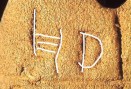
                                  (Diboc=Divos                                                                                                                                        Din  Linear B Lexicon | Linguistics | Languages – Scribd   https://www.scribd.com/doc/56265843/Linear-B-Lexicon                                                         In modern Greek it is usually expressed with a consonantal /u/. For example ….. Divei/Divos(Zeus/>Dias) dyiameron (>dyimeron) Diviatai Divieus. ethnic/place .

Din New Indology: 2015 new-indology.blogspot.com/2015/                                                           Sum. di ‘to shine’, PIE *diH/daiH/diw- ‘to shine, glitter; day, Sun; god’, Skr. dī- ‘to shine, be bright’, dina ‘day’, Armenian tiw ‘day’, Luwian Tiwat- ‘Sun god’, Palaic tiyaz, Hittite sius, Lycian ziw ‘god’, Latin dius ‘celestial, bright’, Greek dios ‘shining, divine’,

https://en.wiktionary.org/wiki/divos                                                                                                   Din Father Sky in ancient Greek and Sanskrit – Zabaan School for …  https://www.zabaan.com/blog/father-sky-in-ancient-greek-and-sanskrit/                        “3. Genitive: Διος (Dios) in Greek and दिवः (divaḥ) in Sanskrit. The remaining cases are constructed on an alternative root div-. What is immediately evident is that the Greek form lacks the sound v. This is due to the fact that this sound was entirely lost in Greek after about 1000 BC. Where there is v in another language, there will always be a blank in Greek. Before this loss the Greek form must have been Divos.”

M-am gandit sa mai adaug si alte citiri, folosind doar aceptia delta-D pentru semnele D.     Nota                                                                                                                                                Relativ la secventa DDoc, https://en.wiktionary.org/wiki/%D0%B4%D0%B8%D0%B2%D0%BE                                   “The C-like “lunate” form of Σ that was later to become the standard form in late antiquity and Byzantine writing did not yet occur in the archaic alphabets”

Secventa DDoc contine portiunea DOC. Daca acel semn c este C si nu sigma, aceasta ne conduce implicit si direct la:

δοκέω

https://en.wiktionary.org/wiki/%CE%B4%CE%BF%CE%BA%CE%AD%CF%89                     Etymology                                                                                                                                        According to Beekes, derived from δέχομαι (dékhomaiI take, accept), from Proto-Indo-European *deḱ- (to take). Cognate to Latin doceō (I teach, show, rehearse) and Latindīgnus (fitting, worthy).

  • To expect, think, suppose, imagine
  • To seem, to be thought [+dative = to someone, by someone], [+infinitive = that …]
    1. (impersonal, δοκεῖ) It seems [+dative = to someone]; [+dative = subject] to think quotations ▼
    2. (impersonal, δοκεῖ) It seems good [+dative = to someone]; [+dative = subject] to resolve quotations ▼
  • To be reputed [+infinitive = that …]                                                                                        DDOC —————————————————–                                                                       Primul D, mai are in interior un semn, e drept cam prost trasat (probabil cand urma sa ridice obiectul cu care trasa a mai lasat o urma de cativa mm); ar putea fisemnul “I”? Din http://www.prehistory.it/fase2/tartaria_tablets_11.htm
  • Image result for tartaria tablets
  • Atunci am avea de fapt: DiDoc; ce ar putea insemna? Ar putea fi o prescurtare a lui DiDOC(hos)
  •  
  • https://en.wikipedia.org/wiki/Docere                                                                              Docere is a Latin word that means to instruct, teach, or point out.[1
  • Imperative present docē docēte

Din Nouveau Dictionnaire Français-Latin, composé sur le plan du …
https://books.google.ro › books
François-Joseph-Michel Noël, Lenormand · 1813
Didocere . xi . rtum. RELATER, v. a. mentionner , rapporter. Referre , tuli , latum, асе. Cíe. RELATIF. IVE. adj. qui se rapporte à , etc.

https://en.wiktionary.org/wiki/dedoce                                                                             dēdocē second-person singular present active imperative of dēdoceō 

https://en.wiktionary.org/wiki/dedoceo#Latin                                                                                    (transitive) I cause someone to unlearn something; unteachteach the opposite of. From dē- +‎ doceō (teach).

Full text of “A handbook of Latin poetry, containing selections from Ovid, Virgil …
https://archive.org › stream
… populuinque falsis Dedocet uti Vocibus, regnum et diadema tutum Deferens …… Komani pueri longis rabonibus assem Discunt in partes centum didocere. …… Deducere = to launch

A lansa atac!? razboi=HARO ?

ADLER, George – Practical Grammar Of The Latin Language [1858].pdf …
https://www.academia.edu › ADLER_Ge…
For correct Latin equivalents for the English terms and constructions employed in the book , …… A. The verb docere, ” to teach,” with its compounds edocere and didocere, and .

Full text of “PURITAN/REFORMED WRITINGS & WORKS,”   https://archive.org/stream/…/Spiritual%20Refining%20Vol%201%20363_djvu.txt              As the Philofofher who was to teach one that was infected with falfe opinions, re- quired a double fee, becaufe his work was double, didocere, to unteach, and …

“didocere:”a dezvata, reinvata”  ?..reinterpreta?

Full text of “A Concise Etymological Dictionary of the English Language”
https://archive.org › stream
In particular, I have now marked the quantities of all the vowels in Latin words, …… L. diduct- us, pp. of didOcere, to bring down (above)                                                                      ——————  ESTE O PURA INTAMPLARE !?  ——————–

  • Dl. Marco Merlini, impreuna cu alti arheologi (cu precadere romani) au avansat ipoteza prezentei la Tartaria a unei persoane care se bucura de inalta stima in comunitatea locala si avea cunostinte avansate (in domeniul scrisului inclusiv), o persoana culta,invatata.
  • Singura atestare in scris a prescurtarii DDoc pe care mi-a scos-o Google a fost “prescurtarea lui decretorum doctor” adica “profesor in doctrina” (teologica)
  • Acuma din nou dau de “invatator”
  • Observand ca cel/cea care a scris tablitele, pare ca a adunat o serie de semne, a vrut sa arate cuiva care sant principiile scrisului, dar nu stapanea suficient de bine scrisul intrucat se pare ca scris adevarat avem numai in jumatatea de sus.ncept sa ma gandesc din nou serios la posibilitatea ca sa fie un gen de invatat/invatator.
  •  
  • Reamintesc ipoteza mea anterioara, ca cineva din anturajul stiintific al ZSOFIEI TORMA sa-i fi facut un gen de cadou in preajma doctoratului, mai ales stiind ca primirea titlului nu o sa o apuce in viata, ceea ce sa si intamplat!
  • Eta-Rho
  • https://en.wiktionary.org/wiki/ero#Verb_2 Verberō first-person singular future active indicative of sum
  • ERo DDOC :”voi fi doctor“(profesor)      didoch(os)/ DiDOCe/ doctor (!! )


O “certitudine” versus 99 semne de intrebare in legatura cu tablitele de la Tartaria.

March 15, 2019

Un aspect versus 99 semne de intrebare in legatura cu tablitele de la Tartaria.

Fotografia, din MARCO MERLINI                    http://www.prehistory.it/ftp/tartaria_tablets/tartaria_tablets_03.htm

Am pus “certitudine” intre ghilimele, pentru ca acel singur aspect de fapt nu este o completa certitudine:                                                                                                                              Pe un suport de argila relativ acceptat se regasesc o gramada, a se citi “ghiveci” de semne diferite (singurul care am reliefat aspectul eterogen), din care doar circa jumatate ar fi eventual identice cu semnele sumeriene proto-cuneiforme.(Adam Falkenstein, A.A.Vaiman si altii).                                                                                                     Dar mai raman in schimb si contrapartida alte cca. “99 de necunoscute“: 

  1. Carui strat le apartin fiecaruia din artefacte
  2. Pozitia lor exacta si relativa in complexul ritualic
  3. carei culturi ii apartine fiecare din artefacte
  4.  Cine a fost de fata in momentul descoperirii
  5. De ce nu au fost transportate catalogate si depozitate toate artefactele gasite impreuna
  6. De ce nu s-a gasit in Civilizatia Vinca-Turdas dar nici in toata Europa ceva similar
  7. De ce nu s-a gasit in toata Europa un artefact cu semne sumeriene
  8. de ce descoperitorul Vlassa nu a fost prezent la momentul descoperirii
  9. de ce Vlassa nu a fost de gasit mai apoi mai multe zile
  10. de ce Vlassa era foarte reticent in a relata descoperirea
  11. de ce descoperirea a fost publicata numai peste 1 an
  12. de ce autoritatea care raspundea de ele era reticenta in a le arata (Piso)
  13. de ce un martor prezent in intreaga zi a descoperirii nu a vazut nimic (Atilla Laszlo)
  14. de ce arderea in cuptor a fost facuta de cineva fara sa aiba acordul sau sa intrebe pe nimeni
  15. de ce avem 3 tipuri/categorii de semne,de la pictograme la presupuse silabograme sau chiar litere
  16. De ce semnele nu se incadreaza complet in nici-un sistem de scriere
  17. ce cauta sau cum se explica o serie de artefacte de factura cicladica
  18. o serie de artefacte indica ca apartinand fiecare unor culturi diferite
  19. cum a fost posibila asimilarea varstei oaselor varstei altor artefacte si in special aceea a tablitelor
  20. cum a fost posibila avand in vedere decalajul enorm intre varsta oaselor si cea a tablitelor, aparitia unui personaj pur fictional, acela al “preotesei” de la Tartaria “Lady of Tartaria”
  21. multiple si diferite datari ale presupusei varste a tablitelor, dar niciuna atribuita de savantii de top in domeniu, inainte de 3.000 B.C.
  22. de remarcat obstinatia Zsofiei Torma si a lui Vlassa privind legatura cu Sumerul cand niciunul din ei nu avea nici pe departe suficiente surse de informare privind “fenomenul sumerian” nemaivorbind de faza incipienta a scrisului sumerian.
  23. Pe undeva arata intuitia lor absolut fenomenala si de neexplicat, cu atat mai mult cu cat de-abea dupa ani de zile specialisti de marca au putut evidentia o asemenea apropiere; nu va ascund ca in decursul anilor de cercetare am suspicionat si gasit si eu evidente in acelasi sens ! 
  24. nu exista nici-o schita acceptabila dupa normele arheologiei de atunci nici de acum privindstratificarea si dispunerea artefactelor precum si nici-o fotografie 
  25. nu exista nici-o dovada a vre-unui inscris al civilizatiei Vinca prin care sa se demonstreze ca aceasta a ajuns la faza de proto-scriere
  26. cu atat mai putin relativ la faza scrisului care dupa mine si altii este complet exclusa pentru Civilizatia Vinca                                                                                               ————– aspecte derivate —————
  27. semnele de pe tablite nu au fost trasate de un sumerian; legatura cu semnele sumeriene nu este directa ci foarte indirecta si intermediata 
  28. se pare ca ascunderea semnelor jumatatii de sus a tablitei rotunde nu este intamplatoare; ascunde foarte posibil scris adevarat
  29. mai degraba decat sa fie sumeriene, aceste semne din jumatatea de sus par a fi litere arhaice grecesti: unul archaic eta/heta si altul D/R,”delta/rho”
  30. posibila transmisie a unor elemente din scrisul incipient sumerian nu a fost directa; singurul semn de care stiu transmis identic ca forma si pronuntie este semnul PA.In rest toate semnele au suferit transformari, atat sub forma grafica cat si de interpretare. 
  31. asemanarea semnelor cu cele sumeriene este numai expresia influentei unei “matrici de origine” sumeriana care a influentat scrierile  din ariile Anatoliana si Mediteraneana 
  32. legatura Vechii Europe cu Orientul pare a porni din Neolitic cand a existat un gen de continuum a unei populatii si culturi Proto-Eufratice (posibil de factura Dravidiana/Ubaidiana)                                                                                                                                        …………….scuze, in masura timpului voi continua cu restul de 67 pana la 99…………

“Criminalistica” si arheologie

March 12, 2019

De fapt forensic in engleza inseamna “legist,medico-legal”;Etimologia lui este: https://www.vocabulary.com/dictionary/forensic

The adjective forensic comes from the Latin word forensis, meaning “in open court” or “public. When you describe something as forensic you usually mean that is has to do with finding evidence to solve a crime. It could also mean that it has to do with the courts or legal system. You could have a forensic advantage — meaning an advantage in court — if the forensic team — meaning the investigators — found no forensic evidence of you being involved.

DETERMINAREA INDIRECTA A VARSTEI ARTEFACTELOR IN ARHEOLOGIE:           Indirect age determination https://archaeologywordsmith.com/search.php?q=direct%20age%20determination                                                                                  DEFINITION: The determination of the age of archaeological data by association with a matrix or an object of known age.                                                                                        When object A is found clearly associated with object B, whose date is known, the date of B is given to A.                                                                                                                      “..cand un obiect A este gasit a fi clar asociat cu un alt obiect B, a carui varsta este cunoscuta, varsta obiectului B este data lui A”

Pe de o parte, din pacate, la descoperirea tablitelor de la Tartaria si a impreuna cu ele a o serie de artefacte, nu stiu din ce motiv nu s-au respectat nici cele mai elementare proceduri.                                                                                                                                               Pe de alta parte ar fi fost foarte important sa se fi facut schite detaliate si fotografii, asa incat astazi sa nu bajbaim pe intuneric.

Iuliu Adrian PAUL ENIGMA TĂBLIŢELOR DE LA TĂRTĂRIA SCHIŢĂ PRELIMINARĂ http://bjastrasibiu.ro/wp-content/uploads/2015/08/130-iuliu.paul_.pdf                                         “N. Vlassa, profund cunoscător al literaturii de specialitate din domeniu, a avut şansa şi poate ghinionul de a putea cunoaşte în amănunt Colecţia Torma Zsofia şi întreaga documentaţie asociată acesteia. Ori, în condiţiile săpăturilor sporadice de la noi, din Transilvania îndeosebi, aceasta reprezenta o adevărată „mină de aur”.
De fapt, în concluziile articolului său din Neoliticul Transilvaniei din 1976, paginile 28-34, cu bibliografia aferentă, îndeosebi la p. 34, menţionează faptul că: „în rezolvarea acestei
probleme… vor avea un cuvînt de spus şi cele peste 300 de semne de pe fragmentele ceramice turdăşene, aflate de multă vreme în colecţia Muzeului din Cluj, semne dintre care multe sînt identice cu cele de pe tăbliţele de la Tărtăria” .Dorim să subliniem faptul că, în condiţiile anului 1989, dotarea şantierului arheologic a fost mai mult decât precară. Ne lipseau până şi cele mai elementare mijloace, începând cu hârtia de
împachetat şi sfoara, şpacluri, perii şi măturici. De aparatură şi ustensile mai speciale nici nu putea fi vorba şi nu atât din lipsa banilor, cât datorită lipsei fizice, pe piaţă, a unor materiale şi piese strict necesare. Singurul aparat foto de care dispuneam s-a defectat în primele zile, iar filmele procurate din comerţ s-au voalat. Acesta este motivul pentru care nu dispunem de imagini fotografice de la această săpătură. Nu mai pomenim de faptul că, din aproape 20 de probe C14, prelevate din diverse sectoare, nici una nu a fost primită în străinătate pentru analize, deoarece n-am putut procura pungile de plastic necesare, conform normativelor, fapt pentru care probele au fost declarate contaminate şi deci inutilizabile. Acestora li s-a adăugat, pentru câteva zile, cu intermitenţă, şi Horia Ciugudean, interesat însă, doar de nivelul superior cu depuneri târzii. În acest scop a solicitat efectuarea unei secţiuni-sondaj într-o zonă bănuită a fi locuită mai intens în etapa de tranziţie spre epoca bronzului. Secţiunea începută de d-sa a fost săpată doar până la adâncimea de 0,50m de la suprafaţa solului şi a rămas în acest stadiu până la încheierea lucrărilor din 1989.

Exista mari similaritati intre cercetarea arheologica si cea criminalistica, spre exemplu:    Din CERCETAREA LA FAŢA LOCULUI (INVESTIGAŢIA TEHNICO-ŞTIINŢIFICĂ A LOCULUI FAPTEI)                                                 https://andreivocila.wordpress.com/2010/1criminalistica, spre exemplu:0/19/cercetarea-la-fata-locului-investigatia-tehnico-stiintifica-a-locului-faptei/

Schiţa locului faptei
 Schiţa locului faptei, denumită şi plan-schiţa sau desen-schiţa, este destinată fixării şi prezentării, în ansamblu, a locului faptei, a modului în care sunt dispuse, în plan, obiectele şi urmele infracţiunii, precum şi a distanţelor sau a raportului de poziţie dintre acestea.
 Principalul rol al schiţei locului faptei este acela de a facilita formarea unei imagini cât mai apropiate de realitate asupra scenei infracţiunii, astfel încât constatările cuprinse în procesul-verbal să fie clar înţelese.
     De mare importanţă pentru calitatea şi exactitatea unei schiţe efectuate la faţa locului este şi folosirea unor semne convenţionale unitare, aşa cum s-au impus în practica de specialitate:
 Fotografia şi filmul judiciar executate la faţa locului
 Fotografia judiciară executată la faţa locului se numără printre cele mai importante mijloace de fixare a rezultatelor cercetării, deşi este considerată drept o modalitate auxiliară procesului-verbal.
         Fotografia la faţa locului include, aşa cum s-a văzut, fotografia de orientare, fotografia schiţă, fotografia obiectelor principale, fotografiile de detaliu şi măsurătorile fotografice.

DATARE INDIRECTA: cand un obiect A (schelet) este clar asociat cu obiectul B(tablite) atunci se poate atribui varsta scheletului tablitelor; dar                                                          ELE NU SANT CLAR ASOCIATE SAU LEGATE PRIN NIMIC PENTRU CA IN SITUL ARHEOLOGIC A FOST UN “HALOIMES” (exprimare plastica modesta) DE NEINCHIPUIT !                     ==========================================

ARGUMENTATIE AVAND LA BAZA CONSIDERENTE DE LOGICA SI BUN-SIMT DAR SI DOVEZI FIZICE CONCRETE IREFUTABILE

  • Prezenta unui obiect langa altul, intr-o cercetare pe teren nu implica in mod direct nici-un transfer automat al proprietatilor de nici-un fel,fizice, de varsta,de utilizare ori intentie ale unuia altuia.Spre exemplu faptul ca intr-un grup s-ar gasi spre exemplu un cutit si oasele unei decedate nu inseamna ca cutitul a fost folosit pentru a o omora; tot asa prezenta tablitelor (chiar daca ar fi fost gasite in acelasi strat cu oasele decedatei, ceea ce se pare ca nu e cazul) nu implica in mod necesar nici  ca ar fi fost contemporane, nici ca i-ar fi apartinut, nici ca le-ar fi scris ea !
  • Deci “Lady of Tartaria” este o presupunere, fictiune, si posibil o foarte buna poveste/story pentru un film.

Urmele civilizatiei sufera transformari in decursul trecerii timpului; chiar semnele si limbile sufera transformari  pana si la disparitie. Un exemplu la indemana ar putea fi evolutia literei r de la rosh/resh prin fazele intermediare d si P pana la R.                       Cand undeva cineva lasa in urma un grup compact de semne, varsta grupului este varsta celor mai evoluate si noi semne. Explicatia este simpla si cumva la mintea cocosului:                                                                                                                                               Cineva intr-un anumit moment, nu poate folosi decat semnele cunoscute pana in acel moment, nu are cum sa cunoasca semnele care vor aparea in viitor, necum sa le foloseasca;                                                                                                                                                In schimb pot fi transmise si folosite semnele folosite anterior acelui moment.

In cazul nostru, intamplarea face ca ar fi cumva posibil, dar cu sanse spre zero de a fi fost folosite semnele D, insa doar in perioada 3.500-3.000 B.C.(cea mai veche si incipienta forma de proto-scriere din lume, semnele de pe bulele sumeriene din lut, apoi eventual cel folosit de egipteni 2.500B.C.? pentru “jimbla de paine”)                                                    Dar elementul care face ca aceasta infima posibilitate sa dispara, este folosirea semnului H cu 3 bare orizontale/”a scala”/”in scarita”, care din start ne conduce la o perioada ulterioara lui 2.300/Cretan hieroglific ;Linear A/2.100 B.C                                                               Apoi acest fapt are la randul lui repercursiunea ca semne D nu s-au folosit dupa 3.000 B.C, nici dupa 2.300 pana la 750 B.C. Ca rezultat final, prezenta semnului H “in scarita” impreuna cu semnele D si aceste doua semne in ansamblu, deci si tablitele nu pot fi mai vechi de 750 B.C.   In matematica se numeste “intersectia multimilor”.                              Semnul D nu s-a mai folosit  deloc pana la cca. 750 B.C./alfabetele Anatoliene si arhaice Grecesti. Din cele arhaice grecesti, cea mai veche folosire a semnului “D” a fost:                In Creta folosirea formei P/D pentru litera “R” :                                                                                         An Archaic Greek Inscription from Crete Author(s): Lilian H. Jeffery and Anna Morpurgo-Davies https://www.ling-phil.ox.ac.uk/files/jeffery-amd_archaic_greek_inscription_from_crete_british_museum_quarterly_36_1971.pdf             “We date the inscription tentatively c. 500 B.C., judging by the state of
development of certain of its letters (eta, nu, qoppa, upsilon) in the local Cretan
version of the archaic Greek alphabet.” 

Folosirea formei D pentru litera “D“:                                                                                                d | Letter Development, History, & Etymology | Britannica.com https://www.britannica.com/topic/D-letter                                                    D, letter that has retained the fourth place in the alphabet from the earliest point at … The rounded form D occurs in the Chalcidian alphabet, whence the Latin …                         Euboea (Chalcidian),                                                                                                                        Din http://educationalclipart.blogspot.com/2011/03/greek-alphabets.html

History of the Greek alphabet – Wikipedia                                                                                      Most specialists believe that the Phoenician alphabet was adopted for Greek during the early 8th century BC, perhaps in Euboea. The earliest known fragmentary Greek inscriptions date from this time, 770–750 BC, and they match Phoenician letter forms of c. 800–750 BC.

Q.E.D. !

P.S.                                                                                                                                                                  Chiar incercarea de a-l presupune pe “scrib” mai destept, mai cult si mai vechi, in sensul  ca ar fi putut figura cu semnele “D” fazele lunii, are sanse mici; pentru ca indiciul numit “forma literei arhaice Eta /in scarita” ne aduce cu picioarele pe pamant spre o perioada mai apropiata de zilele noastre. Apoi ma intreb:                                                           – cum ar fi putut sti si sa foloseasca scribul  in 3.000 B.C. D-ul si mai ales H-ul scarita? ; daca ar fi foarte apropiat de ziua de azi putea cunoaste toate semnele.                                   – imediat dupa 750 B.C. de unde putea sti de semnele apropiate de cele sumeriene (AB”casa,templu”;AMAR:”vitel”), numai daca au fost preluate de cretani !.