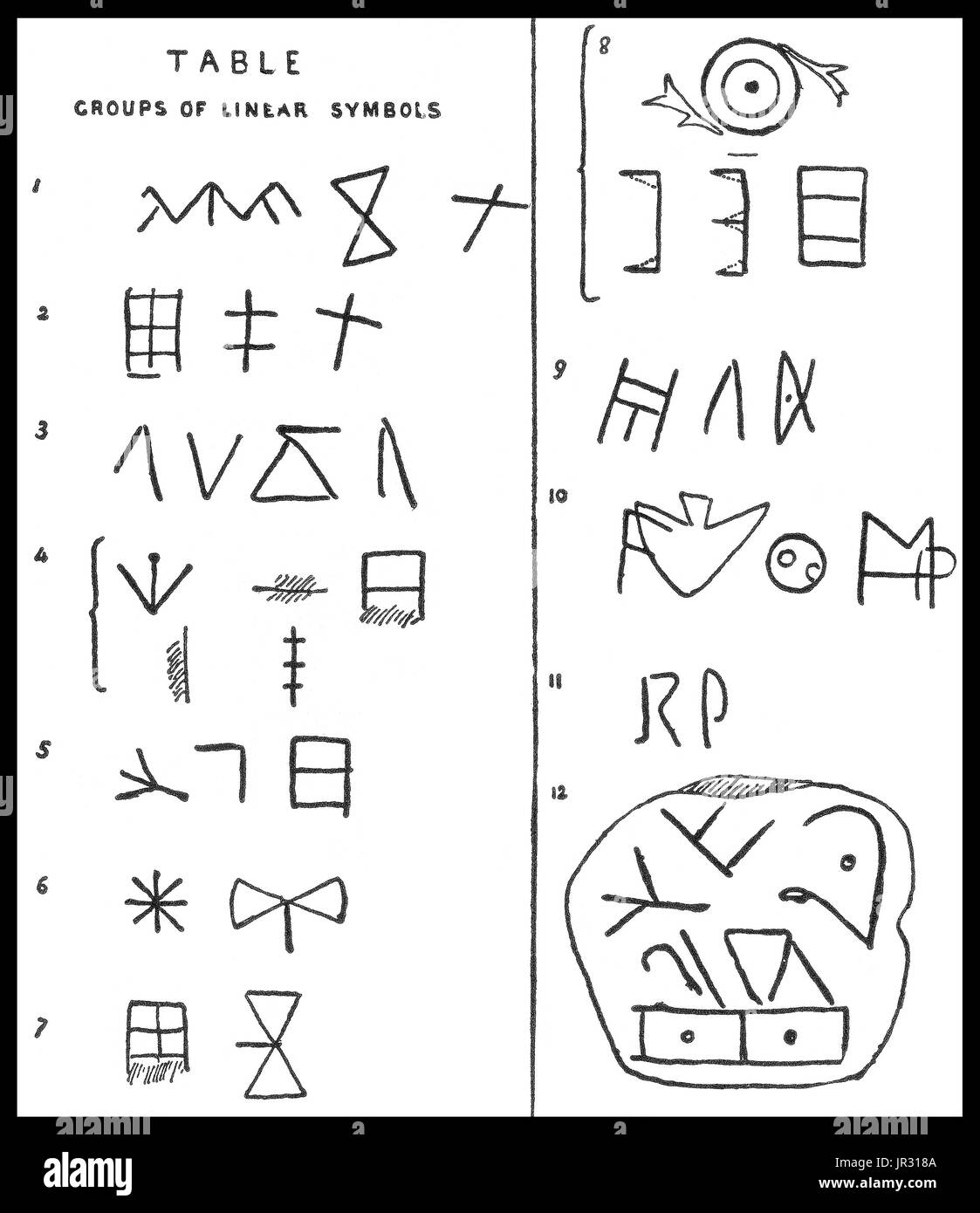
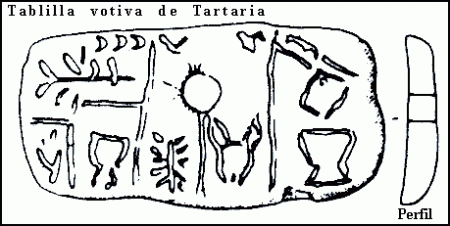
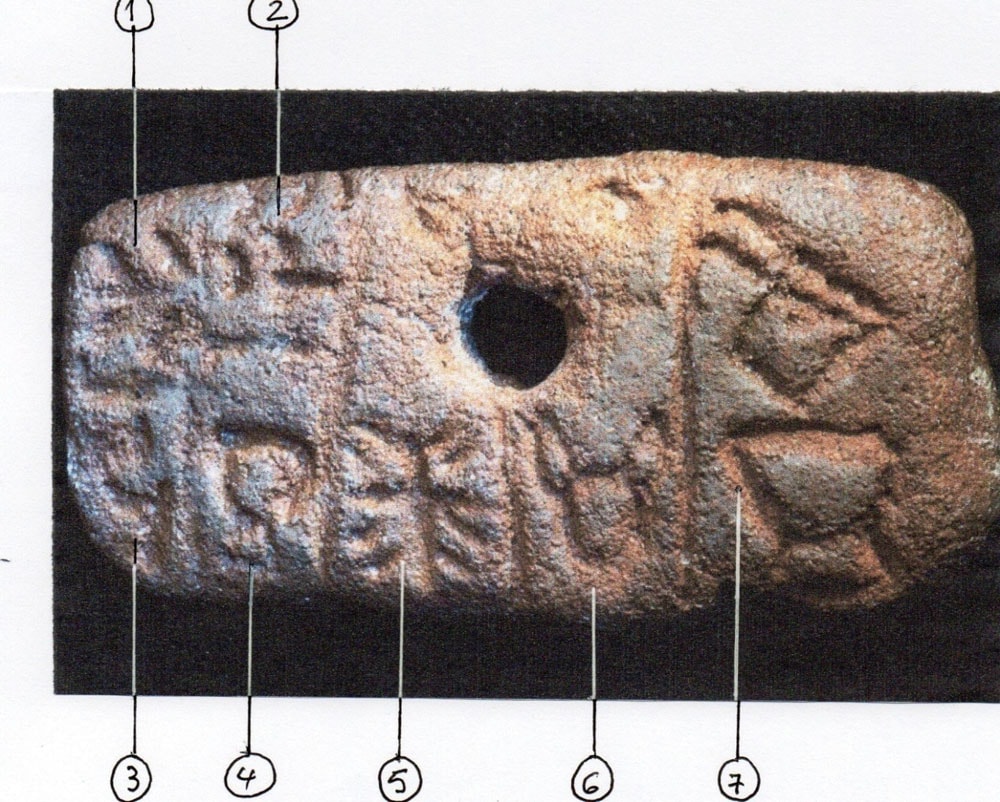
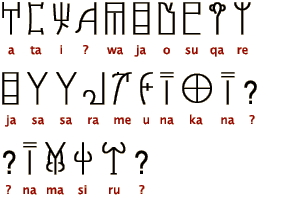
Un alt simbol prezent pe tablita de la Tartaria, comun civilizatiilor sumeriana si minoica

March 7, 2019

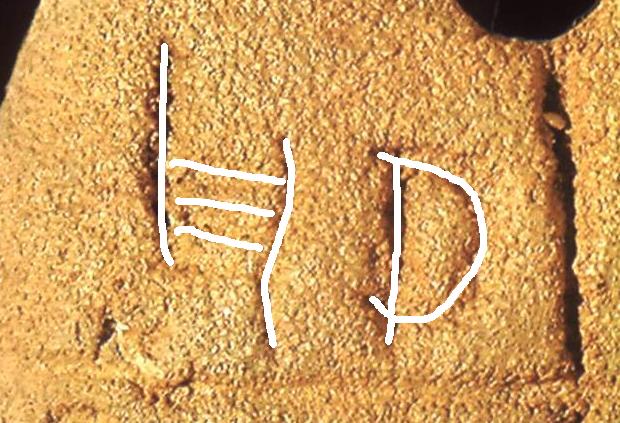
Un alt semn prezent pe tablita dreptunghiulara cu gaura de la Tartaria, este acel “cap de magar” Imaginea, din 3.1. Interpretarea simbolurilor neolitice https://sites.google.com/site/seimenisatdinneolitic/prima-traducere-corecta-a-unui-simbol-neolitic?tmpl=%2Fsystem%2Fapp%2Ftemplates%2Fprint%2F&showPrintDialog=1

Acest semn apare in civilizatia minoica cu forma apropiata, ca simbol “MA” Din https://linearbknossosmycenae.com/2017/06/24/early-minoan-hieroglyphic-roundels-and-seals-may-lend-some-insight-into-the-later-development-of-the-linear-a-syllabary/

Se pare ca originea atat pentru semnul de pe tablita de la Tartaria, cat si pentru semnul minoic este semnul sumerian proto-cuneiform https://cdli.ucla.edu/tools/signlists/protocuneiform/archsigns.html AMAR:”vitel”/engl.CALF Taurul a fost un simbol comun civilizatiilor sumeriene si minoice:                                                                                        Possible connection between the cultures of Ancient Sumer and Minoan Crete http://mmtaylor.net/Holiday2000/Legends/Sumer-Crete.html                                                       “There are certain hints that the Minoan civilization might have been influenced by, or even descended from, the Sumerian / Mesopotamian civilization of a thousand years earlier. According to David Rohl(Legend: The Genesis of Civilisation, London, Arrow Books 1998), the Phoenecians and Canaanites who inhabited the coast of what is now Israel and Lebanon came from Sumeria (Ur, Uruk, Eridu) at the same time as others from the same region went to Bahrain and then to the Upper Nile, some time around 3000 BC. If the Minoan culture was actually derived from the Sumerian, as seems not unlikely, it must have happened before writing became common in Sumer, around 3000 BC. Rohl’s dates tend to be more recent than the conventional dates, so when Rohl mentions 3000 BC, he refers to a time conventionally dated rather earlier, perhaps 3500 BC.           …………………………..                                                                                                                      The bull was important in the Minoan religion and culture, as it was in Sumer. Gilgamesh (who, according to Rohl, ruled in Uruk around 2487 BC) is shown as half-bull, half-man, as is the Cretan Minotaur in the much later Greek legend. The picture on the seal looks remarkably like depictions of the Minotaur, and it is possible that the Greeks knew of such depictions as well as of the bull cult in Minoan Crete. There are many other bull-man representations in images from Mesopotamia. Sometimes the body is bull in part or whole and the head human, sometimes the reverse. Perhaps there were similar Minoan images known to the Greeks, but as yet not discovered by modern archaeologists. So, one can assume that the bull-man “monster” was an image known to the Early Greeks of Minoan times.

Cercetatorii avanseaza ipoteza ca simbolul sumerian aMAr (vitel,taur), sau aMA (mama) a fost la originea minoicului MA, care de fapt a fost simbolul minoic al zeitei-mama.

Din Cretan Hieroglyphics & Protolinear Script | Giannhs Kenanidhs and … https://www.academia.edu/27866745/Cretan_Hieroglyphics_and_Protolinear_Script


DinThe Arkalochori Axe and its siblings | Giannhs Kenanidhs – Academia … http://www.academia.edu/27866963/The_Arkalochori_Axe_and_its_siblings


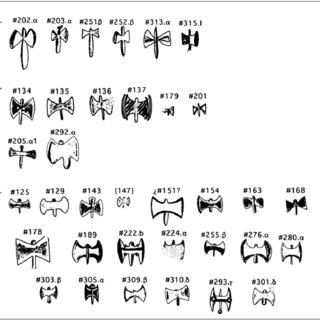
Semnele LABRYS si cele de pe tablita de la Tartaria de origine sumeriana ?

March 3, 2019

In scrierea Egeeana (hieroglifica cretana) , avem semnul: (Imaginea din The First ‘European’ Writing: Redefining the Archanes Script: Redefining the Archanes Script https://www.researchgate.net/figure/Initial-Archanes-Script-seals-High-contrast-incision-only-drawings-by-author-after_fig3_328919412 )
diachronic-change-in-sign-forms-between-archanes-script-as001-and-cretan-hieroglyphic_q320

….si pe valea Indusului, Din https://ro.pinterest.com/pin/227994799856052126/?lp=true   …din pacate “Indus script” cum se mai numeste, este departe de a fi descifrata, ca atare nu stim ce semnifica cu adevarat acel semn care seamana perfect cu securea dubla minoana….

Image result for indus script oxhide ingot

Sau din Minoan Linear A, Linear B, Knossos & Mycenae https://linearbknossosmycenae.com/2017/01/27/minoan-linear-alabrys-inscribed-with-the-word-idamate-what-does-it-mean/
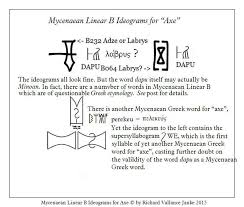
Image result for tartaria bucranium

Pe de alta parte, avem in tablita dreptunghiulara (“cu gaura”) de la Tartaria, un semn cumva asemanator (Nr.4 si Nr.7):

Din https://vincaturdas.wordpress.com/decriptarea-inscriptiei-turdas/
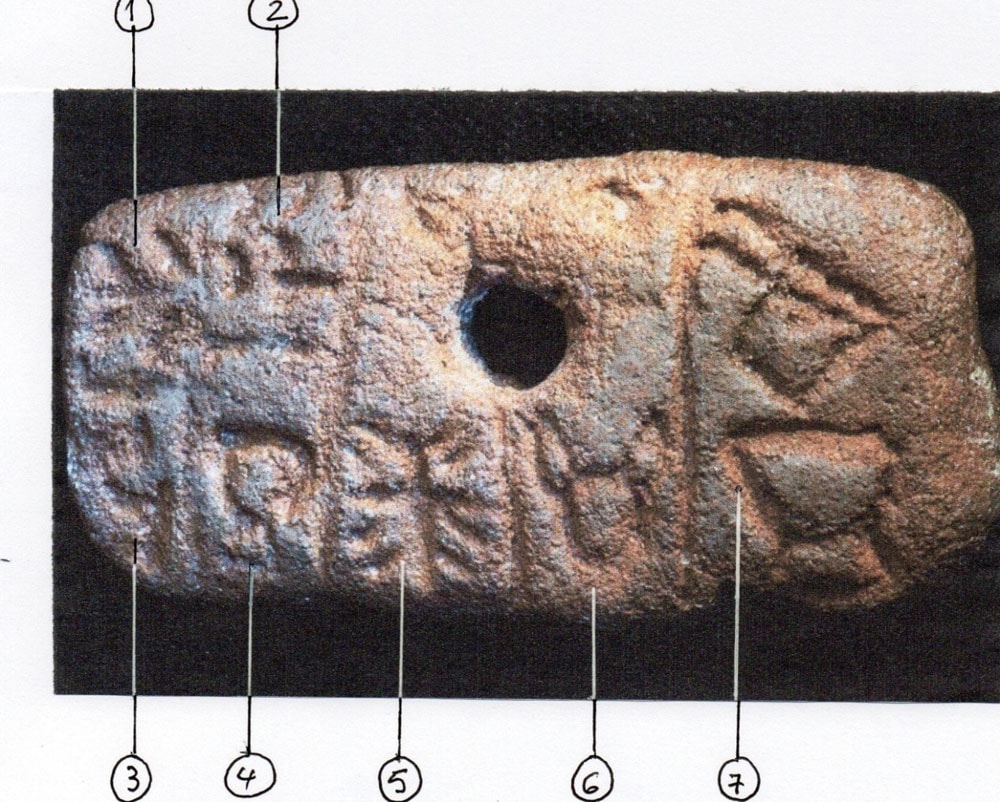
fig.202

Semnul Egeean pentru Labrys seamana cu semnele de pe tablita noastra.                             Sa aiba ambele (Creta si Tartaria) la origine semne din Sumer ??                                                ————————————————————————————-

Semnul sumerian proto-cuneiform AB:”templu,casa”   Din http://literatureandhistory.com/index.php/episode-001-the-tower-of-babel
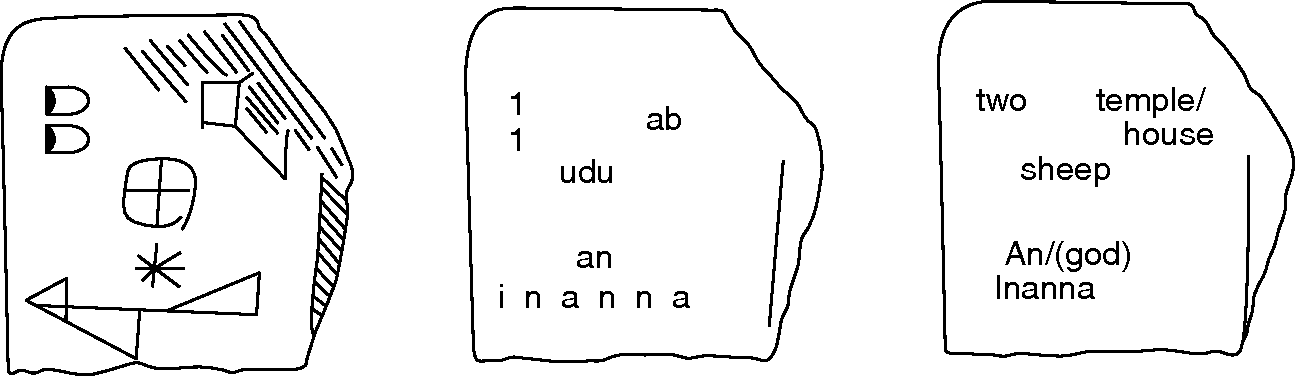
urncambridge-orgidbinary1770620160804090558862-066803648fig5_9                                                                               Din The Tower of Babel Cuneiform in the Fertile Crescent, 3100-500 BCE https://cdli.ucla.edu/tools/signlists/protocuneiform/archsigns.html

Din https://cdli.ucla.edu/tools/signlists/protocuneiform/archsigns.html sign AB~a :”casa,templu”
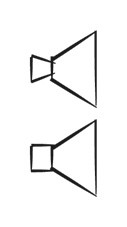
aba

Alte semne care seamana cu cel Egeean si cu ale noastre:                                                           – semnul ZAG:“metal”stralucire(metalului)

Din Sumerian Dictionary – bulgari-istoria https://www.bulgari-istoria-2010.com/Rechnici/Sumerian_Dictionary.pdf Metals = ZAG (the shine of metals).

Din https://cdli.ucla.edu/tools/signlists/protocuneiform/archsigns.html

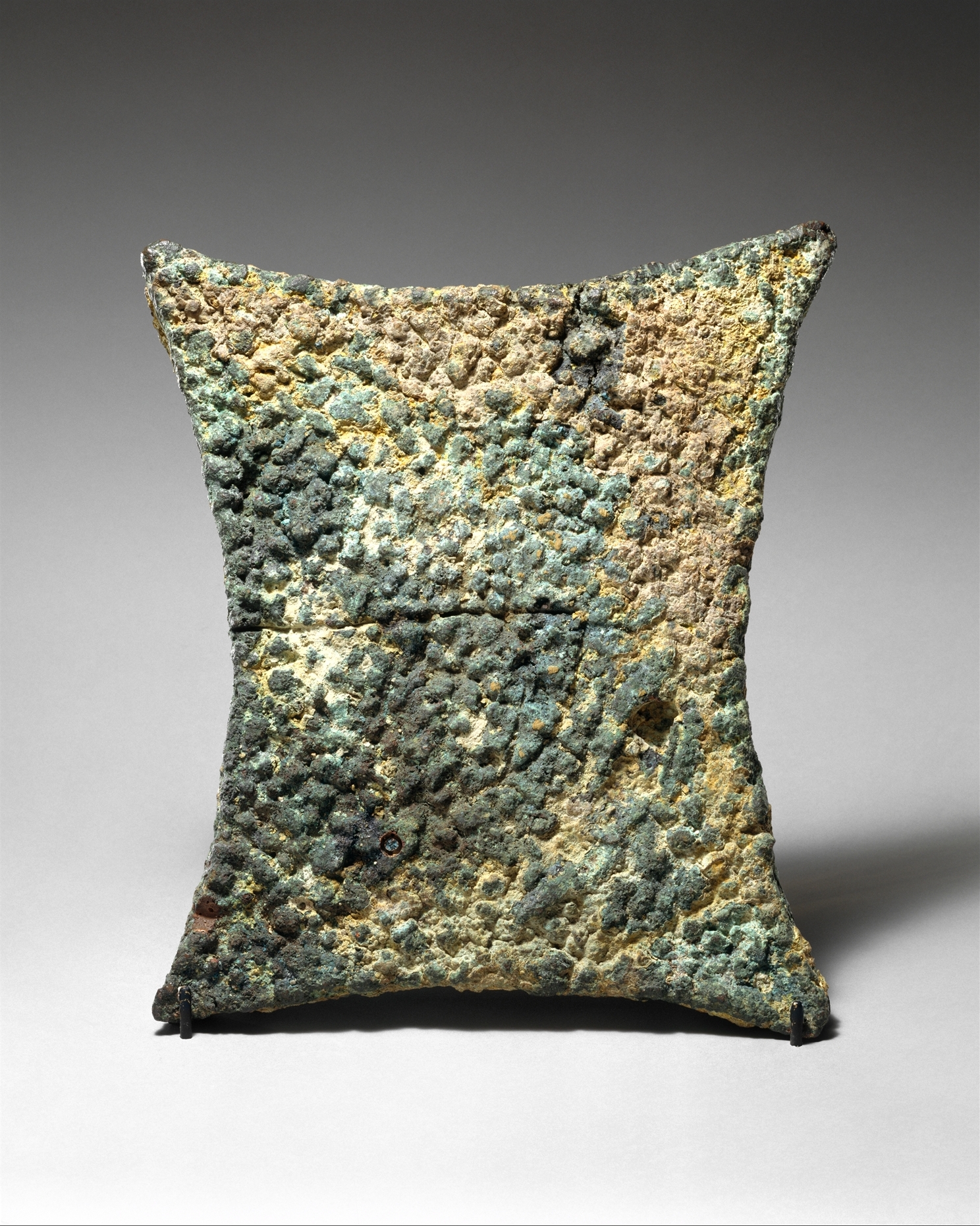
                                                                                                                      Acest semn a fost folosit de sumerieni pentru lingouri metalice ! Aceasta forma specifica a fost folosita pentru lingouri in absolut toata lumea si in engleza forma este denumita OXHIDE :”piele de bou” pentru ca o pielea de vita intinsa are aceasta forma.

Lingou cipriot din bronz,                                                                                                                Din https://www.metmuseum.org/art/collection/search/248493   Period:Late Bronze AgeDate:ca. 1450–1050 B.C.Culture:Cypriot Medium:Copper

Image result for oxhide ingot                                                                                                                          Din https://cdli.ucla.edu/tools/signlists/protocuneiform/archsigns.html Semnul GA’AR ===========================================

Daca semnul Egeean a provenit din unul sau din ambele semne sumeriene, cum se face ca la Egeeni inseamna Labrys?                                                                                                        Dupa ipoteza cercetatorilor G.PAPAKITSOS si I.KENANIDIS, primii minoani au fost de fapt colonisti sumerieni, care cunosteau semnificatia semnelor lor proto-cuneiforme, iar acestea au fost adaptate in Creta, forma si semnificatia suferind in timp transformari.                                                                                                                        Nota                                                                                                                                                    Autorii mai sus mentionati au aratat intr-o lucrare asemanarea semnului labrys cu un semn sumerian. Insa desi ei sustin ca originea semnelor minoane au fost primele semne sumeriene proto-cuneiforme, cand sa exemplifice acest lucru, au luat o varianta mai tarzie pentru labrys (semnul “A”), si in consecinta au ales neinspirat si gresit semnul corespunzator sumerian. Astfel, pentru mine exemplul ales de dansii este cel putin  neconvingator.                                                                                                                          ———————————————————————————————–                                       Faptul surprinzator este acela ca ar fi posibil ca semnul Egeean “Labrys” sa aiba la origine ambele semne sumeriene si intr-un fel a pastrat semnificatia originala a ambelor:

– Semnificatie original sumeriana de casa, Templu pentru ca in toate pesterile si locurile sacre, acest simbol este prezent.Se pare ca pentru minoani mai mult decat ca reprezinta securea cu doua taisuri era simbol regal si divin.Labyrintul era de fapt casa securii cu doua taisuri LABRY-nthos=LABYRINTHOS.Si era de fapt locul sacru al Minotaurului divin, de fapt tremplul subpamantean salasul soarelui in parcursul sau nocturn.

– Apoi a pastrat si semnificatia de “stralucirea metalului” simbolul reproducant destul de fidel   securile stralucitoare cu doua taisuri din bronz, argint si aur prezente in locurile sacre. (particulaa “stralucitor” era prezenta in numele multor regi sumerieni si hititi, sub forma unor sufixe -kug/kuga, (ex.urdu-kuga); -dag)                                          =============================================

NU SANT SIGUR CE REPREZENTAU SEMNELE PE TABLITA DE LA TARTARIA;                             Inclin pentru – casa, templul ( zeului, zeitei )   datorita faptului ca semnul nostru seamana foarte mult cu sum. [Ab  :”templu”]. De-abea mai apoi seamana intrucatva si cu semnul ZAG, “stralucire, metal (lingou)”?….. si in ultimul rand seamana cu vre-o “sacure”  ===============================================                                                      EXCURSUS ASUPRA                                                                                                                   RELATIEI COMPLEXE INTRE NOTIUNI SI VALORI RELIGIOASE SI CULTURALE  DE IMPORTANTA COVARSITOARE REFLECTATE IN SEMNE;                                                        EXEMPLU ICOANA SECURII DUBLE 

Vedeti dumneavoastra, nu securea dubla ca obiect era in focarul spiritualitatii ci simbolul sau. Inca din paleolitic, apoi se poate vedea foarte clar la inceputurile civilizatiei egiptene ca maciuca/buzduganul/eng. mace era simbolul puterii si simbol regal totodata.                                                                                                                         Imaginea https://elearning.salemstate.edu/courses/860796/files/28510459/preview?verifier=NFbGn3SrEGQGDC3UNIjgpNGhiDaPN6DmOg2mFe0w babylonian  plaque.jpgMolded plaque with a king or god carrying a mace Din http://www.ancientegypt.co.uk/pharaoh/explore/weapo_b1.html

La inceputul epocii cuprului si la fel la cea a bronzului (oriunde in lume!),  datorita putinatatii, metalul era privit ca un material nobil, luciul lui avand un impact psihologic major, iar arme metalice aveau doar conducatorii. De aceea semnul puterii,maciuca sau toporul din piatra a fost inlocuit cu toporul din metal. Astfel s-a pastrat ca simbol al puterii, iar stralucirea in general, a fost asociata atatbcuprului sau bronzului cat si direct cu cea a astrelor si soarelui. La minoani, in foarte multe din locurile unde se desfasurau ritualuri religioase sau gasit semne ale securii duble.De fapt se pare ca era semnul puterii  divinitatii astrale feminine. Divinitatea suprema era asemuita cu soarele. Se zice ca acele constructii subterane labirintice au legatura cu labrysul, in sensul ca etimologia lui labirint vine de la labrys, iar labirintul provine dintr-un cuvant care exprima “casa securii duble”

Etymology https://en.wikipedia.org/wiki/Labyrinth#Etymology

“Labyrinth is a word of pre-Greek origin, which the Greeks associated with the palace of Knossos in Crete, excavated by Arthur Evans early in the 20th century. The word appears in a Linear B inscription as da-pu-ri-to.[9][10][11] As early as 1892 Maximilian Mayer suggested[12] that labyrinthos might derive from labrys, a Lydian word for “double-bladed axe”.[13]Evans suggested that the palace at Knossos was the original labyrinth, and since the double axe motif appears in the palace ruins, he asserted that labyrinth could be understood to mean the house of the double axe”.[9] This designation may not have been limited to Knossos, since the same symbols were discovered in other palaces in Crete.[14] However Nilsson observes that in Crete the “double axe” is not a weapon and always accompanies goddesses or women and not a male god. “

Eu n-as prea fi de acord, zic ca mai repede:                                                                          “Beekes finds the relation with labrys speculative, and suggests instead the relation with lavra (λαύρα), narrow street.[16] The original Minoan word appears to refer to labyrinthine grottoes, such as seen at Gortyn.[17] Pliny the Elder‘s four examples of labyrinths are all complex underground structures,[18] and this appears to have been the standard Classical understanding of the word. It is also possible that the word labyrinth is derived from the Egyptian loperohunt, meaning palace or temple by the lake.[citation needed] The Egyptian labyrinth near Lake Moeris is described by Herodotus and Strabo. [19] By the 4th century BC, Greek vase painters also represented the Labyrinth by the familiar “Greek key” patterns of endlessly running meanders.

Sau radacina lui merge atat de departe spre nostratica, pana la radacina a lui gauri,gaura:  sum. bur, I.E. bor/bohren/buru-iana

Dar sa revenim; acel semn nu avea deloc rolul sa faca trimitere la vre-o secure concreta, ci era un gen de semn-sigiliu al divinitatii.                                                                                    Acele constructii labirintice, la minoani,                                                                                             ” In Greek mythology, the Labyrinth (Ancient GreekΛαβύρινθος labúrinthos) was an elaborate, confusing structure designed and built by the legendary artificer Daedalus for King Minos of Crete at Knossos. Its function was to hold the Minotaur, the monster eventually killed by the hero Theseus.” Numai ca minotaurul are legatura cu taurul, si nu orice taur ce taurul ceresc, soarele.

 NU I-MI ESTE COMPLET CLAR, IN CE MASURA SIMBOLUL SECURII DUBLE ERA AL ZEITATII ASTRALE FEMININE SI IN CE MASURA AL REGILOR (MINOS)                                                                                          Atat la minoani cat si la egipteni erau temple consacrate unei divinitati solare si probabil asemanator sumerienilor, aspectului nevazut al soarelui acela al parcursului subpamantean (la sumerieni NERGAL).                De aceea au construit aceste temple subpamantene ca fiind  casa soarelui in aspectul sau ascuns.Tot acolo au imaginat si egiptenii ca fiind locul trecerii in lumea de apoi.

Din Minoan ‘Horns of Consecration’ Revisited: A Symbol of Sun Worship In …https://www.academia.edu/…/Minoan_Horns_of_Consecration_Revisited_A_Symbol_…  Minoan ‘Horns of Consecration’ Revisited: A Symbol of Sun Worship In Palatial …. the significance of the Knossian labyrinth Egyptians deserves a fresh discussion ….. the afterlife; simultaneously, she was arrangement of the specific symbols is .

Din https://www.ancient.eu/Labyrinth/”the word is linked to the Minoan labrys or ‘double axe’, the symbol of the Minoan mother goddess of Crete,

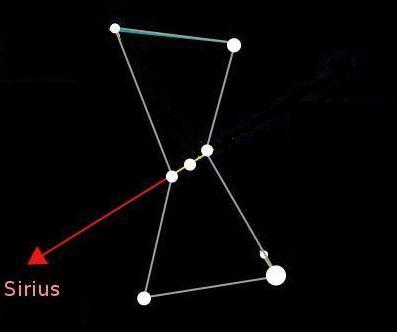
==================================================                                                    Insa dupa opinia mea, acesta forma nu este intamplatoare, ci este forma constelatiei celei mai vizibile pe firmament, constelatia ORION,                                                                     Din https://lh3.googleusercontent.com/3-3KDonps-H9UAiOMjJyE-bEtDiHsTimAfMXVftKdcLR9QnDc5ZpFKONf7bYf87mUPVNbg=s102

Image result for paleolithic orion in aspectul sau

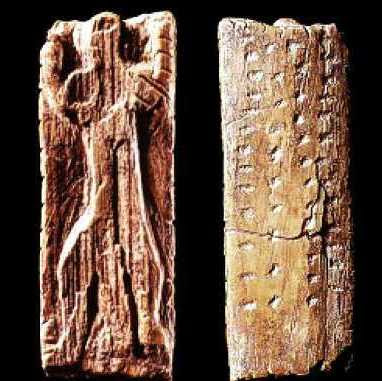
Apare inca din Paleolitic: Din http://rockartblog.blogspot.com/2018/11/another-bogus-paleolithic-star-map-ach.html                                                                                                        “

“Orion is a prominent constellation located on the celestial equator and visible throughout the world. It is one of the most conspicuous and recognizable constellations in the night sky. It was named after Orion, a hunter in Greek mythology. Its brightest stars are Rigel (Beta orionis) and Betelgeuse (Alpha orionis), a blue-white and a red supergiant, respectively.

The earliest depiction that has been linked to the constellation of Orion is a prehistoric (Aurignacian) mammoth ivory carving found in a cave in the Ach valley in West Germany in 1979. Archaeologists have estimated it to have been fashioned approximately 32,000 to 38,000 years ago. The distinctive pattern of Orion has been recognized in numerous cultures around the world, and many myths have been associated with it.”

“The Ach Valley Tusk is a piece of mammoth ivory, recovered from Geißenklösterle Cave near Ulm, Germany, that has a human figure carved into one side and a series of 86 pits or notches cut into the other. Rappengluek identified the human figure as a star map representing the constellation Orion.”

Constelatie care probabil era perceputa ca salas, loc de rezidenta cereasca a zeilor (asociat cu Usar/Osiris si locul in careajungeau sufletele faraonilor in Egipt)

Din http://www.ancient-wisdom.com/orion.htm

The Ancient Egyptians were the first to write about Orion, and place him into their mythologies. They associate the stars of Orion with Osiris, the sun-god of rebirth and afterlife, and one of the most important gods of the ancient Egyptians. (1)Orion was considered the abode of Osiris following his resurrection. Isis dwelt on Sirius. In Egyptian mythology, Osiris was murdered and dismembered by his jealous brother, Seth, then briefly brought back to life by his sister and consort Isis to father the god Horus. Egyptians saw Osiris in the Moon, whose phases caused the all-important Nile to rise and fall each month, and in the constellation Orion, whose appearance was connected with the annual flood. As god of the dead, Osiris welcomed the recently deceased to their new world.

Sirius, the brightest star in the sky, rises on the eastern horizon just before the Sun once each year. This following a period of complete invisibility lasting about 70 days (during which time it lies in the daytime sky). Egyptian inscriptions describe the last appearance of Sirius in the night sky as its death; its daytime invisibility as purification in the embalming house of the nether world; and its rising with the Sun as a resurrection. Accordingly they calibrated the process of mummification to this celestial cycle, completing it in exactly 70 days.

In the sky, Orion is depicted facing the snorting charge of neighbouring Taurus the Bull, yet the myth of Orion makes no reference to such a combat. However, the constellation can be traced back to the Sumerians, who saw in it their great hero Gilgamesh fighting the Bull of Heaven. The Sumerian name for Orion was URU AN-NA, meaning light of heaven. Taurus was GUD AN-NA, bull of heaven. Gilgamesh was the Sumerian equivalent of Heracles. One of the labours of Heracles was to catch the Cretan bull, which would fit the Orion–Taurus conflict in the sky. Ptolemy described him with club and lion’s pelt, both familiar attributes of Heracles, and he is shown this way on old star maps.

=========================================================

Nota                                                                                                                                                       Pe placuta rotunda de la Tartaria, avem un semn, (cel din stanga)

d7f67-nwgrid asemanator cu semnul sumerian proto-cuneiform KU:”metal” https://cdli.ucla.edu/tools/signlists/protocuneiform/archsigns.html

Din [PDF]Elementary Sumerian Glossary – bulgari-istoria


by JA Halloran kug, : n., silver; precious metal; money; noble (ku, ‘to base, build’ + aga(3), ‘diadem, …

Deci iar este posibil sa avem de lucru daca nu chiar cu metalul atunci cu “lucitor,stralucitor”

A se vedea si Centrul Cultural „Lucian Blaga” Sebeș

REPREZENTAREA UNUI LINGOU DE TIP KEFTIU PE O PLACĂ DE CENTURĂ DIN BRONZ DIN TRANSILVANIA ŞI CONEXIUNILE SALE Cristian Ioan POPA

Click to access 08_CIPopa.pdf

=================================                                                                                                          Din The Minoan Double Axe Goddess and Her Astral Realm https://www.academia.edu/2143502/The_Minoan_Double_Axe_Goddess_and_Her_Astral_Realm                                                                                                                                                     N. Ch. Stampolidis, A. Kanta and A. Giannikouri (eds.) Athanasia. The Earthly, the Celestial and the Underworld in the Mediterranean from the Late Bronze and Early Iron Age., 2012 J. MacGillivray

<< 1.6. Mesopotamian origins                                                                                                         The double-bitted axe symbol first appears as amulets, along with those of a goddess, bucrania and birds, in the Early Halaf period (c. 6500 to 5600 BC) from Tell Dahab in the Amuq, and Arpachiyah near Nineveh in Iraq’s Khabur valley, and again in the Late Halaf period (c. 5600 to 5300 BC) from Chagar Bazar in the Khabur area of Syria. Relevant here is that the horizon sign, Egyptian djew, Aegean ‘horns of consecration’,is also found in Mesopotamia earlier than in Crete in the Jemdet Nasr period (c.3000 BC) at Tell Brak in Syria, Nuzi and Tepe Hissar in Iraq. Hood demonstrates the Elamite origin of the double-bitted axe tool, the oldest surviving example of which dates to Susa I, the Early Uruk period c. 4,000 BC. Inscribed double-axe signs appear in Uruk IV (3300-3100 BC) and III (3100 – 3000 BC) and at Fara at the same time; important to note here are the central dots. The written and inscribed Proto-Elamite double axes belong to approximately 2250 BC in the Early Bronze Age, and so quite close to when they first appear in the Cretan scripts.


Introduction
Of all the religious symbols and emblems that appear in the Minoan civilization the double axe is the most conspicuous, the real sign of Minoan religion and as omnipresent as the cross in Christianity and the crescent in Islam,’ declares Martin Nilssonin his fundamental study of the Minoan-Mycenaean religion.
How, we ask, could a Mesopotamian tool become such aprominent Cretan icon, and what could it represent?In Crete, effigies of the common lumberjack’s tool, with or without the haft, are first found in burials, caves and on mountainpeaks. These contexts suggest funerary, chthonic and celestial functions for the double axe symbol in the Pre- andProtopalatial periods from EM IIA to MM IIB. In the Neopalatial period, MM III to LM I, the symbol appears throughout Crete and Aegean artists combine it with others, such as the bucranium, stylized mountain, vegetation, rosette/star, garment/knot, and multiple bows (‘snake frame’). Birds and the horizon sign (‘horns of consecration’) are added to this repertoryin the Postpalatial period, LM II-III, to create complex emblems. But, of what? Despite the symbol’s widespread Cretanpopularity, there is little agreement as to its meaning and no full study of its transformation during the Bronze Age.
Sir Arthur Evans, who gave us the first modern re-creation of the Bronze Age Cretans, our Minoans, initially saw the double axe as their most sacred symbol, which he thought represented bull sacrifices. This view, bolstered by bucrania incised onaxe heads and double-bitted axes depicted with bovine heads, is still very much prevalent.
But, these bucrania are bovine,as likely to be cows as bulls. And, a quick look at Minoan iconography shows that daggers, not axes, cut victim’s throats in the sacrifice scenes that appear under Greek influence in the Late Bronze Age.Evans first placed the double-bitted axe, Homer’s peleke, in the hands of a Minoan god on the basis of its later association to Zeus Labraundos in Lycia.
But the Phrygian mother goddess Cybele, venerated as the Idaian Mountain Mother and akinto Greek Rhea and Egyptian Aset (Isis), was also associated with the double axe – Hesychius relates that κυβελις was another name for πελεκυς.
This goddess association better suits the Bronze Age iconography, which shows the tool almost exclusivelyin close proximity to women, and ‘never seen in the hands of a male god’, as Nilsson observes.
Thus, Evans concluded that it was ‘the special iconic form of the supreme Minoan divinity, the Great Mother, and her male satellite.’
But, can we assumethat the double axe carried the same meaning throughout the Cretan Bronze Age, and how might this relate to its meaningin Egypt and Mesopotamia, where it originates? And, how does an axe come to symbolize the ‘Great Mother’?Here, I review briefly the double-bitted axe symbol’s Aegean, Mesopotamian and Egyptian history, consider its likely inspiration, and then return to Evans’s Great Mother interpretation with a fuller appreciation and understanding.
 
 
1. History
1.1. Prepalatial Crete
The double-bitted axe, a well-balanced lumberjack’s tool, first appears in Crete with metallurgy near the start of the BronzeAge.Cast in moulds like most other bronze implements in the Minoan tool kit, the double-bitted axe was ideal for felling thetrees essential to builders, wainwrights and shipwrights.
As such, it remained popular throughout the Bronze Age. But, thedouble-bitted axe also appears in effigy alongside the tool. Non-utilitarian double axes in copper, lead and stone are foundat the Early Minoan funerary complexes in the Mesara and Mochlos in approximately 2800-2600 BC. Three are pendants,perhaps amulets worn in life and/or attached to the deceased.Votive examples come from Mochlos Tomb II and KamilariII. Large examples, probably for display, are found outside the tombs at Apesokari II and Platanos B. The votives from the Chamazi peak sanctuary also belong to this time, and two broken examples come from possible ritual contexts at Vasiliki.


The symbol’s funerary use, both as grave offering, and for display in adjacent open areas where funerary rituals likely took place, firmly link the double axe to the early Cretan’s eschatology, and Branigan believes that this is the Early Minoan originof the Minoan double axe goddess depicted often in Late Minoan art.
The symbol may also appear as a design on pottery, if we regard the ‘butterfly’ motif painted on Koumasa Style EM IIApottery from Koumasa, Knossos, the Eileithiea cave, Myrtos-Pyrgos and Pseira, as shorthand for the double axe.
The butterfly/double axe design is also found on four juglets from the EM III-MM IA Vat Room Deposit at Knossos, and appears in EM III-MM IA East Cretan Light-on-dark Ware.
These are contemporary with the double axe’s appearance inCrete’s earliest scripts: on a sealing from the Monolithic Pillar Basement, at Knossos, and in the so-called ‘Archanes script’at the Fourni cemetery at Archanes, where it is part of what is later recognized as the Minoan Linear A ‘libation formula’.This strongly suggests that the Cretans assigned the double axe sign a phonetic value when developing their first scripts .


                                                                                                                                                               1.2 Protopalatial Crete
The double axe is the most frequent sign incised onto blocks when the Minoans, starting in MM IB, build Crete’s first greatbuildings with central courts, known to archaeologists as palaces. It appears in the Minoan Hieroglyphic script, and also asan individual sign, mark, or graffito on pottery. It also appears on its own in Minoan glyptic, as we see in the Malia atelier dessceaux, and on sealings from Knossos, and Phaistos.
One of the latter, from the MM II Phaistos sealing deposit, is particularlyinteresting as it preserves the impression of an Egyptian-style scarab engraved with at least two double axe heads eachcombined with a loop in place of the haft.
This combination is quite common in the late Neopalatial period, where wesee an Egyptian inspiration, discussed below, which fits well with its scarab support here. Another motif combination, whichis quite common in the next phase but appears now, is the oval or disc centred above the head, evident on a ring sealingfrom Knossos and a sealing from Phaistos.
The double axe’s continued votive and/or ritual role is shown by the deposit of two large and thirty-two small bronze examplesin a Protopalatial (MM I-II) stratum high atop Mt Juktas, designated by Evans, who first explored the site, as the ash altar.
Their excavator, Alexandra Karetsou, believes that the Juktas cult was similar to that on Mt Petsophas near Palaikastro, andthat it was to the ‘mountain mother’ and her male consort.
The six small bronze examples from the MH I tumuli at Kastroulia in Messenia are unique in the Greek Peloponnese and mayindicate a unique Cretan presence there.
The double axe does not figure on Protopalatial pottery, unless we consider the reserved zone left when a circle has twodots placed at the top and bottom, and the principal motif on an unusual vase from Phaistos
 
1.3. Early Neopalatial Crete
Unmistakable depictions of the double axe, often elaboratedand embellished


with vegetal, astral/solar and bucranium motifs,appear suddenly on pottery in MM IIIB and LM IA.
Votive axes arealso embellished with elaborate designs that recall vegetation,as we see on numerous examples from the Arkalochori hoard.
Spyridon Marinatos, who excavated the Arkalochori rock shelter,placed these votives in the MM III-LM I periods. A specific LM IA datefor their manufacture may be proposed for two reasons. The firstis their very close similarity to the double axe’s early appearancein wall painting at Akroriti in Thera.
The second is that none ofthe Arkalochori axes has the
 double bit doubled or extended, afeature not seen until LM IB.The Linear A script also uses the double axe sign (08) and a clue toits phonetic value of ‘a’ comes from Cypro-Minoan and Linear B.
If this value is inherited unchanged from the earlier Cretan scripts, asOlivier believes,
the double axe sign, which appears at the start ofthe Linear A ‘libation formula’, so called because of its frequencyon stone libation tables, and believed to denote a divinity,
maybe the first sign in a divine name or title. Already in the Archanesand Hieroglyphic scripts, we see juxtaposed the double axe (042)and ‘sepia’ sign (019), essential elements in the common ‘libationformula’ that most read as A-SA-SA-RA and take to be a femaledivinity’s name (Fig. 1).
The double axe icon, then, could beshorthand for a Minoan goddess whose name begins with ‘a’ andis called something like Ashera.Two Arkalochori votive axes have Linear A inscriptions (Fig. 2),which some read as either I-DA-MA-TE, or I-DA-PHA-TE.
The latter reading suggests a male god called Itar, father of the godsafter whom the Mt Ida is called. The former appeals more hereand may be read in two ways. If sign 28, read as ‘i’, at the startfunctions like the Egyptian introductory interjection ‘i’ in religioustexts,
we could read ‘O Demeter’. This works well with the DA-MA-TE inscription on a stone bowl from Kythera.
Another readingcould be ‘Ida Mate’ – ‘Idaian Mother’ – the name for the Anatoliangoddess whom the Phrygians called Cybele, their ‘MountainMother of Ida’, comparable to Egyptian Aset (Isis), equivalent toDemeter and Rhea for the ancient Greeks. As we have seen  one of Cybele’s attributes is the double axe, or peleke. Another is the wild feline, and one is struck by the possibility, if we read back from Linear B, that the Minoans used the feline head (sign 80)to denote the phonetic ‘ma’. Either of the latter readings gives us a votive offering to the Minoan equivalent of Aset (Isis),Demeter, Rhea, and Cybele called, either Mate, mother, or Demeter.One Arkalochori axe has an inscription in a singular pictographic script that could represent an earlier offering than themajority, and perhaps be from a group that wrote a script and spoke a language different to that/those in the morecommon Cretan scripts.
The Theran fresco examples from Xeste 4 are two double axes painted to represent gold with incised lines suspended froman elaborate offering stand, which also has the multiple – triple in this case – archery bows that Evans called the ‘snakeframe’, possibly a bovine bucranium and Egyptian djew
sign that Evans called the ‘horns of consecration’, held by a redhaired male in a procession that climbs the building’s stairs.
This is the earliest securely dated association of the multiplebow with the double axe, and perhaps bucranium and djew motif, all together in the same composition. There is a directassociation with the bovine head as the double axe icon now appears frequently between the horns of a bucranium (Fig.3), perhaps most famously on the niello Dendra cup.
The earliest firm evidence for metal signet rings with representations of double axes with people, common in LM IB andlater, is on a LM IA sealing from Akrotiri in Thera.
Here we see a figure, perhaps male, in an elaborate garment holding theemblem on its haft. This sort of large emblematic axe in the art coincides with the appearance of what Evans called ‘double
axe stands’ – stone pyramidal bases, perhaps symbolizing mountains, with sockets at the top designed to receive just such astout haft with double axe at the top, as clearly depicted in Minoan glyptic and later on the LM III Agia Triada sarcophagus(Fig. 4).
These stands are found at Knossos and elsewhere starting in LM IA. Taken with the double axe’s emblematicappearance on signet rings, these pyramidal stands show how the symbol emerges in LM IA as one of the Minoans’s mostprominent icons, no longer restricted to peaks, caves and cemeteries. To judge from where double axe stands are found atPalaikastro, this icon may have been displayed in upper story shrines, perhaps even on the roof.
Such a prominent displayfunction helps to explain the four huge and striking double axes from Nirou Khani which, when polished would shine brightlyand be visible from afar.
A variant of the double axe appears on LH I pottery, contemporary with LM IA, on the Greek mainland, where the votiveexamples in bronze from the hilltop sanctuary at Kynortion, beneath the shrine of Apollo Maleatas overlooking Epidauros,suggest either that the Achaeans also had a ritual use for it, perhaps similar to that of the Cretans, or, more likely given itsrarity there, that this sanctuary was founded and frequented by Minoans, who also established their peak sanctuary inKythera 
 
1.4. Late Neopalatial Crete


The LM IB period following the cataclysmic Thera eruption sees the construction of Crete’s grandest buildings during theMinoan Renaissance, or what Nicolas Coldstream and George Huxley aptly termed the ‘Minoan Indian Summer’.
This iswhen Mycenae rises to Aegean prominence and Tuthmose III renders the Levant firmly under his control.
The double axeemblem takes on even greater prominence and elaboration with a number of significant innovations.The double-bitted axe head is itself doubled so that the head has four bits. This is evident on Minoan Marine Style pottery, in
wall painting, glyptic, ivory, and metal votives.
Significantly, the haft instead of the head is doubled on LH IIA pottery.
This doubling may indicate a doubling of the divinities represented by the icon.
The decorative motif on LM IB pottery often has a small horizontal stroke above the staff, which links it directly to Linear Asign 08b. This sign could signify, either a long ‘a’, or aspirated, ‘ha’, and, significantly, appears at the start of the divine namea-sa-sa-ra.
Perhaps most striking is the symbol’s incorporation of new elements, such as the length of cloth or rope that Evans dubbed the‘Sacral Knot’ motif in place of the haft (Fig. 5).
This Sacral Knot is also reproduced in faience and ivory, which underscoresits importance.
Evans compared it to the Egyptian ankh, symbol for eternal life, but a closer likeness may be found in theEgyptian tiet, also known as the Blood of Isis, or the Isis Knot, the length of cloth that secures the gods’ garments. The tiet is often combined with the sistrum in Hathor icons, because Isis and Hathor are largely merged in Egypt’s New Kingdom.This possible link with Egypt’s tiet, or Isis Knot, permits us to read the familiar scenes in many LM IB and later seals and signets,where the axe, the garment, the knot and the bovine head, may be attributes of the Minoan equivalent to EgyptianAset(Isis)/Hathor. One of Hathor’s many guises is the great primeval cow goddess who suckles and protects pharaoh, so sheis often shown as a cow or woman with bovine ears. Another is as ‘Lady of the West’ who welcomed the deceased to theafterlife with purifying and refreshing water.
On the ceiling of her temple at Dendera we see Hathor with her cow ears risingbetween the twin sycamore trees on the horizon symbolized by the
djew, well known to Aegean archaeologist’s as Evans’s‘horns of consecration.’ fig.6
                                                                                                                                                               1.5. Postpalatial Crete
The supremacy of the Danae and their arrival in Crete coincident with the drawn outviolent military campaigns from the LM IB to LM IIIA1 periods sees the introduction ofnew burial practices in Crete. Single inhumations in boxes, or larnakes appear in largecemeteries. Vance Watrous believes that the Minoan-Mycenaean larnax is based onthe Egyptian linen chests that were buried with their owners.
These linen chests weredecorated with scenes from the deceased’s afterlife and emblems from mortuaryritual. In Crete, we see afterworld depictions based on Nilotic prototypes ‘probablythe result of Cretan contacts with Egypt,’ Watrous suggests.
The Minoan painterssubstitute Hathor’s head rising above the horizon sign, as shown on the ceiling of her Dendara temple, with the double axe. (Fig. 7)Best known of these LM III larnakes is the finely painted plastered example from AyiaTriada.
Here we see doubled double-bitted axes atop vegetal shafts set into steppedpyramidal stands with birds perched on top (Fig. 4). The bird, which first appearswith the double axe in LM III, stands atop single posts or columns in the protopalatialperiod, and so it may be associated here with the haft rather than the axe head. Thisbird could symbolize a host of concepts, but one attractive explanation comes fromthe Egyptian story that Aset (Isis) became a swallow and fluttered around the pillar or tree that contained the body of her dead brother/husband Osiris.The double axe, bird and
djew remain together in Cretan art, especially in funeraryart on larnakes, until the end of the Bronze Age (Fig. 7). The horizon sign and the birdon the tree or pillar have convincing Egyptian parallels. Could the double axe alsohave a related meaning in Egypt >>


CLEARING UP QUESTIONABLE TARTARIA TABLETS

February 24, 2019

Folowing picture, is from: ancient-origins-grece-theme-month                                 https://www.ancient-origins.net/ancient-places-europe/do-tartaria-tablets-contain-evidence-earliest-known-writing-system-002103
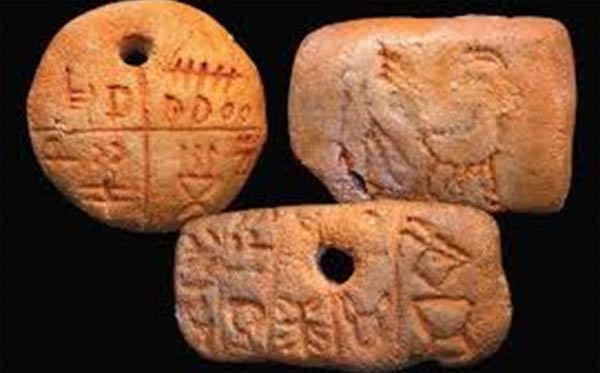
I am an electrical engineer from Timisoara, Romania.The subject of my research is the well-known tablets from Tartaria, wich was supposed by now to show an early type of writing, produced by the Vinca-Turdas Culture. The hypothesis is that could be the oldest evidence available at least from Europe.

From the very begining either the subject and the tablets were shrouded in a aura of mistery, and and started world-wide controversial discussions. There was no (and still now) concert  upon a reduced number of main aspects.What is all-about ?

Some eleven years before, seeing a picture of the tablets, found that despite of showing strong evidences of writing, no one could tell much more about. In less than 48 hrs.,after I revised the signs used in World oldest writings,I found some few signs in common.Later on this number increased, but not enough for a reading attempt.                                                                                  It is understood that every writing system used own set of signs, also that all discoverers of unknown writings had at disposal from tens to thousends written tablets. Here we have kind of singletons, and from the begining did not found an corresponding matching writing. Maybe, this due of having on Tartaria tablets signs from different writings. (Interesting, almost becoming a rule, unknown writings decipherers were ( as me too) not specialised in this field, Eg. Champollion, Hrozny, Ventrix)

For some years, my research not advanced, till consistently advanced in two occasions: when found Aegean writings, and most when got knowledge of sumerian proto-writing. Soon found some scientists(A.Falkenstein, A.A.Vaiman, Rumen Kolev…) papers regarding sumerian interpretations of Tartaria tablets.They found, as me also that the Tartaria tablets type of writing is very close to early sumerian writing.That is the proto-writing fase, when they used first proto-cuneiform signs.And I was the sole (no recollection of others) wich noticed that Tartaria tablets signs are in a way mirrored in Aegean writings (or reverse).To see to what writing is close, I used the method of test-readings, so found that is real,the similarity to sumerian proto-writing is astounding.   But as single-one wich noticed only half of the signs has exact sumerian shape, the other half are rough copies of those sumerian-ones.So it seems that the writing is not genuine sumerian, nor the scrib a native sumerian. In decreasing order (but at the same level) the likeness is with anatolian and aegean writings.Was only me wich noticed on the tablets af a rather hodge podge of signs, and the fact that there are three main categories/types of signs (from pictographic, then an intermediate form, to syllabograms/letters. There was, and still it is an array of divergent opinions regarding the circumstances of discovery and the tablet’s age. Because tha tablets were put in an owen at an unknown temperature (around 800 C deg.?) the carbond traces were degraded or burned, so the age determination, (at least with C14 method) is not possible forever.  Thus I realised that cannot rely-on data furnished by archaeologists, especially regarding the age. Luckily my focuss is not the age but the signs! The scientists opinions are in two groups:                                                                                                                 – Some fewer (Romanian-ones/Lazarovici and italian Marco Merlini as leading sustainer) wich are for an Vinca-Turdas Culture (neolithic!)production with the age same as of a deceassed female bones found near-by, 5.300 B.C. !  As for writing: “an unknown forever-lost type of writing” (!?), (not explaining of wich phase or type)

– Others (all foreign, only two Romanians:deceassed N.Vlassa and Dumitrescu) wich sustain an age for the tablets around 2750 B.C.E. (copper/bronze age and other later Cultures as Cotofeni,etc).  Writing (World top-level assyrologists/sumerologs): of Quasy-sumerian type

As I said, the single real physical, direct available element (as the clay was degraded) are the signs, wich could be analysed. As read other scientists papers, found some minor mistakes, inadvertencies, wrong sign identifications, missing sign identifications, for wich I’ve posted my comentaries.

One must understand that the descovery of writing was not easy, in a single or some steps, but lasted a long time.Was preceded by cave-art signs, pictograms and folowed by proto-writing phase.Writng is only when using signs, phonemes as words base units in a language, and language words could be transmited.

In proto-writing, the signs (pictograms,ideograms and logograms) could indicate notions and concepts only in a rough, general way, so we have no a proper readingbut rather an interpretation of the signs.   My conclusions are not superposed completely on others, or follow other scientists, classical comon course.

Main actual theories are, that:

– The tablets partain to Vinca-Turdas civilisation, the writing is local, and the scribe was one of  ancient Tartaria village members (the same as deceassed woman high esteemed person or priest).Due of archaic character the writing cannod be deciphered

– The tablets are from early sumerian writing phase (wich begun at 3.300 B.C.) but rather folowing this starting point, from around 2.750 B.C. Have no proper sumerian writing on them but of a sumerian-like type, “quasi-sumerian”.The scribe was supposed to be an sumerian trader, but my guess is for an trader coming from Aegean area, Cyclades but much sure from Crete.   For this last one I subscribe.                                  (I have arguments and evidences/see and analyse the other artefacts found close-by!)  =======================                                                          IT SEEMS THAT IN THE INADVERTENCIES SERIES, SOME ARE MAJOR-ONES. THERE ARE NONE GUILTY ( WICH WERE AWARE, AND PROPAGATE UNTRUE THINGS), BUT WERE WELL-INTENDED. THERE WAS AT THE ORIGIN AN EXAGERATED OPTIMISM AND WERE TOOK BY OVERFLOWING SENTIMENTS, ALSO UNJUSTIFIED EXUBERANCE AND LOCAL PATRIOTISM,LEADING TO OPOSITE, NOT BENEFITING FOR ROMANIA AND SCIENCE !

I don’t want even think, but the results are pushing me only to suppose, as an unwanted alternative, the fact that some chased an international recognition of personal merits in the field of science, exploiting as a trampoline de initial high-impact level of the subject in media.                                                                                                         =============================                                                                                                   The results of a dedicated in-depth research wich lasted  eleven years is entitling me to assert that:

  • THE TABLETS NOT PERTAIN TO NEOLITHIC/VINCA-TURDAS CIVILISATION, and are later to 3.300 B.C., possible 2.500-2.000 B.C.                                                                    Note                                                                                                                                                  This dating proposal has nothing to do with a physical exact dating of the tablets, but it is a result of analisis by a group of scientists of the other artefacts (excluded bones) and signs.

THE BONES, AND DECEASSED PERSON ARE IN NO WAY RELATED TO TABLETS;they are separated by a time span much more larger than 1.000 years, in fact could be 2.000-2.500 years !(5.300-2.700=2.600)

  • TABLETS ARE NOT COUNTERFATES OR FAKES
  •  
  • THE ORIGIN PLACE FOR THE TABLETS COULD BE RATHER  THAN TARTARIA. BUT AEGEAN AREA,CYCLADES, CRETE
  • SCRIBE IDENTITY: MINOAN(SUMERIAN MIGRANT SETTLED IN CRETE), BUT RATHER SOME FOLOWER, RELATIVE SETTLED IN CRETE,;PROFESSION:PROSPECTOR,OR TRADER
  •  
  • WRITING: PROTO-WRITING, QUASI-SUMERIAN (sumerian-like) Note “writing” because is not writing proper.There are clues that the upper half of the round tablet could be true writing (archaic greek)
  •  
  • SCRIBE COMUNITY LANGUAGE: KIND OF CREOLE(dialect showing sumerian/ aglutinative language characteristicss)

Only if we have proper writing (wich is not the case) remain a problem to be solved. Even we are able to extract words if the language is not known, the meaning of the words and message remain hidden.Same problem is encountered by those wich are trying to decipher proto-elamite, cretan hierogliphic, Linear A and eteocretan inscriptions ! (eg. correspondent language for Linear A writing is minoan)

Upon me, if there is about an early kind of writing, two possibilities remain:

– An local, European:Aegean reflection, adaptation of sumerian proto-writing (a local variant)

-quite same as above, imitation + true writing in upper half of the round tablet                          

Kind of luck (if we can say this) is that in proto-writing case in a measure it is not used a language in full, the meaning is transcending, leaping over words to meanings. So we can deduce and understand something without needing or knowing the respective language.

The human evolution are respecting some general say principles or governing laws; there is something common to all World populations and cultures. Because people, irespective of geographical position, have same needs for living. Direct related to life as feeding and others of spiritual kind.They mast produce and circulate, exchange food and goods inside and outside their society.Besides they had spiritual and social related needs in order to undersand the outer world and nature.Was thought that world was ruled by some powerful entities as ghosts and gods, and tried to get in kind of relation with them, to apropiate and make benevolent.Deities related to natural forces, the sky (abode of) gods and celestial ones (Sun and Moon).Those entities were perceived later to be in shape and behaviour as human-like.     They made places and earth houses for gods to meet, comunicate and give gifts, offerings.By short, early on, they made and depicted icons paired/for every main human things in focuss :cereals, gods of earth and sky, abode/temple,sun-god,etc.

But no others got so deep inside as me, to the point I realised that some signs represent in fact these type of important things; more than this,                                                                SOME SIGNS PRESENT ON TARTARIA TABLETS ARE IN FACT ICONS WICH ARE PRESENT IN SIMILAR SHAPE AND ARE OF PARAMOUNT IMPORTANCE IN OTHER CULTURES, separated each-other by time or at least by great distances: INDUS VALLEY, EGYPT, SUMER AND AEGEAN.                                                                                                     My focuss was mainly and only on SUMERIAN AND AEGEAN CULTURES !

I made my mind, why common ? Because they had as initial reason and trigger the same common motivations of existential nature for life and livingIn the tablets I’ve found common signs and icons eg:                                                                                                    – signs for plants, cereals                                                                                                                      -signs for food ratios (cereals,bread)                                                                                                 – sun-bull-god signs                                                                                                                               – signs for celestial /sun deities – signs for house,god’s abode,temple

It represents the bones of the skeleton for the life understanding, sustaining and functioning. Now an interesting question:                                                                                 What kind of explanation is for the fact that most of the signs found in many places,(concrete case Tartaria tablets) far away of Sumer are sumerian-like?      Are original,brought from Sumeria or coppied,faked,mimics !?

The explanation is one and quite simple: those signs are reflecting an original matrix wich stood at the base of others wich dispersed, in a close or distant shape and possible with changed meanings. Some old cultural traits and miths dispersed in different and wide areas as neolithic,agriculture,people and culture dissipated. Agriculture developement was soon folowed by demographic explosion and consequent migrations.So if not people carried the cultural elements and signs directly there was kind of “cultural transmission” wich is not necessary to happen in short periods of time.Otherwise demic and cultural transmission together.                                                                                    Thats why an writing from Danubian or Aegean area presents similarities with eastern-ones, in our case with sumerian,not for the fact that were sumerian proper or original sumerian. So Archaeologists and Linguists are aware that in different places found kind of cultural unity as Anatolian-Balcanic continuum in artefacts and language.Like there was kind of comunication, in long time span. For writing invention trading had the function of turbo-jet engine.                                                                                    ————————————————————————-

From https://encrypted-tbn0.gstatic.com/images?q=tbn:ANd9GcRToMSHOPcst4tIFUgy53GANQssbtaRO8fYzmvfsSTRYvLnzu1P

Image result for indus  script metal ingot

From http://www.wildwinds.com/coins/greece/thrace/kings/amadokos_I_II/t.html https://encrypted-tbn0.gstatic.com/images?q=tbn:ANd9GcTlzc8Ae2Z5TCH7lF3UaChYgvBQVijh53AivcXEWU2IwNWZZdf3 Image result for labrys linear a

From https://www.alamy.com/stock-photo/hieroglyphic-alphabet.html

Image result for cretan hierogliphic axe

From https://linearbknossosmycenae.com/tag/axes/

Image result for linear a axeFrom CALENDAR  HOUSE http://ancientlights.org/CalendarHouse/ch7.html                                                          https://encrypted-tbn0.gstatic.com/images?q=tbn:ANd9GcTMUPZezkWz0j2a8yGqsPshXsTcnufQF4o-RMZUQ770VKeX7cWM

Image result for labrys axe minoan

======================================================                                                From What is “Old Europe”? http://thesga.org/2009/12/what-is-old-europe/

*** EXCERPTS FROM MR. EVANGELOS PAPAKITSOS and IANNIS KENANIDIS PAPERS:

From Minoan Sumerian | Giannhs Kenanidhs – Academia.edu http://www.academia.edu/11423494/Minoan_Sumerian

The signs are those that are common to both Linear-A and Bscripts (62) and those that are exclusive to each syllabary. So, we have a script of simplified icons(signs) depicting items, where the phonetic value of each sign is related to the Archaic Sumerian word for the depicted item. Many of them are related to the associated signs of the Cretan Hieroglyphic, also to theSumerian pictograms and sometimes to the cuneiform equivalents. A sample is presented in the next section,for the curious reader. One debatable feature of such ascript would be the interpretation of the items depicted by the icons and another is the assignment of the phonetic value to each sign.”

From A Comparative Linguistic Study about the Sumerian Influence on the Creation of the Aegean Scripts Ioannis K. Kenanidis1 , Evangelos C. Papakitsos*2 file:///C:/Users/User/Downloads/Minoan_Sumerian.pdf

It is clear that the Aegean scripts are syllabic of the CVtype (consonant-vowel); i.e., all signs represent syllables ending in a vowel only, with no consonant clusters. This means that the script was originally devised for a CV-type language, namely a language in which all consonants are followed by vowels. There are many such languages, a very well-known of them being the Japanese. When a script is devised for a CV-type language, it is naturally a CV-type syllabary, as it is actually the case with the Japanese kana syllabaries. A CV-type pure syllabary was never initially devised for any language other than a CV-type language. While today we know of many CV-type languages, all Greek dialects were (and remain) foreign to the CV pattern. Another linguistic direction is required [2]: “In contrast with mainland Greece, Cyprus and Crete in the 2nd millennium are both multilingual societies in which the different languages are written down. It is tempting to assume that this points to stronger links with the Near East than with Greece.” It is recognized by eminent Greek linguists that there was a linguistic substratum in the Aegean area (e.g., see [33][41]). Other proposals about an adstratum instead [42] do not change the essence of our argument. This substratum is not regarded as Indo-European (IE), based on the unknown etymology of plant-names and toponyms [33]. The Aegean scripts denote that a CVtype language was spoken by those who created them. None of the IE languages is of the CV-type. The mainland of Greece and of Anatolia was inhabited by people speaking IE languages. The existence of a Semitic language (e.g., Akkadian) is also very probable in Crete, but it is not of a CV-type either. All such proposals roughly correspond to all the different ethnic groups that may have inhabited Crete or retained merchant delegations there. None of them, though, spoke a CV-type language. Ancient Egyptian was not of the CV-type, if we judge from Coptic, from renderings of Ancient Egyptian in other languages and from the ancient Egyptian script itself. Egyptian was an AfroAsiatic language, and those languages are generally not of the CV-type. Consequently [9]: “Without doubt, the Minoans at the beginning of the second millennium did not ‘re-invent’ writing independently, even if they were well able to take their first steps in this direction without knowledge of the Mesopotamian or Egyptian systems. However, starting with ideas from elsewhere, they created an original and astonishingly uncomplicated system for recording the sounds of their language by means of signs.” So, the issue of identifying the language behind the Aegean scripts remains the same: all the languages around Aegean, which we know of hitherto, are incompatible to the CV-pattern. CV-type languages are usually agglutinative ones. Duhoux suggests that Linear-A is “agglutinative rather than conjugatingbecause of the high number of affixes it contains (in 59% of the words) compared to Linear-B (12% respectively) [43]. What we seek is a non-IE agglutinative language of those times (3rd millennium BC) to fit with the “kana” pattern of Linear-A/B and their predecessor. Olivier states that [9]: “A priori, no language attested in the third or second millennium from the eastern Mediterranean or its surrounding areas can be excluded …                                                                                     the languages spoken by people from the coasts of Asia Minor or Syro-Palestine must be favoured. …                                                                                                                                   Between 3000/2600 and 1450, the period of the birth and development of Cretan Hieroglyphic and Linear A, … the introduction of a language known to us from elsewhere is unlikely.” The nearby agglutinative language of the 3rd millennium BC, well-studied and recorded, is the Sumerian. Additionally, the only highly civilized people close enough, speaking an agglutinative language well known to have CV-type phonotactics, were the Sumerians (or the bilingual Akkadian scribes / scholars because of the “sprachbund” [44][45]). Thus, the present research had been directed towards a comparative study for discovering any relation between the Sumerian language and the Aegean scripts.                                                                 EVIDENCE                                                         Firstly, we will concentrate on some aspects of linguistic taxonomy and methodology before we proceed to the direct evidence of the last subsection (A Sample).                                                             A Protolinear Script. There is a suggestion that Linear-A constitutes a linearization of the Akkadian cuneiform signs [22]. However, it is normal for a script to evolve from pictorial signs (as the Sumerian pre-cuneiform and the Aegean writing signs too) into non-recognizable forms (as the late cuneiform), and rarely the reverse. ………………                                                                           In other words, the Protolinear could be the parent of Linear-A and Linear-B, while the Cretan Hieroglyphic could be regarded mainly, but not exclusively [8], as the decorative and ritual form of that system for use especially on seals  There is an important rule that always goes together with this principle: the whole name of the depicted object is used and not a part of the name (unlike the acrophonic principle). The rebus principle had been invented by the Sumerians, according to Fischer [4], whose influence expanded to Nile, Iran, Indus Valley and maybe to the Balkans (as he suspects, and it is argued too herein, through the Aegean scripts). The phonology of the used words is of a dialect close to, but simpler than, the Archaic Sumerian (the reconstruction is explained, together with the transcription system, in [49])……………………………

This is a reasonable explanation for the observed incongruity of Linear-B to the phonotactics of the Mycenaean Greek language, provided we deduce that the scribes were non-Greeks, and their script was originally devised from a nonGreek language. ………………….        Even for the case of bilingual Akkadian scribes, the choice of the Sumerian language for devising the Aegean scripts would be a significant advantage, because monosyllabic words could be easily found in order to match common or culturally important objects for the signs of a syllabary. ………………..                                             According to Kramer [57]: “…by the third millennium BC, there is good reason to believe that Sumerian culture and civilization had penetrated, at least to some extent, as far East as India and as far West as the Mediterranean, as far South as Ancient Ethiopia and as far North as the Caspian”. Crete was known to Mesopotamia at least since the era of Sargon the Great, who lived approximately between the 24th and the 23rd centuries BC [58]. …………………….                                                                             CONCLUSION                                                                                                                                      In conclusion, the inadequacy of the Linear-A/B scripts to convey properly the phonology of the Mycenaean Greek, or the other languages proposed in Crete, is attributed herein to the origins of those syllabaries. ………….                                                                                  Based on the previous linguistic evidence and conditions, it has been suggested that a very suitable candidate language as the base for creating the Aegean scripts could be the Sumerian. Being an agglutinative language, it both exhibits the matching syllabic pattern of the CV-type, and it can justify the phonetic values of the Linear-A/B and Cypro-Minoan signs as well, through the rebus principle. It is also suggested that the formation of each Aegean script could have been conducted in the late 3rd millennium BC by means of absorption from a parent script, named Protolinear, being created by a scribal guild of Sumerian linguistic origin.

 From A Decipherment of the Eteocretan Inscription from Psychro (Crete) Ioannis K. Kenanidis1* and Evangelos C. Papakitsos file:///C:/Users/User/Downloads/Kenanidis432017ARJASS36988deciphermentofinscription.pdf

First by Marinatos [1] and later on by Brown [5] and Duhoux [6], the inscription was attributed to an Eteocretan language. Numerous attempts have been made to interpret the text. The proposed languages included Hittite [7] and Semitic [8,9], even Slavic [10]! ………………..                                                                                                                                     Thus, to all those readers interested in the Eteocretan languages of ancient Crete, a novel approach of decipherment is presented herein, for the first time based on the Cretan Protolinear script theory [12] that suggests the affinity of the Psychro inscription to the Sumerian dialect of Crete. ………………….                                                                                       As explained in previous works, the Cretan Protolinear script was created by the Minoans, who were Sumerian settlers [12,20,21,22]; the Cretan Protolinear script in the form of Linear A and Linear B was used by all the different nations that inhabited Crete and the Aegean. However, in the hands of non-Minoans (i.e. Hands of nonSumerians) the Cretan Protolinear script was distorted as time passed, and eventually forgotten, because the script was difficult for nonMinoans (=non-Sumerians). On the other hand, in the hands of Minoan Sumerians the Cretan Protolinear script could not be significantly distorted or forgotten, no matter how many generations would pass.                                    This is because the Cretan Protolinear script (henceforth in this work referred to simply as “Protolinear”) was phonetic and pictographic at the same time: every phonetic (syllabic) sign was a sketch of a readily recognizable object in the Minoan Sumerian culture.                                                                                                                                                 So, for those who had Minoan Sumerian as their first language, every syllabic sign had the native name of the thing that the sign depicted, and they always knew what the signs depicted.                                                                                                                                                   They could not alter the shape of the signs lest they would be no more recognizable and if a sign was not recognizable it could not have a native (Minoan Sumerian) name, so it could not have a phonetic value.                                                                                                           This is why the Protolinear script could not be altered in Minoan hands; while for non-Minoans there was no connection between depicted object and phonetic use of the Protolinear signs. Therefore, the Protolinear script survived unaltered as long as the Minoan nation existed.                                                                                                                  And we know that the Minoan Sumerian language, as other non-Greek languages spoken in Crete, was spoken not only until 300 BC but also much later [21], because those populations were relatively isolated geographically and socially.                                 The Sumerian language in Mesopotamia remained in use as a classical and hieratic language until about the year 100 AD [25].                                                                    It was easy for a language to be kept for many centuries among different languages when there was no obligatory schooling and no mass media. …………..                   We shall also briefly mention what is detailed in [21], that even after the pre-Greek languages were forgotten, they left some impressive phonological traits in some dialects of Crete and other islands: the most outstanding being a retroflex “l”; also, a strong tendency to eliminate consonant clusters, and the emphatic pronunciation of some stop consonants, to mention only a few traits that have been left from Sumerian……………………                                                                                                              To be serious with the interpretation, on the right of Fig. 2, the coin’s verso depicts a double axe which is the most renowned religious symbol of the Minoans. The double axe symbolised the power and the duality of God An, the supreme deity of both the Minoans [12] and the Mesopotamian Sumerians [30]. The double axe symbol was also used as a very common syllabic (phonetic) sign in the Aegean scripts [12,20,21,23] and it is present, although not so common in the Sumerian (preCuneiform) pictography [17,22].

  1. CONCLUSION                                                                                                                               It has been demonstrated so far that the Psychro inscription can be meaningfully deciphered through the conservative Sumerian dialect of Crete, spoken by the the scribe’s ancestors who had invented the Cretan Protolinear syllabary.This particular scribe used the Greek alphabet for the most part of this inscription, because it was the writing system known by all people in Crete and around the Aegean, and alsobecause the Greek alphabet was the only available writing system proper for writing on hard material, and the only system actually used for stone inscriptionsOn the other hand, the Cretan Protolinear syllabary was used almost exclusively on unbaked clay tablets, ………..                                                                      Although it is only this stone that we know of the whole structure built, the inscription was true when it said “this shrine will not ever collapse”: it is the shrine of the Minoan civilization.

Rezultatele unui cercetator amator Timisorean

February 22, 2019

REZULTATELE UNUI CERCETATOR TIMISOREAN

Fotografia, din ancient-origins-grece-theme-month                                                                https://www.ancient-origins.net/ancient-places-europe/do-tartaria-tablets-contain-evidence-earliest-known-writing-system-002103

tartaria-tablets

Ma numesc Rau Eugen si sant de profesie inginer electromecanic.                                          Subiectul cercetarii il reprezinta bine cunoscutele tablite de la Tartaria. Se presupune ca acestea prezinta o anumita forma de scris incipient produsa de Civilizatia Vinca-Turdas, poate cea mai veche dovada existenta la ora actuala, cel putin in Europa.             Inca de la descoperirea lor au fost inconjurate de o aura de mister, apoi a pornit o intreaga discutie de anvergura internationala asupra lor, in care in privinta unor aspecte punctuale, nu a existat o unanimitate de pareri. Si nici acum nu exista. Dar despre ce este vorba, mai in amanunt:                                                                                                                    “In urma cu circa 11 ani, din intamplare am vazut pe internet o fotografie a acestor tablite.Tot atunci am aflat ca desi prezinta semne evidente de scris nu au putut fi descifrate. La mai putin de 24 de ore, trecand in revista semnele folosite in primele scrieri din lume, s-a produs in mintea mea un gen de declic. In sensul ca am realizat ca unele semne le regasesc in acele primele scrieri din lume. Pe parcurs am realizat ca desi initial numarul semnelor comune gasite a fost mic, acesta s-a marit pe parcurs. Totusi, nici pentru un inceput de citire nu a fost suficient.Trebuie inteles ca alte scrieri initial necunoscute, apoi descifrate, au folosit fiecare din ele un sistem propriu de semne. Deasemenea numarul tablitelor avute la dispozitie de descoperitorii altor scrieri a fost cel putin de ordinul zecilor, dar deobicei al sutelor si miilor.Aici din pacate inca de la inceput nu am gasit nici-un sistem (cum ar fi un alfabet) cu ajutorul caruia sa pot face citirea. Aceasta datorita faptului ca tablitele par sa foloseasca semne din mai multe sisteme de scriere. Interesant de retinut si se pare ca devine aproape un gen de regula la descifrarea scrierilor necunoscute, faptul ca primii care au facut primii pasi in descifrari nu au fost “de meserie”. In sensul ca nici Champollion care a initiat descifrarea scrierii Egiptene,Hrozny care a detectat o noua limba hitita cu scrierea aferenta, Michael Ventrix cu scrierea linear B, si altii, (…printre care si eu), nu au fost specialisti in domeniu. Cercetarea mea a cam batut pasul pe loc ani de zile. Apoi cercetarea a avansat consistent in doua ocazii. Odata cand am luat cunostinta de scrierile Egeene (Linear A si B), dar cel mai mult cand am studiat inceputurile scrierii sumeriene si lucrarile altor cercetatori folosind o interpretare “sumeriana”. Cercetatori cum ar fi : A.Falkenstein, A.A.Vaiman, Rumen Kolev si altii, au observat (la fel ca si mine) ca cele mai multe semne de pe tablite se regasesc in faza de inceput a scrierii sumeriane, si anume printre semnele proto-cuneiforme. Deasemenea am observat un gen de asemanare cu scrierile Egeene. Pentru a vedea cam ce fel de scris a fost folosit, cu ce este similar, am facut niste citiri de testare folosind semnele diferitor scrieri. In final am reverificat ca intradevar, asemanarea cu proto-scrierea sumeriana este izbitoare. Dar  numai circa jumatate din semne sant exact ca cele sumeriene, iar cealalta jumatate reflecta schitat semnele sumeriene, deci se pare ca scrierea nu este propriu-zis sumeriana sau scribul nu era un nativ sumerian.In masura descrescatoare se aseamana apoi in masura egala cu scrierile Egeene si Anatoliene.A existat si exista o divergenta de opinii in privinta varstei tablitelor,legate de circumstantele descoperirii si de faptul ca fiind arse in cuptor varsta exacta cu metoda C14 nu mai poate fi determinata (carbonul a fost degradat,ars).De aceea, am realizat ca nu ma pot baza pe rezultatele arheologilor, in special in ceea ce priveste datarea. Opiniile sant impartite in doua grupe:                                                                – Unii (toti straini,doar unul roman Dumitrescu) care sustin o varsta a tablitelor la cca. 2750 I.E.N. (si deci apartinand epocii cuprului sau bronzului).                                                     – Apoi altii, mai putini (romani dar care au cumva ca lider pe cercetatorul italian Marco Merlini), sustin ca tablitele ar avea varsta (identica cu a unor oase gasite in sit), inspre 5.300 I.E.N.                                                                                                                                          Atunci am zis ca singurul element sigur si fizic palpabil pe care ma pot sprijini efectiv si real, sant semnele de pe tablite, care pot fi analizate.Cu timpul am ajuns sa analizez in amanunt lucrarile altor cercetatori, unde am gasit unele inadvertente,greseli si atribuiri gresite de semne.Trebuie inteles ca descoperirea scrierii in lume a fost un proces de durata si aceasta a fost precedata de o faza numita proto-scriere.Scriere este aceea in care un sistem de semne conduc unic la sunete si astfel se poate folosi o limba.                In proto-scriere, semnele (pictograme si ideograme) indica notiuni si concepte la modul general si nu avem de-a face cu o citire propriu-zisa ci cu o interpretare a semnelor.Diferite aspecte concrete legate de cercetarea mea, pot fi gasite in amanunt pe blogurile www://tartariatablets.wordpress.com si http://tartariawriting.blogspot.com.
Concluziile cercetarilor mele nu se suprapun peste actualul curs comun urmat de alti cercetatori.
Principalele teorii actuale sant ca:                                                                                                     – Tablitele apartin civilizatiei Danubiene (Vinca), scrib “Turdasean”, scrisul este autohton si datorita complexitatii si caracterului extrem de arhaic al tipului de scris nu poate fi descifrat                                                                                                                                    – Tablitele dateaza imediat dupa faza proto-scrierii sumeriene care a inceput la 3200BC si au varsta cca 2750 BC si nu prezinta scris sumerian propriu-zis ci scris “de factura sumeriana”. Autorul presupus a fi comerciant (sumerian?) sau mai degraba un comerciant provenind din aria Egeeana (CRETA!).      (Aceasta varianta o sustin si eu si am suficiente argumente logice si in special faptice in sustinere.)
=======================                                                                                                                    SE PARE CA IN SERIA DE “INADVERTENTE“, UNELE SANT MAJORE.                                   NU AU VINOVATI CARE CU BUNA STIINTA SA PROPAGE NEADEVARURI, CI AU FOST CERCETATORI DE BUNA CREDINTA.                                                                                                   INADVERTENTELE AU LA ORIGINE UN OPTIMISM INITIAL, SI O EXUBERANTA EXAGERATE, APOI SI UN GEN DE PATRIOTISM LOCAL ZIC EU PROST INTELES, DEVREME CE REZULTATELE NU SANT DELOC BENEFICE NICI ROMANIEI, NICI STIINTEI !              Nu pot decat banui ca eventualitate, faptul ca poate unii au urmarit recunoasterea unor rezultate si merite personale exploatand si folosindu-se ca trambulina de impactul mediatic initial al subiectului.                                                              =============================                                                                                              Rezultatele unei cercetari minutioase si dedicate, efectuate pe parcursul a circa 11 ani, I-mi permit sa afirm ca:

1-TABLITELE NU APARTIN CIVILIZATIEI VINCA. AU VECHIMEA ULTERIOARA LUI 3.000BC, f.f.posibil 2500-2000BC
Nota Aceasta nu este o datare propriu-zisa a tablitelor, (acest lucru nemaifiind posibil),ci este o apreciere bazata exclusiv pe o analiza exhaustiva a semnelor.

2-NU EXISTA NICI-O LEGATURA INTRE DECEDATA/OASE SI TABLITE, ele fiind separate de minim 1.000-2.000 de ani !

3. – TABLITELE NU SANT CONTRAFACERI ORI FALSURI

4- LOCUL DE ORIGINE A TABLITELOR: aria EGEEANA,Ciclade(?) dar mai sigur CRETA (sau chiar TARTARIA?/vezi analiza argilei)

5- IDENTITATEA SCRIBULUI: MINOAN= MIGRANT SUMERIAN STABILIT IN CRETA, sau mai degraba URMAS AL UNUI NATIV SUMERIAN STABILIT IN CRETA OCUPATIE: MESERIAS ex.metalurg SAU PROSPECTOR/COMERCIANT

6- “SCRIS”: “DE FACTURA SUMERIANA”                                                                                   Nota                                                                                                                                               ”Scris” intre ghilimele deoarece este proto-scriere,semnele fiind cel mai aproape de cele sumeriene proto-cuneiforme.Exista indicii puternice ca jumatatea de sus a tablitei rotunde contine scris propriu-zis, de genul arhaic grec.

7- LIMBA , UN GEN DE “CREOLA” !?(mai apropiata de sumeriana decat de orice alta limba?)

Ramane o problema, si inca una dificila, in eventualitatea in care ar fi vorba de un scris propriu-zis, chiar daca am identifica sensul semnelor si le-am converti in sunete si cuvinte, nu am sti ce inseamna, necunoscand limba celui care le-a scris.(Aceeasi problema o au cei care la ora actuala fac mari eforturi sa identifice scrierile proto-elamita, Linear A si Eteocretana. ( Ex. limba corespondenta scrierii Linear A este limba minoica). Acum dupa mine au ramas in mare doar doua posibilitati. Daca sant o faza incipienta de scris, ar putea fi,                                                                                                            – o reflectare ,exemplificare deci o productie locala Europeana a proto-scrierii sumeriene sau a a celei minoane-miceniene sau mai mult decat atat, chiar o asemenea varianta locala de scris incipient.
– idem,(o reflectare grosiera (imitatie) a uneia din acestea de mai sus), si posibil continand in plus si scris adevarat doar in jumatatea de sus a tablitei rotunde.

Un gen de noroc, (daca-l putem numi asa) sau gen de avantaj in cazul proto-scrierii, (cum majoritatea cercetatorilor subscriu in ceea ce privesc tablitele de la Tartaria), este acela ca intr-o oarecare masura proto-scrierea folosind ideograme (icoane) acestea pot avea un inteles, care transcende, trece peste cuvinte si peste o anumita limba concreta. 

Pe undeva a existat si exista ceva care face ca toate civilizatiile sa apartina unui tot unitar, un numitor comun al existentei tuturor populatiilor.                                        Pentru ca oamenii, independent de asezarea lor geografica, au avut acelasi gen de necesitati existentiale, materiale si spirituale.De exemplu trebuiau sa produca si sa vehiculeze (schimburi) produse si alimentele necesare subsistentei. Apoi au avut necesitati spirituale in sensul de a intelege lumea inconjuratoare si a si-o apropia si cele legate de viata sociala..Aceasta lume in conceptia lor era condusa de duhuri si zeitati. Deobicei entitati asociate cu fenomene ale naturii, dar mai ales cu cerul si soarele.Acestea erau percepute ca fiinte vii, partial asemanatoare oamenilor, aveau si un gen de casa facuta de muritori pentru ei pe pamant, templele. In primul rand au aparut, tocmai pentru aceste cateogorii principale enumerate mai sus, semne care le reprezentau: plantele(cereale), zeitati ceresti si chtonice (ex.zeitati solare), temple. Tocmai acest lucru l-am remarcat,(nu numai eu) chiar in tablitele de la Tartaria:                                         –similitudinea unor icoane/ideograme a mai multor civilizatii (aparent separate,macar prin mari distante).                                                                                                                               TOCMAI AU EXISTAT ACELEASI MOTIVATII DE NATURA EXISTENTIALA CARE AU DETERMINAT APARITIA LOR.                                                                                                              In tablite am gasit semne comune civilizatiilor din valea Indusului, Sumer si aria Egeeana; exemple:
– semnele pentru cereale pentru toate trei civilizatiile
– semnele pentru portia de mancare (cereale, paine) pentru civilizatiile sumeriana egeeana si egipteana
– semnele taurului (zeitate) in cea sumeriana si egeeana si al bivolului pentru valea Indusului                                                                                                                                                   -semne ale unor zeitati celeste,solare pentru civilizatiile sumeriana si egeeana
-semnele pentru casa,templu pentru cea sumeriana si egeeana.

Acum apare o intrebare cruciala si interesanta:                                                                              – Exista un gen de explicatie a faptului ca semnele din diferite parti ale globului se regasesc in cea mai mare masura in cele folosite la inceput de sumerieni, si a faptului ca mai mult sau mai putin semne asemanatoare se regasesc in alte scrieri ?                           Explicatia este doar una si foarte simpla:                                                                                         Se pare ca diferite elemente culturale, din care fac parte si semnele cu modificari explicabile s-au dispersat in diferite arii, odata cu aparitia agriculturii, aceasta fiind urmata de o explozie demografica si migratii. Deci atat difuzie demica cat si culturala (aceasta din urma putand avea loc in absenta deplasarii populatiilor).                                  De aceea chiar o scriere din aria Egeeana spre exemplu, prezinta similitudini cu cea sumeriana de inceput pentru ca reflecta o matrice de origine, si nu pentru ca ar fi sumeriene propriu-zis !                                                                                                                        SE PARE CA PE O CALE SAU ALTA, A EXISTAT PE PARCURSUL UNEI LUNGI PERIOADE DE TIMP,  UN GEN DE MINIMA COMUNICARE SI TRANSMISIE INTRE CIVILIZATII, DATORITA MIGRATIILOR, COMERTULUI SI TRANSMISIEI CULTURALE

Din http://enacademic.com/dic.nsf/enwiki/259720 http://enacademic.com/pictures/enwiki/78/Neolithic_expansion.svg

Image result for europe neolithic transmission

One World-wide ancient sign

February 17, 2019

From Indus Script & More http://indusscriptmore.blogspot.com/2010/10/&nbsp; Friday, October 22, 2010 Pinwheel, Wy, and Man

inscriptm244                                                                                         The ZEE PINWHEEL, which I enumerate V21, is shaped something like our letter “Z” turned sideways.  Alternatively, it may be considered a “ladder” in which the post on the right does not descend to the ground but stops at the bottom rung.  In addition, the post on the left does not ascend above the top rung.  In most cases, this zee-shaped PINWHEEL has three horizontal lines or rungs, but in some cases there are four (M-133 and M-425), in one case five (M-1087), and occasionally the striping is vertical (H-611).  The whole PINWHEEL is tilted diagonally in two instances (M-636 and M-1320).

POSSIBLE IDENTIFICATION OF TARTARIA TABLET’S SCRIBE ANCESTRY

February 12, 2019

Some time ago, I was puzzled to find in Romanian language far back in time roots . Going not only to Proto-Indo-European roots, but other depassing this border and going toward Nostratic family. There are papers of romanian thracologist Sorin Paliga related to the same issue.I will make a post with a critic analisis of his papers, and adding my own finds.                                                                                                                                                          ————————————————————————————–                                                               OLD EUROPE

From my recollection nobody analised what Old Europe left to Indo-European family.    In my opinion, there are evidences that Europe is indebtet to Old Europe with a great heritage. In Indo-European culture and particularly in linguistics there are traces of that of Old Europe legacy. There was Vinca Culture, and later Cucuteni-Trypillia from wich remained a great “written” expresion of their cultural developement.                                 THE VINCA CULTURE MADE GREAT CULTURAL ADVANCES AND MOST OF THE NECESSARY STEPS TOWARD A TRUE WRITING. BUT PITY BEFORE ATAINING THIS GOAL NOT SIMPLY DISSAPEARED, BUT MOOVED, SUFFERED METHAMORPHOSIS AND INTERMINGLED WITH OTHER FOLOWING CULTURES.                                                                      In neolithic archaeologists show no significant finds in the Aegean area, area presenting as beeing mostly inhabited. Many scientists are suposing that Aegean culture if not appeared but at least influenced by o possible from north-coming “hyperborean” migration.

Early on from Vinca Culture, emerged italo-celtic branch.                                                  From https://aleximreh.wordpress.com/2014/07/30/balkan-aryan-waves/

From  https://aleximreh.wordpress.com/2014/07/30/balkan-aryan-waves/&nbsp;                          “It is therefore likely that the Mycenaean descended from Russia to Greece between 1900 and 1650 BCE, where they intermingled with the locals to create a new unique Greek culture.”

There was found DNA clues that micenaeans had Eastern European DNA.

From Ancient DNA analysis reveals Minoan and Mycenaean origins August 2, 2017, University of Washington Health Sciences https://phys.org/news/2017-08-civilizations-greece-revealing-stories-science.html&nbsp;                                                                                           “While both Minoans and Mycenaeans had both “first farmer” and “eastern” genetic origins, Mycenaeans traced an additional minor component of their ancestry to ancient inhabitants of Eastern Europe and northern Eurasia. This type of so-called Ancient North Eurasian ancestry is one of the three ancestral populations of present-day Europeans, and is also found in modern Greeks.”

Read more at: https://phys.org/news/2017-08-civilizations-greece-revealing-stories-science.html#jCpOthers are sustaining that some of the Cretan minoans were early sumerian migrants.Other scientists related to the field of writing,are hypothesing that Aegean writing it is indebted to early signs of Vinca Culture.                                                ————————————————————————                                                                              The emergence of writing  is basic, necessary related to economical and cultural developement. But the “turbo-engine” was trading.No wonder that Mediteranean, especially Eastern part with example Crete was in the hearth of long-time commercial and cultural exchanges.                                                                                                                                                    ————————————————————————-                                                                       Now regarding to Tartaria tablets. Many top-level scientists found that at the first sight, the tablets signs are closest to those sumerian proto-cuneiform. My explanation is that Near-Eastern and Anatolian migrants brought that signs. That signs uprooted here because there were allready made and ordered, standardised; were advanced in order to beeing able in a great measure to transmit knowledge.  From other perspective, I suppose that Vinca and Cucuteni-Trypillia people were the ancestors of Pelasgians. Pelasgians advanced toward an writing system but pity, not got to the finish.                        Only when part of them came down to Aegean the trade engine finished writing developement.                                                                                                                         ——————————————————————–                                                                                It seem that in Tartaria tablets one could detect the effort to sinthesise and adapt Vinca, Danube writing developement to Aegean gainings.                                                                      THAT’S WHY THE TARTARIA TABLETS “WRITING” IS NOT SUMERIAN PROPER, NOR AEGEAN PROPER EITHER, BUT COULD BE kind of “PELASGIAN” attempt.

POSSIBLE TARTARIA TABLETS SHOW UNSUCCESFUL ENDEAVOR OF NORTHERN PELASGIANS TO USE THEIR OWN WRITING. AS THRACIANS, DACIANS AND LATINS FINALY THEY USED GREEK WRITING.

IF MOST OF THE TARTARIA TABLETS SIGNS SHOW AN VERY EARLY STAGE IN WICH SEEMS THAT PELASGIANS CANNOT FULLY UNDERSTAND AND USE SUMERIAN SIGNS, THE UPPER PART OF THE ROUND TABLET MAYBE SHOW THE USE OF ARCHAIC GREEK ALPHABET.

THE TABLETS WERE INTENDED TO BE A SOUTHERN PELASGIANS (CRETE?) SPECIMEN TRANSMITED TO NORTHERNERS, TO SHOW (mostly unsuccesful) HOW THE WRITING IS MADE,USED AND READ/UNDERSTAND                                                            ——————————————————————————————–                                                Note                                                                                                                                                        We don’t know what language or greek dialect was used, and don’t know either if we have on upper half of the round tablet heta-rho or eta-rho ; ddoc/ddoo or rroc/rroo or what is the sign +++++ for sure.                                                                                                     EG: POSSIBLE THE UPPER HALF OF THE ROUND TABLET SHOW USE OF ILLYRIAN LANGUAGE  Image from https://en.wikipedia.org/wiki/Illyrians

                                                                                                                                                                                                                                                           Su?/50?                                                                                           HERA/HERE                              R R o c

===================================================================== ADDITIONAL DOCUMENTATION =====================================================================                 From The Evolution of the Indo-European Languages Dr. C. George http://webspace.ship.edu/cgboer/indoeuropean.html

c. 5000 bc. Homeland:  The Danube River valley (Wallachia and Hungary).  Farming learned from the people of Asia Minor.  Cultivation of native rye and oats and domestication of native pigs, geese, and cattle begins.  Strong tribal sociey develops. There are many reasons for choosing the Danube River valley:  Farming is possible, although the land is less than desirable to more powerful tribes from the south; the flora and fauna of the valley, as well as for other natural features such as hills and rivers, are represented by the oldest words we can reconstruct; it includes the natural ranges of wild horses which, when later domesticated, would become the Indo-European’s “ace card”;  the area is central to the eventual expanse of the Indo-Europeans, with due allowance for the more rapid expanse commonplace over steppe-lands;  the area is also in close proximity to some of the most conservative recent representatives of the family.

The most compelling reason is the presence of the Danubian culture, with its linear incised pottery, at this same time.  The culture spreads soon after in exactly the directions that would account for the spread of PIE. There are, of course, many other possibilities.  The most common suggestion is the steppes north of the Black Sea, for many similar reasons.  I believe that the strong tribal social structure suggests that the Indo-Europeans were farmers before they were pastoralists.  It is highly unlikely that they went straight from steppe hunter-gatherers to sophisticated pastoralists in one step.

c. 4000 bc. Proto-Anatolians move east to the northern Caucasus.  They would be profoundly influenced by the advanced cultures of Asia Minor and beyond. Proto-Tokharians  move east into the Ukraine.  These people are the most likely originators of the horse culture.  There is also plenty of evidence of ox-drawn wagons with disk wheels in the western steppes. A western dialect emerges on the upper Danube and beyond.  The enclosed steppe of the Hungarian Plain is an ideal position to blend farming with a horse culture.

c. 3000 bc. Copper working, begins in Thrace and the Danube valley and reaches Germany by 3000 bc. Domestication of the horse spreads from the Ukraine.  Within a thousand years, horsemanship spreads from the Ukraine throughout the Indo-European area, even into Scandinavia.  It is the steppe inhabitants who change most dramatically into true pastoral societies.  In the more wooded areas of Europe, horse ownership begins to differentiate a warrior nobility from commoners.  Of course, use of the horse spreads to the non-IE societies of the Middle East as well.

The disk-wheel wagon has spread from Russia across Europe to Holland. The Proto-Anatolians move from the Caucasus to Asia Minor. The Proto-Tokharians continue east to the steppes, towards the Tarim Basin in northwestern China.  They may be the people known to the Chinese as the Yüeh-chi, and may have been the core of the Kushan Empire of the first century AD.

The Proto-Celts separate from the rest of the western dialect and expand west into southern Germany and France, where they develop the Michelsburg culture and begin to strongly pressure the pre-PIE people, likely including the ancestors of the Basques and Aquitanians.  The remaining western dialect tribes edge into the modern Slovenia-Croatia area as well as northern Germany. (R1b– ydna)

The main body of Indo-Europeans expands into Thrace, the Ukraine, Bohemia, and Poland, and begins to differentiate into a northern dialect – Bohemia, Poland, and Hungary, represented by the Funnel Beaker culture and a southern dialect – Wallachia, Thrace, and Ukraine, continuing the Danubian culture. The original inhabitants north and west of the Carpathians, likely speakers of Uralic languages, are pushed further north and east.                                                                                                               c. 2500 bc.

Bronze working develops throughout Indo-European area.

The Proto-Italics, who speak a western dialect, move west and south from the Slovenia area into Italy. There they would encounter well-established pre-PIE people, possibly the ancestors of the Etruscans and Rhaetians.
The Proto-Illyrians, speaking a western dialect (perhaps), move south from the northern Croatia area into Illyria (the Dalmatian coast).

One branch of the southern dialect – Proto-Hellenic – moves south into Macedonia, Greece, and the Aegean islands, absorbing much of the Pelasgian people and culture.  By 1500 bc, the southern-most tribes would establish the Mycenaean culture.

The Proto-Germanics move into Scandinavia. Odd aspects of Proto-Germanic may be due to interaction with northern Celtic tribes, Baltic tribes, and possibly to the presence of native speakers of Uralic languages in Scandinavia.

The remaining body of Indo-Europeans (the Baltic, Poland, Bohemia, the Hungarian Plain, Wallachia, Thrace, the Ukraine and the neighboring steppes) – both northeast and southeast dialects – undergoes the Satem phonetic changes.

c. 2000 bc.

The horse-drawn, two-wheeled chariot, with spoked wheels, is developed in the western steppes, and spreads quickly to the Balkans as well as the Middle East.A branch of the southeastern Satem dialect – Proto-Indo-Iranian – expands from Ukraine and the steppes into Afghanistan, Iran, and into India.  One tribe – the Mittani – goes as far west as northern Mesopotamia. The well-established cultures influence the newcomers greatly, but the Proto-Indo-Iranians of the steppes maintain their language.

The main body of the southestern Satem dialect expands into the Ukraine to become the Cimmerians, leaving the Dacians in the original homeland.  I suspect that the Dacians and Thracians spoke a Cimmerian-like dialect. These people would develop the steppe version of the Battle Ax culture.

The main body of the northeastern Satem dialect – Proto-Balto-Slavic – expands north from Poland into Belarus and the Baltic coast.  With the Germans, they would develop the northern version of the Battle Ax culture.

The Celts expand further into western Europe and, in a retrograde move, back into Hungary.  A powerful society, they pressure the original peoples of western Europe, as well as their own relations to the east.  They develop the Bell-beaker culture and, later, the Urnfield culture.

Anatolians (most notably the Hittites) establish themselves in Asia Minor, where they become a major power.  Their languages are profoundly affected by neighboring non-IE languages.

A second wave of Hellenics (Doric Greeks) moves into Greece from Macedonia.


“LERU-I LER” !?

February 12, 2019

De unde credeti ca vine misteriosul “LERU-I LER” refrenul din unele cantece populare romanesti?

Din An English – Albanian, Albanian – English Online Dictionary. http://www.argjiro.net/fjalor/index.php

English (4 entries.)                                Shqip (4 hyrje.)
free (adj)                                                              i/e lirë
for free (nd)                                                      falas
free                                                                     gratis
free (v)                                                           liroj, çliroj

In albaneza liber, liber este : i lirë,  i lirë, i lirë  si dupa cum vedeti prin repetitie apare secventa lirë i lirë, i

sau:    liroj    liroj

Ei acestea cu trecerea timpului, si prin transmisie orala a suferit usoare modificari, devenind “leru-i ler”

Nota

English (Only one entry.)                                Shqip (Vetëm një hyrje.)
liberty                                                                    liri {f} (tsh liria) (sh liri)

What are some Albanian names that have a meaning in the Albanian … https://www.quora.com/What-are-some-Albanian-names-that-have-a-meaning-in-the-Al…  ALBANIAN GIRL NAMES (authentic & popular) *= popular alb. versions of int. names. … Elira/e (the free one) Elisa* … Ilira/Lira (f. pers. of the word Freedom)

9 – Eupedia Forum https://www.eupedia.com/forum/threads/26431-Etruscans-Illyrians…albanians/page9                                                                                                                the latin and the hellenic language are based on the albanian one ….. illyr is the english form of iliri which means the free one in today albanian ======================================================

Tudor Gheorghe – Vin colindătorii (Leru-i ler) – YouTube

TARTARIA SQUARED TABLET WITH HOLE/19 Linear A/B approach

February 8, 2019

AKNOWLEDGEMENT

This page must be understood to be kind of probe and testing, as to check in wich measure, or how close the supposed Tartaria tablet writing goes toward, or fitts the Aegean-one. You must know that the signs on the tablets are closest to sumerian proto-cuneiform ones. Then follow at the same level Anatolian and Aegean writings. The conclusion is:                           – there is no genuine sumerian nor genuine Aegean writing on tablets.              MANY ASSYROLOGISTS (AND ME ALSO) SUSTAIN (in the best case), AN QUASI-SUMERIAN WRITING                             But no wonder, is reflecting an Anatolian-European continuum, and there would be a simple explanation for this fact:                                                                                  Possible, as hypothesised Mr.I.Kenanidis and G.Papakitsos for minoan writing, the Minoans were early sumerian migrants.I AM EXPECTING THAT UNDER DIRECT SUMERIAN INFLUENCE, MINOANS SOME-HOW ADAPTET THEIR CONCEPTS (particularly that of the signs) TO THEIR CULTURE OF OLD-EUROPE TYPE ;                                                                                                   DON’T KNOW FROM WICH STAGE OF THIS PROCESSUS ARE COMING THE TABLETS !  ==============================================================

TARTARIA SQUARED TABLET WITH HOLE/2018 Linear A/B approach

Image from ESCRITURA DE TARTARIA http://www.proel.org/index.php?pagina=alfabetos/tartaria

tartaria1

We have upper-left side, those D-s (3 signs)

(In close shape, but by imprinting, sumerians used to express numbers.

Were found in economic transactions.Signs are not imprinted as in sumerian (cuneus cuneiform) technique with the opposite edge of sharpened-one edge of stylus, so I wonder if  the writer was a native sumerian.

From https://www.voceavalcii.ro/39794-decrypting-of-tartaria-inscription-part-2-rectangular-amulet.html

Here maybe No.2, where the indication line is black.

Those 3 signs, “>>>”?, “)))”,could be (as in sumerian) number 3 or 30.                                                    (after Rumen Kolev http://www.su -varna.org/izdanij/Magazin%201%20conf/Pages%20from%2046%20to%2053.pdf interpretation:”3 (months ?)                                                                                                      CONCLUSION: “30/3 (Months ?)”                                                                                                              ——————————————————————————–

  1. Close to these signs, downward, we have sign No.1 as ear of cereal
  2.  
  3. Usually associated with agriculural products as barley:                                             Image,from http://www.mesopotamia.co.uk/writing/story/page06.html
  4.                                                                                  From http://people.ku.edu/~jyounger/LinearA/

LINEAR A *04 (TE), common

In linear B,

Linear B, Cretan“TE” “Wheat

https://encrypted-tbn0.gstatic.com/images?q=tbn:ANd9GcRykURVevP7C91htJQXSWtUoIKlv_VE7Zk8RacOILleQApR07vw

Note that this sign rather pertain to proto-writing. Cause in linear B we have signs for specific kind of grains (wheat visa barley):

https://encrypted-tbn0.gstatic.com/images?q=tbn:ANd9GcRHPdQSYyE8qr4n115PLPH_UBTyeNB9XKrQDADDWG3bdzC2-UEQZQ

(Rumen Kolev http://www.su-varna.org/izdanij/Magazin%201%20conf/Pages%20from%2046%20to%2053.pdf interpretation, with the sign underneath:”3-months corn in the temple”                            CONCLUSION: Together those 2 signs,could be interpreted as                                                                                        “ (30), 3 /volume measures of some sort of cereal grain”(gr.sitos) ?”                                  =====================================================

Next downward,this Y-shaped sign (! drawn separately in a box !)will see what could be.

  1. (sign No.3)

Table from https://www.researchgate.net/figure/The-Cretan-Hieroglyphic-table-of-signs-as-suggested-in-the-inscriptions-corpus-Olivier_fig3_273096050

the-cretan-hieroglyphic-table-of-signs-as-suggested-in-the-inscriptions-corpus-olivier No.019 ;024 ?                                                                                                                                                        Y-sign= linear B= “SA?

From http://www.ancientscripts.com/lineara.html “Once again applying Linear B reading to the previous Linear A texts, we see the sign sequence ja-sa-sa-ra-me. This sequence is very interesting because it appears very often in many other such votive inscriptions in slightly different variants.

lineara_ladle

FINAL READING: “SA”                                                                                                                            From   http://people.ku.edu/~jyounger/LinearA/&nbsp;                                                                     *31, SA, perhaps a logogram for *SA-SA-ME?;

From http://people.ku.edu/~jyounger/LinearA/&nbsp;                                                                                     JOHN JOUNGER SA (HT 114b.1) or SI (HT 30.1) = paid?

FINAL READING: “SA”  ========================================================                                     Next, to the right, vertical separation line ! sign 4

Next,downward, folow a sign No.4

wich ressemble violin,labrys?/ 2 merged lozenges ?;

b4dd6746fe84b265e714daef471f2b89

Note: the sign  is repeated as the last sign on the tablet

Close to the cretan hierogliphic sign 042 (Labrys) <see table above>

https://enijote.wordpress.com/2017/11/25/double-axes-and-the-limits-of-knowledge/

Not much to see.  But here’s its Linear A counterpart:

The sine qua non is the interpretation of labyrinth as “Place of the Double Axes,

The Cretan Hieroglyphic evidence is even more explicit:

There are saying that the sign is at the origin of “A”:

From Essays on Ancient Anatolia in the Second Millennium B.C. https://books.google.ro/books?isbn=3447039671

Prince Mikasa no Miya Takahito (son of Taishō, Emperor of Japan) – 1998 – ‎Civilization, Assyro-Babylonian

reconstructed an IE *peleku14 of sacred use that would go back to a pre-IE digging implement of the Mesolithic of NW Europe and pre-Mesolithic … Mycenaean dapur-, Hittite tabarna/tla- barna/labarna(s) from a Sumerian balag, Assyrian pilakku, Sanskrit paraqu, Greek pelekus, designating a certain type of axe.

    (Rumen Kolev:”temple”,good!)

By one side, the sign has the exact shape of the sumerian proto-cuneiform sign “AB=house,temple” and by the other side labrys is the king, divinity icon, and present in most of the minoan temple/shrines, especially in Minos palace. So could be the house of the labrys :LABYRINTHOS.                                                                                                    CONCLUSION:  LABRYSICON related either to Goddess A-Sa-Sa-Ra  and ITS HOUSE-TEMPLE, cave-shrine, LABYRINTHOS                                                                                                ——————————————————————————————                                                  Next, an insect/miriapod-like sign !?! is found in more and less simylar shape all over:

As a refference, Sumerian “DINGIR”/God/sky    From https://cdli.ucla.edu/tools/signlists/protocuneiform/archsigns.html&nbsp; sign “AN


          sum.AN it is:God, Heaven

But! If URUK “dingir” has 8-11 spikes our sign have 12 (limbs)

Note that is not in a shape of wheat-ear or plant but is in a star-like shape.The difference in “spikes” number is not much problematic in my opinion.So why not,or possible to be something star-like i.e. “a GOD”?   But much,much close,(if rotated 90deg)    (count the number of lines! totaly 12 in sumerian sign as in our)                           ——————————————————————

From http://www.namuseum.gr/collections/prehistorical/mycenian/mycenian13-en.html

“KE”? (2-nd in the first row) ??

(Rumen Kolev rendering:”Sun”)                                                                                    CONCLUSION:                                                                                                                                            I will change my final interpretation of the sign, from “God, Heaven” ,”Sky-God” to “SUN”, cause beginning from minoan time, appeared the multy-rayed symbol and sure was the Sun !                                                                                                                                          —————————————————-                                                                                                 Next, donkey head-like picture or sign shape.In sumerian the sign was AMAR:”CALF”, but minoans took the sign and changed finaly to a kat-like shape.

 LINEAR B “MA

Note the scribal hand sign Ma with big ears as in our tablet!

(Rumen Kolev rendering:”bull Enlil”)

  CONCLUSION                                                                                                                                  The “long-eared head” is not related as in sumerian to AMAR “calf” ,Sun- calf/bull , but derived from the sumerian root “ama=mother”, it is MA: Aegean Mother-Goddess MA: Aegean Mother-Goddess                                                                                 ————————————————

Second sign from the end backward,right edge,upper sign.Sincerely at this sign I run out of… resources.

Sign Mo, MU !

See the paper: BUCRANIUM SYMBOL AND SIGN Cornelia-Magda Lazarovici, Gheorghe Corneliu … – Arheovest  arheovest.com/simpozion/arheovest3/03.pdf

“In Vinca-Turdas culture were found hundreds of artefacts of different kinds with the shape of a bucranium (bull-head). Or shape intricated or depicted in a way or another in them.”

The horned-head as poor as is depicted could be that of a bull. Especially cause of the sturdy/massif head.

But I explain why radher is bull. (Rumen Kolev http://www.su-varna.org/izdanij/Magazin%201%20conf/Pages%20from%2046%20to%2053.pdf rendering “bull” and the underneath sign “in/of/for the sacrifice”!?)

Cause the Bull was related to Gods/SUN and rullers (MinoTAUR).As in ancient East the bull was associated with the Sun.                                                                                            CONCLUSION                                                                                                                                        Horned-like icon is the Aegean Bull, “MU“, whoever was related to.                                       ——————————————–                                                                                                            And downward we have the very icon of  Sky-God and of the Earth counter-part,ruller Minos the DOUBLE-AX shape,

Note: By sumerians bull head associated with double ax-shape was sign AMAR + sign AB

Meaning         Bull-calf  + House/abode

Wich by them those pair-signs, ment       NERGAL      (a pair of the Sun, underground hypostasis)

(the fierry hott Sun of the mid-day time, later an underwold&death GOD(dess)

So, we have the heavenly Bull=SUN asociated with his GOD/royal sign LABRYS and his temple-house LABYRINTHOS

As Zeus Labraundos,Keraunos was depicted with the axe in his hand.

In this case nothing is necessary to be added and those signs don’t need to be much comented/translated or interpreted, it could be,

INTERPRETATION OF THE WHOLE TABLET:                                                                          AN OFFERING, ( 3/30 grain, wheat? units) SACRIFICE on THE SHRINE,TEMPLE TO THE MOTHER-GODDESS and to the SUN-BULL-GOD.                                                                                                                       ———————————————     

From ПЛОЧКИТЕ ОТ ТАРТАРИЯ И ЧАШАТА ОТ СУВОРОВО – ДВА „НАДПИСА” НА
РАННАТА ДУНАВСКА КУЛТУРА И РАЗШИФРОВАНЕТО ИМ
Румен Колев         interpretation of the last 2 signs: “cattle in/of/for the sacrificed”)

“LADY OF TARTARIA” or HOW A “GOOD INTENTION” AT RISK TO BECOME A HOAX

February 6, 2019


,             “LADY OF TARTARIA” ; SCIENCE OR SCIENCE-FICTION ? or

HOW A GOOD INTENTION HELPED WITH LIGHT-MINDEDNESS CREATED A GHOST

The very begining was in ‘61, when at Tartaria village, site LUNCA, in unclear circumstances was unearthed a group of artefacts.Their exact or relative position is even now an enigma.Anyways the first wrong step was to atribute the same origin,age and culture to entire bunch.                                                                                  But only the bone’s age was determined with accuracy (5.300B.C.)                                   After this bone age determination, in an optimistic exuberance burst, this 5.300 B.C. age was atributed to all artefacts. (mainly by Romanian scientists an italian Marco Merlini). Soon, later on, some foreign archaeologists realised that something is wrong.   This given age seemed too old (from artefacts/20pcs., and writing analisis) .                                     Now begun an array of given ages. Note that some of artefacts pertain indeed to Vinca Culture! For few artefacts and the tablets, luckily all somwhere around 2.750 -2.500 B.C. :

From  Chapter 3 “Existence of an archaic script in Southeastern Europe: A …www.academia.edu/…/Chapter_3_Existence_of_an_archaic_script_in_Southeastern_E… …… “presupposing they belonged to much later, to the Coţofeni cultural horizon”               me: (3.500-2.500B.C.)

From Acta Terrae Septemcastrensis https://books.google.ro/books?id=q-pjwVI1Vz0C            “2900-2500 BC as the anchor evidences (Dumitrescu 1969a: 92, 99-100, 588-589)”.

(Maybe N.Vlassa in his way was close-by as before all, to advance an age around 2.800 BC.

From Chapter 3 “Existence of an archaic script in Southeastern Europe: A …www.academia.edu/…/Chapter_3_Existence_of_an_archaic_script_in_Southeastern_E…   tablets from about 2900-2700 BC (Vlassa 1976: 33) to 2500 BC (Hood 1967: 110)

From Acta Terrae Septemcastrensis https://books.google.ro/books?id=q-pjwVI1Vz0C “the Tartaria tablets as Cotofeni finds (G.I. Georgiev and V.I. Georgiev 1969). … e.g. Petresti, Baden-Kostolac or Cotofeni

The Romanian conservative group maintained 5.300 B.C. for all artefacts.                 My recollection is that due of sustaining tablet’s age same as of the bones, Mr. Marco Merlini , baptised deceassed woman “Lady of Tartaria”.He imagined that this lady (wrote the tablets?) used them in religious rituals beeing a high esteemed person in comunity, and kind of priestess. Attention, all over the World no one artefact carring pre-writing was found before 3.300 B.C.                                

THE REAL AGE OF THE TABLETS WAS NOT DETERMINED (tablets were put in a kiln,and carbon was degraded) AND CANNOT BE DETERMINED ANYMORE                          …………Until a new scientific method will be discovered, there is no chance for exact,real age determination.    For the tablets there is no other way to determine whatever you want than signs analisis.

Out of some romanians and Marco Merlini, most of foreign archaelogists and all sumerologists, give for the tablets an maximum-maximorum age of 3.200 B.C.but most of them around 2750.

Now I am asking you : how could a person deceased at 5.300 BC to write or use some tablets wich were made in 3.200 or 2750 B.C.E?

Now 5.300-3.200=2.100 5300-2750=2.550

After priestess died, passed 2.100 years or maybe 2.550 till the tablets were written.Even if great-grandchildrens had the clay passed another (2.100-3×40):40=50 generations to be written !   Then the deceased could be in her spare time anything she wanted lady-shaman/witch or priestes. But don’t know for sure because she had no at least these very tablets in her hands to perform rituals with them.But scientists,unlike to to take the work slow and steady, with caution, rushed with astounding figures. World media was filled with “the oldest writing in the World” (of course writing before Sumer)                                                                                   —————————————————————————-                        It seems that the raw reality is pushing toward an quasi-sumerian writing on the tablets (not sumerian proper,but sumerian-like).This sumerian-like writing was introduced in Europe by sumerians, in Crete.The greek top-level researchers  EVANGELOS PAPAKITSOS si IANNIS KENANIDIS, hypothesises that early sumerian migrants were first minoans.Also their folowers/relatives in crete were also of the same stock, minoans. Greek researchers that even Aegean people had the capacity to invent a writing, they took an allready mede one.The sumerian proto-cuneiform signs were at the origin of Aegean Proto-Linear script.This script is at the base of all other folowing Aegean writings as Cretan hierogliphic, Linear a ,cipro-minoan and Linear B.                                                 ———————————————————                           You maybe know that the language and writing of minoans it is inthe course of deciphering.Bu the greatest dificulty or task are not signs, wich most of them are alike that Linear B-ones, but the language.No clear family language was found for sure for minoan language.It show characteristics as Luwian has of a banana-language.This means that there are repeting phonemes like in word ba-NA-NA.Exemple minoan Goddess A-SA-SA-ra.The above mentioned scientists searched for a language wich has agluttinative caracter (glued phonemes).Glued phonemes of the type CV(consonant-vowel)The only close-by language found was sumerian.                                    ———————————————————————

So my result research finding is that’s why  the Tartaria tablets has an type of writing by far much close to sumerian (as first noticed and atested top-level assyrologistas as:Adam Falkenstein,A.A.Vaiman,Rumen Kolev, and many others; and me also).

So it seems that the Tartaria tablets writing is coming from Aegean area,much sure Crete,where an writing and language close to sumerian-ones was used. But this not happened before 2.500 B.C. (oldest age for the oldest Agean type of writing=Cretan hierogliphic) So with indulgence and adding an securing time, this kind of writing CANNOT BE OLDER THAN 2.500 B.C. SAME FOR THE AGE OF TARTARIA TABLETS.In this case, the void span between the living “TARTARIA LADY” and the age of the tablets could be 2.800 YEARS !                                               NOTE THAT THE CRETAN HIEROGLIPHIC USED ICONS,AND ONLY FOR RELIGIOUS PURPOSES,AND WAS NOT YET A WRITING!

https://en.wikipedia.org/wiki/Linear_A                                  Linear A is a writing system used by the Minoans (Cretans) from 2500 to 1450 BC. Along with Cretan hieroglyphic, it is one of two undeciphered writing systems used by ancient Minoan and peripheral peoples. Linear A was the primary script used in palace and religious writings of the Minoan civilization.

So imagine a Lady wich not existed, (at least in the time when tablets were made) is worth of S.F. So inventing a lady can loosing the trust in science and scientists.

It is understandable that the tablets could contain something old, relating to ancient religions and miths. But the tablets were encircled by a mythical aura.So a myth around an object wich contain myths.Mith in a myth.

But relative to “Lady of Tartaria”,an fictional  person, a priestess(?) was created and constant artificialy inflated. Not beeing enough a entire story was constructed around Lady of Tartaria. A story good for a best-seller,or mooving-picture.But not good at all for science wich was not pushed forward with this contribution, no one milimeter, but rather pushed back in the dark of nescience.


“DOAMNA DE LA TARTARIA”, SAU CUM O BUNA INTENTIE RISCA SA DEVINA O GLUMA PROASTA

February 5, 2019

sau “DOAMNA DE LA TARTARIA”, FICTIUNE SAU REALITATE !? sau                                   “CUM O INTENTIE BUNA PRIN SUPERFICIALITATE POATE SA CREEZE O FANTOMA

Parca denominarea “Lady of Tartaria” apartine cercetatorului italian Marco Merlini.       Dansul bine a remarcat, ca a existat inainte de Sumer si Egypt o civilizatie Vinca extrem de dezvoltata si complexa, care a lasat multe urme si semne, dar cand mai avea doar doi pasi sa descopere scrisul, s-a destructurat,mutat ori transformat.   De unde a pornit si pe ce se bazeaza ?

Se bazeaza pe faptul ca in situl de la Tartaria/Lunca in 1961 in conditii nu prea clare s-a gasit un grup de artefacte: 3 tablite , oasele unei persoane decedate si alte cca.22 de artefacte.Localizarea lor relativa a ramas pana in ziua de azi o enigma.                        Oricum, primul pas gresit a fost acela ca s-a presupus ca au fost toate in acelasi loc.        De aici si varsta a fost declarata ca fiind aceeasi pentru toate artefactele.                   Insa doar oasele au fost datate (cca 5300 IEN) si astfel au fost incadrate ca apartinand Culturii Vinca.                                                                                                                                  Ulterior, diferiti arheologi au realizat ca ceva nu este in ordine. Pe de o parte                       – unele artefacte (excluzand tablitele) ii indreptau spre o perioada mai tarzie, iar pe de alta parte                                                                                                                                                 – chiar tablitele (dupa analiza semnelor) au inceput deasemenea sa conduca spre o perioada care nu ar fi mai veche de  3.000 IEN.                                                                                                  Trebuie retinut ca pe intreg Globul Pamantesc nu s-a gasit nici-o urma de proto-scriere inainte de 3.500 IEN. De fapt varsta tablitelor nu se va mai putea determina exact niodata (cel putin pana nu se va gasi o noua metoda de determinare).Acum se pune problema cum se rezolva urmatoare dilema,avand :                   – pe de o parte oasele  cu varsta determinata ca fiind 5.300 IEN , apoi                                 – alte artefacte cu varsta incerta intre 5.300 si 2750 (2750 exprimata de unii arheologi), si                                                                                                                                                                – tablitele cu varsta necunoscuta, dar cea mai mare vechime nu poate depasi 3200 dupa unii si 2750 IEN dupa altii (exprimata de arheologi si epigrafisti de marca)                                         ———————————————————————-                                                                           Acuma va intreb eu, cum poate o persoana decedata la 5.300 I.E.N sa scrie (sau sa foloseasca !!) niste tablite din 2.750 I.E.N !??                                                                                                                                        Daca socotim:5.300-2.750=2.550 de ani. Buun! Acum sa vedemde curiozitate,sau de amorul artei cate generatii ar fi cuprinse.Am inteles ca in vechime o generatie se poate socoti ca avand 30-40 ani.Sa luam maximum, adica ca ar fi trait mult.2550:40=63,75~64generatii.Deci chiar daca ar fi scris tablitele stranepotii decedatei,tot mai raman 60 de generatii in care inca nu puteau fi scrise.Deci decedata putea fi in timpul liber orice,si doamna si saman si persoana de vaza ori preoteasa.Dar nu putem fi siguri, pentru ca nu ne mai putem baza pe faptul ca ea ascris tablitele si le folosea la ritualuri. Si arheologii sau alti oameni de sttinta, in loc sa ia lucrurile mai cu incetul,cu scrupulozitate si precautii, s-au angrenat inca de la inceput impreuna cu altii cercetatori straini in “descoperirea celui mai vechi scris din lume’ sau “scris inainte de Sumer”.                                                                                                                                                    —————————————————————————-                                                                     Se pare ca realitatea cruda ne indreapta spre un scris de tip sumerian, adica quaasi-sumerian, introdus in Europa (Creta) de primii colonizatori ai insulei.                              Cercetarile actuale evidentiaza ca minoanii au fost de fapt primii colonisti sumerieni si mai apoi urmasii lor.Acest fapt este sustinut de cercetatorii, (culmea, chiar greci !)EVANGELOS PAPAKITSOS si IANNIS KENANIDIS, care sustin ca desi minoanii ar fi putut inventa scrisul un scris al lor, (pentru ca puteau,de ce nu ?) insa au preferat sa ia unul gata facut (semne sumeriene) cu atat mai mult cu cat se potrivea limbii lor de tip aglutinativ. Adica banana- language, o limba in care cuvintele se formeaza prin legare de particole fara prea multa gramatica ba-na-na , sau ex. in minoana zeita I-SA-SA-RA).Astfel inventand o Doamna care nu a existat in sensul ca manevra tablitele, riscam sa decolam de pe realitate si sa ne facem de rasul lumii. ACEASTA INTRODUCERE A SEMNELOR IN CRETA, SE PARE CA A AVUT LOC INTRE 2.500-2.200 IEN . IN 2500 I.E.N au inceput sa fie folosite semnele, dar altfe 2.200 IEN ESTE TIMPUL CAND SE FOLOSEA SCRIEREA CRETANA HIEROGLIFICA ( urmata aproape instantaneu de scrierile: Linear A, cipro-minoana si apoi Linear B) Acesti cercetatori sustin ca la baza acestor scrieri enumerate mai sus a stat o biblioteca de semne PROTO-LINEARE EGEEANE.

DECI ESTE POSIBIL CA TABLITELE SA FI FOST SCRISE SI MA TIRZIU, (2.500),CAZ IN CARE ECARTUL DE TIMP OASE-TABLITE POATE AJUNGE LA UN MAX.DE 2.800 DE ANI! FRATILOR,Jale! (adeca jale cu J mare)

ASTFEL UN SUBIECT STIINTIFIC INEXISTENT (PREOTEASA),A FOST UMFLAT, DEVENIND UN SUBIECT DEVENIT MIT/ DE PROPORTII MITICE.                                                                                          NE-AM ALES CU UN “STORY” CARE AR FI BUN PENTRU A STA LA BAZA UNUI FILM, EVENTUAL CU ACTIUNE IN NEOLITIC. STATI CA FILM EXISTA, SERIALUL “NIASCHARIAN-SA RENASTEM”.                                                                                                            DAR STIINTA NU A INAINTAT CU NICI-UN MILIMETRU, DIMPOTRIVA ACESTA E UN EXEMPLU CUM POTI S-O DAI INAPOI.