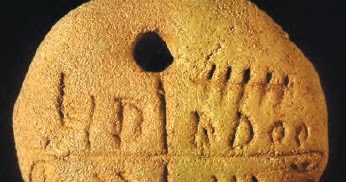
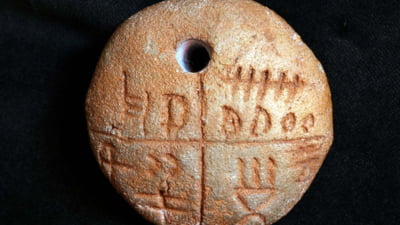
Careful! This post is not a decipherment or reading of any actual written content of Tartaria tablets. Given that the signs do not belong to a single writing system but to several, the page has a purely didactic character. Its role is to try and test different writings. The signs on the tablets belong to several writing systems over a long period of time and which have been used in different geographical areas. In none of the trials did the signs fall into a single type of writing, there always remained signs that came from other writings (or from the unknown). Most of the signs come from the Sumerian proto-wedge-shaped ones. The signs in the upper half of the round tablet seem to come from archaic Greek writing. This “collection” of signs seems to be the fruit of one’s rich imagination. , he had only vague notions about writing in general and it is not known what were his intentions or he was after. There are many elements of inconsistency as well as others that take the tablets out of the usual patterns and norms of honest logic, writing and intentions. ========== From Moonlight in Romania: The Tărtăria Tablets http://aplaceofbrightness.blogspot.com/2008/11/moonlight-in-romania-tartaria-tablets_21.html
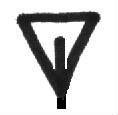
Said “H” because the closest to nowday’s letter are archaic greek Heta/Eta and greek and latin H.In fact in sumerian proto-cuneiform we have the signs:
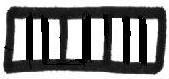
<< K?AThe Sumerian sign (Jaritz #458) depicts a ‘tubular basket‘; a variant, #458a, tapers toward the top; both have top-covers; both presumably and readga2 (among others). Another recorded reading for it is pisan, which means ‘basket’ but perhaps also ‘*shallow tray‘.An archaic variant form for Sumerian sign above (Jaritz #458), Jaritz #458a, looks very much as if it could be the ‘head’ without the hair and neck we see in Jaritz #15 under K?XA; and therefore might be a sign for ‘jaw’; but it also may be just another shape of ‘basket’.>>
www.academia.edu › Vessels_and_o… (PDF) Vessels and other containers for the storage of food according … 1 – A selection of container signs in the proto- cuneiform record. … scribed within the box- shaped container is purely graphical. sign GA2 .
is.muni.cz › PAPVB_13 › Ha…PDF Sumerian Lexicon – IS MUNI 11 aug. 1999 — ñá: basket; house; stable (cf., ñar) [GA2 archaic frequency
is.muni.cz › PAPVB_13 › Gl…PDF a gal[help]; a gal[strong]; a gar[defeat] – IS MUNI 1. cella 2. bedroom 3. a ritual building 4. the sanctuary … Akk. damšillu “(a kind of cucumber )?; plant name” … GA2: ga2. 1. house 2. station (of the moon)? 3. room 4. house-lot. 5. estate.
https://www.naturepagan.com/early-cuneiform-signs-f-kGAR, JAR: n., storeroom; form, appearance (to be + to send) [GAR archaic frequency: 409]. v., to store, accumulate; to deliver, deposit; to put, place, set down upon; to make, establish
INDUS SCRIPT From http://indusscriptmore.blogspot.com/2010/11/uncommon-indus-signs-from-tri-fork-to.html
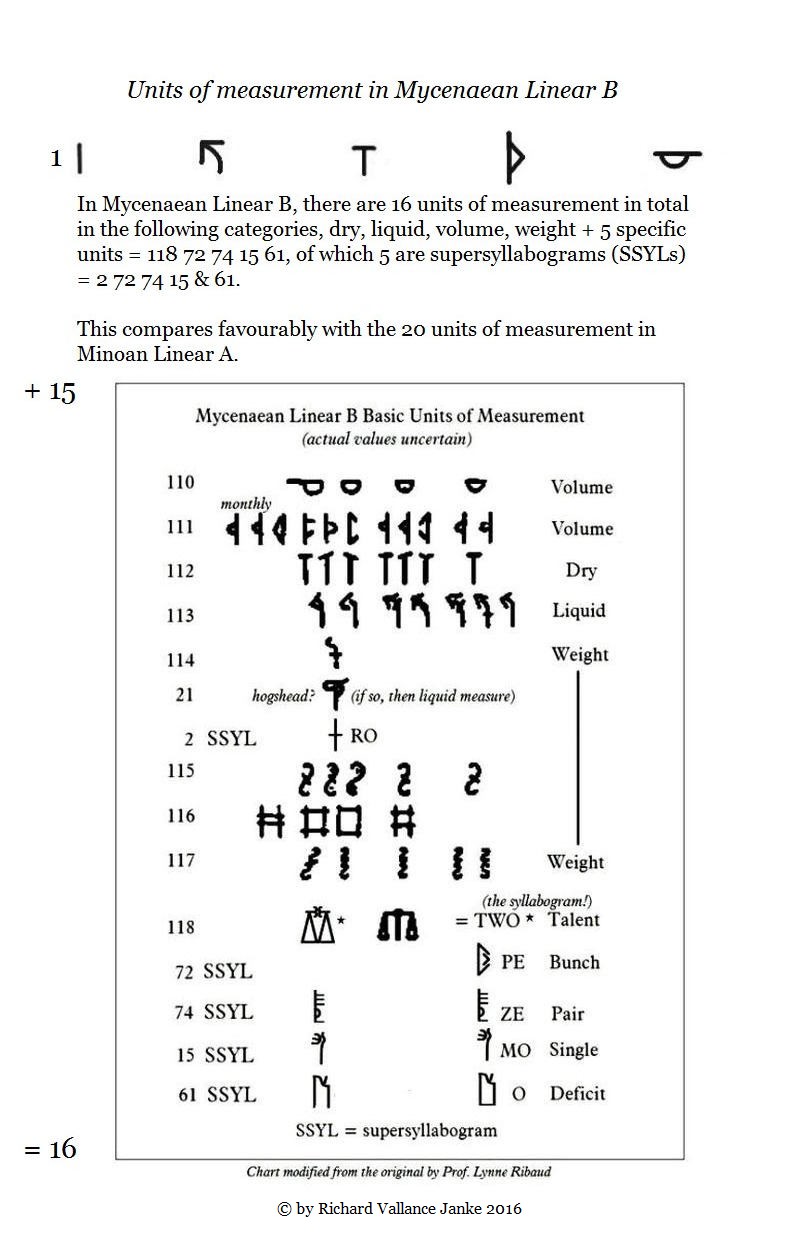
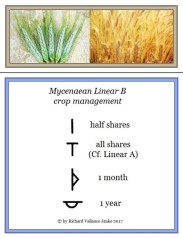
In proto-cuneiform, a “D” shape with a single internal stripe is GAR, which came to mean “storeroom; to form.” …. There is another “D” whose meaning one should consider, this one found among the Luwian hieroglyphs. In this case, the rounded side faces downward, with the flat side up. Its meaning is CAELUM, “sky.” This “D” shape contains a single stripe paralleling the flat side and four short strokes perpendicular to the stripe. These last four join the stripe and the flat side of the “D.” Variants of the proto-cuneiform GAR also include short strokes at a 90 degree angle to the long internal stripe. The “b” variant has two and the “a” variant three.Proto-Elamite contains a single sign that is essentially “D” shaped, again with the rounded side downward, flat side upward (M378). There are, in addition, two stripes inside the “D” that parallel the flat side, each stripe also extending a bit beyond the edges of the “D” shape. Also, inside the basic “D” shape is another, smaller “D” shape that shares the same flat side. The meaning of this sign is unknown.Linear B includes a single sign resembling a backward “D.” It has no internal stripes and must represent the crescent moon, as its meaning is “month.” One might assume that this simpler sign could not share the same meaning as the Indus sign, because the ancient Greek symbol has no internal striping. And what could internal stripes represent, in a depiction of the moon? However, internal striping may not be meaningful in itself in the Indus symbol. Many signs in this system contain internal striping, as do occasional pictorial elements.
========= both signs GA2 and GAR ===
basket; house; stable;. 1.house 2. station (of the moon)? 3. room 4. house-lot. 5. estate.+ Ninda=bread, storeroom; form, appearance; to store, accumulate; to deliver, deposit; to put, place, set down upon; to make, establish
It seems that kind form of property, storage,HOUSEHOLD + FOOD deliver,exhibit,operating
128.97.154.156 › search › archival… Rezultate de pe web CDLI-Archival View – CDLI – Cuneiform Digital Library Initiative 4. abgal |GA2xGAR|
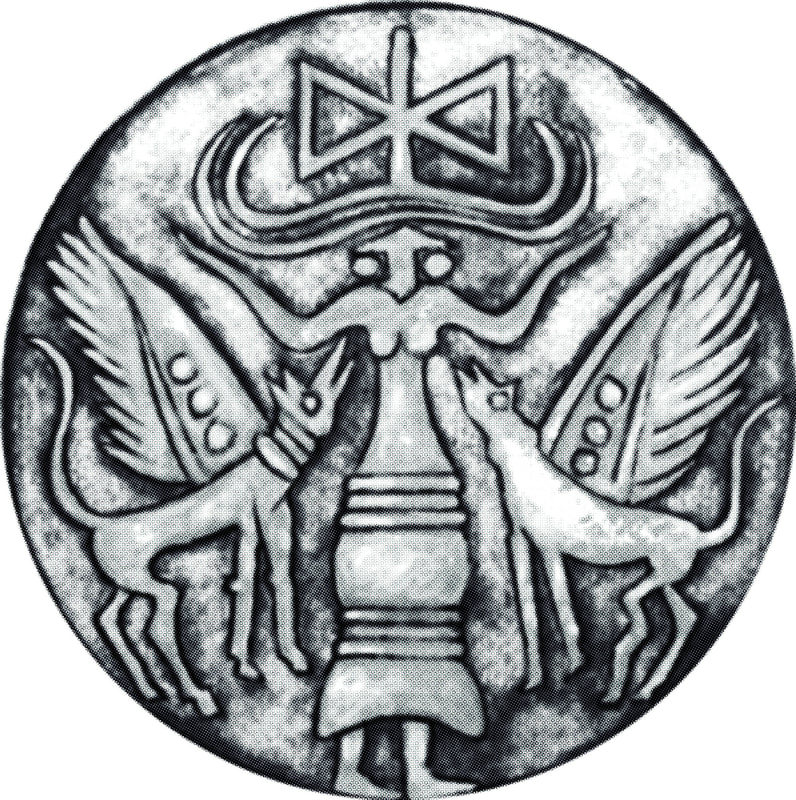
https://www.ancient.eu/article/221/the-mesopotamian-pantheon/ABGAL – The seven sages in Sumerianmythology sent to the earth by Enki at the beginning of time to give human beings the sacred `me‘ (laws) of civilization. They were also known, by the Akkadians and Babylonians, as The Apkallu or the Apkallu Fish and are depicted with the body of a fish and the head of a man or with the torso of a fish and human arms, legs and head, sometimes with and sometimes without wings. In the Babylonian tradition, the Apkallu also appear as Griffins or simply as humans with wings. The Abgal carry a bucket and a cone of incense for purification purposes. By name, they were Adapa (the first man) Uan-dugga, En-me-duga, En-me-galanna, En-me-buluga, An-enlilda and Utu-abzu.
ro.scribd.com › doc › rechnik-sume… Rezultate de pe web rechnik sumerskog | Nature – Scribd 18 feb. 2011 — F. Karahashi, Sumerian Compound Verbs 75. a tal[engulf?]; a … GA2. GAR: ĝa2ĝar; ga2gar. ĝeš [PENIS] GA2: ĝa2; ga2.
is.muni.cz › PAPVB_13 › Gl…PDF Rezultate de pe web a gal[help]; a gal[strong]; a gar[defeat] – IS MUNI bisagnindagar [BASKET]. GA2.GAR.GAR: bisag–ninda-gar; pisag-ninda-gar. 1. breadbasket
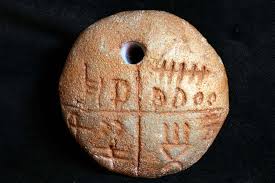
Atentie! Aceasta postare nu este o o descifrare sau citire a unui presupus continut scris real. Avand in vedere ca semnele nu apartin unui unic sistem de scris ci mai multora, pagina are un caracter pur didactic. Are rolul de a incerca si testa diferite scrieri. Semnele de pe tablite apartin mai multor sisteme de scrisi dintr-larg interval de timp si care au folosite in diferite arii geografice. In niciuna din incercari semnele s-au incadrat intr-un singur tip de scriere, totdeauna au ramas semne care au provenit din alte scrieri (sau din necunoscut). Cele mai multe semne provin din cele sumeriene proto-cuneiforme.Apoi privind asemanarea, in ordine descrescatoare este aceea cu semnele Linear A/B si cele Anatoliene. Semnele din jumatatea superioara a tablitei rotunde par a proveni din scrierea arhaica greceasca.Cel mai degraba aceasta “adunatura” de semne pare a fi rodul imaginatiei bogate a cuiva.Dupa cum au constatat A.Falkenstein si A.A.Vaiman, autorul nu a fost un scrib, avea doar vagi notiuni privind scrisul in general si nu se stie ce a urmarit. Exista multe elemente de neconcordanta precum si altele care scot tablitele din tiparele si normele uzuale ale logicii, scrisului si intentiilor oneste. ======== Majoritatea cercetatorilor, mai mult decat presupun, sant de acord ca tablita rotunda contine in jumatatea sperioara un continut, respectiv mesaj cu caracter sacru. https://tb.ziareromania.ro/Tablitele-de-la-Tartaria—cea-mai-veche-scriere-a-lumii-descoperita-in-Romania-/11d8fc1499881e962/400/225/2/70/Tablitele-de-la-Tartaria—cea-mai-veche-scriere-a-lumii-descoperita-in-Romania-.jpg
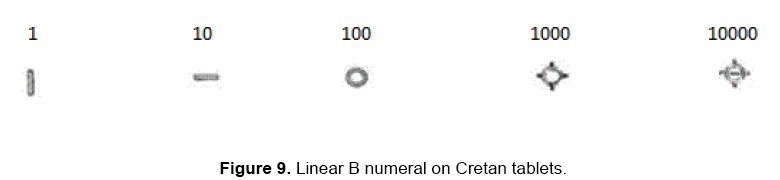
Aceasta pentru ca doua din tablite sant gaurite, gauri prin care trecea un snur si destinate a fi purtate in jurul gatului. Astfel tablita dreptunghiulara ACOPEREA COMPLET jumatatea superioara a celei rotunde, fiind ascunsa de privirile trecatorilor. Eu, cu educatia timpurilor moderne si multe limitari in gandire, ma asteptam cumva ca acea portiune sa contina un mesaj legat direct sau indirect de vreo zeitate. Foarte multi cercetatori au vazut in secventa DDoo doar un numar (1,1,10,10=”22″), (adevarat nu scris dupa tipicul sumerian unde zecile sant in stanga si unitatile in dreapta). In acest sens exista intrpretarile precedente a 3-4 oameni de stiinta (si a mea).De la inaltimea stiintei lor, au facut una dupa alta doua greseli impardonabile.Sau sa fim mai blanzi, au fost “vrajiti” de asemanarea semnelor cu cele pentru numere. 1. Au confundat (si asimilat) amprenta=semnul imprimat pentru numarul 1/”dis” cu reprezentarea/forma sa bidimensionala trasata, D. Semne gen D, litera (d mare de tipar) trasata (si nu imprimata) pentru numere, in aceasta forma nu au fost folosite deloc de sumerieni. 2. Au asimilat semnele O trasate ca cercuri ca fiind fiecare numarul 10, cand sumerienii faceau semnul prin imprimare, deci era disc plin. https://www.researchgate.net/profile/Karenleigh_A_Overmann/publication/301221553/figure/fig9/AS:639266971471876@1529424531807/Proto-cuneiform-tablet-W-9578-g-from-Uruk-IV-3350-3200-BC-with-numerical-impressions.png
In stanga avem cate doua numere 14(10,1,1,1,1) iar in dreapta 28(10,10 si de 8 ori 1)
In schimb au folosit 2 semne trasate, care chiar seamana cu litera D.Probabil datorita dimensiunilor mici sau urmare a unui progres, nu au mai trasat liniutele din interior. CELE DOUA SEMNE “D” SUMERIENE PROTO CUNEIFORME TRASATE SANT: Semnul GAR care se citeste Ninda:”ratie de cereale/paiine” https://cdli.ucla.edu/tools/SignLists/protocuneiform/archsigns.html
Repet desi nu a existat in realitate la sumerieni un asemenea semn D trasat “gol”.In lucrarile precedente am facut referire si la alt semn asemanator BUR.
———- Semnul GAR citeste NINDA ———-
Sumerische Glossare und Indizes (SGI) Belegsammlung ˆgar [PLACE(loc)] wr. ˆgar; ˆgá; ˆgá-ar; ˆg ́aˆgar; ˆgarar; mar; ˆg ́aˆgarar “to put, place, lay down;to give in place of something, replace”;(a pune, așeza; a da în locul a ceva, înlocui “)
ePSD Didtionary GAR: former,retired (fost, trecut,retras) ; to heap up (a aduna) ;http://psd.museum.upenn.edu/epsd/epsd/e4362.htmlninda [BREAD] (11296x: ED IIIa, ED IIIb, Ebla, Old Akkadian, Lagash II, Ur III, Early Old Babylonian, Old Babylonian, unknown) wr. ninda; inda “bread; food” Akk. akalu / pâine; alimente
www.bulgari-istoria-2010.com › …PDF Sumerian Cuneiform English Dictionary 12013CT – bulgari-istoria 5 mai 205 mai 2000 — NINDA2 | ĝar (gar) [2505x] =place, to put, lay down; to give in place of something, replace; to posit (math.) | niĝ2 (nig2 ) loc, a pune, întinde; a da în locul a ceva, înlocui; a poziționa (matematică)
——– Doua semne GAR alaturate, adica GAR-GAR ———-
Un cercetator, Patrick C. Ryan in lucrarea sa Sumerian Archaic Sign Table presupune ca doua semne D alaturate
au echivalentul fonetic sumerian “MIN,MAN”.Apoi echivalentul fonetic Sumerian al acestui semn ar fi 940, man?; min (cu semnul intrebarii adica dansul presupune, propune…)min Acest cercetator nu este epigrafist sau sumerolog, este lingvist. El merge pe firul timpului inapoi in timp inspre o presupusa proto-limba.Nu stiu cum a gasit aceasta secventa de semne presupus de el sumeriene DD daca le-a vazut undeva(nu cred) sau le presupune asa in imaginatia sa bogata si prolifica. Suficient este ca fiind singurul loc unde am gasit-o si bazanduma ca oricum este om de stiinta ar trebui sa o iau in consideratie.Pare ca dansul considera cumva ca MIN care inseamna 2 este compus din doua semne D care fiecare reprezinta 1 ?? In orice caz sumerienii foloseau reduplicarea nu numai pentru a exprima pluralul ci si pentru a obtine expresii noi. Exemplu: Semnul GAR inseamna la sumerieni ” a pune,intinde” insa semnul reduplicat GAR-GAR inseamna actiunea precedenta repetata de mai multe ori, rezultand “acumulare,a aduna”
———— sa luam intai acest Gar-Gar de mai departe ——–
105.235.201.125 › Linguistic Afrasian Phonology Cover Though Afrasian plays a critical role in the reconstruction of Proto-Nostratic … A. Semitic: [Proto-Semitic (reduplicated) *gar-gar- ‘to rumble, to roar, to growl, (Rom.: a bubui, a vui, a mârâi )
www.academia.edu › Bomhard_A_… (PDF) Bomhard – A Comprehensive Introduction to Nostratic … ‘rolling, round, bent, twisted, turned’ A. Proto- Afrasian *g¦ar- ‘to roll, to revolve’: Proto-Semitic (reduplicated) *gar-gar– ‘to roll, to revolve‘ ..(Rom.:a se rostogoli, a se învârti)
Vainahi, as a population of the Terek Valley and mountainous areas, they appear in Strabo’s “Geography” (1st millennium BC) under the name “gargarei” (from the Hurrian “gargar” – “relative”). At that time, the Hurrian population of Karabakh was called by the same term. (Rom.: in huriana, “ruda“)
Sum. gar ‘to heap up’, gargar ‘accumulation‘, PIE *gar- ‘to collect, heap’, Greek ageiro (from *a-ger-yo) ‘to gather, collect’, agorà ‘assembly, place of assembly, market-place’, gargara ‘heaps, lots, plenty Rom.: in sumeriana, gargar:”acumulare” iar in greaca veche,gargara:”gramezi, multe“
sefarad.revistas.csic.es › articlePDF A note on the Sumerian expression SI-ge4-de3/dam – Sefarad were established using the reduplication verb gar (i.e. ga2-ga2– … put‘ or ‘to place‘ {sakãnum) ^^ but also ‘to heap up’, ‘to store’ Rom: folosind verbul de reduplicare gar (adică ga2-ga2- … “a pune„ sau „ a plasa ”{sakãnum) ^^ dar și „ a aduna ”, ” a stoca ”
Sumerische Glossare und Indizes (SGI) Belegsammlung gar-gar gargar [ACCUMULATION] wr. gar-gar “accumulation” (acumulare) gar HEAP (morman, gramada)(4 instances: Early Old Babylonian [1]; Old Babylonian [2]; Hellenistic [1].) Base forms: gar; gar-gar. 1. to heap up (a aduna)
springer.com › content › pdf << (AHw “schichten, haufen”/”straturi,gramezi“),to which correspond the Sumerian term gar.gar ..>>
www.jstor.org › <<stable artificial language in ancient mesopotamia — a dubious … – JStor gar.gar is a common logogram in mathematical texts for kamarum,. “to accumulate“>>
Rezultate de pe web Rabies and Rabid Dogs in Sumerian and Akkadian Literature – JStor Grammatical Texts,43 the paradigms of gar-gar = nup- puhu, “to be angry, blow up” a fi furios, a arunca în aer
Doua semne GAR adica GAR GAR=semnul URI: oi.uchicago.edu › pdf › sume…PDF Rezultate de pe web the sumerians – Oriental Institute – University of Chicago glossary of Sumerian words from the bilinguals known in his day … southern boundary; that the district Uri, usually equated with. Akkad / limita sudică; districtul Uri, echivalat de obicei cu. Akad
————– Semnul BUR. ————– Am constatat cu surprindere ca si BUR este legat de mancare.
ePSD Dictionary rechnik.sumerskog bur [BOWL];(food) offering, sacrifice 2. meal(-time) 3. (stone) bowl 4. a priest rom:[BOL ; (hrană) ofrandă, sacrificiu 2. masă (timp) 3. (piatră) castron 4. un preot]; BUR2: a container?(container); BUR: [GLOW(stralucire)] bur2..light (lumina) 2. to glow, shine; “to blow; light up; rise” (a străluci; “a sufla; a lumina; creştere”) ;bur [GRASS(iarba)] bur [LOCUS] a cultic location (loc cultic);bur [SPREAD(rspandire)]; BUR2:to release, free 2. to reveal 3. to spread out, cover; “to release, free” “to spread; (a elibera, gratuit 2. a dezvălui 3. a se întinde, acoperi; „A elibera, liber” „a răspândi;)bur [TEAR(rupere)];bur [TREE(copac)]a tree;bur [UNIT] a unit of volume(a surface measure)”
——– Culmea, in situatia in care savantii ne explica ca precedentul semn GAR provine de la forma castronului cu margini/buze duble/tesite. —— wikipedia beweled rim bowl vezi si https://ro.pinterest.com/pin/468022586275613811/double rim bowl
inseamna “jimbla de paine” si avem nu unul ci doua semne sumeriene proto cuneiforme legate de paine si mancare, am presupus ca exista o forma neatestata si negasita in alte inscriptii care le sintetizeaza pe toate si ca urmare a unei evolutii apare ca un D simplu. ===================================================== In prezenta o sa fac o interpretare (nefacuta pana acum) luind in considerare de aceasta data acceptia BUR.
https://biblicalstudies.org.uk/pdf/expository-times/015_11_514.pdf <<(No. XL), has published a syllabary from which we learn that the ideograph BUR-BUR, besides representing Uri or Ur, Assyrian Akkadu, and Tilla, Assyrian Urdh11 or Ararat, also represented Ari, Assyrian Amurru. Amurru, the land of. the Amorites, denoted Syria and Palestine, more especially the mountainous part of them, and in Ari I see a Sumerian (?) reproduction of the Canaanitish har, ‘mountain.’/ //rom.:ideograma BUR-BUR, în plus reprezinta Uri sau Ur, Asirian Akkadu și Tilla, Asirian Urdh11 sau Ararat, de asemenea, reprezinta Ari, Asirian Amurru. Amurru, țara. Amoriții, denotau Siria și Palestina, mai mult în special partea montană a acestora, iar în Ari văd o reproducere sumeriană (?) a Canaanitului har, „munte”.
http://www.sitchiniswrong.com/AnunnakiFalkensteinEnglish.pdf <<The majority of the supporting documents reference only limited doings of the A. The citations which report that the A. go to, or haste to (bur-bur), a cultic site or to a god [Sumerian text], contain the underlying idea that the A. have their dwelling places in different locations, and from there, come together at various locations. >> (Rom.:Majoritatea documentelor justificative se referă doar la lucrări limitate ale Anunna Citațetele care raportează că A. se îndreaptă către sau se grăbesc (bur-bur), spre un sit cultic sau un zeu [Text sumerian], conține ideea de bază că A. își au locurile de locuit în diferite locații și, de acolo, se reunesc în diferite locații.)
A (sumér-szabir-szkíta-kelta)-magyar Európafiles.conifertreasury.org › … << egy szemita központosulással szembesülünk, amelynek iránya Sumer, a sumér … Tehát a “BUR-BUR” elnevezés földrajzilag igen nagy területre értelmezhető >>(Rom:…ne confruntăm cu o centralizare semitică în direcția Sumer, sumerian. Deci, numele „BUR-BUR” poate fi interpretat geografic pentru o zonă foarte mare …)
https://archive.org/stream/cu31924028555757/cu31924028555757_djvu.txt <<the ordinary sign uru meaning “city,” {Amurru p. 113) ; the sign uru^’^ meaning “whirlwind, city;” the sign BUR-BUR ^uri {Amurru p. 113), etc., are all used to represent the name of the god Uru {^=Amurru). In short, these many signs standing for the pronunciation Uru or Ur as the name of a god in early Babylonian literature, and also in the late syllabaries, where such obsolete deities’ names of the past were preserved, unquestionably repre- sented the name of the god under consideration.>>
Sumerian Lexicon – Sumerian Language Page 11 aug. 1999 — Beyond these words, two- thirds of this lexicon now … bůr: a square surface measure = 6.48 hectares = 18 iku … capacity; whole (cf., kilib and gur4-gur4) [NIGIN archaic. ——— NIGIN pronunta niñin ——————– <vezi imediat sus, echivalent cu?>gur4-gur4 (?)
http://psd.museum.upenn.edu/epsd/e4234.html Old Babylonian niĝin[ENCIRCLE]; niĝin “to prowl, roam; to enclose, confine; to encircle; to search; to turn; to return; to go around; to tarry” (Rom.: a rătăci, a cutreiera;a închide; a înconjura; a căuta; a intoarce; a se intoarce; a merge în jur; a rămâne ” )
books.google.ro › books Astrology and Cosmology in the World’s Religions Nicholas Campion — 2012 · Social Science The process of reproduction resulted in the creation of the first generation of gods, including … up of an-ki, heaven and earth; the Sumerian an.ki.nigin.na translates as “the entire universe” (intregul univers)
https://is.muni.cz/el/1421/jaro2013/PAPVB_13/um/40794229/Halloran_version_3.pdfniñin(2): n., enclosure, circle; capacity; whole (cf., kilib and gur4-gur4) [NIGIN archaic frequency: 11]. v., to halt, turn away; to turn round; to surround;to assemble; to pen up cattle; to wander about; to circle; to make the rounds / a se opri, a se întoarce; a se întoarce; a inconjura; a asambla; a crește vitele; a rătăci; a incercui; a face rondul (usually níñin[LAGAB] for hamtu form and niñin or ni10- ni10[LAGAB.LAGAB] for marû form) (ní;ne4, ‘fear’, + ñin, ‘to go’). niñin(2,3): vertigo (as a disease); faintness, dizziness; thirst. nìñin, ni9: premature or stillborn child; malformed child; monstrosity. niñin5,7,8,9, nimen(3,4,5); naña: district, province.
——————- Interpretare: —————————— Semnele HD = semneBUR?/GAR?+GA2/citit Ku= ofranda(de mancare),sacrificiu; sacru,sfant+ a pune,alimente, paiine
———- Semnele : D D si o o=semnele “GAR-GAR/Bur-Bur si OO=LAGAB LAGAB”; ——— citeste: GAR-GAR Nigin sau Bur-Bur Nigin 1.nigin:“district,adunare=comunitate“+ “acumulare,a aduna” 2.nigin:”total,toata,intreg” + “(cereale),paiine” 3.nigin:“district,adunare=comunitate“+ bur-bur:”Acadiana?,Amorita(Siriana,Palestiniana)” 4.NIGIN:”din districtul Nigin“+bur-bur:”sumerian,Sirian,etc.” 5.nigin:“cresc vite, ratacesc, m-am oprit“+ bur-bur:” sumerian,akadian,sirian 6. nigin:”cutreier,ratacesc, m-am oprit,etc.”+(la) bur-bur:”sursa de apa” 7. nis+min(2x20=40)=nimin/nimen : 8.1.”district,provincie” (desi DD numai seamana cu 2) 8.2. 40, (numarul sacru a lui Enki)
CONCLUZIE: Semnele “HD“: Ritual de oferire a unei ofrande/sacrificiu. Semnele “DDoo”: (Facut de un) sumerian,sumerieni din orasul NIGIN, sau amorit din Siria sau alta parte. De aceea este portiunea aceasta acoperita pentru ca formula este sacra si la fel si ritualul in sine.Cu partea stanga e clar; pentru semnele DDoo, din combinatiile/propunerile de mai sus, una iese cumva in evidenta:
URI,UR(gar-gar,bur-bur) NIGIN: comunity,roaming around the city/ “comunitate sumeriana,akadiana, siriana/cutreierând prin oraș“; a aduna/painea toata
oi.uchicago.edu › docs › cad_sPDF Rezultate de pe web assyrian dictionary – Oriental Institute – University of Chicago << sa-bi-i m urul bdqili … bad.nigin = sah-hi-ratdu-ri, uri.nigin = sah-hi-rat URU >> eternin jurul orasului, in jurul zidurilor.
books.google.ro › books The Class Reunion—An Annotated Translation and Commentary on the … J. Cale Johnson, Markham J. Geller <<.. bad.nigin = sah-hi-ratdu-ri= “eternalroaming,goingaroundthe walls‘ 218 tiru nigin= sah-hi-ratURU ‘roaming around thecity‘>>bad-duru;”city wall” “bad3″: “city wall” or “fortification”. “cutreierand in jurul zidurilororasului“,”umbla aiurea orasul“
=========== ! i n t e r e s a n t, 1.! ==================
<<The Akkadian scribe manipulated the word puzur >puzur Rom.: Scribul akkadian a manipulat cuvântul puzur puzur (buzur bur 3 buru3) puzur [SECRET]. Then the scribe created a bunch of homophones expanding the language out of thin air from asingle Akkadian word for secret: Rom.: Apoi, scribul a creat o grămadă de omofoni care extindeau limbajul “asa din aer”, dintr-un singur cuvânt akkadian pentru secret: puzur Homophones puzur = U puzur 2 = U.U puzur 3 = U.ZAG puzur 4 = KA×GAN2@t.ŠA puzur 5 = KA×GAN2@t This arbitrary homophones proves that Sumerian was not a tonal language because all these cognates derived from a single Akkadian word. Rom.: Acest omofon arbitrar dovedește că sumeriana nu a fost o limba tonala, deoarece toate aceste înrudite derivate dintr-un singur cuvânt akkadian. “U”: bur 3 bur [UNIT].buru3 (see full listing)
www.bulgari-istoria-2010.com › …PDF Sumerian Cuneiform English Dictionary 12013CT – bulgari-istoria 5 mai 2000 — Proto Cuneiform Signs (cdli) . … 2 [“2” / two numeric] | TAB [740x] = to double; to repeat; companion, partner, friend | cf.
<< Patrick C. Ryan a scos, (numai el stie de unde!) Sumerian Archaic Sign Table Semnul:
Phonetic value/Valoare fonetica:” MIN, MAN” >> I N T E R P R E T A R E: semnele DD=2=man:”COMPANION” dar in acelasi timp si puzur2:”secret” + semnele “oo“=NIGIN=”total,whole”/rom.: “TOTAL, CU TOTUL…”
C O M P A N I O N ? S E C R E T ? T O T AL , C U T O T U L , I N T E G R A L , P E V I A T A
Translations of whole adjective : întreg “whole, entire, complete, full, round, total ; tot all, whole, livelong; integral :”integral, integrate, whole” Translations of livelong adjective trainic lasting, durable, strong, solid, livelong, tough tot all, whole, livelong lung long, lengthy, protracted, extensive, vast, livelong
is.muni.cz › PAPVB_13 › Ha…PDF Rezultate de pe web Sumerian Lexicon – IS MUNI 11 aug. 1999 — The Sumerian lexicon has benefitted from several classes at … buzur(2,4, 5), puzur(2,4,5): safety, security; secret, mystery; Rom.: siguranță, securitate; secret, misterpuzur [SECRET] (5x: Old Babylonian) wr. puzur4; puzur5; puzur; puzur2 “secret, shelter; protection, aegis, shadow, shelter” Akk. puzru .. Rom.: secret, adăpost; protecție, egidă, umbră, adăpost ” puzur[cavity] – ePSDpsd.museum.upenn.edu › epsdpuzur [CAVITY] wr. puzur3 “cavity, cave” Akk. huppu. [1], cuneiform |U.ZAG|, puzur3. 1. cavity, cave. Akk. huppu “hole, pit?” Rom.:”cavitate,pestera”,”gaura,groapa?”
Apoi , noi avem 1,1, 10,10 si nu 10,10,21,1, asa cum scriu sumerienii numerele cu zecile in stanga si unitatile in dreapta !,caz in care am avea “22”.Atunci nu putem citi altfel pe 2 si 20 decat:
Enki – Wikipediaen.wikipedia.org › wiki › EnkiEnki is the Sumerian god of water, knowledge (gestú), mischief, crafts (gašam), and creation …Beginning around the second millennium BCE, he was sometimes referred to in writing by the numeric ideogram for “40“, occasionally referred to as his “sacred number“.
Troy – motherland of the Turks – AzerNewswww.azernews.az › culture <<Gargar is an important ethnomym which ties the Mediterranean to the Turkic world. A town by the name Gargara was situated near Troy. A province under this name is mentioned in the “Iliad“. To these can also be added an old Italian province by the name of Gargaria which is surely connected with the Trojan migration to Italy. As was mentioned above, the identical names – Gargar/Karkar were spread in the Turkic onomasticon as the names of tribes (Azerbaican, Turkmenistan), mountains (Azerbaijan, Kazakhstan), and as a personal name in “Manas“, a Kirghizian epic >>
bolcheknig.ru › russkijj-yazyk › ilia… Iliad Veresaev read. Hesiod: Work and days. Translation by V … <<…. A fierce dispute arose between the three goddesses: the Queen Hero, the wife of Zeus, Pallas Athena, the goddess of wisdom, and Aphrodite, the goddess of love and beauty. Each demanded an apple for herself, as the most beautiful. They could not get along and turned to the handsome Tsarevich Paris, the son of the Trojan king Priam, to resolve the dispute. At that time, he was herding herds on Gargar, one of the peaks of Mount Ida near Troy. Both sides immediately led the matter straight. Hera promised Paris power and wealth, Athena – wisdom and glory, Aphrodite – the love of the most beautiful woman in the world.>>
https://en.wikipedia.org/wiki/GargaraGargara(Ancient Greek: Γάργαρα) was an ancient Greek city on the southern coast of the Troad region of Anatolia. It was initially located beneath Mount Gargaron, one of the three peaks of Mount Ida, today known as Koca Kaya (39°35′10″N 26°32′03″E).[1] At some point in the 4th century BCE the settlement moved approximately 5.8 km south of Koca Kaya to a site on the small coastal plain near the modern villages of Arıklı and Nusratlı (39°32′22″N 26°32′46″E), at which point the previous site came to be known as Old Gargara (Ancient Greek: Παλαιγάργαρος).[2] Both sites are located in the Ayvacık district of Çanakkale Province in Turkey. Mount Gargaron Mount Gargaron has been identified with the mountain today called Koca Kaya (TurkishGreat Rock), a western spur of Mount Ida with a maximum elevation of 780 m.[3] The poet Epicharmus (fl. 540 – 450 BCE) refers to the mountain as “snowcapped” (ἀγάννιφα), and the Etymologicum Magnum (ca. 1150 CE) knew a tradition according to which the inhabitants of Old Gargara moved to their new site to escape the cold of their old home.[4] In Homer’sIliad it is said to have had an altar to Zeus at its summit, and hence is a place the god frequently visits.[5] In one passage Zeus is said to have come to Mount Gargaron from Mount Olympos to view the battle between the Trojans and the Acahaeans, about 50 km NE of here.[6] In writers of the 1st and 2nd century AD such as Statius and Lucian Zeus is said to have abducted the Trojan prince Ganymede from Mount Gargaron while he was hunting in the nearby forests.[7] Lucian also represents the Judgement of Paris as taking place on Mount Gargaron rather than in its more traditional location further to the east above Antandrus.[8] The anonymous author of On Rivers thought that Gargara was Mount Ida’s previous name, while the Latin poet Valerius Flaccus used it as a learned way of referring to Ida.[9] The Etymologicum Magnum explains the name of Gargaron either as deriving from the verb γαργαρίζειν (‘to gargle’) on account of the springs thought to bubble up on the summit (an inference taken from Homer’s reference to ‘many-fountained Ida’ in conjunction with Gargaron), or as deriving from γαργαρέων (UVULA ‘uvula‘) on account of the mountain’s shape.
LOEB CLASSICAL LIBRARY ; 154 Stephanus of Byzantium, Places and Peoples Gargara: a city in the Troad1 on the promontory of Ida, known as Palaegargarus (Old Gargara), described as an Aeolian city by Strabo and Hecataeus. Alcman uses a feminine form Γάργαρος, Gargarus. Leleges used to live there.
Wikipedia GARGAREANS In Greek mythology, the Gargareans, or Gargarenses, (Greek: Γαργαρείς Gargareis) were an all-male tribe. They copulated with the Amazons annually in order to keep both tribes reproductive. Varying accounts suggest that they may have been kidnapped, raped, and murdered for this purpose, or that they may have had relations willingly. The Amazons kept the female children, raising them as warriors, and gave the males to the Gargareans.The Gargareans are held by some historians to be a component of the ancestry of the Chechen and the Ingush peoples, and equivalent or at least related to the Georgian name Dzurdzuks.[3]Adrienne Mayor wrote about the Ghalghai/Gergar and mentions an old Ingush legend about a Maiden’s Tower located in the Assa gorge in Ingushetia.Strabo wrote that “… the Amazons live close to Gargarei, on the northern foothills of the Caucasus mountains“. The Amazons were attributed to the Circassians via the root maze. Gaius Plinius Secundusalso localizes Gargarei at North of the Caucasus, but calls them Gegar.[5] Some scholars (P.K. Uslar, K. Miller, N.F. Yakovleff, E.I. Krupnoff, L.A. Elnickiy, I.M. Diakonoff, V.N. Gemrakeli) supported that Gargarei is an earlier Ingush ethnonym. Jaimoukha suggests that the myth might have been a nod to the similarity between Circassians and Durdzuks, despite their very different languages. The Ancient Greek chronicler Strabo mentioned that Gargareans had migrated from easternAsia Minor (i.e. URARTUUrartu) to the North Caucasus.[6] Jaimoukha notes that Gargareans is one of many Nakh roots- gergara, meaning, in fact, “kindred” in proto-Nakh.[7]
Cuvantul grec care este asemanator are in plus si sens asemanator cu gar-gar : γάργαρα Βικιλεξικό , τά, A heaps, lots, plenty, (“grămezi, multe,“) ἀνδρῶν Aristomen.1; ἀνθρώπων Alc.Com.19
books.google.ro › books Rezultate de pe web Sievers’ Law and the History of Semivowel Syllabicity in … P. J. Barber, Peter Jeffrey Barber — 2013 · History we find what seems to be a denominative γαργαίρω ‘swarm, teem with (people, corpses, or objects of various kinds)’ (Cratin., Ar., Sophr. , . In Istorie găsim ceea ce pare a fi un roi denumit γαργαίρω, plin de (oameni, cadavre sau obiecte de diferite tipuri) ”
translate.enacademic.com › γάργαρα γάργαρα from greek – Academic Dictionaries and Encyclopedias Derivatives: γαργαρίς θόρυβος H., γαργαίρω ` swarm’ (Com., Sophr.); γαργάρται λίθοι αὑτοφυεῖς (H.)? With another vowel γέργερα πολλά .. Rom:γαργαίρω ` “roi”
Atentie! Aceasta postare nu este o o descifrare sau citire a unui presupus continut scris real. Avand in vedere ca semnele nu apartin unui unic sistem de scris ci mai multora, pagina are un caracter pur didactic. Are rolul de a incerca si testa diferite scrieri. Semnele de pe tablite apartin mai multor sisteme de scrisi dintr-larg interval de timp si care au folosite in diferite arii geografice. In niciuna din incercari semnele s-au incadrat intr-un singur tip de scriere, totdeauna au ramas semne care au provenit din alte scrieri (sau din necunoscut). Cele mai multe semne provin din cele sumeriene proto-cuneiforme.Apoi privind asemanarea, in ordine descrescatoare este aceea cu semnele Linear A/B si cele Anatoliene. Semnele din jumatatea superioara a tablitei rotunde par a proveni din scrierea arhaica greceasca.Cel mai degraba aceasta “adunatura” de semne pare a fi rodul imaginatiei bogate a cuiva.Dupa cum au constatat A.Falkenstein si A.A.Vaiman, (aceasta fiind si parerea mea ferma) autorul nu a fost un scrib, avea doar vagi notiuni privind scrisul in general si nu se stie ce a urmarit. Exista multe elemente de neconcordanta precum si altele care scot tablitele din tiparele si normele uzuale ale logicii, scrisului si intentiilor oneste. ======== Trei sau patru dintre savantii de anvergura mondiala, aici fac referire directa doar la doi: Adam Falkenstein si Aizic Abramovici Vaiman, specializati in proto-scrierea sumeriana (care foloseste semne proto-cuneiforme) sau aplecat asupra acestor tablite. Este vorba de jumatatea de sus care contine semnele: HD DDoo
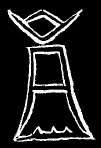
Semnele HD sant semnele sumeriene proto cuneiforme. Poza din Moonlight in Romania: The Tărtăria Tablets Keith Massey
– Semnul “H”=Buzur,puzur=siguranta,securitate,secret,mister,BUZUR:zeul minelor adanci(zeul care dezleaga secretele) si/sau “Ku”=”stralucirea(metalelor)”, – si semnul D=˹DIŠ : “Unu,unul,un,o” ) SEMNIFICATIILE DE MAI SUS MA DUC CU GANDUL LA UN PROSPECTOR DE METALE SUMERIAN... Imaginea din Moonlight in Romania … placeofbrightness.blogspot.com
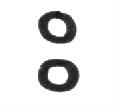
Cand au ajuns la jumatatea de sus a tablitei rotunde, pusi in fata secventei “D D o o” bineinteles ca au stiut ca sumerienii figurau cifrele numai prin imprimare, si deloc prin trasare. Ex. un D mic imprimat”1”, D mare imprimat 60; disc imprimat=10. Cercetatorii de care am facut vorbire au luat rapid si zic eu neingaduit de superficial semnele ca cifre si au vazut probabil 1, 1,10,10 =22 DAR SEMNELE NU SANT CIFRE, cel putin semnele OO nu sant obtinute prin imprimarea cu un bat rotund si nu reprezinta 10,10 ci sant trasate si exista ca atare (trasate) printre semnele proto-cuneiforme
In dreapta avem de doua ori 10 10 + de 8 ori 1=228
Pe tablita avem semnele inscriptionate numai prin trasare (latina cuneus=cui). Probabil stiau ca exista semne “o” trasate si nu imprimate si ca nu exista pe nici macar o singura tablita sumeriana cu vre-un semn “D” trasat. In lipsa de alte idei (si de altceva mai bun), au interpretat totusi toata secventa DDoo a fi un numar. Si asta pentru faptul ca aspectul acestor semne imprimate este asemanator unor D-uri si O-uri. Au spus in schimb ca nu sant semne original sumeriene si ca atare posibil nu au fost trasate de un Sumerian (get-beget), cel putin nu unul bun cunoscator al tehnicii scrierii. Dublarea, cuvintele repetate este o caracteristica a limbilor “primitive” agglutinative care nu au flexionarea substantivelor si verbelor.Erau folosite de sumerieni in primul rand ca sa exprime pluralitatea, dar vom vedea mai incolo ca nu numai pentru aceasta.Acestor limbi li s-a dat o denumire hazlie “banana languages”, pentru ca apar secvente de genul ba-NA-NA. Asa de exemplu este limba Egeeana minoica ce apare in scrierea Linear A nedescifrata, in primul rand datorita dificultatilor de a depista acea limba. Exemplu a-SA-SA-ra-me.
Eu am ramas constant ideii afirmate pentru prima oara de Dl.Marco Merlini (la care majoritatea cercetatorilor subscrie, inclusive eu) ca aceasta portiune, jumatatea superioara a tabletei rotunde era gandita intentionat de a fi ferita privirii trecatorilor. Motivul zice dansul ar fi faptul ca are un continut esoteric, inteleg eu sacru. Desi nu trebuie dupa parerea mea sa fie in mod absolute obligatoriu un continut sau mesaj din sfera religioasa.De aceea este lipsit de sens ca cineva sa ascunda aiurea niste cifre. Zilele acestea, sa sar in sus de bucurie, am gasit in Sumerian Archaic Sign Table by Patrick C. Ryan semnul 940: 940; 940=924+924
Apoi echivalentul fonetic Sumerian al acestui semn ar fi 940, man?; min (cu semnul intrebarii adica dansul presupune, propune…)min Acest cercetator nu este epigrafist sau sumerolog, este lingvist. El merge pe firul timpului inapoi in timp inspre o presupusa proto-limba.Nu stiu cum a gasit aceasta secventa de semne presupus de el sumeriene DD daca le-a vazut undeva(nu cred) sau le presupune asa in imaginatia sa bogata si prolifica. Suficient este ca fiind singurul loc unde am gasit-o si bazanduma ca oricum este om de stiinta ar trebui sa o iau in consideratie. Semnul DD e presupus de dansul a fi compus din doua semne 924 : https://www.oocities.org/athens/Forum/2803/SumerianArchaicSignTable.htm
eugenrau:!???? Pai seamana semnul 924 cu un semn D !?? De ce nu a considerat ca DD este compus din doua D-uri, care reprezinta fiecare “1” ??: Acekasi autor, Patrick C. Ryan, http://www.oocities.org/proto-language/SumerianValuesMeanings.htmDetermining Phonetic Values (Readings) for Sumerian Signs Associated With Certain Meanings Sign #1 , which in later cuneiform is a simple horizontal stroke with a wedge (cuneus) on its left side, is a descendent of, at least, two archaic Sumerian signs. The first, shown at the left, it will be noticed, is a simple vertical line
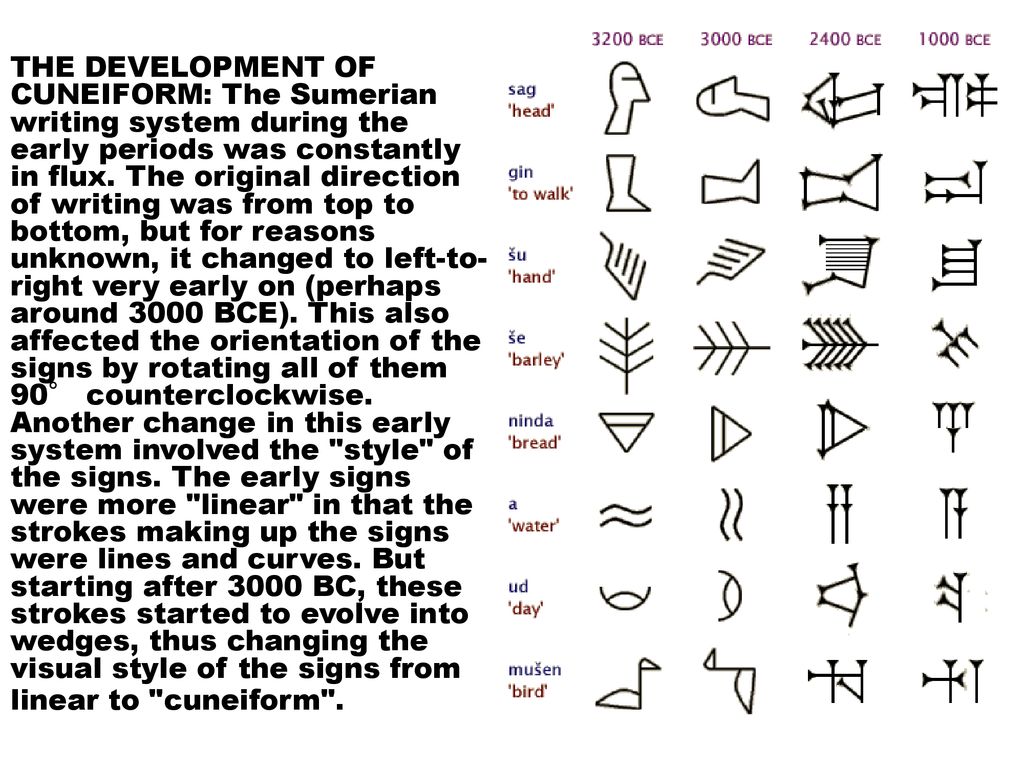
Înlocuirea imaginilor obiectelor obișnuite cu pene și linii cuneiforme și orientarea lor diferită înseamnă că cuneiformul este, cu cea mai mare dificultate, să fie utilizat la determinarea naturii originale a reprezentării, care, vom vedea, este o cheie a originii sale fonetice și semasiologice.*ana3, (acesta) unul *aš, ‘unu; unic’ *de/il(e/i), ‘unu; singur; numai; singur; unic’ *de/iš2, ‘unu’ Sumeriana era cel mai frecvent scrisa în coloane verticale, de sus în jos, care se desfășurau de la dreapta la stânga. Semiții, care au adoptat-o dureros, au preferat să citească mai mult pe orizontală decât pe verticală și au întors tabletele cu 90 ° spre stânga, cu rezultatul că vârfurile semnelor sumeriene erau cele mai la stânga pe linia orizontală. Aceasta a dus, de asemenea, la o lectură forțată de la stânga la dreapta (în limbile semitice asiriană și babiloniană), spre deosebire de practica sumeriană de citire de la dreapta la stânga.
Deocamdata am constatat cateva intelesuri commune pentru DD si oo: (man,men5): partener, companion, egal, doi …in faza asta pare un angajament de comuniune a unei perechi.
https://archive.org/stream/proceedings12soci/proceedings12soci_djvu.txt << nimin is also arb&, “forty.” Is this ni(s), “twenty,” min, “twice”? …. … chinese: ni, “many”; min, “a multitude”; jd’/i min-min, “a mass of people” (gin + min) ….<$<, nimin, *kissatu, ” multitude,” (ni + min) = nigin, napharu ; cp. me, “much”; and perhaps ni or ne, ” a force,” ” host.” >> ~~~~~~~~~~~~~~~~~~~~~~~~~~~~~~~~~~~~~~~~~~~ Inafara de faptul ca sumerienii nu trasau,inscriptionau semnele pentru numere, unul din cercetatorii enumerati inainte a mai adaugat o observatie din care rezulta ca nu era un scrib sumerian, si anume ca spre deosebire de sumerieni care incepeau cu numerele mai mari, aici trebuind sa inceapa cu zecile, pe care trebuia sa le puna la stanga, la noi numarul incepe cu unitatile: 1,1,10,10. posibil ca a folosit semnele pentru numere ca sa ascunda de fapt cuvinte. Dar si daca ar fi inscriptionat numere, pentru 22 trebuia sa scrie 20, 2 pe cand aici a inscriptionat 2,20 . Se citeste 2 x 20=min-niš= 2×20 ?. Pentru ca sumerienii spuneau pentru 40=nis-min=2×20> nimin=40. INSEAMNA ORI CA NU A INTENTIONAT SA SCRIE UN NUMAR CI NUMAI min-nigin SAU A VRUT SA ASCUNDA NUMARUL 40 (niš-min,nimin=40) SUB FORMA 20×2, min- niš. Interesant ca si un cercetator rus acum zeci de ani a dedus ca apare numarul 40.
NUN.KA.S.UGULA.PL.IDIM.KARA.I: “In (cea de-a) patruzecea domnie pentru buzele (gura) zeului Saue cel mai vârstnic dupa ritual (a fost) ars. Acesta-i al zecelea”
https://unglueit-files.s3.amazonaws.com/ebf/2330290bbe4c4ce08d318e78186a077f.pdf << 60-61a) As Finkel (1988: 149 n. 62) has argued, the first deity, written in abbreviated form with the number 40!? (in witness A) and mistakenly with 5036 for 40!? (in witness B)should represent Ea, the god of wisdom and magic, since he is usually responsible for human fate and associated with the lore of exorcism or conjuring. Fink el identifies the following cryptic signs PAB-PAB/BÙLUG with Ea’s son Marduk/Asalluhi who is considered as the patron of the āšipu par excellence >>
—————– santier in lucru ! Atentie, cad caramizi ! ———————-
Alan Turing http://alanturings.blogspot.com/2010/04/sacred-number-of-enki.html NUMARUL SACRU AL LUI ENKI Cu mai mult de 7.000 de ani în urmă, civilizația sumeriană a prosperat în toată Mesopotamia. Un sistem agricol fusese dezvoltat pentru a susține viața continuu pentru prima dată în istoria omenirii, iar locuitorii săi au creat un panteon de zei elaborat pentru a explica minunile naturale și fenomenul morții. . Una dintre cele mai venerate zeități ale lor, care apare și ca „Ea” în Babilon și Akkad, a fost „Enki”. Dincolo de Mesopotamia antică, legendele care îl înconjoară pe Enki au rezonat în epoca biblică (atât Vechiul, cât și Noul Testament) și au un impact asupra lumii noastre de astăzi. În timp ce puțini îi cunosc numele, Enki este o parte inevitabilă a secolului 21. . Proiectându-și reputația descurajantă din Golful Persic, Enki, adesea tradus ca „Domn al Pământului”, avea o înclinație pentru bere și femei – în special rude de sex feminin. În ciuda decesului de a deveni un bețiv obișnuit zvelt, el a reușit să fie considerat și zeul inteligenței, meșteșugurilor și creației. Așa cum s-a întâmplat cu majoritatea zeităților pre-iudaice, zeii din Egiptul antic, Grecia și Sumer dețineau de obicei atât caracteristici supranaturale, cât și umane (defecte). . În cele din urmă, Enki a devenit un fel de salvator prin înfrângerea desenelor nefaste ale fratelui său vitreg Enlil. Într-un cuvânt, Enlil a vrut să pună capăt experimentului uman și a declanșat o serie de dezastre naturale (adică foamete, secetă etc.) asupra Mesopotamiei. Enki a răspuns educându-i pe oameni să folosească contramăsuri eficiente (adică irigații pentru a bate seceta) pentru a supraviețui atacului lui Enlil. . Când Enlil a descoperit că planurile sale macabre nu au reușit să se materializeze, a convocat o întâlnire a zeilor (a cărei rege era) și a decis să inunde lumea din existență. Când Enki a aflat despre ultima machinație a fratelui său vitreg, se spune că i-a spus unui bărbat pe nume Atrahasis să construiască un vas suficient de mare pentru a rezista printr-un potop. Suna familiar? . Prin urmare, noțiunile despre un zeu care „salvează” umanitatea dintr-o figură întunecată și inundația catastrofală de sfârșit a lumii descrise în legendele lui Enki par să cuprindă rădăcinile istoriei iudeo-creștine ulterioare și a relatărilor teologice. . Dincolo de aceste povești, este interesant de menționat că Enki a fost adesea numit pur și simplu „40”, iar numărul său a fost considerat sacru în cadrul tradiției sumeriene. Deoarece „40” apare mai des în Biblia creștină decât orice alt număr (adică potopul lui Noe a durat „patruzeci de zile și patruzeci de nopți”, Isus a petrecut patruzeci de zile postind în deșert, au trecut 40 de zile între învierea și înălțarea lui Isus etc.) , „40” sumeriană a lui Enki trăiește încă pe cel puțin două religii practicate pe scară largă astăzi. Sperăm că oamenii de știință vor putea face progrese suplimentare în legarea curenților intelectuali și teologici din Sumer și Egiptul Antic de iudaism și creștinism. Între timp, studenții de istorie, religie și arheologie ar trebui să continue să pătrundă în lumea primei civilizații – Sumer – unde „40” nu arăta niciodată atât de bine. . (Pictograf: Enki – cu râurile Tigru și Eufrat ieșind din umerii lui. Enki era cunoscut și ca „Dumnezeul reaprovizionării”) . J Roquen .
Enki a fost adesea numit pur și simplu „40”, iar numărul său a fost considerat sacru în cadrul tradiției sumeriene.
Careful! This post is not a decipherment or reading of any actual written content of Tartaria tablets. Given that the signs do not belong to a single writing system but to several, the page has a purely didactic character. Its role is to try and test different writings. The signs on the tablets belong to several writing systems over a long period of time and which have been used in different geographical areas. In none of the trials did the signs fall into a single type of writing, there always remained signs that came from other writings (or from the unknown). Most of the signs come from the Sumerian proto-wedge-shaped ones. The signs in the upper half of the round tablet seem to come from archaic Greek writing. This “collection” of signs seems to be the fruit of one’s rich imagination. As A. Falcenstein and A. A. Vaiman found, (this is also my firm opinion) the author was not a scribe, he had only vague notions about writing in general, and it is not known what he intended or he was after. There are many elements of inconsistency as well as others that take the tablets out of the usual patterns and norms of honest logic, writing and intentions. ======== Sounds silly, emphatic, that is; how, to whom do I give a chance, to humanity, to world culture? In fact, I give it to myself, because it is essentially just to my continuous and consistent effort over about 11 years. In the event of notable progress, then one can speak of a contribution to European or Aegean culture for example. What determined me to resume the approach? The fact that I exhausted a series of hypotheses materialized through a series of test readings, not accepting any reservations. Then my thoughts settled somehow and I realized that of all the hypotheses, few, more precisely, only one has real chances. This is due to a series of reasons, mainly scientific, but not only.
WHY I COMPLETELY ELIMINATED THE ‘SUMERIAN HYPOTHESIS’
The signs on the tablets, compared to any of the writing systems in the world, indeed the signs most closely resemble those of the Sumerian proto-cuneiform. Years ago I didn’t even know they existed, but after I found out about them and saw them, it was as if new gates and horizons had opened up for me. Not only have I seen this resemblance but also others before me, (1965) researchers of the highest level in the field (Adam Falkenstein / Germany Zu den Tontafeln aus Tartaria, (1965) and Aizik Abramovici Vaiman / USSR). But they and I said each in his own way that only resembles.
They turned around and averting, in a rather elegant manner (Vaiman: “quasi-Sumerian writing”) I was more determined and looking more than them and adding a number of more concrete evidences & clues. Archaeological archeology. Спб, 1994. Вып. 3. Аннотации… http://www.archeo.ru ›…› Annotations of issues A. A. Vaiman. On the Quasi – Sumerian tablets from Tartaria. I can’t explain why the scollars didn’t proceed to express their opinion in a more determined way, but they preferred an approach like this, “with the spirit of gentleness”. They who should have seen better than me what sign and how much, to what extent they resemble the Sumerian correspondent. But being specialized in Sumerian proto-writing, it did not even cross their minds to see if the signs somehow resemble the oldest Aegean signs and writings. They took the signs in the hypothesis “if they were Sumerian” and interpreted them accordingly. All the interpretations of these scientists with expertise in Assyriology but with high specialization in the field of proto-cuneiform writing have obtained very good results similar to each other and similar to my interpretation.
Third, Rumen Kolev / Bulgaria also obtained very good results, even in a way surpassed them, even if I have the impression he was influenced by the research of those who preceded his. But I repeat, he has a valuable personal contribution in interpretation. ПЛОЧКИТЕ ОТ ТАРТАРИЯ И ЧАШАТА ОТ СУВОРОВО – ДВА “НАДПИСА” НА РАННАТА ДУНАВСКА КУЛТУРА И РАЗШИФРОВАНЕТО ИМ Румен Колев http://www.su-varna.org/izdanij/Magazin%201%20conf/Pages%20from%2046%20to%2053 .pdf
Without false modesty my interpretation is more complete than all of them, and made more accurately. I was surprised to see how other researchers did not recognize some signs, others misinterpreted and other “details” like that. The reasons for elimination as tablets to be Sumerian are many, most of them technnical (about 10 in number) regarding the concrete form of the signs themselves, but also the technique specific to the “writing” of the Sumerians. But the main reason was to rule out the possibility that some friable objects were brought by someone from such a distance, or it was in extremes a place closer to Syria. Decisive was the finding and deduction that the tablets were either inscribed between 3,200-2,800 IEN or after 1925. Why? Quite simple: in all this “in between” interval, no man on earth could see any of them cause being buried meters of earth / rubble under a temple in Uruk (Warka) NOTE: The scribe, the author of found by the way, so intentionally, to create in the round tablet but also in the perforated rectangular tablet a compartmentalization of the symbols, apparently according to the Sumerian model. In any case, at least in the case of the perforated rectangular tablet, the Sumerians did not do so; if they made compartments, columns in no case isolated only two or even a single symbol, as happens in our perforated rectangular tablet. This leads us to the separate interpretation of the symbols in each of the compartments made, whether a compartment contains two signs or just one. This means that they each sign had a distinct, sacred significance and therefore of great importance, and possibly leaned on them one by one during the supposed religious rituals !?. This facilitates the interpretation (I would avoid term reading) because in the case of proto-writing only a rough meaning can be extracted and not a concrete one, explicit and clear as in the case of writing. Ceremonial and ritual objects were used as a means to establish or maintain communication between the sacred (the transcendent or supernatural realm) and the profane (the realm of time, space and cause and effect). Occasionally, such objects have been used to compel the sacred (or divine) realm to act or react in a manner that is favorable to participants in ceremonies or persons or activities to which such rituals relate or to prevent the transcendent realm, to injure or endanger them. These objects can thus be mediating devices to contact the divine world.
THE PROBLEM OF THE AGE OF THE TABLES AND OF THE TYPE OF WRITING Initially, Romanian archaeologists established that the tablets come from a Neolithic Vinca layer and established that they date from around 5.300 BC. ! Initially they talked about the “origin of writing in the Danube area”, (Merlini: “Scrittura e nata in Europa?” / Was writing born in Europe?) And then soon after, to descend from the celestial space and talk about a script. Script does not mean writing like the ancient Scriptures, but a script means a collection of signs. Although the name leads to the idea of handmade signs, this is not necessary, see the Faistos disc. It contains a collection of signs, script but signs printed with stamps or something like that. After that a controversy started, in fact heated discussions about dating. 2400-2.700 BCE . The tablets of Tǎrtǎria. An enigma? A reconsideration and… http://www.persee.fr ›dha_0755-7256_1993_num_19_1_2073… Vlassa in a subsequent paper, dated the tablets“ around (2700?) 2600-2400 BC ”, ironically naming the adepts of radiocarbon dating as “radiocarbonists ”(Vlassa 1970. I’m not trying to clarify: with what expertise and on what basis did he state that the signs are close (otherwise perfectly true) to those from the Jemdet Nasr period !? It should be noted that nowhere in the world was a single proto-writing found before 3.500 IEN. The oldest appeared in Sumer, Iran and Egypt, almost simultaneously around (but not earlier than!) 3.500 IEN, followed by the Proto-Elamite writings and the script of the Indus Valley. https://sites.utexas.edu/dsb/tokens/tokens/
Fig. 4) Impressed tablet from Godin Tepe, Iran, ca. 3100 BC. courtesy Cuyler Young Jr., Royal Ontario Museum, Toronto. The small circular signs stand for 1 large measure of grain, the wedges for a small measure of grain.
From Harappa.com 62. How old is the oldest ancient Indus writing? Asko Parpola: “The earliest examples of Indus writing are from the Early Harappan Kot Diji period, which at Harappa is dated to c. 2800-2600 BCE.”
For all this, the type of writing is proto-writing, in which ideograms and logograms are used. Cuneiform writing proper appeared only after 2800 I.E.N. The closest example is Sumerian proto-writing in which they use proto-cuneiform signs. A “curiosity” (actually more than that and maybe more serious) is the appearance and the presence on the our three tablets simultaneously, one on each, of three types of writing: pictographic, ideographic-logographic and syllabic-alphabetic. This should raise big questions, but you can’t believe it, no one bothered with that. To me it is more than a strange thing, not knowing another instance of this kind in the world. It is as if someone wanted to show someone else the evolution of world writing and / or at the same time or the author to display “show off” his knowledge in the field. Normally I expected from the author to use only one type of writing, namely current, that of his age and time! In this kind of presentation of the author in which he rather displayed a collection of signs, it makes impossible a unitary interpretation (a single story, a linked message) of the whole set of three tablets.
THE PROBLEM OF AUTHENTICITY There were many factual elements that suit us or not, they come to question their authenticity (the absence of the discoverer at the time of discovery, the absence of any witnesses, the uncertainty regarding the layer to which they belong, the burning in the oven >> the impossibility of dating with C14, etc. ) The fact that the top half of the round tablet contains signs that appeared much more recently and did not exist as Sumerian proto-cuneiform signs at least, made me even more question their authenticity. The presence of the signs in the upper half of the round tablet in the archaic Greek alphabets and the detection by others and me too, that the author did not master the writing (according to some it was completely illiterate) contributed to this suspicion. I deduced the possibility that the author knew how to write, but only using the signs he knew well and with which he knew how to write: “archaic Greek letters”, present in the upper half of the round tablet (HD; DD o? / C ?). Even so, it can be explained why worn together around the neck (hung by a string), the rectangular tablet covers the upper half of the round one. ! So that it cannot be read by contemporaneous passers-by! That is why, and even more so, I admit that I started to suspect the circle around Zsofia Torma and especially the one around N.Vlassa without finding any clue or presumed guilty. In fact, knowing and using very old signs presupposes that in one way or another, the one who inscribed the signs has an idea of them, at least in the sea. However, it is certain that he had an idea of them only “largely”. Even this is not absolutely possible IF the author were somewhere close to our days. It seems that even in the period 800-300 BCE both the Sumerian proto-cuneiform and the early Aegean signs were unknown, both writings being buried. The Sumerian ones were found / unearthed in 1925 / Woolley and the Aegean ones shortly before 1900 / A.Evans.
A DILEMMA WHOSE SOLUTION CAN BRING LIGHT INTO THE PROBLEM OF AUTHENTICITY There are two situations of which only one can be real: 1. The round tablet contains in the upper half signs, numbers of Sumerian origin and the Sumerian invoice, for a commercial transaction or archaic Greek letters. It is obvious that there is no reason for them to be hidden. It would mean that the author did not even intend to hide them; the fact that the round tablet would be half covered by the rectangular one is a pure coincidence. 2. The author intended to cover the message on the upper half of the round one (both perforated tablets being hanged by a leather string). We are implicitly forced to find a reason to hide the signs. The signs in this case should come from the Aegean area. It is impossible to have a certainty which variant is the real one. This exposes me to a major risk when we know that most extremely old inscriptions (eg in Sumerians) have an administrative content. Because I set out from the beginning to give one last chance to interpret them based on the Aegean script, it is clear that I have to go for the second option. There are also two aspects that I hope are only seemingly irreconcilable: – the presence on the tablets of some clearly Sumerian signs, for example the signs “Ab”, “AMAR” etc. (perforated rectangular tablet) on the one hand and – the presence on the tablets of the signs Heta(Eta), Delta / Rho, omicron, lunate sigma (in the upper half of the round tablet) This situation, I must say with all the bitterness, makes me feel I’m researching a criminal field.
WHICH IS ALMOST THE ONLY HYPOTHESIS WITH REAL CHANCE, AND WHY.
According to the hypothesis of the presence of signs similar to the Sumerian ones, the closest writing by point of view of the proximity of the area and the antiquity is that of the presence of some Aegean “Proto-Linear” signs. I was pleasantly surprised and a new perspective opened up for me when I became acquainted with the studies of the Greek researchers I. Papakitsos and G. Kenanidis. They claim that the beginnings of writing in the Aegean area are simply due to the presence of early Sumerian settlers. A 17th c. BC Minoan Votive Double Ax (Labrys). The Arkalochori Ax and its siblingshttp://www.anistor.gr/english/enback/2016_1s_Anistoriton.pdf << To say that the inscription Aa (Archalokori Ax) belongs to Linear A would be at least inaccurate, for two reasons: Linear documents The existing A uses, as the name suggests, linear signs, while the ax signs are more pictorial, with a not so strict orientation1 and flatter, bi‐dimentionale; and, existing Linear A inscriptions usually convey non-Sumerian languages used by non-Sumerian nationalities living in Minoan Crete, while this ax, like all C.H. documents, is an appearance of an original inscription by the Minoan Sumerians. >>
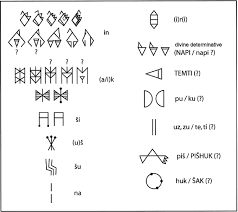
I tested an attempt to interpret the signs using Aegean signs. Paradoxically, the interpretation is not far from Sumerian interpretations. Why? Because some ideograms have a similar meaning to the Sumerians and the Aegeans. Since then, the DDoo sign sequence has been an insurmountable obstacle for me. Because “D” signs did not exist in the Sumerians but also in the Aegean area before 1000 IEN. These appeared in Proto-Sinaitic writing around 1,000 IEN and in the Aegean area even later, after 1,000 IEN (600-800IEN Chalcis). The other day I saw a work in which all the signs from all types of ancient Aegean writings were reviewed, even comparing them with each other:
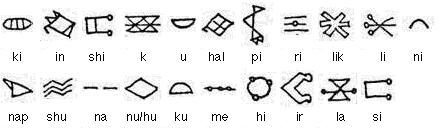
MINOAN LINEAR A Original title of the first edition (Sheffield 1987): THE ONOMASTICS OF THE ‘MINOAN LINEAR A’ AND ‘LINEAR B’ DOCUMENTS AND THEIR HISTORICAL SIGNIFICANCE by Peter George van Soesbergen. That’s when I realized second time again, but the signs that I can’t find an equivalent among the Aegean ones are extremely few. This on the one hand, and on the other hand, even with an initially presumed lack of some, it is pointless not to do this approach. I propose a goal as advanced as that of the interpretation of the tablets. In the first phase I will limit myself to trying to find the equivalent of each sign in the Aegean writings. By this I will be able to prove their origin. I could leave the interpretation for phase II of my research. ~~~~~~~~~~~~~~~~~~~~~~~~~~~~~~~~~~~~~~~~~~~~~~~ These two situations, ( quasi-Sumerian signs “as/like-Sumerian ”, with the appearance of Sumerian signs) and the one in which there are signs similar to the Aegean ones, of Aegean type/guy, create two distinct situations with consequences of overwhelming importance: The first situation offers the conditions for an easy interpretation, as the signs are somewhat more similar to the Sumerian ones, signs that can be found more easily in the Sumerian Proto-cuneiform signaries. Their significance seems to be fairly well known to specialists. But it also means that someone intentionally or unintentionally produced artifacts that “want to look like” something. This implies the idea and the paractic consequence of deceiving and the possible existence more or less of some forgeries. I dislike and attacked this situation and showed how and why many signs just “seem to be Sumerian” and I offered an interpretation similar to those offered by top specialists. Note that proto-cuneiform signs belong to proto-writing (ideograms and logograms) and therefore do not belong to writing proper and therefore do not use a language (in this case Sumerian). This does not mean that many signs are not associated with Sumerian ones and has a phonetic correspondent. The second situation makes the approach more difficult for me, because here we have (like in Linear A) both ideograms and syllabograms. The Cretan-hieroglyphic and Linear A writings are still present in the category of undeciphered writings. . I will have to show and keep track of the signs that are not found in identical form among the Aegean, the identical-Aegean and the similar-Aegean ones for which I must find the closest possible graphic equivalent. ========== AEGEAN SCRIPTS ========== From How undeciphered is an undeciphered script? – Oxbow Bookswww.oxbowbooks.com ›oxbow› blog ›2017/07/14 << Writing in Bronze Age Greece. The writing systems that have survived this period are all syllabic (ie each sign represents an entire syllable, not just a letter) and are in various stages of “deciphering”. Cretan hieroglyphic writing. (2,100-1,700 I.E.N.) It survives in about 3,300 inscriptions and remains very little understood, although we know little about its relationship to the other scriptures. One problem is that the inscriptions are often decorative and it is difficult to say how to read them – it presents some problems similar to the decorative Mayan writing. Although some signs look similar to those in lines A and B, which means we can guess their values, their “pictorial” nature is quite different from the more abstract shapes of the signs in the other systems. Linear Writing A (1,800-1,450 I.E.N.) Line A survives in about 1,500 inscriptions, many clay tablets and seals, although other items such as jewelry, pottery and stone vessels have been inscribed. It is usually labeled as “undeciphered”, but this is a good example of scripture in which we could read sequences aloud reasonably accurately, as many of its signs are shared (along with their values) by writing Linear B deciphered later. . However, we do not understand the language of the inscriptions, except that we can determine the meaning of a word in its context (especially the word for “total”, ku-ro, which appears at the end of the lists). Linear Writing B (1,450-1,200 I.E.N.) survives in about 6,000 inscriptions and is the only fully deciphered Bronze Age script in the Aegean Sea. Michael Ventris broke the code and announced its decipherment in 1952, proving that the language written in Linear B was an early form of Greek. Almost all surviving examples are administrative documents made of clay, and because we understand their contents, we can extract from them a wealth of historical information about the economy of the Mycenaean world. >> NOTE: Because it is very difficult to extract the equivalent Aegean signs and to show them to you, to put a picture of them, some (few) of the equivalent signs found in the writings Cretana Hieroglifica, Linear A and Linear B, I will extract them from the indicated work above. The sign will be indicated by me: Type of writing / page / no. sign, ex Linear A / pag12 / sign 5 will be A / 12/5. ======= ….overlaps between the Cretan script and other scriptures, such as the hieroglyphic scriptures of Cyprus and the Hittite countries of Anatolia, may suggest that they all evolved from a common ancestor, a now lost script, originally from Syria. ====== In the case of an approach with notable results regarding an interpretation using the Aegean signs, implicitly results an age of the tablets of maximum 2,800 BCE. The resemblance of a small number of signs (ligatured trapezoids, arched& arrow, ..) more with the Sumerian ones than with the Aegean ones could be an indicator of the presence of a strong early Sumerian influence. In other words, the tablets from Tartaria could serve to Mr. Papakitsos and Kenanidis as an argument and the best physical evidence in support of the research works which evidences a strong Sumerian influence for the beginnings of writing in the Aegean area. Moreover, the writing was introduced to the Aegean area in Crete directly from Sumer, some of the first Minoans being in fact migrants from Sumer.
THE INSCRIPTIONS WERE MADE BY A MINOIC SUMERIAN From Crete, Cyclades, Anatolia or Levant (Syria) ? we do not know.
(PDF) Some syllabograms of the animal category in the… http://www.researchgate.net ›publication› 340771705_Some_… Some syllabograms of the animal category in the Cretan Protolinear Script Ioannis K. Kenanidis Evangelos C. Papakitsos << The present study is focuses on linguistic evidence that demonstrates the origins of those Eastern settlers who initiated the Minoan civilization shown to be related to the archaic Sumerian culture through the features of the Aegean scriptures. >>Minoan Sumerian | Giannhs Kenanidhs – Academia.edu http://www.academia.edu ›Minoan_Sumerian A Comparative Linguistic Study about the Sumerian Influence on the Creation of the Aegean Scripts Ioannis K. Kenanidis1, Evangelos C. Papakitsos * 2 << Sumerienii s-au dovedit to be excellent traders and settlers throughout the Middle East, even at the end of the Uruk period [56]. According to Kramer [57]: “By the third millennium BC, there was good reason to believe that Sumerian culture and civilization had penetrated, at least to some extent, into East India and the West into The Mediterranean Sea, as well as the south of ancient Ethiopia and as far north as the Caspian Sea. ”Crete was known to Mesopotamia at least since the era of Sargon the Great, who lived between the 24th and 23rd centuries BC. [58]. >> …. For the first time I’ve learned of a possible intrusion of the Sumerians in Europe (Crete) with the practical result of the appearance of the Cretan Hieroglyphic and Linear A scripts of ideographic-consonantal nature followed by the linear writing B, consonantal = syllabary, from the works of Greek researchers E.C.Papakitsos and I.K. Kenanidis. The schollars speak of a proto-linear scripture which was the forerunner of the others. In this, they tried to show the evidence regarding an initial Sumerian contribution and influence.
(PDF) Minoan Sumerian | Giannhs Kenanidhs – Academia.edu http://www.academia.edu ›Minoan_Sumerian A Comparative Linguistic Study about the Sumerian Influence on the Creation of the Aegean Scripts Ioannis K. Kenanidis1, Evangelos C. Papakitsos * << The hypothesized protolinear script consists of 120 syllables of the V and CV models, as found in Linear-A / B scripts, one for each syllable of a dialect close to the archaic Sumerian language. … .So we have a script of simplified icons (signs), which describe elements, where the phonetic value of each sign is related to the archaic Sumerian word for the described object. Many of them are related to associated signs of the Cretan hieroglyph, also with Sumerian pictograms and sometimes with equivalent cuneiforms. … .The comparative study was conducted in parallel, including four factors:
the painted object and its sign in the Aegean scripture,
the relation and similarity of the previous sign with the Sumerian equivalent,
the phonetic value attributed to the sign in the Aegean Script,
the resemblance of the previous phonetic value with Sumerian words denoting the described object. … ..Following the methodology mentioned above, the entire Linear-A / B sign set can be identified as monosyllabic (rarely disyllabic) Sumerian words referring to the objects described, noting that in Sumerian a monosyllabic word ends in a consonant (ie CV-C)…. >>
An Application of Systems Science in Humanities: Investigating the Origins of the Minoan Civilization http://www.sumerianz.com ›pdf-files› sjss2 (4) 33-44 PDF Evangelos C. Papakitsos University of West Attica, Greece
<< Therefore, an adequate period of arrival of the first Sumerian settlers in Crete can be defined between 2800-2600 BC. …. 3.3.1. Migration routes Genomic analysis of European populations and the associated development of dairy practices indicate that farmers in the Middle East gradually immigrated to Europe during the Neolithic,through Anatolia and Greece . This route has always been the closest to Europe, in any case of historical turmoil in the Middle East, obviously even today. 3.3.3. Trade routes … .. The distance from the northern Sumerian territories to the north coast of the Levant, traveling upstream of the Euphrates River, is only 800 km (the curious reader can easily check these routes using the ease of calculating the distance of a relevant program such as Google-Earth). This route was well known to the Mesopotamians, not only from the Uruk period, but even before it, during the Ubaid period. … …By 3000 BC, Sumer had been the center of a transactional “globalization.” The most important trade for Bronze Age technology was tin. There have been extensive trading networks for this purpose. Other minerals and materials such as amber were also imported and their trade routes extended from Scandinavia to Cyprus. Commercial activity in particular does not only include the exchange of goods, but also the exchange of information and possibly an exchange of delegations of experts or agents for the valuation of traded goods. 3.5. Anthropological evidence (Who they were) There have been various attempts by scientists from many disciplines (archeology; linguistics; anthropology) to identify the origins of the Minoans. Homer (Odyssey: XIX, 172-180) mentions at least five ethnic groups (or subethnic in the case of the Achaeans and Dorians), each speaking their own language or dialect, respectively (respectively, Ahei, Eteocretani, Kydonieni, Dorieni and Pelasgi). Herodotus (Ι.173.1) mentions that in ancient times the whole of Crete was inhabited by “barbarians”, clearly meaning “foreigners” (ie non-Greeks; not “barbarians” in modern meaning of “savages”). Owens argues for the national descent of the Minoan population in opposition to Duhoux, who cites Homer’s passage above to justify the multinational environment in Prehistoric chalk. Owens’s debate bases the population of Crete on the estimated date of the writing of the Odyssey (800 BC), which has indeed been described as multinational. This debate, however, explains only for Doric groups, the last to have lived on the island in ancient times (11th century BC). For the others, Herodotus and Diodorus Siculus have preserved ancient narratives about the Eteocretans (“true Cretans”), claiming that they were the oldest inhabitants of the island, in addition to a group of older and primitive people (“Idaean Dactyls”) and also , mentioning those groups that inhabited the island after them suggest among others that the Eteocretans were the Sumerian population, the Kydonians were Akkadian settlers and the Idaean Dactyls were the earlier Neolithic inhabitants of Crete. He also proposes a settlement of the Sumerians in large numbers starting with 3000 BC. 3.5.1. Mediterranean race The Bronze Age Crete had been inhabited by people of the Mediterranean race of Neolithic origin. The Mediterranean genotype is evident in a wider perimeter of the Aegean Sea: from Western Anatolia to southern Italy and from the Central Balkan Mountains to Crete. Two relevant versions have been recognized that can be roughly characterized as “Continental” and “island” (the latter are also found in the coastal areas of the Aegean Sea), both of which are distinct from the “Armenian type”. 4.Discussion The entire linguistic context of Minoan (pre-Mycenaean) Crete seems to be closer to the Middle East than to mainland Greece, either in terms of the existence of multilingual societies or in terms of influence on script creation. It is estimated that the beginning of the creation of CH and LA is somewhere between 3000-2600 BC. This is exactly the crucial period of previously estimated socio-economic changes in Sumerian societies (see 3.1.4). Thus, we are looking for a period of Sumerian (proto) writing in which their writing system had become largely phonetic, but had not yet been developed in cuneiform (after 2600-2500 BC), although the transition from Sumerian script to curvilinearity proto-cuneiform had begun as early as the 30th century BC. At this stage, their original phonetic signs (about 600) could have been developed into another compact and light syllabic system, such as CP, but still without any influence or cuneiform trace. Moreover, the Sumerians of that period were not yet affected by sprachbund (Deutscher, 2007; Woods, 2006), namely Akkadian bilingualism, because CP is simply an evolution of the archaic Sumerian script, dating from 3100 to 2600 BC. .hr. Therefore, an adequate period of arrival of the first Sumerian settlers in Crete can be defined between 2800-2600 BC. To summarize the socio-economic evidence presented, in the 26th and 27th centuries BC, the Sumerians had the experience:
urbanization and overcrowding (see 3.1.1);
the need for raw materials necessary for their advanced civilization, but absent in Mesopotamia
(due to the previous need) knowledge of an extensive commercial network that has been exploited, even long before this period
socio-economic changes accompanied by an increase in war and poverty for the lower classes Therefore, in those times, the Sumerian socio-economic conditions were similar to those of the Greek city-states that triggered the Great Ancient Greek Colonization in the 8-6th centuries B.C.
To summarize the geographical evidence, it is shown that extensive networks have existed since the Neolithic era, especially in the Balkans, through which people, strategic raw materials, other goods and information traveled from Scandinavia in the north to Ethiopia in the south and from the British Isles in the west, India to the east, with the center of this network in Mesopotamia. The oldest direct evidence to date of such sea voyages in the above-mentioned trade networks date back to about 1300 BC, from the famous Ulu-burun Shipwreck / Turkey containing 17 tons of materials from 11 different cultures, including amber from the Baltic countries and tin from Afghanistan. Crete had a nature and was a privileged natural and geographical place in the origin of the north-western routes of this network that could be favorable for the establishment of the people who knew them. 5. Preliminary conclusion Given the local (Mediterranean) origins of the Minoan inhabitants that have been found so far (see 3.5.1), the initial proposal for the settlement of large Sumerian populations (Kenanidis and Papakitsos, 2013a) is not anthropologically supported, at least not in the sense that whole Sumerian families immigrated to Crete. Which could have happened, although it is analogous to the Great Ancient Greek Colonization, where the settlers were mostly unmarried men, who obtained brides from the local population after settlement (Manfredi and Braccesi, 1997). This analogy justifies the anthropological evidence about the Minoans in terms of both their maternal descent of Neolithic European origin (see 3.5.2) and the assimilation observed by the locals of the settlers in “Iranian / Armenian” (Kyriakidis and Konstas, 1974b). Ancient Greek settlers, although fewer in number, but carrying an advanced culture, influenced in many different ways by neighboring Romans (Manfredi and Braccesi, 1997) and Etruscans (Laparidou, 2002), or other indigenous populations, from the Egyptians (Trianti et al., 2011) to the distant culture of Gandara in Eastern Afghanistan. Therefore, SOT, as expressed here, argues that the eastern settlers who arrived in Crete during the 28th-26th centuries BC. (Douvitsas, 2005; Kyriakidis, 1971; Kyriakidis and Konstas, 1974b) were people from the Sumerian cultural environment:merchants (knowledge of routes), craftsmen (carpenters, metallurgists, seal makers, etc.) and scholars (actually accountants and administration officials). ) in moderate numbers. The advanced level of this civilization compared to that of the local Neolithic population could easily have led to the complete adoption of their culture by the locals, during the period of eight centuries (2700-1900 BC). Prepalatial. In this regard, more direct evidence is accumulating that will be presented shortly. The inscriptions Linear B cover approximately the postpalatal period. By using the rebus principle, it has been shown beyond any statistical doubt that the language that creates Linear B signs (consisting of abstractly described objects) is a close dialect, but simpler than the archaic Sumerian, because the phonetic value of each sign corresponds to the equivalent Sumerian monosyllabic word. for the described object. According to Fischer (2004), the principle of conundrum that was invented by the Sumerians is a gift to mankind, whose linguistic influence has spread to Iran, the Nile, the Indus Valley and (perhaps) the Balkans (Kenanidis, 1992). CV CV-type phonotactics is usually found in agglutinative languages, a feature that was ignored in LA, although observed very early by Duhoux (1998) and recently by Davis (2014) as well. A nearby agglutinative language so well studied from the third millennium BC. she was Sumerian. … According to CP theory, Sumerian scholars, who invented the original script, had to write in languages other than their own mother tongue, from which you can deduce that all “non-Minoan” languages written in LA / LB are quite distorted. >>
Cretan Hieroglyphics The Ornamental and Ritual Version of the Cretan Protolinear Script (PDF) Cretan Hieroglyphics: The Ornamental and Ritual… http://www.researchgate.net ›publication› 312039048_Cretan << The Cretan hieroglyphic script is conventionally classified as one of the five scriptures in the Aegean Sea, together with Linear-A, Linear-B and the two Cypriot syllables, namely Cyprus-Minoan and the Greek Cypriot syllable, the latter being considered as such due to pictorial and phonetic similarities with the previous ones . Cretan hieroglyphs were found in the Aegean Sea area in the second millennium BC. Their relationship with Linear-A is still in dispute, while the language (or languages) transmitted is still considered unknown. The authors argue here that the Cretan hieroglyphic script is simply a decorative version of the Linear-A (or, more precisely, the lost Cretan protolinear script that is the ancestor of all Aegean scriptures) that was used primarily by seal makers or used for rituals. The language transmitted must be a conservative form of Sumerian, as the Cretan hieroglyph is strictly associated with the main original Minoan culture and religion – unlike Linear-A which was used for several other languages – while the phonetic values of the signs have the same Sumerian origin as in Proto-Cretan . … .. ……It was documented that the inventors of the Proto-Linear Script were a nation that spoke a dialect close to the archaic Sumerian language. …… ……The following year, Duhoux (1978) observed that Linear-A is “rather agglutinative than inflected ”(same as the Sumerian language), due to the large number of affixes it contains (in 59% of words) compared to Linear-B (respectively 12%). … There are also older indications of different schools / scribal styles (Bennett 1966). Later, this suggestion was also supported by Finkelberg (1998). This idea (scribal guild), extended in the past, can explain why and how a relatively limited number of Sumerian scribes and seal makers could have created a writing system (Cretan Protolinear, so Linear-A, Cretan Hieroglyphics and Linear-B) to write the different languages of the Aegean Sea (Kenanidis and Papakitsos 2015a). These professionals could easily have been hired from the Sumerian communities in the Levant (according to Rohl 1999). … ….After an idea from 1978 and almost 10 years of research, Kenanidis (1992) published (in modern Greek) a study that links the phonetic values of the syllabograms of the linear scriptures to the common or culturally important words of the archaic Sumerian language, through through the rebus principle. This study refers extensively to the Cretan Proto-Linear script, considering as the only preserved samples of it three inscriptions on:……. ……Nota: tablitele de la Tartaria par a fi cea mai buna exemplificare, pentru Scriptura Proto-Lineara, daca nu cumva pentru o faza extrem de incipienta.
Among the Aegean writings, this tablet certainly leans towards the Cretan Hieroglyphic writing, which uses pictograms extensively. That kind of writing was used to inscribe votive (cultic) objects and seals. ~~~~~~~~~~~~~~~~~~~~~~~~~~~~~~~~~~~~~~~~~ subject to comparison. (-> -> ->). – one /
FIRST,LEFT-SIDE SIGN, ….a human silhouette? spirit/gost, master of animals, deity? ( Pity, the talent did not help the scribe at all) is not present in any of the writings (Sumerian, Aegean). Obviously, it is not found among the Aegean signs, because we do not even know what to look for. and, VEGETAL TWIG,BRANCH,GRAIN EAR Sumerians had many signs for different kind of cereals: As, Se, Se x Se Minoans had the twig> Cretan sign Te: “wheat” image, from https://linearbknossosmycenae.com Cretan hieroglyphs dealing with crops and vessels pottery
These plaques are dated to Late Minoan I period (1480BC-1425BC) are from “Minoan Goat Hunting: Social Status and the Economics of War” by Angela Murock Hussein. That unclear undefined shaped silhuette could be of that one wich made the animal sacrifice (or the deity wich receive the sacrificed animal?) Rezult: 1 unknown sign in Aegean writings . 1 sign identical with the Aegean sign (Te),1 wich have close shape corespondence in Aegean scripts.(goat)
RECTANGULAR DRILLED TABLET
From Promotora Española de Lingüística – Escritura de Tartaria
Contains about 8 signs. In the extreme part – upper middle: three signs like >>> We have mainly from left to right in the sea, 4 columns. FIRST COLUMN It has three cassettes. Starting with the top (and going down): –3 SIGNS “DDD-like” or “>>>” Image, http://ancientlights.org/CalendarHouse/ch2.html
“Sign * 034 has been suggested by several scholars to represent MNA (or, if a disyllabic value can be accepted, MINA), based on its resemblance to the crescent moon” “hiru”? “3 months” ?? – Then follows, below, one (or maybe 2?):
VEGETALE SIGNS like “branch” (one above the other). It has (have) a correspondent in the Aegean plant signs for example the sign “you”. 1.https://linearbknossosmycenae.com Te:”wheat” 2.http://people.ku.edu/~jyounger/LinearA/#11%22 * 04 (TE) “TE, 1.“ from ../ of .. ”? 3. likely “expected evaluations or contributions”
Result, vegetable-cereal signs. Aegean sign “te” (very possible te-te) Documents in Minoan, Luwian, Semitic and Pelasgianwww.talanta.nl ›wp-content› uploads ›2014/08› 2016… PDF << te-te te-na-te “ au dat lui Tanit ”>> 21 Compiled Syllabaries of Old European – Migration & Diffusionmigration-diffusion.info› pdfdownload PDFnurnber of related scripts were translated, regards with Minoan Linear A and ending with Russell. Burrows cave in… TE-TE he made, the way. TE-TO nothing. CONCLUSION According to my knowledge and perception, we actually have 2 signs “Te” there, Te-Te: “(opened) the way, they gave” but I choose Te x Te:”cereals>WHEAT“
“SA, perhaps a logogram for * SA-SA-ME?” <SA (HT 114b.1) or SI (HT 30.1) = paid? > I am inclined for the Aegean sign “Yes” although ours is sinistrovers (pointing to the left) and the Aegean sign is dextrovers. I have no other solution than to assume an inability to retain the scribe.
http://people.ku.edu/~jyounger/LinearA/#11%22 << DA-I = “total” ?: HT 12.6 (Schoep 2002, 162); cf. DA-I-PI-TA, ZA 8.5. If DA– (as in DA-DU-MA-TA) indicates in some way a completed action (like a perfect of A-DU), could DA-I be a completed transaction * 516 I + [?] >>
<< K?AThe Sumerian sign (Jaritz #458) depicts a ‘tubular basket‘; a variant, #458a, tapers toward the top; both have top-covers; both presumably and read ga2 (among others). Another recorded reading for it is pisan, which means ‘basket’ but perhaps also ‘*shallow tray’.An archaic variant form for Sumerian sign above (Jaritz #458), Jaritz #458a, looks very much as if it could be the ‘head’ without the hair and neck we see in Jaritz #15 under K?XA; and therefore might be a sign for ‘jaw’; but it also may be just another shape of ‘basket’.>>
is.muni.cz › PAPVB_13 › Gl…PDF a gal[help]; a gal[strong]; a gar[defeat] – IS MUNI 1. cella 2. bedroom 3. a ritual building 4. the sanctuary … Akk. damšillu “(a kind of cucumber )?; plant name” … GA2: ga2. 1. house 2. station (of the moon)? 3. room 4. house-lot. 5. estate.
Damn! In In the land of Lilliput: writing in the Bronze Age Aegean by Artemis Karnava says that Cr.Hier. 002 would be “human bust”; The same goes for John Younger http://www.people.ku.edu/~jyounger/Hiero/Hgrids.html
http://www.researchgate.net Diachronic change in sign forms between Archanes Script and Cretan-Hieroglyphic or from Archanes Script… onlinelibrary.wiley.com
A corroded copper ingot from Zakros, Crete, shaped in the form of an animal skin typical in that era. Folowing image, from: Bilingual Indus Script inscriptions, evidence … – Bharatkalyan97 bharatkalyan97.blogspot.com › 2019/09 › bilingual-in.
Forma pare pe un stindard sumerian.
For now, I give equal chances for the “ingot” and for the symbol “place / sacred temple”. Towards the conclusion: Present sacred sign, it seems with origins in Neolithic, Anatolia and Vinca Civilization.
This symbol painted on a vase from the Cucuteni culture in north east Romania 4000 BC is, according to Marija Gimbutas, definitely the symbol of the Goddess of regeneration in the form of a double triangle shaped like an hourglass. ”
Unlike the Sumerians who had a complex social and religious stratification and who had signs for the Ab and Unug temple, the Minoans held rituals in nature, on mountain tops and in caves, as such they had no specific sign for the temple.
wikipedia Minoan religion <<… there is no evidence that Minoan religious practice was centered around formal public temples. Some scholars see the Minoan Goddess as a divine female solar figure. >>
See A-sa-sa-ra <> Asherah? Linguistic Evidence for a Phoenician Pillar Cult in Crete janes.scholasticahq.com ›article PDF
They had only signs associated with the sacred and goddess the chthonic mother, Ma and the astral Asasara. Sign found in the labrys sign found in the places and caves where the rituals were held. Sign associated with the temple / labyrinth, “da-pu-ri-to-yo Po-ti-ni-ya”. Used in places of worship of the mother goddess IDA (IDA-MATER), mistress. “That of Mount Dikte” (A-DI-KI-TE PO-TI-NI-JA) http://www.melampus.name/war-of-the-gods—minoan-mycenaean.html http: // http://www.melampus.name/uploads/8/3/2/1/8321682/c10_orig.jpg The Goddess as “Mistress of the animals” surmounted by a double-axis icon in an epiclesis.
A marvel of Minoan finds: the double-ax of Arkalochori http://minoablog.blogspot.com/2010/03/marvel-of-minoan-finds-axe-of.html The ‘i’ vowel may be either part of the stem or a separate deictic particle (if I-DA-MA-TE is the same as DA-MA-TE, on KY Za 2). As for me, I suspect that this stem is originally without i- and it means ‘sanctuary’
Proposed conclusion: the sign represents (I) DA-MA-te: “SANCTUARY” or…
Anistoriton Journal, Vol 15 (2016-2017) In Situ 1 A 17th v. BC Minoan Votive Double Axis (Labrys)
Rather, a name as “damat” in Sumerian must be connected to the Sumerian “DAM” (husband), through which many Sumerian divine names began. …. DAM ”can mean“ husband ”and then“ year ”should be AN, the supreme god of the Sumerians, especially important in the city of Uruk and Crete which was colonized when Uruk was the dominant city of Sumer. …. Analogous is the inscription “nodamat” on small axes, of gold and silver: NO (hand) DAM (of the wife) of A (N) The supreme god TE the almighty (?). Here the two aspects of the divine are mentioned as DAM (feminine aspect, “yin”) and AN (masculine aspect, “yang”). >> eugenrau: … Somehow also there: sign <associated> with the wife of the supreme god
Similar Aegean sign 004: “FEM” (female / female) but not any woman but: DAM-A “WIFE OF THE SUPREME GOD” (? The forerunner of Damater, Hera and Diona?) ??… very very difficult, I choose:
CONCLUSION: Although in our thablet the upper trapezoid is bigger, and not as in the similar signs sum.AB: “house, temple” and UNUG: “temple”, I say that it is the Aegean sign DA-MA–TE: “OF THE DAMA/MOTHER,WIFE-SPOUSE” “SANCTUARY“. Being isolated it has the meaning of sanctuary in general.
From https://www.sumerian.org/sumerian.pdf << ” GA (pronounced nga,ñá): basket; HOUSE; stable (cf., ñar) [GA2 archaic frequency: 125; concatenation of 5 sign variants].GA (nga,ñá): (cf., ñál, ñar, ñe26 and ma(3)) >>
SECOND COLUMN – THE SIGN “INSECT?” Sign v.problematic & difficult. A.A. Vaiman did not find the Sumerian proto-cuneiform equivalent, see the dance table: “signs No.4 (its meaning is unknown)” I did not find him identical in the Sumerian signs, only close ?. https://cdli.ucla.edu/tools/SignLists/protocuneiform/archsigns.html “AN” (An, Anu, “the heavenly god”)
I did not find it identical in the Aegean writings. It resembles the hieroglyphic Cretan sign 068. Then it resembles, (but ours has 12 “rays”), and the 8-ray sign http://people.ku.edu/~jyounger/LinearA/#11%22 * 44 (KE )
From http://minoablog.blogspot.com/2009/ << This exclusion rule can be applied to the Linear A sign * 79 (‘eye’) to show why it cannot represent the value ‘ZU’ (that was assigned to it by John Younger et al.). The case-ruling example we find on the tablet ZA4, row a.5 where the term QE-SI- * 79-E can be read. The same name recurs on tablet ZA15. Now, if the reading of * 79 were ‘ZU’, we would rather expect an ending ZU-WE (with a not well characterized linear A WE sign) and NOT ZU-E. On the other hand, the value suggested and used by many (e.g. Glen Gordon) for this linear A sign: ‘DO’, fits perfectly, as DO-E is absolutely possible. But the case of LinA * 79 has to approached with care. Apparently, there are two distinct LinearB signs (* 79 and * 14) corresponding to single cluster (* 79) Linear A. I label it as a cluster, as it contains signs of very variable design: it is easily possible that there are two signs lumped into a single cluster: at least one of these is (with resonably high probability) is the Linear A counterpart of Linear B ‘DO’ sign (Lin.B * 14). >>
CONCLUSION: Maybe risk, and although I have the highest respect for Mr. Andras Zeke
(Minoan language blog http://minoablog.blogspot.com/) and dance research, without any argument, however my option (as a novel !?) is for the meaning: “Zu” Hypothesis: Even in Romanian there is a connection between light and eyes; their faculty = “light of the eyes” Starting from the root I.E. for the light “Di” we reach Ziu, Zou, Zu, Zoia. See the Cretan locality “Zou to lako”
The Proto-Sumerian Language Invention Process by John A. Halloran https://www.sumerian.org/prot-sum.htm << zu, sú: n., wisdom, knowledge; v. to know, to understand, to inform, teach (in marû reduplicated form); to learn from someone (with -da-); to recognize someone (with -da-); to be experienced, qualified.>>
v., to know; to understand; to inform, teach (in marû reduplicated form); to learn from someone (with -da-); to recognize someone (with -da-); to be experienced, qualified
CONCLUSION: “Zu =“ Zou, ZEitate ”(the graphic equivalent of the Sumerian sign AN)
Found very similar in the Aegean writings. image from: CREWS Project – WordPress.com Cats in the Aegean Scripts
On the iconicity of Greek Mycenaean MA-KA
Maria Mertzani periodicos.unipampa.edu.br [PDF] 117-Text of article-201-1-10-20190715
V1.COMPARATIVE ENCYCLOPEDIC DICTIONARY OF MESOPOTAMIAN… books.google.com ›books Ama – Amar… Ama: Sumerian. Noun. Mother. Ima in Hebrew. Ama in ancient Syriac.
<< 3 and 11: the well-known sign for ‘ma’, which describes the face of a calf (calf = amá (r) in
Sumerian); not the face of a cat as scholars are accustomed to. Indeed, the people of the cities are today
only familiar with cats and not with calves and even in ancient times there was a
reminiscent of a cat’s face (judging by the hieroglyphic seal [APPENDIX]), but
Sumerian-speaking users were aware that this described a calf. This is why the sign is without a mustache (even on the hieroglyphic seal [APPENDIX]). Also, the sign here doesn’t have it
human neck and ears of the human face of the ‘qa’ sign …… I saw this type of spelling in the inscription ‘a ma deŋejŋo’ (discussed in the ANNEX below) where the sign of the calf’s face (‘amá (r)’) was taken to involve “ama” (mother) and not “ma” as usual, even if the sign did not mean “calf” (“amá (r)”), but the homophone “ama” (“mother”). ). >>
4th and LAST COLUMN Contains two signs starting from top to bottom:
-sign “(BULL-HEAD) -TAURUS”. About this sign No.14 ,, A.A. Vaiman did not enter anything in the table and otherwise only refers to it without proposing what it is: “V. The column is not divided into lines and does not contain numbers. There are two (or three?) Signs, no. 14 and 10 (fig.4), the latter being the same as the one that appears in line II 2. Not found exactly in this form in the Aegean script, but in an extremely similar form. The appearance and the realization on the tablet leave much to be desired. http://people.ku.edu/~jyounger/LinearA/#11%22 Hieroglyphic * 012
a bull-head, becomes Linear AB 23 MU
SA / 6/113. it is very similar to the Aegean sign H / 12/21 “Mu” (see the eye in the head!). It resembles The Cretan Hieroglyphic table of signs, as suggested in the corpus inscriptions (Olivier and Godart 1996, 17). no.012 Conclusion: MU: “TAURUS” Note. If we take that rod shape that represents Cretan Hieroglyphic “U” would result Mu-U = MUU
Orion Constellation Myths of Sumer, Babylon and Egypt http://www.astronomytrek.com/orion-constellation-myths-of-sumer-babylon-and-egypt/ << For this urban civilization, the constellation represented its hero Gilgamesh, whose exploits were immortalized in the first piece of surviving heroic literature called The Epic of Gilgamesh. …. The Sumerians later honored the battle by presenting Gilgamesh in the celestial heavens as the constellation URU AN-NA (“light of heaven”) fighting a bull, identified as the modern constellation near Taurus. >>… from here, from the house, in fact the “living room”, comes the symbol of the temple of the supreme celestial deity, whatever it may be in different civilizations.
Bull of Heaven Heavenly Taurus https://en.wikipedia.org/wiki/Bull_of_Heaven <Some researchers consider the Bull of Heaven the same figure as Gugalanna, the husband of Ereshkigal mentioned by Inanna in the Descent of Inana into the underworld>
ANUjpreporter.net ›… <The Sumerian god Enki looks more like the serpent of Genesis and… Gud Anu Gud (Taurus) from Anu (Heaven / Universe). >>Bull of Heaven in Mesopotamian Sources – Culture and Cosmoswww.cultureandcosmos.org ›pdfs› 5-2-Soltysiak_Bull… PDF <The second constellation named after a bull is the Sumerian gud.an.na “bull of heaven”, equivalent to the Akkadian elu . In lexical texts it is separate ..>
Bull of Heaven in Mesopotamian Sources – Culture and Cosmoswww.cultureandcosmos.org ›pdfs› 5-2-Soltysiak_Bull… PDF <The second constellation named after a bull is the Sumerian gud.an.na ‘bull… and after a gap Inanna asks Taurus Cerului (gud.an.na)> eugenrau: Gud-anu <?> GUDEANU
CONCLUSION II: THE DWELLING, THE RESIDENCE OF THE SUPREME HEAVENITYNOW WE ARE “OBLIGED” TO INTERPRET THE ENTIRE COLUMN
For the simple reason that here the symbols are not separated by any line or box and have a meaning taken together. But on this occasion we encountered a great difficulty, as the final significance of these symbols is not certain. We have some presumptive combinations: the upper symbol: Heavenly Taurus / Sun or Asterios / Minotaur / Moon. The lower symbol: The Sun Goddess, the Sun Goddess or the symbol the wife of the supreme heavenly god
The celestial bull + his consort or Taurus / Minotaur / Moon + the sun (solar goddess) or the celestial TAURUS / supreme deity / THE SUN + his house, his TEMPLE, Orion >> CONCLUSION: THE TEMPLE OF THE HEAVENLY TAURUS, (THE SUN)
Circle divided into 4 quarters by a cross; we will take the quarters clockwise, the first located left-top: 1-st QUARTER Contains two signs: The sign “H with 3 horizontal bars/archaic eta-like”. There is somehow similar to the Sumerian sign proto-cuneiform Ku / Ga2, proto-Sinaitic Het, archaic Greek Heta, but also in Indus Script https://www.boloji.com/articles/11693/origin-and-etymology-of-the- valuations 12. <Sign
: This sign is like a cradle which locally is called ‘dollar’ or ‘dolna’. The first letter of this word is ‘da’. The method of acrology is also applicable here.>
Mycenaean | Minoan Linear A, Linear B, Knossos & Mycenae | Page 6linearbknossosmycenae.wordpress.com ›tag› page ›f… Next comes the supersyllabogram PA3 (PAI), 1.“ which probably refers to pa3ni / pa3nina / pa3niwi ”sau 2.” probably expected assessments or contributions ”“ PA3 appears on HT 9b, listing payments….
and A / 9/56, the “Pa3” sign It is not the bronze / copper sign because it has a short vertical bar on the right! The P? / D? As such there is no P at all and “D” only horizontally for volumetric measures, B / 15/110 “unit of volumetric measure”. : //linearbknossosmycenae.com/2016/09/29/measurement-of-17-conjectural-units-total-of-dry-and-liquid-volume-weight-in-minoan-linear-a/
Interpreters: 1. PAI-MENO / PAIMEN> Poimen “pastor” https://en.wiktionary.org/wiki/Reconstruction:Proto-Indo-European/peh₂- << Semantic shift from “protector” towards “shepherd, herder” can be seen in many branches, signifying the importance of herding. Unusual is the o-grade root in Greek ποιμήν (poimḗn, “shepherd, herdsman”), >> 2. PAMENOS Tradition and Transformation. Egypt under Roman Rule:… Recent research seriously doubts the sibling marriages in Roman Egypt, suggesting… of Apollonia alias Senmonthis, daughter of Ptolemaios alias Pamenos.
From ANISTORITON Journal of History, Archeology, ArtHistory: Viewpoints http: //www.a nistor.gr/english/enback/v053.htm One of the faces reads: Pa – me-ni po-lo 100 The foals (polo (i) ) for this year (pameni has the dative ending, but cf. Greek pammenos) Please also note that the… 3.signs PA- Moon> PA – MENI: ”ALL- MONTHs = (this) YEAR !! Rom. ”(Aquest) an” Wikipedia, Minoan Molds of Palaikastro
So it would be added +++++ 5 days. It could be a lunar solar calendar, each quarter containing 3 months of 30 days and every year should be added +++++ 5 days. SFERTUL 2 contains:
2. “TE, 1.“ from ../ al .. ”3.Bindings of two signs A / 9/92“ Te ”A / 9/92 or A / 9/61“ Ne ”.So possible“ te- you ”=” did, the way ”? 3. Number “50”
–Two “D” signs Not existing in Sumerian proto-writing, the oldest occurrence is in the Old Elamite 2250 and 2220 IEN (see “u”, “ku”) https://omniglot.com/writing/elamite.htm A selection of Old Elamite symbols which have been deciphered:
LINEAR ELAMITE WRITING François Desset http://www.researchgate.net List of accepted values for LE signs identifications in the right column are uncertain The following is not good, it contains two signs in the mirror
The valuation of this sign is ‘da’ / ‘dha’. The origin of this sign is the word ‘dhanuka’ which means bow with or without arrow. Through acrology the first letter ‘dha’ became the valuation of that sign.
Here we have a very big problem; the volume sign should be rotated 90gr counterclockwise. To the Sumerians the similar sign GAR (a D with an inner parallel line) reads ninda was initially in the plate dish- (horizontal) position, then they rotated it. Introduction Into the First Society – ppt download
2.TE / TI, << “from / of” (Valério 2007), associated with agricultural products and people, usually in large quantities. So, assessments… >> engl. “From, of”, “evaluations”
– two “O” signs or “oc” signs
1. The “o” sign found identically in The Cretan Hieroglyphic table of signs, as suggested in the corpus inscriptions (Olivier and Godart 1996, 17 ) sign no.073. Then in Linear A http://people.ku.edu/~jyounger/LinearA/#11%22 * 309 “shape O”
“oc” signs = Two phases of the four of the moon? The “C” sign has the equivalent H / 13/65 MINA or B / 15 / * 34 “month’s ration?” ALTHOUGH I COULD INTERPRET LIKE SUMERIANS, who obtained these signs by pressing, WHERE DDOO = 1, 1, 10, 10, cereal portions, I MEAN TO USE THE FACT THAT IN MINOIC “D” REPRESENTS THE UNIT OF MEASUREMENT VOLUME (LIKE THE BLENDER) AND THAT I COULD INTERPRET THE SIGNS “OO” AS “100 100”, I WILL NOT PROCEED LIKE THIS, BECAUSE THE RECTANGULAR TABLE COVERED EXACTLY THE HALF HALF OF THE ROUND ONE WHEN THE TABLETS ARE CARRIED TOGETHER, TOGETHER AND TOGETHER ESOTERIC MEANING OF THESE SEQUENCES “HD DDoc” and the interpretation will be:
HD = PA-MENI = ”all months” = ”YEAR” and DDOC are THE PHASES OF THE MOON.
QUADRANT 3 contains the signs:
(image from Moonlight in Romania…) I could have read each sign separately considering that each is composed of elementary signs joined by ligature / connection. But you will see further (more obvious to you and easy to understand) by exemplifying the 2nd sign. that the signs are complex ideograms. – THE LEFT SIGN. A complex ideogram, an altar-like sign (with flame), but rather a “portable altar.” I did not find it identical in the Aegean inventory. It has an Aegean equivalent that is not identical, it looks like the “De” sign turned upside down! http://people.ku.edu/~jyounger/PHDisc/PHDiscSigns.html
It is worth noting that this sign was proposed by Maria Gimbutas or Cosmas Theodorides e, Tanit. I didn’t find it exactly so representing “E” in the Vinca-Turdas civilization! http://studialphabetica.blogspot.com/2014/11/?m=0
CONCLUSION: Religious ritual sign “(portable)Altar“
THE SIGN ON HIS RIGHT: Another complex ideogram is not found in the identical form among the Aegean signs. It resembles the Larsa city seal, in fact the altar of the temple of the Sumerian deity Samas (the sun) in Larsa. http://enenuru.net/html/misc/cityseals.htm
Ritual and Worship at Knossos (Minoan Bronze Age) kzclip.com ›video› ritual-and-worship-at-knossos-mi… disk the words A-TA-I-WE-WA-JA or JA-SA-SA-RA -ME mean Asasara / Ishassara which is the goddess Astarte. M “Minoan Kingship and the Solar Goddess“
Neolithic clay model loaves from Govrlevo (Photos by G. Naumov)
From Those “bloody” Minoans… by Andras Zeke/Hu http://minoablog.blogspot.com/2011/ <<And thus we have arrived to the point to discuss a second theory about the meaning of A-SA-SA-RA-ME. It will be more in-line with the contemporary Minoan customs, but probably less pleasing to a faint-hearted reader. This possible explanation would be to compare A-SA-SA-RA-ME with the hieroglyphic Luwian word asḫarmis (plural: a-sa-ḫa+ra-mi-sa) = ‘offering’, ‘sacrifice‘ (or similar). Hittitologists tend to connect this word with Luwian asḫar- = ‘blood’, thus *asḫar-m-is-originally meaning ‘bloody sacrifice’. Whatever its orginal etymology was, it was used in a bit more generic sense in the Karkamiš inscriptions, since at least one of its mentions (see the figure) also involves sacrifice of bread, not just animals. Given the number of phrases in Minoan with possible Anatolian cognates, we should not be surprised to see yet another one added to the list. While the gemination of SA syllables is definitely problematic in Minoan (we must assume a development *-asḫa- → *-asaḫa- → *-asasa- upon borrowing – as Minoan might not have had the consonant ḫ) and its stem-ending is different, a generic meaning ‘sacrifice’ would fit exceptionally well with *A-SA-SA-RA-M-. Should this identification be true, A-SA-SA-RA-ME could mean ‘of sacrifice‘ and conversely A-SA-SA-RA-MA-NA ‘sacrificial’. This could easily explain the universal use of these terms in religious contexts.>>
Otherwise, in the Sumerian proto-cuneiform signs (sign Ba) and in the Anatolian alphabets (Carian: “i”). https://sites.google.com/site/collesseum/cretanscripts#_ftn1 << TO (P48, AB5, CC13 78, C TO) is a bow (toxon) with an arrow, but the curve was straightened, and the string was reduced to a small stroke …….
TO to(xos): bow (with arrow)
(PD11) PG48 LA39 L (A) B5 LC to CC8b, 9?
My suggestion is that the Linear A and B sign ultimately derives from a picture of a bow and arrow, Greek toxon.The Phaistos Disk glyph (PD 11, 1x) is a bow.Pictophonograph 48 (likewise one example only) is apparently a bow and arrow (though it might be a bird with a long neck, hence LA / B KU ?!). If neither of these pictographs are connected with toxon (bow), then my case for LA / B TO is difficult to argue.Nevertheless , the LB form could be a reduction of an original drawing of a bow and arrow: two parallel horizontal lines represent the bow, while the arrow is the vertical line below them and bisecting them (the top line is thus the bowstring). >>
The Undeciphered Signs of Linear B: Interpretation and… books.google.com ›books› isbn = 1108494722Two possible Linear A antecedents have been suggested for twe: AB87 and A305 (Figure 2.4). … 234 No Cretan Hieroglyphic correspondences are suggested by CHIC: 19 or… Cretan Hieroglyphic 048 has a broadly similar form, but as this sign’s central ‘arrow’ does not appear in either of the potentially related Linear A signs or in Linear B twe a connection is not likely likely.
file: /// C: / Users / User / Downloads / Decorte_R_P_J_E_2018_The_Origins_of_Bron% 20 (1) .pdf << The CHIC editors themselves consider # 048 as most likely Linear A: “we are inclined to think that it is linear A ”, citing Brice 1992 >>
Phaistos Disk Deciphered? Not Likely, Say Scholars – Biblical… http://www.biblicalarchaeology.org ›archeology-today› ph… In a TEDx talk in Heraklion on the Greek island of Crete, Gareth Owens… script (Egyptian Hieroglyphs), as well as a translation of that text into Greek. … Equate to the MLA sign AB41 (si) and the CHS sign CHIC # 048 and # 049.
“PA should be an abbreviation for a term modifying people…”
STATISTICS/Round tablet. Of the 12 signs, 3 are not found in identical form in the Aegean signs,4 in identical form, and about 5 in similar form. TOTAL ALL 3 tablets: There are not at all in Aegean and exact shape: 6 Identical :7, similar :10, SO THE STATISTICS INDICATELY DECIDE for THE PRESENCE ON THE TABLETS OF AN AEGEAN WRITING.
Suna aiurea, emfatic, adica cum, cui dau eu o sansa, omenirii, culturii mondiale? De fapt mi-o dau mie, pentru ca este vorba in esenta doar de efortul meu continuu si consistent de pe parcursul a circa 11 ani. In eventualitatea unor progrese notabile, de-bea atunci se poate vorbi de o contributie la Cultura Europeana sau Egeeana spre exemplu. Ce m-a determinat sa reiau demersul? Faptul ca am epuizat o serie de ipoteze concretizate printr-o serie de citiri-test, neacceptand fara reserve niciuna. Apoi mi s-au sedimentat gandurile cumva si mi-am dat seama ca dintre toate ipotezele, putine mai exact doar una are sanse reale. Aceasta datorita unei serii de motive in principal stiintifice, dar nu numai.
DE CE AM ELIMINAT COMPLET IPOTEZA SUMERIANA
Semnele de pe tablite, comparate cu oricare din sistemele de scriere din lume, intr-adevar semnele seamana cel mai mult cu cele proto-cuneiforme sumeriene. Cu ani in urma nici nu stiam de existent lor, dar dupa ce am aflat de ele si le-am vazut, parca mi s-ar fi deschis noi porti si orizonturi. Nu numai eu am vazut asemanarea asta ci si altii inaintea mea, (1965) cercetatori de cel mai inalt nivel in domeniu .(Adam Falkenstein/Germania Zu den Tontafeln aus Tartaria, (1965) si Aizik Abramovici Vaiman/URSS) Dar si ei si eu am spus fiecare in felul lui ca numai seamana. https://de.suenee.cz/zahada-tartarijskych-hlinenych-tabulek <<In 1965 brachte der deutsche Sumerologe Adam Falkenstein die … dass die Texte in Tartaria unter dem Einfluss von Sumer entstanden sind.>> Ei de o maniera mai ocolitoare si eleganta, (Vaiman:”scriere quasi-sumeriana“) eu mai hotarat si aratand mai mult decat ei si adaugand inca un numar de mai multe indicii concrete. Археологические вести. Спб, 1994. Вып. 3. Аннотации …www.archeo.ru › … › Annotations of issuesA. A. Vaiman. On the Quasi–Sumerian tablets from Tartaria.
Nu-mi explic de ce dansii nu au procedat si sa-si exprime opinia de o maniera mai hotarata, ci au preferat o abordare asa, “cu duhul blandetii“. Ei care ar fi trebuit sa vada mai bine decat mine care semn si cat, in ce masura seamana cu corespondentul sumerian. Dar fiind specializati in proto-scrierea sumeriana nici nu le-a trecut prin cap sa vada daca cumva seaman cu cele mai vechi semne si scrieri Egeene. Au luat semnele in ipoteza “daca ar fi sumeriene” si le-au interpretat in consecinta. Toate interpretarile acestor savanti cu expertiza in asirologie dar cu inalta specializare in domeniul scrierii proto-cuneiforme au obtinut rezultate f. bune asemanatoare intre ele si asemanatoare cu interpretarea mea. Al 3-lea, Rumen Kolev/Bulgaria a obtinut la fel rezultate foarte bune, chiar intr-un fel i-a depasit, chiar daca am impresia a fost influentat de cercetarile acelora care au precedat-o pe a sa. Insa repet, el are contributia personala valoroasa in interpretare.
ПЛОЧКИТЕ ОТ ТАРТАРИЯ И ЧАШАТА ОТ СУВОРОВО – ДВА „НАДПИСА” НА РАННАТА ДУНАВСКА КУЛТУРА И РАЗШИФРОВАНЕТО ИМ Румен Колев http://www.su-varna.org/izdanij/Magazin%201%20conf/Pages%20from%2046%20to%2053.pdf Fara falsa modestie interpretarea mea este mai completa decat a tuturor acestora, si facuta cu mai mare acuratete. Am fost surprins sa observ cum ceilalti cercetatori nu au recunoscut unele semne, altele interpretate gresit si inca alte “amanunte” de genul asta. Motivele eliminarii ca fiind sumeriene sant multe, majoritatea de ordin ethnic (vre-o 10 la numar) privind forma concreta a semnelor in sine, dar si de tehnica specifica “scrierii” sumerienilor. Insa motivul principal a fost excluderea posibilitatii ca niste obiecte friabile sa fie aduse de cineva de la asemenea distanta, fie vorba in extremis ca loc mai apropiat si de Siria. Hotaratoare a fost constatarea si deductia ca tablitele ori au fost inscriptionate in perioada 3.200-2.800 IEN ori dupa 1925. De ce? Simplu: in tot acest interval “intre”, nici-un om de pe globul pamantesc nu a putut sa vada vre-una din ele fiind ingropate la metri de pamant/moloz sub un temple din Uruk(Warka) NOTA: Scribul, autorul a gasit cu cale, deci in mod intentionat, ca sa creeze in tablita rotunda dar si in tablita dreptunghiulara gaurita o compartimentare a simbolurilor, aparent dupa modelul sumerian. In orice caz, cel putin in cazul tablitei dreptunghiulare gaurite sumerienii nu procedau asa; daca realizau compartimente, coloane in nici-un caz nu izolau numai doua sau chiar cate un singur simbol, asa cum se intampla in tablita noastra dreptunghiulara gaurita. Asta ne conduce la interpretarea separata a simbolurilor in fiecare din compartimentele realizate, fie ca un compartiment contine doua semne sau doar unul. Asta inseamna ca aveau cate o semnificatie distincta, sacra deci cu mare importanta, si posibil se aplecau pe rand asupra lor in timpul presupuselor ritualuri religioase. Aceasta usureaza interpretarea (era sa zic citirea) intrucat in cazul proto-scrierii se poate extrage numai un intelesgrosier si nu unul concret, explicit si clar ca in cazul scrierii.
Obiectele ceremoniale și ritualice au fost utilizate ca un mijloc pentru stabilirea sau menținerea comunicării între sacru (domeniul transcendent sau supranatural) și profan (domeniul timpului, spațiului și cauzei și efectului). Ocazional, astfel de obiecte au fost folosite pentru a constrânge tărâmul sacru (sau divin) să acționeze sau să reacționeze într-un mod care este favorabil participanților la ceremonii sau persoanelor sau activităților cu care se referă astfel de ritualuri sau pentru a preveni ca tărâmul transcendent sa duca la rănirea sau punerea lor în pericol. Aceste obiecte pot fi astfel dispozitive de mediere pentru a contacta lumea divină.
PROBLEMATICA VECHIMII TABLITELOR SI A TIPULUI DE SCRIS
Initial arheologii romani au stabilit ca tablitele provin dintr-un strat Vinca din neolitic si au stabilit ca provenind de pe la 5.300 IEN. Initial au vorbit de originea scrisului in aria Danubiana, (Merlini:”Scrittura e nata in Europa?”/Scrisul s-a nascut in Europa?) pentru ca mai apoi la scurt timp sa coboare din spatiile celeste si sa vorbeasca de o scriptura. Scriptura nu inseamna scris propriu-zis gen vechile Scripturi, ci un script inseamna o colectie de semne. Desi denumirea conduce la idea de semne facute cu mana, nu este necesar acest lucru, vezi discul de la Faistos. Acesta contine o colectie de semne,scriptura dar sant imprimate cu ceva gen stampile.Dupa aceea a inceput o controversa, de fapt discutii aprinse in privinta datarii.Majoritatea cercetatorilor, primul fiind Nicolae Vlassa le-au atribuit o origine mai degraba in intervalul 2700-2400 IEN.
Nu incerc sa lamuresc: cu ce expertiza si pe ce baza a afirmat ca semnele se apropie (este f. adevarat) de cele din perioada Jemdet Nasr !? De notat ca nicaieri in lume nu s-a gasit nici-o singura proto-scriere inainte de 3.500 IEN. Cele mai vechi au aparut in Sumer, Iran si Egipt, quasi-simultan in jurul (dar nu mai devreme!) a 3.500 IEN, urmate apoi de scierile Proto-Elamita si scriptul de pe Valea Indusului.
Fig. 4) Impressed tablet from Godin Tepe, Iran, ca. 3100 BC. courtesy Cuyler Young Jr., Royal Ontario Museum, Toronto. The small circular signs stand for 1 large measure of grain, the wedges for a small measure of grain.
Harappa.com 62. How old is the oldest ancient Indus writing? Asko Parpola: “The earliest examples of Indus writing are from the Early Harappan Kot Diji period, which at Harappa is dated to c. 2800-2600 BCE.”
Pentru toate acestea, tipul de scris este proto-scriere, in care se folosesc ideograme si logograme. Scrierea cuneiforma a aparut dupa 2800 I.E.N.Cel mai apropiat exemplu este proto-scrierea sumeriana in carese folosesc semne proto-cuneiforme. O “curiozitate” (de fapt mai mult decat atat si poate mai grava) este aparenta prezentei pe cele trei tablite in mod simultan, cate una pe fiecare, a trei tipuri de scriere: pictographica, ideografic-logografica si silabar-alfabetica. Acest fapt ar trebui sa ridice mari semne de intrebare, insa nu va vine sa credeti, nimeni nu si-a batut capul cu asta. Pentru mine reprezinta mai mult decat o ciudatenie, necunoscand o alta instanta de acest fel in lume. Este ca si cum cineva ar fi vrut sa arate altcuiva evolutia scrisului sau/si tototata sau autorul sa-si “etaleze” cunostintele in domeniu. In mod normal ma asteptam ca autorul sa foloseasca un singur tip de scriere si anume acela al epocii si timpului sau ! In acest fel de prezentare al autorului in care mai degraba a etalat o colectie de semne face spre imposibila o interpretare unitara (o singura poveste, mesaj legat) a intregului set de trei tablite.
PROBLEMA AUTENTICITATII
Au existat multe elemente fapticecare ne convine sau nu, vin sa puna la indoiala autenticitatea lor (absenta descoperitorului in momentul descoperirii, absenta vre-unui martor, incertitudinea privind stratul de care apartin, arderea in cuptor>>imposibilitatea datarii cu C14, etc.) Faptul ca jumatatea de sus a tablitei rotunde contine semne care au aparut mult mai recent si nu au existat ca si semne sumeriene proto-cuneiforme cel putin, m-a facut pe mine inca sa pun si mai mult la indoiala autenticitatea lor. Prezenta semnelor din jumatatea de sus a tablitei rotunde in alfabetele arhaice grecesti si detectarea de catre altii si mine ca autorul nu stapanea scrisul ( dupa unii era fix iliterat) au contribuit la aceasta suspiciune. Eu am dedus posibilitatea ca autorul sa fi stiut sa scrie, dar numai folosind semnele pe care le stia bine si cu care stia sa scrie:”literele arhaice grecesti”, prezente in jumatatea de sus a tablitei rotunde (HD ; D D o?/c?). Chiar si asa se poate explica, de ce purtate impreuna la gat (atarnate de un snur), tablita dreptunghiulara acopera jumatatea de sus a celei rotunde. ! Ca sa nu poata fi citita de trecatori ! De aceea, si cu atat mai mult, recunosc ca am inceput sa suspectez cercul din jurul Zsofiei Torma si in special pe cel din jurul lui N.Vlassa fara sa gasesc vre-un indiciu sau prezumtiv vinovat cat de cat. De fapt cunoasterea si folosirea unor semne foarte vechi presupune ca pe o cale sau alta, cel care a inscriptionat semnele sa aiba idee de ele, macar in mare.Oricum este sigur ca a avut idee de ele numai “in mare”. Chiar si acest lucru nu este absolut posibil daca autorul ar fi pe undeva pe aproape de zilele noastre. Se pare ca, chiar si in perioada 800-300 IEN atat semnele proto-cuneiforme sumeriene cat si cele incipiente Egeene erau necunoscute, ambele scrieri fiind ingropate.Cele sumeriene au fost gasite/dezgropate prin 1925/Woolley iar cele Egeene ceva inainte de 1900/A.Evans. O DILEMA A CAREI REZOLVARE POATE FACE LUMINA IN PROBLEMA AUTENTICITATII Exista doua situatii din care numai una poate fi cea reala: 1. Tablita rotunda contine in jumatatea superioara semne, numere de origine si factura sumeriana, pentru o tranzactie comerciala sau litere arhaice grecesti. Este evident ca nu exista nici-un motiv ca acestea sa fie ascunse. Ar insemna ca autorul nici nu a avut in intentie sa le ascunda; faptul ca tablita rotunda ar fi acoperita pe jumatate de cea dreptunghiulara este o pura intamplare. 2. Autorul a avut in intentie sa acopere mesajul de pe jumatatea superioara a celei rotunde. Santem implicit fortati sa gasim un motiv pentru ascunderea semnelor. Semnele in aceasta ipoteza, ar trebui sa provina din aria Egeeana. Este imposibil sa avem o certitudine care varianta este cea reala. Cu atat ma expun unui risc major cand stim ca majoritatea inscriptiilor extrem de vechi (ex. la sumerieni) au un continut administrativ. Pentru ca mi-am propus din start sa acord o ultima sansa interpretarii lor avand la baza scripurile Egeene, e clar ca trebuie sa merg pe a 2-a varianta. De asemenea exista doua aspecte sper eu numai aparent ireconciliabile: – prezenta pe tablete a unor semne clar sumeriene, exemplu semnele “Ab”,”Amar” etc. (tablita dreptunghiulara gaurita) pe de o parte si – prezenta pe tablete a semnelor Eta, Delta/Rho, omicron,lunate sigma (in jumatatea superioara a tablitei rotunde) Situatia aceasta, trebuie sa spun cu toata amaraciunea, ma face sa ma simt ca fac o cercetare a unui camp infractional.
CARE ESTE APROAPE UNICA IPOTEZA CU SANSE REALE, SI DE CE.
Dupa ipoteza prezentei a unor semne asemanatoare celor sumeriene, cea mai apropiata scriere d.p.d.v. al proximitatii ariei si vechimii este cea a prezentei unor semne “Proto-Lineare” Egeene. Am fost placut surprins si mi s-a deschis o noua perspective cand am luat cunostinta de studiile cercetatorilor greci I.Papakitsos si G.Kenanidis. Acestia sustin ca inceputurile scrierii in aria Egeeana se datoreaza pur si simplu prezentei unor primi colonizatori sumerieni.
A 17th c. BC Minoan Votive Double Axe (Labrys). The Arkalochori Axe and its siblings http://www.anistor.gr/english/enback/2016_1s_Anistoriton.pdf << Pentru a spune că inscriptia A.a.(Archalokori Axe) aparține Liniarului A ar fi cel puțin neprecisă, din două motive: documentele Liniare A existente utilizează, așa cum spune și numele, semne liniare, în timp ce semnele toporului sunt mai picturale, cu o orientare nu atât de strictă1 și mai plate, bi‐ dimentionale ; și, inscriptiile Linear A existente, de obicei, transmit limbi non-sumeriene utilizate de naționalitățile non-sumeriene care trăiesc în Creta minoică, în timp ce acest topor, la fel ca toate C.H. documente, este o apariție a unei inscripții originale de către sumerieni minoici.>>
Eu am testat o incercare de interpretare a semnelor folosind semnele Egeene. Paradoxal, interpretarea nu este extrem de departe de interpretarile sumeriene. De ce? Pentru ca unele ideograme au o semnificatie asemanatoare la Sumerieni si la Egeeni.Pe atunci, secventa de semne DDoo a fost pentru mine un obstacol insurmontabil. Pentru ca semne “D” nu au existat la sumerieni dar nici in aria egeeana inainte de 1000 IEN. Acestea au aparut in scrierea proto-sinaitica pe la 1.000 IEN si in aria Egeeana inca si mai tarziu, dupa 1.000 IEN (600-800IEN Chalcis) . Zilele trecute am vazut o lucrare in care se treceau in revista toate semnele din toate tipurile de scrieri antice Egeene, chiar facandu-se in ea comparatii intre ele:
MINOAN LINEAR A Original title of the first edition (Sheffield 1987):THE ONOMASTICS OF THE ‘MINOAN LINEAR A’ AND ‘LINEAR B’ DOCUMENTS AND THEIR HISTORICAL SIGNIFICANCE by Peter George van Soesbergen. Atunci mi-am dat seama incaodata, dar mai mult ca semnele pentru care nu gasesc echivalent printre cele Egeene sant extreme de putine. Asta pe de o parte, iar pe de alta, chiar cu o initial presupusa lipsa a unora, este lipsit de sens sa nu fac acest demers.Spre deosebire de data trecuta, cand am facut o incercare de testare folosind semnele Egeene, acum nu-mi propun un tel atat de avansat ca acela al interpretarii tablitelor.In prima faza ma voi rezuma in a incerca sa gasesc fiecarui semn echivalentul in scrierile Egeene.Prin asta voi putea eventual demonstra originea lor.Interpretarea as putea-o lasa pentru faza II-a a cercetarii mele. ~~~~~~~~~~~~~~~~~~~~~~~~~~~~~~~~~~~~~ Aceste doua situatii, (ca sant semne quasi-sumeriene “ca-si-sumeriene”, cu aparenta de semne sumeriene) si cea in care sant semne asemanatoare celor Egeene, de factura Egeeana, creeaza doua situatii distincte cu consecinte de importanta covarsitoare:
Prima situatie ofera conditiile pentru o interpretare facila, intrucat semnele seamana cumva mai mult cu cele sumeriene, semne ce se pot gasi mai usor in biblioteca de semne sumeriene proto-cuneiforme. Semnificatia lor pare a fi cunoscuta destul de bine de specialisti. Dar asta inseamna totodata ca cineva cu intentie sau fara a produs niste artefacte care “vor sa para” ceva. Asta implica ideea si consecinta paractica de a insela si posibila existenta mai mult sau mai putin a unor falsuri. Aceasta situatie am atacat-o si am aratat cum si de ce multe semne doar par a fi sumeriene si am oferit o interpretare asemanatoare cu cele oferite de specialisti de top. Nota-bene, semnele proto-cuneiforme apartin proto-scrierii (ideograme si logograme) si deci neaapartinind scrierii nu foloseasca o limba (in acest caz sumeriana).Asta nu inseamna ca multor semne sa nu le fi asociat sumerienii si un corespondent fonetic.
A doua situatie face demersul dupa mine mai dificil, pentru ca aici avem atat ideograme cat si silabograme. Scrierile Cretan-hieroglifica si Linear A sant inca apartin la ora actuala inca categoriei scrierilor nedescifrate.Va trebui sa arat si sa tin oevidenta a semnelor care nu se gasesc in forma identica printre cele Egeene, cele identic-Egeene si cele asemanator-Egeenepentru care trebuie sa gasesc cea mai apropiata echivalenta grafica posibila. ========== SCRIERILE EGEENE ========== Din How undeciphered is an undeciphered script? – Oxbow Bookswww.oxbowbooks.com › oxbow › blog › 2017/07/14 << Scrierea în Grecia din epoca bronzului. Sistemele de scriere care au supraviețuit din această perioadă sunt toate silabice (adică fiecare semn reprezintă o silabă întreagă, nu doar o literă) și se află în diferite etape ale „descifrării”. Scrierea hieroglifica cretana. (2.100-1.700 I.E.N.) Supraviețuiește în c.300 de inscripții și rămâne foarte puțin înțeleasa, deși știm puțin despre relația sa cu celelalte scripturi. O problemă este că inscripțiile sunt adesea decorative și este dificil de spus cum să le citiți – prezintă câteva probleme similare cu scrierea Maya decorativă. Deși unele semne arată similar cu cele din liniarele A și B, ceea ce înseamnă că le putem ghici valorile, natura lor „picturală” este destul de diferită de formele mai abstracte ale semnelor din celelalte sisteme. Scrierea Liniara A (1.800-1.450 I.E.N.) Liniarul A supraviețuiește în aproximativ 1.500 de inscripții, multe tăblițe de lut și sigilii, deși au fost înscriptionate și alte articole precum bijuterii, ceramică și vase de piatră. De obicei este etichetata ca „nedescifrata”, dar aceasta este un bun exemplu de scriptura în care am putea citi secvențe cu voce tare în mod rezonabil precis, deoarece multe dintre semnele sale sunt împărtășite (împreună cu valorile lor) de scrierea Linear B descifrata ulterior. Cu toate acestea, nu înțelegem limbajul inscripțiilor, decât faptul că putem stabili semnificația unui cuvânt din contextul său (mai ales cuvântul pentru „total”, ku-ro, care apare la sfârșitul listelor). Scrierea Liniara B (1.450-1.200 I.E.N.) Supraviețuiește în aproximativ 6.000 de inscripții și este singurul script descifrat complet din epoca bronzului din Marea Egee. Michael Ventris a fost cel care a spart codul și și-a anunțat descifrarea în 1952, demonstrând că limba scrisă în Liniar B a fost o formă timpurie a limbii grecesti. Aproape toate exemplele care au supraviețuit sunt documente administrative din lut și, pentru că înțelegem conținutul lor, putem extrage din ele o multitudine de informații istorice despre economia lumii miceniene. >> NOTA: Pentru ca este foarte dificil sa extrag semnele echivalente Egeene si sa vi le arat, sa le pun poza, unele (putine) din semnele echivalente gasite in scrierile Cretana Hieroglifica, Linear A si Linear B, le voi extrage din lucrarea indicata mai sus. Semnul va fi indicat de mine: Tipul de scriere/pagina/nr. semn, ex Linear A/pag12/semn 5 va fi A/12/5. ======= Suprapunerile dintre scriptul cretan și alte scripturi, cum ar fi scripturile hieroglifice din Cipru și țările hitite din Anatolia, pot sugera … cătoate au evoluat dintr-un strămoș comun, un script pierdut acum, originar din Siria. ====== In cazul unui demers cu rezultate notabile in privinta unei interpretari folosind semnele Egeene, rezulta in mod implicit o vechime a tablitelor de maxim 2.800 I.E.N.Asemanarea unui mic numar de semne (trapeze ligaturate, arc cu sageata, ..) mai mult cu cele sumeriene decat cu cele Egeene ar putea fi un indicator al prezentei unei puternice influente timpurii sumeriene.La o adica tablitele de la Tartaria ar putea servi D-lor Papakitsos si Kenanidis ca argument si cea mai buna evidenta fizica in sprijinul lucrarilor de cercetare ale dansilor prin care se sustine o puternica influenta Sumeriana pentru inceputurile scrisului in aria Egeeana. Ba chiar mai mult, ca scrisul a fost introdus in aria Egeeana in Creta direct din Sumer, o parte din primii minoani fiind de fapt migranti din Sumer.
INSCRIPTIILE AU FOST FACUTE DE UN SUMERIAN MINOIC
Din Creta, Ciclade,….Anatolia sau Levant (Siria) nu stim.
(PDF) Some syllabograms of the animal category in the … http://www.researchgate.net › publication › 340771705_Some_… Some syllabograms of the animal category in the Cretan Protolinear Script Ioannis K. Kenanidis Evangelos C. Papakitsos <<Prezentul studiu se concentrează pe dovezi lingvistice care demonstrează originile acelor coloniști estici care au inițiat civilizația minoică arătată a fi legată de cultura arhaică sumeriană prin trăsăturile scripturilor Egeene.>>
Minoan Sumerian | Giannhs Kenanidhs – Academia.edu http://www.academia.edu › Minoan_Sumerian A Comparative Linguistic Study about the Sumerian Influence on the Creation of the Aegean Scripts Ioannis K. Kenanidis1, Evangelos C. Papakitsos*2 <<Sumerienii s-au dovedit a fi excelenți comercianți și coloniști în întregul Orient Apropiat, chiar și la sfârșitul perioadei Uruk [56]. Potrivit lui Kramer [57]: „… Până în al treilea mileniu î.Hr., există motive întemeiate să creadă că cultura și civilizația sumeriană aveau pătruns, cel puțin într-o oarecare măsură, până în Orient-India și in vest până la Marea Mediterană, la fel Sudul Etiopiei antice și până la nord la MareaCaspică ”.Creta era cunoscută de Mesopotamia cel puțin încă din era lui Sargon cel Mare, care a trăit aproximativ între secolele 24 și 23 î.Hr. [58].>>
…. Pentru prima oara am aflat de o posibila intruziune a sumerienilor in Europa (Creta) cu rezultat practic aparitia scriptelor Cretan Hieroglific si Linear A de factura ideografic-consonantica urmate apoi de scrierea linear B, consonantica=silabar, din lucrarile cercetatorilor greci E.C.Papakitsos si I.K.Kenanidis. Dansii vorbesc de o scriptura proto-lineara care care a fost precursorul celorlalte. Ei, tocmai in aceasta au incercat sa arate evidente privind un aport si influenta initiala sumeriana.
(PDF) Minoan Sumerian | Giannhs Kenanidhs – Academia.edu http://www.academia.edu › Minoan_Sumerian A Comparative Linguistic Study about the Sumerian Influence on the Creation of the Aegean Scripts Ioannis K. Kenanidis1, Evangelos C. Papakitsos*2
Scriptul protoliniar ipotetizat este format din 120 silabograme ale modelelor V și CV, așa cum au fost găsite în scripturi Linear-A / B, câte una pentru fiecare silabă a unui dialect apropiat de limba arhaică sumeriană. ….Deci, avem un script de icoane simplificate (semne), care descriu elemente, unde valoarea fonetică a fiecare semn este legat de cuvântul arhaic sumerian pentru obiectul descris. Multe dintre ele sunt legate de semne asociate ale hieroglificului cretan, de asemenea cu Pictograme sumeriene și uneori cu cuneiforme echivalente. ….Studiul comparativ a fost realizat în paralel, incluzând patru factori: obiectul zugravit și semnul lui in scriptura Egeeana, relația și similitudinea semnului anterior cu cel sumerian echivalent, valoarea fonetică atribuită semnului din Scriptul Egeean, asemănarea valorii fonetice anterioare cu cuvinte sumeriene care denotă obiectul descris. …..Urmând metodologia menționată mai sus, întregul set de semne Linear-A / B poate fi identificat ca cuvinte sumeriene monosilabice (rareori disilabice) denumind obiectelor descrise, notând că în sumeriană un cuvant monosilabic are in incheiere o consoană (adică CV-C) ….
An Application of Systems Science in Humanities: Investigating the Origins of the Minoan Civilizationhttp://www.sumerianz.com › pdf-files › sjss2(4)33-44 PDF Evangelos C. Papakitsos University of West Attica, Greece
<< Prin urmare, o perioadă adecvată de sosire a primilor coloniști sumerieni in Creta poate fi definită între2800-2600 î.Hr. …. 3.3.1. Rute de migrare Analiza genomică a populațiilor europene și dezvoltarea asociată a practicilor lactate indică că fermierii din Orientul Mijlociu au imigrat treptat în Europa în timpul neoliticului, prin Anatolia și Grecia . Această rută a fost întotdeauna cea mai apropiată de Europa, în orice caz de agitație istorică din Orientul Mijlociu, evident și în zilele noastre. 3.3.3. Rute comerciale ….. Distanța de la teritoriile nordice sumeriene la coasta de nord a Levantului, călătorind în amonte de râul Eufrat, este la doar 800 km (cititorul curios poate cu ușurință sa verifice aceste rute utilizând facilitatea de calculare a distanței unui program relevant precum Google-Earth). Acest traseu a fost binecunoscut mesopotamienilor, nu numai din perioada Uruk, ci chiar înainte de aceasta, în perioada Ubaid. … Până în 3000 î.Hr., Sumer fusese centrul unei „globalizări” tranzacționale. Cea mai importantă tranzacționare pentru tehnologia epocii bronzului a fost cea a staniului. Au existat rețele extinse de tranzacționare în acest scop. Alte minerale și materiale ca și chihlimbarul au fost, de asemenea, importate și rutele lor comerciale s-au extins din Scandinavia pana in Cipru. Activitatea comercială in special, nu include doar schimbul de bunuri, ci de asemenea, schimbul de informații și, eventual, un schimb de delegații de experți sau agenți pentru evaluarea bunurilor comercializate.
3.5. Dovezi antropologice (Cine erau) Au existat diferite încercări ale oamenilor de știință din multe discipline (arheologie; lingvistică; antropologie) de a identifica originile minoicilor. Homer (Odiseea: XIX, 172-180) menționează cel puțin cinci grupuri etnice (sau subetnice în cazul aheilor și dorienilor), fiecare vorbind propria limbă sau respectiv dialect (respectiv, Ahei, Eteocretani, Kydonieni, Dorieni și Pelasgi). Herodot (Ι.173.1) menționează că în vremurile vechi întreaga Cretă era locuită de „barbaroi”, însemnând în mod clar „străini” (adică non-greci; nu „barbari” în sens modern al „sălbaticilor”). Owens susține descendența națională a populației minoice în opozitie cu Duhoux, care menționează pasajul de mai sus al lui Homer pentru justificarea mediului multinațional in Creta preistorică. Dezbaterea lui Owens se bazează situatia populaționala a Cretei la data estimată a scrierii Odiseei (800 î.e.n.), care a fost într-adevăr descrisă ca multinațională. Această dezbatere, însă, explică numai pentru grupurile dorice, ultimele care au locuit pe insulă în cele mai vechi timpuri (secolul al XI-lea î.e.n.). Pentru ceilalți, Herodot și Diodor Siculus au păstrat narațiuni antice despre Eteocretani („Cretanii adevărați”), afirmând că erau cei mai vechi locuitori ai insulei, pe lângă un grup de oameni mai vechi și primitivi („Dactilii Idaeani”) și, de asemenea, menționând acele grupuri care au locuit insula după ele sugerează printre altele că Eteocretanii erau populația sumeriană, Kydonienii erau coloniști akkadieni iar Dactilii Idaeani au fost locuitorii neolitici anteriori ai Cretei. El propune, de asemenea, o așezare a sumerienilor într-un număr mare începând cu 3000 î.Hr.
3.5.1. Rasa mediteraneană Epoca bronzului. Creta fusese locuită de oameni din rasa mediteraneană de origine neolitică. Genotipul mediteranean este evident într-un perimetru mai larg al Mării Egee: din Anatolia de Vest până în sudul Italiei și din Munții Balcanilor Centrale la Creta. Au fost recunoscute două versiuni relevante care pot fi caracterizate aproximativ ca si „Continentali” și „insulari” (aceștia din urmă se găsesc și în zonele de coastă ale Mării Egee), ambele fiind distincte de „tipul armean”.
4.Discutie Întregul context lingvistic al Cretei minoice (pre-miceniene) pare a fi mai aproape de Orientul Apropiat decât de Grecia continentala, fie în ceea ce privește existența societăților multilingve, fie în ceea ce privește influență asupra creării scripturilor. Se estimează că perioada de început a creerii CH și LA se află undeva între 3000-2600 î.Hr. Aceasta este exact perioada crucială a schimbările socio-economice din societățile sumeriene care au fost estimate anterior (a se vedea 3.1.4). Astfel, suntem in căutarea unei perioade a (proto) scrierii sumeriene în care sistemul lor de scriere devenise în mare măsură fonetic, dar nu fusese încă dezvoltat în cuneiform (după 2600-2500 î.Hr.), deși tranziția scriptului sumerian de la curviliniu la proto-cuneiform începuse încă din secolul 30 î.Hr.În acest stadiu, semnele lor fonetice originale (aproximativ 600) ar fi putut fi dezvoltate într-un alt sistem silabic compact și ușor, cum ar fi CP, dar încă fără nicio influență sau urmă de cuneiforma. Mai mult, sumerianii din acea perioadă nu ar fi fost încă afectați de sprachbund (Deutscher, 2007; Woods, 2006), și anume bilingualismul cu accadiana, deoarece CP este pur și simplu o evoluție a scriptului arhaic sumerian, datând între 3100 și 2600 î.Hr. Prin urmare, o perioadă adecvată de sosire a primilor coloniști sumerieni in Creta poate fi definită între 2800-2600 î.Hr. Pentru a rezuma evidențele socio-economice prezentate, în secolele 26 și 27 î.Hr., sumerienii aveau cu experienta: urbanizare și suprapopulare (a se vedea 3.1.1); necesitatea materiilor prime necesare civilizației lor avansate, dar absente in Mesopotamia (din cauza nevoii anterioare) cunoașterea unei rețele comerciale extinse care a fost exploatată, chiar cu mult înainte de această perioadă schimbări socio-economice însoțite de o creștere a războiului și a sărăciei pentru clasele inferioare Prin urmare, în acele vremuri, condițiile socio-economice sumeriene erau similare cu cele ale orașelor-state grecești care a declanșat Marea Colonizare Grecească Antică din secolele 8-6 î.Hr. Pentru a rezuma dovezile geografice, se arată că rețele extinse au existat încă din epoca neolitică, în special în Balcani, prin care oamenii , materiile prime strategice, alte mărfuri și informații au călătorit din Scandinavia în nord până în Etiopia în sud și din Insulele Britanice în vest, India la est, având centrul acestei rețele în Mesopotamia. Cea mai veche dovadă directă de până acum a unor astfel de călătorii pe mare în rețelele comerciale menționate mai sus sunt datate aproximativ în 1300 î.Hr., din faimosul Naufragiu de la Ulu-burun/Turcia care conținea 17 tone de materiale din 11 culturi diferite, inclusiv chihlimbar din țările baltice și staniu din Afganistan. Creta avea o natură și era un loc privilegiat natural si geografic în originea rutelor nord-vestice a acestei rețele care ar putea fi favorabile pentru stabilirea persoanelor care aveau cunoștința de ele.
5.Concluzie preliminară Având în vedere originile locale (mediteraneene) ale locuitorilor minoici care au fost găsite până acum (a se vedea 3.5.1),propunerea inițială despre așezarea populațiilor sumeriene în număr mare (Kenanidis și Papakitsos, 2013a) nu este susținut antropologic, cel puțin nu în sensul în care au imigrat familii întregi de sumerieni Creta. Ceea ce s-ar fi putut întâmpla, deși este analog cu Marea Colonizare Grecească Antică, unde coloniștii erau în majoritate bărbați necăsătoriți, care obțineau mirese din populația locală după așezare (Manfredi și Braccesi,1997). Această analogie justifică dovezile antropologice despre minoici în ceea ce privește atât descendența lor maternă de origine europeană neolitică (vezi 3.5.2) și asimilarea observată de către localnici a coloniștilor din „De tip iranian / armean” (Kyriakidis și Konstas, 1974b). Coloniștii antici greci, deși mai puțini în număr, dar care poartă o cultură avansată, influențată în mai multe moduri diferite de romanii vecini (Manfredi și Braccesi, 1997) și etrusci (Laparidou, 2002), sau alte populații indigene, din egipteni (Trianti et al., 2011) la cultura îndepărtată a Gandarei în Afganistanul de Est .Prin urmare, SOT, așa cum este exprimat aici, susține că coloniștii din est care au ajuns în Creta în timpul Secolelor 28- 26 î.Hr. (Douvitsas, 2005; Kyriakidis, 1971; Kyriakidis și Konstas, 1974b) erau oameni din mediul cultural sumerian: negustori (cunoașterea traseelor), meșteri (tâmplari, metalurgisti, producători de sigilii etc.) și cărturari (de fapt contabili și funcționari de administrație) în număr moderat. Nivelul avansat al acestei civilizații comparativ cu cea a populației neolitice locale ar fi putut duce cu ușurință la adoptarea completă a culturii lor de către localnici, în timpul perioadei de opt secole (2700-1900 î.e.n.) Prepalatial. În acest sens, se acumulează mai multe dovezi directe car vor fi prezentate în scurt timp. Inscripțiile Linear B acoperă aproximativ perioada postpalatală. Prin utilizarea principiul rebus, s-a demonstrat dincolo de orice îndoială statistică că limbajul care creează semnele Linear B (format din obiecte descrise abstract) este un dialect apropiat, dar mai simplu decât cel arhaic sumerian, deoarece valoarea fonetică a fiecărui semn corespunde cuvantului monosilabic sumerian echivalent pentru obiectul descris. Potrivit lui Fischer (2004), principiul rebusului care fusese inventat de sumerieni este un dar al lor pentru omenire, a cărei influență lingvistică s-a extins în Iran, Nil, Valea Indusului și (poate) în Balcani (Kenanidis, 1992). … Fonotactica de tip CV se găsește de obicei în limbi aglutinative, o caracteristică care în LA a fost ignorată, deși observată foarte devreme de Duhoux (1998) și recent de Davis (2014), de asemenea. O limbă aglutinativa din apropiere atât de bine studiată din mileniul III î.Hr. a fost Sumeriana. …Conform teoriei CP, cărturarii sumerieni, care au inventat scriptul original, au trebuit să scrie în alte limbi decât propria limbă maternă, de unde poate deduceți că toate limbile „non-minoice” scrise cu LA / LB sunt destul de distorsionate. >>
Cretan Hieroglyphics The Ornamental and Ritual Version of the Cretan Protolinear Script (PDF) Cretan Hieroglyphics: The Ornamental and Ritual … http://www.researchgate.net › publication › 312039048_Cretan.. << Scriptul hieroglific cretan este clasificat în mod convențional ca unul dintre cele cinci scripturi din Marea Egee,împreună cu Linear-A, Linear-B și cele două silabare cipriote, și anume Cypro-Minoanul și Silabarul grec cipriot, acestea din urmă fiind considerate ca atare din cauza unor similitudini pictografice și fonetice cu cele anterioare. Hieroglifele cretane s-au întâlnit în zona Mării Egee în mileniul II î.Hr. Relația lor cu Liniar-A este încă în dispută, în timp ce limba (sau limbile) transmise este încă luată în considerare necunoscuta. Autorii susțin aici că scriptul hieroglific cretan este pur și simplu o versiune decorativa a Linear-A (sau, mai precis, a scriptului protoliniar cretan pierdut care este strămoș al tuturor scripturilor din Marea Egee) care a fost folosit în principal de producătorii de sigilii sau utilizate pentru ritualuri. Limbajul transmis trebuie să fie o formă conservatoare a sumerienei, ca și hieroglifica cretana este strict asociata cu cultura minoică originală principala și cu religia – spre deosebire de Linear-A care a fost folosit pentru alte câteva limbi – în timp ce valorile fonetice ale semnelor au aceeași origine sumeriană ca și în cretanul protoliniar. ….. S-a documentat că inventatorii Scriptul protoliniar era o națiune care vorbea un dialect apropiat de limba arhaică sumeriană. … …În anul următor, Duhoux (1978) a observat că Linear-A este „mai degrabă aglutinativa decât flexionata ”(la fel ca limba sumeriană), din cauza numărului mare de afixuri conține (în 59% din cuvinte) comparativ cu Linear-B (respectiv 12%). … Există, de asemenea, indicații mai vechi ale diferitelor școli / stiluri scribale (Bennett 1966). Mai târziu, această sugestie a fost susținută și de Finkelberg (1998). Această idee (breasla scribală), extinsă în trecut, poate explica de ce și modul în care un număr relativ limitat de scribi și fabricanți de sigilii sumerieni ar fi putut crea un sistem de scriere (Cretan Protolinear, deci Linear-A, Hieroglyphics Cretan și Linear-B) pentru a scrie diferitele limbi din zona Mării Egee (Kenanidis și Papakitsos 2015a). Acești profesioniști ar fi putut fi angajați cu ușurință din comunitățile sumeriene din Levant (conform Rohl 1999). …După o idee din 1978 și aproape 10 ani de cercetare, Kenanidis (1992) a publicat (în greacă modernă) un studiu care leagă valorile fonetice ale silabogramelor scripturilor liniare de cuvintele comune sau importante din punct de vedere cultural ale limbii arhaice sumeriene, prin intermediul principiul rebus. Acest studiu se referă pe larg la scriptul protoliniar cretan, considerând ca singurele mostre pastrate ale acesteia trei inscripții pe: … ….
Nota: tablitele de la Tartaria par a fi cea mai buna exemplificare, pentru Scriptura Proto-Lineara, daca nu cumva pentru o faza extrem de incipienta.
Dintre scrierile Egeene, aceasta tablita inclina cert spre scrierea Hieroglifica Cretana care foloseste in mod pregnant pictograme. Acel fel de scriere a fost folosit pentru inscriptionarea unor obiecte votive (cultice) si a sigiliilor. ~~~~~~~~~~~~~~~~~~~~~~~~~~~~~~~~~~~~~~ Inafara de semnul vegetal (mijloc), present in ambele scrieri supuse comparatiei. (->->-> ). – unul/primul semn, silueta umana? zeitate? (talentul nu l-a ajutat deloc pe scrib) nu este present in niciuna din scrieri (sumeriana, Egeeana).Evident, nu se regaseste printre semnele Egeene, pentru ca nici nu stim ce sa cautam. iar, – acea capra(e) a fost reprezentata in scrierile Egeene. Tablita pare a prezenta un ritual de oferire a unei ofrande (capra/capre) si poate si cereale=”paiine”. https://swaggert727344314.wordpress.com/2019/03/26/the-journey-begins/ Capra de munte=Ibex (in Creta:”cri-cri”)
These plaques are dated to Late Minoan I period (1480BC-1425BC) are from “Minoan Goat Hunting: Social Status and the Economics of War” by Angela Murock Hussein. Forma aceea nelamurita este dupa mine silueta celui care face sacrificiul (eventual zeitatea care-l primeste ?). Rezultat: 1 semn necunoscut in scrierile Egeene.1 semn gasit cu correspondent Egeean asemanator, 1 semn identic (semnul Te)
Contine aproximativ 8 semne. In partea extrema- sus mijloc: trei semne gen >>> Avem in principal de la stanga la dreapta in mare, 4 coloane. PRIMA COLOANA Are trei casete. Incepand cu cea de sus (si mergand in jos) : -3 semne gen “DDD”sau “>>>” Imagine, http://ancientlights.org/CalendarHouse/ch2.html
“Sign *034 has been suggested by several scholars to represent MNA (or, if a disyllabic value can be accepted, MINA), based on its resemblance to the crescent moon” “trei”? “3 luni” ?? – Apoi,urmeaza in continuare, in jos, unul (sau poate 2?): SEMNE VEGETALE gen “ramurica” (unul deasupra celuilalt). Are(au) un corespondent in semnele vegetale Egeene de exemplu semnul “te”. http://people.ku.edu/~jyounger/LinearA/#11%22*04 (TE) “TE, 1. “din../al..”? 2. probabil “evaluări sau contribuții asteptate”
” SA, perhaps a logogram for *SA-SA-ME?” < SA (HT 114b.1) or SI (HT 30.1) = paid? > Inclin pentru semnul Egeean “Da” desi al nostru este sinistrovers (indreptat spre stanga) iar cel Egeean dextrovers.Nu am alta solutie decat sa presupun o inabilitate in a-l retine a scribului.
http://people.ku.edu/~jyounger/LinearA/#11%22 <<DA-I = “total”?: HT 12.6 (Schoep 2002, 162); cf. DA-I-PI-TA, ZA 8.5. If DA– (as in DA-DU-MA-TA) indicates in some way a completed action (like a perfect of A-DU), could DA-I be a completed transaction *516 I+[?]>>
CONCLUZIE: semnul estesilabograma “DA” si are semnificatia “da,dau, dat“
– Urmeaza a treia si ultima caseta a primei coloane. Semnul “TRAPEZE ligaturate/LEGATE”. Semn f.problematic & dificil, pentru ca nu exista in forma identica in scrierile Egeene.
002 = VIR2(“barbat”) sau 004:”femina/femeie”? ..ar putea fi pentru ca partea de sus este mai mica decat cea de jos, cam ca la semnul Egeean .Cel mai mult seamana la o adica cu semnul sumerian “AB” =”casa,templu”. https://cdli.ucla.edu/tools/signlists/protocuneiform/archsigns.html “AB”
Un lingou corodat din cupru din Zakros, Creta in forma de piele de animal, tipic pentru acea era. Imaginea urmatoare, reprezinta aceeasi forma in capatul unui stindard sumerian.Imaginea din Bilingual Indus Script inscriptions, evidence … – Bharatkalyan97 bharatkalyan97.blogspot.com › 2019/09 › bilingual-in.
Deocamdata dau sanse egale pentru “lingou” si pentru simbolul “lacas/templu sacru” …. Inspre concluzie: Semn sacru prezent, se pare cu origini in neolitic, Anatolia si Civilizatia Vinca.
Acest simbol pictat pe o vază din cultura Cucuteni din nord-estul României 4000 î.Hr. este, conform Marija Gimbutas, cu siguranță simbolul Zeiței regenerării sub forma unui triunghi dublu în formă de clepsidră. ”
Spre deosebire de sumerieni care aveau o stratificare sociala si religioasa complexa si care aveau semne pentru templu Ab si Unug, minoanii tineau ritualurile in natura, pe varfuri de munti si in pesteri, ca atare nu au avut semn specific pentru templu.
wikipedia Minoan religion <<…nu există dovezi că practica religioasă minoică a fost centrată în jurul templelor publice formale. Unii cercetători văd în Zeița minoică o figură solară divină feminină. >>
Vezi A-sa-sa-ra<>Asherah? Linguistic Evidence for a Phoenician Pillar Cult in Crete janes.scholasticahq.com › article PDF
Au avut doar semne asociate sacrului si zeitelor mama cea chtonica, Ma si cea astrala Asasara. Semn regasit in semnul labrys gasit in locurile si pesterile unde se tineau ritualurile. Semn asociat templulu/ labirintului, “da-pu-ri-to-yo Po-ti-ni-ya”. Folosit in locurile de venerarea zeitei-mama IDA (IDA-MATER), stapana. “cea a muntelui Dikte” (A-DI-KI-TE PO-TI-NI-JA”) http://www.melampus.name/war-of-the-gods—minoan-mycenaean.htmlhttp://www.melampus.name/uploads/8/3/2/1/8321682/c10_orig.jpg Zeita ca „Stăpână a animalelor”, surmontata de o icoană cu securea dubla într-o invocare.
O minune a descoperirilor minoice: toporul dublu al lui Arkalochori http://minoablog.blogspot.com/2010/03/marvel-of-minoan-finds-axe-of.html Vocala „i” poate face parte din tulpină sau o particulă deictică separată (dacă I-DA-MA-TE este același cu DA-MA-TE, pe KY Za 2). În ceea ce mă privește, bănuiesc că această tulpină este inițial fără i și înseamnă „sanctuar”
Propunere de concluzie: semnul reprezinta (I)DA-MA-TE : “SANCTUAR” sau…
<< Mai degrabă, o denumire ca „damat” în sumeriană trebuie să fie conectată la sumerianul „DAM” (soțul), prin care au început multe nume divine sumeriene. …. DAM ”poate însemna„ soț ”și apoi „ an ”ar trebui să fie AN, Zeul suprem al sumerienilor, deosebit de important în orașul Uruk și în Creta care a fost colonizată când Uruk era orașul dominant al Sumerului. …. Analog este inscripția „nodamat” pe securile mici, din aur și argint: NU (mâna) DAM (a soției) lui A (N) Zeul suprem TE atotputernicul (?). Aici cele două aspecte ale divinului sunt menționate ca DAM (aspectul feminin, „yin”) și AN (aspectul masculin, „yang”).>> eugenrau: … pai cumva tot pe acolo : semn <asociat> soatei zeului suprem
Semn Egeean asemanator 004:”FEM” (femina/femeie) insa nu orice femeie ci : DAM–A “SOTIAZEULUI SUPREM” (?precursoarea lui Damater, Hera si Diona?) ??…foarte foarte dificil, aleg:
CONCLUZIE: Desi la noi trapezul mare este sus, si nu ca la semnele similare sum.AB:”casa,templu” si UNUG:”templu”, Noi nu avem aici DAM,DAMA ci da-ma-TE si atunci zic ca este semnul Egeean: DAMA–TE: “A/AL(Locul, lucrul) sotiei,logodnicei,mamei zeului suprem” (A=An)=”SANCTUAR“. Aici fiind semnul izolat probabil are semnifiactia de sanctuar in general. (Alta e situatia in casuta in care acest semn are un altul langa el)
A 2-a COLOANA – SEMNUL “INSECTA?” Semn f.problematic & dificil. A.A. Vaiman nu i-a gasit echivalentul sumerian proto-cuneiform, vezi tabelul dansului:”signs No.4 (its meaning is unknown)”Nici eu nu l-am gasit identic in semnele sumeriene, doar apropiat?. https://cdli.ucla.edu/tools/SignLists/protocuneiform/archsigns.html “AN” (An, Anu,”zeul ceresc”)
Nu l-am gasit identic in scrierile Egeene. Semana cu semnul cretan hieroglific 068. Apoi seamana, (dar al nostru are 12 “raze”), si cu semnul cu 8 raze http://people.ku.edu/~jyounger/LinearA/#11%22*44 (KE)
Din http://minoablog.blogspot.com/2009/ Andras Zeke/Hu <<This exclusion rule can be applied to the Linear A sign *79 (‘eye’) to show why it cannot represent the value ‘ZU’ (that was assigned to it by John Younger et al.). The case-ruling example we find on the tablet ZA4,row a.5 where the term QE-SI-*79-E can be read. The same name recurs on tablet ZA15. Now, if the reading of *79 were ‘ZU’, we would rather expect an ending ZU-WE (with a not well characterised linear A WE sign) and NOT ZU-E. On the other hand, the value suggested and used by many (e.g Glen Gordon) for this linear A sign: ‘DO’, fits perfectly, as DO-E is absolutely possible. But the case of LinA *79 has to approached with care. Apparently, there are two distinct LinearB signs (*79 and *14) corresponding to single cluster (*79) Linear A. I label it as a cluster, as it contains signs of very variable design: it is easily possible that there are two signs lumped into a single cluster: at least one of these is (with resonably high probability) is the Linear A counterpart of Linear B ‘DO’ sign (LinB *14).>> CONCLUZIE: Poate risc, si cu toate ca am cel mai inalt respect pentru Dl. Andras Zeke ( Minoan language blog http://minoablog.blogspot.com/ ) si cercetarile dansului, fara nici-un argument, totusi optiunea mea (ca roman !?) este pentru intelesul:”Zu” Ipoteza: Chiar si in limba romana exista legatura intre lumina si ochi; facultatea lor=”lumina ochilor” Pornind de la radacina I.E. pentru lumina “Di” ajungem la Ziu, Zou,Zu, Zoia. Vezi localitatea cretana “Zou to lako”
The Proto-Sumerian Language Invention Process by John A. Halloran https://www.sumerian.org/prot-sum.htm << zu, sú: n., înțelepciune, cunoaștere; v. a cunoaște, a înțelege, a informa, a preda (în formă marû reduplicată); a învăța de la cineva (cu -da-); a recunoaște pe cineva (cu -da-); a fi experimentat, calificat. >>
CONCLUZIE: “Zu= “Zou, ZEitate” (echivalentul grafic al semnului sumerian AN)
<< 3 și 11: semnul binecunoscut pentru „ma”, care descrie fața unui vițel (vițel = amá(r) în Sumeriana); nu fața unei pisici așa cum obișnuiesc învățații. Într-adevăr, astăzi oamenii orașelor sunt numai familiarizați cu pisicile și nu cu vițeii și chiar și în cele mai vechi timpuri exista o reminiscență a feței unei pisici (dacă judecăm după sigiliul hieroglific [APENDICE]), dar Utilizatorii vorbitori sumerieni erau conștienți că acest lucru descrie un vițel. Acesta este motivul pentru care semnul este fără mustăți (chiar și pe sigiliul hieroglific [APENDICE]). De asemenea, semnul de aici nu are gâtul și urechile umane ale feței umane ale semnului „qa” …… Am văzut acest tip de ortografie în „a ma deŋejŋo” inscripție (discutată în ANEXA de mai jos) unde se afla semnul feței vițelului („amá (r)”) luată pentru a implica „ama” (mama) și nu „ma” ca de obicei, și asta chiar și în cazul în care semnul nu însemna „vițel” („amá (r)”), ci omofonul „ama” („mamă”).>>
A 4-a si ULTIMA COLOANA Contine doua semne incepand de sus in jos:
-semnul “(Cap-de)-TAUR”. Despre acest semn No.14,, A.A. Vaiman nu a trecut nimic in tabel iar altfel doar se refera la el fara ca sa propuna ce este:” V. Coloana nu este împărțită în linii și nu conține cifre. Există două (sau trei?) Semne, nr. 14 și 10 (fig.4), cel din urmă fiind același cu cel care apare în linia II 2. Negasit exact in aceasta forma in scriptul Egeean, dar in forma extrem de asemanatoare. Aspectul si realizarea pe tablita lasa de dorit. http://people.ku.edu/~jyounger/LinearA/#11%22 Hieroglyphic *012
a bull-head, becomes Linear AB 23 MU
SA/6/113. este foarte asemanator cu semnul Egeean H/12/21 “Mu” (vezi ochiul din cap!). Seamana cu The Cretan Hieroglyphic table of signs, as suggested in the inscriptions corpus (Olivier and Godart 1996, 17). nr.012 Concluzie:MU: “TAUR” Nota. Daca luam acea forma de baston care reprezinta Cretan Hieroglific “U” ar rezulta Mu-U= MUU
Orion Constellation Myths of Sumer, Babylon and Egypt http://www.astronomytrek.com/orion-constellation-myths-of-sumer-babylon-and-egypt/ << Pentru această civilizație urbană, constelația și-a reprezentat eroul Gilgamesh, ale cărui exploatări au fost imortalizate în prima piesă de literatură eroică supraviețuitoare numită Epopeea lui Gilgamesh. …. Sumerienii au onorat ulterior lupta prezentându-l pe Ghilgameș în cerurile cerești ca fiind constelația URUAN-NA („lumina cerului”) care luptă cu un taur, identificat drept constelația modernă din apropiere a Taurului. >> … de aici, de la casa, in fapt “salasul”, provine si simbolul templului zeitatii celeste supreme, oricare va fi ea la diferite civilizatii.
Bull of Heaven Taurul Ceresc https://en.wikipedia.org/wiki/Bull_of_Heaven < Unii cercetători consideră Taurul Cerului aceeași figură cu Gugalanna, soțul lui Ereshkigal menționat de Inanna în Coborarea Inanei în lumea subpamanteana >
ANUjpreporter.net › … < Zeul sumerian Enki seamănă mai mult cu șarpele Genezei și … Gud Anu Gud (Taurul) din Anu (Cer / Univers).>>
CONCLUZIE II : LOCUINTA, SALASUL ZEITATII CELESTE SUPREME
ACUM SUNTEM “OBLIGATI” SA INTERPRETAM INTREAGA COLOANA
Pentru simplul motiv ca aici simbolurile nu sant separate de vre-o linie sau caseta si au un inteles luate impreuna. Dar am dat cu aceasta ocazie de o mare dificultate, intrucat nefiinda certa semnificatia ultima a acestor simboluri avem cateva combinatii prezumtive: simbolul de sus: Taur ceresc/Soarele sau Asterios/Minotaurul/Luna simbolul de jos: Salasul zeitei solare, Zeita solara sau simbolul soatei zeului ceresc suprem
Taurul ceresc+consoarta sa sau Taur/Minotaur/Luna + soarele(zeita solara) sau TAURUL ceresc/zeitatea suprema/SOARELE + casa lui,TEMPLUL lui,Orion >> CONCLUZIE: TEMPLULTAURULUI CERESC,(SOARELE)
Cerc impartit in 4 sferuri; vom lua sferturile in sens orar, primul situate stanga-sus: SFERTUL 1 contine doua semne: Semnul “H cu 3 bare ~orizontale”. Exista cumva asemanator semnul sumerian proto-cuneiform Ku/Ga2, proto-sinaitic Het, arhaic grec Heta, dar si in Indus Script https://www.boloji.com/articles/11693/origin-and-etymology-of-the-valuations 12. < Sign
: This sign is like a cradle which locally is called ‘dola’ or ‘dolna’. The first letter of this word is ‘da’. The method of acrology is also applicable here.>
Interpretari: 1. PAI-MENO/PAIMEN >Poimen “pastor” https://en.wiktionary.org/wiki/Reconstruction:Proto-Indo-European/peh₂- <<Semantic shift from “protector” towards “shepherd, herder” can be seen in many branches, signifying the importance of herding. Unusual is the o-grade root in Greek ποιμήν (poimḗn, “shepherd, herdsman”),>> 2. PAMENOS Tradition and Transformation. Egypt under Roman Rule: … Recent research seriously doubts the sibling marriages in Roman Egypt, suggesting … of Apollonia alias Senmonthis, daughter of Ptolemaios aliasPamenos.
FromANISTORITON Journal of History, Archaeology, ArtHistory: Viewpoints http://www.a nistor.gr/english/enback/v053.htm One of the faces reads: Pa–me-ni po-lo 100 The foals (polo(i)) for this year (pameni has the dative ending, but cf. Greek pammenos) Please also note that the … 3.signs PA- Moon > PA–MENI :”ALL- MONTHs=(this) YEAR !! Rom.”(acest) an” Wikipedia, Minoan Moulds of Palaikastro
Deci ar uie adaugate +++++ 5 zile.Putea fi un calendar lunisolar, fiecare sfert continand 3 luni a 30 de zile iar la fiecare an ar trbui adaugate +++++ 5 zile. SFERTUL 2 contine :
2. “TE, 1. “din../al..” 3.Ligature a doua semne A/9/92 “Te” A/9/92 sau A/9/61 “Ne”.Deci posibil “te-te”=”a facut,calea”? 3. Numarul “50”
–doua semne “D” Nu exista in proto-scrierea sumeriana, cea mai veche aparitie este in vechea elamita 2250 and 2220 IEN (vezi “u”,”ku”) https://omniglot.com/writing/elamite.htm A selection of Old Elamite symbols which have been deciphered:
LINEAR ELAMITE WRITING François Desset http://www.researchgate.net List of accepted values for LE signs identifications in the right column are uncertain Urmatorul nu-i bun, contine doua semne in oglinda
: The valuation of this sign is ‘da’/’dha’. The origin of this sign is the word ‘dhanuka’ which means bow with or without arrow. Through acrology the first letter ‘dha’ became the valuation of that sign.
Aici avem o foarte mare problema; semnul pentru volum ar trebui rotit 90gr in sens anteorar. La sumerieni semnul asemanator GAR (un D cu o linie paralela interioara) citeste ninda a fost initial in pozitia blidului-(orizontal), apoi l-au rotit. Introduction Into the First Society – ppt download
TE/TI, <<“from/of” (Valério 2007), associated with agricultural products and people, usually in large quantities. So, assessments…>> rom. “de la, al“,”evaluari” – doua semne “O” sau semnele “oc” 1. Semnul “o” gasit identic in The Cretan Hieroglyphic table of signs, as suggested in the inscriptions corpus (Olivier and Godart 1996, 17) semnul nr.073. Apoi in Linear A http://people.ku.edu/~jyounger/LinearA/#11%22 *309
3. semnele “oc”=Doua faze din cele patru ale lunii ? Semnul “C” are echivalent H/13/65 MINA sau B/15/*34 “month’s ration?” DESI AS PUTEA INTERPRETA ASEMANATOR SUMERIENILOR, care obtineau aceste semne prin apasare, UNDE D D O O =1, 1, 10, 10, portii cereale,ADICA SA MA FOLOSESC DE FAPTUL CA LA MINOICI “D” REPREZENTA UNITATE DE MASURA VOLUM (CA BLIDUL SUMERIENILOR) SI CA AS PUTEA INTERPRETA SEMNELE “O O” CA “100 100” , NU VOI PROCEDA ASA,PENTRU CA FAPTUL CA TABLITA DREPTUNGHIULARA ACOPERA EXACT JUMATATEA DE SUS A CELEI ROTUNDE ATUNCI CAND TABLITELE SANT PURTATE IMPREUNA AGATATE LA GAT, I-MI INDICA UN CONTINUT EZOTERIC/SACRU AL ACESTOR SECVENTE “HD D D O O/c” si interpretarea va fi: HD=PA-MENI=”toate lunile” =”ANUL” iar D D O C sant FAZELE LUNII.
SFERTUL 3 contine semnele:
(imaginea din Moonlight in Romania … ) As fi putut citi fiecare semn in parte considerand ca fiecare este compus din semne elementare unite prin ligatura/legatura.Insa veti vedea mai departe (mai evidenta pentru Dv. si usor de inteles) prin exemplificarea celui de-al 2-lea semn. ca semnele sant ideograme complexe. – SEMNUL DIN STANGA. O ideograma complexa, un semnul gen altar , (cu flacara), dar mai degraba “altar portabil” . Nu l-am gasit identic in inventarul Egeean.Are un echivalent Egeean care nu este identic, seamana semnul “De “ intors pe dos ! http://people.ku.edu/~jyounger/PHDisc/PHDiscSigns.html
Este demn de remarcat, ca acest semn a fost propus de Maria gimbutas sau Cosmas Theodorides e, Tanit. Nu l-am gasit exact asa ca reprezentand “E” in civilizatia Vinca-Turdas ! http://studialphabetica.blogspot.com/2014/11/?m=0
CONCLUZIE: Semn ritualic religios “Altăraş“
SEMNUL DIN DREAPTA lui: Tot o ideograma complexa, nu se regaseste in forma identica printre semnele Egeene. Seamana cu semnul orasului Larsa, in fapt altarul templului zeitatii sumeriene Samas (soarele) din Larsa. http://enenuru.net/html/misc/cityseals.htm
Neolithic clay model loaves from Govrlevo (Photos by G. Naumov) Din Acei minoici „sângeroși” … de Andras Zeke / Hu http://minoablog.blogspot.com/2011/ << … Și astfel am ajuns la subiect pentru a discuta o a doua teorie despre semnificația A-SA-SA-RA-ME. Va fi mai în concordanță cu obiceiurile minoice contemporane, dar probabil mai puțin plăcut pentru un cititor slab. Această posibilă explicație ar fi compararea A-SA-SA-RA-ME cu cuvântul hieroglific luwianasḫarmis (plural: a-sa-ḫa + ra-mi-sa) = „ofrandă”, „sacrificiu” (sau similar). Hittitologii tind să conecteze acest cuvânt cu Luwian as Luar- = „sânge”, astfel * asḫar-m-is- înseamnă inițial „sacrificiu sângeros”. Oricare ar fi fost etimologia sa originală, a fost folosită într-un sens mai generic în inscripțiile Karkamiš, deoarece cel puțin una dintre mențiunile sale (vezi figura) implică și sacrificarea pâinii, nu doar a animalelor. Având în vedere numărul de fraze din minoică cu posibile corelații anatoliene, nu ar trebui să fim surprinși să vedem încă una adăugată pe listă. În timp ce geminația silabelor SA este cu siguranță problematică în minoică (trebuie să presupunem o dezvoltare * -asḫa- → * -asaḫa- → * -asasa- la împrumut – deoarece s-ar putea ca minoica să nu fi avut consoana ḫ) și terminarea sa stem este diferit, un sens generic „sacrificiu” s-ar potrivi în mod excepțional cu * A-SA-SA-RA-M-. Dacă această identificare este adevărată, A-SA-SA-RA-ME ar putea însemna „de sacrificiu” și invers A-SA-SA-RA-MA-NA „sacrificiu”. Acest lucru ar putea explica cu ușurință utilizarea universală a acestor termeni în contexte religioase. >>
SFERTUL 4, Contine urmatoarele semne luate in sens orar incepand cu cel din stanga-sus: -semnul “arc-cu-sageata”. Regasit identic in Scrierea Cretana Hieroglifica semnul 048. http://people.ku.edu/~jyounger/PHDisc/PHDiscSigns.html
Altfel, in semnele sumeriene proto-cuneiforme (semnul Ba) si in alfabetele anatoliene (Carian:”i”). https://sites.google.com/site/collesseum/cretanscripts#_ftn1 << TO (P48, AB5, CC13 78, C TO) is a bow (toxon) with an arrow, but the curve was straightened, and the string was reduced to a small stroke …….
TO tóxon: bow (with arrow) …fira’r suna ca dracu’ a medicament.. (PD11) PG48 LA39 L(A)B5 LC to CC8b,9?
Sugestia mea este că semnele liniare A și B derivă în cele din urmă dintr-o imagine a arcului și a săgeții, toxon grecesc. Gliful discului Phaistos (PD 11, 1x) este un arc. și săgeată (deși ar putea fi o pasăre cu gâtul lung, deci LA / B KU?!). Dacă niciuna dintre aceste pictograme nu este legată de toxon (arc), atunci argumentul meu pentru LA / B TO este dificil de argumentat. , forma LB ar putea fi o reducere a desenului original al arcului și al săgeții: două linii orizontale paralele reprezintă arcul, în timp ce săgeata este linia verticală de sub ele și le împarte (linia de sus este, așadar, șirul de arc) >>
The Undeciphered Signs of Linear B: Interpretation and …books.google.ro › books › isbn=1108494722Two possible Linear A antecedents have been suggested for twe: AB87 and A305 (Figure 2.4). … 234 No Cretan Hieroglyphic correspondences are suggested by CHIC: 19 or … Cretan Hieroglyphic 048 has a broadly similar form, but as this sign’s central ‘arrow‘ does not appear in either of the potentially related Linear A signs orin Linear B twe a connection is not probably likely.
file:///C:/Users/User/Downloads/Decorte_R_P_J_E_2018_The_Origins_of_Bron%20(1).pdf <<The CHIC editors themselves consider #048 as most likely Linear A: “nous inclinons à penser qu’il s’agit de linéaire A”, citing Brice 1992>>
Asa cum bine am facut ca mi-am urmat intuitia (de fapt mai mult ca urmare a cunostintelor acumulate), am presupus ca la noi cuvintele mantuit/mantuire nu vin din direct din latina ci posibil din greaca. Cuvintele ar putea avea la baza secole anterioare de practici numite astazi pagane, desi eu nu consider drept si nimerit a fi folosit acest termen. In fond erau credintele pe care se bazau atunci. Pentru ca nu au fost aduse de straini, ci practicate aici pe la noi, prin locurile noastre. Apoi este firesc sa ne gandim ca, cu siguranta au existat forme de practicare a credintelor si religiei anterioare cultului crestin.
La noi mantuit/mantuire pare ca nu vine “bas direct” din latina asa cum pentru mine sau altii era (partial?) de asteptat. Cu atat mai mult cu cat este vorba de perioada precedenta crestinismului si pre-crestinismului, noi nu am folosit nici-un termen gen: haruspicem=ghicitor, predictor=prezicator, oracol=oraculi, videns=vazator, praevideat=clarvazator, exponentia=vraja, oraculo=oracol. Apoi chiar in greaca s-a facut mai tarziu deosebirea si despartirea intre mantis si profetes, unde prophetes erau considerati profetii adevarati si mantis falsii profeti. Din https://www.blueletterbible.org/lang/lexicon/lexicon.cfm?t=esv&strongs=g3132 <<… μαντεύομαι; (μάντις (a seer; allied to μανία, μαίνομαι; cf. Curtius, § 429)); from Homer down; to act as seer; deliver an oracle, prophesy, divine: Acts 16:16 μαντευομένη, of a false prophetess (A. V. by soothsaying). The Sept. for קָסַם, to practise divination; said of false prophets>>
Posibil ca noi am luat termenii inainte de asta dinainte, cand exista numai termenul generic mantis.
Din Wikipedia, IN LIMBA GREACA μαντευτής (manteutes) Ετυμολογία: μαντευτής < αρχαία ελληνικήμαντευτός (αυτός που μαντεύθηκε, που τον μάντευψε το μαντείο) αλλά στον Ηλιόδωρο ανευρίσκεται και η λέξη μαντευτής Ουσιαστικό μαντευτήςαρσενικό
Η σελίδα αυτή χρειάζεται επέκταση. Βοηθήστε το Βικιλεξικό επεκτείνοντάς την! Ετυμολογία μαντευτής < μάντις Ρήμα: μαντευτής
πιθανόν ο μάντις, εκείνος που μαντεύει, πιθανόν όμως και ο μαντευτικός ή το μάντεμα, εκείνο που κάποιος το μάντεψε
ὑπό τοῦ μαντευτοῦ τῆς ψυχῆς γιγνόμενος (Ηλιόδωρος, 9, στ.3) (εννοώντας τον μάντι, αν και ο Δ.Κοραής το 1804 στα μεταφραστικά του σχόλια το θεωρεί λάθος του συγγραφέα και κρίνει ότι εννοούσε μαντευτικός)
de manteftou/μαντευτοῦ/manteutou gignomenos suflet (Eliodor, 9 F.3) (adică μάντι/profetul, deși D.Korais în 1804 , în traducerea comentariilor pe care le consideră greșit autorul consideră ca menite μαντευτικός/ manteftikos/manteutikos=divinatoriu, oracular,ghicitor
Mentui este vechi cuvant serbo-croat (valah!)= “fereste” Ex: Bog mentui=Deus avertat=Doamne fereste. L-am mai gasit pe mentui in conjugarea verbului mentevoir:”a vedea”, in vechea limba franceza ei zice ca vine din lat.”mente habere”=” are in minte” si in franceza veche mentevoir:”a mentiona” si mentui:”mentionat”
Inca de la nastere,de la mantis>manteuo:profetie, odata cu existenta acestuia a primit sensul de falsa profetie Adica de “a parea ca, a insela” apoi prin mentui de “a intoarce,deturna,feri”. Toate provin de la radacina I.Europeana MEN:”minte”. In aceeasi parte cu MANTIS, a cuvintelor derivate din MEN cu sensul de “a parea ca, insela”, avem in toate limbile romanice si mentir:”a minti”. Lat. mens,mentis:”mind/minte”, iar a minti:”ad mendacium”mendacium:”minciuna”, albaneza minte:”mendje”. Dar cele cu mintitul provin din la lat. mentior:”a inventa, a avea al doilea gand>a minti”.Tot in categoria “abatere” avem lat. averto:”(eu ma) intorc, feresc, abat/distrag” ; provine din din ‘ab vertat’
Astfel avem mentui:”fereste” >> mentui, mântui; mentuit,mântuit, mântuire:”ferit >?>”aparat, salvat”?
https://en.wikipedia.org/wiki/VlachsVlachs (English: /ˈvlɑːk/ or /ˈvlæk/, or rarely /ˈvlɑːx/), also Wallachians (and many other variants), is a historical term from the Middle Ages that designates an exonym mostly for Romance-speaking peoples who lived north and south of the Danube. As a contemporary term, in the English language, the Vlachs are the Balkan Romance-speaking peoples who live south of the Danube in what are now eastern Serbia, southern Albania, northern Greece, North Macedonia, and southwestern Bulgaria, as native ethnic groups, such as the Aromanians, Megleno-Romanians (Macedoromanians), and Macedo-Vlachs. …………………. …… “Vlachs” were initially identified and described during the 11th century by George Kedrenos. According to one origin theory, modern Romanians, Moldovans and Aromanians originated from Dacians. According to some linguists and scholars, the Eastern Romance languages prove the survival of the Thraco-Romans in the lower Danube basin during the Migration Period[7] and western Balkan populations known as “Vlachs” also have had Romanized Illyrian origins. …… Medieval usage See also: History of Romania, Origin of the Romanians, and History of the AromaniansThe Jireček Line between Latin- and Greek-language Roman inscriptions Transhumance paths of the Vlach shepherds of the past The Hellenic chronicle could possibly qualify to the first testimony of Vlachs in Pannonia and Eastern Europe during the time of Attila. 6th century Byzantine historians used the term Vlachs for Latin speakers. The 7th century Byzantine historiographer Theophylact Simocatta wrote about “Blachernae” in connection with some historical data of the 6th century, during the reign of ByzantineEmperor Maurice. 8th century. First precise data about Vlachs are in connection with the Vlachs of the Rynchos river; the original document containing the information is from the Konstamonitou monastery. 9th century During the late 9th century the Hungarians invaded the Carpathian Basin, where the province of Pannonia was inhabited by the “Slavs [Sclavi], Bulgarians [Bulgarii] and Vlachs [Blachii], and the shepherds of the Romans [pastores Romanorum]” (sclauij, Bulgarij et Blachij, ac pastores romanorum —according to the Gesta Hungarorum, written around 1200 by the anonymous chancellor of King Béla III of Hungary.
<< The first mention of the Vlachs, a Latinophone minority that still exists in Greece and Albania, can be dated to the 10th century, when the word “Βλάχοι” first appears. This population was perfectly Orthodox: they fought for various Orthodox states, but felt no allegiance to Byzantium, and they often fought as allies of the two Bulgarian empires in the 10th and late 12th centuries. Many of them were settled in Thessaly, where their number was large enough to give their name to the province, which is frequently called during the late middle ages the “Great Vlachia” or the “Vlachia which is in Greece”. After the conquest of Thessaly by the state of Epirus in the 1210s, the Vlachs became the elite troops of the Epirote army against the Latin Crusaders as well as against the armies of Nicaea, a rival state to Byzantium. But Thessaly displayed a strong particularism, due to the presence of the Vlach element, and became independent in 1267/68 when the state of Epirus was divided between the two sons of the late Despot of Epirus, Michael II. However, they never ruled it, ceding power to Greek, Latin or Serbian leaders, a fact which shows that there was no Vlach nationalism in Thessaly. In Epirus, the Vlachs are nowadays present in the chain of the Pindos, mostly around Metsovo, and they were already present there in the middle ages. They are first mentioned in Epirus in the last quarter of the 11th century.
Their presence is also attested in Etolia, which is probably the “Little Vlachia”, spoken about by Sphrantzes, while the ancient region of Dolopia, crossed by the river Achelôos, was called “Upper Vlachia”In 1221, John Apokaukos, metropolitan of Naupaktos, received a complaint against a 130 Vlach named Constantine Aurelian, who was accused of raping a Greek girl and attacking her father. Then, in 1228, he had to judge the case of a Greek landlord charged with the accidental manslaughter of his insolent Vlach peasant The episode took place in “Vlachia”, but probably in this text the word does not mean Thessaly, which was not in the territory of the Metropolis of Naupaktos, but in a territory peopled by the Vlach, possibly in Etolia or in the mountains of Pindos.
A century later, the privilege of Andronikos II of 1321 for the Metropolis of Ioannina provides evidence for the existence of some Vlach communities in the area of Ioannina describing their various duties and exemptions Vlachs possibly peopled the mountains of the Zagori, but this question does not have a clear datable answer. The Zagori is quoted for the first time in a privilege of 1319 by the same Andronikos II, without mention of Vlachs living there. Nowadays there appears in this region a clear preponderance of Vlach toponyms in the north and east, close to Thessaly, while Albanian toponyms are present in the west and south. It must be noted that the two zones are not mutually exclusive.
Unfortunately, it is impossible to put a date on these toponyms: both Albanian and Vlach ones may be post-medieval, so it is impossible to determine absolutely if the people of the Zagori mentioned in 1399 and 1411 as soldiers of Ioannina were Albanians, Vlachs, or Greeks
In any case, the impression given is that, in the region of Zagori, there was a peaceful sharing out of the land between Vlachs and Albanians. This cohabitation and sometimes alliance of the two populations who shared more or less the same way of life is attested in later periods, but we can imagine that it began in the middle ages. Indeed, in 1379, theAlbanian army that attacked Ioannina was helped by some Vlachs
Then we find the well-known tasteful expressions of “boulgaroalbanitoblachos” or “serbalbanitoboulgaroblachos” in texts written by Greek writers of course
These expressions may be the result of mixed marriages as well as of confusion among authors. The confusion lasted until recently, since Albanians have often been confused with the Vlachs by contemporary scholars
On the other hand, the cohabitation of the Vlachs with the Greeks is another attested fact. This cohabitation was not always peaceful. As we saw from our sources, everyday conflicts between Greeks and Vlachs were probably frequent. The hostility against the Vlachs may be inferred in Greek sources external to Epirus Our judicial sources of course record only the litigious relationships, but they seem to be quite representative of the mutual hostility between the sedentary land-owning Greeks and the exploited Vlachs with their semi-nomadic way of life. However, our sources show that the Vlachs of Epirus were well-integrated, despite their disadvantage, in the political, social andeconomical system dominated by the Greeks. The documents of 1228 and 1321 show Vlachs in rural areas working the lands owned by the Greeks of the city. In the privilege of 1321, one group of Vlachs is exempted from military service, a fact which implies that the other Vlachs mentioned in this document participated in the army of Ioannina. In any case, there is no trace of any rebellion of the Vlachs against the Greeks in Epirus. Symptomatically, they are not present in the privilege of Andronikos II for the city of Ioannina in 1319, which presents the status of the population of Ioannina. >>
From Shepherds of the Romans https://en.wikipedia.org/wiki/Shepherds_of_the_Romans << According to an early 13th-century report by one Friar Ricardus, a lost Hungarian chronicle—The Deeds of the Christian Hungarians—stated that Hungary had been called the pasturing lands of the Romans before the Magyars conquered it. The identification of Hungary as the one-time pascua Romanorum (“the Romans’ pasturing lands”) was also mentioned in the Rhymed Chronicle of Stična from the 1240s, in Thomas the Archdeacon’s History of the Bishops of Slanona and Split, which was written after 1250, and in the Anonymi descriptio Europae orientalis from the early 14th century.[4] On the other hand, Simon of Kéza and the 14th-century Hungarian chronicles did not refer to Hungary as the Romans’ pasturing land. Instead, they wrote of the “shepherds and husbandmen”[6] or the “farm-workers and shepherds”[7] of the Roman citizens of Pannonia, Pamphylia, Macedonia, Dalmatia and Phrygia who stayed behind when their masters fled from these Roman provinces after the arrival of the Huns. Both Simon of Kéza and the 14th-century identified these “shepherds and husbandmen” as Vlachs. >>
Conform Fapte 13, Pavel și Barnaba au găsit în Paphos, în Cipru, un anumit bărbat care era magos , un profet fals și un evreu, al cărui nume era Bar Jesus ( a! Ndra tina_ ma / gon yeudoprofh / thn ‘Ioudai = pe w (| o! noma Barihsou = ). Acest om era alături de proconsul, Sergius Paulus, pe care Luca îl numește „un om inteligent ( suneto / j )” (13,6-7). Fitzmyer crede în descrierea Barului Isus ” se învecinează cu fantasticul ‘ 2Și știința în general a avut tendința de a-l vedea în termeni foarte negativi. El este descris ca fiind la fel de îndepărtat de căile drepte ale Domnului ca orice magician păgân sau orice adversar evreu al Căii Creștine. Haenchen, de obicei, înțelege acest episod ca demonstrând „superioritatea creștinismului asupra magiei” 3. Cu toate acestea, voi sugera că scopul acestui episod nu este o luptă între creștinism și păgânism, ci o luptă fie în cadrul unei comunități sinagogale la care au aparținut unii creștini, fie în cadrul mișcării creștine în sine. Problema dintre Pavel și Bar Isus era înțelegerea contradictorie a dreptății și calea lui Dumnezeu. Propun că nu practicile sale magice, ci poziția sa asupra acestor probleme l-au făcut, din perspectiva lui Luke, un adversar amenințător al credinței 4 .
1. Un Magos
Prima descriere dată despre Bar Jesus este că el era un magos ( ma / goj ). S-au scris multe despre magoi și nu este necesar să se repete rezultatele acelei burse 5 . Termenul, desigur, se referea inițial la o castă persană; dar nu există nicio îndoială că, în utilizarea ulterioară, a ajuns să fie folosită aproape adjectival pentru cei care aveau idei și obiceiuri străine de punctele de vedere și obiceiurile grecești tradiționale. Pentru a da doar un exemplu, Strabon raportează că magoiii „chiar consoartă cu mamele lor” ( Geog . 15.3.20). Pliniu a vrut să “expune untruths lor” ( N . H . 30.1). Deloc surprinzător, atunci, printre greci, a ma / goj a devenit sinonim cu goh / j , șarlatan și șmecher (Dio Chrysostom, Disc . 39.41). Din perspectiva lui Luca, Bar Isus este un profet a cărui interpretare a voinței lui Dumnezeu este falsă și, prin urmare, a cărei autoritate este străină de cea a cercului profetic legitim, reprezentat de Barnaba și Saul. Ultimii doi au fost separați de Duhul Sfânt (13,2), trimiși de Duhul Sfânt (13,4) și sunt plini de Duhul Sfânt (13,9). Cu toate acestea, Bar Jesus are autoritatea sa de la adversar. El este, din perspectiva lui Luke, ui (o_j diabo / lou (13,10). Pe de altă parte, identificarea ca magiar putea însemna puțin mai mult decât faptul că Bar Jesus a fost asociat cu curtea proconsulului ca consilier religios, poziție pe care unii evrei o știe că au deținut-o 6 . Iosif face legătura specifică evreilor- magos atunci când se referă la un anume Simon, care este, de asemenea, cipriot și care, la fel ca Bar Jesus, avea prieteni în sistemul consular roman ( Ant . 20.7.2). În plus, rolul și funcția unui magos și a unui rabin, cel puțin în vremurile ulterioare, nu erau deloc diferite. Ambii erau „oameni sfinți”, ambii erau oameni cu putere și cunoștințe speciale, ambii erau implicați în luarea deciziilor în cadrul comunităților lor respective 7. Cu toate acestea, pentru Luca, punctul termenului pare să fie că Bar Jesus, în ciuda numelui său, cu siguranță nu îi aparține lui Iisus, ci este un străin, având o sursă de autoritate străină și, prin urmare, invalidă. Termenul folosit în 13,6 este pentru a-l caracteriza pe Bar Jesus ca un adversar serios al lui Pavel.
2 . Un evreu
Bar Isus se spune, de asemenea, că este evreu ( „Ioudai = oj ). Savanții tind să înțeleagă acest lucru negativ – chiar și ca exemplu de polemică anti-evreiască Lukan. Așadar, JT Sanders susține că Luke se gândește la Bar Jesus ca la un „evreu rău” care opune misiunea neamurilor 8 . Barrett include termenul în „tot ce nu-i plăcea lui Luke” 9 . Bruce îl numește „un evreu renegat” 10 pentru că este un magos; iar Garrett spune că este cineva „care, practicând magia, comite ceea ce Luke considera ca fiind cel mai grav tip de idolatrie”11. Cu alte cuvinte, omul este descris în mod constant ca fiind complet în afara palidului. Acest lucru, așa cum se va arăta, este îndoielnic, dar deocamdată este suficient să spunem că un individ care este „evreu” nu este întotdeauna, dacă vreodată, privit negativ de Luca. Este adevărat că Luca folosește pluralul „evrei” pentru a se referi la cei care nu sunt creștini și îl folosește exact în acest mod în 13,5, unde se spune că Pavel proclamă cuvântul lui Dumnezeu „în sinagogile evreilor. ‘. Cu toate acestea, faptul este că, în marea majoritate a ocaziilor din Fapte, când Luca identifică un individ ca „evreu”, el o face ca creștin. Așa este cazul cu Petru (10,28), mama lui Timothy (16,1), Aquila (18,2), Apolo (18,24), desigur cu Pavel însuși (21,39; 22,3) și posibil și cu Alexandru (19,34). Singurele excepții sunt Scaeva (19,14; dar chiar și fiii săi operează cu numele lui Isus) și Drusilla, soția lui Felix, care este foarte dornică să-l audă pe Pavel „vorbind despre credința în Isus Hristos” (24,24) . Așadar, mă îndoiesc că identificarea lui Bar Jesus ca evreu se referă la o descriere antievreiască. Nici nu este menit să-l încadreze în categoria outsider; dimpotrivă, deoarece Luca folosește în mod obișnuit categoria „un evreu” aIndivid creștin , se putea înțelege teoretic că Bar Isus era creștin. Este posibil să-l considerăm ca pe un creștin „incomplet”, așa cum a fost într-adevăr Apolo, un evreu care avea nevoie să fie instruit mai exact în calea lui Dumnezeu (18,26) și care erau discipolii din Faptele Apostolilor 19,1-7 . În orice caz, Bar Jesus a fost o amenințare serioasă, parțial pentru că era atât de aproape de mișcarea lui Isus și, eventual, chiar a avut un impact asupra ei.
3 . Un fals profet
Argumentul potrivit căruia Bar Jesus a fost cineva care se învecinează strâns cu comunitatea creștină, dacă nu chiar în cadrul acesteia, câștigă avânt din termenul „fals profet”. Cu toate acestea, mai degrabă decât să vadă acest termen ca identificându-l ca un profet autentic, marea majoritate a cărturarilor a citit acest lucru ca o asociere cu păgânismul și magia. Haenchen, de exemplu, spune că Luca „trebuie să-l fi imaginat pe Bar-Isus drept curtea astrologului proconsulului, care, în același timp, a pretins că cunoaște formulele magice prin care se pot rupe legăturile destinului” 12 . Astfel, el este înțeles să fie nu numai în afara palidului creștin, ci chiar și al evreilor. Pesch crede, de asemenea, că este reprezentant al unui sincretism evreu-păgân 13, o viziune susținută de Barrett, care crede că dubla descriere a acestuia ca fals profet și magos sugerează „că a stat la granița dintre iudaism și păgânism” 14 . Jervell este unul dintre puținii care respinge această noțiune și insistă că a fost asociat cu sinagoga și a fost „ein jьdischer Wundertдter; das Wort ma / goj reicht nicht aus fьr die Bezeichnung ‘Synkretismus’” 15 . Și Schille consideră cel puțin posibilitatea ca „profetul fals” să poată fi folosit în același mod în care este folosit în Didache, adică referindu-se la profeții carismatici creștini timpurii. Dar apoi respinge această idee și preferă să interpreteze „fals profet” în sensul de goh / j. O face pentru că îl identifică pe Bar Jesus ca un magician 16 . Fitzmyer înțelege descrierea „fals profet” pentru a însemna că Bar Isus „s-a pozat ca profet” 17 . Acest lucru este înșelător și reduce impactul complet al acestui episod. Bar Isus nu s-a pozat ca profet – el a fost într-adevăr un profet, dar în opinia lui Luca, unul fals. Un profet fals a făcut aceleași afirmații ca și adevăratul profet – ambii au apelat la o autoritate divină pentru declarațiile lor. De asemenea, trebuie amintit că afirmația lui Luca și a altor scriitori creștini că profeția era vie și activă era în esență o afirmație creștină. Majoritatea evreilor necreștini credeau că profeția a încetat cu totul în perioada celui de-al Doilea Templu 18. Iosif, de exemplu, a rezervat cuvântul „profet” pentru profeții biblici și nu a ezitat să-i numească pe cei care, în epoca sa, au pretins că sunt mesagerii lui Dumnezeu „falși profeți” (de exemplu, Războiul 6.5.2). Cu toate acestea, în tradiția evreiască, un profet a pretins că a stat în sfatul Domnului; el este unul care pretinde că dezvăluie voia lui Dumnezeu. Atât adevăratul, cât și falsul profet au susținut acest statut și această funcție. Că cuvântul / voința lui Dumnezeu și interpretarea lui au fost în discuție în acest episod al lui Bar Jesus este implicat de 13,7, deoarece Sergius Paulus „a căutat să audă cuvântul lui Dumnezeu”. Această mică propoziție este crucială în acest episod. Acesta indică punctul conflictului dintre Pavel și Bar Isus – înțelegerea „cuvântului lui Dumnezeu”. Auzirea cuvântului lui Dumnezeu este importantă pentru Luca (Luca 5,1; Fapte 13,44; 15,7) și are binecuvântare atașată (Luca 8,21; 11,28). Este, de asemenea, caracteristic profeților lui Israel să-și provoace audiența cu „Ascultă cuvântul lui Dumnezeu …” (de exemplu, Is 1,10; Ier 19,3; Ezech 6,3; Os 4,1). Relevant în acest context este Deut 18,20-22:
Dar profetul care presupune să rostească un cuvânt în numele meu pe care nu i-am poruncit să-l rostească sau care vorbește în numele altor dumnezei, același profet va muri. Și dacă spui în inima ta: „Cum putem cunoaște cuvântul pe care Domnul nu l-a rostit?” – când un profet vorbește în numele Domnului, dacă cuvântul nu se împlinește sau nu se împlinește, acesta este un cuvânt pe care Domnul nu l-a rostit; profetul a spus-o în mod pretențios, nu trebuie să vă fie frică de el.
Acest lucru este deosebit de relevant datorită legăturii dintre profet și Nume. Toți profeții vorbesc în numele Domnului, dar profetul fals spune cuvinte pe care nu i s-a poruncit să le rostească, iar cuvântul său nu se împlinește.Acesta este cazul cu Bar Jesus. El pretinde că vorbește cu autoritatea numelui lui Isus (așa cum indică chiar numele său), dar nu vorbește ceea ce Domnul a poruncit. El o perverteste. Barnaba și Saul sunt cei care vorbesc pe bună dreptate învățătura Domnului, ceea ce duce la credință (13,12). Este curios că termenul yeudoprofh / thjeste folosit în Septuaginta aproape exclusiv în Ieremia. Acolo, profeții mincinoși sunt cei care îl apucă pe Ieremia pentru că spuneau că Domnul va abandona Templul (Ier 33,7.8.11 [LXX]). În Ier 27,9 [LXX], profeții falși sunt legați de manteuo / menoi kai_ oi( e) nupniazo / menoi kai_ oi ( oi) wnisma / toi kai_ oi ( farmakoi/) , spre deosebire de modul în care Bar Isus este legat aici cu ma / goi. Și Hanania este un prooroc tipic fals (Ier 35,1 [LXX]) pentru că stătea în Templu, dar a proclamat în mod fals intenția lui Iehova. Bar Isus a proclamat cuvântul și voința lui Dumnezeu în Paphos, dar din perspectiva lui Luca, el a interpretat în mod fals căile lui Dumnezeu. Acesta este scopul întregului episod. Cuvântul profetic autoritar al lui Dumnezeu vine în Cipru, potrivit lui Luca, numai prin Pavel și Barnaba, adevărații profeți (13,1). Numai ei au fost însărcinați în mod valabil de către duhul sfânt să anunțe Cuvântul lui Dumnezeu (13,2-3). Așadar, „învățătura Domnului” (13,12) este văzută în toată puterea și autoritatea ei numai atunci când vine prin profeți și învățători validați de duhul sfânt (13,9). Fără această validare, unul este fiul adversarului, calomniatorul ( dia / boloj, 13,10), nu un fiu al lui Isus, în ciuda numelui omului. În al doilea rând, în timp ce primii scriitori creștini foloseau termenul „fals profet” al celor din afara creștinului pal (probabil în Apocalipsa 16,13; 19,20; și 20,10, de exemplu), de asemenea, l-au folosit destul de clar pentru a se referi la cineva în cadrul largii tradiții creștine. Comunitățile creștine au fost avertizate să fie în gardă împotriva profeților mincinoși care vin îmbrăcați în haine (Matei 7,15; comparați și 24,11; 24,24). Atât 2 Pet 2,1, cât și 1 Ioan 4,1 implică faptul că profesorii și profeții falși provin din interiorul comunității. Pavel nu se referă în mod specific la falși profeți, dar este foarte conștient de falsii apostoli ( yeudapo / stoloi , 2 Corinteni 11,13) și de frații falși ( yeudade / lfoi, 2 Cor 11,26; Gal 2,4), din nou, evident intern pentru comunitățile în cauză. Același lucru este valabil și pentru profeții din Apocalipsa 2,2 și pentru învățătorii mincinoși ai pastoralelor (de ex. 2 Tim 3,6-8). Și când termenul „fals profet” este folosit în Didache, acesta se referă în mod distinct la cei din comunitățile creștine (11,5-10; 16,3). Singura altă dată când Luca însuși folosește cuvântul „fals profet” este în Evanghelia sa (6,26), unde se referă la acei profeți care sunt în mod clar „interiori” pentru Israel, nu străini. În Fapte 13,8, se spune că falsul profet a rezistat ( a) nqi / stato) Barnaba și Saul. Tocmai acel verb este folosit în 2 Tim 3,8 pentru a descrie opoziția lui Jannes și Jambres față de Moise și pe cea a învățătorilor falși față de adevărul tradiției pauline. Acești oameni sunt descriși ca „oameni cu minte coruptă și credință falsă”, o descriere care nu este diferită de cea dată de Pavel Lukan din Bar Isus (13,10). Același verb este folosit din nou în 2 Tim 4,15, unde se spune că Alexandru s-a „opus puternic mesajului nostru” ( li / an a) nte / sth toi = jh (mete / roij lo / goij ) și, ca și în cazul alți învățători falși, „Domnul îl va răsplăti pentru faptele sale”. Cu alte cuvinte, verbul a) nqi / sthmieste folosit aproape tehnic pentru cei care se opun învățăturii sau profeției cuiva (vezi și Gal 2,11; Fapte 6,10). În plus, judecata puternică pe care Luca, prin gura lui Pavel, o transmite Barului Isus, este paralelă cu judecăți similare făcute în Noul Testament asupra învățătorilor falși, profeților falși, fraților falși și altele asemenea (Matei 7,15; 2 Cor 11, 13; Gal 1,9; 2 Tes 2,11; 2 Pet 2,1; Apoc 19,20). În toate cazurile, dacă acești oponenți nu sunt de fapt în cadrul comunităților, ei sunt foarte apropiați de ei și asta le face periculoase. Și în acest episod din Faptele 13, Luca pare să folosească terminologia folosită în mod obișnuit în cercurile creștine atunci când scrie despre conflicte între profesori sau profeți falși și adevărați 19 . Este rezonabil să concluzionăm că Bar Isus a fost un profet evreu și unul considerat a fi o amenințare serioasă pentru comunitatea creștină și, prin urmare, unul în contact cu această comunitate. El a fost o amenințare serioasă, deoarece a reprezentat fals cuvântul lui Dumnezeu și s-a opus înțelegerii lui de către alții care veneau din afară și, de asemenea, pretindeau că sunt profeți, și anume, Saul și Barnaba (13,7-8). Deci, acest episod povestește despre o bătălie între profeți, în același mod în care profeții „ortodocși” ai lui Israel s-au opus acelor profeți „falși” care au pretins, de asemenea, autoritatea de a învăța și dezvălui căile lui Dumnezeu. Klauck este aproape de semn atunci când spune că Luca spune această poveste pentru a avertiza împotriva unui „sincretism atot-devorator care, în cel mai rău caz, uzurpă chiar substanță creștină, cum ar fi numele lui Isus,20 . Klauck implică cel puțin că Bar Jesus a reprezentat o amenințare internă. Cu toate acestea, mă îndoiesc că sincretismul este adevărata problemă pentru Luca; mai degrabă acest om interpretează în mod greșit calea Domnului și, astfel, autoritatea sa este discutabilă. Autoritatea valabilă vine doar de la cei cărora Iisus i le-a dat prin intermediul apostolilor legitimi, învățătorilor și profeților care, prin rugăciune și post și punerea mâinilor, au fost separați de Duhul Sfânt pentru o astfel de lucrare 3). Profeții și învățătorii acceptabili din Antiohia sunt numiți de Luca (13,1); învățătura și profeția lor sunt autoritare în cercurile Lukan. Un sprijin suplimentar pentru această înțelegere a lui Bar Isus vine din acuzația adusă împotriva lui de Pavel că profetul „făcea strâmbă cărările drepte ale Domnului”, la fel și „un dușman al tuturor dreptăților” (13,10). Aceste două expresii sunt practic sinonime. Căile drepte ale Domnului duc la neprihănire (comparați Ps 23,3); cărările strâmbe, invers, pervertesc dreptatea. Este foarte obișnuit ca erudiții să creadă că Pavel se referă în această acuzație la practicile magice ale lui Bar Jesus și la profitul său financiar din astfel de practici. Deci, sub aceste acuzații, Barrett spune: “Luke nu are dragoste pentru cei care au relații ilegale și probabil profitabile cu supranaturalul. Magul este blestemat rotund” 21. Dar sugerez că opoziția sa față de credință (13,8) era mai sofisticată și potențial mai periculoasă decât atât. Bar Isus pretinde că învață cărările drepte ale Domnului, dar Luca crede că le-a făcut strâmb prin falsa lui înțelegere a dreptății. Limbajul puternic folosit de Pavel, plin de termeni biblici 22 , sugerează că acest om este o amenințare reală, și asta probabil pentru că el a avut influență în interiorul șirului. Numindu- l pe Bar Jesus „fiul diavolului” ( ui (o_j diabo / lou ), Luca îl face pe Pavel să-l expună pe profet pentru ceea ce este cu adevărat. El este adversarul ( dia / boloj ) care „vine și ia cuvântul de la inimile lor, ca să nu creadă și să fie mântuiți ”(Luca 8,12). Legăturile dintre pretendenții falși, Satana, înșelăciunea și nedreptatea, destul de interesant, se găsesc și în scrierile lui Pavel. În 2 Corinteni 11,13-15, el scrie:
Căci astfel de oameni sunt apostoli mincinoși, muncitori înșelători, deghizându-se în apostoli ai lui Hristos. Și nu e de mirare, căci chiar și Satana se deghizează în înger de lumină. Deci nu este ciudat dacă și slujitorii săi se deghizează în slujitori ai dreptății. Sfârșitul lor va corespunde faptelor lor.
Și legături similare se găsesc în 2 Tes 2,11-12,
De aceea, Dumnezeu trimite asupra lor o amăgire puternică, pentru a-i face să creadă ceea ce este fals, astfel încât să poată fi condamnați toți cei care nu au crezut adevărul, dar s-au bucurat de nedreptate.
Bar Jesus în Fapte se potrivește cu aceeași factură. El nu este un „fiu al lui Isus”, așa cum este numit, ci mai degrabă este de partea opoziției. Dar adversarul vine la cei dinăuntru ca un lup îmbrăcat în haine de oaie .. De aceea Luke îl numește „fals” și un magos . Chiar și termenul non-Septuagintal,
_____________________ 73
r (a | diourgi / a , folosit de Luca în Faptele Apostolilor 13,10, se referă la înșelăciune și înșelăciune și la fraudă fără scrupule 23 și indică mai degrabă un interior decât un străin. Este învățătura sa despre calea Domnului asta este delirant, nu puterile sale magice sau sincretismul păgân. Unii dintre termenii Septuagintali folosiți în această condamnare a Barului Isus merită comentate în continuare. Pentru a pervertit ( diastre / fein ) căile corecte este o trăsătură a profeților falși și a comportamentului fals în general (comparați Mic 3,9; Ezech 13,18; Prov 10,9; Ps. Sol . 10,3; Filon, Sob . 10), și asta este însărcinatul cu care face Bar Isus. Savanții indică adesea Os 14 , 9 (LXX 14,10) și văd că este paralel cu acuzația lui Pavel 24. Barrett observă, de asemenea, paralela, dar crede că „este puțin probabil ca pasajul să fie menționat în mod specific, deoarece Hosea spune că păcătoșii se vor poticni … în ei (sc. Căile), nu că le vor perverti” 25 . Dar aceasta este o distincție inutilă. Din perspectiva lui Luca, Bar Jesus perversează căile drepte ale lui Yahweh; el nu umblă pe cărările drepte ale lui Iahve. Acest lucru îl face să se împiedice și astfel să bâjbâie pentru ca cineva să-l conducă de mână (13,11). Pasajul Osea 14 merită citat în întregime,
Cine este înțelept, să înțeleagă aceste lucruri; oricine discernă ( suneto / j ), să-i cunoască; căci căile Domnului sunt corecte ( eu) qei = ai ai (o (doi_ tou = kuri / ou ), iar cei drepți ( di / kaioi ) umblă în ele, dar păcătoșii se poticnesc în ele.
Potrivit lui Osea, cei drepți ( di / kaioi ) merg pe cărările drepte. Bar Jesus, totuși, este un „dușman al tuturor dreptăților” ( e) xqro_j pa / shj dikaiosu / nhj ) deoarece a făcut strâmbe acele cărări drepte ( diastre / fwn ta_j o (dou_j tou = kuri / ou ta_j eu) qei / aj ). El aparține păcătoșilor și așa se împiedică. Pe de altă parte, Luca spune că proconsul Sergius a fost suneto / j , tocmai adjectivul folosit de Osea al înțeleptului care urmează cărările drepte ale Domnului. Sergius Paulus a recunoscut calea dreaptă a cuvântului lui Dumnezeu adusă de Pavel și Barnaba și a crezut (13,12) 26. S-ar putea observa, de asemenea, legătura dintre a fi suneto / j și a crede în Sir 33,3: „Un om de înțelegere va avea încredere în lege” ( a! Nqrwpoj suneto_j e) mpisteu / sei no / mw | ). Dacă Luca se referă implicit la acest pasaj, atunci sugestia este că no / moj și interpretarea acestuia sunt în joc în acest conflict cu Bar Jesus. Jervell are dreptate să pretindă că utilizarea termenilor Septuagintali sugerează că acuzația lui Paul „sind Worte gegen einen Juden” 27. La urma urmei, Bar Jesus a fost deja identificat ca evreu (13,6). Dar, mai important, sugerează că conflictul dintre Bar Jesus și Pavel s-a referit la chestiuni scripturale, nu la lucruri precum magia sau interpretarea viselor. Dacă cuvântul sau legea lui Dumnezeu și interpretarea acestuia au fost centrul dezbaterii, așa cum sugerează 13,7, atunci are din nou sens să-l înțelegem pe Bar Jesus ca fiind familiarizat cu acel cuvânt și ca având o anumită învățătură bazată pe acel cuvânt. Cu alte cuvinte, Bar Jesus aparține aproape de tradiție, cel puțin din sinagogă, dacă nu chiar în cadrul unei comunități creștine din Paphos. În plus, faptul că este învățătura Domnului ( didaxh_ tou = kuri / ou, 13,12) care uimește pe proconsul și duce la credința sa este o dovadă suplimentară că acest întreg episod nu este despre magie versus creștinism, ci despre o singură învățătură (și anume, cea a lui Pavel) derivată cu adevărat de la Domnul și bazată pe cuvânt a lui Dumnezeu versus o altă învățătură (cea a lui Bar Jesus) care are autentificarea ei, așa cum ar vrea Luca, din alte părți.
4 . Bar Isus
Un motiv pentru care credem că acest profet evreu se afla de fapt în comunitatea creștină se găsește în numele său. Este posibil, desigur, ca Bar Jesus să fie adevăratul nume al omului și să fi fost biologic fiul unui om pe nume Isus. La urma urmei, era o practică obișnuită ca profeții să fie identificați drept „fiul lui”. De exemplu, Iehu este „fiul lui Hanani” (1 Kgs 15,33), Elisei este „fiul lui Șafat (1 Kgs 19,19), Isaia este„ fiul lui Amoz ”(2 Kgs 19,2 ) și Zaharia, „fiul lui Iddo” (Ezra 6,14). Deci, pentru a-și susține afirmația de profet, acest om a folosit autodenumirea, „fiul lui Isus”. Acest lucru este posibil, dar având în vedere contextul și semnificația numelui „Isus” în Fapte, acest lucru pare prea mult o coincidență. Vă sugerez să luăm în considerare posibilitatea ca bărbatul să se numească Bar Isus, deoarece se credea discipol al lui Isus. Sau, cel puțin, era ca „fiii” lui Scaeva (un termen care s-ar putea referi și la studenții sau ucenicii lui Scaeva, mai degrabă decât la fiii săi biologici) care exorcizau în numele lui Isus, chiar dacă, în judecata lui Luca, ei nu i-a aparținut (19,13-15). Cu alte cuvinte, Bar Jesus a pretins că este un adept al lui Isus și că operează în numele său și cu autoritatea sa, dar din perspectiva lui Luca, el a pervertit adevărul. Așa cum fiii lui Scaeva nu aveau autoritatea de a exorciza în numele lui Isus (19,13-16), la fel și acest om nu are autoritatea de a se numi fiul lui Isus. el a fost ca „fiii” lui Scaeva (un termen care s-ar putea referi, de asemenea, la studenții sau ucenicii lui Scaeva, mai degrabă decât la fiii săi biologici) care au exorcizat în numele lui Isus, chiar dacă, în judecata lui Luca, nu îi aparțineau , 13-15). Cu alte cuvinte, Bar Jesus a pretins că este un adept al lui Isus și că operează în numele său și cu autoritatea sa, dar din perspectiva lui Luca, el a pervertit adevărul. Așa cum fiii lui Scaeva nu aveau autoritatea de a exorciza în numele lui Isus (19,13-16), la fel și acest om nu are autoritatea de a se numi fiul lui Isus. el a fost ca „fiii” lui Scaeva (un termen care s-ar putea referi, de asemenea, la studenții sau ucenicii lui Scaeva, mai degrabă decât la fiii săi biologici) care au exorcizat în numele lui Isus, chiar dacă, în judecata lui Luca, nu îi aparțineau (19 , 13-15). Cu alte cuvinte, Bar Jesus a pretins că este un adept al lui Isus și că operează în numele său și cu autoritatea sa, dar din perspectiva lui Luca, el a pervertit adevărul. Așa cum fiii lui Scaeva nu au autoritatea de a exorciza în numele lui Isus (19,13-16), la fel și acest om nu are autoritatea de a se numi fiul lui Isus. Cu alte cuvinte, Bar Jesus a pretins că este un adept al lui Isus și că operează în numele său și cu autoritatea sa, dar din perspectiva lui Luca, el a pervertit adevărul. Așa cum fiii lui Scaeva nu aveau autoritatea de a exorciza în numele lui Isus (19,13-16), la fel și acest om nu are autoritatea de a se numi fiul lui Isus. Cu alte cuvinte, Bar Isus a pretins că este un adept al lui Isus și că operează în numele său și cu autoritatea sa, dar din perspectiva lui Luca, el a pervertit adevărul. Așa cum fiii lui Scaeva nu au autoritatea de a exorciza în numele lui Isus (19,13-16), la fel și acest om nu are autoritatea de a se numi fiul lui Isus. Faptul că numele Bar Isus ar putea însemna „un discipol al lui Isus” nu este o sugestie nouă. Potrivit lui Schmiedel, WC van Manen a sugerat-o acum peste o sută de ani 28 . Cu toate acestea, se pare că van Manen a argumentat pe presupunerea că numele Bar Jesus a apărut pentru prima dată într-un document primar disponibil lui Luca care nu includea calificatorii, „evreu”, „fals profet” și „ magos ”. Această speculație a slăbit cu siguranță, mai degrabă decât a întărit argumentul său și, sugerez, o astfel de teorie incontrolabilă a fost inutilă. Așa cum am indicat deja, s-ar putea pretinde că este „discipol al lui Isus” și, de asemenea, este evreu și profet. Este bine cunoscut faptul că expresia „fiul lui” nu se referă întotdeauna la paternitatea cuiva. Este adesea folosit în mod idiomatic în ebraică, aramaică și în greacă pentru a indica faptul că unul aparține unui anumit grup sau că unul are caracteristici particulare 29. Expresiile „fii ai lui Dumnezeu” sau „fii ai lui Israel” sunt exemple evidente. Iosif, căruia i s-a dat numele de Barnaba, pe care Luca îl interpretează drept „fiu al încurajării” (Fapte 4,36), este un exemplu de asociere a numelui și caracterului, la fel ca și numele Boanerges, „fiii tunetului” ( Marcu 3,17). Bar Cochba, denumirea luată de revoluționarul evreiesc în jurul anului 120 e.n., este un exemplu al numelui care indică ceea ce era așteptat sau sperat. Este posibil ca Bar Jesus să-și fi derivat numele dintr-o utilizare omonimă a numelui lui Isus. Un grup de cântăreți s-ar putea numi „fii ai lui Core” sau „fii ai lui Asaf” (Ps 42,1; 44,1; 2 Chr 35,15, de exemplu), iar grupurile preoțești s-ar putea numi „fiii lui Aaron” sau „fiii lui Zadok” (Lev 1,5; 2 Chr 35,14; Ezek 40,46, de exemplu). Scripturile evreiești se referă și ocazional la „fiii profeților”, adică un grup de profeți asociați cu Ilie sau Elisei, probabil ca discipoli (1 Kgs 20,35; 2 Kgs 2,3-15; 6,1; 9, 1). Luke însuși a folosit această expresie mai devreme în Fapte. În predica sa de Rusalii, Petru a spus: „sunteți fii ai profeților și ai legământului”, iar acest lucru a fost spus în contextul în care Dumnezeu l-a ridicat pe Isus ca profet făgăduit de Moise (Fapte 3,17-26). A pretins Bar Isus că este unul dintre fiii Profetului? sunteți fii ai profeților și ai legământului ”, iar acest lucru a fost spus în contextul în care Dumnezeu l-a ridicat pe Isus ca profetul făgăduit de Moise (Fapte 3,17-26). A pretins Bar Isus că este unul dintre fiii Profetului? sunteți fii ai profeților și ai legământului ”, iar acest lucru a fost spus în contextul în care Dumnezeu l-a ridicat pe Isus ca profetul făgăduit de Moise (Fapte 3,17-26). A pretins Bar Isus că este unul dintre fiii Profetului? Potrivit lui Matei, Isus a avertizat comunitatea creștină împotriva numirii pe oricine „tată” (23,9) într-un context în care în mod clar titlul se referă la un profesor sau lider al comunității. Dacă unii creștini și-au numit învățătorul „tată”, este logic să se numească „fiii” lui. În Luca 11,19, Isus se referă la discipolii fariseilor drept „fiii tăi” ( oi ( ui (oi_ u (mw = n ). Petru se referă la Markos ca „fiul meu” ( o ( ui (o / j mou , 1 Pet 5,13) și, deși nu poate fi altceva decât un termen de dragoste, profesorii s-au adresat discipolilor lor ca „fii” (comparați Ev 12,5; Prov 1,8; 2,1; 3,1) . BDAGoferă, de asemenea, o serie de exemple din literatura păgână în care termenul „fiu” este folosit pentru un adept sau elev, în special în rândul diferitelor bresle 30 . Părintele bisericii siriene, Efraem, îi numește pe urmașii lui Bardesan, „fiii lui Bardesan” 31 . Aceasta este o dovadă suficientă pentru a sugera că numele Bar Jesus ar putea indica o relație profesor-discipol. Dacă aceasta este o înțelegere validă, atunci cu siguranță implică faptul că Bar Isus a pretins că face parte din mișcarea lui Isus.
5 . Elima și Bar Isus
Dar ce înseamnă Luke când se referă la „Elima magul” și apoi adaugă, „pentru că așa se interpretează numele său” ( ou | twj ga_r meqermhneu / etai to_ o! Noma au) tou = )? Elima este un nume a cărui semnificație a provocat „nedumerire nesfârșită” 32 . Sugerez că Luke joacă atât pe numele Elimă, cât și pe numele Bar Jesus. În plus, esențial pentru înțelegerea jocului său de cuvinte este repetarea substantivului o! Noma (13,6 și 8). Merită să ne amintim că scriitorii de la acea vreme erau încântați să găsească semnificații pentru nume pe care le considerăm astăzi ca fiind descurajate, dacă nu chiar imposibile. Trei exemple scurte vor ilustra. Filon a crezut că esenienii „își derivă numele din evlavia lor”, crezând că numele lor era o variantă a lui o (sio / thj ( Quod Omnis 75). Luca însuși spune că Barnaba înseamnă „fiul mângâierii” (4,36), un derivare la care foarte puțini cercetători moderni ar da consimțământul. pentru o logică curios, Clement din Alexandria este clasic. El susține că , atunci când bacanale țipăt „evoe“ ( UE) oi =) strigă numele Eva “prin care a apărut eroarea pe lume. Simbolul orgiilor bacchice este un șarpe consacrat. Mai mult, conform interpretării stricte a termenului ebraic, numele Hevia, aspirat, înseamnă un șarpe femeie “( Îndemn către păgâni 2). Sugerez că o cheie pentru a înțelege această legătură năucitoare dintre Elima și Bar Isus și cuvântul magos este utilizarea de către Luca a acestui tip de argument etimologic. În 13,8, alegerea este între înțelegerea lui ma / goj ca traducere a lui Elma și înțelegerea lui Elma ca traducere a numelui ( o! Noma ) menționat în 13,6, și anume Bar Jesus. După cum sa sugerat, utilizarea cuvântului o! Nomaatât în 13,6, cât și în 13,8 s-ar putea să nu fie deloc întâmplătoare. Problema Numelui sacru se ascunde. La urma urmei, omul este numit Bar Jesus. Fără excepție, de fiecare dată când Luca introduce un nou personaj în narațiune, face acest lucru folosind cazul dativ, o! Nomati (5,1.34; 8,9; 9,10.11.33.36; 10,1; 11, 28; 12,13; 16,1.14; 17,34; 18,2.7.24; 19,24; 20,9; 21,10; 27,1). Numai cu Bar Jesus se folosește cazul nominativ; în altă parte, Luca folosește nominativul o! noma exclusiv al lui Isus. Folosind nominativul din acest episod pentru a-l descrie pe Bar Jesus, Luca atrage o atenție puternică asupra semnificației numelui bărbatului, a Numelui și a relației dintre cei doi. Dintre cercetătorii recenți, se crede aproape în unanimitate că ma / gojîn 13,8 este o traducere a lui Elima. Se sugerează că numele Elimă derivă fie din cuvântul aramaic hlm, fie din arabul alim, ambele însemnând un „ghicitor” sau „interpret-vis”. Așa că Jervell spune: „ o (ma / goj wird als Ьbersetzung des Namens Elymas bezeichnet … Elymas ist wahrscheinlich die grдzisierte Form des aramдischen: haloma, ‘der Magier'” 33. Schille spune de asemenea „Lukas hat … zu entlasten versucht, daЯ er ma / goj als Ьbersetzung fьr Elymas versteht … Tatsдchlich kommt aramдisch ) myl ) = stark bzw. Arabisch alim = gelehrt der Bedeutung ‘Traumdeuter’ nahe ” 34. Și aceasta este o sugestie veche. Savanții secolului al XVII-lea, Edmund Castell și John Lightfoot, sugeraseră deja derivarea arabă 35 și cu siguranță era încă susținută de unii la începutul secolului XX 36 . Această explicație este susținută în mare parte deoarece traducerea, Bar Jesus = Elima, este considerată imposibilă. Bruce afirmă categoric: „Elimele … este probabil un cuvânt semitic cu o semnificație similară cu magos ; nu poate fi o interpretare a lui„ Barjesus ”” 37 . La fel, Dunn spune că Bar Jesus și Elymas nu au nimic de-a face unul cu celălalt. El sugerează că poate Elymas a fost o poreclă, „dar dacă da, punctul său este prea obscur pentru noi” 38. Barrett crede, de asemenea, că este imposibil să-l traducem pe Bar Jesus ca Elimă, deoarece acesta din urmă pare să nu fie un nume grecesc. El sugerează că suntem de acord cu Bengel, care a spus: „nescio quomodo, synonyma sunt”, dar el însuși adaugă,
În caz contrar, cea mai simplă și probabil corectă soluție este că ambele nume erau, în tradiția (sau tradițiile) pe care Luca le folosea, aplicate omului în cauză și că Luca presupunea că forma care părea a fi greacă trebuie să fie o traducere a semitul; cf. 4.36. Presupunerea este una firească, deși Luca ar fi putut reflecta că Pavel latin nu este o traducere a lui Saul semitic (v. 9) 39 .
Într-o altă încercare de a rezolva acest puzzle, unii au profitat de lectura alternativă Etoimaj care apare în D și în mod similar în unele manuscrise latine vechi. Deși Lacul Kirsopp a favorizat această soluție, el a fost conștient de slăbiciunea acesteia: „Aceasta pare cea mai bună sugestie făcută încă, dar combinația unei lecturi dubioase cu o etimologie oarecum tensionată nu este destul de convingătoare” 40 . Bursele mai recente au văzut o serie de probleme cu ipoteza și, astfel, au abandonat-o 41 . Există alte variante de lecturi pe numele acestui om, printre care se numără barihsou = , barihsou = j , barihsou = n , barihsou = an . După cum sugerează Barrett,barihsou = și barihsou = an pot fi considerate ca transliterări alternative ale (w # $ y-rb și barihsou = j și barihsou = n pot fi luate ca încercări de îmbunătățire a gramaticii 42. Toate acestea sugerează că numele omului înseamnă „fiul lui Isus / Jeshua “. Cu toate acestea, unele alte variante citesc,” fiul Numelui “. Siriaca Peshitta, de exemplu, citește bara s] u0ma0 (în unele manuscrise grecești, transliterate, barsouma ) și în alte manuscrise grecești citește barihsou = m Profesorul S. Brock (Oxford) spune că Bars] u0ma0 nu este un nume siriac normal și că – s] u0ma0 implică o pronunție aramaică palestiniană 43 . În orice caz, aceste variante indică faptul că bărbatul este numit „fiul Numelui”. Nu este dificil să vedem cum „fiul lui Isus” ar putea fi transformat în „fiul Numelui”. La urma urmei, în Fapte, Isus este Numele dat pentru mântuire (4,12); este numele ființei cerești care îi vorbește lui Pavel lângă Damasc (9,5); și numele în care sunt botezați oamenii (2,38) și la care apelează credincioșii (2,14). Deci, există o relație strânsă între Isus și Numele, atât de strâns încât nu este neașteptat ca unii din devotamentul față de Isus să-l numească de fapt Numele. După cum notează Barrett, „în utilizarea rabinică, M # $ (nume) poate reprezenta Dumnezeu;44 . Haenchen susține: „Acum, oricine are cele mai slabe cunoștințe despre aramaică, știa că Bar-Iisus înseamnă„ fiul lui Isus ”, iar Luca se abține cu atenție de la a-i alerta pe alți cititori și asupra faptului că acest ticălos purta numele sacru al lui Isus ca parte a lui “ 45 . Sugerez că Luke face exact opusul. El vrea să arate că Bar Isus nu numai că este un profet fals, ci că chiar numele său ilustrează falsitatea sa. El nu este un fiu al lui Isus. Luca atrage atenția asupra factorului de nume prin repetarea, în v 8, a substantivului o! Noma pe care îl folosise deja în v 6. Traducerile siriace par să fi preluat această repetare prin repetarea numelui Bars] u0ma0, folosit în v 6, în v 8. În plus, prin traducerea numelui, Luke atrage atenția asupra acestuia. Ideea deocamdată este că există o legătură conceptuală între Isus și Numele, o legătură făcută chiar de Luca în Fapte (4,12). Deci, dacă cineva este fiul lui Isus, este și fiul Numelui. Dar, vrea să arate Luca, etimologia numelui acestui om nu se găsește în Numele lui Isus ci în altă parte. Pentru a explica această altă etimologie, Luca construiește legături de jocuri de cuvinte între Bar Jesus și Elymas. Acesta din urmă pare să nu fie un nume grec; cu toate acestea, ar putea fi o formă contractată cu un nume mai lung 46 . Într-adevăr, potrivit lui Schmiedel, G. Dalman a crezut că este o formă contractată de „Elumai = ojși că numele are ceva de-a face cu elamiții (asociați în Faptele 2,9 cu partii și medii). Schmiedel a răspuns acestei sugestii spunând: “Din punct de vedere filologic, această derivare este cea mai simplă dintre toate; dar nu contribuie la soluționarea enigmei” 47 . Dar propun că sugestia filologică a lui Dalman oferă, într-adevăr, un indiciu, dacă nu soluția. Cheia se găsește cu Iosif, probabil un contemporan al lui Luca. Potrivit acestuia, Elymos ( 1Elumoj ) era fiul lui Sem și strămoșul perșilor. El scrie: „Căci Elymos a lăsat în urma sa pe elamiți, strămoșii persanilor” ( 1Elumoj me_n ga_r ‘Elumai_ouj , Persw = n o! Ntaj a) rxhge / taj kate / lipen , Ant 1.6.4). După cum sa menționat mai devreme, magoi – urile erau asociate în mod obișnuit cu perșii. Acest lucru este semnificativ, deoarece cu această dată avem acum o legătură între 1Elumaj și ma / goj fără a merge pe ruta aramaică sau arabă. Informațiile lui Josephus ajută, de asemenea, la înțelegerea modului în care Luca poate spune că Bar Jesus este tradus sau interpretat ca Elimă. Elima este fiul lui Sem (cf. Gen 10,22; 10,31; 1 Chr 1,17). Numele ebraic Shem ( M # $ ) și cuvântul ebraic pentru numele ( M # $ ) oferă o oportunitate ideală lui Luke de a juca pe ele. Ambele nume, Elymas și Bar Jesus, pot fi interpretate ca însemnând „fiul lui M # $’. Jucându-se la numele tatălui lui Elymos (Sem) și al Numelui sacru (Heb M # $ ), Luca înțelege că Elima este o interpretare a ( meqermhneu / etai ) Bar Jesus. Prin acest joc de cuvinte, Luca vrea, de fapt, să spună că semnificația lui Bar Isus nu este „fiul lui Isus” [= Numele], ci „fiul lui Sem”, strămoșul magoiilor . Fiul lui Sem și strămoșul magoiilor = persanilor este Elymos. Deci, în mod logic mi se pare, Luca poate spune că numele Elimă este o interpretare a numelui Bar Isus. S-ar putea argumenta că publicul vorbitor de limba greacă al lui Luke nu ar prinde jocuri de cuvinte ebraice. Dar există un singur cuvânt ebraic cu care sugerez că Luke se joacă și acesta este cuvântul M # $(Nume). Este într-adevăr fezabil să presupunem că vorbitorii de greacă ar cunoaște acel cuvânt ebraic, dacă nu știu altul. Ideea este că acest om nu aparține adevăraților urmași ai lui Isus și nici nu este membru al cercului profetic valid, autentic. Pavel și Barnaba sunt adevărații exponenți ai voinței și cuvântului lui Dumnezeu, mai ales în ceea ce privește dreptatea. Prin urmare, Bar Isus nu este fiul Numelui, ci fiul lui Sem, strămoșul perșilor și al magoilor , așa că este un magos , un străin al adevăratei comunități creștine și un adversar al adevărului.
În cele din urmă, atrag atenția asupra faptului că Luke era conștient de alți pretendenți falși din comunitățile pe care le cunoștea. În Fapte 19,13-16, el îi expune pe fiii lui Scaeva care folosesc Numele pentru a exorciza. În Evanghelia sa, el repetă raportul lui Marcu conform căruia exista un om care arunca demoni „în numele lui Isus”, dar el a fost interzis de discipoli pentru că nu „urma cu noi” (Luca 9,49-50 // Marcu 9,38-40). În plus, chiar și Apolo, deja creștin, avea nevoie să-i fie expusă calea lui Dumnezeu mai exact (18,26). Bar Jesus a aparținut unei categorii undeva între Apollo și fiii lui Scaeva. El avea numele „fiul lui Isus”, dar nu a urmat înțelegerea corectă a căii lui Dumnezeu așa cum au învățat-o Pavel și Barnaba.
* * *
În rezumat, am propus o înțelegere alternativă a lui Bar Jesus față de cea dată în bursă. Am susținut că Luca îl reprezintă pe Bar Isus în Faptele 13 ca un adversar serios al credinței creștine, nu pentru că a învățat sau a practicat magia păgânilor, nici pentru că a practicat un fel de sincretism, ci pentru că a învățat căile drepte ale lui Dumnezeu într-un mod fals cale. Bar Isus a pretins că este un profet, a pretins că trăiește la înălțimea numelui său ca „fiu al lui Isus”, care a înțeles corect calea Domnului, dar Pavel Lukan l-a expus ca un fals exponent al acelei căi. Testarea spiritului și deosebirea profeției adevărate de cele false au fost probleme dificile în multe comunități creștine timpurii. Dar lui Luke nu i-a fost frică să facă această judecată. Pentru el, Pavel, un om plin de un duh sfânt, avea autoritate în învățătura Domnului,
NOTE
1 Aș dori să mulțumesc colegului meu, profesorul Michael Lattke (Universitatea din Queensland), și preotului dr. Stephen Haar și John Strelan, pentru comentariile lor utile asupra diferitelor proiecte ale acestui articol. 2 J. FITZMYER, Faptele Apostolilor. O nouă traducere cu introducere și comentarii (New York 1998) 501. 3 E. HAENCHEN, The Acts of the Apostles (Oxford 1971) 398. Dunn spune că episodul ilustrează „recunoașterea de către cel care a apreciat puterile magice pe care le-a avut înainte de a fi posesoare de puteri mai mari “(JGD DUNN, Isus și Duhul. Un studiu al experienței religioase și carismatice a lui Isus și a primilor creștini, așa cum se reflectă în Noul Testament [Grand Rapids, MI 1975] 166). 4 S-ar putea argumenta că Bar Isus a fost câștigat de fapt lui Pavel. Asemănările observate de cărturari între convertirea lui Pavel și ceea ce se întâmplă cu Bar Jesus ar putea susține această lectură. Ambii sunt descriși ca opozanți ai căii lui Dumnezeu, ambii sunt confruntați cu un cuvânt inatacabil, ambii sunt orbiți pentru o perioadă scurtă de timp, ambii sunt conduși de mână. Vezi S. GARRETT, The Demise of the Devil. Magia și demonicul în scrierile lui Luca (Minneapolis 1989) 84. 5 În studiile Noului Testament, această lucrare se concentrează în mare parte pe Simon Magus. Pentru o bibliografie utilă, vezi J. JERVELL, Die Apostelgeschichte (Gцttingen 1998) 258-259. Vezi și lucrarea recentă a lui S. HAAR, Simon Magus. Primul gnostic? (Berlin – New York, viitoare). Înțelegerea lui Simon ca magos colorează puternic în multe comentarii înțelegerea lui Bar Jesus ca atare. 6 Iosif, Daniel și Ahikar sunt exemple binecunoscute de evrei care ocupă astfel de funcții. Compară și Iosif, Ant . 8.2.5; 20.7.2. 7 A se vedea J. NEUSNER, „Rabin și mag în babilonia Sasaniană din secolul al III-lea”, Istoria religiilor 6 (1966/7) 169-178. 8 JT SANDERS, Evreii din Luke-Acts (Londra 1987) 259. 9 CK BARRETT, Faptele Apostolilor (Edinburgh 1994) I, 613. 10 FF BRUCE, Cartea Faptelor(Grand Rapids, MI 1988) 249. 11 GARRETT, Demise , 81. 12 HAENCHEN, Fapte , 398. 13 R. PESCH, Die Apostelgeschichte (Zьrich – Neukirchen-Vluyn 1986) II, 21 și 26. 14 BARRETT, Fapte , I , 613. Comparați și G. STДHLIN, Die Apostelgeschichte (Gцttingen 1975) 176; pentru alții, vezi JERVELL, Apostelgeschichte , 346, n. 416. 15 JERVELL, Apostelgeschichte , 346, n. 416. 16 G. SCHILLE, Die Apostelgeschichte des Lukas (Berlin 1984) 287. 17 FITZMYER,Fapte , 499. 18 A se vedea J. LEVISON, “Spiritul s-a retras din Israel? O evaluare a primelor date evreiești”, NTS 43 (1997) 35-57. 19 În mod clar, Bar Isus este atât profet, cât și profesor. Legătura se face în mod obișnuit; într-adevăr, Luca a făcut-o în 13,1 (Comparați și 1 Cor 12,28; Did 13,2; 15,1-1). 20 H.-J KLAUCK, Magie și păgânism în creștinismul timpuriu. Lumea Faptelor Apostolilor (Traducere de Brian McNeil) (Edinburgh 2000) 54. 21 BARRETT, Fapte , I, 617. 22 Pentru limbajul Septuagintal folosit aici, vezi JERVELL, Apostelgeschichte , 347. 23 A se vedea BDAG , 902. 24 De exemplu, G. SCHNEIDER, Die Apostelgeschichte (Freiburg et al 1982) 123, n. 48. 25 BARRETT, Fapte , I, 617. 26 Este posibil să-l citim pe Sergius Paulus ca fiind asemănător lui Cornelius, adică ca un temător de Dumnezeu care aparținea deja credinței (comparați 13,8). În orice caz, Luca pare să urmeze tiparul obișnuit: Pavel merge mai întâi la sinagogi (13,5), întâlnește opoziția evreilor, dar unii temători de Dumnezeu cred. Jervell crede că proconsul aparține zeilor temători ( Apostelgeschichte , 346). 27 JERVELL, Apostelgeschichte , 347. 28P. SCHMIEDEL, „Barjesus”, Enciclopedia Biblică . Un dicționar al Bibliei (Londra 1899) 478-483; aici, 480. 29 A se vedea, de exemplu, F. BROWN – S. DRIVER – C. BRIGGS, Lexicon ebraic și englez al Vechiului Testament (Oxford 1962) 120-121; JA PAYNE SMITH, Dicționar siriac compendios. Fondat pe tezaurul Syriacus al lui R. Payne Smith (Oxford 1903) 53. 30BDAG , 1024. 31 Vezi K. BROCKELMANN, Lexicon Syriacum (Hildesheim 1966) 89. 32 DUNN, Acts , 176. Fitzmyer spune categoric: „Nimeni nu știe ce înseamnă ”( Fapte , 502). 33 JERVELL,Apostelgeschichte , 346 și 346, n. 424. 34 SCHILLE, Apostelgeschichte , 287; comparați și SCHNEIDER, Apostelgeschichte , 122; L. YAURE, „Elymas-Nehelemite-Pethor”, JBL 79 (1960) 297-314; C. HEMER, Cartea Faptelor în cadrul istoriei elenistice (Tьbingen 1989) 227; KLAUCK, Magic , 50. 35 SCHMIEDEL, „Barjesus”, 480. 36 A se vedea K. LAKE, Faptele Apostolilor (Londra 1933) IV, 144. 37 BRUCE, Fapte , 249. 38 DUNN, Fapte , 176. 39 BARRETT , Fapte, I, 615. 40 LAKE, Fapte , IV, 144. 41 A se vedea BARRETT, Fapte , I, 615; și HAENCHEN, Fapte , 398, n. 2. 42 BARRETT, Acte , I, 613. 43 În comunicarea personală prin e-mail, 14.10.02. 44 BARRETT, Fapte , I, 613. 45 HAENCHEN, Fapte , 402. 46 A se vedea F. BLASS – A. DEBRUNNER – R. FUNK, A Greek Grammar of the New Testament and Other Early Christian Literature (Chicago – Londra 1961) §125 . 47 SCHMIEDEL, „Barjesus”, 480.
Atentie! Aceasta postare nu este o o descifrare sau citire a unui presupus continut scris real al tablitelor de la Tartaria. Avand in vedere ca semnele nu apartin unui unic sistem de scris ci mai multora, pagina are un caracter pur didactic. Are rolul de a incerca si testa diferite scrieri, in ideea ca tablitele ar fi folosit unul din ele. Semnele de pe tablite apartin mai multor sisteme de scris dintr-larg interval de timp si care au folosite in diferite arii geografice. In niciuna din incercari semnele nu s-au incadrat intr-un singur tip de scriere, totdeauna au ramas semne care au provenit din alte scrieri (sau din necunoscut). Cele mai multe semne provin din cele sumeriene proto-cuneiforme.Apoi privind asemanarea, in ordine descrescatoare este aceea cu semnele Linear A/B si cele Anatoliene. Semnele din jumatatea superioara a tablitei rotunde par a proveni din scrierea arhaica greceasca.Cel mai degraba aceasta “adunatura” de semne pare a fi rodul imaginatiei bogate a cuiva.Dupa cum au constatat A.Falkenstein si A.A.Vaiman, (aceasta fiind si parerea mea ferma) autorul nu a fost un scrib, avea doar vagi notiuni privind scrisul in general si nu se stie ce a urmarit. Exista multe elemente de neconcordanta precum si altele care scot tablitele din tiparele si normele uzuale ale logicii, scrisului si intentiilor oneste. ================== Fiind modest, ma voi feri sa spun descoperire “de mare anvengura, epocala, de rasunet ) sau cine mai stie cum. Cu atat mai mult cu cat descoperirea nu a fost facuta acum de mine ci mai demult, a fost inclusa si neobservabila (printre multe alte propuneri de “interpretare/citire) insa nu i-am dat importanta cuvenita. Ieri, am pus cap la cap o serie de elemente (nu numai aparent) contradictorii a caror coexistenta simultana, inainte nu am putut-o nici impaca nici explica:
Compozitia absolut eterogena in ceea ce privesc semnele (un amestec de semne din diferite faze ale evolutiei scrisului in lume respectiv a unor semne provenind din diferite arii si intervale temporale.
Aparenta inselatoare a semnelor (asemanarea in mare cu cele proto- cuneiforme sumeriene ); in fapt apartin in cea mai mare masura ariei Egeene-Europene. Este adevarat ca originea lor ultima este orientala cu punct terminus Sumerul.
regasirea acestor semne relativ noi in alfabetele arhaice grecesti, (si chiar in alfabetele arhaice etruscan si latin dar nu numai).
Initial am consumat mult timp si efort, apropiind o interpretare-citire a semnelor folosind multe sisteme de scriere si limbi antice. Gasirea tablitelor in iminenta unui fort medieval, m-a “fortat” sa folosesc limbi si scrieri posibil utilizate in acel timp pe teritoriul tarii noastre. Un timp am fost in situatia unui detectiv care vede elemente ale unui camp infractional, o casa data peste cap si nu stie ce sau cine a cauzat acea perturbare sau rascolire. Nu vreau sa fac vorbire de frustrarea aferenta. Aparent cineva ar zice: avem o victima, ce victime avem aici? Victimele pot fi (deocamdata chiar sant) istoria si populatiile romana si nu numai. —————————————- Am putut elimina ipoteza unor semne de origine sumeriana. ca sa intelegeti, sant doua obstacole majore sa se fi intamplat asa ceva: – distanta fizica foarte mare – faptul ca semnele proto-cuneiforme sumeriene au fost ascunse privirii oricarui om, dupa crearea lor (~3.500-3.200 B.C. pana in anul 1925 ! – nu s-au gasit in Europa tablite cu semne sumeriene proto-cuneiforme. – semnele reflecta mai degraba o “filiatie sumeriana” fiind de fapt prezente din plin in diferite scrieri proto-lineare si lineare Egeene, apoi reflectarea mergand mai departe in alfabetele arhaice grecesti. – prezenta unor asemene semne “noi” si imposibilitatea fizica de a fi cunoscute cele sumeriene m-a impins fortat ca sa zic asa inspre timpuri mai noi/tarzii. NOTA: Toate, dar absolut toate artefactele gasite mai mult sau mai putin “aproape” de tablite apartin unor diferite epoci toate mult mai vechi (neolitic si epoca bronzului) ===================================== Sigur ca am citit in urma cu luni de zile (insa nu i-am dat decat o relativa-mica importanta) lucrarea:
<< Așezarea preistorică de la Tărtăria-Gura Luncii este cunoscută în literatura de specialitate din anul 19065. După săpăturile din timpul celui de al doilea război mondial realizate și publicate de K.Horedt, urmează altele duse la bun sfârșit de N. Vlassa. Încă din acest moment apar unele probleme, legate, în special, de schema cronologică internă a sitului și de relațiile cu lumea culturală din jurul sitului și orizonturilor culturale cuprinse de acesta. ….. Poziționarea tell-ului și a complexului de așezări neolitice, eneolitice, de epoca bronzului, hallstattiene, romane, post-romane și medievale timpurii ce-l înconjoară, se conturează la sud de un mare meandru datorat micșorării puternice a pantei de scurgere a râului în zonă.
În Evul Mediu, cândva în preajma marii invazii tătaro-mongole (sec. XIII), localnicii realizează ofortificație colosală care, din nefericire, afecteazăprofund situl. …. În șanțul 1 s-au descoperit și materiale arhe- ologice semnificative pentru perioada medievală.Scăriţa descoperită la Tărtăria este fragmentară şi destul de puternic corodată (Fig. 8 – par- tea din stânga).
În momentul de faţă, raportat la actualul stadiu al cercetării, suntem nevoiţi să avem în vedere două ipoteze de lucru privitoare la originea şi funcţionalitatea puternicei fortificaţii (Fig. 15 – conturarea tellului și fortificației) de la Tărtăria-Gura Luncii:
O fortificaţie a tătarilor, un loc de adunare a cetelor tătărăşti înainte de atacul asupra centrului de putere de la Alba-Iulia. …. 2. O fortificaţie a populaţiei din zonă, un punct de apărare şi în acelaşi timp de control al Văii Mureşului, în punctul cel mai bine plasat strategic, punct de control folosit încă în perioada hallstatiană şi apoi în secolele VIII-IX, aşa cum demonstrează descoperirile mai vechi, dar extrem de relevante, de la Blandiana şi Tărtăria. ….Pentru această ipoteză avem şi susţinerea singurului izvor scris: Carmen Miserabile în care clericul Roger (Rogerius) relatează în capitolul XL (40) despre existenţa unei populaţii numeroase în Transilvania, populaţie ce a ridicat numeroasefortificaţii după prima trecere a tătarilor spre vest, fortificaţii distruse însă, în cea mai mare parte de tătari, la întoarcerea lor spre Asia „… Et sic retrocedendo paulatim peruenimus ultra siluas, ubi remanserat populi multitudo, et erant ibi post eorum transitum castra plurima preparata… exceptis castris quibustam, terram totaliter occuparunt e team procedentes, desolatem et uacuam reliquerunt…”
Dacă fortificaţia de la Tărtăria face parte dintre cele multe ridicate: „castra plurima preparata”, atunci este foarte probabil că este şi dintre puţinele nepustiite: „exceptis castris quibustam”, deoarece urme ale unei incendieri sau ale unui conflict armat nu au fost surprinse arheologic. Aceasta ar fi putut, de asemenea, să fie rezultatul „cruţării” fortificaţiei de la Tărtăria, în scopul folosirii ei drept loc de reşedinţă, drept centru de putere al noii forţe militare ce se impune, pentru foarte scurt timp în Transilvania, într-un loc apropiat de centrul ecleziastic şi politic de la Alba Iulia, un loc dominant şi un excelent punct de observaţie şi control.>> ——————————
The Albanian language is attested in a written form beginning only in the 15th century AD, when the Albanian ethnos was already formed. In the absence of prior data on the language, scholars have used the Latin and Slav loans into Albanian for identifying its location of origin.[16] The proto-Albanian language had likely emerged before the 1st century CE, when contacts with Romance languages began to occur intensively. …….. Latin and early Romance loans Latin loans are particularly numerous and reflect different chronological layers. From Latin specifically, loans are dated to the period of 167 BCE to 400 CE. The Christian religious vocabulary of Albanian is mostly Latin as well including even the basic terms such “to bless”, “altar” and “to receive communion”, leading Joseph (2018) to argue that Albanians were Christianized under Roman Catholic influence.
O cronologie istorică a celților din Transilvania poate fi derivată din descoperirile arheologice de la La Tène, dar aproape nu există înregistrări antice care să permită reconstrucția evenimentelor politice din zonă. Celții au exercitat stăpânirea politico-militară asupra Transilvaniei între secolele IV și II î.Hr. și au adus cu ei o tehnologie mai avansată de prelucrare a fierului. De asemenea, ei erau responsabili pentru răspândirea roții olarului într-o zonă mult mai largă decât cea pe care o ocupau. Imagine, https://upload.wikimedia.org/wikipedia/commons/thumb/e/e6/3-bc_map_elznik.jpg/300px-3-bc_map_elznik.jpg
============================ Am facut citiri de testare, si am putut obtine un inteles folosind limbile greaca si latina, insa folosirea limbii albaneze conduce la cea mai facila citire respectiv inteles. Din https://www.unmyst3.com/2012/10/tartaria-tablets.html
Deci Rrok here :” prindere/intelegerea timpului/anotimpurilor” Un calendar lunisolar care elimina problema lunilor cu zile diferite si a anului cu zile cu zecimale. Crucea imparte anul in 4 anotimpuri a cate 3 luni fiecare.Apoi fiecare luna avand 30 zile anul rezulta cu 360 zile la care trebuie sa adaugam 5 zile, semnul +++++ ! Nota mie mi-a tradus Google translate here:”vreme”, dar nu este asa e timp instant instanta de timp .Altfel vreme =moti (gr. kairos) https://www.lingohut.com/ro/v716133/lec%C8%9Bii-de-limba-albanez%C4%83-anotimpuri-%C8%99i-vreme
Crucea a fost un vechi simbol dupa un solar (celtii) dupa altii al pamantului. Alt semn de aceasta dat cu semnificatie sigura solara care apare si in Civilizatia Vinca-Turdas este Swastica (skrt. su-asti=face/sta pentru bine )
Nota In greaca en.wikipedia.org › wiki › Boundary_marker
horos:”domeniu, limita, granita” iar hore(horae): “anotimpuri” In latina https://en.wikipedia.org/wiki/Horahora:”ora,timp” iar ruros in greaca, dar in etruscana si latina roros=”rural, de la tara” —————————————
here rrok :”(a) apucat, smuls timpul(ui) 50 = +++++
Deci ar fi vorba de o inscriptie funerara, unde avem prezent semnul crucii care ne conduce gandul la un ritual precrestin ori crestin incipient.
Ar rezulta ca scheletul gasit “langa” nu este al dacedatului/decedatei noastre.Acela, daca datarea este corecta si reala este chiar din neolitic. Este posibil o intamplare ca varsta persoanei careia i-a apartinut scheletul a avut aproximativ 50 de ani ! ===============================================
Ramane o mare problema, chiar enorma de explicat, cum si cine putea cunoaste atatea semne provenite din diferite locuri timpuri si culturi ?
Posibil o persoana, femeie care provine de fapt din Grecia si cumva avea cunostinta de vechi simboluri, adica era initiata in mistere, invatata ? ESTE DE ASTEPTAT SA FIE VORBA DE RITUALURI PRE-CRESTINE IAR TABLITELE SA FI FOST FOLOSITE DE O MANTIS PREZICATOARE GHICITOARE DESCANTATOARE CARE FACE ORACOLE https://en.wiktionary.org/wiki/%CE%BC%CE%AC%CE%BD%CF%84%CE%B9%CF%82#Ancient_Greek μάντις ; Etimologie Probabil legat de μαίνομαι ( maínomai , „ Sunt nebun, delirant ” ) , în orice caz din proto-indo-europene * men- ( „ minte, a gândi ” ) . “văzător , profet , ghicitor”
In greaca moderna https://translate.google.com/?view=home&sl=el&tl=ro&op=translate manteuo/μαντεύω inseamna a ghici si manteio/μαντείο oracol. eugenrau: manteuo < ? ?> mantuire Spre exemplu pe teritoriul actualului Epirus era oracolul de la Dodona. Si azi exista o localitate cu acest nume The history of Epirus http://erasmus.teiep.gr/en/history-and-culture/ << Around 1100-1000BCE, the three main tribes of Epirus first made their appearance, the Chaonians in the northwest, the Molossians in the center, and the Thesprotians in the south. In contrast to the rest of the Greek tribes, those of Epirus lived in small villages. Their region had a particular religious value because of the Manteio, the Oracle of Dodona>> https://en.wikipedia.org/wiki/Dodoni
“”””” Acum cu titlu de relaxare, “”””””””””” sa vedeti cum la o adica, cate zeci, sute de citiri si interpretari se pot extrage din numai cateva semne:
De remarcat ca inscriptia HP RRoo daca este citit HP in ebraica, de la dreapta la stanga ne da QH=qopf-heth=cokh si folosind literele grecesti, oorr. Acestea ne duc cu gandul la ebr. COHen:”preot” si oorr, or: “lumina” Colac peste pupaza in albaneza https://glosbe.com/sq/en/kohKOH=”timp” care ne duce cu gandul la KOGaion si la Aion zeul grecesc al timpului si eternitatii (gr. ion:”umblator”; aionos:”etern”)
a primitive root; to be (causative, make) luminous (literally
and metaphorically):–X break of day, glorious, kindle, (be,
en-, give, show) light (-en, -ened), set on fire, shine.
SH216
216 ‘owr ore
from 215; illumination or (concrete) luminary (in every
sense, including lightning, happiness, etc.):–bright, clear,
day, light (-ning), morning, sun. see SH215
Nu e clar ce e ultimul semn: D D o c= dupa alfabetul canaanit: DDoL , cititre ebr. Lodd;”Lod, https://en.wikipedia.org/wiki/Lod <<Luda”Lod (Hebrew: לוד, לֹד; Arabic: اللد al-Lidd, al-Ludd; Latin: Lydda, Diospolis, Ancient Greek: Λύδδα / Διόσπολις – city of Zeus) is a city 15 km (9.3 mi) southeast of Tel Aviv in the Central District of Israel. >> !!!!!! ACUM AVEM O PROBLEMA ENORMA !!!!!!!!
Nu constituie atat o problema restul de semne de pe tablita rotunda cat semnele de pe tablita dreptunghiulara. Ele seamana cu cele folosite in scrierea cretana hieroglifica si Linear A, dar mult mai mult cu cele proto-cuneiforme sumeriene. Semnele hieroglifice cretane au fost descoperite in 1894 de Arthur Evans si publicate in 1985. http://www.heraklion-crete.org/sir-arthur-evans.html Le-a denumit hieroglife cretane sau scriere pre-feniciana.Pana atunci nu a avut nimeni cunostinta de existenta lor. Nimeni nu le-a vazut sau folosit exceptand perioada folosirii lor in “scriere” (1800-1450 B.C.) In principal s-au gasit numaai in creta si extrem extrem de putine in alte locuri, ex. Siria.
Semnele sumeriene proto-cuneiforme au fost folosite intre 3.500-2.800 B.C..Doar atunci au fost vazute de oameni, in rest ramanand ingropate pana in anul 1925. S-au gasit in principal la Uruk(Warka) si extrem extrem de putine in alte locuri ex. Siria. ca atare este extrem de dificila, de fapt imposibila explicatia prezentei lor pe tablitele de la Tartaria ele din pacate semanand mai mult cu cele din locul mai indepartat, Sumerul. Aceasta evidenta ne conduce la a spune ca sansele ca semnele sa fie facute de cineva din perioada moderna sa fie extrem de mari, (de zeci, sute? de ori mai mari decat sa provina din unul din aceste locuri)
Asa incat acel vlah care a facut semnele pare a fi unul dintr-un timp extrem de apropiat !
Limba ancestrală a maghiarilor s-a separat probabil de limbile ob-ugrice în epoca bronzului . Nu există atestare pentru o perioadă de aproape două milenii. Înregistrările în limba maghiară veche încep fragmentar în epigrafie în scrierea maghiară veche începând cu secolul al X-lea; cuvintele maghiare izolate sunt atestate în tradiția manuscrisă de la începutul secolului al XI-lea. Cel mai vechi text coerent care a supraviețuit în limba maghiară veche este Predica și rugăciunea funerară , datată din 1192.
Perioada maghiară veche se spune, prin convenție, că acoperă Ungaria medievală , de la invazia inițială a Panoniei în 896 d.Hr., până la prăbușirea Regatului Ungariei după bătălia de la Mohács din 1526. >> =========================
Doar pornesc de la acest cuvant pentru ca asa apare in dictionarul romanesc ca etimologia cuvantului mantuire vine din magh. menteni. Din https://dexonline.ro/definitie/mantuireMÂNTUÍ, (1, 4) mấntui, (2, 3) mântuiesc, vb. IV. Tranz. și refl. 1. (Pop.) A (se) salva….. etc. – Din magh. menteni.
Se pare ca cel care a dat aceasta etimologie a tratat cu superficialitate acest lucru, in maghiara existand un grup de cuvinte cu radacina ment, si chiar daca voia sa sustina ceva asemanator, nu a gasit cel mai potrivit cuvant in sustinerea acestei asertiuni.
Exista numai doua posibilitati mari si late, cuvantul provine din fondul limbilor Indo-Europene, apartinand bazinului de populatie Indo-Europeana in care au intrat (ex iliric) sau din fondul lingvistic Uralic/altaic/fino-ugric.
Pentru ca daca vine dinafara familiei IE nu inseamna ca nu ar putea veni din maghiara dar daca in maghiara vine din familia IE atunci este mai sigur ca nu vine din maghiara si ambele ar putea veni din familia IE.
Number: 535 Proto: *mänV English meaning: to become free, released(“a deveni liber,eliberat”) German meaning: loswerden, sich retten Saam (Lapp): mænno- -ǣn- (N) ‘get the bad habit of trying to evade the lasso (of reindeer), become shy of being touched’ ? Mordovian: meńe-, mińi- (E), mäńe-(M) ‘ausweichen, entlaufen, los werden’ Komi (Zyrian): mi̮n- (S) ‘sich befreien, sich retten’, møn- (PO) ‘sich losreißen’, mi̮nti̮- (S), mi̮nt- (P)’bezahlen’ Hungarian: ment- ‘retten, befreien; entschuldigen’, meneked- ‘fliehen, sich retten, entkommen’, ment ‘frei, befreit’ Nenets (Yurak): ḿinaruj (OP) ‘fetter Rentierochs, der nicht zum Zugrentier abgerichtet ist’ ( > Komi I menurej ‘неприрученный кастрат старше 4-5 лет’) ?
Acum, cu toate scuzele de rigoare, eu cred ca hung. ment nu vine din ProtoU. *mänV (“a deveni liber,eliberat”), ci vine din Proto Uralic: *mene (“merge”) > > hung. mën (“merge”),ba chiar fix din Proto U:*mene > [vorbeigehen'(“trece”), mänti- (Tur.)]……dar in maghiara mente inseamna tot engl. “mind” rom.”minte”.
Si aici avem o problema cat casa pentru ca ar insemna ca mentuire/mantuire provine din radacina I.E. men:”minte” iar magh. mente vine din familia altaica/Turca ( mänti) inseamnand in maghiara tot “minte”
Am mai gasit, dar urmeaza sa vad in ce context, archive.org › stream › bub_gb_Cno… Rezultate de pe web Full text of “Etruscan researches;” – Internet Archive We shall presently be in a position to investigate the etymology of these names, and it will be shown that the … Hungarian . MENT heaven.
Nota; eu nu stiu de hung. ment “cer”
Nu prea inteleg ce rost are sa vedem salvare in maghiara cand noi cautam echivalentul pentru mantuire.
Daca voiau sa scrie elibereaza-ne de cel rau, de ce nu au folosit ceva cu ment-… particula care inseamna salvare, eliberare dar in schimb ne acuza ca ca l-am folosit noi ? Curios nu, ca in loc sa foloseasca un cuvant care inseamna salvare si eliberare au folosit unul cu semnificatii mai restranse (numai eliberare). ~~~~~~~~~~~~~~~~~~~~~~~~~~~~~~~~~~~~~~~~~~~~~~~~~~~~~~~~` https://en.wikipedia.org/wiki/Funeral_Sermon_and_Prayer The prayer
Scerelmes bratym uimagg(om)uc ez ſcegin ember lilki ert.
kit vr ez nopun ez homuſ világ timnucebelevl mente.
kinec ez nopun teſtet tumetivc. hug ur uvt kegilmehel
abraam. yſaac. iacob. kebeleben belhezie: hug birſagnop
ivtva mend vv ſcentii ef unuttei cuzicun iov
felevl iochtotnia ilezie vvt. Eſ tivbennetuc. clamate iii. k[yrie eleison].
    https://www.babelmatrix.org/works/hu/Nyelveml%C3%A9kek/Halotti_besz%C3%A9d_%C3%A9s_k%C3%B6ny%C3%B6rg%C3%A9s_%281192%E2%80%931195_k%C3%B6z%C3%B6tt%29 Halotti beszéd és könyörgés (1192–1195 között) (Hungarian) Funeral oration (cca. 1200) (English)
"Ës szobodohha ut ürdüng ildetüitul ës pukul
kínzatujátúl"= "Set him free from the Devil and the tortures of Hell,"

https://www.babelmatrix.org/works/hu/Nyelveml%C3%A9kek/Halotti_besz%C3%A9d_%C3%A9s_k%C3%B6ny%C3%B6rg%C3%A9s_%281192%E2%80%931195_k%C3%B6z%C3%B6tt%29
"Ës vimádjok szent Pétër urat,kinek adot hatalm oudania ës këtnië, hogy oudja mënd
u bunét!">> "We ask St Peter, to whom God gave the power
To bind and unbind,To deliver this man from all his sins."
modernhungarian:https://www.theapricity.com/forum/showthread.php?43338-Has-Hungarian-changed-much-during-the-last-1200-years " Old Hungarian:"Ës vimádjok szent Pétër urat, kinek adot hatalm oudania ës këtnië, hogy oudja mënd ű bűnét!"                Modern hungarian:  " És imádjuk Szent Péter urat, akinek ad[at]ott hatalom oldania és kötnie, hogy oldja mind[en] ő bűnét."
imádjuk:"we love it"
urat:domnul?ur domnul ural a domina
kinek>akinek:"lat. cui; "la care"
adot (adott "dat,data")
hatalom:"autoritate,putere"
oudania>>oldania="solves/rezolva"
es:"si"
kötnie:"leaga"
hogy:"acea" hogy?:"cum?"
oudja>>oldja="dissolves/dizolva"
minden:"totul"(alb.mënd:"suge")
ő :"el,ea"
 bűnét:"pacate"
Si- ne place- Sf.Petru- domnul-la care-i -data- puterea- sa rezolve-si-sa lege, cum-dizolva- cu totul- el- pacatele.


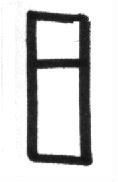
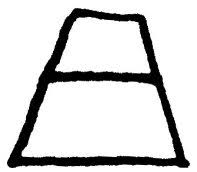


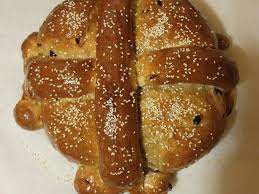


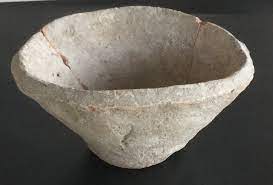


 – Academic Dictionaries and Encyclopedias Derivatives: γαργαρίς θόρυβος H., γαργαίρω ` swarm’ (Com., Sophr.); γαργάρται λίθοι αὑτοφυεῖς (H.)? With another vowel γέργερα πολλά .. Rom: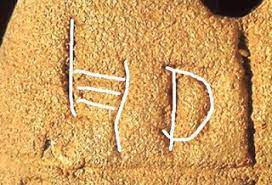


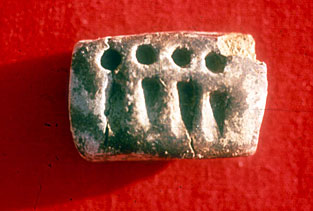


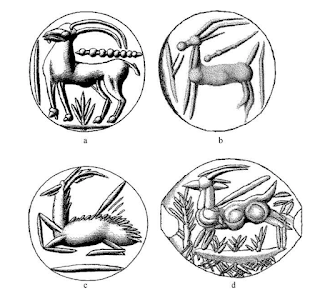


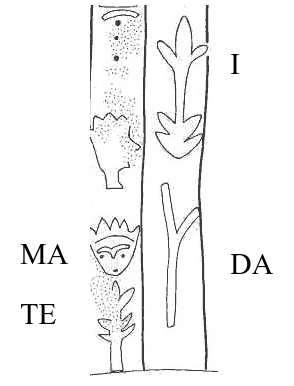


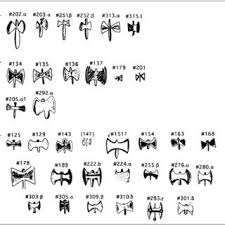
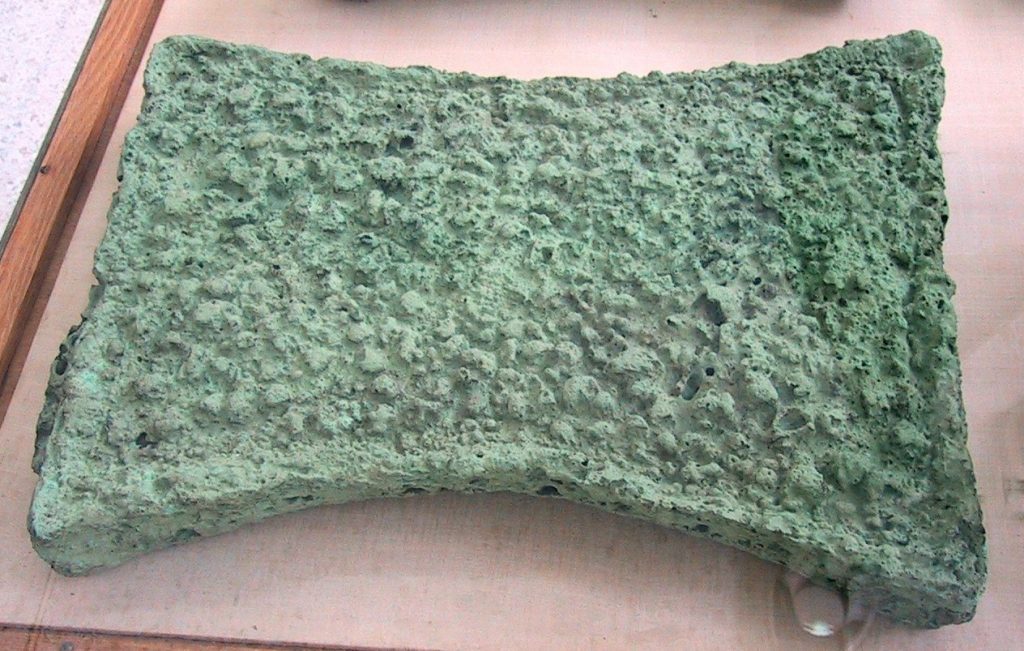


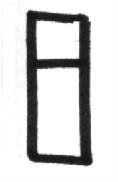


 v., to know; to understand; to inform, teach (in marû reduplicated form); to learn from someone (with -da-); to recognize someone (with -da-); to be experienced, qualified