Archive for the ‘Tartaria tablets’ Category

Mântuirea (2), o preocupare majora a speciei umane.Etimologie.

November 25, 2020

!! Demonstratie ca aceste cuvinte, atat cel din limba romana cat si echivalentul sau in cea maghiara provin dintr-un dialect continuator al limbii ilire, din vechea limba sarbo-croata dialectul kajkavian. Dupa unii aceste vechi dialecte kajkavian si shtokavian ar fi chiar limba ilira. Iar lingvistii germani spun ca limba ilira sta la baza intregii familii a limbilor Indo-Europene.

Ne punem problema nu numai a ceea ce se intampla cu noi ca indivizi in viitor, ci chiar mai mult cu omenirea ca forma de viata si specie. Vom muri ca indivizi, iar specia candva va disparea in neant pentru totdeauna? Va trebui sa ne gasim o noua casa in cosmos? Dar individului neajutorat in ultima instanta, care ii va fi casa sau salasul ? Aceasta e problema a ceea ce se intampla cu omul dupa moarte.Ca orice organism viu este supus descompunerii au constatat oamenii probabil din paleolitic (cel putin).Dar sa fie corpul supus descompunerii, invadat de viermi este o situatie cam dezagreabila si pentru unii inacceptabila.Cat despre suflet este si mai complicat. Daca in trecut se suspecta existenta unei entitati pereche de natura nedetectabila direct, inefabil-eterica, epoca si cercetarea moderna ruineaza existenta unui suflet sub aceasta forma. Mai exact ceea ce are un oarecare presupus corespondent corpul viu, sufletul, acesta dispare dupa moarte. Din zorile speciei omenesti s-a pus aceasta problema. Au privit omul ca intreg sau compus din aceste doua entitati, cu abordari diferite.Sumerienii au fost mai practici, cu mai mult “bun simt”, au fost mai putin orgoliosi si nu au dat o importanta exagerata, peste limitele reale. Isi inchipuiau ca acolo unde au auns sub pamant isi continua o existenta anosta intr-o lume gri si se granesc cu firimitur.Atat si nimic mai mult.Asta in conditiile in care dadeau mare importanta religiei avand multe feluri de “preoti”.De la egipteni incoace, odata cu dezvoltarea complexitatii vietii sociale si a religiilor, problemei a inceput sa-i fie mult mai multa atentie. Egiptenii sperau la nemurirea omului ca intreg (cu trup si suflet) in alt spatiu.Si din orgoliual speciei umane au revendicat ca loc cosmosul , constelatia Orion. Sub o forma sau alta in diferite religii a fost tratata asemanator problema momentului limita a trecerii in lumea mortilor.Crestinismul a pus in sarcina zeitatii supreme decizia de a obtine acordul suprem si de a trece in lumea buna,cer sau rai.Si la egipteni era cantarit sufletul omului cu o balanta.In crestinism problema este una pe plan sufletesc si mental. Este vorba de a decizia celui aflat in pragul mortii de a cere aprobarea trecerii in rai, dar si a zeitatii de a o da sau nu.Pe masura ce religiile au evoluat cererea a fost la inceput mai modesta de a fi indepartat de rau, pana la cererea expresa si imperativa incuviintare si de a primi incuviintarea (era sa zic “stampila”) pentru rai.Prin termeni ca “rascumparare” (a pacatelor, formala in esenta, (nu la propriu materiala), cererea salvarii si a eliberarii. De aceea termenul crestin pentru mantuire nu mai are un singur inteles, ci unul complex.

Din https://dexonline.ro/definitie/m%C3%A2ntui MÂNTUÍ, (1, 4mấntui, (2, 3mântuiesc, vb. IV. Tranz. și refl. 1. (Pop.) A (se) salva (dintr-o primejdie, din robie, de la moarte etc.). 2. (Pop.) A (se) vindeca (de o boală). 3. (În religia creștină) A (se) curăța de păcate; a (se) izbăvi, a (se) salva4. (Pop.) A (se) termina, a (se) isprăvi, a (se) a sfârși. ◊ Expr. (Refl.) A se mântui cu… = a muri. [Prez. ind. și: (2, 3mấntui] – Din magh. menteni. >> Desigur, in Europa moderna din care facem parte gasim :

Din http://www.krassotkin.ru/sites/prayer.su/english/eastern-orthodox/?fbclid=IwAR1CW-yj9hLnUMwG3JkkZ1n1e4TE8Oj0fqiRo9Bdb3h_WyXDSXJ9E7LvFBI Our Father “….and lead us not into temptation, but deliver=”elibera, izbavi” us from the evil one.”

Sau, din https://en.wikipedia.org/wiki/Lord%27s_Prayer

Matthew 6:9-13 (NRSV)And do not bring us to the time of trial, [Or us into temptation] but rescue us from the evil one. [Or from evil]Luke 11:2-4 (NRSV)And do not bring us to the time of trial. [Or us into temptation. Other ancient authorities add but rescue us from the evil one (or from evil)]
Or: From
The Lord’s Prayer
www.spuc.org.au › wp-content › uploads › Save-us-in-…

PDF
The Lord’s Prayer. Study 5. Save us in the time of trial. The words of this petition, which are perhaps best translated from the original Greek as “do
not pass us through the trial”, has replaced the old translation we knew as “not lead us not into
temptation”. Apoi, Our Father http://www.krassotkin.ru/sites/prayer.su/english/v1970/?fbclid=IwAR34ZalxjqbkrMIat4FQonuB4VFCoJpiETXYrqqg59H_ViZidAzA5D9_L80 Do not lead us into trial,
but save us from evil.

Nota-bene .In literatura de specialitate apar inca mult mai multe alte sensuri ! …pe undeva este nefiresc ca un cuvant sa aiba simultan mai mult de sa zicem 5 sensuri. .Sa pornim de undeva.Din timpuri extrem de recente: ~~~~~~~~~~~~~~~~~~~~~~~~~~~~~~~~~~~~~~~~~~~~~~

Din RUGĂCIUNEA DOMNEASCĂ „Tatăl Nostru” http://www.mitropolia-ro.de/index.php/ro/catehizare/801-rugaciunea-domneasca Text din: Învățătură de credință creștină ortodoxă (Catehism ortodox), București 1952, reed. Iași, 1996 “Care este cel mai desăvârşit model de rugăciune? Modelul cel mai desăvârşit de rugăciune este Rugăciunea Domnească, adică:

„Tatăl nostru, Care eşti în ceruri, Sfinţească-se numele Tău; Vie împărăţia Ta; Facă-se voia Ta, precum în cer şi pe pământ. Pâinea noastră cea spre fiinţă dă-ne-o nouă astăzi; Şi ne iartă nouă greşelile noastre, precum şi noi iertăm greşiţilor noştri; și nu ne duce pe noi în ispită, ci ne izbăveşte de cel rău. Că a Ta este împărăţia şi puterea şi slava în veci. Amin!” (Matei 6, 9-13).”

Din Ci ne mântuiește de cel rău! https://parohiasfanton.ro/sermon/ci-ne-mantuieste-de-cel-rau/ By Pr. Ciprian AndreiVerset : Mt 6, 13bThis text will be replaced with audio if available. Papa Francisc: Audienţa generală de miercuri, 15 mai 2019 Cateheze despre “Tatăl nostru” – 15: Ci ne mântuieşte de cel rău “Iubiţi fraţi şi surori, bună ziua!Iată-ne în sfârşit la a şaptea cerere din “Tatăl nostru”: “Ci ne mântuieşte de cel rău” (Mt 6,13b). Cu această expresie, cel care se roagă nu cere numai să nu fie abandonat în timpul ispitei, ci imploră şi să fie eliberat de rău. Verbul grec original este foarte puternic: evocă prezenţa celui rău care tinde să ne prindă şi să ne muşte (cf. 1Pt 5,8) şi de care se cere de la Dumnezeu eliberarea. Apostolul Petru spune şi că cel rău, diavolul, este în jurul nostru ca un leu furios, pentru a ne devora, iar noi îi cerem lui Dumnezeu să ne elibereze.

Cu această dublă implorare: “nu ne abandona” şi “ne mântuieşte”, reiese o caracteristică esenţială a rugăciunii creştine. Isus îi învaţă pe prietenii săi să pună invocarea Tatălui înainte de toate, chiar şi în special în momentele în care cel rău îşi face simţită prezenţa sa ameninţătoare. De fapt, rugăciunea creştină nu închide ochii cu privire la viaţă. Este o rugăciune filială şi nu o rugăciune infantilă. Nu este aşa de infatuată de paternitatea lui Dumnezeu încât să uite că drumul omului este plin de dificultăţi. Dacă n-ar fi ultimele versete din “Tatăl nostru” cum ar putea să se roage păcătoşii, cei persecutaţi, cei disperaţi, muribunzii? Ultima cerere este tocmai cerere a noastră când vom fi în limită, mereu.

Există un rău în viaţa noastră, care este o prezenţă incontestabilă. Cărţile de istorie sunt catalogul dezolant a cât de mult existenţa noastră în această lume a fost o aventură adesea falimentară. Există un rău misterios, care cu siguranţă nu este operă a lui Dumnezeu dar care pătrunde în tăcere printre pliurile istoriei. În tăcere ca şarpele care poartă veninul în tăcere. În unele momente pare să înfigă: în anumite zile prezenţa sa pare chiar mai clară decât aceea a milostivirii lui Dumnezeu.

Cel care se roagă nu este orb şi vede clar în faţa ochilor acest rău aşa de deranjant şi astfel în contradicţie cu însuşi misterul lui Dumnezeu. Îl observă în natură, în istorie, chiar în însăşi inima sa. Pentru că nu există nimeni în mijlocul nostru care să poată spune că este scutit de rău, sau că nu este cel puţin ispitit de rău. Noi toţi ştim ce este răul; noi toţi ştim ce este ispita; noi toţi am experimentat pe pielea noastră ispita, de oricare păcat. Însă ispititorul care ne mişcă şi ne împinge la rău, spunându-ne: “Fă asta, gândeşte asta, mergi pe drumul acela”.

Ultimul strigăt din “Tatăl nostru” este năpustit împotriva acestui rău “cu margini largi”, care ţine sub umbrela sa experienţele cele mai diferite: durerile omului, durerea nevinovată, sclavia, instrumentalizarea celuilalt, plânsul copiilor nevinovaţi. Toate aceste evenimente protestează în inima omului şi devin glas în ultimul cuvânt al rugăciunii lui Isus.

Chiar în relatările Pătimirii unele expresii din “Tatăl nostru” găsesc ecoul lor cel mai impresionant. Spune Isus: “Abbá, Tată! Pentru tine totul este posibil. Îndepărtează de la mine potirul acesta! Însă nu ceea ce vreau eu, ci ceea ce vrei tu” (Mc 14,36). Isus experimentează în întregime împunsătura răului. Nu numai moartea, ci moartea pe cruce. Nu numai singurătatea, ci şi dispreţul, umilirea. Nu numai duşmănia, ci şi cruzimea, îndârjirea împotriva lui. Iată ce este omul: o fiinţă menită pentru viaţă, care visează iubirea şi binele, dar care se expune încontinuu la cel rău pe sine însuşi şi pe semenii săi, până acolo încât putem să fim tentaţi să disperăm de om.

Iubiţi fraţi şi surori, astfel “Tatăl nostru” se aseamănă cu o simfonie care cere să se împlinească în fiecare dintre noi. Creştinul ştie cât de subjugantă este puterea răului şi în acelaşi timp trăieşte experienţa a cât de mult Isus, care n-a cedat niciodată linguşirilor sale, este de partea noastră şi vine în ajutorul nostru.

Astfel rugăciunea lui Isus ne lasă cea mai preţioasă dintre moşteniri: prezenţa Fiului lui Dumnezeu care ne-a eliberat de rău, luptând pentru a-l converti. În ora luptei finale, lui Petru îi spune să repună sabia în teacă, tâlharului căit îi asigură paradisul, tuturor oamenilor care erau în jur, inconştienţi de tragedia care se consuma, oferă un cuvânt de pace: “Tată, iartă-i pentru că nu ştiu ce fac” (Lc 23,34).

Din iertarea lui Isus pe cruce izvorăşte pacea, adevărata pace vine de la cruce: este dar al Celui Înviat, un dar pe care ni-l dă Isus. Gândiţi-vă că primul salut al lui Isus înviat este “pace vouă”, pace sufletelor voastre, inimilor voastre, vieţilor voastre. Domnul ne dă pacea, ne dă iertarea, dar noi trebuie să cerem: “mântuieşte-ne de cel rău”, pentru a nu cădea în rău. Aceasta este speranţa noastră, forţa pe care ne-o dă Isus înviat, care este aici, în mijlocul nostru: este aici. Este aici cu acea forţă pe care ne-o dă pentru a merge înainte şi ne promite să ne mântuiască de cel rău.” Franciscus Traducere de pr. Mihai Pătraşcu

De ce in varianta moderna este “izbaveste” si in altele “mantuieste” !? Probabil pentru ca limba romana dupa ce initial a fost o limba din subfamilia celtica “kentum” a familiei Indo-europene, sub influenta puternica slava a devanit in mare masura o limba balto-slavica, “satem

Un loc in care puteti gasi zeci de variante ale acestei rugaciuni, majoritatea reale dar si unele create de lingvist cu caracter didactic este : Atta unsar http://www.krassotkin.ru/sites/prayer.su/gothic/image/?fbclid=IwAR2IhJ5YMKMLceeSAuHrYbw-YF_70hrleRPoXWiy-xJW9R-TiMW29jES058

Exemple: Aramaic Jewish (Talmidi Jews transliteration, translation english): Abbun (Our Father) And do not bring us to trial, Rather deliver us from evil.

Ελληνικά: Πάτερ ἡμῶν ♦ Ελληνικά (audio, mp3, Matthew 6 with Πάτερ ἡμῶν): Πάτερ ἡμῶν ” καὶ μὴ εἰσενέγκῃς ἡμᾶς εἰς πειρασμόν,
ἀλλὰ ρῦσαι ἡμᾶς ἀπὸ τοῦ πονηροῦ.”

Germana comuna http://www.krassotkin.ru/sites/prayer.su/alemannisch/common/ Un fiehr uns nét én d’Versüechung, àwer erlees uns vom Beese.

Germana 1980 http://www.krassotkin.ru/sites/prayer.su/german/v1980/ Und führe uns nicht in Versuchung, sondern rette uns vor dem Bösen

Français (La plus ancienne traduction connue en français – XIIe siècle): Li nostre Perre E ne nus meines en tenteisun, meis delivre nus de mal.
Issi seit.

Français (Assemblée des évêques orthodoxes de France) “et ne nous laisse pas entrer dans l’épreuve, mais délivre-nous du Malin.”

Armâneashti: Tată a nostru ♦  http://www.krassotkin.ru/sites/prayer.su/arumanian/common/ Shi nu nă du pri noi la cârtire, ma nă aveagli di atselu arău.

Bulgara Български: Отче наш ♦ Български (v2) и не ни въвеждай в изкушение,ала избави ни от Лукавия.

Sarba http://www.krassotkin.ru/sites/prayer.su/serbian/v2/ И не уведи нас у искушење,
него нас избави од Злога.

Aromana http://www.krassotkin.ru/sites/prayer.su/arumanian/common/Aromână:  Tată a nostru  Shi nu nă du pri noi la cârtire,
ma nă aveagli di atselu arău.

Istro-Romana http://www.krassotkin.ru/sites/prayer.su/istro-romanian/common/ Neca nu na tu vezi en napastovanie,
neca na zbăveşte de zvaca slabe.

Magyar: Miatyánk ♦ Magyar (1997): Mi Atyánk http://www.krassotkin.ru/sites/prayer.su/hungarian/common/ És ne vígy minket a kísértésbe,de szabadíts meg a gonosztól.

Portugheza http://www.krassotkin.ru/sites/prayer.su/portuguese/portugal/ Não nos deixeis cair em tentação,Mas livrai-nos do mal

Incaodata vedem ca aceasta ultima rugaminte din rugaciune incearca sa cuprinda mai multe aspecte legate de indepartarea raului, iertarea de pacate-salvare-eliberare, viata vesnica, dupa cum se vede chiar in cuvintele folosite.

Engleza https://context.reverso.net/translation/english-romanian/redemption REDEMPTION: răscumpărare-mântuire-izbăvire-rambursare-salvare-iertare == =================================

In ultima forma a rugaciunii se vede influenta slava: https://en.wiktionary.org/wiki/izbaviti IZBAVITI (sarbo-croata):”eliberare

Din https://www.activenews.ro/prima-pagina/Care-este-adevarul-despre-Tatal-Nostru-in-limba-celta-97625?fbclid=IwAR2cWhl6zL3yWLAmQkHx7qM5a8nk5-cd2kEIs1YMbdmI1uEPn4R1-bxpTyQ << Iată cum sună cea mai veche versiune în română a rugăciunii Tată nostru (Tetraevanghelul de la Sibiu, 1551-1553), cea mai veche tiparitură în limba română păstrată până în zilele noastre, arată Cezar Bălășoiu.

Tată nostru cine eşti în cer, svinţiască-se numele tău
şă se vie împaraţia ta şă se fie voia ta cum în cer aşa şă pre pomănt.
Pita nostra saţiosa dă-ne astădz şă ne iartă noo datoriele nostre
cum iartăm şă noi datornicilor noştri. Şă nu ne du în ispita,
însa izbaveaşte-ne de reu.Că a ta iaste împaraţia şă putere şă slava în vecie, amin.

Pornind de la materiale modeste, româna a ajuns la rezultate spectaculoase. Un reputat romanist, Alf Lombard, spunea că, dacă ansamblul limbilor neoromanice ar putea fi comparat cu un vehicul, portugheza, spaniola și catalana ar fi prima roată a acestuia, franceza și occitana, a doua, italiana cu dialectele ei și sarda, a treia. Ei bine, spunea Lombard, româna este cea de-a patra roată a căruței, fără de care, pentru un romanist, întregul angrenaj ar fi nearmonios, instabil și mult mai greu de înțeles”. >>

Din Intre mântuire și salvare https://anarchelariu.wordpress.com/?fbclid=IwAR0ab-0LpO6FXftnr72jsR0gLPWvbkSX1t7fGF5UYIMhTsfAz1mwWberix4 Pentru a clarifica și mai mult istoria acestui cuvânt în limba română putem consulta Dictionarium Ungaricum per Albertum Molnar publicat în 1574, în care găsim că latinescul Salvátor este tradus în maghiară prin “üdvőzitó ‘salvare, pocăință’ în religie ‘Mântuitor’; și megtarto ‘păstra, reține’, dar nu am putut găsi cuvântul menteni; iar latinescul salvus, a, um este tradus în maghiară cu egesseges (?). Dacă luăm în considerație faptul că acest Dictionarium Ungaricum a fost publicat în 1574, perioadă în care primele texte bisericești în limba română apăreau, și în care cuvântul mântuire este deja present, atestările lingvistice din Dictionarium capătă o foarte mare importanță pentru etimologia cuvântului românesc. Semnificativ este faptul că în aceeași periodă găsim în literatura hagiographică românească cuvântul mântuire cu înțelesul pe care îl are și astăzi. Iată câteva exemple:
Psaltirea Scheiană, manuscris datat din 1573-1578 (1482-85):
Psalm II. II; III Căntecul lui David căndu fugiǐa de fața lui Avesalom fiǐul său, 3. Mulți grâirâ sufletului mieu/Nu e măntuiré dela Dumnedzăul lui… [Nu ǐaste spaseniǐa lui] 9. A Domnului iaste măntuirǐa, și spre oamenii tăi blagoslovenie ta. [spăsește-mă] (Corecturile în paranteze mari sunt cele din Psaltirea lui Coresi tipărită în 1577, ceea ce vădește cunoașterea formei slave spasenie care a rămas în limba rusă cu sensul de mântuire.) Etimologia acestui cuvânt continuă să fie controversată. Dicționarele românești DEX, etc., consideră cuvântul ‘mântuire’ a fi un împrumut din limba maghiară și oferă ca sursă forma menteni ‘a (se) elibera, a (se) salva, a ieși dintr-un impas’. Însă consultând dicționarul etimologic maghiar al Academiei Ungare (1970) nu găsim forma infinitivală menteni ca atare, ci verbul ment cu sensul ‘a elibera, păzi, scoate, salva, ieși, fugi’, prima atestare fiind datată la aprox. 1195 în cântecul funerar Halotti beszéd és könyörgés în următorul fragment:
Scerelmes bratym uimagg(om)uc ez ſcegin ember lilki ert. kit vr ez nopun ez homuſ világ timnucebelevl mente.
Acest text este scris într-o limbă arhaică, greu de descifrat, care are mai multe traduceri/interpretări:
Szerelmes brátim! Vimádjomuk Frate dragă! Vimádjomuk (nu e în dict)
ez szëgín embër lilkíért, Acesta szëgín (szegyen?-rușine) lumea/oamenii lilkíért,
kit Úr ez napon ez hamus világ Cine/cui? Dumnezeu (astă-zi) cenușa acestei lumi
timnücë belől menté, timnücë (?) dar înăuntru am intrat,
Sau:
‘Dragostea de prieteni! Ei iubesc viața sărmanului om, pe care Dumnezeu ziua asta este sa iasă din falsa pușcărie’,
Sau:
‘Bratt drag! Vimádjomuk (?) acest szëgín (?) lume lilkíért (?), pe care ziua Domnului este cenușa lumii inăuntru am intrat’.În aceste exemple sensul cuvântului maghiar ment(e) este de ‘intrare, scoatere, ieșire’. Conform dicționarului menționat cuvântul este vechi, având originea în rădăcina men-, menedek ‘refugiu, adăpost’, de unde probabil sensul ulterior de ‘intrare, adăpostire, scăpare’. Această rădăcină are derivatele ment1 ‘scuză, iertare, salvare’ și ment2 ‘intra’; alte derivate sunt și formele megmentett ‘salvate’, megmenekült ‘scăpate’, găsite într-un text de la 1508, și mened, menedikeny ‘scăpat’; menthető ‘puteți salva’; mentségre ‘scuza’; menekedik ‘va scăpa’ datate din 1666; la 1830 apare mentesiteni ‘scutit’, etc. Cu sensul de ‘eliberare’ găsim exemplelele: mentes ‘eliberat din’, mentés, mentetocare poate fi scăpat, scăpare’. …… legături de înțeles care ne pot determina să presupunem existența unei forme *mendh, manth în limba vorbită pe teritoriul dacic, cu sensul de ‘înțelept/înțelepciune, învăța/învățător’.>>

Din Tatăl nostru | BDD-A1787 | Diacronia http://www.diacronia.ro › TATĂL NOSTRU* ALEXANDRU NICULESCU

<<Iată însă că în 1593–1594, în altă parte a teritoriului românesc, în Moldova, apare un Tatăl nostru scris chiar cu litere latine. Este vorba de un text pe care un logofăt cultivat, dintr-o familie de boieri, Luca Stroici (se pare educat în şcoli germane), emigrând în Polonia şi împrietenindu-se cu alt nobil, scriitorul, de confesiune calvină, Stanislaw Sarnicki (Sarnicius, 1532–1597), îl oferă acestuia; textul este o versiune manuscrisă a Tatălui nostru (pe care nu o cunoaştem); cunoaştem, în schimb, textul tipărit şi publicat de St. Sarnicki:

Parintele nostru ce iesti in ceriu, swinçaskese numele teu, se vie inpereçia ta, se fie voia ta, komu ie in ceru assa ssi pre pemintu. Penia noastre seçioase de noai astedei, ssi iarte noae detoriile noastre, cum ssi noi lesem detorniczitor [sic!] nosstri. Ssi nu aducze pre noi in ispite ce no mentuiaste de fitlanul”. (Heinimann 1988;text corectat după Niculescu, Dimitrescu 1970)

…În al doilea rând, termenul, general în absolut toate versiunile transilvănene, izbăveşte (de origine slavă) este înlocuit cu
mântuieşte (de origine maghiară, existent şi în ucraineană). Această schimbare>> eugenrau: “mentuiaste” !! cu mE ! Imagine, din https://adevarul.ro/locale/focsani/cine-introdus-alfabetul-latin-tara-noastra-rugaciunea-tatal-nostru-text-scris-limba-romana-litere-latine-1_5583e468cfbe376e3571a25d/index.html

Cine a introdus alfabetul latin în ţara noastră. Rugăciunea „Tatăl nostru“, primul text scris în limba română cu litere latine

Am incercat sa gasesc cum a aparut,direct de la noi!? sau din alta parte cuvantul a mentui,mentuia, mantui >>(mantuire,mantuitor)

Din Forschungen zur Kaiser- und papstgeschichte des Mittelalters
beihefte zu J. F. Böhmer, regesta imperii herausgegeben von der
österreichischen akademie der wissenschaften– regesta imperii –
und der deutschen kommission für die bearbeitung der
regesta imperii bei der akademie der wissenschaften und der
literatur · mainz file:///C:/Users/User/Downloads/Die_Sizilischen_Goldenen_Bullen_von_1212.pdf

<<35 Cronica Reinhardsbrunnensis, in: MGH SS XXX.1, 566: … Et Odackarus nimirum iure suo ad resistendum Philippo advenerat, quoniamquidem regnum Bohemie Philippus vendicare non mentuit, et in argumentum desolacionis lantgravii, ne sibi Odackarus in posterum esset auxilio, suis patruelibus, Dypoldi videlicet filii, regalia cum suis contentis delegare curavit … ; Arnoldi Chronica Slavorum VI.5, in: MGH SRG [14.], 223: … Unde commotus frater repudiate, Theodoricus marchio Misnensis, una cum duce Bernardo, qui Philippi regis familiares fuerunt, hoc apud ipsum obtinuerunt, et regnum sive ducatum Boemie Odackero adultero auferret et Theobaldum puerum, qui tunc Magdeburch studebat, Theobaldi filium, transferet … Über die Vertreibung Diepolds III. und seine Belehnung berichtet nur eine böhmische
Quelle, das späte Prizibiconis de Radenin dicti Pulkavae Chronicon Bohemiae 67, in: FRB V, 120†.>>

“Statuta Confiniariorum Varasdinensium” iz 1732. godine:
latinski i kajkavski tekst Zlatko Kudelić Hrvatski institut za povijesty
The author analyzes text of Statutes of Vlachs published for frontiersmen/Grenzers of Varaždin Generalate in in the 1732 in latin and kajkavian variant of croatian language and compares this document with the older one, the Vlach Statutes / Statuta Valachorum from 1630. year. The aim of this new document was to redefined obligations and rights of frontiersmen in Varaždin Generalate after a long period of social and religious disturbances during first three decades of 18. century. Author
points out that the appearance of this document must be considered in context of military reforms in Varaždin Generalate made by Count Caspar Ferdinand von Cordua. He reorganized military structure of Generalate establishing new military units, but reducing the pay of frontiersmen and raising of pay for officers was not acceptable for frontiersmen. Styrian estates although opposed his reforms warning Vienna court that financing of Varasdin Generalate under this circumstances was useless and that well established and equipped frontiersmen army cam also represent potential threat for Monarchy. As for a new Vlach Statutes, they like the old Statuta form 17th century had not consider religious and ecclesiastical issues, but restricted frontiersmens right of free disposition of posessions and forbade buying out military service. Most important change was nomination of military judges (auditors) in seat of every of four captaincies, which have accomplished the duties of previouse supreme judge and eight assessors. Auditors solved different complaints of frontiersmen, including those against military captains (vojvode), and vojvode have got the possibility of making final decisions in quarrels which can be solved without official judicial procedure. Although Vienna Court supported Cordua’s plans and promulgated them in 1733 they have been accepted only partialy, but reforms caused disturbancies and resistence of frontiersmen and new Statuta for frontiersmen of Varasdin Generalate were not officialy proclaimed because authorities wanted to keep peace in Military Frontier.

Uvod
Među najvažnije isprave za povijest Hrvatsko-slavonske vojne krajine (dalje: Krajine) svakako spadaju takozvani “Statuta Valachorum” (Vlaški zakoni), dokument objavljen 1630. godine kojim su za vladavine Ferdinanda II. uređena prava i dužnosti krajišnika Hrvatsko-slavonske vojne krajine. Ovu ispravu, koju su potvrđivali Ferdinand III. godine 1642., Leopold I. godine 1659. i Karlo VI. godine 1717., povjesničari su navodili kao temeljnu ispravu koja je do Hildburghausenovih reformi 1737. godine regulirala život krajišnika, ali o navodnome postojanju teksta “Statuta Valachorum” iz 1667. godine mišljenja se razilaze otkako je Fedor Moačanin napomenuo da te godine nije objavljen niti je stupio na snagu novi vlaški zakon, odnosno da nisu postojala nova “Statuta Valachorum” i da bi ih trebalo spominjati samo ako će biti pronađeno novo arhivsko gradivo koje bi ih potvrdilo. Činjenica jest da su krajiški nemiri 1658. godine i Osmokruhova buna 1666. godine potaknuli vojne vlasti na određene promjene krajiškoga ustrojstva, pa je samostalno krajiško sudstvo prestalo djelovati ukinućem velikih sudaca čija mjesta više nisu popunjavana, kapetani su preuzeli u praksi sve sudske i upravne funkcije, ali nastojanja krajišnika da se popune mjesta velikih sudaca nisu uspjela iako je ova njihova funkcija spominjana na papiru još u potvrdi “Statuta Valachorum” 1717. godine. Predložene promjene bile su posljedica učestalih nemira među krajiškom populacijom od objavljivanja Vlaških statuta 1630. godine pa do sedamdesetih godina 17. stoljeća i uhićenja marčanskoga unijatskog/grkokatoličkog biskupa Gabrijela Mijakića (biskupovao

  1. – 1670.) tijekom biskupovanja zagrebačkoga biskupa Martina Borkovića
    (1667. – 1687.).
  2. U tome se razdoblju istovremeno s problemom interpretiranja sadržaja krajiških povlastica pojavilo i pitanje imenovanja odgovarajućega unijatskog biskupa kojega neće samostalno birati krajišnici na svojim skupovima nego bi on bio biran između nekoliko kandidata predloženih vladaru u Beču, što su
  3. krajišnici obiju vjeroispovijesti doživljavali kao kršenje svojih prava. Zagrebački biskupi Benedikt Vinković (biskup 1637. – 1642.) i Petar Petretić (biskup 1648.
  4. – 1667.) u izvješćima upućivanima Bečkome dvoru i Rimskoj kuriji prozivali su pravoslavne krajišnike (Vlahe) za različita kršenja odredbi Statuta Valachorum iz 1630. godine, a marčanske (“vlaške”) biskupe isticali kao podstrekače krajiških nemira samovoljnim tumačenjima krajiških povlastica i kao prividne unijate koji su, iako u Beču imenovani unijatskim biskupima, podržavali pravoslavlje na krajiškome području i stvarnim crkvenim poglavarima držali pećke patrijarhe, kojima su plaćali i crkveni porez preko vizitatora upućuvanih iz “Turske” među krajišnike. Iako su Vinković i Petretić najprihvatljivijim rješenjem ovoga problema smatrali ukidanje “vlaške” (Marčanske) biskupije, čime bi krajišnici izgubili utjecajne zagovornike na Bečkome dvoru, bili su svjesni da Beč to nikako neće ….

PRILOG
/45r/Nos CAROLUS Divina favente clementia electus Romanorum Imperator
semper augustus,
Germaniae, Hispaniarum, Hungariae, Bohemiae, Dalmatiae,Croatiae, Sclavoniae, et Serviae etc: Rex, archi Dux Austriae, Dux Burgundiae,Styriae, Carinthiae, Carnioliae, ac Wurtembergae, Superioris, ac Inferioris Silesiae, Marchio Moraviae, Superioris et Inferioris Lusatiae, Comes Habspurgi, Tyrolis, et Goritiae etc.etc: Caeteras inter Reipublicae curas in ea praecipue studia intenti, ut universis et singulis Ditionum Imperio Nostro subjectarum Incolis leges publicae Gentium, Provinciarumque quieti proficuae sanciantur, capita quaedam
communem, majoremque ad tranquillitatem Confiniariorum Varasdinensium conferentia hacce Tabula mandare decrevimus: Et quamvis Populo confiniario ibidem commoranti Nostris a Deces/45v/soribus jam dudum statutis prospectum fuerat certis a Nobis quoque superioribus annis confirmatis, cum tamen à nupera ad disquisitionem rerum Generalatum Varasdinensem concernentium delegata
commissione compertum, Nobisque inter alia relatum erat, nonnullas praefato-
rum Statutorum sanctiones tum et abusu corruptas, tum et temporum vicissitudine quasi penitus abolitas, vel caeteroquin multifarie neglectas, aut indebite hactenus explicatas, nec non ab illorum antiquorum statutorum usum colonos inter
Valachicos, et Croaticos in memorato confinio mixtim cohabitantes ….

-….Statuta Confiniariorum Varasdinensium, seu Populi militaris Savum intra et Dra-
vum habitantis. …De Magistratibus…De Judiciis: ….De Rerum Dominio …De delictis privatis et publicis….De Re Militari….

Articulus undecimus.
Quocunque autem tempore, quod Deus clementer avertat, quidam impetus aut suspicio majoris momenti orietur, ex omnibus omnino capitaneatibus quoquot inveniuntur confiniarii, immo ipsa juventus decimum octavum annum excedens ad Turcas et hostes quoscunque conjunctis viribûs omni ex parte etiam cum vitae discrimine propulsandos semper sint parati, et militaribûs signis ad hoc per generalem datis excitati cum omni bellico apparatu eo, quem generalis….

Old Croatian/kajkavian : Od Duguvainia Voinichkoga.

Articulus Jedenaiszti.
Kadaguder bisze pako Sto Bog mentui kakova voiszka podigla Zevszeh Capitanij, vszi krainschani da pache y Dechaki oszemnaiszt Let imajuchi na odbiiainie turchina, y koiegagot Drugoga nepriatela vszi zakupa Szlosno zevszeh Sztrani, y iz pogibelium Sivleinia Szuoga Szuprot takovim nepriatelom vszigdar gotovi biti moraju y kadaimsze Voiachko znameinie po Generalu na takov poszel da, da
vszi zevszem orusiem, koimssze od Generala….>>

Dictionar, ili rechi szlovenszke zvexega ukup zebranc, u red …books.google.ro › books· Translate this page https://books.google.ro/books?id=eNRUAAAAcAAJ&pg=PA59&lpg=PA59&dq=bog+mentui+deus+avertat&source=bl&ots=4iaO-qt3gh&sig=ACfU3U2Sa6xOEN1P3Lu–zrR8QlFoZy5qw&hl=en&sa=X&ved=2ahUKEwjZ8__0zZ7tAhU1i8MKHXNHDuEQ6AEwAHoECAEQAg#v=onepage&q=bog%20mentui%20deus%20avertat&f=false
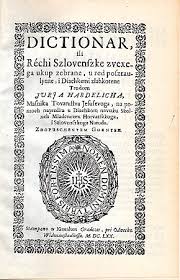
Mali Neboder :: DICTIONAR ILI RECHI SZLOVENSZKE

Juraj Habdelić: Dictionar ili réchi szlovenszke… – Institut za …ihjj.hr › iz-povijesti › juraj-habdelic-…Juraj Habdelić: Dictionar ili réchi szlovenszke… Juraj Habdelić (Staro Čiče, 1609. – Zagreb 1678.

Menten: Chlamys(dis)=vestis superior Mentui Bog . Avertat Deus . Mentuemsze naszkorom . Brevi liber ero . Liberabe me , Expediam mė , Liberabor . Merczina . Cadaver , ris , n . Merczyariin .Georgius Habdelich · 1670

Din https://it.wikipedia.org/wiki/Quod_Deus_avertat Quod Deus avertat este o expresie latină care tradusă în italiană înseamnă „ Doamne ferește ”. [1] Este o expresie a conjurației folosită atât în ​​contexte orale, cât și în contexte scrise.


Illyrisch-deutsches und deutsch-illyrisches Handwörterbuch …books.google.ro › books
· Translate this page Mentuvanje , ja , n . die Befreiung

Eugenrau: mentuvanje (limba ilira):”eliberare

Din Habdelić – browsing https://translate.google.com/translate?hl=en&sl=hr&u=http://crodip.ffzg.hr/pregledavanje.aspx%3Frj%3Dhab%26id%3D3594&prev=search&pto=aue

CroatianLatin  
Menye. Minus. BrowsingPicture
Menyi. Minor, ris, c. nus. n. BrowsingPicture
Menyek. Ruta, æ, f. BrowsingPicture
Menten. Chlamys, dis, f. Superior. BrowsingPicture
Mentenecz. Chlamydula, æ, f. BrowsingPicture
Mentuvanye zverhu cheſza na pízmu. Cautio, onis, f. BrowsingPicture
Mentui God. Avertat God. BrowsingPicture
Mentuemſze naſzkorom. Brevi liber ero. Liberabo me, Expediam me, Liberabor. BrowsingPicture
Merczina. Cadaver, ris, n. BrowsingPicture
Merczvarim. Excarnifico, as, p. BrowsingPicture
Measure. Menſura, æ, f. BrowsingPicture

Asa incat MENTUI vine din limba ilira si inseamna “fereste”; cum limba ilira exista in Europa dinaintea erei noastre, va dati seama ca mentui este atat la originea magh.menteni cat si a rom.mantui.

https://en.wikipedia.org/wiki/Illyrian_languages#Era The Illyrian languages were a group of Indo-European languages that were spoken in the western part of the Balkans in former times by groups identified as IllyriansArdiaeiDelmataePannoniiAutariatesTaulantii (see list of ancient tribes in Illyria). Some sound changes from Proto-Indo-European to Illyrian and other language features are deduced from what remains of the Illyrian languages, but because there are no examples of ancient Illyrian literature surviving (aside from the Messapian writings, if they can be considered Illyrian), it is difficult to clarify its place within the Indo-European language family. Because of the uncertainty, most sources provisionally place Illyrian on its own branch of Indo-European, though its relation to other languages, ancient and modern, continues to be studied.
Era. The Illyrian languages were likely extinct between the 2nd and 6th centuries AD, with the possible exception of the language that developed into Albanian according to the theory of Albanian descent from Illyrian. It has also been posited that Illyrian was preserved and spoken in the countryside, as attested in the 4th-5th century testimonies of St. Jerome.

eugenrau: !? guess ! : Riddle: where lived Panonii !?

mente – Wiktionaryen.wiktionary.org › wiki › mente Latin Mente From Latin mentem, singular accusative of mēns (mind/minte), from Proto-Indo-European *méntis (“thought”).

Asturian mente f (plural mentes) : mind (ability for rational thought)

Italian mente f (plural menti) :mind/minte

Hung. mente Etymology From the men– stem of megy +‎ -te (noun-forming suffix).

  1. (often with -ban/-benleaving from somewhere/a pleca de undeva
  2. (often with -ban/-bengoing somewhere
  3. (rare) the courseprogress of something
  4. the immediate neighborhood of a river, riverbank 
superessivementén
allativementéhez

Derived terms menti Etymology 1 ment (“to save, rescue”) +‎ -i (personal suffix)

Verb menti third-person singular indicative present definite of mentA dokumentumot sablonként menti. ― Saves the document as a template

++++ b y b l i on Bibliograpgy +++

Šarić, Marko. “Inter-confessional Relations and (In)tolerance among the Vlachs (16th-17th Centuries)”. U: Tolerance and Intolerance on the Triplex Confinium.Approching the “Other” on the Borderlands: Eastern Adriatic and beyond 1500-1800., uredili Egidio Ivetić i Drago Roksandić, 181-194. Padova: Cleup, 2007

O AUTORSTVU ANONIMNE PUBLIKACIJE
PRIMJER : MOLITVENIK POBO@NE MOLITVE IZ 1678.
IS ANONYMUOS PUBLICATION THE EQUIVALENT OF UNKNOWN
AUTHORSHIP EXAMPLE : THE POBO@NE MOLITVE PRAYER BOOK, 1678
Anka Ivanjek Nacionalna i sveu~ili{na knji`nica u Zagrebu file:///C:/Users/User/Downloads/11vbh_52_ivanjek.pdf

Summary
Although anonymous publications are normally catalogued according to the rules laid down in librarians’ manuals as well as established practice, occasionally a work we come across requires a different approach. Such an example is the Pobo`ne molitve (Book of Devotional Prayer), written by a woman in the Croatian kajkavian dialect and published anonymously in Vienna in 1678. Reflecting the predicament of a person situated between death and God, this work raises numerous questions regarding its purpose and authorship.The absence of any clues as to the work’s provenance necessitates a close analysis of other kajkavian prayer books and similar works; from the historical background to the activities of the pious fraternities; the surviving fragments of the devotional life of women’s orders in the seventeenth-century Zagreb; and the written archive of Judita Petronila Zrinski, a member of the female order of St Clare of Assisi, also known as the Poor Clares.
Keywords: prayers, anonymuos publications, authorship, Poor Clares, Judita Petronila Zrinski

Usporedba
Tablica 1. Slovopis Pobonih molitvi glas znak primjeri ĕ e Devicze, Meſzecz, Nedelyu, zvezda j i j kai, naidem, tvoiem, ſetui, mentui mojeh, Bosjemi, ſztvorjena, pohajam | gi gy dohagiali, razregiuju megy lj ly li lyudi, Mihaly liucztvo, opraulianie, zapelia, liutoſzti s ſz z ſzuprot, oſztanem, nechiſzta, vuſzta oltarzkom, zkvarenja { ſ ſſ ſiba, ſator, ſkrinya, varaſ duſſu, naſſa, dignuſſi v v vijeni, zs ſ saloszt, podlosna, Boſanszke, ſarkoga

P A N N O N I A https://en.wikipedia.org/wiki/Pannonia#Prior_to_Roman_conquest Prior to Roman conquest

The first inhabitants of this area known to history were the Pannonii (Pannonians), a group of Indo-European tribes akin to Illyrians. From the 4th century BC, it was invaded by various Celtic tribes. Little is known of Pannonia until 35 BC, when its inhabitants, allies of the Dalmatians, were attacked by Augustus, who conquered and occupied Siscia (Sisak). The country was not, however, definitively subdued by the Romans until 9 BC, when it was incorporated into Illyricum, the frontier of which was thus extended as far as the Danube.

Under Roman rule

Seuso and his wife at Lacus Pelso (today Lake Balaton)The Roman empire in the time of Hadrian (ruled 117-138 AD), showing, on the middle Danube river, the imperial provinces of Pannonia Superior and Pannonia Inferior and the 2 legions deployed in each in 125Map showing Constantine I‘s conquests of areas of present-day eastern Hungary, western Romania and northern Serbia, in the first decades of the 4th century .

In AD 6, the Pannonians, with the Dalmatians and other Illyrian tribes, engaged in the so-called Great Illyrian Revolt, and were overcome by Tiberius and Germanicus, after a hard-fought campaign, which lasted for three years. After the rebellion was crushed in AD 9, the province of Illyricum was dissolved, and its lands were divided between the new provinces of Pannonia in the north and Dalmatia in the south. The date of the division is unknown, most certainly after AD 20 but before AD 50. The proximity of dangerous barbarian tribes (QuadiMarcomanni) necessitated the presence of a large number of troops (seven legions in later times), and numerous fortresses were built on the bank of the Danube.

Some time between the years 102 and 107, between the first and second Dacian wars, Trajan divided the province into Pannonia Superior (western part with the capital Carnuntum), and Pannonia Inferior (eastern part with the capitals in Aquincum and Sirmium[13]). According to Ptolemy, these divisions were separated by a line drawn from Arrabona in the north to Servitium in the south; later, the boundary was placed further east. The whole country was sometimes called the Pannonias (Pannoniae).

Pannonia Superior was under the consular legate, who had formerly administered the single province, and had three legions under his control. Pannonia Inferior was at first under a praetorian legate with a single legion as the garrison; after Marcus Aurelius, it was under a consular legate, but still with only one legion. The frontier on the Danube was protected by the establishment of the two colonies Aelia Mursia and Aelia Aquincum by Hadrian.

Under Diocletian, a fourfold division of the country was made:

Diocletian also moved parts of today’s Slovenia out of Pannonia and incorporated them in Noricum. In 324 AD, Constantine I enlarged the borders of Roman Pannonia to the east, annexing the plains of what is now eastern Hungary, northern Serbia and western Romania up to the limes that he created: the Devil’s Dykes.

In the 4th-5th century, one of the dioceses of the Roman Empire was known as the Diocese of Pannonia. It had its capital in Sirmium and included all four provinces that were formed from historical Pannonia, as well as the provinces of DalmatiaNoricum Mediterraneum and Noricum Ripense.

Din dictionar Abanez-Roman, https://ensq.dict.cc/?s=pensive

menduar {adv} pensively meditativ
i/e menduar {adj}pensive meditativ
i/e menduar {adj}thoughtful ganditor

Romanian GAND:”thought”.Etymology

November 22, 2020

Here we have another weirdness, curiosity:

Romanian dictionary DEX https://dexonline.ro/definitie/gand “etimology Din magh. gond.

Where I’ve found different meanings: https://www.academia.edu/12808138/Hungarian_Dictionary ” gond [conf. also romanian gand (thought); Romany gindo]:”care” gondol [from gond Cf.also Rom. gandi; Romany gindil ]:think

https://en.m.wiktionary.org/wiki/gond?fbclid=IwAR1q_tZv_4gvEsxqQQmXr_eoBKIyiCyMUTsoAXskVu-TSfmcEVo9g25GZpA GOND Etymology Of unknown origin. gond (plural gondok) – care Synonyms: figyelemodaadás Nagy gonddal vigyázott a gyerekekre. ― She looked after the children with great  .troubleanxietyproblemSynonyms: bajkellemetlenségproblémabosszúságNem lesz sok gondod velük. ― You won’t have any problems with them

https://www.arcanum.hu/hu/online-kiadvanyok/Lexikonok-a-magyar-nyelv-ertelmezo-szotara-1BE8B/g-2CDF3/gond-2D5FE/?fbclid=IwAR3-Q72kpPBtHAX943YvBhyRN5jkySsmZNZptRFSamsseX-mzx7ZoIz2gwQ

care noun -ot, -ja1.  1. An in-depth examination of a troubling issue; internal anxiety caused by sg, torturous restlessness; contemplation, tearing, worry. Torturous, torturous trouble; problems digest, torment; forehead grooved ® grooved; gets into a lot of trouble; to take care of sy; to put sg in the care of sg; sg causes a lot of trouble for sg; he does n’t take much care of sg: he doesn’t care much about it; to drive away his troubles with sg; hangs your worries at an angle; there is a lot of trouble with sg; ® your head is full of care. ? And then there is an unknown problem overwhelmed… ( Ferenc Kölcsey ) Discover the man’s problems with the beautiful moonlight of your lonely joy! ( Dániel Berzsenyi) Carefully woke up autumn king, Restless had a dream at night. ( Mihály Tompa ) the. What causes trouble (1); affair, clever thing, trouble. Paternal, family, custody, housing, school, national, parental care (s); ® pimple problems; lives without problem (s); the problem of sg: dealing with something (long or permanent), caring (compulsion, need); the problem of purchasing, cooking, household, finding housing, editing, traveling, operating, preparing for the exam; ® dismisses the care of sg; get rid of sg; with trouble and trouble: with many difficulties (struggling);a lot of trouble; this is his main, least concern. I can’t get it, a thousand worries. ( vocabulary ) Even a smaller problem is bigger than…: you care about it the least. Sea is my problem, a thousand my problems. ( vocabulary ) Little child little problem, big child big problem. Trouble aside, boo aside! ? What the trouble is worth on bread and water, Add wine to the brittle cup. ( Mihály Vörösmarty ) Small estate is a small problem, large estate is a big problem. ( Géza Gárdonyi ) I thought that with this innocent lie I would take care of everything. ( Dezső Kosztolányi )We are all with you, who has a dignified concern. ( Attila József ) || b. (Material) trouble: a difficulty of a material nature; for money v. lack of other necessary goods. He lives without problem (s). They are provided with everything, no problem. 2. Careful thoroughness, perseverance, careful attention, devotion. He takes care of it, makes it, does sg; he takes great care of sg. This work requires a lot of care and expertise. ? Not stand up, shame,… Stand up… come on what! … He listens [to the king]… about this, but with careful care He discusses the possibility with Kont. ( János Arany ) . Gondja van v. take care of sy, sg: take care of him, care for; ® covers your concern for sg; I will have trouble with it: a) I will take care of him, I will not forget about him; b) <as a threat> I will take care of your trouble !; what’s my problem v. with him ?: what do I care about him ?; to take care of him, to take sy: he undertakes to care for him; takes care of it; to entrust sy with sy ® sg; care ® wears oneself, sg v.to take care of sy, sg. ? (s): 1. forgetful; forgotten; worries; carefree; caring; worried; 2. bread problem; artificial problem.

www.federatio.org › mi_biblPDF
Etymological Dictionary of Hungarian (EDH) 22 ian. 2007 — << Uralic languages are a member of the Nostratic “language family” -…….. In this present article I have shown, that according to the etymological reconstruction of the Hungarian basic vocabulary by the four standard etymological dictionaries, there isn’t either an Uralic nor a Finno-Ugric language family.

Although von Hevesy compared in his 1932 book all Finno-Ugrian languages with basically the Kherwarian branch of Munda – especially with Santali and Mundari, since there were no other dictionaries at hand in his time -, he strongly focussed in his conclusions that the basic stock of these Finno-Ugrian people were the Hungarians: “That the Magyars might have passed the Caucasus mountains on the way to their new homeland, is very probable, since the route from India led to the shore of the Asowian Sea, where the Magyars are historically remarked first” (1932, p. 337).

100 gond “worry”, gondolni “to think”
ŠL 108/1; 106/11; MSL III 152/367; Gost. 82; Hev. 184
Sum. gun
Sant. gund “to reflect, to think”

…..In the following, I present 577 Hungarian-Sumerian-Turkish etymologies. Yet, in very few cases I have given a word from another member of the Turkic language family, when no Turkish etymology was at
hand (e.g. Chuvash, Chagatai, Yakut, Uighur), in one case (no. 722) >>

Me: The autor is completely out of linguistic field with santaly of fino-ugric family: https://en.wikipedia.org/wiki/Santali_language Santali (Ol Chiki: ᱥᱟᱱᱛᱟᱲᱤ), also known as Santhali, is the most widely spoken language of the Munda subfamily of the Austroasiatic languages,

www.jstor.org › stable
word-structure and etymology (on the ancient layer of words of … – jstor
stems originating in the Uralic, Finno-Ugric and Ugric era, the ancient déri- … ‘miserly’ ; gerjed ‘ to anger’ ; gond ‘care‘ ; gyanú ‘suspiciJSTOR HomeJSTOR is a digital library of academic journals, books, and primary sources.jstor.org

From https://en.wikipedia.org/wiki/Talk%3AHungarian_language <<Important information is also, the Italian substratum and effect on the Romanian language, the Friauli dialect (linguistic continuity between Venetia – Istria – Dalmatia in the Roman times), this can be easily checked (Schuchardt: Der Vocalismus des Vulgarlateins. Leipzig 1868. II. 46)Some Hungarian loanwords from the Romanian language (they are reflecting the case mentioned above):Nému, aldui, aldasiu, fagadasiu, surzuita, birau, biru, kezesiu, oca, uca, orasiu, orasianu, feredeu, hiklenia, valciegu, hasna, keskeneu, mestesiugu, uricasiu, bulciu, gandu, haleu, hotar, holda, ileu, valmasiu, gazdaku, vama, chipu, chipzui, ravasiu, ravasiu de drumu, sáma, dare de sáma, catana, fagadau, lacui, lacasiu, mintui, mintuitor, vileag, siru, urlui, uiag, fel, felu, giulusiu, alénu, bintatuire, untuire, ingaduire, etc.>>

https://clics.clld.org/parameters/2975#1/46/-2

gondolatHungarianUralicɡondolɒtthoughtNorthEuraLex

gind Romanian Indo-European ɡind thought NorthEuraLex

https://www.etymonline.com/word/*ghend- *ghend-

also *ghed-, Proto-Indo-European root meaning “to seize, to take.” 

It forms all or part of: apprehendapprenticeapprisebegetcomprehendcomprehensioncomprehensivecomprisedepredatedepredationempriseenterpriseentrepreneurforgetgetguessimpresariomisprisionospreypredatorypregnableprehensileprehensionpreyprisonprize (n.2) “something taken by force;” pry (v.2) “raise by force;” reprehendreprievereprisalreprisespreesurprise.

to grasp= intelego <>thinking ……………….

I found also http://wrdingham.co.uk/cyba_index/word_index.htm?fbclid=IwAR0o-k1GUmzJoVydaa-ZgrCy6nqYJYxiXPduukfCkQQb0_0eARE-WwgT0oQ

frighten – gand- (Lithuanian) 9529
think gHend a gandi 15489 , 15491
think gHend gandi (Romanian) 14384
think gHend gând (Romanian) 15618 , 15625

others got ahead of me:

Pentru cine este nocivă originea traco-dacă a limbii române …www.cunoastelumea.ro › Istorie Oct 22, 2018 — … românesc a gândi provine din radicalul proto-indoeuropean ghend (a prinde, a înțelege), iar gond-ul maghiar este împrumutat din română.


Theo Vennemann (ed.)-The New Sound of Indo-European …www.scribd.com › document › Theo-Vennemann-ed-The…
Dec 22, 2016 — Studies and Monographs 41 1989 Essays in Proto-IndoEuropean phonological … ?(-h-) *ghend– ‘grasp‘: Lat. praehend, Gk. khandn, Goth. bi- ..

dacia | Vatra Stră-Rumînă | Pagina 7thraxusares.wordpress.com › page În fine, programul Language Rich Europe, condus de British Council, luînd act de … Mulţi ne explică în ziua de azi că Mihai Viteazul nici gând nu avea să … verbul românesc a gândi provine din radicalul proto-indo-european ghend (a prinde,

http://xuanphuong.vn/blog/1335fc-romanian-compared-to-other-romance-languages Gand…Ghend

Albanian word derived from root Ghend: https://www.majstro.com/dictionaries/Albanian-English/gjendem?fbclid=IwAR1aAAd3alqEnyFK_6bUAcYcSgCefvWhOTr2HRsAgy9jPflagspXOtKh2ZU

AlbanianEnglish (translated indirectly)
info gjendeminfo be situated; info lieinfo sit
https://www.majstro.com/Web/Majstro/bdict.php?gebrTaal=eng&bronTaal=alb&doelTaal=eng&teVertalen=gjendje&fbclid=IwAR2R7Hw5Irq6GEnjv_tIQwXkB7XfHRCDLKptAxnXgmFpS7yZoCmdRnvw-PA
AlbanianEnglish (translated indirectly)
info gjendjeinfo circumstances; info conditions; info situationinfo state of affairs

From List of Lithuanian gods and mythological figures – WikiVisuallywikivisually.com › wiki › List_of_Lithuanian_gods_an… Deivės Valdytojos (Lithuanian: Governing Goddesses), were the goddesses who … Gondu – goddess of weddings; Upinė (Upine) – goddess of rivers, springs ..

From https://mail.google.com/mail/u/0/?zx=5altn8zeq797#inbox?projector=1 Stoica, like most Romanian translators of
Shakespeare at that time, proves to be highly influenced by the Latinist trends that advocated the replacement of all words of Slavic origin with words derived from Latin or other Romance language. Thus, he chooses to translate the word friend as amic (Lat. amicus) instead of prieten (Slav. prijatelĩ); love as amor (Lat. amor) instead of iubire (Slav. ljubiti) or dragoste (Slav. dragostĩ); holy as sacră (Lat.sacer) instead of sfântă (Slav. sventŭ); to think or thought as a cugeta or cugetări (Lat. cogitare), instead of a gândi or gânduri (Hung. gond).

!!!!!!!!!!!!!!!!!!!!!!!!!!!!!!!!!!!!!!!!!!!!!! Under work/ To be continued

Romanian verb “a mantui”(1). Etimology

November 14, 2020


All endeavour began after I wached on youtube the speach “Some reflections on stupidity/dumbness” https://www.youtube.com/watch?v=FAbNhfCwLhk of Romanian renown scholar Andrei Plesu.

There he made an asertion that the name of one of the most revered monument of romanians, brand-new biggest Orthodox cathedral, ” Catedrala mantuirii neamului” is composed of three words, none of romanian origin, pointing that neam and mantuire is appearing in DEX (Romanian Explanation/Etymological Dictionary) the words neam and mantuire to have an hungarian origin.

From https://dexonline.ro/definitie/neam “Din magh. nem.” and https://dexonline.ro/definitie/mantuire “Din magh. menteni.

I was quite shocked and realised that it is an unforgivable and inexcusable mistake or lack of minimal linguistis knowledge and due of lasyness of our schollars.

Cause Danubian area is the very place of Old Europe (Vinca-Turdas, Cucuteni cultures).  See https://upload.wikimedia.org/wikipedia/commons/d/db/Indo-European_migrations.gif

Panonian plain and Carpathian Mountains area were inhabited before any of many Asian hordes raided Europe relentless one after another. Inhabited by thraco-dacian related people, and before by ancient populations, pre-Indo-European and after them, true Indo-Europeans. And one of the supposed pool and origin of Indo-European family of languages. https://aleximreh.wordpress.com/2014/10/19/old-europe-the-indoeuropean-homeland-the-aryan-urheimat/

arian home

c. 5000 bc. Homeland:  The Danube River valley (Wallachia and Hungary).

Panonian basin before 200-500 AD. from https://aleximreh.files.wordpress.com/2019/01/i2.jpg

and later (~ 100-200 A.D.) https://aleximreh.files.wordpress.com/2019/01/a2.jpg

Celts on Panonia

celts_in_iii_century_bc

******************************************** Romanian-English        Translation of “mantuire” in English, From https://context.reverso.net/translation/romanian-english/mantuire Noun: “salvation, redemption, saving, revivalism, peace-offerings, soul rapture-ready”

To start quite abruptly, I did not found something better than:

From Mihai-Silviu Chirilă: Mântuirea din DEXmihaisilviuchirila.blogspot.com › ma… „mântuire” provine de la manu („de mână”) și tenere („a ține”). … Interesanta originea neclara sau multipla a cuvantului “mantuire

The Romanian dictionaries consider ‘mântuire’ a loan word from the Hungarian menteni ‘to (get) free, to (self) save, to liberate from a deadlock’. Consulting the Hungarian Etymological Dictionary (1970) we find the verb ment ‘to free, guard, deliver, save, exit, run,’ but not a form menteni as such. This dictionary lists as the first attestation of ment dating around 1195 in the funerary song Halotti beszéd és könyörgés.

I’ve found:- https://translate.google.com/?hl=en#view=home&op=translate&sl=hu&tl=en&text=ment ment=”went” and https://translate.google.com/?hl=en#view=home&op=translate&sl=hu&tl=en&text=megment megment=”savehttps://www.dict.com/angol-magyar/menten mentén:”along”https://www.dict.com/angol-magyar/mentes mentés=”rescue, salvage

From save – English to Hungarian Meaning of save – hungarian.english …hungarian.english-dictionary.help › q=save HungarianEnglish menteni:”save” ; Also, hung. mentés :” rescue ,salvage, saving/save ,recovery ,lifesaving”  From https://glosbe.com/hu/en/ment%C3%A9 ;https://translate.google.com/?hl=en#view=home&op=translate&sl=hu&tl=en&text=ment%C3%A9s%20%3 A mentés=”save”

Other native hungarian not agree with this above opinion: Talk:Hungarian language https://en.wikipedia.org/wiki/Talk%3AHungarian_language#Jurchen_Mogher_and_Magyar:_Tungusic_elements

<< Important information is also, the Italian substratum and effect on the Romanian language, the Friauli dialect (linguistic continuity between Venetia – Istria – Dalmatia in the Roman times), this can be easily checked (Schuchardt: Der Vocalismus des Vulgarlateins. Leipzig 1868. II. 46). Some Hungarian loanwords from the Romanian language (they are reflecting the case mentioned above): Nému, aldui, aldasiu, fagadasiu, surzuita, birau, biru, kezesiu, oca, uca, orasiu, orasianu, feredeu, hiklenia, valciegu, hasna, keskeneu, mestesiugu, uricasiu, bulciu, gandu, haleu, hotar, holda, ileu, valmasiu, gazdaku, vama, chipu, chipzui, ravasiu, ravasiu de drumu, sáma, dare de sáma, catana, fagadau, lacui, lacasiu, mintui, mintuitor, vileag, siru, urlui, uiag, fel, felu, giulusiu, alénu, bintatuire, untuire, ingaduire, etc.

Quite interesting as long as hungarian tribes come to Europe one with turkic/altaic language (Magyars) and another with ugric (Hungars). From https://en.wikipedia.org/wiki/Hungarians#Origin c. 830 to c. 895 Around 830, a rebellion broke out in the Khazar khaganate. As a result, three Kabar tribes of the Khazars joined the Hungarians and moved to what the Hungarians call the Etelköz, the territory between the Carpathians and the Dnieper River. The Hungarians faced their first attack by the Pechenegs around 854,[37] though other sources state that an attack by Pechenegs was the reason for their departure to Etelköz Entering the Carpathian Basin (c. 895) ! ! Cause they entered an already established pool of previ ous thousend years allready settled population . Wich for sure thought all populations of Earth what is happening with them afer death. Me: Until 955 were under Byzantinen empire influenced, and had an incipient form of christianism. They turn to christianism after 955.

From https://en.wikipedia.org/wiki/Hungarian_conquest_of_the_Carpathian_BasinBefore the arrival of the Hungarians, three early medieval powers, the First Bulgarian EmpireEast Francia and Moravia, had fought each other for control of the Carpathian Basin. Their language: Origin of word roots in modern Hungarian Uncertain 30% Uralic 21% Slavic 20% German 11% Turkic 9.5% Latin and Greek 6% Romance 2.5% Other known 1%

Weird, this mentes is identical with : -https://www.spanishdict.com/translate/MENTES?langFrom=es : – mentes:” to mention” and: – latin mentes:”mind” ……(wich in turn has the I.E. root MEN :”mind”( pre I.E. minoan MIN:”constant”), from wich come a constalation of words beginning from gr.menos:”mind,desireardorwishpurpose,anger,couragespiritvigor,powerstrengthforce,violence

” and meno:”stay, wait” https://en.wiktionary.org/wiki/%CE%BC%CE%AD%CE%BD%CF%89 ==============

<<Previous attempts to clarify the etymology of this word include suggestions offered by the Romanian theologians who offered a Latin solution for ‘mântuire’ from manes ‘the souls of dead’ and tueor, tueri ‘keep’, thus ´the keeping of the souls after death´. On the same direction is the solution through Latin manus ‘hand’ and teneō ‘to hold’.

Other theologians, among them Dumitru Staniloaie, consider ‘mântuire’ as related to the Latin mentes ´mind´ and tueor, tueri, expressing ´a change of mind, a renewal of consciousness´,  cognate with the Greek meta-noew  ’a change of mind, repent’,….>>

manutenere – Wiktionaryen.wiktionary.org › wiki › manutenere

  1. From Late Latin manūteneō (“I support”), from Latin manū (“with the hand”) + (“I hold”). PronunciationEdit. Rhymes: -ere. VerbEdit. manutenere. (transitive) 

..or the refined:

Hungarian, or rather substratum elements in Romanian?www.ceeol.com › search › article-detail… Rom. gând < Hu. gond; labă ~ láb, talpă < talp etc., while a mântui is explainable as a peculiar development of post-classical Lat. manu tueor ‘to heal by hand.

From www.diacronia.ro › pdfPDF Bibliografia românească de lingvistică – Diacronia PALIGA, SORIN, <<*Manu tuitus: mantuit = salvat de mâna Lui, rom. “saved (by His) hand” In honorem Onufrie Vinţeler,. 2011, 241–250 [mântui, mântuire, Mântuitor].Diacronia | Impavidi progrediamur!Diacronia is an online, open-access, peer-reviewed journal of historical linguistics.diacronia.ro >>

=========================================== But I begun from: Root *men- “to thinkmind.spiritual activity” >>> lat.*mén-ti-s ~ *mn̥-téy-s (“thought”); proto I-Iran *mántram m (religion)meditationchanting, and Root *men- “to stayremain” Derived terms:*mén-e-ti (root thematic present) Hellenic: *ménō Ancient Greek: μένω (ménō, “to stay, remain”)

Otherwise we have also: gr. manteuomai https://biblehub.com/greek/3132.htm?fbclid=IwAR2ASEMEK6O5s7n8_uTbcZ7XxdjTKv23CJxUkNmSsA_towHCRbMCSjxKAXM Definition: to divine
Usage: I divine, practice soothsaying, fortune telling, suggesting the fraud involved in the practice. ============================================

But MANTUIRE is one of (or both):

A) Manutenere, or/and manu+tueor, as keep by hand, MAINTAIN

3 – Etymological Dictionary of Spanishwww.spanishetym.com › directory· Translate this pageFrom ProtoIndoEuropean *menth2- ‘id.’ Indo-European … mantener (Verb) “to maintain” Borrowed from Medieval Latin manutenere ‘id.,’ literally “to hold by 

B)MAN(es)Tuor, ManTuit(us)

From https://en.m.wikipedia.org/wiki/Manes?fbclid=IwAR1IUriv5Q4QIBRoHvfTXh3SfJfA-vFHdmDGNjzy6z51J3mxyrBwaT2tvNA <<In ancient Roman religion, the Manes /ˈmeɪniːz/ or Di Manes are chthonic deities sometimes thought to represent souls of deceased loved ones. …….

The theologian St. Augustine, writing about the subject a few centuries after most of the Latin pagan references to such spirits, differentiated Manes from other types of Roman spirits:

Apuleius “says, indeed, that the souls of men are demons, and that men become Lares if they are good, Lemures or Larvae if they are bad, and Manes if it is uncertain whether they deserve well or ill… He also states that the blessed are called in Greek εὐδαίμονες [eudaimones], because they are good souls, that is to say, good demons, confirming his opinion that the souls of men are demons.>>

From https://www.wordsense.eu/tueor/?fbclid=IwAR1wnLdxyvpedJywdkBY_XTmfOq38B9JCsjgKior0A0W3ltA3qfCmu-XL6o tueor Alternative forms

https://en.wiktionary.org/wiki/tueor Etymology

From Proto-Italic *toweōr, from Proto-Indo-European *tewH- (to look favorably, protect, observe”)

tueor (present infinitive tuērīperfect active tuitus sum); second conjugationdeponent

From https://en.wiktionary.org/wiki/tuitus tuitus (feminine tuitaneuter tuitum); first/second-declension participle

  1. defended Note: why + the other meanings of tueor as “compensate= redeeem”??

So “Keep up,maintain,preserve, guarddefendprotectsupportCOMPENSATE, The spirit,soul of the dead”

(otherwise https://www.google.com/search?q=definition+save&rlz=1C1GGRV_enRO887RO887&oq=definition+save&aqs=chrome..69i57j0j0i22i30j0i10i22i30j0i22i30l2j0i10i22i30j0i22i30.8913j0j7&sourceid=chrome&ie=UTF-8 “SAVE=(in Christian use) preserve (a person’s soul) from damnation”

Note: redemtion, redeeem<close meaning?>to compensate https://www.google.com/search?q=redeem&rlz=1C1GGRV_enRO887RO887&oq=redeem&aqs=chrome..69i57j0i67l2j0l5.4019j0j15&sourceid=chrome&ie=UTF-8 “redeem:” compensate for the faults or bad aspects of..” in religion:” save (someone) from sin, error, or evil.” “Compensate=REDEEM the SOUL

C) Man(eo) + tuit(us)

From https://en.m.wiktionary.org/wiki/maneo?fbclid=IwAR1rirjF9cNeAZbetKjKi38Ciz34XelslzzTqrNczY4fy6dboyDaHH-2hKM << maneo Etymology From Proto-Indo-European *men- (“to stay, stand still”) (with mānsum influenced by mānsī), related to Persian ماندن‎ (mândan, “to remain”), Ancient Greek μένω (ménō, “I remain” Verb:maneō (present infinitive manēreperfect active mānsīsupine mānsum); second conjugation

  1. (intransitive) I stay, REMAIN, abide quotations ▼
  2. (transitive) I awaitwait for, expect (be in store for)Mors sua quemque manet. ― Death awaits everyone.
  3. (intransitive) I wait
  4. (intransitive) I continuelastendure ====================================
  5. Mantuit(us):” remain, last saved” ;”provide remaining, “REDEEMED REMAINING

??? www.jstor.org › stable
Rezultate de pe web
Arya IV – jstor
de la HW Bailey · 1963 ·
CLavv’a must now be connected with Latin mant- in mantu-s ‘ short mantle’, mantuitus ‘ cloaked ‘, mantica ‘ wallet ‘, mantellum ‘ covering ‘.

https://quizlet.com/at/398659693/lectio-29-flash-cards/ metuere fürchten (mentuo, mentui, Note:mistake? :mentuo, mentui?

Full text of “ELEMENTS OF THE SCIENCE OF LANGUAGE … https://archive.org/stream/dli.bengal.10689.18003/10689.18003_djvu.txt 170 § 148,^^he elements building up IndoEuropean languages . … Thus I.-E. •men-fids gives *mT}t6a The Latin mentui preserves the nasal and gives the … Slavic Church Slavic—Bulgarian Serbo- Illyrian Slavic Croatian — Slovenian Itusaian …

https://en.wiktionary.org/wiki/metuo#Latin Verb metuō (present infinitive metuereperfect active metuīsupine metūtum); third conjugation ….metuit

  1. fear, am afraid
  2. www.chegg.com › flashcards › deck
  3. Book 1, lines 12-33 Flashcards | Chegg.com
  4. Languages And Literatures · Elementary Latin. Practice cardsloading… Practice cards done … metuo, -ere, mentui, -utus. fear

From http://crodip.ffzg.hr/browsing.aspx?rj=hab&id=3590

CroatianLatin
MentenChlamys, dis, f. Veſtis ſuperior. 
Mentenecz. Chlamydula, æ, f. 
Mentuvanye zverhu cheſza na piſzmu. Cautio, onis, f. 
Mentui Bog. Avertat Deus. 
https://en.wiktionary.org/wiki/avertat https://en.wiktionary.org/wiki/averto#Latin avertat:WARNEDturned away
averted; avoided
 diverted)

Nekoji prilozi za povjest kaptolske tvrđe u Varaždinskim …hrcak.srce.hr › file PDF <<Ako bi potribno gda, sta Bogh mentui, moiu kerv, polegh nyh … „Varaždin koncem XVI. vijeka” u „Vjesniku kr. hrv.-slav.-dalm. zemaljskoga arkiva” 1911. str.by J Barlé · ‎1912>>

From lyricstranslate.com › prasiblaškom-l… Tautinis Brandas – Prasiblaškom versuri + traducere în Engleză 30 sept. 2014 — Kažkas ant gatvės aiškinasi mentui. Lithuanian: Kažkas ant gatvės aiškinasi mentui English: Someone at the street is explaining something to a policeman

Also an text from spanish:

EL CARACTER NARRA’l’IVO DE LA LIRICA DEL REY DON DENIS
by Francisco Nodar Manso escholarship.mcgill.ca › dow…PDF Rezultate de pe web in partial fulfilment of the requirements Department of … Francisco Nodar Manso. Hispanic Stud.ies. Master of Arts. Scholars … << Los criticos han analizado la lirica gallegoportuguesa
desde dos perspectivas antag5nicas

E oj’ est o prazo passado ! Por que mentui o perjurado? ai, madre, moire d’amor~. (XVII,p.l? , vv.>> Note: perhaps the meaning is “lied to” Portuguese-english https://translate.google.com/?hl=en#pt/en/mentui mentui=”LIED

Las jarchas estan documentadas desde el siglo XI, y par tanto le corresponde a la lirica hispano-arabiga ser la mas antigua conservada escrita en una lengua romance ; como consecuencia de este hecho las investigaciones pos·teriores a la publicacion de las jarchas parten de
la lirica hispano-arabiga para dilucidar los innumerables problemas que suscita el estudio de la lirica medieval europea.

Vease para la musica gallega: J. Ribera, “De musica y metrica
gallegas”, Homena,je a Ramon Menendez Pidal, III, 1925, pags. 7-35;
Isabel Pope, “Medieval Latin Background of the Thirteenth Century Galician Lyric”, .§.]2, IX, (1943)

?? issuu.com › egigerofa › docs Czuczor-Fogarasi szótár by VZ B – issuu 19 iul. 2011 — Hasonlóan a latin-hellén szerkezetű koroná-nak, mint fejet … fél ( dimidium), fel-et, fel-ek, fel-ez, fél (mentuit) tájejtéssel: fíl ?????

The historie of the Councel of Trent Conteining eight bookes …quod.lib.umich.edu › eebo… of Saint Peter in the Vatican, of Saint Paul, and many others in diuers places, … <<Si ista vera sunt omnia, & Papae nihil mentui sunt, quid opus est Con∣cilio?>>google translate: If these things are true, & there is nothing to the mind of the Pope, what need is there Con|cilio?

=================================================== These supposed: – mantuitus:”cloacked”, (probably related to mantle, mantua) – Croatian menten:” chlamis/dis”, even supposed -Cr. mentui:”avert” – metuo /mentuo/metuere/mentui= “feared”? mentui”avert”, “lied to” ~~~~~~~~~~~~~~~~~~~~~~~~~~~~~~~~~~

All are pointing to gr. mantis and manteuomai:”seer,sooth-saying, fortune-telling, oracle and so on.

In fact all above words give an intersection of mental fields of seer, cloak, chlamydis, mantle, guess, warned, etc.

https://en.m.wiktionary.org/wiki/%CF%87%CE%BB%CE%B1%CE%BC%CF%8D%CF%82?fbclid=IwAR0h3pFb07SQtLD2KSxqvBrOm_jeze6iwtiTBKuOyG8fdLDF3lazCv5KpUQ χλᾰμῠ́ς  (khlamús) f (genitive χλᾰμῠ́δος); third declension

  1. cloakrobemantle +++++++++++++++++++++++++++++++++++++++++++++++++

– sumerian bārû” or “haruspex”

Haruspicy | The Prediction Projectpredictionx.org › haruspicy Over the thousands of years that the Babylonian, Akkadian, Sumerian and other Mesopotamian cultures thrived, their priests and astrologers developed ..

Sumerian and Babylonian Psalms – Stephen Langdon …books.google.com › books › about › Sumerian_and_Bab…Jul 16, 2019 — While it is impossible to define the spheres of activity of the asipu and kalu priests, yet one fact remains clear, viz. that the psalmists (kalu)

– etruscan & roman haruspices (entrails inspection),seers,fortune-tellers – greek oracles https://en.wikipedia.org/wiki/Oracle#:~:text=The%20most%20important%20oracles%20of,Zeus%20at%20Dodona%20in%20Epirus. and – greek divination https://en.wikipedia.org/wiki/Greek_divination “The other type of mantis was the independent consultant mentioned above. The important generals and statesmen had their own prophets, to avoid such difficulties as Agamemnon experienced, when Calchas forced him to sacrifice his daughter and ransom his female prize in the opening of The Iliad. Privately hired manteis, such as Alexander used, never seemed to disagree with command decisions, or if a possibly negative prophecy was received, made sure that it was given the most favorable interpretation. By that time, based on what Cicero said, the leaders were probably skeptical of prophecy, but the beliefs of the superstitious soldiers were a factor to be considered.”

…………and through-out time to greek mysteries : Eleusinian Mysteries – Wikipedia en.wikipedia.org › wiki › Eleusinian_Mysteries ; Greco-Roman mysteries – Wikipediaen.wikipedia.org › wiki › Greco-Roman_mysteries and world-wide & greek incubation rituals Image https://www.greece-is.com/of-gods-and-dreams-the-ancient-healing-sanctuary-of-epidaurus/

Of Gods and Dreams: The Ancient Healing Sanctuary of Epidaurus - Greece Is

Incubation (ritual) – Wikipediaen.wikipedia.org › wiki › Incubation_(ritual) <<Incubation is the religious practice of sleeping in a sacred area with the intention of experiencing a divinely inspired dream or cure. Incubation was practised by many ancient cultures. In perhaps the most well known instance among the Hebrews, found in 1 Kings 3Solomon went to Gibeon “because that was the most renowned high place to offer sacrifices.” There “the Lord appeared to Solomon in a dream at night,” and Solomon asked God for the gift of an understanding heart. Among the members of the cult of Asclepius, votive offerings found at ritual centres at EpidaurusPergamum, and Rome detail the perceived effectiveness of the method. Incubation was adopted by certain Christian sects[1] and is still used in a few Greek monasteries. Modern practices for influencing dream content by dream incubation use more research-driven techniques, but they sometimes incorporate elements reflecting these ancient beliefs.

A form of incubation was also used by ancient Greeks iatromantes. According to Peter Kingsley, iatromantis figures belonged to a wider Greek and Asian shamanic tradition with origins in Central Asia. A main ecstatic, meditative practice of these healer-prophets was incubation (ἐγκοίμησις, enkoimesis). More than just a medical technique, incubation reportedly allowed a human being to experience a fourth state of consciousness different from sleeping, dreaming, or ordinary waking: a state that Kingsley describes as “consciousness itself” and likens to the turiya or samādhi of the Indian yogic traditions.>>

Note ! in english we have cloack as mantle and cloac as primitive animals common digestive-genital tract the word related to incubation.(latin cloaca sewer, cesspitcesspool, (anatomycloaca

…..to before-romanians ZALMOXIS

Arhive Zamolxe | Povestea Locurilor

https://en.wikipedia.org/wiki/Zalmoxis << Zalmoxis had lived among the wisest of Greeks, such as Pythagoras, and had been initiated into Ionian life and the Eleusinian Mysteries. He built a banquet hall, and received the chiefs and his fellow countrymen at a banquet. He taught that neither his guests nor their descendants would ever die, but instead would go to a place where they would live forever in a complete happiness. He then dug an underground residence. When it was finished, he disappeared from Thrace, living for three years in his underground residence. The Thracians missed him and wept fearing him dead. The fourth year, he came back among them and thus they believed what Zalmoxis had told them.[ >>

Polovragi, pestera lui Zamolxe

Salmos (spanish “psalm”) and solomonari. https://en.wikipedia.org/wiki/Solomonari <<Zeus hypothesis. King Solomon as weather-maker may derive from the Greek myth of Zeus the king of gods controlling the weather, a theory proposed by A. Oișteanu[41] This notion that Solomon’s adherents were wizards may have been popularized by the influence of the adventure tale Solomon and Morcolf.[42>>

www.biblicalstudy.ru › …
Новый Завет – Мир НЗ – Bible Studies – Русские страницы
It is possible to think of him as an ‘incomplete’ Christian, as indeed was Apollos … In Jer 27,9 [LXX], the false prophets are linked with the manteuo/menoi kai_ oi( ..

documente.bcucluj.ro › webPDF pag.589 b andeie v. manteie, ( Ita/ manta smantella)

By short, the romanian word MANTUIRE=”REDEEMER” has its roots in pre-christian pagan customs wich later somehow coexisted in the same time with christian faith. Those seers, wizards, fortune-tellers, sooth-sayers ,deviners. mags, magicians associated in different measures throughout the time by people with falsity, lie-lying, pseudo-nomo, ?+fear? Also in the semanthic field “hidden-covered“, avertat=divert ,wich really divert people out of sound thinking and turning-diverting them from their previous pagan or christian faith.They were usually dressed with mantles-cloaks-capes and lived in dirt (see lat. cloaca eng. cloac). From https://glosbe.com/la/en/mentitus?fbclid=IwAR0Iq8ErR6UwyAUfWYVGbleEbA8xggaxSm6Lm4SlSL_sN7oLwuyjLv5zuQ4 mentitus: “counterfeit , feigned ,imitated

The History Girls: Romano-British Cloaks by Caroline Lawrence

Theat’s why gr.mantis-manteuomay is related to mantel-cloak. Also mantis has the same root as mind. Seers not see with eyes but with mindFurther mind is related from the same root to lying.(I.E. root men:” mind”, gr. mantis, μαντεύω=manteuo; lat. mentes & mentis =”mind”; mentior,mentiri,mentire:”to lie” sp.port. “mentir”Old fr. mentir etc.)

https://en.wikipedia.org/wiki/Magic_in_the_Greco-Roman_world <<According to one source magic in general was held in low esteem and condemned by speakers and writers……..According to Robert Parker, “magic differs from religion as weeds differ from flowers, merely by negative social evaluation”; magic was often seen as consisting of practices that range from silly superstition to the wicked and dangerous. However, magic seems to have borrowed from religion, adopting religious ceremonies and divine names, and the two are sometimes difficult to clearly distinguish. Magic is often differentiated from religion in that it is manipulative rather than supplicatory of the deities.>>

Despite I continued searches and found now-days modern greek https://en.m.wiktionary.org/wiki/%CE%BC%CE%B1%CE%BD%CF%84%CE%B5%CF%8D%CF%89?fbclid=IwAR2pz36rmQHfRRRW9iKn1yL_9CnI9hFgon2j_ksa-1Eme7OzIZ0rcxkgXTw μαντεύω prophesyforetellpredict. guess imp.2pl.μαντεύετε and

imp. pres.μαντεύομαιperf. dependent μαντευτώ
www.jstor.org › stable
Prophecy and Ecstasy in Greco-Roman Religion and … – jstor
de la T Callan · 1985 · Citat de 44 · Articole conexe
RELIGION AND IN 1 CORINTHIANS by. TERRANCE CALLAN … I will be your spokesman” (manteuo, Moisa, pr. R. Dodds comments ooooooooooooooooooooooooooooooooooooooooooooooooooooooooooooooooooooo

So with deep sorrow I must dissapoint and deceive some of you, showing you an sermo vulgaris vulgar latin=romance family word: MENTUITUS Note: the vulgar latin texts has a very scarce presence

https://en.m.wiktionary.org/wiki/mentitus?fbclid=IwAR0kHwl2rhTnQsNjwFIcjWGnHSIZgyF_EbET5F92YK-4o-hUw5YnOOz0wb0#Latin Participle mentītus (feminine mentītaneuter mentītum); first/second-declension participle

  1. lieddeceived
  2. pretendedfeigned

aliso.pntic.mec.es › lista › pdfPDF Rezultate de pe web Amicum habes Now i know, that I had to borrow,. Beg and steal and lie and cheat. … quanto promisi , rapui, mentuitus sum et fefelli conandus te acquiscere …

??? I am puzzled cause by one hand mentuitus sum= “I lie” in vulgar latin and by the other hand tuitus is “defended” !?? https://en.m.wiktionary.org/wiki/tuitum#Latin tuitus Etymology Past passive participle of tueor Participle tuitus (feminine tuitaneuter tuitum); first/second-declension participle defended

But because we have no mentuitus in classical latin (only mentitus) Mentuitus only in vulgar latin I am forced to take the form wich existed.

For the moment it is of no use the meaning https://www.wordhippo.com/what-is/the-meaning-of/latin-word-2a9255ae23a3b412e80b85694f2c0595c35420c8.html?fbclid=IwAR39sLgZktMNCJkQGNRYYqzHjpI_Rk2-44V67V7_ILZO8aizC4kGIOp6hY0 of TUIT:”determined” because have no word mentuit in latin.

I searched for man tuitus thinking that Wulfila used such a word in gothic german there is mann but found only:

Full text of “Handbuch der römischen Alterthümer” – Internet …archive.org › stream… (Mommsen ergänzt adeptus est, leichter ergänzt man tuitus est), ut annon[ae^ quinq[ue] … S. Siatiatique de la France, Tome XXI; Resultats generaux du denonibrement .

++++++++++++++++++++++++++++++++++++++++++++

 HUNFALVY PÁL. AZ OLÁHOK TÖRTÉNETE.                            II. KÖTET. A MAGYAR TUDOMÁNYOS AKADÉMIA KÖNYVKIADÓ https://archive.org/stream/azolhoktrtnete02hunf              /azolhoktrtnete02hunf_djvu.txt
 "A figyelemre méltó másik szó a mentueste^ mentiiaste különbféle írással kifejezve. Ez a mentui igének con-junctivus praesense. A Máté 27. fejezetének 24. versét:                        ^Egyebeket megtartott, de magát nem tarthatja meg»              az Új testamentomi fordítás így adja vissza:                     «Pre altii a mentuitu, eara pre sine nu poate sa se mentuiaEnnek az új fordításnak czíme : «Noulu Testamentu alu domnului si Mentuitoriului nostru Jisusu Hristosu». 
Honnan valók a mentui és mentuitoriu szók ? Pont- 
briantnak rumun-franczia szótára azt is helyesen a ma- 
gyar menteni szótól származtatja. A Megváltó az olaszban 
Salvatore^ a spanyolban Salvador^ a francziában Sauveur 
 vagy serbatoare lehetett: úgyde ezt a nyelv már az stb. miért nem képezte az oláh nyelv is a latin salvare  szóból a Megváltónak nevét? Azért nem, mert az az 
oláhban csak sárbatoare « ünnep » kifejezésére foglalta volt le. 
Azért folyamodott a magyar mentemhez.^ ebből mentui 
igét és mentuitoriu névszót képezvén.*^'' 
 A rumun nyelv nemcsak magyar szókat fogadott cl, 
melyek mind a míveltség magasabb (politikai és egyházi)" 
 I must check how is written in The Hussite Bible (https://en.wikipedia.org/wiki/Hussite_Bible#Vocabulary is the only written vestige of Hussitism in Hungary. The book – or at least the most of it – was translated by Tamás Pécsi and Bálint Újlaki.) 
 Romanian translation:                                          Un alt cuvânt remarcabil este mentueste mentuiaste
exprimată în scrieri diferite. Acest con-junctivus praesense. Versetul 24 din Matei 27:
<<El i-a păstrat pe alții, dar nu se poate păstra pe el însuși>>
 Revine o nouă traducere testamentară:                        «Pre altii a mentuitu, eara pre sine nu poate sa se mentuia. » Din aceasta titlul noii traduceri: «Noulu Testament alu domnului si Mentuitoriului nostru Jisusu Hristosu ».      
 De unde vin cuvintele mentui și mentuitoriu? Punct-
Dicționarul român-francez Briant este, de asemenea, corect din cuvantul maghiar menteni (salvează) cuvântul derivă. Mântuitorul în Italiana Salvatore în spaniolă Salvador în franceză Sauveur Sauveur etc. :de ce limba vlaha nu a format și latina salvare
numele Mântuitorului la propriu? Nu, pentru că în Vlaha ar putea fi doar sárbatoare sau serbatoare: așa mai departe
Limba era deja rezervată pentru termenul «vacanță».
El a făcut apel la mentemhez-ul meu maghiar. ^ Din care mentui
verb și substantiv mentuitoriu. *  
 Limba română a primit nu numai cuvinte maghiare cl, 
 care sunt toate superioare în educație (politică și ecleziastică)
Nota: Foarte stiintifica abordarea atat timp cat extrage acel pasaj Matei din propria lucrare.Cand putea face un minim efort sa vaza cum apar cuvintele in scripturi romanesti mai vechi sau foarte vechi !                                       ============== English translation ======
 HUNFALVY PÁL. OLAH(VLACHS) HISTORY
 II. VOLUMES. BOOK PUBLISHING COMPANY OF THE HUNGARIAN ACADEMY OF SCIENCES. NEW PROCESS. XIX. VOLUMES. https://archive.org/stream/azolhoktrtnete02hunf/azolhoktrtnete02hunf_djvu.txt  
 "Another remarkable word is mentueste  mentuiaste expressed in different writings. This con-junctivus praesense. Verse 24 of Matthew 27:                                                     << He has kept others, but he cannot keep himself >>             A new testamentary  translation returns:  
 A new testamentary  translation returns:                     «Pre altii a mentuitu, eara pre sine nu  poate sa se mentuia. » Of this the title of the new translation: «Noulu Testamentu alu domnului si Mentuitoriului nostru Jisusu Hristosu ».         Where do the words mentui and mentuitoriu come from? Point-
The Romanian-French dictionary of briant also correctly derives it from the Hungarian word menteni (me:save). The Savior in Italy
Salvatore ^ in Spanish Salvador ^ in French Sauveur
etc. why did not the Vláh language also form the Latin salvare
the name of the Savior literally? Not because it is
in Oláh it could only be sárbatoare or serbatoare: so on
The language was already reserved for the term «holiday».     
 He appealed to my Hungarian mentemhez of which mentui
verb and mentuitoriu noun. * ^ ''
The Romanian language received not only Hungarian words cl, which are all higher in education (political and ecclesiastical          ======:https://www.dict.com/angol-magyar/mentemhez  mentemhez:"cent" https://www.dict.com/angol-magyar/menteni menteni:"swing, sweep, beckon,motionwave(one's hand), warn away from sth.  From 1749 Bible same passage    Google translate, tarthatja :"can hold" megtartott:"retained" I am asking too/the same question: Mr.PÁL, why you do not used for mentuit/mentuire (enlesh redeem,redeemer) Mentemhez-derived words, but:      1.megvalt: "realised"; 2. https://hungarian.english-dictionary.help/english-to-hungarian-dictionary-meaning-of-redeem                                 Redeem :megvált
Redeemed :: megváltott                                    Redeemer :: Megváltó   
Camerata Hungarica - Magyarországi Evangélikus Egyház
www.evangelikus.hu › sites › default › files › C-Section
Saviour (Megváltó)
 =====
My note: He cited the Matehew27 passage from his own paper, not from much or most ancinent romanian writings.                   In fact there is an close form latin verb mentuire https://en.eprevodilac.com/prevodilac-latinski-engleski .      But of course from mentire "to lie" from Latin mentīrī‎, present active infinitive of mentior:"Denominal verb from mēns, mentis‎ ("mind"). The meaning "to lie" stems from a semantic shift "to be inventive, have second thoughts" , but from the other its 3 meanings:deceive, pretendfeign because the word come to be used before christian religion from pagan devinators,wizzards.Maybe :                  - latins perceived early christians as deceive( trick or mislead)from their fate, or as well            - ancient romanians as under early christian influence perceived latin devinators & haruspices as diverting deceive( trick or mislead)them from their faith.
mentītus (masc.) (fem. mentītaneut. mentītum)
lieddeceived pretendedfeigned.If we have the same mentuire we have not rom.mentitus but mentuitu(s) wich is not present in this shape in latin, only tuitus (defended,saved) separately.

eng.(to)keep rom.(a)”pastra,continua,mentine”      1.rom. Mentine: engl.”maintain” << latin man(u)-tenere      
 2.also lat.man(ere)-tuitu(s) “remain / last-defended  rom. (a)”ramane/sfarsiaparat, salvat
3.Also lat.Man(es)-tuit(us) :” save(d)-spirit(soul)” rom. Man tuit(us): “saved soul
 I wander from wich briant french dictionary (but I will check further) he found that rom. “(a) mantui”= eng.”to redeem” is from hungarian language "menteni"!? As long as I found  also Indo-European/Romance/Old French “mentui” a form of mentevoir:
~~~~~~~~~~~~~~~~~~~~~~~~~~~~~~~~~~~  
 Full text of "Grammaire sommaire de 1!ancien français .."
 archive.org › stream
  https://archive.org/details/grammairesommai00bonngoog
 Mentir. Ind. prés. 2* s. mens; 3® s. ment, manL — Pas. déf. 2® s. mentis; 3** s. mentid, mentit, menti, manti ; 3® pi. mentirent. — Futur. 3" s. mentirad. — Subj. prés. 
3* s. mentet, mente. — Infin. mentir, mantir. — Part. prés, mentant. — Part, pas, mentit, mentut.   
 Mentevoir et Mentoivrk. Ind. prés, l""* s. mentoif, mantoif, mentois, mantpis; 3*^ s. mentoit; 2* pi. menlevez, menteves. — Imparf. 3® s. mentevoit. — Pas. déf. f® s. mentui, 
menti ; 3® pi. menlurent, manturenl. — Subj. prés. 3* s. mentoive, mentive. — Infin. menteveir, mentevoir, mentovoir, mentaveir, mentoivre. — Part. prés, mentevant. — Part. pas. 
menteii, manteii, mantehu, mentati, mentiut, mentut, mantu. 
 
From https://en.wiktionary.org/wiki/mentevoir
 1.  Etymology: From Latin mente habēre ("have in mind"). Compare Occitan mentàver.   Mentevoir: “to mention; to speak of”
 
Note: Mentui from any where could come :
 - Is far from Old French mentui: “mentioned,spoked of” or other identical, at least because Romanian word “(a)mantui “ has much, many meanings as gr. Soter(ios),or engl.redeem, save.
 - Gramatical forms is evidencing by “tuit”/”tuitu(s)” possible a much older origin as romance/sermo vulgaris stage.                                                          It seem that is related to latin Balcanic/Aegean mistery rel igions, scorcerers-sooth-sayers,wizards-fortune tellers (in fact at least partly kind of crooks)                               From the time of Salmos(es)/Zalmoxis and solomonari.
 -Sp.salmos=psalm ; thr. salmos:animal skin covering(cloak).    @@@@@@@@@@@@@@@@@@@@@@@@@@@@@@@@@@@@@@@@@@@@@@@@@@@@
If I will have time I am convinced that this cluster:           hu. menteni/mentemhez                                          gr. men mantis manteuomai, manteuo(μαντεύω,μαντεύτε )                                        lat. mens/mentis/mentui, mentior/mentitus ;                                                rom. mantui(mentui)/mantuire(mentuire)/mantuit(mentuit),mentine, mentenanta                                              fr.mentire, mentevoir/mentui , mentener="keep"                                 engl. maintain , maintenance                                    All are stemming/originate/pertain to I.European family of languages.They have in common humankind mind wich ultimate is at the origin and determining different mental processes and physical actions.
  ----------------------------------
 Révai Miklós Magyar irodalmi régiségek Antiquitates literaturae Hungaricae http://mek.oszk.hu/16900/16955/16955.pdf              Es marada anemberi Ð ket fiaytol » ferietÐl
 megvalt (Ruth 1,5), ’Remansitque mulier orbata duobus liberis suis, ac marito
 suo’  mente ’clamys’                                             A birtokos eset toldaléka a magánhangzóra végződő töveknél a választékosabb használatban a jóhangzás kedvéért szintén j-t kap, mint például:almájé, mentéjé, ollójé, bár sokan keményebben ejtik: almáé, mentéé, ollóé. Ennyit a szabályról.
  A második, rövidebb halotti beszéd
 A KÉZIRATI PÉLDÁNY
 Scerelmes bratým uımaggomuc ez scegen ember lılkıert. kıt vr ez nopun ez homus vılag tımnucebelevl mente. kınec ez nopun testet temetívc. hug
 ur uvt kegılmehel abraam. ùsaac. iacob kebeleben helhezıe. hug bırsagnop
 ívtva mend vv scentíí es unuttei cuzıcun ıov felevl ıchtotnıa ılezıe vvt. Es
 tıv bennetuc. clamate ııı. Á.
 A KIADÓ OLVASATA
 Szerelmes barátim! vimádjamuk ez szegény ember lelkéért, kit Úr ez napon
 ez hamos világ tömnötzebelől mente, kinek ez napon testét temetjük: hogy Úr
 vőt kegyelméhel, Ábrahám, Izsák, Jákob kebelében helyhezje; hogy, bírságnap jutva, ménd vő Szentei és Önöttei közökön jov felől ioktatnia éleszje vőt.
 És tiv bennetöket. Clamate ter: Kyrie eleison!
Ha zerzendez m¹nket megzabadoitanod (uo., 13,9), ’Si decreveris nos salvare’. me: megzabadoitanod "you get rid of it"
   

folia uralica debreceniensia 25. - Finnugor Nyelvtudományi ...
finnugor.arts.unideb.hu › fud › fud25 › fud25_2
PDF  4.1.2. идемс ’megvált’, идиця ’megváltó’, идема ’megváltás’
 ● сонъ идисамизь минекъ душманнокъ эйстэ да весе а вечкитсянокъ кедстэ // кучовтозесь идесамизь эсенек вардотнеде ды сетнень кедест алдо, конат кирдить
 кеж минек лангс // что спасет нас от врагов наших и от руки всех ненавидящих
 нас // megmentett minket ellenségeinktől és gyűlölőink kezétől (01:71)
 ● монь оймемъ Идится Пазомъ туртовъ эрьгеди // ды монь оймем кенярды Паздонть, монь Идицядонть // и возрадовался дух Мой о Боге, Спасителе Моем //
 és szívem ujjong megváltó Istenemben (01:47)
 ● тонъ ломатненень максатъ идимадостъ да пежетестъ кадовмадостъ чаркодьме //
 тон кармат сонзэ ломантнень чарькодевтеме идемадо, конась ашти пежетест
 нолдамосо // дать уразуметь народу Его спасение в прощении грехов их // hogy
 az üdvösség ismeretét add népének bűnei bocsánatára (01:77)
 ● монь сельмень неизь ней Тонть ломатнень идиматъ // эдь монь сельметне неизь
 тонь кучовт идеманть // ибо видели очи мои спасение Твое // mert látta szemem
 üdvösségedet (02:30)
 Ld. még: 02:11 (идиця), 03:06 (идема).
 идемс ’выручить, выкупить, спасти, избавить / auslösen, loskaufen,
 freikaufen, retten, erretten, erlösen’ (MdWb 439); ’спасти, выручить’ (ERV
 203); ’megment, kiment’ (EMSz 124); ’pelastaa, vapauttaa’ (ESS 55); идиця
 ’спаситель / erlöser’ (MdWb 441); ’спаситель’ (ERV 203); ’megmentő, megváltó’ (EMSz 124). Az идема az иде- igetőből -ма névszóképzővel alkotott
 főnév. Az идиця participium praesens alak. – Ismeretlen eredetű szó (ESM
 82).


Etymology for Romanian “neam”

November 14, 2020

N E A M

  1. familysortkintribe
  2. ancestrylineagedescent extractionorigin
  3. nationpeople

All endeavour began after I wached on youtube “Some reflections on stupidity/dumbness” of Romanian renown schollar Andrei Plesu.

There he made an asertion that the name of one of the most revered monument of romanians, biggest Orthodox cathedral, ” Catedrala mantuirii neamului ” is composed of three words, none of romanian origin, pointing that neam and mantuire is appearing in DEX (Romanian Explanation/Etymological Dictionary) words neam and mantuire appear to have an hungarian origin.

From https://dexonline.ro/definitie/neam “Din magh. nem.” and https://dexonline.ro/definitie/mantuire “Din magh. menteni.

I was quite shocked and realised that it is an unforgivable and inexcusable mistake or lack of minimal linguistis knowledge and due of lasyness of our schollars.

Cause Danubian area is the very place of Old Europe (Vinca-Turdas, Cucuteni cultures). https://upload.wikimedia.org/wikipedia/commons/d/db/Indo-European_migrations.gif

And one of the supposed pool and origin of Indo-European family of languages.

Panonian plain and Carpathian mountains were inhabited before any of many Asian hordes raided Europe relentless one after another. Inhabited by thraco-dacian related people, and before by ancient populations, pre-Indo-European and after true Indo-Europeans. And one of the supposed pool and origin of Indo-European family of languages. https://aleximreh.wordpress.com/2014/10/19/old-europe-the-indoeuropean-homeland-the-aryan-urheimat/

arian home

c. 5000 bc. Homeland:  The Danube River valley (Wallachia and Hungary). =========================================================== Here About “neam

A) One approach could be from Indo-European “name” root: https://en.m.wikipedia.org/wiki/Name?fbclid=IwAR2VkoQ7EEG-F1YUCGKQgvNj-8lszDb3-7pPcl2xHR9pUa8TAsIqYmEPpOs “The word name comes from Old English nama; cognate with Old High German (OHG) namoSanskrit नामन् (nāman), Latin nomenGreek ὄνομα (onoma), and Persian نام (nâm), from the Proto-Indo-European (PIE*h₁nómn̥.[1] Outside Indo-European, it can be connected to Proto-Uralic *nime.” English language pertain to germanic family, wich in turn is related to romanian, as long as they say goths are relatives of getes.(Goth.”namo”)

From https://it.linkfang.org/wiki/Radici_protoindoeuropee

*h₁nómn̥nomelat. nōmen, ant. irl. ainmm, toc. A ñom, B ñem, ted. Name, gr. ant. ónoma, itt. lāmanant. prus. emnesemmens, russo ímja, alb. emër, arm. anun, av. nāman, sscr. nā́ma
From https://en.m.wiktionary.org/wiki/%E0%A4%AE%E0%A4%A8%E0%A5%8D%E0%A4%A4%E0%A5%81#Sanskrit sanskrit mantu Etymology
From *men- (“to think”). Cf. mentor.
an adviser, manager, disposer, ruler, arbiter.
advice, counsel.
a fault, offence, transgression.
a man, mankind.

B) Second approach, see https://en.wiktionary.org/wiki/Reconstruction:Proto-Indo-European/n%C3%A9mos

From *nem- +‎ *-os. *némos n[1]sacrificeworship ;place of sacrificeclearing Descendants


From Sacred Forests in Antiquity. The Geto-Dacian Casewww.orma.ro › old › 8_paul-pupeza
” analogies proves that the Geto-Dacian world wasn’t an exception. Key words: sacred forest, Geto-Dacians, locus, nemus, alsos, nemeton, harug. Natura a ..”.

C) Third approach, https://www.contextualdictionary.com/translate/romanian-english/Ne-am?fbclid=IwAR2mE5ctz1w1uGzs7qyRtQ2Jd4DuNXqxX9lCmWeypJ_GiyR54V_I7cA7ahANe-am =We

https://context.reverso.net/traducere/romana-engleza/ne-am?fbclid=IwAR2L176JiNX8IZil54xQuXC7kCgkQKDnMQ6ShpMniUtc439Fvzt2O7eSnxY neam : nation generation people race lineage

*teuta- | Origin and meaning of root *teuta- by Online …www.etymonline.com › word › *teuta- *teuta-. *teutā-, Proto-IndoEuropean root meaning “tribe.” It forms all or part of: … touto community,” German Deutsch, Gothic þiuda, Old English þeod “people

See https://www.etymonline.com/word/*teuta-

Note: Maybe something like gr. τά αὐτά “(the)same, even“/ From https://biblehub.com/greek/846.htm https://en.wiktionary.org/wiki/%CF%84%CE%BF%E1%BF%A6%CF%84%CE%BF

οὗτος;”this” https://en.wiktionary.org/wiki/%CE%BF%E1%BD%97%CF%84%CE%BF%CF%82#Ancient_Greek ==================================================

More to sustain that above: Note: At the origin ancestor of romanian language was Centum (Italo-Celtic), later after coming of slavs in europe turned to acquire some slavic aspects especially in vocabulary.

From en.wikimergic.org › wiki › Name name – Wikimergic, the first-level WikiSiloing for decisioning and … … from the Proto-Indo-European (PIE) *h₁nómn̥. Perhaps connected to non- Indo-European terms such as Tamil நாமம் (namam) and Proto-Uralic *nime.

journals.ub.uni-heidelberg.de › …PDF UN TEZAUR DE MONEDE MOLDOVENEğTI DE LA … Drăgan Dănovac, an Armenian merchant, lived in Suceava in the first half of the 16th century. … de izvod ca să ne arate săminŃăiile lui Danovici din niam în niam, cu care să poată dovedi.

https://en.m.wiktionary.org/wiki/Reconstruction:Proto-Slavic/nam%D1%8A?fbclid=IwAR3KUVmDG5W5SDj6UyQbFkyUlhiAXG3iZowQ8e_YerknBQyi-Zc_v585W0w Proto-Slavic Pronoun *namъ: “(to) usdative of *my

From https://en.m.wiktionary.org/wiki/Reconstruction:Proto-Slavic/n%C4%9Bm%D1%8A Reconstruction:Proto-Slavic/němъ Adjective *němъ “unclear or incomprehensible speakermutteringmammering ;dumbmute (not able to speak);

SingularMasculineFeminineNeuter
Nominative*němъ*něma*němo
Derived terms
*něměti ” My note: others (e.g. germans) percieved as muttering speaking people.

From https://en.wiktionary.org/wiki/%D0%BD%D0%B0%D0%BCNAM=us

From https://en.m.wiktionary.org/wiki/%CE%BD%E1%BF%86%CE%BC%CE%B1?fbclid=IwAR3xCWgbvrQQnE1VsFt8RpQrIi8RaBtiHwcRUUYs1Acht-e8wqQKEOwpbbU#Ancient_Greek νῆμα Etymology From νέω (néō, “to spin”) +‎ -μα (-ma). Noun

νῆμᾰ  (nêma) n (genitive νήμᾰτος); third declension

  1. That which is spun: thread yarn
  2. silk
  3. strand of a spider’s web Note: of course a people is composed of many threads, continuos lineage of relatives and as awhole is perceived as a yarn.
  4. From https://en.m.wiktionary.org/wiki/neo?fbclid=IwAR07DOq1KoL3Q_btZd4Pue8D_7j50fMa9jzNpKd5pzar6Jl8InDwelQLM8w#Latin Neo
  5. Etymology From Proto-Italic *nēō, from Proto-Indo-European *(s)neh₁-.

nt infinitive nēreperfect active nēvīsupine nētum); second conjugation

  1. (transitive) I spinweaveinterlace, entwine indicative singular plural first second third first second third neo nes net nemus netis nent
  2. From https://en.m.wiktionary.org/wiki/neam?fbclid=IwAR2vCVOEszoVuS2loyl5Xj4oLuFdLTUxP6NkBPCHyc28hRYyA1ggSHkQO9I
  3. LatinVerb neam first-person singular present active subjunctive of neō
  4. Serbo-Croatian neam (colloquialfirst-person singular present of nemati Romanian
  5. Etymology ! From Hungarian nem , of unknown origin. !
  6. Noun neam n (plural neamuri)
  1. familysortkintribe
  2. ancestrylineagedescent extractionorigin
  3. nationpeople
  4. SO, FROM LATIN NEAM: “INTERWEAVING”

Meaning of neo (nere, netus, nevi, ne, neam , neamini, neamur …worldofdictionary.com › Latin-English › Nneo is an Latin word started with n. Here is the definition of neo in English. neo: verb spin; weave; produce by spinning; neo: to spin; neo: to spin, interweave.

(PDF) Etruscan_Phrases Indo-European Table 1, Part 6 …www.academia.edu › Etruscan_Phrases_Indo-European_…Oct 28, 2020 — … grove, foresta, , NEAM, nation, related to a forest, wood, pemë, forest, greenwood

From ETRUSCAN FRASES http://www.maravot.com/Indo-European_Table1B.1.html Etruscan namo, namu (NAMV) Script CP-45 Slavic, Baltic, Romanian,
Finnish-Uralic NEAM, nation, related to a familly, lemn, wood, stick, peg, copac, tree (Romanian)

From http://www.dicolatin.com/FR/LAK/0/NEAM/index.htm NEO, ES, ERE, EVI, NETUM, tr

la deuxième conjugaison active des verbesNEAM : la deuxième conjugaison active des verbes, 1 ére personne singulier présent subjonctif actif

actif subjonctif présent 1ére pers. sing.
NEAM
NEO, ES, ERE, EVI, NETUM, tr
2 siècle avant J.C.PLAUTUS (Plaute)
filer v. t : amener une matière textile en état de fil voir: filer
1 siècle avant J.C.VERGILIUS MARO (Virgile)
entrelacer v. t : (tisser, mêler), enlacer l’un dans l’autre voir: entrelacer
mêler v. t : (entrelacer), emmêler voir: mêler
tisser v. t : fabriquer en entrecroisant les fils voir: tisser

PERSONAL APPRECIATIONS FOR THE TABLETS OF TARTARIA TO PERTAIN TO A PLACE AND TIMEFRAME OR TO ANOTHER

September 20, 2020

Careful/ Attention !                                                                                                                        This post is not a decipherment or reading of any actual written content of Tartaria tablets. Given that the signs do not belong to a single writing system but to several, the page has a purely didactic character. It has the role of trying and testing different writings, in the idea that the tablets would have used one of them. The signs on the tablets belong to several writing systems over a long period of time and which have been used in different geographical areas. In none of the trials did the signs fall into a single type of writing, there always remained signs that came from other writings (or as coming from the unknown). Most of the signs come from the Sumerian proto-cuneiform -shaped ones. The signs in the upper half of the round tablet seem to come from archaic Greek writing. This “collection” of signs seems to be the fruit of one’s rich imagination. As A. Falkenstein and A. A. Vaiman found, (this is also my firm opinion) the author was not a scribe, he had only vague notions about writing in general, and it is not known what he intended  or he was after. There are many elements of inconsistency as well as others that take the tablets out of the usual patterns and norms of honest logic, writing and intentions. =====

Pity enough, for every folowing cases, some criteria increase the chances for case to be real, and not waiting, other criteria come lowering the chances.

3200-2500 B.C. SUMER; Sumerian/Syrian trader.

Pro/For: general sign shapes, similar to proto cuneiform, not genuine/proper sumerian, but “quasi-sumerian” !!; Contra/Agains: Extreme far distance from Mesopotamia, low chances to be brought from Sumer, n ot exact shape for many signs, signs order, casette spacing, presence of some newer signs (“D”, heth/PA3) etc. The “scribe” not followed sumerian technique, structure and management of the signs, + it seem that tried to imitate numbers. The “writer” was not aware, dropped off a clue: Instead of showing the shape of proto cuneiform sign KU/GA2 wich in proto-cuneiform is SQUARED/BOXED, put a much later shape: ladder “a scala”, (opened) as Linear A sign/syllabogram PA2 or with the same shape ancient canaanite HETH. If inscribed in 2.700-3.000 B.C. he does not know that ONLY in 2.200 and 1.000 B.C. will appear the signs PA2 and respective Heth ! Beside this, all upper half of the round tablet could contain newer signs ! Chance: 1% for native sumerian and 5% for born abroad Sumer, sumerian/syrian trader.

From http://mathscitech.org/articles/mathematics-uruk-susa See the shape of proto-cuneiform sign GA2 (boxed) wich is different on the round tablet (vertical bars off, staggered pattern)

File:Paleo Hebrew Letter Het.svg - Wikipedia

and sign ASZ2 wich is the same on round tablet..

The Mathematics of Uruk and Susa (c.3500-3000 BCE) « Mathematical Science &  Technologies

From https://www.researchgate.net/figure/Expansion-territorial-de-la-cultura-de-Uruk-aubet-2007_fig2_269696365

Expansión territorial de la cultura de Uruk (aubet, 2007).

From The Tartaria Tablets | Antiquity | Cambridge Corewww.cambridge.org › core › journals › antiquity › article The Tartaria Tablets – Volume 41 Issue 162 – M. S. F. Hood. “… It seems unlikely however that the tablets were drafted by a Sumerian hand”

2.800-2.200 B.C. Levant (Syria), Anatolia, Aegean Pro/For: much close to Transylvania, itinerant trader or metal worker ; due of a trade network, there were “URUK” colonies or enclaves outside Mesopotamia (Anatolia, Syria). Contra/Against: newer sign heth/PA3 ;some newer signs: “D”. Proto cuneiform signs were used only in Sumer and Iran from 3.500 to ~2.800? B.C. for mainly (if not only)administrative purposes. They were used short time and after were discarded. The sumerian proto-cuneiform tablets remained burried until 1.920-1.925 !, not accesibible for any individual. So signs not known in Aegean but possible known in South-Eastern Anatolia.Cause of : – presence of much newer signs (exact shape of PA3/heth, D-shape) and not respecting sumerian technique and internal organising/structure of signs, – By my knowledge, not a single tablet with proper proto-cuneiform was found in Anatolia or Aegean areas, only in Syria. The chances for Anatolia/Aegean (Crete) are very low, 5/1 %, and for Syria are low 15%

From site.unibo.it › results › filePDF Urbanized Landscapes in Early Syro-Mesopotamia and … – Unibo que les sites clefs de Hacinebi, Hassek Höyük et Arslantepe ont vu leur stratigraphie connectée au schéma … “Uruk colonies” did not produce full- fledged proto-cuneiform records, it has been postulated.

From https://www.semanticscholar.org/paper/Uruk-colonies-and-Anatolian-communities-%3A-An-report-Stein-Bernbeck/81888eb3ebc3b87509d2621d344dbba430775b56

PDF] Uruk colonies and Anatolian communities : An interim report on the  1992-1993 excavations at Hacinebi, Turkey | Semantic Scholar

From www.archeo.ru › … › Annotations of issues Археологические вести. Спб, 1994. Вып. 3. Аннотации … “ Falkenstein has compared the Tàrtâria tablets with those from layer III in Uruk and Jemdet-nasr (late proto-Sumerian script) using a number of criteria, such as clay, format, stylus, structure of the text, signs. He has proved beyond doubt that the script of the Tàrtâria tablets had been directly influenced by the proto-Sumerian script.”

From The Tartaria Tablets | Antiquity | Cambridge Corewww.cambridge.org › core › journals › antiquity › articleThe Tartaria Tablets – Volume 41 Issue 162 – M. S. F. Hood. “… from it, may have spread to these regions and to the Balkans from Mesopotamia through Syria

From The tablets of Tǎrtǎria. An enigma ? A reconsideration and …www.persee.fr › dha_0755-7256_1993_num_19_1_2073The discovery in 1961 (reported in 1963) of the three tablets of Tărtăria … Hood who, in order to suggest a Syrian origin of the tablets, chose for analysis only one .

From The Tartaria Tablets | Antiquity | Cambridge Corewww.cambridge.org › core › journals › antiquity › articleThe Tartaria Tablets – Volume 41 Issue 162 – M. S. F. Hood. “… if not actual writing, was practised in the rest of the Aegean and in Western Anatolia before the end…” 

2.800-1.500 B.C. Aegean, Syria, Anatolia. Pro/For: place pretty close, some signs present in Aegean protolinear or in Linear A /B. Extensive sumerian trade cultural expansion and trade network . Between Sumer, Crete, Cyclades and Eastern Anatolia. Contra/Against: Some signs on tablets has ambigous shapes, not found in proto cuneiform nor in other places (e.g. Aegean).Not sure in wich measure proto cuneiform signs were known in the area; some newer signs “D”,”c”. Relative to DDoo sequence on the round tablet, there are only folowing possibilities: – The “scribe” wanted and intended to depict numbers/food signs and inscribed signs used in his (unknown yet) area. For 5% – The “scribe” want and intented to depict number or food units and intentionally imitate sumerian-ones. For 10% Not found any proto cuneiform tablets in Anatolia, Aegean areas excepting Syria. Only few Aegean signs has proto cuneiform shapes (PA2,PA) maybe more in Anatolian writings. – Wanted to show the 4 moon-phases For: 15% For Anatolian origin: 10%; For Aegean origin: 8%.

AGAIN REMEMBER: Proto cuneiform signs were used roughly between 3.500 ~2.800 B.C. – Were used mainly or even only for accounting/administrative tablets – Useful & necessary for a short period of time (max. 1 year ?) – After this were discarded – From say ~ 2.800 B.C. (after wich were integrated as raw materials in construction of new temples ), until 1925-1935 REMAIN OUT OF HUMAN REACH/VIEW, BURRIED. This simple fact is sufficient for greatly lowering the chances that tablets to be genuine, made by a scribe and for practical purposes (administrative, economical), maybe even for religious purpose.

From https://en.wikipedia.org/wiki/Uruk_period?fbclid=IwAR3qlAaJHvDBhzaqsvrIYzu0IZ_vqCsXDGuBlQvuUzHLY4wc4gtqPZGZrcc “Neighbouring regions. The sources relating to the Uruk period derive from a group of sites distributed over an immense area, covering all of Mesopotamia and the neighbouring regions up to central Iran and southeastern Anatolia. …… exact relations with the Uruk culture were distant and are the object of debate, as well as the Levant, where the influence of southern Mesopotamia remains barely perceptible. But in other areas the Uruk culture is more evident, such as Upper Mesopotamia, northern Syria, western Iran and southeastern Anatolia. Me: Arslantepe, Kazane Hoyuk and many many others, mainly in Anatolia’s South-Eastern part, toward Cilicia and Syrian border.

From maistre.uni.cx › Texts › HistoryPDF Civilizatoin before Greece and Rome – Joseph de Maistre by HWF Saggs · “mixture of word-signs (technically, ideograms or logograms) and syllable- signs ( syllograms) written … and some of the Tartaria signs are at least as similar to signs in the earliest Cretan script”

From Writing in Neolithic Europe; an Aegean origin? – Novo …novoscriptorium.com › 2019/09/28 › writing-in-neolith… The Tărtăria Tablets are now dated to the Vinča culture, c. 5300 B.C.*, i.e., within the European Neolithic period (see Lazarovici and Merlini 2008″

From The tablets of Tǎrtǎria. An enigma ? A reconsideration and …www.persee.fr › dha_0755-7256_1993_num_19_1_2073Hood 1967) “or that the Tartaria tablets are not an isolated phenomenon but a manifestation of an influx of Near Eastern elements into the Aegean around 3000 …”

From Download Cypro- Aegean Relations In The Early Iron Agel.godcomplexuk.com › “… “Approximately 250 objects—such as clay balls, cylinders, and tablets  and votive … found evidences that at least of early minoans were in fact  sumerian migrants. “

From (PDF) Minoan Sumerian | Giannhs Kenanidhs – Academia.eduwww.academia.edu › Minoan_Sumerian*Corresponding Author: Evangelos C. Papakitsos. … Keywords: Aegean scripts, Minoan language, Sumerian language, Linear A, Linear B and Cretan ..

From https://www.researchgate.net/publication/305817709_The_Philistine_Inscription_45_from_Ashkelon_Israel “Dr. Cross said in an interview that several signs in the Ashkelon inscriptions “fit in with well-known Cypro-Minoan,” in particular from artifacts recovered at sites in Cyprus and at Ugarit, in Syria. He said the script had some characteristics of Linear A, the writing system used in the Aegean from 1650 B. C. to 1450 B. C. This undeciphered script was supplanted by another, Linear B, which was identified with the Minoan civilization of Crete and was finally decoded in the mid-20th century. Recent excavations have raised the estimation of Philistines. …Leon Levy Expedition “We can’t read the inscription, and that’s true as well of Cypro-Minoan writing found on Cyprus,” Dr. Cross said. “We will need a lot more samples before we can think of deciphering it.” The two researchers and other scholars said it was not surprising that the Ashkelon inscriptions were in an Aegean type of writing. The biblical Philistines are assumed to have been a group of the mysterious Sea Peoples who probably originated in the Greek islands and migrated to several places on the far eastern shores of the Mediterranean.”

From Writing in Neolithic Europe; an Aegean origin? https://novoscriptorium.com/2019/09/28/writing-in-neolithic-europe-an-aegean-origin/

“-The Neolithic expansion, as is generally accepted in our time, started from the Aegean towards the North and not the opposite (of course, there also exists the controversial issue of some supposed initial migrations from Anatolia-Near East which, as we have presented with the help of officially published material, do not seem to be the case. It is more likely that domesticated seeds and animals were adopted by the Aegeans, through Trade, from the East rather than that the Aegeans were…substituted by some ‘ghost’ Eastern population that does not at all culturally-archaeologically appear in the Aegean or Southeastern Europe during the Neolithic). Therefore we must derive that Writing expanded from the Aegean to the North and not the opposite as some researchers have suggested in the past.

-It is suggested, if the above are in the correct direction, that future archaeological excavations in the Aegean-Greek peninsula must discover inscriptions and forms of Writing between the 6th and the 2nd millennium, to fill a logical evolutionary gap.”

1.000 B.C.-300 A.C. Levant, Aegean Pro/For: Archaic greek shape “D”, “heta/eta” ,”zeta” .Note that in Aegean writings one find distant relation with proto-cuneiform, in Anatolian writings there are much more similar signs (Alphabets of Asia Minor). Contra/Against: suppose not known by that time sumerian proto cuneiform signs, (Me:only influenced beginning of writing but: MINOANS USED SIMILAR HIERO/SACRED SIGNS ! ) Chances: Anatolian (e,g,carian): 30 % ; Aegean/Archaic greek: 25 %.

See signs similar to that on tablets (e.g. para-carian:”p”,”n/a”, “è“, “u”, “x“; sidetian “b”, “v”,”n” ; lycian “n”,”u”, “k”; carian “n”, “n/a”, “e1”, “u”) From ALPHABETS OF ASIA MINOR https://tied.verbix.com/project/script/asiam.html

Alphabets of Asia Minor

From www.researchgate.net › publication
(PDF) Proto-elamite writing in Iran ” The evidence from Arslantepe. par Marcella” “… discovery of the first proto-cuneiform tablets in Uruk from 1928″.

From Kenanidis Ioannis K., Papakitsos Evangelos C. A …www.twirpx.com › fileThis study presents a decipherment of the Eteocretan inscription from … linguistic evidence about the Sumerian origins of the Aegean scripts …”

From (PDF) The Eteocretan Substratum in Late Ancient Greek …www.researchgate.net › publication › 342692807_The_Et…Jul 12, 2020 – Kenanidis, 2015; 2018b). ” In this linguistic context. that identifies Eteocretan with a conservative. Sumerian dialect, the etymology of some words …”

300 A.C.-1.800 A.D. Pro: possible presence of signs in church libraries !? Vatican? Contra: Discovery of the first proto-cuneiform tablets in Uruk from 192025. Not known proto-cuneiform signs until 1925 because until this year were burried Chances: 2 %

1.800 A.D.- 1961 Europe Pro: General appearance of the tablets: not as for a coherent/concrete/definite writing but as a pile of signs allready used in different types of writings. Schollars begun to know and made progress for all World writings and signs. Discovery of the first proto-cuneiform tablets in Uruk from 1925. Some signs has refined, much newer shapes. Possibility to be modern fakes. Contra: slight or no hard evidences, no complete sustainable arguments. Chances: 50%

From www.persee.fr › doc › dha_0755-7…
The tablets of Tǎrtǎria. An enigma ? A reconsideration and further …
by S PALIGA · 1993 · Sorin PALIGA Université de Bucarest ” … It is admissible that the three tablets of Târtâria are false, a possibility about which little is written yet …”

From Early Civilization and Literacy in Europe: An Inquiry Into …books.google.ro › books… the object of extensive speculation as long as the approximate true age had not yet been established. There are the clay tablets from Tărtăria in Transsylvania

From Ancient Mysteries That Still Have Scientists Still Scratching …www.pastfactory.com › History … the Tartaria Tablets are three stone tablets that are believed to depict the … their true age and who actually created them remains relatively unknown

From TARTARIA AND THE SACRED TABLETS.pdf | Pottery … – Scribdwww.scribd.com › document › TARTARIA-AND-THE-S…Jun 7, 2017 – … from Turdaș that do not have a straightforward stratigraphic context.The Tărtăria tablets are dubiously dated archaeological artifacts due .

NOTE

It is weird that Zsofia Torma was convinced of presence in Transylvania of signs with a sumerian origin. Also from the beginning “discoverer” N.Vlassa stated first? (he who had no expertise in assyrology or proto cuneiform) from the very beginning that the signs are close to those used in Jemdet Nasr (probably and much sure heard some first echoes from western schollars).Otherwise Vlassa prejugment after discovery (1963) the similarity with Jemdet Nasr,  i.e. the Uruk III period when top-level scholars gave their opinions in and after 1965. (A.Falkenstein, A.A.Vaiman)

From www.academia.edu › Tartaria_and_t…
(PDF) Tartaria and the sacret tablets | Marco Merlini – Academia.edu
TĂRTĂRIa AND THE SACRED TABLETS EURO INNOVANET ITALY … “Gelb denied any Jemdet Nasr script on the Transylvanian tablets”

The writer made some monumental mistakes (blunders, gaffes, faux pass):

  • collected pictograms, ideograms, logograms/syllabograms and even letters from different writing systems.
  • put them on different tablets
  • to show that in fact he know to write, possible wrote a line on upper half of the round tablet (wich by chance was hidden by the oblong punched tablet)
  • was or not aware that presence of much newer signs left evidence that the signs were inscribed after ~2.000 B.C., possible much later.

Questionable archaeological results and conclusions ?

August 20, 2020

Careful/ Attention ! This post is not a decipherment or reading of any actual written content of Tartaria tablets. Given that the signs do not belong to a single writing system but to several, the page has a purely didactic character. It has the role of trying and testing different writings, in the idea that the tablets would have used one of them.The signs on the tablets belong to several writing systems over a long period of time and which have been used in different geographical areas. In none of the trials did the signs fall into a single type of writing, there always remained signs that came from other writings (or as coming from the unknown). Most of the signs come from the Sumerian proto-cuneiform shaped ones. The signs in the upper half of the round tablet seem to come from archaic Greek writing. This “collection” of signs seems to be the fruit of one’s rich imagination. As A. Falkenstein and A. A. Vaiman found, (this is also my firm opinion) the author was not a scribe, he had only vague notions about writing in general, and it is not known what he intended  or he was after. There are many elements of inconsistency as well as others that take the tablets out of the usual patterns and norms of honest logic, writing and intentions. ======== Quite early I realised and come to the conclusion that innitial estimated “age determination” (5.300 B.C.)/M.Merlini) of the tablets is terrible wrong. From www.scribd.com › document › All-…
All Shades of Gray – The Case of ‘Vinča Script’ | Runes | Writing
” The tablets from Tartaria in Romania (Makkay 1969), from a dubious archaeological and stratigraphic context, were one of …”

From www.academia.edu › Settling_disco…
(PDF) Settling discovery circumstances, dating and …
“David G. Zanotti advanced the possibility that the tablets were intrusive from the upper strata most likely connected with the Bronze Age presence on the site, in particular with Baden-Kostolac culture.” Image, from http://www.ttamil.com/2017/11/story-or-history-of-writingpart05.html

Even an age as old as 2.700 B.C. must be sustained (see other archaeologists proposals) with hard evidences and proved/demonstrated. Even further I am not convinced that C14 age determination of the bones (5.300 B.C.) is accurate. Could be in extreme the bones of an ancient ancestor of the local community, but not the Merlini’s scribe & revered person (priestess? “Lady of Tartaria”) . From https://neptest1.wordpress.com/2015/03/06/the-tartaria-tablets-the-oldest-writing-in-the-world-redefining-the-cradle-of-civilization/

The Tartaria Tablets: The oldest writing in the world? Redefining ...

Due the fact that the signs on upper half of the round tablet are much newer than the proto cuneiform time (~3.000 B.C.). Those signs appeared 1000-2000 years after. The “H”-like sign is like, but not proto cuneiform sign “GA2” From cdli.ucla.edu › tools › archsigns

and the same GA2: Sign No. 458 

 with sign value https://www.oocities.org/proto-language/SumerianSignValueRegister.htm  ba4, ga2, ma3, pisan, sita.

nor proto-cuneiform sign “KU”, wich had a “boxed” shape: From  ucla arch signs proto-cuneiform signscdli.ucla.edu › tools › archsigns

Semnele LABRYS si cele de pe tablita de la Tartaria de origine sumeriana ?  | Tartaria tablets

From The Proto-Sumerian Language Invention Processwww.sumerian.org › prot-sum ku: to base, found, build; to lie down

E.g. could be asimilated with archaic greek letters; From

www.forumancientcoins.com › … Greek Alphabet – NumisWiki, The Collaborative Numismatics …

From https://i.pinimg.com/originals/ff/93/be/ff93be0652605f2ea5efb540141a511a.gif

Archaic Greek alphabets | Алфавит

You must agree with one simple fundamental and rational conclusion: At a given time, (Eg, 3000-2700 BC ) one cannot know and use the signs wich appeared later (2.200 -600 B.C.) !!!. I advance here the hypothesis that :

What are some examples of obsolete letters from the Greek alphabet ...

Dative Sing: τῷ ἥρῳ / ἥρωῐ̈ tôi hḗrōi / hḗrōï Accusative Sing τὸν ἥρω / ἥρωᾰ tòn hḗrō / hḗrōa ἥρωε hḗrōe See: From https://sardisexpedition.org/en/artifacts/m14-776

m14-776-10
INSCRIPTION TRANSLATION
“‘to the hero’ or ‘to the deceased’…Is the slab a votive for a proper hero or a grave stele of an undistinguished mortal?” (Greenewalt).

NOTE. The sign +++++ could be for “OS” or “50” (age of the deceased?!) From https://books.openedition.org › pulg
The Sacrificial Rituals of Greek Hero-Cults in the Archaic to the …
The review of the literary evidence concludes with a discussion on the use and meaning of the specification of some sacrifices as ὡς ἥρῳ (OS:

  1. like asasjust as
  2. according as)

For the sequence D D o o (Di D o c/o/u?)

From https://www.academia.edu › AULAS…
(DOC) AULASGREGO | fabio MALESA – Academia.edu
… ῥάζζω que se precipita 15. antídoto ἀληί + δίδωκη (remédio) dado contra

From www.filologia.org.br › tomo_3PDF
O estudo de metaplasmos tem sido uma das atividades fundamentais …
(bhárati); dar: lat. do, gr. δίδωκη, sânscr. dád ti)

From The Cult of Thracian Hero. A Religious Syncretism … – Corecore.ac.uk › download › pdf from the latin doto or the Greek verb “δίδωκη” which means “to give”

From https://www.brainscape.com › packs
Rezultate de pe web
Greek > Verbs > Flashcards – Brainscape
Greek > Verbs > Flashcards. Study These Flashcards. Study These Flashcards. Flashcards in Verbs Deck (32). 0 … I chase ( didoko

From What does “δίδω προνόμιο” (dído̱ pronómio) mean in Greek?www.wordhippo.com › what-is– Traducerea acestei paginiprivilege. More meanings for δίδω προνόμιο (dído̱ pronómio). privilege verb. παραχωρώ προνόμιο … δίδω verbdído̱ give, lendadminister

From https://en.wiktionary.org/wiki/%CE%B4%CE%AF%CE%B4%CE%BF%CF%85?fbclid=IwAR2VI6sZi1FXS8AiRBZbWyQvWi9tVSFF1GFFtr20igLFn2jtq6WMudx4vd8 δῐ́δου  (dídou)

  1. second-person singular present active imperative of δῐ́δωμῐ (dídōmi)
  2. third-person singular imperfect active indicative of δῐ́δωμῐ (dídōmi) (Epic)

Reconsidering the Hera-Pottery from the Samian Heraion and …publications.dainst.org › index.php › article › download

PDFthe goddess: HPH (eta rho eta), HP (eta rho), PH (rho eta). The same symbols are also found on oinochoai, hydriai, amphoras, and lekanai,


Naukratis: Greeks in Egypt Ceramic inscriptions – British …britishmuseum.org › johnston_ceramic_incriptions_new
Eta-rho (if we extend the search to Hera/e) occurs just once under a 4th century black-glaze bowl, possibly Attic (Fitzwilliam Museum, Cambridge,. GR 336.1899) …

The Temple of Apollo Bassitas: The architecturebooks.google.ro › books… or Ionic eta-rho as HP.24 The distinction between long epsilon and eta is not to be taken as a chronological indicator but as a … Hera or hero are possibilities ..

(PDF) Ariel D.T. Stamped Amphora Handles from Tel Mikhal …www.academia.edu › Ariel_D_T_Stamped_Amphora_Ha…(eta-rho ligature) This prolific fabricant is dated between c. … and maintained that the monogram stood for Hera or her sanctuary.

Remain a big question mark : Could somebody (supposed writer) know the rest of the signs ? From wich area ? Syro-Phoenician, (Aegean included) Probably used only as sacred signs in religious rituals? ———————————————————————

We have also on upper half of the round tablet as well, etruscan letters : From
www.jstor.org › stable
An Etruscan Inscription on a Statuette of Herakles – jstor

Top-level sumerologists come to the conclusion that there are not genuine sumerian tablets (A.Falkenstein 1965 : Zu den Tontafeln aus Târtària) and nor writen by a sumerian scribe ( Археологические вести. Спб, 1994. Вып. 3. Аннотации …www.archeo.ru › izdaniya-1 A. A. Vaiman. On the QuasiSumerian tablets from Tartaria). They all agree that in best case the “scribe” tried to trace numbers in proto-cuneiform fashion. But sumerians in that stage allways imprint shape numbers, not tracing them ! From mathscitech.org › articles › ma… The Mathematics of Uruk and Susa (c.3500-3000 BCE …

If a sumerian wanted to make D D o o (1+1+10+10) he must imprint the signs! Despite (From A.Falkenstein/The texte aus Uruk) there is a sign “D” as ATU 527, there is no one instance of inscribed “D”, only punctured !

From Hans J. Nissen, The Early History of the Ancient Near East: 9000-2000 BC , translated by Elizabeth Lutzeier with Kenneth J. Northcott. 1988 by the University of Chicago] “In these early phases, the uses of writing were limited and, because of its basis in trade, consisted just as much of numbers as of words. Among the signs, for example, there was one which had a D-shape: there was a straight edge which was deep-cut and a round end which was much shallower, reducing to nothing. What gave the game away was that these Ds were grouped into clusters, ranging from one to nine. Here then was the making of a decimal system. In some cases, a circular punchhole, formed by means of a cylindrical reed”

Otherwise as other scientist noticed the sumerian put biger numbers on the left side !

In my opinion, the signs resemble that sumerian proto-cuneiform because of a large cultural difussion along time.Due of the fact that allmost all signs are symilar to that sumerian they interpreted the tablet as beeing sumerian (included Rumen Kolev/Bulgaria/Varna/2010

From http://www.su-varna.org/izdanij/Magazin%201%20conf/Pages%20from%2046%20to%2053.pdf ПЛОЧКИТЕ ОТ ТАРТАРИЯ И ЧАШАТА ОТ СУВОРОВО – ДВА „НАДПИСА” НА
РАННАТА ДУНАВСКА КУЛТУРА И РАЗШИФРОВАНЕТО ИМ
Румен Колев )

МАТЕРИАЛОЗНАНИЕ ИЗВЕСТИЯ НА СЪЮЗА НА УЧЕНИТЕ – ВАРНА 2'2010 44 ...

A.Falkenstein, A.A.Vaiman, Rumen Kolev gave one of the best interpretations of the tablet message (interpreting not reading as long as we have no true writing ). Mr. Marco Merlini analasided the signs, for every sign he found 20-50 corespondences in world writings. But not depassed this stage and was not capable to extract tinyest meaning out of the tablet’s signs. Mainly cause he remain fixed on Vinca-Turdas signary on the tablet wich is truly and far unreal.

I tried to interpret them using sumerian proto cuneiform signs and Aegean writings signs and syllabograms.I obtained consistent meaning interpretations (same as scientists above, with slight differences on sign interpretations). Be aware : “test interpretations” or “probes”!

Even an age around 2.700 B.C. is nquestionable, because I found myself details wich appeared in writing much later : – H-like sign exactly Aegean PA3, ~2.000 B.C./cannanite,old hebrew Heth shape~1.000 B.C.

From http://www.minimannamoments.com/who-or-what-is-the-mystery-of-the-choter-or-is-it-both-conclusion/

Who or What is the Mystery of the Choter, or is it Both ...

From https://www.researchgate.net/publication/336346479_On_Decipherment_of_the_Inscriptions_of_Linear_A_in_the_Common_Kartvelian_Language_qa-pa3_-_the_Word_for_Liquid_Vessel

PDF) On Decipherment of the Inscriptions of Linear A in the Common ...

– Capital letter- like sign “D” not prezent traced, scrached in proto cuneiform, ONLY IMPRINTED !

From http://mathscitech.org/articles/mathematics-uruk-susa

Clay tokens mapped to the pictographs and numerical values assigned to them. (Source: Besserat/1977]

Not present in any early writings, it appeared as capital D shape only much-much later in archaic greek alphabets/Chalcis.  Another D-shaped sign, proto-canaanite dalet: From

www.naturepagan.com › first-… Origins and meanings of the first alphabet letters – Nature …

Ioannis K. KENANIDIS, Evangelos C. PAPAKITSOS, sustain the theory that Aegean protolinear appeared under direct influence of sumerian migrants wich were early minoans in Crete. NOTE Very-very interesting:

– the shape of sumerian proto-cuneiform sign GAR “food ration/bread” is as capital D with additional paralel stroke inside. From cdli.ucla.edu › tools › archsigns

See the sign in the middle/right (the compund sign is GU:”to eat”):

SIGN “D” at 2.600 B.C.? NEW INTERPRETATION OF THE TARTARIA ROUND ...

GAR GAR [FORMER] wr. GAR “former, retired” aĝarak [FLUID] wr. a-ĝar; ĝa2-ar; ĝar “depilation fluid” gar [HEAP] wr. gar “to heap up” Akk. garānu ĝar [PLACE] wr. ĝar; ĝa2; ĝa2-ar; ĝa2ĝar; ĝarar; mar; ĝa2ĝarar “to put, place, lay down; to give in place of something, replace; to posit (math.)” Akk. šakānu Signs KU+GAR ? From The Chaldean Account Of Genesis (Illustrated Edition) books << There are two principal or key-words, naqbi and kugar; the first of which means “a channel,” and is more particularly applied to the canals with which Babylonia was intersected and watered, while the second is the compound ideograph which literally signifies “minister” or “servant of work.”>>

– egyptian sign “T”=”loaf of bread” is a horizontal D

– Aegean writings used for volume units an D-like sign.

From https://images.app.goo.gl/4WTqLnYAciCKS3ND6

Beer | SpringerLink

This observation can converge to the conclusion that due probably of cultural diffusion and/or large-scale commerce, there was a common sign for food rations or units ! So there are some slight chances that our sign “D” was used as sumerian proto cuneiform sign GAR=NINDA=food ration/Bread ! Also the round signs are not twoo signs for ten (wich in proto cuneiform are imprinted) but if traced, rather: From cdli.ucla.edu › tools › archsigns 2(LAGAB~a) wich from my recollection would be “NIGIN”

See Yet Another Suggestion about the Origins of the Sumerian …www.semanticscholar.org › Ye… A Comparative Linguistic Study about the Sumerian Influence on the Creation of the Aegean Scripts. Ioannis K. Kenanidis, Evangelos C. Papakitsos2015. 3.

If so, Tartaria tablets could be the best ever hard evidence to sustain their theory. . If the tablets were inscribed in Aegean bronze age, one must give an explanation how the scribe new some sumerian signs from 1.000 years back in the past (1.700 Aegean-2.700 Sumerian proto-cuneiform). Even worse: if were written when appeared alphabets in Levant, Anatolia and Greece (1.000 B.C. alphabets-2.700 B.C. proto-cuneiform ! 2.000 years apart !) Remember, or be aware that all sumerian proto-cuneiform signs were not known by minoans nor by mycaenians or greeks, tablets were digged and come to light after 1900 ! In antiquity there were not libraries !

From https://www.thoughtco.com/proto-cuneiform-earliest-form-of-writing-171675 Proto-cuneiform writing was first identified on nearly 400 impressed clay tablets found in the sacred temple precinct of Eanna in the southern Mesopotamian city of Uruk. These were found during the early 20th century excavations by C. Leonard Woolley, and first published in 1935. All of them date to the very end of the Uruk period [3500 t0 3200 BC] and the Jemdet Nasr phase [3200 to 3000 BC].

What is intriguing me much more is the fact that apparently the tablets presents itself as a pile, collection of different type and categories signs, from different areas and time origin: pure pictographic, ideograms/logograms, syllabograms and letters.

From M.Merlini/Tartaria tablets: books.google.ro › books Web results Acta Terrae Septemcastrensis Magazine “It consists probably of a mix of logograms, ideograms, pictograms and only some phonetic elements occasionally and marginally marked”

From www.biblicaltraining.org › library
“Both Egyptian and Sumerian writing retained both ideograms and syllabic phonograms right … developed the added connotation of a mixed pictographic-logographic and syllabic script”

Covering from Mesopotamia to Levant/Syro-Phoenicia, Anatolia and Aegean areas. This complex and messy situation logically increase very much the possibility that a person toward nowdays with unknown motivation or goal to display this bunch of signs. I took in account all possible situations, including some fantastic ones as tablets beeing written by a high scientific ranked catholic priest or a relative of Zsofia Torma, eg. brother epigraphist Karoly Torma or somebody else in the iminence of receiving her title of doctor in science.In fact the paper certifying this was not received by her in hand when alive !

DDoc “latin abbreviation for decretorum doctor=professor in theological doctrine” Hera:”greek & latin for Lady”. In fact many scientists hypotheside that the “writer” was not a scribe and possible allmost illiterate. I advance even stress that the person at most had poor knowledge of greek and latin. =================

IN CONCLUSION:

Somebody, much later than sumerian proto-cuneiform sign’s time, tried to imitate proto cuneiform signs. Not without success, because some top-level scientists were blinded or fooled by the proto cuneiform-like, general appearance.They noted that the “scribe” not followed sumerian technique structure and management of the signs, + tried to imitate numbers, but not succeded because sumerians not inscribed/traced the numbers but imprinted. Also the ‘scribe” was not aware enough to know that the signs “H”-like has not the shape of proto cuneiform signs GA2 or KU but rather close to Aegean syllable PA3 or proto-canaanite heth or archaic greek heta/eta or etruscan and archaic latin H. He made a bunch/pile of signs originated from very different writing sistems and periods of time. Not at first sight, but for me is evident that on every of the three tablets, therea are three types/categories of signs: – pictographic – ideogram/logogram -like – syllabogram/letter – like

From magyar-megmaradas.eoldal.hu › tib… A Magyar-Megmaradásért – Our history – Tibor E. Barath: THE … · The testimony of the Tatárlaki (Tartaria) tablets. 1. … “The sound-signs appearing on the round tablet are, in our opinion, not Sumerian picture-signs, but more advanced carved signs.”

From www.frathwiki.com › Talk:Paleo-Eu…
Talk:Paleo-European history overview – FrathWiki
“The only items that look like early writing are the Tartaria tablets, and these are utterly atypical and probably spurious

What had the supposed scribe in mind, and what was his motivation to proceed this way ? To show his vast knowledge or to show the principles anf evolution of writing? Out of upper half of the round tablet, the rest of the signs maybe had a religious role as liturgical aids in religious rituals (as nowdays priest are using different books)

From Language Isolates – Page 40 – Google Books Result books.google.ro › books “Discussions of evidence for early writing and language in Europe often invoke three clay tablets found in 1961 at the Rumanian site of Tartaria with symbols that some have described as early writing or proto-writing. These objects were found in a pit that may have been of ritual significance, but the archaeological context is somewhat murky, and therefore dating is insecure. They may have come from ca. 4000 bce or ca. 2500, but the issue is still debated (for reassessment of the archaeological context and much of ensuing debate, see Zanotti 1983, Merlini and Lazarovici 2008).”

From https://www.togetheratonealtar.catholic.edu.au/craft/signs-and-symbols/ THE ‘LANGUAGE’ OF SYMBOLS

As a Church we have a ‘language’ that helps us put expression to the moments of grace that mark our lives. This language is expressed in symbols and rituals (which are beyond words) and also, of course, in words that help us communicate the mystery of our relationship with the Divine. This is the language of the liturgy. Let’s look at a few of these symbols:”

From (PDF) Use of Aegean Bronze Age Symbols by the local Elites …www.researchgate.net › 33050… – Use of Aegean Bronze Age Symbols by the local Elites of prehistoric Europe … one of the early signs of the birth of … rituals of Minoan Crete.

Chronological and typological chart of the Bronze Age pendants. Illustration by author

From Not Just Counters: Clay Tokens and Ritual Materiality in the … asu.pure.elsevier.com › publications › not-just-counters.

” In the ancient Near East, clay tokens were used in temples, human burials, pilgrimage shrines, and ritual caches, which indicates that tokens served in ritual contexts and not just as counters. Cross-culturally, worshipers utilize small clay objects for ceremonial purposes, such as pilgrims’ tokens. Clay absorbs spiritual power at shrines in many cultures, making it a significant material for ritual offerings, blessings, or protection. Worshipers place clay tokens at shrines or take them home for family members and sick persons to touch or consume. Similar material contexts suggest that ancient people in the Near East used some clay tokens to gain merit from deities for prosperity, health, and religious devotion.”

At the place of a disaster ?

August 5, 2020

Careful/ Attention !                                                                                                   This post is not a decipherment or reading of any actual written content of Tartaria tablets. Given that the signs do not belong to a single writing system but to several, the page has a purely didactic character. It has the role of trying and testing different writings, in the idea that the tablets would have used one of them. The signs on the tablets belong to several writing systems over a long period of time and which have been used in different geographical areas. In none of the trials did the signs fall into a single type of writing, there always remained signs that came from other writings (or as coming from the unknown). Most of the signs come from the Sumerian proto-cuneiform -shaped ones. The signs in the upper half of the round tablet seem to come from archaic Greek writing. This “collection” of signs seems to be the fruit of one’s rich imagination. As A. Falkenstein and A. A. Vaiman found, (this is also my firm opinion) the author was not a scribe, he had only vague notions about writing in general, and it is not known what he intended  or he was after. There are many elements of inconsistency as well as others that take the tablets out of the usual patterns and norms of honest logic, writing and intentions. ========= Of course is about Tartaria tablets. It is not like a plane crash with hundreds of passengers on board, but something of another nature and far much worse. Because science, our understanding of cultural developement (particularly writing) is implied or even hard hitted and many researchers in the field are involved. Possible beautiful stories and neolithic-related scenarios (Lady of Tartaria) must be abandonded or at least changed. PARTICULARITIES, FLAGRANT DEVIATIONS FROM A NATURAL, NORMAL STRUCTURATION OF DISPLAYED SIGNS, OTHERWISE NECESSARY TO TRANSMIT A MESSAGE, AND EVEN OUTMOST WEIRD ASPECTS DEFYING WHATEVER LOGIC OR PLAUSIBLE EXPLANATIONS. There are many clues/signs and hard evidences that something wrong, intended or not, happened in an unknown past when Tartaria tablets were made. Don’t know why, so many scientists wich were leaning on the subject, did not noticed at all many aspects wich are allmost “shouting” themselves .Normaly this not become visible at the first glance and result after analising throughly the signs. To begin, I will focuss and detailing the first striking one. Not in first moments, but if one ponder and analise not much more than the sign shapes, will remark that every tablet is using different type or category of signs, (but alike inside a tablet), if you want, pertaining to three main categories: – the undrilled tablet has on it pure pictographic signs. Eg. goat picture signfy goat. – the rectangular/oblong tablet with hole has on it ideograms wich could be as well logograms, even syllabograms. Eg. donkey-like head, is in sumerian sign AMAR/calf wich was used also for sun-god, Aegean cat-head sign MA wich they say that MA comes from AMAR, meaning Mother (Goddess). – the round, drilled tablet wich have signs mainly of same shape. The sign shapes has remote origin in sumerian proto cuneiform signs, but were used in Aegean, Canaanite, Phoenician, Anatolian (carian!) and archaic Greek writings. (This happened as took place a large, continous and strong cultural difussion wich happened along time). In the last ones writings : in Aegean as syllabograms and in canaanite, phoenician and greek as pure letters. Eg: ladder sign with three rungs: – sumerian proto cuneiform-like sign Ku – Aegean syllabogram (Linear A &B syllabogram PA3 – cannanite, paleo- hebrew, phoenician HETH – archaic greek Heta-Eta Note: The round tablet has on it in underside right quadrant, 2 complex ideograms. Me, as well everybody would expect that a scribe would use to comunicate one and the same type of writing, namely that one used in his time and area. Why the scribe or writer choose to proceed differently ? Total mistery. Possible explanations: – The tablets were used as paraphernalia, items/adds used in religious rituals, not intended to other more mundane practical porposes (eg. goods recordings). – One want to show to others his knowledges/cultural achievements or the principles and evolution of writing. The signs from all three tablets as a whole, not mach entirely any known writing sistem. Even if most of the signs could be found in the raw shape in sumerian proto-cuneiform or partly in Aegean writings and Anatolian alfabets. I made interpreting/reading attempts testing many languages.Best result were using proto-sumerian cuneiform and Aegean writings. I encountered great difficulties with Anatolian (carian) due of scarce knowlege of carian language and writing. Another particular aspect. All 3 tablets were treated as a set written at the same time by same person. Due the fact that there are no similar inscriptions the set is a real singleton. No other tablets to compare with or use as aids.Note that for Cretan hierogliphic, Linear A and Linear B (from wich only Linear B is partly deciphered) scientists has at their disposal different numbers (tens hundreds and thousends) of tablets. Please compare the difficulties encountered with deciphering Aegean writings for wich we had at disposal many tablets and allready tens of years of research and top-level scientists: https://itsallgreektoanna.wordpress.com/2019/01/29/a-very-short-introduction-to-the-undeciphered-aegean-writing-systems/ Another aspect, noticed (in my recollection only by me): – the whole bunch of signs contain signs wich cover a great geographic area (Sumer, Levant, Anatolia, Aegean) and a large time span (3.000-2.200-500 B.C.?). In a way not accesible to an individual in past but as much accesible as we go toward nowdays time. The hardest question wich need an answer is: – How, when, where and who on Earth could know so many sumerian proto-cuneiform-like signs ? Until now, most of researchers took tablets (in a sumerian proto-cuneiform approach) as a set/whole unit and tried to interpret them together as 3 folowing pages of a book. In my opinion this was a wrong approach. Possible every tablet has its definite own role in an religious ritual or simply used as religious holy items. Many scientists allready noticed (me also), that the so-called “scribe” was not a real scribe and has no neccessary knowledge level to write.I say rather a trader or kind of (itinerant?) priest. But….upper row on the round tablet strikingly get in evidence. Cause there are signs wich were used in archaic greek alphabets. So in that mixture of signs could have a short line with real writing. Possible the autor intended to hide the tree in the wood .Note that Mr. Marco Merlini was the first one to detect that this portion could be covered by the other tablet when both were worn as a necklace. This possibility has great implications, in the first row upon presumed age of the tablets. If was on the verge that a new religion to be introduced in a new teritory, one must be cautios on the people impact. Eg. “HP” signs could be for Hera,Heros, Heracles or simply greek/latin hera/ hero:” LADY,GODDES/LORD,GOD”


A new insight regarding Tartaria Tablets

June 29, 2020

Careful/ Attention !                                                                                                                      This post is not a decipherment or reading of any actual written content of Tartaria tablets. Given that the signs do not belong to a single writing system but to several, the page has a purely didactic character. It has the role of trying and testing different writings, in the idea that the tablets would have used one of them. The signs on the tablets belong to several writing systems over a long period of time and which have been used in different geographical areas. In none of the trials did the signs fall into a single type of writing, there always remained signs that came from other writings (or as coming from the unknown). Most of the signs come from the Sumerian proto-cuneiform -shaped ones. The signs in the upper half of the round tablet seem to come from archaic Greek writing. This “collection” of signs seems to be the fruit of one’s rich imagination. As A. Falkenstein and A. A. Vaiman found, (this is also my firm opinion) the author was not a scribe, he had only vague notions about writing in general, and it is not known what he intended  or he was after. There are many elements of inconsistency as well as others that take the tablets out of the usual patterns and norms of honest logic, writing and intentions. ======= Scientists were focussed on the folowing main issues:

  • Place of origin
  • Age
  • The place in the World writing developement
  • Kind of writing, true writing ?

My opinion is that the shape of signs are only reflecting the general shape of that proto-cuneiform ones. In fact, and more exactly reflect the sumerian philum.This influence could be seen in Aegean, Anatolian and Phoenician writings. See Non-scribal Communication Media in the Bronze Age Aegean and … books.google.ro › books

See hypothesis of sumerian origin of Aegean Proto-Linear writing/G.Kenanidis & E.Papakitsos). From (PDF) Cretan Hieroglyphics & Protolinear Script | Giannhs …www.academia.edu › Cretan_Hieroglyphics_and_Protolin..

From (PDF) Minoan Sumerian | Giannhs Kenanidhs – Academia.eduwww.academia.edu › Minoan_Sumerian*Corresponding Author: Evangelos C. Papakitsos


From https://images.app.goo.gl/1vmhyjtsPJBgFPsP6 Field Guide to Ancient Minoans

From https://linearbknossosmycenae.com/2014/09/30/a-map-of-the-cycladic-world-the-minoan-civilization-the-mycenaean-empire-a-quiz/ A Map of the Cycladic World, the Minoan Civilization & the Mycenaean Empire

The signs are reflecting an Anatolian-Eagean economic and cultural exchange.

From https://images.app.goo.gl/4qcDKSGNxN2xycqw9 THE DEVELOPMENT OF A MINOAN TRADING EMPIRE

The balance is not definitely inclining toward Anatolia or Aegean areas (maybe slightly toward Anatolia ?). From https://images.app.goo.gl/EdhaFmTvYWcKaspy5 Map of the Anatolian Trade Network, active during the Early Bronze Age

Scientists noticed the relation between Crete/minoans and Anatolia/Luwians, in Lnear A and B writings. From https://images.app.goo.gl/gJyTtYxVyF6iGdwbA Minoan World (1900-1425 î.Hr.)

Lumea minoică

———————————– See Archaic Greeks in the Orient: Textual and
Archaeological Evidence* WOLF-DIETRICH NIEMEIER https://olliancientgreece.weebly.com/uploads/3/9/6/0/39607437/greeksinorient.pdf Karia and Krete: a study in social and cultural
interaction https://discovery.ucl.ac.uk/id/eprint/1383786/1/FINAL%20SUBMISSION%5B1%5D.pdf

See the closeness of the signs on Tartaria tablets with Anatolian ones: From ALFABETO CARIO

From Alphabets of Asia Minor http://babaev.tripod.com/script/asiam.html

Alphabets of Asia Minor

See also the closeness of the signs on tartaria tablets with those of Agenean signs: From https://www.researchgate.net/figure/The-Cretan-Hieroglyphic-table-of-signs-by-Evans-1909-232-3_fig1_273096050

Tabelul cu semnele hieroglifelor cretane de Evans (1909, 232–3). 

———————————————— The signs on tablets are reflecting a chain influence of writing developement: Sumerian proto-cuneiform > Cretan hieroglyphic, Linear A/B > Anatolian/Phoenician/Archaic greek alphabets Note that the time of above writings was: – 3.500-3.000 B.C./sumerian proto-cuneiform – 2.200-2.000 B.C./ Cretan hieroglyphic 2.000-1.500 BC Linear A – 1.200-500 B.C. /Anatolian and greek archaic alphabets

——————————– There are two main posibilities : – the tablets are modern artefacts (so many signs from extensive area and large time-span much easy accesible toward our time) – genuine Anatolian-Aegean ones (material support/clay physical condition) The sign analisis is not definitely pointing exactly to one of Anatolian or Aegean areas, so the place of origin cannot be precisely defined. (?slightly toward Anatolia ?) The time roughly between 2500-500 B.C., much likely around 1000-500 B.C. Some Anatolian signs show an ancient sumerian influence.

It seem that the scribe was not a scribe by profession; he cannod handle and use properly so many signs used in Anatolia. We must be aware that only carians used some 4 kind of different alphabets (Mylasa, Egypt etc); Add to these: Lidian, Lician, Pamphilian, Palaic, Phrygian ones. Possible only one portion is containing true writing (“HD DDoc”- sequence on the round tablet, wich could be read using archaic greec alphabets). If the round tablets was traced by an carian, there are no chances to be read by other in the World than Mr. Ignacio Adiego. ================ Example: ===============

Signs HP greek reading ERa/Hera/HeRo(s)

Reconsidering the Hera-Pottery from the Samian Heraion and …publications.dainst.org › index.php › article › download PDFWith the exception of Naukratis (see below), the Samian Heraion is so far the exclusive findspot of Hera-vases, i. e., pots carrying the HP dipinti

STAMPED AMPHORA HANDLES FROM
TEL MIKHAL (TEL MICHAL)
DONALD T. ARIEL

file:///C:/Users/User/Downloads/E89_91.pdf A significant number of stamps with an eta-rho
ligature have been published. However, these
stamps may belong to different groups.
Grace (1971:93, No. 77) described one group
of similar—but circular—stamps as Samian,
and maintained that the monogram stood for
Hera or her sanctuary.

(PDF) Underground quarries in the area of Agiades, Samos …www.researchgate.net › publication › 329769878_Under…Nov 10, 2018 — A control of Hera‘s sanctuary over the quarries at Agiades is implied by the frequent appearance of the letters HP on slabs used in Eupalinos

The Oxford Introduction to Proto-Indo-European and the Proto …hosting03.snu.ac.kr › old › genetic › Mallory,Adams(2006) PDF Reconstructed PIE in-law terminology (for the husband) 217. 12.3. … thirty tomb inscriptions, Sidetic about half a dozen, and Carian, which is not … of the house, lord, owner’, era ‘mistress, lady, owner’, Hit isha¯- ‘master, lord, owner’

Another possible reading: Signs HD, greek reading ED; carian reading ET

From Reconstruction:Proto-Indo-European/h₁ed- – Wiktionaryen.wiktionary.org › wiki › h₁ed- ProtoIndoEuropean Root *h₁ed– (imperfective). to eat .

From Proto-Indo-EuropeanRoots https://tied.verbix.com/project/phonetics/word18.html Root/stem * ed to eat

Cognates (45):Greek edó (I eat), Doric edóda (food, eating) latin edere (to eat)

Common Anatolian *ed- (to eat), > 
Hittite at-, Nesian et-, ud-, Palaic ata, Luwian at-

books.google.ro › books Indo-European Linguistics: An Introduction James Clackson — 2007 · Language Arts & Disciplines eat Hittite ed- (edmi T eat’) Latin ed- (edd ‘I eat’) Sanskrit ad- (addnti ‘they eat’) Greek ed- ( edomai … On the majority rule principle, it has been usual to reconstruct *d for this sound in PIE.

ede,hede+didou “now+give”>> edidou ?

ἤδη (straightway, now…) https://en.wiktionary.org/wiki/%E1%BC%A4%CE%B4%CE%B7?fbclid=IwAR1IfwMcDA9RrMfUagu-wAlmGdUv-0bqF5e5ETp2D4KZzgtiXonJr1axoAE

ἐδίδου “gave, kept giving” https://biblehub.com/greek/edidou_1325.htm?fbclid=IwAR2EQYNuB-ASnoSvC6dvc9ROiboXLA0bhpSCtTvJWshmLkWCTnQO91q-a3E&nbsp;

?? DDon, Δωδὠν=DODON, Dodon(e)? All cities of ancient Greece. Ancient and modern Greek cities zizuhotel.ru › home › Thailand

The classical city-state in Ancient Greece included not only a settlement, but also … Dodona – the sanctuary of Zeus (Dodon) in Ancient Greece, located in Epirus .

Two Cretan signs of sumerian origin ?

February 28, 2020

Sumerian proto cuneiform sign KU <visa> Aegean sign PA3, and

Sumerian proto cuneiform sign ZAG <visa> Aegean sign LABRYS ===================

First sign is Cretan hieroglyphics PA3 sign:                                                               From Prehistoric writings in Greece Linear A, Linear B, Cretan hieroglypphics http://www.kairatos.com.gr/linear1.htm

                                                                        From     dr dud’s dicta Linear B decipherment: credit where credit is due | dr dud’s dicta  Picture3

From sumerian proto-cuneiform, we have: https://cdli.ucla.edu/tools/SignLists/protocuneiform/archsigns.html&nbsp;                          Sign KU~a                                                                                                                                 ——————————-                                                                                                                    From The Case for Euphratic Gordon Whittaker science.org.ge › old › moambe

<<• lik ‘(phonetic value)’ : *um ku -o- ‘wolf’ (IEW 1178-
1179; de Vaan 2008: 353). An orphaned phonetic value
with no motivation in Sumerian. The sign is the logogram
for DOG (Sum. ur; cf. ur-bar-ra ‘wolf,’ lit. ‘outer dog’). In
the Sumerian cryptography known as UD.GAL.NUN the
sign KU substitutes for DOG (Krebernik 1998: 300; cf.
*cWö(n) ‘dog’).                                                                                                                 – also root LIK is the same root present in LYCos:”wolf” (sparkling shining eyes in the night)                                                                                                                                                         ————————

From The Materiality of Divine Agency books.google.ro › books Beate Pongratz-Leisten, ‎Karen Sonik – 2015 – ‎Religion                                                                                                             < And, “[t]o the extent that shine is a signal of purity and sacredness, the shining vessel … term ku(-g) occurs as a component in terms for metals such as silver (babbar) … Perhaps the Sumerian perception of gold and silver followed a similar …>

From Riches Hidden in Secret Places: Ancient Near Eastern Studies …  books.google.ro › books Thorkild Jacobsen, ‎I. Tzvi Abusch – 2002 – ‎History

… Sumerian word /ku(g)/ is usually translated as “shiningbright, clean, pure,” or … metal,” which can be yellow (kug-sig17 “gold”) or white (kug-bab- bar “silver”).                                   ———————                                                                                                                                      So, 1-st step was that sumerian sign Ku (whatever language was spoken) has the first meaning in Crete, associated with the shine of metals ! 
This happened because there was an intense exploitation and trade of metals between Near-East,Anatolia (see Uluburun) and Cyprus/Crete, beginning with copper, bronze and finishing with silver and gold.
=================================================
The 2-nd sign also related to shine of metals, could be :                                                                    From https://cdli.ucla.edu/tools/SignLists/protocuneiform/archsigns.html
ZAG~a ZAG~c GA’AR~b1
In Indus script, Image result for papakitsos  sumerian

From Sumerian Dictionary – bulgari-istoria

http://www.bulgari-istoria-2010.com › Rechnici › Sumerian_Dictionary PDF
<Sumerian Dictionary. Every letter … In phonetic transliterations, the English spelling sought to approximate the Sumerian … Metals = ZAG (the shine of metals).>
                                                                                                                                                               THE SHAPE IS EXACTLY THAT OF THE LABRYS !
From Sumerian Lexicon – IS MU is.muni.cz › jaro2013 › PAPVB_13 › Halloran_version_3
PDF by JA Halloran                                                                                                                            <…(derives from zag, ‘boundary, border, district’, just as þúb relates to gùb).>>                                                                                                   Note                                                                                                                                   This ZAG sign wich by sumerians was related to boundarym border… would be related as later Horos “boundary,border,district”; “Horos Dios”   
From Bronze-age glyphs and writing in ancient … – Bharatkalyan97
bharatkalyan97.blogspot.com › 2013/04 › bronze-age-glyphs-and-wr…
<<Impressions of two cylinder seals (Sumer) and glyph of ‘ingot’. The person at the feet of the eagle-winged person carries a (metal) dagger on his left-hand, clearly demonstrating the link with this metalware catalog.Note the one-horned bull below the person who has his foot on mountain-summit. Sumerian sign for the term ZAG ‘purified precious‘. The ingot had a hole running through its length Perhaps a carrying rod was inserted through this hole.>>
From  https://www.metmuseum.org/art/collection/se8493arch/24&nbsp;  Copper ingotImage result for bronze age ingot
CRETANS USED LABRYS ICON EVEREYWHERE AND WHENEVER WANTED TO APPLY THE MARK AND SEAL OF HIGH ABOVE CELESTIAL GODS, ENTITIES OR THEIR REPRESENTATIVE ON EARTH,  AND     THE DIRECT MEANING ASSOCIATED TO THIS ICON WASSHINING-PURE-SACRED”
From  https://onlinelibrary.wiley.com/doi/full/10.1111/ojoa.12152 The First 'European' Writing: Redefining the Archanes Script

    image
                                                                                                                                                                 In fact, no matter what languages were spoked in Sumer or Crete, and no matter of exact phonetic values of the signs, here and there, the meaning was the same, cause they needed in first degree and used those signs for their everyday life necesities: trade and religion.
———————————————
From The Nostratic Macrofamily: A Study in Distant Linguistic …
books.google.ro › booksAllan R. Bomhard, ‎John C. Kerns
Proto—Nostratic *dzag—/*dzag— ‘to strike, to beat, to drive (away)’: A. C. Proto-Kartvelian *dzlger— ‘to beat, to strike’: … Sumerian zag ‘to drive away, to expel‘.
From Etruscan Hungarian List 7 – T. Majlath’s Pages
tmajlath.byethost13.com › etruscan7
<<see IndoEuropean *sak– “to consecrate” [pa] … IndoEuropean/Indo-Iranian … Sumerianzag, zà boundary, border, limit, side; cusp, beginning; territory, district >>

SIGN “D” at 2.600 B.C.? NEW INTERPRETATION OF THE TARTARIA ROUND TABLET “DDoo” SEQUENCE

February 18, 2020

Careful/ Attention !                                                                                                                                                           This post is not a decipherment or reading of any actual written content of Tartaria tablets. Given that the signs do not belong to a single writing system but to several, the page has a purely didactic character. It has the role of trying and testing different writings, in the idea that the tablets would have used one of them. The signs on the tablets belong to several writing systems over a long period of time and which have been used in different geographical areas. In none of the trials did the signs fall into a single type of writing, there always remained signs that came from other writings (or as coming from the unknown). Most of the signs come from the Sumerian proto-cuneiform -shaped ones. The signs in the upper half of the round tablet seem to come from archaic Greek writing. This “collection” of signs seems to be the fruit of one’s rich imagination. As A. Falkenstein and A. A. Vaiman found, (this is also my firm opinion) the author was not a scribe, he had only vague notions about writing in general, and it is not known what he intended  or he was after. There are many elements of inconsistency as well as others that take the tablets out of the usual patterns and norms of honest logic, writing and intentions.                                 ======

Most of scientists interpreted “DDoo” sequence:                                                  – as sumerian proto-cuneiform numbers (e.g. A.Falkenstein, A.A. Vaiman); but a few,          – as “Moon phases”(e.g. M.Merlini. R.Kolev)                                                                                But sumerians never made numbers by tracing, only by pressing ! Only a few signs were made by tracing, (wich are only close to “pure D shape”), cause contain added inside some lines/strokes:  GAR and   SUR          BUR                                               See sign GAR:    Image result for sumerian glossary "LAGAB-LAGAB"                                               ===========================                                                                                                    My interpretation of “D-sign” is:                                                                                                       AN “EVOLVED,ADAPTED” SIMPLIFIED SHAPE OF THE SIGN GAR                                                 So:     (simplified)=D, “GAR

From  ETCSL:ETCSLsignlist – University of Oxford                                                        etcsl.orinst.ox.ac.uk › edition2 › signlist                                                                                           GAR Borger: NIG2 ĝar, ni3, niĝ2, ninda, nindan, ša2

From A Descriptive Grammar of Sumerian – Universiteit Leiden                                openaccess.leidenuniv.nl › bitstream › handle › Binnenwerk-jagersma by AH Jagersma – ‎ <… verb ĝar ‘(to)place‘, >

From https://www.bulgari-istoria-2010.com › …PDF
Sumerian Cuneiform English Dictionary 12013CT – bulgari-istoria
<< … NINDA2 | ĝar (gar) [2505x] = place, to put, lay down >>                                                                                                                                                                                                                  The Sumerian World Harriet Crawford · 2013 · History The identification of Sumerian nouns and verbs is, however, more straightforward. Sumerian … a subject, direct object and non- direct object (gar “to put” something on something)                                         CONCLUSION                                                                                                                                  GAR: “Lay down” (rom.:” a se stabili, intinde”                                                                             ——————-                                                                                                                                             Signs “D D” = wi’ll read “GAR GAR“;                                                                                          What could mean “gar-gar”?

From Sumerian and Indo-European: a surprising connection                                 http://new-indology.blogspot.com/2015/05/sumerian-and-indo-european-surprising.html

<< Sum. gar ‘to heap up’, gargar ‘accumulation‘, PIE *gar- ‘to collect, heap‘, Greek ageiro (from *a-ger-yo) ‘to gather, collect’, agorà ‘assembly, place of assembly, market-place’, gargara ‘heaps, lots, plenty‘, Latin grex ‘flock, herd’,..>>

From https://rucforsk.ruc.dk › filesPDF
THE FINER STRUCTURE OF THE OLD BABYLONIAN MATHEMATICAL …by J HØYRUP
<illustrated by the terms ib-se-e and ba-se-e: Sumerian in pronunciation, … Accumulation is gar.gar, and subtraction a counting-off as in..>

From https://books.google.ro › books
Lengths, Widths, Surfaces: A Portrait of Old Babylonian Algebra …
Jens Høyrup · 2013 · Mathematics
<< The Akkadian main term is kamarum (AHw ” schichten, häufen”), to which correspond the Sumerian term gar.gar and the unexplained..>                                                   From https://en.langenscheidt.com/german-english/schichten stack, pile”  https://en.langenscheidt.com/german-english/haeufenamass, accumulate

From New Mathematical Cuneiform Texts  books.google.ro › books                                             Jöran Friberg, ‎Farouk N.H. Al-Rawi –                                                                                                ..< kamarum to heap (= to add together)

From akira.ruc.dk › PublicationsPDF Til SaT({ og Janne 3 36                                                       < Literally, the Sumerian gar-gar means something like “to lay down (gar) repeatedly“>

From Chapter II link.springer.com › content › pdf “(AHw “schichten, haufen”), to which correspond the Sumerian term gar.gar” engl.”layers,heaps” rom.”straturi,gramezi”

From https://www.cambridge.org › books
The Reduplicated Present (Chapter 4) – Origins of the Greek Verb
<..the positive evidence of the reduplicated …on γαργαίρω ‘swarm with‘< *gar-gar-i̯e/o > (rom.:”a roi, misuna“)

From  https://en.wikipedia.org/wiki/Gargara?fbclid=IwAR0FGVSIDLbi2ICMesru1E1XjZJ7eD6T8WtrhNsUe8gaBVvyGvvNXvfvYYY  << Gargara (Ancient GreekΓάργαρα) was an ancient Greek city on the southern coast of the Troad region of Anatolia. It was initially located beneath Mount Gargaron, one of the three peaks of Mount Ida,>>                                                                                                                                                                                                                                      CONCLUSION                                                                                                                                                           “Gar-Gar” = “accumulate, add together, layers, heaps, plenty, swarm”                                                        (rom:”a ingramadi, multime,a roi, a se stabili,intinde ( reff. γαργαίρω ‘swarm with’ ) ; 


Sign O =”LAGAB’;                                                                                                                           From https://cdli.ucla.edu/tools/SignLists/protocuneiform/archsigns.html LAGAB

From (PDF) Sumerian Cuneiform English Dictionary 12013CT 16i14 …                      http://www.academia.edu › Sumerian_Cuneiform_English_Dictionary_12013…                                “ … KA mouth / perform | LAGAB encircle | LU2 man | LUGAL king | NINDA2 price …”

sign OO= LAGAB+LAGAB=>>= NIGIN                                                                                              From https://cdli.ucla.edu/tools/SignLists/protocuneiform/archsigns.html                               2(LAGAB~a)

From List of cuneiform signs – Wikipedia                                                                         en.wikipedia.org › wiki › List_of_cuneiform_signs

Cuneiform is one of the earliest systems of writing, emerging in Sumer in the late fourth … 804, 529, 403, NIGIN(LAGAB+LAGAB, LAGAB.LAGAB), U+121B8 𒆸 … 
From http://oracc.museum.upenn.edu/dcclt/signlists/pager                                                    gur₄gur₄ <(LAGABLAGAB)> <(guurguur)
From Index of Sumerian Words – Brill
brill.com › downloadpdf › book
<< … á gur₄-gur₄ = Akk. emūqān puggulātu ‘thick arms‘ 158.>>
From dcclt – Oracc
oracc.museum.upenn.edu › dcclt
<< [[gur₄-gur₄> ]]. gu-ur-gu-ur. LAGAB.LAGAB. i-ta-ag-ru-ru-⸢um⸣. thick = rolling. 6767. [[gur₄-gur₄> ]]. ⸢pu⸣-ug-gu₅-⸢lum⸣. thick = very strong. 6868.>>
From http://etcsl.orinst.ox.ac.uk/edition2/signlist.php
LAGAB.LAGAB
Borger: NIGIN
SignSign kilib3, niĝin
                                                                                                                                                               From https://cdli.ucla.edu/tools/SignLists/protocuneiform/archsigns.html

NIGIN

From https://books.google.ro › books
The Class Reunion—An Annotated Translation and Commentary on the …
J. Cale Johnson, Markham J. Geller
uru nigin roaming around the city‘ 251 sahhirat duri = Sum. bad nigin roaming around the walls‘ 251 sahhirat ugări = Sum. a- gar nigin .

From On Some Mesopotamian Early Dynastic Toponyms | Gebhard …http://www.academia.edu › On_Some_Mesopotamian_Early_Dynastic_Topon…                         <The Sumerian word /niĝin/ has the verbal meaning “to roam; to enclose, confine”>

CONCLUSION                                                                                                                                                         NIGIN : “roam, enclose, strong”                                                                                                                                   ———————– ——-                                                                                                                                   Entire sequence : Gar Gar Nigin :                                                                                         “accumulate, add together,plenty, swarm +“roam, enclose, strong”                             It seem that the is reffering to:                                                                                                          a comunity, tribe swarm lay down, roam,gathering (enclosing,strong, stronghold?)                      Limba Romana:                                                                                                                   ..se pare ca se face referire la stabilirea, raspandirea =roirea si asezarea unei comunitati,trib (nomad, care cutreiera) ?intr-o incinta,fortareata?   

—————–       

Note In upper half of the tablet, on the left side we have sign “KU”, and also the meaning “lie down”.

From https://www.sumerian.org/sumerian.pdf                                                                                                         <<ku: to base, found, build; to lie down (reduplication class) [KU archaic frequency: 64; concatenates 3 sign variants]. >>                                                                                                        rom. lie down: “(a te)intinde, aseza”

In fact sign “KU” and sign “GAR”, where GAR has the same meaning (lay down) as KU

From https://www.bulgari-istoria-2010.com › …PDF
Sumerian Cuneiform English Dictionary 12013CT – bulgari-istoria
<< … NINDA2 | ĝar (gar) [2505x] = place, to put, lay down >>

From Sumerian Vocabulary (G) – Ancient Near Eastern Studies 102 …     http://www.studyblue.com › … › Pottorf › Sumerian Vocabulary (g)                                                       << [guza = KU.GAR]. chair, stool, throne >>

From (PDF) Sumero-Akkadian Cuneiform | Ashur Cherry …                                    http://www.academia.edu › Sumero-Akkadian_Cuneiform                                                                        <<  KU.GAR guza; guzza >>                                                                                            =================== ? ?  ================

From MR-a-thon – MrWeb http://www.mrweb.com › countries                                                                     The Eternal Fire of Baba Gurgur (father of fire in Kurdish) is a name used to describe … Iraq was home to the earliest known civilization on Earth: the Sumerian.

From THE ANCIENT EMPIRES OF THE NEAR EAST – The Cabinet of …                       http://www.thingstud.io › history-of-mankind                                                                                           <<… courses of the Euphrates and the Tigris, was the home of a settled people. … The district of Sumer must have been in settled occupation long before 5000 B.C. …>>

117. Gherga în Sumer – Originea Gherga origineagherga.blogspot.com › gher…                                                              “… au asanat mlaştinile şi au construit un sistem ingenios de canale de irigaţii); în oraşele Sumeriene – la fel ca în oraşele Civilizaţiei Gargar / Ghaggar din N.Vestul Indiei”

From 134. Gargara http://origineagherga.blogspot.com/2011/09/gargara.html

                                                                                              “Datorită climatului şi motivelor comerciale, Gargarii care în timp s-au mutat de pe Masivul Ida la poalele sale – spre coasta Mării Egee – au întemeiat Gargara acolo, la începuturi ei rămânând în legături cu Ghergarii din Caucaz, inclusiv din Gargar / acum Gerger din Armenia.  ……..Gargara a fost populată şi de Pelasgii Lelegi, din a căror denumire a apărut Grecul “leuka” = “lucire” pentru “alb” – ei fiind strămoşii unor Lichi / Liciani, Lizi / Lidiani şi Spartani – care vorbeau limba Luviană (ce folosea Lud pentru Lidia, Lukka pentru Likia, etc.; e de observat că în Punjab / N Indiei – din fostul Bazin Ghaggar – acum cel mai mare oraş e Ludhiana.”