Cercetatorii nu stiu sau mai bine zis nu pot afirma cu siguranta pentru ce necesitati ritualice specifice a fost construit centrul .Functia generala a incintelor ramane misterioasa.E vorba de niste monumente cultice, cladiri rituale nedomestice ?.. sau altare ori temple propriu-zise ?. Adica nu se stie sigur ce fel de ritualuri sau activitati sau practicat acolo in mod concret: – adunari multianuale, sarbatori(ri), festivaluri, ritualuri de initiere sau legate de cultul mortilor si stramosilor, ospete cultice etc.Este de inteles ca acestea erau conduse de samani.
Acolo sau practicat ritualuri complexe si cand zicem ritual zicem religie:
“Gobekli Tepe seems to have been a regional centre where comunities met to engage in complex rites” Lb.Rom.: “Gobekli Tepe pare sa fi fost un centru regional in care comunitatile s-au intalnit pentru a se angaja in rituri complexe.
Da, rituri si ritualuri complexe care contin elemente al unor forme de religii timpurii, animism, totemism, samanism.Indiferent ca unele ritualuri par a fi cazone toate ceremoniile legate de cultul mortilor si stramosilor,ceremoniile si sarbatorile fertilitatii, cele de initiere si toate celelalte se desfasurau sub umbrela unui cult comun unitar specific zonei, pe care azi l-am numi religie, ritualuri conduse si coordonat de samani.
Din https://www.tellerreport.com › life Göbekli Tepe: Festivals and orgies paved the way for civilization … “By erecting monumental statues of their unknown gods, they also laid the foundation for social contact over greater distances. As a reward and incentive for this work, which devoured considerable resources, there were “meals”, which at times probably degenerated into large feasts or possibly even orgies.Since these festivals also served for representation and the exchange of experiences, they also contributed to the progress of civilization.” Lb.Rom.: “Ridicând statui monumentale ale zeilor lor necunoscuți, ei au pus, de asemenea, bazele contactului social pe distanțe mai mari. Ca recompensă și stimulent pentru această lucrare, care a devorat resurse considerabile, au existat “mese “, care uneori probabil degenerează în sărbători mari. sau chiar chiar orgii. Deoarece aceste festivaluri au servit și pentru reprezentare și schimb de experiențe, au contribuit și la progresul civilizației. “
Cercetarea mea a facut sa intalnesc in mod repetat si chiar obsesiv, cateva elemente si idei care m-au determinat sa trag niste concluzii preliminare:
Locuitorii ariei limitrofe lui Gobekli Tepe au trecut prin intervale de timp si momente de criza si foamete in care traiul si chiar supravietuirea au fost extrem de dificile, deci au trecut prin crize majore.Supravietuirea a fost la limita pragului extinctiei, deci o chestiune de viata si de moarte. Asa imi explic momentele de ingropari ale monumentelor.
Vanatoarea chiar daca actiunea este perfect organizata, dar si vanatul conduc la un rezultat aleatoriu.Chiar daca sunt multi haitasi, vanatorii nu actioneaza in grupuri mari.Asa incat adunarea cateodata a mai multora este atat necesara cat si explicabila.
Principiul, ideea, sau elementul pe care l-am intalnit in mod repetat, revenind aproape obsesiv si prezent a fost VIATA.Pentru ca a fost tot timpul prezent in preocuparile si existenta zilnica.
Apoi am inteles ca acei vanatori-culegatori au realizat ca supravietuirea necesita obligatoriu organizare, cooperare si unitate.Adica destul de devreme a existat intelegerea necesitatii si obligativitatii colaborarii.Ca si consecinta au dobandit constiintauneicomunitatidistincte, inchegate si unitare.
Indiferent de conceptia lor cosmologica, locuitorii din Gobekli Tepe nu au facut filozofii complexe. Probabil nu au inventat nici asteptat ajutorul vre-unei entitati de tipul divinitatii. Nu au recurs la un intermediar cia au interogat si implorat direct viata sau duhul vietii. Au incercat sa inteleaga sa imblanzeasca si sa-si apropie natura cu care aveau contact direct continuu.Chiar daca prinintermediulsamanilor.Natura era manifesta prin spirite.
Eu avansez ipoteza ca pilonii T si simbolul T au reprezentat in mod continuu de la Gobekli Tepe (9.000 I.E.N.)pana dupa 5.500 de ani la sumerieni (3.500 I.E.N.) fiinta, vointa de a trai, VIATA in general.
Astfel incat la inceputuri, (9.600 I.E.N.) a existat doar spiritul vietii care avea salasul in pilonii in forma de T.In felul asta pilonul, piatra nu avea tocmai suflet, ci avea o incarcatura spirituala, spirit.
Klaus Schmidt: “The question of who is being represented by the highly styliside T shaped pillars remains open, as we can not say with certitude if concepts of gods existed at this time.So the general function of enclosures remains mysterious, but it is clear that the pillar statues in the centre of these enclosures represented very powerful beings.If gods existed in the minds of Early Neolithic people, there is an overwhelming probability that the T-shape is the first known monumental depiction of gods”
lb.Rom. Intrebarea ‘cine este reprezentat de stâlpii în formă de T foarte stilizați’ rămâne deschisă, deoarece nu putem spune cu certitudine dacă conceptele de zei existau în acest moment. Deci funcția generală a incintelor rămâne misterioasă, dar este clar că statuile stâlpului în centrul acestor incinte au reprezentat ființe foarte puternice. Dacă zeii existau în mintea oamenilor neolitici timpurii, există o probabilitate copleșitoare ca forma T să fie prima descriere monumentală cunoscută a zeilor “
Eu am inteles ca monumentele reprezinta un simbol, reper si omagiu adus vietii.De mai multe ori locujtorii au trecut prin perioade de crize majore. In conditii de adversitate maxima pentru desfasurarea vietii, si-au restrans activitatea si au pus monumentele in conservare. Apoi ca prin miracol pare si-au revenit.Cu optimism, noi forte si sperante si-au continuat existenta.Au construit din nou simbolurile vietii si au gasit noi resurse de speranta si credinta. Pilonii cu forma T au functia de stalpi totemici care reprezinta comunitatea, unitatea, solidaritatea sa. Dar si continuitatea si forta ei.
Nota. 1.Fertilitatea este crearea si perpetuarea vietii, asadar o sarbatoare a fertilitatii este cumva una a vietii. 2. Moartea este continuarea ciclului vietii pe alt plan.Viata si moarteasunt strans legate intr-un ciclu natural. 3. La Gobekli Tepe (care face parte din Mesopotamia Superioara), avem niste movile, pare-se artificiale si deasemenea un templu. In literatura sumeriana se face vorbire de Ekur, “templul din munte” si Du-ku, “movila sfanta”. Documentare aditionala / A d d i t i o n a l d o c u m e n t a t i o n
https://www.sumerian.org › prot-sum The Proto-Sumerian Language Invention Process John Halloran “Diakonoff wrote in 1983, “I shall define as ‘archaic’ any language which, on the lexical level, has no or only poorly developed means of expressing abstract ideas, and on the grammatical level, is based on the opposition ‘action vs. state’.” “In an archaic language there are no adequate means, either lexical or grammatical, to express such abstract ideas as ‘time’, ‘space’, ‘subject’, ‘object’, ’cause’, ‘beauty’, ‘liberty’, ‘invention’, ‘multiplication’, ‘division’ and many others, some of which appear to us elemental, as, e.g., the distinction between ‘darkness’, ‘calamity’, ‘illness’, and ‘pain’, etc., or between ‘good’, ‘enjoyable’, ‘kind’, ‘happy’, ‘useful’, ‘lucky’, etc. However, human thought is impossible without inductive thinking, i.e., thought which proceeds from particular facts to a generalization.” “The development of lexical and grammatical means to express general ideas opens the way, on the one hand, for scientific thought, which has as its goal a non-emotional cognition of objects, and on the other, for specifically artistic thought, whose goal is the emotional cognition of man’s attitude toward and relation to objects.”
Diakonoff continues, “Sumerian is an archaic language in which abstract ideas were in the making: this is why both Sumerian language and Sumerian mythology are so interesting. It has no means to express a subject-object relation, and very inadequate means to express the idea of time etc.” [From a 1983 paper which, “will discuss the Sumerian numerals from the point of view of their place on the road of development of abstract thinking,”
In lb.Romana: Diakonoff scria în 1983: „Voi defini ca„ arhaic ”orice limbaj care, la nivel lexical, nu are sau doar mijloace slab dezvoltate de exprimare a ideilor abstracte, iar la nivel gramatical, se bazează pe acțiunea opoziției vs. ‘. ” „Într-un limbaj arhaic nu există mijloace adecvate, fie lexicale, fie gramaticale, pentru a exprima idei abstracte precum„ timp ”,„ spațiu ”,„ subiect ”,„ obiect ”,„ cauză ”,„ frumusețe ”,„ libertate ”, „invenție”, „multiplicare”, „împărțire” și multe altele, dintre care unele ni se par elementare, cum ar fi, de exemplu, distincția între „întuneric”, „calamitate”, „boală” și „durere” etc., sau între „bine”, „plăcut”, „amabil”, „fericit”, „util”, „norocos” etc.Cu toate acestea, gândirea umană este imposibilă fără gândirea inductivă, adică gândirea care trece de la fapte particulare la o generalizare. “” Dezvoltarea mijloacelor lexicale și gramaticale de exprimare a ideilor generale deschide calea, pe de o parte, pentru gândirea științifică, care ca obiectiv o cunoaștere non-emoțională a obiectelor și, pe de altă parte, pentru gândirea specifică artistică, al cărei scop este cunoașterea emoțională a atitudinii și relației omului cu obiectele. ” Diakonoff continuă: „Sumeriana era o limba arhaica în care se aflau idei abstracte: de aceea atât limbajul sumerian, cât și mitologia sumeriană sunt atât de interesante. Nu are mijloace pentru a exprima o relație subiect-obiect și mijloace foarte inadecvate pentru a exprima idee de timp etc. ” [Dintr-o lucrare din 1983 care „va discuta numerele sumeriene din punctul de vedere al locului lor pe drumul dezvoltării gândirii abstracte”
Vezi: https://www.britannica.com › topic Feast – The significance of seasonal renewal in ancient Mesopotamia … Sarbatoare – Semnificatia reinnoirii sezoniere in Mesopotamia antica… ========================= Daca opinia mea ca pilonii T reprezinta esenta si spiritul vietii este oarecum singulara, in schimb viziunea asupra rolului si scopului intregului complex ritualic si anume ca este un omagiu si memorial adus vietiieste impartasita si de altii: Din Neolithic House Party – Eastern Turkey Tourshttps://www.easternturkeytour.org › neolithic-house-party “Deci, dansatorii noștri de broască țestoasă din Nevali Çori, un dans șamanist în stări modificate de conștiință cu ființe țestoase mistice într-o sărbătoare a vieții și a morții, sau doar cina?”
Din GOBEKLITEPE IN TURKEY: THE WORLD’S … – Nikola Benin https://www.turkeyhomes.com › post Gobeklitepe In Turkey: The World’s First Temple – from blog – Turkey … 24 ian. 2019 — << Au apărut teorii că vânătorii țineau aici sărbători alimentare, ca o sărbătoare a vieții, deoarece găsirea mâncării era principala lor preocupare >>
Din https://tr.pinterest.com › pin 2014/03/09 – YENİ: Göbekli Tepe Haber | Alman Arkeoloji – Pinterest 2014.03.09 – NEW:Göbekli Tepe Newsletter | Deutsches Archäologisches . … <<Pentru ei, înmormântarea este o mare sărbătoare a vieții, la fel ca o…>>
<< Sarcinile comunale mari executate ca evenimente de muncă colectivă, reflectate în activitatea de construcție aparent continuă de la Göbekli Tepe, au oferit un motiv unitar pentru ca oamenii să se reunească. În plus, studiile etnografice oferă mai multe exemple care demonstrează că forțele de muncă necesare pentru astfel de proiecte de colaborare pot fi adunate cu perspectiva unor sărbători fastuoase. Faptul că acest lucru ar fi putut fi cazul la Göbekli Tepe este confirmat în continuare de o privire mai atentă asupra cantității masive de material de umplere a incintelor, care constă din moloz de calcar, artefacte din silex, fragmente de vase de piatră, alte unelte de piatră măcinate și, în special, un număr impresionant de mare de oase de animale – mai presus de toate gazela și aurocul. Acestea rămân aluzii la consumul unor cantități enorme de carne, cel mai probabil în timpul sărbătorilor care încadrează aceste întâlniri la scară largă și activități comunale, inclusiv construcția monumentelor. Sărbătorile repetitive la Göbekli Tepe ar fi putut juca un rol esențial nu numai în crearea și consolidarea legăturilor sociale între indivizii și grupurile care se întâlnesc acolo, dar trebuie să fi subliniat, de asemenea, potențialul economic al acestor vânători-culegători de a hrăni în mod repetat astfel de mulțimi mari. Ca răspuns la această presiune, noi resurse alimentare și tehnici de procesare ar fi putut fi explorate, deschizând ulterior calea pentru o schimbare completă a strategiei de subzistență. În acest scenariu, apariția timpurie a arhitecturii religioase monumentale care motivează sărbătorile de lucru pentru a atrage cât mai multe mâini posibil pentru executarea unor sarcini complexe și colective ne schimbă înțelegerea asupra unuia dintre momentele cheie din istoria umanității: apariția agriculturii și creșterii animalelor – și apariția producției de alimente și a modului de viață neolitic. >>
Feasting, Social Complexity, and the Emergence of the Early Neolithic of Upper Mesopotamia: A View from Göbekli Tepe “The present contribution explores the possible role of feasting in the emergence of social complexity , hierarchical societies and the shift to the Neolithic way of life in Upper Mesopotamia ….Vast evidence for feasting at the site seems to hint at work feasts to accomplish the common, religiously motivated task of constructing these enclosures.”Lb.Rom.: „Contribuția de față explorează posibilul rol al sărbătoririi în apariția complexității sociale, societățile ierarhice și trecerea la modul de viață neolitic din Mesopotamia Superioară …. Dovezi vaste despre sărbătorirea la fața locului pare să sugereze sărbători de lucru pentru a realiza sarcina comună, motivată religios, de a construi aceste incinte. “
A se vedea, Hayden, Brian. 2009. The proof is in the pudding: feasting and the origins of domestication. Current Anthropology 50(5): 597–601.
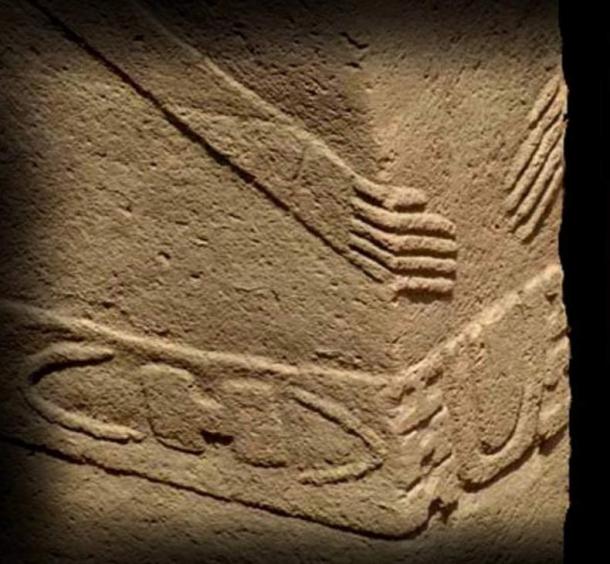
Anthropomorphic Images in Rock Art Paintings and Rock CarvingsTerence Meaden, Herman Bender — 2020 · Social Science “Gobekli Tepe, incinta C, stâlpul 12 cu coastele și coloana vertebrală care ies în evidență, ceea ce vorbește despre foamete extremă și murit de foame”
….si unde naiba sunt coastele si sira spinarii aici !?
Sa nu uit: un aspect interesant, neremarcat de altcineva pana acum.Categoric pilonii T aveau o semnificatie majora pentru locuitorii arii largi (mai largi decat Gobekli Tepe) unde au fost gasiti.De fiecare data dupa ce au ingropat incintele sacre cand le-au reconstruit, au pastrat neschimbata forma pilonilor si anume aceea in T. Aceast fapt arata ca era un simbol extrem de puternic si important care semnifica ceva, sau poate era numai marca, semnul prin care acea civilizatie si populatie se identifica ? Se poate ca semnificatia initiala sa devina incetosata cu trecerea timpului. Sunt nevoit sa fac o paralela cu simbolul crucii folosit 2.000 de ani.Aici avem 2.500 de ani (9.600-7.000 B.C.)Pe parcursul celor 2.500 de ani nu au schimbat forma cu nici-un milimetru !
Lipsa gravitatiei nu reprezinta o problema pe intervale de timp scurte.Insa devine o mare problema cand ne gandim la un drum spre Marte (eventual si inapoi).La intervale de timp de de genul a 180 zile (6 luni) si peste, lipsa gravitatiei are ca rezultat atrofierea musculaturii, decalcifiere si o stare fizico-psihica destul de proasta.Se pare ca deocamdata pentru Elon Musk crearea gravitatiei artificiale nu este o prioritate, adica nu o prima proritate.Si se pare nici radiatiile/scutul antiradiatii.La primele misiuni nu vor fi turisti ci probabil astronauti cu conditie fizica buna si antrenati.Pentru el numai siguranta misiunii si cea a astronautilor este importanta.Adica practic sa nu explodeze ceva si sa se intoarca in viata.Nu exclud ca se poate gandi si la costuri mai mari.Orice gram in plus costa.Nici nu si-a batut mult capul cu solutii concrete de generare a Gravitatiei Artificiale.I sa aratat o propunere cu 2 rachete Starship gemene care sa fie distantate cu un gen de lonjeron sau cablu apoi rotite.
÷÷÷÷÷÷÷÷÷ Eu vin cu o propunere care este simpla si sigura.Este cumva o taiere a nodului Gordian. Am aflat cu surprindere ca centrul de greutate al unei nave-racheta gen Starship este pe undeva foarte aproape de mijloc.
PDFby Ó Santín Blanco · 2020 — GLS2 Artificial Gravity for SpaceX Starship (smallstars) . … Starship’s center of mass (which we will consider to be in the middle of the ship (… centrul de masă al Starship pe care îl vom considera că se află în mijlocul navei)
Atunci de ce sa nu se ralizeze separarea, divizarea rachetei chiar la mijloc?
O jumatate contine rezervoarele CH4+Lox+ motoarele si cealalta compartimentul incarcaturii utile (payload). Apoi sa fie indepartate jumatatile, deplasandule de-alungul axei longitudinale.Alta posibilitate ar fi rotirea fiecarei “jumatati” 90gr, perpendicular pe axa longitudinala initiala. Ele vor fi legate de un lonjeron (+ cablu pentru siguranta?).Odata cu indepartarea, are loc inceperea rotirii.Norocul este ca o jumatate contine rezervoarele de combustibil si motoarele ia cealalta jumatate cargo-bay contine mijloacele de sustinere a vietii si echipajul.
Eu vad o lungime a tether=legaturii intre cele doua jumatati de cca 100 m? pentru a obtine gravitatie spre 1g la o turatie rezonabila.
Din https://en.wikipedia.org/wiki/Artificial_gravity << De exemplu, pentru a produce o greutate standard, ɡ0 = 9,8 m / s2 cu o navă spațială rotativă de 15 s, raza de rotație ar trebui să fie de 56 m (184 ft), în timp ce o perioadă de 30 s ar necesita să fie de 224 m (735 ft). >>
Cu cat este mai mica turatia, cu atat nu se mai discerne diferenta intre gravitatia naturala si cea artificiala.(efecte secundare minime).In apropierea lui Marte, realipirea jumatatilor se face f.simplu, sucesiunea operatiilor fiind in sens invers.Probabil trebuie franare, altfel la micsorarea lungimii legaturii turatia creste.Propun ca articulatiile si legaturile intre cele doua jumatati si lonjeron sa aiba ceva grade de libertate, permita pivotarea/rotirea.Pentru ca i-mi e teama ca nu cumva toata cosmelia sa intre intr-o miscare de rotatie necontrolata, situatie in care pot aparea forte mari care sa rupa elemente structurale.Elon Musk va trebui sa se ocupe atat de scutul de radiatii cat si de gravitatia artificiala pentru ca nu poate lua banii turistilor si apoi “sa-i lase in gara” intr-o stare jalnica, decalcifiati, cu probleme psihice, cel mai posibil epave umane. –
Soul and spirits are sometime superposing and confusing. From https://en.wikipedia.org/wiki/Soul#Science <<Many modern scientists, such as Julien Musolino, hold that the mind is merely a complex machine that operates on the same physical laws as all other objects in the universe. According to Musolino, there is currently no scientific evidence whatsoever to support the existence of the soul and there is considerable evidence that seems to indicate that souls do not exist >> From https://www.researchgate.net/post/What-is-the-difference-between-soul-and-spirit <<Soul has dictionary definition of: the spiritual or immaterial part of a human being or animal, regarded as immortal. Spirit has a dictionary definition of: the non-physical part of a person which is the seat of emotions and character; the soul. However, in online dictionary definitions there were other meanings in which soul refered to spirit in the definition and vice versa. I think the meanings will change according to the cultural and/or religous context in which you use them.>> Upon definition, soul : https://en.wikipedia.org/wiki/Soul <the soul is the incorporealessence of a living being> SPIRIT Spirit has frequently been conceived of as a supernatural being, or non-phisical entity ; for example, a demon , ghost , fairy, or angel. From https://en.wikipedia.org/wiki/Spirit_(animating_force) <<In folk belief, spirit is the vital principle or animating force within all living things. As far back as 1628 and 1633 respectively, both William Harvey and René Descartes speculated that somewhere within the body, in a special locality, there was a “vital spirit” or “vital force”, which animated the whole bodily frame, just as the engine in a factory moves the machinery in it.>> Spirit , ideal factor of existence; consciousness , thought , reason , intelligence , soul ; in idealistic philosophy and in mystical – religious conceptions – an element considered as a basic factor of the universe , as opposed to matter , sometimes identified with the divinity , “the Holy Spirit ” [1] Spirit , supernatural entity, imaginary being, embodiment of the souls of the dead; the ghost; spirit AT GOBEKLI TEPE AND PPN CULTURES OPERATES SPIRIT IN TWOO ASPECTS : 1. SEEN AS ESSENCE, THE VITAL PRINCIPLE, OR ANIMATING FORCE WITHIN ALL THINGS AND: 2. IDENTIFIED WITH THE DIVINITY, “THE HOLY SPIRIT” ; SPIRIT, SUPERNATURAL ENTITY, IMAGINARY BEING, EMBODIMENT OF THE SOULS OF DEAD; THE GHOST;SPIRIT 1(First) impregnate T-pillars and is expressed by T/Tau icon (and later in sumerian proto-cuneiform Me sign) From https://en.wikipedia.org/wiki/Soul#Science <<In the ancient Egyptian religion, an individual was believed to be made up of various elements, some physical and some spiritual. Similar ideas are found in ancient Assyrian and Babylonian religion. The Kuttamuwa stele, a funeral stele for an 8th-century BCE royal official from Sam’al, describes Kuttamuwa requesting that his mourners commemorate his life and his afterlife with feasts “for my soul that is in this stele”>>
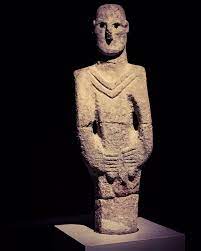
2(Second) is expressed in antropomorphic traits and in the so-called Kilisik Sculpture from Adıyaman and Urfa-man statues
ALL Göbekli Tepe STONE MONUMENTS: PILLARS, SCULPTURES OR POLES REFLECT EARLY RELIGION DEVELOPEMENT STAGES, BEFORE INVENTING GODS. ANY OF THEM REPRESENT GODS PROPER. I AM REFFERING TO THE PLACES IN AND NEAR GOBEKLI TEPE AND TO CLOSE CORESPONDING TIME SPAN. It reflects animist, totemist, shamanist and paganist stages, and presents corresponding aspects in different measures.
Damien Marie AtHope Understanding Religion Evolution: Animism, Totemism, Shamanism, Paganism & Progressed organized religion | Damien Marie AtHope
Be aware, animism does not mean that evrything has souls ! From Video: We Have Always Been Animists: November 7, 2019
Graham Harvey, professor of religious studies at The Open University (UK), discusses animism and how our relations are damaged by ongoing efforts to separate (human) culture from ‘nature’ and humans from other species.
From https://cswr.hds.harvard.edu/news/2019/11/07/video-we-have-always-been-animists <<So in a significant moment in Hallowell’s 1960 article, Hallowell asks an elder– unnamed in that article, but revealed elsewhere as Kiwich– he asks this man, are all the rocks we see around us here alive? And the old man says– wonderful answer– no, but some are.>>
To be clear, not to be taken ancient people as undeveloped or naive !. Only some natural, raw rocks or megaliths, due of their particular characteristics could be for them animated (had souls, but most frequently host spirits).
From https://books.google.ro › books Silver, Sword, and Stone: Three Crucibles in the Latin American Story Marie Arana — 2020 · History The Mayans, so populous in that verdant, rain- rich terrain, made stone images of the dead and believed their souls inhabited them.
FOCUSSING ON T-PILLARS
T-Pillars reflecting animism:
From https://en.wikipedia.org/wiki/Animism << Animism (from Latin: anima, ‘breath, spirit, life‘) is the belief that objects, places, and creatures all possess a distinct spiritual essence. … Animism encompasses the beliefs that all material phenomena have agency, that there exists no categorical distinction between the spiritual and physical (or material) world and that soul or spirit or sentience exists not only in humans but also in other animals, plants, rocks, geographic features such as mountains or rivers or other entities of the natural environment: water sprites, vegetation deities, tree sprites, etc.>>
THIS IS THE CASE WITH T-SHAPED PILLARS, CONTAIN AND REPREZENTS SPIRITUAL ESSENCE, IN MY OPINION (see other related posts) “LIFE ESSENCE“ / “DIVINE LIFE POWER”
From Mythical Stone – Page 246 https://books.google.ro › books Mythical Stone << It is not the stones per se that are worshipped in these cases, but the spirits inhabiting them. In other cases it is not a deity’s spirit but the spirit of an ancestor, a hero, or a sacrificial victim that inhabits the stone in order to be … >>
From https://sciencepress.mnhn.fr › …PDF Animals in the symbolic world of Pre-Pottery Neolithic Göbekli … de J PETERS · Citat de 219 ori — rich in animal depictions — stone figurines, sculptures and megalithic pillars decorated … Göbekli people once used to live. … stone spirits or perhaps even demons ?
T-Pillars as idols: I not agree with Klaus Schmidt : “(T-pillars) areantropomorphic idols” but agree “(T-pillars) are idols” From https://www.researchgate.net › 2710… Rezultate de pe web (PDF) The ” Hanging Gardens ” of Göbekli Tepe – ResearchGate Figures – uploaded by Constantinos Ragazas …Klaus Schmidt and others believe these are anthropomorphic religious. idols
<<by F Scagliarini · 2007 · Cited by 4 — The word slm/snm and some words for “statue, idol” … Jähiliyyah during their pilgrimage to Mecca. In the … pl. asnăm) and a wooden orstone idol{watan, pl.>>
I believe T-pillars represent something different: From https://sciencepress.mnhn.fr › …PDF Animals in the symbolic world of Pre-Pottery Neolithic Göbekli … de J PETERS · Citat de 219 ori — rich in animal depictions — stone figurines, sculptures and megalithic pillars decorated … Göbekli people once used to live. … stone spirits or perhaps even demons ? T-Pillars close or even totem poles: From https://en.wikipedia.org/wiki/Totem_pole <<Totem poles (Haida: gyáaʼaang)[1] are monumental carvings, a type of Northwest Coast art, consisting of poles, posts or pillars, carved with symbols or figures. … The word totem derives from the Algonquian word odoodem [oˈtuːtɛm] meaning “(his) kinship group”. The carvings may symbolize or commemorate ancestors, cultural beliefs that recount familiar legends, clan lineages, or notable events>> This is our case: represents or comemorate ancestors ! From https://books.google.ro › books Silver, Sword, and Stone: Three Crucibles in the Latin American Story Marie Arana — 2020 · History The Mayans, so populous in that verdant, rain- rich terrain, made stone images of the dead and believed their souls inhabited them LATER T-PILLAR/SCULPTURE ( not far to Gobekli Tepe, from Kilisik-Adıyaman ) COULD REPRESENT GODS: From https://www.dainst.blog/the-tepe-telegrams/2019/03/20/a-rather-odd-figure-the-so-called-kilisik-sculpture-from-adiyaman-turkey/ A rather odd figure: The so-called Kilisik Sculpture from Adıyaman, Turkey
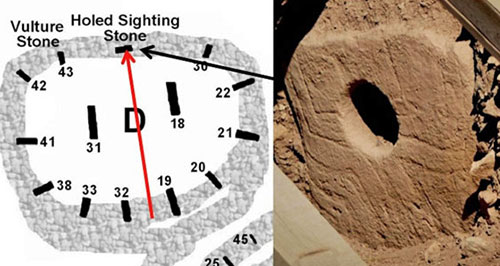
Attention, the sculpture was not excavated by archaeologists, so the exact age of the sculpture is not known, (supposed PPNA-PPNB !? ) From https://www.cuyamungueinstitute.com/articles-and-news/gobekli-tepes-shamanic-birthing-temple/ <<The Kilisik Statue depicts the Birthing Posture with a hole for her vulva and her fetus ready to arrive! … Collins wonders about the significantly placed holed stone, “So if the abstract female form seen on the holed stone in Enclosure D symbolizes the Cosmic Mother, is the purpose of the synchronization between star and stone to indicate she is about to give birth?”>> From https://www.dainst.blog/the-tepe-telegrams/2019/03/20/a-rather-odd-figure-the-so-called-kilisik-sculpture-from-adiyaman-turkey/ << Hauptmann (2012, 22) even suggested to interpret this scene as a ‘mother and child’ motive (known i.a. from two of Nevalı Çori’s clay figurines). In this case the Kilisik example would represent the first female depiction to be associated with the T-shaped sculptures.>>
FERTILITY, FEMALE-related IDOL ? From NatureThe phallus of the greatest archeological finding of the new millenia: an untold story of Gobeklitepe dated back 12
<<Collins points out what seem to be a number of celestial correspondences between the stone pillars and the stars, and he mentions that the Sabaeans, who were star worshippers living in the city of Harran, right near Gobekli Tepe, are known to have held an annual celebration, the Mystery of the North, during which they revered the northern direction as the source of life. These people, living around 8,000 BC were most likely the direct descendants of the people of Gobekli Tepe, who may have passed on to them their worship of the direction North.>>
From http://www.andrewcollins.com/page/articles/Gobekli_Mandaean.htm <<The City of Harran … The Bronze Age city at Harran almost certainly superseded a much earlier Neolithic settlement located on the same site. Excavations since 2005 at a nearby mound named Tell Idris (the Hill of Idris, the Arab name for both the Greek god Hermes and the patriarch Enoch) have revealed a series of occupational layers going back to the Neolithic age, c. 8000-6000 BC (Yardimci, 2008, 362-364). These are overlaid by occupational levels belonging to the Halaf culture, c. 6000-5000 BC, and the Ubaid culture, c. 5000-4100 BC, showing a continuous occupation of nearly 4,000 years. Tell Idris was the first place inhabited in the Harran district. Yet following its abandonment, the population shifted their attentions to Harran itself, which now became the main occupation site, even though it had existed in its own right since the Halaf period.2
Sabaean Star-worshippers It is extremely possible that aspects of the beliefs and practices expressed by the Göbekli builders persisted in the region and eventually found their way into the religion of the Harranites, who from the ninth century onwards were known as Sabaeans, from the Arabic saba’a, meaning “to change, to come out, to convert, to return”. Various medieval Arab writers visited Harran and wrote about the strange and highly exotic religion of the Sabaean star-worshippers, which revolved around a personification of the sun, moon and planets as angels or spirit intelligences. Their chosen qibla, or direction of prayer, was said to have been the north,3 the direction of the Pole Star, and every year the “Mystery of the North” was celebrated with a grand festival. The Harranites’ obsession with the north as the direction of the Primal Cause was something inherited by their latter day descendants the Mandaeans, who, like the Harranites, are referred to as both Sabaeans and star-worshippers. ….The Mandaeans practice a complex blend of Magian angelology, Gnostic Christianity, and Babylonian astrology involving the seven planets and the twelve signs of the zodiac. Like their forerunners the Harranites, the Mandaeans venerate the Pole Star, which they see as a visible manifestation of the Supreme Being, as well as the access point to the abode of the righteous, and the destination of the pious in death. Offerings are made to the north, while the dead are buried with their feet in the north and their heads in the south, so “that the north star (i.e. the Pole Star) may be in front of the eyes”, since the north is “the abode of Avather (the angel of the scales, judge of the dead and guardian of paradise) and there, too, is Olmi-Danhuro (paradise)”. That a link existed between the Harranites’ and Mandaeans’ veneration of the Pole Star and the beliefs and practices associated with the sanctuaries at Göbekli Tepe is tantalizing. This seems especially so in the knowledge that other religious groups that once thrived in the region also saw the north as the principal direction of prayer. They include the angel-worshipping Yezidi, who once thrived in SE Turkey, and the Shi’ite sect known as the Isma’ili Brethren of Purity (Ikhwan al-Safa’), whose centre was at Bosra in Syria (Collins, 2006). Yet can we take the matter further?
Festival of the Pole Star The answer is yes, for I have come across a remarkable account of a new year festival conducted by the Mandaeans on the banks of the Euphrates river in the late nineteenth century that throws considerable new light on the subject. It highlights the sect’s absolute veneration of the Pole Star, which is described as “Olma d’nhoora, ‘the world of light’, Dayan-samê, ‘The Judge-of-heaven'”, and also as the “primitive sun of the Star-worshippers’ theogony, the paradise of the elect, and the abode of the pious hereafter’. Significantly, the account-published in the London Standard of 19th October, 1894 under the headline “A Prayer Meeting of the Star Worshippers”, and later included in Robert Brown’s Researches into the Origin of the Primitive Constellations of the Greeks, Phoenicians and Babylonians (Brown, 1900, 177-179)-provides a vivid picture of the construction and use of a cult hut called the “Mishkna”, referred to also as the bit manda or bit mashkna. This, as we shall see, bears striking similarities to the layout of early Neolithic cult buildings, including those at Göbekli Tepe and Çayönü, located around 160km (100 miles) north-northeast of Harran. The location of the new year festival is given as Sook-es-Shookh (modern Suq al-Shuyukh), a small township near the city of Basra in what is today southern Iraq. The date is presumably 1894, with the time of year being “late September”. I will let the narrator take up the story (with some paraphrasing from Robert Brown):‘The stars are beginning to twinkle overhead, but there is still sufficient light to note the strange white-robed figures moving stealthily about in the semi-gloom down by the river side … “Their fathers were burned,” cries our Persian guide in disgust . . . thus delicately hinting that they are not followers of Islam; and a Jew who accompanies our party, on his way to the tomb of Ezekiel, spits upon the ground, and exclaims in pure Hebrew, Obde kokhabim umazaloth’ [‘Servants of the stars and Signs of the Zodiac’]. When we first meet them the white-robed Mandaeans are in the process of completing the Mishkna, or ‘tabernacle’, which will play a crucial role in the upcoming “grand annual festival”:An oblong space is marked out, about 16 feet long and 12 feet broad by stouter reeds, which are driven firmly into the ground close together, and then tied with strong cord. To these the squares of woven reeds and wattles are securely attached forming the outer containing walls of the tabernacle. The side walls run from north to south, and are not more than 7 feet high. Two windows, or rather openings for windows, are left east and west, and space for a door is made on the southern side, so that the priest when entering the edifice has the North Star, the great object of their adoration, immediately facing him. An altar of beaten earth is raised in the centre of the reed-encircled enclosure, and the interstices of the walls well daubed with clay and soft earth, which speedily hardens. Although not made clear, the Mishkna’s two longest sides are aligned east-west (see Figs. 1, 2, 3 & 5). The windows are placed in the two narrow walls, aligned north-south. White curtains are placed over the windows, although the structure itself remains open to the sky. The Mishkna’s entrance is created midway along the southern wall, exactly like the Pre-Pottery Neolithic cult buildings. Indeed, the shape, layout and orientation of the Mishkna greatly resembles the cult buildings at Çayönü, two of which (the Terrazzo Building and Flagstone Building) also have wider east-west aligned walls with south-facing doorways (see Fig. 4). As we shall see, the express purpose of the Mishkna’s southerly placed entrance is in order for the Ganzivro, the spiritual head of the sect, to fix his gaze on the Pole Star as he enters the tabernacle. Two smaller cubicles, just big enough to hold a single person, are then constructed of reeds immediately beyond the cult hut’s south wall. One cubicle is reserved for the use of the Ganzivro, and once completed no one other than him is allowed to even touch its walls. A circular baptismal pool is also created close to the southern entrance. This is filled with water channeled directly from the river (see Fig. 1). Mandaeans arriving for the festival use the second cubicle to disrobe before plunging themselves into the baptismal pool, an act presided over by a tarmido priest who pronounces a blessing as the immersion takes place. Thereafter each person covers themselves in clean white garments, which reach almost to the ground. As the night progresses around twenty rows of white-robed figures, all ranked in an orderly array, gather on the riverside. They sit patiently facing the Mishkna awaiting the arrival of the priests who will conduct the much anticipated ceremony. Two guards stand by the entrance:… (they) keep their eyes fixed upon the pointers of the Great Bear. As soon as these attain the position indicating midnight.’ a signal is given, and a procession of priests, including … the Ganzivro moves to the Mishkna. One ‘deacon’ ‘holds aloft the large wooden tau-cross.’ A second bears ‘the sacred scriptures of the Star-worshippers.’ A third ‘carries two live pigeons in a cage,’ and a fourth has ‘a measure of barley and of sesame seeds.’ So not only does the Pole Star feature in the ceremony, but the stars making up the Big Dipper or Plough in the constellation of Ursa Major, the Great Bear, are watched in order to mark the moment of midnight. In many ancient cultures, the seven main stars of Ursa Major were seen as the turning mechanism of the heavens, as well as time-keeping devices for those engaged in nocturnal activities. Returning to the account of the Mandaean new year festival, we read that:The ecclesiastics file into the Mishkna, and stand ‘to right and left, leaving the Ganzivro standing alone in the centre, in front of the earthen altar facing the North Star, Polaris. The sacred book Sidra Rabba is laid upon the altar folded back where the liturgy of the living is divided from the ritual of the dead. The high priest takes a live pigeon, ‘extends his hands towards the Polar Star, upon which he fixes his eyes, and lets the bird fly, calling aloud, “In the name of the living one, blessed be the primitive light, the ancient light, the Divinity self-created.”‘ Here the Ganzivro approaches the Mishkna’s earthen altar after entering the structure from the south. Once again this brings to mind the layout of the Pre-Pottery Neolithic structures of southeast Turkey, whose own southerly placed entrances perhaps played a similar role, enabling the priest or shaman to face an object of veneration in the northern night sky. The centrally positioned altar in the Mishkna takes the place of the twin central pillars seen in the principal enclosures at Göbekli Tepe, and the twin standing stones erected side-by-side at the centre of two of the cult buildings at Çayönü (the Flagstone Building and Skull Building). The Mishkna has no roof and remains open to the sky in order for the Ganzivro to gaze upon the Pole Star. Yet whether or not the early Neolithic sanctuaries at places like Göbekli Tepe and Çayönü possessed roofs remains a matter of debate. From the marks, cuts and grooves on the top of certain pillars in Göbekli’s Enclosure C (See Fig. 6) this does seem likely, although perhaps a roof was used either partially or at certain times of the year.
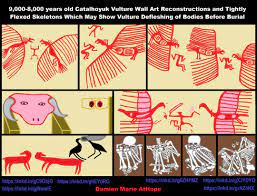
Soul Birds and Excarnation ….Excarnation is known to have been important to early Neolithic communities in central and eastern Anatolia, and is even depicted on the walls at Çatal Höyük, the 9,000-year-old Neolithic city on the Konya plain in southern central Turkey. In this manner, the vulture, and thus the bird in general, became the primary symbol of the soul’s journey to the spirit world. In the knowledge that the Mandaeans themselves once exposed their dead to carrion birds (Drower, 1937, 184-5, 200), could the pigeon or dove have replaced more unsightly birds such as the vulture and raven as symbols of the soul’s flight into the next world? Continuing the account, we read next that:The worshippers without, on hearing these words, ‘rise and prostrate themselves upon the ground towards the North Star, on which they have silently been gazing.’ ‘The Ganzivro, who has made a complete renunciation of the world, and is regarded as one dead and in the realms of the blessed.’ after the celebration of a kind of communion in which small cakes, sprinkled with the blood of the second pigeon are partaken of, recites a further service, ‘ever directing his prayers towards the North Star, on which the gaze of the worshippers outside continues fixed throughout the whole of the ceremonial observances.’>>
The 26,000-year precession cycle causes the north celestial pole to move counter-clockwise relative to the backdrop stars. Whichever star is closest to the north celestial pole is the Pole Star. Thuban reigned as the North Star some 5,000 years ago.
THE DIVINITY ICON IS NOT DIVINITY ITSELF ! It is only a reminder, a mnemonic sign. Exemple, nowday christian cross not represent god, it is only a sacred sign. We know our nowdays divinities wich must be antropomorphic, and expect the same for the civilisations of the past. But things not always worked so. Hunter-gatherers had no a very high complex and stratified society, to need an human-like ruller or superviser. They not needed a divinity wich regulate social life as much as divinities wich regulate natural enviroment.Their life passed largely in nature and depended on nature elements. They rely on rather on mountain, wood an animal spirits. Largely and far away, the sign for divinity is a matter of convention. In greatest measure, all processus happens in our minds. Much important is what we feel and think than what is the real picture or the sharp reality, because the spiritual reality is at human beeings one level above, “1-st degree reality”. Divinity is in fact cosmic powers and order. Image from Magura cave, Bulgaria (~10.000-8.000 B.C. ?)
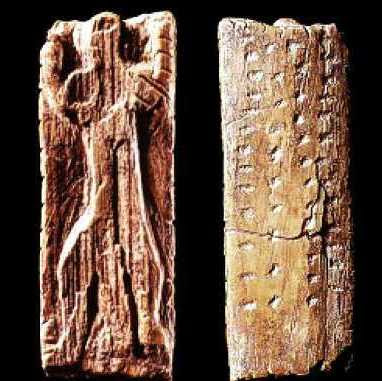
Tau cross is not but a cross, one even much simplified. If try to simplify further cannot, cause obtei an turn, turning (L-shape). As divinity is allways right, the cross sign has vertical lane and right angles. Pillars are Orthostates – Wikipediahttps://en.wikipedia.org › wiki › Orthostates , upright stones. Thousend years lasting and directed toward sky. If horizontal part of + or T is the earth or sky, no matter, cause we have the vertikal line wich realise the connection. Tau shape/icon is related to: – Bucrania – human torso/body – hammer, ! all symbols of power !
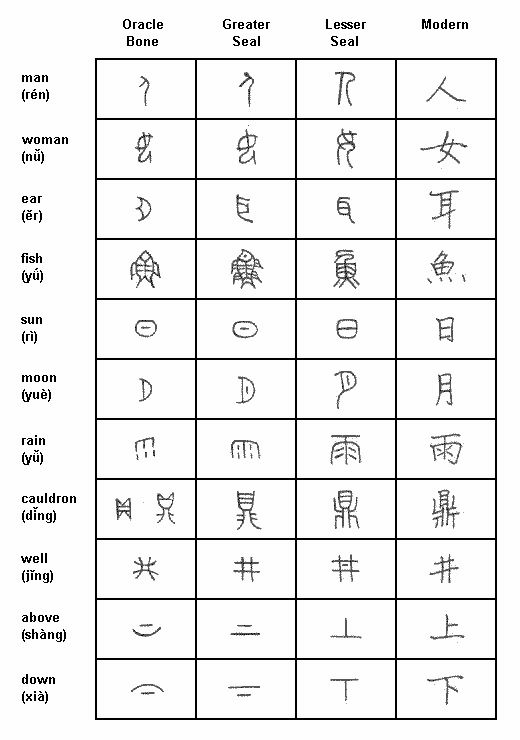
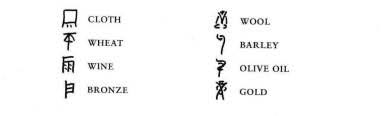
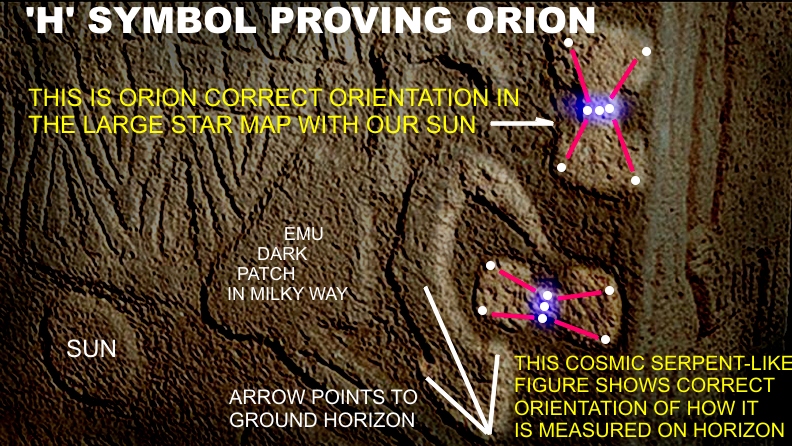
From https://www.sumerian.org/prot-sum.htm <<me, mì; e: n., function, office, responsibility; ideal norm; the phenomenal area of a deity’s power; divine decree, oracle; cult. ; v., to be; the Sumerian copula; to say, tell. ; poss. suffix, our. ; me3,6,7,9: battle. >> Sumerian me, has also many other meanings :” ritual, to be, beeing, will to live..” From https://www.ancient-origins.net/opinion-guest-authors/cosmic-power-shaman-and-symbols-g-bekli-tepe-part-ii-005194 << One of the highly disputed symbols is the H-like symbol (and also “( H )” symbol) which is seen carved on Enclosure D pillars. Some say this symbol emblematizes the Orion constellation. I think this is not true. Because, besides the “H “symbol, there is an “I-like” symbol, which can define as slanted “H”. Both of them are not related to Orion. To provide some intriguing and factual meanings based on cultural and archaeological datas: “H” symbol is not only a monolith symbol itself. It consists of two parts, which we can define as Tau. We encounter the same “H” symbol in Utah petroglyphs which are made by Anasazis. Indeed, we see the complete “( H )” symbol. Here the “H” symbol is not alone. On both sides there are other symbols.>> See chinese characters “above” and “down”:
From The Fundamental Principles of Old and New World Civilizationshttps://books.google.ro › books Zelia Nuttall <<The preceding data, which could be amplified, seem to show that the natives associated the tau-shape not merely with the idea of the Male and Female principles, but also with the Above and the Below, or Heaven (air and water) and Earth (earth and fire). ….. As I shall have occasion to demonstrate further on, the double tau signifies the Above and the Below and their union forming an integral whole. …. I venture to point out how obviously Thor’s hammer symbolizes the union of the Above and Below, the heaven represented by the horizontal line resting on the perpendicular support, symbolizing the sacred pole, column, mountain and tree intimately associated with Polaris, the world axis.>> Now see at Göbekli Tepe, double tau:
In a quite restraint area, (allmost the same that of haplogroup G2a) were used in the course of the history at least 3 “T” signs: Gobekli, Caucasus and Sumeria.
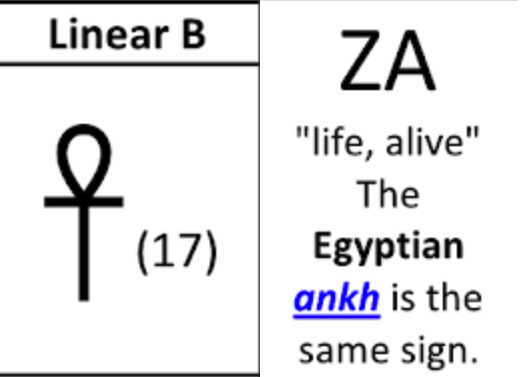
~~~~~~~~~~~~~~~~~~~~~~~~~~~~~~~~~~~~~~~~~~~ I searched and knocked the sumerian “me” sign all-around in order to find the mistery around it, and the resul was that represented esence of “LIFE“. Very interesting, the egyptian sign for life, “ankh” is very close, beeeng an T-sign and wich has attached an circle or drop-shape.
So the meaning of the sign Ankh, really is “ETERNAL LIFE”, not simply life. Ankh – Wikipediahttps://en.wikipedia.org › wiki › AnkhThe ankh or key of life is an ancient Egyptian hieroglyphic symbol that was most commonly … For this reason, the gods were often depicted in tombs giving ankh signs to humans, usually the pharaoh. SO THE CIRCLE IS CLOSING: IN EGYPT AND ANATOLIA FROM EARLIEST TIME, HUMANS USED CLOSE-SHAPE SIGNS FOR LIFE, ETERNAL OR NOT. Now see a little surprise:
This symbol is traditionally transliterated as “za”, but some people suggest that the sign should be transliterated as “ka”.This is very interesting as it shows the antiquity of the “z” root for the word for life. .. So we could say that “breathing”, or “breath” is at the root of life.But I believe that we have even more proof that the “ži”, “dji” root is indeed the original root for the above cluster of words meaning life, living. Let me ask you this question: What does it mean to be alive? Some would say that to be alive means to have a soul still inhabiting your body. Interestingly, Hittite word “zi”meant “soul, spirit, seat of life, person“…At the same time in Sumerian language we find this word: “zi” (ži?) – breathing, breath (of life), life, throat, soul…>>
From https://www.academia.edu › HELLE… (PDF) HELLENIC ORIGIN OF EUROPE: Formation of the … The hieroglyphic sign No 18 = Egypt. ankh ‘life, to live’ = Lin. A, B za < Greek ζάω ‘to live’ < Indo – From https://hellas.bab2min.pe.kr/hk/za?l=en << ζά? ; Transliteration: za Principal Part: ζά Etym.: aeolic for διά>>
Genetica relevă faptul că populația neolitică Göbekli Tepe a avut originile cele mai indepartate între Levant (civilizația natufiană?) Și Caucaz (vezi haplogrupul G-M201). Nordul Mesopotamiei și Caucazul a fost originea oamenilor din Anatolia de Sud-Est (Sanliurfa-Göbekli Tepe). (a se vedea haplogrupul G2a) Au dat viață culturilor agricole neolitice centrale anatoliene. Așa cum în zilele noastre se poate observa că în Caucaz nu există religie și zei ca în societățile complexe stratificate dezvoltate, ci un singur „mod Habza” – înțelegere, de un tip mult apropiat naturii decât viața societății interioare. Din Neopaganismul caucazian https://wikizero.com/en/Caucasian_neopaganism?fbclid=IwAR2XBry6IFzM3cF6dK99kXZ2PPUgrmv6_oto2BAUQw5CQPNMgReJUL6AqQU << importanta strămoșilor, care au capacitatea de a observa și evalua treburile descendenților lor. …… Sufletele strămoșilor necesită comemorare: se organizează sărbători funerare și se practică și se distribuie preparatele de sacrificiu sau de masă memorială (zheryme) pentru amintirea sufletelor moarte. Teologia habzistă este monistă, cu cea mai mare proeminența acordată zeului Tha … „spiritul său este împrăștiat în tot spațiul”. … Lumea manifestată material se află într-o perpetuă schimbare, dar în același timp există o bază care rămâne mereu nezdruncinată. Acesta este principiul originar al lumii și al Legii sale. Adepții acestei viziuni asupra lumii, uneori și islamizați, se găsesc în Turcia modernă. Credințele Xabze și credințele sufismo-islamice sunt văzute ca filozofii complementare de către circasieni. Zeii și zeițele sunt împărțite în două grupuri fundamental diferite:
Zei fără imagine, cosmogonii (Tha, Uashkhue, Psetha, Schyble). Zei antropomorfi (umanoizi) (Mezytha, Tlepsh, Thagaledj etc.). >> De la Adyghe / Circassian Habzehttps: //aratta.wordpress.com/2013/10/16/adyghe-circassian-habze/
Ceva asemanator a fost în 9.600 î.Hr. acolo, la Gobekli Tepe: nu existau zei propriu-zis, așa cum suntem obișnuiți să vedem, ci mai degrabă entități animiste /demoni și animale totem care erau apropiate atat de animalele sălbatice cat și de modul de viață al vanator-culegatorilor.Așadar, aș putea emite: IPOTEZA CONTINUITATII GEOGRAFICE, GENETICE ȘI CULTURAL-RELIGIOASE ÎN MESOPOTAMIA DE NORD (ANATOLIA DE SUD-EST ȘI CAUCAZ). UNELE TRĂSĂTURI COMUNE CAUCAZULUI-GOBEKLI (partial Sumerului) sunt: – Originea religiei animiste (un suflet locuia în fiecare obiect, animat sau neînsuflețit, funcționând ca forță motrice și gardian >> stâlpi T, vii! Fantome, demoni și zeități locuiau aproape toate obiectele!) Totemism (prezent la Gobekli și Caucaz) – Zei fără imagine (duhuri,demoni) – pictograma T (Tau) = pictograma Zeului Tha Semnul sumerian T = “ME” = “puterile divine, esența, ritul, ființa, voința de a trăi etc. etc” – Același fond genetic (haplogrupul G2a) – Spițele roții Habze <12> Pilonii circulari Gobekli Tepe ==================================== Din From Origin & Evolution of a Family :The Y-DNA Story http://shissem.com/Hissem_DNA.html?fbclid=IwAR35Zlsuax0sbMk6h-hjWvt1xe-uUXyH3lPFHWW05XSW8lkJetUoHyo_-us
<< În următorii 20-30.000 de ani, descendenții haplogrupului haplogrupului F au apărut în Orientul Apropiat, Semiluna Fertilă a istoriei, apoi s-au extins pentru a popula globul. Acestea includ toți membrii Haplogroups G până la T, sau 90% din populația lumii. Originea Haplogroup G .. haplogroup G, este definită de o mutație la locusului M201 pe cromozom și este un tip răspândit, dar relativ neobișnuit. Membrii haplogrupului împărtășesc un strămoș comun care a dezvoltat o mutație din haplogrupul F anterior acum aproximativ 45.000 de ani. Paleoliticul superior, perioada de acum 50.000 până la 10.000 de ani a fost numită Epoca de piatră târzie sau Paleoliticul Superior și este înaintea descoperirii agriculturii. În această perioadă, antropoliștii cred că omenirea a început să demonstreze mai întâi abilitatea de a folosi gândirea simbolică complexă și de a exprima creativitatea culturală, văzută în picturile rupestre și sculptarea figurilor voluptuoase de fertilitate. Exact acolo unde în Orientul Mijlociu ar fi putut să apară inițial haplogrupul G a fost dezbătut pe scară largă și acerbă. Un grup susține că a fost undeva în regiunea munților Caucaz. Aceasta este zona cu cea mai mare concentrație de haplotipuri G. astăzi. Haplogroup G este cel mai frecvent în Osetia de Nord și, în mod specific, în orașul Digora, cu o frecvență medie de 74%. 29% dintre popoarele kabardine și balcanice din nord-vestul Caucazului sunt de tip G, iar Azerbaidjanul și Armenia au, de asemenea, concentrații mari de haplogrup.
Cealaltă tabără susține că este o greșeală să ia această concentrație de probe moderne de haplogrup G ca dovadă a originii. Ei susțin că haplogrupul a apărut sau, cel puțin, a izbucnit populația sa, în Levantul din Siria modernă, Libanul și Israelul.”Observați că, deși G-M201 atinge o frecvență ridicată (de aproximativ 50%) numai în unele zone din Caucazul de Vest și Central, varianța G pentru 8 (?!) STR este cea mai mare în Levantul de Sud.” – de pe pagina web Facebook G-M201.
Deci, pe scurt, originea haplogrupului G a fost în nord sau sud sau între ele. . . Până în ultimii ani, astfel de teorii s-au bazat pe utilizarea ADN-ului extras de la subiecții moderni și pe presupuneri bazate pe densitățile actuale ale populației. De atunci au fost dezvoltate noi tehnici care permit utilizarea ADN-ului din vechile locuri de înmormântare și acestea arată o corelație redusă cu tiparele actuale de dispersie. Unul dintre principalii cercetători din domeniul ADN a spus: „… patria acestui haplogrup [G] a fost estimată a fi undeva în apropiere de estul Anatoliei, Armenia sau vestul Iranului, singurele zone caracterizate prin co-prezența ramurilor bazale profunde, precum și apariția sub-haplogrupului ridicat diversitate.” Deci, poate putem fi de acord să spunem că locusul apariției haplogrupului G a fost undeva în Semiluna Fertilă din Orientul Mijlociu, dar cel mai probabil la vârful său extrem de nord, în sud-estul Turciei sau în Anatolia. …. ….. Haplogroup G a avut un început lent, evoluând izolat de zeci de mii de ani, cu o populație mică. O populație mai mică a însemnat mai puține mutații totale și un grup mai omogen. …. ….. Primii noștri strămoși de tip G ar fi fost totuși vânătorii-culegători ai epocii de piatră, organizați în grupuri mici de oameni semi-nomazi care trăiesc în afara țării. Cercetătorii genetici se referă la aceștia ca vânători-culegători anatolieni (AHG). Acest grup alcătuiește unul dintre cele trei tipuri ancestrale care populează Europa. Ceilalți erau vânătorii de vânătoare occidentali (WHG) care au intrat în Europa în timpul paleoliticului și vechilor nord-eurasiatici (ANE) care au intrat la începutul epocii bronzului. Dispersarea Haplogroup G Clada părinte de tip G, G-M201, s-a ramificat în cele din urmă în tipurile G1 și G2 acum aproximativ 23.000 de ani. Populația care deține mutația G1 va migra spre est, din Semiluna Fertilă, în Iran, trecând peste munții Zagros. Mai târziu, de asemenea, s-au mutat la nord în Kazahstan și mai la est în vestul Indiei. Haplogroup G2, o mutație la P287 [L89], s-ar deplasa spre vest în Anatolia și Cipru, iar spre nord-est în Munții Caucaz. După cum veți citi, mai jos, strămoșii noștri făceau parte din grupul care s-a mutat spre vest. Cu toate acestea, urmașii acestor două ramuri principale vor migra și niciuna dintre aceste mișcări nu va începe până când nu s-a făcut cea mai mare invenție din istoria omului, cea a agriculturii.Această inspirație a dat naștere epocii neolitice sau a epocii noii pietre, dar nu va începe până nu vor mai trece încă 10.000 de ani.
Fermierii timpurii și răspândirea neolitică a Haplogroup G2a Am spus deja că haplogrupul nostru a apărut probabil la capătul nordic al Semilunii Ferile. Asta sună ca izvoarele râurilor Eufrat și Tigru de pe sau în apropierea platoului armean din estul Anatoliei. Orașul antic Cayonu Tepesi, datează înainte de 10.000 î.Hr., este situat acolo; vezi harta din stânga. Se crede că oamenii care locuiesc în Cayonu sunt primii fermieri din Anatolia. Din câte știu, nu a fost recuperat ADN utilizabil de pe acest site.
Această sursă singulară este fermierii G2a din Anatolia. Așezările neolitice identificate în Anatolia includ Catalhoyuk, Cayonu Tepesi, Nevali Cori, Asikli hoyuk, Boncuklu hoyuk, Hacilar, Gobekli Tepe, Norsuntepe, Kosk și Mersin. Catalhoyuk, în centrul Turciei, este considerat cel mai avansat dintre acestea, iar Cayonu Tepesi în est, la capătul nordic al Semilunei Fertile, cel mai vechi. Hacilar, în vestul Turciei, a urmat Cayonu Tepesi și a fost datat la 7.040 î.Hr. – bazat pe Wikipedia. Acești fermieri anatolieni au fost descendenții vânătorilor-culegători de anatolani (AHG) menționați anterior. …… Cine au fost strămoșii acestor fermieri anatolieni? „Când a venit să analizeze efectiv defalcarea ancestrală a anatolienilor, Lazaridis și colab. (2016) au venit cu un model foarte solid în care anatolienii erau un amestec de linii legate de Ganj Dareh [munții Zagros din Iran], neoliticul Levantului și WHG [Western Hunter Gatherer], cu proporții de amestec de 0,387, 0,339 și respectiv 0,274. ” – din „Primii fermieri, cu accent pe Anatolia” la populationgenomics.blog Deci, în timp ce populația de fermieri a fost puțin amestecată la capetele extreme de est și de vest ale Semilunii Fertile, cele din nordul său, care și-au găsit mai târziu drumul în Anatolia, au fost un amestec atât de vânători-culegători locali. Comerțul a fost probabil motorul acestui act sexual.
…. În perioada neolitică strămoșii noștri, haplogrupul G2a, au intrat în Europa din Anatolia, trecând prin Grecia și Balcani în Europa centrală. Au găsit o zonă rurală foarte ușor așezată.
ORIGINEA La sfârșitul anului 2016, au existat 303 mutații (SNP) care definesc haplogrupul G, confirmând că această descendență paternă a experimentat un blocaj sever înainte de a se împărți în haplogrupurile G1 și G2. G1 s-ar fi putut naște în jurul Iranului modern la începutul Ultimului Maxim Glacial (LGM), cu aproximativ 26.000 de ani în urmă. G2 s-ar fi dezvoltat cam în aceeași perioadă în Asia de Vest. În acea perioadă, oamenii ar fi fost toți vânători-culegători și, în majoritatea cazurilor, trăiau în triburi mici nomade sau semi-nomade. Membrii haplogrupului G2 par să fi fost strâns legați de dezvoltarea agriculturii timpurii în partea Semilună Fertilă, începând cu 11.500 de ani înainte de prezent. Ramura G2a s-a extins în Anatolia, Caucaz și Europa, în timp ce G2b s-a difuzat din Iran de-a lungul Semilunei Fertile și din est spre Pakistan. Acum se găsește mai ales în rândul libanezilor și evreilor, dar și la o frecvență redusă în peninsula arabă, Siria, Irak, Iran, Afganistan și Pakistan. …… …. Cea mai mare diversitate genetică din cadrul haplogrupului G se găsește în partea de nord a Semilunii Fertile, între Levant și Caucaz, care este un bun indicator al regiunii sale de origine. Istoria fermierilor neolitici haplogrup G2a și a păstorilor de munte Testarea rămășițelor neolitice în diferite părți ale Europei a confirmat că haplogrupul G2a a fost descendența dominantă a fermierilor și păstorilor neolitici care au migrat din Anatolia în Europa între 9.000 și 6.000 de ani în urmă. Cultivarea cerealelor și leguminoaselor s-a dezvoltat pentru prima dată acum 11.500 de ani în Semiluna Fertilă, în ceea ce este acum Israel / Palestina, Iordania, Liban, Siria și Irak, dar nu s-a extins mult dincolo de această regiune în primele două milenii și jumătate. Motivul acestei întârzieri a fost că agricultura timpurie a fost prea rudimentară pentru a permite o subzistență independentă și a fost doar un mod de a completa dieta vânătorilor-culegători. Cultivarea a început cu grâu, smochine și leguminoase. Domesticirea grâului și a orzului a fost un proces îndelungat care a necesitat selectarea soiurilor care posedă mutații pentru vârfuri mai mari, mai puțin fragile și care nu se sfărâmă. Câmpiile inundabile din Mesopotamia erau ideale pentru cultivarea primitivă a cerealelor, deoarece nu necesitau irigare. Ceramica apare prima dată în Orientul Apropiat în urmă cu aproximativ 9.000 de ani în nordul Mesopotamiei. Dezvoltarea ceramicii pare să coincidă cu expansiunea bruscă a agricultorilor G2a către vestul Anatoliei și Europa. Ceramica a permis depozitarea ușoară a cerealelor și a leguminoaselor și ar fi putut facilita comerțul cu ovicapridele și păstorii de bovine și crescătorii de porci. Caprele și oile fuseseră domesticite pentru prima oară în urmă cu aproximativ 11.000 de ani în munții Zagros și Taur de la marginea de nord a Semilunei Fertile, dar nu au fost introduse în Levant decât cu aproximativ 8.500 de ani în urmă (vezi Dezvoltarea păstorilor de capre și oi în timpul Levantinului Neolitic, A. Wasse, pp. 26-27), imediat după apariția ceramicii. …….. Se presupune că patria R1b1a1a2 (M269) și a vorbitorilor pre-proto-indo-europeni a fost situată în estul Anatoliei și / sau în Caucazul de Nord. Caucazul în sine este un punct fierbinte al haplogrupului G. Prin urmare, este în întregime de conceput ca o minoritate de bărbați caucazieni care aparțin haplogrupului G (și poate și J2b) să fi integrat comunitatea R1b care a traversat Caucazul și s-a stabilit pe țărmurile nordice și estice ale Marea Neagră, între 7.000 și 4.500 î.Hr.
<< DE LA leagăn până la mormânt, crezul nativ circasian, împletit cu codul de conduită, Adige Xabze. Cu toate acestea, religia, obiceiurile și tradițiile erau două entități diferite. Considerarea Adige Xabze ca fiind religia tradițională a circasienilor este o greșeală obișnuită făcută chiar și de circasieni. În timp ce religia antică reglementa domeniile spirituale și rituale, Xabze reglementa aspectele de zi cu zi ale vieții circasiene. Linia de timp a credinței Pentru a aprecia dimensiunea cronologică a manifestărilor credințelor și practicilor religioase în rândul circasienilor, este prezentat un liniu de timp de bază pentru progresul sistemelor religioase din Circassia. Animismul Animismul este probabil cea mai veche religie a circasienilor și a fost răspândită în rândul tuturor popoarelor din Caucazul de Nord. Originea sa datează probabil din epoca paleolitică sau vechea epocă a pietrei, cu mai mult de 10.000 de ani în urmă. Principiul de bază al animismului era credința că un suflet locuia în fiecare obiect, animat sau neînsuflețit, funcționând ca forță motrice și gardian. În gândirea animistă, natura era în viață. Într-o stare viitoare, spiritul ar exista ca parte a unui suflet imaterial. Prin urmare, se credea că spiritul este universal. Fantomele, demonii și zeitățile locuiau aproape toate obiectele, făcându-le supuse închinării. Totemismul, definit ca relația intimă presupusă a exista între un individ sau un grup de indivizi și o clasă de obiecte naturale, i. e. totemul, stă la baza religiei primitive și este intim legat de animism. Paganismul Directia s-a mutat de la animism și totemismul asociat, la păgânism, credința în posesia unor obiecte din natură a puterilor supranaturale și o concepție primitivă in zeități și a zeitati tutelare. Poate că păgânismul și-a găsit originea în epoca neolitică, în urmă cu mai bine de șapte milenii. Politeismul Se crede că la ceva timp după mileniul al V-lea î.Hr., circasienii au început pe calea tranziției către politeism. >>
I found many such traces, clues and elements and I was not particularly concerned with finding explanations. Because the distance in time is so great (5.000 years!), plausible explanations can hardly be sustained.The elements I found refer mainly to symbols (icons) and their meaning. We found many symbols that have a pair and therefore a graphic equivalent in the Sumerian proto-cuneiform signs. Further starting from these pairs generates different assumptions and interpretations.I was also very surprised and pleased that other researchers noticed such similarities. A paper that deals with this kind of “cultural continuity” with the civilizations of the ancient Syrian area, is: From the Treasures of Syria. Essays on Art and Archaeology in Honour of Stefania Mazzoni. Edited by P. Ciafardoni and D. Giannessi. https://www.vorderas-archaeologie.uni-muenchen.de › …PDF Rezultate de pe web www.nino-leiden.nl This pdf is a digital offprint of your contribution … de EON ART 9.000 YEARS OF CULTIC TRADITIONS IN NORTHERN MESOPOTAMIA AND SYRIA? THOUGHTS ABOUT THE CRESCENT, THE BULL AND THE POLE WITH HUMAN HEADSAdelheid Otto aotto@lmu.de
<< … Indeed, there seems to be evidence of both the sun disc in a crescent and the moon disc in a crescent in ancient Near Eastern depictions (Collon 1993-1997). A good example of the crescent and disc as a symbol of the moon is given by votive stone discs resembling the full moon, which name the two Akkadian princesses Enheduana and Enmena as the high-priestesses of the Moon-God at Ur. THE BUCRANIUM, THE CRESCENT AND THE DISC ON T-SHAPED PILLARS FROM PPN GÖBEKLI TEPE In view of this state of knowledge, we can imagine what a shock it was when the monumental pillars in Nevalı Çori, Göbekli Tepe and other sites at the northern end of Upper Mesopotamia came to light (Figs. 2-3). Some of the so-called T-shaped pillars exhibit bent arms with hands, girdles, and necklaces in shallow relief, which indicate that they were supposed to represent anthropomorphic beings. The wide upper end of the pillars had apparently been modelled on an oversized head, as is substantiated by an only 80 cm high, but morphologically very similar statuette from Adyaman-Kilisik (Fig. 4a)10, or on two juxtaposed heads, as is shown by a Janus-faced sculpture in the Gaziantep Museum (Fig. 4b)11. The concept on which these T- shaped pillars are based, is thus indeed the strongly stylized and monumentally oversized representation of anthropomorphic beings.There are always two especially large anthropomorphic beings in the center of the round or rectangular buildings. They are much taller than the other pillars, which were integrated in the wall and decorated in a different way. Ever since these T-shaped pillars came to light, there has been a lively discussion whether these pillars represented supernatural powers or deities (Becker et al. 2012), or whether they were “images of ancestors and demons” and “refer to a shamanistic background for the ceremonies… not… to the worship of a distinct deity or of different deities” (Hauptmann 2011, 96, 98).The two largest pillars excavated so far, Pillars 18 and 31 in the center of circle D at Göbekli (Figs. 2 and 3), are – in my opinion – crucial in the discussion about ancient beliefs. The two T-shaped pillars are located in the center of the circular room and with their height of 5.5 m tower over the other pillars, which form an integral part of the circular wall. Especially remarkable is in which detail pillars 18 and 31 are distinguished as anthropomorphic beings (Schmidt 2011, Figs. 32-34): the long arms reach diagonally over the sides of the pillars and the hands are placed on the waists so that the fingers almost touch themselves. They wear a decorated belt with a fur-loincloth hanging from it. Especially important is the fact that the pillar figures wear a necklace on their front sides, directly below the T-shaped widening, i.e. below their heads. This is rendered as two parallel bands, hanging down from the neck in a V-shape – similar to the necklace of the anthropomorphic statue from Urfa (Fig. 5a), and to the T-shaped pillar 2 from Nevalı Çori (Fig. 5b). But in marked contrast to these, pillars 18 and 31 are distinguished by pendants attached to the necklaces, which were obviously meant to identify these colosses.The pendant of pillar 18 (Fig. 3b) consists of two oppositely arranged oblong motives with diagonal extensions, and a semicircular band and a donut-like disc with a central cavity below (Schmidt 2011, 81, Fig. 32). The upper pair of motives is difficult to interpret, the one below can easily be recognized as crescent and disc. The pendant of pillar 31 has rightly been identified by Schmidt as a bucranium, since the bulls on pillar 2 (Schmidt 2011, 68, Fig. 14) and pillar 20 (Schmidt 2011, 73, Fig. 22) exhibit a similar head.12 However, the motives of these “pendants” differ distinctly from other images found on the T-pillars. The numerous depicted animals so far known from Göbekli Tepe – Schmidt (2007, 165) vividly talks of a “stone age zoo” – used to be rendered as complete animals and shown in side view. The isolated bull’s head or bucranium,depicted frontally and perfectly symmetrically, clearly was an abbreviated rendering, and served as a sign or symbol. The crescent and disc are also exceptional, since they seem to have been the earliest renderings of celestial bodies so far. In view of the monumental dimensions of the anthropomorphic pillars 18 and 31 –they are more than three times human live size – it is difficult not to imagine the concept of supernatural powers behind these earliest “colossal statues”. And – since the symbolic value of the bucranium and the crescent with the disc seems evident to all people dealing with the Near Eastern Bronze and Iron Age cultures, where these motives were distinct symbols of certain deities, it is equally difficult not to associate them with these gods. This is all the more so, because the region where the “communal buildings” of the PPN period were prevalent, corresponds almost exactly to the region where the moon god and the storm god had been venerated in their main sanctuaries at Halab, Harran, Doliche and others for millennia (map Fig. 10). PPN POLES, ADORNED WITH A HUMAN HEAD AND A BIRD A slightly different pole (Fig. 6) has come to light in the PPNB settlement at Nevalı Çori, in the extraordinary terrazzo building, which is rightly interpreted as a “Sondergebäude”. Three fragments were separately integrated in the eastern bench of the medium phase of the building, which allows the conclusion that in the previous phase the pole had been standing in the terrazzo building. This pole shows two anthropomorphic beings back to back. They embrace each other in a way that the arms of each person embrace the other person from the back. Their hands with the five fingers rest on the narrow sides of the pole (Hauptmann 2011, 99, 134, Fig. 24a/b). One face shows elaborate features with almond-shaped eyes, nose, mouth and ears. The face of the second figure has almost completely dropped off. Both wear a head garment or long hair, which has been engraved in the soft clay as a meshed structure. One figure’s hair reaches down to its back. The hair of the other figure seems to be somewhat shorter, which could be also due to its hair ending at the beginning of the hair line of the other figure. A bird is sitting on top of the upper head. Its legs and body with flight feathers and tail have been preserved, whereas its head has broken off. Nevertheless, it is certain that the bird formed the upper ending of the pole, for the small place of fracture does not allow to carry heavy weight. Such as it is, the stone pole with two human heads and topped by a bird is 1 m high, with the heads being live-sized. Adding the broken-off bird’s head and assuming that the pole extended below the figures, it must have measured at least 1.20 m, but may also have been much taller. Another stone pole with a human head and topped by a bird was found at Nevalı Çori (Fig. 7ab).14 The human face is rendered in a similar elaborate way, with almond-shaped eyes, a strong nose and a mouth. At 29 cm height, the head is slightly over live-sized. The head is crowned with a kind of cap with vertically engraved lines, which is supposed to be either the scalp hair or a head garment. Above and behind the head, the remains of a bird’s convex breast and its acute wings, pointing back downwards, have been preserved. In contrast to the other one, this pole has a clear exhibition side. The existence of a second figure on the other side of the pole can be excluded, but the pole might have extended below the head. A fragmentary sculpture of a bird, which presumably was holding a human head between its claws, was found reused in a wall at Göbekli Tepe (Schmidt 2007 100, Fig. 30). So far, no standards with human heads and birds have come to light further south in the Euphrates valley, but two decorated stone poles, each ending in a bird’s head, were found in situ in the large communal building EA 100 in Jerf al-Ahmar (Fig. 8). The only furniture of this round, semi-subterranean building was a bench along the inner side, which was elaborately adorned with decorated stone slabs. Therefore, the excavators interpret this building as “bâtiment collectif” for reunions (Stordeur, Abbès 2002, 586). The two poles with bird’s heads were placed to the right and left of the largest vertical stone slab in such a way that the heads projected above the bench. The embellishment of the slabs not only consisted of a zigzag decor on the front side, but also of two engraved human headless corpses (Stordeur/ Abbès 2002, 587, Fig. 15): another proof of the association of birds with headless humans.15 Many more stick-like objects ending in a bird’s head are attested from PPN sites in Northern Mesopotamia and Syria, from Qaramel in the West to Nemrik in the East (Kozlowski, Aurenche 2005, 206). In all these cases, the meaning of the human-headed pole topped by a bird, and the pole ending in a bird’s head, escapes us. Since headless bodies and birds are frequently depicted together in the Neolithic period (e.g. on wall paintings at Çatal Höyük or on pillar 43 from Göbekli Tepe), and since the skull cult is a striking phenomenon of the Early Neolithic period in many Near Eastern sites,16 the association of the remarkable pole with human heads and a bird (Fig. 6) with the skull cult is tempting at first sight. However, the open eyes and the hair or head garment as well as the arms speak against it. Without understanding the meaning, we have to agree to Hauptmann and Schmidt, who recognized “bird and human head” as one of the main themes of PPN monumental art (Hauptmann,Schmidt 2007).Having assembled these examples of a pole topped by human heads and/or birds, it is impossible not to think of a very peculiar object that was to be venerated in precisely the same region, but some 6000 years later. THE POLE TOPPED BY TWO HUMAN HEADS AND A BIRD ON OLD SYRIAN SEALS Old Syrian cylinder seals of the early second millennium BC show a strange motive: a vertical pole which is topped by two human heads or – less frequently – by only one head (Figs. 9 a-h). A bird is often, but not always, depicted sitting on top of the upper head. The pole is always depicted socketed, either emerging from a rectangular base, or standing on a quadruped, most often a lion, but sometimes a gazelle.This strange object is unparalleled in the whole Near Eastern imagery. Nevertheless, it must have been an important object, since it received veneration. Many seals show a female person standing in front of it, lifting one hand. Already in 1960, Henry Seyrig proposed to identify this object as the famous semeion, which in the 2nd century AD had been described by Lukian of Samosate as an age-old ritual object that was venerated in the famous sanctuary at Hierapolis, modern Menbij in Northern Syria. According to Lukian, the semeion had no body of its own, but bore the images of other gods and a golden dove on top. Paolo Matthiae has recently collected all the hitherto known depictions of the ‘standard with heads’ and summarized the state of knowledge. Matthiae (in press) stated that the motif was especially common on Syrian seals between 1900 and 1750 BC. Dated and provenienced examples are attested on tablets from Kültepe kārum II, from MB I and MB II contexts at Ebla, Hammam et-Turkman, Ugarit and Alalakh (Matthiae in press; Marchetti 2003). The iconography and style of the more than 40 seals known so far vary considerably (Fig. 9 a-h). Therefore it is reasonable to conclude, that these seals were not cut at one place only, but at several places, and that the pole was a frequently used motif on seals in the Syrian and North Mesopotamian area roughly between the Mediterranean coast and the Balih valley. The varying number of heads, the fact, that the bird is sometimes missing, and the different shapes of the pole’s socle (rectangular or theriomorphic as lion or gazelle) do – in my opinion – strongly speak in favor of different ‘real’ poles with human heads, which served as models for these renderings. There may even be added a few later seals of the late 18th century, which depict the pole with the heads in a slightly different manner, e.g. en face or with a pointed headgear (Figs. 9 g, h). These seals indicate that the pole itself did not cease to exist, but slowly became a less popular motive on seals. A similar disappearance of motifs can be observed throughout Near Eastern imagery. It does not indicate, that the objects themselves disappeared, but that the intention of the seal images changed over time. As concerns the semeion, the much later account by Lukian is a strong argument that the pole itself continued to exist, but was no longer depicted on seals. CONCLUSIONS Definite representations of deities in the Syrian and Northern Mesopotamian region are testified for the first time around the mid 3rd millennium. At least this was the state of knowledge before the monumental T-shaped pillars in Göbekli Tepe, Nevalı Çori and other sites had come to light. They date back to the 10th millennium and already represent anthropomorphic beings. On account of their enormous size, it is obvious that they embody supernatural beings.The largest two pillars excavated so far, placed in the center of circle D at Göbekli Tepe, wear necklaces with a bucranium and a disc- and crescent pendant respectively – motifs, which in much later times were to become the symbols of the storm god and the moon god. This is especially striking, as these two are known to have been major gods in exactly the same region with important cult centers in Halab, Kumme, Harran and others, which are attested at least from the 3rd millennium onwards. Another striking cult object, in Greek texts called the semeion, was presumably venerated mainly in Northern Syria, approximately from the coast until the Balih region. It is tempting to trace its origin back to the PPN poles, which were adorned with human heads and a bird ontop. Already the ingenious idea of Seyrig to relate the ‘head standard’ on Old Syrian seals to the semeion described by Lukian, received disapproval at first, but meanwhile seems to be widely accepted. The major obstacle is, of course, that there seems to be no evidence for the period from 1750 BC to 150 AD. However, this could have several reasons: perhaps the pole and perhaps even the heads were of perishable material. Alternatively, the evidence could have escaped the attention of most scholars19. Another explication, which also Matthiae offers, would be that the heads were images of gods, who in subsequent periods mostly were represented as complete figures. Much more challenging is, of course, to postulate a continuity of the venerated beings over 8000 years without the missing link. But it is really necessary to bridge the gap? Holy places have been in use over millennia in all cultures, especially those located in prominent places, and those associated with abundant water, natural springs or caves. In the region examined here, there are several examples of such holy places. Urfa has remained a place of pilgrimage until today, both the area around the so-called sacred spring and a grotto, which is considered as Abraham’s birth place, thus referring to one of the prime fathers of all religions present in this area until today. But already at PPN times, Urfa apparently not only represented a settlement but rather a holy place: the live-sized statue of a male being (Fig. 5a) is reported to originate from there, and a T-shaped pillar was discovered nearby during construction works. A sacred spring, where holy fishes were kept, was also the center of the sanctuary at Hierapolis, where the semeion was kept at the time of Lukian. According to Lukian’s account, the semeion travelled twice a year to the sea. Some sea water was taken back to Hierapolis, where it was poured into the same opening, where the deluge had disappeared. Indeed, the pole on a rectangular socle is often associated with water (rendered as guilloche; e.g. Fig. 9d), the water god (e.g. Fig. 9g), the rain goddess, or fishes. Harran, situated 44 kilometers southeast of Urfa (or Şanlıurfa), has been famous as the city of the moon god for at least 2,500 years. As well the association of Harran with Abraham and Arabic legends, which localize the grave of Tammuz there (Green 1992), suggest the ancient tradition of a holy place there. Also other forms of the people’s religiousness, which surely trace back to pre-Islamic ideas, can still be found in the region examined: e.g. people seeking for help pilgrimage to “wish-trees”, where they hang up stripes of cloth. One of these wish-trees is located on Göbekli Tepe (Schönberger 2007). Since the upper ends of many PPN pillars are still visible on the surface of several PPN sites, it is possible, that some of them have been always perceivable. Generally, conclusions by analogy over millennia are one of the capital sins of interpretation. If they are drawn nevertheless, the continuity of phenomena is usually explained with the help of the “cultural memory”. For the examples examined here, another model of explanation seems to suggest itself: the continuity of “Holy Places”, which survived in Syria and North West Mesopotamia for millennia.>> ========================== In the first time, the author noticed the presence on Gobekli Tepe monuments of ancient, long-lastin already common symbols : the crescent and moon/sun disc and in addition bucranium. Related to T-shaped pillars, the author preferred extremely intelligently not to decide whether they represent supernatural powers or anthropomorphic entities. Then, although he repeatedly refers to the fact that anthropomorphic entities began to appear massively only after 3,000 IEN, he still flirts with the idea of anthropomorphic entities. In my opinion, the T-shaped pillars represent the divine powers, particularly life, obviously of divine essence. So something abstract rather than concrete anthropomorphic deities. The human features and animals present on the pillars only show that it is about life and beings. MUCH MORE, I ADVANCED THE HIPOTHESIS THAT T-SHAPED PILLAR ARE THE PRECURSORS OF SUMERIAN DIVINE POWERS CONCEPT, “Me” The PPN era and the previous one constrain us but also offer us evidence of other early and previous phases of religion, namely the animist, shamanistic and totemistic ones. From damienmarieathope.com https://damienmarieathope.com/2019/04/12000-year-old-gobekli-tepe-first-human-made-pagan-temple/?v=32aec8db952d&fbclid=IwAR0K1aOiPde9CGGKjv2BNSdltyWbBbNVbyIVp3gU2lYrNuGFd7g1a-DOU94 << Understanding Religion Evolution: Animism (Africa: 100,000 years ago), Totemism (Europe: 50,000 years ago), Shamanism (Siberia: 30,000 years ago), Paganism (Turkey:12,000 years ago) * “paganist” Believe in spirit-filled life and/or afterlife can be attached to or beexpressed in things or objects and these objects can be used by special persons orin special rituals can connect to spirit-filled life and/or afterlife who are guided/supported by a goddess/god or goddesses/gods (you are a hiddenpaganist/Paganism: an approximately 12,000-year-old belief system) And GobekliTepe: “first human made temple” as well as Catal Huyuk “first religious designed city”are both evidence of some kind of early paganism. “Göbekli Tepe is one of the world’s most significant, yet mysterious, archaeological sites, where ancient people erected a series of massive stone circles where groups gathered for religious and social purposes. Analysis of bone fragments found at the site suggests that human skulls may once have hung there on prominent display. The fragments belong to three partially preserved skulls that were carved and altered after death. This is the first indication of how Göbekli Tepe’s inhabitants may have treated their dead, and archaeologists believe it may provide evidence of an Early Neolithic “skull cult” (a veneration of human skulls, usually those of ancestors). …. A development of the same process of images making that started with skulls separated burials. Both phenomena can be set into the long duration panorama of the transition from foraging to farming. A synthesis of finds seem to show the development of this custom ranging from between Pre-Pottery Neolithic A (PPNA) around 11,500-10,000 years ago and Pre-Pottery Neolithic B (PPNB) around 9,600–8,000 years ago early Levantine, Anatolian Neolithic culture and ranging to Upper Mesopotamian region of the Fertile Crescent focusing on separated skulls. .>> For example, see the statuette in shape of a totemic pole Image, from Gobekli Tepe Pillar 43 – Vulture Stonehttps://www.facebook.com/Gobeklitepepillar43/posts/35-this-is-a-totem-and-pillar-57-found-at-gobekli-tepe-there-was-a-discussion-on/1359385220779899/
Pillars show signs toward concrete deities (see the crescent, disc, bucranium signs present on the belt but also in general on the surface of the pillars), but they are definitely not yet. The worship and veneration of the stone(s) have extremely ancient origins being the first things revered and deified by man. The stone pillars themselves can in no way represent deities, but can only be the seat of divine powers or incipient deities. The worship of the stone leads so far to stone altars and temples or to the notion of the sacred stone Bet-El / Betuli or the stone from Kaba. Baetylus – Wikipediahttps://en.wikipedia.org › wiki › BaetylusBaetylus (also Baetyl, Bethel, or Betyl, from Semitic bet el “house of god”) are sacred stones that were supposedly endowed with life, or gave access to a deity. Full developed antropomorpphic deities, apeeared a little later, Urfa-man From https://www.facebook.com/bronzeagecollapse/posts/the-urfa-manworlds-oldest-statue-of-a-humana-neolithic-narrativeurfa-man-carved-/859111487609255/
~~~~~~~~~~~~~~~~~ Miss Adelheid Otto, I read your paper “The treasures from Syria”. Independently and before reading the paper, I’ve found that Gobekli Tepe (not ease explainable), is distant related with later sumerian culture.Especially in icons.Some G.T. signs are paired in proto-cuneiform signs. It seems that this is only the top of the iceberg, cause further many other aspects are intertwined.My “golden finding” and discovery is the astounding long life of the Tau sign and shape present later in sumerian as proto-cuneiform sign “Me”.Not probably, but sure there are some signs on Earth wich had an extensive spreading in time and space (e.g. cross/ celtic cross, swastica or ancient greek letter eta /Heta, etc.).One will find that “Me” is virtually intraductible,because has many/complex meanings.From divine powers, oracle through being, till essence and will to live. Yours, engineer (retired/72) Eugen Rau Timisoara Romania eugenrau@gmail.com I’m inviting you to take a look on some of related issues at tartariatablets.com
Sumerian proto-cuneiform sign Me has the shape “T” 2. twoo signs “T”s= Me-Me 3. Sumerian goddess Gula=Bau=Meme From https://en.wikipedia.org/wiki/List_of_Mesopotamian_deities <<Gula, also known as Nintinugga, Ninkarrak, Meme, Bau, and Ninisina, is the Mesopotamian goddess of healing and the divine patroness of doctors and medicine-workers.Dogs were considered sacred to her[137] and she is often shown in art with a dog sitting beside her. eugenrau: dog<>Canis Major, canicula<> Sirius !? 4. Sign H= sign “T” + sign “T” …..? possible meme ?============================================ Many researchers almost stubbornly claim that the people who came on pilgrimage to the monuments at Gobekli Tepe had minimal knowledge of the sky and the stars. I agree. Thus the monuments would have an orientation according to the position of the different stars in the sky at the time of construction. I do not necessarily want to make them great astronomers.Some align pillars with the constellation Cygnus, and others find them aligned with Sirius and the constellation Orion. From Göbekli Tepe and the Rebirth of Siriushttp://www.andrewcollins.com/page/articles/Gobekli_Sirius.htm
Fig. 4. The path across the southern horizon of Sirius on the dates 9400 BC and 8950 BC showing its brightness relative to other key stars of the southern sky (Credit: Rodney Hale/Stellarium)
MY OPINION IS THAT COMPLEX D WAS CONSTRUCTED AT ~9.000 B.C. From Gobekli Tepe alignments to Sirius. http://www.abovetopsecret.com/forum/thread1045729/pg1 An interesting suggestion by Giulio Magli is that the monuments of Gobekli tepe were aligned to the rising point of Sirius, particularly so because at that latitude Sirius had only just began to be visible above the Southern horizon after a prolonged absence due to precessional effect.The megalithic enclosures of Gobekli Tepe are the most ancient stone-built sacred structures known so far, dating back to the 10th millennium BC. The possible presence of astronomical targets for these structures is analysed, and it turns out that they may have been oriented – or even originally constructed – to “celebrate” and successively follow the appearance of a “new”, extremely brilliant star in the southern skies: Sirius. So this would be Sirius as herald of a new age as it were, and over the millenia it would continue to rise ever higher into the skies of the Northern hemisphere, achieving maximum elevation at the present thereabouts. In fact, simulating the sky in the 10th millennium BC, it is possible to see that a quite spectacular phenomenon occurred at Gobekli Tepe in that period: the “birth” of a “new” star, and certainly not of an ordinary one, as it is the brightest star and the 4th most brilliant object of the sky: Sirius. Indeed precession, at the latitude of Gobekli Tepe, brought Sirius under the horizon in the years around 15000 BC. After reaching the minimum, Sirius started to come closer to the horizon and it became visible again, very low and close to due south, towards 9300 BC.
..the extrapolated mean azimuths of the structures (taken as the mid-lines between the two central monoliths) are estimated as follows: Structure D 172° Structure C 165° Structure B 159° As Sirius is a negative magnitude star, it is in principle visible just above the horizon; I will however allow in what follows an altitude of ½ ° (actually the horizon at the site estimated via satellite images looks flat towards the south-east). Then, it can be seen that the above azimuths match the rising azimuths of Sirius in the following approximate dates: Structure D 172° 9100 BC Structure C 165° 8750 BC Structure B 159° 8300 BC So what he is saying is that enclosures were added in accordance with the shifting rising point of Sirius according to precession, but it can also be seen that the former alignment to Sirius has become an alignment to Orions belt, others have considered alignment to that and to some degree the monument can be considered to both at the same time, and not necessarily one or the other. He looks toward other alignments such as toward the Summer Solstice, and the origins of an interest in the helical rise of Sirius;
As a final observation, it should be noted that a further structure uncovered at Gobekli Tepe has an estimated azimuth of 59° (if it was open to the north-east, as it seems) which is pretty close to that of the rising sun at the summer solstice. On the pillar 43 of enclosure D a suggestive, unique scene is represented: a sort of vulture with human traits delicately “rises up” with a wing what seems to be a sphere, or a disk. May this be a representation of the Heliacal rising of the newly born star we today call Sirius, which – as can be easily verified – occurred just a few days before the summer solstice at the end of the 10th millennium BC at the latitude of Gobekli Tepe? a reply to: Kantzveldt The question to ask of what value is that alignment to a person of that time? Well its an engaging theory but I would tend to believe if the sites are oriented anywhere it would be to the rising sun that shows seasons which would have been of value to them.The problem with associating stars to be alignment points is that there are lots of points in the sky and they shift around (highly simplified) a lot so you can find an alignment virtually anywhere.Great stuff as always Kantzveldt.
originally posted by: Hanslune The problem with associating stars to be alignment points is that there are lots of points in the sky and they shift around (highly simplified) a lot so you can find an alignment virtually anywhere.
Exactly. Because of the constant shifting and rotation of the Earth, alignments never really point at specific stars, but rather draw arcs that cross the entire sky. And looking at the positions of the stones at the site, it looks like most of them are more likely aligned to support a roof structure. Besides, why only align some of the larger stones, and not all of them? This is one of those cases where “fudging” becomes a significant factor in proving associations.
a reply to: Hanslune <<The potential significance and my own interest here develops from observing that the Sumerian Goddess Bau had a Post-Diluvian role in the mythology,the restoration to life and provisions in abundance and a general raising of the spirits, as well as the generation of mankind from seed, she also strongly identifies with the star Sirius. Now in looking for an historical premise for a mass extermination event the last ice age and subsequent localized flooding is really the only candidate, the Aryan tradition of Yima and his Vara buried under the ice and snow, in which was preserved the seed of all living things is a Northerly version of such catastrophe, and probably the closest to the mark, so survival was passed down in folklore. Now of course for any Goddess to have had Post-Diluvian origins and relating to Sirius the star itself would have to have been visible, and so the date when this would have been possible emerges as around 11,500 years ago for the latitude of Turkey and that corresponds to the radical changes seen at Gobekli Tepe, thus Sirius could well have been associated with Post-Diluvian re-establishment of populations in the Northern hemisphere, indeed as the very Goddess of such.>> a reply to: Kantzveldt However we have no idea if those later Sumerian ideas even existed then or that the people of GT knew of them if other did (language barrier). What is the oldest attribution do we have for this god? Does it show up fully formed or does it evolve? a reply to: Hanslune Of course the Sumerian ideas as such couldn’t have existed back then, there is a 6,000 year differential in dates, but in identifying the God Ninurta with Sirius and the causation of the Deluge and his consort Bau with the Post-Deluge mopping up operation they at least suggest that star was in some way associated. So if we say take the disappearance of Sirius circa 15,000 years ago with the onset of the period of catastrophe and the return of the stars visibility some 11,500 years ago as new beginings under it’s auspicious blessings we can perhaps perceive how that star came to be associated with those epochs, and all of it’s later mythological associations must find first context when it returned to visibility, and the events that were taking place at that time with which it became synonymous. Of course it would be a thing of wonder if such associations did survive into the historic period and were remembered in the mythology, but i think there is every chance that is the case. a reply to: Hanslune Yes i think it’s very likely because of the mythological associations Sirius retained, death and rebirth, and association with inundation, Ninurta apart from being the God of the Deluge also was responsible for the creation of dams and levees and irrigation systems, his wife monitored the levees, again in Egypt one finds those corresponding traditions of flood and irrigation in connection with Sirius. Once it was determined what the star related to it was unlikely to lose it’s significance without good reason, particularly given the enormous importance attached to those events in regions affected. a reply to: Rosinitiate It is a truly epic tale and of course it was an ongoing one as the star continued to gain elevation in the skies from those early new beginings and the re-population and development of the Northern hemisphere, so a success story, a Goddess that works a reply to: Kantzveldt I would suppose that some posters here are familiar with the book The Sirius Mystery by Robert K.G. Temple? It tells of how ETs from Sirius visited African tribes thousands of years ago as passed down from oral stories.Having a history with UFOs, I’m always distrustful of any science that tends to insist that human activity (including honored gods seemingly created in human minds) is the sole answer to every mystery we attempt to explain. I think the cosmos always allows a wider perspective if one choses to disallow man’s omnipotence over all. Another hunter gather folk did mark Sirius at about the same time although not anywhere nearly as grand as G.T they also pointed to that bright star ,these off-course were the people at Nabta Playa their Goddess figure would have been Hathor but according to some views floating around the net there may have been some connection with G.T in an earlier thread I touched up on the possibility of a Saharan connection with G.T without referencing N.P
Cosmic Birth Almost exactly what we see represented in abstract form on the sighting stone in Göbekli Tepe’s Enclosure D is found also on the Venus and Sorcerer panel inside France’s Chauvet cave, created by a Paleolithic artist some 32,000-30,000 years ago. Here too the abstract legs of the “Venus” seem to signify the twin streams of the Milky Way either side of the Dark Rift, with the head of a young bovine overlaid upon the position of the womb. This bucranium is likely to represent the Cygnus constellation in its role as the head of a bull calf, which in prehistoric times was seen as an abstract representation of the female womb or uterus complete with its horn-like fallopian tubes. The uncanny likeness between the two is something that our distant ancestors would appear to have realized at a very early stage in human development.(23) We are reminded also of the 3D frescoes from Çatal Höyük showing bulls being born from between the legs of divine females (often with the heads of leopards), and the ancient Egyptian belief that the goddess Hathor, in her role as the Milky Way, gave birth each morning to the sun-god in the form of a bull calf, which was seen to emerge from between twin sycamore trees perhaps signifying the twin streams created by the Dark Rift.
From www.andrewcollins.com…# Kantzveldt posted on Dec, 9 2014 @ 04:17 AMlink a reply to: Aliensun His research on the Sumerian angle for that book was surprisingly good given the difficulties in putting a cohesive picture together at that time;
Since An is connected with Sirius, we should thus not be surprised that he has a dog-goddess for a daughter in Sumer. Sirius as the Dog Star was a tradition which was not thought to have existed in Sumer, however, before now. Since the fifty Anunnaki were children of An, and Bau is a daughter of An, it is not far-fetched to see in Bau a survival (for she is an old goddess who faded into obscurity in later times) of the concept of a dog-star goddess equivalent to Sothis. Enlil, whose command is far-reaching, whose word is holy, The lord whose pronouncement is unchangeable, who forever decrees destinies, Whose lifted eye scans the lands, Whose lifted light searches the heart of all the lands,
Sirius Mystery a reply to: 3n19m470 It’s not a coincidence, the Free Masons got the motif from Jewish Kabbalists who in turn had got it from familiarity with the Assyrian and Babylonian tree of life representations. The Starway to Sirius a reply to: Spider879 It’s interesting because Andrew Collins having wrote books on a Cygnus correlation to the Gizamids has not unsurprisingly counter claimed that the Gobekli Tepe alignments point to Cygnus in the North West, that is unlikely because the enclosures open up to the South East and there is a hill behind them blocking any such alignment, however the Celestial axis of the Sumerians according to my own research was an enormous affair with Sirius at it’s pinnacle and the constellations Pegasus (and Cygnus) at it’s base, covering the entire extent of the sky the base is always opposite to the summit, so the positioning of Cygnus is relevant though that is not what is aligned toward. Andrew Collins on Gobekli TepeThe Celestial Tree edit on Kam1231342vAmerica/ChicagoTuesday0931 by Kantzveldt because: (no reason given) 131415 posted on Dec, 11 2014 @ 09:49 AMlink I’ll take the NorthbyNorthwest alignment
================================ From https://www.amazon.fr/Cygnus-Key-Denisovan-G%C3%B6bekli-English-ebook/dp/B075CN38NB << Soul Holes Professor Klaus Schmidt, who headed excavations at Göbekli Tepe between 1995 and his untimely death in 2014, never passed comment on the site’s porthole stones, which appear in the two most accomplished enclosures discovered to date. He did, however, have something to say about the fragments of stone rings his team found scattered about the site–one of which has been pieced together and is on display at Sanliurfa’s archaeological museum. These are around half a meter (18.5 inches) in diameter and were positioned originally either in the ringwalls of now lost enclosures or in overhead ceilings. As to their function, Schmidt proposed they were seelenloch, a word in his native German language meaning “soul hole.” So what exactly are soul holes? Form and Function A large number of megalithic (that is, large stone) chambered tombs, or dolmens, from Ireland in the west to India in the east, have circular apertures cut into their entrance facades. Like the porthole stones at Göbekli Tepe, these bored holes are usually between 25 and 40 centimeters (10 to 16 inches) in diameter: too small for a grown person to pass through bodily. The porthole stones seen in Neolithic and later Bronze Age dolmens, which generally date to circa 3000–2000 BCE, could have functioned as a means of offering food and gifts to the spirits of human remains interred within the structures. Alternately, the apertures might have enabled further burials to be added, or, indeed, original interments to be removed. Such ideas, however, are inadequate to fully explain the widespread use of circular apertures in a funerary context. For example, in India circular apertures appear in stone slabs used as entrances to cist burials, which were generally sealed beneath the earth following construction. Deliberately bored holes are seen also in ceramic urn jars found in cemeteries across Europe and Southwest Asia. These date to the Iron Age and later Roman times. The purpose of these holes was to provide a means for the release of the soul, the presence of dirt, or any other constrictions not being seen as a hindrance to the soul’s ability to leave its place of interment. In a like manner, small doors or windows known as armen seelenloch, “poor soul holes,” were once incorporated into the walls of houses in the Austrian Tyrol. A number survive today, and there seems little question that their primary function was to allow the exit of a soul following death since these miniature doors were opened only when a death occurred in the household. The function of armen seelenloch has been linked with the porthole stones of megalithic monuments located in the same region, suggesting a continuity of ideas from the Neolithic age through to the present day. Almost certainly connected to the function of armen seelenloch is the fact that members of the Ojibway tribe, indigenous peoples of Canada and the northern United States, would bore a hole in a coffin so as “to let the soul go out and in at pleasure.” In a similar manner, hospital nurses in southern England upon the death of a patient would open the window nearest to the feet of a body so that the soul might escape. Very likely at least some of the porthole stones at Göbekli Tepe served a similar function, although instead of the exiting souls being used by the deceased, it was the soul or spirit of the shaman or entrant that was thought to exit this world using these circular apertures. Shamanistic Practices Shamanistic practices in various parts of the world incorporate the use of a symbolic hole, either in a rock, in the ground, in a tree, or in the roof of a yurt or tent. Their presence enables the spirit of the shaman to leave its physical environment and enter invisible realms described in terms as the Upper and Lower World. The Upper World was thought to exist in the sky; the Lower World beneath the earth. In addition to this, Siberian shamans are known to have employed the use of bones with holes at their center to begin to “see all, and to know all” and that this “is when one becomes a shaman.” In other words, pierced bones were used in ritual practices that involved the participant achieving an ecstatic or altered state of consciousness and then projecting his or her mind through the hole to enter unseen realms. Here they would attain otherworldly knowledge and enlightenment not normally accessible to those inhabiting the land of the living. So the presence of the pecked hole between the twin pillars seen on the carved bone plaque found at Göbekli Tepe indicates that during rites and ceremonies a person entering the site’s enclosures approached between the twin central monoliths and focused their eyes on the porthole stone. Very likely these holed stones formed a bridge, portal, or point of connection between the liminal realm created by the enclosure’s circular interiors and otherworldly environments thought to exist beyond the physical plane of existence.This was an important realization for it helped confirm the axial orientation of Enclosures C and D, which in both cases was toward the north-northwest, where both portholes stones are to be found. Yet why were both the twin central pillars and the holed stones oriented toward the north-northwests. >> From First pictorial representation of Göbekli Tepe T-pillars found on tiny bone plaqueAndrew Collins* http://http://www.andrewcollins.com/page/articles/plaque.htm SOUL HOLES Although the late Professor Klaus Schmidt, the head of excavations at Göbekli Tepe between 1995 and his untimely death in 2014, never commented on these holed stones seen in the two most accomplished enclosures uncovered to date, he did have something to say about the fragments of stone rings found at the site (one of which has been pieced together and is now on display at Sanliurfa Museum – see fig. 7).
Fig. 7. Stone ring found at Göbekli Tepe and now in Sanliurfa museum (picture credit: Andrew Collins).
These, he suspected, had been placed in the walls of now lost enclosures and might have acted as seelenloch, a word in his native German language meaning “soul hole” (Schmidt, 2012, 99). A large number of megalithic dolmens of Neolithic and later Bronze Age manufacture, from Ireland in the West across to India in the East, have circular apertures cut into their entrance stones (see fig. 8). Like the examples at Göbekli Tepe, these bored holes are usually between 25 and 40 centimetres in diameter, too small to allow a normal sized person to pass through bodily. Portholes in megalithic dolmens could have functioned as a means of offering food to the internee. Alternately, they might have enabled further human remains to be added, or, indeed, original interments to be removed. Such ideas, however, are inadequate to fully explain the widespread use of holes in funerary situation. For example, in India circular portholes appear in stone slabs used as entrances to cist burials (Thapar, 2004, 95). Deliberately bored holes are seen also in ceramic urn jars found in cemeteries across Europe and Southwest Asia. These date to the Iron Age and later Roman times (Koster, 1983; Avetisian, 1999/2000). Apparently, the purpose of these holes was to provide a means for the release of the soul from its place of containment. In a similar manner, small doors or windows known as armen seelenloch, “poor soul holes,” were once incorporated into the walls of houses in Austria. A number survive to this day, and there is no question that their primary function was to allow the exit of the soul following death, each one being opened only when there was a death in the household (Schwierz, 2011). Their existence has been linked with portholes identified as seelenloch in megalithic monuments located in the same region (Lukan, 1979, 55). ………………….. Some researchers of the ancient mysteries field have chosen to ignore this data and announce that the twin central pillars of key enclosures at Göbekli Tepe are aligned south, their twin central monoliths turned to face the rising of either the belt stars of Orion (Schoch, 2014, 54-55) or the bright star Sirius, (? CMa) (Magli, 2014). Both of these stellar targets have, however, been shown to be flawed (Collins, 2014, 77-80; Collins and Hale, 2014). What is more, the evidence available offers more compelling reasons for us to conclude that the key enclosures at Göbekli Tepe are oriented north, and not south. Chartered engineer Rodney Hale, working with the present author, determined that the mean azimuth bearings of the twin central pillars in Enclosures B, C, D & E targeted the bright star Deneb (? Cyg) as it set on the NNW horizon during the epoch of their construction (Collins, 2014, 80-82, and see fig. 10). That the setting of Deneb helped determine the axial orientation of these enclosures is verified in a new study of Göbekli Tepe’s astronomical alignments by Alessandro De Lorenzis and Vincenzo Orofino (2015)>> Image, from https://www.bibliotecapleyades.net/arqueologia/gobekli_tepe08.htm
Fig. 5. Left, plan of Enclosure D showing position of holed stone and mean azimuth of the twin central pillars. Right, the holed stone in Enclosure D. (Pic Credits: Rodney Hale/Andrew Collins
MY OPINION:
– Pointing to Deneb (Cygnus) is consistent with sky-burial religion, Andrew Collins: ” The purpose of targeting a near-circumpolar star such as Deneb, located in the constellation of Cygnus, the celestial bird, was almost certainly to connect with the Milky Way, on which the asterism is prominently placed. In Eurasian folklore the Milky Way has long been seen as a road or river along which souls, often in the form of birds, journeyed to reach the afterlife (see fig. 11). For a full treatment of this subject see the author’s work elsewhere (Collins, 2006)”
– Pointing to Orion is consistent with faith in afterlife where soul rise to most monumental constellation visible on night sky, Orion. Out of this is for many ages and cultures, not only for hunter-gatherers it is “the hero/hunter” Following image, from Göbekli Tepe: Turkey’s Stonehenge, But At Least 7000 Years Older https://ro.pinterest.com/pin/383650461991428519/
I AM NOT MUCH INTERESED IN WHAT DEGREE THOSE HUNTER GATHERERS WERE INVOLVED AND WATCHED THE SKY. CAUSE THERE ARE CLUES FOR BOTH PRESUMED SOUL DESTINATIONS, CIGNUS/ORION. There are for and against arguments for every of it. From Gobekli Tepe – my uninformed ramblings by knotmagick https://knotmagick101.wordpress.com/2019/10/20/gobekli-tepe-my-uninformed-ramblings/amp/?fbclid=IwAR1OLR5rIcQihkd6agPjXOnzIN2kLhzw2jqRWyLi1YQxgb6nah0LBO3emkA <<The presence of birds in this context would have been very important to some societies, because of the links drawn between birds and the human soul. There is evidence around the globe, from the Middle East to North America, of the association between the souls of the dead and birds; everything from buzzards and eagles to the crane and ibis. We can see the same associations extending into Christianity, with the dove being the representation of the soul. For this reason, in conjunction with the supposition that sky burial was practised by the builders of Gobekli Tepe and the high number of crane and bird depictions found in enclosure D, Andrew Collins suggests that the worshippers of Navel Hill saw the spirits of their beloved dead in the form (or in the company) of birds and that their religious activities at the temple were intended to ensure a smooth transition from earth into heaven. But where did the spirits go? based on the apparent orientation of the temples to view the southern sky the answer of “the stars” seems clear but which stars? And what did the worshippers see when they looked to those stars? If we accept that the surrounding pillars are human intercessors, who’s spirits had already flown to the stars,who enable us to connect with to the more than human beings represented by the t-pillars a question still remains; who are they? Archaeologists, historians and conspiracy theorists alike consistently look to the southern stars for the answer, though the answers that they give you can vary quite a bit. Star Gods Cygnus – The Soul Bird Andrew Colin’s, in his various books, notable the Cygnus Key and Cygnus Mysteries, argues that the temples focus is the stars of the Constellation of Cygnus, also known as the Northern Cross. Located just above the junction of the dark rift of the Milky Way Collins contends that the Constellation, the Latin name of which refers to a swan, has always been associated with birds of one form or another and that many ancient cultures around the world saw the Constellation as a point of transmigration for the soul. Collins draws evidence from cultures as far afield as North America and Ancient Egypt, claiming that Cygnus is the focal point for multiple ancient stone monuments across the globe. Whilst Collins makes a very strong case for the motif of the bird as soul, going as far to link it to the early hominids known as the Denisovans, the connections that he makes in respect of Gobekli Tepe being aligned to the constellation do not stand up to scrutiny. For starters his dates do not match the archaeological evidence. The sighting stones do not align with the constellation when compared against the dates of construction as provided by radio carbon 14 dates. In fact there is quite a substantial margin of error to the extent that it really cannot be ignored. Collins would argue that his thesis with regard to Gobekli Tepe has been independently verified in 2017 by two researcher from the University of Edinburgh. This might sound like vindication for the Cygnus connection however when read the paper reads as though the two started from the premises posited in Collins 2014 publication and sought to evidence it themselves. Unfortunately this means that the two Engineers make the same errors in oversight that Collins does, completely ignoring the archaeological evidence available, which in 2016/7 more securely dated the construction of Enclosure D to a time when Cygnus could not have been in the sight of the portal stone. This is not to say we should throw the baby out with the bath water. The concept of the flight of the soul in the form of a bird both as as an ancient motif and one which is repeated at Gobekli Tepe has strong merit, even if the stars proposed don’t quite align. Orion – The Headless Hunter A better fit, though not perfect, is the suggestion that monuments are aligned to the rising of the starts of Orion’s belt. That a hunter gatherer society would focus on Orion, chasing Taurus across the sky in an endless hunt, makes a great deal of sense, though it does assume that the builders looked to the constellation and also saw a hunter. Whilst A and B do have some level of alignment to Orion the sighting is not consistent across all the excavated monuments. Perhaps as more enclosures are excavated and their alignments plotted a connection to Orion’s belt will be strengthened but for the time being it is possibly safer to assume that whilst Orion was important he was only part of the night sky show that the builders were attempting to capture. Sirius – The Companion and Star Goddess Just below the heel of Orion sits the star Sirius, known as the Dog Star by modern sky watchers it’s summer time rising in the southern sky heralds the so-called “dog days of summer”. The birth of a new star in the night sky, particularly one which proves predictable as it emerges over the horizon, is generally something of note which is why many archaeoastrononical alignments settle on the helical rising of one star of another. Though procession does, over time, move the point in the sky where the rising will occur it would appear to our ancestors that it rose and set in the same place consistently and only the observations of a dedicated few over many generations would notice that this was not the case.
Megalithic alignments with Sirius are as common as with Orion and Cygnus when such things are plotted, the most famous being the Orion alignment found in the Great Pyramid of Giza where the southern shaft exiting the Queen’s Chamber aligns with Sirius. Robert Bauval, Graham Hancock and Andrew Collins (to name just a few) maintain that this is a deliberate alignment of the “soul ascension” machine to enable the souls of royal women to ascend to the next world. Of course, this alignment is paired with a similar shaft in the King’s Chamber, aligned to the belt of Orion, and two northward shafts which would allow the descent of the souls in the northern walls aligned with major stars in the constellation of Ursa Major. The Sirius association between the Great Pyramid and the southern sky of Ancient Egypt in 2500 BCE can be debated long and hard, and a lot seems to depend on what star simulation program you chose to use, but if we accept it as a clear and proven fact what does this mean for Gobekli Tepe? Were the Egyptians echoing a much more ancient association between Sirius and the Soul laid down into a collective memory by the Hunter Gatherers of 9600 BCE?The archaeology does seem to indicate that this is the case. Of the sites excavated so far enclosures B, C and D all have port hole alignments which match the helical rising of Sirius at a time depth consistent with the secure radio carbon 14 dates associated with the construction deposits at the site. This would indicate that each of these enclosures were build with the rising star in mind as an important feature and that it continued to be factored in to even after temples were closed, back filled and then reconstructed in a different location on the Tell. Whether or not all of the un-excavated enclosures will show the same alignments and associations remain to be seen but as work continues we will surely find out. This theory does have its detractors however, most notably Andrew Collins and Robert Hale. They maintain that Sirius, despite its rising status, would not be visible to its declination at the dates proposed and would therefore not be available to sight the construction of the monument but that it would be of little interest to the builders, so attention should be paid to the north. Whilst a valid argument it assumes two things. One – that little to no process of observation occurred in advance of the construction of Gobekli Tepe and that construction was spontaneous. This is consistent with Collins belief that the builders of Gobekli Tepe were influenced to build as they did by the Denisovans human species based on their savant like knowledge which far exceeded that of any other human race and the alignments were “downloaded” into the builders culture from elsewhere. We known from later cultures that sky watching was the main night time activity and there is every evidence that the same was true in this case. Even if the rising is not visible initially there is no reason to assume that the sky watchers were not capable or observing the angle of rising and reverse plot it to its rising point on the horizon. Then we come to the second issue – the assumption that the rising would not be visible. In our modern experience we see very little of the night sky, particular on the horizon, due to light pollution. There are very few places where it is possible for us to get a true sense of the majesty of the Milky Way or the brightness of the stars at night without the horizon being blurred by some degree of light pollution. The same would not have been true in Mesolithic Turkey and it is likely that the rising of Sirius would have been visible, if faint, and expected by those who have spent many generations observing the movements of the star. It is important to keep in mind that Sirius is consistently considered a companion star, with Orion featuring along side it as is the case in the Pyramid of Giza. There are echos of twin deities being associated with the evolution from a nomadic way of life to one associated with agriculture and animal husbandry as far back as the Sumerian. In the story ‘Debate between Sheep and Grain’ two sky beings (god’s) located on a hill discuss whether or not to share with mankind the knowledge of grain and do mestication of animals.>> BUT I AM CONFIDENT THAT ORION CONSTELLATION WAS ENOUGH BIG AND VISIBLE TO BE NOTICED FOR TENS OF THOUSEND YEARS BEFORE, EVEN IF IT WASN’T STUDIED CLOSELY. GOBEKLI TEPE AND ALL RELATED SITES WERE HIGH DEVELOPED CIVILISATIONS AND PROBABLY PRECURSORS OF SUMERIAN CIVILIZATION From Temple of Sumerhttps://www.facebook.com/TempleofSumer/posts/blessed-du-ku-from-temple-of-sumer-the-month-of-the-sacred-moundholy-hills-and-s/833633270129967/ << Blessed Du-ku from Temple of Sumer! “The Month of the Sacred Mound” Holy Hills and Sacred Mountains – The Foundations of the Duku Festival Holy hills and sacred mountains permeate much of Ancient Near Eastern Literature, from the earliest cuneiform tablets, all the way to their central place in Biblical scripture. From the image of Moses, standing on top of Mount Sinai, receiving sacred cuneiform tablets from God, giving deified Hammurbian laws to mankind; to the image of the Prophet Elijah, standing on Mount Carmel, asking his God to prove himself more powerful than Baal; and all the way on to the image of Jesus giving the sermon on the Mount. Mountains have always had great significance in both Jewish and Christian literature, since they are seen as being “closer to God” who dwells where the Heavens meet the sky. As a result of this idea, we often see God bestowing his divine wisdom from a mountaintop in scripture. These are concepts and central motifs which stretch back to the earliest times, to long before the Bible was set to parchment, and long before the Patriarch Abraham first began his journey from the Sumerian City of Ur, all the way back to a time when civilization was just beginning. For it was said that upon this Sacred Mound, “the ḫursag̃” (hill) of Heaven and Earth, that the ancestral Gods were created. In the earliest literature, the Sumerian poem ‘The Debate between the sheep and the Grain’, dated to the 3rd millennium BC, we are given the creation myth telling of the Sumerian ‘Edin’, meaning ‘steppe’, the place where the Anunna Gods were first created. This hill was situated at the point where the Heavens rested upon the Earth, and where mankind were given their first habitat. This sixty one line myth was set to stone over two thousand years before the Bible was even written, and before the “Garden of Eden” was even a concept. Later in time, from Third dynasty of Ur period (2200BC) onwards, we would find the term ‘Edin’ rephrased to ‘Hursag’ meaning ‘hill’, or in some cases ‘tillu’ in Akkadian, a term that was widely used to describe pre-historic tell mounds. In ‘Riches Hidden in Secret Places’ the acclaimed Assyriologist Jeremy Black noted that the Sumerians, unlike the scholars of today, had no interest in where their people had come from, and rarely wrote about it in their literature. Their Gods were Gods of civilisation, intent on bringing order to the universe, and civilisation to the society in which they served. Because of this, the Sumerians themselves were an incredibly forward looking people, focused on ingenuity and invention, and working towards a better tomorrow, rather than looking back to their past. On the other hand, the Sumerians knew they had not inhabited the earth since the very beginning of time, and that there had been a time before civilisation, when the very first men had lived in an uncivilised state like the animals, which was possibly the inspiration for Gilgamesh’s Enkidu. The Sumerians understood that civilisation had been a much later development, and it fascinated them to speculate on how the world had come into being, and how things has been at the beginning of time. In ‘The Debate between the sheep and the Grain” we see the Holy Mound take centre stage, as it was set as the birthplace Of the Anuna Gods at the time before sky and earth were separated. The Anuna Gods were ancient Gods from a time before recorded history. They were Gods that during the Sumerian period, and into the late Akkadian period were portrayed as seven judges who sit before the throne of Ereshkigal in the Underworld, their primary function is to decree the fates of humanity. During the Old Babylonian period, the Anuna were believed to be the chthonic deities of the Netherworld. In the ‘Curse of Akkad’ the Sacred Mound is also described as the resting place where the great ancestors of the Great God Enlil, En-duku-ga the Lord of the Sacred Mound and Nin-duku-ga the Lady of the Sacred Mound. These primordial gods even predated Enlil himself, and Enlil is the first born son of An and Ki. They may be the parents of one of Enlil’s parents, or they may go even further back. Jeremy Black theorised that at the time of writing this myth, the Sumerians lived in a land surrounded by these tell mounds, and knew they were the ruined habitation of their most ancient ancestors, and possibly even the Gods themselves ancestors, which fuelled their mythic imaginations. Although Sumer emerged as a complex civilisation between 5500BC to 4500BC, it is clear that there had been inhabitants in the land between the rivers long before that point back to Neolithic times. We call these early inhabitants the proto-Euphrateans, or Ubaidians, and they had left many markers behind. Many of these early inhabitants were probably very ancient ancestors of the Sumerians themselves, although before that point in time they were not classed as ‘civilisations’. The term ‘civilisation’ only comes into play with ‘recorded history’, and when characterized by a series of set markers, of which include urban development, social stratification imposed by a cultural elite, a perceived separation from and domination over the natural environment, and symbolic systems of communication such as complex writing systems. So, while the Sumerians were the first true civilisation to fit all of those criteria, their ancestors had probably already lived in this area, and its surrounding areas, for millennia before this point. Jeremy Black went on to state that: “The imagination stimulus for the idea of a single Holy Mound -a dul or tell- must have been the numerous ruin mounds that dot the surface of the Mesopotamian plain, with evidence of ancient habitation. Nobody lived on them, but you only have to investigate them cursorily- if your village is next to one and you stroll up there of an evening- to realize, from the ceramic remains and the occasional skull and bone, that they had been inhabited in the past. But by whom? The mythic imagination tells us that this is where the gods lived in the most distant past, with their feet on the ground but close to the sky. A mythic image or metaphor such as the Holy Mound, then, is a single cosmic location derivable from generalized elements of the landscape, such as uninhabited ruin mounds, that are multiple and ubiquitous.”The acclaimed German archaeologist and pre and proto-historian Klaus Schmidt firmly believed the original ‘Duku’ that was written of in ‘The Debate between the sheep and the Grain’ was none other than Göbekli Tepe, the ancient Neolithic mountain sanctuary dating back to around 9130BCE. He believed that the poem itself was a cultural memory of ancient site, and a mythohistorical narrative from the time when mankind moved from being predominantly hunter gatherers to a time of permanent settlement. It’s worth considering that the site of Göbekli Tepe is situated in what would one day be classed as Northern Mesopotamia, and the site itself was only seven days walk on foot from what would one day become the Sumerian City of Ur in Southern Mesopotamia, and even closer than that when travelling by donkey, or by boat down the River Euphrates. It’s probably no coincidence that this buried and abandoned “ancient city” was situated in a hilly and mountainous environment just like in the Sumerian myth, and being what many believe to be birthplace of animal husbandry from the archaeological evidence at the site, fits the myth perfectly too. What is even more compelling however is the creation of grain that takes place in the myth, especially when you consider the ancient einkorn wheat, found in the hills surrounding the Göbekli Tepe, just happens to be the single genetic ancestor of every strain of wheat grown and eaten across the earth today. During the Third Dynasty of Ur period, and over seven millennia later, the Sacred Mound had taken on a symbolic representation during the Duku Festival, as a likeness of it was built in harvested grain in the lead up to the religious holiday. This new meaning for the term ‘Duku’ seems to have caused confusion among scholars, as while most academics held to the Sacred Mound as a historic locality, others such as Thorkild Jacobsen, who read texts detailing the construction of this symbolic depiction saw its origin as a “plastered-over pile of harvested grain”, and concluded that the Duku must have been some sort of underground storage. However as practitioners of the Sumerian religion we sometimes have the luxury of seeing hidden meanings where perhaps the academics are too focused on literal depictions in the text, and as any who are well versed in the concepts of sympathetic magic will attest, in this case the laws of similarity are obvious in their apparency. We can see from the method of construction of the walls of this grain ‘Duku’ are incredibly similar to the construction of ancestral tells, together with the harvest it contains, the offerings of milk it is given, and offerings of dozens of lambs prepared, all tie in intimately with the myth ‘Debate between Sheep and Grain’ and it’s links to the mythic Sacred Mound, on which the Gods were given life. Because of this I would say this grain Duku came later, and was the development of a symbolic construction originally created to be as part of the cultic activities, which then later developed from there to the idea of grain silos…… …… Although the Festival of the Sacred Mound was generally seen as a great time of celebration and feasting, we must also be mindful that is had sombre undertones, as it was also a time when the Gods of the underworld were paid homage, and the ancestors were remembered, so we should also remember to pay our respects to those we have lost in the past, and in doing so pay tribute to their achievements. Though those memories, those we have lost will never leave us. ~~~~~~~~~~~~~~~~~~~~~~~~~~~~~~~~~~~~~~ RELATIONS, ICONS AND SIMILARITIES WITH THE LATER SUMERIAN CULTURE 1.Porthole slab
has the shape of proto-cuneiform signs GA2 :”basket,box”
The Ach Valley Tusk is a piece of mammoth ivory, recovered from Geißenklösterle Cave near Ulm, Germany, that has a human figure carved into one side and a series of 86 pits or notches cut into the other. Rappengluek identified the human figure as a star map representing the constellation Orion. ……. All in all, this Orion figurine is the most egregious of Rappenglueck’s claimed identifications of Paleolithic star maps, and I find it totally unbelievable. Peter Faris https://rockartblog.blogspot.com/search?q=Gobekli+Tepe


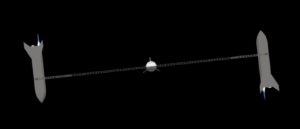
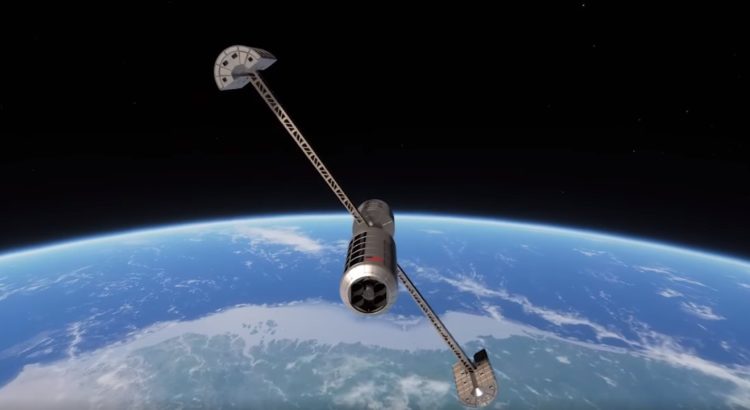
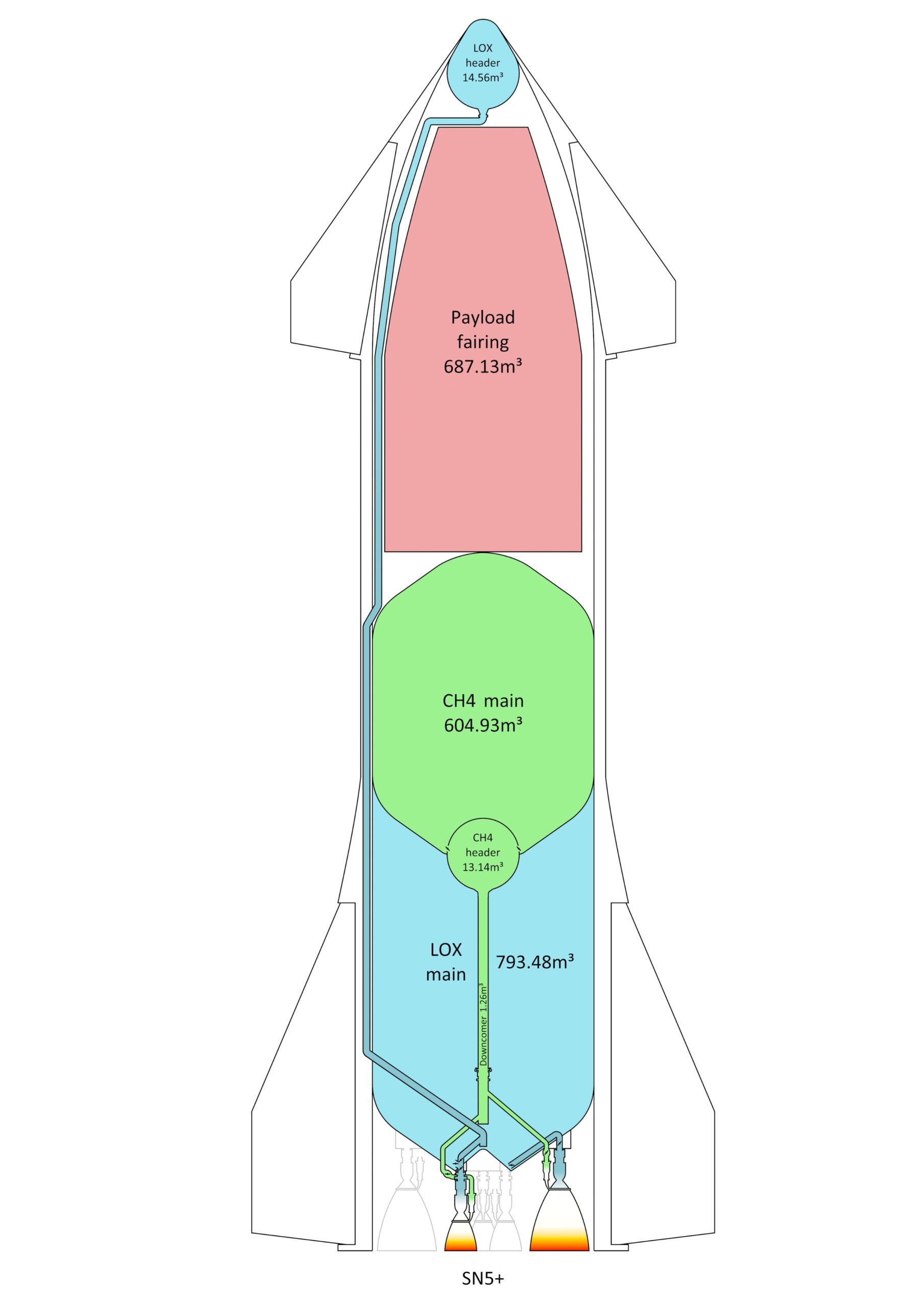
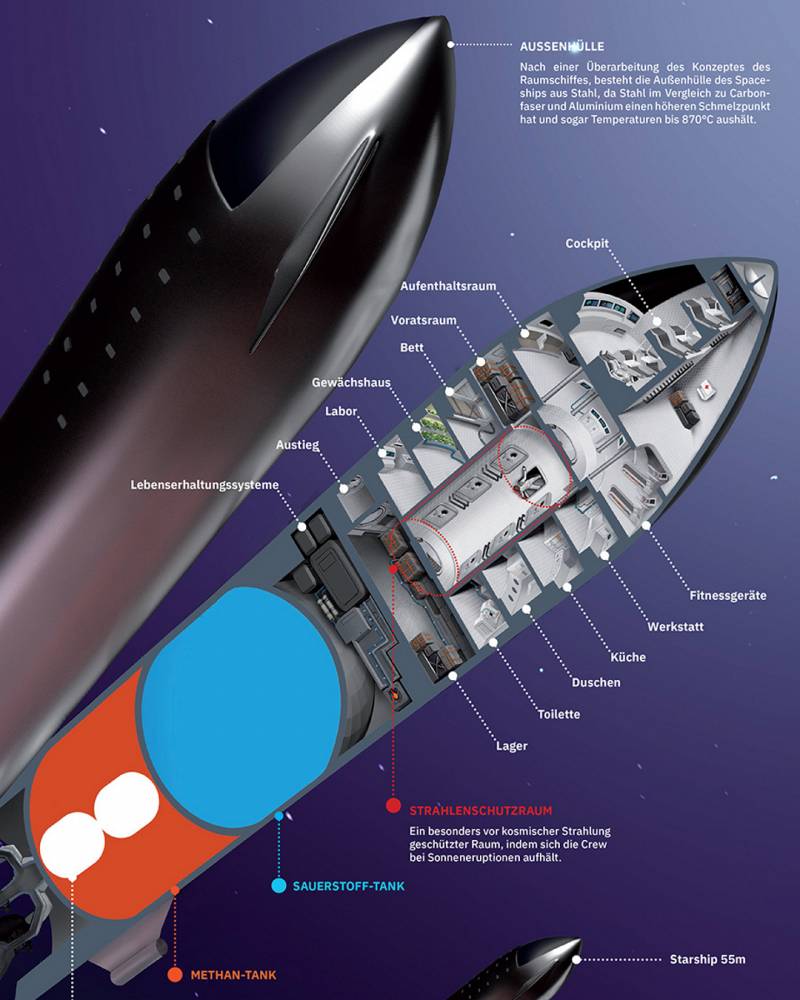
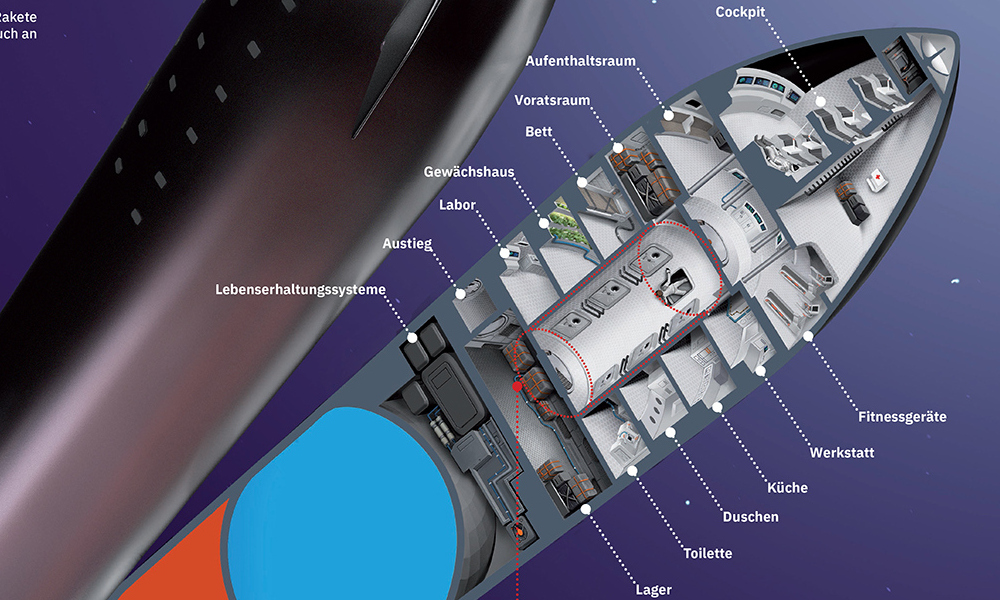


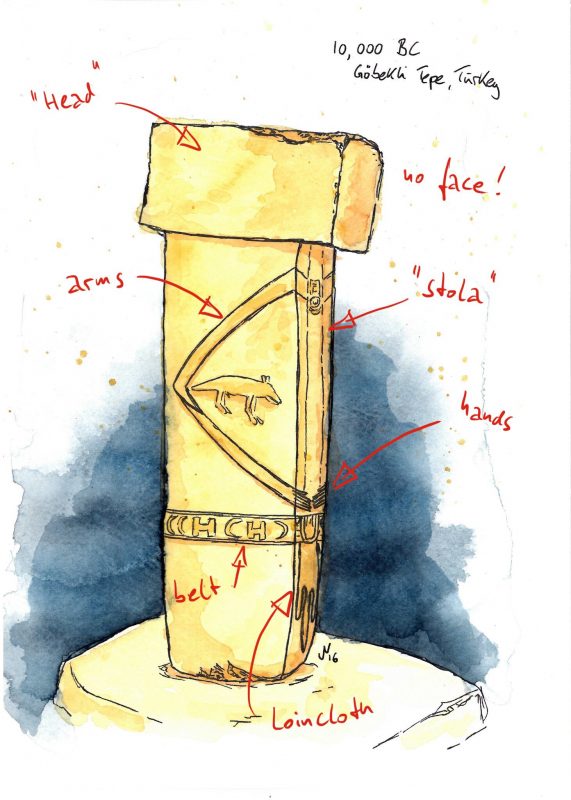
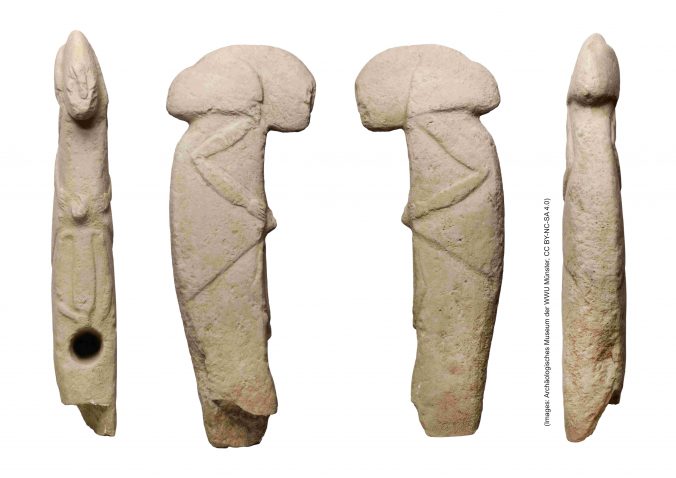
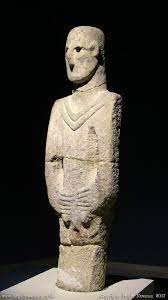
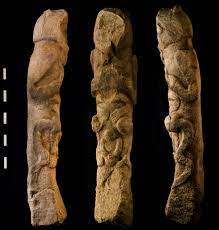
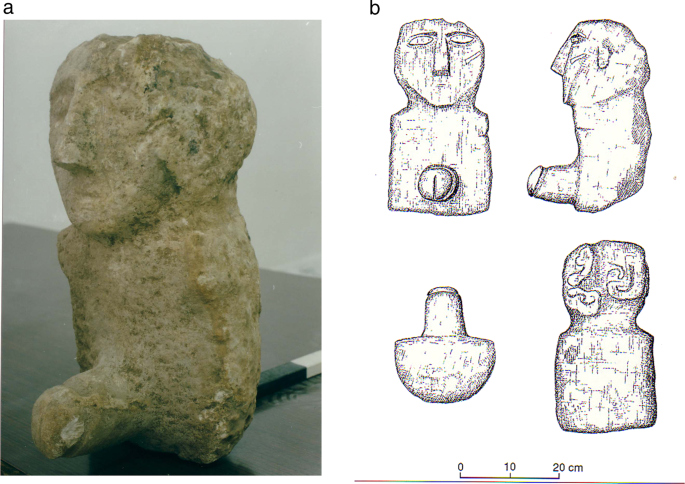
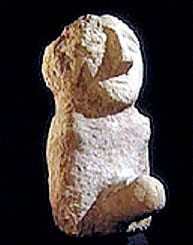
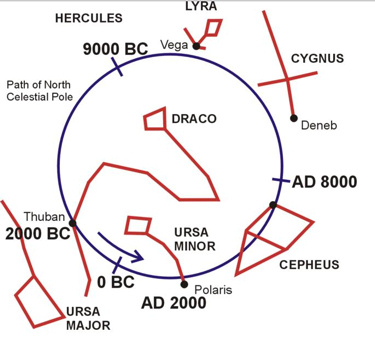
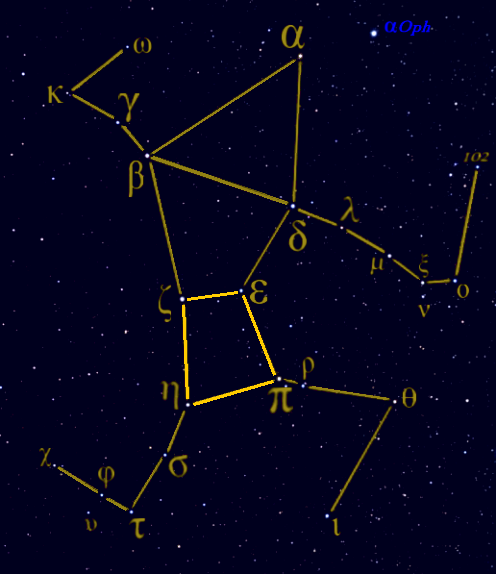
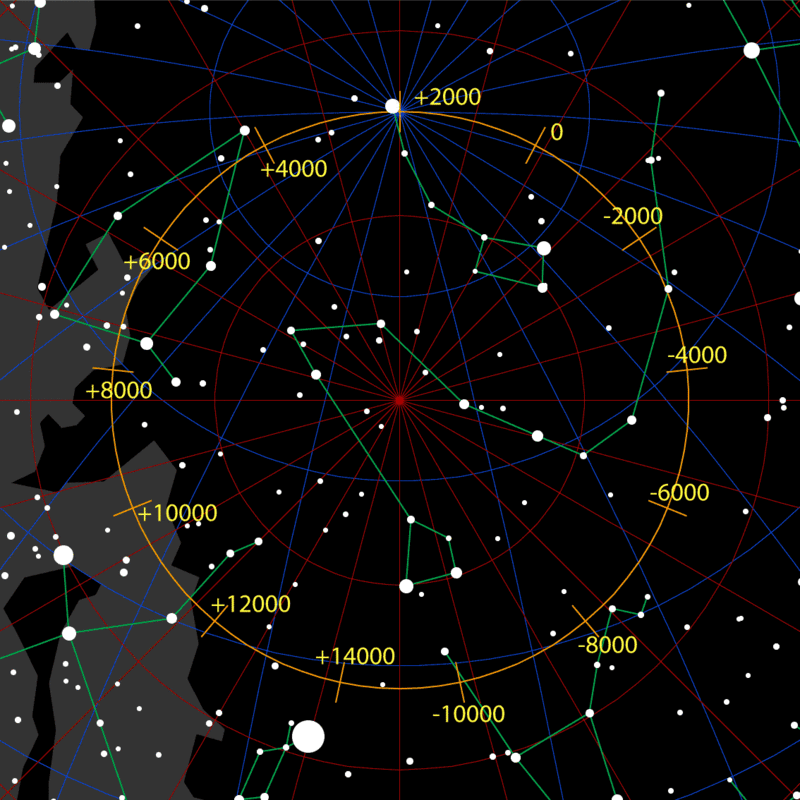
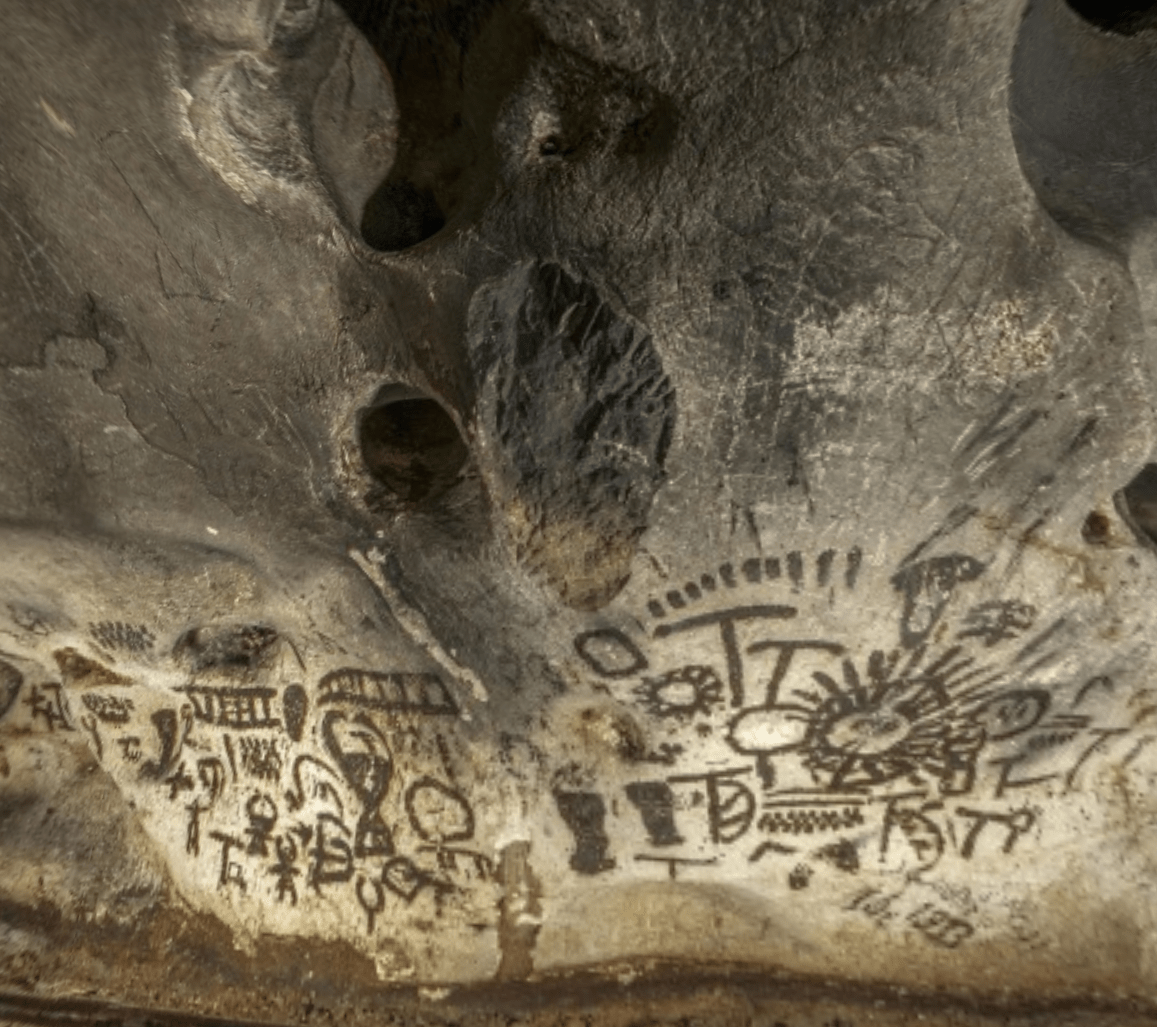

 e: n., function, office, responsibility; ideal norm; the phenomenal area of a deity’s power; divine decree, oracle; cult. ; v., to be; the Sumerian copula; to say, tell. ; poss. suffix, our. ; me3,6,7,9: battle. >> Sumerian me, has also many other meanings :” ritual, to be, beeing, will to live..” From