“LERU-I LER” !?

February 12, 2019

De unde credeti ca vine misteriosul “LERU-I LER” refrenul din unele cantece populare romanesti?

Din An English – Albanian, Albanian – English Online Dictionary. http://www.argjiro.net/fjalor/index.php

English (4 entries.)                                Shqip (4 hyrje.)
free (adj)                                                              i/e lirë
for free (nd)                                                      falas
free                                                                     gratis
free (v)                                                           liroj, çliroj

In albaneza liber, liber este : i lirë,  i lirë, i lirë  si dupa cum vedeti prin repetitie apare secventa lirë i lirë, i

sau:    liroj    liroj

Ei acestea cu trecerea timpului, si prin transmisie orala a suferit usoare modificari, devenind “leru-i ler”

Nota

English (Only one entry.)                                Shqip (Vetëm një hyrje.)
liberty                                                                    liri {f} (tsh liria) (sh liri)

What are some Albanian names that have a meaning in the Albanian … https://www.quora.com/What-are-some-Albanian-names-that-have-a-meaning-in-the-Al…  ALBANIAN GIRL NAMES (authentic & popular) *= popular alb. versions of int. names. … Elira/e (the free one) Elisa* … Ilira/Lira (f. pers. of the word Freedom)

9 – Eupedia Forum https://www.eupedia.com/forum/threads/26431-Etruscans-Illyrians…albanians/page9                                                                                                                the latin and the hellenic language are based on the albanian one ….. illyr is the english form of iliri which means the free one in today albanian ======================================================

Tudor Gheorghe – Vin colindătorii (Leru-i ler) – YouTube

TARTARIA SQUARED TABLET WITH HOLE/19 Linear A/B approach

February 8, 2019

AKNOWLEDGEMENT

This page must be understood to be kind of probe and testing, as to check in wich measure, or how close the supposed Tartaria tablet writing goes toward, or fitts the Aegean-one. You must know that the signs on the tablets are closest to sumerian proto-cuneiform ones. Then follow at the same level Anatolian and Aegean writings. The conclusion is:                           – there is no genuine sumerian nor genuine Aegean writing on tablets.              MANY ASSYROLOGISTS (AND ME ALSO) SUSTAIN (in the best case), AN QUASI-SUMERIAN WRITING                             But no wonder, is reflecting an Anatolian-European continuum, and there would be a simple explanation for this fact:                                                                                  Possible, as hypothesised Mr.I.Kenanidis and G.Papakitsos for minoan writing, the Minoans were early sumerian migrants.I AM EXPECTING THAT UNDER DIRECT SUMERIAN INFLUENCE, MINOANS SOME-HOW ADAPTET THEIR CONCEPTS (particularly that of the signs) TO THEIR CULTURE OF OLD-EUROPE TYPE ;                                                                                                   DON’T KNOW FROM WICH STAGE OF THIS PROCESSUS ARE COMING THE TABLETS !  ==============================================================

TARTARIA SQUARED TABLET WITH HOLE/2018 Linear A/B approach

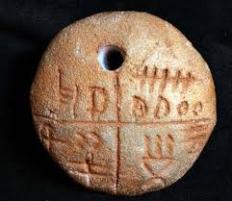
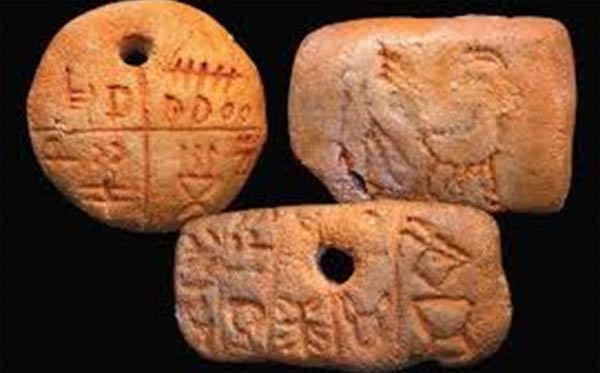
Image from ESCRITURA DE TARTARIA http://www.proel.org/index.php?pagina=alfabetos/tartaria

tartaria1

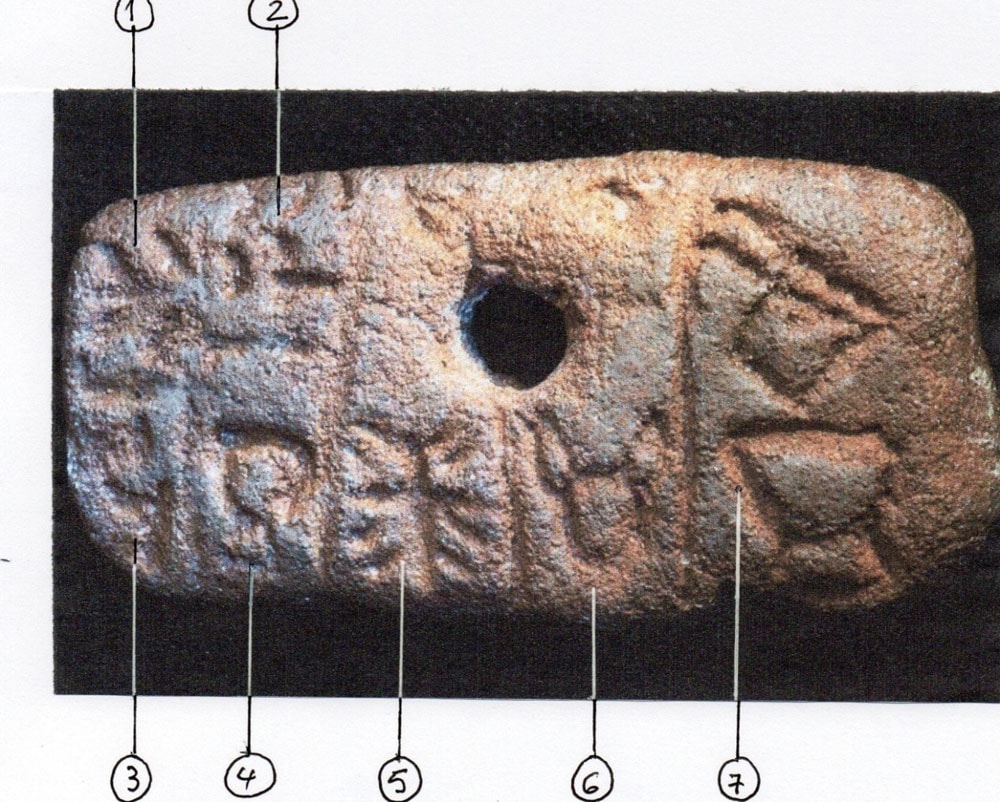
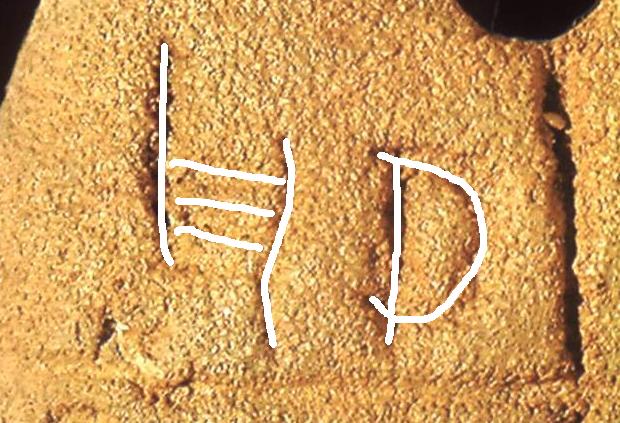
We have upper-left side, those D-s (3 signs)

(In close shape, but by imprinting, sumerians used to express numbers.

Were found in economic transactions.Signs are not imprinted as in sumerian (cuneus cuneiform) technique with the opposite edge of sharpened-one edge of stylus, so I wonder if  the writer was a native sumerian.

From https://www.voceavalcii.ro/39794-decrypting-of-tartaria-inscription-part-2-rectangular-amulet.html

Here maybe No.2, where the indication line is black.

Those 3 signs, “>>>”?, “)))”,could be (as in sumerian) number 3 or 30.                                                    (after Rumen Kolev http://www.su -varna.org/izdanij/Magazin%201%20conf/Pages%20from%2046%20to%2053.pdf interpretation:”3 (months ?)                                                                                                      CONCLUSION: “30/3 (Months ?)”                                                                                                              ——————————————————————————–

  1. Close to these signs, downward, we have sign No.1 as ear of cereal
  2.  
  3. Usually associated with agriculural products as barley:                                             Image,from http://www.mesopotamia.co.uk/writing/story/page06.html
  4.                                                                                  From http://people.ku.edu/~jyounger/LinearA/

LINEAR A *04 (TE), common

In linear B,

Linear B, Cretan“TE” “Wheat

https://encrypted-tbn0.gstatic.com/images?q=tbn:ANd9GcRykURVevP7C91htJQXSWtUoIKlv_VE7Zk8RacOILleQApR07vw

Note that this sign rather pertain to proto-writing. Cause in linear B we have signs for specific kind of grains (wheat visa barley):

https://encrypted-tbn0.gstatic.com/images?q=tbn:ANd9GcRHPdQSYyE8qr4n115PLPH_UBTyeNB9XKrQDADDWG3bdzC2-UEQZQ

(Rumen Kolev http://www.su-varna.org/izdanij/Magazin%201%20conf/Pages%20from%2046%20to%2053.pdf interpretation, with the sign underneath:”3-months corn in the temple”                            CONCLUSION: Together those 2 signs,could be interpreted as                                                                                        “ (30), 3 /volume measures of some sort of cereal grain”(gr.sitos) ?”                                  =====================================================

Next downward,this Y-shaped sign (! drawn separately in a box !)will see what could be.

  1. (sign No.3)

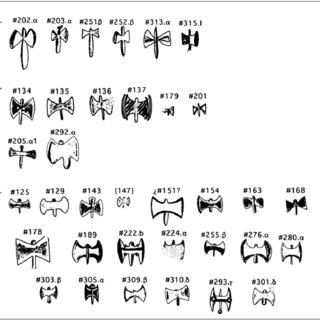
Table from https://www.researchgate.net/figure/The-Cretan-Hieroglyphic-table-of-signs-as-suggested-in-the-inscriptions-corpus-Olivier_fig3_273096050

the-cretan-hieroglyphic-table-of-signs-as-suggested-in-the-inscriptions-corpus-olivier No.019 ;024 ?                                                                                                                                                        Y-sign= linear B= “SA?

From http://www.ancientscripts.com/lineara.html “Once again applying Linear B reading to the previous Linear A texts, we see the sign sequence ja-sa-sa-ra-me. This sequence is very interesting because it appears very often in many other such votive inscriptions in slightly different variants.

lineara_ladle

FINAL READING: “SA”                                                                                                                            From   http://people.ku.edu/~jyounger/LinearA/                                                                      *31, SA, perhaps a logogram for *SA-SA-ME?;

From http://people.ku.edu/~jyounger/LinearA/                                                                                      JOHN JOUNGER SA (HT 114b.1) or SI (HT 30.1) = paid?

FINAL READING: “SA”  ========================================================                                     Next, to the right, vertical separation line ! sign 4

Next,downward, folow a sign No.4

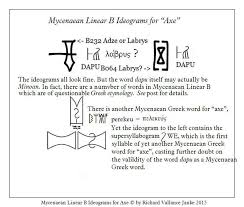
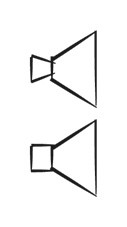
wich ressemble violin,labrys?/ 2 merged lozenges ?;

b4dd6746fe84b265e714daef471f2b89

Note: the sign  is repeated as the last sign on the tablet

Close to the cretan hierogliphic sign 042 (Labrys) <see table above>

https://enijote.wordpress.com/2017/11/25/double-axes-and-the-limits-of-knowledge/

Not much to see.  But here’s its Linear A counterpart:

The sine qua non is the interpretation of labyrinth as “Place of the Double Axes,

The Cretan Hieroglyphic evidence is even more explicit:

There are saying that the sign is at the origin of “A”:

From Essays on Ancient Anatolia in the Second Millennium B.C. https://books.google.ro/books?isbn=3447039671

Prince Mikasa no Miya Takahito (son of Taishō, Emperor of Japan) – 1998 – ‎Civilization, Assyro-Babylonian

reconstructed an IE *peleku14 of sacred use that would go back to a pre-IE digging implement of the Mesolithic of NW Europe and pre-Mesolithic … Mycenaean dapur-, Hittite tabarna/tla- barna/labarna(s) from a Sumerian balag, Assyrian pilakku, Sanskrit paraqu, Greek pelekus, designating a certain type of axe.

    (Rumen Kolev:”temple”,good!)

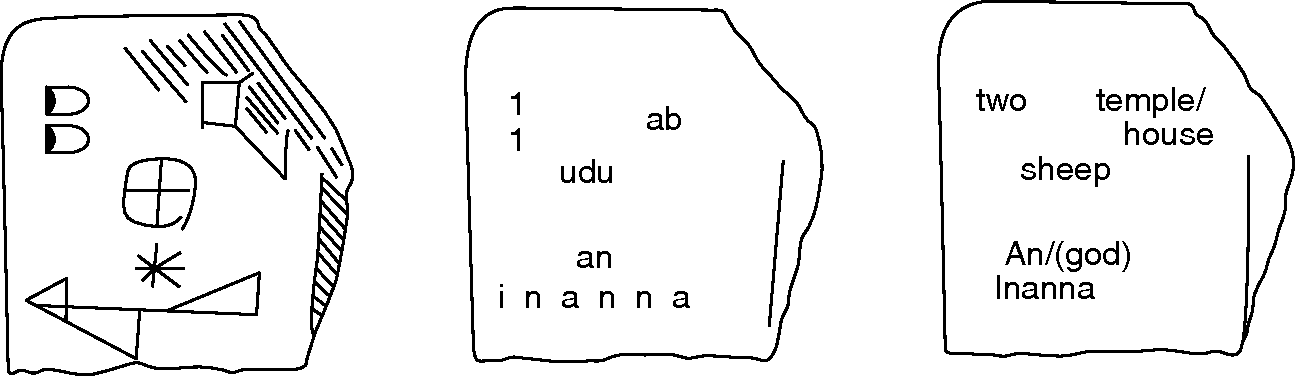
By one side, the sign has the exact shape of the sumerian proto-cuneiform sign “AB=house,temple” and by the other side labrys is the king, divinity icon, and present in most of the minoan temple/shrines, especially in Minos palace. So could be the house of the labrys :LABYRINTHOS.                                                                                                    CONCLUSION:  LABRYSICON related either to Goddess A-Sa-Sa-Ra  and ITS HOUSE-TEMPLE, cave-shrine, LABYRINTHOS                                                                                                ——————————————————————————————                                                  Next, an insect/miriapod-like sign !?! is found in more and less simylar shape all over:

As a refference, Sumerian “DINGIR”/God/sky    From https://cdli.ucla.edu/tools/signlists/protocuneiform/archsigns.html&nbsp; sign “AN


          sum.AN it is:God, Heaven

But! If URUK “dingir” has 8-11 spikes our sign have 12 (limbs)

Note that is not in a shape of wheat-ear or plant but is in a star-like shape.The difference in “spikes” number is not much problematic in my opinion.So why not,or possible to be something star-like i.e. “a GOD”?   But much,much close,(if rotated 90deg)    (count the number of lines! totaly 12 in sumerian sign as in our)                           ——————————————————————

From http://www.namuseum.gr/collections/prehistorical/mycenian/mycenian13-en.html

“KE”? (2-nd in the first row) ??

(Rumen Kolev rendering:”Sun”)                                                                                    CONCLUSION:                                                                                                                                            I will change my final interpretation of the sign, from “God, Heaven” ,”Sky-God” to “SUN”, cause beginning from minoan time, appeared the multy-rayed symbol and sure was the Sun !                                                                                                                                          —————————————————-                                                                                                 Next, donkey head-like picture or sign shape.In sumerian the sign was AMAR:”CALF”, but minoans took the sign and changed finaly to a kat-like shape.

 LINEAR B “MA

Note the scribal hand sign Ma with big ears as in our tablet!

(Rumen Kolev rendering:”bull Enlil”)

  CONCLUSION                                                                                                                                  The “long-eared head” is not related as in sumerian to AMAR “calf” ,Sun- calf/bull , but derived from the sumerian root “ama=mother”, it is MA: Aegean Mother-Goddess MA: Aegean Mother-Goddess                                                                                 ————————————————

Second sign from the end backward,right edge,upper sign.Sincerely at this sign I run out of… resources.

Sign Mo, MU !

See the paper: BUCRANIUM SYMBOL AND SIGN Cornelia-Magda Lazarovici, Gheorghe Corneliu … – Arheovest  arheovest.com/simpozion/arheovest3/03.pdf

“In Vinca-Turdas culture were found hundreds of artefacts of different kinds with the shape of a bucranium (bull-head). Or shape intricated or depicted in a way or another in them.”

The horned-head as poor as is depicted could be that of a bull. Especially cause of the sturdy/massif head.

But I explain why radher is bull. (Rumen Kolev http://www.su-varna.org/izdanij/Magazin%201%20conf/Pages%20from%2046%20to%2053.pdf rendering “bull” and the underneath sign “in/of/for the sacrifice”!?)

Cause the Bull was related to Gods/SUN and rullers (MinoTAUR).As in ancient East the bull was associated with the Sun.                                                                                            CONCLUSION                                                                                                                                        Horned-like icon is the Aegean Bull, “MU“, whoever was related to.                                       ——————————————–                                                                                                            And downward we have the very icon of  Sky-God and of the Earth counter-part,ruller Minos the DOUBLE-AX shape,

Note: By sumerians bull head associated with double ax-shape was sign AMAR + sign AB

Meaning         Bull-calf  + House/abode

Wich by them those pair-signs, ment       NERGAL      (a pair of the Sun, underground hypostasis)

(the fierry hott Sun of the mid-day time, later an underwold&death GOD(dess)

So, we have the heavenly Bull=SUN asociated with his GOD/royal sign LABRYS and his temple-house LABYRINTHOS

As Zeus Labraundos,Keraunos was depicted with the axe in his hand.

In this case nothing is necessary to be added and those signs don’t need to be much comented/translated or interpreted, it could be,

INTERPRETATION OF THE WHOLE TABLET:                                                                          AN OFFERING, ( 3/30 grain, wheat? units) SACRIFICE on THE SHRINE,TEMPLE TO THE MOTHER-GODDESS and to the SUN-BULL-GOD.                                                                                                                       ———————————————     

From ПЛОЧКИТЕ ОТ ТАРТАРИЯ И ЧАШАТА ОТ СУВОРОВО – ДВА „НАДПИСА” НА
РАННАТА ДУНАВСКА КУЛТУРА И РАЗШИФРОВАНЕТО ИМ
Румен Колев         interpretation of the last 2 signs: “cattle in/of/for the sacrificed”)

“LADY OF TARTARIA” or HOW A “GOOD INTENTION” AT RISK TO BECOME A HOAX

February 6, 2019


,             “LADY OF TARTARIA” ; SCIENCE OR SCIENCE-FICTION ? or

HOW A GOOD INTENTION HELPED WITH LIGHT-MINDEDNESS CREATED A GHOST

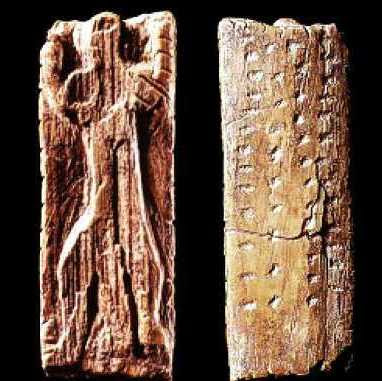
The very begining was in ‘61, when at Tartaria village, site LUNCA, in unclear circumstances was unearthed a group of artefacts.Their exact or relative position is even now an enigma.Anyways the first wrong step was to atribute the same origin,age and culture to entire bunch.                                                                                  But only the bone’s age was determined with accuracy (5.300B.C.)                                   After this bone age determination, in an optimistic exuberance burst, this 5.300 B.C. age was atributed to all artefacts. (mainly by Romanian scientists an italian Marco Merlini). Soon, later on, some foreign archaeologists realised that something is wrong.   This given age seemed too old (from artefacts/20pcs., and writing analisis) .                                     Now begun an array of given ages. Note that some of artefacts pertain indeed to Vinca Culture! For few artefacts and the tablets, luckily all somwhere around 2.750 -2.500 B.C. :

From  Chapter 3 “Existence of an archaic script in Southeastern Europe: A …www.academia.edu/…/Chapter_3_Existence_of_an_archaic_script_in_Southeastern_E… …… “presupposing they belonged to much later, to the Coţofeni cultural horizon”               me: (3.500-2.500B.C.)

From Acta Terrae Septemcastrensis https://books.google.ro/books?id=q-pjwVI1Vz0C            “2900-2500 BC as the anchor evidences (Dumitrescu 1969a: 92, 99-100, 588-589)”.

(Maybe N.Vlassa in his way was close-by as before all, to advance an age around 2.800 BC.

From Chapter 3 “Existence of an archaic script in Southeastern Europe: A …www.academia.edu/…/Chapter_3_Existence_of_an_archaic_script_in_Southeastern_E…   tablets from about 2900-2700 BC (Vlassa 1976: 33) to 2500 BC (Hood 1967: 110)

From Acta Terrae Septemcastrensis https://books.google.ro/books?id=q-pjwVI1Vz0C “the Tartaria tablets as Cotofeni finds (G.I. Georgiev and V.I. Georgiev 1969). … e.g. Petresti, Baden-Kostolac or Cotofeni

The Romanian conservative group maintained 5.300 B.C. for all artefacts.                 My recollection is that due of sustaining tablet’s age same as of the bones, Mr. Marco Merlini , baptised deceassed woman “Lady of Tartaria”.He imagined that this lady (wrote the tablets?) used them in religious rituals beeing a high esteemed person in comunity, and kind of priestess. Attention, all over the World no one artefact carring pre-writing was found before 3.300 B.C.                                

THE REAL AGE OF THE TABLETS WAS NOT DETERMINED (tablets were put in a kiln,and carbon was degraded) AND CANNOT BE DETERMINED ANYMORE                          …………Until a new scientific method will be discovered, there is no chance for exact,real age determination.    For the tablets there is no other way to determine whatever you want than signs analisis.

Out of some romanians and Marco Merlini, most of foreign archaelogists and all sumerologists, give for the tablets an maximum-maximorum age of 3.200 B.C.but most of them around 2750.

Now I am asking you : how could a person deceased at 5.300 BC to write or use some tablets wich were made in 3.200 or 2750 B.C.E?

Now 5.300-3.200=2.100 5300-2750=2.550

After priestess died, passed 2.100 years or maybe 2.550 till the tablets were written.Even if great-grandchildrens had the clay passed another (2.100-3×40):40=50 generations to be written !   Then the deceased could be in her spare time anything she wanted lady-shaman/witch or priestes. But don’t know for sure because she had no at least these very tablets in her hands to perform rituals with them.But scientists,unlike to to take the work slow and steady, with caution, rushed with astounding figures. World media was filled with “the oldest writing in the World” (of course writing before Sumer)                                                                                   —————————————————————————-                        It seems that the raw reality is pushing toward an quasi-sumerian writing on the tablets (not sumerian proper,but sumerian-like).This sumerian-like writing was introduced in Europe by sumerians, in Crete.The greek top-level researchers  EVANGELOS PAPAKITSOS si IANNIS KENANIDIS, hypothesises that early sumerian migrants were first minoans.Also their folowers/relatives in crete were also of the same stock, minoans. Greek researchers that even Aegean people had the capacity to invent a writing, they took an allready mede one.The sumerian proto-cuneiform signs were at the origin of Aegean Proto-Linear script.This script is at the base of all other folowing Aegean writings as Cretan hierogliphic, Linear a ,cipro-minoan and Linear B.                                                 ———————————————————                           You maybe know that the language and writing of minoans it is inthe course of deciphering.Bu the greatest dificulty or task are not signs, wich most of them are alike that Linear B-ones, but the language.No clear family language was found for sure for minoan language.It show characteristics as Luwian has of a banana-language.This means that there are repeting phonemes like in word ba-NA-NA.Exemple minoan Goddess A-SA-SA-ra.The above mentioned scientists searched for a language wich has agluttinative caracter (glued phonemes).Glued phonemes of the type CV(consonant-vowel)The only close-by language found was sumerian.                                    ———————————————————————

So my result research finding is that’s why  the Tartaria tablets has an type of writing by far much close to sumerian (as first noticed and atested top-level assyrologistas as:Adam Falkenstein,A.A.Vaiman,Rumen Kolev, and many others; and me also).

So it seems that the Tartaria tablets writing is coming from Aegean area,much sure Crete,where an writing and language close to sumerian-ones was used. But this not happened before 2.500 B.C. (oldest age for the oldest Agean type of writing=Cretan hierogliphic) So with indulgence and adding an securing time, this kind of writing CANNOT BE OLDER THAN 2.500 B.C. SAME FOR THE AGE OF TARTARIA TABLETS.In this case, the void span between the living “TARTARIA LADY” and the age of the tablets could be 2.800 YEARS !                                               NOTE THAT THE CRETAN HIEROGLIPHIC USED ICONS,AND ONLY FOR RELIGIOUS PURPOSES,AND WAS NOT YET A WRITING!

https://en.wikipedia.org/wiki/Linear_A                                  Linear A is a writing system used by the Minoans (Cretans) from 2500 to 1450 BC. Along with Cretan hieroglyphic, it is one of two undeciphered writing systems used by ancient Minoan and peripheral peoples. Linear A was the primary script used in palace and religious writings of the Minoan civilization.

So imagine a Lady wich not existed, (at least in the time when tablets were made) is worth of S.F. So inventing a lady can loosing the trust in science and scientists.

It is understandable that the tablets could contain something old, relating to ancient religions and miths. But the tablets were encircled by a mythical aura.So a myth around an object wich contain myths.Mith in a myth.

But relative to “Lady of Tartaria”,an fictional  person, a priestess(?) was created and constant artificialy inflated. Not beeing enough a entire story was constructed around Lady of Tartaria. A story good for a best-seller,or mooving-picture.But not good at all for science wich was not pushed forward with this contribution, no one milimeter, but rather pushed back in the dark of nescience.


“DOAMNA DE LA TARTARIA”, SAU CUM O BUNA INTENTIE RISCA SA DEVINA O GLUMA PROASTA

February 5, 2019

sau “DOAMNA DE LA TARTARIA”, FICTIUNE SAU REALITATE !? sau                                   “CUM O INTENTIE BUNA PRIN SUPERFICIALITATE POATE SA CREEZE O FANTOMA

Parca denominarea “Lady of Tartaria” apartine cercetatorului italian Marco Merlini.       Dansul bine a remarcat, ca a existat inainte de Sumer si Egypt o civilizatie Vinca extrem de dezvoltata si complexa, care a lasat multe urme si semne, dar cand mai avea doar doi pasi sa descopere scrisul, s-a destructurat,mutat ori transformat.   De unde a pornit si pe ce se bazeaza ?

Se bazeaza pe faptul ca in situl de la Tartaria/Lunca in 1961 in conditii nu prea clare s-a gasit un grup de artefacte: 3 tablite , oasele unei persoane decedate si alte cca.22 de artefacte.Localizarea lor relativa a ramas pana in ziua de azi o enigma.                        Oricum, primul pas gresit a fost acela ca s-a presupus ca au fost toate in acelasi loc.        De aici si varsta a fost declarata ca fiind aceeasi pentru toate artefactele.                   Insa doar oasele au fost datate (cca 5300 IEN) si astfel au fost incadrate ca apartinand Culturii Vinca.                                                                                                                                  Ulterior, diferiti arheologi au realizat ca ceva nu este in ordine. Pe de o parte                       – unele artefacte (excluzand tablitele) ii indreptau spre o perioada mai tarzie, iar pe de alta parte                                                                                                                                                 – chiar tablitele (dupa analiza semnelor) au inceput deasemenea sa conduca spre o perioada care nu ar fi mai veche de  3.000 IEN.                                                                                                  Trebuie retinut ca pe intreg Globul Pamantesc nu s-a gasit nici-o urma de proto-scriere inainte de 3.500 IEN. De fapt varsta tablitelor nu se va mai putea determina exact niodata (cel putin pana nu se va gasi o noua metoda de determinare).Acum se pune problema cum se rezolva urmatoare dilema,avand :                   – pe de o parte oasele  cu varsta determinata ca fiind 5.300 IEN , apoi                                 – alte artefacte cu varsta incerta intre 5.300 si 2750 (2750 exprimata de unii arheologi), si                                                                                                                                                                – tablitele cu varsta necunoscuta, dar cea mai mare vechime nu poate depasi 3200 dupa unii si 2750 IEN dupa altii (exprimata de arheologi si epigrafisti de marca)                                         ———————————————————————-                                                                           Acuma va intreb eu, cum poate o persoana decedata la 5.300 I.E.N sa scrie (sau sa foloseasca !!) niste tablite din 2.750 I.E.N !??                                                                                                                                        Daca socotim:5.300-2.750=2.550 de ani. Buun! Acum sa vedemde curiozitate,sau de amorul artei cate generatii ar fi cuprinse.Am inteles ca in vechime o generatie se poate socoti ca avand 30-40 ani.Sa luam maximum, adica ca ar fi trait mult.2550:40=63,75~64generatii.Deci chiar daca ar fi scris tablitele stranepotii decedatei,tot mai raman 60 de generatii in care inca nu puteau fi scrise.Deci decedata putea fi in timpul liber orice,si doamna si saman si persoana de vaza ori preoteasa.Dar nu putem fi siguri, pentru ca nu ne mai putem baza pe faptul ca ea ascris tablitele si le folosea la ritualuri. Si arheologii sau alti oameni de sttinta, in loc sa ia lucrurile mai cu incetul,cu scrupulozitate si precautii, s-au angrenat inca de la inceput impreuna cu altii cercetatori straini in “descoperirea celui mai vechi scris din lume’ sau “scris inainte de Sumer”.                                                                                                                                                    —————————————————————————-                                                                     Se pare ca realitatea cruda ne indreapta spre un scris de tip sumerian, adica quaasi-sumerian, introdus in Europa (Creta) de primii colonizatori ai insulei.                              Cercetarile actuale evidentiaza ca minoanii au fost de fapt primii colonisti sumerieni si mai apoi urmasii lor.Acest fapt este sustinut de cercetatorii, (culmea, chiar greci !)EVANGELOS PAPAKITSOS si IANNIS KENANIDIS, care sustin ca desi minoanii ar fi putut inventa scrisul un scris al lor, (pentru ca puteau,de ce nu ?) insa au preferat sa ia unul gata facut (semne sumeriene) cu atat mai mult cu cat se potrivea limbii lor de tip aglutinativ. Adica banana- language, o limba in care cuvintele se formeaza prin legare de particole fara prea multa gramatica ba-na-na , sau ex. in minoana zeita I-SA-SA-RA).Astfel inventand o Doamna care nu a existat in sensul ca manevra tablitele, riscam sa decolam de pe realitate si sa ne facem de rasul lumii. ACEASTA INTRODUCERE A SEMNELOR IN CRETA, SE PARE CA A AVUT LOC INTRE 2.500-2.200 IEN . IN 2500 I.E.N au inceput sa fie folosite semnele, dar altfe 2.200 IEN ESTE TIMPUL CAND SE FOLOSEA SCRIEREA CRETANA HIEROGLIFICA ( urmata aproape instantaneu de scrierile: Linear A, cipro-minoana si apoi Linear B) Acesti cercetatori sustin ca la baza acestor scrieri enumerate mai sus a stat o biblioteca de semne PROTO-LINEARE EGEEANE.

DECI ESTE POSIBIL CA TABLITELE SA FI FOST SCRISE SI MA TIRZIU, (2.500),CAZ IN CARE ECARTUL DE TIMP OASE-TABLITE POATE AJUNGE LA UN MAX.DE 2.800 DE ANI! FRATILOR,Jale! (adeca jale cu J mare)

ASTFEL UN SUBIECT STIINTIFIC INEXISTENT (PREOTEASA),A FOST UMFLAT, DEVENIND UN SUBIECT DEVENIT MIT/ DE PROPORTII MITICE.                                                                                          NE-AM ALES CU UN “STORY” CARE AR FI BUN PENTRU A STA LA BAZA UNUI FILM, EVENTUAL CU ACTIUNE IN NEOLITIC. STATI CA FILM EXISTA, SERIALUL “NIASCHARIAN-SA RENASTEM”.                                                                                                            DAR STIINTA NU A INAINTAT CU NICI-UN MILIMETRU, DIMPOTRIVA ACESTA E UN EXEMPLU CUM POTI S-O DAI INAPOI.

IDENTIFIED: AGE, PLACE OF ORIGIN, THE SCRIBE AND WRITING FOR TARTARIA TABLETS ?

February 4, 2019

Careful/ Attention

This post is not a satisfactorily decipherment or reading of any actual written (true writing) content of Tartaria tablets. Especially since we are dealing with proto-cuneiform signs, and therefore consequently with proto-writing.  Given that the signs do not belong to a single writing system but to several, the pages has a purely didactic character. It has the role of trying and testing different writings, in the idea that the tablets would have used one of them. The signs on the tablets belong to several writing systems over a long period of time and which have been used in different geographical areas. In none of the trials did the signs fall into a single type of writing, there always remained signs that came from other writings (or as coming from the unknown). Most of the signs come from the Sumerian proto-cuneiform -shaped ones. The signs in the upper half of the round tablet seem to come from archaic Greek writing. This “collection” of signs seems to be the fruit of one’s rich imagination. As A. Falkenstein and A. A. Vaiman found, (this is also my firm opinion) the author was not a scribe, he had only scarce knowledge/vague notions about writing in general, and it is not known what he intended  or he was after. There are many elements of inconsistency as well as others that take the tablets out of the usual patterns and norms of  logics, writing and honest intentions.                                                                                                                                                     ======

IDENTIFIED:                                                                                                                                  AGE, PLACE OF ORIGIN, THE SCRIBE AND WRITING FOR TARTARIA TABLETS

In the Tartaria tablets research endeavour, participated the folowing professional categories:

– Archaeologs without epigraphy qualifications

– Archaeologs with epigraphy specialisation

-Specialists in the writing systems field (Assyrology>sumerology>early sumerian writing=proto-cuneiform=proto writing)

– Multidisciplinary specialists (usualy not excelling in none of them)

– Autodidact/amateur individuals researchers

So the resulting opinions are an array of diverse and dispersed (not necessary the same or converging) on particular issues.There are as diverse as grouping in folowing categories:

-The tablest are pertaing to danubian Civilisation (in particular to Vinca-Turdas Culture), “Turdas villager” scribe, local script, and due of the complex and archaic nature, cannot be “read”

-The tablets are close folowing the very begining of sumerian writing (proto cuneiform=Late Uruk 3.200 B.C.)  so could be somwhere 2.750 B.C. Not sumerian writing proper but quasi-sumerian.The scribe could have been an sumerian prospector/trader?

– Were evidentiated connexions and symilarities betwen sumerian and Aegean writings.In Aegean the PROTOLINEAR SCRIPT, not apeared as a local invention, but carried by sumerian migrants wich were in fact early minoans.The spoke a creole language having sumerian characteristics. )./E.PAPAKITSOS & I.KENANIDIS                        Out of me,no one compared, paired or evidenced similarities of the tartaria tablets signs with those sumerian proto-cuneiform and Aegean scripts.

– One low-level comparison attempt  between Tartaria tablets signs and Linear B-ones/ COGNIARCHAE

If allmost some moths before, close to one year, I allready stressed that Tartaria tablets signs are similar and has the closest correspondence in sumerian proto-cuneiform ones, and weighting that it is improbale to have an native sumerian scribe, I hypothesised that the tablets are somhow originating from Aegean area.The scribe could be an sumerian prospector or trader? Bu rather an sumerian follower relative. Despite I read some four Evangelos Papakitsos si Iannis Kenanidis papers,wich showed that Aegean scrpts (begining with Aegean Proto-Linear) were originating insumerian early writing, and minoans were in fact early sumerians migrants settled in Crete. They’re opinion is that the sumerian matrix and was preserved and mentained till, toward our era, and could be noticed also in eteocretan script. Maybe due I took those assertions rather as hypothesis, and because their excursus was not much convincig to me, not gave much attention. In particular cause in one of my papers I analised their comparisons where I put my remarks that there are not the best choosen ones , me beeig able to give some much accurate, and much better ones. Interesting enough at that time I was still searching for the place of the scribe, where was from!!. With consistent delay came the “flash”, and realised that much more than sugesting the origin of Aegean writing (wich allready I noticed to be similar to the tablets) but also minoan’s origin.

I searched for the scribe in every places, but realising that could not be an sumerian native only if teleported ! …..But the “sumerian” fellow was at only two steps away in Crete, “disguised” as a So wasn’t necessary to search for a trader wich arrived in Vinca area, from far-away Sumer, could com easier from much closer Crete.If the tablets were written in Crete, there is no need for travelling of the scribe.Now I explain completely myself why the signs are in great measure alike, but not identical with those sumerian ones, but a part of them are similar with those used in Anatolian and Aegean writings. Knowing at an satisfying level sumerian proto-cuneiform writing, but also those Aegean-ones, I was able to make an double comparison (in the same time with those sumerians and also with those Aegeans).This task was’nt complete by anybody else You see, there happened many times in history, when scientists are anticipating an phenomenom, thing,etc. But only after this phenomenom was practicaly phisically evidenced, the hypothesis become an real fact Here, we have something alike, scientists Papakitsos and Kenanidis come with the theory that early minoans were sumerian migrants wich knew sumerian proto-cuneiform signs, and adapted them to Aegean (Crete) as Cretan proto-linear script appeared.Papakitsos &Kenanidis showed how this fact is real,interpreting Psycro inscription and Malia stone.  But the perfect exemple is coming from tartaria tablets, because its showing and preserving in a much great measure, pregnant and strong sumerian characters.

In the summer, got in touch with canadian scientist Richard Vallance, and he encouraged me, enlisting me in an World List of Aegean Bronze Age researchers.

When got in touch with Papakitsos-Kenanidis team, and told them that I found similarities and connections of Tartaria tablets signs with Aegean writings, they were rather reticent, making me to understand that our tablets are preceding (by far?) the Aegean-ones and not commented on some possible connections.

NOW, I AM SURE AND AFFIRM, ALLEGE, ASSERT THAT:

1-THE TABLETS ARE REAL, NOT FAKES;                                                                              THEIR AGE IS AFTER 3.000 B.C., POSSIBLE EVEN 2.500-2.000B.C                                              Note                                                                                                                                                     This not the real age of the tablets (wich cannot be known forever), but an estimate based of an exhaustive analisis of the signs !

2- PLACE OF ORIGIN: AEGEAN AREA (CYCLADES BUT MUCH SURE CRETE), BUT EVEN TARTARIA village (see clay analisis)

3 SCRIBE IDENTITY: MINOAN (SUMERIAN MIGRANT SETTLED IN CRETE,OR A RELATIVE/FOLLOWER) OCCUPATION:CRAFTSMEN/METTALURGIST-PROSPECTOR/TRADESMAN

4. THE SCRIBE (WHOEVER COULD HAVE BEEN) WAS FAMILIAR WITH ANCIENT SIGNS, ESPECIALLY THOSE SUMERIAN PROTO-CUNEIPHORM-ONES (used in 3.000 B.C.).

5WRITING : QUASI-SUMERIAN                                                                                             Note:                                                                                                                                               Apparently there are on all three tablets a mixture of 3 type/cattegories of signs.  There are strong clues that upper half of the round tablet is the only part wich is containing TRUE WRITING so, kind of coherent message; and it is written using newer signs ( archaic greek).

6 LANGUAGE: KIND OF CREOLE (probably PRESENTING STRONG SUMERIAN TRAITS).                      It seems that one would face the same difficulty that encounter scientists to decipher minoan language and correspondent Linear A writing (UNKNOWN LANGUAGE !)

=========================================================

Now, upon me, remain only two possibilities.If it is about an early phase of writing, it could be:

1-A reflection,exemplification, local European production of that sumerian-ones or minoan-micenaean, or more, even a true local variant of such early writings.

2- a reflection (imitation) of one cited above, and more having added a true writing only in upper half (of round-one)

BUT ONE LAST OBSTACLE REMAIN:
EVEN IF ONE COULD “READ” THE TABLETS, (EG. HAVING WORDS COMPOSED FROM LATIN LETTERS WITH APARENT RANDOM SUCCESION) IS DIFICULT TO EXTRACT WORDS WITH MEANINGS, AS YOU DON’T KNOW THE LANGUAGE WICH WAS USED, SO IN FACT CANNOT “LISTEN” THOSE WORDS IN THEIR RESPECTIVE LANGUAGE.                                               
AS IN THE CASE OF MINOAN LANGUAGE and WRITING(LINEAR A),WE DO NOT KNOW WHAT LANGUAGE SPOKE THE SCRIBE !              =============================================================

EXCERPTS FROM MR. EVANGELOS PAPAKITSOS and IANNIS KENANIDIS PAPERS:

A Comparative Linguistic Study about the Sumerian Influence on the Creation of the Aegean Scripts Ioannis K. Kenanidis1 , Evangelos C. Papakitsos*2 file:///C:/Users/User/Downloads/Minoan_Sumerian.pdf

COMMENTARY                                                  Every script in the world always conforms to the special features of the language it is initially devised for, and every script always is precise enough in phonemically representing the language it is created for. It is clear that the Aegean scripts are syllabic of the CVtype (consonant-vowel); i.e., all signs represent syllables ending in a vowel only, with no consonant clusters. This means that the script was originally devised for a CV-type language, namely a language in which all consonants are followed by vowels. There are many such languages, a very well-known of them being the Japanese. When a script is devised for a CV-type language, it is naturally a CV-type syllabary, as it is actually the case with the Japanese kana syllabaries. A CV-type pure syllabary was never initially devised for any language other than a CV-type language. While today we know of many CV-type languages, all Greek dialects were (and remain) foreign to the CV pattern. Another linguistic direction is required [2]: “In contrast with mainland Greece, Cyprus and Crete in the 2nd millennium are both multilingual societies in which the different languages are written down. It is tempting to assume that this points to stronger links with the Near East than with Greece.” It is recognized by eminent Greek linguists that there was a linguistic substratum in the Aegean area (e.g., see [33][41]). Other proposals about an adstratum instead [42] do not change the essence of our argument. This substratum is not regarded as Indo-European (IE), based on the unknown etymology of plant-names and toponyms [33]. The Aegean scripts denote that a CVtype language was spoken by those who created them. None of the IE languages is of the CV-type. The mainland of Greece and of Anatolia was inhabited by people speaking IE languages. The existence of a Semitic language (e.g., Akkadian) is also very probable in Crete, but it is not of a CV-type either. All such proposals roughly correspond to all the different ethnic groups that may have inhabited Crete or retained merchant delegations there. None of them, though, spoke a CV-type language. Ancient Egyptian was not of the CV-type, if we judge from Coptic, from renderings of Ancient Egyptian in other languages and from the ancient Egyptian script itself. Egyptian was an AfroAsiatic language, and those languages are generally not of the CV-type. Consequently [9]: Without doubt, the Minoans at the beginning of the second millennium did not ‘re-invent’ writing independently, even if they were well able to take their first steps in this direction without knowledge of the Mesopotamian or Egyptian systems. However, starting with ideas from elsewhere, they created an original and astonishingly uncomplicated system for recording the sounds of their language by means of signs.” So, the issue of identifying the language behind the Aegean scripts remains the same: all the languages around Aegean, which we know of hitherto, are incompatible to the CV-pattern. CV-type languages are usually agglutinative ones. Duhoux suggests that Linear-A is “agglutinative rather than conjugatingbecause of the high number of affixes it contains (in 59% of the words) compared to Linear-B (12% respectively) [43]. What we seek is a non-IE agglutinative language of those times (3rd millennium BC) to fit with the “kana” pattern of Linear-A/B and their predecessor. Olivier states that [9]: “A priori, no language attested in the third or second millennium from the eastern Mediterranean or its surrounding areas can be excluded … the languages spoken by people from the coasts of Asia Minor or Syro-Palestine must be favoured. … Between 3000/2600 and 1450, the period of the birth and development of Cretan Hieroglyphic and Linear A, … the introduction of a language known to us from elsewhere is unlikely.” The nearby agglutinative language of the 3rd millennium BC, well-studied and recorded, is the Sumerian. Additionally, the only highly civilized people close enough, speaking an agglutinative language well known to have CV-type phonotactics, were the Sumerians (or the bilingual Akkadian scribes / scholars because of the “sprachbund” [44][45]). Thus, the present research had been directed towards a comparative study for discovering any relation between the Sumerian language and the Aegean scripts.                                                                   EVIDENCE                                                                                                                                    Firstly, we will concentrate on some aspects of linguistic taxonomy and methodology before we proceed to the direct evidence of the last subsection (A Sample).                             A Protolinear Script. There is a suggestion that Linear-A constitutes a linearization of the Akkadian cuneiform signs [22]. However, it is normal for a script to evolve from pictorial signs (as the Sumerian pre-cuneiform and the Aegean writing signs too) into non-recognizable forms (as the late cuneiform), and rarely the reverse. It has been recognized that Linear-B is not simply a derivative of Linear-A, just as the creation of the Aegean scripts does not constitute a simple process of evolution, from the Cretan Hieroglyphics to Linear-B [27][35]. There are Aegean inscriptions found in various places (Tel Haror, Tel Lachish, Samothrace and Troy) that both Linear-A and B scripts have to be taken into account for their interpretation [46]. Although there are several different theories for explaining this necessity, there is also the possibility of a Protolinear script [47], which both Linear-A/B evolved from, for conveying different languages. In other words, the Protolinear could be the parent of Linear-A and Linear-B, while the Cretan Hieroglyphic could be regarded mainly, but not exclusively [8], as the decorative and ritual form of that system for use especially on seals [48].The hypothesized Protolinear script consists of 120 syllabograms of the V and CV patterns, as they have been found in Linear-A/B scripts, one for each syllable of a dialect close to the Archaic Sumerian language. There are also a few signs of disyllabic nature. The signs are those that are common to both Linear-A and B scripts (62) and those that are exclusive to each syllabary. So, we have a script of simplified icons (signs) depicting items, where the phonetic value of each sign is related to the Archaic Sumerian word for the depicted item. Many of them are related to the associated signs of the Cretan Hieroglyphic, also to the Sumerian pictograms and sometimes to the cuneiform equivalents. A sample is presented in the next section, for the curious reader. One debatable feature of such a script would be the interpretation of the items depicted by the icons and another is the assignment of the phonetic value to each sign.                                                    THE.METHODOLOGY                                                                                                                       We cannot recognize what an ancient sign depicted by simply looking at a modern hand copy of it in a list presenting a tentatively reconstructed syllabary and putting our imagination to work. To go to the pictorial origin, we have to see all forms of the letter in all related scripts, and observe carefully how objects are usually depicted in the Minoan art. We have to study, in addition, the logograms of Linear-A/B and the Cretan Hieroglyphic too, and also observe the tendencies of each script. When the hitherto unknown phonetic value of signs (e.g., /ru/, /to/) is discovered, then it is tested in the actual context of the signs and so confirms that it makes really good sense. It should be understood that the original script was pictographic as much as it was linear: every sign was a sketch readily recognizable by all as a common object, the whole name of which was instantly recalled by all speakers of the language of the nation that created the script. The comparative study was conducted in parallel including four factors: § the depicted object and its sign of the Aegean script, § the relation and similarity of the previous sign to equivalent Sumerian ones, § the assigned phonetic value of the sign of the Aegean script, § the similarity of the previous phonetic value to Sumerian words denoting the depicted object. At least three factors should match in order to confirm the relation. Following the above mentioned methodology, the entire set of Linear-A/B signs can be identified as monosyllabic (rarely disyllabic) Sumerian words naming the depicted objects, noting that in Sumerian language a closing consonant of a monosyllabic word (i.e., CV-C) was not pronounced unless it was followed by a vowel in the case of compounding or affixation. Thus, in all the following examples, the closing consonant is separated by a dash. This is a predominant rule of the Sumerian phonology that facilitated the process of creating the syllabary by using the rebus principle. The rebus principle is merely the use of a picture to stand not for the object depicted, but for the name of the depicted object, even in context where the sound of that name stands for something totally different than the object shown. There is an important rule that always goes together with this principle: the whole name of the depicted object is used and not a part of the name (unlike the acrophonic principle). The rebus principle had been invented by the Sumerians, according to Fischer [4], whose influence expanded to Nile, Iran, Indus Valley and maybe to the Balkans (as he suspects, and it is argued too herein, through the Aegean scripts). The phonology of the used words is of a dialect close to, but simpler than, the Archaic Sumerian (the reconstruction is explained, together with the transcription system, in [49])……………………………

DISCUSSION                                                                                                                                   Based on the very small number of different handwritings that are recognized on Linear-B tablets of Knossos and Pylos (111 of the so called “Hands”), Hooker [54] suggested the existence of a scribal guild, favored also by Finkelberg [46]. This is a reasonable explanation for the observed incongruity of Linear-B to the phonotactics of the Mycenaean Greek language, provided we deduce that the scribes were non-Greeks, and their script was originally devised from a nonGreek language. This can also explain why they did not even slightly enhance the script in order to represent the Greek language somewhat more precisely, for their own convenience, just as the Cypriot Greeks did with the Cypriot Syllabary. This could also be the reason why Linear-B was completely forgotten when the Achaean palaces declined, so the non-Greek scribes working there could not find employment. Then, no documented writing system was used in Greece for a period of about 350 years, after which the Greeks adopted a non-Greek script again: the Phoenician alphabet………………………..

The notion of a scribal guild can be extended in the past, for the creation of Linear-A and the Cretan Hieroglyphics, as a minimalistic reasonable assumption (although many evidence regarding culture and religion indicate a much stronger oriental relationship that its presentation is beyond the scope of this article). A relatively small number of Sumerian seals-makers and scribes could have been hired, from the communities of the Levant [55], in order to create the necessary infrastructure for the development of the contemporary commercial best practices. They were, after all, the original inventors of such practices with a long tradition and expertise at the end of the 3rd millennium BC. Even for the case of bilingual Akkadian scribes, the choice of the Sumerian language for devising the Aegean scripts would be a significant advantage, because monosyllabic words could be easily found in order to match common or culturally important objects for the signs of a syllabary. The creation of these scripts is a distinct trade-mark compared to the rest (Eastern Mediterranean) of that era, which is an ever-lasting desirable commercial asset. Once the Minoan authorities / society had decided to develop their commerce, both domestically and overseas, they would inevitably have to deal with the contemporary international best-practices (i.e., sealing of goods and keeping records). For example, about the usage of clay sealings [9]: “As in the Near East such objects generally served to secure the integrity of the contents of various types of container.” About the usage of scripts, it is suggested that Linear-A conveys a Semitic language (as a lingua franca) written by Luwian scribes in order to adhere to international standards [22]. In this respect, generally and diachronically, there are only two options: § to develop the required practices from scratch, which is usually a costly and slow trial-anderror process or § to hire professionals, being experts in the required practices. The latter option is mutually beneficial. The employer acquires the proper practices quickly and safely, while the employees assure their prosperity by having the monopoly of know-how. Who possessed such know-how at the end of the 3rd millennium BC? Sumerians proved to be excellent traders and colonists throughout the entire Near East, even at the end of the Uruk period [56]. According to Kramer [57]: “…by the third millennium BC, there is good reason to believe that Sumerian culture and civilization had penetrated, at least to some extent, as far East as India and as far West as the Mediterranean, as far South as Ancient Ethiopia and as far North as the Caspian”. Crete was known to Mesopotamia at least since the era of Sargon the Great, who lived approximately between the 24th and the 23rd centuries BC [58]. On the tablets of Mari (18th century BC) it is stated that “the hand of Sargon” had reached places beyond the “upper sea” (Mediterranean) as far as the island of copper (Cyprus) and Kaptara. The latter is regarded as the most ancient reference to Crete, “Kaptara” being its Akkadian name [14]. The name for Mediterranean in Sumerian is “ab-ba igi-nim”, found in many texts, e.g. in the inscription on the statue of Gudea (Period: Lagash II, ca. 2200-2100 BC): “a-ab-ba igi-nim-ta (from the Upper Sea = Mediterranean) a-ab-ba sig-gasze3” (to the Lower Sea = Persian Gulf). Even with some chronological inaccuracy, the previous period (24th to 18th centuries BC) adequately covers the creation time of the Aegean scripts. What could be the “hand” of Sargon the Great other than merchant stations and/or delegations, at least? Nevertheless, both linguistic and non-linguistic pieces of evidence, that will be presented shortly, indicate a longer and deeper Sumerian influence on the Aegean civilization of the 3rd and 2nd millennia BC.

CONCLUSION

In conclusion, the inadequacy of the Linear-A/B scripts to convey properly the phonology of the Mycenaean Greek, or the other languages proposed in Crete, is attributed herein to the origins of those syllabaries. Notably, considering the conveyed languages by Linear-A, all proposals are based on the comparative study of toponyms and anthroponyms or divinity names. Such a study, though, is not necessary when an Akkadian name is written in Akkadian cuneiform or a Luwian one in a relevant script. The Aegean scripts are acting like a distorting filter for the languages that they convey, making their identification even more difficult. Such a distortion is more or less always expected in the conveyance of words transmitted through a foreign writing system. Based on the previous linguistic evidence and conditions, it has been suggested that a very suitable candidate language as the base for creating the Aegean scripts could be the Sumerian. Being an agglutinative language, it both exhibits the matching syllabic pattern of the CV-type, and it can justify the phonetic values of the Linear-A/B and Cypro-Minoan signs as well, through the rebus principle. It is also suggested that the formation of each Aegean script could have been conducted in the late 3rd millennium BC by means of absorption from a parent script, named Protolinear, being created by a scribal guild of Sumerian linguistic origin.

A Decipherment of the Eteocretan Inscription from Psychro (Crete) Ioannis K. Kenanidis1* and Evangelos C. Papakitsos file:///C:/Users/User/Downloads/Kenanidis432017ARJASS36988deciphermentofinscription.pdf

INTRODUCTION                                                                                                                                   In 1958, Marinatos [1] reported the existence of an inscription from Psychro (Crete) that belonged to the private collection of Dr. S. Giamalakis (Fig. 1). It was engraved on a piece of stone, the shape of which showed that it was made to fit into an architectural construction, namely into an empty triangle formed over a door of a very small structure. Based essentially on Kritzas [2], Brown [3] attempted to prove that the inscription is a modern fake, his main argument being that it contains what appear to be Minoan syllabic signs (those three at the bottom of the inscription), that is signs of a script supposed to have been extinct 900 years before the inscription that was dated to 300 BC; another one of Kritzas’ arguments is that the inscription is on baked clay and not stone – something that has nothing to do with the language of the inscription anyway. Kenanidis & Papakitsos [4] have presented all arguments proving that the inscription is genuine. Those who discarded the inscription as a fake have relieved themselves of the obligation to interpret it, however, as we hold that the inscription is genuine, we must interpret it here in accordance to all our previous research.

First by Marinatos [1] and later on by Brown [5] and Duhoux [6], the inscription was attributed to an Eteocretan language. Numerous attempts have been made to interpret the text. The proposed languages included Hittite [7] and Semitic [8,9], even Slavic [10]! The shortcomings of each one of the previous attempts were reasonably exposed by Brown [11], although the latter implies that there was only one non-Greek language spoken in Crete (contrary to the linguistic evidence which makes it clear that more than one non-Greek languages were spoken in Crete [12,13,14]). Thus, to all those readers interested in the Eteocretan languages of ancient Crete, a novel approach of decipherment is presented herein, for the first time based on the Cretan Protolinear script theory [12] that suggests the affinity of the Psychro inscription to the Sumerian dialect of Crete. It will be demonstrated that the application of the Sumerian language for this decipherment provides a coherent and meaningful interpretation of the text on this inscription.                                                                                2. DECIPHERMENT GUIDELINES                                                                                            Knowing that the conventionally called Eteocretan inscriptions convey more than one language, we had to determine which language is conveyed by the Psychro inscription. One factor that makes this difficult is that the inscription language is for the most part rendered in a script foreign to the language conveyed, so the phonemes are not expected to be rendered with precision [4]. Another difficulty is that even when the language is determined, we still have to understand the specific features of that language for the given date and place. These difficulties have been overcome by following the latest linguistic evidence about the affinity of the Aegean scripts to Sumerian [15,16,17,18] and especially by confirming the existence of a Cretan Protolinear script [12,19,20,21,22,23, 24]. It is exactly the following three facts that made others regard the inscription as fake or unreadable, which opened our way to read it:1) We were facilitated by the fact that this inscription is well preserved, with not even one letter missing or unreadable. 2) The three Minoan syllabograms on the inscription clearly point to the fact that the whole inscription is in the language of those who originally created the Minoan civilization along with the Cretan Protolinear script. 3) It was impossible for others to explain how the Minoan script survived until 300 BC, while that very fact confirms the existence of the Cretan Protolinear script: As explained in previous works, the Cretan Protolinear script was created by the Minoans, who were Sumerian settlers [12,20,21,22]; the Cretan Protolinear script in the form of Linear A and Linear B was used by all the different nations that inhabited Crete and the Aegean.                                               However, in the hands of non-Minoans (i.e. Hands of nonSumerians) the Cretan Protolinear script was distorted as time passed, and eventually forgotten, because the script was difficult for nonMinoans (=non-Sumerians).                                                              On the other hand, in the hands of Minoan Sumerians the Cretan Protolinear script could not be significantly distorted or forgotten, no matter how many generations would pass.                                                                                                                          This is because the Cretan Protolinear script (henceforth in this work referred to simply as “Protolinear”) was phonetic and pictographic at the same time: every phonetic (syllabic) sign was a sketch of a readily recognizable object in the Minoan Sumerian culture.                                                                                                                           So, for those who had Minoan Sumerian as their first language, every syllabic sign had the native name of the thing that the sign depicted, and they always knew what the signs depicted.                                                                                                                       They could not alter the shape of the signs lest they would be no more recognizable and if a sign was not recognizable it could not have a native (Minoan Sumerian) name, so it could not have a phonetic value. This is why the Protolinear script could not be altered in Minoan hands; while for non-Minoans there was no connection between depicted object and phonetic use of the Protolinear signs.  Therefore, the Protolinear script survived unaltered as long as the Minoan nation existed.                 And we know that the Minoan Sumerian language, as other non-Greek languages spoken in Crete, was spoken not only until 300 BC but also much later [21], because those populations were relatively isolated geographically and socially.                                                                                                         The Sumerian language in Mesopotamia remained in use as a classical and hieratic language until about the year 100 AD . It was easy for a language to be kept for many centuries among different languages when there was no obligatory schooling and no mass media. An example is the many languages mentioned in the Bible, Acts 2, all spoken during the 1st century AD, including Elamite, a language no less old than Sumerian, and languages “of Mesopotamian people” among which were Sumerian and Akkadian – all those languages, when the eastern part of the Roman empire was rapidly Hellenised and the empire’s official language was Latin. We shall also briefly mention what is detailed in [21], that even after the pre-Greek languages were forgotten, they left some impressive phonological traits in some dialects of Crete and other islands: the most outstanding being a retroflex “l”; also, a strong tendency to eliminate consonant clusters, and the emphatic pronunciation of some stop consonants, to mention only a few traits that have been left from Sumerian. Apart from linguistic evidence, there is an abundance of cultural instances that show the influence and lingering of the Minoan Civilization even through the Classical times. The comparison of the Bronze Age Aegean (culturally Minoan) wall paintings to the Etruscan ones reveals a remarkable resemblance [26]. Those who have an idea of the Minoan religious symbols and ideas will be impressed by the coins of Tenedos island (Fig. 2) minted in the 5th and 4th centuries BC. Such coins are presented here because they most loudly prove that the Minoan Sumerian culture and religious ideas were totally alive in some Greek city states inhabited by Greeks of Minoan ancestry at least until the 4th century BC, while those symbols are a mystery for modern archaeologists as they were for the other ancient Greeks as well, who could only make up some totally fanciful and frivolous interpretations [27,28,29]. To be serious with the interpretation, on the right of Fig. 2, the coin’s verso depicts a double axe which is the most renowned religious symbol of the Minoans. The double axe symbolised the power and the duality of God An, the supreme deity of both the Minoans [12] and the Mesopotamian Sumerians [30]. The double axe symbol was also used as a very common syllabic (phonetic) sign in the Aegean scripts [12,20,21,23] and it is present, although not so common in the Sumerian (preCuneiform) pictography [17,22]. On the coin’s recto, the double-face head (manly face left, woman’s face right) clearly symbolised the same duality of the deity (masculine-feminine, yin-yang Kenanidis and Papakitsos; ARJASS, 4(3): 1-10, 2017;as we would say in modern terms). Although this representation can be interpreted as Zeus and Hera (or another mythological couple) as many scholars speculate [29], yet such a dual head representation has never been seen elsewhere in the entire Antiquity: it was a non Greek symbol that surprised the Greeks, but it was quite ordinary for the Minoans who saw a dual deity everywhere and represented the duality of the deity by all their religious symbols. Since such important Minoan Sumerian cultural elements were kept alive in a Greek city state during the 5th and 4th century BC, we cannot find any justification for considering strange a Minoan inscription in Crete of the year 300 BC. We understand that the Psychro inscription (Fig. 1) spoke about something related to building and dedicating a small shrine, because of the stone’s triangular shape that was obviously made to fit into a triangle formed over a door of a small structure …………………..

  1. CONCLUSION

It has been demonstrated so far that the Psychro inscription can be meaningfully deciphered through the conservative Sumerian dialect of Crete, spoken by the the scribe’s ancestors who had invented the Cretan Protolinear syllabary.This particular scribe used the Greek alphabet for the most part of this inscription, because it was the writing system known by all people in Crete and around the Aegean, and also because the Greek alphabet was the only available writing system proper for writing on hard material, and the only system actually used for stone inscriptions. On the other hand, the Cretan Protolinear syllabary was used almost exclusively on unbaked clay tablets, and it was only suited for writing on soft material; still, the word “cətiləə”, being so important culturally and ritually as explained, had to be written in the Cretan Protolinear that was the national script, hailing from a most ancient tradition, for the person who wrote the inscription. It is something analogous to using some Greek phrases in the Orthodox Eucharist ceremony conducted in a non-Greek language. Although it is only this stone that we know of the whole structure built, the inscription was true when it said this shrine will not ever collapse”: it is the shrine of the Minoan civilization.

AM IDENTIFICAT “SCRIITORUL”,LOCUL DE ORIGINE SI SCRISUL PENTRU TABLITELE DE LA TARTARIA

February 4, 2019

Atentie!                                                                                                                                                                  Aceasta postare nu este o o descifrare sau citire a unui presupus continut scris propriu-zis. Cu atat mai mult cu cat avem de-a face cu semne proto-cuneiforme, si deci in consecinta cu  proto-scriere. Avand in vedere ca semnele nu apartin unui unic sistem de scris ci mai multora, pagina are un caracter pur didactic. Are rolul de a incerca si testa diferite scrieri in idea ca pe tablite s-ar fi folosit unul din ele. Semnele de pe tablite apartin mai multor sisteme de scrisi dintr-larg interval de timp si care au folosite in diferite arii geografice. In niciuna din incercari semnele nu s-au incadrat intr-un singur tip de scriere, totdeauna au ramas semne care au provenit din alte scrieri (sau din necunoscut). Cele mai multe semne provin din cele sumeriene proto-cuneiforme.Apoi privind asemanarea, in ordine descrescatoare este aceea cu semnele Linear A/B si cele Anatoliene. Semnele din jumatatea superioara a tablitei rotunde par a proveni din scrierea arhaica greceasca.Cel mai degraba aceasta “adunatura” de semne pare a fi rodul imaginatiei bogate a cuiva.Dupa cum au constatat A.Falkenstein si A.A.Vaiman, (aceasta fiind si parerea mea ferma) autorul nu a fost un scrib, avea doar vagi notiuni privind scrisul in general si nu se stie ce a urmarit. Exista multe elemente de neconcordanta precum si altele care scot tablitele din tiparele si normele uzuale ale  logicii, scrisului si intentiilor oneste.

==========                                                                                                                                                       La cercetarea tablitelor, au participat pana acum urmatoarele categorii profesionale:                           – arheologi fara specializare in epigrafie                                                                                                         – arheologi cu cunostinte de epigrafie                                                                                                             – specialisti in sisteme de scriere>asirologie>scriere sumeriana >proto-scriere sumeriana                         -specialisti pluridisciplinari (din fiecare un pic….)                                                                                             -cercetatori autodidacti “amatori”          

Ca atare, au rezultat opinii care doar partial si sporadic sant convergente; principalele teorii sant:                – tablitele apartin civilizatiei Danubiene (Vinca), scrib “Turdasean”, scrisul este autohton si datorita complexitatii si caracterului extrem de arhaic al tipului de scris nu poate fi descifrat                                      – tablitele dateaza imediat dupa faza proto-scrierii sumeriene care a inceput la 3200BC si au varsta cca 2750 BC si nu prezinta scris sumerian propriu-zis ci scris “de factura sumeriana”. Autorul presupus a fi comerciant (sumerian?)                                                                                 

 – Au fost evidentiate legaturi directe intre scrierile Egeene si cea sumeriana. Scrierile Egeene nu au aparut din neant nici local ci au avut la origine scrierea sumeriana.Minoanii au fost la origine migranti sumerieni, care vorbeau un dialect apropiat de limba sumeriana. Nu au fost observate nici consemnate  legaturi ale tablitelor de la Tartaria cu acest fenomen (nici cu scrierea sumeriana nici cu ceele Egeene)./E.PAPAKITSOS & I.KENANIDIS                                                                                      

– Legaturi intre semnele tablitelor si scrierea Linear B/in rev. ANISTORITON

Desi deja in urma cu lunide zile, aproape 1 an am afirmat ca semnele tablitelor au cel mai apropiat corespondent si similaritate cu cele sumeriene, si apreciind ca fiind cu totul improbabil ca scribul sa fie nativ sumerian, am apreciat ca tablitele provin din aria Egeeana si scribul ar fi putut fi un prospector sau comerciant sumerian, dar mai degraba un urmas al unui nativ sumerian.                                                                                                  Cu toate ca am citit cca 4 lucrari ale cercetatorilor Evangelos Papakitsos si Iannis Kenanidis care au afirmat ca scrierile egeene sant rezultatul direct al adaptarii scrierii sumeriene, ca minoanii au fost de fapt urmasii primilor migranti sumerieni stabiliti in Creta.Au spus deasemenea ca amprenta si caracterul tipic sumerian s-a conservat si transmis pana inspre era noastra si pana in scrierea eteo-cretana.                                Probabil datorita faptului ca acele afirmatii le-am considerat mai degraba ipoteze, si datorita faptului ca demonstratia dansilor nu mi s-a parut prea convingatoare, nu i-am dat importanta cuvenita. Mai ales ca intr-o lucrare de-a mea am analizat exemplificarile dansilor si am remarcat si spus ca nu sant cele mai fericite, pentru ca eu pot da exemplificari mai bune, si care au o mai mare acuratete. Foarte interesant, pe undeva eu inca tot cautam sa gasesc de unde provine scribul !!.                                                                Cu oarece intarziere “mi-a cazut fisa” ca dansii tocmai mai mult decat au sugerat originea scrierilor Egeene, dar si a minoanilor. Asta seamana a fi la mine reactie intarziata, lentoare in gandire? Eu cautam scribul nu stiu pe unde, realizand totusi ca nu putea sa fi fost sumerian numai daca era teleportat. !                                                                                   ……………Dar “sumerianul” era de fapt la 2 pasi in Creta, “deghizat” in minoan. Asa incat nu a mai fost necesar sa banuiesc ca un comerciant ar fi ajuns in aria Vinca tocmai din Sumer, putea sa vina de mai aproape din Creta.                                                                          Daca tablitele au fost scrise in Creta nici nu ar mai fi necesara deplasarea scribului.    Acum i-mi explic complet de ce semnele seamana in cea mai mare masura cu cele sumeriene, nefiind identice dar o parte sant similare cu cele folosite in scrierile Egeene si Anatoliene.Cunoscand la nivel multumitor scrierea sumeriana pre-cuneiforma, dar si cele Egeene, am putut face o dubla comparatie ( a semnelor de pe tablite simultan cu cele sumeriene si totodata cu cele Egeene).Acest lucru nu l-a mai facut nimeni.

Vedeti dumneavoastra, de multe ori s-a intamplat in istorie ca oamenii de stiinta sa anticipeze existenta unui fenomen sau obiect initial ca o ipoteza, pe baze pur teoreticeDupa ce fenomenul sau obiectul a fost decelat faptic, fizic, de-abea atunci teoria s-a confirmat  dovedit ca fiind adevarata. Aici avem asemanator, cercetatorii Papakitsos si Kenanidis au emis ipoteza aparitiei scrierilor Egeene ca urmare directa a influentei scrierii sumeriene.Au putut si incepe prin a exemplifica faptic prin incercarile de citire a doua inscriptii, cea de la Psychro si cea de la…                               Dar sprijinul perfect vine de la tablitele de la Tartaria.Din Grecia avenit fundamentul teoretic si inceputul demonstratiei existentei fenomenului, dar sprijinul si dovada, echivalentul fizic perfect sant tablitele de la Tartaria.Pentru ca prezinta caracteristici aproape depline a unei scrieri de tip sumerian.

In vara, atunci cand am gasit similaritati cu scrierile Egeene, si am luat legatura cu cercetatorul canadian Richard Vallance  , acesta m-a incurajat si m-a inclus in lista mondiala a cercetatorilor care studiaza Epoca bronzului Egeeana.

Cand am luat legatura cu cercetatorii Papakitsos si Kenanidis, acestia avand in minte vechimea exagerata a tablitelor atot-vehiculata anterior, s-au exprimat ca nu ar fi scriere egeeana si nici legatura cu scrierile Egeene intrucat tablitele de la Tartaria sant mai vechi preced (scrierile Egeene).                               =============================================

ACUM SANT SIGUR,SI POT AFIRMA CA: 

1-TABLITELE AU VECHIMEA ULTERIOARA LUI 3.000BC, f.f.POSIBIL 2500-2000BC        Nota                                                                                                                                             Aceasta nu este o datare propriu-zisa a tablitelor, (acest lucru nemaifiind posibil),ci este o apreciere bazata exclusiv pe o analiza exhaustiva a semnelor.

2 – TABLITELE NU SANT CONTRAFACERI ORI FALSURI  

3- LOCUL DE ORIGINE A TABLITELOR: aria EGEEANA,Ciclade(?) dar mai sigur CRETA (sau chiar TARTARIA?/vezi analiza argilei)

4- IDENTITATEA SCRIBULUI: MINOAN= MIGRANT SUMERIAN STABILIT  IN CRETA, sau mai degraba URMAS AL UNUI NATIV SUMERIAN STABILIT IN CRETA OCUPATIE: MESERIAS ex.metalurg SAU PROSPECTOR/COMERCIANT   

5- “SCRIS”: “DE FACTURA SUMERIANA”                                                                                       Nota                                                                                                                                                           Scris intre ghilimele deoarece este proto-scriere,semnele fiind cel mai aproape de cele sumeriene proto-cuneiforme.Exista indicii puternice ca jumatatea de sus a tablitei rotunde contine scris propriu-zis, de genul arhaic grec.

6- LIMBA , UN GEN DE “CREOLA (mai apropiata de sumeriana decat de orice alta limba?)

DAR RAMANE O PROBLEMA SI INCA UNA FOARTE MARE:                                                       CHIAR DACA PRIN EXTREM IDENTIFICAND SEMNELE, AM EXTRAGE ECHIVALENTUL IN SUNETE SAU CUVINTE, NU AM STI CE INSEAMNA, NECUNOSCAND LIMBA IN CARE AU FOST SCRISE.                                                                                                                                 ACEEASI PROBLEMA O AU CEI CARE LA ORA ACTUALA FAC MARI EFORTURI SA IDENTIFICE SCRISUL LINEAR A SI LIMBA CORESPONDENTA,MINOICA.

==================================================================            Acum dupa mine au ramas in mare doar doua posibilitati. Daca sant o faza incipienta de scris, ar putea fi,                                                                                                                                        – o reflectare ,exemplificare deci o productie locala Europeana a proto-scrierii sumeriene sau a a celei minoane-miceniene sau mai mult decat atat chiar o asemenea varianta locala de scris incipient.                                                                                                      – o reflectare grosiera (imitatie) a uneia din acestea de mai sus, si posibil continand in plus scris adevarat doar in jumatatea de sus a tablitei rotunde.

==================================================================             EXTRASE DIN LUCRARILE DOMNILOR EVANGELOS PAPAKITSOS si IANNIS KENANIDIS:

A Comparative Linguistic Study about the Sumerian Influence on the Creation of the Aegean Scripts Ioannis K. Kenanidis1 , Evangelos C. Papakitsos*2 file:///C:/Users/User/Downloads/Minoan_Sumerian.pdf

COMMENTARY Every script in the world always conforms to the special features of the language it is initially devised for, and every script always is precise enough in phonemically representing the language it is created for. It is clear that the Aegean scripts are syllabic of the CVtype (consonant-vowel); i.e., all signs represent syllables ending in a vowel only, with no consonant clusters. This means that the script was originally devised for a CV-type language, namely a language in which all consonants are followed by vowels. There are many such languages, a very well-known of them being the Japanese. When a script is devised for a CV-type language, it is naturally a CV-type syllabary, as it is actually the case with the Japanese kana syllabaries. A CV-type pure syllabary was never initially devised for any language other than a CV-type language. While today we know of many CV-type languages, all Greek dialects were (and remain) foreign to the CV pattern. Another linguistic direction is required [2]: “In contrast with mainland Greece, Cyprus and Crete in the 2nd millennium are both multilingual societies in which the different languages are written down. It is tempting to assume that this points to stronger links with the Near East than with Greece.” It is recognized by eminent Greek linguists that there was a linguistic substratum in the Aegean area (e.g., see [33][41]). Other proposals about an adstratum instead [42] do not change the essence of our argument. This substratum is not regarded as Indo-European (IE), based on the unknown etymology of plant-names and toponyms [33]. The Aegean scripts denote that a CVtype language was spoken by those who created them. None of the IE languages is of the CV-type. The mainland of Greece and of Anatolia was inhabited by people speaking IE languages. The existence of a Semitic language (e.g., Akkadian) is also very probable in Crete, but it is not of a CV-type either. All such proposals roughly correspond to all the different ethnic groups that may have inhabited Crete or retained merchant delegations there. None of them, though, spoke a CV-type language. Ancient Egyptian was not of the CV-type, if we judge from Coptic, from renderings of Ancient Egyptian in other languages and from the ancient Egyptian script itself. Egyptian was an AfroAsiatic language, and those languages are generally not of the CV-type. Consequently [9]: “Without doubt, the Minoans at the beginning of the second millennium did not ‘re-invent’ writing independently, even if they were well able to take their first steps in this direction without knowledge of the Mesopotamian or Egyptian systems. However, starting with ideas from elsewhere, they created an original and astonishingly uncomplicated system for recording the sounds of their language by means of signs.” So, the issue of identifying the language behind the Aegean scripts remains the same: all the languages around Aegean, which we know of hitherto, are incompatible to the CV-pattern. CV-type languages are usually agglutinative ones. Duhoux suggests that Linear-A is “agglutinative rather than conjugating”because of the high number of affixes it contains (in 59% of the words) compared to Linear-B (12% respectively) [43]. What we seek is a non-IE agglutinative language of those times (3rd millennium BC) to fit with the “kana” pattern of Linear-A/B and their predecessor. Olivier states that [9]: “A priori, no language attested in the third or second millennium from the eastern Mediterranean or its surrounding areas can be excluded … the languages spoken by people from the coasts of Asia Minor or Syro-Palestine must be favoured. … Between 3000/2600 and 1450, the period of the birth and development of Cretan Hieroglyphic and Linear A, … the introduction of a language known to us from elsewhere is unlikely.” The nearby agglutinative language of the 3rd millennium BC, well-studied and recorded, is the Sumerian. Additionally, the only highly civilized people close enough, speaking an agglutinative language well known to have CV-type phonotactics, were the Sumerians (or the bilingual Akkadian scribes / scholars because of the “sprachbund” [44][45]). Thus, the present research had been directed towards a comparative study for discovering any relation between the Sumerian language and the Aegean scripts. EVIDENCE Firstly, we will concentrate on some aspects of linguistic taxonomy and methodology before we proceed to the direct evidence of the last subsection (A Sample). A Protolinear Script There is a suggestion that Linear-A constitutes a linearization of the Akkadian cuneiform signs [22]. However, it is normal for a script to evolve from pictorial signs (as the Sumerian pre-cuneiform and the Aegean writing signs too) into non-recognizable forms (as the late cuneiform), and rarely the reverse. It has been recognized that Linear-B is not simply a derivative of Linear-A, just as the creation of the Aegean scripts does not constitute a simple process of evolution, from the Cretan Hieroglyphics to Linear-B [27][35]. There are Aegean inscriptions found in various places (Tel Haror, Tel Lachish, Samothrace and Troy) that both Linear-A and B scripts have to be taken into account for their interpretation [46]. Although there are several different theories for explaining this necessity, there is also the possibility of a Protolinear script [47], which both Linear-A/B evolved from, for conveying different languages. In other words, the Protolinear could be the parent of Linear-A and Linear-B, while the Cretan Hieroglyphic could be regarded mainly, but not exclusively [8], as the decorative and ritual form of that system for use especially on seals [48].The hypothesized Protolinear script consists of 120 syllabograms of the V and CV patterns, as they have been found in Linear-A/B scripts, one for each syllable of a dialect close to the Archaic Sumerian language. There are also a few signs of disyllabic nature. The signs are those that are common to both Linear-A and B scripts (62) and those that are exclusive to each syllabary. So, we have a script of simplified icons (signs) depicting items, where the phonetic value of each sign is related to the Archaic Sumerian word for the depicted item. Many of them are related to the associated signs of the Cretan Hieroglyphic, also to the Sumerian pictograms and sometimes to the cuneiform equivalents. A sample is presented in the next section, for the curious reader. One debatable feature of such a script would be the interpretation of the items depicted by the icons and another is the assignment of the phonetic value to each sign. THE METHODOLOGY                                                                                                                                We cannot recognize what an ancient sign depicted by simply looking at a modern hand copy of it in a list presenting a tentatively reconstructed syllabary and putting our imagination to work. To go to the pictorial origin, we have to see all forms of the letter in all related scripts, and observe carefully how objects are usually depicted in the Minoan art. We have to study, in addition, the logograms of Linear-A/B and the Cretan Hieroglyphic too, and also observe the tendencies of each script. When the hitherto unknown phonetic value of signs (e.g., /ru/, /to/) is discovered, then it is tested in the actual context of the signs and so confirms that it makes really good sense. It should be understood that the original script was pictographic as much as it was linear: every sign was a sketch readily recognizable by all as a common object, the whole name of which was instantly recalled by all speakers of the language of the nation that created the script. The comparative study was conducted in parallel including four factors: § the depicted object and its sign of the Aegean script, § the relation and similarity of the previous sign to equivalent Sumerian ones, § the assigned phonetic value of the sign of the Aegean script, § the similarity of the previous phonetic value to Sumerian words denoting the depicted object. At least three factors should match in order to confirm the relation. Following the above mentioned methodology, the entire set of Linear-A/B signs can be identified as monosyllabic (rarely disyllabic) Sumerian words naming the depicted objects, noting that in Sumerian language a closing consonant of a monosyllabic word (i.e., CV-C) was not pronounced unless it was followed by a vowel in the case of compounding or affixation. Thus, in all the following examples, the closing consonant is separated by a dash. This is a predominant rule of the Sumerian phonology that facilitated the process of creating the syllabary by using the rebus principle. The rebus principle is merely the use of a picture to stand not for the object depicted, but for the name of the depicted object, even in context where the sound of that name stands for something totally different than the object shown. There is an important rule that always goes together with this principle: the whole name of the depicted object is used and not a part of the name (unlike the acrophonic principle). The rebus principle had been invented by the Sumerians, according to Fischer [4], whose influence expanded to Nile, Iran, Indus Valley and maybe to the Balkans (as he suspects, and it is argued too herein, through the Aegean scripts). The phonology of the used words is of a dialect close to, but simpler than, the Archaic Sumerian (the reconstruction is explained, together with the transcription system, in [49])……………………………

DISCUSSION                                                                                                                                   Based on the very small number of different handwritings that are recognized on Linear-B tablets of Knossos and Pylos (111 of the so called “Hands”), Hooker [54] suggested the existence of a scribal guild, favored also by Finkelberg [46]. This is a reasonable explanation for the observed incongruity of Linear-B to the phonotactics of the Mycenaean Greek language, provided we deduce that the scribes were non-Greeks, and their script was originally devised from a nonGreek language. This can also explain why they did not even slightly enhance the script in order to represent the Greek language somewhat more precisely, for their own convenience, just as the Cypriot Greeks did with the Cypriot Syllabary. This could also be the reason why Linear-B was completely forgotten when the Achaean palaces declined, so the non-Greek scribes working there could not find employment. Then, no documented writing system was used in Greece for a period of about 350 years, after which the Greeks adopted a non-Greek script again: the Phoenician alphabet………………………..

The notion of a scribal guild can be extended in the past, for the creation of Linear-A and the Cretan Hieroglyphics, as a minimalistic reasonable assumption (although many evidence regarding culture and religion indicate a much stronger oriental relationship that its presentation is beyond the scope of this article). A relatively small number of Sumerian seals-makers and scribes could have been hired, from the communities of the Levant [55], in order to create the necessary infrastructure for the development of the contemporary commercial best practices. They were, after all, the original inventors of such practices with a long tradition and expertise at the end of the 3rd millennium BC. Even for the case of bilingual Akkadian scribes, the choice of the Sumerian language for devising the Aegean scripts would be a significant advantage, because monosyllabic words could be easily found in order to match common or culturally important objects for the signs of a syllabary. The creation of these scripts is a distinct trade-mark compared to the rest (Eastern Mediterranean) of that era, which is an ever-lasting desirable commercial asset. Once the Minoan authorities / society had decided to develop their commerce, both domestically and overseas, they would inevitably have to deal with the contemporary international best-practices (i.e., sealing of goods and keeping records). For example, about the usage of clay sealings [9]: “As in the Near East such objects generally served to secure the integrity of the contents of various types of container.” About the usage of scripts, it is suggested that Linear-A conveys a Semitic language (as a lingua franca) written by Luwian scribes in order to adhere to international standards [22]. In this respect, generally and diachronically, there are only two options: § to develop the required practices from scratch, which is usually a costly and slow trial-anderror process or § to hire professionals, being experts in the required practices. The latter option is mutually beneficial. The employer acquires the proper practices quickly and safely, while the employees assure their prosperity by having the monopoly of know-how. Who possessed such know-how at the end of the 3rd millennium BC? Sumerians proved to be excellent traders and colonists throughout the entire Near East, even at the end of the Uruk period [56]. According to Kramer [57]: “…by the third millennium BC, there is good reason to believe that Sumerian culture and civilization had penetrated, at least to some extent, as far East as India and as far West as the Mediterranean, as far South as Ancient Ethiopia and as far North as the Caspian”. Crete was known to Mesopotamia at least since the era of Sargon the Great, who lived approximately between the 24th and the 23rd centuries BC [58]. On the tablets of Mari (18th century BC) it is stated that “the hand of Sargon” had reached places beyond the “upper sea” (Mediterranean) as far as the island of copper (Cyprus) and Kaptara. The latter is regarded as the most ancient reference to Crete, “Kaptara” being its Akkadian name [14]. The name for Mediterranean in Sumerian is “ab-ba igi-nim”, found in many texts, e.g. in the inscription on the statue of Gudea (Period: Lagash II, ca. 2200-2100 BC): “a-ab-ba igi-nim-ta (from the Upper Sea = Mediterranean) a-ab-ba sig-gasze3” (to the Lower Sea = Persian Gulf). Even with some chronological inaccuracy, the previous period (24th to 18th centuries BC) adequately covers the creation time of the Aegean scripts. What could be the “hand” of Sargon the Great other than merchant stations and/or delegations, at least? Nevertheless, both linguistic and non-linguistic pieces of evidence, that will be presented shortly, indicate a longer and deeper Sumerian influence on the Aegean civilization of the 3rd and 2nd millennia BC.

CONCLUSION

 In conclusion, the inadequacy of the Linear-A/B scripts to convey properly the phonology of the Mycenaean Greek, or the other languages proposed in Crete, is attributed herein to the origins of those syllabaries. Notably, considering the conveyed languages by Linear-A, all proposals are based on the comparative study of toponyms and anthroponyms or divinity names. Such a study, though, is not necessary when an Akkadian name is written in Akkadian cuneiform or a Luwian one in a relevant script. The Aegean scripts are acting like a distorting filter for the languages that they convey, making their identification even more difficult. Such a distortion is more or less always expected in the conveyance of words transmitted through a foreign writing system. Based on the previous linguistic evidence and conditions, it has been suggested that a very suitable candidate language as the base for creating the Aegean scripts could be the Sumerian. Being an agglutinative language, it both exhibits the matching syllabic pattern of the CV-type, and it can justify the phonetic values of the Linear-A/B and Cypro-Minoan signs as well, through the rebus principle. It is also suggested that the formation of each Aegean script could have been conducted in the late 3rd millennium BC by means of absorption from a parent script, named Protolinear, being created by a scribal guild of Sumerian linguistic origin.


A Decipherment of the Eteocretan Inscription from Psychro (Crete) Ioannis K. Kenanidis1* and Evangelos C. Papakitsos file:///C:/Users/User/Downloads/Kenanidis432017ARJASS36988deciphermentofinscription.pdf

  1. INTRODUCTION In 1958, Marinatos [1] reported the existence of an inscription from Psychro (Crete) that belonged to the private collection of Dr. S. Giamalakis (Fig. 1). It was engraved on a piece of stone, the shape of which showed that it was made to fit into an architectural construction, namely into an empty triangle formed over a door of a very small structure. Based essentially on Kritzas [2], Brown [3] attempted to prove that the inscription is a modern fake, his main argument being that it contains what appear to be Minoan syllabic signs (those three at the bottom of the inscription), that is signs of a script supposed to have been extinct 900 years before the inscription that was dated to 300 BC; another one of Kritzas’ arguments is that the inscription is on baked clay and not stone – something that has nothing to do with the language of the inscription anyway. Kenanidis & Papakitsos [4] have presented all arguments proving that the inscription is genuine. Those who discarded the inscription as a fake have relieved themselves of the obligation to interpret it, however, as we hold that the inscription is genuine, we must interpret it here in accordance to all our previous research.

First by Marinatos [1] and later on by Brown [5] and Duhoux [6], the inscription was attributed to an Eteocretan language. Numerous attempts have been made to interpret the text. The proposed languages included Hittite [7] and Semitic [8,9], even Slavic [10]! The shortcomings of each one of the previous attempts were reasonably exposed by Brown [11], although the latter implies that there was only one non-Greek language spoken in Crete (contrary to the linguistic evidence which makes it clear that more than one non-Greek languages were spoken in Crete [12,13,14]). Thus, to all those readers interested in the Eteocretan languages of ancient Crete, a novel approach of decipherment is presented herein, for the first time based on the Cretan Protolinear script theory [12] that suggests the affinity of the Psychro inscription to the Sumerian dialect of Crete. It will be demonstrated that the application of the Sumerian language for this decipherment provides a coherent and meaningful interpretation of the text on this inscription.                          2. DECIPHERMENT GUIDELINES

Knowing that the conventionally called Eteocretan inscriptions convey more than one language, we had to determine which language is conveyed by the Psychro inscription. One factor that makes this difficult is that the inscription language is for the most part rendered in a script foreign to the language conveyed, so the phonemes are not expected to be rendered with precision [4]. Another difficulty is that even when the language is determined, we still have to understand the specific features of that language for the given date and place. These difficulties have been overcome by following the latest linguistic evidence about the affinity of the Aegean scripts to Sumerian [15,16,17,18] and especially by confirming the existence of a Cretan Protolinear script [12,19,20,21,22,23, 24]. It is exactly the following three facts that made others regard the inscription as fake or unreadable, which opened our way to read it:1) We were facilitated by the fact that this inscription is well preserved, with not even one letter missing or unreadable. 2) The three Minoan syllabograms on the inscription clearly point to the fact that the whole inscription is in the language of those who originally created the Minoan civilization along with the Cretan Protolinear script. 3) It was impossible for others to explain how the Minoan script survived until 300 BC, while that very fact confirms the existence of the Cretan Protolinear script: As explained in previous works, the Cretan Protolinear script was created by the Minoans, who were Sumerian settlers [12,20,21,22]; the Cretan Protolinear script in the form of Linear A and Linear B was used by all the different nations that inhabited Crete and the Aegean. However, in the hands of non-Minoans (i.e. Hands of nonSumerians) the Cretan Protolinear script was distorted as time passed, and eventually forgotten, because the script was difficult for nonMinoans (=non-Sumerians). On the other hand, in the hands of Minoan Sumerians the Cretan Protolinear script could not be significantly distorted or forgotten, no matter how many generations would pass. This is because the Cretan Protolinear script (henceforth in this work referred to simply as “Protolinear”) was phonetic and pictographic at the same time: every phonetic (syllabic) sign was a sketch of a readily recognizable object in the Minoan Sumerian culture. So, for those who had Minoan Sumerian as their first language, every syllabic sign had the native name of the thing that the sign depicted, and they always knew what the signs depicted. They could not alter the shape of the signs lest they would be no more recognizable and if a sign was not recognizable it could not have a native (Minoan Sumerian) name, so it could not have a phonetic value. This is why the Protolinear script could not be altered in Minoan hands; while for non-Minoans there was no connection between depicted object and phonetic use of the Protolinear signs. Therefore, the Protolinear script survived unaltered as long as the Minoan nation existed. And we know that the Minoan Sumerian language, as other non-Greek languages spoken in Crete, was spoken not only until 300 BC but also much later [21], because those populations were relatively isolated geographically and socially. The Sumerian language in Mesopotamia remained in use as a classical and hieratic language until about the year 100 AD [25]. It was easy for a language to be kept for many centuries among different languages when there was no obligatory schooling and no mass media. An example is the many languages mentioned in the Bible, Acts 2, all spoken during the 1st century AD, including Elamite, a language no less old than Sumerian, and languages “of Mesopotamian people” among which were Sumerian and Akkadian – all those languages, when the eastern part of the Roman empire was rapidly Hellenised and the empire’s official language was Latin. We shall also briefly mention what is detailed in [21], that even after the pre-Greek languages were forgotten, they left some impressive phonological traits in some dialects of Crete and other islands: the most outstanding being a retroflex “l”; also, a strong tendency to eliminate consonant clusters, and the emphatic pronunciation of some stop consonants, to mention only a few traits that have been left from Sumerian. Apart from linguistic evidence, there is an abundance of cultural instances that show the influence and lingering of the Minoan Civilization even through the Classical times. The comparison of the Bronze Age Aegean (culturally Minoan) wall paintings to the Etruscan ones reveals a remarkable resemblance [26]. Those who have an idea of the Minoan religious symbols and ideas will be impressed by the coins of Tenedos island (Fig. 2) minted in the 5th and 4th centuries BC. Such coins are presented here because they most loudly prove that the Minoan Sumerian culture and religious ideas were totally alive in some Greek city states inhabited by Greeks of Minoan ancestry at least until the 4th century BC, while those symbols are a mystery for modern archaeologists as they were for the other ancient Greeks as well, who could only make up some totally fanciful and frivolous interpretations [27,28,29]. To be serious with the interpretation, on the right of Fig. 2, the coin’s verso depicts a double axe which is the most renowned religious symbol of the Minoans. The double axe symbolised the power and the duality of God An, the supreme deity of both the Minoans [12] and the Mesopotamian Sumerians [30]. The double axe symbol was also used as a very common syllabic (phonetic) sign in the Aegean scripts [12,20,21,23] and it is present, although not so common in the Sumerian (preCuneiform) pictography [17,22]. On the coin’s recto, the double-face head (manly face left, woman’s face right) clearly symbolised the same duality of the deity (masculine-feminine, yin-yang Kenanidis and Papakitsos; ARJASS, 4(3): 1-10, 2017;as we would say in modern terms). Although this representation can be interpreted as Zeus and Hera (or another mythological couple) as many scholars speculate [29], yet such a dual head representation has never been seen elsewhere in the entire Antiquity: it was a non Greek symbol that surprised the Greeks, but it was quite ordinary for the Minoans who saw a dual deity everywhere and represented the duality of the deity by all their religious symbols. Since such important Minoan Sumerian cultural elements were kept alive in a Greek city state during the 5th and 4th century BC, we cannot find any justification for considering strange a Minoan inscription in Crete of the year 300 BC. We understand that the Psychro inscription (Fig. 1) spoke about something related to building and dedicating a small shrine, because of the stone’s triangular shape that was obviously made to fit into a triangle formed over a door of a small structure …………………..

  1. CONCLUSION
  2. It has been demonstrated so far that the Psychro inscription can be meaningfully deciphered through the conservative Sumerian dialect of Crete, spoken by the the scribe’s ancestors who had invented the Cretan Protolinear syllabary.This particular scribe used the Greek alphabet for the most part of this inscription, because it was the writing system known by all people in Crete and around the Aegean, and also because the Greek alphabet was the only available writing system proper for writing on hard material, and the only system actually used for stone inscriptions. On the other hand, the Cretan Protolinear syllabary was used almost exclusively on unbaked clay tablets, and it was only suited for writing on soft material; still, the word “cətiləə”, being so important culturally and ritually as explained, had to be written in the Cretan Protolinear that was the national script, hailing from a most ancient tradition, for the person who wrote the inscription. It is something analogous to using some Greek phrases in the Orthodox Eucharist ceremony conducted in a non-Greek language. Although it is only this stone that we know of the whole structure built, the inscription was true when it said “this shrine will not ever collapse”: it is the shrine of the Minoan civilization.

SYNTHESIS AND CONCLUSIONS RESULTING FROM RESEARCH ON TARTARIA TABLETS

February 3, 2019

Careful/ Attention !                                                                                                                                             This post is not a decipherment or reading of any actual written content of Tartaria tablets. Given that the signs do not belong to a single writing system but to several, the page has a purely didactic character. It has the role of trying and testing different writings, in the idea that the tablets would have used one of them. The signs on the tablets belong to several writing systems over a long period of time and which have been used in different geographical areas. In none of the trials did the signs fall into a single type of writing, there always remained signs that came from other writings (or as coming from the unknown). Most of the signs come from the Sumerian proto-cuneiform -shaped ones. The signs in the upper half of the round tablet seem to come from archaic Greek writing. This “collection” of signs seems to be the fruit of one’s rich imagination. As A. Falkenstein and A. A. Vaiman found, (this is also my firm opinion) the author was not a scribe, he had only vague notions about writing in general, and it is not known what he intended  or he was after. There are many elements of inconsistency as well as others that take the tablets out of the usual patterns and norms of  logics, writing and honest intentions. ====

SYNTHESIS AND CONCLUSIONS RESULTING FROM RESEARCH ON TARTARIA TABLETS                            Homage to: Mrs. Szofia Torma and Nicolae Vlassa who were much inspired and science-oriented than our-day scientists to detect and asert the type of writing and tablet’s age.

zsofia_torma_01vlassatartaria

  • This is the result of allmost 11 years of throughly research. Was an fantastic, fantabulous endeavour to wich became addicted, and also only at the finish realising that was exhausting.
  • SOME (ONLY) OF MY CONLUSIONS ARE QUITE SHOCKING, BECAUSE ARE BY LITTLE ASIDE OF THE UP TO NOW COMMON COURSE OF OPINIONS.Documenting from scientific sources is time-consuming and people are excited when told misteryous stories. Such of a tribe wich burned their ruller when become old !? Or of an wich, diformed shaman-priestess in better case, wich made rituals using psichedelic/psychotropic potions.
  • WHAT SHOWED UP IN MY RESEARCH ARE NOT MATCHING ESPECIALLY THAT ONES ADVANCED BY ARCHAELOGS, BUT CANNOT SAY THE SAME WITH THAT OF TOP-LEVEL ASSYROLOGISTS/EPIGRAPHERS.
  • FOR EVERY STATEMENT OR ASSERTION MADE HERE, I AM AT THE DISPOSAL OF INTERESSED PEOPLE AND SHOW THE EVIDENCES WITH WICH I CAN SUSTAIN, ADING SIMILAR OPINIONS OF OTHER 3 SCIENTISTS.
  • If I realised that cannot rely on archaeology dispersed data, my arguments are based on a profound and throughly analysis of the signs and “writing” from wich one could easy deduce my personal contribution. I renounce to order the conclusions upon a subjective criteria (such as “importance” could be).                      Note:                                                                                                                                                Every personal conclusion wich was partly advanced by others will be marked with *, and wich was not advanced by others before, will be marked with ***                        ——————————————————————————
  1. THE AGE OF THE TABLETS ARE AWAY OF THOSE FIGURES ALLREADY ADVANCED  (ARE NEWER). IN THE ARCHAELOGICAL SITE, ON THE VERY SPOT, SOMETHING TERRIBLE WRONG OCCURRED; (KIND OF “ARCHAEOLOGICAL/SCIENCE ACCIDENT HAPPENED AT THE SITE).*                           ————————————————————————————————————————
  2. THE AGE SPAN BETWEEN THAT OF SUPPOSED “PRIESTESS”(wich bone’s are true 5.300 B.C.) AND THAT OF THE TABLETS COULD BE AS MUCH AS 2.500 YEARS, (5500-3000=2500)OR EVEN 3.500(5.500-2.000=3.500)!***                                                  ————————————————————————–
  3. NEVER-ENDING-STORIES(LADY VINCA!?) ARE GOOD FOR MOOVIE-PICTURES BUT NOT PUSHING SCIENCE FORWARD, BUT ON CONTRARY .                               THERE IS NO CHANCE FOR THE DECEASED WOMAN TO HAVE THE TABLETS IN HANDS ! ***                                                                                                                                        ——————————————————————————————-                                
  4. THE TABLETS WERE NOT SCRATCHED BY A NATIVE SUMERIAN.                                HALF OF THE SIGNS HAS EXACT SUMERIAN SHAPE AN ANOTHER HALF ARE ROUGH COPIES OF THAT SUMERIAN-ONES *                                                                      —————————————————————————————
  5. THE SIGNS ARE NOT SUMERIAN PROPER BUT SUMERIAN-INFLUENCED.         ONE SIGN HAS NO MOUTH TO SPEAK: THE VERY SHAPE OF PROTO-CANAANITE(PROTO_SINAITIC),PHOENICIAN AND PALEO-HEBREW EXACT SHAPE OF SIGN CHET-HETH.THIS SHAPE WAS NOT USED BEFORE 2.000 B.C.*                  —————————————————————————————————–
  6. THE TABLETS WERE NOT SCRATCHED BY AN TARTARIA OR TURDAS NATIVE *             ——————————————————————————————
  7. THE TABLETS SEEM TO BE “WRITTEN” BROUGHT BY AN TRADER OR CRAFTSMEN SETTLED IN AREA OR BROUGHT BY ONE  RATHER COMING FROM AEGEAN AREA (Cyclades,CRETE; (see alabaster cup, “faceless”-type idol and Spondylus-shell bracelet, items characteristic to Cyclades !)* —————————————————————————————-
  8. THE TABLETS/SIGNS”WRITING” SHOW AN DIRECT STRONG INFLUENCE FROM NEAR EAST IF NOT EXACTLY FROM SUMER*                                                                    ———————————————————————–
  9. EVIDENCES ON THE TABLETS OF SIMILARITIES WITH AEGEAN WRITINGS ( Cretan Hierogliphic, Linear A ,Linear B and Eteocretan)*                                                                ——————————————————————————–
  10. SIMILARITIES WITH ANATOLIAN WRITINGS (ESP. CARIAN)***                                          ————————————————————————————
  11. THE TABLETS ARE CONTAINING A BUNDLE OF 3 DIFFERENT CATEGORIES/TYPES OF SIGNS, WICH SEEM NOT TO BE DIRECT-INTERNALY RELATED ALL ONE WITH ANOTHER, WITH THE CONSEQUENCE THAT WE CANOT EXTRACT AN CONTINOUS SEMANTHIC UNITY AS WE ARE READING NOWDAY AN MASSAGE WICH IS CONTINOUS (NOT DISRUPTED).***                                                  ——————————————————————————————
  12. I FOUND WRONG IDENTIFICATIONS, MISSED SIGNS(SIGNS NOT FOUND),etc. IN OTHER SCIENTISTS INTERPRETATIONS, SO I AM PRETENDING THAT MY INTERPRETATION IS ONE OF TOP-LEVEL.*                                                                                                                  —————————————————————————–
  13. MY CONCLUSIONS (NUMBERED) SUPERPOZE IN GREAT MEASURE THAT OF OTHER SCIENTISTS CONCLUSIONS, (IN GREAT MEASURE WITH THAT OF ASSYROLOGISTS A.A.VAIMAN and RUMEN KOLEV)*                                                                                           ———————————————————————
  14. THE TABLETS AS A WHOLE, ARE NOT CONTAINING AN TRUE WRITING, AS PUBLIC IS ACCUSTOMED WITH, WICH IS ABLE TO TRANSMIT AN COHERENT MESSAGE..ARE CONTAINING IDEOGRAMS, LOGOGRAMS & ICONS WICH COULD BE INTERPRETED AND NOT READ BECAUSE IS PROTO-WRITING.*                                                                                     ————————————————————–
  15. THERE ARE PRESENT ON THEM SOME ICONS OF TREMENDOUS AND PARAMOUNT CULTURAL IMPORTANCE WICH WERE USED IN ANCIENT TIME ON EXTENDED AREA. THEIR ORIGIN IS FAR DEEP IN TIME***                                   ———————————————————————–
  16. EVEN SO, THERE ARE STRONG EVIDENCES AND CLUES THAT UPPER HALF OF THE ROUND TABLETIS CONTAINING TRUE WRITING (Archaic greek).                 BY CHANCE (OR NOT) THIS IS THE SAME AREA WICH WAS HIDDEN (COVERED BY THE OTHER SQUARED TABLET).MAYBE NOT WITHOUT PURPOSE. THE WORDS REFFERED  MAYBE TO SOMETHING SACRED,HOLY FOR THEM, AND THE TABLETS COULD BE USED IN MISTERY-RELIGIOUS RITUALS .***                                  ————————————————————————————

SINTEZA si CONCLUZII rezultate din cercetarea tablitelor de la Tartaria

February 2, 2019

  1. Atentie!                                                                                                                                                            Aceasta postare nu este o o descifrare sau citire a unui presupus continut de scris adevarat. Avand in vedere ca semnele nu apartin unui unic sistem de scris ci mai multora, pagina are un caracter pur didactic. Are rolul de a incerca si testa diferite scrieri in idea ca pe tablite s-ar fi folosit unul din ele. Semnele de pe tablite apartin mai multor sisteme de scris dintr-larg interval de timp si care au folosite in diferite arii geografice. In niciuna din incercari semnele nu s-au incadrat intr-un singur tip de scriere, totdeauna au ramas semne care au provenit din alte scrieri (sau din necunoscut). Cele mai multe semne provin din cele sumeriene proto-cuneiforme. Apoi privind asemanarea, in ordine descrescatoare este aceea cu semnele Linear A/B si cele Anatoliene. Semnele din jumatatea superioara a tablitei rotunde par a proveni din scrierea arhaica greceasca. Cel mai degraba aceasta “adunatura” de semne pare a fi rodul imaginatiei bogate a cuiva.Dupa cum au constatat A.Falkenstein si A.A.Vaiman, (aceasta fiind si parerea mea ferma) autorul nu a fost un scrib, avea doar vagi notiuni privind scrisul in general si nu se stie ce a urmarit. Exista multe elemente de neconcordanta precum si altele care scot tablitele din tiparele si normele uzuale ale  logicii, scrisului si intentiilor oneste. 

=====                                                                                                                                                Aceaste lucrari, sant un omagiu adus cercetatorilor:                                                                                Zsofia Torma si Nicolae Vlassa care au intuit, apoi pe baze stiintifice au indicat corect (poate in mai mare masura decat oamenii de stiinta actuali) natura semnelor si varsta tablitelor.

zsofia_torma_01vlassatartaria

Acesta este rezultatul unei cercetari personale minutioase pe parcursul a circa 11 ani. Pe scurt, a fost atat o aventura atat palpitanta, iesita din comun, careia nici sa fi vrut nu ma puteam sustrage, cat si, constat acum, consumatoare de resurse interne adica extenuanta ori istovitoare.

UNELE DIN CONCLUZIILE EXPRIMATE PAR SOCANTE, PENTRU CA SE ABAT MAI MULT SAU MAI PUTIN DE LA CURSUL COMUN SI DE LA LA CEEA CE ERA STIUT PANA ACUM.

Pentru fiecare concluzie, la cerere pot furniza argumentatia mea plus inca altele minimum 3 ale altor cercetatori.

Argumentatia mea are la baza o cercetare profunda si  in amanuntime (analitica si sintetica) a scrisului, din care usor se poate vedea contributia personala.                    Nota                                                                                                                                                   Fiecare concluzie la care nu am paternitatea absoluta este marcata cu *.Cele care sant numai ale mele, cu ***.                                                                                                                              Am avut intentia sa le enumar intr-un soi de ordine (dar nu stricta) descrescatoare  dupa criteriul sa zicem al importantei aspectelor, dar de fapt enumerarea lor dupa un anumit criteriu este mai putin importanta:                                                                                                                                  ————————————————————————————

  1. VARSTA TABLITELOR ESTE DEPARTE DE DIFERITELE ESTIMARI FACUTE DE DIFERITI OAMENI DE STIINTA PANA ACUM, IN SENSUL CA POT FI INCA MAI NOI.*   ACOLO, IN SITUL ARHEOLOGIC S-A PETRECUT CEVA INGROZITOR DE RAU, SA-I ZICEM “ACCIDENT ARHEOLOGIC”, AVAND CONSECINTE PE MASURA (IN PRIVINTA DATARII SPRE EXEMPLU) ***                                                                                                        ————————————————————————                                                        2. TABLITELE NU AU FOST SCRISE DE UN NATIV SUMERIAN.                       JUMATATE DIN SEMNE DOAR REFLECTA SCHITAT SEMNELE SUMERIENE*                                                ——————————————————————————-                                          3. TABLITELE NU AU FOST SCRISE DE UN NATIV AL TARTARIEI SAU TURDASULUI.                                                                                                                                —————————————————————————————-                             4. TABLITELE AR FI PUTUT FI SCRISE DE UN COMERCIANT SAU MESERIAS  stabilit in zona, dar cu sanse mari PROVENIND DIN ARIA EGEEANA (Ciclade,Creta ?).(vasul din alabastru, idolul de tip “fara fata” si bratara Spondylus indica/reflecta  zona Cicladelor)*                                                                                                                          ———————————————————–                                                                 5. TABLITELE CONTIN SEMNE CARE ARATA O INFLUENTA PUTERNICA SI DIRECTA DINSPRE ORIENTUL APROPIATEVENTUAL CHIAR SUMER. *                                      ——————————————————————————                                         6.  TABLITELE PREZINTA SEMNE SI ICOANE CARE AU UN ECHIVALENT IN SCRIERILE EGEENE (Hieroglifica Cretana, LinearA,LinearB si eteocretana)  *** Nota                                                                                                                                        EVANGELOS PAPAKITSOS si IANNIS KENANIDIS au aratat doar influenta scrierii sumeriene asupra celei Egeene in general, fara ca sa ia in vizor ori sa exemplifice cu tablitele de la Tartaria                                                                                                         —————————————————————–                                                                         7. DEASEMENEA AM GASIT SIMILARITATI CU SCRIERILE ANATOLIENE in general (in special CARIANA)***                                                                                                  ——————————————————————-                                                  8.  TABLITELE CONTIN O AMESTECATURA DE SEMNE, DIN 3 TIPURI/CATEGORII DIFERITE CARE SE PARE CA NU AU O LEGATURA DIRECTA SI INTERNA INTRE ELE, SI DE ACEEA ESTE IMPOSIBIL SA FIE INTERPRETATE UNITAR IN SENSUL IN CARE SE CITESTE UN MESAJ CARE ARE O CONTINUITATE.***                                                     ———————————————-                                                                                               9.  O PARTE DIN CONCLUZIILE MELE COINCID CU CELE ALE ALTOR CERCETATORI, DAR DEVIN FOARTE MULTE (daca le numaram ale fiecaruia),CAND VINE VORBA DE ASIROLOGII A.A.VAIMAN SI RUMEN KOLEV                                                   ——————————————————————————–                                                10. ANALIZANDINTERPRETARILE “SUMERIENE” ALE ALTOR CERCETATORI, AM GASIT IDENTIFICARI GRESITE, SEMNE CARE NU AU FOST GASITE etc. PE CARE LE-AM NOTAT SI PUS LA PUNCT. ASTFEL LUCRAREA MEA SE SITUEAZA FARA SA DAU DOVADA DE FALSA MODESTIE CA FIIND UNA DE CEL MAI INALT NIVEL.           ———————————————————————-                                                          11. TABLITELE PER GLOBAL NU CONTIN UN SCRIS PROPRIU-ZIS, IN SENSUL ASTEPTAT DE PUBLIC, ADICA TOATE TABLITELE SA TRANSMITA IMPREUNA UN MESAJ COERENT SAU MAI PUTIN.CONTIN IDEOGRAME,LOGOGRAME SI SILABOGRAME CARE SE INTERPRETEAZA SI NU SE CITESC PROPRIU-ZIS, ICOANE CARE AU AVUT O ENORMA SI IMPORTANTA SEMNIFICATIE IN TRECUT SI PE O ARIE LARGA.***                                                                                                                                ———————————————————————————————————-             12. TOTUSI EXISTA MAI MULTE INDICII CA TOCMAI JUMATATEA DE SUS A TABLITEI ROTUNDE CONTINE SCRIS (arhaic Grec).                                                  SPUN “TOCMAI” PENTRU CA  INTAMPLATOR ACEA JUMATATE ERA ASCUNSA PRIVITORULUI (fiind acoperita de cea dreptunghiulara), PROBABIL NU FARA UN ROST ANUME. ***                                                                                                                         ——————————————————————————————————–                        13.INDICIUL CARE IMI SUGEREAZA CA TABLITELE NU SANT SUMERIENE SI NU DEPASESC 2.000 B.C. ESTE PREZENTA FORMEI SPECIFICE A LITEREI CHET/HETH CARE ARATA O INFLUENTA SEMITICA.***

“NIASCHARIAN”, sau cum i-ti poti bate joc simultan si printr-un singur cuvant si de istorie si de poporul Roman

January 29, 2019

Multi se plang si fac site-uri tip “ISTORIA ASCUNSA” si prostii de genul asta.Similar cu faptul ca am fi fost vizitati de extraterestri si mai-marii lumii ne ascund acest fapt si dovezile.                                                                                                                                            Pana la urma, am realizat ca este vorba de ignoranta oamenilor. inclinarea spre mister si misticism si lenea crasa de a se documenta si cerceta. cunoasterea nu vin in microsecunde pri-ntrun tunel al timpului sau revelatie, inspiratie divina.

ISTORIA DA, ESTE ASCUNSA IN CEATA PROPRIEI IGNORANTE.ACEST FAPT ESTE VALABIL MAI MULT SAU MAI PUTIN PENTRU ORICINE.INCLUSIV PENTRU EINSTEIN, CARE LA DESCOPERIREA UNUI FENOMEN CUANTIC, S-A IMBATOSAT ZICAND CA “DUMNEZEU NU JOACA ZARURI” SI CAT ERA EL DE EINSTEIN, S-A INSELAT !

Am gasit un serial de firme documentare intitulat :                                                        NIASCHARIAN-SA RENASTEM”   CER SI PAMANT ROMANESC Cuvant despre noi, romanii https://cersipamantromanesc.wordpress.com/2016/09/05/un-film-dedicat-celei-mai-vechi-scrieri-din-lume-si-continuitatii-sale-pe-teritoriul-actual-al-romaniei/comment-page-1/#comment-24223

Serialul cuprinde un ghiveci de descoperiri reale (inscriptii,Ezerovo,Gradesnita) si prezumtive, neatestate definitiv si in totalitate (tablitele de la Tartaria, care sant coloana vertebrala a serialului si tablitele de la Sinaia). Ele cuprind diferite perioade temporale si culturi, precum si locatii diferite (Bulgaria, Serbia, Romania). In ideea ca a fost o mare miscare culturala complex articulata si agregata. Cu accentul si focalizarea, stiti deja, pe Romania. Extras din site-ul de mai sus:

“Regizorul Leonardo Tonitza a reușit să filmeze artefacte senzaționale cum ar fi Amuletele de la Tărtăria, Tăblițele din plumb din Tezaurul de la Sinaia, Codexul Rohonczi, Biblia lui Wulfilla, Gresia de la Cosăuți și multe altele și, în același timp, să obțină interviuri de excepție de la importanți cercetători străini și români în legătură cu cea mai veche scriere și cea mai veche civilizație din lume.                    Potrivit regizorului, primul documentar al trilogiei ”Niascharian”, cel pe care îl puteți viziona mai jos, este un film dedicat celei mai vechi scrieri din lume și continuității sale ca scriere sacră pe parcursul a cca. 8 milenii, în teritoriul actual al României.

Niascharian in limba sacră a vechilor geto-daci insemna „sa renastem”

Un comentariu »

INTREBARE PENTRU DL. LEONARDO TONTZA:As vrea sa stiu, a cui este gaselnitza si care este sursa stiintifica pentru NIASCHARIAN=”sa renastem” (in limba getilor !) eugenrau@gmail.com
tartariatablets.com

Apreciază

Comentariu de eugenrau | 28/01/2019 Răspunde  ============================================

Cum am ceva cunostinte in domeniul lingvisticii (si nu putine) mi-a atras atentia aceasta struto-camila “NIASCHARIAN”.Am facut niste sondaje preliminare cu Google tastand atat cuvantul intreg cat si pe bucati: Proto indo-european roots nascharian, indo-european nascharian, sanskrit nascharian, sanskrit nasc harian…. si toate combinatiile posibile. rezultat ? LULU/zero barat/nimic ! Bineinteles ca mi s-a intiparit bine-cunoscuta secventa ARIAN cu care se termina cuvantul.M-am mirat si nu prea.Am inceput sa devin oarecum iritat, si am continuat cautarea.Singurele rezultate si atestari ale folosirii acestui cuvant le-am gasit ca fiind folosite ieri-alaltaieri:

Din Altfel de istorie: Niascharian. Cea mai veche scriere din lume  http://www.radiocluj.ro/2014/11/03/altfel-de-istorie-niascharian-cea-mai-veche-scriere-din-lume/

“Fireşte că s- a întâmplat aşa cum se întâmplă de obicei lucrurile astea: la începutul săptămânii trecute mă aflam cu o cu totul altă treabă la Cinema Victoria din Cluj, când doamna Gabriela Bodea, managerul cinematografului, mi- a pus în mână un pliant pe care scria  Niascharian- Să renaştem-Cea mai veche scriere din lume, Scenariul şi regia Leonardo Tonitza şi mi- a spus că dacă mă interesează subiectul, mă invită cu drag vineri seara la proiecţie, dar să nu uit că este o proiecţie unică a acestui film documentar de lung metraj. Fireşte că mă interesa, pentru că acest cuvânt, niascharian, necunoscut mie (şi cred că şi vouă) avea o rezonanţă ciudată, parcă nu- l ştiam, dar parcă îl ştiam, deşi nu- l mai întâlnisem niciodată pînă atunci şi, cu siguranţă că însemna să renaştem, că aşa se înţelegea de pe pliant, dar în ce limbă oare?

A.M: Domnule Leonardo Tonitza sunteţi conştient în ce v- ati aventurat? ……………………………………………………………..

A.M: Am să vă întreb acum: titlul înseamnă ceva?
L.T: Da. Niascharian este un vechi cuvânt al limbii sacre, care chiar asta înseamnă: să renaştem. Este cred că cel mai vechi cuvânt din limba geţilor, nu vorbim despre daci, nu vorbim despre traci. Aţi văzut că istoricii nu vorbesc despre împărţiri arbitrare, moldoveni, ardeleni, clujeni, bucureşteni. Există un mare popor getic. Populaţia getică evident, pe un asemenea teritoriu, avea dialecte diferite. Ideea era că erau un singur popor şi asta era un lucru foarte important. Exista o unitate de gândire, o unitate de concepte.    =====================================================================

Apoi am gasit o intreaga gramada de gunoi poluant, de genul:                                               Ce inseamna „Syn Ze Sase Tri”? https://www.metalforce.ro/ce-inseamna-syn-ze-sase-tri/

Numele trupei provine dintr-o rugaciune cioplita pe o piatra de mormant descoperita in Muntii Apuseni. Numele se traduce cu „Sunt cu trei de sase”, dar fiind de origine precrestina nu are simbolistica malefica din ziua de azi. Din contra, legendele spun ca numarul „666” era considerat de bun augur, un numar magic, protector si aducator de prosperitate. „Ruga”, ultima piesa de pe primul album al trupei („!ntre doua lumi”) contine in versurile sale intreaga inscriptie funerara: „AYRELIA BENERIA, SYM FORO, SYN DIO, SYN ZE SASE TRI, KAI TETHI GATRI, AYRIS NONAM, NIASCHARIAN„. In traducere „Stralucitoare mare Zeitate, iti sunt credincios, sunt cu trei de sase, protejeaza-ma si intoarce-ma la viata.

Din

INSCRIPŢII GRECEŞTI ŞI LATINE
DIN SEC. IV – XIII DIN DOBROGEA
TOMIS
(Constanţa)

https://www.dervent.ro/s/i/index-Inscr.TOMIS2.html

39
MNA, L, 817. Placă de marmură ruptă în patru bucăţi, descoperită în Constanţa.
Dimensiuni: 0,37 x 0,355 x 0,05 m; înălţimea literelor: 0,05 m.
Secolele V–VI.

Barnea, St. teol., 6, 1954, p. 98, nr. 14 (text trad.,) (idem, Dacia, N.S., l, 1957 p. 268, pl. I, 5 (foto), p. 283).

    Αὐρήλια Βενέρια
Συμφόρω συνβίω
συνζήσας ἔτη ι´
καὶ τῆ θυγατρὶ
5  αὐτῆς Νόνᾳ μνί- 
    ας χάριν


“Aurelia Veneria (a pus aceast epitaf) soţului ei Symforus, cu care a trăit 10 ani, şi fiicei sale Nona, spre pomenire“.

2. Σύμφορος nume rar, dar întîlnit totuşi în Egipt (Preisigke, Namenbuch, s.v.) şi la Efes (Bull. ép., 1961, 539). N în loc de μ în σύνβιος este rezul­tatul grafiei fonetice şi istorice în substantivele compuse, v. Mihailov, Langue, § 38.

5. Νόνα cu un singur ν se explică prin simplificarea geminatelor, v. Mihai­lov, op. cit., § 43. Despre numele Nonna, v. nr. 38.                =====================================================================================                                                                                                     P.S.                                                                                                                                                           1. In lingvistica nu exista limba getica. Doar limba traca eventual cu dialectul dacic. In masura in care stiti, inca de prin 800 IEN grecii au intemeiat emporium-uri (colonii comerciale) pe toate coastele marilor mai apropiate de ei.La noi Histria,Tomis si Calatis (si inca 2 cred).Acolo, populatia chiar daca nu o fi fost majoritar greaca, folosea ca limba comuna (lingua franca) greaca. Asadar dupa cum, nu trebuie sa avem multe dioptrii sa observam ca inscriptia este scrisa cu litere grecesti si cuvintele sant in cea mai pura limba greaca. NICIDECUM GETE !

2. Nu are rost sa ne batem capul de ce, dar se pare ca dacilor,getilor ori nu le placea sa scrie, oricum nu se omorau cu scrisul, (probabil era mai comod sa se rezume doar la vorbit). Asemanator, (dar macar au lasat cateva inscriptii) tracii. Si alea aveau tangenta doar cu vrajile, blestemele (katadesmos) si in general cu misterele= religiile orfice.

From the Harvard Art Museums’ collections Funerary Stele of “Child …


Din https://biblehub.com/greek/5484.htm                                                                                      5484 xárin acc. of charis, used as preposition
Definition
in favor of, for the pleasure of
NASB Translation
because (1), reason (5), sake (2).
===========================================================

Ce-o fi fost in capul lor? Nici ei nu stiu…probabil au luat asa la repezeala sa iasa ceva si in legatura cu nasterea ,NASC, latinnascere https://en.wiktionary.org/wiki/nascere

  1. (intransitive) to be born

+dar si ceva “tare” sau tare vechi, latin arare, a ara, de fapt a ridica pamantul probabil si in leg. cu radacina ebraica ur, a se trezi,inalta, HARIAN,arian, ca doar santem arieni sange-pur,nu?

https://en.wikipedia.org/wiki/Aryan#Etymology
DE FAPT SI-AU BATUT JOC DE :
public, romani considerati ca fiind niste iliterati/nealfabetizati/,
prosti, care rumega ce li se da !??
-de banii statului (de fapt ai populatiei) pentru ca au cerut fonduri pt. turnarea filmului
-de memoria getilor si                                                                                                                           – de limba lor si asa putin cunoscuta.
Au adus un cuvant nu ca sa ajute cu ceva, sa mai faca lumina ci sa ne bage in ceata, si sa incurce si mai mult lucrurile.
=============================================
P.S.
Si nu ma necajeam chiar asa tare daca din bruma de cuvinte presupus a fi getice/dacice 90% sant denumiri de plante (medicinale?).Vorba aia:floricele pe campii hai sa le-adunam copii!  Din putinatatea inscriptiilor presupus a fi dacice, cea mai de vaza este cea arhi-binecunoscuta de pe un vas crater: DECEBALUS PER SCORILO.Dar nici acolo dracu’ nu doarme pentru ca daca ar fi fost inscriptie pentru Decebal o scria mai mare, si nu doar pe 0,05 % din suprafata exterioara a vasului sub forma de STAMPILA (amprentare prin stampilare!).Putea fi ceva folosit curent, spre ex
DECE BALUS PER SCORI-LO=10 BALOTI/AMBALAJE PENTRU PARCURS RAPID https://en.wiktionary.org/wiki/scori
DEKE/DECE (it.dieci)=ZECE
PER=PENTRU
SCORI-LO=engl.SCROLL (DOWN)=PARCURGERE RAPIDA *(in faza limbii latine spre lb. italiana!)
Oare nu cumva avand in vedere ca aurul nu se extrage din nisipul aurifer cu una cu doua, poate era rentabil sa fie dus undeva unde existau posibilitati tehnologice mai avansate !? scoria=engl.”slag” ..ce ramane dupa topire, ZGURA

scori=”fa”

Inscripţia “Decebalvs Perscorilo nu înseamnă “Decebal, fiul lui Scorilo” https://www.lovendal.ro/wp52/inscriptia-decebalvs-perscorilo-nu-inseamna-decebal-fiul-lui-scorilo/
 
Pentru că ştampila PERSCORILO „creaţi pentru” rămânea valabilă pentru toate vasele comandate, pe când numele destinatarului se schimba: *R
Si mai rau….*scori lo! inseamna si a scurge, scori-lo este la vocativ”scurge-l!”
Decebalus per Scorilo – Ce inseamna? – ISTORIE și TEATRU – Hetel.rohttp://www.hetel.ro/index.php/2010/12/833/


Dec 2, 2010 – O alta interpretare data inscriptiei a fost Decebal prin Scorilo. I.I.Russu, cel … “PER SCORI LO” inseamna intr-un dialect italian : pentru scurgere.

de fapt per scori lo “ca sa-l scurgi”
sa fi fost billy (oala de noapte a vreunei cohorte !?).Asa ne trebuie, daca am cercetat si mi-a trecut prin cap va-ti fi asteptat sa tin secret? de ce ma rog?

The Posthumous Disgrace of the Dark Master of Archaeological Hoaxes

January 28, 2019

From ancientorigins_featured_theme_logo_jan2019_roman2

https://www.ancient-origins.net/news-history-archaeology/posthumous-disgrace-dark-master-archaeological-hoaxes-009740

“Today, we are reminded that the world of archaeology is no different from oil, banking, chess clubs and churches. Wherever a group of people are to be found, while the greater part are honest folk making a day’s wage, among their numbers are unscrupulous and self-serving liars.

A British Archaeologist Fabricated Finds

Professor James Mellaart died in 2012 leaving an archaeological legacy, and was famed for the discovery of Çatalhöyük, a massive 9,000-year-old settlement in Turkey.             Now, scientists have bust Mellaart for having “faked several of the ancient murals and may have run a ‘forger’s workshop of sorts,” stated geoarchaeologist Eberhard Zangger, president of the Luwian Studies Foundation in a Luwian Studies Press Release .    ============================================================                          Media Release https://luwianstudies.org/app/uploads/2018/03/LS_MI_20180301_Mellaart_ENG.pdf

British prehistorian forged documents throughout his life
An examination of James Mellaart’s estate reveals that the British prehistorian ran a veritable forger’s workshop throughout his life.
London / Zurich, 1 March 2018 – For half a century one of the great pioneers of Anatolian
archaeology, the British prehistorian James Mellaart (1925-2012), fabricated documents to reinforce his theories. This became clear during an examination of Mellaart’s estate in his former study in North London. Mellaart had made a name for himself with the discovery and excavation of important Neolithic and Early Bronze Age sites in Turkey, including Beycesultan, Hacılar and Çatalhöyük. Still in his thirties, he was even considered the most famous archaeologist in the world. From 1958 onwards he was repeatedly involved in scandals. In several cases, colleagues accused him of falsifying evidence, but were unable to substantiate these allegations. The documents in Mellaart’s estate leave no doubt that the critics were entirely right.
The biggest scandal occurred in 1962 when the Turkish press condemned Mellaart’s
publication of the so-called Dorak treasure in a large-scale media campaign. It was followed by scathing criticism of the alleged discovery of murals in Çatalhöyük: Many years later Mellaart claimed to have found very extensive and detailed wall paintings in rooms that in the original excavation reports were said to have contained no murals. Mellaart published drawings of these murals – but no photos.
From 24 to 27 February 2018, James Mellaart’s son Alan and Swiss geoarchaeologist Eberhard Zangger examined the estate in Mellaart’s former apartment near London’s Finsbury Park. In June 2017, Eberhard Zangger accepted material from the estate which the prehistorian had identified as particularly important. Together with the Dutch linguist Fred Woudhuizen, Zangger published a series of Luwian hieroglyphic inscriptions in December 2017. This publication evoked indignant accusations from experts around the world who believed the documents to be forgeries – probably fabricated by Mellaart himself, even though he had claimed he could not even read Luwian hieroglyphics.
“These allegations of forgery are undoubtedly justified,” says Zangger. “We did not find any ‘prototypes’ for the Luwian hieroglyphic inscriptions, but we did find notebooks from Mellaart which prove that already as a student he had worked intensively on Luwian hieroglyphs and that this active interest continued for at least forty years.”
Whether Mellaart has completely fabricated the Luwian hieroglyphic inscriptions that were recently published by Zangger and Woudhuizen is still uncertain. From the examination of his estate, however, it is clear that much of the “evidence” that Mellaart used to reinforce the authenticity of the inscriptions was made by himself.
In 1995 James Mellaart had written long letters to Eberhard Zangger informing him about other sensational documents that allegedly recorded the history of Western Asia Minor from about 2500 to 700 BC. Mellaart’s study in London contained a thick dossier showing how the prehistorian had constructed this one hundred-page-plus history of Western Asia Minor.
Zangger: “Mellaart seems to have used the same approach throughout his life. He first
acquired a tremendously broad and deep knowledge. Then he tried to use this knowledge to develop a coherent historic panorama. This is perfectly legitimate and consistent with scientific methodology. Instead of formulating theories, however, Mellaart fabricated drawings of artifacts and translations of alleged documents to reinforce his theories.”
There is no indication that Mellaart also faked artefacts. His creative work was limited to
drawings and texts.
Further information:
http://www.luwianstudies.org
Contact:
Luwian Studies
P.O. Box 166
8024 Zurich
Switzerland
Tel. +41 44 250 74 94
info@luwianstudies.org                           ===================================================                                                 In a story that reads like the final plot in a sinister thriller, Zangger investigated Mellaart’s London apartment in February this year and found “prototypes,” of some of the supposedly ancient murals and inscriptions that Mellaart presented as authentic archaeological finds. Zangger also found “pieces of schist engraved with initial sketches of murals” that Mellaart claimed to have discovered at Çatalhöyük, indicating they were all forgeries. What’s more, Zangger also found out that Mellaart had “forged documents” that recorded some of the inscriptions discovered at Beyköy, a small village in Turkey.

In this instance, Mellaart wrote to Zangger 1995 about inscriptions he had supposedly discovered at Beyköy which were written in a language called Luwian, which Mellaart admitted he couldn’t read. Zangger, along with Fred Woudhuizen, took the bait in good faith and published a paper on one of these inscriptions in December 2017, in the journal Proceedings of the Dutch Archaeological and Historical Society. Then, in February, he found documents in Mellaart’s apartment showing he was actually “skilled” in the ancient language, and the entire discovery was a hoax.

The Long Con

The most resounding question in this revelation is how on earth can one archaeologist pull the wool over the eyes of thousands, for so many decades? Did not one archaeologist ‘double check’ his discoveries at least once, in over half a decade? Well this was where Mellaart’s duplicity excelled according to Zangger:                                                                   “He used the same approach for over 50 years,” Zangger describes in the press release . “He would first acquire a tremendously broad and deep knowledge [about the area he was interested in]. Then, he would try to use this knowledge to develop a coherent historic panorama.” Zangger continued, “ “Mellaart would fabricate drawings of artifacts and translations of alleged documents to reinforce his theories.”

Where most professional scientists gather evidence, and from it, form conclusions, it would appear Mellaart did exactly the opposite. This not only goes firmly against the grain of the scientific method, it effectively tears holes in it and his “discoveries” can be called cancerous data. Other documents discovered in his apartment indicated that Mellaart tried to “persuade others to publish his forgeries before he died,” Zangger said, which would directly “harm other people’s careers.” It is virtually impossible to disentangle, what Zangger said was a “Harry Potter’ kind of world.”

Archaeological Fraudsters

Large scale archaeological hoaxes happen every few decades. Most famously, in 1960s Peru Javier Cabrera Darquea collected and popularized over 20,000  “Ica stones,” bearing depictions of dinosaurs being hunted by humans, using what looked like advanced technologies and weaponry. Creationists still claim the Ica stones prove that humans lived in proximity with dinosaurs and ancient alien theorists believe the stones are from a lost, advanced civilization from another galaxy. Notwithstanding, the hoaxer himself, after being busted in a 90s BBC documentary, admitted to creating the carvings and having “produced a patina by baking the stone in cow dung.” ++++++++++++++++++++++++++++++++++++++++++

From

James Mellaart

https://www.revolvy.com/page/James-Mellaart

Excerpt: Dorak affair

In 1965 Mellaart gave a report of a new rich find from Dorak to Seton Lloydof the British Institute. Mellaart said that he had seen the treasures in 1958 in the Izmir home of a young woman whom he met on a train. She sat in front of him in the train car, wearing a gold bracelet which drew his attention. She told him that she had more at home, so he came over and saw the collection. She did not allow him to take photographs, but did let him make drawings of them. He gave the story to The Illustrated London News, and then Turkish authorities demanded to know why they had not been informed. He said that the young woman, named Anna Papastrati, asked him to keep it secret.[6] He asked the Institution to sponsor publications of the story, but they refused with no real evidence. When looking for Papastrati’s home, it turned out that the street address did not exist in Izmir, and her name was not found. The only document that can be traced to her is a typed letter that after examination appears to have been done by Mellaart’s wife Arlette.[7] In consequence, Turkish officials expelled Mellaart for suspected antiquities smuggling. He was later allowed to return but later banned completely.