IDENTIFIED: AGE, PLACE OF ORIGIN, THE SCRIBE AND WRITING FOR TARTARIA TABLETS ?

February 4, 2019

Careful/ Attention

This post is not a satisfactorily decipherment or reading of any actual written (true writing) content of Tartaria tablets. Especially since we are dealing with proto-cuneiform signs, and therefore consequently with proto-writing.  Given that the signs do not belong to a single writing system but to several, the pages has a purely didactic character. It has the role of trying and testing different writings, in the idea that the tablets would have used one of them. The signs on the tablets belong to several writing systems over a long period of time and which have been used in different geographical areas. In none of the trials did the signs fall into a single type of writing, there always remained signs that came from other writings (or as coming from the unknown). Most of the signs come from the Sumerian proto-cuneiform -shaped ones. The signs in the upper half of the round tablet seem to come from archaic Greek writing. This “collection” of signs seems to be the fruit of one’s rich imagination. As A. Falkenstein and A. A. Vaiman found, (this is also my firm opinion) the author was not a scribe, he had only scarce knowledge/vague notions about writing in general, and it is not known what he intended  or he was after. There are many elements of inconsistency as well as others that take the tablets out of the usual patterns and norms of  logics, writing and honest intentions.                                                                                                                                                     ======

IDENTIFIED:                                                                                                                                  AGE, PLACE OF ORIGIN, THE SCRIBE AND WRITING FOR TARTARIA TABLETS

In the Tartaria tablets research endeavour, participated the folowing professional categories:

– Archaeologs without epigraphy qualifications

– Archaeologs with epigraphy specialisation

-Specialists in the writing systems field (Assyrology>sumerology>early sumerian writing=proto-cuneiform=proto writing)

– Multidisciplinary specialists (usualy not excelling in none of them)

– Autodidact/amateur individuals researchers

So the resulting opinions are an array of diverse and dispersed (not necessary the same or converging) on particular issues.There are as diverse as grouping in folowing categories:

-The tablest are pertaing to danubian Civilisation (in particular to Vinca-Turdas Culture), “Turdas villager” scribe, local script, and due of the complex and archaic nature, cannot be “read”

-The tablets are close folowing the very begining of sumerian writing (proto cuneiform=Late Uruk 3.200 B.C.)  so could be somwhere 2.750 B.C. Not sumerian writing proper but quasi-sumerian.The scribe could have been an sumerian prospector/trader?

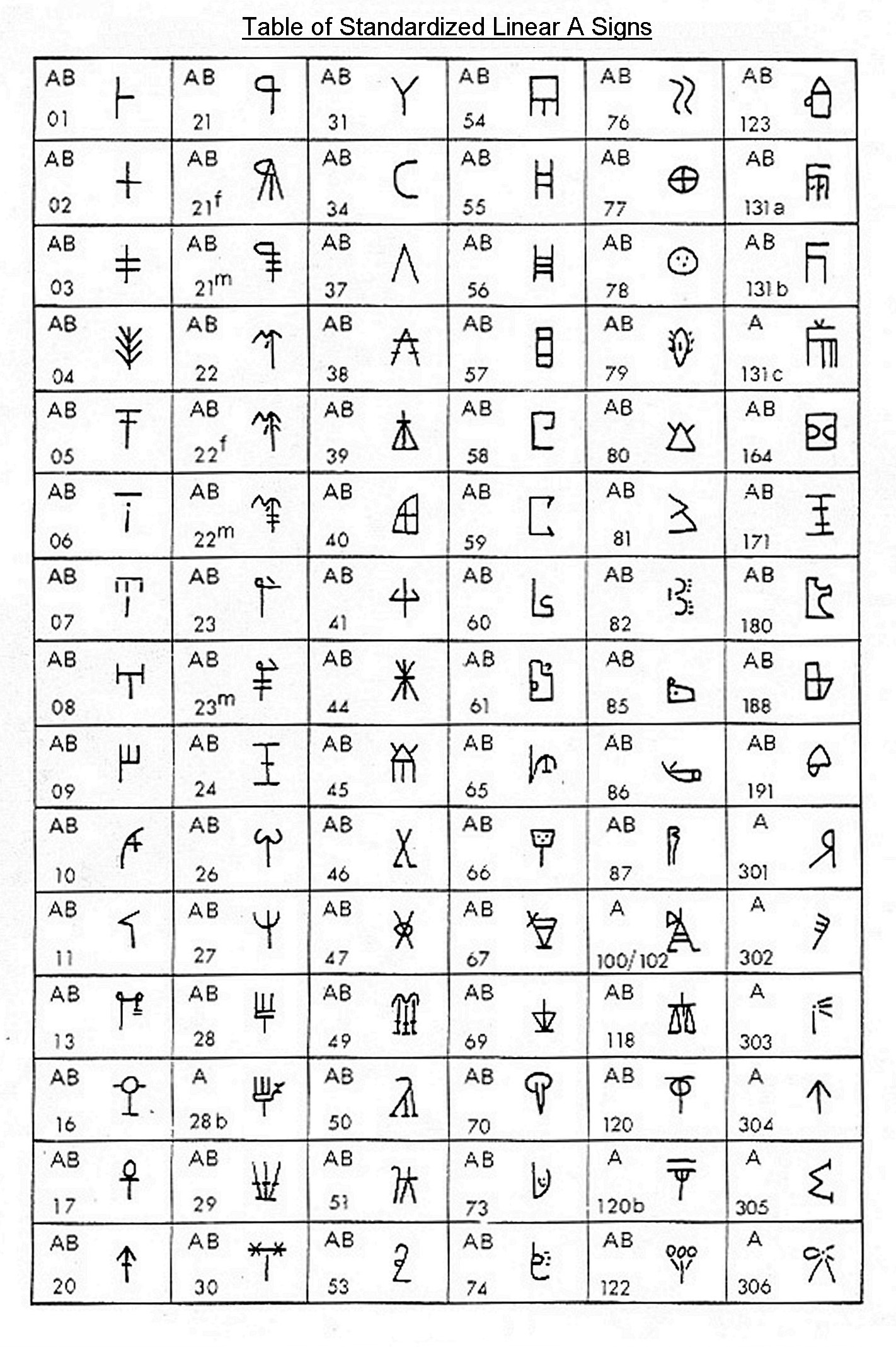
– Were evidentiated connexions and symilarities betwen sumerian and Aegean writings.In Aegean the PROTOLINEAR SCRIPT, not apeared as a local invention, but carried by sumerian migrants wich were in fact early minoans.The spoke a creole language having sumerian characteristics. )./E.PAPAKITSOS & I.KENANIDIS                        Out of me,no one compared, paired or evidenced similarities of the tartaria tablets signs with those sumerian proto-cuneiform and Aegean scripts.

– One low-level comparison attempt  between Tartaria tablets signs and Linear B-ones/ COGNIARCHAE

If allmost some moths before, close to one year, I allready stressed that Tartaria tablets signs are similar and has the closest correspondence in sumerian proto-cuneiform ones, and weighting that it is improbale to have an native sumerian scribe, I hypothesised that the tablets are somhow originating from Aegean area.The scribe could be an sumerian prospector or trader? Bu rather an sumerian follower relative. Despite I read some four Evangelos Papakitsos si Iannis Kenanidis papers,wich showed that Aegean scrpts (begining with Aegean Proto-Linear) were originating insumerian early writing, and minoans were in fact early sumerians migrants settled in Crete. They’re opinion is that the sumerian matrix and was preserved and mentained till, toward our era, and could be noticed also in eteocretan script. Maybe due I took those assertions rather as hypothesis, and because their excursus was not much convincig to me, not gave much attention. In particular cause in one of my papers I analised their comparisons where I put my remarks that there are not the best choosen ones , me beeig able to give some much accurate, and much better ones. Interesting enough at that time I was still searching for the place of the scribe, where was from!!. With consistent delay came the “flash”, and realised that much more than sugesting the origin of Aegean writing (wich allready I noticed to be similar to the tablets) but also minoan’s origin.

I searched for the scribe in every places, but realising that could not be an sumerian native only if teleported ! …..But the “sumerian” fellow was at only two steps away in Crete, “disguised” as a So wasn’t necessary to search for a trader wich arrived in Vinca area, from far-away Sumer, could com easier from much closer Crete.If the tablets were written in Crete, there is no need for travelling of the scribe.Now I explain completely myself why the signs are in great measure alike, but not identical with those sumerian ones, but a part of them are similar with those used in Anatolian and Aegean writings. Knowing at an satisfying level sumerian proto-cuneiform writing, but also those Aegean-ones, I was able to make an double comparison (in the same time with those sumerians and also with those Aegeans).This task was’nt complete by anybody else You see, there happened many times in history, when scientists are anticipating an phenomenom, thing,etc. But only after this phenomenom was practicaly phisically evidenced, the hypothesis become an real fact Here, we have something alike, scientists Papakitsos and Kenanidis come with the theory that early minoans were sumerian migrants wich knew sumerian proto-cuneiform signs, and adapted them to Aegean (Crete) as Cretan proto-linear script appeared.Papakitsos &Kenanidis showed how this fact is real,interpreting Psycro inscription and Malia stone.  But the perfect exemple is coming from tartaria tablets, because its showing and preserving in a much great measure, pregnant and strong sumerian characters.

In the summer, got in touch with canadian scientist Richard Vallance, and he encouraged me, enlisting me in an World List of Aegean Bronze Age researchers.

When got in touch with Papakitsos-Kenanidis team, and told them that I found similarities and connections of Tartaria tablets signs with Aegean writings, they were rather reticent, making me to understand that our tablets are preceding (by far?) the Aegean-ones and not commented on some possible connections.

NOW, I AM SURE AND AFFIRM, ALLEGE, ASSERT THAT:

1-THE TABLETS ARE REAL, NOT FAKES;                                                                              THEIR AGE IS AFTER 3.000 B.C., POSSIBLE EVEN 2.500-2.000B.C                                              Note                                                                                                                                                     This not the real age of the tablets (wich cannot be known forever), but an estimate based of an exhaustive analisis of the signs !

2- PLACE OF ORIGIN: AEGEAN AREA (CYCLADES BUT MUCH SURE CRETE), BUT EVEN TARTARIA village (see clay analisis)

3 SCRIBE IDENTITY: MINOAN (SUMERIAN MIGRANT SETTLED IN CRETE,OR A RELATIVE/FOLLOWER) OCCUPATION:CRAFTSMEN/METTALURGIST-PROSPECTOR/TRADESMAN

4. THE SCRIBE (WHOEVER COULD HAVE BEEN) WAS FAMILIAR WITH ANCIENT SIGNS, ESPECIALLY THOSE SUMERIAN PROTO-CUNEIPHORM-ONES (used in 3.000 B.C.).

5WRITING : QUASI-SUMERIAN                                                                                             Note:                                                                                                                                               Apparently there are on all three tablets a mixture of 3 type/cattegories of signs.  There are strong clues that upper half of the round tablet is the only part wich is containing TRUE WRITING so, kind of coherent message; and it is written using newer signs ( archaic greek).

6 LANGUAGE: KIND OF CREOLE (probably PRESENTING STRONG SUMERIAN TRAITS).                      It seems that one would face the same difficulty that encounter scientists to decipher minoan language and correspondent Linear A writing (UNKNOWN LANGUAGE !)

=========================================================

Now, upon me, remain only two possibilities.If it is about an early phase of writing, it could be:

1-A reflection,exemplification, local European production of that sumerian-ones or minoan-micenaean, or more, even a true local variant of such early writings.

2- a reflection (imitation) of one cited above, and more having added a true writing only in upper half (of round-one)

BUT ONE LAST OBSTACLE REMAIN:
EVEN IF ONE COULD “READ” THE TABLETS, (EG. HAVING WORDS COMPOSED FROM LATIN LETTERS WITH APARENT RANDOM SUCCESION) IS DIFICULT TO EXTRACT WORDS WITH MEANINGS, AS YOU DON’T KNOW THE LANGUAGE WICH WAS USED, SO IN FACT CANNOT “LISTEN” THOSE WORDS IN THEIR RESPECTIVE LANGUAGE.                                               
AS IN THE CASE OF MINOAN LANGUAGE and WRITING(LINEAR A),WE DO NOT KNOW WHAT LANGUAGE SPOKE THE SCRIBE !              =============================================================

EXCERPTS FROM MR. EVANGELOS PAPAKITSOS and IANNIS KENANIDIS PAPERS:

A Comparative Linguistic Study about the Sumerian Influence on the Creation of the Aegean Scripts Ioannis K. Kenanidis1 , Evangelos C. Papakitsos*2 file:///C:/Users/User/Downloads/Minoan_Sumerian.pdf

COMMENTARY                                                  Every script in the world always conforms to the special features of the language it is initially devised for, and every script always is precise enough in phonemically representing the language it is created for. It is clear that the Aegean scripts are syllabic of the CVtype (consonant-vowel); i.e., all signs represent syllables ending in a vowel only, with no consonant clusters. This means that the script was originally devised for a CV-type language, namely a language in which all consonants are followed by vowels. There are many such languages, a very well-known of them being the Japanese. When a script is devised for a CV-type language, it is naturally a CV-type syllabary, as it is actually the case with the Japanese kana syllabaries. A CV-type pure syllabary was never initially devised for any language other than a CV-type language. While today we know of many CV-type languages, all Greek dialects were (and remain) foreign to the CV pattern. Another linguistic direction is required [2]: “In contrast with mainland Greece, Cyprus and Crete in the 2nd millennium are both multilingual societies in which the different languages are written down. It is tempting to assume that this points to stronger links with the Near East than with Greece.” It is recognized by eminent Greek linguists that there was a linguistic substratum in the Aegean area (e.g., see [33][41]). Other proposals about an adstratum instead [42] do not change the essence of our argument. This substratum is not regarded as Indo-European (IE), based on the unknown etymology of plant-names and toponyms [33]. The Aegean scripts denote that a CVtype language was spoken by those who created them. None of the IE languages is of the CV-type. The mainland of Greece and of Anatolia was inhabited by people speaking IE languages. The existence of a Semitic language (e.g., Akkadian) is also very probable in Crete, but it is not of a CV-type either. All such proposals roughly correspond to all the different ethnic groups that may have inhabited Crete or retained merchant delegations there. None of them, though, spoke a CV-type language. Ancient Egyptian was not of the CV-type, if we judge from Coptic, from renderings of Ancient Egyptian in other languages and from the ancient Egyptian script itself. Egyptian was an AfroAsiatic language, and those languages are generally not of the CV-type. Consequently [9]: Without doubt, the Minoans at the beginning of the second millennium did not ‘re-invent’ writing independently, even if they were well able to take their first steps in this direction without knowledge of the Mesopotamian or Egyptian systems. However, starting with ideas from elsewhere, they created an original and astonishingly uncomplicated system for recording the sounds of their language by means of signs.” So, the issue of identifying the language behind the Aegean scripts remains the same: all the languages around Aegean, which we know of hitherto, are incompatible to the CV-pattern. CV-type languages are usually agglutinative ones. Duhoux suggests that Linear-A is “agglutinative rather than conjugatingbecause of the high number of affixes it contains (in 59% of the words) compared to Linear-B (12% respectively) [43]. What we seek is a non-IE agglutinative language of those times (3rd millennium BC) to fit with the “kana” pattern of Linear-A/B and their predecessor. Olivier states that [9]: “A priori, no language attested in the third or second millennium from the eastern Mediterranean or its surrounding areas can be excluded … the languages spoken by people from the coasts of Asia Minor or Syro-Palestine must be favoured. … Between 3000/2600 and 1450, the period of the birth and development of Cretan Hieroglyphic and Linear A, … the introduction of a language known to us from elsewhere is unlikely.” The nearby agglutinative language of the 3rd millennium BC, well-studied and recorded, is the Sumerian. Additionally, the only highly civilized people close enough, speaking an agglutinative language well known to have CV-type phonotactics, were the Sumerians (or the bilingual Akkadian scribes / scholars because of the “sprachbund” [44][45]). Thus, the present research had been directed towards a comparative study for discovering any relation between the Sumerian language and the Aegean scripts.                                                                   EVIDENCE                                                                                                                                    Firstly, we will concentrate on some aspects of linguistic taxonomy and methodology before we proceed to the direct evidence of the last subsection (A Sample).                             A Protolinear Script. There is a suggestion that Linear-A constitutes a linearization of the Akkadian cuneiform signs [22]. However, it is normal for a script to evolve from pictorial signs (as the Sumerian pre-cuneiform and the Aegean writing signs too) into non-recognizable forms (as the late cuneiform), and rarely the reverse. It has been recognized that Linear-B is not simply a derivative of Linear-A, just as the creation of the Aegean scripts does not constitute a simple process of evolution, from the Cretan Hieroglyphics to Linear-B [27][35]. There are Aegean inscriptions found in various places (Tel Haror, Tel Lachish, Samothrace and Troy) that both Linear-A and B scripts have to be taken into account for their interpretation [46]. Although there are several different theories for explaining this necessity, there is also the possibility of a Protolinear script [47], which both Linear-A/B evolved from, for conveying different languages. In other words, the Protolinear could be the parent of Linear-A and Linear-B, while the Cretan Hieroglyphic could be regarded mainly, but not exclusively [8], as the decorative and ritual form of that system for use especially on seals [48].The hypothesized Protolinear script consists of 120 syllabograms of the V and CV patterns, as they have been found in Linear-A/B scripts, one for each syllable of a dialect close to the Archaic Sumerian language. There are also a few signs of disyllabic nature. The signs are those that are common to both Linear-A and B scripts (62) and those that are exclusive to each syllabary. So, we have a script of simplified icons (signs) depicting items, where the phonetic value of each sign is related to the Archaic Sumerian word for the depicted item. Many of them are related to the associated signs of the Cretan Hieroglyphic, also to the Sumerian pictograms and sometimes to the cuneiform equivalents. A sample is presented in the next section, for the curious reader. One debatable feature of such a script would be the interpretation of the items depicted by the icons and another is the assignment of the phonetic value to each sign.                                                    THE.METHODOLOGY                                                                                                                       We cannot recognize what an ancient sign depicted by simply looking at a modern hand copy of it in a list presenting a tentatively reconstructed syllabary and putting our imagination to work. To go to the pictorial origin, we have to see all forms of the letter in all related scripts, and observe carefully how objects are usually depicted in the Minoan art. We have to study, in addition, the logograms of Linear-A/B and the Cretan Hieroglyphic too, and also observe the tendencies of each script. When the hitherto unknown phonetic value of signs (e.g., /ru/, /to/) is discovered, then it is tested in the actual context of the signs and so confirms that it makes really good sense. It should be understood that the original script was pictographic as much as it was linear: every sign was a sketch readily recognizable by all as a common object, the whole name of which was instantly recalled by all speakers of the language of the nation that created the script. The comparative study was conducted in parallel including four factors: § the depicted object and its sign of the Aegean script, § the relation and similarity of the previous sign to equivalent Sumerian ones, § the assigned phonetic value of the sign of the Aegean script, § the similarity of the previous phonetic value to Sumerian words denoting the depicted object. At least three factors should match in order to confirm the relation. Following the above mentioned methodology, the entire set of Linear-A/B signs can be identified as monosyllabic (rarely disyllabic) Sumerian words naming the depicted objects, noting that in Sumerian language a closing consonant of a monosyllabic word (i.e., CV-C) was not pronounced unless it was followed by a vowel in the case of compounding or affixation. Thus, in all the following examples, the closing consonant is separated by a dash. This is a predominant rule of the Sumerian phonology that facilitated the process of creating the syllabary by using the rebus principle. The rebus principle is merely the use of a picture to stand not for the object depicted, but for the name of the depicted object, even in context where the sound of that name stands for something totally different than the object shown. There is an important rule that always goes together with this principle: the whole name of the depicted object is used and not a part of the name (unlike the acrophonic principle). The rebus principle had been invented by the Sumerians, according to Fischer [4], whose influence expanded to Nile, Iran, Indus Valley and maybe to the Balkans (as he suspects, and it is argued too herein, through the Aegean scripts). The phonology of the used words is of a dialect close to, but simpler than, the Archaic Sumerian (the reconstruction is explained, together with the transcription system, in [49])……………………………

DISCUSSION                                                                                                                                   Based on the very small number of different handwritings that are recognized on Linear-B tablets of Knossos and Pylos (111 of the so called “Hands”), Hooker [54] suggested the existence of a scribal guild, favored also by Finkelberg [46]. This is a reasonable explanation for the observed incongruity of Linear-B to the phonotactics of the Mycenaean Greek language, provided we deduce that the scribes were non-Greeks, and their script was originally devised from a nonGreek language. This can also explain why they did not even slightly enhance the script in order to represent the Greek language somewhat more precisely, for their own convenience, just as the Cypriot Greeks did with the Cypriot Syllabary. This could also be the reason why Linear-B was completely forgotten when the Achaean palaces declined, so the non-Greek scribes working there could not find employment. Then, no documented writing system was used in Greece for a period of about 350 years, after which the Greeks adopted a non-Greek script again: the Phoenician alphabet………………………..

The notion of a scribal guild can be extended in the past, for the creation of Linear-A and the Cretan Hieroglyphics, as a minimalistic reasonable assumption (although many evidence regarding culture and religion indicate a much stronger oriental relationship that its presentation is beyond the scope of this article). A relatively small number of Sumerian seals-makers and scribes could have been hired, from the communities of the Levant [55], in order to create the necessary infrastructure for the development of the contemporary commercial best practices. They were, after all, the original inventors of such practices with a long tradition and expertise at the end of the 3rd millennium BC. Even for the case of bilingual Akkadian scribes, the choice of the Sumerian language for devising the Aegean scripts would be a significant advantage, because monosyllabic words could be easily found in order to match common or culturally important objects for the signs of a syllabary. The creation of these scripts is a distinct trade-mark compared to the rest (Eastern Mediterranean) of that era, which is an ever-lasting desirable commercial asset. Once the Minoan authorities / society had decided to develop their commerce, both domestically and overseas, they would inevitably have to deal with the contemporary international best-practices (i.e., sealing of goods and keeping records). For example, about the usage of clay sealings [9]: “As in the Near East such objects generally served to secure the integrity of the contents of various types of container.” About the usage of scripts, it is suggested that Linear-A conveys a Semitic language (as a lingua franca) written by Luwian scribes in order to adhere to international standards [22]. In this respect, generally and diachronically, there are only two options: § to develop the required practices from scratch, which is usually a costly and slow trial-anderror process or § to hire professionals, being experts in the required practices. The latter option is mutually beneficial. The employer acquires the proper practices quickly and safely, while the employees assure their prosperity by having the monopoly of know-how. Who possessed such know-how at the end of the 3rd millennium BC? Sumerians proved to be excellent traders and colonists throughout the entire Near East, even at the end of the Uruk period [56]. According to Kramer [57]: “…by the third millennium BC, there is good reason to believe that Sumerian culture and civilization had penetrated, at least to some extent, as far East as India and as far West as the Mediterranean, as far South as Ancient Ethiopia and as far North as the Caspian”. Crete was known to Mesopotamia at least since the era of Sargon the Great, who lived approximately between the 24th and the 23rd centuries BC [58]. On the tablets of Mari (18th century BC) it is stated that “the hand of Sargon” had reached places beyond the “upper sea” (Mediterranean) as far as the island of copper (Cyprus) and Kaptara. The latter is regarded as the most ancient reference to Crete, “Kaptara” being its Akkadian name [14]. The name for Mediterranean in Sumerian is “ab-ba igi-nim”, found in many texts, e.g. in the inscription on the statue of Gudea (Period: Lagash II, ca. 2200-2100 BC): “a-ab-ba igi-nim-ta (from the Upper Sea = Mediterranean) a-ab-ba sig-gasze3” (to the Lower Sea = Persian Gulf). Even with some chronological inaccuracy, the previous period (24th to 18th centuries BC) adequately covers the creation time of the Aegean scripts. What could be the “hand” of Sargon the Great other than merchant stations and/or delegations, at least? Nevertheless, both linguistic and non-linguistic pieces of evidence, that will be presented shortly, indicate a longer and deeper Sumerian influence on the Aegean civilization of the 3rd and 2nd millennia BC.

CONCLUSION

In conclusion, the inadequacy of the Linear-A/B scripts to convey properly the phonology of the Mycenaean Greek, or the other languages proposed in Crete, is attributed herein to the origins of those syllabaries. Notably, considering the conveyed languages by Linear-A, all proposals are based on the comparative study of toponyms and anthroponyms or divinity names. Such a study, though, is not necessary when an Akkadian name is written in Akkadian cuneiform or a Luwian one in a relevant script. The Aegean scripts are acting like a distorting filter for the languages that they convey, making their identification even more difficult. Such a distortion is more or less always expected in the conveyance of words transmitted through a foreign writing system. Based on the previous linguistic evidence and conditions, it has been suggested that a very suitable candidate language as the base for creating the Aegean scripts could be the Sumerian. Being an agglutinative language, it both exhibits the matching syllabic pattern of the CV-type, and it can justify the phonetic values of the Linear-A/B and Cypro-Minoan signs as well, through the rebus principle. It is also suggested that the formation of each Aegean script could have been conducted in the late 3rd millennium BC by means of absorption from a parent script, named Protolinear, being created by a scribal guild of Sumerian linguistic origin.

A Decipherment of the Eteocretan Inscription from Psychro (Crete) Ioannis K. Kenanidis1* and Evangelos C. Papakitsos file:///C:/Users/User/Downloads/Kenanidis432017ARJASS36988deciphermentofinscription.pdf

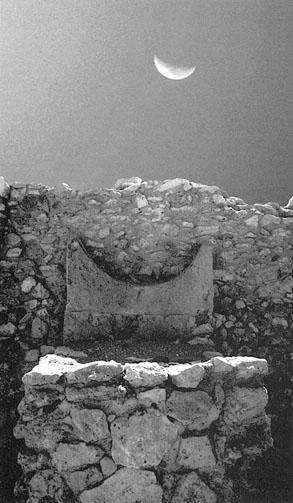
INTRODUCTION                                                                                                                                   In 1958, Marinatos [1] reported the existence of an inscription from Psychro (Crete) that belonged to the private collection of Dr. S. Giamalakis (Fig. 1). It was engraved on a piece of stone, the shape of which showed that it was made to fit into an architectural construction, namely into an empty triangle formed over a door of a very small structure. Based essentially on Kritzas [2], Brown [3] attempted to prove that the inscription is a modern fake, his main argument being that it contains what appear to be Minoan syllabic signs (those three at the bottom of the inscription), that is signs of a script supposed to have been extinct 900 years before the inscription that was dated to 300 BC; another one of Kritzas’ arguments is that the inscription is on baked clay and not stone – something that has nothing to do with the language of the inscription anyway. Kenanidis & Papakitsos [4] have presented all arguments proving that the inscription is genuine. Those who discarded the inscription as a fake have relieved themselves of the obligation to interpret it, however, as we hold that the inscription is genuine, we must interpret it here in accordance to all our previous research.

First by Marinatos [1] and later on by Brown [5] and Duhoux [6], the inscription was attributed to an Eteocretan language. Numerous attempts have been made to interpret the text. The proposed languages included Hittite [7] and Semitic [8,9], even Slavic [10]! The shortcomings of each one of the previous attempts were reasonably exposed by Brown [11], although the latter implies that there was only one non-Greek language spoken in Crete (contrary to the linguistic evidence which makes it clear that more than one non-Greek languages were spoken in Crete [12,13,14]). Thus, to all those readers interested in the Eteocretan languages of ancient Crete, a novel approach of decipherment is presented herein, for the first time based on the Cretan Protolinear script theory [12] that suggests the affinity of the Psychro inscription to the Sumerian dialect of Crete. It will be demonstrated that the application of the Sumerian language for this decipherment provides a coherent and meaningful interpretation of the text on this inscription.                                                                                2. DECIPHERMENT GUIDELINES                                                                                            Knowing that the conventionally called Eteocretan inscriptions convey more than one language, we had to determine which language is conveyed by the Psychro inscription. One factor that makes this difficult is that the inscription language is for the most part rendered in a script foreign to the language conveyed, so the phonemes are not expected to be rendered with precision [4]. Another difficulty is that even when the language is determined, we still have to understand the specific features of that language for the given date and place. These difficulties have been overcome by following the latest linguistic evidence about the affinity of the Aegean scripts to Sumerian [15,16,17,18] and especially by confirming the existence of a Cretan Protolinear script [12,19,20,21,22,23, 24]. It is exactly the following three facts that made others regard the inscription as fake or unreadable, which opened our way to read it:1) We were facilitated by the fact that this inscription is well preserved, with not even one letter missing or unreadable. 2) The three Minoan syllabograms on the inscription clearly point to the fact that the whole inscription is in the language of those who originally created the Minoan civilization along with the Cretan Protolinear script. 3) It was impossible for others to explain how the Minoan script survived until 300 BC, while that very fact confirms the existence of the Cretan Protolinear script: As explained in previous works, the Cretan Protolinear script was created by the Minoans, who were Sumerian settlers [12,20,21,22]; the Cretan Protolinear script in the form of Linear A and Linear B was used by all the different nations that inhabited Crete and the Aegean.                                               However, in the hands of non-Minoans (i.e. Hands of nonSumerians) the Cretan Protolinear script was distorted as time passed, and eventually forgotten, because the script was difficult for nonMinoans (=non-Sumerians).                                                              On the other hand, in the hands of Minoan Sumerians the Cretan Protolinear script could not be significantly distorted or forgotten, no matter how many generations would pass.                                                                                                                          This is because the Cretan Protolinear script (henceforth in this work referred to simply as “Protolinear”) was phonetic and pictographic at the same time: every phonetic (syllabic) sign was a sketch of a readily recognizable object in the Minoan Sumerian culture.                                                                                                                           So, for those who had Minoan Sumerian as their first language, every syllabic sign had the native name of the thing that the sign depicted, and they always knew what the signs depicted.                                                                                                                       They could not alter the shape of the signs lest they would be no more recognizable and if a sign was not recognizable it could not have a native (Minoan Sumerian) name, so it could not have a phonetic value. This is why the Protolinear script could not be altered in Minoan hands; while for non-Minoans there was no connection between depicted object and phonetic use of the Protolinear signs.  Therefore, the Protolinear script survived unaltered as long as the Minoan nation existed.                 And we know that the Minoan Sumerian language, as other non-Greek languages spoken in Crete, was spoken not only until 300 BC but also much later [21], because those populations were relatively isolated geographically and socially.                                                                                                         The Sumerian language in Mesopotamia remained in use as a classical and hieratic language until about the year 100 AD . It was easy for a language to be kept for many centuries among different languages when there was no obligatory schooling and no mass media. An example is the many languages mentioned in the Bible, Acts 2, all spoken during the 1st century AD, including Elamite, a language no less old than Sumerian, and languages “of Mesopotamian people” among which were Sumerian and Akkadian – all those languages, when the eastern part of the Roman empire was rapidly Hellenised and the empire’s official language was Latin. We shall also briefly mention what is detailed in [21], that even after the pre-Greek languages were forgotten, they left some impressive phonological traits in some dialects of Crete and other islands: the most outstanding being a retroflex “l”; also, a strong tendency to eliminate consonant clusters, and the emphatic pronunciation of some stop consonants, to mention only a few traits that have been left from Sumerian. Apart from linguistic evidence, there is an abundance of cultural instances that show the influence and lingering of the Minoan Civilization even through the Classical times. The comparison of the Bronze Age Aegean (culturally Minoan) wall paintings to the Etruscan ones reveals a remarkable resemblance [26]. Those who have an idea of the Minoan religious symbols and ideas will be impressed by the coins of Tenedos island (Fig. 2) minted in the 5th and 4th centuries BC. Such coins are presented here because they most loudly prove that the Minoan Sumerian culture and religious ideas were totally alive in some Greek city states inhabited by Greeks of Minoan ancestry at least until the 4th century BC, while those symbols are a mystery for modern archaeologists as they were for the other ancient Greeks as well, who could only make up some totally fanciful and frivolous interpretations [27,28,29]. To be serious with the interpretation, on the right of Fig. 2, the coin’s verso depicts a double axe which is the most renowned religious symbol of the Minoans. The double axe symbolised the power and the duality of God An, the supreme deity of both the Minoans [12] and the Mesopotamian Sumerians [30]. The double axe symbol was also used as a very common syllabic (phonetic) sign in the Aegean scripts [12,20,21,23] and it is present, although not so common in the Sumerian (preCuneiform) pictography [17,22]. On the coin’s recto, the double-face head (manly face left, woman’s face right) clearly symbolised the same duality of the deity (masculine-feminine, yin-yang Kenanidis and Papakitsos; ARJASS, 4(3): 1-10, 2017;as we would say in modern terms). Although this representation can be interpreted as Zeus and Hera (or another mythological couple) as many scholars speculate [29], yet such a dual head representation has never been seen elsewhere in the entire Antiquity: it was a non Greek symbol that surprised the Greeks, but it was quite ordinary for the Minoans who saw a dual deity everywhere and represented the duality of the deity by all their religious symbols. Since such important Minoan Sumerian cultural elements were kept alive in a Greek city state during the 5th and 4th century BC, we cannot find any justification for considering strange a Minoan inscription in Crete of the year 300 BC. We understand that the Psychro inscription (Fig. 1) spoke about something related to building and dedicating a small shrine, because of the stone’s triangular shape that was obviously made to fit into a triangle formed over a door of a small structure …………………..

  1. CONCLUSION

It has been demonstrated so far that the Psychro inscription can be meaningfully deciphered through the conservative Sumerian dialect of Crete, spoken by the the scribe’s ancestors who had invented the Cretan Protolinear syllabary.This particular scribe used the Greek alphabet for the most part of this inscription, because it was the writing system known by all people in Crete and around the Aegean, and also because the Greek alphabet was the only available writing system proper for writing on hard material, and the only system actually used for stone inscriptions. On the other hand, the Cretan Protolinear syllabary was used almost exclusively on unbaked clay tablets, and it was only suited for writing on soft material; still, the word “cətiləə”, being so important culturally and ritually as explained, had to be written in the Cretan Protolinear that was the national script, hailing from a most ancient tradition, for the person who wrote the inscription. It is something analogous to using some Greek phrases in the Orthodox Eucharist ceremony conducted in a non-Greek language. Although it is only this stone that we know of the whole structure built, the inscription was true when it said this shrine will not ever collapse”: it is the shrine of the Minoan civilization.

AM IDENTIFICAT “SCRIITORUL”,LOCUL DE ORIGINE SI SCRISUL PENTRU TABLITELE DE LA TARTARIA

February 4, 2019

Atentie!                                                                                                                                                                  Aceasta postare nu este o o descifrare sau citire a unui presupus continut scris propriu-zis. Cu atat mai mult cu cat avem de-a face cu semne proto-cuneiforme, si deci in consecinta cu  proto-scriere. Avand in vedere ca semnele nu apartin unui unic sistem de scris ci mai multora, pagina are un caracter pur didactic. Are rolul de a incerca si testa diferite scrieri in idea ca pe tablite s-ar fi folosit unul din ele. Semnele de pe tablite apartin mai multor sisteme de scrisi dintr-larg interval de timp si care au folosite in diferite arii geografice. In niciuna din incercari semnele nu s-au incadrat intr-un singur tip de scriere, totdeauna au ramas semne care au provenit din alte scrieri (sau din necunoscut). Cele mai multe semne provin din cele sumeriene proto-cuneiforme.Apoi privind asemanarea, in ordine descrescatoare este aceea cu semnele Linear A/B si cele Anatoliene. Semnele din jumatatea superioara a tablitei rotunde par a proveni din scrierea arhaica greceasca.Cel mai degraba aceasta “adunatura” de semne pare a fi rodul imaginatiei bogate a cuiva.Dupa cum au constatat A.Falkenstein si A.A.Vaiman, (aceasta fiind si parerea mea ferma) autorul nu a fost un scrib, avea doar vagi notiuni privind scrisul in general si nu se stie ce a urmarit. Exista multe elemente de neconcordanta precum si altele care scot tablitele din tiparele si normele uzuale ale  logicii, scrisului si intentiilor oneste.

==========                                                                                                                                                       La cercetarea tablitelor, au participat pana acum urmatoarele categorii profesionale:                           – arheologi fara specializare in epigrafie                                                                                                         – arheologi cu cunostinte de epigrafie                                                                                                             – specialisti in sisteme de scriere>asirologie>scriere sumeriana >proto-scriere sumeriana                         -specialisti pluridisciplinari (din fiecare un pic….)                                                                                             -cercetatori autodidacti “amatori”          

Ca atare, au rezultat opinii care doar partial si sporadic sant convergente; principalele teorii sant:                – tablitele apartin civilizatiei Danubiene (Vinca), scrib “Turdasean”, scrisul este autohton si datorita complexitatii si caracterului extrem de arhaic al tipului de scris nu poate fi descifrat                                      – tablitele dateaza imediat dupa faza proto-scrierii sumeriene care a inceput la 3200BC si au varsta cca 2750 BC si nu prezinta scris sumerian propriu-zis ci scris “de factura sumeriana”. Autorul presupus a fi comerciant (sumerian?)                                                                                 

 – Au fost evidentiate legaturi directe intre scrierile Egeene si cea sumeriana. Scrierile Egeene nu au aparut din neant nici local ci au avut la origine scrierea sumeriana.Minoanii au fost la origine migranti sumerieni, care vorbeau un dialect apropiat de limba sumeriana. Nu au fost observate nici consemnate  legaturi ale tablitelor de la Tartaria cu acest fenomen (nici cu scrierea sumeriana nici cu ceele Egeene)./E.PAPAKITSOS & I.KENANIDIS                                                                                      

– Legaturi intre semnele tablitelor si scrierea Linear B/in rev. ANISTORITON

Desi deja in urma cu lunide zile, aproape 1 an am afirmat ca semnele tablitelor au cel mai apropiat corespondent si similaritate cu cele sumeriene, si apreciind ca fiind cu totul improbabil ca scribul sa fie nativ sumerian, am apreciat ca tablitele provin din aria Egeeana si scribul ar fi putut fi un prospector sau comerciant sumerian, dar mai degraba un urmas al unui nativ sumerian.                                                                                                  Cu toate ca am citit cca 4 lucrari ale cercetatorilor Evangelos Papakitsos si Iannis Kenanidis care au afirmat ca scrierile egeene sant rezultatul direct al adaptarii scrierii sumeriene, ca minoanii au fost de fapt urmasii primilor migranti sumerieni stabiliti in Creta.Au spus deasemenea ca amprenta si caracterul tipic sumerian s-a conservat si transmis pana inspre era noastra si pana in scrierea eteo-cretana.                                Probabil datorita faptului ca acele afirmatii le-am considerat mai degraba ipoteze, si datorita faptului ca demonstratia dansilor nu mi s-a parut prea convingatoare, nu i-am dat importanta cuvenita. Mai ales ca intr-o lucrare de-a mea am analizat exemplificarile dansilor si am remarcat si spus ca nu sant cele mai fericite, pentru ca eu pot da exemplificari mai bune, si care au o mai mare acuratete. Foarte interesant, pe undeva eu inca tot cautam sa gasesc de unde provine scribul !!.                                                                Cu oarece intarziere “mi-a cazut fisa” ca dansii tocmai mai mult decat au sugerat originea scrierilor Egeene, dar si a minoanilor. Asta seamana a fi la mine reactie intarziata, lentoare in gandire? Eu cautam scribul nu stiu pe unde, realizand totusi ca nu putea sa fi fost sumerian numai daca era teleportat. !                                                                                   ……………Dar “sumerianul” era de fapt la 2 pasi in Creta, “deghizat” in minoan. Asa incat nu a mai fost necesar sa banuiesc ca un comerciant ar fi ajuns in aria Vinca tocmai din Sumer, putea sa vina de mai aproape din Creta.                                                                          Daca tablitele au fost scrise in Creta nici nu ar mai fi necesara deplasarea scribului.    Acum i-mi explic complet de ce semnele seamana in cea mai mare masura cu cele sumeriene, nefiind identice dar o parte sant similare cu cele folosite in scrierile Egeene si Anatoliene.Cunoscand la nivel multumitor scrierea sumeriana pre-cuneiforma, dar si cele Egeene, am putut face o dubla comparatie ( a semnelor de pe tablite simultan cu cele sumeriene si totodata cu cele Egeene).Acest lucru nu l-a mai facut nimeni.

Vedeti dumneavoastra, de multe ori s-a intamplat in istorie ca oamenii de stiinta sa anticipeze existenta unui fenomen sau obiect initial ca o ipoteza, pe baze pur teoreticeDupa ce fenomenul sau obiectul a fost decelat faptic, fizic, de-abea atunci teoria s-a confirmat  dovedit ca fiind adevarata. Aici avem asemanator, cercetatorii Papakitsos si Kenanidis au emis ipoteza aparitiei scrierilor Egeene ca urmare directa a influentei scrierii sumeriene.Au putut si incepe prin a exemplifica faptic prin incercarile de citire a doua inscriptii, cea de la Psychro si cea de la…                               Dar sprijinul perfect vine de la tablitele de la Tartaria.Din Grecia avenit fundamentul teoretic si inceputul demonstratiei existentei fenomenului, dar sprijinul si dovada, echivalentul fizic perfect sant tablitele de la Tartaria.Pentru ca prezinta caracteristici aproape depline a unei scrieri de tip sumerian.

In vara, atunci cand am gasit similaritati cu scrierile Egeene, si am luat legatura cu cercetatorul canadian Richard Vallance  , acesta m-a incurajat si m-a inclus in lista mondiala a cercetatorilor care studiaza Epoca bronzului Egeeana.

Cand am luat legatura cu cercetatorii Papakitsos si Kenanidis, acestia avand in minte vechimea exagerata a tablitelor atot-vehiculata anterior, s-au exprimat ca nu ar fi scriere egeeana si nici legatura cu scrierile Egeene intrucat tablitele de la Tartaria sant mai vechi preced (scrierile Egeene).                               =============================================

ACUM SANT SIGUR,SI POT AFIRMA CA: 

1-TABLITELE AU VECHIMEA ULTERIOARA LUI 3.000BC, f.f.POSIBIL 2500-2000BC        Nota                                                                                                                                             Aceasta nu este o datare propriu-zisa a tablitelor, (acest lucru nemaifiind posibil),ci este o apreciere bazata exclusiv pe o analiza exhaustiva a semnelor.

2 – TABLITELE NU SANT CONTRAFACERI ORI FALSURI  

3- LOCUL DE ORIGINE A TABLITELOR: aria EGEEANA,Ciclade(?) dar mai sigur CRETA (sau chiar TARTARIA?/vezi analiza argilei)

4- IDENTITATEA SCRIBULUI: MINOAN= MIGRANT SUMERIAN STABILIT  IN CRETA, sau mai degraba URMAS AL UNUI NATIV SUMERIAN STABILIT IN CRETA OCUPATIE: MESERIAS ex.metalurg SAU PROSPECTOR/COMERCIANT   

5- “SCRIS”: “DE FACTURA SUMERIANA”                                                                                       Nota                                                                                                                                                           Scris intre ghilimele deoarece este proto-scriere,semnele fiind cel mai aproape de cele sumeriene proto-cuneiforme.Exista indicii puternice ca jumatatea de sus a tablitei rotunde contine scris propriu-zis, de genul arhaic grec.

6- LIMBA , UN GEN DE “CREOLA (mai apropiata de sumeriana decat de orice alta limba?)

DAR RAMANE O PROBLEMA SI INCA UNA FOARTE MARE:                                                       CHIAR DACA PRIN EXTREM IDENTIFICAND SEMNELE, AM EXTRAGE ECHIVALENTUL IN SUNETE SAU CUVINTE, NU AM STI CE INSEAMNA, NECUNOSCAND LIMBA IN CARE AU FOST SCRISE.                                                                                                                                 ACEEASI PROBLEMA O AU CEI CARE LA ORA ACTUALA FAC MARI EFORTURI SA IDENTIFICE SCRISUL LINEAR A SI LIMBA CORESPONDENTA,MINOICA.

==================================================================            Acum dupa mine au ramas in mare doar doua posibilitati. Daca sant o faza incipienta de scris, ar putea fi,                                                                                                                                        – o reflectare ,exemplificare deci o productie locala Europeana a proto-scrierii sumeriene sau a a celei minoane-miceniene sau mai mult decat atat chiar o asemenea varianta locala de scris incipient.                                                                                                      – o reflectare grosiera (imitatie) a uneia din acestea de mai sus, si posibil continand in plus scris adevarat doar in jumatatea de sus a tablitei rotunde.

==================================================================             EXTRASE DIN LUCRARILE DOMNILOR EVANGELOS PAPAKITSOS si IANNIS KENANIDIS:

A Comparative Linguistic Study about the Sumerian Influence on the Creation of the Aegean Scripts Ioannis K. Kenanidis1 , Evangelos C. Papakitsos*2 file:///C:/Users/User/Downloads/Minoan_Sumerian.pdf

COMMENTARY Every script in the world always conforms to the special features of the language it is initially devised for, and every script always is precise enough in phonemically representing the language it is created for. It is clear that the Aegean scripts are syllabic of the CVtype (consonant-vowel); i.e., all signs represent syllables ending in a vowel only, with no consonant clusters. This means that the script was originally devised for a CV-type language, namely a language in which all consonants are followed by vowels. There are many such languages, a very well-known of them being the Japanese. When a script is devised for a CV-type language, it is naturally a CV-type syllabary, as it is actually the case with the Japanese kana syllabaries. A CV-type pure syllabary was never initially devised for any language other than a CV-type language. While today we know of many CV-type languages, all Greek dialects were (and remain) foreign to the CV pattern. Another linguistic direction is required [2]: “In contrast with mainland Greece, Cyprus and Crete in the 2nd millennium are both multilingual societies in which the different languages are written down. It is tempting to assume that this points to stronger links with the Near East than with Greece.” It is recognized by eminent Greek linguists that there was a linguistic substratum in the Aegean area (e.g., see [33][41]). Other proposals about an adstratum instead [42] do not change the essence of our argument. This substratum is not regarded as Indo-European (IE), based on the unknown etymology of plant-names and toponyms [33]. The Aegean scripts denote that a CVtype language was spoken by those who created them. None of the IE languages is of the CV-type. The mainland of Greece and of Anatolia was inhabited by people speaking IE languages. The existence of a Semitic language (e.g., Akkadian) is also very probable in Crete, but it is not of a CV-type either. All such proposals roughly correspond to all the different ethnic groups that may have inhabited Crete or retained merchant delegations there. None of them, though, spoke a CV-type language. Ancient Egyptian was not of the CV-type, if we judge from Coptic, from renderings of Ancient Egyptian in other languages and from the ancient Egyptian script itself. Egyptian was an AfroAsiatic language, and those languages are generally not of the CV-type. Consequently [9]: “Without doubt, the Minoans at the beginning of the second millennium did not ‘re-invent’ writing independently, even if they were well able to take their first steps in this direction without knowledge of the Mesopotamian or Egyptian systems. However, starting with ideas from elsewhere, they created an original and astonishingly uncomplicated system for recording the sounds of their language by means of signs.” So, the issue of identifying the language behind the Aegean scripts remains the same: all the languages around Aegean, which we know of hitherto, are incompatible to the CV-pattern. CV-type languages are usually agglutinative ones. Duhoux suggests that Linear-A is “agglutinative rather than conjugating”because of the high number of affixes it contains (in 59% of the words) compared to Linear-B (12% respectively) [43]. What we seek is a non-IE agglutinative language of those times (3rd millennium BC) to fit with the “kana” pattern of Linear-A/B and their predecessor. Olivier states that [9]: “A priori, no language attested in the third or second millennium from the eastern Mediterranean or its surrounding areas can be excluded … the languages spoken by people from the coasts of Asia Minor or Syro-Palestine must be favoured. … Between 3000/2600 and 1450, the period of the birth and development of Cretan Hieroglyphic and Linear A, … the introduction of a language known to us from elsewhere is unlikely.” The nearby agglutinative language of the 3rd millennium BC, well-studied and recorded, is the Sumerian. Additionally, the only highly civilized people close enough, speaking an agglutinative language well known to have CV-type phonotactics, were the Sumerians (or the bilingual Akkadian scribes / scholars because of the “sprachbund” [44][45]). Thus, the present research had been directed towards a comparative study for discovering any relation between the Sumerian language and the Aegean scripts. EVIDENCE Firstly, we will concentrate on some aspects of linguistic taxonomy and methodology before we proceed to the direct evidence of the last subsection (A Sample). A Protolinear Script There is a suggestion that Linear-A constitutes a linearization of the Akkadian cuneiform signs [22]. However, it is normal for a script to evolve from pictorial signs (as the Sumerian pre-cuneiform and the Aegean writing signs too) into non-recognizable forms (as the late cuneiform), and rarely the reverse. It has been recognized that Linear-B is not simply a derivative of Linear-A, just as the creation of the Aegean scripts does not constitute a simple process of evolution, from the Cretan Hieroglyphics to Linear-B [27][35]. There are Aegean inscriptions found in various places (Tel Haror, Tel Lachish, Samothrace and Troy) that both Linear-A and B scripts have to be taken into account for their interpretation [46]. Although there are several different theories for explaining this necessity, there is also the possibility of a Protolinear script [47], which both Linear-A/B evolved from, for conveying different languages. In other words, the Protolinear could be the parent of Linear-A and Linear-B, while the Cretan Hieroglyphic could be regarded mainly, but not exclusively [8], as the decorative and ritual form of that system for use especially on seals [48].The hypothesized Protolinear script consists of 120 syllabograms of the V and CV patterns, as they have been found in Linear-A/B scripts, one for each syllable of a dialect close to the Archaic Sumerian language. There are also a few signs of disyllabic nature. The signs are those that are common to both Linear-A and B scripts (62) and those that are exclusive to each syllabary. So, we have a script of simplified icons (signs) depicting items, where the phonetic value of each sign is related to the Archaic Sumerian word for the depicted item. Many of them are related to the associated signs of the Cretan Hieroglyphic, also to the Sumerian pictograms and sometimes to the cuneiform equivalents. A sample is presented in the next section, for the curious reader. One debatable feature of such a script would be the interpretation of the items depicted by the icons and another is the assignment of the phonetic value to each sign. THE METHODOLOGY                                                                                                                                We cannot recognize what an ancient sign depicted by simply looking at a modern hand copy of it in a list presenting a tentatively reconstructed syllabary and putting our imagination to work. To go to the pictorial origin, we have to see all forms of the letter in all related scripts, and observe carefully how objects are usually depicted in the Minoan art. We have to study, in addition, the logograms of Linear-A/B and the Cretan Hieroglyphic too, and also observe the tendencies of each script. When the hitherto unknown phonetic value of signs (e.g., /ru/, /to/) is discovered, then it is tested in the actual context of the signs and so confirms that it makes really good sense. It should be understood that the original script was pictographic as much as it was linear: every sign was a sketch readily recognizable by all as a common object, the whole name of which was instantly recalled by all speakers of the language of the nation that created the script. The comparative study was conducted in parallel including four factors: § the depicted object and its sign of the Aegean script, § the relation and similarity of the previous sign to equivalent Sumerian ones, § the assigned phonetic value of the sign of the Aegean script, § the similarity of the previous phonetic value to Sumerian words denoting the depicted object. At least three factors should match in order to confirm the relation. Following the above mentioned methodology, the entire set of Linear-A/B signs can be identified as monosyllabic (rarely disyllabic) Sumerian words naming the depicted objects, noting that in Sumerian language a closing consonant of a monosyllabic word (i.e., CV-C) was not pronounced unless it was followed by a vowel in the case of compounding or affixation. Thus, in all the following examples, the closing consonant is separated by a dash. This is a predominant rule of the Sumerian phonology that facilitated the process of creating the syllabary by using the rebus principle. The rebus principle is merely the use of a picture to stand not for the object depicted, but for the name of the depicted object, even in context where the sound of that name stands for something totally different than the object shown. There is an important rule that always goes together with this principle: the whole name of the depicted object is used and not a part of the name (unlike the acrophonic principle). The rebus principle had been invented by the Sumerians, according to Fischer [4], whose influence expanded to Nile, Iran, Indus Valley and maybe to the Balkans (as he suspects, and it is argued too herein, through the Aegean scripts). The phonology of the used words is of a dialect close to, but simpler than, the Archaic Sumerian (the reconstruction is explained, together with the transcription system, in [49])……………………………

DISCUSSION                                                                                                                                   Based on the very small number of different handwritings that are recognized on Linear-B tablets of Knossos and Pylos (111 of the so called “Hands”), Hooker [54] suggested the existence of a scribal guild, favored also by Finkelberg [46]. This is a reasonable explanation for the observed incongruity of Linear-B to the phonotactics of the Mycenaean Greek language, provided we deduce that the scribes were non-Greeks, and their script was originally devised from a nonGreek language. This can also explain why they did not even slightly enhance the script in order to represent the Greek language somewhat more precisely, for their own convenience, just as the Cypriot Greeks did with the Cypriot Syllabary. This could also be the reason why Linear-B was completely forgotten when the Achaean palaces declined, so the non-Greek scribes working there could not find employment. Then, no documented writing system was used in Greece for a period of about 350 years, after which the Greeks adopted a non-Greek script again: the Phoenician alphabet………………………..

The notion of a scribal guild can be extended in the past, for the creation of Linear-A and the Cretan Hieroglyphics, as a minimalistic reasonable assumption (although many evidence regarding culture and religion indicate a much stronger oriental relationship that its presentation is beyond the scope of this article). A relatively small number of Sumerian seals-makers and scribes could have been hired, from the communities of the Levant [55], in order to create the necessary infrastructure for the development of the contemporary commercial best practices. They were, after all, the original inventors of such practices with a long tradition and expertise at the end of the 3rd millennium BC. Even for the case of bilingual Akkadian scribes, the choice of the Sumerian language for devising the Aegean scripts would be a significant advantage, because monosyllabic words could be easily found in order to match common or culturally important objects for the signs of a syllabary. The creation of these scripts is a distinct trade-mark compared to the rest (Eastern Mediterranean) of that era, which is an ever-lasting desirable commercial asset. Once the Minoan authorities / society had decided to develop their commerce, both domestically and overseas, they would inevitably have to deal with the contemporary international best-practices (i.e., sealing of goods and keeping records). For example, about the usage of clay sealings [9]: “As in the Near East such objects generally served to secure the integrity of the contents of various types of container.” About the usage of scripts, it is suggested that Linear-A conveys a Semitic language (as a lingua franca) written by Luwian scribes in order to adhere to international standards [22]. In this respect, generally and diachronically, there are only two options: § to develop the required practices from scratch, which is usually a costly and slow trial-anderror process or § to hire professionals, being experts in the required practices. The latter option is mutually beneficial. The employer acquires the proper practices quickly and safely, while the employees assure their prosperity by having the monopoly of know-how. Who possessed such know-how at the end of the 3rd millennium BC? Sumerians proved to be excellent traders and colonists throughout the entire Near East, even at the end of the Uruk period [56]. According to Kramer [57]: “…by the third millennium BC, there is good reason to believe that Sumerian culture and civilization had penetrated, at least to some extent, as far East as India and as far West as the Mediterranean, as far South as Ancient Ethiopia and as far North as the Caspian”. Crete was known to Mesopotamia at least since the era of Sargon the Great, who lived approximately between the 24th and the 23rd centuries BC [58]. On the tablets of Mari (18th century BC) it is stated that “the hand of Sargon” had reached places beyond the “upper sea” (Mediterranean) as far as the island of copper (Cyprus) and Kaptara. The latter is regarded as the most ancient reference to Crete, “Kaptara” being its Akkadian name [14]. The name for Mediterranean in Sumerian is “ab-ba igi-nim”, found in many texts, e.g. in the inscription on the statue of Gudea (Period: Lagash II, ca. 2200-2100 BC): “a-ab-ba igi-nim-ta (from the Upper Sea = Mediterranean) a-ab-ba sig-gasze3” (to the Lower Sea = Persian Gulf). Even with some chronological inaccuracy, the previous period (24th to 18th centuries BC) adequately covers the creation time of the Aegean scripts. What could be the “hand” of Sargon the Great other than merchant stations and/or delegations, at least? Nevertheless, both linguistic and non-linguistic pieces of evidence, that will be presented shortly, indicate a longer and deeper Sumerian influence on the Aegean civilization of the 3rd and 2nd millennia BC.

CONCLUSION

 In conclusion, the inadequacy of the Linear-A/B scripts to convey properly the phonology of the Mycenaean Greek, or the other languages proposed in Crete, is attributed herein to the origins of those syllabaries. Notably, considering the conveyed languages by Linear-A, all proposals are based on the comparative study of toponyms and anthroponyms or divinity names. Such a study, though, is not necessary when an Akkadian name is written in Akkadian cuneiform or a Luwian one in a relevant script. The Aegean scripts are acting like a distorting filter for the languages that they convey, making their identification even more difficult. Such a distortion is more or less always expected in the conveyance of words transmitted through a foreign writing system. Based on the previous linguistic evidence and conditions, it has been suggested that a very suitable candidate language as the base for creating the Aegean scripts could be the Sumerian. Being an agglutinative language, it both exhibits the matching syllabic pattern of the CV-type, and it can justify the phonetic values of the Linear-A/B and Cypro-Minoan signs as well, through the rebus principle. It is also suggested that the formation of each Aegean script could have been conducted in the late 3rd millennium BC by means of absorption from a parent script, named Protolinear, being created by a scribal guild of Sumerian linguistic origin.


A Decipherment of the Eteocretan Inscription from Psychro (Crete) Ioannis K. Kenanidis1* and Evangelos C. Papakitsos file:///C:/Users/User/Downloads/Kenanidis432017ARJASS36988deciphermentofinscription.pdf

  1. INTRODUCTION In 1958, Marinatos [1] reported the existence of an inscription from Psychro (Crete) that belonged to the private collection of Dr. S. Giamalakis (Fig. 1). It was engraved on a piece of stone, the shape of which showed that it was made to fit into an architectural construction, namely into an empty triangle formed over a door of a very small structure. Based essentially on Kritzas [2], Brown [3] attempted to prove that the inscription is a modern fake, his main argument being that it contains what appear to be Minoan syllabic signs (those three at the bottom of the inscription), that is signs of a script supposed to have been extinct 900 years before the inscription that was dated to 300 BC; another one of Kritzas’ arguments is that the inscription is on baked clay and not stone – something that has nothing to do with the language of the inscription anyway. Kenanidis & Papakitsos [4] have presented all arguments proving that the inscription is genuine. Those who discarded the inscription as a fake have relieved themselves of the obligation to interpret it, however, as we hold that the inscription is genuine, we must interpret it here in accordance to all our previous research.

First by Marinatos [1] and later on by Brown [5] and Duhoux [6], the inscription was attributed to an Eteocretan language. Numerous attempts have been made to interpret the text. The proposed languages included Hittite [7] and Semitic [8,9], even Slavic [10]! The shortcomings of each one of the previous attempts were reasonably exposed by Brown [11], although the latter implies that there was only one non-Greek language spoken in Crete (contrary to the linguistic evidence which makes it clear that more than one non-Greek languages were spoken in Crete [12,13,14]). Thus, to all those readers interested in the Eteocretan languages of ancient Crete, a novel approach of decipherment is presented herein, for the first time based on the Cretan Protolinear script theory [12] that suggests the affinity of the Psychro inscription to the Sumerian dialect of Crete. It will be demonstrated that the application of the Sumerian language for this decipherment provides a coherent and meaningful interpretation of the text on this inscription.                          2. DECIPHERMENT GUIDELINES

Knowing that the conventionally called Eteocretan inscriptions convey more than one language, we had to determine which language is conveyed by the Psychro inscription. One factor that makes this difficult is that the inscription language is for the most part rendered in a script foreign to the language conveyed, so the phonemes are not expected to be rendered with precision [4]. Another difficulty is that even when the language is determined, we still have to understand the specific features of that language for the given date and place. These difficulties have been overcome by following the latest linguistic evidence about the affinity of the Aegean scripts to Sumerian [15,16,17,18] and especially by confirming the existence of a Cretan Protolinear script [12,19,20,21,22,23, 24]. It is exactly the following three facts that made others regard the inscription as fake or unreadable, which opened our way to read it:1) We were facilitated by the fact that this inscription is well preserved, with not even one letter missing or unreadable. 2) The three Minoan syllabograms on the inscription clearly point to the fact that the whole inscription is in the language of those who originally created the Minoan civilization along with the Cretan Protolinear script. 3) It was impossible for others to explain how the Minoan script survived until 300 BC, while that very fact confirms the existence of the Cretan Protolinear script: As explained in previous works, the Cretan Protolinear script was created by the Minoans, who were Sumerian settlers [12,20,21,22]; the Cretan Protolinear script in the form of Linear A and Linear B was used by all the different nations that inhabited Crete and the Aegean. However, in the hands of non-Minoans (i.e. Hands of nonSumerians) the Cretan Protolinear script was distorted as time passed, and eventually forgotten, because the script was difficult for nonMinoans (=non-Sumerians). On the other hand, in the hands of Minoan Sumerians the Cretan Protolinear script could not be significantly distorted or forgotten, no matter how many generations would pass. This is because the Cretan Protolinear script (henceforth in this work referred to simply as “Protolinear”) was phonetic and pictographic at the same time: every phonetic (syllabic) sign was a sketch of a readily recognizable object in the Minoan Sumerian culture. So, for those who had Minoan Sumerian as their first language, every syllabic sign had the native name of the thing that the sign depicted, and they always knew what the signs depicted. They could not alter the shape of the signs lest they would be no more recognizable and if a sign was not recognizable it could not have a native (Minoan Sumerian) name, so it could not have a phonetic value. This is why the Protolinear script could not be altered in Minoan hands; while for non-Minoans there was no connection between depicted object and phonetic use of the Protolinear signs. Therefore, the Protolinear script survived unaltered as long as the Minoan nation existed. And we know that the Minoan Sumerian language, as other non-Greek languages spoken in Crete, was spoken not only until 300 BC but also much later [21], because those populations were relatively isolated geographically and socially. The Sumerian language in Mesopotamia remained in use as a classical and hieratic language until about the year 100 AD [25]. It was easy for a language to be kept for many centuries among different languages when there was no obligatory schooling and no mass media. An example is the many languages mentioned in the Bible, Acts 2, all spoken during the 1st century AD, including Elamite, a language no less old than Sumerian, and languages “of Mesopotamian people” among which were Sumerian and Akkadian – all those languages, when the eastern part of the Roman empire was rapidly Hellenised and the empire’s official language was Latin. We shall also briefly mention what is detailed in [21], that even after the pre-Greek languages were forgotten, they left some impressive phonological traits in some dialects of Crete and other islands: the most outstanding being a retroflex “l”; also, a strong tendency to eliminate consonant clusters, and the emphatic pronunciation of some stop consonants, to mention only a few traits that have been left from Sumerian. Apart from linguistic evidence, there is an abundance of cultural instances that show the influence and lingering of the Minoan Civilization even through the Classical times. The comparison of the Bronze Age Aegean (culturally Minoan) wall paintings to the Etruscan ones reveals a remarkable resemblance [26]. Those who have an idea of the Minoan religious symbols and ideas will be impressed by the coins of Tenedos island (Fig. 2) minted in the 5th and 4th centuries BC. Such coins are presented here because they most loudly prove that the Minoan Sumerian culture and religious ideas were totally alive in some Greek city states inhabited by Greeks of Minoan ancestry at least until the 4th century BC, while those symbols are a mystery for modern archaeologists as they were for the other ancient Greeks as well, who could only make up some totally fanciful and frivolous interpretations [27,28,29]. To be serious with the interpretation, on the right of Fig. 2, the coin’s verso depicts a double axe which is the most renowned religious symbol of the Minoans. The double axe symbolised the power and the duality of God An, the supreme deity of both the Minoans [12] and the Mesopotamian Sumerians [30]. The double axe symbol was also used as a very common syllabic (phonetic) sign in the Aegean scripts [12,20,21,23] and it is present, although not so common in the Sumerian (preCuneiform) pictography [17,22]. On the coin’s recto, the double-face head (manly face left, woman’s face right) clearly symbolised the same duality of the deity (masculine-feminine, yin-yang Kenanidis and Papakitsos; ARJASS, 4(3): 1-10, 2017;as we would say in modern terms). Although this representation can be interpreted as Zeus and Hera (or another mythological couple) as many scholars speculate [29], yet such a dual head representation has never been seen elsewhere in the entire Antiquity: it was a non Greek symbol that surprised the Greeks, but it was quite ordinary for the Minoans who saw a dual deity everywhere and represented the duality of the deity by all their religious symbols. Since such important Minoan Sumerian cultural elements were kept alive in a Greek city state during the 5th and 4th century BC, we cannot find any justification for considering strange a Minoan inscription in Crete of the year 300 BC. We understand that the Psychro inscription (Fig. 1) spoke about something related to building and dedicating a small shrine, because of the stone’s triangular shape that was obviously made to fit into a triangle formed over a door of a small structure …………………..

  1. CONCLUSION
  2. It has been demonstrated so far that the Psychro inscription can be meaningfully deciphered through the conservative Sumerian dialect of Crete, spoken by the the scribe’s ancestors who had invented the Cretan Protolinear syllabary.This particular scribe used the Greek alphabet for the most part of this inscription, because it was the writing system known by all people in Crete and around the Aegean, and also because the Greek alphabet was the only available writing system proper for writing on hard material, and the only system actually used for stone inscriptions. On the other hand, the Cretan Protolinear syllabary was used almost exclusively on unbaked clay tablets, and it was only suited for writing on soft material; still, the word “cətiləə”, being so important culturally and ritually as explained, had to be written in the Cretan Protolinear that was the national script, hailing from a most ancient tradition, for the person who wrote the inscription. It is something analogous to using some Greek phrases in the Orthodox Eucharist ceremony conducted in a non-Greek language. Although it is only this stone that we know of the whole structure built, the inscription was true when it said “this shrine will not ever collapse”: it is the shrine of the Minoan civilization.
SYNTHESIS AND CONCLUSIONS RESULTING FROM RESEARCH ON TARTARIA TABLETS

February 3, 2019

Careful/ Attention !                                                                                                                                             This post is not a decipherment or reading of any actual written content of Tartaria tablets. Given that the signs do not belong to a single writing system but to several, the page has a purely didactic character. It has the role of trying and testing different writings, in the idea that the tablets would have used one of them. The signs on the tablets belong to several writing systems over a long period of time and which have been used in different geographical areas. In none of the trials did the signs fall into a single type of writing, there always remained signs that came from other writings (or as coming from the unknown). Most of the signs come from the Sumerian proto-cuneiform -shaped ones. The signs in the upper half of the round tablet seem to come from archaic Greek writing. This “collection” of signs seems to be the fruit of one’s rich imagination. As A. Falkenstein and A. A. Vaiman found, (this is also my firm opinion) the author was not a scribe, he had only vague notions about writing in general, and it is not known what he intended  or he was after. There are many elements of inconsistency as well as others that take the tablets out of the usual patterns and norms of  logics, writing and honest intentions. ====

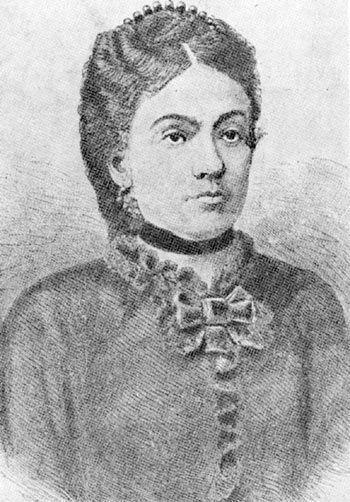
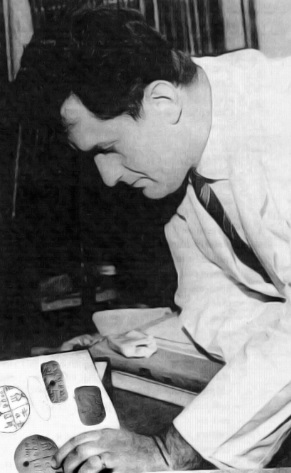
SYNTHESIS AND CONCLUSIONS RESULTING FROM RESEARCH ON TARTARIA TABLETS                            Homage to: Mrs. Szofia Torma and Nicolae Vlassa who were much inspired and science-oriented than our-day scientists to detect and asert the type of writing and tablet’s age.

zsofia_torma_01vlassatartaria

  • This is the result of allmost 11 years of throughly research. Was an fantastic, fantabulous endeavour to wich became addicted, and also only at the finish realising that was exhausting.
  • SOME (ONLY) OF MY CONLUSIONS ARE QUITE SHOCKING, BECAUSE ARE BY LITTLE ASIDE OF THE UP TO NOW COMMON COURSE OF OPINIONS.Documenting from scientific sources is time-consuming and people are excited when told misteryous stories. Such of a tribe wich burned their ruller when become old !? Or of an wich, diformed shaman-priestess in better case, wich made rituals using psichedelic/psychotropic potions.
  • WHAT SHOWED UP IN MY RESEARCH ARE NOT MATCHING ESPECIALLY THAT ONES ADVANCED BY ARCHAELOGS, BUT CANNOT SAY THE SAME WITH THAT OF TOP-LEVEL ASSYROLOGISTS/EPIGRAPHERS.
  • FOR EVERY STATEMENT OR ASSERTION MADE HERE, I AM AT THE DISPOSAL OF INTERESSED PEOPLE AND SHOW THE EVIDENCES WITH WICH I CAN SUSTAIN, ADING SIMILAR OPINIONS OF OTHER 3 SCIENTISTS.
  • If I realised that cannot rely on archaeology dispersed data, my arguments are based on a profound and throughly analysis of the signs and “writing” from wich one could easy deduce my personal contribution. I renounce to order the conclusions upon a subjective criteria (such as “importance” could be).                      Note:                                                                                                                                                Every personal conclusion wich was partly advanced by others will be marked with *, and wich was not advanced by others before, will be marked with ***                        ——————————————————————————
  1. THE AGE OF THE TABLETS ARE AWAY OF THOSE FIGURES ALLREADY ADVANCED  (ARE NEWER). IN THE ARCHAELOGICAL SITE, ON THE VERY SPOT, SOMETHING TERRIBLE WRONG OCCURRED; (KIND OF “ARCHAEOLOGICAL/SCIENCE ACCIDENT HAPPENED AT THE SITE).*                           ————————————————————————————————————————
  2. THE AGE SPAN BETWEEN THAT OF SUPPOSED “PRIESTESS”(wich bone’s are true 5.300 B.C.) AND THAT OF THE TABLETS COULD BE AS MUCH AS 2.500 YEARS, (5500-3000=2500)OR EVEN 3.500(5.500-2.000=3.500)!***                                                  ————————————————————————–
  3. NEVER-ENDING-STORIES(LADY VINCA!?) ARE GOOD FOR MOOVIE-PICTURES BUT NOT PUSHING SCIENCE FORWARD, BUT ON CONTRARY .                               THERE IS NO CHANCE FOR THE DECEASED WOMAN TO HAVE THE TABLETS IN HANDS ! ***                                                                                                                                        ——————————————————————————————-                                
  4. THE TABLETS WERE NOT SCRATCHED BY A NATIVE SUMERIAN.                                HALF OF THE SIGNS HAS EXACT SUMERIAN SHAPE AN ANOTHER HALF ARE ROUGH COPIES OF THAT SUMERIAN-ONES *                                                                      —————————————————————————————
  5. THE SIGNS ARE NOT SUMERIAN PROPER BUT SUMERIAN-INFLUENCED.         ONE SIGN HAS NO MOUTH TO SPEAK: THE VERY SHAPE OF PROTO-CANAANITE(PROTO_SINAITIC),PHOENICIAN AND PALEO-HEBREW EXACT SHAPE OF SIGN CHET-HETH.THIS SHAPE WAS NOT USED BEFORE 2.000 B.C.*                  —————————————————————————————————–
  6. THE TABLETS WERE NOT SCRATCHED BY AN TARTARIA OR TURDAS NATIVE *             ——————————————————————————————
  7. THE TABLETS SEEM TO BE “WRITTEN” BROUGHT BY AN TRADER OR CRAFTSMEN SETTLED IN AREA OR BROUGHT BY ONE  RATHER COMING FROM AEGEAN AREA (Cyclades,CRETE; (see alabaster cup, “faceless”-type idol and Spondylus-shell bracelet, items characteristic to Cyclades !)* —————————————————————————————-
  8. THE TABLETS/SIGNS”WRITING” SHOW AN DIRECT STRONG INFLUENCE FROM NEAR EAST IF NOT EXACTLY FROM SUMER*                                                                    ———————————————————————–
  9. EVIDENCES ON THE TABLETS OF SIMILARITIES WITH AEGEAN WRITINGS ( Cretan Hierogliphic, Linear A ,Linear B and Eteocretan)*                                                                ——————————————————————————–
  10. SIMILARITIES WITH ANATOLIAN WRITINGS (ESP. CARIAN)***                                          ————————————————————————————
  11. THE TABLETS ARE CONTAINING A BUNDLE OF 3 DIFFERENT CATEGORIES/TYPES OF SIGNS, WICH SEEM NOT TO BE DIRECT-INTERNALY RELATED ALL ONE WITH ANOTHER, WITH THE CONSEQUENCE THAT WE CANOT EXTRACT AN CONTINOUS SEMANTHIC UNITY AS WE ARE READING NOWDAY AN MASSAGE WICH IS CONTINOUS (NOT DISRUPTED).***                                                  ——————————————————————————————
  12. I FOUND WRONG IDENTIFICATIONS, MISSED SIGNS(SIGNS NOT FOUND),etc. IN OTHER SCIENTISTS INTERPRETATIONS, SO I AM PRETENDING THAT MY INTERPRETATION IS ONE OF TOP-LEVEL.*                                                                                                                  —————————————————————————–
  13. MY CONCLUSIONS (NUMBERED) SUPERPOZE IN GREAT MEASURE THAT OF OTHER SCIENTISTS CONCLUSIONS, (IN GREAT MEASURE WITH THAT OF ASSYROLOGISTS A.A.VAIMAN and RUMEN KOLEV)*                                                                                           ———————————————————————
  14. THE TABLETS AS A WHOLE, ARE NOT CONTAINING AN TRUE WRITING, AS PUBLIC IS ACCUSTOMED WITH, WICH IS ABLE TO TRANSMIT AN COHERENT MESSAGE..ARE CONTAINING IDEOGRAMS, LOGOGRAMS & ICONS WICH COULD BE INTERPRETED AND NOT READ BECAUSE IS PROTO-WRITING.*                                                                                     ————————————————————–
  15. THERE ARE PRESENT ON THEM SOME ICONS OF TREMENDOUS AND PARAMOUNT CULTURAL IMPORTANCE WICH WERE USED IN ANCIENT TIME ON EXTENDED AREA. THEIR ORIGIN IS FAR DEEP IN TIME***                                   ———————————————————————–
  16. EVEN SO, THERE ARE STRONG EVIDENCES AND CLUES THAT UPPER HALF OF THE ROUND TABLETIS CONTAINING TRUE WRITING (Archaic greek).                 BY CHANCE (OR NOT) THIS IS THE SAME AREA WICH WAS HIDDEN (COVERED BY THE OTHER SQUARED TABLET).MAYBE NOT WITHOUT PURPOSE. THE WORDS REFFERED  MAYBE TO SOMETHING SACRED,HOLY FOR THEM, AND THE TABLETS COULD BE USED IN MISTERY-RELIGIOUS RITUALS .***                                  ————————————————————————————

SINTEZA si CONCLUZII rezultate din cercetarea tablitelor de la Tartaria

February 2, 2019

  1. Atentie!                                                                                                                                                            Aceasta postare nu este o o descifrare sau citire a unui presupus continut de scris adevarat. Avand in vedere ca semnele nu apartin unui unic sistem de scris ci mai multora, pagina are un caracter pur didactic. Are rolul de a incerca si testa diferite scrieri in idea ca pe tablite s-ar fi folosit unul din ele. Semnele de pe tablite apartin mai multor sisteme de scris dintr-larg interval de timp si care au folosite in diferite arii geografice. In niciuna din incercari semnele nu s-au incadrat intr-un singur tip de scriere, totdeauna au ramas semne care au provenit din alte scrieri (sau din necunoscut). Cele mai multe semne provin din cele sumeriene proto-cuneiforme. Apoi privind asemanarea, in ordine descrescatoare este aceea cu semnele Linear A/B si cele Anatoliene. Semnele din jumatatea superioara a tablitei rotunde par a proveni din scrierea arhaica greceasca. Cel mai degraba aceasta “adunatura” de semne pare a fi rodul imaginatiei bogate a cuiva.Dupa cum au constatat A.Falkenstein si A.A.Vaiman, (aceasta fiind si parerea mea ferma) autorul nu a fost un scrib, avea doar vagi notiuni privind scrisul in general si nu se stie ce a urmarit. Exista multe elemente de neconcordanta precum si altele care scot tablitele din tiparele si normele uzuale ale  logicii, scrisului si intentiilor oneste. 

=====                                                                                                                                                Aceaste lucrari, sant un omagiu adus cercetatorilor:                                                                                Zsofia Torma si Nicolae Vlassa care au intuit, apoi pe baze stiintifice au indicat corect (poate in mai mare masura decat oamenii de stiinta actuali) natura semnelor si varsta tablitelor.

zsofia_torma_01vlassatartaria

Acesta este rezultatul unei cercetari personale minutioase pe parcursul a circa 11 ani. Pe scurt, a fost atat o aventura atat palpitanta, iesita din comun, careia nici sa fi vrut nu ma puteam sustrage, cat si, constat acum, consumatoare de resurse interne adica extenuanta ori istovitoare.

UNELE DIN CONCLUZIILE EXPRIMATE PAR SOCANTE, PENTRU CA SE ABAT MAI MULT SAU MAI PUTIN DE LA CURSUL COMUN SI DE LA LA CEEA CE ERA STIUT PANA ACUM.

Pentru fiecare concluzie, la cerere pot furniza argumentatia mea plus inca altele minimum 3 ale altor cercetatori.

Argumentatia mea are la baza o cercetare profunda si  in amanuntime (analitica si sintetica) a scrisului, din care usor se poate vedea contributia personala.                    Nota                                                                                                                                                   Fiecare concluzie la care nu am paternitatea absoluta este marcata cu *.Cele care sant numai ale mele, cu ***.                                                                                                                              Am avut intentia sa le enumar intr-un soi de ordine (dar nu stricta) descrescatoare  dupa criteriul sa zicem al importantei aspectelor, dar de fapt enumerarea lor dupa un anumit criteriu este mai putin importanta:                                                                                                                                  ————————————————————————————

  1. VARSTA TABLITELOR ESTE DEPARTE DE DIFERITELE ESTIMARI FACUTE DE DIFERITI OAMENI DE STIINTA PANA ACUM, IN SENSUL CA POT FI INCA MAI NOI.*   ACOLO, IN SITUL ARHEOLOGIC S-A PETRECUT CEVA INGROZITOR DE RAU, SA-I ZICEM “ACCIDENT ARHEOLOGIC”, AVAND CONSECINTE PE MASURA (IN PRIVINTA DATARII SPRE EXEMPLU) ***                                                                                                        ————————————————————————                                                        2. TABLITELE NU AU FOST SCRISE DE UN NATIV SUMERIAN.                       JUMATATE DIN SEMNE DOAR REFLECTA SCHITAT SEMNELE SUMERIENE*                                                ——————————————————————————-                                          3. TABLITELE NU AU FOST SCRISE DE UN NATIV AL TARTARIEI SAU TURDASULUI.                                                                                                                                —————————————————————————————-                             4. TABLITELE AR FI PUTUT FI SCRISE DE UN COMERCIANT SAU MESERIAS  stabilit in zona, dar cu sanse mari PROVENIND DIN ARIA EGEEANA (Ciclade,Creta ?).(vasul din alabastru, idolul de tip “fara fata” si bratara Spondylus indica/reflecta  zona Cicladelor)*                                                                                                                          ———————————————————–                                                                 5. TABLITELE CONTIN SEMNE CARE ARATA O INFLUENTA PUTERNICA SI DIRECTA DINSPRE ORIENTUL APROPIATEVENTUAL CHIAR SUMER. *                                      ——————————————————————————                                         6.  TABLITELE PREZINTA SEMNE SI ICOANE CARE AU UN ECHIVALENT IN SCRIERILE EGEENE (Hieroglifica Cretana, LinearA,LinearB si eteocretana)  *** Nota                                                                                                                                        EVANGELOS PAPAKITSOS si IANNIS KENANIDIS au aratat doar influenta scrierii sumeriene asupra celei Egeene in general, fara ca sa ia in vizor ori sa exemplifice cu tablitele de la Tartaria                                                                                                         —————————————————————–                                                                         7. DEASEMENEA AM GASIT SIMILARITATI CU SCRIERILE ANATOLIENE in general (in special CARIANA)***                                                                                                  ——————————————————————-                                                  8.  TABLITELE CONTIN O AMESTECATURA DE SEMNE, DIN 3 TIPURI/CATEGORII DIFERITE CARE SE PARE CA NU AU O LEGATURA DIRECTA SI INTERNA INTRE ELE, SI DE ACEEA ESTE IMPOSIBIL SA FIE INTERPRETATE UNITAR IN SENSUL IN CARE SE CITESTE UN MESAJ CARE ARE O CONTINUITATE.***                                                     ———————————————-                                                                                               9.  O PARTE DIN CONCLUZIILE MELE COINCID CU CELE ALE ALTOR CERCETATORI, DAR DEVIN FOARTE MULTE (daca le numaram ale fiecaruia),CAND VINE VORBA DE ASIROLOGII A.A.VAIMAN SI RUMEN KOLEV                                                   ——————————————————————————–                                                10. ANALIZANDINTERPRETARILE “SUMERIENE” ALE ALTOR CERCETATORI, AM GASIT IDENTIFICARI GRESITE, SEMNE CARE NU AU FOST GASITE etc. PE CARE LE-AM NOTAT SI PUS LA PUNCT. ASTFEL LUCRAREA MEA SE SITUEAZA FARA SA DAU DOVADA DE FALSA MODESTIE CA FIIND UNA DE CEL MAI INALT NIVEL.           ———————————————————————-                                                          11. TABLITELE PER GLOBAL NU CONTIN UN SCRIS PROPRIU-ZIS, IN SENSUL ASTEPTAT DE PUBLIC, ADICA TOATE TABLITELE SA TRANSMITA IMPREUNA UN MESAJ COERENT SAU MAI PUTIN.CONTIN IDEOGRAME,LOGOGRAME SI SILABOGRAME CARE SE INTERPRETEAZA SI NU SE CITESC PROPRIU-ZIS, ICOANE CARE AU AVUT O ENORMA SI IMPORTANTA SEMNIFICATIE IN TRECUT SI PE O ARIE LARGA.***                                                                                                                                ———————————————————————————————————-             12. TOTUSI EXISTA MAI MULTE INDICII CA TOCMAI JUMATATEA DE SUS A TABLITEI ROTUNDE CONTINE SCRIS (arhaic Grec).                                                  SPUN “TOCMAI” PENTRU CA  INTAMPLATOR ACEA JUMATATE ERA ASCUNSA PRIVITORULUI (fiind acoperita de cea dreptunghiulara), PROBABIL NU FARA UN ROST ANUME. ***                                                                                                                         ——————————————————————————————————–                        13.INDICIUL CARE IMI SUGEREAZA CA TABLITELE NU SANT SUMERIENE SI NU DEPASESC 2.000 B.C. ESTE PREZENTA FORMEI SPECIFICE A LITEREI CHET/HETH CARE ARATA O INFLUENTA SEMITICA.***

“NIASCHARIAN”, sau cum i-ti poti bate joc simultan si printr-un singur cuvant si de istorie si de poporul Roman

January 29, 2019

Multi se plang si fac site-uri tip “ISTORIA ASCUNSA” si prostii de genul asta.Similar cu faptul ca am fi fost vizitati de extraterestri si mai-marii lumii ne ascund acest fapt si dovezile.                                                                                                                                            Pana la urma, am realizat ca este vorba de ignoranta oamenilor. inclinarea spre mister si misticism si lenea crasa de a se documenta si cerceta. cunoasterea nu vin in microsecunde pri-ntrun tunel al timpului sau revelatie, inspiratie divina.

ISTORIA DA, ESTE ASCUNSA IN CEATA PROPRIEI IGNORANTE.ACEST FAPT ESTE VALABIL MAI MULT SAU MAI PUTIN PENTRU ORICINE.INCLUSIV PENTRU EINSTEIN, CARE LA DESCOPERIREA UNUI FENOMEN CUANTIC, S-A IMBATOSAT ZICAND CA “DUMNEZEU NU JOACA ZARURI” SI CAT ERA EL DE EINSTEIN, S-A INSELAT !

Am gasit un serial de firme documentare intitulat :                                                        NIASCHARIAN-SA RENASTEM”   CER SI PAMANT ROMANESC Cuvant despre noi, romanii https://cersipamantromanesc.wordpress.com/2016/09/05/un-film-dedicat-celei-mai-vechi-scrieri-din-lume-si-continuitatii-sale-pe-teritoriul-actual-al-romaniei/comment-page-1/#comment-24223

Serialul cuprinde un ghiveci de descoperiri reale (inscriptii,Ezerovo,Gradesnita) si prezumtive, neatestate definitiv si in totalitate (tablitele de la Tartaria, care sant coloana vertebrala a serialului si tablitele de la Sinaia). Ele cuprind diferite perioade temporale si culturi, precum si locatii diferite (Bulgaria, Serbia, Romania). In ideea ca a fost o mare miscare culturala complex articulata si agregata. Cu accentul si focalizarea, stiti deja, pe Romania. Extras din site-ul de mai sus:

“Regizorul Leonardo Tonitza a reușit să filmeze artefacte senzaționale cum ar fi Amuletele de la Tărtăria, Tăblițele din plumb din Tezaurul de la Sinaia, Codexul Rohonczi, Biblia lui Wulfilla, Gresia de la Cosăuți și multe altele și, în același timp, să obțină interviuri de excepție de la importanți cercetători străini și români în legătură cu cea mai veche scriere și cea mai veche civilizație din lume.                    Potrivit regizorului, primul documentar al trilogiei ”Niascharian”, cel pe care îl puteți viziona mai jos, este un film dedicat celei mai vechi scrieri din lume și continuității sale ca scriere sacră pe parcursul a cca. 8 milenii, în teritoriul actual al României.

Niascharian in limba sacră a vechilor geto-daci insemna „sa renastem”

Un comentariu »

INTREBARE PENTRU DL. LEONARDO TONTZA:As vrea sa stiu, a cui este gaselnitza si care este sursa stiintifica pentru NIASCHARIAN=”sa renastem” (in limba getilor !) eugenrau@gmail.com
tartariatablets.com

Apreciază

Comentariu de eugenrau | 28/01/2019 Răspunde  ============================================

Cum am ceva cunostinte in domeniul lingvisticii (si nu putine) mi-a atras atentia aceasta struto-camila “NIASCHARIAN”.Am facut niste sondaje preliminare cu Google tastand atat cuvantul intreg cat si pe bucati: Proto indo-european roots nascharian, indo-european nascharian, sanskrit nascharian, sanskrit nasc harian…. si toate combinatiile posibile. rezultat ? LULU/zero barat/nimic ! Bineinteles ca mi s-a intiparit bine-cunoscuta secventa ARIAN cu care se termina cuvantul.M-am mirat si nu prea.Am inceput sa devin oarecum iritat, si am continuat cautarea.Singurele rezultate si atestari ale folosirii acestui cuvant le-am gasit ca fiind folosite ieri-alaltaieri:

Din Altfel de istorie: Niascharian. Cea mai veche scriere din lume  http://www.radiocluj.ro/2014/11/03/altfel-de-istorie-niascharian-cea-mai-veche-scriere-din-lume/

“Fireşte că s- a întâmplat aşa cum se întâmplă de obicei lucrurile astea: la începutul săptămânii trecute mă aflam cu o cu totul altă treabă la Cinema Victoria din Cluj, când doamna Gabriela Bodea, managerul cinematografului, mi- a pus în mână un pliant pe care scria  Niascharian- Să renaştem-Cea mai veche scriere din lume, Scenariul şi regia Leonardo Tonitza şi mi- a spus că dacă mă interesează subiectul, mă invită cu drag vineri seara la proiecţie, dar să nu uit că este o proiecţie unică a acestui film documentar de lung metraj. Fireşte că mă interesa, pentru că acest cuvânt, niascharian, necunoscut mie (şi cred că şi vouă) avea o rezonanţă ciudată, parcă nu- l ştiam, dar parcă îl ştiam, deşi nu- l mai întâlnisem niciodată pînă atunci şi, cu siguranţă că însemna să renaştem, că aşa se înţelegea de pe pliant, dar în ce limbă oare?

A.M: Domnule Leonardo Tonitza sunteţi conştient în ce v- ati aventurat? ……………………………………………………………..

A.M: Am să vă întreb acum: titlul înseamnă ceva?
L.T: Da. Niascharian este un vechi cuvânt al limbii sacre, care chiar asta înseamnă: să renaştem. Este cred că cel mai vechi cuvânt din limba geţilor, nu vorbim despre daci, nu vorbim despre traci. Aţi văzut că istoricii nu vorbesc despre împărţiri arbitrare, moldoveni, ardeleni, clujeni, bucureşteni. Există un mare popor getic. Populaţia getică evident, pe un asemenea teritoriu, avea dialecte diferite. Ideea era că erau un singur popor şi asta era un lucru foarte important. Exista o unitate de gândire, o unitate de concepte.    =====================================================================

Apoi am gasit o intreaga gramada de gunoi poluant, de genul:                                               Ce inseamna „Syn Ze Sase Tri”? https://www.metalforce.ro/ce-inseamna-syn-ze-sase-tri/

Numele trupei provine dintr-o rugaciune cioplita pe o piatra de mormant descoperita in Muntii Apuseni. Numele se traduce cu „Sunt cu trei de sase”, dar fiind de origine precrestina nu are simbolistica malefica din ziua de azi. Din contra, legendele spun ca numarul „666” era considerat de bun augur, un numar magic, protector si aducator de prosperitate. „Ruga”, ultima piesa de pe primul album al trupei („!ntre doua lumi”) contine in versurile sale intreaga inscriptie funerara: „AYRELIA BENERIA, SYM FORO, SYN DIO, SYN ZE SASE TRI, KAI TETHI GATRI, AYRIS NONAM, NIASCHARIAN„. In traducere „Stralucitoare mare Zeitate, iti sunt credincios, sunt cu trei de sase, protejeaza-ma si intoarce-ma la viata.

Din

INSCRIPŢII GRECEŞTI ŞI LATINE
DIN SEC. IV – XIII DIN DOBROGEA
TOMIS
(Constanţa)

https://www.dervent.ro/s/i/index-Inscr.TOMIS2.html

39
MNA, L, 817. Placă de marmură ruptă în patru bucăţi, descoperită în Constanţa.
Dimensiuni: 0,37 x 0,355 x 0,05 m; înălţimea literelor: 0,05 m.
Secolele V–VI.

Barnea, St. teol., 6, 1954, p. 98, nr. 14 (text trad.,) (idem, Dacia, N.S., l, 1957 p. 268, pl. I, 5 (foto), p. 283).

    Αὐρήλια Βενέρια
Συμφόρω συνβίω
συνζήσας ἔτη ι´
καὶ τῆ θυγατρὶ
5  αὐτῆς Νόνᾳ μνί- 
    ας χάριν


“Aurelia Veneria (a pus aceast epitaf) soţului ei Symforus, cu care a trăit 10 ani, şi fiicei sale Nona, spre pomenire“.

2. Σύμφορος nume rar, dar întîlnit totuşi în Egipt (Preisigke, Namenbuch, s.v.) şi la Efes (Bull. ép., 1961, 539). N în loc de μ în σύνβιος este rezul­tatul grafiei fonetice şi istorice în substantivele compuse, v. Mihailov, Langue, § 38.

5. Νόνα cu un singur ν se explică prin simplificarea geminatelor, v. Mihai­lov, op. cit., § 43. Despre numele Nonna, v. nr. 38.                =====================================================================================                                                                                                     P.S.                                                                                                                                                           1. In lingvistica nu exista limba getica. Doar limba traca eventual cu dialectul dacic. In masura in care stiti, inca de prin 800 IEN grecii au intemeiat emporium-uri (colonii comerciale) pe toate coastele marilor mai apropiate de ei.La noi Histria,Tomis si Calatis (si inca 2 cred).Acolo, populatia chiar daca nu o fi fost majoritar greaca, folosea ca limba comuna (lingua franca) greaca. Asadar dupa cum, nu trebuie sa avem multe dioptrii sa observam ca inscriptia este scrisa cu litere grecesti si cuvintele sant in cea mai pura limba greaca. NICIDECUM GETE !

2. Nu are rost sa ne batem capul de ce, dar se pare ca dacilor,getilor ori nu le placea sa scrie, oricum nu se omorau cu scrisul, (probabil era mai comod sa se rezume doar la vorbit). Asemanator, (dar macar au lasat cateva inscriptii) tracii. Si alea aveau tangenta doar cu vrajile, blestemele (katadesmos) si in general cu misterele= religiile orfice.

From the Harvard Art Museums’ collections Funerary Stele of “Child …


Din https://biblehub.com/greek/5484.htm                                                                                      5484 xárin acc. of charis, used as preposition
Definition
in favor of, for the pleasure of
NASB Translation
because (1), reason (5), sake (2).
===========================================================

Ce-o fi fost in capul lor? Nici ei nu stiu…probabil au luat asa la repezeala sa iasa ceva si in legatura cu nasterea ,NASC, latinnascere https://en.wiktionary.org/wiki/nascere

  1. (intransitive) to be born

+dar si ceva “tare” sau tare vechi, latin arare, a ara, de fapt a ridica pamantul probabil si in leg. cu radacina ebraica ur, a se trezi,inalta, HARIAN,arian, ca doar santem arieni sange-pur,nu?

https://en.wikipedia.org/wiki/Aryan#Etymology
DE FAPT SI-AU BATUT JOC DE :
public, romani considerati ca fiind niste iliterati/nealfabetizati/,
prosti, care rumega ce li se da !??
-de banii statului (de fapt ai populatiei) pentru ca au cerut fonduri pt. turnarea filmului
-de memoria getilor si                                                                                                                           – de limba lor si asa putin cunoscuta.
Au adus un cuvant nu ca sa ajute cu ceva, sa mai faca lumina ci sa ne bage in ceata, si sa incurce si mai mult lucrurile.
=============================================
P.S.
Si nu ma necajeam chiar asa tare daca din bruma de cuvinte presupus a fi getice/dacice 90% sant denumiri de plante (medicinale?).Vorba aia:floricele pe campii hai sa le-adunam copii!  Din putinatatea inscriptiilor presupus a fi dacice, cea mai de vaza este cea arhi-binecunoscuta de pe un vas crater: DECEBALUS PER SCORILO.Dar nici acolo dracu’ nu doarme pentru ca daca ar fi fost inscriptie pentru Decebal o scria mai mare, si nu doar pe 0,05 % din suprafata exterioara a vasului sub forma de STAMPILA (amprentare prin stampilare!).Putea fi ceva folosit curent, spre ex
DECE BALUS PER SCORI-LO=10 BALOTI/AMBALAJE PENTRU PARCURS RAPID https://en.wiktionary.org/wiki/scori
DEKE/DECE (it.dieci)=ZECE
PER=PENTRU
SCORI-LO=engl.SCROLL (DOWN)=PARCURGERE RAPIDA *(in faza limbii latine spre lb. italiana!)
Oare nu cumva avand in vedere ca aurul nu se extrage din nisipul aurifer cu una cu doua, poate era rentabil sa fie dus undeva unde existau posibilitati tehnologice mai avansate !? scoria=engl.”slag” ..ce ramane dupa topire, ZGURA

scori=”fa”

Inscripţia “Decebalvs Perscorilo nu înseamnă “Decebal, fiul lui Scorilo” https://www.lovendal.ro/wp52/inscriptia-decebalvs-perscorilo-nu-inseamna-decebal-fiul-lui-scorilo/
 
Pentru că ştampila PERSCORILO „creaţi pentru” rămânea valabilă pentru toate vasele comandate, pe când numele destinatarului se schimba: *R
Si mai rau….*scori lo! inseamna si a scurge, scori-lo este la vocativ”scurge-l!”
Decebalus per Scorilo – Ce inseamna? – ISTORIE și TEATRU – Hetel.rohttp://www.hetel.ro/index.php/2010/12/833/


Dec 2, 2010 – O alta interpretare data inscriptiei a fost Decebal prin Scorilo. I.I.Russu, cel … “PER SCORI LO” inseamna intr-un dialect italian : pentru scurgere.

de fapt per scori lo “ca sa-l scurgi”
sa fi fost billy (oala de noapte a vreunei cohorte !?).Asa ne trebuie, daca am cercetat si mi-a trecut prin cap va-ti fi asteptat sa tin secret? de ce ma rog?

The Posthumous Disgrace of the Dark Master of Archaeological Hoaxes

January 28, 2019

From ancientorigins_featured_theme_logo_jan2019_roman2

https://www.ancient-origins.net/news-history-archaeology/posthumous-disgrace-dark-master-archaeological-hoaxes-009740

“Today, we are reminded that the world of archaeology is no different from oil, banking, chess clubs and churches. Wherever a group of people are to be found, while the greater part are honest folk making a day’s wage, among their numbers are unscrupulous and self-serving liars.

A British Archaeologist Fabricated Finds

Professor James Mellaart died in 2012 leaving an archaeological legacy, and was famed for the discovery of Çatalhöyük, a massive 9,000-year-old settlement in Turkey.             Now, scientists have bust Mellaart for having “faked several of the ancient murals and may have run a ‘forger’s workshop of sorts,” stated geoarchaeologist Eberhard Zangger, president of the Luwian Studies Foundation in a Luwian Studies Press Release .    ============================================================                          Media Release https://luwianstudies.org/app/uploads/2018/03/LS_MI_20180301_Mellaart_ENG.pdf

British prehistorian forged documents throughout his life
An examination of James Mellaart’s estate reveals that the British prehistorian ran a veritable forger’s workshop throughout his life.
London / Zurich, 1 March 2018 – For half a century one of the great pioneers of Anatolian
archaeology, the British prehistorian James Mellaart (1925-2012), fabricated documents to reinforce his theories. This became clear during an examination of Mellaart’s estate in his former study in North London. Mellaart had made a name for himself with the discovery and excavation of important Neolithic and Early Bronze Age sites in Turkey, including Beycesultan, Hacılar and Çatalhöyük. Still in his thirties, he was even considered the most famous archaeologist in the world. From 1958 onwards he was repeatedly involved in scandals. In several cases, colleagues accused him of falsifying evidence, but were unable to substantiate these allegations. The documents in Mellaart’s estate leave no doubt that the critics were entirely right.
The biggest scandal occurred in 1962 when the Turkish press condemned Mellaart’s
publication of the so-called Dorak treasure in a large-scale media campaign. It was followed by scathing criticism of the alleged discovery of murals in Çatalhöyük: Many years later Mellaart claimed to have found very extensive and detailed wall paintings in rooms that in the original excavation reports were said to have contained no murals. Mellaart published drawings of these murals – but no photos.
From 24 to 27 February 2018, James Mellaart’s son Alan and Swiss geoarchaeologist Eberhard Zangger examined the estate in Mellaart’s former apartment near London’s Finsbury Park. In June 2017, Eberhard Zangger accepted material from the estate which the prehistorian had identified as particularly important. Together with the Dutch linguist Fred Woudhuizen, Zangger published a series of Luwian hieroglyphic inscriptions in December 2017. This publication evoked indignant accusations from experts around the world who believed the documents to be forgeries – probably fabricated by Mellaart himself, even though he had claimed he could not even read Luwian hieroglyphics.
“These allegations of forgery are undoubtedly justified,” says Zangger. “We did not find any ‘prototypes’ for the Luwian hieroglyphic inscriptions, but we did find notebooks from Mellaart which prove that already as a student he had worked intensively on Luwian hieroglyphs and that this active interest continued for at least forty years.”
Whether Mellaart has completely fabricated the Luwian hieroglyphic inscriptions that were recently published by Zangger and Woudhuizen is still uncertain. From the examination of his estate, however, it is clear that much of the “evidence” that Mellaart used to reinforce the authenticity of the inscriptions was made by himself.
In 1995 James Mellaart had written long letters to Eberhard Zangger informing him about other sensational documents that allegedly recorded the history of Western Asia Minor from about 2500 to 700 BC. Mellaart’s study in London contained a thick dossier showing how the prehistorian had constructed this one hundred-page-plus history of Western Asia Minor.
Zangger: “Mellaart seems to have used the same approach throughout his life. He first
acquired a tremendously broad and deep knowledge. Then he tried to use this knowledge to develop a coherent historic panorama. This is perfectly legitimate and consistent with scientific methodology. Instead of formulating theories, however, Mellaart fabricated drawings of artifacts and translations of alleged documents to reinforce his theories.”
There is no indication that Mellaart also faked artefacts. His creative work was limited to
drawings and texts.
Further information:
http://www.luwianstudies.org
Contact:
Luwian Studies
P.O. Box 166
8024 Zurich
Switzerland
Tel. +41 44 250 74 94
info@luwianstudies.org                           ===================================================                                                 In a story that reads like the final plot in a sinister thriller, Zangger investigated Mellaart’s London apartment in February this year and found “prototypes,” of some of the supposedly ancient murals and inscriptions that Mellaart presented as authentic archaeological finds. Zangger also found “pieces of schist engraved with initial sketches of murals” that Mellaart claimed to have discovered at Çatalhöyük, indicating they were all forgeries. What’s more, Zangger also found out that Mellaart had “forged documents” that recorded some of the inscriptions discovered at Beyköy, a small village in Turkey.

In this instance, Mellaart wrote to Zangger 1995 about inscriptions he had supposedly discovered at Beyköy which were written in a language called Luwian, which Mellaart admitted he couldn’t read. Zangger, along with Fred Woudhuizen, took the bait in good faith and published a paper on one of these inscriptions in December 2017, in the journal Proceedings of the Dutch Archaeological and Historical Society. Then, in February, he found documents in Mellaart’s apartment showing he was actually “skilled” in the ancient language, and the entire discovery was a hoax.

The Long Con

The most resounding question in this revelation is how on earth can one archaeologist pull the wool over the eyes of thousands, for so many decades? Did not one archaeologist ‘double check’ his discoveries at least once, in over half a decade? Well this was where Mellaart’s duplicity excelled according to Zangger:                                                                   “He used the same approach for over 50 years,” Zangger describes in the press release . “He would first acquire a tremendously broad and deep knowledge [about the area he was interested in]. Then, he would try to use this knowledge to develop a coherent historic panorama.” Zangger continued, “ “Mellaart would fabricate drawings of artifacts and translations of alleged documents to reinforce his theories.”

Where most professional scientists gather evidence, and from it, form conclusions, it would appear Mellaart did exactly the opposite. This not only goes firmly against the grain of the scientific method, it effectively tears holes in it and his “discoveries” can be called cancerous data. Other documents discovered in his apartment indicated that Mellaart tried to “persuade others to publish his forgeries before he died,” Zangger said, which would directly “harm other people’s careers.” It is virtually impossible to disentangle, what Zangger said was a “Harry Potter’ kind of world.”

Archaeological Fraudsters

Large scale archaeological hoaxes happen every few decades. Most famously, in 1960s Peru Javier Cabrera Darquea collected and popularized over 20,000  “Ica stones,” bearing depictions of dinosaurs being hunted by humans, using what looked like advanced technologies and weaponry. Creationists still claim the Ica stones prove that humans lived in proximity with dinosaurs and ancient alien theorists believe the stones are from a lost, advanced civilization from another galaxy. Notwithstanding, the hoaxer himself, after being busted in a 90s BBC documentary, admitted to creating the carvings and having “produced a patina by baking the stone in cow dung.” ++++++++++++++++++++++++++++++++++++++++++

From

James Mellaart

https://www.revolvy.com/page/James-Mellaart

Excerpt: Dorak affair

In 1965 Mellaart gave a report of a new rich find from Dorak to Seton Lloydof the British Institute. Mellaart said that he had seen the treasures in 1958 in the Izmir home of a young woman whom he met on a train. She sat in front of him in the train car, wearing a gold bracelet which drew his attention. She told him that she had more at home, so he came over and saw the collection. She did not allow him to take photographs, but did let him make drawings of them. He gave the story to The Illustrated London News, and then Turkish authorities demanded to know why they had not been informed. He said that the young woman, named Anna Papastrati, asked him to keep it secret.[6] He asked the Institution to sponsor publications of the story, but they refused with no real evidence. When looking for Papastrati’s home, it turned out that the street address did not exist in Izmir, and her name was not found. The only document that can be traced to her is a typed letter that after examination appears to have been done by Mellaart’s wife Arlette.[7] In consequence, Turkish officials expelled Mellaart for suspected antiquities smuggling. He was later allowed to return but later banned completely.

EXPLICATII PE INTELESUL TUTUROR PRIVIND TABLITELE DE LA TARTARIA

January 18, 2019

…..este usor de spus “pe intelesul tuturor“, dar nici eu nu realizez pe deplin ca ma adresez poate unui cititor a carui cunostinte lingvistice, sau in acest domeniu specific al epigrafiei, sa fie de nivel mediu (sau sub ?). Si care spre exemplu sa nu fi retinut pana in acest moment decat forma catorva litere grecesti (bineinteles, si acelea actuale), eventual care sa fi vazut cateva litere disparate, ex. feniciene sau din te miri ce alte alfabete disparate si mai departe….nu am cum sa stiu, necum sa fiu sigur; …ce sa vorbim despre semne minoice si silabograme miceniene (scierile Cretana hieroglifica, Linear A si Linear B), alfabete Anatoliene,etc.                                                                                                                Si nu stiu daca cumva constientizeaza macar intuitiv etapele foarte incete si lungi, (in special la inceput), etapele fragmentate ale evolutiei scrisului !?                            Si spre exemplu, si ma pot astepta, ca de-abea dupa ce i se explica cuiva care este mecanismul tehnic si psihologic, va intelege ca o inscriptie proto-cuneiforma nu are o citire in sensul propriu-zis, ci numai o interpretare, a carui inteles nu este foarte clar si nici unic.      Probabil trebuie sa ma impac cu gandul ca vor intelege in primul rand, (sau mai mult) cei care pe o cale sau alta s-au apropiat cat de cat de domeniul arheologiei si epigrafiei.                                                                                                                     Si pentru ca veni vorba, din pacate chiar arheologilor de la noi si din alte parti, nu le este foarte familiar domeniul  inscriptiilor; am avut ocazia sa vad din unele opinii exprimate de ei, cat de novici sant unii (mai bine nu nominalizez) in aceasta privinta.             ————————————————————————————                                                       In principiu totul este in aparenta simplu, este vorba de confruntarea si intersectia a doua domenii:                                                                                                                                         – Cel al aparitiei si evoutiei scrisului, care indiferent de locul pe pamant are la baza aceleasi principii, a caror convergenta este exprimarea cu ajutorul unui set de semne, cat mai simpla si exacta a “orice” (actiuni,idei,sentimente,etc)                                              – Celalat apartine artefactelor noastre concrete Este de asteptat sa obtinem concluzii de genul:                                                                                                                                                daca este scris; daca da, din ce faza a evolutiei lui si mai apoi daca si cat de independent este si daca, de unde a fost influentat si mai apoi care este modalitatea concreta (explicitarea amanuntita) in care se transmit informatii. Bineinteles scopul ultim, este sa aflam ce ar fi putea fi “scris” acolo.

APARITIA NEOLITICULUI IN EUROPA

Harta, din https://en.wikipedia.org/wiki/Neolithic_Europe

(Reprezinta cumva varianta “demica” (demografica) adica introducerea agriculturii prin migratii directe de populatii din ANATOLIA , populatii care au fost anterior mai avansate in agricultura)

INCEPUTURILE SCRISULUI IN LUME

scrisul a aparut in diferite locuri in lume mai degraba in focare independente, (Sumer, Indus, Egipt) nefiind cazul sa fi fost descoperit doar intr-un loc si de-acolo sa difuzeze in altele. A se retine, ca nicaieri in lume nu exista artefacte care sa ateste folosirea proto-scrierii (proto-cuneiforma) inainte de 3.500 B.C.                                                                                          Imaginea, din https://cdli.ucla.edu/pubs/cdlj/2006/cdlj2006_001.html

De fapt nu ar avea cum sa fie nici macar mai vechi de 3.000 B.C. Din cele ce urmeaza, voi pune in discutie chiar si aceasta varsta.                                                                                   (Dupa mine este absolut exclus ca tablitele sa aiba aceeasi varsta cu oasele, deci ca oasele sa apartina preotesei-saman care a scris tablitele !) contrar povestii sustinute si umflate de ani de zile de dl. Marco Merlini. 

Foarte interesant este faptul ca primele incercari de scris ale sumerienilor au fost in cea mai mare parte economice si numai in mica parte exercitii de scriere.Nimic religios sau de alta natura !                                                                                                                                    Din The Archaic Texts from Uruk Author(s): Hans J. Nissen https://is.muni.cz/el/1421/jaro2011/PAPVA_31/um/Nissen__1986__Archaic_Texts.pdf

“The basic questions can be reduced to why at all and when. As to why, we are helped by
the fact that c. 85 per cent of all the Archaic Texts from Uruk are what we call ‘economic
texts’, while c. 15 per cent may be classified as ‘lexical lists.                                           Neither literary nor religious nor historic inscriptions are present, and since, for the time being, we cannot attribute the lexical lists to any particular functional area, we have to conclude that because of their overwhelming majority and their character the economic texts should give us a better hint as to why the script was introduced.   ……….. The expression ‘economic‘ essentially categorizes the texts as parts of the book-keeping system: receipts, lists of expenses, of animals, of all kinds of goods, or of raw materials. ” 

INCEPUTURILE SCRISULUI IN ARIA DANUBIANA SI A CIVILIZATIEI VINCA-TURDAS

Inventia scrisului in diferite locuri in lume, a fost un proces de durata, care necesita in plus o serie de conditii minimale.  Cum ar fi atingerea de catre o cultura sau societate a unui nivel de dezvoltare economica suficient de inalt, si existenta unei societati cu o structura si organizare (cumva ierarhizata) relativ complexe.                                                                       Si in final necesitatea unei comunicari si schimb de informatie, atat in ce priveste viata si activitatea social-religioasa, dar mai ales necesitatea evidentei miscarii fizice si a distributiei bunurilor.    Aceasta avand ca rezultat intocmirea unor socoteli administrative privind aceste bunuri sau comoditati.                                                                     Da, Civilizatia Vinca a fost una din cele mai dezvoltate si complexe civilizatii (daca nu chiar cea mai  dezvoltata) pentru acele timpuri (nota-bene, inainte de cea Sumeriana si Egipteana !).Dar se pare (parerea mea) ca din pacate a fost, nu stiu cum sa zic,                                                                                                                                                             – a avut nesansa de a fi prea timpurie pentru desfasurarea unui ciclu complet al acestui fenomen al scrisului.                                                                                                            – societatea nu era una puternic ierarhizata care sa necesite o evidenta centralizata a distribuirii si redistribuirii bunurilor si serviciilor,ci era una edenica matriarhala si egalitarista.Intr-o societate in care am presupune ca bunurile sant la comun totul s-ar imparti la toti si nu mai necesita socoteli si evidente complexe !?

inceputul sscrisului a inceput cu stangul; nu a pornit de la pictograme si treptat sa treaca la ideograme, ci de la inceput a avut un “caracter digital”. “Caracter digital” insemna obtinerea unor semne complexe folosind elemente liniare (ex: I,-,L,X etc.).Daca evolua ajungea in final la una asemanatoare cu cea chineza (cu dezavantajul folosirii a mii de ideograme; la chinezi 20.000)

Din Anthrogenica https://anthrogenica.com/showthread.php?4342.

Sumerian Ubaid & Old Europe Vinca figures look like these. Dravidian Ubaid influence on the Balkan Neolithic elite? Iurii Mosenkis Elite/priest/ …

                                                                                                                                                              Din Chapter Two. GREEK WRITTEN LANGUAGE FROM 3000 BC| iurii …www.academia.edu/…/Chapter_Two._GREEK_WRITTEN_…                                            GREEK WRITTEN LANGUAGE FROM 3000 BC Iurii Mosenkis Fifteen centuries …     “Trypilla culture was a descendant of highly developed Balkan culture of Vinča.”

Ca atare, Civilizatia Vinca, a lasat in urma un bagaj impresionant de semne, care nu probabil, ci banuiesc sigur, au inceput oarecum sa fie folosite in tangenta cu activitatile economice si religioase. Privind etapele necesare care trebuiau parcurse pentru a se ajunge la scrisul propriu-zis , primii si cei mai importanti pasi au fost facuti.                           Insa din pacate, se pare ca, chiar cand ar mai fi lipsit putin ( sau putin mai mult ; acest lucru este relativ) sa se ajunga efectiv la scris, dezvoltarea culturii Vinca s-a oprit ; (ca mai apoi aceasta civilizatie sa sufere deplasari si transformari, si in final, dupa un anumit moment sau punct sa nu mai existe ca atare.)                                                                Din pacate, nu a fost inca demonstrat nici ca ar fi ajuns macar la faza proto-scrieriiAceasta ar insemna practic, si ar presupune  existenta a macar a unui exemplar de gen de inscris, a carui mesaj sa poata fi interpretat, si mai apoi sa existe un punct de vedere comun al cercetatorilor ca acest fapt s-a intamplat si e o certitudine.
Este adevarat ca majoritatea cercetatorilor au opinii si puncte de vedere comune, si anume ca semnele civilizatie Vinca par a fi “un gen de”sau “inceput de” scris, inceput de scris a carui natura in schimb tot dansii nu o pot preciza.                                  Desigur este vorba de o faza a evolutiei scrisului inspre proto-scriere.                    Unii chiar suspicioneaza existenta unui gen de/ sau a fazei de proto-scriere. Dansii se bazeaza pentru aceasta varianta, sau mai bine-zis dau ca exemplu, tablitele de la Dispilio, Gradesnita si Tartaria.     ( Pentru care fie vorba intre noi nu exista o unitate absoluta a parerilor privind vechimea si exact caror culturi le apartin.)                                                         Acest fapt, (ca nu s-a ajuns aproape de scriere) a fost acceptat si inteles de majoritatea cercetatorilor, dar nu chiar de toti (exemplu de cercetator cu o alta opinie, Dl.Marco Merlini, care sustine existenta unui scris, dar care nu poate fi citit; atunci, intreb eu mai este scris !?)  
———————————————————————-

CE ESTE SPECIFIC CULTURII VINCA IN ACEI PASI PARCURSI INSPRE SCRIS

O serie de civilizatii ,(foarte multe, ex.Sumeriana,Egipteana,Ugaritica si altele) printr-un concurs particular de imprejurari, au urmat o cale pe care azi o numim “clasica”de la pictograme spre scriere adevarata adica in final semnele aveau echivalent fonetic.          Fapt ce a permis exprimarea in scris, IN ORICE LIMBA, a oricarei idei, actiuni, sentiment sau concept. Nu-mi dau seama din ce motiv (chiar stiind aceasta desfasurare odata realizata nu mai poate fi schimbata), civilizatia Vinca-Turdas nu a urmat un astfel de parcurs.Acum, cand stau si ma gandesc, de fapt pictogramele pe zeci de mii de artefacte sant ca si inexistente. In schimb sant prezente din plin, as putea spune exclusiv semne obtinute din combinatii ale unor semne elementare liniare. Eu zic plastic ca CVILIZATIA VINCA-TURDAS A AVUT UN PARCURS  “DIGITALIZAT”. Acesta are avantajul simplitatii, in sensul creerii unor semne mai complexe pornind de la elemente simple.Apoi mai e avantajul ca pot fi standardizateDezavantajul este ca nu exista suportul intuitiv, adica pictograma care reprezinta obiectul. In acest fel este extrem de dificil daca nu imposibil sa se ajunga DIRECT la ideograme care sa reprezinte obiecte,idei si actiuni. Se pare ca asta a fost nesansa lor.                                                      Cred ca urmatorul exemplu este extrem de intuitiv:                                                                  incercati sa va ganditi ca cineva va da sarcina sa scrieti ceva (un act economic,rugaciune sau povestire) scriind cu semne, dar folosind doar semnele O si 1 .(sau oricare 2 semne)

( SUMERIENII AU AJUNS SA FOLOSEASCA IDEOGRAME COMPLEXE,                                           – DAR AU PORNIT DE LA PICTOGRAME PE CARE LE-AU STILIZAT SI FACUT TOT MAI COMPLEXE ;                                                                                                                                            – IN TIMP IDEOGRAMELE AU INCEPUT SA AIBA SI ECHIVALENT FONETIC (PARTIAL),          – PENTRU CA IN FINAL CHIAR EI NEMAISTIIND PENTRU ACELE IDEOGRAME COMPLEXE DE LA CE PICTOGRAME S-A PORNIT CU SUTE DE ANI INAINTE. )

OPINIILE CERCETATORILOR PRIVIND VARSTA SI CULTURA CAREIA LE APARTIN TABLITELE

Privind vechimea si cultura careia ii apartin tablitele de la Tartaria, nu exista o opinie comuna, si cu atat mai putin unica. Initial majoritatea cercetatorilor au luat in considerare primele ipoteze si parerea D-lui Vlassa (filiatie sumeriana, 3.200-3.000 B.C.). Apoi unii cercetatori au marit varsta; apoi dupa ce mult timp au fost centrati pe o varsta foarte veche/mare, chiar daca unii aveau si alte opinii nu le-au exprimat hotarat, probabil sa nu deranjeze orgoliul national si profesional al cercetatorilor romani.
Insa cativa totusi au facut-o (Dumitrescu s.a.).

Din Din CUI BONO? THOUGHTS ABOUT A “RECONSIDERATION” OF THE TĂRTĂRIA TABLETS ATTILA LÁSZLÓ* http://www.daciajournal.ro/pdf/dacia2016/18.pdf

4 Cf. Vlassa 1963, p. 492, 494. It is worth mentioning that, following the analysis of the dating possibilities,A. Falkenstein 1965, p. 273 suggested the very near time frame 2850‑2750 BC to date Uruk IIIb; based on this dating, V. Milojčić 1965, p. 267‑268 appreciated that the Vinča A phase and the contemporary cultures, the Tărtăria tablets,
respectively, could not date prior to 2800±50 BC.

Western-Pontic Culture Ambience and Pattern: In memory of Eugen Comsa

Lolita Nikolova, ‎Marco Merlini, ‎Alexandra Comsa – 2016 – ‎Social Science

According to them, it is possible that the tablets are from another cultural horizon … at Tărtăria should belong to the Coţofeni culture(Dumitrescu 1972: 93 fol.)

 
Este posibil ca unele artefacte sa fi cazut dintr-un strat superior, apoi artefacte ca cel tip “ancora” sant tipice altor culturi

The Position of the Tărtăria Tablets within the Southeast … – jstor

https://www.jstor.org/stable/504938 by DG Zanotti – ‎1983 –
See also S. Hood, “The Tartaria Tablets,” Scientific American. 230.5 (May 1968) …. Ezero cultures, these “anchors” are also common in the. Aegean Early Bronze … the upper strata, most likely connected with the Baden-. Kostalac presence on …

Din Acta Terrae Septemcastrensis, VII, 2008
SETTLING DISCOVERY CIRCUMSTANCES, DATING AND UTILIZATION OF THE TĂRTĂRIA TABLETS  Marco Merlini  Gheorghe Lazarovici http://arheologie.ulbsibiu.ro/publicatii/ats/ats8/merlini.pdf

“Consequently, the Transylvanian tablets have brought into sharper focus the
discrepancy between dates based upon radiocarbon method and those based upon
archaeological correlations (upgraded to “historical evidence”15): the chronological
gap was too large and the two options totally irreconcilable. If the radiocarbon
dating was truthful, the Tărtăria tablets could not be squared with the Jemdet Nasr
period even if one accepted a very early date for it, being much earlier than it. If the
Vinča culture was correlated with the Jemdet Nasr period, radiocarbon dating was
not only useless but also misleading (Milojčić 1965: 268).
We have to frame this crossroads within a period when the proponents of the
new radiocarbon chronology moved to attack and the defenders of the traditional,
conventional chronology were in defense. Indeed, the latter were open to direct
criticism from radiocarbon regarding concerning not only the Balkans and the
supposed links with the Aegean early Bronze Age on which Milojčić grounded his
chronology, but also other European areas. These difficulties “suggested that the
traditional chronology might be seriously in error in the Balkans (Renfrew 1973:
68) regarding the estimated dates, the durations of cultures, the idea that the
historical process is based on sequential series of archaeological cultures, the
diffusionist paradigm according to which the first farmers spread agriculture across
the globe sowing seeds also for most of today’s languages and system of writing. “

THE ARCHAEOLOGY OF THE ARABIAN GULF THE EXPERIENCE OF ARCHAEOLOGY 
Series editor: Andrew Wheatcroft University of Stirling                      
https://archive.org/stream/TheArchaeologyOf_258/Rice-TheArchaeologyOfTheArabianGulf_djvu.txtA group of tablets excavated at Tartaria in Rumania, has been thought by some observers to bear some resemblance to early Sumerian forms and to be ancestral to them. If this was the case, it would hint at yet another point of origin for the Sumerian people themselves; however, the Tartaria tablets may be later than first thought or, at best, may simply represent another direction from which some powerful, contributing influence travelled.

Aceasta nu fara temei, ci pentru faptul ca multe elemente nu se potriveau si nu rezulta o imagine unitara.Au avut banuiesc la baza considerente de natura arheologica si posibil si tipul de semne.Unii au reliefat faptul ca ar putea apartine unei alte culturi, ulterioare culturii Vinca (Petresti,Baden,Cotofeni,etc.) Deasemenea cercetatorii au observat o similaritate cu scrierea sumeriana proto-cuneiforma. Dar si aici au fost suficient de atenti incat au ajuns la parerea ca doar se aseamana in mare masura cu scrierea sumeriana, deci “scriere quasi-sumeriana” (A.A.VAIMAN/” On the quasi-sumerian tablets from Tartaria”), si nu poate fi de origine sumeriana.                                                 Aici sant cateva din listele primelor semne sumeriene pre-cuneiforme, unde puteti vedea si compara chiar fiecare si oricare din Dv. unele din aceste semne cu semnele existente pe tablitele de la Tartaria :                                                                                            Din  cdlibannerhttp://cdli.ox.ac.uk/wiki/doku.php?id=late_uruk_period full list of proto-cuneiform signs (very large file [93 MB]) https://cdli.ucla.edu/tools/signlists/protocuneiform/archsigns.html

Apoi si a ceasta: Proto-Cuneiform Signs by Ashur Cherry https://www.academia.edu/33396974/Proto-Cuneiform_Signs?fbclid=IwAR1jQW8KW3Esx_KIVEeHF1McmpZLIwduQgUsnm5QJccCbm7iWJYgv-dngkM

Mai exista si lista semnelor proto-cuneiforme a lui Adam Falkenstein (ATU care inseamna Archaishe Texte aus Uruk),                                                                                             Late Uruk Period [CDLI Wiki]  cdli.ox.ac.uk/wiki/doku.php?id=late_uruk_period May 17, 2016 – A. Falkenstein, Archaische Texte aus Uruk (Archaische Texte aus Uruk 1; Berlin-Leipzig 1936) PDF copy (80.6 MB). https://cdli.ucla.edu/tools/SignLists/ATU1.pdf si altele.                                                                                                                                                        Din pacate fiecarui semn din lista lui Falkenstein ii este asociat un numar de identificare si atat.Nici-o indicatie despre denumirea semnului,ori a notiunii desemnate sau vre-o legatura cu fonemele limbii sumeriene.Asa incat va dati seama cat foloseste….

Din https://en.wikipedia.org/wiki/Vin%C4%8Da_symbols                                                         “Around 3200 BC, the culture of Old Europe migrated, to the Aegean Sea and to Crete. Today, they are considered to be the origin of the Minoan civilisation, though it is a dimension that few Minoan scholars have included in their writing, instead largely opting to see Crete as yet another “stand alone” civilisation. Gimbutas stated that: “the civilisation that flourished in Old Europe between 6500 and 3500 BC and in Crete until 1450 BC enjoyed a long period of uninterrupted peaceful living.” Motifs such as the snake, intertwined with the bird goddess motif, the bee and the butterfly, with the distinctive motif of the double axe, are found both in Old Europe and Crete. But the best evidence is in the writing of Old Europe and the Linear A script of Crete, which are to all intents and purposes identical.   …………………………..
The Vinča culture appears to have traded its wares quite widely with other cultures (as demonstrated by the widespread distribution of inscribed pots), so it is possible that the “numerical” symbols conveyed information about the value of the pots or their contents. Other cultures, such as the Minoans and Sumerians, used their scripts primarily as accounting tools; the Vinča symbols may have served a similar purpose.   …………….        The discovery of smelting gave the Vinča culture – already one of the most dynamic in Europe – a near monopoly. The production of the first metal tools and jewelry unleashed a rush by cultures as far as the Atlantic and Baltic to possess Balkan products. Like the Hallstatt culture, which would later sit at the heart of one of Europe’s richest trade networks during the transition from the Bronze to the Iron Age, because of its salt deposits, Vinča was momentarily in the enviable position of possessing a technology and material unknown to anyone else. Soon, cultures as far away as Scandinavia were doing their best to imitate Balkan copper axes and daggers – but rather desperately in stone. The appetite for copper objects stimulated indirect trade with the amber-producing areas around the Baltic, extending elaborate networks and creating the first consistent trans-continental exchange system. In the meantime, coppersmith magicians noted for a particular set of grave goods, including characteristic bell beakers, spread throughout western Europe, remaining mysteriously apart from the populations they traveled amongst, at least when they were enterred in distinct tombs. ……………………                       But the advance of metallurgy during Phase C also strengthened cultures in mineralogically richer zones to the east that could specialize in production. Despite the discovery of slag and metal products at such Vinča sites as Selevac and Gomolava, the culture centered in Serbia was far more active in diffusing the new goods than producing them. Partly as a consequence, the Bulgarian Marica-Karanova V culture extended its influence along the Maritsa, then along the east bank of the Morava – enriching the Vinča sphere even as it encroached upon it. The initiative passed definitively to Varna and other metal-working centers near the mouth of the Danube once the Gumelnitsa and Karanova VI cultures of Bulgaria and southern Romania began to exploit mines at Aibunar and Stara Zagora in the second half of the 5th millennium. While Vinča was gradually forced to withdraw to the west of the Morava and abandon it’s type-site for Banjica, Varna was lavishing its dead with thousands of prestige goods made of copper and Transylvanian gold. “

Din https://drakenberg.weebly.com/vinca.html                                                                                There is no debate about it: the artefacts from the Vinca culture and Sumer are very much alike. And it is just not some pottery and artefacts: they share a script that seems highly identical too. In fact, the little interest that had been shown in the Vinca culture before the 1960s all revolved around their script. Vlassa’s discovery only seemed to confirm this conclusion, as he too immediately stated that the writing had to be influenced by the Near East. Everyone, including Sinclair Hood and Adam Falkenstein, agreed that the two scripts were related and Hood also saw a link with Crete. Finally, the Hungarian scholar Janos Makkay stated that the “Mesopotamian origin [of the Tartaria pictographs] is beyond doubt.”

Multi cercetatori au afirmat ca artefactele de la Tartaria din perioada culturii Vinca isi gasesc un echivalent apropiat in cele de la Hacilar si Beycesultan din aceeasi perioada. Intamplator am mai gasit o referinta; aici este vorba de  Creta legata de Beycesultan.

DOCUMENTS IN MINOAN LUWIAN,SEMITIC, AND PELASGIAN FRED C. WOUDHUIZEN file:///C:/Users/User/Downloads/Documents_in_Minoan_Luwian_Semitic_and_P.pdf            Appendix I: Architectural Relations between the Palace of
Beycesultan and the Palaces of Minoan Crete.………………………… 359

        Dar aici este vorba de o perioada mai tarzie decat cea a statuetelor de la Tartaria si a civ. Vinca.(tablitele sant mai tarzii decat Civ. Vinca !)

Din https://en.wikipedia.org/wiki/T%C4%83rt%C4%83ria_tablets

Possibly related finds in the region

This group of artefacts, including the tablets, have some relation with the culture developed in the Black Sea – Aegean area. Similar artefacts are found in Bulgaria (e.g. the Gradeshnitsa tablets) and northern Greece (the Dispilio Tablet). The material and the style used for the Tartaria artefacts show some similarities to those used in the Cyclades area, as two of the statuettes are made of alabaster.
—————————————————————————-                                                                         MAJORITATEA CERCETATILOR ASIROLOGI SPECIALIZAT IN SCRIEREA PRE-CUNEIFORMA AFIRMA CA NU SANT SUMERIENE CI DE “FACTURA sau INFLUENTA SUMERIANA”

Din CUI BONO? THOUGHTS ABOUT A “RECONSIDERATION” OF THE TĂRTĂRIA TABLETS ATTILA LÁSZLÓ* http://www.daciajournal.ro/pdf/dacia2016/18.pdf                                                                “A. Falkenstein, the first Assyriologist who thoroughly checked Vlassa’s conclusions and who comparatively examined, one by one, the signs from the Tărtăria tablets and their early Mesopotamian parallels. He established the existence of certain similarities in terms of the form of the tablets, the division of the surface in columns and partitions (Fächer), in which the signs were then inscribed. He noticed that, from the 20 (or 24, with variants) signs on the second and third Tărtăria tablets, precise analogies were drawn
for five, and similar forms were found for six among the archaic texts from Uruk (in German, Archaische Texte aus Uruk, abbreviated: ATU)25. All the 11 correspondences belong to the Uruk IIIb period (Djemdet Nasr), which can be dated to the time frame between 2800 and 2750 BC, also representing the chronological reference for dating the Tărtăria tablets. In Falkenstein’s opinion, the correlations established between the
Tărtăria clay tablets and the Sumerian ones indicate an impulse (Anregung) from Mesopotamia. At the same time, he stressed the fact that, unlike the Mesopotamian written clay tablets, the Tărtăria tablets were made from coarse material, were perforated (in order to be suspended?) and fired, the signs were incised (not impressed), the signs for numbers (characteristic to the Mesopotamian tablets, having an economic character) were (partially?) missing, etc”

Deci cam jumatate (11) din totalul de 20-24 au corespondente cu semnele proto-cuneiforme sumeriene.                                                                                                        

OPINIA MEA IN PRIVINTA VARSTEI SI CULTURII CARORA LE APARTIN TABLITELE

In mod gresit s-a facut identificarea varstei tablitelor cu cea a oaselor.Oasele au vechimea culturii Vinca, (cca5.500 B.C.), pe cand varsta exacta a tablitelor nu se cunoaste. Aparent dupa analiza scrisului, tablitele sant de data mult mai recenta. Nu se poate face o identitate intre varsta tablitelor si cea a oaselor intrucat ELE NU AU FOST GASITE IMPREUNA,UNELE LANGA ALTELE (OASELE CU TABLITELE). Nu se cunoaste exact care unde erau in cadrul complexului ritualic.

Iuliu Adrian Paul Enigma tăbliţelor de la Tărtăria                                            http://bjastrasibiu.ro/wp-content/uploads/2015/08/130-iuliu.paul_.pdf

“Prin urmare, această etapă cultural-cronologică reprezintă termenul post quem pentru posibila practicare a gropii de cult şi, implicit, a tăbliţelor. În consecinţă, teoretic, îngroparea complexului şi a tăbliţelor de la Tărtăria ar fi putut fi făcută în oricare din etapele de evoluţie ulterioare acestui nivel sau în niciunul din ele.Dacă o astfel de „îngropare” a unui „complex” de amploarea celui descris de N. Vlassa (Vlassa, 1963, p. 485-494; Vlassa, 1976, p. 161-197) a fost efectiv făcută, atunci elementele sale componente ar fi fost firesc să fi fost prezentate – şi păstrate (depozitate) – împreună, pentru a putea fi studiate ca un tot, inclusiv prin compararea lor cu alte vestigii similare descoperite
anterior şi păstrate în colecţia Torma Zsofia spre pildă. Jurnalul meticulos ilustrat al Zsofiei Torma, împreună cu materialele adunate, a intrat în inventarul Muzeului din Cluj, sub forma unei colecţii. După ştiinţa noastră, la această „colecţie” au avut acces, practic, două persoane. În primul rând, Márton Roska, care a studiat colecţia şi, pornind de la aceasta, a făcut verificarea stratigrafică de la Turdaş publicând apoi, cunoscutul Repertoriu (Roska, 1941). Apoi, spre sfârşitul anilor ’50, colecţia a fost studiată şi reorganizată de Nicolae Vlassa. …………………………………………                                                          Ar mai fi de adăugat şi faptul că Laszló Attila, în prezent prof. univ. dr. în arheologie la Universitatea „Al. I. Cuza” Iaşi, deşi a participat, de la începutul până la sfârşitul săpăturilor din 1961, nu a văzut – după propriile sale mărturii, repetate – nici momentul descoperirii şi nici vreuna din piesele complexului. Tăbliţele le-a văzut pentru prima oară, la muzeu, după conservarea lor. Acesta pare a fi motivul care l-a determinat pe Laszlo Attila să se preocupe îndeaproape de cercetările Zsofiei Torma într-un amplu şi documentat studiu ce ar putea fi considerat, implicit, ca o invitaţie pentru reluarea studiului asupra activităţii şi a colecţiei Zsofiei Torma, în lumina noilor cercetări privind utilizarea şi semnificaţia semnelor grafice în preistorie (Laszlo Attila, 1991,p. 37-50).”

SANSE MINIME SA FIE CONTRAFACERI ALE CUIVA (ex.Vlassa, si cu atat mai putin Torma sau cineva din anturajul ei)

Nota                                                                                                                                                    Mai multi cercetatori, au luat in calcul si ipoteza ca tablitele ar proveni de fapt din colectia Zsofiei Torma.Initial m-am gandit, ca daca apartineau colectiei sale, dansa nu ar fi scapat sa le prezinte intregii Europe, ea fiind cea mai mare sustinatoare a originii semnelor din civilizatia Vinca-Turdas in civilizatia sumeriana. Dar, fapt interesant, initial tablitele erau acoperite cu un strat gen carbonat de calciu, si posibil (nu stiu inca),nu se vedea nimic, adica nu se vedeu semnele !?!?.                                                                        Poate de-abea dupa ce au fost introduse in acid clorhidric semnele au inceput sa fie vizibile.

Din http://www.daciajournal.ro/pdf/dacia2016/18.pdf Attola Laszlo                                       “The truth is that, although with a certain delay, Vlassa himself admitted that both the tablets and the idols, which had been covered by a calcareous crust, were immersed in a hydrochloric acid bath, and it was only after this treatment that the signs incised on the tablets became visible, subsequently undergoing an air‑free impregnation process of the tablets in an autoclave, using a reversible impregnating agent, for preservation purposes14. “

Asa s-ar putea eventual explica de ce Zsofia Torma nu le-a aratat nimanui pentru ca nu avea de fapt ce sa arate.Printr-un concurs atat fericit (in acest caz) de imprejurai, de-abea dupa ce s-au vazut semnele a inceput sa se faca mare zarva in jurul lor.

Western-Pontic Culture Ambience and Pattern: In memory of Eugen Comsa https://books.google.ro/books?isbn=3110500825 Lolita Nikolova, ‎Marco Merlini, ‎Alexandra Comsa – 2016 –                                                                                                      “The tablets were wet, soft and covered with limestone. … the pit, the restorer put the tablets under a hydrochloric acid treatment, removing not only the ..”   

***************************************************                                                          DAR CUM VETI VEDEA SI MAI JOS,                                                                                             PRIN ’61 NU SE GASEA IN BIBLIOTECILE DIN ROMANIA DOCUMENTATIE DIN DOMENIUL ASIROLOGIEI, SI CU ATAT MAI PUTIN DIN DOMENIUL MAI INGUST SI DIFICIL AL SCRIERII PRE-CUNEIFORME.                                                                                   IN PLUS ROMANIA NU AVEA ASEMENEA SPECIALISTI. SI                                                      CU ATAT MAI PUTINE ERAU SANSELE PE VREMEA ZSOFIEI TORMA.                                DOAR PENTRU CINEVA DIN ZIUA DE AZI, REALATIV PREGATIT SI IN CONDITIILE IN CARE DOCUMENTAREA SE POATE FACE FACIL PE INTERNET, AR FI OARECUM POSIBIL SA INJGHEBE CEVA ASEMANATOR.                            ***********************************************

Din Thoughts about a “reconsideration” of the Tărtăria tablets Attila László http://www.daciajournal.ro/pdf/dacia2016/18.pdf

 2. In what these remarks are concerned, it is worth mentioning that indeed Vlassa did not find in the Romanian libraries of the 1960’s specialized Assyriology literature, since there were no Romanian specialists in this discipline then23. As a good expert in the field noted, Vlassa quoted,but probably did not use Falkenstein’s fundamental work (1936). Thus, contrary to the malicious remark of E. Qasim, one may consider it a true performance that, relying solely on comparisons with the Assyriology literature for the wider audiences, Vlassa succeeded to find parallels for the signs on the Tărtăria tablets24.                                                                                                                                                 —————————————————————————————————–
In orice caz, nepunandu-ma baza pe opiniile usor divergente ale arheologilor, am tras niste concluzii minimale proprii.                                                                                                Cu toate acestea, si ma asteptam cumva, multe din concluziile mele sant oarecum asemanatoare iar altele pur si simplu se suprapun pe acelea ale altor cercetatori.                   ————————————————————————————

CONCLUZII REZULTATE DIN CERCETAREA MEA INDEPENDENTA

Concluzii rezultand EXCLUSIV DIN ANALIZA SEMNELOR !

Aceastea au la baza urmatoarele elemente:
Desi semnele prezinta asemanari cu scrierea sumeriana proto-cuneiforma, multe doar se aseamana schitat, dar nu sant la fel.                                                                                  Concluzie, nu este scriere original-sumeriana, este doar de influenta sumeriana.

Din      Mesopotamien: Späturuk-Zeit und Frühdynastische Zeit
Bauer, Josef; Englund, Robert K.; Krebernik, Manfred  https://www.zora.uzh.ch/id/eprint/151545/1/Bauer_Englund_Krebernik_1998_Mesopotamien.pdf                                                                                                                                                “The presumption that decorated tokens appearing from approximately the middle of the 5th millennium B.C. in Uruk (but only from co . 3500 B.C. in Iron and Syria) led di rectly to pictographic script is the element of Schmondt-Besserot’s work which has been most debated .Comparing the graphic forms, she was able to propose the correspondence of o Iorge number of decorated tokens with later ideograms, and these identifications ore now moving through the secondary literature as if they had been justified or even in port accepted by experts. The basic argument against such facile identifications is that we know graphic similarity, in the absence of contextual proof, con be notoriously misleading, placing as it has Sumerian scribes as for afield as Rumania and China . This is the more dangerous when not even the objects being analyzed con be shown to have been included in meaningful token assemblages, i . e., when complex tokens ore not found within, or at least in context with clay balls. “
– Asemanarile cele mai mari sant (in ordine descrescatoare), cu:                                                             – scrierea Sumeriana, urmata foarte aproape de cea Anatliene si Egeene.


TABEL CU PROCENTAJELE (aproximative) IN CARE SEMNELE DE PE TABLITE SE REGASESC IN DIFERITE SCRIERI:


 Scrierea sumeriana (proto-cuneiforma)                      90%

Alfabete Anatoliene in ansamblu                                 80%

Alfabetele Cariene in ansamblu                                    50%

Scrierile Egeene Linear A/B in ansamblu                    50%


Daca in schimb luam doar semnele din jumatatea de sus a tablitei rotunde, in alf.arhaic grec 94%si apoi restul semnelor din semnele proto-cuneiforme 98%, ar rezulta o medie de 96% ! !                                                                                                                                 Aceasta analiza comparativa are doua rezultate practice:                                                   ne poate da o imagine referitor la ce fel de scris a fost folosit, si ne poate da indicii privind eventuala origine                                                                                                                     – arata ce influente au fost exercitate (de unde) si in ce masura 

A se vedea,                                                                                                                                   DOCUMENTS IN MINOAN LUWIAN, SEMITIC, AND PELASGIAN FRED C. WOUDHUIZEN         https://docs.google.com/document/d/1MlXuANT4kcZHS4RZCLwSj1TS_lNP-JJaO9dfHtIqmI0/edit                                                                                 https://mail.google.com/mail/u/0/?tab=wm#inbox/KtbxLxGgHpVDpdzfFNRNfRjtcCkfXtZpgV?projector=1&messagePartId=0.1                                                                                                                          

Un fapt care nu m-a mirat foarte mult; cred ca ma si asteptam cumva, a fost constatarea unei asemanari a ideogramelor/syllabogramelor sumeriene cu cele Egeene.   

Din Linear A Script – Ancient History Encyclopedia https://www.ancient.eu/Linear_A_Script                                                                                             “The Linear A script was the writing system used by the Minoan civilization. … that Linear A is related to the Old European Vinca culture. “

 Din https://people.well.com/user/mareev/portal/prehistory/ancient_prehistory_timeline6a.html                                                                                                                                                              “(Romania Tartaria Vinca writing [of 6000 BC] – Some of the signs incised on the Tartaria tablets proved to be almost identical with Sumerian ones of the period around 3000 B.C.  The Tartaria tablets also looked much like the written records produced in Crete ca 2000 B.C., when the earliest archives uncovered at Knossos were established.) (Scientific American – May 1968)”                                                                                                                     

The Tartaria Tablets | Antiquity | Cambridge Core https://www.cambridge.org/…/C824E021256A41A254FF5A… de MSF Hood – ‎1967

“The shapes of the tablets and some of the signs are paralleled in the Minoan scripts ..”
 

   Vedeti si un studiu comparativ privind semnele din aceste doua regiuni:                     Minoan Sumerian | Giannhs Kenanidhs Academia.edu  http://www.academia.edu/11423494/Minoan_Sumerian

Danube-Trypillia source of Minoan scripts | iurii mosenkis – Academia … http://www.academia.edu/…/Danube-Trypillia_source_of_Minoan…

 La sfarsitul paginii, aveti mai multe surse pentru documentarea unor legaturi intre civilizatiile din Orient (in principal Sumer) si aria Egeeana (ex. civilizatia minoana)

Mie mi-au atras atentia, si ma mir cum altor cercetatori le-au scapat, doua aspecte majore as zice eu:                                                                                                                                     I. Caracterul eterogen al semnelor. respectiv semne provenind din arii diferite si din perioade diferite.De fapt, inafara de asta sant  3 categorii de semne:                                        -pictograme                                                                                                                                             -ideograme si sau silabograme                                                                                                           – semne folosite in mod sigur in alte scrieri ca litere                                                               IIJumatatea superioara face “opinie separata“, respectiv semnele de acolo ar parea cele mai noi/moderne/recente.Acuma ca este o intamplare sau nu, aceasta este chiar jumatatea presupus a fi intentionat ascunsa vederii,fiind acoperita de tableta dreptunghiulara cu gaura.                                                                                                               III. Da, sant mai multe feluri de semne.Ar rezulta doua ipoteze:                                              a)- sa fie un fel de exercitiu scolar sau cineva sa-i arate altcuiva cum se scrie.Dar nicaieri nu exista ceva asemanator, iar sumerienii altfel procedau cu invataceii. Invatatorul scria pe o jumatate si elevul copia textul pe cealalta jumatate,sau scriau liste cuprinzand categorii, (exemplu lista cu diferite meserii)                                                                            b)Mai rezulta ceva si mai important si complex: cel care a facut semnele avea cunostinta de asemenea semne folosite in Sumer sau aria Egeeana. Numai ca avem o mare problema, acel cineva ori era din acea vechime si loc sau “scriitorul,scribul” apartine unei perioade mult mai apropiata de zilele noastre si le stie din documentare proprie.

Din ATTILA LÁSZLÓ, Cui bono? Thoughts about a “reconsideration” of the Tărtăria tablets http://www.daciajournal.ro/pdf/dacia2016/18.pdfn

“In her attempt to demonstrate the falsity of the tablets, E. Qasim proceeded exactly the other way around: she selected those signs from the available comparative material presented by Vlassa which also appeared on the Tărtăria tablets. By applying an intricate
logic, she thus attempted to demonstrate that the signs represented on the Tărtăria tablets were rendered (= were copied!) following the model of some Mesopotamian signs which were reproduced as an illustration in the popularizing works which were at the disposal of the Transylvanian archaeologist.”

Vlasa nu parte sa fie un bun candidat:                                                                                  ATTILA LÁSZLÓ, Cui bono? Thoughts about a “reconsideration” of the Tărtăria tablets http://www.daciajournal.ro/pdf/dacia2016/18.pdf

  “In what these remarks are concerned, it is worth mentioning that indeed Vlassa did not find in the Romanian libraries of the 1960’s specialized Assyriology literature, since there were no Romanian specialists in this discipline then23. As a good expert in the field noted, Vlassa quoted, but probably did not use Falkenstein’s fundamental work (1936). Thus, contrary to the malicious remark of E. Qasim, one may consider it a true performance that, relying solely on comparisons with the Assyriology literature for the wider audiences, Vlassa succeeded to find parallels for the signs on the Tărtăria tablets24. “

Si cu atat mai mult, inca inainte cand se stia si mai putin despre inceputul scrierii sumeriene, nu putea fi Torma si nici oricine din cercetatorii epocii sau din anturajul apropiat !                                                                                                                                                 ————————————————————————————–                        ACEASTA AGLOMERARE (daca as fi rau, “GHIVECI“) DE SEMNE INDREAPTA TABLITELE INSPRE A FI UNICATE (engl.SINGLETONS) SI CHIAR “CIUDATE”.                            NU SANT IN LINIE, CONFORME CU LINIA GENERALA  A EVOLUTIEI SCRISULUI IN LUME.                                                                                                                                                    PRIN STRUCTURA SI SEMNE REPREZINTA O ABATERE SI DEVIERE DE LA ACEEA CE AM PUTEA CONSIDERA NORMALITATE 

IV. Avand in preocupare de ani de zile semne folosite in scrieri, din aspectul grafic (forma)   concreta a unor semne am putut face niste observatii. Exemplu:                              – Semnul “H cu 3 bare orizontale sau usor inclinate” nu a aparut sub aceasta forma concreta decat in aria Egeeana la maximum  2300 B.C in scrierea cretetana hieroglifica si mai apoi in scrierile Linear A si Linear B(sylabograma PA3).Mai apoi a aparut in alfabetele arhaice grecesti ca fiind litera heta/eta.
– Semnul “D” nu au aparut decat in 2 ocazii:                                                                                      – ori extrem de rar la 3.200B.C. in Sumer, (unde au fost atestate D.S.Besserat dar nu se stie exact ce reprezentau), ori                                                                                                                 – peste inca 2.500 de ani in aria Egeeana  reprezentand in alfabetele arhaice grecesti , (care erau la inceput diferite in diferite regiuni “epichoros=”local”),ex. forma “D mare de tipar” era litera D intr-un loc sau R in alt loc.
-Inafara semnului +++++ care

ar putea reprezenta (eteocretan X,dd,tt,,Su ?)

<The Archaic Cretan Greek Alphabet http://www.carolandray.plus.com/Eteocretan/archaic_alpha.html >

  1. semksemk is found on Praisos #1. As stated above, we can discount the value /ks/ given to this symbol by the Ionians. It would be a gross anachronism to find it used this way in a late 7th century or early 6th century inscription from Crete. There are only two credible possibilities:
    • As in some other local scripts, it is merely used as a variant of zeta and, therefore, presumably denotes either /dd/ or /tt/.
    • It really is semk and is being used to represent a sibilant not known in contemporary Greek. The clear presence of Ϝσ (ws) on Praisos #3 may indicate that Eteocretan possessed a labialized sibilant []].

sau ar putea fi un numeral (50), in rest, toate semnele din jumatatea de sus a tablitei rotunde se regasesc in alfabetele arhaice grecesti (800-500 B.C.). 

Tabelul, din http://www.codex99.com/typography/13.html


                                                                                                                                                                    Din http://www.bardotbooks.com/blog/?m=201212                                               https://www.google.com/url?sa=i&source=imgres&cd=&ved=2ahUKEwjV9KL_rozgAhVB46QKHXVIBi0Qjxx6BAgBEAI&url=http%3A%2F%2Fwww.bardotbooks.com%2Fblog%2F%3Fm%3D201212&psig=AOvVaw0oFOfZMAobdvJUPai_Z6cm&ust=1548623703265514

earliest-alphabets                         ————————————————————————————                                                                      Nota                                                                                                                                                Oricine is pate pune problema, si mi-am pus-o si eu, daca exista semne de scris, la ce mai folosesc pictogramel de pa tablita pur pictografica?

 Din https://ro.wikipedia.org/wiki/Istoria_scrisului                                                                            “Primele sisteme de scriere apărute la începutul epocii bronzului nu au reprezentat o invenție bruscă. Mai degrabă, ele s-au dezvoltat pe baza unor tradiții mai vechi ce constau din diferite sisteme de simboluri care nu pot fi clasificate ca scrieri proprii deși au multe caracteristici izbitor de asemănătoare cu scrierea. Aceste sisteme pot fi descrise ca fiind protoscriere”. Aceste sisteme folosesc simboluri ideografice și/sau primele simboluri mnemonice pentru a transmite informații încă au fost, probabil, lipsite de conținut lingvistic direct. Aceste sisteme au apărut în perioada neoliticului timpuriu, încă din mileniul al VII-lea î.Hr..   …………..                                                                                     În 300 de ani, Mesopotamia a făcut (deși parțial) pasul următor (nereușit încă de alte civilizații): semnul în loc să indice un obiect, a început să reprezinte un sunet, ajungându-se astfel la posibilitatea ca scrierea să exprime limba cu relațiile existente între cuvinte.[5] Cele două tipuri de semne au continuat să existe deoarece ideogramele nu au fost înlocuite complet de scrierea fonetică. Semnele numite silabice, ce aveau valoare gramaticală și foloseau la exprimarea acelor părți de vorbire care, prin natura lor, nu puteau fi reprezentate figurativ, erau derivate din ideograme, al căror sens îl pierdeau păstrând doar sunetul. Așadar sumeriana nu a atins niciodată stadiul final din evoluția scrierii (crearea unui alfabet), neelaborându-se semne distincte pentru fiecare vocală și consoană.”

In evolutia scrisului, semnele pictografice au inceput sa aiba si semnificatie fonetica, adica sa semnifice si sunetul cu care incepe denumirea obiectului reprezentat in pictograma.Acesta se numeste “principiul acrofonic, sau rebus”                                               

Din https://ro.wikipedia.org/wiki/Discul_din_Phaistos                                                             “Glifa numărul unu, “băiatul ce aleargă”, invocă pentru Jean Faucounau numele homeric al acestuia, *κοFος (transcris de altfel în codul beta astfel: kou=ros). Cititorii proto-Ionieni ai glifei nu fac, privind-o, decât să recite silaba inițială [ku] pe care scribul a imprimat-o mai înainte. Iar cu această silabă se poate nota și oricare alt cuvânt care începe cu aceleași sunete. Următoarele două glife pot adăuga, de pildă, silabele [su] și [te]. Iar cu toate trei se poate astfel scrie cuvântul ku-su-te, sau cel fonetic echivalent, grecesc, românesc, ori al oricărei alte limbi. După contextul dat, sensul aceluiași cuvânt rostit poate fi desigur foarte diferit. Singura condiție a biunivocității lecturii pentru cititor și pentru scrib este ca aceștia să se refere la aceeași limbă.                                                                                                                                             Principiul acrofonic, înrudit cu cel al rebusului, este universal, deoarece el poate astfel nota orice limbă. Totuși, spre deosebire de rebusuri , el trebuie pus la lucru numai într-una și aceeași limbă, astfel ca el să producă reprezentarea unei scrieri fonetice și nu a unei scrieri ideografice cum sunt cele vechi egiptene sau chinezești.”

M-am gandit ca pictogramele pot fi un gen de rezumat (ex ofranda de iezi si cereale adusa unei zeitati sau un gen de ruga, etc), dar mai ales ar putea fi un ajutor pentru citirea semnelor nepictografice de pe celelate tablite.                                                               Ex.

pictograma “ied” <> semne HD :”hedus,ed,ede” =ied                                                                     pictograma “simbol vegetal” <> semn Se sau Te “cereale” deci ceva de genul asta
Deci mai degraba rezulta o varsta apropiata de scrierile Egeene (hieroglifica Cretana, Linear A si LinearB, 2200 1300 B.C.) sau scrierea Anatoliana (ex. cea cariana) si in concluzie, o varsta sub 2500 B.C.

======================================================================         IN EVENTUALITATEA CA TABLITELE AU OARECARE VECHIME, (SAU O VECHIME CAT DE CAT APRECIABILA), ESTE POSIBIL CA ELE SA FIE DE FACTURA PELASGICA, DAR CU ORIGINE IN FOCARUL IN CARE S-AU DEZVOLTAT DIFERITE SCRIERI EGEENE.SPRE EXEMPLU CHIAR DIN CRETA, UNDE PRINTRE ALTE POPULATII A FOST DETECTATA (DAR NU SI ATESTATA) SI O POPULATIE PELASGICA

Din DOCUMENTS IN MINOAN LUWIAN,
SEMITIC, AND PELASGIAN FRED C. WOUDHUIZEN                                https://mail.google.com/mail/u/0/?tab=wm#inbox/KtbxLxGgHpVDpdzfFNRNfRjtcCkfXtZpgV?projector=1&messagePartId=0.1 

“If the aforegoing analysis of the GNs Damater and Idamater holds water, it is of relevance to note that Pelasgians are recorded among the population groups of Crete by Homeros in his Odyssey XIX, 177. Moreover, the identity of this particular ethnonym to the Biblical Philistines as argued by a substantial number of scholars provides welcome additional evidence for a Cretan homeland of the Pelasgians (< *Pelastoi), as the Bible consistently traces the for the southern Levant foreign Philistines back to Kaphtor. The latter country name, namely, actually consists of the Biblical name for “Crete”,related to Akkadian Kaptara and Egyptian Keftiu.         ………………………………                                    However, the evidence for the Pelasgian language in Minoan Crete is not confined to divine names, but includes personal names of the Minoan rulers as preserved by literary tradition and collected by Fritz Schachermeyr in his stemma of Cretan rulers.17………………………………                                                                                                            Yet another category of evidence for the Pelasgian language in Minoan Crete may be provided by Minoan evidence analogous to that for an Old Indo-European substrate in Luwian of western Anatolia.  ……………………                                                                                 the leader in the Trojan war of the Peraibians and the people from Dodona and the Peneios region in Thessaly according to Homeros, Iliad II, 748-755, Gouneuv~. If so, it
deserves our attention in this connection that according to Simonides in Strabo, Geography 9.5.20 the Perrhaibians (= Homeric Peraibians) are Pelasgiotes, which is nothing but a variant form of Pelasgians.26 …………………………………….                                           All in all, we arrive at the following reconstruction in so far the Indo-European languages of Minoan Crete are concerned when viewed within the wider framework of the eastern Mediterranean migrations (see Table XVI):36

IE population group time of arrival
1. Pelasgians c. 3100 BC
2. Luwians c. 2300 BC
3. Greeks c. 1450 BC
Table XVI. Overview of the Minoan IE population groups and their approximate time of arrival in Crete. It is certainly true that of these three Indo-European languages
of Minoan Crete Luwian is recorded earliest, on Cretan hieroglyphic seals dating from c. 2000 BC onwards. As we have seen in the above, however, there is ample evidence of an Old Indo-European substrate in the Cretan Luwian context, which, in like manner as the
one in the western Anatolian Luwian context, can positively be identified as Pelasgian. This latter language, then, in all probability happens to be the vernacular of the earliest recordable Indo-European settlers in Crete. But the Linear A texts conducted in the Pelas-
gian language are of later date, being assigned to c. 1600 BC and the late 15th or early 14th century BC. It is true that I was too rash in claiming in an earlier stage of my work that the Luwians were the earliest Indo-Europeans in Crete (paper presented in 2004 included in the bibliography as Woudhuizen forthc.). On the other hand, the vindication of the three Linear A texts conducted in the Pelasgian language as the earliest evidence of Indo-European as claimed by Gareth Owens and referred to in section II.1 above37 is only valid on the basis of the deduction that this particular language indeed constitutes an Indo-European substrate, and finds no support in the actual dates of the documents in question. …………………………………………..                                                                                                 It is well known that the language of the Linear B tablets consists of an early form of Greek, the so-called Mycenaean Greek. As opposed to this, the Linear A texts on tablets as well as other objects are mainly conducted in a Semitic tongue, but, on the basis of secondary Luwian and Pelasgian influences, it can be deduced that this form of Semitic was used, at least to a certain extent, as a lingua franca for administrative and religious purposes by representatives of population groups of which the mother tongue was something other than Semitic, namely Luwian or Pelasgian, both belonging, like
Greek, to the Indo-Europan language family. Finally, the Cretan hieroglyphic documents also show evidence for the Semitic language, and even of an occasional Egyptian loan, but in the main these texts bear testimony of a local Cretan dialectal variant of Luwian as the matrix-language, which is otherwise most closely related to Luwian hieroglyphic—the script which, by the way, as we have seen in section I.1.2 above also provided the model for the bulk of the Cretan hieroglyphic signary.  ……………………….

As I have argued in Woudhuizen 2016: 81-95, these phenomena can in the western Anatolian Luwian context be attributed to an Old Indo-European substrate, the speakers of which are positively identifiable as Pelasgians. The same verdict no doubt applies in the Cretan Luwian context as well.

====================================================                                           Legaturi ale Orientului Apropiat si ariei Egeeane cu Civilizatia Vinca

Din DRAVIDIAN ÇATAL HÖYÜK, UBAID, BALKANIC AND WEST EUROPEAN NEOLITHIC PRIEST ELITE         Iurii Mosenkis   https://www.academia.edu/28607704/DRAVIDIAN_%C3%87ATAL_H%C3%96Y%C3%9CK_UBAID_BALKANIC_AND_WEST_EUROPEAN_NEOLITHIC_PRIEST_ELITE

Proto-Dravidian tokens and Çatal Höyük                                                                                   The firstokens (related to the Sumerian or pre-Sumerian hieroglyphs) were usedfrom about 9,000–8,000 BCE in Pre-Pottery Neolithic A Mureybet in Syria, and GanjDareh in Iranian Zagros. E. g., the token sign for ‘sheep’ (about 7,000 BCE) depicted asthe cross might reflect the homonymy between the names of the Sun and sheep inSumerian and Dravidian ……………………………..The second wave of the Nostratic Natufian divergence (after the first wave, probablyKartvelian) might be mainly Dravidian PPNB, Çatal Höyük, and Ubaid.Çatal Höyük bird scenes were similar to Vinča ones (V. A. Safronov), on the onehand, and to Göbekli Tepe, on the other hand. The reconstruction of the Vinča sanctuaryat Parţa (Gh. Lazarovici) is very similar to theÇatal Höyük temple…………… 

 Sum.uz, ud, ut she-goat’,udu sheep’ : Proto-Dravidian*jōḍ- goat’ >Proto-Gondi-Kui
*jōḍ- >*ōḍ-āTamil, Malayalam utal.ram, he-goat;’ Sum.utu the Sun,’uthe Sun, light, day’ : PD *oT- to burn’ > PND *od- or/and PD *uḍ- to boil; hot.’ 

The Vinča script is a contemporary of the Ubaid period; it is similar to both 1)Sumerian writing and 2) the Trojan script (via the Dispilio tablet) and then Linear A, Bwhich might be interpreted as partially based on the Dravidian language.The structure of the Dravidian languages is similar to the ‘banana’ substrate inSumerian.The earliesdate of Ubaid in Southern Mesopotamia is about 6500 BCE which wassynchronous with Çatal Höyük. The statuettes of ‘thinker’ in Vinča-influenced

 
Many words ofSumerian basic and cultural lexicon correspond with Dravidian ones.  ……..
Dravidian Ubaid influence on the Balkan Neolithic elite?Elite/priest/cult
 language of Crişand Vinča might be Dravidian (of Anatolian Ubaidorigin) because of:           1) Dravidian etymologies for several Linear A, B signs related to the Vinča script via the Dispilio tablet (Greek Macedonia; C145260 BCE) and Trojan Script;                      2) Tărtăria tablets (the age of the human bones found with the tablets: 5370-5140 calB1i. e. the Ubaid time) similar to Sumerian hieroglyphs of possible pre-Sumerianorigin while Ubaid might be related to the Dravidian substrate in Sumerian;12
3) Unetymologized words in Greek, Albanian, and Romanian (cf. Dravidian interpretation of tokens and their Balkan relationship);                                        4)A similarity between Vinča, especially the Parţa sanctuary (Gh. Lazarovici’s reconstruction), and Çatalhöyük which art may be interpreted in Dravidian;                        5) A similarity between the Ubaid ‘lizard’ figurines and the Vinča figurines whichhad the Criş parallels13
;6) Close similarity between the Karanovo IV beard figurine (synchronous with Vinča)and the Harappan ones                  7Dravidian (?) H haplogroup in Starčevo and Dravidian (?) T haplogroup (close cognate of Dravidian L haplogroup) in Linear Pottery;111
 Merlini, M., Lazarovici, Gh. Settling discovery circumstances,Acta TerraeSeptemcastrensis2008, vii, p. 153,http://arheologie.ulbsibiu.ro/publicatii/ats/ats8/acta%207.pdf 
12 Howeversigns on the tablets are similar to early Sumerian hieroglyphsof Uruk IV (late 4tmillennium BCE) and may be read in Sumerian as agricultural documents,. Sumerian hieroglyphs are readable from the Uruk IV period, late 4tmillennium BCE,so the language of the Uruk Period was Sumerian.13 I was informed about the Criş parallels by M. Yu. Videiko.

14 Haak, W. et al. Massive migration from the steppe is a source for Indo –European languages in Europehttp://arxiv.org/ftp/arxiv/papers/1502/1502.02783.pdf Halafpossible

8) Chalcolithic rite of house-burning was spread in Vinča-related cultures while
*urvillage’ and *ur– burning’ were homonyms in Proto-Dravidian; cf. Sumerian
uru(2)city,town, village’ and ùruwatch fire; light; glowing, luminous object’. V. V. Khvoika-N. B. Burdo’s interpretation of Trypillian burned houses as houses of dead correlateswith proto-Halaf burial rite in burning houses; cf. a rite of fire related to the Tărtăriatablets;15
 9) The similar round mace-heads in Vinča and Mesopotamia of the Uruk period (andpre-Dynastic Egypt as a result of the Uruk expansion).1The Via might be partially
dravidianized by the Anatolian Ubaid. The phonetic structure of theDravidian languages is similar to the ‘banana’ substrate in Sumerian and Hurrian. Sumerian writing system is good for the Dravidian word structure but not so good for Sumerian one. The strong Dravidian element in Sumerian basic and cultural lexicon17

might be interpreted as a ‘banana’ = Ubaid component.                                                         The Dravidian Ubaid roots might be suggested for                                                                           1) the Sumerian script of suggested pre-Sumerian origin,                                                      2) the Vinča script, including the Tărtăria tablets, related to the Sumerian script but not immediately,                                                                                                                                  3) the Cretan Linear A, B script derived from the Vinča script via the Dispilio tablet and theTrojan script4) the Kura-Araxes script similar to Vinča.                  The beginning of the Ubaid culture in Southern Mesopotamia is currently dated from 6500 BCE,18 i. e.earlier than the Vinča and the Vinča script. The first tokens as the prototypes of the Sumerian hieroglyphs

Dravidian Ubaid traces in later Balkans are confirmed by several Albanian andRomanian words of substrate origin which have Dravidian parallels:Romanian < Dacian mal shore’, Albanian
mal mountain20 PD*màl– mountain’Romanian < Dacian moș old man’, Albanian
mos ‘age’,mosold, aged’ : PD *mūt– old’The Proto-Dravidian language might be a source of theMinoan Linear A signs, e. g.:Linear A, B m(bull) PD*mūr– buffalo, cow’;Linear A, B m(goatPD*mē-K- goat’;Linear A, B m(fish) PD *mīn-fish’;Lin A, B ra
 ‘dog’ : PD*erVc-wild dog’ > Proto-Gondi *rac-i Greesukon, tukon fig’ of unknown origin, Linear A, B t(fig) PD *tō- ɣa kind of ficus’;Greesepia of unknown origin, Linear A, B s(sepia) : PD*śip- shell’ > ‘pearl-oyster’.Ubaid Dravidians might be related to European cult of tree (Proto-Slavicdombъ of unknown origin21 :Proto-Finnishtambof pre-Finno-Ugrian origin
22: Proto-Dravidian*tumb-a kind of tree’23and pre-Greek words in Greek (Greek
tuk-fig-tree’ Proto-Dravidian*tō-ɣa kind of ficus’24).Greedrakon of unknown origin : PD*śàrac-> Telugu trā󰄁cu
serpent.19The firstokens(related to the Sumerian or preSumerian hieroglyphs)which use began about 9,000–8,000 BCE in PPNA Mureybet in Syria and Ganj Dareh in Iranian Zagros. E. g., the token sign for ‘sheep’ (about 7,000BCE) depicted as the cross might reflect the homonymy between the namesof the Sun and sheep in Sumerian and Dravidian (Sum.uz, ud, ut
she-goat’,udusheep’ : Proto-Dravidian*jōḍ-goat’ > Proto-Gondi-Kui*jōḍ- >*ōḍ-ā
;Tamil, Malayalam utal.ram, he-goat;’ Sum.ututhe Sun,’udthe Sun, light,day’ : PD*oT-
 ‘to burn’ > PND*od-or/and PD*uḍ-to boil; hot);’ the token sign for ‘dog’ similar to the Sumerian sign might reflect common Sumerian-Dravidian name of dog.

Legaturi Orientul Apropiat(Sumer)-aria Egeeana:                                                                                                                                                                                                                                   Din http://www.ancient-wisdom.com/serbiavinca.htm 

Similarities to Other Cultures.

What we have then is the record of a civilisation that flourished in Europe between 6,000 and 3,500 BC and which appears to have enjoyed a long period of uninterrupted and peaceful living. The ‘Old European’ Vinca pottery, artefacts and writing all show an immediately noticeable similarity to what was originally thought to be an earlier Ubaid Sumerian influence from the middle east. In addition, the Cycladian/Cretan cultures are suspected of having close close artistic and possibly religious connections with the Vinca. Both of these cultures appeared following the demise of the Old European Heartland, perhaps not so coincidentally, at the same time as several other important civilisations (Egyptian, Indus Valley, Western European, Maltese Etc) appeared in the prehistoric record. ====================================================

Legaturi Orientul Apropiat(Sumer)-aria Egeeana:   

 Din Dravidian Ubaid influence on the Balkan Neolithic elite? | iurii …www.academia.edu/…/Dravidian_Ubaid_influence_on_the_…

Iurii Mosenkis “Elite/priest/cult language of Criş and Vinča might be Dravidian (of … B signs related to the Vinča script via the Dispilio tablet (Greek Macedonia; …”

                                                                                                                                                                     A se vedea,                                                                                                                                    Evangelos Papakitsos Ioannis Kenanidis https://www.researchgate.net/publication/273885539_A_Comparative_Linguistic_Study_about_the_Sumerian_Influence_on_the_Creation_of_the_Aegean_Scripts file:///C:/Users/User/Downloads/SJAHSS-31E332-346%20(3).pdf

Din SUMERIAN, UGUR (HURRIAN), HATTI, SIBERIAN / EURASIAN STEPPE, ANATOLIAN INDO-EUROPEAN FOUNDERS OF ANCIENT GREEK CIVILIZATION: MINOAN, MYCENAEAN, ARCHAIC AND CLASSICAL GREECE by Mehmet Kurtkaya http://sumerianturks.org/sumerian_ancientgreece.htm

“…Here we show that Minoans and Mycenaeans were genetically similar, having at least three-quarters of their ancestry from the first Neolithic farmers of western Anatolia and the Aegean, and most of the remainder from ancient populations related to those of the Caucasus and Iran.    …….. At the time of the founding of Minoan Greece, in the 3rd Millenium BC, there were only two major civilizations in Turkey: Ugur (Hurrian) and Ugat (Hatti). In addition to these two, Sumerians had colonies in Southeast Turkey where Hurrians lived. Hence we can easily deduct the identity of the founders of Ancient Minoan Greece, a combination of these three people: Hurrian, Sumerian and Hatti. The composition of the people and their effect on founding Minoan Greece can be found using both archaeological records as well as linguistic data from Cretan hieroglyphs and Minoan Linear A. .”

Din Agricultura in Europa a venit din aria Egeeana ?                                                                      Early farmers from across Europe directly descended
from Neolithic Aegeans https://www.pnas.org/content/pnas/113/25/6886.full.pdf

 “We use a novel approach to recalibrate raw reads and call genotypes from ancient
DNA and observe striking genetic similarity both among Aegean early farmers and with those from across Europe. Our study demonstrates a direct genetic link between Mediterranean and Central European early farmers and those of Greece and Anatolia, extending the European Neolithic migratory chain all the way back to southwestern Asia.   …………….                                                                                                                             Concluding Remarks
Over the past 7 years, ancient DNA studies have transformed our understanding of the European Neolithic transition (1–4, 12, 13), demonstrating a crucial role for migration in central and southwestern Europe. Our results further advance this transformative understanding by extending the unbroken trail of ancestry and migration all of the way back to southwestern Asia.The high levels of shared drift between Aegean and all available Early Neolithic genomes in Europe, together with the inferred unique drift between Neolithic Aegeans and Early Neolithic genomes from Northern Spain to the exclusion of Early Neolithic genomes from central Europe, indicate that Aegean Neolithic populations can be considered the root for all early European farmers and that at least two independent colonization routes were followed. A key remaining question is whether this unbroken trail of ancestry and migration extends all the way back to southeastern Anatolia and the Fertile Crescent, where the earliest Neolithic sites in the world are found.”

Dar si migratii dinspre nord inspre aria Egeeana : Din https://indo-european.info/ie/Anatolian

Possible connection between the cultures of Ancient Sumer and Minoan Crete http://mmtaylor.net/Holiday2000/Legends/Sumer-Crete.html

There are certain hints that the Minoan civilization might have been influenced by, or even descended from, the Sumerian / Mesopotamian civilization of a thousand years earlier. According to David Rohl(Legend: The Genesis of Civilisation, London, Arrow Books 1998), the Phoenecians and Canaanites who inhabited the coast of what is now Israel and Lebanon came from Sumeria (Ur, Uruk, Eridu) at the same time as others from the same region went to Bahrain and then to the Upper Nile, some time around 3000 BC. If the Minoan culture was actually derived from the Sumerian, as seems not unlikely, it must have happened before writing became common in Sumer, around 3000 BC. Rohl’s dates tend to be more recent than the conventional dates, so when Rohl mentions 3000 BC, he refers to a time conventionally dated rather earlier, perhaps 3500 BC.

A thousand years later, around the time of the Minoan civilisation and later, the Phoenecians of Byblos (near present-day Beirut) were great sailing traders who had a long trading history with Egypt. They knew Amnissos, the port of Knossos, and presumably traded there. The Minoans likewise were great sailing traders, who are known to have traded all around the Eastern Mediterranean and the Aegean. There must have been at least some cultural interchange between these traders who shared the same sea and presumably many of the same ports. Minoan pottery from around 2500 BC is reminiscent of Syrian pottery of the same date. This was at the height of the Ebla trading system, which traded at least from the Persian Gulf to the Black Sea, and from Afghanistan to Byblos, though the Eblaites left the sea trade to Byblos.

ebla.trade_

Part of a Sumerian seal from about 2000 BC. Rohl ,1998 inteprets the bull-man as Gilgamesh (Rohl,p170), but the bull-man image goes back to much earlier times.

The bull was important in the Minoan religion and culture, as it was in Sumer. Gilgamesh (who, according to Rohl, ruled in Uruk around 2487 BC) is shown as half-bull, half-man, as is the Cretan Minotaur in the much later Greek legend. The picture on the seal looks remarkably like depictions of the Minotaur, and it is possible that the Greeks knew of such depictions as well as of the bull cult in Minoan Crete. There are many other bull-man representations in images from Mesopotamia. Sometimes the body is bull in part or whole and the head human, sometimes the reverse. Perhaps there were similar Minoan images known to the Greeks, but as yet not discovered by modern archaeologists. So, one can assume that the bull-man “monster” was an image known to the Early Greeks of Minoan times.

There are other similarities in the iconography of the Minoan and Sumerian cultures. The Knossos object that is said to represent bull horns looks remarkably like an Altar to the Moon on Bahrain, which Rohl says is from the Sumerian diaspora. According to Castleden, in Minoan Crete, the bull and the moon were probably aspects of the same deity, who later became Poseidon in Classical Greece. Poseidon, perhaps not coincidentally, was the Greek god of earthquakes. This linkage ties the Sumerian (according to Rohl) Altar in the Temple of the Moon even more closely to the similarly shaped bull-horn shape that was a religious element in Knossos.

Beyond these, there were other similarities between pre-literate Sumerian religious elements and those of Minoan Crete. According to Georges Roux (Ancient Iraq, Penguin 1992), the primary religious symbols in the Halaf and Ubaid periods of Sumer (covering about 5000 BC to 3300 BC) were the double-axe, the bull-head, doves, and women. According to Castleden (Minoans: Life in Bronze Age Crete, London: Routledge, 1990), the double-axe and the bull-head were the primary religious symbols for the Minoans, and doves were associated with goddesses to the extent that sometimes the dove was taken to represent the goddess. In both Sumer and Minoan Crete, a priestess would “become” the goddess in some ceremonies.

Common symbols? (Left) The Temple of the Moon–the Altar of Sin / Suen / Nanna on Bahrain. Plate 34 from Rohl’s book: (Middle) Knossos: Formalised bull horns (Right) part of a fresco in Knossos, showing many of these bull horn objects in an obviously elite area known as “the Tripartite Shrine” for spectators of some event.

Not only the iconography, but also the architecture seems to have some connection with that of Sumer. The typical Sumerian temple, at least from Ubaid times, had a “tripartite” structure. A long rectangular central courtyard was flanked on both sides by a complex of small rooms, and at one end may have had a crosswise rectangular large antechamber. The Minoan temple-palaces have this same structure, grown large. A long central courtyard, kinown in Knossos as the Bull court, is flanked by a very complex system of small rooms, and at one end (at least in Knossos) there was a crosswise rectangular room.

The architectural similarities extend to the so-called tholos tombs, beehive-shaped circular structures, which were used in Halaf time (5500 BC to 4500BC) as houses, but survived in more northern Mesopotamia as tombs into the Ubaid times (up to about 3750 BC). They appear again in Minoan Crete, and more particularly in later times in Mycenean Greece, where they were first discovered (e.g. the so-called “Treasury of Atreus in Mycenae).

It seems that the Minoan culture owed a great deal to that of pre-literate Sumer, and that contacts were maintained with the Levantine coast, which was often part of Mesopotamian empires over the years. Sumer almost always had trading relations as far afield as Anatolia and India, even as far back as 4000 BC.

The Minoans were Caucasian: DNA debunks longstanding theory that Europe’s first advanced culture was from Africa https://www.dailymail.co.uk/sciencetech/article-2325768/The-Minoans-Caucasian-DNA-debunks-longstanding-theory-Europes-advanced-culture-Africa.html                                                                                                                           “The highest percentage of shared Minoan mitochondrial DNA variation was found with Neolithic populations from Southern Europe.

Din Ancient DNA Origins of the Minoans and Mycenaeans                                  http://www.en.uni-muenchen.de/news/newsarchiv/2017/stockhammer_minoans.html

“The researchers found that the Minoans, rather than coming from a distant civilization, were locals, descended from the first Neolithic farmers of western Anatolia and the Aegean. They found that the Minoans and Mycenaeans were very closely related, but with some specific differences that made them distinct from each other. Both the Bronze Age Minoans and Mycenaeans, as well as their neighbors in Bronze Age Anatolia, derived most of their ancestry from a Neolithic Anatolian population, and a smaller component from farther east, related to populations in the Caucasus and Iran.”

Sumerian influence on Aegean writing

January 14, 2019

From Sumer,Indus Valley, in Anatolia, Cyprus,Crete,Sicily,Sardinia to North America (northern Pacific coast indian tribes), the metal ingost had all-over in ancient times (Bronze Age ),the same physical shape:                                                                            “OXHIDE”

From Who invented the oxhide ingot shape? Meluhha artisans. An archaemetallurgical journey along the Maritime Tin Route.                                                                               http://bharatkalyan97.blogspot.com/2017/04/who-invented-oxhide-ingot-shape-meluhha.html

                                                                           The large oxhide ingots were signified by ḍhālako a large metal ingot
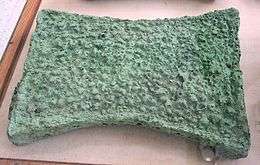
From https://ipfs.io/ipfs/QmXoypizjW3WknFiJnKLwHCnL72vedxjQkDDP1mXWo6uco/wiki/Oxhide_ingot.html

                                                                                                    Copper ingot from Zakros, Crete, displayed at the Heraklion Archaeological Museum.

1.IN THE FOLOWINGS, I WILL SHOW SOME SIMILIRATIES OF AEGEAN SIGNS WTH THOSE SUMERIAN-ONES; such relation was noticed also not so succesfully I expecte by Iannis Kenanidis and Evangelos Papakitsos.

2. Following the transmission of meaning is another matter. Early after proto-cuneiform phase the sumerian writing evolved as one sign do add other meanings that original pictographic-one. At the point that the original meaning was lost even by sumerians!    So, if signs were transmitted, one reasonable expect, that only the shape was some-how mantained, no talking that in another distant place (Aegean) to acquire another, different meaning. So, regarding the meanings I only notice some aspects, (in the limits of my understanding), not sustain an transmition of meaning.                                                        =======================================================

First Tartaria-sumerian Aegean triplet:

From http://aplaceofbrightness.blogspot.com/2008/11/moonlight-in-romania-tartaria-tablets_21.html

1.<metal ingot?<Pr-cuneif, sign KU < 2.KU:”metal,silver,shiny” > 3.Aegean sign JA and PA3 

1.https://cdli.ucla.edu/tools/signlists/protocuneiform/archsigns.html  Sign KU~a

sign Ga2;

INDUS SCRIPT , http://bharatkalyan97.blogspot.com/2013/04/bronze-age-glyphs-and-writing-in.html                                                                                                                               “Impressions of two cylinder seals (Sumer) and glyph of ‘ingot’. The person at the feet of the eagle-winged person carries a (metal) dagger on his left-hand, clearly demonstrating the link with this metalware catalog.Note the one-horned bull below the person who has his foot on mountain-summit.                                                                                                        Sumerian sign for the term ZAG ‘purified precious’. The ingot had a hole running through its length Perhaps a carrying rod was inserted through this hole.

From http://bharatkalyan97.blogspot.com/2016/04/indus-script-16-inscriptions-with.html

Seal stamp m-308 Mohenjo-daro (DK 11794) Hieroglyph: Three strokes connecting two linear strokes: dula ‘two’ Rebus:dul ‘cast metal’ PLUS kolmo ‘three’ Rebus: kolimi ‘smithy, forge’ Thus forge for cast metal

3. From http://www.kairatos.com.gr/linear1.htm See signs JA and PA.

.

Fromhttps://www.minoanatlantis.com/End_Minoan_Writing.php                                        See Linear A sign AB56:

———————————————————————-

http://www.oocities.org/proto-language/ProtoLanguage-Monosyllables.htm                   K?A                                                                                                                                            The Sumerian sign (Jaritz #458) depicts a ‘tubular basket’; a variant, #458a, tapers toward the top; both have top-covers; both presumably and read ga2 (among others). Another recorded reading for it is pisan, which means ‘basket’ but perhaps also ‘*shallow tray’.

An archaic variant form for Sumerian sign above (Jaritz #458), Jaritz #458a, looks very much as if it could be the ‘head’ without the hair and neck we see in Jaritz #15 under K?XA; and therefore might be a sign for ‘jaw’; but it also may be just another shape of ‘basket’. As mentioned below under K?XA, the most promising prospect for ‘jaw’ in Sumerian is ga14, a reading of Jaritz #15 that is currently without an assigned meaning. I believe the the idea of ‘jaw’ provided the prototype and nomenclature for a ‘shallow basket tray’ but there is no trace of this meaning (‘jaw’) for this Sumerian sign

=========================================================================

Second Tartaria-Sumerian-Aegean triplet:

                                                     See in the lowest row, from L>to> R: 2-nd and last signs

1.sum.pr-cuneif sign ZAG < 2.sum.ZAG:”the shine of metals; boundary, border, district’, ” > 3.Aegean sign A,Labrys,?Labyrinthos?

  1. From https://cdli.ucla.edu/tools/signlists/protocuneiform/archsigns.html                        Sign ZAG~a

and sign ZAG~c  sign GA’AR:

GA’AR= GAR                                                                                                                                       From https://cdli.ucla.edu/files/publications/cdlj2012_002.pdf                                                   The sign GAR was used, thus, in order to denote all cereal products counted bisexagesimally, that is, virtually all barley
product rations except beer.2. Akkadian called Sumerian – Sumerian Dictionary – Turkic World s155239215.onlinehome.us/turkic/…/SumerDictionaryEn.ht…                                          SUMERIAN DICTIONARY. Links … Common Sumerian words for magical purposes ….. Holy of Holies, BARAGGAL … Metals, ZAG (the shine of metals).

Sumerian Lexicon – IS MU https://is.muni.cz/el/1421/jaro2013/PAPVB_13/um/…/Halloran_version_3.pdf            (derives from zag, ‘boundary, border, district’, just as þúb relates to gùb). zeþ[SAL.ÁŠ.

3. From https://sites.google.com/site/raghavg602/economic-life                                                 

 see Cretan hieroglyphic signs 042 and *175

From https://linearbknossosmycenae.com/tag/labrys/

So this shape could reflect:                                                                                                               the shine of metals > double-axe.labrys, but also

boundary,border,district> place of  the other underground sumerian’s Sun,NERGAL and at Aegeans, the place of Minotaur , in fact place of Sun-Bull-God (labyrinthos)

Proto-cuneiform sign for house, temple “AB” has the close sign: https://cdli.ucla.edu/tools/signlists/protocuneiform/archsigns.html

https://en.wikipedia.org/wiki/Nergal                                                                                      Nergal seems to be in part a solar deity, sometimes identified with Shamash, but only representative of a certain phase of the sun.

Minotaur – Wikipedia https://en.wikipedia.org/wiki/Minotaur                                                     In Greek mythology, the Minotaur is a mythical creature portrayed in Classical times with the … In Crete, the Minotaur was known by the name Asterion, a name shared with Minos’ foster-father.   ………                                                                                                                Some modern mythologists regard the Minotaur as a solar personification and a Minoan adaptation of the Baal-Moloch of the Phoenicians.

He dwelt at the center of the Labyrinth

Asterion (/əˈstɪriən/GreekἈστερίων, gen.: Ἀστερίωνος, literally “starry“) or Asterius (/əˈstɪriəs/Ἀστέριος)

http://www.unmuseum.org/minot.htm                                                                                        However, they have found what looks like a labyrinth. The labyrinth wasn’t built in a cave below the palace, though. It was the palace.

labbyrinth, in fact was somebody’s house: “house,temple” =====================================

This is Mr. Kenanidis and Papakitsos aproach:

So Mr. Kenanidis and Papakitsos, no double-axe !, even the sign is like, see above “signify all barley product rations”                         ================================================================

Apropos of above sign 57 (Linear B LA32),                                                                                    (Only sumerian -Aegean:

sumerian GA2 <> Aegean JA Sumerian sign GA2~a3                                                                     from : https://cdli.ucla.edu/tools/signlists/protocuneiform/archsigns.html

Two main issues regarding Tartaria tablets wich remained unclarified.

January 11, 2019

11 jan.’19/Two main remained unclarified issues regarding Tartaria tablets

Later on, I realised that two fundamental issues regarding Tartaria tablets remained unclarified:

I.The suposition that the tablets are not (by far) so old, and could be made later than innitialy suposed.

I advanced before the hypothesis about an recent origin of the tablets. As a posibility in a time contemporaneous with the scientist Zsofia Torma, and maybe later. I will show that this hypothesis is not fesable, cause:                                                                                                 – Before 1900 the proto-writing field and research  was quite empty, thre were not research papers Even now-days the research it is in a continous progress (see proto-Elamite, Dahl, Englund).  There were very few ew schollars at the level of A.H.Sayce, in Zsofia Torma’s time.                                                                                                                      From https://en.wikipedia.org/wiki/Archibald_Sayce                                                                           “Archibald Henry Sayce (25 September 1845 – 4 February 1933), was a pioneer British Assyriologist and linguist, who held a chair as Professor of Assyriology at the University of Oxford from 1891 to 1919″     

Even A.Falkenstein (born after the death of Z.Torma) only later got a sumerian proto-cuneiform sign list, notice, without giving any corespondent meanings or interpretations to signs,

From https://en.wikipedia.org/wiki/Adam_Falkenstein                                                     “Adam Falkenstein (September 17, 1906 – October 15, 1966) was a German Assyriologist. Falkenstein studied Assyriology in Munich and Leipzig. He was involved primarily with cuneiform, particularly discoveries in Uruk, and with the Sumerians and their language. From 1930 onward, Falkenstein taught as a professor of Assyriology at the Göttingen University.”

The tablets are revealing complex aspects, I would say even “sofisticated”-ones wich are reflecting an relation between Near-East and Aegean cultures. This complexity is depassing the medium level, as even an now-days specialist, practically cannot easy show this  with a now-made written tablet as exemple.  So, the suposition that somebody contemporaneous had tried and made such a try is falling down. ”                                           ——————————————————————————-                                                              Beware, here I distance myself from the main schollar’s path, wich are talking only of       “A relation at some degree of Tartaria tablets signs with proto-sumerian writing”.

I stress that the scribe was not “their literate person”, but “ours”,meaning by this that was somebody settled in Danubian/Aegean area, even don’t bother if was an sumerian descendant or not, and totally disregarding how old would be the writing.

The aspect sized by no others, only by me, that the signs on Tartaria tablets are common to two great civilisations, Sumerian and Aegean and are icons of paramount cultural importance. The signs are only related to those sumerian-ones but pertain to whole European prehistory.                                                                                          This very aspect was not sized nor revendicated by somebody before me. The schollars limited only to notice the similarity with sumerian proto cuneiform writing and so forced to interpret the “writing” within these limits.   

Exemple of such papers:                                                                                                                     A Comparative Linguistic Study about the Sumerian Influence on the Creation of the Aegean Scripts Ioannis K. Kenanidis1, Evangelos C. Papakitsos*2                       file:///C:/Users/User/Downloads/SJAHSS-31E332-346%20(1).pdf                                                     Additional Palaeographic Evidence for the Relationship of the Aegean Scripts to the Sumerian Pictography                                                                          file:///C:/Users/User/Downloads/SJAHSS-33C734-737Additionalevidence.pdf                              In these papersmany exemples are not the best choosen-ones, not much convincing and regarding sumerian signs, there is not shown their sumerian name nor what signify or the meaning.  Only in the last mentioned paper there are scarce correct associations:  Linear B,sign”A”(labrys) with sumer.”double axe”, where sumerian sign is no double-axe, it is sum. sign ZAG, then sum.AMAR it is not correct associated.              Only in the last paper there are some few correct associated.Corect assoc. :Lin.B(LA32)”JA”, then sum.Se with Egeean Te….and that’s all.                                                 Of course because probably was not their goal, no reference to Tartaria tablet’s signs.

Eg., only some SIGNS COMPARED by me:

Sumerian           Aegean

GAR                    VOLUME UNIT       (Egypt, T,”loaf of bread” )                                                    SE                         TE                              Cereal,grain                                                                         AMAR                   MA                                                                                                                               Y                              Y                                                                                                                           KU                         PA3                                                                                                                             AB                     LABRYS                                                                                                                          PA                         PA                                                                                                                                 etc                        etc

                                       ——————————————————————————-

II. The suposition (otherwise corect) that the upper half of the round tablet is containing kind of willingly hidden, or esoteric message.

Yes, more than possible. But from wich period of time, and why to be hidden, especially the nature of the message !?

Here, the presence of one sign wich is not be found even in Aegean writings (nor in eteo-Cretan-ones) are pitty conducting us to the archaic greek writing.

It is about the well-known “D-letter” shaped sign. In the upper half of the round Tartaria tablet, only the Aegean signs Pa3(arch. Gr.Eta), sign “o” and some-how the sign “+++++” seem to existed before, and sign D appeared only in the first regional/epichoric archaic greek alphabets.                                                                                                                                This fact is pushing us away from an extremely old period, to the 800-300 years B.C. Now, what could be written there?                                                                                                     Note                                                                                                                                                         1.One don’t expect necessary an continous message as in a sentence, there could be isolated icons wich has independent meanings but close related to an single solid religious system of notions and values.                                                                                          2. I did not know before, there are even sentences wit only 2 words!                                          ———————————————————————————

Even before some years, I found that the oldest atestation in writing of the “HP” monogram, was found on some broken pot clay sherds, in some places, (probably at the origin from, or related to Samos), much more outside Greece, in the Levantine coast and Egypt.

You understand from “HP”,: “archaic eta-Rho”, where archaic eta was in the shape of “boxed-eta”, meaning closed contour, or with some earlier shape, “eta/heta a scala” meaning in the “ladder” shape.

Scholars are opinating that this sequence was abbreviation for                                     1.Hera                                                                                                                                                 2.Heros (Hero)                                                                                                                         3.proper name Heros. Same me saying.

Cause :                                                                                                                                                      – The oldest Aegean deity was at the origin Vinca mother-goddess followed by later minoan Asasara and Ida-mater,/Damater, and aftyerwards by Dione,                                     – Hera somehow is preceding Zeus,                                                                                                  – Complex nature of the Hera’s role and etymology,                                                                      I put on first place Hera, and only close-after an supposed Heros.           (remember that both Horus as Heros were kind of people saviors, Christ precursors)

From http://www.crystalinks.com/hera.html                                                                       ”Unlike some Greek gods, such as Zeus and Poseidon, Hera’s name is not analyzable as a Greek or Indo-European word. She therefore seems to be a survival of a pre-Greek “great goddess” figure – perhaps one of the powerful female divinities of the Minoan pantheon, or of some unidentified pre-Greek (“Pelasgian”) people.

From https://ro.wikipedia.org/wiki/Hera#Etimologie                                                                     ”Una dintre primele instanțe ale numelui zeiței apare pe tablele din Pylos, scrise în Linearul B,[1] un sistem de scriere care a fost găsit și pe datând încă din 1450 î.Hr.[2] folosit de civilizațiile miceniene până la colapsul acestora în secolul XII î.Hr. Aici apare ca Qo-wi-ja (Guōwiā „cea asemenea vacilor” un cunoscut epitet homeric).[1]

Numele Herei poate avea mai multe etimologii se exclud reciproc; o explicație leagă numele de ὥρα transliterat hōra, însemnând sezon, interpretându-l ca o vreme propice pentru căsătorie. Pe de altă parte, Platon consideră că e legat de ἐρατή transliterat eratē, adică „preiubit”, deoarece se spune că Zeus s-a căsătorit cu ea din dragoste, sau că numele zeiței este anagramă a aēr (ἀήρ, „aer“).[3] Plutarh susține a doua variantă sugerând că este un nume alegoric pentru poziția înălțată a acesteia.[4]

nonsense…

From https://en.wiktionary.org/wiki/%E1%BC%AD%CF%81%CE%B1#Ancient_Greek   ”HERA EtymologyUncertain. Possibly a feminine form of ἥρως (hḗrōs) or related to ὥρα (hṓra).”

Not convinced! I am binding the Hera’s name out of “protectress”, also to: er,era:”EaRth” ,hiera:”holy” and hera “Lady” !!

From https://www.etymonline.com/word/hera                                                                               ”sister and wife of Zeus, the type of virtuous womanhood, from Greek Hēra, literally “protectress,” related to hērōs “hero,” originally “defender, protector” (see hero (n.1)).”


11Ian’19/Clarificarea a doua aspecte fundamentale privind Tablitele de la Tartaria

January 11, 2019

Ulterior am realizat ca urmatoarele aspecte necesita o revenire si clarificare:

I. Supozitia ca tablitele nu sant nici pe departe atat de vechi si au fost facute ulterior. 

Am avansat anterior ca ipoteza o origine relativ recenta a tablitelor. Cum ar fi in perioada de activitate a Zsofiei Torma si chiar ulterioara. In buna masura aceasta ipoteza nu se sustine, intrucat:                                                                                                                         – Inainte de 1900 domeniul scrierii proto-cuneiforme nu era aproape deloc cercetat.Foarte putini cercetatori de talia lui A.H.Sayce, contemporani cu Zsofia Torma erau in acea vreme.

https://en.wikipedia.org/wiki/Archibald_Sayce&nbsp;                                                                          Archibald Henry Sayce (25 September 1845 – 4 February 1933), was a pioneer British Assyriologist and linguist, who held a chair as Professor of Assyriology at the University of Oxford from 1891 to 1919                                                                                   Chiar si Falkenstein (nascut dupa moartea Zsofiei T.) de-abea mai tarziu a scos lista semnelor proto-cuneiforme, nedand nici-unui semn vre-o interpretare.

https://en.wikipedia.org/wiki/Adam_Falkenstein&nbsp;                                                                Adam Falkenstein (September 17, 1906 – October 15, 1966) was a German Assyriologist. Falkenstein studied Assyriology in Munich and Leipzig. He was involved primarily with cuneiform, particularly discoveries in Uruk, and with the Sumerians and their language. From 1930 onward, Falkenstein taught as a professor of Assyriology at the Göttingen University.

Tablitele prezinta aspecte complexe, as zice eu chiar “sofisticate” care reflecta o relatie intre culturile Orientale si cea Aegeeana. Aceasta complexitate depaseste nivelul mediu. ca atare nici macar un specialist in zilele noastre, nu ar putea sa reflecte ( a se citi sa imite) aceste legaturi. Deci supozitia ca cineva relativ contemporan ar fi facut un gen de incercare, cade.                                                                                                                              ————————————————————————————————————————————

ATENTIE

Un anume aspect  nu a fost sesizat de altii, ci numai de mine, si anume ca semnele de pe tablitele de la Tartaria sant comune a doua mari civilizatii, cea sumeriana si cea Egeeana, iar icoanele au fost de o importanta culturala covarsitoare in aambele civilizatii.

. Semnele doar au legatura cu cele sumeriene si de fapt apartin preistoriei Europei in general si celei Vinca si Egeene in particular. Aceasta observatie nu a fost revendicata de nimeni pana acum.                                                                                                                     Savantii s-au limitat in a face doar o legatura cu semnele sumeriene proto-cuneiforme si a le atribui interpretarea sumeriana !                                                          Deci fara ca sa depaseasca aceste limite.                                                                               Exemple de asemenea lucrari:                                                                                                         A Comparative Linguistic Study about the Sumerian Influence on the Creation of the Aegean Scripts Ioannis K. Kenanidis1, Evangelos C. Papakitsos*2 file:///C:/Users/User/Downloads/SJAHSS-31E332-346%20(1).pdf                                                     Additional Palaeographic Evidence for the Relationship of the Aegean Scripts
to the Sumerian Pictography    file:///C:/Users/User/Downloads/SJAHSS-33C734-737Additionalevidence.pdf                                                                                                               In aceastea, foarte multe exemple nu sant fericit gasite, nu sant convingatoare si nici prea concludente, iar in privinta semnelor sumeriene nu este data denumirea sumeriana si nici semnificatia lor.Doar in ultima lucrare sant cateva asocieri relativ corecte :    Linear B,”A”(labrys) cu sumer.”double axe” cand semnul sum. nu este nici-o dubla-secure, este semnul ZAG;C,apoi sum.AMAR nu este bine asociat. Corect asoc. :Lin.B(LA32)”JA”, apoi sum.Se cu Egeean Te….si cam atat. Bineinteles, posibil pentru ca nici nu si-au propus, ca nu apare nici-o ref. la tablitele de la Tartaria.                                                                     

Ex., doar cateva  SEMNE COMPARATE de mine:

Sumerian               Aegean

  GAR                    UNIT de VOLUM       (Egypt, T,”jimbla de paiine” )                                              SE                          TE                              Cereale-boabe,grau                                                          AMAR                    MA                                                                                                                               Y                              Y                                                                                                                              KU                           PA3                                                                                                                             AB                       LABRYS                                                                                                                        PA                         PA                                                                                                                                etc                        etc           =========================================================================        II. Supozitia (altfel corecta) ca jumatatea de sus a tablitei rotunde contine un “mesaj” intentionat ascuns.

Da, mai mult decat posibil.Dar din ce perioada, de ce ar fi fost ascuns, si mai ales de ce natura ar fi putut fi !?

Aici, prezenta unui semn care nu se regaseste nici macar in scrierile Egeene (nici macar scrierea eteo-Cretana nu poate intra in discutie) ne conduce din pacate spre perioada scrierii arhaice grecesti.                                                                                                                 Este vorba despre semnul “D”. In jumatatea de sus a tablitei rotunde doar semnele Egeean PA3 (arh. grec eta) si “o”au existat, in schimb semnul “D” nu a aparut decat doar in primele alfabete grecesti.

Acest fapt ne indeparteaza total de o presupusa perioada extrem de veche (3.500-3.000 B.C.) si ne indreapta direct spre perioada 800-300 B.C.                                                              Acuma ce ar putea fi scris acolo ?                                                                                                      ————————————————————————————–                                                 Atentie, aici ma indepartez de cursul acceptat al oamenilor de stiinta, care fac o directa legatura cu scrierea sumeriana.                                                                                   Eu zic ca autorul “scrierii” nu a fost “intelectualul lor” ci al nostru, adica din aria Egeana/Dunareana, aceasta independent de faptul  ca ar fi fost mai vechi sau mai nou.       Aspectul sesizat ca semnele sant comune unor mari civilizatii, Sumeriana si Egeeana nu a fost sesizat si nici revendicat de altcineva inaintea mea. Cercetatorii s-au limitat la o interpretare facand doar legatura cu civilizatia sumeriana.                                                ———————————————————————————————————                                Inca acum cativa ani, am gasit cea mai veche atestare a asociatiei de semne “HP” a fost gasita pe bucati de artefacte din lut in Grecia si poate mai multe in Orientul Apropiat si Egipt. Sa intelegeti prin “HP” archaic eta-rho. Adica arhaic eta sub forma “boxed/cutie” adica cu contur inchis sau forma “in scarita”.                                                                         Cercetatorii au avansat ipoteza ca arfi monograma sau prescrtarea pentru Hera sau Heros. La fel zic si eu. Avand in vedere ca se pare ca                                                                    – zeitatea Hera il precede cumva pe Zeus, si avand in vedere:                                                  -lunga perioada anterioara de venerare a unei zeite Pamant-Mama (Earth Goddess), dar si natura complexa a numelui Hera, eu dau intaietate lui Hera ,urmat indeaproape de un eventual Heros. (A se retine ca Heros a fost un gen de erou salvator precursor a lui Cristos)

Din http://www.crystalinks.com/hera.html&nbsp;                                                                            Unlike some Greek gods, such as Zeus and Poseidon, Hera’s name is not analyzable as a Greek or Indo-European word. She therefore seems to be a survival of a pre-Greek “great goddess” figure – perhaps one of the powerful female divinities of the Minoan pantheon, or of some unidentified pre-Greek (“Pelasgian”) people.

https://ro.wikipedia.org/wiki/Hera#Etimologie&nbsp;                                                                              Una dintre primele instanțe ale numelui zeiței apare pe tablele din Pylos, scrise în Linearul B,[1] un sistem de scriere care a fost găsit și pe datând încă din 1450 î.Hr.[2] folosit de civilizațiile miceniene până la colapsul acestora în secolul XII î.Hr. Aici apare ca Qo-wi-ja (Guōwiā „cea asemenea vacilor” un cunoscut epitet homeric).[1]

Numele Herei poate avea mai multe etimologii se exclud reciproc; o explicație leagă numele de ὥρα transliterat hōra, însemnând sezon, interpretându-l ca o vreme propice pentru căsătorie. Pe de altă parte, Platon consideră că e legat de ἐρατή transliterat eratē, adică „preiubit”, deoarece se spune că Zeus s-a căsătorit cu ea din dragoste, sau că numele zeiței este anagramă a aēr (ἀήρ, „aer“).[3] Plutarh susține a doua variantă sugerând că este un nume alegoric pentru poziția înălțată a acesteia.[4]

aiurea…      https://en.wiktionary.org/wiki/%E1%BC%AD%CF%81%CE%B1#Ancient_Greek&nbsp;  EtymologyUncertain. Possibly a feminine form of ἥρως (hḗrōs) or related to ὥρα (hṓra).[1][2]

varza! eu leg numele de Hera/er,era:”pamant” ,hiera:”sfanta” si hera “doamna” !!

https://www.etymonline.com/word/hera&nbsp;                                                                                         sister and wife of Zeus, the type of virtuous womanhood, from Greek Hēra, literally “protectress,” related to hērōs “hero,” originally “defender, protector” (see hero (n.1)).