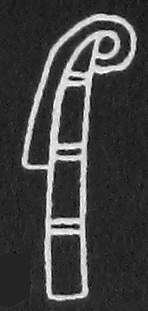
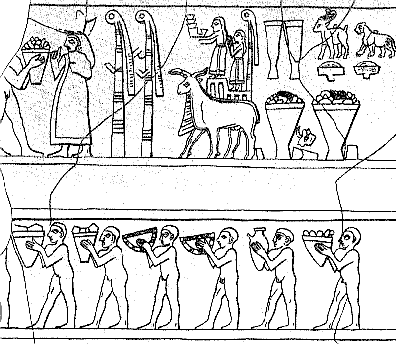
Inanna’s knot. WARKA WASE https://www.crystalinks.com/sumerart.html The Warka Vase, is the oldest ritual vase in carved stone discovered in ancient Sumer and can be dated to round about 3000 B.C. or probably 4th-3rd millennium B.C. It shows men entering the presence of his gods, specifically a cult goddess Innin (Inanna), represented by two bundles of reeds placed side by side symbolizing the entrance to a temple. The detailed drawing above was made from tracing a photograph (from Campbell, Shepsut) of the temple vase found at Uruk/Warka, dating from approximately 3100 BCE. It is over one meter (nearly 4 feet) tall. On the upper tier is a figure of a nude man that may possibly represent the sacrificial king. He approaches the robed queen Inanna. Inanna wears a horned headdress. The Queen of Heaven stands in front of two looped temple poles or “asherah,” phallic posts, sacred to the goddess. A group of nude priests bring gifts of baskets of gifts, including, fruits to pay her homage on the lower tier. This vase is now at the Iraq Museum in Bagdad.
www.sumerian.org › sumlogo Rezultate de pe web Sumerian’s phonetically more complex logograms 10 aug. 1999 — lagar: temple servant who pronounces invocations to the god [LAGAR archaic frequency: 51; concatenates 4 sign
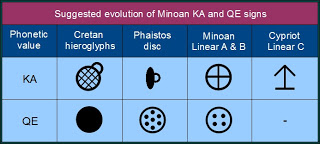
I read Mr.’s Andras Zeke study: Tracking the evolution of the ‘KA’ and ‘QE’ signs of Minoan Hieroglyphic and Linear scripts http://minoablog.blogspot.com/
<<Is the ‘sieve’ sign (Hie *47) KA or rather QE? Alone from its shape, it is impossible to decide. >>
=====================================
I tried to make corespondences with: – sumerian proto-cuneiform signs : – UDU:”sheep, many”, – UTU:”sun” www.ancient.eu › Utu-Shamash Utu-Shamash – Ancient History Encyclopedia 31 ian. 2017 — His symbol of the solar disc shows a circle with four points protruding toward the cardinal directions and four wavy lines …and – MAS:”twin” Sumerian Lexicon – Sumerian Language Pagewww.sumerian.org › sumerianPDFAug 11, 1999 — M. Civil, unpublished Sumerian glossary for students. … gikid: reed mat [KID archaic frequency: 76; concatenates 5 sign variants]. … maš: one-half; twin – egyptian KA:”life” Ka | Egyptian religion | Britannicawww.britannica.com › topic › ka-Egyptian-religionKa, in ancient Egyptian religion, with the ba and the akh, a principal aspect of the soul of a human being or of a god. The exact significance of the ka remains a matter of controversy, chiefly for lack of an Egyptian definition; the usual translation, “double,” is incorrect – sumerian KA:”mouth” – proto I.E. Ka:”like,desire” www.thefreedictionary.com › roots Indo-European root kā- – The Free Dictionary kā-. To like, desire. Oldest form *keh2-, colored to *kah2-, becoming *kā- – SEAL,stamp,sign
Hieroglyphs – egypt, egyptian, dynasty, time, art, period and british In them we see pictures of the reception of Minoan ambassadors from Crete which are among the most important … The sign for seal, Q is a picture of the cylinder rolling over the clay.
sirius-star.ro › 2016/05 › L.A…PDF the makers of civilization in race &! history – Sirius-Star.ro Date of Minoan Civilization about 2700 B.C.. 256-295 … this seal sign. as ” the cut or engraved,” and is derived from the Egyptian. Khat” cut …
ia800909.us.archive.org › W…PDF Egyptian Civilization: Its Sumerian Origin and Real Chronology (1930) Egyptian and Indus inscriptions, and Uru-ka Gina of his. Mesopotamian … this seal sign, as ” the cut or engraved,” and is derived from the Egyptian. Khat” cut or ..
books.google.ro › books Rezultate de pe web How to Decipher the Byblos Script Jan Best — 2018 · Crete (Greece) Minoans without Mycenaeans” or – perhaps better still – Minoans without … The texts on many seals of Minoan dynasts start with the Luwian hieroglyphic sign for seal (HH 327), SASAI, .
=============================
Greek-like Elements in Linear A Gregory Nagy file:///C:/Users/User/Downloads/11991-13863-1-PB-1.pdf
<< In that case, the heading ka-pa da-ta-ra would mean “commodity allotments.” …..It will also be noted that the other common Greek connective meaning “and” (Le. Kat) has not as yet been found in the corpus ofB: this is probably due to the aforementioned aversion of the B system to monosyllables other than abbreviations «(f No.2 above). ….In any case, kas or kai would be expected to appear as *ka in the syllabary. …..
Another possible identification of ka in A with kai is found in HT llb. Here ka occurs five times as a monosyllable connecting numerals (40,30,50,30,30 respectively), which are totaled up in the end (= 180) with the ku-ro sign:
Jde-Ll 1 sa-ra2~
-:L35 ka 40 ka 30
ka 50 Tu-LlOl-na
ka 30 sa-qe-ri
ka 30 ku-ro
180 Since these five instances of ka occur with absolutely no ligatures appended, they are consequently identical and there is no direct evidence that could point to their being ideograms. One can explain them as plus-signs in a tally-the most ideal context possible for kai. ….and the precise lTIotivation for placing a ka before each number might be to indicate just what is supposed to be added up. Consequently, the numerall in line 1 is excluded from the tally and thus does not have a ka. The latter is repeated five times here in this horizontally-running tally for the same reason, one would suppose, that plus-signs are repeated in horizontal additions today: the one difference is that in this tablet the first ka, unlike a plus-sign, occurs before the first number to be tallied; but cf. Greek kai X kai Y kai Z= “bothX and Y and Z.” >>
NOW THIS POINT I’VE EXPECTED: TO SHOW THE VERY ORIGIN OF THE SIGN + :
<<The simple cross does not have a numerical meaning in written Sumerian, but the tally mark symbolism of the cross in a circle meaning ‘many’ is preserved in an alternate reading for the Sumerian sign of the circled cross. When the sign is read udu, it means ‘sheep’, but sometimes it must be read lu, meaning‘many, much; to be/make numerous, abundant’.>>
Minoan Linear A – JStorwww.jstor.org › stable Linear. B, thanks to Ventris’ decipherment, is identified as a dialect of Greek; … ing of ka-ro-pa3 to Akkadian karpu. … ka-pa is Akkadian gabba, “all,” it is clear.
Download PDF – Brillbrill.com › downloadpdf › book8°Cited as a Sumerian loanword in Akkadian in SLOB, #410, p. 353. 81BDB, p. 31. … is misplaced. The fact that anak– designates a metal, tin, the range of its extra- … argument is his demonstration that “anaku, in value, was always between silver
Not the oldest, because beginning was in paleolithic, as tally marks. But some attested ones were:
From Early Numeration – Tally Sticks, Counting Boards, and Sumerian Proto-Writing John Alan Halloran http://www.sumerian.org/
<<Proto-Writing and Tally Marks 2.1. The tally stick conventions described by Menninger appear also to have inspired the early script of Old Europe, which developed in the middle and lower Danube basin starting around 5.300 BCE, calibrated. Although different theories have been proposed about the signs found on 940 inscribed objects excavated from the Vinča-Tordos region of Transylvania, Eric Lewin Altschuler and Nicholas Christenfeld have shown that nearly one-third of the inscribed pottery objects bear numerical inscriptions. They suggest that the script of Old Europe may have been used for economic purposes, The Number System of the Old European Script, 9 Sep 2003, [math.HO] at http://arxiv.org/html/math/0309157v1. A literature search fails to find any student of this ancient script who references the tally marks chapter of Menninger’s book, probably because nothing about the title, Number Words and Number Symbols, indicates that it is about the history of writing, However, if one goes back far enough, economic tally marks are very relevant to the origins of writing. Altschuler and Christenfeld describe how to read the number signs on the Old European Script (‘OES’) inscriptions – the score marks, the ‘comb’ motif, and the ‘telephone pole’ motif. They suggest that the common OES signs V and X or + should be read as 10 and 20. …………………………………….
2.3. Nissen, Damerow, and Englund describe and illustrate on page 20 of Archaic Bookkeeping, Uruk IV-period “tags consisting of small, transversely perforated tablets, usually containing but few ideographic signs and no numerical notations. These signs do not belong to the well-known repertoire of symbols representing goods such as plants, animals, textiles, and metals. The tags therefore may carry personal names and were probably attached with a string to containers or other items, stating the proprietor or receiver of such goods.” The idiosyncratic identifying signs on these Mesoptamian clay tags may be compared to other undeciphered short sequences of signs, such as the ‘Vinca script’ found in Old Europe or the ‘Jiahu script’ found on tortoise shells in China, both dated to about 6,000 BCE. ………….
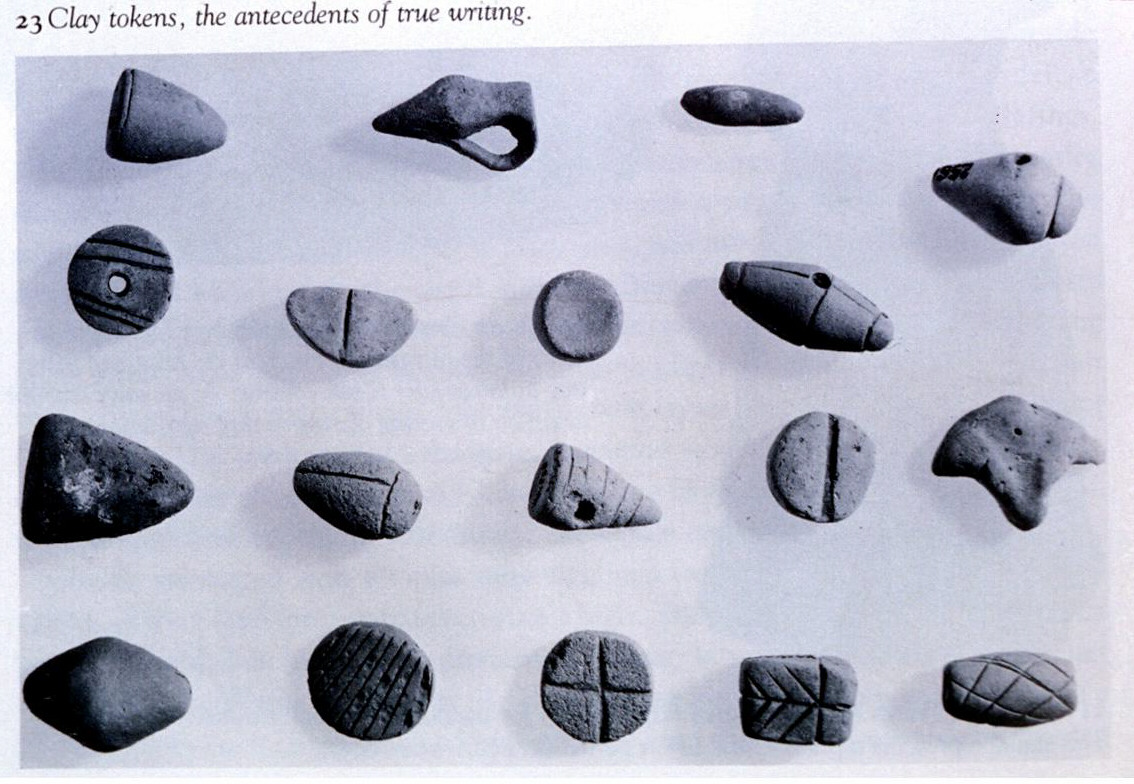
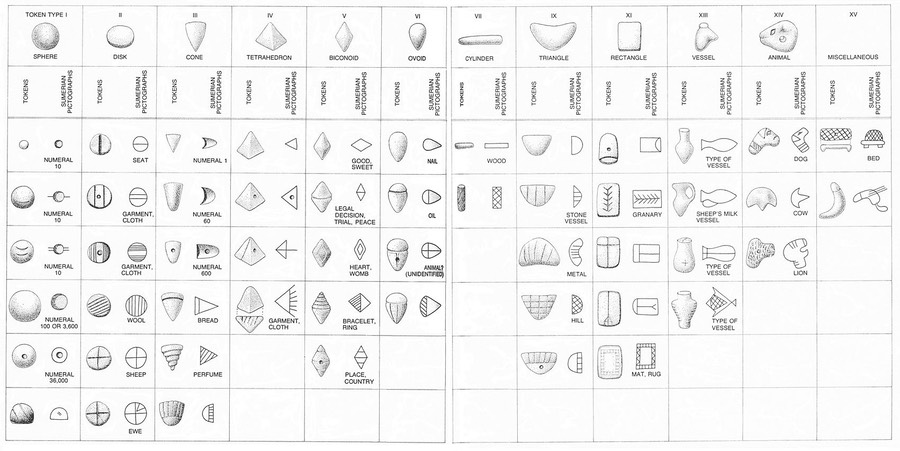
Sumerian Goat and Sheep Pictograms from Tally Stick Conventions 3.1. The Sumerian MAŠ sign with the word-meaning of ‘(male) goat’ was a simple cross. The Sumerian LU or UDU sign with the word-meanings of ‘many’ and ‘(male) sheep’ was a cross inside a circle. The symbol of a cross inside a circle having the abstract meaning ‘sheep’ may already be present among the complex tokens found at Uruk in the fourth millenium, according to their primary investigator, Denise Schmandt-Besserat (Beyond Writing, vol. 1, 1992, p. 152). Following Jöran Friberg, she says that, at least in Elam and Uruk, a cylinder token represented one herd animal and a lenticular disk represented 10 herd animals. But, during the fourth millenium Uruk period, tokens with complex markings replaced the plain tokens that had functioned for millenia, driven by the need for greater precision and accuracy in large production centers. Disks were marked differently to count lambs, ewes, and sheep. The mystery why such an abstract symbol as a cross came to represent goats and sheep in the Near Eastern clay token system and Sumerian pictograms is solved when one realizes that, outside the urban centers where complex tokens and writing arose, shepherds traditionally counted goats and sheep by making notches on tally sticks – and shepherds used the cross convention to record groups of goats and sheep. ……….
3.2. The simple cross does not have a numerical meaning in written Sumerian, but the tally mark symbolism of the cross in a circle meaning ‘many’ is preserved in an alternate reading for the Sumerian sign of the circled cross. When the sign is read udu, it means ‘sheep’, but sometimes it must be read lu, meaning ‘many, much; to be/make numerous, abundant’.>>
Later, the meaning of cross diverged, from UDU:”sheep,many” to UTU:”Sun”, cause of close phonetics: udu-utu.
This one was also used for sun, because sun was aprehended as “twin”, day-sun and night-sun wich travel under earth.
https://en.wikipedia.org/wiki/Nergal << Nergal seems to be, in part, a solar deity, sometimes identified with Shamash, but only representative of a certain phase of the sun. Portrayed in hymns and myths as a god of war and pestilence, Nergal seems to represent the sun of noontime and of the summer solstice that brings destruction, high summer being the dead season in the Mesopotamian annual cycle. He has also been called “the king of sunset”.[7] Over time Nergal developed from a war god to a god of the underworld.[8] In the mythology, this occurred when Enlil and Ninlil gave him the underworld.>>
Nergal was also the deity who presides over the netherworld, and who stands at the head of the special pantheon assigned to the government of the dead (supposed to be gathered in a large cave known as Aralu or Irkalla).
https://medium.com/@modernplatonist/divine-twins-indo-european-religion-myth-dioscuri-ashvins-greek-roman-vedic-f7567a922a2f << One of the central figures in the Indo-European pantheon is the Sky Father. He is also known by his reconstructed Proto-Indo-European term, *Dyeus. The patriarch of the gods has an intricate web of family relatives — as it is well evinced, for example, through both Vedic and Greek mythologies. Among these relatives, the sons of *Dyeus are probably the most relevant ones. They are the divine Twins. ….. Moving on to the Baltic myth, we find the Lithuanian Diẽvo sunẽliai and the Latvian Dieva dēli. Also called the Ašvieniai in Lithuanian, they are the Sons of God. Like their other Indo-European cognates, the Ašvieniai also appear with horses and a chariot, which they use every morning to go to see the Sun. This is a clear reference to the Dawn, also known as the Daughter of the Sun. In the Baltic folklore, the Ašvieniai rescue the Dawn from sinking into the sea. The Vedic Ashvins are associated with the Dawn as well, and she appears as their sister.>>
Is the ‘sieve’ sign (Hie *47) KA or rather QE? Alone from its shape, it is impossible to decide. However, we do have a powerful help on our hand: the pictogram-like syllabary of the Phaistos Disc. Although different from the traditional Hieroglyphics, the disc does present us one clearly discernible ‘cake‘-like sign (Pha *12). While matching with Lin A QE almost perfectly in shape, it is clearly not a sieve. On the other hand, the disc also has another sign (Pha *17), that looks like a Rugby-ball with handles. That is exactly how a (handled) sieve would look if we viewed it from aside. From this point on, the identifications KA = ‘sieve’ and QE = ‘cake’ are rather straightforward. As I mentioned early in this post, there is also a somewhat cake-like ‘full circle’ sign in Minoan Hieroglyphics (Hie *73). It is much rarer than the ‘sieve’ sign, but the QE sign is also much rarer in Linear A, than the KA one (30 vs. 117 occurrances on the HT tablets). This last note essentially closes the circle. Or at least so I hope.
For those who still disbelieve these identifications, I suggest to read (or rather, parse through) the Linear A tablet HT6. It is the only case where sign QE is used as a logogram: and from the context of the tablet, it must refer to some foodstuff. Given that it stands alongside the term PI-TA (pita = Aramaic for ‘bread’), I strongly feel that the ‘cake’-sign actually meant ‘bread’. It should not be forgotten that there exists a sign (Ana *181) within Anatolian Hieroglyphics that looks similar to the Linear A QE sign and the same as Phaistos Disc sign *12. It is actually the Luwian logogram for ‘bread‘!……..>>
You’re right Mr. Zeke, congratulations! As I saw myself corespondences between other (not specifically this one)proto-cuneiform signs and Aegean ones, along with Mr.I.Papakitsos and G. Kenanidis, independently, See
BERLINER BEITRAGE ZUM VORDEREN ORIENT Herausgegeben von Volkert Haas, Hartmut Kuhne, Hans J org Nissen und Johannes Renger file:///C:/Users/User/Downloads/epdf.pub_changing-views-on-ancient-near-eastern-mathematics.pdf page 29, Table “Dry cereal products and rations: ideograms” , sign GUG2a, wich is a circle with 6-10? Dots/strokes. “passim as designation of a grain product, possibly a round breadas opposed to dry grain products of all types, including simple capacity measures, qualified by GAR (cp. MSVO 1,109 obv. iii la and MSVO 1,111 rev. ii la, GUG1a together with GAR as general qualifications); often with indications of the amount of grain used in its production, usually IN18 per unit;… …”
Sumerian Beer: The Origins of Brewing Technology in Ancient Mesopotamia*Peter Damerowhttps://cdli.ucla.edu/pubs/cdlj/2012/cdlj2012_002.html << In the earlier proto-cuneiform documents the first of these signs (GUG2) represented a specific amount of barley processed in a certain form to be distributed as a special kind of ration prepared from grain. Based on later usage this sign is commonly translated as “cake.” >>
ATENTIE: – Aceasta pagina are caracter didactic. Prezenta unor tablite sumeriene fragile din lut pe teritoriul Romaniei sau prezenta unei persoane cu cunostinte apropiate de nivelul unui scrib sant extrem de greu de explicat. Nu am cunostinta de vre-o tableta sumeriana proto-cuneiforma sa fie gasita pe teritoriul Anatoliei sau in aria Egeeana, desi se vorbeste ca pentru Anatolia este posibil.Cu atat mai dificila sau inexplicabila, practic imposibila ar fi prezenta unor semne provenite de pe teritoriul Iranului sau Indiei, teritorii inca si mai indepartate. Eu fac o apropiere intre sisteme de scriere, luand in calcul o transferare sau transmisie culturala. – In mod eronat se asimileaza tablitele de la Tartaria cu Civilizatia Vinca-Turdas. Aceasta civilizatie a avut o contributie si preocupari importante in directia si evolutia scrisului.dar din pacate nu s-a finalizat nici macar in proto-scriere. Biblioteca de semne Vinca-Turdas se constituie intr-o colectie de semne numita Scriptura Vinca = Scriptura Danubiana=Scriptura Vechii Europe. Aceasta scriptura precede cu 1.000 de ani (5.000-4.000 IEN) proto scrierea sumeriana (3.000 IEN). Semnele tablitelor de la Tartaria NU APARTIN SCRIPTURII VINCA-TURDAS.Semnele sunt mai noi si par a apartin in cea mai mare masura proto-scrierii sumeriene, eventual usor derivata, modificata din aceasta. Imaginea, din Wikipedia.
Pe mine ma intrigat prezenta unor semne de pe tablitele de la Tartaria, care NU AU FOST FOLOSITE NICIODATA DE SUMERIENI, si aici ma refer la semnele “D” (litera latina de tipar d).Atentie, ma refer la forma D fara nici-un adaos sau deformare.In schimb am gasit semnul D in scrierile Proto Elamita. mai exact scrierea Linear-Elamita si Scriptura Indusului.
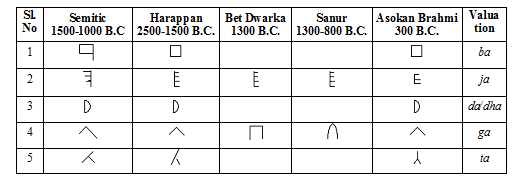
Cercetatorii afirma ca semnul “D” are echivalentul fonetic “Dha/Da” www.academia.edu › The_Indus_V… Rezultate de pe web (PDF) The Indus Valley Script: A New Interpretation | Steven C … Meanwhile, the root for ‘bow’ may be realized either as masculine (dhanu), feminine (dhanū) or neuter (dhanus), as well as the variant …
crossasia-journals.ub.uni-heidelberg.de › …PDF Sāvadhānapattra cut in half and results in Brahmi Ḍ; dha is from dhanus ‘bow’, found as the. Indus bow sign.
La noi DD ar fi dha-Dha sau Da-da iar oo ar fi na-na, ra-ra. ar iesi Dha-Dha “tata, bunic in linie paterna” si na-na “mama”
books.google.ro › books Rezultate de pe web New Perspectives on the Origins of Language Claire Lefebvre, Bernard Comrie, Henri Cohen — 2013 · Language Arts & Disciplines Proto-Indic *dadda “father or other elderly relative’:
forums.bharat-rakshak.com › viewt… Out-of-India – From Theory to Truth – Page 187 – Bharat Rakshak 6 apr. 2013 — However the Indus Valley for which the word was used, was … Thatha( Telugu-Grand Father)->Dhadha(Hindi-Grand
shivatempless.blogspot.com › dhadh… 52. DHADHAPURAM – SHIVA TEMPLES 13 sept. 2017 — In sanskrit Dhadha means Bestower (romana distribuitor) and also father
books.google.ro › books East of Indus: My Memories of Old Punjab Gurnam Singh Sidhu Brard — 2007 · Punjab (India) DADA : paternal grandfather .
L-am gasit ca reprezentand “Da”. S-ar citi >>stg-dreapta>>:Da-Dha ori <<dr-stanga<<: Dha-Da ?
Dar nu are rost sa continuam pentru ca degeaba am gasit echivalentele semnelor din jumatatea superioara a tablitei rotunde (HD DDoo) in scrierile de filiatie indiana, pentru ca restul semnelor nu se mai incadreaza in acest tipar.
Atentie! Aceasta postare nu este o o descifrare sau citire a unui presupus continut scris real al tablitelor de la Tartaria. Avand in vedere ca semnele nu apartin unui unic sistem de scris ci mai multora, pagina are un caracter pur didactic. Are rolul de a incerca si testa diferite scrieri. Semnele de pe tablite apartin mai multor sisteme de scrisi dintr-larg interval de timp si care au folosite in diferite arii geografice. In niciuna din incercari semnele s-au incadrat intr-un singur tip de scriere, totdeauna au ramas semne care au provenit din alte scrieri (sau din necunoscut). Cele mai multe semne provin din cele sumeriene proto-cuneiforme.Apoi privind asemanarea, in ordine descrescatoare este aceea cu semnele Linear A/B si cele Anatoliene. Semnele din jumatatea superioara a tablitei rotunde par a proveni din scrierea arhaica greceasca.Cel mai degraba aceasta “adunatura” de semne pare a fi rodul imaginatiei bogate a cuiva.Dupa cum au constatat A.Falkenstein si A.A.Vaiman, autorul nu a fost un scrib, avea doar vagi notiuni privind scrisul in general si nu se stie ce a urmarit. Exista multe elemente de neconcordanta precum si altele care scot tablitele din tiparele si normele uzuale ale logicii, scrisului si intentiilor oneste. ====================== Va rog sa comparati rapid, doua chestiuni “S” (s, de la Sumer) si”M” (m, de la minoic) ……. apoi cu “E” (e, de la Egipt) si cu “T” (t, de la Tartaria); A. Prima oara am intalnit o referire la semnul “D” in lucrarea monumentalei cercetatoare Denisse Schmandt Besserat, http://www.erasmatazz.com/library/the-mind/history-of-thinking/early-civilization/before-the-greeks/invention-of-writing.html in care facea referire la trecerea de la sistemul de numarare folosind “jetoane” la cel grafic. (coloana IX)
Din https://www.zora.uzh.ch/id/eprint/151545/1/Bauer_Englund_Krebernik_1998_Mesopotamien.pdf << 6.2.3. Notări de cereale și timp Relația dintre sistemul de capacitate cerealieră și notațiile de timp a fost de așa natură încât acestea s-ar putea de fapt să se reflecte reciproc. Dovezile sunt puternice, așa cum a simțit H J Nissen mulți analiști, din perioada Uruk castronul/bolul cu margine teșită cu o capacitate aproximativa de 0,8 litri a servit ca model pentru pictograma GAR (ulterior sumerian ninda) și reprezentat în general o rație de cereale a unui muncitor pentru o zi. Mai departe, ideograma GAR trebuie arătat corespunzand în general semnului numeric N30.a din sistemul de capacitate cerealieră. În special, textul MSVO 4, 27.266 demonstrează că cantitatea de cereale reprezentată de GAR // N30.a a fost o a treia măsură folosită ca distribuție generală a ratiei în perioada arhaică. Acest N30.a este, asa cum știm, l / 30 parte a unității de bază Nl, iar acest Nl este înscris cu semnul u4 pentru a reprezenta o lună administrativă de 30 de zile. ……………….. Numeroase evidente / la fel de bine ca evidența arheologică, susțin presupunerea că în administrarea arhaică redistributivă cerealiera a fost raționată la persoanele aflate în întreținerea gospodăriei la o rationalizare concordanta cu tradiția ulterioară. Deimel a recunoscut în pictograma semnului GAR („ninda” sumerian și corespondență akkadiană akalu) ca fiind bol; de când discuția lui HJ Nissen despre bolul cu margine teșită / așa-numitul diagnostic purtat dorind din Urukul Mijlociu, dar cel mai frecvent în perioada Uruk târzie și găsit în cantitati mari in nivelurile arhaice ale lui Uruk, pe care le-a interpretat a fi un bol de raționalizare a mancarii reprezentat de GAR . Socotelile produselor cerealiere socotite în grane în general au fost totalizate și reprezentate cu semnul ideografic GAR. Aceste produse conțin echivalentul cerealier reprezentat de semnul N1 până la o măsură reprezentată de către N30c în sistemul arhaic de capacitate cerealiera. Ideograma are un anumit aspect echivalent metrologic în conturile arhaice / totuși; cu unele variante / ii corespunde semnului numeric N30.a egal cu 1/30 din semnul N1 în sistemul de capacitate. (Este, în orice caz, o chestiune de interpretare ca până când semne atât de ambivalente precum U4, în sens ideografic „lumină”, „zi”, „alb” …….N1 a fost înțeles ca unitatea de baza “1” a sistemului sexagesimal.) >> B. Din https://linearbknossosmycenae.com/2015/02/19/mycenaean-linear-b-units-of-measurement-liquid-dry-weight-click-to-enlarge/
OBSERVATI CA: – semnul sumerian GAR pentru unitatea de volum, portie zilnica cereale-paine este extrem de asemanator cu cel minoic pentru volume, acestia din urma simplificandul cumva (nu mai are liniuta din interiorul D-ului). – In mod evident, ambele au o baza fizica: blidul, bolul. Volumul este exact acelasi, 0,8 Litri ! – Acestea i-mi spun mie ca semnul minoic pentru volum este posibil sa fie de inspiratie sumeriana sau transmis, preluat din scrierea sumeriana proto-cuneiforma. E. Hieroglifa egipteana “T”:”jimbla de paiine” https://encrypted-tbn0.gstatic.com/images?q=tbn%3AANd9GcR3DNpnRBMew2SVGMXZwk3XjuK9wRKDrt-xsw&usqp=CAU
Eu mi-am tot pus intrebarea: ce a vrut sa arate, sa transmita sau sa demonstreze autorul inscriptionarilor, sa-si arate vastele cunostinte, sa arate evolutia scrisului !?? SEMNELE “HD” de sus: Semnul GA2 https://cdli.ucla.edu/tools/SignLists/protocuneiform/archsigns.html GA2~a1
GAR citeste NINDA ratie,paiine Acum incep sa se lege niste lucruri.. semnele de sus le-am intrpretat anterior: GA2 + GAR= “COS PAIINE” sau Ku GAR=NindaKu =ei mananca paiine Sumerians and Akkadians in their ethno … – E-Periodicawww.e-periodica.ch › cntmngPDFnorthern logograms, as in sag.rig?, sag.gis.ra, quoted above, and in ninda ku. “they eat bread“ The Organization of the Anatolian Local Cults During the …books.google.ro › booksKAŠ ” beer bread ( ? ) ” NINDA.KAŠ KBO II 8 II 14 , IV 9 ‘ , 19 ‘ , 25 ‘ ; KUB LIV 90 r.c. 5 NINDA.KU , ” sweet bread ” Rom:”paiine dulce” ?turta dulce? https://translate.google.com/translate?hl=en&sl=it&u=https://books.openedition.org/editionsmsh/7778%3Flang%3Den&prev=search&pto=aue firs is constantly offered “sweetened loaves” (NINDA KU 7 ….sau alternativ GA2 GAR=GA2 NINDA :”depozitare cereale”; “intinde paiine Ku(g) GAR=Ku NINDA:”(ofranda)sacra paine” Apoi din semnele DDoo, unde: – primul D pare a fi semnul GAR (ninda,portie de cereale-paiine pentru un om pentru o zi, 0,8 Litri) ; (GAR=N30.a=1/30 N1).Posibil chiar a intentionat sa faca semnul exact, dar nu i-a reusit, in special ca a uitat sa ridice stilul de pe suprafata moale tablitei si a lasat o zgarietura ? – al doilea reproduce semnul N1: “1” care reprezinta portia de mancare pentru o luna 30 x 0,8 =24 Litri. ! In mod normal sumerienii il faceau numai prin imprimare/imprintare/amprentare, https://cdli.ucla.edu/tools/SignLists/protocuneiform/archsigns.html 1(N01@r)
Origin of the Sumerian Name and Sign for ‘Wheat’ – John a. Halloran …fr.scribd.com › document › Origin-of-the-Sumerian-Nam…Origin of the Sumerian Name and Sign for ‘Wheat‘ – John a. … The sign ASZ 2 , ’emmer‘, “GRAU EMER” Acum se contureaza doua ipoteze privind ce s-a avut in intentie cu semnele: 1. Cineva a vrut sa arate altcuiva semnele de baza pentru a tine evidenta hranei : Semnul As semnificand “grau” +GAR:”portie, ratie” de hrana pentru o zi=ninda=cereale,paiine=0,8 Litri + semnul numeric N1:echivalentul numeric al hranei pentru o luna=24 Litri + semnul pentru “total” 2. Este vorba de o ofranda constand in cereale, (sub forma nepreparata sau preparata pentru comunitate, paiine ?) adusa zeitatilor, unde cantitatea este nesemnificativa: semnul “grau”+ semnul “portie”+ “numarul N1″=echivalentul hranei pentru o luna+semnul intreg,total”. Spre aceasta varianta ne indreapta interpretarea semnelor din stanga “HD”. https://cdli.ucla.edu/tools/SignLists/protocuneiform/archsigns.html 1(N30~a) acesta este semnul N30.a=1/30 N1
Exemplu real de socoteala sumeriana din faza pre-cuneiforma=folosind semne proto-cuneiforme, faza care o precede pe cea a scrierii propriu-zise cuneiforme: Din http://mathscitech.org/articles/mathematics-uruk-susa
Oricum, semnele i-mi arata in mod evident, ca provin mai degraba dintr-o zona Siria, sud-estul Anatoliei, aria Egeeana, unde pe parcurs, au suferit o usoara modificare, adaptare.
Atentie! Aceasta postare nu este o o descifrare sau citire a unui presupus continut scris real al tablitelor de la Tartaria. Avand in vedere ca semnele nu apartin unui unic sistem de scris ci mai multora, pagina are un caracter pur didactic. Are rolul de a incerca si testa diferite scrieri. Semnele de pe tablite apartin mai multor sisteme de scrisi dintr-larg interval de timp si care au folosite in diferite arii geografice. In niciuna din incercari semnele s-au incadrat intr-un singur tip de scriere, totdeauna au ramas semne care au provenit din alte scrieri (sau din necunoscut). Cele mai multe semne provin din cele sumeriene proto-cuneiforme.Apoi privind asemanarea, in ordine descrescatoare este aceea cu semnele Linear A/B si cele Anatoliene. Semnele din jumatatea superioara a tablitei rotunde par a proveni din scrierea arhaica greceasca.Cel mai degraba aceasta “adunatura” de semne pare a fi rodul imaginatiei bogate a cuiva.Dupa cum au constatat A.Falkenstein si A.A.Vaiman, autorul nu a fost un scrib, avea doar vagi notiuni privind scrisul in general si nu se stie ce a urmarit. Exista multe elemente de neconcordanta precum si altele care scot tablitele din tiparele si normele uzuale ale logicii, scrisului si intentiilor oneste. =========
De fapt sunt o serie de dovezi,evidente plus o serie de abateri,ciudatenii si aspecte unele neexplicabile si altele greu de explicat. Incep prin a le enumera, nestiind acum daca sunt fix 101, mai multe sau mai putine.Pentru usurinta intelegerii le voi grupa pe capitole:
VECHIMEA
1.Vechimea estimata dupa unii este aceea ca provin din 5.300 IEN, dupa altii 2.400-2.700 IEN si tot felul de alte date.De fapt nu poate fi in acelasi timp si o data si cealalta. 5.300 IEN iese complet din calcul, dupa cum se va vedea mai jos.
2. Vechimea 5.300 IEN a fost “dedusa” si nu determinata, presupunand ca tablitele au aceeasi varsta cu oasele gasite in apropiere si a caror varsta a fost determinata (cica 5.300 IEN). Sa dai (transferi) varsta unui artefact altuia pe considerentul ca probabil a fost pe undeva pe aproape mi se pare bizar si profund nestiintific.
3. Retineti ca primele forme de scris au aparut la distanta mica una de alta in Sumer si Egipt, in jurul datei de 3.500 IEN. Aceste forme de scris preced scrisul propriu-zis si se numesc proto-scrieri. Au urmat apoi scrierile proto-elamita si scriptura din Valea Indusului.
4. Intrucat tablitele au fost supuse unui tratament termic in cuptor, la o temperatura necunoscuta, (intentii bune, rezultat bun pe de o parte ca s-au intarit, dezastruos pe de alta parte). Pentru ca urmele de carbon din lut sau degradat si nu mai poate fi posibila vreodata determinarea varstei, cel putin nu prin metoda C-14.
CIRCUMSTANTELE GASIRII
5. Nu se stie cine a fost cel care a pus mana, le-a atins primul.
6.Nu exista nici-un martor al momentului exact al gasirii.
7.Nu se stie pozitia exacta a oaselor si a tablitelor in cadrul complexului ritualic.
8.Nu exista o fotografie in care sa apara atat oasele cat si tablitele, nici vre-o schita.
SEFUL SANTIERULUI ARHEOLOGIC
9. Acesta a fost arheologul Nicolae Vlassa, dansul nefiind pe santier nici in momentul descoperirii nici dupa descoperire in cursul acelei zile.
10. Nu s-a aflat de descoperire decat dupa cateva zile.
11. Nicolae Vlassa dupa ce s-a aflat de descoperire a fost de negasit de catre ziaristi. Apoi nu stim din ce motiv a fost reticent in relatari.acest ultim aspect poate fi de inteles cunoscand agresivitatea multor ziaristi cand vor sa tranga repede si cu orice pret materiale=informatii pentru articole.
12. Nicolae Vlassa a fost unul din primii care a afirmat ca semnele par a fi sumeriene, atentie, precizand exact perioada Jemdet Nasr.
13. Nu am cunostinta si pare-se nimeni ca Nicolae Vlassa sa fi studiat si sa aiba cunostinte avansate de asirologie, sumerologie si mai ales proto-scriere, neexistand posibilitatea sa asimileze in foarte scurt timp, (de ordinul zilelor) un asemenea volum de cunostinte cu dificultate mare. In plus trebuia sa aiba acces (rapid?) la biblioteca de semne sumeriene proto-cuneiforme, care noi presupunem/admitem ca a rezolvat-o. Afirmatia dansului asemenea unui specialist de top cu expertiza in domeniu, fara a exista la baza un asemenea suport fiind direct hilara.
STRATUL, CULTURA CAREIA II APARTIN TABLITELE.
14.Nu se stie cu exactitate din cele cca 28 de artefacte in total, care din ce strat provine.Cu atat mai mult cu cat telul are o portiune inclinata si care a fost in mod constant supusa revarsarii si eroziunii apei Muresului.
15.Telul contine in total vre-o 5 culturi, fiecare situata in alt strat, respectiv alta adancime. Exista o serie lunga de discutii pe aceasta tema intre diferiti arheologi.
16. Arheologii au observat ca artefactele au un caracter eterogen, fapt ce denota ca unele apartin unei culturi si altele alteia.
SEMNELE TABLITELOR VISA SEMNELE SCRIPTURII VINCA-TURDAS
17. Unii cercetatori, foarte putini agreeaza sustinerea domnului Marco Merlini, conform careia tablitele de la Tartaria apartin culturii vinca Turdas si reprezinta un exemplu de proto-scriere a acestei culturi.
18. Spun aici in mod hotarat, ca desi cultura Vinca Turdas are o bogata contributie la aparitia si evolutia scrisului, aceasta s-a oprit o idee inainte de a ajunge chiar si numai la faza proto-scrierii.
19. Nu exista nici-un singur artefact care sa sustina, si mai putin sa demonstreze ca este purtetor al unei proto-scrieri.aceasta ar presupune transmiterea unui mesaj intr-o forma bruta, rudimentara, generala.
20. Se poate vorbi doar de Scriptura Vinca-Turdas, adica de o colectie de semne. asa cum este de ex. Indus Script. ambele nedemonstrate inca ca sunt proto-scriere ori scriere.
21. Semnele au folosit la ceva, insa la ora actuala ne scapa modul lor de agregare si ce anume cum si ce informatie transmiteau. probabil semne legate de diferite produse, cantitati si producatori/destinatari ?
DE CE NU SA AJUNS NICI MACAR LA O FORMA INCIPIENTA DE SCRIERE VINCA-TURDAS
22. Explicatia de baza si majoritara a cercetatorilor la care subscriu, este aceea ca societatea vincana nu a fost suficient de complexa, stratificata si dezvoltata in plan social economic si religios. Adaug eu pentru o mai buna intelegere, a fost o societate de tip Edenic.
23. O alta explicatie, a mea este ca nua fost suficient timp, desi paradoxal si din pacate nu a mai lipsit mult.
24. O alta explicatie, tot a mea este aceea ca ei au pornit cu elemente preponderent liniare (un gen de cuneiforme daca vreti, digitalizare inainte de a-i veni vremea). In schimb sumerienii au pornit de la pictograme care exemplificau notiunile de baza, si pe acestea mai apoi le-au abstractizat in cuneiforme si firesc si implicit au inceput sa le ataseze semnificatii fonetie. Au aplicat principiul cunoscut sub numele de rebus.Sa zicem ca ideogramei de capra care incepe cu C i-au atasat sunetul C.
TABLITELE PRIVITE CA UN GRUP, COLECTIE UNITARA DE ARTEFACTE INSCRIPTIONATE
25. Prin tipul de scriere cele 3 tablite se distanteaza unele de altele, prezentand tipuri diferite de scris. Voi explicita pe larg acest aspect, un pic mai incolo.
26. Aceasta ciudatenie nu are echivalent in istoria arheologiei si a scrisului. Deci nu se cunoaste in lume un caz similar. In schimb se poate gasi in epoca moderna in muzee,scoli si au scop didactic.
MATERIALUL DIDACTIC IDEAL=PERFECT
27. Un ochi neavizat, neformat, este bulversta de gramada de semne noi pentru el, care nu au nici-o noima. intr-o buna masura, chiar savanti de prestigiu au fost parca fermecati, nereusind sa realizeze urmatoarele: – La o privire mai atenta acuiva care cunoaste multe sisteme de scriere si sute de semne, apare evident faptul ca fiecare tablita contine cumva semne de acelasi tip-categorie: – Tablita cu caprita contine pictograme pure – tablita dreptunghiulara gaurita contine semne folosite in diferite scrieri ca ideograme,logograme. – tablita rotunda contine preponderent semne care au fost folosite in diferitebscrieri ca silabe ori litere
28. Astfel, daca un student sau profesor din ziua de azi ar vrea sa arate elevilor sai sau unui public evolutia scrisului, nu exista o cale mai buna decat sa exemplifice in acest mod.
29. Apare intrebarea: cine si cand putea avea acces atat la semne vechi cat si la unele noi ? raspunsul logic este cineva care a trait in perioada in care au aparut acelea noi, deci cu cat mai aproape de timpurile noastre cu atat avea acces mai facil la toate semnele.
30. Cine a fost, din ce perioada exacta, si cu ce scop concret si exact a facut asta? Nu putem sti.
EVIDENTE=CIUDATENII REZULTATE DIN ANALIZA SEMNELOR
31. Semnele de pe cele trei tablite luate in totalitate se prezinta mai degraba ca o colectie, adunare-adunatura, gramada de semne.
32. Aceste semne au fost folosite in diferite arii si diferite perioade de timp.
33. Per global, la o privire rapida si in aparenta, dar si la o analiza atenta, cea mai mare apropiere este de cea a semnelor sumeriene proto-cuneiforme.
34.Urmeaza apoi in privinta asemanarii scrierile Egeene si Anatoliene.
35. O serie de semne=ideograme sumeriene, in special unele foarte importante din punct de vedere cultural sau religios se regasesc in forma asemanatoare in primele scrieri Egeene.
36. Doi cercetatori de top greci I.Papakitsos si G.Kenanidis afirma si sustin prin mai multe lucrari, ca la baza tuturor scrierilor Egeene ar fi stat o scriere proto-Lineara. Aceasta a aparut mai mult decat ca o influenta a scrieriisumeriene proto-cuneiforme ci direct este transpunerea si adaptarea acesteia in aria Egeeana. Pur si simplu, o parte a colonizatorilor Cretei, unii din primii minoici au fost migranti sumerieni timpurii !
37. In cercetarile mele am gasit acelasi aspect si in diferite pagini am venit in sustinerea acestei ipoteze venind in completarea exemplelor dansilor cu mai multe exemple proprii si poate inca si mai consistente.
38. Semnele reflecta in mare forma semnelor proto-cuneiforme sumeriene, dar nu sunt exact ca cele sumeriene ale acelei perioade specifice.aceasta se datoreaza filogeniei tuturor sau multor sisteme de scris care au originea, trunchiul in scrierea sumeriana proto-cuneiforma.
39. Daca exista semne care se pot regasi in forma apropiata si nicidecum exact asa in scrierea proto-cuneiforma sumeriana (ex.”H”), exista in schimb unele care nu exista deloc cu aceasta forma (vezi semnele “D”).
SCRIBUL ERA SCRIB DE MESERIE?
40. mai multi oameni de stiinta (A.Falkenstein A.A.Vaiman si altii…inclusiv eu care nu sant om de stiinta) opineaza ca autorul avea vagi cunostinte de scris si de fapt chiar daca in extremis ar fi fost sumerian, nu stapanea scrisul.
TEHNICA SCRISULUI SE ABATE DE LA CEA SUMERIANA
41. Fapt constatat de oamenii de stiinta sus-mentionati, prin faptul ca daca a vrut sa scrie un numar, a incercat sa-l imite, dar a pus unitatile in stanga si zecile in dreapta. Si inca multe alte aspecte precum impartirea spatiului in coloane s.a.m.d.
SEMNE APARENT FOARTE MODERNE
42. Semnele din jumatatea de sus a tablitei rotunde, “HD DDoo”se regasesc in totalitate in literele alfabetului arhaic grec si pot reprezenta “H/E D DDoo” sau :”H/E R RRoo”; deasemenea literele alfabetului venetic “HR RRoo”. Atentie, dar nu numai din aceste alfabete, as putea aminti cele Anatoliene(ex. alfabetele cariene) si cel Iberic-Turdetan.
SEMNE CARE NU POT FACE CASA COMUNA SAU SA APARA IMPREUNA
43. Ideogramele sumeriene proto-cuneiforme nu pot face casa comuna cu semne aparute mult mai tarziu: – semnul H exista sub aceasta forma prezenta in tablite intr-o serie de scrieri ulterioare: Linear A si B (PA3), veche canaanita, feniciana, veche ebraica (Het),alfabetele etruscan, vechi latin, venetic (H), turdetan (Bu)…inclusiv pana la runele maghiare. – semnele “D” a reprezentat litera D sau R intr-o serie de alfabete: canaanit “dalet” , alfabetele arhaice grecesti “D/R”
IN CE PERIOADE AU FOLOSIT OAMENII ACESTE SEMNE, CAND SI IN CE MASURA AU FOST ACCESIBILE PRIVITORULUI UMAN ?
44. Semnele sumeriene proto-cuneiforme au fost folosite in perioada 3.500-2.800 IEN. Dupa aceea nu au mai fost vizibile nimanui, stand ingropate sub 3m de moloz rezultat din constructia succesiva atemplelor din Uruk, pana in 1925 cand au fost descoperite de arheologul englez Leonard Wooley.
45. Semnele scrierilor Cretana Hieroglifica (2.200-2000 IEN) si Linear A (2000-1500 IEN) au putut fi vazute doar de minoici in perioadele sus mentionate, ramanand ascunse pana in 1894… cand le-a descoperit arheologul britanic Arthur Evans.
46. Deci in mare si buna masura, majoritatea semnelor nu au putut fi vazute decat ori in perioada 3.500-1.500 IEN. ori dupa 1894…. Dar!..
47. Datorita semnelor moderne prezente pe tablite, intervalul este impins cumva dupa 500-300 IEN (perioada folosirii alfabetelor arhaice grecesti, sau difuzia lor in aria Mediteraneeana). Vorbesc de semnele prezente in jumatatea superioara a tablitei rotunde.
REZULTATELE PANA LA ACEASTA ORA PRIVIND INTERPRETAREA SEMNELOR DE PE TABLITE
48. Aici si la acest punct ne intalnim cu o tragedie sau dezastru. Unde se dovedeste mai degraba ca toata evolutia stiintei nu a folosit mai la nimic.
49. Abordarea ca tablitele fiind de factura total-complet sumeriana, iese din ecuatie (A.Falkenstein, A.A.Vaiman).Mie nu mi se pare foarte inteligenta nici abordarea ca fiind quasi-sumeriene daca se opreste fara a ajunge la o explicare finala. Ca dovada ca o serie de cercetatori, desi au realizat ca tablitele nu sunt original sumeriene, in lipsa de altceva le-au interpretat ca fiind sumeriene. Fara ca sa faca mai departe analize sau speculatii, nici sa le relationeze cu scrierile Egeene. Le-au abordat cumva in mod superficial, nealocandu-le suficient timp si au expediat rapid subiectul. Ca ar fi, dar de fapt nu ar fie tocmai sumeriene, ca scribul nu prea stia sa scrie si punct, terminat subiectul.
50. O surpriza placuta a fost lucrarea asirologului bulgar Rumen Kolev, care chiar daca a calcat hotarat pe urmele citatilor precedenti (asimilat, luat 80%?), totusi probabil fara ca sa realizeze a reusit sa interpreteze semnele de asemenea maniera incat include si ideogramele, semnele specifice scrierilor Egeene.Oricum, m-a ajutat sa realizez ca exista un gen de transmisie, continuitate ori unitate culturala a ariei Egeene cu cea Orientala (sumeriana).
51. Ce sa mai zic, ca ma jenez, un cercetator care a scris zeci de articole cu doctorat in materie (Civilizatiile Vechii Europe= Danubiana, Vinca-Turdas, Scriptura Vinca-Turdas, tablitele de la Tartaria), domnul Marco Merlini, a analizat, a luat in manuta, rasucit si intors pe toate fetele fiecare semn, gasindu-i paralele fiecaruia in cate 15 scrieri, ca in final sa nu poata agrega si concretiza nimic. Sa ajunga la concluzia ca e absolut sigur ca scrie ceva, este un mesaj acolo dar este atat de abscons, ezoteric incat numai cei care au facut semnele, numai cei din acele timpuri le stiau semnificatia. Mare si mare pacat. Posibil cel care a facut aceste artefacte desi nu si-a dorit sa-si bata joc de posteritate, de cititorii de dupa el din viitor, fara ca sa vrea a reusit.
— pauza de masa…sunt curios daca ajung la 101, dar este o vorba studenteasca, la o adica “mi se rupe” ca o fi 78 sau 103 —–













%7C.jpg)
.jpg)

.jpg)

 Tartaria tablets