Sumerian proto-cuneiform sign Me has the shape “T” 2. twoo signs “T”s= Me-Me 3. Sumerian goddess Gula=Bau=Meme From https://en.wikipedia.org/wiki/List_of_Mesopotamian_deities <<Gula, also known as Nintinugga, Ninkarrak, Meme, Bau, and Ninisina, is the Mesopotamian goddess of healing and the divine patroness of doctors and medicine-workers.Dogs were considered sacred to her[137] and she is often shown in art with a dog sitting beside her. eugenrau: dog<>Canis Major, canicula<> Sirius !? 4. Sign H= sign “T” + sign “T” …..? possible meme ?============================================ Many researchers almost stubbornly claim that the people who came on pilgrimage to the monuments at Gobekli Tepe had minimal knowledge of the sky and the stars. I agree. Thus the monuments would have an orientation according to the position of the different stars in the sky at the time of construction. I do not necessarily want to make them great astronomers.Some align pillars with the constellation Cygnus, and others find them aligned with Sirius and the constellation Orion. From Göbekli Tepe and the Rebirth of Siriushttp://www.andrewcollins.com/page/articles/Gobekli_Sirius.htm
Fig. 4. The path across the southern horizon of Sirius on the dates 9400 BC and 8950 BC showing its brightness relative to other key stars of the southern sky (Credit: Rodney Hale/Stellarium)
MY OPINION IS THAT COMPLEX D WAS CONSTRUCTED AT ~9.000 B.C. From Gobekli Tepe alignments to Sirius. http://www.abovetopsecret.com/forum/thread1045729/pg1 An interesting suggestion by Giulio Magli is that the monuments of Gobekli tepe were aligned to the rising point of Sirius, particularly so because at that latitude Sirius had only just began to be visible above the Southern horizon after a prolonged absence due to precessional effect.The megalithic enclosures of Gobekli Tepe are the most ancient stone-built sacred structures known so far, dating back to the 10th millennium BC. The possible presence of astronomical targets for these structures is analysed, and it turns out that they may have been oriented – or even originally constructed – to “celebrate” and successively follow the appearance of a “new”, extremely brilliant star in the southern skies: Sirius. So this would be Sirius as herald of a new age as it were, and over the millenia it would continue to rise ever higher into the skies of the Northern hemisphere, achieving maximum elevation at the present thereabouts. In fact, simulating the sky in the 10th millennium BC, it is possible to see that a quite spectacular phenomenon occurred at Gobekli Tepe in that period: the “birth” of a “new” star, and certainly not of an ordinary one, as it is the brightest star and the 4th most brilliant object of the sky: Sirius. Indeed precession, at the latitude of Gobekli Tepe, brought Sirius under the horizon in the years around 15000 BC. After reaching the minimum, Sirius started to come closer to the horizon and it became visible again, very low and close to due south, towards 9300 BC.
..the extrapolated mean azimuths of the structures (taken as the mid-lines between the two central monoliths) are estimated as follows: Structure D 172° Structure C 165° Structure B 159° As Sirius is a negative magnitude star, it is in principle visible just above the horizon; I will however allow in what follows an altitude of ½ ° (actually the horizon at the site estimated via satellite images looks flat towards the south-east). Then, it can be seen that the above azimuths match the rising azimuths of Sirius in the following approximate dates: Structure D 172° 9100 BC Structure C 165° 8750 BC Structure B 159° 8300 BC So what he is saying is that enclosures were added in accordance with the shifting rising point of Sirius according to precession, but it can also be seen that the former alignment to Sirius has become an alignment to Orions belt, others have considered alignment to that and to some degree the monument can be considered to both at the same time, and not necessarily one or the other. He looks toward other alignments such as toward the Summer Solstice, and the origins of an interest in the helical rise of Sirius;
As a final observation, it should be noted that a further structure uncovered at Gobekli Tepe has an estimated azimuth of 59° (if it was open to the north-east, as it seems) which is pretty close to that of the rising sun at the summer solstice. On the pillar 43 of enclosure D a suggestive, unique scene is represented: a sort of vulture with human traits delicately “rises up” with a wing what seems to be a sphere, or a disk. May this be a representation of the Heliacal rising of the newly born star we today call Sirius, which – as can be easily verified – occurred just a few days before the summer solstice at the end of the 10th millennium BC at the latitude of Gobekli Tepe? a reply to: Kantzveldt The question to ask of what value is that alignment to a person of that time? Well its an engaging theory but I would tend to believe if the sites are oriented anywhere it would be to the rising sun that shows seasons which would have been of value to them.The problem with associating stars to be alignment points is that there are lots of points in the sky and they shift around (highly simplified) a lot so you can find an alignment virtually anywhere.Great stuff as always Kantzveldt.
originally posted by: Hanslune The problem with associating stars to be alignment points is that there are lots of points in the sky and they shift around (highly simplified) a lot so you can find an alignment virtually anywhere.
Exactly. Because of the constant shifting and rotation of the Earth, alignments never really point at specific stars, but rather draw arcs that cross the entire sky. And looking at the positions of the stones at the site, it looks like most of them are more likely aligned to support a roof structure. Besides, why only align some of the larger stones, and not all of them? This is one of those cases where “fudging” becomes a significant factor in proving associations.
a reply to: Hanslune <<The potential significance and my own interest here develops from observing that the Sumerian Goddess Bau had a Post-Diluvian role in the mythology,the restoration to life and provisions in abundance and a general raising of the spirits, as well as the generation of mankind from seed, she also strongly identifies with the star Sirius. Now in looking for an historical premise for a mass extermination event the last ice age and subsequent localized flooding is really the only candidate, the Aryan tradition of Yima and his Vara buried under the ice and snow, in which was preserved the seed of all living things is a Northerly version of such catastrophe, and probably the closest to the mark, so survival was passed down in folklore. Now of course for any Goddess to have had Post-Diluvian origins and relating to Sirius the star itself would have to have been visible, and so the date when this would have been possible emerges as around 11,500 years ago for the latitude of Turkey and that corresponds to the radical changes seen at Gobekli Tepe, thus Sirius could well have been associated with Post-Diluvian re-establishment of populations in the Northern hemisphere, indeed as the very Goddess of such.>> a reply to: Kantzveldt However we have no idea if those later Sumerian ideas even existed then or that the people of GT knew of them if other did (language barrier). What is the oldest attribution do we have for this god? Does it show up fully formed or does it evolve? a reply to: Hanslune Of course the Sumerian ideas as such couldn’t have existed back then, there is a 6,000 year differential in dates, but in identifying the God Ninurta with Sirius and the causation of the Deluge and his consort Bau with the Post-Deluge mopping up operation they at least suggest that star was in some way associated. So if we say take the disappearance of Sirius circa 15,000 years ago with the onset of the period of catastrophe and the return of the stars visibility some 11,500 years ago as new beginings under it’s auspicious blessings we can perhaps perceive how that star came to be associated with those epochs, and all of it’s later mythological associations must find first context when it returned to visibility, and the events that were taking place at that time with which it became synonymous. Of course it would be a thing of wonder if such associations did survive into the historic period and were remembered in the mythology, but i think there is every chance that is the case. a reply to: Hanslune Yes i think it’s very likely because of the mythological associations Sirius retained, death and rebirth, and association with inundation, Ninurta apart from being the God of the Deluge also was responsible for the creation of dams and levees and irrigation systems, his wife monitored the levees, again in Egypt one finds those corresponding traditions of flood and irrigation in connection with Sirius. Once it was determined what the star related to it was unlikely to lose it’s significance without good reason, particularly given the enormous importance attached to those events in regions affected. a reply to: Rosinitiate It is a truly epic tale and of course it was an ongoing one as the star continued to gain elevation in the skies from those early new beginings and the re-population and development of the Northern hemisphere, so a success story, a Goddess that works a reply to: Kantzveldt I would suppose that some posters here are familiar with the book The Sirius Mystery by Robert K.G. Temple? It tells of how ETs from Sirius visited African tribes thousands of years ago as passed down from oral stories.Having a history with UFOs, I’m always distrustful of any science that tends to insist that human activity (including honored gods seemingly created in human minds) is the sole answer to every mystery we attempt to explain. I think the cosmos always allows a wider perspective if one choses to disallow man’s omnipotence over all. Another hunter gather folk did mark Sirius at about the same time although not anywhere nearly as grand as G.T they also pointed to that bright star ,these off-course were the people at Nabta Playa their Goddess figure would have been Hathor but according to some views floating around the net there may have been some connection with G.T in an earlier thread I touched up on the possibility of a Saharan connection with G.T without referencing N.P
Cosmic Birth Almost exactly what we see represented in abstract form on the sighting stone in Göbekli Tepe’s Enclosure D is found also on the Venus and Sorcerer panel inside France’s Chauvet cave, created by a Paleolithic artist some 32,000-30,000 years ago. Here too the abstract legs of the “Venus” seem to signify the twin streams of the Milky Way either side of the Dark Rift, with the head of a young bovine overlaid upon the position of the womb. This bucranium is likely to represent the Cygnus constellation in its role as the head of a bull calf, which in prehistoric times was seen as an abstract representation of the female womb or uterus complete with its horn-like fallopian tubes. The uncanny likeness between the two is something that our distant ancestors would appear to have realized at a very early stage in human development.(23) We are reminded also of the 3D frescoes from Çatal Höyük showing bulls being born from between the legs of divine females (often with the heads of leopards), and the ancient Egyptian belief that the goddess Hathor, in her role as the Milky Way, gave birth each morning to the sun-god in the form of a bull calf, which was seen to emerge from between twin sycamore trees perhaps signifying the twin streams created by the Dark Rift.
From www.andrewcollins.com…# Kantzveldt posted on Dec, 9 2014 @ 04:17 AMlink a reply to: Aliensun His research on the Sumerian angle for that book was surprisingly good given the difficulties in putting a cohesive picture together at that time;
Since An is connected with Sirius, we should thus not be surprised that he has a dog-goddess for a daughter in Sumer. Sirius as the Dog Star was a tradition which was not thought to have existed in Sumer, however, before now. Since the fifty Anunnaki were children of An, and Bau is a daughter of An, it is not far-fetched to see in Bau a survival (for she is an old goddess who faded into obscurity in later times) of the concept of a dog-star goddess equivalent to Sothis. Enlil, whose command is far-reaching, whose word is holy, The lord whose pronouncement is unchangeable, who forever decrees destinies, Whose lifted eye scans the lands, Whose lifted light searches the heart of all the lands,
Sirius Mystery a reply to: 3n19m470 It’s not a coincidence, the Free Masons got the motif from Jewish Kabbalists who in turn had got it from familiarity with the Assyrian and Babylonian tree of life representations. The Starway to Sirius a reply to: Spider879 It’s interesting because Andrew Collins having wrote books on a Cygnus correlation to the Gizamids has not unsurprisingly counter claimed that the Gobekli Tepe alignments point to Cygnus in the North West, that is unlikely because the enclosures open up to the South East and there is a hill behind them blocking any such alignment, however the Celestial axis of the Sumerians according to my own research was an enormous affair with Sirius at it’s pinnacle and the constellations Pegasus (and Cygnus) at it’s base, covering the entire extent of the sky the base is always opposite to the summit, so the positioning of Cygnus is relevant though that is not what is aligned toward. Andrew Collins on Gobekli TepeThe Celestial Tree edit on Kam1231342vAmerica/ChicagoTuesday0931 by Kantzveldt because: (no reason given) 131415 posted on Dec, 11 2014 @ 09:49 AMlink I’ll take the NorthbyNorthwest alignment
================================ From https://www.amazon.fr/Cygnus-Key-Denisovan-G%C3%B6bekli-English-ebook/dp/B075CN38NB << Soul Holes Professor Klaus Schmidt, who headed excavations at Göbekli Tepe between 1995 and his untimely death in 2014, never passed comment on the site’s porthole stones, which appear in the two most accomplished enclosures discovered to date. He did, however, have something to say about the fragments of stone rings his team found scattered about the site–one of which has been pieced together and is on display at Sanliurfa’s archaeological museum. These are around half a meter (18.5 inches) in diameter and were positioned originally either in the ringwalls of now lost enclosures or in overhead ceilings. As to their function, Schmidt proposed they were seelenloch, a word in his native German language meaning “soul hole.” So what exactly are soul holes? Form and Function A large number of megalithic (that is, large stone) chambered tombs, or dolmens, from Ireland in the west to India in the east, have circular apertures cut into their entrance facades. Like the porthole stones at Göbekli Tepe, these bored holes are usually between 25 and 40 centimeters (10 to 16 inches) in diameter: too small for a grown person to pass through bodily. The porthole stones seen in Neolithic and later Bronze Age dolmens, which generally date to circa 3000–2000 BCE, could have functioned as a means of offering food and gifts to the spirits of human remains interred within the structures. Alternately, the apertures might have enabled further burials to be added, or, indeed, original interments to be removed. Such ideas, however, are inadequate to fully explain the widespread use of circular apertures in a funerary context. For example, in India circular apertures appear in stone slabs used as entrances to cist burials, which were generally sealed beneath the earth following construction. Deliberately bored holes are seen also in ceramic urn jars found in cemeteries across Europe and Southwest Asia. These date to the Iron Age and later Roman times. The purpose of these holes was to provide a means for the release of the soul, the presence of dirt, or any other constrictions not being seen as a hindrance to the soul’s ability to leave its place of interment. In a like manner, small doors or windows known as armen seelenloch, “poor soul holes,” were once incorporated into the walls of houses in the Austrian Tyrol. A number survive today, and there seems little question that their primary function was to allow the exit of a soul following death since these miniature doors were opened only when a death occurred in the household. The function of armen seelenloch has been linked with the porthole stones of megalithic monuments located in the same region, suggesting a continuity of ideas from the Neolithic age through to the present day. Almost certainly connected to the function of armen seelenloch is the fact that members of the Ojibway tribe, indigenous peoples of Canada and the northern United States, would bore a hole in a coffin so as “to let the soul go out and in at pleasure.” In a similar manner, hospital nurses in southern England upon the death of a patient would open the window nearest to the feet of a body so that the soul might escape. Very likely at least some of the porthole stones at Göbekli Tepe served a similar function, although instead of the exiting souls being used by the deceased, it was the soul or spirit of the shaman or entrant that was thought to exit this world using these circular apertures. Shamanistic Practices Shamanistic practices in various parts of the world incorporate the use of a symbolic hole, either in a rock, in the ground, in a tree, or in the roof of a yurt or tent. Their presence enables the spirit of the shaman to leave its physical environment and enter invisible realms described in terms as the Upper and Lower World. The Upper World was thought to exist in the sky; the Lower World beneath the earth. In addition to this, Siberian shamans are known to have employed the use of bones with holes at their center to begin to “see all, and to know all” and that this “is when one becomes a shaman.” In other words, pierced bones were used in ritual practices that involved the participant achieving an ecstatic or altered state of consciousness and then projecting his or her mind through the hole to enter unseen realms. Here they would attain otherworldly knowledge and enlightenment not normally accessible to those inhabiting the land of the living. So the presence of the pecked hole between the twin pillars seen on the carved bone plaque found at Göbekli Tepe indicates that during rites and ceremonies a person entering the site’s enclosures approached between the twin central monoliths and focused their eyes on the porthole stone. Very likely these holed stones formed a bridge, portal, or point of connection between the liminal realm created by the enclosure’s circular interiors and otherworldly environments thought to exist beyond the physical plane of existence.This was an important realization for it helped confirm the axial orientation of Enclosures C and D, which in both cases was toward the north-northwest, where both portholes stones are to be found. Yet why were both the twin central pillars and the holed stones oriented toward the north-northwests. >> From First pictorial representation of Göbekli Tepe T-pillars found on tiny bone plaqueAndrew Collins* http://http://www.andrewcollins.com/page/articles/plaque.htm SOUL HOLES Although the late Professor Klaus Schmidt, the head of excavations at Göbekli Tepe between 1995 and his untimely death in 2014, never commented on these holed stones seen in the two most accomplished enclosures uncovered to date, he did have something to say about the fragments of stone rings found at the site (one of which has been pieced together and is now on display at Sanliurfa Museum – see fig. 7).
Fig. 7. Stone ring found at Göbekli Tepe and now in Sanliurfa museum (picture credit: Andrew Collins).
These, he suspected, had been placed in the walls of now lost enclosures and might have acted as seelenloch, a word in his native German language meaning “soul hole” (Schmidt, 2012, 99). A large number of megalithic dolmens of Neolithic and later Bronze Age manufacture, from Ireland in the West across to India in the East, have circular apertures cut into their entrance stones (see fig. 8). Like the examples at Göbekli Tepe, these bored holes are usually between 25 and 40 centimetres in diameter, too small to allow a normal sized person to pass through bodily. Portholes in megalithic dolmens could have functioned as a means of offering food to the internee. Alternately, they might have enabled further human remains to be added, or, indeed, original interments to be removed. Such ideas, however, are inadequate to fully explain the widespread use of holes in funerary situation. For example, in India circular portholes appear in stone slabs used as entrances to cist burials (Thapar, 2004, 95). Deliberately bored holes are seen also in ceramic urn jars found in cemeteries across Europe and Southwest Asia. These date to the Iron Age and later Roman times (Koster, 1983; Avetisian, 1999/2000). Apparently, the purpose of these holes was to provide a means for the release of the soul from its place of containment. In a similar manner, small doors or windows known as armen seelenloch, “poor soul holes,” were once incorporated into the walls of houses in Austria. A number survive to this day, and there is no question that their primary function was to allow the exit of the soul following death, each one being opened only when there was a death in the household (Schwierz, 2011). Their existence has been linked with portholes identified as seelenloch in megalithic monuments located in the same region (Lukan, 1979, 55). ………………….. Some researchers of the ancient mysteries field have chosen to ignore this data and announce that the twin central pillars of key enclosures at Göbekli Tepe are aligned south, their twin central monoliths turned to face the rising of either the belt stars of Orion (Schoch, 2014, 54-55) or the bright star Sirius, (? CMa) (Magli, 2014). Both of these stellar targets have, however, been shown to be flawed (Collins, 2014, 77-80; Collins and Hale, 2014). What is more, the evidence available offers more compelling reasons for us to conclude that the key enclosures at Göbekli Tepe are oriented north, and not south. Chartered engineer Rodney Hale, working with the present author, determined that the mean azimuth bearings of the twin central pillars in Enclosures B, C, D & E targeted the bright star Deneb (? Cyg) as it set on the NNW horizon during the epoch of their construction (Collins, 2014, 80-82, and see fig. 10). That the setting of Deneb helped determine the axial orientation of these enclosures is verified in a new study of Göbekli Tepe’s astronomical alignments by Alessandro De Lorenzis and Vincenzo Orofino (2015)>> Image, from https://www.bibliotecapleyades.net/arqueologia/gobekli_tepe08.htm
Fig. 5. Left, plan of Enclosure D showing position of holed stone and mean azimuth of the twin central pillars. Right, the holed stone in Enclosure D. (Pic Credits: Rodney Hale/Andrew Collins
MY OPINION:
– Pointing to Deneb (Cygnus) is consistent with sky-burial religion, Andrew Collins: ” The purpose of targeting a near-circumpolar star such as Deneb, located in the constellation of Cygnus, the celestial bird, was almost certainly to connect with the Milky Way, on which the asterism is prominently placed. In Eurasian folklore the Milky Way has long been seen as a road or river along which souls, often in the form of birds, journeyed to reach the afterlife (see fig. 11). For a full treatment of this subject see the author’s work elsewhere (Collins, 2006)”
– Pointing to Orion is consistent with faith in afterlife where soul rise to most monumental constellation visible on night sky, Orion. Out of this is for many ages and cultures, not only for hunter-gatherers it is “the hero/hunter” Following image, from Göbekli Tepe: Turkey’s Stonehenge, But At Least 7000 Years Older https://ro.pinterest.com/pin/383650461991428519/
I AM NOT MUCH INTERESED IN WHAT DEGREE THOSE HUNTER GATHERERS WERE INVOLVED AND WATCHED THE SKY. CAUSE THERE ARE CLUES FOR BOTH PRESUMED SOUL DESTINATIONS, CIGNUS/ORION. There are for and against arguments for every of it. From Gobekli Tepe – my uninformed ramblings by knotmagick https://knotmagick101.wordpress.com/2019/10/20/gobekli-tepe-my-uninformed-ramblings/amp/?fbclid=IwAR1OLR5rIcQihkd6agPjXOnzIN2kLhzw2jqRWyLi1YQxgb6nah0LBO3emkA <<The presence of birds in this context would have been very important to some societies, because of the links drawn between birds and the human soul. There is evidence around the globe, from the Middle East to North America, of the association between the souls of the dead and birds; everything from buzzards and eagles to the crane and ibis. We can see the same associations extending into Christianity, with the dove being the representation of the soul. For this reason, in conjunction with the supposition that sky burial was practised by the builders of Gobekli Tepe and the high number of crane and bird depictions found in enclosure D, Andrew Collins suggests that the worshippers of Navel Hill saw the spirits of their beloved dead in the form (or in the company) of birds and that their religious activities at the temple were intended to ensure a smooth transition from earth into heaven. But where did the spirits go? based on the apparent orientation of the temples to view the southern sky the answer of “the stars” seems clear but which stars? And what did the worshippers see when they looked to those stars? If we accept that the surrounding pillars are human intercessors, who’s spirits had already flown to the stars,who enable us to connect with to the more than human beings represented by the t-pillars a question still remains; who are they? Archaeologists, historians and conspiracy theorists alike consistently look to the southern stars for the answer, though the answers that they give you can vary quite a bit. Star Gods Cygnus – The Soul Bird Andrew Colin’s, in his various books, notable the Cygnus Key and Cygnus Mysteries, argues that the temples focus is the stars of the Constellation of Cygnus, also known as the Northern Cross. Located just above the junction of the dark rift of the Milky Way Collins contends that the Constellation, the Latin name of which refers to a swan, has always been associated with birds of one form or another and that many ancient cultures around the world saw the Constellation as a point of transmigration for the soul. Collins draws evidence from cultures as far afield as North America and Ancient Egypt, claiming that Cygnus is the focal point for multiple ancient stone monuments across the globe. Whilst Collins makes a very strong case for the motif of the bird as soul, going as far to link it to the early hominids known as the Denisovans, the connections that he makes in respect of Gobekli Tepe being aligned to the constellation do not stand up to scrutiny. For starters his dates do not match the archaeological evidence. The sighting stones do not align with the constellation when compared against the dates of construction as provided by radio carbon 14 dates. In fact there is quite a substantial margin of error to the extent that it really cannot be ignored. Collins would argue that his thesis with regard to Gobekli Tepe has been independently verified in 2017 by two researcher from the University of Edinburgh. This might sound like vindication for the Cygnus connection however when read the paper reads as though the two started from the premises posited in Collins 2014 publication and sought to evidence it themselves. Unfortunately this means that the two Engineers make the same errors in oversight that Collins does, completely ignoring the archaeological evidence available, which in 2016/7 more securely dated the construction of Enclosure D to a time when Cygnus could not have been in the sight of the portal stone. This is not to say we should throw the baby out with the bath water. The concept of the flight of the soul in the form of a bird both as as an ancient motif and one which is repeated at Gobekli Tepe has strong merit, even if the stars proposed don’t quite align. Orion – The Headless Hunter A better fit, though not perfect, is the suggestion that monuments are aligned to the rising of the starts of Orion’s belt. That a hunter gatherer society would focus on Orion, chasing Taurus across the sky in an endless hunt, makes a great deal of sense, though it does assume that the builders looked to the constellation and also saw a hunter. Whilst A and B do have some level of alignment to Orion the sighting is not consistent across all the excavated monuments. Perhaps as more enclosures are excavated and their alignments plotted a connection to Orion’s belt will be strengthened but for the time being it is possibly safer to assume that whilst Orion was important he was only part of the night sky show that the builders were attempting to capture. Sirius – The Companion and Star Goddess Just below the heel of Orion sits the star Sirius, known as the Dog Star by modern sky watchers it’s summer time rising in the southern sky heralds the so-called “dog days of summer”. The birth of a new star in the night sky, particularly one which proves predictable as it emerges over the horizon, is generally something of note which is why many archaeoastrononical alignments settle on the helical rising of one star of another. Though procession does, over time, move the point in the sky where the rising will occur it would appear to our ancestors that it rose and set in the same place consistently and only the observations of a dedicated few over many generations would notice that this was not the case.
Megalithic alignments with Sirius are as common as with Orion and Cygnus when such things are plotted, the most famous being the Orion alignment found in the Great Pyramid of Giza where the southern shaft exiting the Queen’s Chamber aligns with Sirius. Robert Bauval, Graham Hancock and Andrew Collins (to name just a few) maintain that this is a deliberate alignment of the “soul ascension” machine to enable the souls of royal women to ascend to the next world. Of course, this alignment is paired with a similar shaft in the King’s Chamber, aligned to the belt of Orion, and two northward shafts which would allow the descent of the souls in the northern walls aligned with major stars in the constellation of Ursa Major. The Sirius association between the Great Pyramid and the southern sky of Ancient Egypt in 2500 BCE can be debated long and hard, and a lot seems to depend on what star simulation program you chose to use, but if we accept it as a clear and proven fact what does this mean for Gobekli Tepe? Were the Egyptians echoing a much more ancient association between Sirius and the Soul laid down into a collective memory by the Hunter Gatherers of 9600 BCE?The archaeology does seem to indicate that this is the case. Of the sites excavated so far enclosures B, C and D all have port hole alignments which match the helical rising of Sirius at a time depth consistent with the secure radio carbon 14 dates associated with the construction deposits at the site. This would indicate that each of these enclosures were build with the rising star in mind as an important feature and that it continued to be factored in to even after temples were closed, back filled and then reconstructed in a different location on the Tell. Whether or not all of the un-excavated enclosures will show the same alignments and associations remain to be seen but as work continues we will surely find out. This theory does have its detractors however, most notably Andrew Collins and Robert Hale. They maintain that Sirius, despite its rising status, would not be visible to its declination at the dates proposed and would therefore not be available to sight the construction of the monument but that it would be of little interest to the builders, so attention should be paid to the north. Whilst a valid argument it assumes two things. One – that little to no process of observation occurred in advance of the construction of Gobekli Tepe and that construction was spontaneous. This is consistent with Collins belief that the builders of Gobekli Tepe were influenced to build as they did by the Denisovans human species based on their savant like knowledge which far exceeded that of any other human race and the alignments were “downloaded” into the builders culture from elsewhere. We known from later cultures that sky watching was the main night time activity and there is every evidence that the same was true in this case. Even if the rising is not visible initially there is no reason to assume that the sky watchers were not capable or observing the angle of rising and reverse plot it to its rising point on the horizon. Then we come to the second issue – the assumption that the rising would not be visible. In our modern experience we see very little of the night sky, particular on the horizon, due to light pollution. There are very few places where it is possible for us to get a true sense of the majesty of the Milky Way or the brightness of the stars at night without the horizon being blurred by some degree of light pollution. The same would not have been true in Mesolithic Turkey and it is likely that the rising of Sirius would have been visible, if faint, and expected by those who have spent many generations observing the movements of the star. It is important to keep in mind that Sirius is consistently considered a companion star, with Orion featuring along side it as is the case in the Pyramid of Giza. There are echos of twin deities being associated with the evolution from a nomadic way of life to one associated with agriculture and animal husbandry as far back as the Sumerian. In the story ‘Debate between Sheep and Grain’ two sky beings (god’s) located on a hill discuss whether or not to share with mankind the knowledge of grain and do mestication of animals.>> BUT I AM CONFIDENT THAT ORION CONSTELLATION WAS ENOUGH BIG AND VISIBLE TO BE NOTICED FOR TENS OF THOUSEND YEARS BEFORE, EVEN IF IT WASN’T STUDIED CLOSELY. GOBEKLI TEPE AND ALL RELATED SITES WERE HIGH DEVELOPED CIVILISATIONS AND PROBABLY PRECURSORS OF SUMERIAN CIVILIZATION From Temple of Sumerhttps://www.facebook.com/TempleofSumer/posts/blessed-du-ku-from-temple-of-sumer-the-month-of-the-sacred-moundholy-hills-and-s/833633270129967/ << Blessed Du-ku from Temple of Sumer! “The Month of the Sacred Mound” Holy Hills and Sacred Mountains – The Foundations of the Duku Festival Holy hills and sacred mountains permeate much of Ancient Near Eastern Literature, from the earliest cuneiform tablets, all the way to their central place in Biblical scripture. From the image of Moses, standing on top of Mount Sinai, receiving sacred cuneiform tablets from God, giving deified Hammurbian laws to mankind; to the image of the Prophet Elijah, standing on Mount Carmel, asking his God to prove himself more powerful than Baal; and all the way on to the image of Jesus giving the sermon on the Mount. Mountains have always had great significance in both Jewish and Christian literature, since they are seen as being “closer to God” who dwells where the Heavens meet the sky. As a result of this idea, we often see God bestowing his divine wisdom from a mountaintop in scripture. These are concepts and central motifs which stretch back to the earliest times, to long before the Bible was set to parchment, and long before the Patriarch Abraham first began his journey from the Sumerian City of Ur, all the way back to a time when civilization was just beginning. For it was said that upon this Sacred Mound, “the ḫursag̃” (hill) of Heaven and Earth, that the ancestral Gods were created. In the earliest literature, the Sumerian poem ‘The Debate between the sheep and the Grain’, dated to the 3rd millennium BC, we are given the creation myth telling of the Sumerian ‘Edin’, meaning ‘steppe’, the place where the Anunna Gods were first created. This hill was situated at the point where the Heavens rested upon the Earth, and where mankind were given their first habitat. This sixty one line myth was set to stone over two thousand years before the Bible was even written, and before the “Garden of Eden” was even a concept. Later in time, from Third dynasty of Ur period (2200BC) onwards, we would find the term ‘Edin’ rephrased to ‘Hursag’ meaning ‘hill’, or in some cases ‘tillu’ in Akkadian, a term that was widely used to describe pre-historic tell mounds. In ‘Riches Hidden in Secret Places’ the acclaimed Assyriologist Jeremy Black noted that the Sumerians, unlike the scholars of today, had no interest in where their people had come from, and rarely wrote about it in their literature. Their Gods were Gods of civilisation, intent on bringing order to the universe, and civilisation to the society in which they served. Because of this, the Sumerians themselves were an incredibly forward looking people, focused on ingenuity and invention, and working towards a better tomorrow, rather than looking back to their past. On the other hand, the Sumerians knew they had not inhabited the earth since the very beginning of time, and that there had been a time before civilisation, when the very first men had lived in an uncivilised state like the animals, which was possibly the inspiration for Gilgamesh’s Enkidu. The Sumerians understood that civilisation had been a much later development, and it fascinated them to speculate on how the world had come into being, and how things has been at the beginning of time. In ‘The Debate between the sheep and the Grain” we see the Holy Mound take centre stage, as it was set as the birthplace Of the Anuna Gods at the time before sky and earth were separated. The Anuna Gods were ancient Gods from a time before recorded history. They were Gods that during the Sumerian period, and into the late Akkadian period were portrayed as seven judges who sit before the throne of Ereshkigal in the Underworld, their primary function is to decree the fates of humanity. During the Old Babylonian period, the Anuna were believed to be the chthonic deities of the Netherworld. In the ‘Curse of Akkad’ the Sacred Mound is also described as the resting place where the great ancestors of the Great God Enlil, En-duku-ga the Lord of the Sacred Mound and Nin-duku-ga the Lady of the Sacred Mound. These primordial gods even predated Enlil himself, and Enlil is the first born son of An and Ki. They may be the parents of one of Enlil’s parents, or they may go even further back. Jeremy Black theorised that at the time of writing this myth, the Sumerians lived in a land surrounded by these tell mounds, and knew they were the ruined habitation of their most ancient ancestors, and possibly even the Gods themselves ancestors, which fuelled their mythic imaginations. Although Sumer emerged as a complex civilisation between 5500BC to 4500BC, it is clear that there had been inhabitants in the land between the rivers long before that point back to Neolithic times. We call these early inhabitants the proto-Euphrateans, or Ubaidians, and they had left many markers behind. Many of these early inhabitants were probably very ancient ancestors of the Sumerians themselves, although before that point in time they were not classed as ‘civilisations’. The term ‘civilisation’ only comes into play with ‘recorded history’, and when characterized by a series of set markers, of which include urban development, social stratification imposed by a cultural elite, a perceived separation from and domination over the natural environment, and symbolic systems of communication such as complex writing systems. So, while the Sumerians were the first true civilisation to fit all of those criteria, their ancestors had probably already lived in this area, and its surrounding areas, for millennia before this point. Jeremy Black went on to state that: “The imagination stimulus for the idea of a single Holy Mound -a dul or tell- must have been the numerous ruin mounds that dot the surface of the Mesopotamian plain, with evidence of ancient habitation. Nobody lived on them, but you only have to investigate them cursorily- if your village is next to one and you stroll up there of an evening- to realize, from the ceramic remains and the occasional skull and bone, that they had been inhabited in the past. But by whom? The mythic imagination tells us that this is where the gods lived in the most distant past, with their feet on the ground but close to the sky. A mythic image or metaphor such as the Holy Mound, then, is a single cosmic location derivable from generalized elements of the landscape, such as uninhabited ruin mounds, that are multiple and ubiquitous.”The acclaimed German archaeologist and pre and proto-historian Klaus Schmidt firmly believed the original ‘Duku’ that was written of in ‘The Debate between the sheep and the Grain’ was none other than Göbekli Tepe, the ancient Neolithic mountain sanctuary dating back to around 9130BCE. He believed that the poem itself was a cultural memory of ancient site, and a mythohistorical narrative from the time when mankind moved from being predominantly hunter gatherers to a time of permanent settlement. It’s worth considering that the site of Göbekli Tepe is situated in what would one day be classed as Northern Mesopotamia, and the site itself was only seven days walk on foot from what would one day become the Sumerian City of Ur in Southern Mesopotamia, and even closer than that when travelling by donkey, or by boat down the River Euphrates. It’s probably no coincidence that this buried and abandoned “ancient city” was situated in a hilly and mountainous environment just like in the Sumerian myth, and being what many believe to be birthplace of animal husbandry from the archaeological evidence at the site, fits the myth perfectly too. What is even more compelling however is the creation of grain that takes place in the myth, especially when you consider the ancient einkorn wheat, found in the hills surrounding the Göbekli Tepe, just happens to be the single genetic ancestor of every strain of wheat grown and eaten across the earth today. During the Third Dynasty of Ur period, and over seven millennia later, the Sacred Mound had taken on a symbolic representation during the Duku Festival, as a likeness of it was built in harvested grain in the lead up to the religious holiday. This new meaning for the term ‘Duku’ seems to have caused confusion among scholars, as while most academics held to the Sacred Mound as a historic locality, others such as Thorkild Jacobsen, who read texts detailing the construction of this symbolic depiction saw its origin as a “plastered-over pile of harvested grain”, and concluded that the Duku must have been some sort of underground storage. However as practitioners of the Sumerian religion we sometimes have the luxury of seeing hidden meanings where perhaps the academics are too focused on literal depictions in the text, and as any who are well versed in the concepts of sympathetic magic will attest, in this case the laws of similarity are obvious in their apparency. We can see from the method of construction of the walls of this grain ‘Duku’ are incredibly similar to the construction of ancestral tells, together with the harvest it contains, the offerings of milk it is given, and offerings of dozens of lambs prepared, all tie in intimately with the myth ‘Debate between Sheep and Grain’ and it’s links to the mythic Sacred Mound, on which the Gods were given life. Because of this I would say this grain Duku came later, and was the development of a symbolic construction originally created to be as part of the cultic activities, which then later developed from there to the idea of grain silos…… …… Although the Festival of the Sacred Mound was generally seen as a great time of celebration and feasting, we must also be mindful that is had sombre undertones, as it was also a time when the Gods of the underworld were paid homage, and the ancestors were remembered, so we should also remember to pay our respects to those we have lost in the past, and in doing so pay tribute to their achievements. Though those memories, those we have lost will never leave us. ~~~~~~~~~~~~~~~~~~~~~~~~~~~~~~~~~~~~~~ RELATIONS, ICONS AND SIMILARITIES WITH THE LATER SUMERIAN CULTURE 1.Porthole slab
has the shape of proto-cuneiform signs GA2 :”basket,box”
The Ach Valley Tusk is a piece of mammoth ivory, recovered from Geißenklösterle Cave near Ulm, Germany, that has a human figure carved into one side and a series of 86 pits or notches cut into the other. Rappengluek identified the human figure as a star map representing the constellation Orion. ……. All in all, this Orion figurine is the most egregious of Rappenglueck’s claimed identifications of Paleolithic star maps, and I find it totally unbelievable. Peter Faris https://rockartblog.blogspot.com/search?q=Gobekli+Tepe
Scientists hypothesized that at 9.600 B.C. were not worshiped antropomorphic deities, as “Urfa man”, but probably demons or spirits. sciencepress.mnhn.fr › pdfPDF Animals in the symbolic world of Pre-Pottery Neolithic Göbekli … de J PETERS · Neolithic Göbekli Tepe, south -eastern Turkey: a preliminary … <<Given the anthropomorphic nature of the T-shaped pillars at Göbekli Tepe and the fact thatthese abstract monoliths bear representations of particular (sets of) animal species, it is temptingto interpret these megaliths as three-dimensionalrepresentations of shamans. ….. Some of these mono-liths exhibit arms and hands in bas-relief, sugges-ting that they represent anthropomorphic beings.It is not clear, however, what kind of beings thesestanding stones impersonate : do they representanthropomorphic gods, shamans, ancestors, stone spirits or perhaps even demons ? >> Ancestor spirits or otherwise. As a term of comparison, despite the enormous temporal distance, IF WE SUPPOSE THAT : – Göblekitepe PEOPLES WERE DISTANT ANCESTORS OF SUMERIANS, AND SOME IMPORTANT ICONS AND THEIR MEANINGS LASTED THOUSEND OF YEARS, we could have had something like that:
And from posts before, Me:”divine power/essence” and “to be/beeing” So, Dim-Me = “PILLAR–Divine power/BEEING” GIDIM: ” GHOST” : Ghosts in Mesopotamian religions – Wikipediaen.wikipedia.org › wiki › Ghosts_in_Mesopotamian_rel…The shades or spirits of the deceased were known as gidim (gidim 𒄇) in Sumerian, which was borrowed as eṭemmu in Akkadian. The Sumerian word is analyzed as a compound of either gig “to be sick” and dim3 “a demon”, or gi6 “black” + dim4 “to approach” From is.muni.cz › PAPVB_13 › Ha…PDF Sumerian Lexicon – IS MUNI de JA Halloran · Citat de 102 ori — and through bilingual cuneiform dictionaries of Sumerian and … v., to stand upright; to be straight; to be in order; to become … dìm: n., sickness demon; pole of a water lift. So, Dim–me could be also Demon–Being Despite pillars exhibit arms and hands in bas-relief, sugges-ting that they represent anthropomorphic beings, and we are on the verge of appearing gods. Gods apperead later, after 2.000 years, 7.500 B.C. as you see at Kilisik: Jens Notroff@jens2go Is it a human? Is it a #Neolithic T-pillar? Is it a composite figure? – No, it’s the Kilisik sculpture (… and thus maybe all of these). “A rather odd figure: The so-called #Kilisik Sculpture from #Adıyaman, #Turkey” https://dainst.blog/the-tepe-telegrams/2019/03/20/a-rather-odd-figure-the-so-called-kilisik-sculpture-from-adiyaman-turkey :
WE HAVE NO TRUE GODS BUT SPIRITS AND DEMONS. THEY INTERTWINE WITH HUMAN’S LIFE, THATS WHY EXHIBIT SLIGHT ANTROPOMORPHIC CHARACTERISTICS. ============== as a term of refference ======== God is Dim-Me-ir: archive.org › stream › 527757_djvu Full text of “Sumerian as a Language” – Internet Archive This dimir is a real ES. form = the more usual dimmer (dim–me-ir) ‘god.’ See s. v. digir and dir = AN. Cf. the Semitic loanword dimmerU ‘god,’ . Note. I limited myself not to extend the No.2 meaning of Dim: 2.”binding, knot,bond” Rom. “legare, nod, legătură”but.. Dim–me= binding+ divine powers. This seem to be the meaning of a curse, greek katadesmos, when somebody’s fate is bond to an evil state. From cdli.ucla.edu › pubs › cdlpPDF Elementary Sumerian Glossary – Cuneiform Digital Library Initiative de DA Foxvog · Citat de 15 ori — Pennsylvania Sumerian Dictionary on the. Web. … dím to fashion, form, create, build; to make like, make into (-šč); to actdim–me: to make like – being / Divine powers (Pillar made like divine power being) The proto-cuneiform signs for dim are, from https://cdli.ucla.edu/tools/SignLists/protocuneiform/archsigns.htmldim~a
The proto-cuneiform sign for me is
OF COURSE WE HAVE NO AT GOBEKLITEPE BOTH DIM AND ME ICONS, ONLY ME:”T-shape” AND PILLARS OTHERWISE BOTH PARTS OF DIMME MOST TERRIBLE SUMERIAN FEMALE DEMON ~~~~~~~~~~~~~~~~ even more documentation ~~~~~~~~~~~~~~~~~~~~~ studyres.com › … › Theology Anastas Shuke … the Sumerian terms for God, including AN, diĝir/dingir, dim3-me-er, šar/šaru, il/ilu, where most of them are expressed by the AN sign only. www.macrothink.org › pdf_31PDF Yet Another Suggestion about the Origins of the Sumerian Language 23 oct. 2013 — Sumerian, the corresponding forms are. {diĝir; dim3-me-er; dim3-me8-er; dim3-mi-ir; di-me2-er} (deity, god, goddess) https://baixardoc.com/documents/on-the-origins-and-continuity-of-sumerian-term-an-dingir-god–5cd0997012062https://www.haaretz.com/archaeology/.premium.MAGAZINE-stalking-us-for-9-000-years-the-levantine-origins-of-the-undead-1.7184675 Reversing dim and me to medim , the rezult is a word with other meanings: oracc.museum.upenn.edu › cbd › sux TOC – Oracc emegir [SUMERIAN] N (24x) Old Babylonian wr. eme-gi; eme-gir₁₅ “the Sumerian language” … medim [LIMBS] vasconica.dreamwidth.org › … ENGLISH – SUMERIAN DICTIONARY – vasconica ENGLISH – SUMERIAN DICTIONARY · Oct. 29th, 2019 02:20 pm … medim, [BOAT] peszesz, [BOAT] te, [BOAT] tugul, [BOAT] umbin, [BOAT] ++++ From https://damienmarieathope.com/2019/06/ritualistic-bird-symbolism-at-gobekli-tepe-and-its-ancestor-cult/?v=32aec8db952d ++++ Ritualistic Bird Symbolism at Gobekli Tepe and its “Ancestor Cult” a Sacred Sky Burial Relationship between Birds and Spirits of the Dead
Myths from several regions’ associate birds with the creation of the world. Sacred ideas of birds range from a creator role, to a symbol of life as well as relating to both death and rebirth. Birds are a common totem or believed spirit and relate to renewal, transformation, and ancestors as well. In this deity, spirit or ancestor role they may be seen as Bird People (people with the characteristics of birds) a common motif in myths. Also, birds are commonly associated with or relate to fertility, longevity, and life itself. “Carved skulls indicate that Gobekli Tepe, known for enigmatic monumental pillars carved with animals and shapes, was ancestor worship site.” “Ancestor Cult: a ritualistic system of veneration, honor, and propitiation of the spirits of dead ancestors for the purpose of avoiding evil consequences and securing good fortune.” “Ancestor worship: the custom of venerating deceased ancestors who are considered still a part of the family and whose spirits are believed to have the power to intervene in the affairs of the living.” “Veneration of the dead, including one’s ancestors, is based on love and respect for the deceased. In some cultures, it is related to beliefs that the dead have a continued existence, and may possess the ability to influence the fortune of the living. Some groups venerate their direct, familial ancestors. In Europe, Asia, Oceania, African and Afro-diasporic cultures, the goal of ancestor veneration is to ensure the ancestors’ continued well-being and positive disposition towards the living, and sometimes to ask for special favors or assistance. The social or non-religious function of ancestor veneration is to cultivate kinship values, such as filial piety, family loyalty, and continuity of the family lineage. Ancestor veneration occurs in societies with every degree of social, political, and technological complexity, and it remains an important component of various religious practices in modern times.” Ancient Headless Corpses Were Defleshed By Griffon VulturesSky burial ( AnimalWorship mixed with Ancestor Worship) is a funeral practice where a human corpse is placed on a mountaintop, elevated ground, tree, or constructed perch to decompose while be eaten by scavenging animals, especially birds. On The Relationship between Birds and Spirits of the Dead ( See On The Relationship between Birds and Spirits of the Dead Christopher Moremanhttps://www.academia.edu/5112298/On_The_Relationship_between_Birds_and_Spirits_of_the_Dead <<In a wide range of cultures, birds are symbolically connected with death in a number of ways. They are often considered harbingers or omens of imminent death. Some birds are thought to steal souls from people who are dying or to act as psychopomps, carrying the souls of the dead to the “next world.” As the story above illustrates, there is also the belief that birds might somehow embody spirits of the dead. Ingersoll (1923) noted that the belief in birds as “visible spirits of the dead” is “almost universal” ….. The symbolism of birds does not always focus on death, for instance, but just as often relates to fertility, longevity, and life itself. Birds as Bearers of Divine WisdomBirds as PsychopompsBirds of Life and Death The dual connection of birds with both death and life is common. Vultures, for instance, play a central role in funerary customs involving exposure of the corpse, such as in the Zoroastrian “tower of silence” and “sky burials” of Tibetan Buddhism. This great carrion-eater is also mixed with the symbolism of life. Pre-Islamic Arabs recognized the vulture for its longevity, a quality it obtained devouring the life-blood of corpses; perhaps embodying deceased ancestors, they devoured the sacrificial meals made in their names. In Tibetan folklore, through consuming the corpse, vultures are believed to bear the dead away to a transitory place in the sky before rebirth, and they are thought to be the earthly embodiments of the feminine divine principle, dakini. The Egyptian Mother goddess, Mut, is also associated with the vulture. Walker (1983) suggests that the association between motherhood and the vulture stems from a time before humans understood the role of men in the procreative process, believing that consumption of flesh led to the gestation of new life (p. 751). It was once thought that all vultures were female and were impregnated by the wind.In both China and Japan, cranes are said to carry the souls of those who have achieved immortality to heaven. Storks (deliverers of babies in not only European folklore but also that of the Sioux) and cranes are also among those birds most often symbolizing fertility and longevity. Some researchers have suggested that the stork’s migratory pattern indicating the return of spring may account for its association with fertility, but such a suggestion must surely apply to a wide range of birds. Cranes add to the avian migratory pattern a peculiar circular, hopping mating dance that is readily associated with various cycles of nature, including those of the seasons and of life and death. The dance has also been imitated by humans, being “common to rituals enacted in funerary labyrinth and tumuli in many parts of the world. As late as the eighteenth century the Ostiks of Siberia dressed their dancers in the skin of cranes. Birds Embodying Spirits of the Dead. That birds are often believed to actually embody spirits of the dead themselves“is a widespread and extremely ancient belief”. Friend (1883) describes Buddhist rice offerings made to ancestral “house spirits” that are eaten by birds, while similar rites are performed for crows in parts of India. Crooke (1896) describes how, in Northern India, owls and bats might embody “the malevolent dead” (p. 279). The Mongol Buryats of Siberia believe that their loved ones might return in the form of diving birds, and Aztec soldiers returned as hummingbirds. Some Pima Indians believe that at death the soul inhabits the body of an owl; an owl’s hooting portends death as it calls out for a soul to embody (Russell, 1908, p. 252). Similar beliefs can also be found in cultures not normally associated with reincarnation. Henderson says that in flight “the bird is the most fitting symbol of transcendence”, relating it to the spiritual journeys of shaman-types the world over. Experiences interpreted as “spiritual journeys,” “shamanic flight,” or “astral travel” are relatively common among across cultures. Even if not all cultures locate the world of the dead in a heaven, case studies on reports of out-of-body experiences (OBEs) describe, almost universally, the autoscopic witnessing of one’s body from above. It is likely that this phenomenon accounts for what Eliade (1968) termed “shamanic flight”. The noetic quality inherent in such experience can be strong enough to convince the experient of its objectivity despite empirical evidence to the contrary. Certainly, a relatively common human experience of seeming to fly in a non-physical body draws a personal connection to birds.The question of “transcendence” remains, however, as birds ascend while not necessarily transcending. The OBE offers the sense of transcending the confines of one’s body, and if one equates the sense of transcendent spiritual flight in the OBE to the natural flight of birds, then it is but one more turn to suggest that the latter’s flight might also be “transcendent.” To fully appreciate the connection to birds specifically, we must examine all aspects of their symbolism and not rely simply on an incomplete connection between ascension and transcendence. Henderson offers more details regarding the bird’s transcendent significance, explaining: “It represents the peculiar nature of intuition working through a ‘medium,’ that is, an individual who is capable of obtaining knowledge of distant events—or facts of which he consciously knows nothing” (p. 151). As illustrated above, birds are firmly entrenched as divine messengers. Likewise, shamanic flight largely aims to collect information from obscure sources. Flight, more than making a necessary connection to the afterlife, provides easy access to otherwise unattainable locations, and an elevated vantage point provides a definite informational advantage. Birds emblematize access to locations and knowledge that is difficult if not impossible for humans to access—the mystery of death fits this description. I contend that this last uncertainty is, in fact, the most profound one for all humankind. That birds can know the unknowable might account for the first of the three associations to death described above. If their flight allows them access to information from the unknown worlds, their access to these worlds might lead to the thought that they could bear souls away to these places. Neither the OBE nor the shaman’s flight involves being carried by a bird, however, so the connection remains symbolic. To make the leap of assuming that the soul becomes a bird, one must accept it only as a metaphor for the soul’s own ability to fly, or perhaps the sense that one has a soul that can. On the Symbolic Connection between Birds and Life A final area of central importance is birds’ connection to birth, fertility, and life more generally. It is exactly this connection that best illuminates the birddeath archetype. Migratory birds are associated with the cycle of seasons. Sometimes they are lamented for causing the winter, as with the Swiss wax-wing above, but more often they are celebrated as bringers of the spring, as with storks, herons, or cuckoos (who so regulated the seasons that they’ve become ubiquitous timekeepers). Migratory patterns, like other naturalistic explanations, cannot explain everything, however, as not all birds have seasonal migrations. The vibrancy of some birds’ colors, the forcefulness of their songs, and the swiftness of their flights are all strongly suggestive of life’s vim and vigor.The greatest sign of birds’ generative character, however, is their eggs. Eggs are often central to creation myths the world over (Leeming, 2010, pp. 313-314). The Egyptian god, Seb, laid an egg that produced the sun; the Indian and Chinese creator-gods (Brahma and P’an lu, respectively) were born from cosmic eggs; and the African Dogon describe how Amma, the creator god, fertilized himself in the form of a great egg. Eggs are also widely considered aphrodisiacs. By extension, birds also influence the language of sex and fertility with various bird-related words sharing a sexual double-meaning across cultures. Birds clearly exemplify the vibrancy of life in many ways, but it remains to be explained why they also share an association with death.The practically universal associations between birds and both life and death stem from a deep-rooted human tendency to deny personal mortality. I do not mean to imply here that the woman with whom I began this paper was engaged in some form of willful self-deception about the death of her father; she was quite aware that her father had died and that the bird was not physically him. Despite this knowledge, however, she (in line with the long global tradition of associating birds with the dead) also felt that the bird was the person. >> Ritualistic Bird Symbolism at Gobekli Tepe and its “Ancestor Cult” Bird People?
Dupa cate am putut vedea, se pare ca nici-un cercetator din zecile care au atacat problema, nu s-a putut pronunta de o maniera clara si hotarata. Adica sa spuna clar ce reprezentau pentru locuitorii de la Gobeklitepe.Pentru ca la vechimea si perioada in care au fost construite parerea generala este ca nu aparusera inca zeitati antropomorfe. Cu totul alta ar putea fi situatia doar 600 de ani mai tarziu, (datata circa 9000 BC) cu “Omul din Urfa”. Acela chiar putea fi intr-adevar o zeitate. In plus este si antropomorfa.
Apoi daca erau spirite parerea generala este ca puteau fi spirite ale stramosilor. Chiar cu o seara inainte nu am putut adormi si vre-o doua ore in sir tin minte ca am avut o serie de idei valoroase din care sper ca incet-incet sa-mi reamintesc o parte.In orice caz, parerea mea este ca e vorba de spirit. La pilonul/monumentul tot de data mai tarzie, neolitic B, PPNB dupa neolitic A, PPNA tot in forma de T descoperit in Turcia la Adiyaman-Kilisik, se vede mai bine silueta umanoida (Din The First Adam, Androgyny, and the ‘Ain Ghazal Two-headed Busts “Neolithic B stone statue from Kilisik at the foot of the Taurus Mountains “) :
Nota toate semnele proto-cuneiforme sumeriene au suferit in decursul timpului o rotatie de 90 de grade, asa incat sa nu ne necajim ca nu avem direct forma T.
Este adevarat, ca https://www.smithsonianmag.com/history/gobekli-tepe-the-worlds-first-temple-83613665/ <<Prapastia care ne separă de constructorii lui Gobekli Tepe este aproape de neimaginat. Într-adevăr, deși stăteam printre megalitii care se apropiau dornici să-și înțeleagă sensul, ei nu mi-au vorbit. Erau cu totul străini, așezați acolo de oameni care vedeau lumea într-un mod pe care nu-l voi înțelege niciodată. Nu există surse care să explice ce ar putea însemna simbolurile. Schmidt este de acord. „Suntem cu 6.000 de ani înainte de invenția scrisului aici”, spune el. „Există mai mult timp între Gobekli Tepe și tăblițele de lut sumeriene [gravate în 3300 î.Hr.] decât de la Sumer până astăzi”, spune Gary Rollefson, un arheolog de la Whitman College din Walla Walla, Washington, care este familiarizat cu opera lui Schmidt. „Încercarea de a scoate simbolismul din contextul preistoric este un exercițiu de inutilitate”.>>
Este conceptul oarecum mai rudimentar sau mai degraba incipient al acestui Me, pentru ca se va vedea ca inca din 9.600 B.C. avea o semnificatie complexa.La sumerieni, Me este esenta oricarui lucru,fapt sau fenomen care tine de viata practica,sociala si religioasa care guverneaza alcatuirea si desfasurarea lor si este de origine divina.
Din https://en.wikipedia.org/wiki/Me_(mythology) << În mitologia sumeriană, un Me (𒈨; sumerian: me; akkadian: paršu) este unul dintre decretele/hotararile divinitatii care este fundamental pentru acele instituții sociale, practici religioase, tehnologii, comportamente, moravuri și condiții umane care fac posibila civilizația, asa cum Sumerienii au înțeles-o posibila. Ele sunt fundamentale pentru înțelegerea sumerienilor a relației dintre umanitate și zei.>>
Pilonii nu reprezinta o zeitate anume si ca atare nu aveau un nume, cu atat mai putin unul concret. Nefiind o zeitate antropomorfa nici nu are aspect omenesc, ci reprezinta o entitate ceva mai abstracta fara o forma anume, cel putin fara o forma cunoscuta. Inchipuitiva ca putea sa reprezinte idea si spiritul vietii.Atunci au facut ca sa fie vizibil ca spiritul are legatura, tangenta cu fiintele si oamenii si de aceea au figurat asa foarte pe departe niste brate.La alti piloni si ideea de feminitate,procreere, totusi pilonii nereprezentand o zeitate ci “spiritul Vietii”.dupa unii cercetatori, Me inseamna dupa unii “legile divine”;”puterile divine”,iar dupa altii se traduce “Vointa de a trai” sau “Fiinta”. Este cumva firesc ca in mod periodic sa se adune sute de oameni la monumente, ei referintuse la pilon “a fi”, “fiinta”. Se pune problema daca chiar a existat semnul, inainte reprezenta tot sunetul me, apoi in ce limba, ce insemna me !? Dupa unii civilizatia imediat precedenta celei de la Gobekli Tepe a fost cea natufiana. A se vedea:NATUFIAN ORIGIN FOR AFROASIATIC?http://languagehat.com/natufian-origin-for-afroasiatic/?fbclid=IwAR10OppBacQvPe65bWDvy2iZQKQCwgKBiUxgvhtylqdzNjJSRQIVs8qtXjY <<The possibility of Natufians speaking proto-Afro-Asiatic, and that the language was introduced into Africa from the Levant, is approved by Colin Renfrew with caution, as a possible hypothesis for proto-Afro-Asiatic dispersal. Posibilitatea natatuenilor de a vorbi proto-afro-asiatică și de a introduce limba în Africa din Levant este aprobată de Colin Renfrew cu prudență, ca o posibilă ipoteză pentru dispersia proto-afro-asiatică. >> Altii zic si presupun Anatolia ca fiind locul de origine al familiei Indo-Europene. Oricum la baza tuturor sta presupusa limba nostratica. Toate cautarile si cercetarile mele in mare parte de natura lingvistica conduc la: ME = “esenta”; “puteri divine”; “a fi”;”fiinta” ;”eu, mie,meu,pe mine” ;”ai nostri”
is.muni.cz › PAPVB_13 › Mi…PDF Sumerian – IS MUNI have tried to include Sumerian within the hypothetical Nostratic … The Sumerian verb me “to be” can be used independently, but is most ..
www.jolr.ru › files › (5)jlr20…PDF Once Again on the Comparison of Personal Pronouns in Proto … de K Babaev · 2009 · Citat de 6 ori — person singular nominative *egHo(m) vs. oblique *me-. … coincidences, like Indo- European *me ‘me’ = Sumerian (Eme-sal) me ‘ id.’.
books.google.ro › books The Nostratic Macrofamily: A Study in Distant Linguistic Relationship Allan R. Bomhard, John C. Kerns — 2011 · Language Arts & Disciplines *mé—/*mo— ‘more, abundant, considerable’: Old Irish mar ‘great’; Oscan mais ‘more’; Gothic mais … Sumerian me ‘abundance, plenty’.
With meanings (between others): luminous, sacred/pure ================================== In chinese there are also twoo similar signs: Chinese character classification – Wikipediaen.wikipedia.org › wiki › Chinese_character_classificati…All Chinese characters are logograms, but several different types can be identified, based on … The earliest significant, extant corpus of Chinese characters is found on turtle shells and the bones of livestock, chiefly the … For example, the character 明; ‘bright’ is often presented as a compound of 日; ‘sun’ and 月; ‘moon‘ For the sun/ri gliph:
Meaning : UNKNOWN =================================== This sign spread in entire World, as : Aegean (Cretan Hieroglyphic, Linear A and B) syllabogram and sign PA3, Old Canaanite/ Proto-Sinaitic sign Chet/Het/Heth, Phoenician and Old hebrew Chet, Etruscan /Ancient latin letter H, South-Iberian (turdetan) sign Ba, Venetic sign H, Archaic greek Heta/Eta, “Modern” latin letter H. ~~~~~~~ Hypothesis ~~~~ Possible explanations ~~~~~~~~~~~~ From https://en.wikipedia.org/wiki/Orion_(constellation) The earliest known depiction linked to the constellation of Orion is a prehistoric (Aurignacian) mammothivory carving found in a cave in the Ach valley in West Germany in 1979. Archaeologists estimate that it is 32,000 to 38,000 years old. The distinctive pattern of Orion is recognized in numerous cultures around the world, and many myths are associated with it.
Theoretically I should start with the place and the sign attested as the oldest, Gobekli Tepe. Just a small problem: this does not help me at all as long as we do not know what it was used for and what interpretation it had. One of the very few supporting elements would be that in both Sumerians and Chinese the sign seems to be related to the notion of bright, luminous. This fact results from the Sumerian dictionary and from the fact that the Chinese symbols for sun and moon used together give meaning of bright. Now I have no choice but to intuit that for the pick-hunters from Gobekli spikes sign means still bright. But not necessarily obligatory. Because it could represent for them a part or portal of entry into the world beyond the sky. That gateway could be like in the Egyptian lore, constellation Orion.
It seems that the place of origin of sumerian gods was Gobeklitepe. From https://en.wikipedia.org/wiki/Du-KuDu-Kuor dul-kug [du6-ku3] is a Sumerian word for a sacredplace Divine The location is otherwise alluded to in sacred texts as a specifically identified place of godly judgement.The hill was the location for ritual offerings to Sumerian god(s). Nungal and the Anunna dwell upon the holy hill in a text written from Gilgamesh.
From https://en.wikipedia.org/wiki/G%C3%B6bekli_Tepe << Schmidt also engaged in speculation regarding the belief systems of the groups that created Göbekli Tepe, based on comparisons with other shrines and settlements. He presumed shamanic practices and suggested that the T-shaped pillars represent human forms, perhaps ancestors, whereas he saw a fully articulated belief in deities as not developing until later, in Mesopotamia, that was associated with extensive temples and palaces. This corresponds well with an ancient Sumerian belief that agriculture, animal husbandry, and weaving were brought to humans from the sacred mountain Du-ku/Ekur, which was inhabited by Annuna deities, very ancient deities without individual names. Schmidt identified this story as a primeval oriental myth that preserves a partial memory of the emerging Neolithic.>> From https://enenuru.proboards.com/thread/176/du-ku-cosmology << Next, Black addresses the ḫursag̃ and the Holy Mound (dul) and something new emerges in this excellent discussion: “Now the terms ḫursag̃ “hill” and dul “mound” are known from administrative field plans dating from the Third Dynasty of Ur, which conveniently demonstrate the use of these terms as part of the everyday vocabulary of vernacular speech, not restricted to a purely literary lexicon. The plans use ḫursag̃ for the “hilly” parts of fields, which are difficult to cultivate (so the ḫursag̃ can be translated as “hill(s)”), and dul for areas of fields which are unproductive because they are tell-ground (that is, ground untillable because it is the site of ruined habitations). The word translated here as “mound” is Sumerian dul, Akkadian tillu (which is, of course, Arabic tell). A hill known as the Holy Mound, then, was the birthplace if the Anuna, and the other gods, at the time before sky and earth were separated. They lived up on it, and mankind lived down below. The imagination stimulus for the idea of a single Holy Mound -a dul or tell– must have been the numerous ruin mounds that dot the surface of the Mesopotamian plain, with evidence of ancient habitation. Nobody lived on them, but you only have to investigate them cursorily- if your village is next to one and you stroll up there of an evening- to realize, from the ceramic remains and the occasional skull and bone, that they had been inhabited in the past. But by whom? The mythic imagination tells us that this is where the gods lived in the most distant past, with their feet on the ground but close to the sky. A mythic image or metaphor such as the Holy Mound, then, is a single cosmic location derivable from generalized elements of the landscape, such as uninhabited ruin mounds, that are multiple and ubiquitous. “ Summing: From a survey of different cosmological material we can see that the du-ku seems in large to be absent from Sumerian imaginings in regards creation. …….. Cohen on Sheep and Grain/ The author notes the occurrence in the debate poem Sheep and Grain of an instance of the cosmological du-ku as we have above – he briefly recaps the views of other scholars, namely van Dijk’s suggestions of a the du-ku (sacred mound) as situated on a sort of world mountain on which the gods come from (as Black said, hursag). He mentions Jacobsen’s n. 27 from page 371 from his “the Harps….”. This is an important hint Jacobsen contributes: “Duku, “the holy mound,” was a sacred locality. Originally and basically the term designated the plastered-over pile of harvested grain, but it was extended to underground storage generally. Enlil’s ancestors- powers for fertility in the earth- were located in Duku.” ….. En-me-šar2-ra “Lord All Essences” In the OB and later lists [Enmešara] is treated in the context of Enlil’s ancestors, but not as one of them. Very little is known about him from other late third and early second millennium sources, and the few facts there are must be enriched by scattered information from late cultic commentaries and theological texts heavily influenced by the mythology of Enūma Eliš. ….. The meaning of this conflict for cosmogony lies in the tension between essences, me, and divine government, nam-tar, “decreeing the fates”. The essences are by nature part of existence, they came into being with what was created, but they are not created themselves. Enlil, An and Enkig represent active rulership, they distribute the essences over the gods and assign each his task, nam-tar. The essences are made subservient to the purposes of just rule. The brainless old cosmos of essences had to go, but it did not give way without struggle, it rebelled: Enmešara, “Lord all Essences”, tried to know nam-tar and rule like Enlil, but he failed and was defeated. What there is was subordinated to divine government for good. Lb.Rom. Înțelesul acestui conflict pentru cosmogonie constă în tensiunea dintre esențe, Me și guvernul divin, nam-tar, „decretând soartele”. Esențele fac parte din natură a existenței, au apărut cu ceea ce a fost creat, dar nu sunt create ele însele. Enlil, An și Enki reprezintă o guvernare activă, distribuind esențele zeilor și atribuind fiecăruia sarcina sa, nam-tar. Esențele sunt subordonate scopurilor unei reguli juste. Vechiul cosmos fără esența esențelor a trebuit să meargă, dar nu a cedat fără luptă, s-a răzvrătit: Enmešara, „Doamna tuturor esențelor”, a încercat să cunoască nam-tarul și să conducă ca Enlil, dar a eșuat și a fost învinsa. Ceea ce există a fost subordonat guvernului divin pentru totdeauna. …….As well, a line from a hymn to Inanna also spells out the physical existence of the du-ku among the buildings of the E-kur temple complex: “Lady ……! Returning heroic youth, Inana ……. At the shrine, in Nibru, in the E-du-kug ……” M. Cohen, whose 1993 work Cultic Calendars of the Ancient Near East I will chiefly refer to below, adds that the du-ku is placed within the E-kur complex in 2 lamentations and also in an eršemma-hymn called “Dilmun”, which gives it as the du6-kù ki-kù “The Sacred mound, the sacred place.” He further isolates the du-ku as being positioned in whats known as the Tummal complex – a construct near the E-kur itself,>> From https://cdli.ucla.edu/tools/SignLists/protocuneiform/archsigns.html Sign ME
From https://www.facebook.com/TempleofSumer/posts/blessed-du-ku-from-temple-of-sumer-the-month-of-the-sacred-moundholy-hills-and-s/833633270129967/ Blessed Du-ku from Temple of Sumer! “The Month of the Sacred Mound” Holy Hills and Sacred Mountains – The Foundations of the Duku Festival Holy hills and sacred mountains permeate much of Ancient Near Eastern Literature, from the earliest cuneiform tablets, all the way to their central place in Biblical scripture. From the image of Moses, standing on top of Mount Sinai, receiving sacred cuneiform tablets from God, giving deified Hammurbian laws to mankind; to the image of the Prophet Elijah, standing on Mount Carmel, asking his God to prove himself more powerful than Baal; and all the way on to the image of Jesus giving the sermon on the Mount. Mountains have always had great significance in both Jewish and Christian literature, since they are seen as being “closer to God” who dwells where the Heavens meet the sky. As a result of this idea, we often see God bestowing his divine wisdom from a mountaintop in scripture. These are concepts and central motifs which stretch back to the earliest times, to long before the Bible was set to parchment, and long before the Patriarch Abraham first began his journey from the Sumerian City of Ur, all the way back to a time when civilization was just beginning. For it was said that upon this Scared Mound, “the ḫursag̃” (hill) of Heaven and Earth, that the ancestral Gods were created. In the earliest literature, the Sumerian poem ‘The Debate between the sheep and the Grain’, dated to the 3rd millennium BC, we are given the creation myth telling of the Sumerian ‘Edin’, meaning ‘steppe’, the place where the Anunna Gods were first created. This hill was situated at the point where the Heavens rested upon the Earth, and where mankind were given their first habitat. This sixty one line myth was set to stone over two thousand years before the Bible was even written, and before the “Garden of Eden” was even a concept. Later in time, from Third dynasty of Ur period (2200BC) onwards, we would find the term ‘Edin’ rephrased to ‘Hursag’ meaning ‘hill’, or in some cases ‘tillu’ in Akkadian, a term that was widely used to describe pre-historic tell mounds. In ‘Riches Hidden in Secret Places’ the acclaimed Assyriologist Jeremy Black noted that the Sumerians, unlike the scholars of today, had no interest in where their people had come from, and rarely wrote about it in their literature. Their Gods were Gods of civilisation, intent on bringing order to the universe, and civilisation to the society in which they served. Because of this, the Sumerians themselves were an incredibly forward looking people, focused on ingenuity and invention, and working towards a better tomorrow, rather than looking back to their past. On the other hand, the Sumerians knew they had not inhabited the earth since the very beginning of time, and that there had been a time before civilisation, when the very first men had lived in an uncivilised state like the animals, which was possibly the inspiration for Gilgamesh’s Enkidu. The Sumerians understood that civilisation had been a much later development, and it fascinated them to speculate on how the world had come into being, and how things has been at the beginning of time. In ‘The Debate between the sheep and the Grain” we see the Holy Mound take centre stage, as it was set as the birthplace Of the Anuna Gods at the time before sky and earth were separated. The Anuna Gods were ancient Gods from a time before recorded history. They were Gods that during the Sumerian period, and into the late Akkadian period were portrayed as seven judges who sit before the throne of Ereshkigal in the Underworld, their primary function is to decree the fates of humanity. During the Old Babylonian period, the Anuna were believed to be the chthonic deities of the Netherworld. In the ‘Curse of Akkad’ the Sacred Mound is also described as the resting place where the great ancestors of the Great God Enlil, En-duku-ga the Lord of the Sacred Mound andNin-duku-ga the Lady of the Sacred Mound. These primordial gods even predated Enlil himself, and Enlil is the first born son of An and Ki. They may be the parents of one of Enlil’s parents, or they may go even further back. Jeremy Black theorised that at the time of writing this myth, the Sumerians lived in a land surrounded by these tell mounds, and knew they were the ruined habitation of their most ancient ancestors, and possibly even the Gods themselves ancestors, which fuelled their mythic imaginations. Although Sumer emerged as a complex civilisation between 5500BC to 4500BC, it is clear that there had been inhabitants in the land between the rivers long before that point back to Neolithic times.We call these early inhabitants the proto-Euphrateans, or Ubaidians, and they had left many markers behind. Many of these early inhabitants were probably very ancient ancestors of the Sumerians themselves, although before that point in time they were not classed as ‘civilisations’. The term ‘civilisation’ only comes into play with ‘recorded history’, and when characterized by a series of set markers, of which include urban development, social stratification imposed by a cultural elite, a perceived separation from and domination over the natural environment, and symbolic systems of communication such as complex writing systems. So, while the Sumerians were the first true civilisation to fit all of those criteria, their ancestors had probably already lived in this area, and its surrounding areas, for millennia before this point. Jeremy Black went on to state that: “The imagination stimulus for the idea of a single Holy Mound -a dul or tell- must have been the numerous ruin mounds that dot the surface of the Mesopotamian plain, with evidence of ancient habitation. Nobody lived on them, but you only have to investigate them cursorily- if your village is next to one and you stroll up there of an evening- to realize, from the ceramic remains and the occasional skull and bone, that they had been inhabited in the past. But by whom? The mythic imagination tells us that this is where the gods lived in the most distant past, with their feet on the ground but close to the sky. A mythic image or metaphor such as the Holy Mound, then, is a single cosmic location derivable from generalized elements of the landscape, such as uninhabited ruin mounds, that are multiple and ubiquitous.”The acclaimed German archaeologist and pre and proto-historian Klaus Schmidt firmly believed the original ‘Duku’ that was written of in ‘The Debate between the sheep and the Grain’ was none other than Göbekli Tepe, the ancient Neolithic mountain sanctuary dating back to around 9130BCE. He believed that the poem itself was a cultural memory of ancient site, and a mythohistorical narrative from the time when mankind moved from being predominantly hunter gatherers to a time of permanent settlement. It’s worth considering that the site of Göbekli Tepe is situated in what would one day be classed as Northern Mesopotamia, and the site itself was only seven days walk on foot from what would one day become the Sumerian City of Ur in Southern Mesopotamia, and even closer than that when travelling by donkey, or by boat down the River Euphrates. It’s probably no coincidence that this buried and abandoned “ancient city” was situated in a hilly and mountainous environment just like in the Sumerian myth, and being what many believe to be birthplace of animal husbandry from the archaeological evidence at the site, fits the myth perfectly too. What is even more compelling however is the creation of grain that takes place in the myth, especially when you consider the ancient einkorn wheat, found in the hills surrounding the Göbekli Tepe, just happens to be the single genetic ancestor of every strain of wheat grown and eaten across the earth today. During the Third Dynasty of Ur period, and over seven millennia later, the Sacred Mound had taken on a symbolic representation during the Duku Festival, as a likeness of it was built in harvested grain in the lead up to the religious holiday. This new meaning for the term ‘Duku’ seems to have caused confusion among scholars, as while most academics held to the Sacred Mound as a historic locality, others such as Thorkild Jacobsen, who read texts detailing the construction of this symbolic depiction saw its origin as a “plastered-over pile of harvested grain”, and concluded that the Duku must have been some sort of underground storage. However as practitioners of the Sumerian religion we sometimes have the luxury of seeing hidden meanings where perhaps the academics are too focused on literal depictions in the text, and as any who are well versed in the concepts of sympathetic magic will attest, in this case the laws of similarity are obvious in their apparency. We can see from the method of construction of the walls of this grain ‘Duku’ are incredibly similar to the construction of ancestral tells, together with the harvest it contains, the offerings of milk it is given, and offerings of dozens of lambs prepared, all tie in intimately with the myth ‘Debate between Sheep and Grain’ and it’s links to the mythic Sacred Mound, on which the Gods were given life. Because of this I would say this grain Duku came later, and was the development of a symbolic construction originally created to be as part of the cultic activities, which then later developed from there to the idea of grain silos.In the Nippurian Calendar the month of Duku begins properly with the sighting of the new moon on the 20th of September, with the first day of the month beginning properly on the 21th. At this time the preparations would just be beginning to take shape for the Duku festival, which didn’t actually take place until much later in the month. During this time, a symbolic Sacred Mound is constructed in Tummal, a “sacred city” located middle-way along the canal between Šuruppak and Nippur, suggesting a possible identification with the site of Tell Dlihim. The cult centre of Tummal is sometimes defined in texts as a primeval city, much like Eridu, connected to reeds and abundance. The Duku Festival itself actually takes place on the 27th and 28th day of the month, or the 17th and 18th of October, during the time of the dark moon. As the Festival of the Sacred Mound began, the cult statues of Enlil and Ninlil, accompanied by the King, along with the cult statues of other Nippurian Gods, were taken from the Ekur Temple in Nippur, and transported by boat to the Tummal where the elite had gathered to begin the ceremony. During the festival large quantities of food and drink were distributed to the people after the rituals and offerings. The festival itself takes place just a few days before the new moon appears on the 19th of October. The new moon’s appearance no doubt marking the end of the festival, and signalling that the month of Apin Du-a is about to begin.A good myth to read on this day would be ‘The Debate between Sheep and Grain’ for much of the reasons we have covered in this piece, because the myth is intimately linked with the Duku. Offerings appropriate for this holiday are milk and grains, and many Sumerian Reconstructionists will bake them into cupcakes. Bread making is a fundamental building block of civilization and demonstrates the cultivation and refinement of grain. Cooking it into a cake, and frosting it shows a mound of grain being symbolically plastered over. The cupcake recipe should include milk, as this was one of the most common offerings to the mound.Although the Festival of the Sacred Mound was generally seen as a great time of celebration and feasting, we must also be mindful that is had sombre undertones, as it was also a time when the Gods of the underworld were paid homage, and the ancestors were remembered, so we should also remember to pay our respects to those we have lost in the past, and in doing so pay tribute to their achievements. Though those memories, those we have lost will never leave us.>> Du-Ku=Sacred place, among E-Kur complex in Hur-sag. Sacred place(pillar precinct), among E-kur complex. Pillar precinct (circular enclosure)among Göbeklitepe temple complex. < Ekur (É.KUR) is a Sumerian term meaning “mountain house”. It is the assembly of the gods in the Garden of the gods, parallel in Greek mythology to Mount Olympus and was the most revered and sacred building of ancient Sumer. There is a clear association of Ziggurats with mountain houses. Duranki (Dur.An.Ki) was the Sumerian term for the people who were created by their Gods. Dur translates to Bond, An translates to Heaven or skies, Ki translates to Earth. >
<< Portalın kuzey tarafındaki B bölmesindeki girişinde bir çift tilki ile çevrili bir boğa başı (bucraniu) vardır. Yine, bu muhtemelen Oğlak ve Kova takımyıldızlarını ve dolayısıyla Taurid göktaşlarının akışını gösterir. Bu yüzden tilkiler ve boğalar açıkça dini ikonografilerinde yer alırken, tilki ve boğa hakkında daha fazla Mezopotamya atasözü bulmak şaşırtıcı değil..>>
Itibaren The fox in Sumerian Proverbs – Foxes from the Gods /Sümer Atasözlerinde Tilki – Tanrılardan Gelen Tilkiler <<İlgili atasözleri şunlardır: Koleksiyon 2:65 Tilki vahşi boğanın toynağına bastı. Acıtmadı, dedi. Koleksiyon 8:21 Bir tilki vahşi bir boğanın testislerini açlıktan ölüyormuş gibi izledi >>
Itibaren http://martinsweatman.blogspot.com/2020/10/gobekli-tepes-pillars.html << Elbette pek çok kişi ilgilendi ve tilkilerin anıtlar üzerindeki motivasyon ve açıklamalarının neler olabileceğini araştırdı.Alanın en eski uygarlığı olan Sümer’de kaydedilen öykülere ve referanslara daha önce yaptığım gibi atıfta bulunacağım. atasözleri, boğayla (ısırmak istediği!?) ve daha sonra ana tanrıça Ninhursag’ın kutsal hayvanı olarak ilişkili göründüğü yer. Fox Mitolojisi | Mitoloji ve Kültürler Amino << Erken Mezopotamya mitolojisinde tilki, tanrıça Ninhursag’ın kutsal hayvanlarından biridir. Tilki, onun habercisi gibi davranır. >> Bu son olayda, tanrı Enki’nin hastalığı vesilesiyle, onu iyileştirebilecek tek kişi Ninhursag’dı. Ama bu bulunamadı, bir ödül karşılığında tilki onu ölüler dünyasından (kız kardeşi Ereskigal’e gittiği yer) getirmeyi teklif etti. Ereshkigal’den – Wikipediaen.wikipedia.org ›wiki› Ereshkigal << Mezopotamya mitolojisinde Ereshkigal (Sümer: 𒀭𒊩𒌆𒆠𒃲 EREŠ. KI. GAL, lafzen “Büyük Dünya Kraliçesi”), ölüler diyarı Kur’un tanrıçasıydı. ya da mitolojide yeraltı dünyası. Sümer. . >> Görünüşe göre tilki ölülerin dünyasına nasıl girip geri döneceğini biliyordu, bu nedenle ölülerin ve büyücülerin dünyasıyla ilgili rollere ve yeteneklere (tam olarak açıklığa kavuşmadı) sahipti.
Itibaren Www.diva-portal.org sitesinden ›getPDF Sümer Ana Tanrıçası Dünyası – DiVA << Anahtar Kelimeler: Sümer ana tanrıçası, Mezopotamya, mit,… tilkiye” bilge, büyücü “denildiğinde SÜMERLERDE TILKI’UN KADIN BİR TANRI İLE İLİŞKİLİ OLDUĞUNU UNUTMAYIN. GÖBEKLİ TEPE’DEN D TEMSİLCİLERİNİN MERKEZİNDE 2 DİREK; BİRİNİ BİR ERKEK TANRIMLA (P31, TOKA KOLYE OLAN) BAĞLIYORUM
<< Sütun 31: Muhafazanın ikinci merkezi ayağı D, ‘erkek kardeş’ olan Sütun 18’e çok benziyor, ancak daha az süslü. Kemerdeki veya tokanın yanındaki H ve hilal sembolleri geride kaldı. Ve ‘tutulma’ broşu, bir bucranyum sembolü gibi görünen bir şeyle değiştirilir. >>
DİĞER PİLON (P18 DAHA ZENGİN SÖZLEŞMİŞSE),
Itibaren http://a9414495.eu5.org/origin/gobekli adresinden BİR KADIN ÖLÜMÜ İLE BAĞLANTILIYORUM .html? fbclid = IwAR0yYfLgecEbBFmu-aSKrPETQA3cdiOCc7dBV7ToeQsOwlTHREBxSX7pjAk
Bölge D’nin 18. Sütunu, tüm tapınak kompleksinin en önemlisi. Bu, cinsel ilişkiyi ve çocukların doğumunu simgeleyen bir kadındır. Gelecekteki aşk, seks, aile ve doğurganlık tanrıçalarının prototipi İnanna, İştar, İsis, Afrodit ve diğerleri. Ona tanrıça N diyelim. Sütunun altında yedi kanatsız kuş var. Bunlar onun çocukları. Kemerde, alternatif semboller C ve H, yeni ayın görüntüsüdür, H, cinsel ilişkinin sembolüdür (dikey çubuklar erkek ve dişidir, yatay stigma erkek organıdır ve H, erkeğin sembolüdür ve cinsel ilişkiye giren kadın). Kadının elleri karnının altına bastırılır ve dikkatinin yoğunlaştığı yeri gösterir. Hamilelik sırasında – rahimdeki bir çocuktur ve cinsel ilişki sırasında ona değer verir – duygusallık ve dikkatin merkezi. Kemerin önünde normal konumda 2 H sembolü ve döndürülmüş (yatık) konumda 3 H sembolü vardır. Sıradan H, ayakta pozisyonda cinsel ilişkiyi sembolize eder, yatar pozisyonda H – cinsel aktin yatar Tilki görüntüsü cinsel organları kapatır. Tilki, cinsel ilişkinin sembolüdür. Eski avcılar genellikle bir delikte saklanan bir tilki gözlemlediler. Bu eylem, cinsel ilişki görünümüne benzer bir forma sahiptir. Bu nedenle tilki, cinsel ilişkiyi sembolize ediyor (astronomların yazdığı gibi bir kuyruklu yıldız değil. Üzgünüz, bilim adamları, astronomlar da astronomiyi severler, ancak gerçek daha değerlidir)). Beş katlı bir tilkinin başı vajinayı, iki ayaklı kuyruk ise erkek cinsel organını tanımlar. Vajina ve erkek organın tek bir hayvanda tarif edilmiş olması, cinsel ilişkide birleşmelerini simgelemektedir. Bir kadının gövdesinde bir tilki resmi. Bu vücuttaki cinsel ilişkinin sembolüdür. Bu kadına ve bu mekana hâkim olan ana eylem olarak seks sembolüdür. Bu, verilen tanrıça H’nin gücü ve kabilelerinde cinsel olarak en yetenekli olan, ilk önce tanrıça H ve sütun 18 için bir imaj olarak hizmet eden ve daha sonra bu tanrıçanın rahibeleri ve hizmetkarları olan bazı Neolitik kadınların gücüdür. . Sütun 18, kadın cinsiyetini, doğumu temsil eder ve genel olarak onun sembolüdür. H sembolü, bir kadının boynundaki bir kolyede bulunan bir kolye gibidir. Bu kadının hayatının anlamı olarak seks sembolüdür. Kolyedeki bu H, bir yerine iki bağlantı çubuğuna sahip olması nedeniyle diğer H’den farklıdır. Üst çubuk bir öpücük, alt çubuk cinsel ilişki veya bağlı ellerdir. Bu zaten sadece cinsiyetin değil, aynı zamanda sosyal ve duygusal bir fenomen olarak sevginin de bir sembolü. Bir kadının boynundaki ikinci kolyede Ay üzerinde İnel. Adet döngüsünün sembolü ve bir kadının vücudunun aylık döngüye tabi olduğu gerçeği. Dolayısıyla, 18. sütunun sembolizmi açıkça ve açıkça kanıtlanmıştır. Tapınak kompleksindeki ana figür aşk tanrıçasıydı. Avcıların ve toplayıcıların göçebe kabilelerini çeken oydu, Taş Devri vahşilerine 20 ton megalitleri işlemek ve taşımak için ilham veren oydu. . O bir seks profesyoneliydi ve seks kültürü, iletişim kültürü, aile kültürünü vahşi avcılara ve toplayıcılara aktarıyordu. Medeniyetin başlangıcıydı. Bu bilgi ve beceriler tanrıça H’ye nereden geldi? Bu daha da karmaşık bir sorudur ve cevabı, Newton’un yerçekimi yasasını nasıl keşfettiği sorusuyla kabaca aynıdır. Yaradan Tanrı onu doğruya verdi,
EĞER TILKI ANA TANRIÇA NINHURSAG’IN KUTSAL HAYVANI OLDUĞUNDA, HANGİ PİLON TILKI, PİLON-TANRI VEYA PİLON-TANRI OLDUĞUNU merak ediyordum! Zirvedeki TILKI, SÜMERLERDE GİBİ “KADIN FATURASI” PİLONUNDA!
<< Intrarea portalului în incinta B de pe latura sa de nord prezintă un cap de taur (bucraniu) flancat de o pereche de vulpi. Din nou, acest lucru indică probabil constelațiile Capricornus și Vărsător și, prin urmare, fluxul de meteori Taurid. Așadar, nu este surprinzător să găsim mai multe proverbe mesopotamiene referitoare la vulpe și taur, în timp ce vulpile și taurii apar în mod evident în iconografia lor religioasă.>> Din the fox in Sumerian Proverbs – Foxes from the Gods << Proverbele relevante sunt: Colecția 2:65 Vulpea a călcat pe copita taurului sălbatic. Nu a durut, a spus. Colecția 8:21 O vulpe urmărea testiculele unui taur sălbatic ca și când ar fi murit de foame.>>
=======================
Bineinteles ca multi au fost interesati si au cercetat care puteau fi motivatiile si explicatiile figurarii vulpilor pe monumente.Eu ma voi raporta cum am mai facut si altadata la relatarile si referintele consemnate in cea mai veche civilizatie din zona si anume cea sumeriana.Am gasit referinte in proverbe, unde apare asociata cu taurul (pe care urmareste sa-l muste !?) si mai apoi ca fiind animalul sacru al zeitei mama Ninhursag. Fox Mythology | Mythology & Cultures Amino << In early Mesopotamian mythology, the fox is one of the sacred animals of the goddess Ninhursag. The fox acts as her messenger.>> In aceasta ultima instanta, cu ocazia imbolnavirii zeului Enki, singura care-l putea tamadui era Ninhursag. Dar aceasta nu era de gasit.In schimbul unei recompense, vulpea s-a oferit sa o aduca, din lumea mortilor (unde era plecata la sora ei Ereskigal). Din Ereshkigal – Wikipediaen.wikipedia.org › wiki › Ereshkigal << În mitologia mesopotamiană, Ereshkigal (sumerian: 𒀭𒊩𒌆𒆠𒃲 EREŠ. KI. GAL, lit. „Regina Marelui Pământ”) era zeița lui Kur, țara morților sau a lumii interlope din mitologia sumeriană. .>>
Dupa cat se pare, vulpea stia sa patrunda in lumea mortilor si sa se intoarca, prin aceasta avand roluri si capacitati (nu pe deplin lamurite) legate de lumea mortilor si de vrajitorii. Din www.diva-portal.org › getPDF The World of the Sumerian Mother Goddess – DiVA << Cuvinte cheie: zeița mamă sumeriană, Mesopotamia, mit, … când vulpea este numită „înțeleptul, vrăjitorul”>>
DECI RETINETI CA LA SUMERIENI VULPEA ESTE ASOCIATA UNEI ZEITATI FEMININE. IN INCINTA D DE LA GOBEKLI TEPE SUNT IN CENTRU 2 PILONI; PE UNUL EU IL ASOCIEZ UNEI ZEITATI MASCULINE (P31, CEL CU COLIERUL BUCRANIU) Din http://martinsweatman.blogspot.com/2020/10/gobekli-tepes-pillars.html
<< Pillar 31: the second central pillar of Enclosure D is very similar to it’s ‘brother’, Pillar 18, but is less decorated. Gone are the H and crescent symbols on the belt or beside the buckle. And the ‘eclipse’ brooch is exchanged for what looks like a bucranium symbol.>> SI CELALALT PILON(P18 MAI BOGAT ORNAMENTAT), IL ASOCIEZ UNEI ZEITATI FEMININE Din http://a9414495.eu5.org/origin/gobekli.html?fbclid=IwAR0yYfLgecEbBFmu-aSKrPETQA3cdiOCc7dBV7ToeQsOwlTHREBxSX7pjAk
Pilonul 18 al incintei D, cel mai semnificativ din întregul complex al templului. Acesta este o femeie care simbolizează actul sexual și nașterea copiilor. Prototipul viitoarelor zeițe ale iubirii, sexului, familiei și fecundelor Inanna, Ishtar, Isis, Afrodita și altele. Să o numim zeița N. În partea de jos a coloanei sunt șapte păsări fără aripi. Aceștia sunt copiii ei. Pe centură, simbolurile alternante C și H. C sunt imaginea lunii noi, H este simbolul actului sexual (bastoanele verticale sunt bărbat și femeie, stigma orizontală este organul masculin și H este simbolul bărbatului și femeii asociate în actul sexual). Mâinile femeii sunt apăsate pe fundul burții și indică locul de concentrare a atenției sale. În timpul sarcinii – este un copil în burtă și îl îngrijește, în timpul actului sexual – centrul senzualității și atenției. Pe partea din față a centurii există 2 simboluri H în poziția normală și 3 simboluri H în poziția rotit (culcat). H obișnuit simbolizează actul sexual în poziția în picioare, minciuna H – actina sexuală în poziția mincinoasă.Imaginea vulpii închide organele genitale. O vulpe este un simbol al actului sexual. Vânătorii antici au observat adesea cum o vulpe se ascunde într-o gaură. Această acțiune are o formă similară cu apariția actului sexual. Prin urmare, vulpea simbolizează actul sexual (și nu o cometă așa cum scriu astronomii. Ne pare rău, oamenii de știință, astronomii, iubesc și astronomia, dar adevărul este mai valoros)). Capul unei vulpi cu cinci pliuri descrie vaginul, iar coada cu două picioare este organele genitale masculine. Faptul că vaginul și organul masculin sunt descrise într-un singur animal simbolizează unirea lor în actul sexual. Imagine a unei vulpi pe trunchiul unei femei. Acesta este simbolul actului sexual pe corp. Este un simbol al sexului ca acțiune principală care este dominantă pentru această femeie și în acest loc. Aceasta este puterea zeiței date H și puterea anumitor femei neolitice care fiind cele mai abile în sex în tribul lor, au servit mai întâi ca imagine pentru zeița H și pentru stâlpul 18, iar mai târziu au fost preotese și slujitoare ale această zeiță. Pilonul 18 întruchipează sexul feminin, nașterea și este simbolul său în general. Simbolul H este ca un pandantiv pe un colier pe gâtul unei femei. Este un simbol al sexului ca sens al vieții acestei femei. Acest H de pe colier diferă de celălalt H prin faptul că are două bețe de legătură în loc de unul. Bastonul superior este un sărut, cel inferior este raportul sexual sau mâinile conectate. Acesta este deja un simbol nu numai al sexului, ci și al iubirii ca fenomen social și emoțional.Inel peste lună pe al doilea colier de pe gâtul femeii. Simbolul ciclului menstrual și faptul că corpul femeii este supus ciclului lunar. Deci, simbolismul pilonului 18 este clar și clar dovedit. Zeița iubirii a fost figura principală din complexul templului. Ea a fost cea care atrage triburi nomade de vânători și culegători, ea a fost cea care a inspirat oamenii sălbatici din epoca de piatră să proceseze și să mute megaliti de 20 de tone. Era o profesionistă în sex și a transmis cultura sexului, cultura comunicării, cultura familiei la vânători și culegători sălbatici. A fost începutul civilizației. De unde aceste cunoștințe și aceste abilități au venit la zeița H? Aceasta este o întrebare și mai complicată, al cărei răspuns este aproximativ același cu întrebarea despre modul în care Newton a descoperit legea gravitației. Dumnezeu Creatorul i-a dat-o în dreapta DACA VULPEA ESTE ANIMALUL SACRU AL ZEITEI-MAMA NINHURSAG, AM FOST CURIOS PE CARE PILON ESTE VULPEA, PE PILONUL-ZEU SAU PE PILONUL-ZEITA !? CULMEA, VULPEA ESTE PE PILONUL DE “FACTURA FEMININA” CA LA SUMERIENI !
Fig. 10. Leaping fox bas-relief on the inner faceof Enclosure B’s Pillar 10(Pic credit: Andrew Collins).Astronomically, this turning mechanism of the heavens is identified with the seven stars of the Plough constellation, also known as the Big Dipper, or Ursa Major, the great bear, which is forever seen to turn about the celestial pole. One of its stars, the tiny Alcor, which lies close to a larger star named Mizar, is identified with the cosmic trickster, and even bears the name Fox Star or Wolf Star in various ancient astronomies (see Fig. 12).It was seen as a visible reminder of the sky-wolf or sky-fox who constantly tries to attack and bring down the sky-pole holding up the heavens.The only way of countering the baleful influence of the trickster was through the actions of the shaman. It was their duty to enter the sky-world, where the sky-fox or sky-wolf roamed freely, and here either appease it, or outwit it in some manner.So to find similar evidence emerging from Göbekli Tepe of ritual activity involving the fox should not be ignored.Is it possible that its stone temples were utilized by shamans entering the sky-world, via the Milky Way’s Great Rift sky-portal, to ensure that the sky-fox, or indeed the sky-wolf (3D carvings of wolves have been found at Göbekli Tepe), did not bring destruction to the world?
From The World of the Sumerian Mother Goddess An Interpretation of Her Myths Therese Rodin http://www.diva-portal.org/smash/get/diva2:735198/FULLTEXT01.pdf <<4.13.2. The decreeing of destinies When I discussed the concept “mother goddess” in the introductory chapter, I maintained that one of the tasks of the mother goddess was to decree fates at Enki because he is trying to usurp her role. However, other deities had the right to decree fates. If this is correct, one can suspect that Ninhursaga is angry at Enki because he is trying tu usurp her role. I shall use my method of investigating the constellation of ideas surrounding the concept of “decreeing destinies” to try to reach an understanding of Enki’s and Ninhursaga’s relations to this task. I will investigate who usually decrees destiny in the mythical world of the Mesopotamians. If this differs from case to case, I also have to discuss who is expected to decree on this occasion. In “Enki and Ninhuesaga” the word of decreeing destiny, nam—tar, occurs when the Anuna gods are the subjects of the verb. The object of the verb is not clear. Perhaps they decree the destiny that Enlil has promised the fox if it make Ninhursaga change her mind about the “death-sentence” on Enki. 4.14. The role of the fox 4.14.1. Contextualization of the fox Although the part played by the fox in our myth is not a lengthy one, it is very important; it is the fox that succeds in apeasing Ninhursag so that she brings Enki back to life. …. The fox entering its lair could have been thought of as an ability to go to the netherworld, and this may be the explanation of why it was chosen by the mythographer for the role it has in “Enki and Ninhursag”. The reletaion to the netherworld is also found in several incantations where it is said of the lamented city that “Its lord … has gone to the netherworld. Its lady … has gone with him to the netherworld. The fox drags his tail there”. I suppose that the city is seen as abandoned and almost a parallel to the netherworld. The connection to the netherworld may also be seen in the above passage from “Ninurta’s exploits a šir-sud (?) to Ninurta”, where the cultic functionaries corresponding to the kurgarra and the galatura/the assinnu seem to be related to the cult of the dead. (To be noted though is that this reading is built upon a couple of restored signs; [ezen gidi]m”) In any case we already saw that they were related to the netherworld, and that suggests that the mistress of these creatures was also related to the realm of the dead. This assumption accords well with our findings on Ninhursaga; she is a mother goddess giving birth, but at the same time she is able to bring death. …..There is not only a similarity between the kurgarrû and assinnu and the fox, or Inana and the fox, but also between the fox and Enki. The cunning of the fox is according to Lambert “proverbial everywhere”, and cunning is an ability that is typical of Enki. That the fox resembles Enki is also seen when the fox is called “the wise one, the sorcerer” in the fable, which relates to Enki as magician. Further, just as kurgarra and galatura the assinnu, and perhaps also the fox travelled to the netherworld, Enki travels to the netherworld in “Gilgameš, Enkidu and the nether world”. A correspondence between the kurgarrû, the assinnu and Enki is that they all worked to heal people and thus tried to ward off death. This makes me believe that Enki is a deified shaman (the lord of the earth – en-ki) and originally had the same relation to the mistress of death and life as the kurgarrû, the assinnu and the fox. Regarding the fox, the same theme so many times referred to in this chapter is seen also in its role; at the same time as it is related to the netherworld it is also related to life, since it intervenes to bring Enki back to life. >> From https://en.wikipedia.org/wiki/Tablet_of_Destinies_(mythic_item) In Mesopotamian mythology, the Tablet of Destinies (Sumerian: 𒁾𒉆𒋻𒊏 dub namtarra; was envisaged as a clay tablet inscribed with cuneiform writing, also impressed with cylinder seals, which, as a permanent legal document, conferred upon the god Enlil his supreme authority as ruler of the universe. ===================== Intrarea vulpii in bârlogul său ar fi putut fi gândita ca o abilitate de a merge în lumea inferioară și aceasta poate fi explicația de ce a fost aleasă de mitograf pentru rolul pe care îl are în Enki și Ninhursag. Relația cu lumea inferioară este găsita și în mai multe descântece unde se spune despre orașul deplâns că „Domnul său … a plecat în lumea inferioară. Doamna sa … a mers cu el in lumea de dincolo. Vulpea își târăște coada acolo ” …….Nu există doar o asemănare între kurgarrû și assinnu și vulpe, sau Inana și vulpe, dar și între vulpe și Enki. Viclenia vulpii este conform lui Lambert „proverbial, peste tot”, iar viclenia este o abilitate tipică lui Enki. De asemenea, se vede că vulpea seamănă cu Enki când vulpea este numită „înțeleapta, vrăjitoarea” din fabulă, care se referă la Enki ca magician. Mai departe, la fel cum kurgara și galatura / as-sinnu, și poate și vulpea au călătorit în lumea inferioară, Enki călătorește în lumea inferioară din „Gilgameš, Enkidu și lumea inferioară” și galatura as-sinnu, și poate și vulpea a călătorit în lumea inferioară, Enki călătorește în lumea inferioară din „Gilgameš, Enkidu și lumea inferioară”. O corespondență între kurgarrû, assinnu și Enki este că ei toți au lucrat pentru a vindeca oamenii și au încercat astfel să alunge moartea. Asta mă face cred că Enki este un șaman divinizat (stăpânul pământului – en-ki) și inițial avea aceeași relație cu amanta morții și a vieții ca si kurgarrû, assinnu și vulpea. În ceea ce privește vulpea, aceeași temă este așa de multe ori menționata în acest capitol este văzuta și în rolul său; în același timp deoarece este legat de lumea inferioară, este legat și de viață, deoarece intervine pentru a-l readuce la viață pe Enki.
O sa impart lucrarea in doua sectiuni: abordarea clasica si ipotezele mele. ABORDAREA CLASICA CURENTA In general se face legatura semnelor H cu semnul luvian/hitit pentru usa, poarta (de intrare) pe de o parte si cu constelatia Orion pe de alta parte. Din World’s First Known Written Word at Göbekli Tepe on T-Shaped Pillar 18 Means God Manu Seyfzadeh, Robert Schochhttps://m.scirp.org/papers/90367?fbclid=IwAR3NaxYxX7x8YwwExdwp_ybzTX11VdD7oXsqpkBjPOzhzjhp6LE_mGFCIPE << The “H”-shaped Luwian symbol is the logogram for PORTA (“gate”; Petra Goedegebuure, personal communication) and is seen in detail for example in an inscription from Arslan Tepe (Figure 10).
Figure 11. Laroche #239, 261, 263, and 457. #457 (1) has the phonetic value of “li”. #239 translates into “Gate” and #263 and #457 (2) are unknown (Petra Goedegebuure, personal communication). #261 is uncertain. From Laroche (1960: pp. 129, 137, 237); modified.
1) the “H” symbols occur both as part of the belt bracketed by semi-circles on Pillar 18 of Enclosure D, as a part of an apparently purely symbolic element on the front of Pillar 18 along with a disk inside a crescent, alone on the front of Pillar 28 in Enclosure C bracketed by two semi-circles (Figure 3(i)), and as a focal point for the direction of where animals are heading as shown on Pillars 43 and 33 in Enclosure D (Figure 3(j), Figure 3(m) & Figure 3(n)), and 2) that this idea of a focal point is consistent with the concept of a gate, the meaning given to the “H”-shaped symbol in Luwian. Therefore, it is possible that the original meaning behind Göbekli Tepe’s iconography was verbally preserved in Anatolia’s prehistoric and ancient legends and myths until a written script was made incorporating those prehistoric symbols along with their archetypal meaning. >>
Sunt total de acord cu urmatoarele opinii ale altor cercetatori: – lumea de dincolo (a mortilor) “Kur”, a sumerienilor este legata de templul E-Kur – semnul H are legatura cu Orion – semnul H este legat de “poarta, intrare”
Din The World of the Sumerian Mother Goddess An Interpretation of Her Myths Therese Rodin << 5.4.1. The concept “door” as part of a constellation of ideas in Mesopotamian myths ….Table 11. Constellation of ideas associated with the concept “door” door > netherworld > destiny > the first human being ….In this myth the gate belongs to the city of Nippur. We have the reference to the netherworld (kur) when we think of the name of Enlil’s temple: Ekur (é-kur) ….. In “Gilgameš, Enkidu and the nether world” we also meet the door of the netherworld. …… Regarding the idea “door”, the AHw and the CAD tell us that an Akkadian synonym list equals Harali with daltu, door, and as was pointed to earlier, the word is said to be Subaraic.1340 Komoróczy instead interprets the list as “Harali: Tür von Subartu”.1341 If the latter understanding is correct, the word seems to be a word for a place that was seen as an entrance to Subartu. As we saw Komoróczy saw Harali in the far east of Mesopotamia. Is this compatible with the statements that Harali is the “door of Subartu/a “Subaraic word for door”? to answer this question I shall try to locate the area of Subartu.The designation “Subaraic” corresponds to the region called Subartu. There have been discussions among the scholars as to the location of this region. Some sources indicate that Subartu was located somewhere from the upper reaches of Tigris, stretching toward the west into the area later called Assyria, and perhaps further up to Syria,1343 whereas others locate it more to the east of the upper Tigris. …We saw that Komoróczy understood ېDUDOL as a mountain, being the “door of Subartu”, and that it was sometimes called “Gold Mountain” …. Archaeologists Cyril Smith and William Young have analyzed 125 of these gold objects, and they found that they had inclusions of platiniridium (PGE), similar to the gold of the Pactolus river in western Anatolia. Smith and Young concluded that the gold of Ur was derived from Anatolia.1350 Thus, the article of Smith and young states that there was gold in Anatolia, and it also points to a relationship between Mesopotamia and Anatolia regarding gold. The Fertile Crescent of northern Mesopotamia also stretches into the western parts of Anatolia, i.e. towards the area of the Pactolus river. , Harali was seen as a door of Subartu one expects that it was situated somewhere on its border, and it might well have been in the western parts of Anatolia. ….To conclude, my understanding of the word Harali, the place where the minor gods work, is that it seems to refer to an area on the border of the Fertile Crescent, since it is called “the door of Subartu”. Further, since Harali was an origin of gold, it is more probable, as I see it, that it was situated somewhere in the area of Anatolia where gold came from, than, as Komoróczy argues, in the Far East.>>
Am aratat cum mai tarziu au aparut semnele proto-cuneiforme Ga2 si Ku
care reflecta posibil forma constelatiei Orion. Pe de alta parte, Orion este legat de vanatoare/vanator iar in Egipt este legat si de viata de apoi. Semnul Ga2 inseamna casa iar Ku inseamna stralucirea metalului. www.constellation-guide.com › constellation-list › orion-c… Orion Constellation (the Hunter): Stars, Facts, Myth, Location … << Sumerienii l-au asociat cu povestea eroului lor luptând cu taurul cerului, reprezentat de Taur. L-au numit pe Orion URUAN-NA, adică „luminacerului”. Numele lor pentru constelația Taur era GUD AN-NA, sau „taurul cerului”.>> Sumerian Lexicon (2500 – 1800 BCE)www.naturepagan.com › …KU: bases, foundation (SUS 10.3) · KUG, Kù: to purify
In scrierea Linear A semnul inseamna “bronz”. Fereastra de vitraliu de pe lespedea de mai jos are exact forma semnului Ku. Imagine, Porthole stone= piatra de HUBLOU
Din The Proto-Sumerian Language Invention Process by John A. Halloran https://www.sumerian.org/prot-sum.htm ka: mouth [KA archaic frequency: 108; concatenates 2 sign variants]. gura ká: gate [? KA2 archaic frequency: 11; concatenates 4 sign variants]. poarta ka5-(a): fox. vulpe
Posibil icoana vulpii sa faca trimitere la poarta ? …daca si vulpea si poarta se numeau la fel (KA sau altfel) si cu mii de ani inainte. Altfel lingvistii afirma ca dupa 1.000 de ani o limba sufera transformari majore si nu mai este recunoscuta; aici avem chiar mai mult de 2.000 de ani de la Gobekli Tepe 9.000 IEN si inceputurile scrierii sumeriene 3.500 IEN (diferenta 6.000 de ani)
Din http://www.foxesfromthegods.net/foxes.html?fbclid=IwAR1xYBZD9fcU3kN9R862ak5t4pWVe3gjEw0kj0Be8NTkGQ5g3lFTjlm7zQo << Vulpile sunt animale comune în zone întinse din Europa, Orientul Mijlociu și Asia și au interacționat cu rasa umană de mai multe milenii, în măsura în care imaginile și poveștile lor despre comportamentul lor reputat au devenit pe scară largă încorporate în cultura umană. Primele dovezi în acest sens provin de la Gobekli Tepe din sud-estul Turciei, unde reliefurile sculptate ale unei vulpi de câine sunt frecvente pe megalitii în formă de T datând de la 9000 până la 7500 î.Hr. Vulpea apare în literatura de înțelepciune sumeriană, dintre care o mare parte poate fi datată cel puțin în mileniul trei î.Hr. Este un jucător de frunte în mitul lui Enki și Ninchursag, unde salvează lumea de secetă și distrugere după o dispută între Dumnezeu și Zeiță cu privire la pierderea a opt plante speciale. Vulpea este cel mai des menționat animal sălbatic din Proverbele sumeriene unde apare de treizeci și șapte de ori. În literatura ulterioară akkadiană, acesta are un rol principal în Seria Vulpii, unde este implicat în dispute cu Lupul, Leul și Câinele.Analiza detaliată a acestor proverbe și a altor ziceri sumeriene și akkadiene despre vulpi duce la concluzia fermă că Vulpea a fost recunoscută ca o constelație de stele pe cerul nopții. Această constelație conținea cea mai strălucitoare stea variabilă pe perioadă lungă, Mira, a cărei luminozitate contrară a dus la acordarea vulpei de o personalitate incontestabilă.>> ATENTIE ! Din Gobekli Tepe’s Pillars http://martinsweatman.blogspot.com/2020/10/gobekli-tepes-pillars.html << Stâlpii 9 și 10: Stâlpii centrali ai incintei B, fiecare are câte o vulpe sculptată pe suprafața sa interioară. Pilonul 9 are un bol mic sculptat în piatră la piciorul său.Vulpea, reprezentând probabil constelația Vărsător, este unul dintre cele mai comune animale sculptate la Gobekli Tepe. Fluxul de meteori Taurizi a fost probabil centrat peste Vărsător în jurul anului 9.000 î.Hr., când această incintă era în uz. Eventual, simbolul vulpii de la GT este legat de setul zeității AE, zeul haosului și al furtunilor de deșert, care este adesea descris cu ceea ce pare a fi un cap de vulpe.
Intrarea portalului în incinta B de pe partea sa nordică prezintă un cap de taur (bucraniul) flancat de o pereche de vulpi. Din nou, acest lucru indică probabil constelațiile Capricornus și Vărsător și, prin urmare, fluxul de meteori Taurid. Așadar, nu este surprinzător să găsim mai multe proverbe mesopotamiene referitoare la vulpe și taur, în timp ce vulpile și taurii apar pregnant în iconografia lor religioasă.>>
<< Multe proverbe sumeriene au fost recuperate și traduse din seturi de tăblițe cuneiforme datând din mileniul III î.Hr. În aceste colecții vulpea este cel mai comun animal sălbatic menționat. Dintre cele treizeci și șapte de proverbe cu vulpi din literatura sumeriană, câteva se remarcă prin descrierea unei relații între două forme animale. Cele mai ușor de înțeles dintre acestea implică Vulpea și Taurul sălbatic. Constelația Vulpea are o regiune distinctivă a capului care conține steaua Menkar, care se află chiar în spatele și sub colecția de stele, care a fost aproape universal cunoscută în cultura vest-asiatică sub numele de Taur >> http://www.foxesfromthegods.net/images/Fox%20and%20Bull.jpg


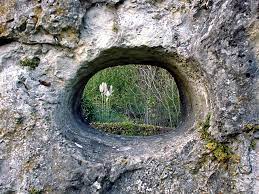

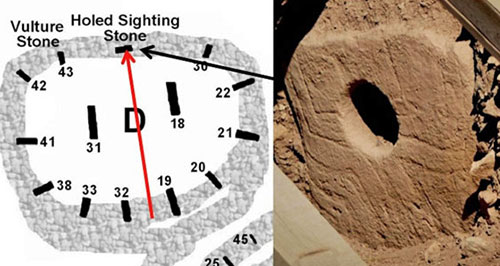


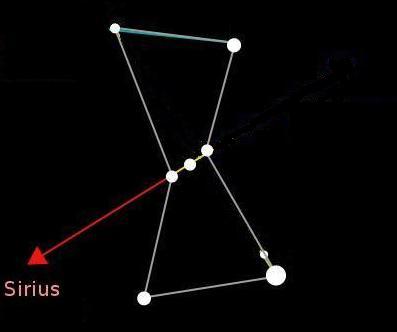
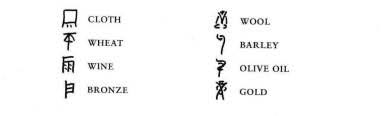


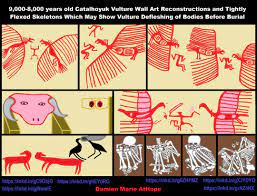
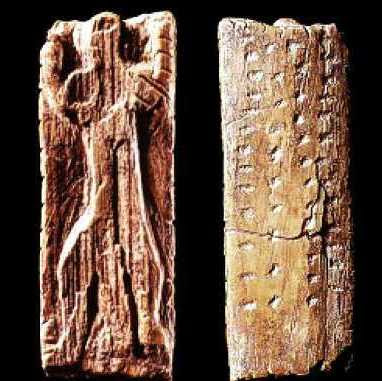

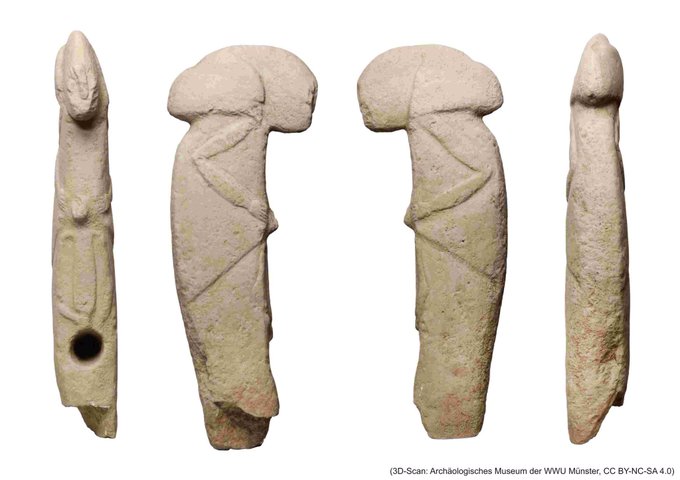


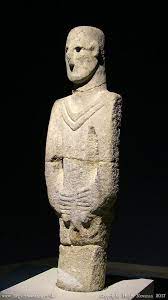
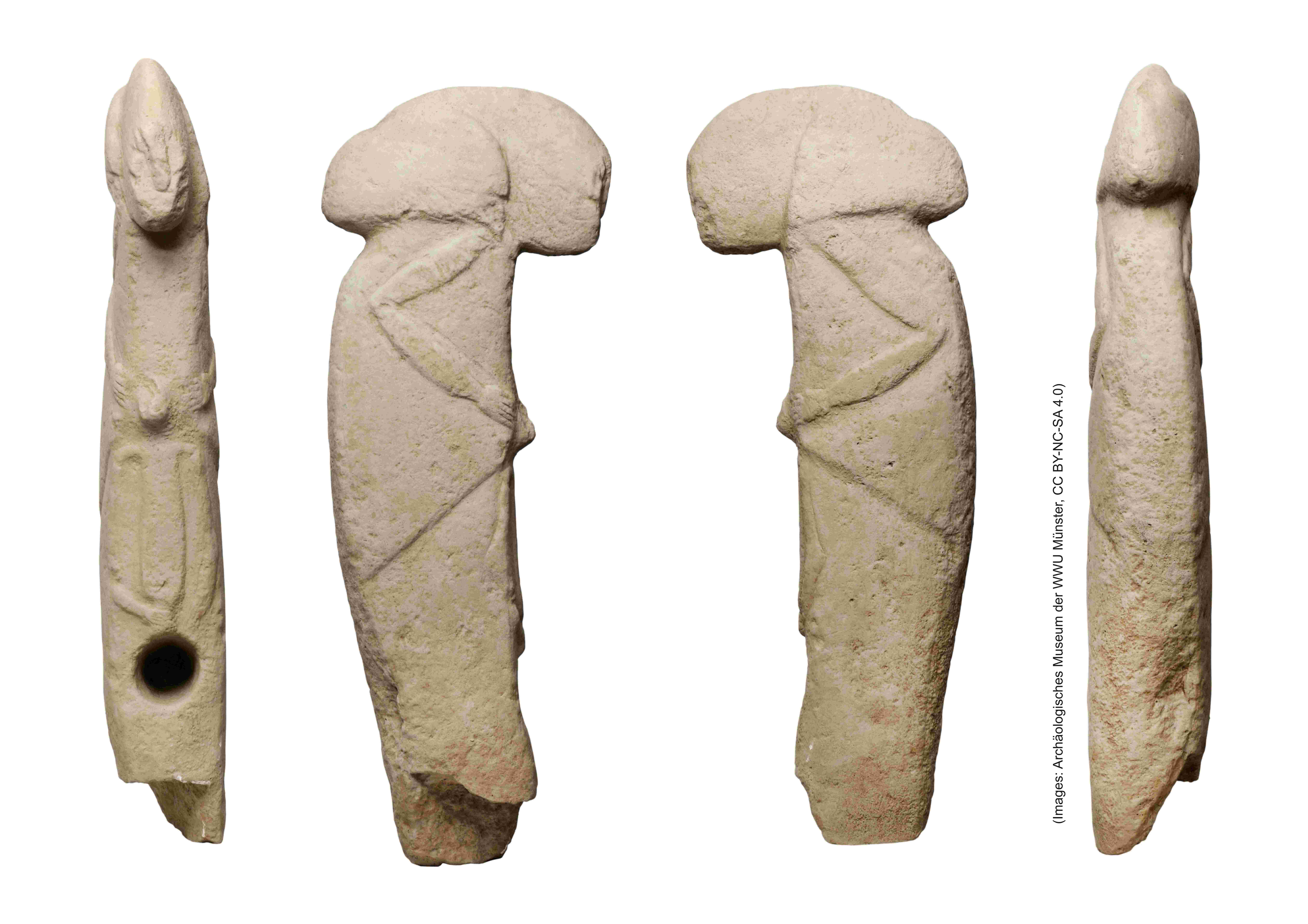


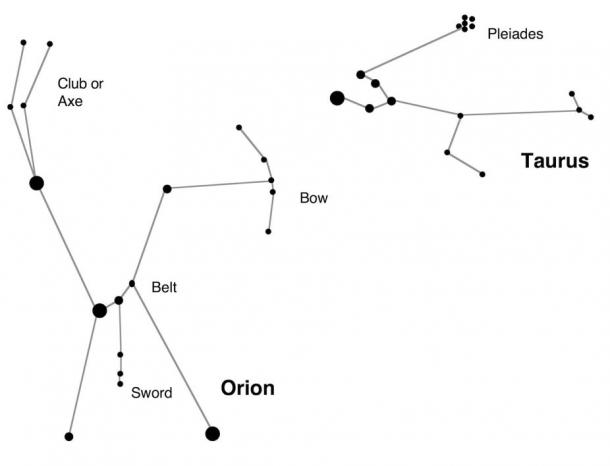
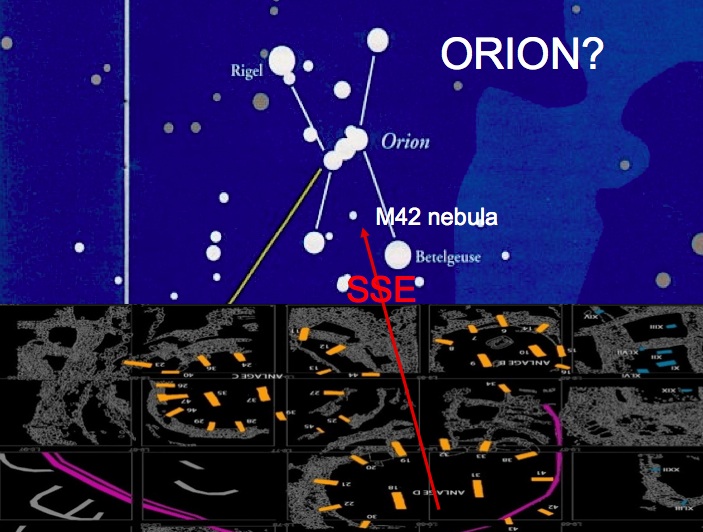
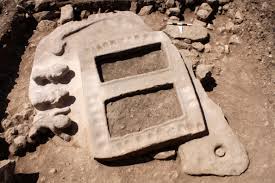


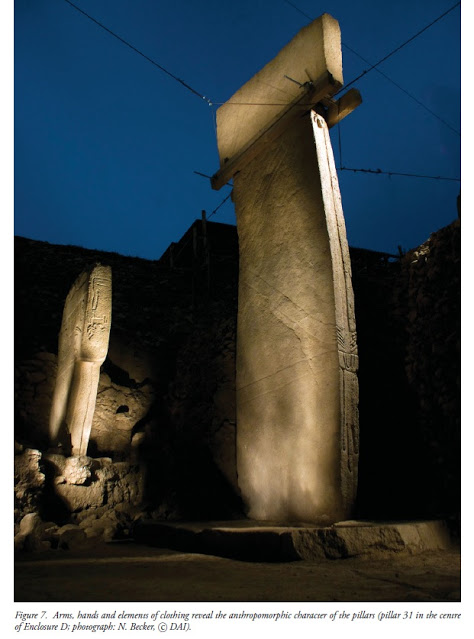
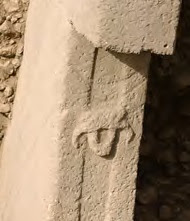


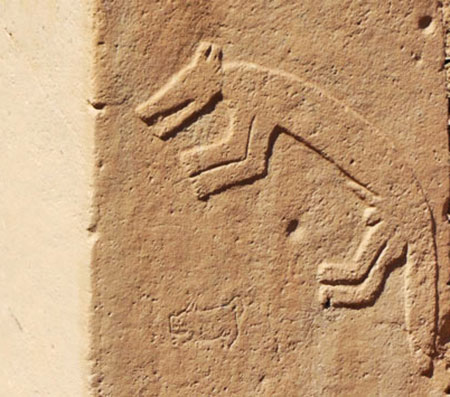
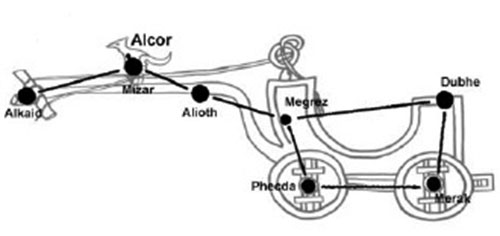



 Tartaria tablets


