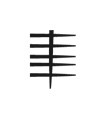
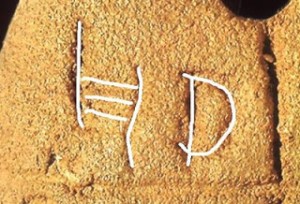
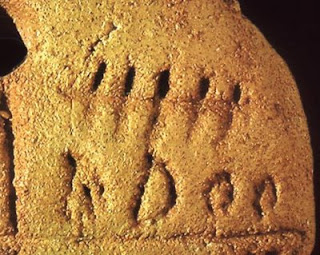
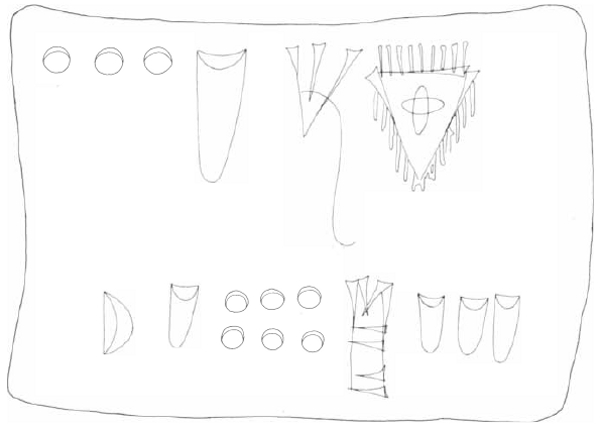
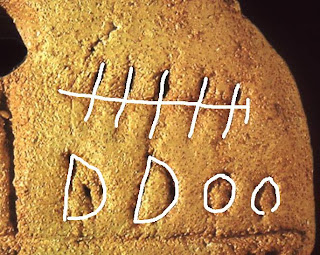
On mysterious presence of the contemporary “D-signs” on round Tartaria tablet.

December 4, 2018


Careful/ Attention !                                                                                                                                              This post is not a decipherment or reading of any actual written content of Tartaria tablets. Given that the signs do not belong to a single writing system but to several, the page has a purely didactic character. It has the role of trying and testing different writings, in the idea that the tablets would have used one of them. The signs on the tablets belong to several writing systems over a long period of time and which have been used in different geographical areas. In none of the trials did the signs fall into a single type of writing, there always remained signs that came from other writings (or as coming from the unknown). Most of the signs come from the Sumerian proto-cuneiform -shaped ones. The signs in the upper half of the round tablet seem to come from archaic Greek writing. This “collection” of signs seems to be the fruit of one’s rich imagination. As A. Falkenstein and A. A. Vaiman found, (this is also my firm opinion) the author was not a scribe, he had only vague notions about writing in general, and it is not known what he intended  or he was after. There are many elements of inconsistency as well as others that take the tablets out of the usual patterns and norms of honest logic, writing and intentions. =====

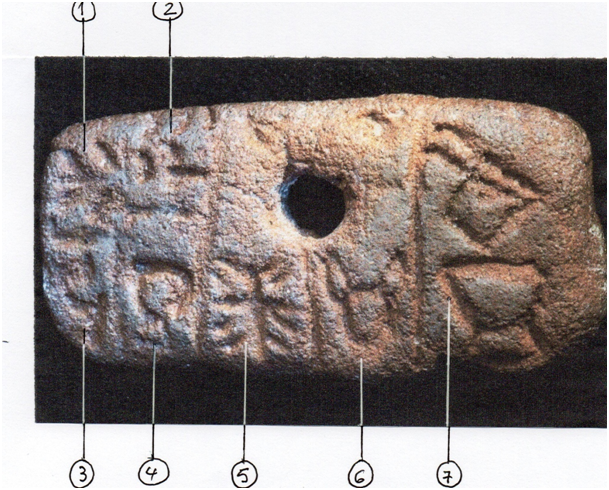
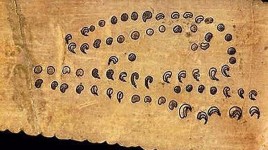
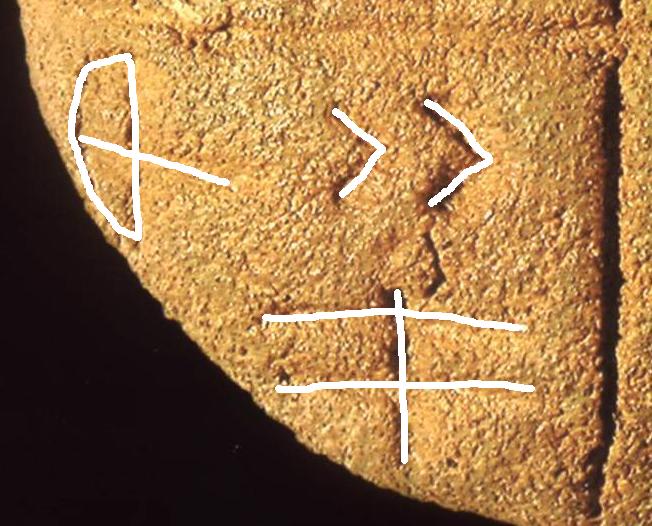
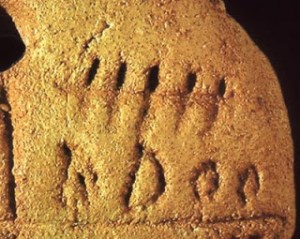
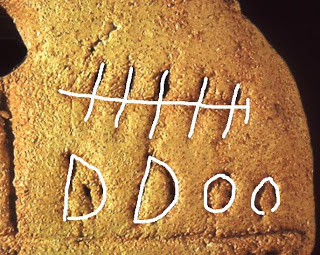
Image, from KEYTH MASSEY http://aplaceofbrightness.blogspot.com/2008/11/moonlight-in-romania-tartaria-tablets_21.html

As a pure sign, D-shape had an absolutely scarce presence in deep antiquity.         For writing, was  used the pressed variant, not traced!. Nnot found simply “D”, traced in any sumerian tablet.                                                                                                                      Was in Egypt, but 90 deg. rotated as the sign for “loaf of bread” and consonant T.                  Picture, from https://discoveringegypt.com/egyptian-hieroglyphic-writing/egyptian-hieroglyphic-alphabet/

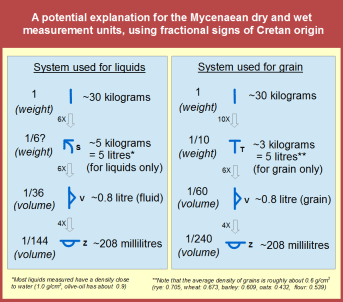
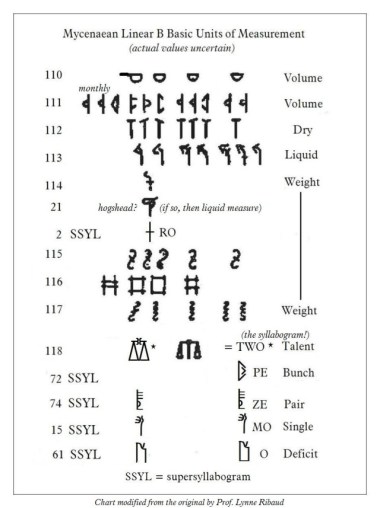
Image result for egyptian sign "t" loaf of bread                               From that time, allmost 1.500 years was not used till old canaanite (close shape), and another 500 years  when emerged archaik greek alphabet (in Chalcidian).                                                                                                                                Precise-shaped as modern capital letter D was not used by minoans micenaeans (Cretan hieroglyphic, Linear A,Linear B).                                                                                                           A Close shape was used by them for volumes and others for month and year; but only close shapes.

From Minoan language Blog/ Andras Zeke

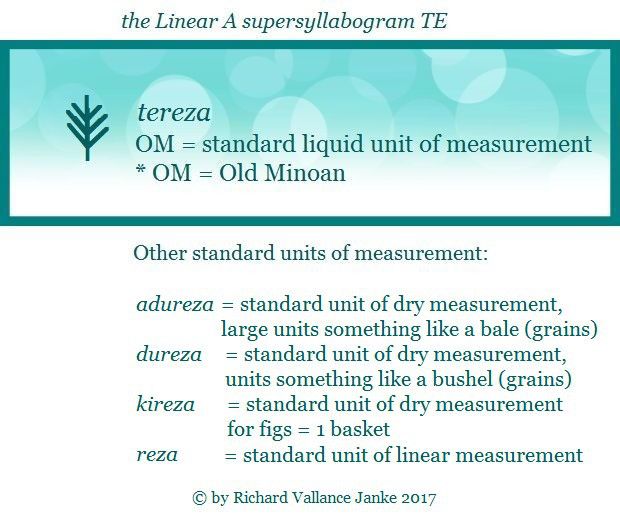
Mycenaean-measurement-systems

From Richard Vallance’s Blog  https://linearbknossosmycenae.com https://linearbknossosmycenae.com/2015/02/19/mycenaean-linear-b-units-of-measurement-liquid-dry-weight-click-to-enlarge/

units-of-mesurement-in-mycenaean-linear-b

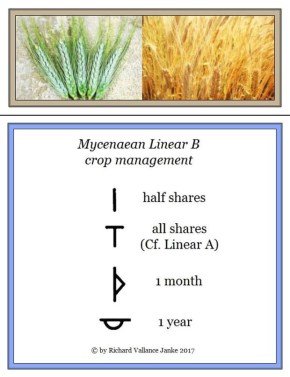
From Richard Vallance’s Blog,  https://linearbknossosmycenae.com/tag/agriculture/

are-mycenaean-linear-b-fractions-fractions-or-something-else

From JOHN JOUNGER http://people.ku.edu/~jyounger/LinearA/                                          Sign *034  has been suggested by several scholars to represent MNA (or, if a disyllabic value can be accepted, MINA), based on its resemblance to the crescent moon 

In the archaic greek alphabet varians, the sign D was used for D and for R-letters.                 At the beginnings greek used for D the shape delta , coming from canaanite/phnoeician dalet.                                                                                                        Only scarce here:                                                                                                                            1991. Sass B. Studia alphabetica. On the origin and early history of the …www.academia.edu/…/1991._Sass_B._Studia_alphabetica._O…                                               “The D shape is the South Semitic form found in several inscriptions of the …”

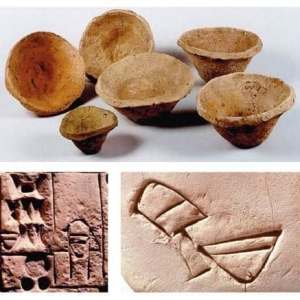
1-st time I’we heard of this sign was the research of Mrs. Denisse Schmandt Besserat. (Also it is in Mr’ Falkenstein sign-list) She (Mrs.Besserat) was eager and  the first one to  remark that early sumerian signs reproduced exactly the shape of the much before time, used objects (tokens) put inside clay containers. This paralel existence of inside tokens and depicted signs on clay containers happened well before emergence of writing. She noticed the sign as direct related to the much older writing predecessor, the tokens and administrative accounds and much earlier counting/ numeration.  But if she know the significance and using of other tokens and signs , under this D sign nothing was written.                                                                                                                                                    From http://en.finaly.org/index.php/The_earliest_precursor_of_writing                                 See 8-th column (on the table, IX), from top, 3-rd row                                                                                         From :                                                                                                                                                The Earliest Precursor of Writing DENISSE SCHMANDT BESSERAT   http://en.finaly.org/index.php/The_earliest_precursor_of_writing

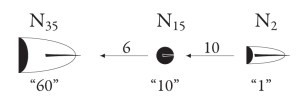
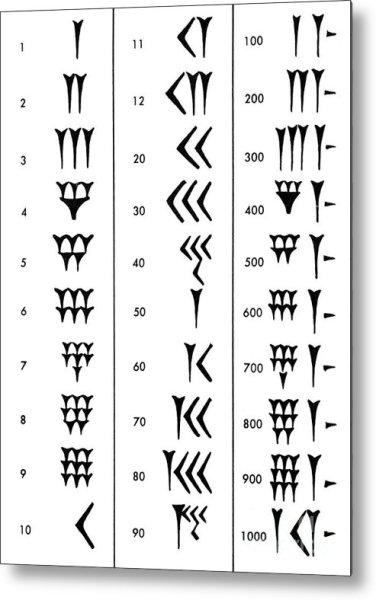
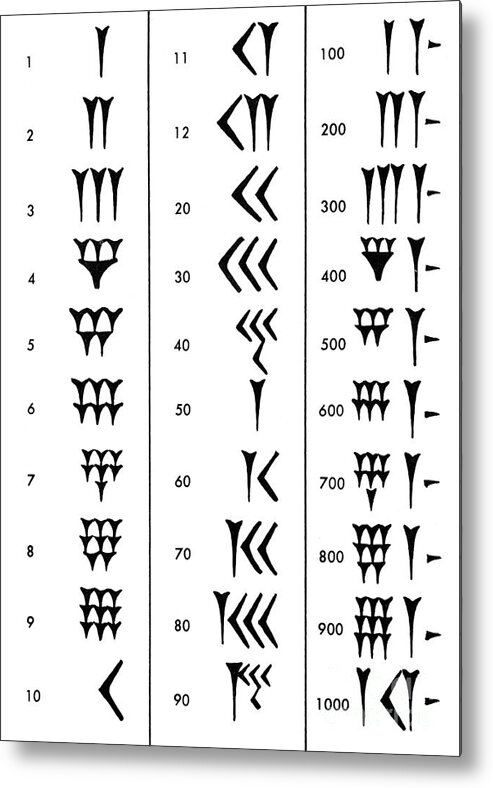
“It is not necessary to theorize about some of these meanings; a number of ideographs on the Uruk tablets almost exactly reproduce in two dimensions many of the tokens. For example, Uruk arbitrary signs for numerals, such as a small cone-shaped impression for the number one, a circular impression for the number 10 and a larger cone-shaped impression for the number 60 are matched by tokens: small cones, spheres and large cones. ”                                                                                                                               me: sumerian made numbers only by pressing/imprinting , not by scratching, using the  stylus.

The sign “D” is also in Adam Falkenstein sign-list from Uruk,                                                    A. Falkenstein, Archaische Texte aus Uruk (Archaische Texte aus Uruk 1; Berlin-Leipzig 1936) , as ATU 527, but pitty not found if was used traced or pressed, and nothing about sign name or meaning..                                                                                                             ———————————————-                                                                                                            The long row of Tartaria tablets researchers, at the point of confronting and analysing these signs, reacted differently. Some realised that faced a hard question and probably felt like heating an concrete wall.  Much important, they choosed different approaches or solutions, from that ones  usualy pertaining to ancient rock-art to sumerian products/numbers or even to sanskrit vedic.

From The skies of Lascaux http://www.iceageiconology.net/index-of-chapters/xi-the-proto-zodiac/   (19.000 years B.P.)

“Tuc, as well, shows the likeness of a human ancestor, and significantly, one who is juxtaposed with a “P” sign (Fig. 12 b).

This configuration, which is located in the opposite end of the cave from the Chapel of Months (Fig. 19, at b), identifies the ancestral being by two circular eyes that are drawn on a roughly triangular face, which on closer inspection is also the standard image of a woman’s vulva, This character is, then, a likely “great grandmother” of the tribe, and her association with the “moon” sign (Fig. 12 b) conveys the belief that the relationship between women and the moon (the menstrual cycle) was as old as the dawn of time.

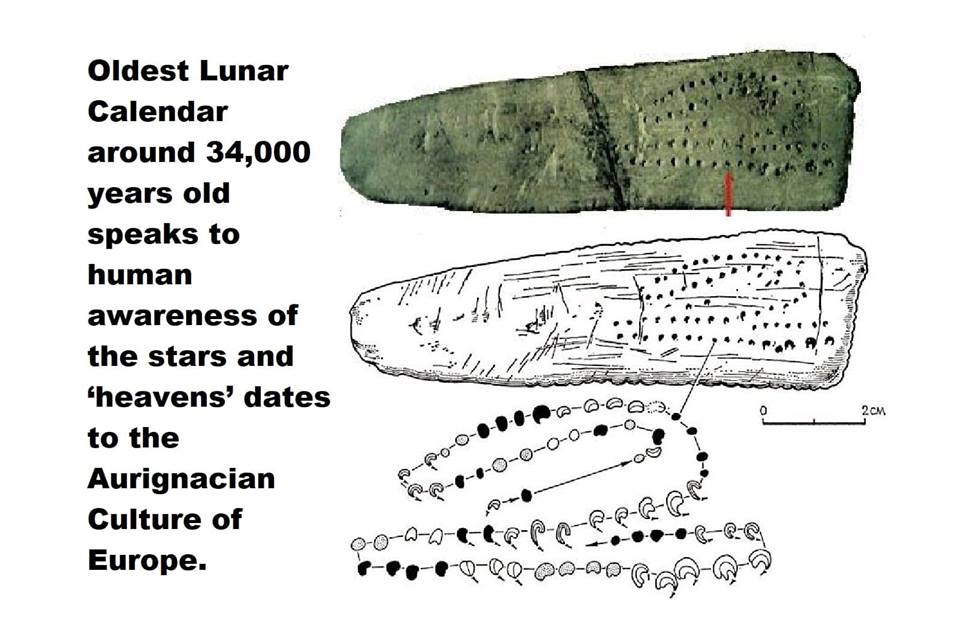
From The First (Lunar) Calendar https://sservi.nasa.gov/articles/oldest-lunar-calendars/

10-3-11_calendar


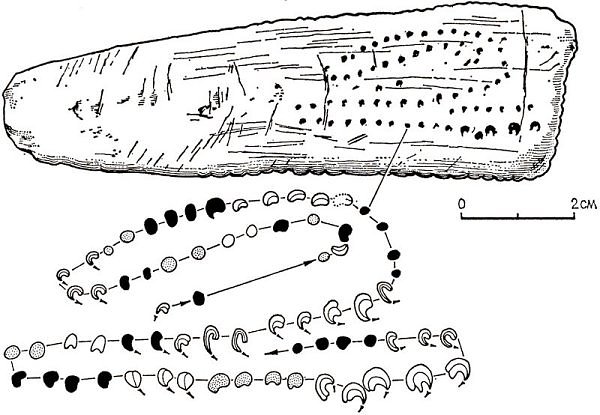
The archaeological record’s earliest data that speaks to human awareness of the stars and ‘heavens’ dates to the Aurignacian Culture of Europe, c.32,000 B.C. Between 1964 and the early 1990s, Alexander Marshack published breakthrough research that documented the mathematical and astronomical knowledge in the Late Upper Paleolithic Cultures of Europe. Marshack deciphered sets of marks carved into animal bones, and occasionally on the walls of caves, as records of the lunar cycle. These marks are sets of crescents or lines. Artisans carefully controlled line thickness so that a correlation with lunar phases would be as easy as possible to perceive. Sets of marks were often laid out in a serpentine pattern that suggests a snake deity or streams and rivers.                                      ——————————————————————————————————-

Moon phases from paleolithic, Imagini pentru rappengluck moon phasesGermany:http://www.abc.net.au/science/articles/2000/10/19/200504.htm                           “Dr Rappengueck has recently identified some constellations and stars from the caves, but says the paintings also show the moon going through its different phases.”

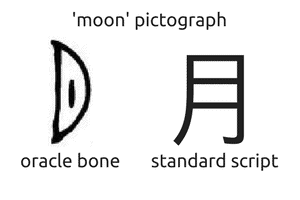
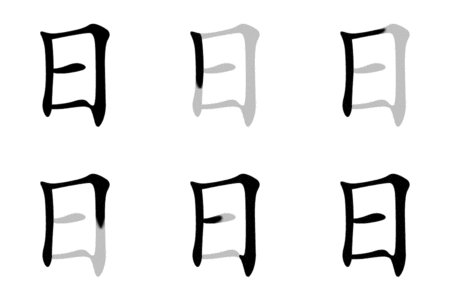
From https://www.writtenchinese.com/lowdown-6-types-of-chinese-characters/The first type of writing was called oracle bone script 甲骨文 (jiǎ gǔ wén) thought to have been used between 1500 and 1000 BCE. The script was etched onto turtle shells and animal bones, and then heated until they cracked. The Shang Dynasty courtiers would use the bones to tell the future.

Folowing, I will present my opinion:                                                                                                 ——————————————————————————————-                                                     – If a very old age of the tablet is presumed (5.000 B.C>/M.Merlini) one could consider to have there the Moon phases.                                                                                                       Note                                                                                                                                                         No way for such great time depth, in better case would be 2.000-3.000 B.C. !

But this solution arise another set of  problems/another hard questions:                                                                                                                                                                                                   -In this case the Marco Merlini hard-sustained supposition that “scrittura e nata in Europa” is falling down, as we are not talking about writing, but at best of proto writing.            – We’ll have then kind of mixture, writing signs on the tablet mixed with proto-writing signs wich usually not happened.He choosed to interpret the signs as unknokn to us, of esoteric nature so he got himself out of the field of prooving that it is writing.                I cannot disregard the posibility of having moon phases, have no enough opposite strong/hard evidences.

But as long as humankind showed that scraped Moon Phases (Germany 18.000 B.C.) and in paleolithic (France caves) this could happen much easyer  later.                                  Later, minoans showed that were capable of making an lunisolar calendar, base on 8 years cycle. Image, from https://archaeologynewsnetwork.blogspot.com/2011/04/researcher-cites-ancient-minoan-era.html

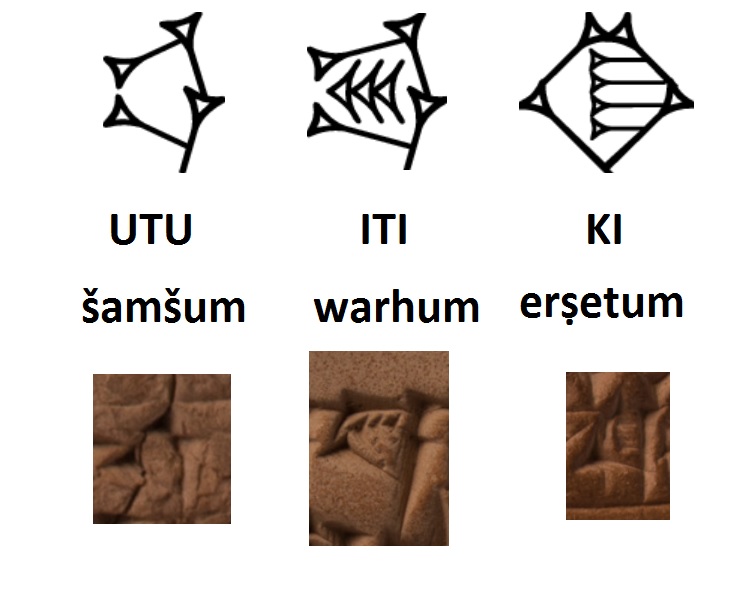
These “Moon-phases signs”, is only my 3rd option, or place in preffered renderings order.                                                                                                                                                      ————————————————————-                                                                                       My first option is upon folowing arguments:                                                                                 – writing emerged in high developed societies, necessary to fulfill practical needs, as to keep administrative, economical accounts.                                                                                     – stars, planets and Moon could have been related to agriculture, nature cicles. calendar but also to direct related religious rituals.                                                                                       -Early world proto-writing writing in Indus valley, proto-Elamite, Sumer and Egypt not noticed these although very complex problem, but they made simple everyday life accounts.                                                                                                                                               IN PROTO-WRITING AND LATER IN WRITTEN TABLETS THERE WAS NOT USED MOON, BUT FREQUENTLY MONTH                                                                                                                 ===================================                                                                                       So if an old aged is supposed, this is my 1-st preffered interpretation/option:                     -Due of the similarity of sumerian GAR sign read Ninda(bread) with egyptian T/Ti (loaf of bread) .                                                                                                                                                   From https://cdli.ucla.edu/tools/signlists/protocuneiform/archsigns.html

GA’AR (GAR)

GAR sign is an D with a paralel stroke inside, as could be our 1-st D on the tablet.         Sign GAR is read “NINDA” :”cereal ratio,BREAD”                                                                              From http://www.mummies2pyramids.info/hieroglyphics/hieroglyph-letter-t.htm

Note                                                                                                                                          If the signs were written by a sumerian hand we have the signs +++++ “As  first D‘: “sur?/Gar” ,                                                                                                                                     From  https://cdli.ucla.edu/tools/SignLists/protocuneiform/archsigns.html                      SUR

Sumerian Lexicon – IS MU  https://is.muni.cz › Halloran_version_3
de la JA Halloran ·…… sur: n., a garden plant; rushes; chaff, chopped

second D:”60” ,  o:”10″ , o:”10″   >> ” one grain ratio 80             The simple explanation for one/same sign is, that containers,vessels, cereal recipients, dishes had and has the same shape all over the world, as the main bread shape also is.

As in proto-cuneiform, Linear B, Egypt D-sign was used for (food) jar/volume or bread : My preffered (“number one”) rendering of D-shaped sign is:                                                                                                                                                                                                                              1.   SIGN D, “FOOD (CEREAL) PORTION/RATIO”                                                                         —————————————–                                                                                                               Second preffered rendering.                                                                                                          Due of my own concerns regarding the “strange” group or row of signs on the upper half of the round tablet, as I am accustomed with all writing systems, I sustain that only this                                                                                                                                                          UPPER HALF OF THE ROUND TABLET it is possible to contain QUITE “MODERN” SIGNS

This upper half, usually covered by oblong tablet (noticed by sole Mr. Marco Merlini), is covered maybe because :                                                                                                                       – an mysterious/esoteric/secret message,                                                                                         – in equal measure could be read by contemporery literate bypassers and so not remain hidden

HR DDoo = HAR RORO/ar roro/ar roroo/ar rorou “up moisten

From http://latin-dictionary.net/definition/4854/arroro-arrorare-arroravi-arroratus?fbclid=IwAR1U52aOwoziJXj5xY8K33cNpjyFr0VH1Sj7sif3hi1AZBnZSGMddPUJQgU                 arroro, arrorare, arroravi, arroratus                                                                                               verb “moisten, bedew”                                                                                                                          Note                                                                                                                                                      Maybe related to: hori (rom. a hori=a ura)is a form of                                                   https://en.wiktionary.org/wiki/horior#Latin

horior (present infinitive horī(archaic) I encourage, urge !

URGE MOISTENING/ (rain) !!

DNA Study Reveals Origins of Minoan Civilization

December 2, 2018

Mitochondrial DNA Study Reveals Origins of Minoan Civilization

http://www.sci-news.com/archaeology/article01078-dna-minoan-civilization-crete.html

A new study reported in the journal Nature Communications indicates that the Minoans, who 5,000 years ago established the first advanced Bronze Age civilization in present-day Crete, probably were descendents of the first Neolithic humans to reach the island around 7,000 BC and that they have the greatest genetic similarity with modern European populations.Now, scientists led by Dr John A. Stamatoyannopoulos and Prof George Stamatoyannopoulos, both from the University of Washington, have used mitochondrial DNA (mtDNA) analysis of Minoan skeletal remains to determine the likely ancestors of these ancient people.

The Minoans shared the greatest percentage of their mtDNA variation with European populations, especially those in Northern and Western Europe.

When plotted geographically, shared Minoan mtDNA variation was lowest in North Africa and increased progressively across the Middle East, Caucasus, Mediterranean islands, Southern Europe, and mainland Europe. The highest percentage of shared Minoan mitochondrial DNA variation was found with Neolithic populations from Southern Europe.


Geographic density map of mtDNA lineages shared between the Minoans and 11 Bronze Age, Iron Age and Neolithic populations, with the higher percentages represented in red and the lower in white.  The green dots indicate the origin of each of the 11 ancient populations (Jeffery R. Hughey et al)

“About 9,000 years ago, there was an extensive migration of Neolithic humans from the regions of Anatolia that today comprise parts of Turkey and the Middle East. At the same time, the first Neolithic inhabitants reached Crete. Our mitochondrial DNA analysis shows that the Minoan’s strongest genetic relationships are with these Neolithic humans, as well as with ancient and modern Europeans,” Prof George Stamatoyannopoulos said.

“Our data suggest that the Neolithic population that gave rise to the Minoans also migrated into Europe and gave rise to modern European peoples.”

Tartaria oblong tablet (with hole). Cretan hieroglyphic, Linear A,B approach /G!

December 1, 2018

Careful/ Attention !                                                                                                                                             This post is not a decipherment or reading of any actual written content of Tartaria tablets. Given that the signs do not belong to a single writing system but to several, the page has a purely didactic character. It has the role of trying and testing different writings, in the idea that the tablets would have used one of them. The signs on the tablets belong to several writing systems over a long period of time and which have been used in different geographical areas. In none of the trials did the signs fall into a single type of writing, there always remained signs that came from other writings (or as coming from the unknown). Most of the signs come from the Sumerian proto-cuneiform -shaped ones. The signs in the upper half of the round tablet seem to come from archaic Greek writing. This “collection” of signs seems to be the fruit of one’s rich imagination. As A. Falkenstein and A. A. Vaiman found, (this is also my firm opinion) the author was not a scribe, he had only vague notions about writing in general, and it is not known what he intended  or he was after. There are many elements of inconsistency as well as others that take the tablets out of the usual patterns and norms of honest logic, writing and intentions.           ====

Image from ESCRITURA DE TARTARIA HTTP://WWW.PROEL.ORG/INDEX.PHP?PAGINA=ALFABETOS/TARTARIA

We have folowing signs
– In upper most left side, those three “D/moon“-like signs.                                                         THESE SIGNS HAS NO EQUIVALENT IN AEGEAN WRITINGS (with one exception)
In linear B were used units of volume measurements, but by them de D-like signs were 90 deg.rotated, in horizontal pozition:

Due of the fact that in other two ancient places the same sign was used:                                   – in Sumer, sign GAR (read ninda) : “grain,food ratio/bread” and                                              – in Egypt, sign “T” :”loaf of bread” The “D” sign will mean “volume/ratio”,rather than month or year, “3 years”,                                                                                                                 the meaning will be:                                    “3(three) grain ratios” (rather than being sign for month, 3 month “
Image from https://linearbknossosmycenae.files.wordpress.com/2017/07/are-mycenaean-linear-b-fractions-fractions-or-something-else.jpg?w=640

the sign for “month”/MENE in linear B (but D-mirror reversed!):

https://l.facebook.com/l.php?u=https%3A%2F%2Flinearbknossosmycenae.files.wordpress.com%2F2015%2F05%2Fgezer-almanac-left-and-translation-into-mycenaean-linear-b-right.jpg&h=ATPlRwdbps_9yy998OIGzzzfirMMmfrV28mSCBOpDH3tpgnBJIZdfg5BXHYZgkbqfR4AVVK3oXstu6RAUvp2xjt9P-6qPV9M2XA2TglS6tI_SCQOzG4&s=1

MEN, gen. MENOS :”MONTH”; My note: !Not Moon !
Mirror reversed:
“MONTH” https://linearbknossosmycenae.files.wordpress.com/2015/05/space-saving-linear-b-ideograms-and-logograms.jpg

“MINI” gr.MENE :”MOON”  https://linearbknossosmycenae.files.wordpress.com/2017/02/minoan-linear-words-mi-mu-of-possible-proto-greek-origin.jpg

THREE (GRAIN/CEREAL) VOLUMES/RATIOS          ====================================================================
Next to these signs, dawnward, sign  ->->-> :                                                                               SIGN IT IS IN SIMILAR SHAPE IN AEGEAN WRITINGS(Linear A)

From http://people.ku.edu/~jyounger/LinearA/  John Jounger                                                   TE (“from“? NAME).  TE/TI, “from/of

https://l.facebook.com/l.php?u=https%3A%2F%2Flinearbknossosmycenae.files.wordpress.com%2F2017%2F08%2Fcomparison-of-cretan-te-with-symbol-for-wheat-or-barley-in-various-ancient-scripts.jpg&h=ATP6b5jmRTB-BDaz5Ti2hyLcKMM3AmA_tRCEtkujDsUbmRfigPVMRl0I3G6p91_vvlugkzc7_SGi_a8PtpXKjMMzm-ik51wDKmgjd2MoTvQibNoS-1c&s=1

Usually associated with agriculural products as
barley:https://linearbknossosmycenae.files.wordpress.com/2017/08/comparison-of-cretan-te-with-symbol-for-wheat-or-barley-in-various-ancient-scripts.jpg

In linear B https://i.pinimg.com/736x/95/40/78/9540781c6c839aa87a385ac46823b990.jpg

9540781c6c839aa87a385ac46823b990

Linear A, John Jounger http://people.ku.edu/~jyounger/LinearA/  *04 (TE), common

Linear B, Cretan“TE” “Wheat
https://encrypted-tbn0.gstatic.com/images?q=tbn:ANd9GcRykURVevP7C91htJQXSWtUoIKlv_VE7Zk8RacOILleQApR07vw

So could be “3 months/volume measures of some sort of grain”(gr.sitos) ?
Note that this sign we have rather pertain to proto-writing. In linear B we have signs for specific kind of grains:
https://encrypted-tbn0.gstatic.com/images?q=tbn:ANd9GcRHPdQSYyE8qr4n115PLPH_UBTyeNB9XKrQDADDWG3bdzC2-UEQZQ

So, both signs (DDD and ->->->-)could be, or “3 -MONTHS/years-ONE MAN?-RATION” , but rather:                THREE WHEAT VOLUMES/RATIOS
—————————————————————————————————————                       Downward,in a kind of box, ” “-like sign,                                                                                  THE SIGN CANNOT BE FOUND IN EXACT SHAPE IN ANY AEGEAN WRITINGS                      (our sign has an off-set/branch/stroke pointing leftward !)
https://www.timesnewroman.ro/files/attach/images/stories/tartaria_greseala_gramatica.jpg

Table, from http://www.kairatos.com.gr/linear1.htm

263ieroglyfikasite                                                                                           You see is absolutely ISOLATE /very strange/very rare
Normally must be interpreted with an isolate meaning,but wich could be the meaning? Branch,distress (divergent) !??

Cretan hieroglyphic sign DA ?                                                                                                            From http://people.ku.edu/~jyounger/LinearA/                                                                                “DA-I = “total”?: HT 12.6 (Schoep 2002, 162); cf. DA-I-PI-TA, ZA 8.5. If DA– (as in DA-DU-MA-TA) indicates in some way a completed action (like a perfect of A-DU), could DA-I be a completed transaction *516 I+[?] “
In my opinion could be.And I ad taking all the risks and folowing rumors,interpreted from many words as DA-I :”a completed transaction”?)from accounting tablets even from sacred I-DA,
DA= this “give,given/IT IS” (excuse same as in german)firm as EARTH

——————————————-                                                                                                          Cretan hieroglyfic meaning DA/SA ??
Arkalochori – Αρκαλοχωρι
https://www.teicrete.gr/arkalochori/demeter.php
on a Minoan inscription, found in a religious context dating to the 17th Century B.C. Another possible hypothesis for -DA- is connected to “dea/thea”
Hieroglyphic sign Y yet not solved,in testing.

I-DA-MA-TE, DA-MA-TE, DEMETER
AKKO
It is now perhaps possible to ‘read’ I-DA-MA-TE on double axes from the Cave at Arkalochori as well as DA-MA-TE on a religious inscription from the peak-sanctuary above Kastri on Kythera.
The second part of the word -MA-TE is probably the Indo-European word for Mother, including the nomen agentis –TE. Mother is the most stable word in the Indo-European languages (excluding Hittite and Anatolian Languages) whereas the first part I-DA-/DA- could be interpreted as Mount Ida, just visible from the Arkalochori Cave, or perhaps DA/GA meaning Earth, i.e., Earth Mother, Dem.This would not be a surprise but it is interesting that it is on a Minoan inscription, found in a religious context dating to the 17th Century B.C. Another possible hypothesis for -DA- is connected to “dea/thea” according to Hesychios. It has also been suggested that Demeter be connected with *P.-I.-E. dms meaning house, (-inthos), thus she would be ‘Mistress of the House’ similar to ‘Lady of the Labyrinth’.eter.

I-DA-MA-TE                                                        NA-DA-TE  (Phaistos disc)                                         One must to choose between Da and Sa.                                                                                        It seems that cannot be DA because in linear A the sign has the “branch” toward right !      ————————————————————————

From http://people.ku.edu/~jyounger/LinearA/  JOHN JOUNGER                                      SA (HT 114b.1) or SI (HT 30.1) = paid?                                                                                              ————————————————————————————————————-                                    Linear A,”SA”
http://2.bp.blogspot.com/_a_qIRGD3pJ0/S_qxpdDgI3I/AAAAAAAAAbA/QcXKTDMye5A/s1600/Linear-A-base.jpg

Also could be linear B= “SA”
http://www.ancientscripts.com/images/lineara_ladle.gif

John Younger http://people.ku.edu/~jyounger/LinearA/
*31, SA, perhaps a logogram for *SA-SA-ME?; cf. HT 23a.4-5 SA-SA-ME, and PH 16b.1, HT 97b (cf. Linear B sa-sa-ma)
http://www.ancientscripts.com/lineara.html
“Once again applying Linear B reading to the previous Linear A texts, we see the sign sequence ja-sa-sa-ra-me. This sequence is very interesting because it appears very often in many other such votive inscriptions in slightly different variants.

The shape of the sign is meaning  “diverging”, as someoane get to a crossroad in life !…the same as of the sumerian “BAD”, I will choose the reading:

SA :”completed, paid”                                                  ================================================
Next,downward,also “boxed”, folow a sign wich ressemble violin,labrys?/ 2 merged lozenges ?;                                                                                                                                           AS A WRITING SIGN, WAS NOT USED IN ANY AEGEAN WRITINGS
Could be interpreted as isolate,the evidence is that is separate in a box/compartment.

Cycladic Art and Art related to Cyclades Islands – Les Musées Barbier …

http://www.musee-barbier-mueller.org/spip.php?action…/art-des.
https://i.pinimg.com/736x/b4/dd/67/b4dd6746fe84b265e714daef471f2b89.jpg

Note: the sign wich is repeated as the last sign on the tablet

It is similar (but turned upside-down) and our sign is not middle-devided!                                   with the sign from  http://people.ku.edu/~jyounger/LinearA/                                        *403, chalice  (romanian:”potir”)
From https://linearbknossosmycenae.wordpress.com/tag/syllabic-scripts/page/19/?iframe=true&preview=true%2Ffeed%2F

From https://enijote.wordpress.com/2017/11/25/double-axes-and-the-limits-of-knowledge/

Not much to see.  But here’s its Linear A counterpart: https://enijote.files.wordpress.com/2017/11/la-a.png

The sine qua non is the interpretation of labyrinth as “Place of the Double Axes,
The Cretan Hieroglyphic evidence is even more explicit:
https://enijote.files.wordpress.com/2017/11/ch-a.png?w=656

See https://www.pinterest.com/pin/464222674072955464/

They are saying that the sign is at the origin of “A”:

See https://www.pinterest.com/pin/464222674072955464/

Image https://linearbknossosmycenae.wordpress.com/tag/syllabic-scripts/page/19/?iframe=true&preview=true%2Ffeed%2F

Such cyclades-tipe statuettes were found in entire Cycladic area.But in astonishing great number were found in Keros island.All broken.No pair could be matched.Scholars say that these statuettes were used in burial rituals (as is  the case with Tartaria artefacts !)Keros Island was an center for a kind of unknown ritual.

My opinion about labrys-like sign is that upon the sign had an unknown yet meaning with deep in time origin.
As weird could be for you, I suppose that the origin is further in the East,possible proto-cuneiform=proto-sumerian signs like:

SZITA~a3     and     ZAG~c

http://www.sumerian.org/sumerian.pdf                                  zag, zà: boundary, border, limit, side; cusp, beginning; territory, district, place; sanctuary; percentage; a measure for fish; shoulder; right (side); front; outside of (life + to encircle) [ZAG archaic frequency: 71; concatenates 3 sign variants].                                                                            https://cdli.ucla.edu/tools/signlists/protocuneiform/archsigns.html Sign ZAG:

ZAGc

But much close, sign GA’ARb1 ;
https://cdli.ucla.edu/tools/SignLists/protocuneiform/archsigns/GA’AR~b1.jpg

      From https://is.muni.cz/www/408176/38744863/A_Descriptive_Grammar_of_Sumerian.pdf          The stem of the verb ĝar ‘place’, for instance, is usually written with a word sign, but the Ur III texts also contain dozens of attestations where it is written ĝá-ar (e.g., AUCT 1:552 7; D; 21).                                                                                                                                                   ————————————————————————————–                                                         Same  shape similarity was noticed by I.Kenanidis & E.Papakitsos.  https://www.researchgate.net/publication/279940914_Additional_Palaeographic_Evidence_for_the_Relationship_of_the_Aegean_Scripts_to_the_Sumerian_Pictography

largepreview

They rather would pair the sumerian sign with the cretan hieroglyphic *175/”A”, adze/labrys. It is not “sumerian proto-cuneiform double-axe“, but it is proto-cuneiform sign GA’AR https://cdli.ucla.edu/tools/signlists/protocuneiform/archsigns.html

GAARb1————————————

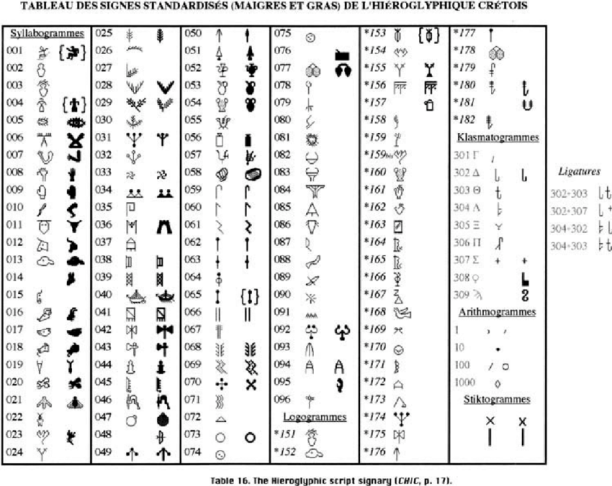
Table, from https://www.researchgate.net/figure/The-Cretan-Hieroglyphic-table-of-signs-as-suggested-in-the-inscriptions-corpus-Olivier_fig3_273096050                                                Sign * 175 ,meaning:??”

The-Cretan-Hieroglyphic-table-of-signs-as-suggested-in-the-inscriptions-corpus-Olivier

This is the labrys sign, and it is the sign associated with God. So close to his sumerian counterpart “AB” “house,temple”.

Very interesting AB and Ga’ar has similar shapes, but also similar meanings: AB:”house,temple” visa  ĝá-ar “place”

https://lh3.googleusercontent.com/imUh0J9dqCTkfI-JtVZP6dtxqycaTOJklcXIXbltB742g1UeVrWu-70fO_8VHldrxlxPcw=s120

Imagini pentru sumerian "GA'AR"
IN OUR TABLET:                                                                                                                            1.MOTHER EARTH-GODDESS ICON?                                                                                    2.“the place/house ( ? labyrinthos of the Minotaur/Sun-God ?)”

=======================================================
NEXT, MIDDLE COLUMN

tartaria1

In upper part 2 little “V-like signs !? Maybe 1/2?
http://people.ku.edu/~jyounger/Hiero/

“V”-sign: Cretan hieroglyphic “Te” Table, from http://www.kairatos.com.gr/linear1.htm

263ieroglyfikasite

================Next,=============================================== SEPARATED !, an insect/miriapod-like sign,                           IN THIS EXACT SHAPE WAS NOT USED IN ANY AEGEAN WRITINGS, is found in more and less similar shape all over:

Overall apearance as umerian sign multiple superposed X-es“DINGIR”/God/sky
With not so many limbs,spikes
As a refference, Sumerian “AN”/God/sky
https://encrypted-tbn0.gstatic.com/images?q=tbn:ANd9GcQGzbr1a5NBe7hywD1BcL8mbfvfJB7YOVL7ZrnTmJZevVbLcIOUTw

And sum. AN:”God,Heaven”https://encrypted-tbn0.gstatic.com/images?q=tbn:ANd9GcTmkD1S7pLtQ6Oj_gUMYBNg3gnnMIrZAuImmjhaMnqFSnZXp8PX

But much,much close,(if rotated 90deg)
(count the number of lines! totaly 12 in sumerian sign as in our)                                              ——————————————                                                                                                           From https://www.researchgate.net/figure/The-Cretan-Hieroglyphic-table-of-signs-as-suggested-in-the-inscriptions-corpus-Olivier_fig3_273096050                                                      SIGN 068 ,meaning :”??”

The-Cretan-Hieroglyphic-table-of-signs-as-suggested-in-the-inscriptions-corpus-Olivier

—————————————————————————————————                                        Close to Linear A “KE” http://people.ku.edu/~jyounger/LinearA/                                            *44 (KE), only in ligature

——————————————————————————————–                                                  Also, this sign *-like, close to this shape have Linear B
https://linearbknossosmycenae.files.wordpress.com/2017/10/minoan-linear-a-keyboard-assignments6201.jpg?w=350&h=200&crop=1

“KE”? (2-nd in the first row)

Linear B “KE-MA”?

From John Jounger http://people.ku.edu/~jyounger/LinearA/                                                 *44 (KE), only in ligature

http://www.namuseum.gr/collections/prehistorical/mycenian/mycenian13-en.html

A - | A+

螒委伪), Aifaia (>Aia), ethnic/place name.聽ai-wa-ta, 螒喂F维蟿伪蟼, Aifatas, personal name.聽ai-wo-ro/ a-wo-ro, 螒委F慰位慰蟼, Aivolos, personal/animal name (= ‘nibble’).聽ai-za, 伪委味伪 (>伪委纬伪),聽aiza聽(>aiga),聽goat.聽ai-za. Aizai (>Aigai ,place name)

The Linear B Decipherment Controversy Re-Examined
https://books.google.ro/books?isbn=0873950143
Saul Levin – 1964 – ‎Inscriptions, Linear B.
… close to the central city of Knosos nearly a thousand years earlier — yet the AI ~ A alternation gives an idea of what may have happened in the Linear B language to the nominative plural ending which Greek preserves as the diphthong -01. But whatever may be the merit of our subtle hypothesis to clarify the phenomena, ..                                    ——————————————————————————————————————————–
Next is a sign like an donkey-head                                                                                               THIS SIGN CAN BE FOUND IN SIMILAR SHAPE IN AEGEAN WRITINGS

There was something like this:        From Cats in the Aegean Scripts

https://crewsproject.wordpress.com/2017/08/08/cats-in-the-aegean-scripts/     Cretan used this shapes:I am coming back.No, the head is too big. It is an bucranium/bull-head (sumerians had a similar sign with donkey-like ears,AMAR and those ears maybe signify horns, because AMAR:”calf”)

From http://people.ku.edu/~jyounger/LinearA/                                                                        Hieroglyphic *012 , a bull-head, becomes Linear AB 23  MU,

… *23 (MU)/BOS = cattle. *23 appears by itself (HT, ZA, KH 5.6) and may be “ox” or possibly “cow,” although the sign lacks the split stem that Linear B 109b has. The masculine variant ( *23m, with stem crossed                                                                                MU:cattle/BULL”                                                                                                                                  —————————————————————————————————                                                Underneath, the 2-nd “Labrys“-like sign

IN THIS EXACT SHAPE THE SIGN WAS NOT USED IN ANY AEGEAN WRITINGS !

The-Cretan-Hieroglyphic-table-of-signs-as-suggested-in-the-inscriptions-corpus-Olivier

See *042 and *175, but our SIGN HAS NO HANDLE!

===============================================================                              So for entire tablet we could have:

3 measures/portions                                Mu/BULL
Of cereals, grain/wheat
SA            A/Labrys  GODdess   Ma
SA-RA                                                            LABRYS

A-SA- SA-RA-MA

Or better,overall reading,thought as an offering,

3 measures/portions                                       Bull(heavenly SUN)
Grain

It Is           Sacred (sign) GOD(dess) aMA       “sacred” icon

Both above signs, SUN’s ABODE        ================================================                                                                THE TABLET IS PRESENTING SOME SIGNS CLOSE TO AEGEAN-ONES,  BUT                         IT IS NOT WRITTEN IN ANY PROPER AEGEAN WRITING !

Hera, Horos, Orion, calendar in Old Europe civilisation and in the tablets ?.

November 26, 2018

Hera, Horos and Orion related to Old Europe civilisation and the tablets ?

Careful/ Attention !                                                                                                                                   These posts  not contain a satisfactorily decipherment or reading of any tru writing and  written content of Tartaria tablets. Especially since we are dealing with proto-cuneiform signs, and therefore consequently with proto-writing.  Given that the signs do not belong to a single writing system but to several, the page has a purely didactic character. It has the role of trying and testing different writings, in the idea that the tablets would have used one of them. The signs on the tablets belong to several writing systems over a long period of time and which have been used in different geographical areas. In none of the trials did the signs fall into a single type of writing, there always remained signs that came from other writings (or as coming from the unknown). Most of the signs come from the Sumerian proto-cuneiform -shaped ones. The signs in the upper half of the round tablet seem to come from archaic Greek writing. This “collection” of signs seems to be the fruit of one’s rich imagination. As A. Falkenstein and A. A. Vaiman found, (this is also my firm opinion) the author was not a scribe, he had only scarce knowledge/vague notions about writing in general, and it is not known what he intended  or he was after. There are many elements of inconsistency as well as others that take the tablets out of the usual patterns and norms of  logics, writing and honest intentions.

From https://www.astronomytrek.com/is-the-ach-valley-tusk-fragment-an-ancient-star-map/

ach-valley-tusk-fragment

“The image above shows the front and back of a carved fragment of mammoth ivory measuring 38 mm x 14 mm x 4 mm that was discovered in 1979 inside the Geißenklösterle cave in the Swabian Alps of south-western Germany…… According to research published by Dr Rappenglück, the figure must be Orion, since the slim waist of the figure corresponds to the Belt of Orion, and the sword he sees hanging from the waist of the figure is easy to see in the real constellation. Moreover, Dr Rappenglück is at some pains to point out that the figurines’ left leg is somewhat shorter than the right leg, just as it is in the constellation. Therefore, the figure on the ivory fragment is Orion the Hunter.………….                                                                                                                               Does the figure represent the constellation Orion, which would make it the oldest known star map with an age of about 32,000 years, or is the fragment merely a testament to the skill of the carver, and has nothing whatsoever to do with the stars?                                         The reverse side of the Orion carving is dotted with 86 notches, which Dr Rappenglück claims is a “birth calendar”. According to Dr Rappenglück, if one subtracts 86 from the number of days in a year (365), one arrives at the average human gestation period, which is around 279 days, or nine months, give or take a few days either way. “

It seems that this paper will be quite extended, due of the data volume aquired by me in the course of the time, and because there are many things inter-related.                             At the begining I will present you an aspect of the tablets wich could be a good starting point. Is not been noticed and not easy to be realised by an average unskilled viewer. Anyway I will analise if real or not, both possibilities. Remember: in reality only one could be true!
This twoo posibillities conducts to little divergent research fields, and has great consequences, because one is aiming to a period of time close to our time and the other one is aiming to much older time and ages.The difference one-between could be as 2.000 years!

1-st possibility (LETTERS)
What is about:
It seems that I am the single one wich noticed that: – upper half of the round tablet is containing a group of signs wich seems to be “allien” or of a “different part or opinion” side. Anyway all the signs on all tablets give the impression of a mixture of signs. Anyway, the signs are very familiar to me, cause I know the signs are from archaic greek alphabets.(interesting, not as easy matching the older Aegean writings, Cretan hieroglyphic, Linear A and LinearB. Why? Because the exact D-shape sign was not used in those writings. Not for moon, nor for measure units.
Note
In archaic greek, at the begining there was different alphabets in different places, from where:”epichoric alphabets” (epichoros:”local”).Eg, for letter D used delta in one place and D in another.For R used P in one place and D in another place. So it’s not easy, because out of this fact could be combination of letters wich give different words. We could have in the left side HP or HD (HD or HR).On the right side could have DDoo:ddoo or rroo !..so could be generated many words !                                                                                – If the suposition of Mr. Marco Merlini is true, upon the upper half was hidden by the oblong tablet, in order to hide the message, then we can take in account that mainly or only upper half contain an message, possible in “true writing”.The rest could be seen by passing-by viewers cause for them are only some misterious signs.

Many years before I wondered if there are there the archaic greek signs eta/heta and Rho what would be the monogram for?
Note.                                                                                                                                                    Old shape of eta had 3 horizontal or slanted bars.At the begining was for consonontal eta, and for the sound H,He.That’s why was named also heta. Reminder of this are words like Hera wich in past was pronounced HEra, (words were written begining with H) even if later pronounced Era.In all rest of Mediterranean world was kept H eg. In Etruscan, latin, venetic language and writing.Some years before wanting to know where is the oldest atestation of HP/HD group of signs or monogram, I found that there were some found on Levantine sherds and in Egypt, written vith this archaic eta shape. Image, from https://www.britannica.com/topic/H-letter

67694-004-fb8ec1c1

Only a few, course many were written with boxed-eta.
Scientists wondered and said that monogram would be, in descending probabilities for:   – Her                                                                                                                                                      – HerosHercles/Hercules                                                                                                                      – Heros, proper name
After some years of research, I supposed that HP/HD monogram could be for:
Hera,Heros,Horos/horo,Horio,etc. As for :                                                                            goddes Hera=Lady,hero=lord, limit/time/mountain,village.
On the right side, would have :sign +++++ :”Se”: seed,sow,plant/you,your
And DDoo/DDoc: “RoRo/roros” (moisten,bedew/countryside/RURAL)                          Note.gr. Aroros :”plughman”
So possible:
Horos/Horo Roros
Mountain/limit/time/hour country(side),rural
“RURAL TIME”, or:

HD          R R o o                                                                                                                                     Hera rhoo,rhou,rroo (from rheo) Note: in greek roo,rhou:”flux”                                                   From The Ancient Greek Philosophy Collection: The Works of Plato, …https://books.google.ro/books?isbn=1629218219SOCRATES: Phronesis (wisdom), which may signify phoras kai rhou noesis (perception of motion and flux), or perhaps phoras onesis (the blessing of motion), ..

Hera flow,flux,river
Note.
In most ancient times, the main deity was a female-one Dione/Rhea/Hera and Zeus was 2-nd.
Also minoans had 1-st order deity an astral female-one, Asasara.                                      Later Ida-Mater/Damater, mistress of animal :”Potnia teron”.

If you asked yourself why I’ve posted in the title Orion, I explain:
– many noticed and supposed that in Vinca-Turdas/Danubian civilisation, one of the Mother-Goddess sign was the triangle. Upon my research (wich I’ve psted in a separate post) I showed that the stylised shape of Orion constellation was the sign of the Mother-Goddess.
– In greek oros/horos is “mountain” probaly coming from a root meaning rise/arise/ high,up. Oros/Horos:”boundary,limit/mountain) has in declination the form Orion/Horion !

From strongs – that SHEPHERDPUPLINUX.US
shepherdpuplinux.us/cgi-bin/pbiblx-seeker.cgi?Mode=dict&X=c&Css…
ὅριον horion hor’-ee-on Neuter of a derivative of an apparently primary word ὅρος horos (a bound or limit); a boundary line is (by …

Note
IDA related to sanskrit-tamil Ida river. Could be Mountain Ida, rather than river-mountain, maybe IDA:”headwaters,runnel,source,spring”, mountain IDA;”spring Mountain”??
_______________________________________________________

Beside this approach, we could have another set of readings:
HD DDoo/DDou
gr.Hede(here-now) gr.edo,lat.ede (eat) gr.hedus,lat ede “kid-goat””<>DiDou (give!)
Note: there is a stroke inside first D !
And another set:
HP  D B o c

Note: at a close look +++++ and 2-nd D signs are ligatureted !, so Di b o c=Di V o s                      Gr.&Lat.Heros,her:”Lord”/Hera:”Lady” <>DiVoS:gr.GOD,lat.”Gods.divine”

I will stop here and come later back to refine this above.

2.The other possibility:

-Due of the fact that an D-shape sign was not used in any ancient writings before greeks, this was very hard for all before researchers of the tablets.
They had only twoo possible renderings:
– as numbers
– as signs for Moon/Moon phases?

2-nd possibility (AS NUMBERS)

Note.
In sumerian proto-cuneiform writing, there is only one instance in wich the sign D was found. Not on the tablets, only in proto-cuneiform sign list (Falkenstein ATU 527). Also as the very precursor of the signs, sumerian tokens (Denisse Schmand Besserat). Nobody knows or even not hypotethised what that sign was for by sumerians !
Note
Folowing the observation that signs folowed tokens, I make an assumption in the reversing-time way that D-shape token and D-sign represented (as later sign), number 60.
Even if one choose that the sign would be a number or Moon this is not taken away the charge to explain the other,rest of the signs !(expecting in an time and writing related context) !!

Even if one take the sumerian approach, out of the number-signs, remain the rest of it. There is known that in proto-writing stage, one sign had multiple meanings.                     So wich to choose !? They say that sumerians choosed the meaning from the context.  But we know wich is the context here ?? NOT !
In minoan (Linear A) writings the phonetics of the signs is not know entirely.                  But even the language is still unknown.
Micenaean is known due to deceased Michael Ventrix.
Note.
In Cretan hieroglyphic, Linear A and Linear B the shape “D” was not used. Only some similar different signs for month and measure units!

Many scientists hypothesized one after another, in a long row (K.Massey,R,Kolev,M.Merlini,& al; not know wich was 1-st…) that the DDoo-sequence was intended for moon phases.
I was not sustaining this as my 1-st grade rendering. But I am some-how forced to re-analyse the issue. I did not this till yesterday read that in an paleolithic inscripion (that at the begining) the moon-phases signs could be related to female cycle, so I took this matter seriously back again in study.
This hypothesis has some consistency and support in the folowing:
humans observed exact astronomic time cycles, but
not come to an end and solve the matter of exact time superposition of number of days in the year, so Moon cycle with solar astronomic year
(nor in our time XXI century we have months with 30 and 31 days even with 28!).
– Even one of the great scientists, Dr Rappenglück, consider that was possible that humans even in remote time, to relate lunar phases with human gestation period.
Me: !! I am not at all convinced !
So I took a decision:
No matter how the supposed ancient civilisation of the writer solved the calendar problem or not (searching in tablets for timings/numbers) suffice for me that they noticed some kind of relation and maybe only expressed this in kind of a raw manner,
As could be the graphic representation of the lunisolar calendar. Four seasons,maybe 3 months in every of them. But no matter how many tdays in every quarter of year or in a month, in an analogic way (not digital/numbers) the time superposition is made.
a)Is a matter of further research if they some-how solved or not the problem.There are hundreds of calendars wich are dealing with leap-time issue.
When tried to read, I was conducted in sumerian to “pure-sacred one” (Ku-Dis), in Linear A.B to shepperd: (Linear A Pa-men/Pai-men? gr. “Poimen= shepperd”), also in sumerian to Enki’s (Erth-God) sacred number 40, to death rituals (number 40=nimin-nis(20)x min(2)),etc. Albanian rrok”term” sorok russ.=” Term,40”, rom.”term”….                            Note
Interesting, note that in sumerian MIN:”2” and in egyptian Min/Men:”unchanged,constant,still”
– In minoan language (unknown, not direct related to no language out of a bundle of language familyies, comprising Indo-European,Luwian,hebrew, greek etc.) MIN from – Minos they say to be related also to “still,constant,unchanged”
– there are research papers of Evangelos Papakitsos and Iannis Kenanidis wich traced that Aegean proto-linear writing as a whole, present influence of sumerian proto-cuneiform signs, Also they made the assumption that the initial cretans were in fact sumerians !

AS MOON/MOON PHASES

If upper half of the round tablets is containing letters,
– We could have in left-side Hera wich was related to nature, conception and family and in the right side those 4 moon quarters. (?)
Note.
– Many ancient civilisations begin the time counting and the year with new moon, as surely could be our case ! (1-st sign seem to be new moon) – It seems also that new moon was depicted in neolithic as a sickle having stroke(s) inside.
When I made sumerian reading attempt, I took only 1-2 signs for moon:                               H D signs
Ku sign  sign of Moon-God Sin/SuEn or DIS(1,unique,God)                                           SACRED,PURE ONE/Moon-God ? and for the signs:
+++++
D D o o

AS https://cdli.ucla.edu/tools/SignLists/protocuneiform/archsigns.html
SUR https://cdli.ucla.edu/tools/SignLists/protocuneiform/archsigns.html                          

D-sign:Moon-God/1                                                                                                                           sign OO:”Nigin”
AsSUR one whole…                                                     ________________________________________________________

It seems that could be a lunisolar calendar, (?from the time of Ashur, or from somewhere):

30 day/month  12 month and 360+5 days/year

These 5 days were aded at the finish of the year.

Those 5 days are probably figured by the sign +++++ ?…….or:                                              ++++++                                                                                                                                             D D o o

  1=As=6

 SUR/flow Moon/month full >> “one AsSur full,entire month flow

Yes, also DDoo is full Moon with four phases :                                                                              1. new moon, 2. 1-st quarter, 3. full mon, and 4. vaning

From http://it.stlawu.edu/~dmelvill/mesomath/Numerals.html

Number  Sumerian Akkadian
1 diš,  išten
6  šediš

On Mr.MARCO MERLINI’s “TĂRTĂRIA AND THE SACRED TABLETS “. Investigating the signs on the circular tablet” 

November 24, 2018

         In memory of Sabin Adrian Luca

   ! !  <<<<<<<   A T T E N T I O N >>>>>>>  !


  • Due the fact that Mr.Merlini is believing that the tablets have a very old age (much olders with 2K Years than the real age wich could be in fact)
  • Deep inside beeing not sure  what is in fact that age
  • He is expecting Neolithic and even not think of Bronze age.
  • Not know that proto-writing emerged in the world around 3.200 B.C. (Sumer,Egypt,Indus). No single proto-writing before 3,500 in the World!
  • His reasearch wich is regarding the signs, is extending at an extremely wide time span and too far back in time. The time spanning / period of time/ timeline from paleolithic to late neolithic.                                                                                                                                          S O R R Y, D E E P L Y  W R O N G !
  • He did not realise even now, that the Vinca Civilisations stopped at the verge of discovering the writing.
  • I mean, out of those singleton tablets ( wich could be made yesterday by one as me, who has elementary knowledge of some dispersed ancient signs) no other writing proove that even proto-writing existed in Vinca-Turdas civilisation.
  • So, he is mainly searching in such a big pile of ancient signs as finaly cannot decide, and he DO NOT KNOW WHAT TO CHOOSE.
  • Writing developed as a stringent necesity in high developed societies (Sumer, Minoan)..”high” I mean really high in respect of every single aspect of economical and social activity. (Remember only the Hamurabi code or minoan streets and houses.) The hearth of writing in Europe was in the Aegean. I wonder wich was the supposed path of “Kadmus road”… probably close to that of commerce. The writing emerged close to places where thousends of tablets were found !
  • Nobody knows how cultural transmission happened (by air like flu or how?) Evidences points that Aegean was influenced by sumerians (see papers of Evanghelos Papakitsos and Iannis Kenanidis).Early minoans seem to be native sumerians.
  • There were population movements that only now with genetics developements could be traced.
  • An “laboratory”-like scientific analysis of the sign is stormed by “Mylady Tartaria” story, otherwise introducing more mistery not scientific needed and beeing your own contribution or production.

UPPER HALF:                                                                                                                                 From https://en.wikipedia.org/wiki/T%C4%83rt%C4%83ria_tablets

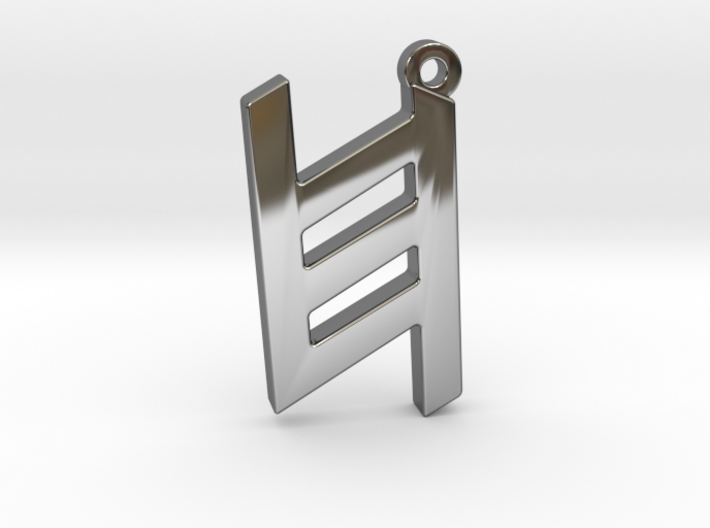
First, begining from the left, H-like sign https://www.shapeways.com/product/SZMTARPYB/letter-khet-paleo-hebrew-with-chain-loop

  The folowing, from https://fi.wikipedia.org/wiki/Heeta

From Marco Merlini https://fashiondocbox.com/Jewelry/90885882-Tartaria-and-the-sacred-tablets.html:                                                                                                                        THE ESOTERIC MESSAGE ON THE DISK-SHAPED TABLET
 
“A throne that is not a throne
The (sign)is very frequent and well known, with an assortment of variants, in several inventories of ancient systems of writing. The Mesopotamian examples highlight an implausible correspondence between this Transylvanian sign and the pictogram from Uruk ATU 260 1470 or Jemdet Nasr 1471.Badiny forced the supposed similarities selectin g the Proto-Sumerian pictogram1472. Nonetheless, any correspondence in shape is remote1473. These scholars find equivalence only by maintaining that
the Tărtăria sign is damaged in the lower left segmen ts; they reconstruct it arbitrarily in an outline resembling the Proto-Sumerian counterpart.
Correspondences in Akkadian cuneiform are not very clear. It is Labat number 436 according to Badiny with sound TUD, DUR meaning ‘settlement foundations’
1474. However, it is Labat number 99 with meaning ‘Lord’, ‘God’ with a phonetic value EN according to Kolev1475.The sign resembling a tri-rung lame ladder or a limping chair occurs also in Semitic scripts, in particular in the Phoenician alphabet where a similar sign represents the letter heth (phonetic value h),. Subsequently, it became the Latin H. The occurs also in other ancient Asiatic scripts, as well as in
the East Orient systems of writing. In particular, there is a complete graphic convergence with the sign 53 of the Indus script 1476.”
 
Despite :                                                                                                                                                   -the large excursus wich is comprising almost all close-shape ancient signs                           – not even noticed exactly HET-shape (apropos, sound Kh as in ger. koCH not H!)                 -not found the exact construction of the proto-cuneiform sign KU/GA2 wich has also as our sign 3 horiz. bars                                                                                                                            -not get to a final conclusion and not choosed or found any concrete sign or meaning : (………….In any case, to my thinking it will be productive to explore the possible abstract meanings of the as the opening that introduces the esoteric inscription.”)
– if The (sign)is very frequent and well known then why you not take the bull by the horns ? (romanian exprasion translated < de ce nu luati taurul de coarne>?
________________________________________________________________________________
 
Image from http://aplaceofbrightness.blogspot.com/2008/11/moonlight-in-romania-tartaria-tablets_21.html KEYTH MASSEY
 
2-nd “D-shape sign” on the right,
Merlini:”The second sign on the upper left quadrant is a rounded D-shape with a tail,” me: no tail, scribe shaking hand. It is exactly ATU 527!
Merlini:”In the Danube civilization, its occurrence is restricted to Tărtăria, and it is not present in other ancient scripts. ”                                                                                                  Me: Yes,In the Danube civilization, its occurrence is restricted to Tărtăria but is present in other ancient scripts as:                                                                                                 sumerian,                                                                                                                                        Anatolian writings and alphabets                                                                                                      archaic greek (as for letters D and R),                                                                                             in venetic script, …I’m not squeezing my memory further.

Merlini:”In the Late Neolithic Vinča C culture, the D is engraved on the forehead of a statuette discovered at Medvednjak (Republic of Serbia)1493. Due to positioning, Winn considers this sign as “symbolic”149

Me: In hundreds of statuettes not on forehead there were not cyclops were exactly in the eyes places. (See my post :”Common… in early writing”)More than symbolic, the eye shape is direct related to light through light to deities and sun!

Merlini:”In Akkadian cuneiform, the D is the Labat number 480 with sound DIS, meaning ‘praised one’

Me: yes, but only “one” and not “praised one” because there is no particle there for praise it is only “one” meaning of course the God,praysed-one.Attention, dis much used for numbers; for “one” ment the unique single ONEis +++++ “AS” present on tablet.           1 is “Dis” and “Dili”
Merlini:”At Tărtăria, the tail on the D was incised intentionally. We have to deduce that the ‘scribe’ applied this small auxiliary marker to the root-sign in order to produce a variation to its conceptual meaning or to differentiate some phonetic units of the spoken language. Unfortunately, we are blind concerning the denotation of the D sign and its sound value.

Me: Pitty enough, no sign connection less a given meaning.

—————————————————————————————————————————————
 
 
COMB-like sign                                                                                                                             Merlini:”As already mentioned in the previous chapter, on the upper right quadrant of the circular tablet, a ligature between the incised on the higher register and the biggest D on the lower register is nonexistent, although common in literature1507″
Me: the ligature exist, but what this element can push to other divergent interpretations remain to be discussed.
….bla bla bla to conclusion:

Merlini:”In conclusion, if the comb-like sign from Tărtăria finds some parallels in the Mesopotamian pictography and in other ancient scripts, the best semiotic correspondences are from other settlements in Transylvania and in Serbia of the subsequent Neolithic Vinča C and Turdaș cultures of the Danube civilization where it is a component of a numeric system

Me: yes could be numeric as 10+5 or 50 ( deceased female’s age), but you only said:” finds some parallels in the Mesopotamian pictography”,did not noticed the exact proto-cuneiform sign AS (one,single,unique)
-In respect of he said above, no given number meaning
—————————————————————————————————
First “D-sign”

Merlini:”The crescent moon is visible in the shape of a celestial D1522. The variant

is not recorded in the inventory of the signs of the Danube script.It is very similar to the shape individuated by Gh.  Lazarovici with code 238f, meaning ‘first quarter of the moon’. The same sign was utilized to render the first crescent in a lunar cycle engraved on a stone around the second part of IV millennium BC at Knowth (Boyne Valley, Ireland)
1523. The graphic concept is similar to that at the base of the ancient form of the Chinese character Yue4, meaning ’moon’. In the beginning, the pictograph was a new moon hanging in the sky. Gradually, a vertical stroke was added inside. I also assume the
a s a symbol for the ‘first quarter of the moon’.”                                                                    
Correct:                                                                                                                                                    “At Tărtăria, the tail on the D was incised intentionally. We have to deduce that the ‘scribe’ applied this small auxiliary marker to the root-sign in order to produce a variation to its conceptual meaning or to differentiate some phonetic units of the spoken language. Unfortunately, we are blind concerning the denotation of the D sign and its sound value.However, the Transylvanian D is the same as the sign of the moon on the Chinese divination bones. Is the rounded D-shape with a tail representing the abstract
concept of the Moon (the divinity of the Moon?)”
Me: Yes, could be 1-st quarter of the moon, but out of your rendering https://cdli.ucla.edu/tools/SignLists/ATU1.pdf ATU 528 of the sign wich has 2 paralel strokes inside, I’ve found an exactly pair of our sign wich has an L-like sign inside.It is the sign SUR.
———————————————————————————————————————
Second D-sign
Merlini:”The sharp incised on the upper right quadrant finds graphic parallels with ATU 527. As substantiated in the next chapter, if the D is a lunar symbol in several early systems of writing and in rock art, at Tărtăria it stands for the Full Moon as the best suitable moment for human fecundation.
Me:If I am not for precisely ” full Moon” but as I run out of better solution, I agree for Moon (as I found only exact shape ATU 527 https://cdli.ucla.edu/tools/SignLists/ATU1.pdf but there no indication for sign name nor meaning!)
———————————————————————————
“o o” signs

Merlini: (directly up to conclusions):”In conclusion, the sequence D– D – O –o

incised on the lower register of the upper right quadrant of the Tărtăria tablet seems to indicate the moon according to the following phases: First Quarter Moon, Full Moon, Last Quarter Moon, and New/Black Moon.”
Me: Yes could be, but the main  posibilities  are :
– o o =sumerian 10 10
– two sumerian signs “o” LAGAB(circle) =sumerian 2xLAGAB=”o o”=”nigin”: “encircle,roaming around,full,total,etc.etc….
 
DOWNWARD LEFT SIDE OF THE TABLET


Left side,”Merlini:The stylized bow+arrow sign

Merlini:”The bow+arrow sign finds some parallels with pictography from Uruk and Jemdet Nasr: sign ATU721,, with the sound BA, meaning ‘eye’ and also ‘to see’1352. In Ak kadian cuneiform, it has the sound IGI, meaning ‘eye’, Labat number 449 1353. Vaguer is the resemblance with the sign with sound BA (‘offer’,‘give’), Labat number 5135″
Me: Yes, BA (‘offer’,‘give’).                                                                                                                 Ba is by no way is eye, IGI is meaning eye.The Ba (“offer etc,) has one shape, and IGI (eye) another shape.. But seeing the position of the arrow related to the cord, the sign is definitely much close to our sign is Ba !! (“offer,give”).

Merlini:(conclusion) “These observations, when crossed with the identity of Milady Tărtăria as a magic-religious practitioner, open the possibility that the sign on the tablet symbolizes a communication tool utilizing the image of a hunting weapon. It could depict the dynamic, magical moment/action in which the arrow is shot, and the charm has taken off”

Me: Milady Tărtăria’s story is for any help; in my opinion the deceased ~ 5.200 B.C. is not direct related with the tablets (unknown age).No human made any proto-writing signs before 4.000 B.C. other than pictographic!                                                                             I feel so frustated as somebody is recognising that is down, have no drop of energy/resource and signaling indirectly and asking for help…..
—————————————————————————————————————-
Signs >> (double-arrow)
After an excursus of where and in how many instances from paleolithic humans used arrows, he (Merlini) come to conclude:

Merlini”On the circular tablet from Tărtăria, the sign >>represents two arrows in abstract style pursuing the target. It might be indicated by the sign incised below,

, with an unfortunately obscure meaning.”
Me: Fortunately noticed the proto-cuneiform RU-sign (close to >>) but not know the meaning, and that there was also an sign >(wich theoretically could be doubled >> as to form plural)
———————————————————————————————————————–
Double-cross” sign upon Merlini (me:Z-like):  
 
Image, from  KEITH MASSEY                                                          http://aplaceofbrightness.blogspot.com/2008/11/moonlight-in-romania-tartaria-tablets_21.html
 
Merlini:The ” sign”does not find parallelism with the Proto-cuneiform pictogram ATU 295, 1397= Jaritz#560 1398. It is just the duplication of the sign ATU 223 = Jaritz #101,
, which indicates a ’branch growingfrom a stem’, and symbolizes ’grow (large), swell up, bud’. However, the is partially present at Jemdet
Nasr as the 90 grades rotated(JN 47). Regularizing and standardizing the Proto-Sumerian pictograms, Zakar believes to have found the Transylvanian sequence also at Jemdet Na sr ( ), and at Knossos (in the form)1399. In Akkadian cuneiform, the double-bar sign has the Labat n umber 295 with phonetic value PA, KUN, meaning branch’, ‘club’, ‘scepter’
1400. Denoting also someone holding these tokens of authority, it acquired the meaning of someone in power1401. However, some convergences are also with Labat number 467: a ‘god’, ‘the hero’1402
Me: The sign is present from Cretan hierogliphyc through Linear A/B as sign PA2, and is also present coincidentaly in sumerian as PA,”branch” but also as “branch,upper part,supervisor,someone in power,etc”
No wonder by my side: no direct sign connection, the sign remain suspended in the thin air of the Vinca civilisation.Mr.Merlini is bounded to the conception that some-how Vincans wrote. Dissapointment, they made big steps but stopped at the point to discover and use proto-writing!

Merlini:”The analysis of the convergences of the

from Tărtăria with early writing systems evidences a common thread from the Danube script to the Aegean writings. The occurrence within inscriptions of the Danube script documents its use on ceremonial objects of the Danube civilization, and its very rare
presence on daily utilitarian articles confirms the magic-religious significance of this sign.
Me:Not given a chance to sumerians, (apropos Ba+Ru=Baru, barupa”: “magician”                          ;also Ba+Ru=Pa). Nor the slightest chance to Cretan hierogliphyc 2200B.C, or Linear A 2.000 B.C. or even for Linear B 1500 B.C. They wrote for nothing.                                    Again, so sorry.
———————————————————————————————————————–
UNDERSIDE HALF
 
Those “complex” ideograms on the right side,
 
 
Left ideogram/logogram
 

Merlini:”The finds no obvious correspondences in Akkadian cuneiform. It is paralleled with Labat sign n. 353 by Badiny, with phonetic value ŠA, meaning ‘face’, ‘care’ 1415. But it is the Labat sign n. 172, with sound NE and meaning ‘fire’, according to Kolev 1416. As a representation of a fireplace, a similar symbol occurs on an Assyrian relief from the 9

th century BC, or even older. The sign means ‘throne’ or ‘table’ in the inscriptions of the Hieroglyphic Luwian1417. The assumed convergence between the Transylvanian and the, A330 in Linear A, is unconvincing 1418. In this Cretan writing, the correlated sign is the A3 18,1419.To summarize, even if the (sign)is more or less present in different repertories of ancient systems of writing, it is typical of the Danube civilization and finds the best correspondences within the Vinča and Turdaș cultures as elements of the symbolic code1420. It is not a sign of the Danube script.Its naturalistic rendering indicates it as an altar for fire sacrifice, with three columns that seem to designate three tongues of fire. In the present book, Gh. Lazarovici advances the interpretation and
related archaeological evidence that this symbol represents an altar model, an altar for the worship of fire. Analogies with ancient rituals might support this interpretation. Hindu fire worship begins with an off ering to the three tongues of fire that represent the Orient, the Occident and the central place,followed by an invocation to the divinities. In the Manuscripts from Qumran Cave1, 1Q29 1Q is the “Liturgy of the Three Tongues of Fire” 1421
Me: Has simylarities with Cretan hierogliphyc and Linear A&B as showed in my papers.
So you’re right It is not a sign of the Danube script .It is of Sumerian/Aegean origin.            Closest is proto-cuneiform SA (“sieve”) wich was and is my rendering
An altar, yes, but not necessary an altar for fire sacrifice.An altar for burning incences in many rituals.Gr.eskara lat.asa
 
Right ideogram/logogram
 
Merlini:THE ORANTE-DANCER The ‘orante-dancer’,(sign 13a and 13b in fi g. VIIC.6b), incised on the right of the and on the edge of the quadrant, occurs only at Tărtăria.
Me: Not like an orante dancer but like a female astral deity!                                              There it is not in upper part the sign UD or PIR “pine” it is udu,utu:SUN” and precisely U:day,SUN
At the base is the sign AB or UNUG :”abode
So if it is 90% sumerian sign then close to “Sun-shrine/abode” and in our case could be with equal chances also an female astral deity, simylar to TANIT (70% same graphics) and much close than Tanit a deity as ASASARA.
It seems that at minoans and before them, topmost deity in the Balcans was a GODDESS not a God.
See my Cretan hierogliphyc-Linear A,B reading attempt.
Merlini 2011
Eugen Rau 2005 FRIDAY, DECEMBER 30, 2005 OLD EUROPEAN WRITING TARTARIA WRITTEN ROUND TABLET
“sign of SAMAS, Sun-God”
_________________________________________________________________________________
 
FOR PUBLIC, INTERESTED VIEWERS:
 
PROTO CUNEIFORM SUMERIAN SIGNS (Late Uruk)                                                                ALL SIGNS ARE PRESENT ON TARTARIA ROUND TABLET
 
Sumerian proto-cuneiform signs are from  from UCLA https://cdli.ucla.edu/tools/SignLists/protocuneiform/archsigns.html
(otherwise also take a look at Mr. Fackelmann sign-list https://cdli.ucla.edu/tools/SignLists/ATU1.pdf )
 
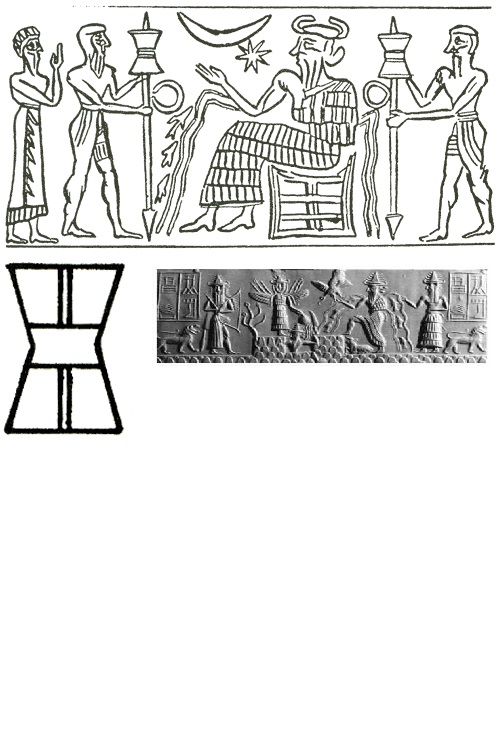
AB present in the ideogram of Sun-abode=sign of city LARSA
 
AB
present in ideogram of sun-abode, sign of city LARSA
AMAR (calf)
 
ARARMA, sign present on emblem of cty Larsa (sun-abode)
 
ASZ,AS (upper half,right, up)
 
BA bow-arrow sign
 
 
ENSI Lord, (here first sign) present in downward half, left side, most underside
 
Ga2 ! but there is other sign rotated 90deg,) wich is our sign in upper first from the left
(same as above Gur)
 
sign GAR read NINDA (portion,cereal,BREAD), possible present as ?close? imitation in D D o o sequence
sign KU (upper half utmost left)
Sign LAGAB “hole,circle” present in D D o o sequence
 
LAGAB LAGAB (2 times LAGAB=or “2 round circles”=”NIGIN” present in D D o o
also NIGIN “whole,total,enclosed,roaming around”… etc etc.
sign LISZ, present in downward left quadrant doubled, as >>
 
sign MAS present as the cross wich divedes tablet (?remember”twin, kid”?)
sign PA “overseer inspector” on extreme down-leftward sign/quarter
PA3 possible those 2 signs in the quarter mentioned above
 
same quarter, sign RU ……forgot meaning
sign SUR “rain,flow,press,squeze,warrior,,etc.etc” 2-nd D in the D D o o row
SZA, SA         present as such in the downward side, right, 2-nd from right to left.
U4 It is day=SUN! present in LARSA stamp=sun-God abode sign on downward side, first from R to L
sign UDU sheep ?related to the cross wich divides the tablet?
also UDUb
 
UNUG quite same with AB “house,abode” present in sun-God abode
twoo rounds twooxLAGAB ..number 10 10 =20
Read the rest of this entry »

Common traits in the very beginning of writing

November 22, 2018

Some other scientists found that one particular pictogram was used in different places in writing .Quite slightly different in shape. It is about the eye. But every scientist showed mainly symilar eye-shapes for only twoo different places. I discovered that there was an much extended phenomenom. I will show you more than 4-5 places in the world. The explanation I’ve found is the fact that humans have the same physical body, and nervous system (read basic way of thinking).

But there was another pictogram used in the same semantic field, the fish. There is no other simple connection for humans for the idea of light other than eye. Light is entering in us through eyes.Close yes and have no light. Eye-light is kind of short-cut between, eliminating every word or philosophy upon.

It is true, light is coming mainly from Sun, but if you figure sun thinking possible turn in first time to celestial star and the light is only 2-nd, close-associated.

I discovered that it seems that the eye-shape was used for logograms and phonemes for light. I suppose the fish-shape was used for bright-light or “bright,shining”.

I will show you some 6 exemples:

A (1). Vinca-culture.So many statuettes with the eyes depicted as letter D with, or without eye-lashes. My personal suppozition, (expressed one year before) was that upon if the sign has an associated meaning that was the light, whatever sounded. For “shiny-bright” they used fish. Vinca-culture 6.000-4.000 B.C. Image, from Neolithic Vinca Terracotta Human/Bison Head – Ancient Art & Antiquities

Image, from http://www.allposters.es/-sp/Close-Up-of-Carving-Vinca-Culture-Belgrade-Museum-Serbia-Posters_i2675424_.htm

The fish was for the idea of bright (bright, shiny-God), the same to identical later sumerian Oanes and old hebrew Dagon ( dag was for fish). Vinca-culture, Bel Brdo 6.000 B.C. See, from https://www.emaze.com/@AFFFZWLO

Dagon https://mythology.net/others/gods/dagon/

Imagini pentru fish-god
https://en.wikipedia.org/wiki/Dagon#Ancient_Near_East Bronze AgeThe god Dagon first appears in extant records about 2500 BC in the Mari texts and in personal Amorite names in which the Mesopotamian gods Ilu (Ēl), Dagan, and Adad are especially common. (my note, phoenician Dagon, hebrew Dagan)

B(2) Jiahu writing https://wikivisually.com/wiki/Cuneiform https://encrypted-tbn0.gstatic.com/images?q=tbn:ANd9GcSd9Tc0u8QF0jpa5jeWvtlb5Fb17FeEOdPKER-T22KZ6tu2JL-Pv211J4E

                                                                                                                                                  From http://www.abovetopsecret.com/forum/thread924712/pg1&nbsp;                                           Here’s a collection of 目 (eye) characters in the oracle script:

C(3)Sumerian

.Thttps://cdli.ucla.edu/staff/englund/publications/englund1995g.pdf “the former qualification, in subsequent periods used to denote
the distribution of above all rations to dependent workers and animals, seems best translated in archaic
sources with ‘inspected’ (‘and found to be available’, pictogram “eye”), roughly corresponding to later Sumerian gub or gal, or possibly gurum (IGI+GAR). 10 ” My note:probable reffering to sign IGI?

“The Sumerian noun is typically a one or two syllable root (igi “eye, e2 …”

Imagini pentru proto-cuneiform sumerian                                                                                                      From SUMERIAN PROTO-CUNEIFORM SIGN LIST https://cdli.ucla.edu/tools/signlists/protocuneiform/archsigns.html&nbsp;                                   Proto-cuneiform sign Di:                                                                                                                                                                                                                           From:  New Indology: Sumerian and Indo-European: a surprising connection                          new-indology.blogspot.com/2015/05/sumerian-and-indo-european-surprising.html

B(2) Indus script From Harappa.com https://www.harappa.com/content/indus-script-5

C(3) Hieroglyphic Cretan ?Do/Du”?                                                     https://lh3.googleusercontent.com/pjlF-VdbpbpyfFOnmuWv4UpZsXh93pQm5DAzcZ3g7ExMEvF9SlOBwrJOU5O6lf2Aoyo_kjc=s85http://www.kairatos.com.gr/linear1.htm

Hierogliphyc Cretan, sign No.005 From https://www.minoanatlantis.com https://www.minoanatlantis.com/Minoan_Mirror_Web.php

Note: Unknown rendering

Linear A. From http://minoablog.blogspot.com/2009/09/

The major obstacle here is the missing phonetic value for Linear A *301 (the ‘slave’ or ‘acrobat’ sign). Since it is not an easy task to find the missing value (more on this in a later post), we have almost no clue of the meaning of this word. Unless we make a bold move and substitute a fitting Etruscan-Lemnian stem here. The best (given the context, and the rare *AI diphtongal cluster) appears to be the etruscan word-stem *AIS = “God, Divinity”. If so, the value for *301 needs to be of either the S- or the Z-series (perhaps *ZU). Notwithstanding, the reading for a libation text beginning with ‘This/The god…’ appears incorrect. Therefore we have to assume that whatever A-I-*301-… meant, was more of a “divine gift” or “divine sacrifice” than being simply ‘god’ or ‘gods’.

Image from The most peculiar Minoan sign ever seen http://minoablog.blogspot.com/2010/12/most-peculiar-minoan-sign-ever-seen.html

My note. Close to egyptian eye !! https://www.thoughtco.com/egyptian-symbol-gallery-4122787

https://www.thoughtco.com/egyptian-symbol-gallery-4122787 “the eye of Horus”

Linear B, sign “Zu?” From Richard Wallance’s blog, https://linearbknossosmycenae.com/category/lessons-linear-b/

Me: yes, “Zu” as P.I.E.-root “Di”>DIas/Zeu,Zou,Zu,Zeus:”light”

From  Documents in Minoan, Luwian, Semitic and Pelasgian  Fred Woudhuizen file:///C:/Users/User/Downloads/Documents_in_Minoan_Luwian_Semitic_and_P.pdf     

“In their table of comparisons, Olivier & Godart plausibly propose the correspondence of CHIC038 “gate” to L32 ya, CHIC092 “horn” to L55 ru, and CHIC005 eye to L101 zu.”
49 ……………                                                                                                                                       “This inference is further emphasized by the fact that the Cretan hieroglyphic “eye” sign is more remotely related to Luwian hieroglyphic *191, which depicts three pairs of eyes in a row and stands for the all-seeing sun-god, TIWATA, ti6—thus leading us to the syllabic value ti6 according to the acrophonic principle.56 “

Socoteala “sumeriana”, fazele Lunii in jumatatea superioara a tablitei rotunde ?

November 18, 2018

Atentie!                                                                                                                                                              Aceasta postare nu este o o descifrare sau citire a unui presupus continut scris real. Avand in vedere ca semnele nu apartin unui unic sistem de scris ci mai multora, pagina are un caracter pur didactic. Are rolul de a incerca si testa diferite scrieri in idea ca pe tablite s-ar fi folosit unul din ele. Semnele de pe tablite apartin mai multor sisteme de scrisi dintr-larg interval de timp si care au folosite in diferite arii geografice. In niciuna din incercari semnele nu s-au incadrat intr-un singur tip de scriere, totdeauna au ramas semne care au provenit din alte scrieri (sau din necunoscut). Cele mai multe semne provin din cele sumeriene proto-cuneiforme.Apoi privind asemanarea, in ordine descrescatoare este aceea cu semnele Linear A/B si cele Anatoliene. Semnele din jumatatea superioara a tablitei rotunde par a proveni din scrierea arhaica greceasca.Cel mai degraba aceasta “adunatura” de semne pare a fi rodul imaginatiei bogate a cuiva.Dupa cum au constatat A.Falkenstein si A.A.Vaiman, (aceasta fiind si parerea mea ferma) autorul nu a fost un scrib, avea doar vagi notiuni privind scrisul in general si nu se stie ce a urmarit. Exista multe elemente de neconcordanta precum si altele care scot tablitele din tiparele si normele uzuale ale  logicii, scrisului si intentiilor oneste.

======                                                                                                                                                      Socoteala “sumeriana”, fazele Lunii in jumatatea superioara a tablitei rotunde ?

Foarte multi cercetatori (vezi Adam Falkenstein, Aisek Abramovici Vaiman ) au avansat ipoteza ca scrisul tablitelor nu este sumerian autentic ci doar “de factura sumeriana”

Din http://aplaceofbrightness.blogspot.com/2008/11/moonlight-in-romania-tartaria-tablets_21.html https://1.bp.blogspot.com/_DT_WSLrf76g/SSNB43AQzMI/AAAAAAAAACw/HlxviXs54cw/s320/NE.JPG

ne

DWritten Records.
1.Daca tablitele sant de inspiratie sumeriana, nu prea cred ca ar fi vorba de fazele lunii. Nu stiu din ce motiv, sumerienii nu au prea folosit in scris Luna ca si corp ceresc. Luna ca si corp ceresc era figurata in imagini ca si o secera in pozitia “tine apa”.Nu au avut termeni distictinti. Foloseau pentru Luna calendaristica/month si pentru Luna corp ceresc/Moon (Id,Idi,ITI/SuEN,Sin), semnul pentru soare, pe care aplicau numarul de 30 de zile.
http://enenuru.net/images/tat5b.jpg

tat5b                                                                                                                         Sau in scris ma simplu, (banuiesc ca pentru luna calendaristica/month) doar semnul “30”: https://www.bulgari-istoria-2010.com/Rechnici/Sumerian_Cuneiform_English_Dictionary_12.pdf
1230D <<< U+U+U | ESH / EŠ = 30 (numeric) | UŠU3 | SIN = moon

See “30” https://render.fineartamerica.com/images/rendered/default/metal-print/7.125/10.000/break/images-medium-5/sumerian-number-system-science-source.jpg

sumerian-number-system-science-source1

Nu au folosit deloc forma de literei D.Cat priveste “fazele lunii” singura aparitie de care stiu este o inscrptie din paleolitic din Europa (18.000 B.C.!).Asa ca strict d.p.d.v. al fazelor lunii aceste faze puteau sa fie figurate pe o intindere in timp (vechime) de multe mii de ani, pana inspre zilele noastre.Inafara de durata egala a ciclului Lunii cu cel menstrual, se pare ca cunostinte legate de fertilitate in cadrul ciclului menstrual (asa cum maimulti cercetatori au speculat) apar doar cu putin timp inaintea erei noastre.

2.Daca tablitele sant de influenta sumeriana, se pare ca nu ar prezenta nici numere

Ex.1 (socoteala proto-elamita):

Din http://chalaux.org/nmpduk01.htm
http://chalaux.org/nw2/imagenes/600px_Numbers_and_measures_-_09_Grain-ration_record_from_proto-elamite_Susa.jpg

600px_numbers_and_measures_-_09_grain-ration_record_from_proto-elamite_susa

GRAIN-RATION RECORD FROM PROTO-ELAMITE SUSA is read from right to left. The text begins with a «hairy triangle», thought to be the issuing authority. Next is a «plow» sign that is probably a field worker. The number signs that follow continue at the right of the bottom line: 1 X 60 + 3 X 10 + 3. Next is a sign like a sheaf of grain; it means barley. Last is a capacity number: 6 X 6 C + 1 C + 1 m. The sense is that 93 workers receive two minor units each (Source: Alan D. Iselin).
Noi avem la Tartaria semnul SUR (primul D) si ? posibil imitatii de numere sumeriene ?:(citire de la dreapta la stanga):semnele 00: (2×6=12C)unitati de capacitate
+ semnulD:D(“1 masura” m)
“12c+1m (12 unitati capacitate+1 masura ?”)                                                                            Ex.2 Sumerian:
Imagine,  https://encrypted-tbn0.gstatic.com/images?q=tbn:ANd9GcQoEHV85C7yQBnL-K1v51vOx3TH7qxRGH3-h3-P1aN0q_3z_pSgbA    sau

https://lh3.googleusercontent.com/GIFnt4NGaOl5rca4fGZr1M6ie3UWo6aVI3kseaCfwuwY_el431MhFYe_DH2JtQNnMbaHnf8=s85

Retineti ca sumerienii puneau unitatile mari in stanga apoi descrescator spre dreapta; citirea o faceau de la stg. La dreapta
Asa avem si noi pe tablita :
Semnul SUR (primul D)si un numar Doo.
SUR https://cdli.ucla.edu/tools/SignLists/protocuneiform/archsigns.html https://cdli.ucla.edu/tools/SignLists/protocuneiform/archsigns/SUR.jpg  ???

sur

(D-urile sant mai mari ca 0-urile! Deci D-ul este “60” si nu “1” iar o-urile nu sant mari,O=”3600” ci mici o=”10”:

Din A New Edition of the Proto-Elamite
Text MDP 17, 112 Laura F. Hawkins  https://cdli.ucla.edu/pubs/cdlj/2015/cdlj2015_001.html https://cdli.ucla.edu/pubs/cdlj/2015/cdlj2015_001_fig/figure2.jpg

Print

https://encrypted-tbn0.gstatic.com/images?q=tbn:ANd9GcRvzda1OQRx8LOC7za6exDDMcpjCiKBft2xxYVak_m6TmgZmx_puA

Figure 3.3: Relations between length measures on proto-cuneiform tablets

(1 nindan = 6 meters The basis of the system was the nindan, with a size of approximately six meters,)
SUR D(60) si oo (10 10)
? Sur 60 + 20 = sur 80 ?

Daca am fi avut numai numere, am fi avut:
D D o o = 1,1 10,10= 2 ,2o. dublul lui 20; 29×2 = 40
Automated joining of cuneiform tablet fragments – PURE – University of …
pure-oai.bham.ac.uk/ws/files/18271046/NABU_2014_4_DEF.pdf
….. und nimin „40“, was offensichtlich aus *niš-min „2 mal die 20

Daca am scrie denumirea cifrelor http://it.stlawu.edu/~dmelvill/mesomath/Numerals.html:

MIN(2) Nis/ni(20) =NIMIN(40)…….iar ne lovim de sorok =40……..
https://en.wikipedia.org/wiki/Sirara SIRARA6) was a temple complex in Lagash – it may also (or instead) have been a city as mentioned in The Royal Chronicle of Lagaš.[1] It has been suggested that the city-state known as Sirara was also called Nina or Nimin which was probably a seaport.[2]
Daca tablitele sant de inspiratie sumeriana, nu prea cred ca ar fi vorba nici de fazele lunii.

https://www.bulgari-istoria-2010.com/Rechnici/Sumerian_Cuneiform_English_Dictionary_12.pdf
1230D <<< U+U+U | ESH / EŠ = 30 (numeric) | UŠU3 | SIN = moon See “30”https://render.fineartamerica.com/images/rendered/default/metal-print/7.125/10.000/break/images-medium-5/sumerian-number-system-science-source.jpg Daca nu avem numai cifre, am inlocui cifrele cu denumirea lor. Am avea Sur giš/geš niš ?? 3.Atunci sa analizam semnele +++++ Dv D o o Semnele sumeriene sant: AS SUR Dis 2x LAGAB

Din https://cdli.ucla.edu/tools/SignLists/protocuneiform/archsigns.html ASZ2 https://cdli.ucla.edu/tools/SignLists/protocuneiform/archsigns/ASZ2.jpg

asz2

As:”unu , unul” Appendix:Sumerian Swadesh list – Wiktionary https://en.wiktionary.org/wiki/Appendix:Sumerian_Swadesh_list 22, one, aš. 23, two, mina. introduction to sumerian grammar – ANE Languages.COM

Din http://www.anelanguages.com/SumerianGrammarFoxvog.pdf by DA FOXVOG – subject among other scholars specializing in Sumerian grammar. …… values such as sumun/sun “old,” súmun/ sún “wild cow,” sumur/súrangry“,

Din https://cdli.ucla.edu/methods/sign_name.html Preferred Reading Sign Name Meaning sur SUR v. to divide, to press, to brew 4 Sumerian Phonology s155239215.onlinehome.us/…/42TurkicAndSumer/HamoriFSumerianPhonetics&soun… The basic pronunciation of the sounds of the Sumerian language, that is it’s “phonemes” and the key sound changes it ….. *śurwe > sar ~ šur=to stabb, pierce, insert;

V16.COMPARATIVE ENCYCLOPEDIC DICTIONARY OF MESOPOTAMIAN VOCABULARY …
https://books.google.ro › books Maximillien De Lafayette ·
Šúr: Sumerian. Adjective. a-Aggressive. b- Violent. c-Enraged. Súr: Sumerian. Adjective. a-Determined. b-Self-assured. Šur: Sumerian.…

the unity of hamito-semitic and sumerian language families 1 – Academia.edu
http://www.academia.edu › THE_UNITY_OF_…
204 3.5.1.15 Sumerian šur, sur “ to rain, to flow” 204 3.5.1.16 Sumerian
As-Sur:
https://en.wikipedia.org/wiki/Assur#Name Aššur is the name of the city, of the land ruled by the city, and of its tutelary deity from which the natives take their name, as did the entire nation of Assyria

Nu este Dis:”unu” pentru ca cifrele in general erau facute prin imprimare.

Urma lasata pe lut pentru numarul 1/(“dis”) cam asa arata la sumerieni:


Dis:”unu”

Semnul GAR, din https://cdli.ucla.edu/tools/SignLists/protocuneiform/archsigns.html

GAR

Semnul gar in proto-cuneiform nu era imprimat ci zgariat si arata putin diferit: Din Historical Epistemology …  semanticscholar.org

46493062_2205974336390466_3314040140468322304_n

Doua semne Lagab=Nigin “intreg” engl.whole

reading sumerian names, ii: gilgameš – …
https://www.jstor.org › jcunestud.64.0003
by G Rubio · 2012 · Cited by 11 · Related articles
in Sumerian and Gilgameš in Akkadian. ….. LAGAB.LAGAB = nigin (niŋin) = nin3 in Ea 1: 46–47a (MSL 14, 178) and

Unicode Cuneiform Fonts – HPM Hethitologie-Portal Mainz
https://www.hethport.uni-wuerzburg.de › …
For Old Babylonian and Neo-Assyrian sign NIGIN (MeZL, n° 804) = LAGAB-LAGAB ( U121B8+ U121B8), we get

Chapter II – Springer Link
https://link.springer.com › content › pdf
interpreted as a contracted LAGAB.LAGAB. In all four … LAGAB.LAGAB – as nigin, “to make surround”, which gives some sense. In the

Nigin tellsurghul.org/Nigin.html
The ancient settlement of Nigin was part, with the cities of Girsu and Lagash,

The Vocabulary of Sumerian – jstor https://www.jstor.org/stable/592549
by JD Prince
etymological study of the Sumerian word-list is attended by. ‘ Die Entstehung des …… ‘canal,’ lit. ‘collection (nigin) of waters’ (Br. 11676). I The Babylonian .

V12.COMPARATIVE ENCYCLOPEDIC DICTIONARY OF MESOPOTAMIAN VOCABULARY …
https://books.google.ro/books?isbn=1312229934
Maximillien De Lafayette . Nigin: Sumerian. Noun. The whole amount. Nigin: Sumerian. 61.

Encyclopedia of Cosmology (Routledge Revivals): Historical, …
https://books.google.ro/books?isbn=131767765X
Norriss S. Hetherington
In this compound term, the Sumerian element “NIGIN” corresponds to the meaning”to move in circle” or “to encircle,” hence the semantic force of the whole encompassed by heaven and …

Nigin ;”intreg,tot”

+++++ AS
=
Dv D o o SUR Dis/Gar Nigin

Unul
Curge un intreg / ? o colectare/intreaga ploaie/rau

              !                 Unul(zeitatea!)

                      Ploaie       paiine      tot                 !

=====================================================================
In sfertul din stanga al tabletei:
Din http://aplaceofbrightness.blogspot.com/2008/11/moonlight-in-romania-tartaria-tablets_21.html                           https://4.bp.blogspot.com/_DT_WSLrf76g/SSNBh8jnEpI/AAAAAAAAACo/C-ofWx7wKQs/s320/NWgrid.JPG

nwgrid

H D = Ku/Gu Gar?/Dis?

1.Ku Gar= ku ninda  (semnul gar se citeste ninda:”cereale,paiine“)

Ninda-ku:”mananca paine

2.Gad (deity) | Revolvy https://www.revolvy.com/page/Gad-%28deity%29
The English word god continues the Old English god (guþ, gudis in Gothic, guð in Old ..

2.Ku:”pur, sacru” ; dis;”unu”

“Unu,Cel Sacru”                                                                                                                                     ——————————————————————————————————-

  1. 2018

Doua sau trei sisteme de scriere permit citirea celor 3 tablite pentru ca cuprind aproape toate semnele prezente pe tablite. Este vorba despre scrierile sumeriana,cea cretana si cariana. Singura scriere care cuprinde cele mai multe semne este cea sumeriana. In incercarile de citire am abordat cu egala deschidere fiecare scriere.Pacatul este ca daca prima nu mai prezinta multe necunoscute, in a doua se fac progrese in schimb nu prea exista specialisti pentru scrierea si limba cariana. Eu stiu ca exista doar unul in lume in varf, ADIEGO.

Cu toate ca am incercat sa fac citiri folosind sxrierea proto-cuneiforma sumeriana, inca am unele intrebari si nemultumiri.

– Daca cateva semne nu sant identice cu proto-cuneiformele (ex “D”), au fost imitate? Cine si cum le-a imitat ?.

– Daca au fost niste migranti din Orient, se pare ca au fost familii care nu s-au integrat complet in populatia locala.Banuiesc ca este vorba de meseriasi in prelucrarea metalelor proveniti di aria Gutium-Siria.

-Daca ar fi reale citirile acestea ultime, cum puteau sa faca referire la ei ca fiind peregrini? Singura explicatie ar fi ca gutii, mai putin avansati cultural au folosit termenii existenti in acel timp pentru ei !?

Motto:

“During my years of research, I observed that most scientists tend to “fall in love” with their own theories: and that is where trouble starts. After all, you should be critical with your own results, even more so than with the results of others. Only so can you ensure the quality of research you provide.”(ANDRAS ZEKE/Hu http://minoablog.blogspot.com/2012/

 ……asta inseamna ca revin.Inafara de o posibila citire cu zeitate ploaie “paiine”,” tot”,

va propun:

A.

Sumerian / English doormann.tripod.com/engsum.htm

As-Hur/All-seeing-one          AS-SUR”all seeing-one:/ONE WARRIOR

               AS

SUR   DIL/DIS   NIGIN

B

AS

SUR      DIL/DIS    NIGIN

UN

RAZBOINIC  UN   CALATOR/da roata                 !vedeti pe tablita cei doi “UN,unu” sant legati !!

V16.COMPARATIVE ENCYCLOPEDIC DICTIONARY OF MESOPOTAMIAN VOCABULARY …
https://books.google.ro › books Maximillien De Lafayette ·
Šúr: Sumerian. Adjective. a-Aggressive. b- Violent. c-Enraged. Súr: Sumerian. Adjective. a-Determined. b-Self-assured. Šur: Sumerian.…

 Sumerian / English doormann.tripod.com/engsum.htm           Warrior/Sur

niĝin [ENCIRCLE]. niĝin [TOTAL].

The Class Reunion—An Annotated Translation and Commentary on the …https://books.google.ro/books?isbn=9004302107

  1. Cale Johnson, ‎Markham J. Geller… see tashiru sahharu (see sahhiru) turning (Kou 50) sahhirat āli = Sum. uru nigin roaming around the city’ 251 sahhirat duri = Sum. bad nigin roamingaround…

Sumerian Lexicon | Linguistic Typology | Linguistics – Scribdhttps://www.scribd.com/document/119559302/Sumerian-Lexicon   gur 4-gur 4) [NIGINarchaic frequency: 11]. to surround. to halt. concatenation …Sumerian /

English doormann.tripod.com/engsum.htm                                                … Nigin/Wander/(to) Nig-Inim-Bala/Interpretation

 to wander {vb} https://en.bab.la/dictionary/english-romanian/wander  RO                           ahoinări                                                                                                                                                 a cutreiera                                                                                                                                               a vântura                                                                                                                                              a umbla                                                                                                                                                 a străbate                                                                                                                                             a pluti                                                                                                                                                     a ocoli                                                                                                                                                    a călători

Nigin “a calatori in jurul, a inconjura, a da tarcoale, a se vantura, a cutreiera, a hoinari

C.

2: MAN ; 20:NIS

Some Reflections on Numerals in Sumerian towards a History of … – jstor https://www.jstor.org/stable/601861 by IM Diakonoff

THE SUMERIAN NUMERALS HAVE MORE THAN ONCE since Samuel …. number of Middle Indian and Middle and Neo-Iranian … (a) without a suffix, as, e.g., I – /as/, 2 – /man,min/,.

MAN NIS> ?MANIS?

  1. M. Murdock, Acharya S · 2014 · Religion Stele from MesopotamiaUr-Nammuwas the builder of the Great Ziggurat at Ur, the best … Ur-Nammu Menes/Manes, Manis and Mannus

D.

Apoi DD oo = MIN NIS > ? MINIS ?

2(doi): “MIN”   20(douazeci):”NIS”

Neo Babylonian Sign Lists [CDLI Wiki] cdli.ox.ac.uk › wiki › doku › id=neo_ba… Mar 16, 2016 · Neo Babylonian Sign Lists. Work in progress. Filter: ….. Labat 471 / Borger 708, man, niš, ešra = 20.

2;20 = MIN NIS> MINIS

 Mini (popolo) – WikiVividly
https://wikivividly.com › lang-it › wiki
Secondo la mitologia greca, i Mini – agg. minio, minia, minie, minii – (in greco Μινύες, ….. The adjective indigenous is derived from the Latin word indigena, which is based on the

 MINIS, Μινύες,. minoans !??                                                                                                              ————————————————————————–

In stanga, semnele Ku GAR= ku ninda= ninda ku Ninda-ku:”mananca paine”
PDF] old akkadian writing and grammar – Oriental Institute – University of …  https://oi.uchicago.edu/pdf/mad2.pdf

Aug 6, 2010 … NINDA KU “they eat bread” (= Sumerian ninda {-ku -e; cf. also the .

………CE PARERE AVETI ?

Despre TIMP si ZEI sau HR prezent pe tablita de la Tartaria

November 16, 2018

Atentie!                                                                                                                                                  Aceasta postare nu este o o descifrare sau citire a unui presupus continut scris propriu-zis. Cu atat mai mult cu cat avem de-a face cu semne proto-cuneiforme, si deci in consecinta cu  proto-scriere. Avand in vedere ca semnele nu apartin unui unic sistem de scris ci mai multora, pagina are un caracter pur didactic. Are rolul de a incerca si testa diferite scrieri in idea ca pe tablite s-ar fi folosit unul din ele. Semnele de pe tablite apartin mai multor sisteme de scrisi dintr-larg interval de timp si care au folosite in diferite arii geografice. In niciuna din incercari semnele nu s-au incadrat intr-un singur tip de scriere, totdeauna au ramas semne care au provenit din alte scrieri (sau din necunoscut). Cele mai multe semne provin din cele sumeriene proto-cuneiforme.Apoi privind asemanarea, in ordine descrescatoare este aceea cu semnele Linear A/B si cele Anatoliene. Semnele din jumatatea superioara a tablitei rotunde par a proveni din scrierea arhaica greceasca.Cel mai degraba aceasta “adunatura” de semne pare a fi rodul imaginatiei bogate a cuiva.Dupa cum au constatat A.Falkenstein si A.A.Vaiman, (aceasta fiind si parerea mea ferma) autorul nu a fost un scrib, avea doar vagi notiuni privind scrisul in general si nu se stie ce a urmarit. Exista multe elemente de neconcordanta precum si altele care scot tablitele din tiparele si normele uzuale ale  logicii, scrisului si intentiilor oneste.

====================                                                                                                                      Tentativei de citire a semnelor folosind semne asemanatoare sumeriene proto-cuneiforme  nu-i dau mare credit, pentru ca semnul sumerian “Ku” nu arata tocmai asa si nici semnul “D” nu era inscriptionat prin zgariere ci numai prin apasare=imprimare, rezultatul fiind oarecum de forma “D”.                                                                                                                                                                                                   Deasemenea nici citirii folosind scrierile Linear A,B nu le dau credit mare, intrucat desi exista semnul PA3, nu am gasit vre-n semn inscriptionat exact ca si un “P’ sau “D”.Chiar in ipoteza ca D-ul reprezinta luna si folosind acceptia “MEN,MENO,MENE” este adevarat ca mi-a iesit PA(PAi?)-MEN care cumva seamana cu Poimen,”Pastor”.Cine stie, poate ar insemna PA(radacina pentru a pazi) si MEN:”constant”. Eu am observat inca acum mai multi ani ca jumatatea superioara a tablitei contine inafara de semnul +++++ litere grecesti.Mai precis din alfabetul arhaic grec care contine litera Heta (eta arhaic).Este adevarat ca la o adica si semnul +++++ ar putea fisemnul din alfabetul arhaic cretan (Eteocretan) Se/Su,etc.                                                                                                                     P.S.                                                                                                                                                        Nu pot sa va ascund nici faptul ca am suspicionat christograma lui Hristos, dar nu am gasit nicaieri in lume monograma HP ,HPistos/HRistos (ci numai pentru Heros/Hercules/Herod) ci numai “XP” (labarum) !                      ______________________________________________________________________________________

Revenind la un presupus sa zicem HP,                                                                                       Nota.                                                                                                                                              Initial au existat variantele epichorice ale alfabetului arhaic greces (epi-choros=pe loc=local) in care ba intr-un loc pentru D foloseau delta si in altul D iar pentru R intr-un loc foloseau P si in altul D                                                                                              Aceasta grupare consonantica este extrem de veche.                                                             

Din Horus and time A dialog on comparative philology from the ANE list http://www.hartford-hwp.com/archives/21/004.html November 1997 Date: Mon, 10 Nov 1997 12:47:07 -0600 (CST) From: berlant@ptd.net Subject: Re: ane Horus and Time At 04:13 PM 11/8/1997 -0500, Geoff Graham wrote:                                                                             “….the relationship between time and the sun ‘s movement that prehistoric Egyptian wordsmiths personified in the name of their solar deity [Hrw] should not logically be considered the ancestor of the same relationship that inheres in the ancient Greek words for (1) “season” [hora] and (2) the limit of a circle [horos] that yielded [horizon], in light of the fact that these Greek words were also clearly derived from a prehistoric consonantal root [HR].  ………                                                                                                     …….Of course, the preceding analysis differs with the prevailing opinion of Indo-Europeanists who have attributed Greek [hora] to a hypothetical PIE root [YER] and Greek [horos] to no root. However, in the absence of empirical proof that these Greek words were derived in one way rather than the other, that way must be inferred by using the principles of deductive reasoning to unite the available evidence. ………            …………. I was, thus, wondering what should prevent an objective observer from logically hypothesizing that the aforementioned Greek words are, in all likelihood, derivatives of a known Egyptian root [Hrw], rather than of two hypothetical Proto-Indo-European roots, .….”                                                                ______________________________________________________________

Eu de mai multi ani, am vazut si am urmarit cu un gen de obstinatie (puteti zice si fixism) aceasta presupusa radacina HR ; – am gasit in bucati de obiecte ceramice gasite in Egipt si Levant, mai des decat in aria Egeeana, monograma HP inscrptionata cu forma arhaica a lui eta, heta care initial se pronunta h,he. Cercetatorii spun ca ar reprezenta zeita Hera sau Heros sau nume propriu Heros, eventual Hercules(Hercles).

6ebe3-nwgrid                                ____________________________________________________________________

In ce ma priveste, am suspicionat atat Hera cat si Heros.Heros declinat are si forma HeRo.A insemnat “DOMN” si zic cercetatorii ca initial si literar a insemnat “protector/aparator”.

Din  https://biblehub.com/?fbclid=IwAR21RAqUwMY9haERCPCA1YE6NAx2vi2ZzwjhI42hfpbqs7N29EH1TxcxiIc            The word hero comes from the Greek ἥρως (hērōs), “hero” (literally “protector” or “defender”),[3]                                   Nota.                                                                                                                                                        1.Initial, titlul de erou era dat dupa moarte numai celor larg cunoscuti si recunoscuti pentru fapte eroice.Ulterior ritualurile de “eroizare” s-au aplicat si oamenilor sa zicem mai “obisnuiti”.                                                                                                                        2.Retineti ca langa au fost gasite niste oase (este adevarat ca datate la cca.5200 B.C. !?) ,dar important este faptul ca arheologii au dedus ca a fost vorba de o a doua ingropare (engl.”secondary burial), cand oasele curatate au fost reingropate in cadrul unui ritual.               Aceasta dubla ingropare s-a practicat in Grecia chiar pana in zilele noastre !!

In legatura cu timpul, am prezentat o eventuala citire HeRe (albaneza “timp”)…in dreapta gasind rrrok (albaneza”termen”) sau Bg. surok (ca si romanescul soroc=termen si rusescul sorok=40 gasit si de B.Perlov). Interesant este ca si gr. Horos inseamna “termen, limita, granita,domeniu”                                                                                                      Ex.”horos Dios: “domeniu zeiesc, a lui Zeus” > templu

Strong’s Greek: 3724. ὁρίζω (horizó) — to mark off by boundaries, to determine
https://biblehub.com › greek
Original Word: ὁρίζω … 3724 horízō (from horos, “boundary, limit“) – properly, to set boundaries

όρος See also: ορός, ὄρος, and ὅρος Greek Edit Pronunciation : [ˈo̞ro̞s] Hyphenation: ό‧ρος Etymology From Ancient Greek ὅρος (hóros). Noun  όρος • (óros) m (plural όροι) term (word, phrase; limitation, restriction) definition, stipulation clause (law) article Acc.Sing. oro/horo

In acest caz am avea in stanga timp?termen,limita si in dreapta tot termen (soroc)         De notat ca in ritualurile crestine si poate nu numai cica sufletul bantuie prin preajma oamenilor si numai dupa 40 de zile (sorok=40!) ritualul este terminat si sufletul ajunge la cer, numai atunci fiind liberi cu adevarat si cei ramasi si cel plecat.

Nota. Cuvantul har “farmec, dar nemeritat” are o origine foarte veche.Acest cuvant ca si simbolul crucii au o origine cu mult mai veche dacat inceputul crestinismului

Speculations on the Xártus Ceisiwr Serith Main Page ->Proto-Indo-European Religion http://www.ceisiwrserith.com/pier/  http://www.ceisiwrserith.com/pier/xartusspeculations.htm

Here is where they etymology of the word comes in. It is based on the root *H2/4er-, “to fit together in an appropriate and aesthetically pleasing manner; to dovetail; to harmonize.” The Xártus will take the direction that is most appropriate; that fits the context best, the one that is, above all, the prettiest. Remember that “cosmos” is related to “cosmetic.”

Eu ipotetizez aceasta radacina  lingvistica (*H2/4er =Har) este reprezinta grafic de cruce , este icoana ei, de poate 6-8.000 de ani. Este simbolul lucrului bine facut si al armoniei universale.

Coments on Marco Merlini’s “Lunar Menstrual Chronograms from the Danube Civilization to procreate a Child of the Moon”

November 14, 2018


Careful/ Attention !                                                                                                                                               This post is not a decipherment or reading of any actual written content of Tartaria tablets. Given that the signs do not belong to a single writing system but to several, the page has a purely didactic character. It has the role of trying and testing different writings, in the idea that the tablets would have used one of them. The signs on the tablets belong to several writing systems over a long period of time and which have been used in different geographical areas. In none of the trials did the signs fall into a single type of writing, there always remained signs that came from other writings (or as coming from the unknown). Most of the signs come from the Sumerian proto-cuneiform -shaped ones. The signs in the upper half of the round tablet seem to come from archaic Greek writing. This “collection” of signs seems to be the fruit of one’s rich imagination. As A. Falkenstein and A. A. Vaiman found, (this is also my firm opinion) the author was not a scribe, he had only vague notions about writing in general, and it is not known what he intended  or he was after. There are many elements of inconsistency as well as others that take the tablets out of the usual patterns and norms of honest logic, writing and intentions. =====

Lunar Menstrual Chronograms from the Danube Civilization to procreate a Child of the Moon | Marco Merlini – Academia.edu http://www.academia.edu/19697139/Lunar_Menstrual_Chronograms_from_the_Danube_Civilization_to_procreate_a_Child_of_the_Moon

My coments:                                                                                                                                               Some researchers found an intriguing fact that the signs “D D o o” situated on upper-right side of the Tartaria tablet are high challenging.

From https://2.bp.blogspot.com/_DT_WSLrf76g/SSNCIVGnLGI/AAAAAAAAAC4/3y1gwcGR4os/s320/NEgrid.JPG
negrid

Sumerians did not figured the moon as D.

Click to access Sumerian_Cuneiform_English_Dictionary_12.pdf

1230D <<< U+U+U | ESH / EŠ = 30 (numeric) | UŠU3 | SIN = moon       See “30”

sumerian-number-system-science-source

For me also, at the time supposed to be written the tablets there were no invented yet D-shaped signs.

Close shape has sumerian proto-cuneiform numbers.

+++++

D D o o could be:

grain,bread

1, 1, 10, 10. so, “21 portions of grain”

Even if we have the signs: “D1 D2 o o(?”c”?)”

the sequence there are:

“D1”-sign, identical with ninda (bread) sign wich in proto-cuneiform is in the shape of a D with an inner stroke paralel with that left-side,

“D2” sign is identical with proto-cuneiform D-shape numbers, but sumerian used to imprint the stylus not scratching/cutting.

“o” was used for “10”

“c” was not used ?

If “D1(Ninda) D2 o o” would be: bread. 1(60) 10 10″ so “21 bread”

But I am stressing that sumerians not made numbers only by imprinting.

So the tablet was no written by an native sumerian nor we have proper/genuine sumerian writing. The same opinion had before me A.A.Vaiman “On quasi-sumerian tablets from Tartaria”. He found some 5 other clues (as me also 5) , mainly different technique, other than sumerian on the tablets.

I supposed on my part before to have “D”-shape sign as moon.

=====================================================

From https://scontent.ftsr1-2.fna.fbcdn.net/v/t1.15752-9/41445884_1418037924995800_3842601952902905856_n.jpg?_nc_cat=0&oh=84da29ccb7163812f4a72ac68818060f&oe=5BF0C87F

41445884_1418037924995800_3842601952902905856_n

================================================================

But found non-sense with those twoo repeating D-s folowed by apparent 2 full-moons. As phisical phenomenom, in reality full/black moon and in-between quarterrs are inter-changing, not folowing/repeating the same sequence.

Also I made my mind to have in the left side those “HD”-like signs as for Sun-Moon.

From https://en.wikipedia.org/wiki/Radical_72                                                                               Radical 72 meaning sun or day is 1 of 34 Kangxi radicals

Ri:”Sun”

an H-like sign with 3 horiz, strokes (ri) as for Sun, also I thought of He(ta) as for Helios.All in vain.

In the Linear A reading aproach I took “H-D” sequence on the left side as Pa-moon=Pa Men, close to poimen, “shepperd”                                                                                             From https://slideplayer.com/slide/5812958/

One of the best renderings, maybe even better than sumerian-one is Mr. Merlini’s interpretation as the phases of the Moon.                                                                                      His paper and aproach is outstanding.With a single reserve:                                                          Could have there the Moon phases but in my opinion the moon phases were not yet related at that time to an “female fertility calendar”

==================================================================

I made myself searches on astronomy-biology relation throught the time and nowdays, and I found:

-Out of average lunar timing/cycle (rotation) wich has

1. the time in wich the moon shows the same phase and

2. exact the time of one complete revolution, we have an medium/average cycle of 28 days.

I found that out of an medium time of the above twoo, (average same round 28 days) time cycle of moon and female cycle there is no exact or direct relation or match.

Especially due of the fact that every female have an personal cycle independent of the moon phases.

In mithology I found stories to become pregnant at full moon.Nothing proved real.

More than this, fertility female human is expanding in an quite large time extention.

More than this the ovulation time is so individualised that even fatigue, stress, body temperature, ilness and manyother factors are conducting to a situation that:

-nature are aware of all good and bad influences and ovulation occur only when the best conditions are met.If not best kind of optimising occur.

http://www.mothernaturepartnership.org/fact-or-fiction-are-the-moon-and-menstruation-connected/

Women’s cycles are a little more…unpredictable. Our systems are a complex biological loop that can be affected by stress, hormones, sickness, and even exercise. It’s common for people’s cycles to vary between 21 days and 35 days. Even women who report regular periods can have an unpredictably long or short cycle once in a while. Here’s why: each month, the body tries to release an egg at the best time to achieve pregnancy. If the body senses a fever or stress hormones, there’s no use releasing an egg into a body that’s too hot, stressed, or hungry to keep it healthy. Our bodies are willing to wait a little while to keep the egg optimized and ready for fertilization, and that’s when we’re faced with a cycle that’s longer than usual.

Menstrual cycles seem to fall along roughly the same timelines, and it can be tempting to use the moon’s cycles to track an ovulatory or menstrual cycle. Tempting, but unless you’re ready to pick out baby names, you might want to rethink it. Studies that link the moon with fertility or contraception have been inconclusive, and for a good reason: every woman is different. Every cycle can be different.

Even if (from same above):”It can also be beautiful to consider yourself part of the fabric of the natural world. It can be empowering to remember that cultures throughout the world and history have looked up into the night sky and seen a powerful and unabashedly female figure shining down on them. The moon’s waxing phase, as it fills out and brightens the night sky, is an especially vivid symbol of pregnancy and fecundity, which are, of course, directly related to menstruation.”

https://en.wikipedia.org/wiki/Lunar_effect

The term lunar effect refers to real or imaginary correlations between specific stages of the roughly 29.5-day lunar cycle and behavior and physiological changes in living beings on Earth, including humans. In some cases the purported effect may depend on external cues, such as the amount of moonlight. In other cases, such as the approximately-monthly cycle of menstruation in humans (but not other mammals), the coincidence in timing reflects no known lunar influence.

A considerable number of studies have examined the effect on humans. By the late 1980s, there were at least 40 published studies on the purported lunar-lunacy connection,[1] and at least 20 published studies on the purported lunar-birthrate connection.[2] This has allowed several extensive literature reviews and meta-analyses to be produced, which have found no correlation between the lunar cycle and human biology or behavior.

Out of this, in a time (neolithic ! Merlini/tablets 5300-6300 B.C. )when writing was or not discovered and people were not acustomed with numbers and counting, how could one remember,relate,corelate what day was before/ 40 days/ after when first prenancy simptoms occur !?

===================================================================

Sufficient bad, if

– many scientists were and are supposing that Vinca civilisation was on the verge of discovering writing (in fact sure riched the mnemonic/iconic stage with maybe forever lost meanings)

– many also said that especially Tartaria tablets carry kind of writing

– most fervent sustainer of Danubian writing is Mr.Marco Merlini,

– especially Tartaria round tablet shows signs wich could carry (if not sounds/words via syllabograms) absolutely sure at least proto-writing via proto-cuneiform signs.

So pity enough that the world toughest and constant sustainer of Danubian writing if choosed to propose those moon-phases, in the situation that in fact we could in reality have writing,

is going many steps way back to an stage before proto-writing. Moon phases are in this case are (local or not) mnemonic signs coresponding to moon phases.

But if one is looking at the signs=moon phases on the tablet or on the real moon on sky not necessary is drawing conclusions on moving asters or female lunar cycle.

=======================================================================

Pity enough for Mr. Merlini, contrary of my first admiration reaction, I found that this “moon-phases” idea is not so new and was not his discovery, nor the first-one to display for the first time.

Compare:

1.MERLINI: Chronograms from the Danube Civilization to procreate a Child of the Moon

Constantin-Emil Ursu, Adrian Poruciuc, Cornelia-Magda Lazarovici (eds.), From Symbols to Signs, Editura Karl A. Romstorfer, Suceava, 2015: 133-200and

2.R.KOLEV Bab Sky Science Collection 01 Abstract | Babylonia | Astronomy – Scribd

https://www.scribd.com › document › Ba…

by Rumen Kolev A COLLECTION of writings from 2000 – 2010 …. DECODING of the TARTARIA TABLETS By Dr. Varna.22May-15 June 2008

3. Keith Massey,

November 21, 2008 http://aplaceofbrightness.blogspot.com/2008/11/moonlight-in-romania-tartaria-tablets_21.html

” Here is Quadrant I:

The semicircle struck me as a probable moon symbol. But what does a moon represent? A reasonable option is to make a moon stand for the number of days in a lunar cycle. As i sat there, I wasn’t sure myself of what a lunar cycle is exactly. I knew it was something short of 30 days. That led me to an intriguing possibility. What if the other inscription in Quadrant I is meant to also convey the number of days in a lunar cycle? What if Quadrant I is a sort of legend, showing the values that will be operative elsewhere? Now, the other inscription in Quadrant I appears to be three lines in a row with two lines pointing out in each direction.

Perhaps each line stands for 10 and the lines pointing out are meant to convey subtracting one or two days from that sum. That would theoretically bring us to the number 28 or 29, which isn’t far from the lunar cycle. Later at home with internet access, I was able to get the info that the exact lunar cycle is29.53 days. Now, I know what I just presented isn’t a slam dunk. I’m going to ask you to consider it, however, in light of how this hypothesis plays out on the rest of this particular tablet.”

Mr. Massey, women have cycles but moon has phases !

TARTARIA SQUARED TABLET (with hole) SUMERIAN APPROACH

November 14, 2018

Careful/ Attention !                                                                                                                                          This post is not a decipherment or reading of any actual written content of Tartaria tablets. Given that the signs do not belong to a single writing system but to several, the page has a purely didactic character. It has the role of trying and testing different writings, in the idea that the tablets would have used one of them. The signs on the tablets belong to several writing systems over a long period of time and which have been used in different geographical areas. In none of the trials did the signs fall into a single type of writing, there always remained signs that came from other writings (or as coming from the unknown). Most of the signs come from the Sumerian proto-cuneiform -shaped ones. The signs in the upper half of the round tablet seem to come from archaic Greek writing. This “collection” of signs seems to be the fruit of one’s rich imagination. As A. Falkenstein and A. A. Vaiman found, (this is also my firm opinion) the author was not a scribe, he had only vague notions about writing in general, and it is not known what he intended  or he was after. There are many elements of inconsistency as well as others that take the tablets out of the usual patterns and norms of honest logic, writing and intentions.                            =====

TARTARIA SQUARED TABLET (with hole) SUMERIAN APPROACH                                                             Image, from https://www.yourguideintransylvania.com/alba-iulia/
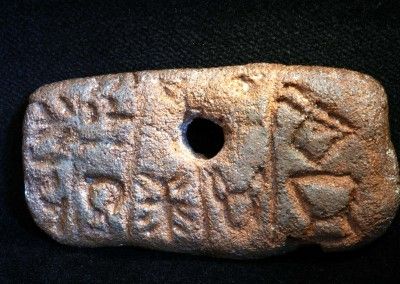
Tartaria tablets

http://www.proel.org/index.php?pagina=alfabetos/tartaria

Aknowledgement                                                                                                                                        The signs on the tablet are close to:                                                                                                                – Sumerian (in wich have all the signs), and at some distance                                                                         –linearA/B and carian                                                                                                                                 Note                                                                                                                                                   Evangelos Papakitsos and Iannis Kenanidis allready noticed that Aegean proto-linear script is related to the sumerian-one. More, they suppose that early minoans settlers were sumerians.                                     There are some writing attempts, main sumerian-related decipherments  are that of A.Falkenstein, A.A.Vaiman and Rumen Kolev.         I made some posts with commentaries regarding their attempts.                   ——————-        CROSS DIVIDED TABLET      ————————                                       From Early Numeration – Tally Sticks, Counting Boards, and Sumerian Proto … https://www.sumerian.org/tallysticks.pdf                                                                                                  The Sumerian MAŠ sign with the word-meaning of ‘(male) goat‘ was a … a cross came to represent goats and sheep in the Near Eastern clay ..    https://cdli.ucla.edu/tools/SignLists/protocuneiform/archsigns.html                                                                                                                                             ————————————————————-

We have folowing signs
– upper side, those little three D/moon-shaped?-signs (No.2). The picture is from https://www.voceavalcii.ro/39794-decrypting-of-tartaria-inscription-part-2-rectangular-amulet.html
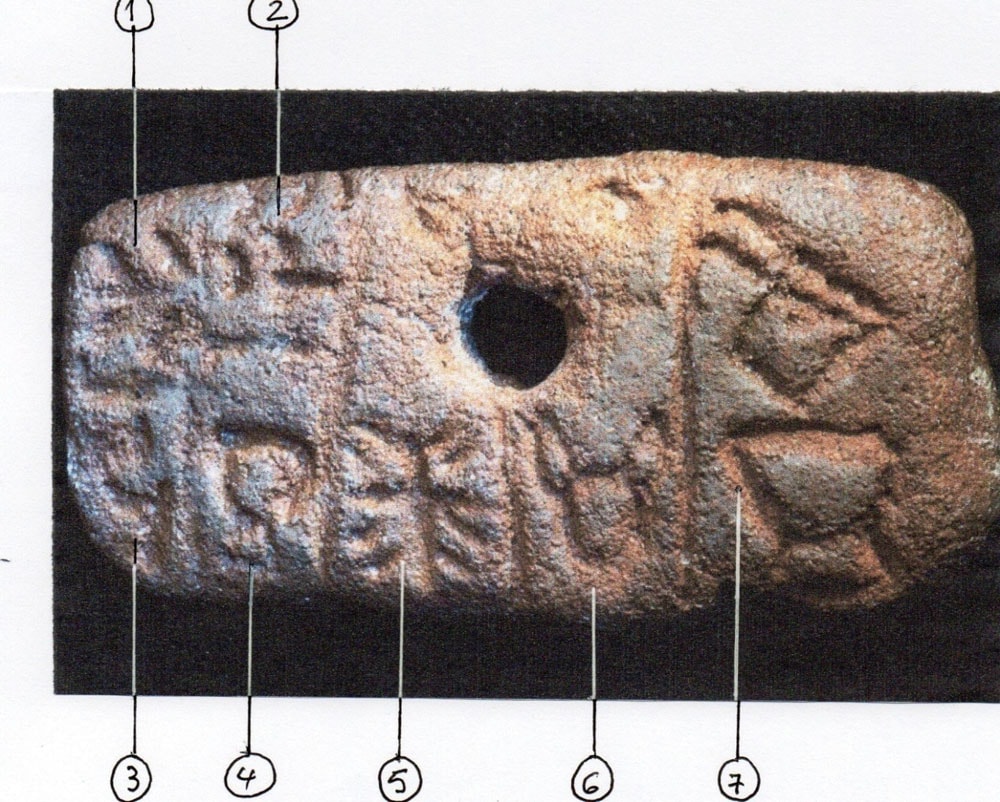
fig-202
1.From https://cdli.ucla.edu/tools/signlists/protocuneiform/archsigns.html                     sign  3(N08)  This is number “3”; we have same signs but in a row, not column.                       Note If were disposed in an triangle would be “mountain/underworld)                         Upon Winn and Merlini, the signs could not represent numerals but Merlini”some kind of time recording”. Yes, time recording could be.The signs seem to be made in traditional proto-cuneiform technique , (by pressing).
me:—————————————————————–                                                                            2. In sumerian proto-cuneiform these kind of signs were used to mark numbers.Could not represent number 3 .                                                                                                                                                     3 Not could be 30 .  30 was “ooo” ! Othervise 30 was related to sumerian time keeping (with the base 60), and reprezent a month (30 days in a month), but yhe sign month was an U(day) sign with  three DDD inside.
Sumerian used an specific sign for month, an sign wich couples the sign U (day) with the number 30. It is not this sign here. From http://enenuru.proboards.com/thread/694/liberate-free-liberation    (in the middle)       From https://cdli.ucla.edu/tools/signlists/protocuneiform/archsigns.htm Note. In sumerian proto-cuneiform writing, there is only one instance in wich I found the sign D .Only in proto-cuneiform sign list (Falkenstein ATU 527).   Also as the very precursor of the signs, sumerian tokens (Denisse Schmand Besserat). Nobody knows or even not hypotethised what significance had that sign for by sumerians ! In the Denise Schmand Besserat paper the sign is in the cask/vessel/recipients column.

Table from (original table from Mrs. Schmand Besserat paper)

http://www.erasmatazz.com/library/the-mind/history-of-thinking/early-civilization/before-the-greeks/invention-of-writing.html https://lh3.googleusercontent.com/pPRgG3Zp6wlZkYKAX-JwhybOHsPc8TZTVXT9KyQr8TEQ-XhA2xAMPfskJUORHeS8Zy3NoA=s170                                 See column IX sign “D” ! unknown meaning!                                                                                                                       ———————-                                                                                                                                  because on the tablet the signs are pointing to right >>> (not1230D U ESH 30 thirty SIN moon)                                                             As counting/ measures,:

? Sum. Sign GAR
https://cdli.ucla.edu/tools/SignLists/protocuneiform/archsigns/GAR.jpg

Sumerian Beer – Cuneiform Digital Library Initiative – UCLA.edu
https://cdli.ucla.edu/files/publications/cdlj2012_002.pdf
by P Damerow – the sign. GAR designated, in fact, daily rations of barley prepared for workers from a certain amount of grain. The grain was probably, in order to make it …As number, (number 1); 60? There were used 2 D-like signs (~imprinted~) little-ones for 1 and quite bigger-ones for 60/                                                                                                       From wikimedia commons File:Sumerian pre-cuneiform number system.gif

Sumerian Beer – Cuneiform Digital Library Initiative – UCLA.edu
https://cdli.ucla.edu/files/publications/cdlj2012_002.pdf
by P Damerow – the sign. GAR designated, in fact, daily rations of barley prepared for workers from a certain amount of grain. The grain was probably, in order to make it …

——–    sign  DDD  ——–                                                                                                                                              The grain sign and those of units/portion must be related even because are close one of each-other.           From http://mugsarsumerian.com/default.htm#u1230D_ESH_30                                      1230D1230D U ESH 30 thirty SIN moonU+U+U | ESH / EŠ = 30 (numeric) | UŠU3 | SIN = moon

<<< My final rendering: Due of much earlyer using of numbers than for anything else, we could have, and due of the orientation/pointing, we have no 30/Moon, but :                                                                                         “DDD”:         “number 3                                                                                                                     ————————–                                                                                                                                  same pic from Voceavalcii.ro :                     Near-by signs twig-like : >->->-         (No.1)  Fig 3                                      Merlini”tree of life /nature sprouting in three months“; no matter that in neighbouring Aegean was Cretan hierogliphyc 025 and in Linear A was the sign TE:”cereal”                           From Sumerian “sze/SE” “barley.grain” !!

https://cdli.ucla.edu/tools/SignLists/protocuneiform/archsigns/
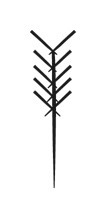
szeathttp://etcsl.orinst.ox.ac.uk/edition2/signlist.php

ŠE niga, še

Image,  Sign and Image: Representations of Plants on the
Warka Vase of Early Mesopotamia https://repository.upenn.edu/cgi/viewcontent.cgi?article=1000&context=penn_museum_papers                                                            https://encrypted-tbn0.gstatic.com/images?q=tbn:ANd9GcT2jcZ3EWFaUiNXnhA9AWlpoSbdP9fJR8EtsUS7uw62XkFsxx27 Image result for inanna proto cuneiform
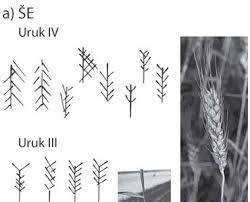
My final rendering of this sign, taking acount that it seems to be figured out doubled: From    https://cdli.ucla.edu/tools/signlists/protocuneiform/archsigns.html    |SZE~a&SZE~a|                                                                                                                                        2xSZE=2xSE  https://cdli.ucla.edu/tools/SignLists/protocuneiform/archsigns/%7CSZE~a&SZE~a%7C.jpg                                                                                          “CEREALS,GRAIN,BARLEY” ….and proposed reading, for all above signs :

“3 ratios of grain/barley” , but better:  “3days, one-man 3-day grain ratio”                                                         ——————————     Downward,
https://www.timesnewroman.ro/files/attach/images/stories/tartaria_greseala_gramatica.jpg                                                                                                                        tartaria_greseala_gramatica
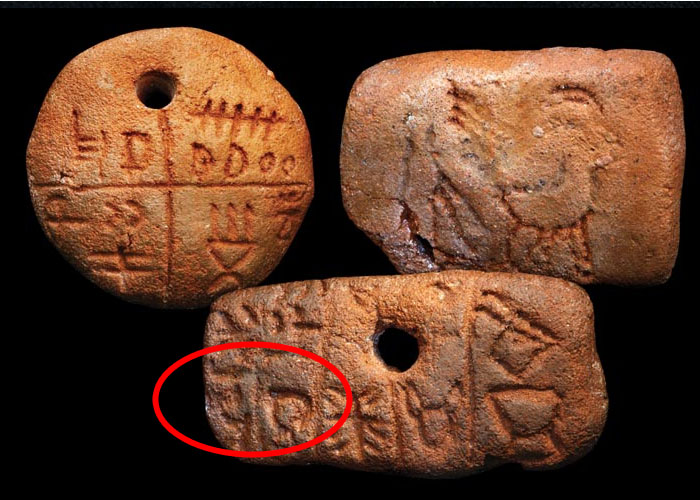
Note
See that both red-encircled signs.Every of them was ment to be read as such, isolates.   So coresponding to a separate single meaning for every sign.Not to form words by combining the signs.
This interpretation is the direct result of the fact that the signs are phisically isolated in kind of houses/boxes.
Y-like sign on the left, (No.3)Fig 3


The Proto-Sumerian Language Invention Process by John A. Halloran PAPa@t PAP~a@t
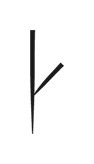
papatFrom https://www.scribd.com/document/76183647/1800-Dicionario-Sumerio-Lexicon
pab, pap, pa4: father; brother; man; leader
paþ[LUL]: leg.        pap: (cf., pab; pa4).                                                                                             ………….Or BAD ba9, bad, be

From A New Edition of the Proto-Elamite
Text MDP 17, 112 https://cdli.ucla.edu/pubs/cdlj/2015/cdlj2015_001.html

        §4.1.2. The precise meaning and function of N2 in proto-cuneiform is not known. It has been suggested that N2 in proto-cuneiform is the precursor to the sign BAD, with the later readings uš2/ug7 attested in the Ur III and Old Akkadian periods (Damerow and Englund forthcoming), including at Ebla (Butz 1981: 338), and in these later texts it is clear that it bears the meaning “sacrificed,” or in the case of humans, simply “dead.”

Figure 3: The Early Convergence of N2 and BAD.
SIGN > convergence>BAD,TIL,US,UG

Even if N2 is used to denote dead or sacrificed animals in the Uruk corpora, the evidence for this is weak and the texts themselves are inconclusive. It is more likely that N2 in proto-cuneiform denotes the entities it counts as “other” or “special.” The meaning “dead” may then have been later attributed to it due to the confluence of the N2/“TIL” and “BAD” signs.   ………………… I suggest that proto-Elamite N2 was an independent development derived from proto-Elamite N1 (which, along with the other basic numerical signs, was a direct borrowing from proto-cuneiform). Regardless of whether or not it was an independent development in proto-cuneiform and proto-Elamite, it is clear that N2 was used to designate whatever it was used to count as “other,” or distinct from the usual or majority object being counted. In the case of proto-Elamite this could possibly indicate a difference in gender, in worker status, or in type or amount of rations to be received. In proto-cuneiform, perhaps N2 indicated that a different type of grain was used to make the beer

https://www.scribd.com/document/76183647/1800-Dicionario-Sumerio-Lexicon til: to be ripe, complete; to pluck; to put an end to, finish; to cease, perish (iti, ‘moon’, + íl, ‘to be high; to shine’ ?) [? ZATU-644 archaic frequency: 65; concatenation of 2 sign variants] .
tìla, tìl, ti: n., life (tu, ‘to be born’, + íla, ‘to lift, carry’).
v., to live; to keep alive; to survive (with -da-); to dwell; to be halted (singular stem; cf. sig7).

bad, be: to open; to let out; to go away; to be at a distance; to drive away; to separate, remove
(regularly followed by rá; cf., bara4 and semantics of bar) (open container with motion away from)
bàd: n., (city) wall [? EZEN archaic frequency: 114; concatenation of 3 sign variants] .
v., to climb, ascend.

https://commons.wikimedia.org/wiki/File:Proto-cuneiform_sexagesimal_type_Sa.svg

Sumerian 1(one)=”dil”

Also on very upper side/extremity, in the middle “twoo  Y-like signs” . The closest shape is the sumerian sign BAD: http://enenuru.net/pdfs/SumerianFreq100_1500.pdf

BAD:”to open, diverge, die

My reading of “Y”-sign is
BAD :”to go away; to be at a distance; to drive; to separate; cease,perish                          (DEAD) MAN

_________ b o r d e r _______separation______ l i n e ____________

The folowing sign (N0.4),Fig 3 is much close to sumerian proto-cuneiform: AB .                                      Anyway, M.Merlini choose to have an absolute separate opinion to others (A.A.Vaiman,R.Kolev&al, included mine), and choose for :                                                         “a cup for collecting sacred liquid: !?   

From enenuru.net    Sign “UNU”                                                                                            This stands for – divine name + the sign UNU – . What is interesting to note is that these geographical names, for example UD+UNU (Larsa), or SHESH+UNU (Ur), seem to be direct adaptions of the Early protoliterate City Seals. This becomes clearer still when we note the cuneiform sign UNU, a part of the geographical names, (when flipped vertical) appears to be a direct adaption from the ‘base’ or ‘stand’ in the seals. It symbolises the abode of the deity, so UD+UNU, is the home of the Sun god, and the UNU is a part of his temple or ziggurat. And here we see the ePSD entry for unu as dwelling:                          “unu [DWELLING] (1511x: Lagash II, Ur III, Old Babylonian) wr. unu6; unu2; unu “banquet; dining hall; the most sacred part of a temple; seat, throne; dwelling, domicile, abode; temple”                                                                                                                           From  https://cdli.ucla.edu/tools/SignLists/protocuneiform/archsigns.html                                
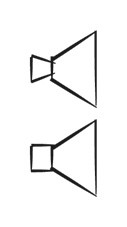
aba  “AB”                                                                                                                                              Note There are other signs also for temple:                                                                                                                                       Sign reading:temple,house”      

————————————————————————————————–                                            Next is folowing an “insect”-like sign, (……………as one my take the vertical line as the body and the rest as legs.) <No.5>Fig 3

                                                                                               Merlini: If  remained at “tree of life“, yes a good rendering ! If a crypto-sign, “vegetal or solar sign” not as better as before.Luckily he remain at “full blossoming/holy twofold tree”
Note
This sign is also isolated,”boxed”
My first connexion or thought seeing so many spike-like lines was of:                                      AN
https://cdli.ucla.edu/tools/SignLists/protocuneiform/archsigns/AN.jpg
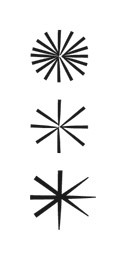
anan: n., sky, heaven; the god An; grain ear/date cluster (‘water’ + ‘high’).
v., to be high.
adj., high.
prep., in front.
Wich could be as long as AN sign contain a cross, and superposed other X-es totaling a number of 12 spikes.
Close could be also the sign: SZENNURa
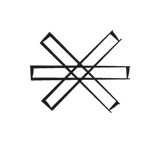
szennura1 (composed of 3 signs GISZ “wood”

From archive.org › stream › ApproachesToSumerianLiterature › PiotrMicha…                      Full text of “Approaches to Sumerian Literature”
“including wood, plum (sennur),”

But IS NOT cause of paralel couple lines(2×3)x2=also 12.Our sign has not couples of paralel lines.

I will change from reading AN sign:”sky, heaven; the god An “ ,to                                    cdli: Proto-Ea https://cdli.ucla.edu/tools/lexical/proto_ea_sign.html                                     sze-nu-ur, szennur (GISZ/GISZ). 623, se-esz3, szesz. 516, sze-esz …

https://commons.wikimedia.org/…/File:Cuneiform_sumer_gi… Sumerian cuneiform sign GIŠ (meaning “wood“).

https://cdli.ucla.edu/tools/signlists/protocuneiform/archsigns.html Giszx(Din.Din)

From http://www.bibleorigins.net/AdapaAdamPicturesFishmen.html.                                         the Sumerian gis ges-tin ‘the tree of the drink of life,’ usually signified ‘the vine,’ ges-tin being ‘grape wine,’ but it may have primarily denoted ‘palm wine.’ “

treefishmen

Final reading: “sacred tree/tree of life”                                                                                            —————————————————————————-                                                                           Folowing, (also isolated,”Boxed”),a “cat/donkey-like head” sign <No.6>Fig 3

  It is not proto-cuneiform DARA sign (goat)                               From Ancient to Modern: Archaeology and Aesthetics
https://books.google.ro Chi, Jennifer Y., and Pedro Azara, e
… Pennsylvania Sumerian Dictionary,” http:// psd.museum.upenn.edu/epsd/index. html. … avatar for Enki’s boat is dara3, usually translated as “wild goat” with no further ..

Sumerian Cuneiform English Dictionary 12013CT – bulgari-istoria https://www.bulgari-istoria-2010.com/…/Sumerian_Cuneiform_English_Dictionary_12&#8230;.

DARA3 ~ IBEX |durah (dara3) [89x] = wild goat, mountain goat | cf.

From https://cdli.ucla.edu/tools/signlists/protocuneiform/archsigns.html DARA3~c

The sign is close to : UD5~c “female-goat” ?
https://cdli.ucla.edu/tools/SignLists/protocuneiform/archsigns/UD5~c.jpg
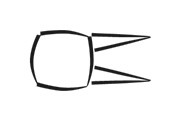
ud5c                                                                                                                                                 Sumerian Lexicon – IS MU https://is.muni.cz/el/1421/jaro2013/PAPVB_13/um/…/Halloran_version_3.pdf de JA Halloran – ùz, ud5, ut5: she-goat

From DRAVIDIAN TOKENS, UBAID, AND ITS TRACES IN BALKANS
by Iurii Mosenkis https://www.academia.edu/10909671/Dravidian_tokens_Ubaid_and_its_traces_in_Balkans

“The first tokens (related to the Sumerian or pre-Sumerian hieroglyphs) which use began about 9,000–8,000 BCE in PPNA Mureybet in Syria and Ganj Dareh in Iranian Zagros. E. g., the token sign for ‘sheep’ (about 7,000 BCE) depicted as the cross might reflect the homonymy between the names of the Sun and sheep in Sumerian and Dravidian (Sum. uz, ud, ut ‘she-goat’, udu ‘sheep’ : Proto-Dravidian *jōḍ- ‘goat’ > Proto-Gondi-Kui *jōḍ- > *ōḍ-ā; Tamil, Malayalam utal. ‘ram, he-goat;’ Sum. utu ‘the Sun,’
ud ‘the Sun, light, day’ : PD *oT- ‘to burn’ > PND *od- or/and PD *uḍ- ‘to boil; hot);’”

I am not 100% for it cause our head is between squarre and triangle not so squarred as above sign, but our head is slightly much close to a down-pointed triangle, so much close to: AMAR  https://cdli.ucla.edu/tools/SignLists/protocuneiform/archsigns/AMAR.jpg                        amar
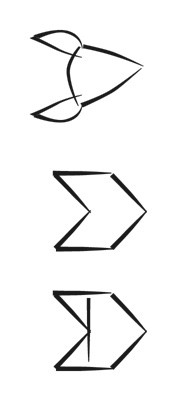
amar: calf; young animal (áma, ‘wild cow mother’, + re7, ‘to accompany, plural’)
Eg. áb-amar: mother cow (‘cow’ + ‘calf’).?
Final reading of sign:                                                                                                                  AMAR: “CALF” https://en.wiktionary.org/wiki/vitellus Diminutive of vitulus (a bull calf).

No matter if bull-calf (for wich the sign is much close) or goat (we have on pictographic tablet a goat), the sign is related to SUN
——————————-b o r d e r———– l i n e —————————–
Folowing in right extremity twoo signs.
This one on upper side (above No.7).                                                                                      Merlini:”the rhomboidal sign could represent the vase for pouring out the blood of the sacrificed bull (who’s head is showned in the previous cell)………..I’m so sorry….

The sign conducted me first to see an head with hornes,like a bull or goat.
If so, the head is seeing to right.>>>

Now I come back after surveyed entire tablet and I am confident to choose AMAR:”CALF”

Much likely was composed using folowing signs:HI
https://cdli.ucla.edu/tools/SignLists/protocuneiform/archsigns/HI.jpg    hi
http://enenuru.net/pdfs/SumerianFreq100_1500.pdf SAR2(HI):”to be numerous

And twwo signs:BAR
https://cdli.ucla.edu/tools/SignLists/protocuneiform/archsigns/BAR.jpg bar
From Sumerian Lexicon by John A. Halloran
https://www.scribd.com/document/76183647/1800-Dicionario-Sumerio-Lexicon bar: n., (out)side; soul, innards; fleece [BAR archaic frequency: 306].
v., to open; to uncover, expose; to see; to remove; to be absent; to release; to peel, pare, shell; to select; to divide; to split; to distribute; to keep away                                                        Hi-  BAR BAR

Sumerian Chinese – Forgotten Books
https://www.forgottenbooks.com/en/download/Chinese_and_Sumerian_1000130698.pdf
—. HI BAR,. ‘ spread out extended of a net and other things

(Reduplication means many and is enhancer)

The Class Reunion—An Annotated Translation and Commentary on the …
https://books.google.ro/books?isbn=9004302107
J. Cale Johnson, ‎Markham J. Geller –
The habitual character of the action is thus represented by the reduplication in {bar-bar} in the Sumerian and the use of a habitual nominal stem in Akkadian.

Hi-Bar-Bar:”be numerous,multiply,SPREAD OUT”

I am stressing, don’t know if theyr actual devellopement stage was one of proto-cuneiform or begun using proper cuneiform signs obtained using ligatures !

http://etcsl.orinst.ox.ac.uk/edition2/png/LAGAB.png lagab

And http://etcsl.orinst.ox.ac.uk/edition2/png/LAL_TIMES_LAL.png lal_times_lal
Two times LAL

We have the sign http://home.zcu.cz/~ksaskova/Sign_List.html LAL2xLAGAL wich is read NIGIN and/or NANGA
饞嚦饞喐 饞嚦饞喐 LAL2.LAGAB
(NANGA,聽NIGIN5, NIMEN, NIMGIN5, NINGIN5, 艩UR6聽(MesZL: ?), USAR3, USUR3, U艩AR3, USAR3)
(ePSD;聽Akkadian Dictionary) 751+755 482+483

NIMEN,NIMIN (nis-min=20 x2=40)The Sumerian Language, An Introduction to Its History and …
https://edoc.site › the-sumerian-language-…
Descripción: The Sumerian Language, An Introduction to Its History and Grammatical Structure – Marie-Louise Thomsen… … kim ‘to change’ kar ‘to goltake away’ kud.r ‘to cut’ kdr ‘to act as an enemy, t o change’ kGi.6 ‘to be troubled’ 14 ‘to carry’ 1u.g ‘to swarm’ nigin ‘to wander
nigin ‘ to wander’ pad.1 ‘to live (sing. tar …
The Sumerian Language, An Introduction to Its Histor

nigin5, 7, 8, 9, nimen(3, 4, 5), nanga(2,3,4); naga district, province (Akkadian nagu(m) I, ‘region, district; coastal area (area litoranea)’[14
The End of the Dynasty of Nimrod-Enmekar (§§185-240)
http://www.christianhospitality.org › content
Heb. peleg = region and/or watercourse, Sumerian nanga, nigin or nishiga (or, nishima ), Akkadian nagu, nangu = region, or more specifically an irrigation region. (The …

psd.museum.upenn.edu/epsd/illl/html/Sign/Ea/Proto-Aa.htm [nigin5(LAL2xLAGAB)

etcsl.orinst.ox.ac.uk/edition2/signlist.php
LAL×LAL.LAGAB Borger: LAL2.LAGAB, Sign, niĝin5

http://www.bulgari-istoria-2010.com/Rechnici/Sumerian_Cuneiform_English_Dictionary_12.pdf 121B8 LAGAB | niĝin2 [214x] = encircle, go around

The Early Stages of the Sumerian City at Tell Zurghul: New Results …
https://www.researchgate.net/…/321156232_The_Early_Stages_of_the_Sumerian_City_..theSumerian city of Nigin, the third city

Nero, etimo – Agorà Magazine
http://www.agoramagazine.it/index.php?option=com_k2…id&#8230;
… nigin (2). n., enclosure, circle; capacity;whole (cf., kilib and gur4-gur4) [NIGIN archaic frequency]. v., to halt, turn away; to turn round; to start over; to surround; to enclose ….. [5] John Alan Halloran, Sumerian lexicon, Los Angeles, Logogram

Now see how the head of the BULL(SUN) is consisten also with reading LAL2.LAGAB, Sign, niĝin5 :”to turn round; to surround; to enclose “ wich could be applied to the Sun.
http://www.christianhospitality.org/resources/6-days-creation-online/content/6-days-creation20.html

3. na-anNan(NISH2ni8-ishi)-ĝa = Nanga = Peleg. The unusual spelling of the name may be taken to indicate that the name read originally Nishiga (or Nishima) was pronounced later Nanga. (For nigin = nishima see ePSD s. nigin5, Lexical.) Heb. peleg = region and/or watercourse, Sumerian nanga, nigin or nishiga (or, nishima), Akkadian nagu, nangu = region, or more specifically an irrigation region. (The peculiar way the name is written, viz. with the signs na.an.gish[or:nish2].ni8[or:li].ish[i]-ma[or:ĝa], has led to the idea that the name is “Na-an-gish li-ish-ma” [“May he listen (lishma) joyfully (nangish)”], as nish2 is more commonly read gish, and ni8, more commonly read li.) The word nigin (otherwise nanga or nishiga etc.) is also written with the sign BULUG (in which case it means a boundary of a region or a boundary marker), Akkadian puluggu or pulukku, which is the same as the Heb. peleg. According to Genesis 10. 25, it was in the days of this patriarch that the “earth was divided,” which implies the creation of geographical (“earth”) regions, as well as the dispersion of tribes. The Hebrew root p-l-g means not only “divide (regionally)” but also “divide (linguistically).” Peleg means “(man of) different regions” and “(man of) different languages.” The historical context is the dispersion of nations and consequent confusion of language at the Shinar Tower.

OOOPS!…………….I have also NIGIN on the round tablet!

But if want my opinion,the sign is not a complex,ligaturred,composed-one because I am expecting that the writing pertain to pre-cuneiform fase in wich were used simple signs,So sufficient the sketch of the bull(head)
.


The sign above No.7 Merlini:”the cup for worship that collects the sacred liquid”………..even much sorry….Mister Merlini is an outstanding story maker.

The same sign AB for “house,temple”
I wished to be and tempted to be https://cdli.ucla.edu/tools/SignLists/protocuneiform/archsigns.html

ZAG~c

Cause ZAG is meaning “shiny” as double-axe is.
SARGON PART
s-studies.0catch.com/DocRob/sargon/sargon004.htm
If Professor Waddell is right in identifying the “Sumerian Father-god” Zagg with the Cretan god Zeus (**2) he, too, offers a link between the Babylonian and Cretan religions. We have already seen that Sargon was perhaps sometimes called Zaggisi, (**3) so probably both Zagg and Zeus were mythological representatives of

http://www.crystalinks.com/sumercylinderseals.html
http://3.bp.blogspot.com/-PsPfyJHEKq4/UXHXOnKLSoI/AAAAAAAAY1w/IQzNvfDTisQ/s1600/ingot.jpg

mpressions of two cylinder seals (Sumer) and glyph of ‘ingot’. The person at the feet of the eagle-winged person carries a (metal) dagger on his left-hand, clearly demonstrating the link with this metalware catalog.
Note the one-horned bull below the person who has his foot on mountain-summit.
Sumerian sign for the term ZAG ‘purified precious’. The ingot had a hole running through its length Perhaps a carrying rod was inserted through this hole.

Bouth signs:

Up-> “Be numerous,multiply,SPREAD OUT”

Down-> “House

By chance I found that those very signs we have, associated are signifying:

NERGAL~x
https://cdli.ucla.edu/tools/SignLists/protocuneiform/archsigns/NERGAL~x.jpg

– But we have no the first sign this goat-shape even not shure at all that is depicted a goat-head,
– Think our sign is an made-assembled signs resulting an word

http://enenuru.proboards.com/thread/329/nergal

I am convinced that Nergal is the netherworld aspect of the sun-god, on the basis of late mystical texts which I had looked at in the Erra thread.
There appears to be a connection between Nergal and Shamash. It has indeed been argued that the Mesopotamians saw them as alter-egos (Porada 1948, 47; von Weiher 1971, 26, 31), Nergal governing the underworld and Shamash the sky
Dalley mentions in Myths from Mesopotamia p. 283 that Nergal/Erra was the “patron of copper smelting”

This is the first time I have heard of this important point, as it would accord with the idea that Nergal is a god of fire…………. Nergal and his connection to mining

B E S I D E
! Nergal is quite opposite to first reading cause only at the begining was a pair of Sun-God Utu/Shamash is specific the Godd/ess of Mid-day sun,
Geschichte des Altertums: Erster Band. Zweite Hälfte. Die ältesten …
https://books.google.ro/books?isbn=3734005736 – Translate this page
Eduard Meyer Ne-unu-gal „Herr der großen Wohnung“ für Nergal (ebenso später Amar-ut „Kind der Sonne (?)“ für Marduk, dingir-pa „Gott des Griffels“ für …
,later a God/ess of the underworld and DEATH !

Note
Despite the fact that I found the sign AMAR:”CALF” in the before section,when encountered that last horned-like sign, my mind was toward goat and some-how attached to GOAT (despite the fact that could be the head of a bull.Did not realised or thought)
Now I understand why combined sign BULL & HOUSE

The God Resheph in the Ancient Near East
https://books.google.ro/books?isbn=3161524918
Maciej M. Münnich -Sumerian lists of geographical names it would be better to translate it as “City/seat of the bull = Nergal” by analogy to the similarly constructed Sumerian names such as: SES.UNU’“ (Ur — seat of Nanna), MUSUNU“ (Zabalam — seat of inanna), UD.UNU’“ (Larsa — seat of Utu); see Katz …

Now I change my opinion from:
up= composed sign; downAB:”house” :50%
Reading them as a pair: N E R G A L :50%

To the opinion:

NERGAL~x
https://cdli.ucla.edu/tools/SignLists/protocuneiform/archsigns/NERGAL~x.jpg

Now we have on entire tablet:

month portion grain
life tree CALF NERGAL
To open , let out

Sumerian Cuneiform English Dictionary 12013CT – bulgari-istoria
http://www.bulgari-istoria-2010.com/…/Sumerian_Cuneiform_English_Dictionary_12.pdf
sign evolution, that it goes from the proto drawings to the cool Sumerian …… amar-utu = MARDUK (bull calf of the sun god utu – northern hemisphere 12 day winter solstice celebration of.

Possible the tablet was ment and used in an fertility ritual.
The were giving grain offering and addressed to the Gods ? An (Sky-God) and Nergal (pair of Sun-God or underworld deity) ?

Even remain other second close-by possible interpretation of BAD sign with an reading :”drive/go away” or read as til: “to be ripe, complete; to pluck; to put an end to, finish; to cease, perish” ,”distress/death” reading in the situation there was encountered draught and famine folowed by people death.

Ooops!…apropos of double-axe and Nergal:
https://www.bibliotecapleyades.net/sumer_anunnaki/reptiles/serpent_tribe/serpent_tribe15.htm
THE AXE, IN SUMERIAN USAGES
“The God of Jupiter is the Lord of Magicians, MARDUK KURIOS of the Double-headed Axe.” – Necronomicon, p. 30 (AVON Edition).
Laurence Austine Waddell, in The Makers of Civilization in Race and History, (1929), sheds some light on the significance of the axe:
“The Double-Axe sign for the God Zeus in Crete also occurs as a sign for the god ZAG [1] in Sumerian. It is found in the inscription of Manis-Tusu’s grandfather; and it is obviously a fuller form of the diagrammatic axe-sign in Sumerian, which has the phonetic value of ZAG or SAG, and is defined as ‘axe, sceptre, two-edged sword.’ And significantly this axe-sign is a title in Sumerian of ‘The GREAT LORD’ (NAR-GAL) [Ner-Gal from his fatal smiting still later became the God of the Underworld.], a martial reflex of the Father-God ZAGG, SAKH, or SAX [2], i.e., Zeus, who became latterly the ‘God of War’ in Babylonia; and Manis’ father SARGON worshipped the weapon of the God ZAGG as we have seen.”

The both signs: that one above No.7 is for Bull and No.7 is for “temple,abode”

The TEMPLE,ABODE of the Sun-Bull, the house of Sun-Bull/Nergal,(Sun’s pair)

Note
Do not consider this work as an ultimate finding and interpretation.
When begun some years before my proposed goal was only : to proove and show that Tartaria Round tablet is containing proto?writing?.
Now the same goal with both tablets.I am not pretending at all an accurate reading. Schollars (sumerologists) could take and analyse the tablets and afteward give and show their opinion.