Archive for April, 2026

Research Summary: Epigraphic Re-evaluation of the Tărtăria Tablets

April 23, 2026

Research Summary: Epigraphic Re-evaluation of the Tărtăria Tablets

Researcher: Rău Eugen

1. Morphological Analysis of the Archaic “Heta” Sign:
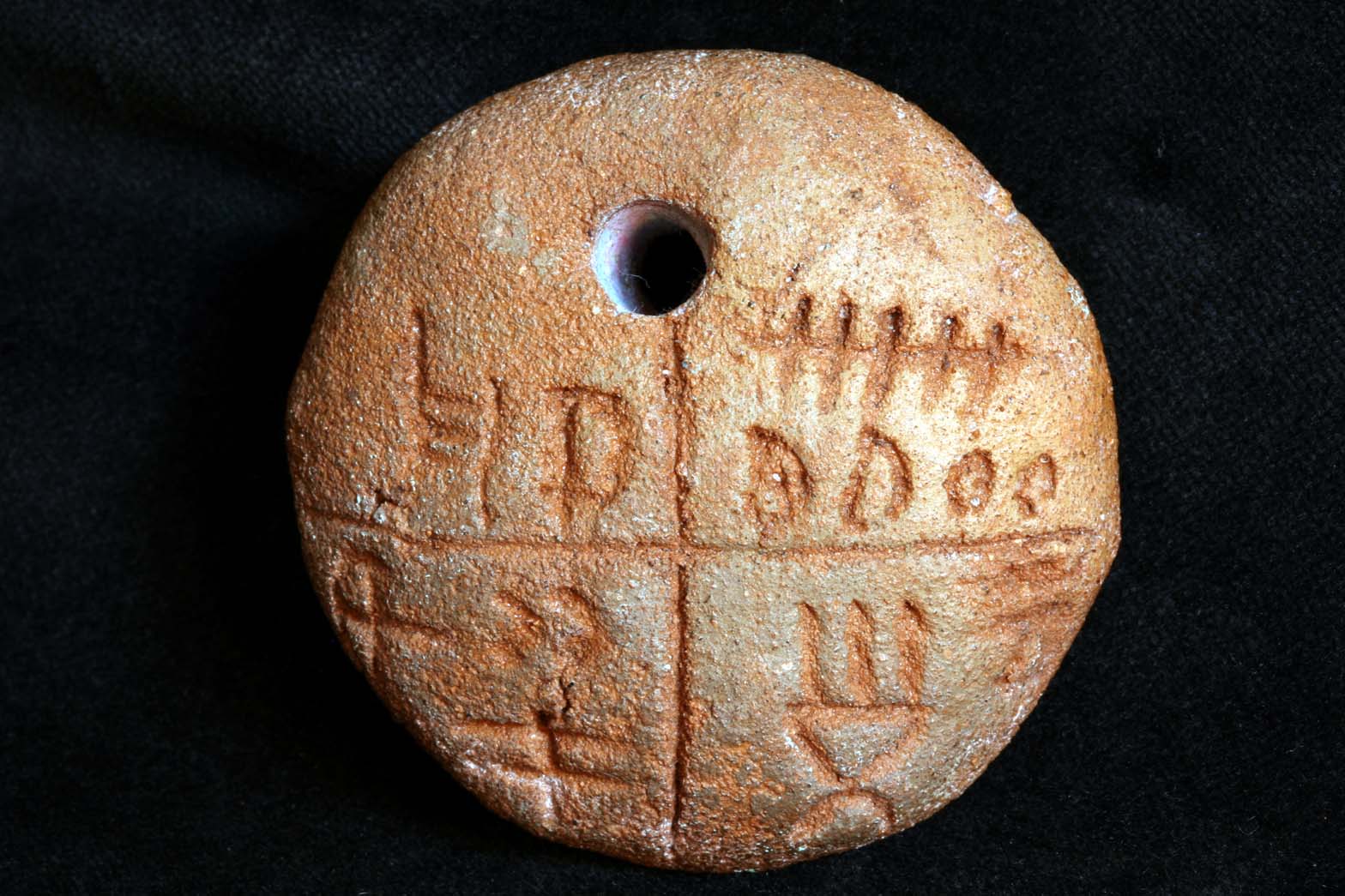
The research identifies the “three-rung ladder” sign not as an abstract pictogram, but as a letter with a specific graphic “fingerprint”: offset vertical bars and slanted rungs. This form is identical to alphabetic characters used from the Levant to the Iberian Peninsula during the 1st millennium BC (Archaic Heta, Chet, or the Pa3 sign from Linear A).

2. Development of the Import Hypothesis:
Contrary to the mainstream view attributing the tablets to the Neolithic Vinča culture, this research maintains they are Cycladic/Aegean artifacts. The core argument is the presence of the HP (Heta-Rho) letter group, a sacred ligature documented in the temples of the goddess Hera in Samos and Thera, serving as an abbreviation for the deity’s name.

3. Identification of the Ritual Context:
The three tablets are analyzed as a unified fertility set:

  • The Discoidal Tablet: Interprets the D d o c sequence as a representation of moon phases (Massey hypothesis), a tool for measuring biological time under Hera’s patronage.
  • The Rectangular Tablet: Contains Linear A signs (A – animal head with long ears and plant symbols), representing offerings.
  • The Pictographic Tablet: Confirms the Aegean origin through the depiction of the Cri-Cri goat (Capra aegagrus creticus), an iconographic element specific to Crete.

Conclusion: The analysis demonstrates that similarities with Sumerian proto-cuneiform script are morphological coincidences that misled experts, who ignored the alphabetic function and the clear Cycladic cultural context of the objects.

The Human Spaceflight Illusion: A Pragmatic Critique                               Executive Summary of the Philosophical and Biological Constraints of Space Exploration

April 17, 2026

1. The Biological Paradox: “Hardware” vs. “Hallucination”

The core of the argument rests on the fundamental mismatch between the human biological “hardware” and the vacuum of space. Having evolved over billions of years to thrive within the specific parameters of Earth (gravity, atmospheric pressure, magnetosphere), the human body is effectively “locked” to this planet.                                                                                                         Any attempt to transplant this biological unit to the Moon or Mars is seen not as progress, but as a form of mental “hallucination.” While the human mind can dream of crossing the stars, the body remains a fragile, high-maintenance machine that requires thousands of specific parameters to stay alive—none of which are found on the “ash deposits” of the Moon or the irradiated deserts of Mars.                                                                                                                                             2. The Superiority of Robotic Exploration                                           The insistence on sending human crews is viewed as an obsolete obsession. The discussion highlights several key points regarding the efficiency of machines:                                                  Safety and Ethics: Losing a machine (a collection of metal and circuits) is incomparable to the loss of human life.                                                                                                                         Scientific Reach: Modern rovers and mobile laboratories can explore the universe more efficiently and at a fraction of the cost.   The “Post-Biological” ET: It is hypothesized that any advanced Extraterrestrial Intelligence (ET) would likely be robotic. Machines are immune to the biological limitations of time, radiation, and aging, making them the only logical voyagers of the cosmos.                                                               3. Economic and Geopolitical Futility                                                                                            From a strictly economic standpoint, human colonization of the Moon or Mars is categorized as a utopia.             Resource Mismanagement: The vast sums spent on these missions are disproportionate to the scientific return, especially when humanity faces “primitive” systemic issues on Earth (hunger, climate decay, conflict).                                                                                                           Geopolitical Competition: Space exploration is often driven by intra-species competition—a “tribal” urge to mark territory rather than a unified effort for the advancement of the species.              Lack of Profitability: There is no immediate or medium-term economic justification for human presence on these celestial bodies; they remain hostile environments with no return on investment.                                                                4. The “Great Filter” and the Survival of the Species                                                                      The dialogue touches upon the “Great Filter” theory, suggesting that humanity’s greatest threat is its own nature.                                                                                                                                Delaying Extinction: It is argued that the most urgent and realistic goal should be delaying our extinction here on Earth, rather than attempting to move the species to “foreign laboratories.” Intra-Species Conflict: Human nature is inherently competitive and short-sighted. We struggle to “manage the day after tomorrow,” prioritizing immediate resource accumulation over long-term planetary stewardship.                                                                                                                        The Futility of Relocation: Even if we were to populate other planets, we would simply carry our destructive patterns with us, merely delaying the inevitable extinction across multiple locations.  5. Future Outlook: The Next 30 Years                                                                                              The vision for the near future is one of “limited outposts” rather than true colonization.Similar to the International Space Station or Antarctic bases, any human presence will likely be restricted to short-term rotations.                                                          The idea of a “Plan B” on another planet is dismissed as a dangerous distraction from the reality that we are inextricably linked to the Earth’s biosphere.                                                          Conclusion                                                                                                                                 Humanity remains a species in transition—possessing the intellect to peer into distant galaxies but still driven by the primitive, irritable, and suspicious instincts of evolved primates. The obsession with human spaceflight is a manifestation of an ego that refuses to accept its biological boundaries. The most “civilized” path forward is not to escape the Earth, but to use our resources to preserve the only home for which our “hardware” was ever designed.

Tăblițele de la Tărtăria: Sinteza unor Imposibilități Fizico-Temporale. Privire Analitică asupra unei Anomalii între Epoci

April 8, 2026

Tăblițele de la Tărtăria reprezintă unul dintre cele mai polarizante subiecte din arheologia europeană. În timp ce discursul popular se concentrează pe mitul „celei mai vechi scrieri din lume”, o analiză epigrafică și logică riguroasă—lipsită de părtinire naționalistă—revelă o serie de inconsistențe profunde. Sinteza noastră evidențiază trei piloni fundamentali care contestă narațiunea neolitică tradițională.                 

1. Paradoxul Sistemelor de Scriere Simultane

Principala dovadă incontestabilă identificată în analiza noastră este coexistența a trei stadii distincte ale evoluției scrierii într-un singur context arheologic:

  • Tăblița dreptunghiulară (fără gaură): Prezintă semne pictografice arhaice.
  • Tăblița dreptunghiulară (cu gaură): Prezintă semne proto-cuneiforme aproape identice cu cele din perioada Uruk IV din Mesopotamia (aprox. 3500–3200 î.Hr.).
  • Tăblița rotundă: Prezintă caractere liniare, alfabetice/silabice, în special monograma Heta-Rho și secvența HP D, care își găsesc corespondențe exacte în alfabetele grecești arhaice din Samos și Thera (aprox. 800–600 î.Hr.).

Prezența fizică a acestor trei sisteme într-un singur strat datat la 5300 î.Hr. creează un scenariu de colaps logic, unde semne separate de aproape 5.000 de ani de evoluție umană sunt găsite „înghețate” împreună.                                                         

2. „Paradoxul Woolley” și Scribul Anacronic

Un punct critic al discuției noastre a fost imposibilitatea ca un autor antic—fie din 5000 î.Hr., fie din 600 î.Hr.—să aibă acces la semnele proto-cuneiforme din Uruk IV. Aceste tăblițe au fost îngropate sub metri de sedimente timp de milenii, fiind scoase la lumină de Sir Leonard Woolley abia în anii 1920-1930. Faptul că semnele de la Tărtăria reflectă aceste forme mesopotamiene specifice, alături de caractere alfabetice grecești mult mai târzii, indică un „pastiche” creat de cineva cu acces la cataloagele arheologice ale secolului XX (cum ar fi publicațiile lui Adam Falkenstein din 1936).                                                                                                                       

3. Precizia Epigrafică vs. Contextul Arheologic

Analiza a descifrat cu succes inscripția de pe tăblița rotundă ca fiind o invocație greacă arhaică: „Hera didou” (Hera, dă/dăruiește!). Identificarea formei specifice a semnului Heta din Samos/Thera acționează ca un „test ADN” pentru obiect. Deși oasele găsite în apropiere pot fi într-adevăr neolitice, semnele de pe tăblițe vorbesc o limbă care nu s-a născut decât după alte patru milenii.                                          Absența martorilor oculari în timpul descoperirii din 1961, lipsa fotografiilor in situ și tratamentul termic al tăblițelor (care a distrus posibilitatea datării directe) amplifică suspiciunea de „infracțiune” științifică.

Concluzie: Schimbul nostru de idei concluzionează că tăblițele de la Tărtăria nu sunt un sistem de scriere unitar, ci o adunătură imposibilă de semne—o „imposibilitate fizico-temporală”. Ele reprezintă coliziunea dintre un mit arheologic prestigios și realitatea rece a evoluției epigrafice.

The Tartaria tablets: A Synthesis of Physical-Temporal Impossibilities. Analytical Overview of a Cross-Epoch Anomaly

April 8, 2026

The Tărtăria Tablets: A Synthesis of Physical-Temporal Impossibilities

Analytical Overview of a Cross-Epoch Anomaly

The Tărtăria tablets represent one of the most polarizing subjects in European archaeology. While popular discourse often focuses on the “oldest writing in the world” myth, a rigorous epigraphic and logical analysis—devoid of nationalistic bias—reveals a series of profound inconsistencies. Our synthesis highlights three fundamental pillars that challenge the traditional Neolithic narrative.                               

1. The Paradox of Simultaneous Writing Systems

The primary “smoking gun” identified in our analysis is the coexistence of three distinct stages of script evolution within a single archaeological context (the Vlasca pit).

  • The Rectangular Tablet (without hole): Displays archaic pictographic signs.
  • The Rectangular Tablet (with hole): Features proto-cuneiform signs nearly identical to the Uruk IV period in Mesopotamia (approx. 3500–3200 BC).
  • The Round Tablet: Exhibits linear, alphabetic/syllabic characters, specifically the Heta-Rho monogram and the sequence HP D, which find exact matches in the archaic Greek alphabets of Samos and Thera (approx. 800–600 BC).

The physical presence of these three systems in a single layer dated to 5300 BC (via the associated skeletal remains) creates a “Big Crap” scenario—a logical collapse where signs separated by nearly 5,000 years of human evolution are found “frozen” together.                                                                                                  

2. The “Woolley Paradox” and the Anachronistic Scribe

A critical point of our discussion was the impossibility of an ancient author—whether from 5000 BC or 600 BC—having access to the proto-cuneiform signs of Uruk IV. These tablets were buried under meters of sediment and urban layers for millennia, only to be unearthed by Sir Leonard Woolley in the 1920s and 1930s. The fact that the Tărtăria signs reflect these specific Mesopotamian forms, alongside much later Greek alphabetic characters, points toward a “pastiche” created by someone with access to 20th-century archaeological catalogs (such as Adam Falkenstein’s 1936 publications).                                                                              

3. Epigraphic Precision vs. Archaeological Context The analysis successfully decoded the round tablet’s inscription as a Greek archaic invocation: “Hera didou” (Hera, give/grant!). The identification of the specific Samos/Thera form of the Heta sign acts as a “DNA test” for the object. While the bones found nearby may indeed be Neolithic, the signs on the tablets speak a language that was not yet born for another four millennia.                                            The absence of eyewitnesses during the 1961 discovery, the lack of in-situ photographs, and the thermal treatment of the tablets (which destroyed direct dating possibilities) further compound the “criminal field” of this discovery.              Conclusion: Our exchange concludes that the Tărtăria tablets are not a unified writing system, but an impossible collection of signs—a “physical-temporal impossibility.” They represent a collision between a prestigious archaeological myth and the cold, hard facts of epigraphic evolution

Smoking gun on Tartaria tablet. A Paradigm Shift in the Interpretation of the Tărtăria Tablets

April 5, 2026

Executive Summary: A Paradigm Shift in the Interpretation of the Tărtăria Tablets

Title: Beyond Sumer: The Anatolian-Cycladic Cultic “Kit” and the Archaic Hera Monogram at Tărtăria.

Core Thesis:
The long-standing “Sumerian/Proto-Cuneiform” hypothesis regarding the Tărtăria tablets is fundamentally flawed due to a failure in paleographic and contextual analysis. This research presents a new paradigm: the tablets, alongside their associated find-spot artifacts, constitute a coherent Anatolian-Cycladic ritual assemblage (7th–6th Century BCE), centered on the cult of the goddess Hera.

Key Evidence for the Shift:

1.The “Open-Eta” Fingerprint: The presence of the “three-rung ladder” Heta (Archaic Eta) with offset vertical pillars is a diagnostic marker. This specific, “clumsy” asymmetric form is an iconic feature of Archaic Greek/Anatolian scripts (Samos, Thera) and does not exist in the Proto-Cuneiform record.

2.Epigraphic Reality vs. Numerical Hallucination: Current scholarship misinterprets the sequence “DDoc” as Sumerian numerals (1+1+10+…). Paleographic analysis reveals these are linear-incised letters, not impressed tokens. The sequence corresponds to the lunar phases of the Hera cult and the imperative vocalization of the verb didomi (Didos/Didou — “Give/Grant!”), a standard votive invocation for fertility. Sign on the upper-right quarter

3.The Iconographic Syllabary: The round tablet features a stylized Tanit/Asasara icon, evolved from the primordial Aleph/Al (Bull) symbol. This links the tablets directly to the Aegean-Anatolian theological stratum (Minoan Linear A to Phoenician-Greek transition). (downside-right quarter, here on the right)

    4.The Ritual “Kit” Context: The tablets were found with a Spondylus bracelet (Aegean), an Alabaster cup (Mediterranean), and a “Cycladic faceless” idol. Crucially, the presence of an “Anatolian Anchor” artifact identifies the owner not as a Mesopotamian prospector, but as a maritime migrant/priest from the Samos-Cyclades axis.

    Conclusion:
    The Tărtăria tablets are not accountant’s ledgers from Uruk; they are imported amulets of the Hera cult. The “clumsy” execution of peripheral signs suggests a “quasi-illiterate” practitioner who faithfully reproduced sacred monograms while mimicking formal Anatolian script. This discovery necessitates a complete chronological and cultural re-evaluation of the Transylvanian-Aegean trade and cultic routes.